







Abstract
This paper analyses the synergies between press and politics in the debate on the regulation of complementary and alternative medicines (CAM) in Spain between 1979 and 2018. We argue that longitudinal analysis and comparison of this interaction and synergy reveal how the mainstream discourse has shifted. We use a dataset of news (N = 2,059), a news sample (n = 325) and a dataset of parliamentary records (N = 86). Using both quantitative and qualitative approaches, the dynamics of the interaction between the different institutions and actors involved is assessed. Specifically, the study analyses the media and parliamentary attention to CAM issues (agenda setting), how CAM is addressed (framing), and the actors who have a voice in the discourse (costructuring of power relations). The results indicate that relevant changes in the public debate on CAM have only occurred over the last few years, corresponding to three overlapping dynamics of influence of the media on politics: amplification, framing, and costructuring of power relations. This recent period has seen convergence in the discussion and narratives/frames used, which also corresponds to more widespread skepticism regarding CAM.
Keywords
Introduction
Complementary and alternative medicines (CAM) are health techniques that lie beyond Western health practices (EFCAM 2020; WHO 2013). The political debate on their regulation is a complex issue involving not only studies on their efficacy, efficiency, and safety but also public opinion and consumption. This is a polarized and controversial issue because CAM represent a challenge to biomedical science, being presented as alternatives to Western medical health practices despite a lack of scientific evidence, while still being practiced and consumed worldwide. The corresponding regulatory policies vary greatly depending on the diverse sociocultural contexts internationally (Cano-Orón 2019a; Schneiders et al. 2017; Wiesener et al. 2012). The solution to this dilemma of how or whether the Western biomedical system should coexist with CAM (Kaptchuk and Miller 2005) entails complex processes of public discussion and policy decision-making. In this sense, the interdependent relations between the media and the political sphere are essential, as are both the formal and informal lobbying of media and political actors by relevant social agents (Hallin et al. 2020).
The international literature reveals a change in the media discourse, especially in the English-speaking world, from a mainly positive media representation of CAM (Weeks and Strudsholm 2008) to an increasingly skeptical perspective (Brosnan 2015; Caldwell 2017; Snow 2019). Danell (2018) analyzed the political debate on CAM in the Swedish parliament from 1980 to 2015. That work identified a direct relationship between some political parties and ideologies, specifically liberalism, and certain positions and frameworks on CAM, a link already noted by Broom et al. (2014). However, the literature does not include work on the relationship between the media and political debates related to CAM.
The case of Spain is of special interest to address the research gap on such interplay between media and politics because of the identification of a recent significant change in public opinion (Cano-Orón et al. 2019; Lopera-Pareja and Cano-Orón 2021) and politics (Lopera-Pareja 2019), adopting a skeptical position and rejecting such techniques. The political debate on CAM over the last four decades has been characterized by great complexity that partially stems from, firstly, the discontinuity of political attention and, secondly, that the two major political parties have not maintained a consistent stance on CAM, sometimes favoring their regulation and incorporation into the health care system but sometimes rejecting them, varying over time and depending on whether they were in power or opposition (Lopera-Pareja 2019).
Likewise, in recent years (2015–2017), Spanish media coverage on CAM has been characterized by an unprecedented increase in media attention and the predominance of a skeptical position in the digital media with the largest audiences (Cano-Orón et al. 2019). Before that period, the predominant arguments about CAM in the media were mostly positive or neutral, most often presenting them as useful health tools and addressing the issue of their regulation with the support of scientific arguments. Meanwhile, the period of clear skepticism was characterized by arguments presenting them as a risk or fraud and using scientific arguments to delegitimize them (Lopera-Pareja and Cano-Orón 2021). Another indicator of the evolution of the public discussion is the growth of the skeptical movement on the Internet, where skeptical organizations launch campaigns against CAM and lobby journalists and politicians (Cano-Orón 2019b). This as yet unresolved and varying social controversy thus emphasizes the need for empirical research on the interactions between press and politics and the role that social agents have played at their interface.
Drawing on the literature on biomediatization and mediatization in conjunction with media-effects theory, this paper analyses the linkages between media, political processes, and social agents in relation to the debate on the regulation of CAM in Spain in the period from 1979 to 2018. Using both quantitative and qualitative approaches, the dynamics of the interaction between the different institutions and actors involved is assessed, revealing amplification of the conflict through agenda-setting and performative action through the framing and costructuring of power relations through the agents active in CAM news and parliamentary activity. The aim of this work is thus to develop knowledge at the intersection between the research fields of health communication and public opinion/political communication by considering the controversial issue of CAM.
Relations Between Media and Health Policy
Since the Spanish public health system does not include CAM alongside conventional medicine, there is competition in the public health market between these two health systems. Both the media and political arena play a fundamental role in legitimizing or delegitimizing CAM and in guiding the public debate. In this context, biomediatization is a useful approach (Lewis 2020) to analyze the power dynamics and structural changes aimed at maintaining or changing the status quo of biomedicalization (i.e., solving all problems from a biomedical perspective). The concept of biomediatization developed by Briggs and Hallin (2016) combines the theory of mediatization with biomedicalization as a response to the perceived need for cross-fertilization between the fields of health communication, journalism studies, medical and media anthropology, political communication, and literature on “biopolitics” (Holland 2018).
Biomediatization is understood as the overlap and intermeshing of the mediatized and biomedicalized worlds, encompassing “the phenomenal impact of both media reporting and medicine in our information-centric lives” (Lewis 2020: 210). Drawing on the work of Briggs and Hallin (2016), Holland (2018: 1768) states that “the concept of biomediatisation seeks to capture the way in which health professionals and other health actors are embedded in media spheres, rather than operating outside of them or above them.” Following this approach, our aim is to advance this field by proposing that the logic and understanding that exist between the media and biomedicine according to the theory of biomedicalization can be extended to health policies, specifically with regard to the regulation of CAM.
Mediatization is applied as a framework in many fields (Mazzoleni 2017), including the sociology of medicine (Briggs 2011; Hallin et al. 2020; Lewis 2020) and political communication studies (Mazzoleni 2017; Strömbäck 2008). It is also considered to be a paradigm shift “that encompasses the whole communications and relations between the major and minor actors of the political game” (Mazzoleni 2017: 139), but due to the parallel development of lines of work, its conceptualization has become piecemeal, resulting in some criticism (Ampuja et al. 2014; Lüthje 2017).
Nölleke et al. (2020: 5) identified two key aspects of mediatization theory: “First, actors must ascribe to media the power to provide public attention, or at least attention from relevant stakeholders. Second, public attention must be perceived as a relevant resource within one's social domain.” Accepting these assumptions, the concept of mediatization encompasses both structural and indirect effects in different social systems, such as attracting votes (in the political field), fundraising (in the academic field), fans and sponsors (in the sports field), and public support for particular therapies (in the health field).
Hjarvard (2016) defined mediatization as a long-term social process in which the media produce structural changes in different social and cultural spheres through mutual adaptation between the logic of their operation and that of other institutions such as politics or the health system. To analyze this, he suggested that one should consider: (1) the identification of the general dynamics that characterize mediated communication in its specific historical and sociocultural contexts, in particular the media and political systems; (2) the dynamics that are especially evident when the objective is to influence public opinion in situations of conflict or debate; (3) the different parties (in conflict in relation to an issue) that try to use the media to their own advantage and whose actions are, to a certain extent, also conditioned by the media.
On the other hand, according to media-effects theory, the media play a key role in indicating which issues are relevant by using agenda-setting as reflected in media attention (McCombs and Shaw 1972) and also in selecting and highlighting certain aspects and how they should be interpreted by framing (Entman 1993). These functions are also applicable to politics (Princen 2018), which also affects the media arena (Rohlinger 2006). Furthermore, considering the increased interest in and financial resources of health stakeholders (e.g., pharmaceutical companies) to access the media (Stroobant et al. 2019), the power dynamics can be analyzed in the presence of social agents (Hallin et al. 2020; Lewis 2020).
Guided by its general objective, this study adopts a typology for dynamics that represents the conditions of communication and press–politics interaction in a mediatized society (Hjarvard et al. 2015:10). These dynamics are addressed by analyzing the aforementioned agenda-setting and framing functions as well as sources on news and parliamentary debates related to CAM to assess the biomediatization phenomenon of CAM in Spain.
Synergies Between Media, Politics and Other Social Agents in the CAM Debate Across Time
Previous research (e.g., Hallin et al. 2020) has found that health is often addressed in the media as a public policy issue. Comparative analysis of the media and political spheres can thus provide clues regarding how this debate is “coproduced” and which patterns of interaction have the greatest influence in shaping regulation. Media as conduits can contribute to the amplification (or attenuation) of this debate, and their level of interaction can be estimated according to the volume, speed, and scope of the debate and the level of participation of the actors involved, thereby determining whether the debate is intensified, attenuated or prolonged and who is given a voice to take part in the public discussion. Taking as a variable the attention to this issue in both the press and politics, we consider the following research questions (RQs):
RQ 1: Is the media attention devoted to CAM fed by political attention, or vice versa?
This question can be divided into two subquestions:
Firstly, in terms of media and political attention, it is appropriate to ask about the agenda-setting function:
RQ 1.1: Is there temporal overlap between the attention to CAM in the media and political agendas in terms of volume and topics? RQ 1.2: Is there temporal coherence between the terminology used to refer to CAM in news coverage and parliamentary activity? RQ 2: Are there synergies in the power relations between media, politicians, and other social actors in the public discourse on CAM? Who speaks (sources), and how often do they appear in the discourse? RQ 2.1: Which sources are most present in news about CAM? Do they evolve over time? RQ 2.2: How frequently do politicians participate in the media (as sources), and the media in parliamentary discourse?
Further, media as language can also contribute to the debate through the dynamics of framing and performative action. Framing is also determined by the linguistic choices made to denote the object of a debate, while performative action refers to the fact that word choice implies a certain action in that debate (Austin 1979). In the specific case of CAM, their designation has clear connotations (Gale 2014). Hjarvard (2016: 248) summarizes this as “naming is framing” and that this influences how the object of a debate is interpreted and morally valued. This leads one to pose the question:
Finally, the media environment can contribute to the debate by costructuring the ways in which people interact, and their influence can be estimated by examining the media practices that are embedded in and constitute structural power relations. Regarding the debate on CAM in Australia, Lewis (2020) found that delegitimizing news articles, skeptical activists, CAM professionals, CAM associations, and biomedicine scientists were the principal sources, with a notable lack of participation by laypeople or CAM researchers as sources. As she says, those will be the voices that define who is authorized to speak about the subject and thereby access the public. There are also many pressures in the political sphere from different stakeholders affected by the debate, including patients, CAM, and conventional medicine professionals, and interest groups both for and against (Brosnan and Kirby 2016). Although such a study has not been performed in Spain, the different parties involved in this debate in the political sphere have not maintained a coherent position over time (Lopera Pareja 2019), and beyond the rise of the skeptical movement in the last period of the study (Cano-Orón et al. 2019), no studies have been found that identify pressure groups on this issue. This leads us to ask:
This question is specified in two sub-questions:
Data and Methods
This research used two independent datasets of a different nature, including a corpus of news and another of parliamentary records. Both datasets cover the period of 40 years (1979–2018) from the beginning of Spanish democracy, a decisive moment in the history of the country, to the present day.
Data Collection
(A) Media corpus (N = 2,059).This corpus is made up of all news items (news, interviews, and opinion articles) about CAM published in the seven newspapers with the largest circulation in Spain (Negredo et al. 2018): El País, El Mundo, La Vanguardia, and ABC (in its paper version in the early years and digital version during the period when it had a larger readership), El Confidencial, Eldiario.es, and 20Minutos (in its digital version due to its audience figures). Four of these seven newspapers have almost a complete run during the study period (although one was born in 1989), while the three digital media are added to the study from their establishment in 2001, 2012, and 2000.
The newspaper items were collected from their corresponding libraries, while the digital items were collected from MyNews, a digital newspaper library. The search was exhaustive, covering all published issues of all newspapers. The Boolean query used to retrieve the material was: “natural therapies” OR “alternative therapies” OR “complementary therapies” OR “non-conventional medicines” OR “non-conventional therapies” OR “homeopathy” OR “acupuncture” (in Spanish). Thus, in addition to a search on the general terminology of such therapies, the search was extended to the two techniques that are most widely published (Moreno-Castro and Lopera-Pareja 2016) and addressed in the political debate (Lopera-Pareja 2019).
The search resulted in 7,234 items. After cleaning the corpus by selecting only those items in which the main topic was CAM, the number of news items in the corpus was reduced to 2,059. Due to this large size, a representative sample (n = 325) meeting a 95% confidence interval with a 5% margin of error was applied in the content analysis. The selection of the items in the sample was carried out in a systematic and stratified way (Wimmer and Dominick 1996), with an elevation coefficient of 6.35.
(B) Parliamentary corpus (N = 86). A corpus of all eighty-six parliamentary records in Spain referring to all therapies in general as well as acupuncture or homeopathy was collected through the official website of the Spanish Parliament (the Congress of Deputies and the Senate), where all records are digitized, allowing for systematic searches. This search was thus exhaustive and covered the entire study period. The search terms used were the same as those applied to collect the media corpus.
Sixty records were obtained from the Congress of Deputies and twenty from the Senate. After analysis, due to the citations found therein, six more records were included. These records include written questions to the government, oral questions in plenary sessions, nonbinding proposals (NBPs), draft laws, parliamentary hearings, and motions.
Method
To answer the RQs, a mixed methodology using both quantitative and qualitative techniques was applied.
(1) Analysis of the media and parliamentary agendas. Media attention to CAM issues was measured in terms of the number of articles published per year. Parliamentary attention was measured according to the number of parliamentary records per year. For these analyses, the two complete corpora were included to assess the agenda-setting function between them. The items coded in the representative sample (n = 325) were used in the content analysis of news tackling regulatory issues related to CAM.
(2) Content analysis of media and parliamentary discourses. The variables used in the content analysis of the parliamentary corpus were:
Type of record. Terminology used to refer to CAM. Identification of mentions of the media. Topics of the record (a qualitative summary, not codifiable). Terminology used to refer to CAM. Number of news sources. Type of sources. Type of political sources. Use of documentary sources.
The variables analyzed in the media sample (n = 325) were:
Variable d of the parliamentary corpus was analyzed to track the agenda topics. Variable b of the parliamentary corpus and variable a of the media corpus were analyzed to answer the questions related to framing. The social agents were analyzed using variables c (parliamentary corpus) and b–e following mediatization studies (Hallin et al. 2020; Lewis 2020). The categories and their description can be found in the codebook in the Supplemental Information. This coding was carried out by both authors, who carried out several pretests until reaching a Cohen's kappa of .82 (sig. .000).
To compare the two corpora and their different variables, descriptive statistics (frequency, mean, and standard deviation [SD]) were obtained and Pearson's correlation test was applied.
When quantitative results provided significant or relevant data (e.g., peaks in publication intensity or growth trends), qualitative analysis was used to identify the specific topic being addressed by both agendas in an attempt to understand the phenomenon observed.
Results
Temporal Overlap Between Attention to CAM in the Media and Political Agendas: Volume and Topics
The results of the quantitative analysis revealed no linear correlation between the volume of annual media attention dedicated to CAM and the volume of parliamentary activity (Supplemental Table A1). In absolute numbers, an average of 51.5 articles was published annually, while 2.1 parliamentary initiatives were processed. In percentage terms, the higher SD of political (SD = 5.3) compared with media attention (SD = 3.6) indicates that politicians’ interest in this issue was much more irregular over time than press reporting (Supplemental Table A2).
Quantitative analytical strategies were thus applied to answer RQ 1.1. First, considering the media and political attention during the seventeen years in which there was parliamentary activity on CAM (Figure 1), no association between these two variables was found (Supplemental Table A3). Next, considering the entire study period, no relationship (statistical correlation) between the presence of regulatory issues in the news and in parliamentary activity was found (Supplemental Table A4). In this case, the SD of the presence of regulatory issues in the news was also lower (SD = 4.0) than that of parliamentary attention (SD = 5.3), again indicating that the press reported on this aspect of CAM more regularly than politicians legislated on it (Supplemental Table A5).
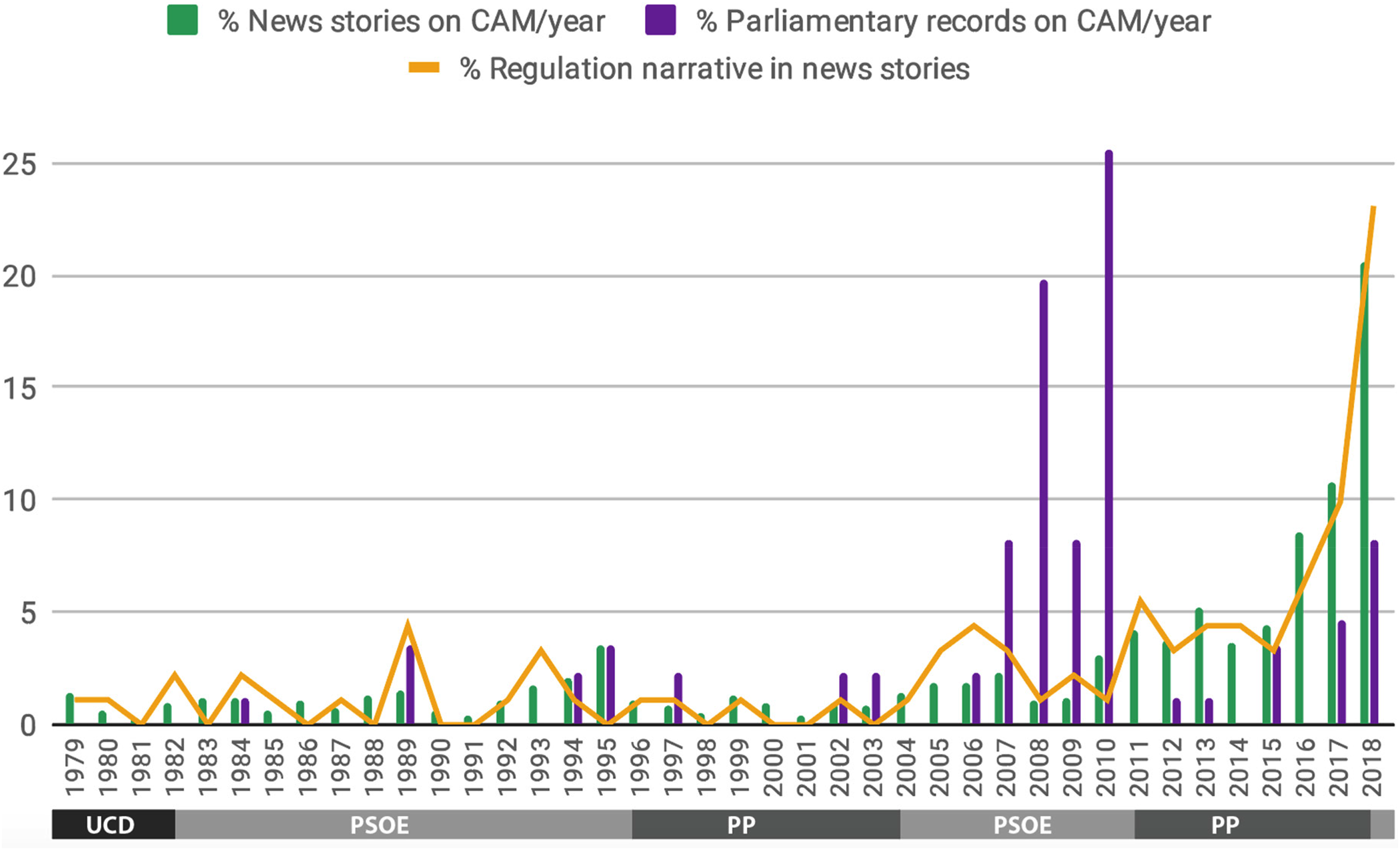
Comparison between media attention (N = 2,059), political attention (N = 86) and the presence of regulatory issues in the news (n = 325) from 1979 to 2018.
Parliamentary attention included various types of initiatives (Figure 2). Although NBPs, draft laws, and motions are in the minority, they are the most relevant since they constitute the essence of the debate on the subject. Therefore, to check whether there is temporal overlap between the media and political agendas, we also explore these initiatives qualitatively by placing them in the context of media content and, specifically, the presence of regulatory aspects in the press.
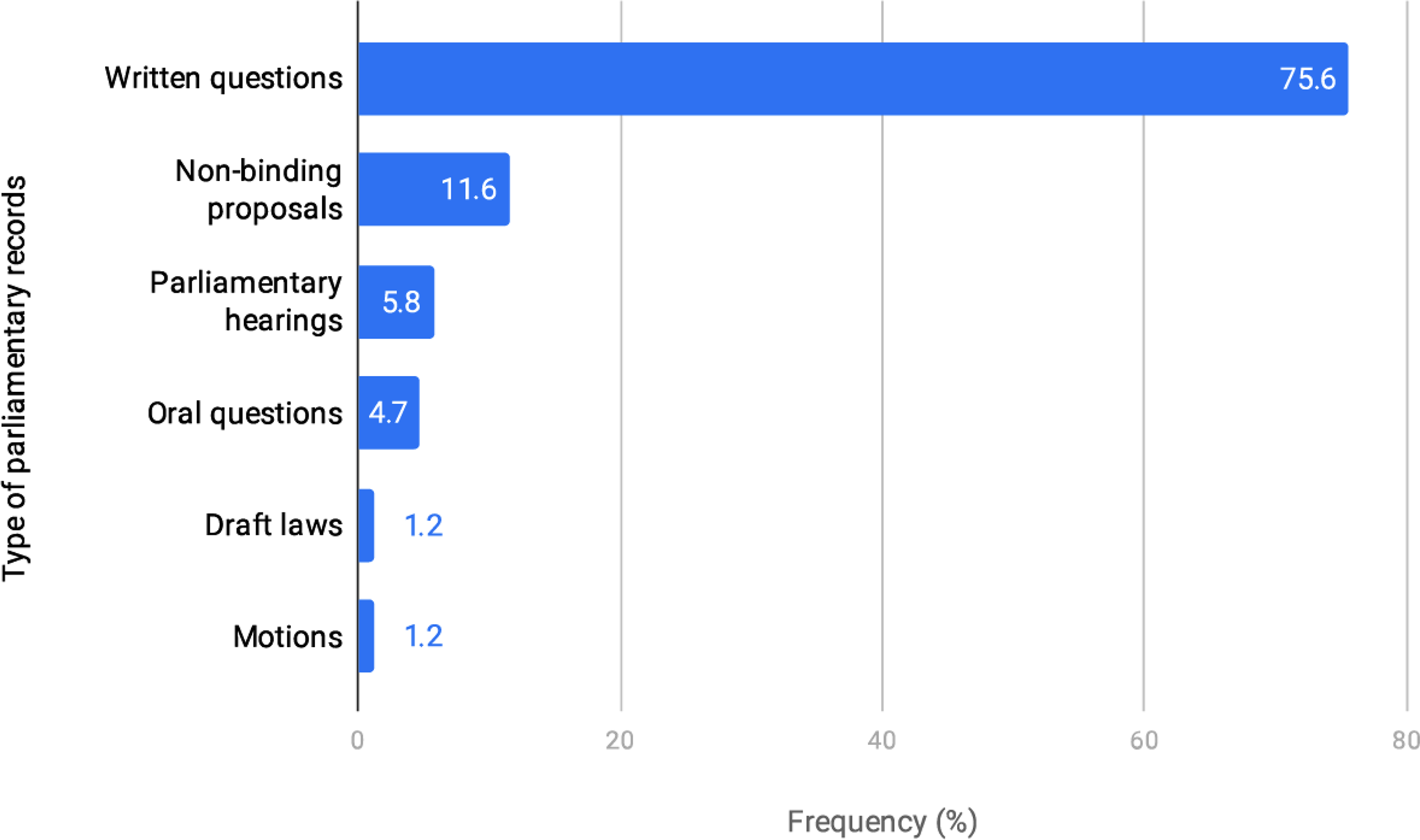
Distribution of parliamentary attention to complementary and alternative medicines (CAM) by type of initiative in the period from 1979 to 2018 (N = 86).
It was in the mid-1980s that the issue of CAM regulation first came to parliament, several years after the press first dealt with it (Figure 1). However, it was not until 1989 that there was a slight increase in parliamentary activity. The regulation of the training and practice of acupuncture and homeopathy was debated, but as legislation was not forthcoming, media attention decreased in the following years.
In 1993, the press reactivated the unresolved issue of CAM regulation, and in the following two years, parliamentary activity was resumed, albeit with divergent agenda topics. While the press reported that Spanish public television had dedicated several programs to the Austrian ex-doctor Hamer, parliament debated on advertising of products that are not medicines but claimed to improve health conditions, which was causing conflict in the pharmaceutical sector according to the political discourse.
From 1998 to 2001, there was a vacuum in parliamentary activity and a decline in media attention. Surprisingly, the press did not echo the authorization of the so-called nonconventional therapy units in Royal Decree 1277/2003, the only Spanish legislation that, to date, has regulated CAM beyond the mandatory implementation of European Union directives on homeopathy.
The press focused again on the regulation of these therapies in the three-year period from 2005 to 2007, but media attention remained lower than in the 1990s. This contrasts with the intensive parliamentary activity between 2007 and 2010, the highest in the whole historical series (Figure 1). However, a qualitative analysis of the topics reveals a common element in both corpora, viz. the approval in the Parliament of Catalonia of Decree 31/2007, which regulated the conditions for exercising thirteen types of CAM. This new regulation was finally canceled by the courts in 2011 for not being in accordance with national legislation.
From the end of 2006 until the annulment of the Catalan Decree, five NBPs were registered, asking for the regulation of CAM to address the gap existing at the national level. The most important NBP to be approved was presented in 2007 by the parliamentary group Izquierda Unida–Iniciativa per Catalunya Verds, urging the government to create a working group to prepare future regulation. The working group presented a report to serve as a basis for legislation in December 2011 (Spanish Ministry of Health 2011).
Although there was a sustained increase in media attention while regulation remained a constant subject in the journalistic account of CAM between 2011 and 2014, parliamentary activity on this subject was almost absent. However, in 2015, some alignment between the two agendas occurred due to an event that was highly criticized in the press when a popular presenter on Spanish public television (TVE) stated that lemons could prevent cancer. The Socialist Party (opposition), collecting the discomfort and concern from different groups, presented an NBP urging the public media to be more careful when including information about treatments and products without scientific evidence in their programs. Media attention almost doubled the following year, and the percentage of articles dealing with CAM regulation also increased, although political attention was absent, this time due to the timing of the general election.
In contrast, the last two years in the studied period showed a simultaneous and unprecedented increase in both media and political attention. Part of this political activity focused on denouncing content about CAM in the media, mainly promoted by the new liberal party, Ciudadanos, which in 2017 presented an NBP obliging health professionals to report practices without scientific evidence to the courts. Also in 2017, the governing Popular Party presented its own NBP related to pseudotherapies. In contrast to the proposal from Ciudadanos, this new proposal did not urge the Government to regulate but rather to promote and encourage education, information, and training campaigns for citizens to avoid fraud. Both NBPs were debated together while the press covered their ups and downs.
In 2018, the media and political agendas overlapped once again around another event: In January of that year, El País reported that some facilities of the largest Spanish Public Research Centre, the Spanish National Research Council (CSIC), had been rented to hold the annual congress of the Spanish Association of Naturist Doctors. As a reaction, the CSIC immediately canceled the contract, and the Socialist Party (opposition) presented an NBP urging the government to increase controls and sanctions on unscientific congresses. That year ended with the announcement of the Plan for the Protection of Health from Pseudotherapies and the launch of public consultation for a Royal Decree following its spirit. As these actions were implemented by executive orders, they are not included in our political corpus, although they did receive media attention.
Coherent Terminology to Refer to CAM in News Coverage and Parliamentary Activity
The results regarding RQ 1.2 reveal temporal coherence regarding the use of the prefix “pseudo-” in both agendas, as seen by their almost perfect linear correlation (Pearson r = .956; P < .001), which is not the case for the other more frequently used terminological options such as “alternative” or “natural” (Table 1 and Supplemental Tables A6).
Descriptive Statistics and Correlations of Linguistic Terms Used to Refer to Complementary and Alternative Medicines (CAM) in the Parliament and Press From 1979 to 2018.
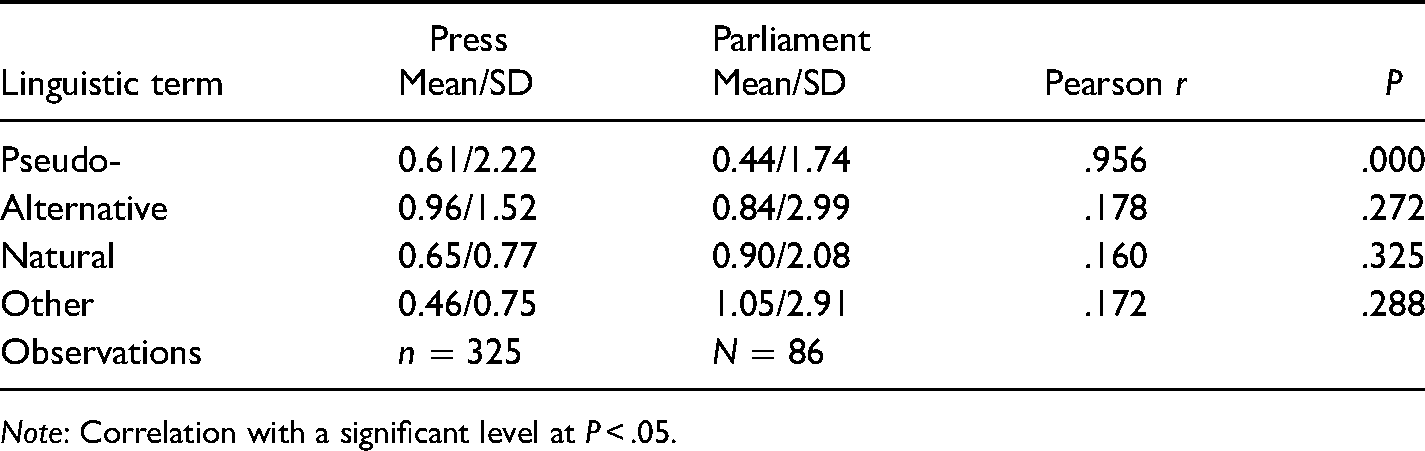
Note: Correlation with a significant level at P < .05.
According to the average values, the press made greater use of the prefix “pseudo-” than did politicians (0.61 vs. 0.44). Moreover, based on the SD, it can be seen that its use by the press was more variable over time than in the case of politicians (2.22 vs. 1.74). The prefix “pseudo-,” with clear pejorative semantic connotations, appeared in both discourses in the 1980s and 1990s. From 2012 to 2014, the press began to use it timidly, whereas from 2015 it became a frequent term in the media discourse to refer to CAM. In 2017–2018, the press intensified the use of the prefix “pseudo-” while it strongly permeated political discourse too (Figure 3).
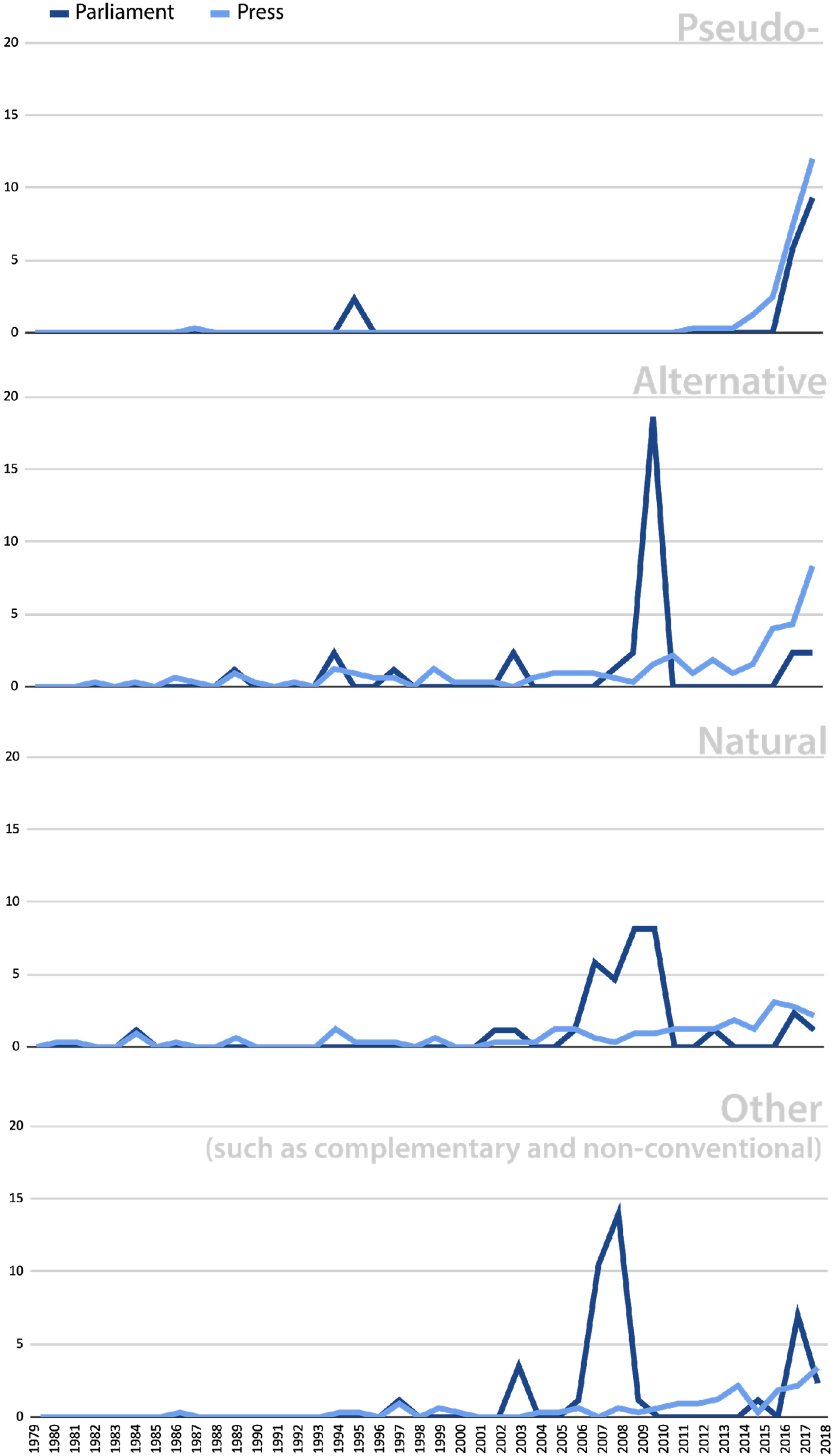
Evolution of linguistic terms to refer to complementary and alternative medicines (CAM) in the press (n = 325) and parliamentary records (N = 86).
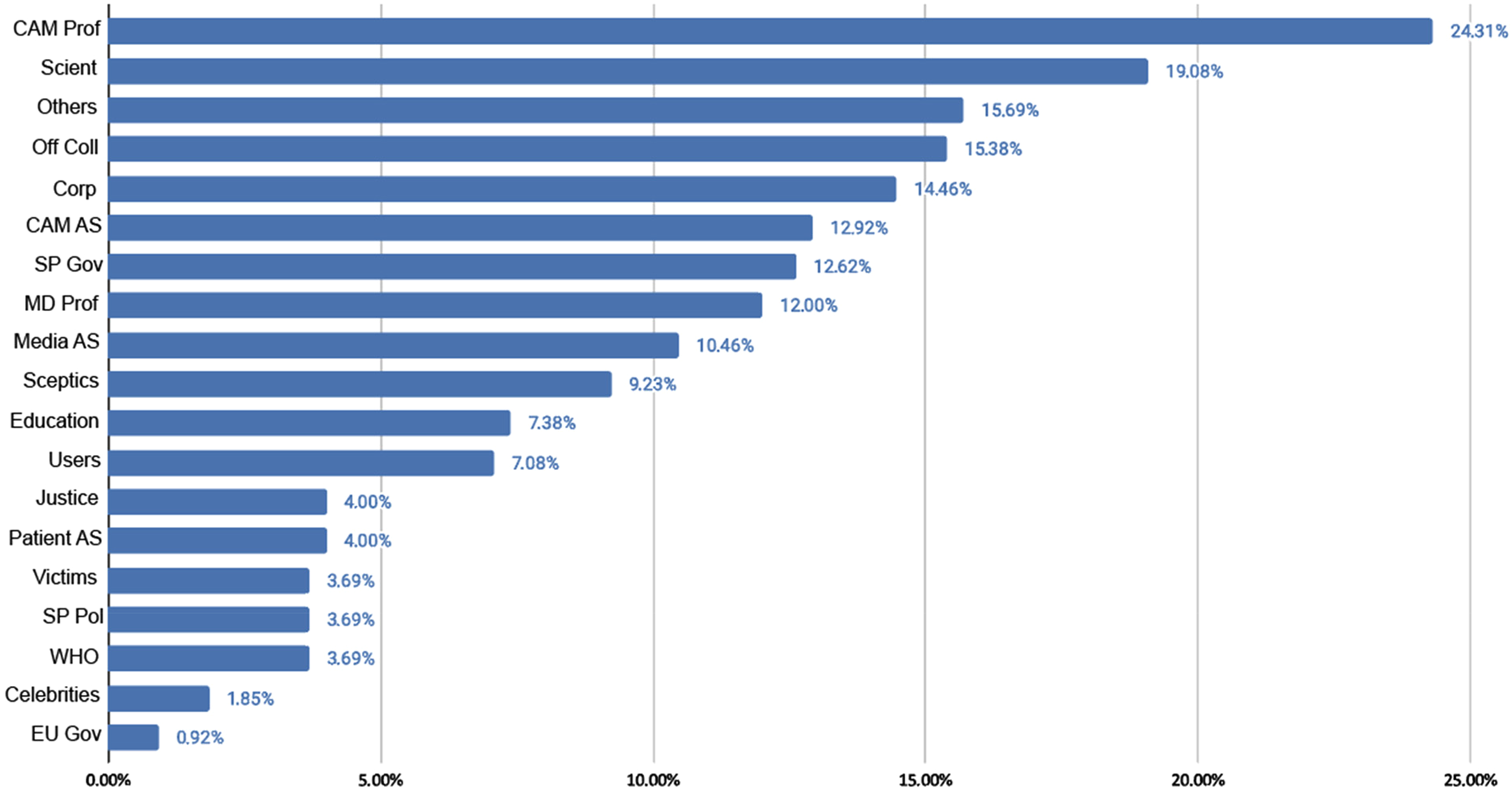
Number and type of sources used in the news (n = 325).
News Sources
Regarding RQ 2.1, the commonest sources of information throughout the forty years studied were professional CAM staff (24.31%), followed by scientists (19.08%), and representatives of official medical colleges (15.38%). Companies (also including representatives of hospitals, clinics, and various businesses), complementary therapy professional associations, the Spanish Government, conventional medical staff, the media, and skeptical associations were also present as sources of information in 9–14% of cases (Figure 4).
The presence of political sources is marginal (3.69% of the time), with the PSOE (3.08%) being the most cited party (Supplemental Tables A7 and A8). However, documentary sources do have a greater presence, with 24% of the articles using reports or scientific papers to support their arguments. The longitudinal analysis (Figure 5) confirms that the use of documentary sources increased in the later period of the study.
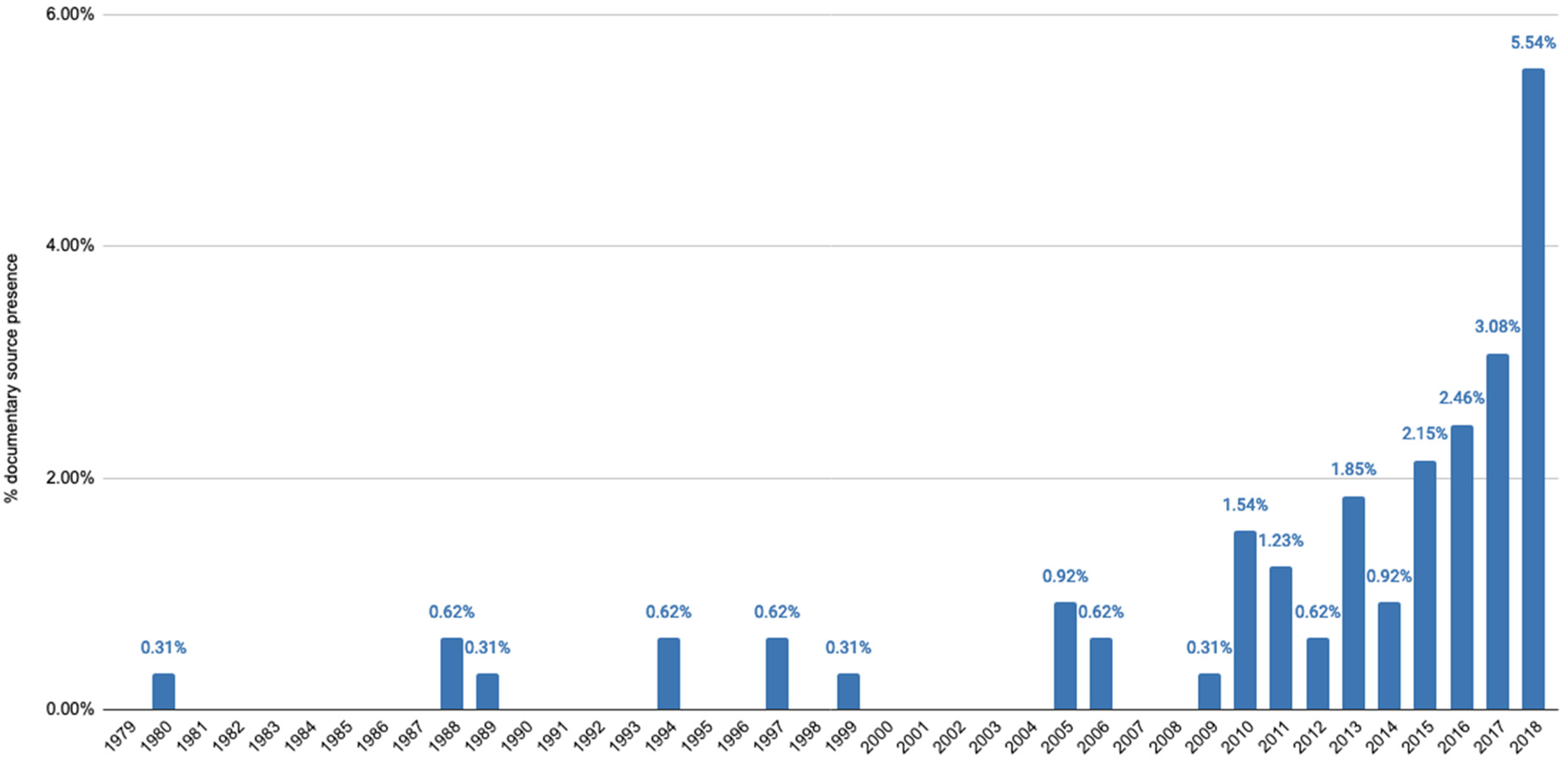
Temporal evolution of use of documentary sources (n = 325).
The evolution of the types of sources cited in the press (Figure 6) indicates that the use of professional CAM staff remained stable throughout the period. Note that the use of this type of source did not increase as media attention grew. Conversely, skeptical associations, official medical colleges, and scientists became more prominent during 2015–2018. Interestingly, the Spanish Government also reached its strongest presence in the media during this period.
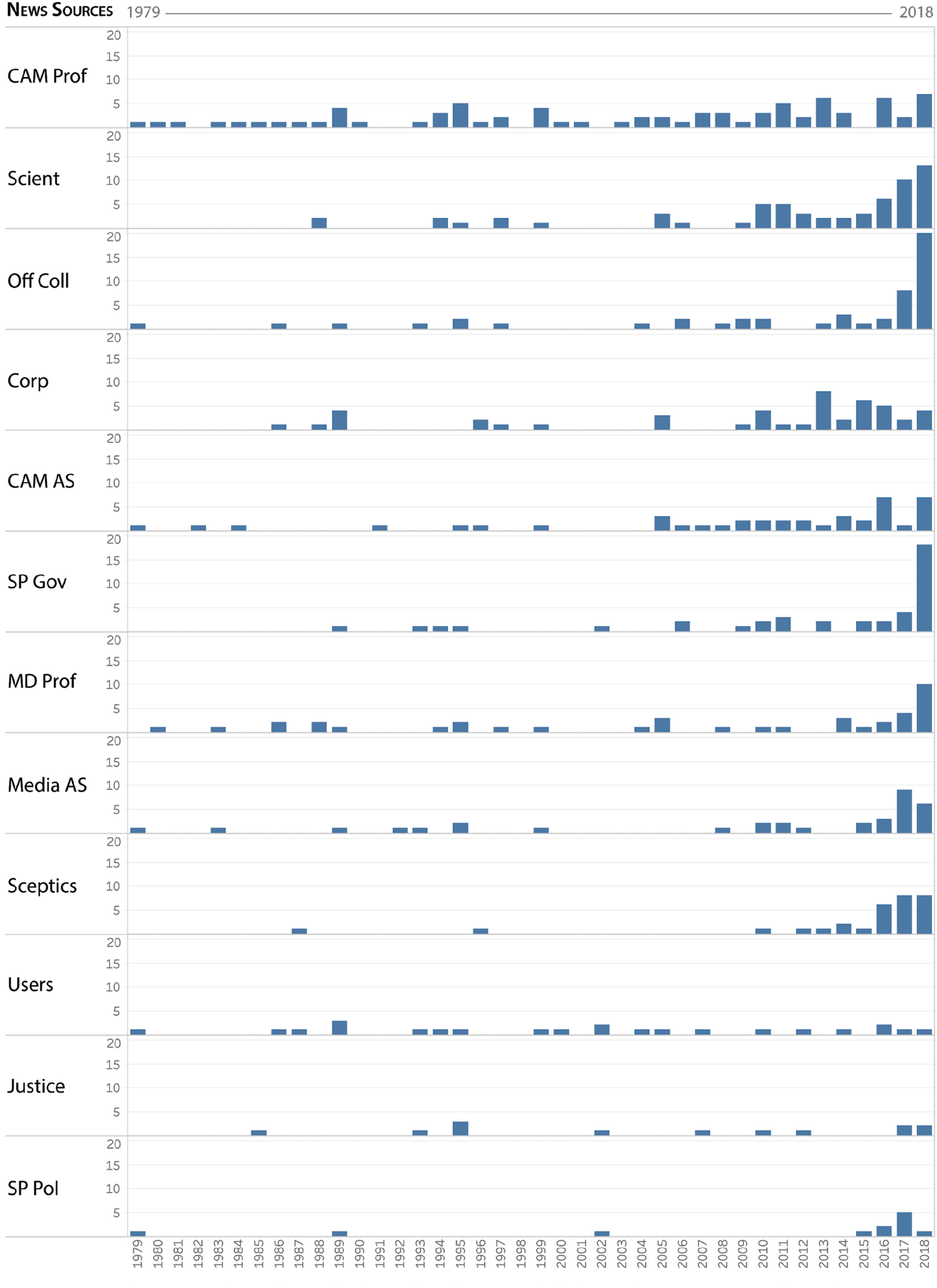
Frequency of use of different types of news sources.
To compare the mentions between the press and parliamentary discourse (RQ 2.2), the sums of the sources relating to the Spanish Government (ministries and ministers) and Spanish politicians (politicians not holding government positions) were calculated (Figure 7). Based on these data, three periods stand out: (1) 1993–1995, when political sources had a slight impact on the media discourse (0.31% each year) and the media was mentioned in the political discourse (1.16% and 2.33%); (2) 2002–2013, when politicians are used as sources of information for CAM news but the political discourse does not mention the media; (3) 2015–2018, which stands out for both a strong presence of political sources in the media and a considerable increase in mentions of the media during the parliamentary discourse.
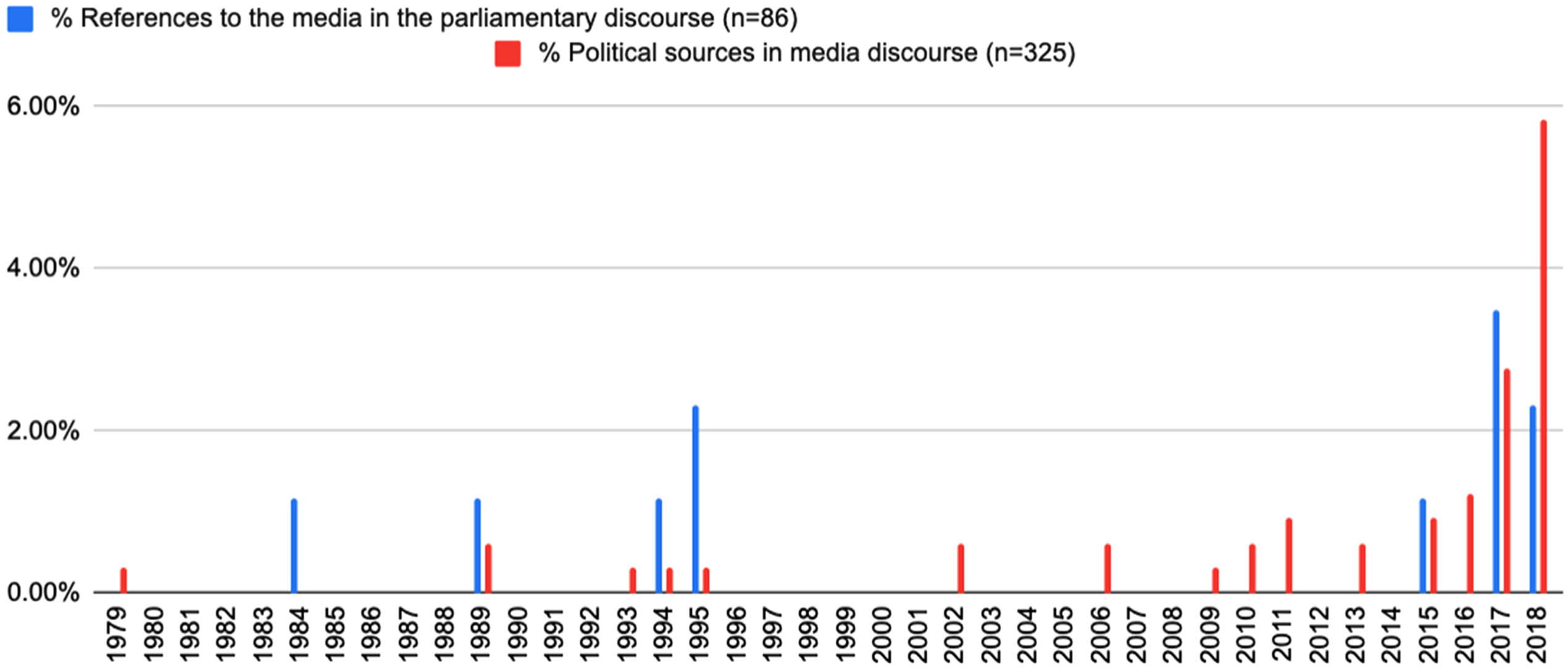
Presence of media and political sources in parliamentary discourses (N = 86) and media (n = 325).
Discussion and Conclusions
Drawing on the literature on mediatization/biomediatization (Briggs and Hallin 2016), health and political communication as well as media effects, this comparative study addresses the dynamics between the media and politics in relation to the evolution of the debate on CAM by analyzing Spanish news coverage and parliamentary records from 1979 to 2018. To assess the degree of mediatization of these dynamics and, in particular, how and when it occurs and its effects, media and political attention to the issue, topics, terminology, and use of information sources are conceptualized as indicators. The results reveal (a) historical moments with an evident interaction between the media and political spheres through the agenda-setting function in terms of the volume of attention and topics (amplification dynamics), and by the framing function through the coherent use of language (performative action); (b) synergies in the power relations between the media, politicians, and other social agents as revealed by their participation as sources of information in the media discourse and the presence of media in the political discourse (costructuring of power relations).
Previous research has shown that delegitimization of CAM became evident in the Spanish press from 2016 onwards (Lopera-Pareja and Cano-Orón 2021) and in politics a year later (Lopera-Pareja 2019). The current findings illustrate when and how this shift in the mainstream discourse on these therapies emerged. Strong synergies between both public arenas are revealed, becoming evident in the similarity in the amount of discussion and the narratives/frames used, also corresponding to a more widespread skepticism regarding CAM.
However, the results show no evidence of a relationship of sustained influence over time between the volume of media attention, the volume of political activity, and the presence of the issue of CAM regulation in news coverage. Rather, the data reveal that the distribution of political attention over time has been more irregular than media attention, except in the last few years of the period analyzed, coinciding with the adoption of a skeptical position rejecting these techniques, as detected previously in both media (Lopera-Pareja and Cano-Orón 2021) and the political discourse (Lopera-Pareja 2019).
Depending on the historical moment, the current findings reveal certain patterns of interaction between the media and political arenas in relation to CAM, as evidenced by the application of the mentioned mediatization indicators. Although these remain to be confirmed by further studies using qualitative data (e.g., interviews with journalists and policy-makers), some synergistic patterns can thus be initially identified as follows:
Deferred interaction of the media in the political sphere through the volume of media attention on CAM regulation. These circumstances occurred in the 1980s when, although the press began to deal with the regulation of CAM from the beginning of the analyzed period (1979), it was not until 1984 that the issue was first dealt with in parliament, which also mentioned the media in its discourse. Such a delayed reaction of politicians also occurred in the early 1990s. In that period, the social agents that played a constant role as a source of information in the media were professional CAM staff. Likewise, politicians mention the media more than vice versa. This pattern is characterized not by an agenda-setting function as such, but by providing a prior breeding ground, similar to the first phases of the cycle of public attention to an issue in the Downs (1972) model, to which politicians later allude to defend their position on CAM. Reciprocal interaction between the volume of attention to CAM in the same time period (1994–1995) but addressing different specific topics. During this period, the media were more concerned about the Hamer scandal than about the regulation of these therapies. While politicians had an anecdotal presence in the news during this period, the media were mentioned in the political discourse at a higher frequency than previously. Interaction with coherence on specific topics but divergence in terms of the volume of attention. This pattern was detected in 2007 and replicated in the following years until 2010. In this case, political attention in the form of NBPs and parliamentary questions reached its historical peak, while media attention did not exceed the figures of the 1990s. However, both the press and politicians highlighted the need to regulate CAM at the national level. This pattern demonstrates that the agenda-setting function can be effective without increasing media attention but simply by focusing on a particular issue. The main source of information for the media continued to be professional CAM staff, although from 2009 it was scientists who took on a greater role until the end of the study period. While there were no mentions of the media in the political discourse, the participation of politicians as sources of information remained anecdotal. Interaction of the media and politics through the volume of attention, the topics addressed, the language used, and the peak number of mutual mentions. In 2015, and in particular the two-year period of 2017–2018, an alignment of the two agendas emerges in multiple aspects: the volume of attention begins to increase, first in the media sphere and then in the political sphere; the topic of regulation has a strong presence in both agendas as well as their orientation, marked by complaints published by the press about CAM, which it calls pseudosciences or pseudo-therapies. Following Hjarvard's axiom that “naming is framing” (2016: 248), the political agenda takes on board the claims of the press and also transfers them to parliament using the same language (the “pseudo-” prefix) as a performative framing function to determine the course of action to regulate medical practice. This follows the biomediatization framework (Briggs and Hallin 2016). In these periods, politicians have a much stronger presence as sources of information in the media, while mentions of the media also increase in the political discourse. The main sources in the news are scientists, representatives of official medical colleges, and government sources. This is consistent with previous findings (e.g., Hallin et al. 2020) that individual physicians (as is the case here with CAM professionals) have lost the standing they once had as authoritative voices on health, giving way to biomedical researchers. Previous research has already demonstrated that the medical profession has reacted publicly against CAMs as these therapies gain ground in public health (Winnick 2005).
The analysis of social agents as a source in media coverage sheds light on who has been given the agency to influence the direction of the public debate against CAM in recent years. The current findings indicate that, unlike the Australian case (Lewis 2020), there was not a balance of sources for and against, given that CAM agents and users were barely present in the media discourse when politicians accepted the demands of skeptics and biomedical agents. Previous research has indicated that Spanish sources supporting CAM may have been subject to a spiral of silence (Cano-Orón 2019b). This disappearance of CAM professionals as media sources can also be understood as a defensive strategy to minimize the damage that could be caused by public exposure (Nölleke et al. 2020), especially in the years when CAM were delegitimized in the media (Lopera-Pareja y Cano-Orón, 2021), but it could also indicate that journalists are responding to an already dominant skepticism and not considering them as valuable sources, thereby preventing an equal treatment of sources.
The omission of users as sources in recent years seems to indicate a loss of agency to influence the debate and thereby to incorporate their testimony on health choice into the discourse. This represents a departure from approaches that emphasize the responsibility of individuals for neoliberal health policies in other contexts such as the USA (Hallin et al. 2020). Surprisingly, the Spanish neoliberal party, Ciudadanos, is the one that has most vehemently positioned itself against the free choice of individuals in relation to the use of CAM. Indeed, it is the only party to have called for a ban and denounced these practices, which would theoretically go against its ideology in relation to general market deregulation. This prohibitionist position does not correspond to their liberal ideology related to CAM (Broom et al. 2014), which implies freedom of choice for each patient and shifts the ultimate responsibility for the choice to the patient. It also does not correspond to what this ideology has advocated in other European countries such as Sweden (Danell 2018).
These results raise new questions, such as what led this new party to call for a ban on CAM. One may hypothesize that the increased media attention to this issue may have been an incentive for the Spanish neoliberal party to sponsor a dominant skeptical approach in the media to gain visibility in the political sphere. However, it may also be due to hidden lobbying pressures from the powerful biomedical sector (Hallin et al. 2020). In fact, one of the few pieces of evidence of these pressures are references by politicians to the conflict that advertising of CAM meant for the pharmaceutical sector, dating from the beginning of the 1990s.
In terms of theoretical development, the results of this study reveal that the greatest change in public discourse on CAM, corresponding to a growth of skepticism to become the mainstream discourse in media and politics and on social networks (Cano-Orón 2019c), took place according to the press–politics interaction pattern IV, with the strongest synergies between these two spheres. This leads to the conclusion that, in the final years of the study period, a solid press–political costructuring dynamic was established based on a new structure of power relations regarding the participation of sources in the debate (Hallin et al. 2020; Hjarvard 2016). Only when official medical colleges, biomedical scientists, and skeptics enjoyed increased participation as media sources while CAM supporters remained voiceless did the mainstream discourse shift from legitimizing or neutral to delegitimizing CAM. And this activated political actions in the same direction. Therefore, of all the indicators of mediatization analyzed, those that have made a difference in the shift of the discourse on CAM have been the changes in the participation of information sources, in conjunction with other indicators.
There has been a change in both the political and media discourse that neither agenda-setting (McCombs and Shaw 1972) nor media framing (Entman 1993) can explain alone if we consider the whole period. However, these do apply to the final years analyzed (2017–2018), when three dynamics of influence of the media on politics overlap: amplification, framing, and costructuring of power relations. How have certain stakeholders gained access as sources and achieved this shift in the discourse that benefits them? What is the reason for this? Our comparative analysis of these two spheres reveals that, during most of the study period, the media and politicians followed their own path, but qualitative and quantitative alignment has emerged in recent years, including mutual mentions between the press and politics. What caused this effect? The skeptical lobby? Although the literature (Cano-Orón 2019b) has verified this, more qualitative studies are required to confirm this as the battle is far from over.
One limitation of this work is that the observed evolution may be determined by unconsidered variables, for example, the forms of information consumption, the impact of the communicative ecosystem, and the prevailing social values in relation to health care in each historical moment and its circumstances. Qualitative analyses that lie beyond the scope of this study could include in-depth interviews with social agents, which offers a new path for future research to determine the factors influencing this topic.
Supplemental Material
sj-docx-1-ijpp-10.1177_19401612211047587 - Supplemental material for Media and Science Policy: Who Influences Whom Regarding Complementary and Alternative Medicines Regulation
Supplemental material, sj-docx-1-ijpp-10.1177_19401612211047587 for Media and Science Policy: Who Influences Whom Regarding Complementary and Alternative Medicines Regulation by Lorena Cano-Orón and Emilia H. Lopera-Pareja in The International Journal of Press/Politics
Footnotes
Acknowledgments
This work has been developed in the framework of two research projects: “Study and classification of the natural, complementary and alternative therapies through the media and the social networks. Transference ideas and values applied to the social imaginary” (CSO2014-57778-R), financed by the Ministry of Economy and Competitiveness and by European Union FEDER funds, and the project “Praxeology of scientific culture: evaluation and measurement” (FFI2017-82217-C2-2-P), financed by the Ministry of Economy and Competitiveness. This work has also been made possible by the Utrecht Network Young Researchers Grant.
Declaration of Conflicting Interests
The authors declared no potential conflicts of interest with respect to the research, authorship, and/or publication of this article.
Funding
The authors disclosed receipt of the following financial support for the research, authorship, and/or publication of this article: This work has been developed in the framework of two research projects: ‘Study and classification of the natural, complementary and alternative therapies through the media and the social networks. Transference ideas and values applied to the social imaginary’ (CSO2014-57778-R), and ‘Praxeology of scientific culture: evaluation and measurement’ (FFI2017-82217-C2-2-P), financed by the Ministry of Economy and Competitiveness and by European Union FEDER funds. This work has also been made possible by the Utrecht Network Young Researchers Grant.

Supplemental Material
Supplemental material for this article is available online.
Author Biographies
References
Supplementary Material
Please find the following supplemental material available below.
For Open Access articles published under a Creative Commons License, all supplemental material carries the same license as the article it is associated with.
For non-Open Access articles published, all supplemental material carries a non-exclusive license, and permission requests for re-use of supplemental material or any part of supplemental material shall be sent directly to the copyright owner as specified in the copyright notice associated with the article.
