







Abstract
We present a theoretical model of amoral management in an effort to understand impediments to ethical leadership. We posit that a number of anticipated negative consequences of engaging in ethical leadership are positively related to amoral management and these relationships are strengthened by contextual factors. Furthermore, we argue that under certain conditions, amoral managers may experience enough moral motivation to engage in initial ethical leadership practices. However, if the leader’s newly acquired ethical leadership practices are met with resistance, such that the leader experiences substantial role stressors and reductions in short-term performance and becomes a victim of supervisor-directed deviance and/or workplace ostracism, then the leader will abandon ethical leadership practices and return to the status quo of being an amoral manager.
Interest in understanding the ethical dimension of leadership has produced a considerable stream of research in recent years. The ethical leadership concept has been studied for over 9 years now, with approximately 40 articles being published since M. E. Brown, Treviño, and Harrison’s (2005) seminal piece. The study of unethical leadership has also generated substantial interest and has been studied under the domains of abusive supervision (Tepper, 2000), supervisor undermining (Duffy, Ganster, & Pagon, 2002), and leader tyranny (Ashforth, 1994). Extant research generally concludes that ethical leadership is good and produces favorable organizational outcomes, whereas unethical leadership is bad and produces unfavorable organizational outcomes (M. E. Brown & Mitchell, 2010).
Although the growing body of research on ethical and unethical leadership is encouraging, we argue the literature has failed to answer an important question regarding ethics and leadership: If ethical leadership produces a myriad of favorable outcomes, then why wouldn’t a leader emphatically embrace ethical leadership practices? To date, the literature says very little about the challenges leaders may face as they attempt to become ethical leaders, or as they strive to maintain ethical leadership. Without such a discussion, ethical leadership scholars may inadvertently conclude that leaders should embrace ethical leadership as a management “no brainer.” We argue, however, that such an outlook is limited in scope and is practically inaccurate. A much needed, more encompassing view of ethical leadership recognizes its impediments, with the end goal of conveying to organizations possible setbacks that could make the practice of ethical leadership less sustainable.
To unlock the impediments to ethical leadership, an important first step involves devoting greater theoretical and empirical attention to the understudied concept of “amoral management,” which exists when managers “do not make an active or implicit intent to be either moral or immoral” (Carroll, 1987, p. 11). Carroll (1987) argued that amoral management is the dominant practice when it comes to ethics and leadership. Sixteen years later, Treviño, Brown, and Hartman (2003) echoed Carroll’s speculation by noting that ethically neutral leadership is very common among business leaders. More recently, the Ethics Resource Center (ERC; a nonprofit organization that researches and promotes ethical standards within organizations) found that 34% of employees said that their supervisors do not display ethical behavior (Ethics Resource Center, 2012), which may imply that these leaders are choosing to remain amoral or ethically neutral. Despite the supposed prevalence of amoral/ethically neutral leadership, we know relatively little about this concept, including why leaders may favor it over other ethical types of leadership.
Herein, we present a theoretical model of amoral management. 1 We first identify antecedents that explain why leaders may choose to practice amoral management over ethical leadership. We specifically identify psychological factors that capture preconceived notions regarding the interplay between business and morality and argue that these factors serve as predictors of amoral management (see Figure 1). Although leaders may have a dominant tendency when it comes to ethics and leadership, we agree with Carroll (1987) that certain factors may influence leaders to temporarily slip into another “ethical” leadership style. One purpose of our research is to investigate impediments to ethical leadership; thus, we investigate factors that may trigger an otherwise amoral manager to take initial steps towards becoming an ethical leader. Yet, we also predict that amoral managers may engage in initial ethical leadership practices that are met with high levels of resistance, which could then encourage the leader to resort back to the practice of amoral management (see Figure 2). Overall, we hope that our theoretical model, as well as potential future empirical studies on this topic, will help organizations to understand how to overcome the psychological barriers that can contribute to a dominant “amoral management” style, rather than an ethical leadership style, as well as to understand why initial ethical leadership practices may not lead to sustained ethical leadership.
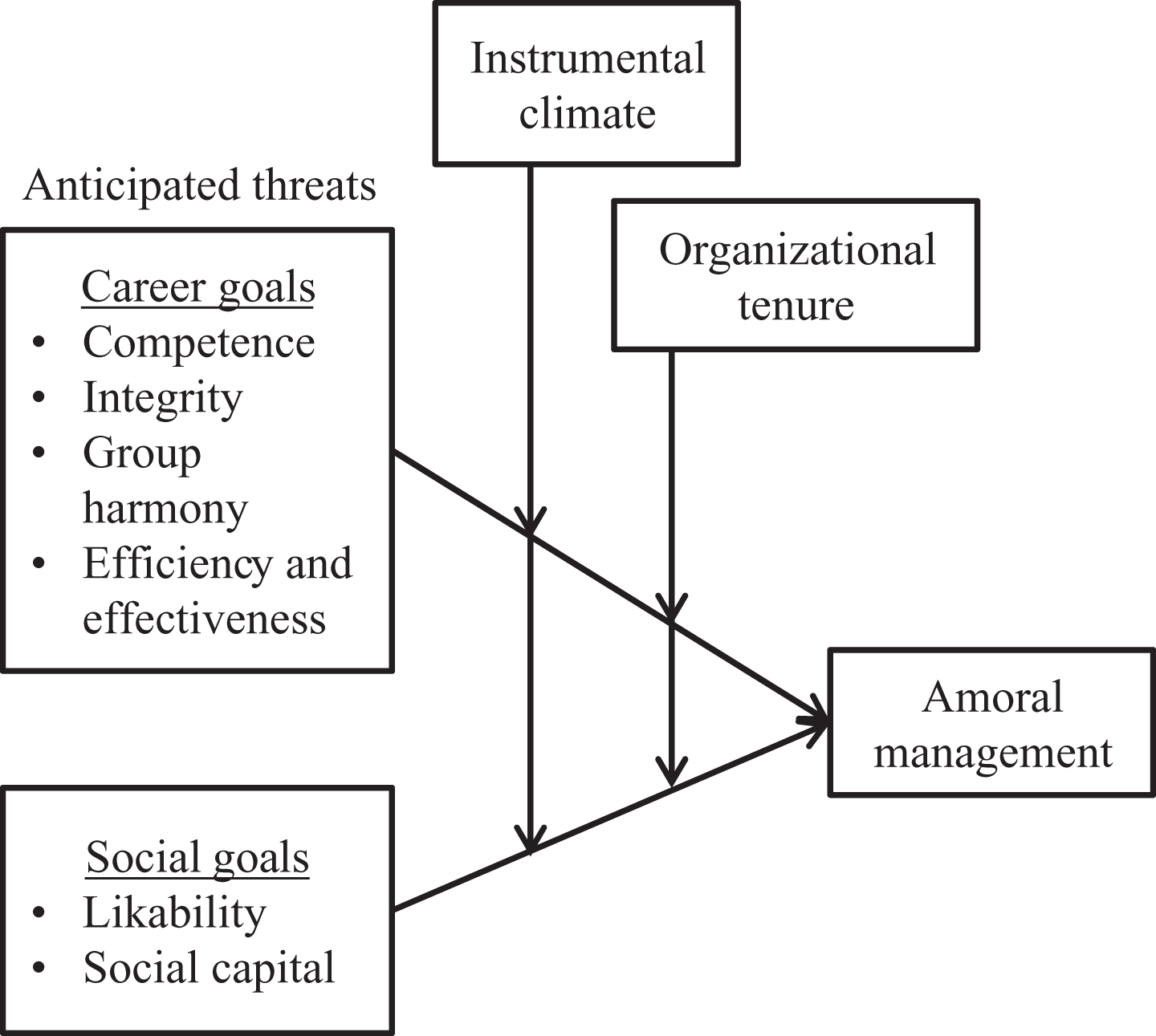
Anticipated negative consequences of ethical leadership.
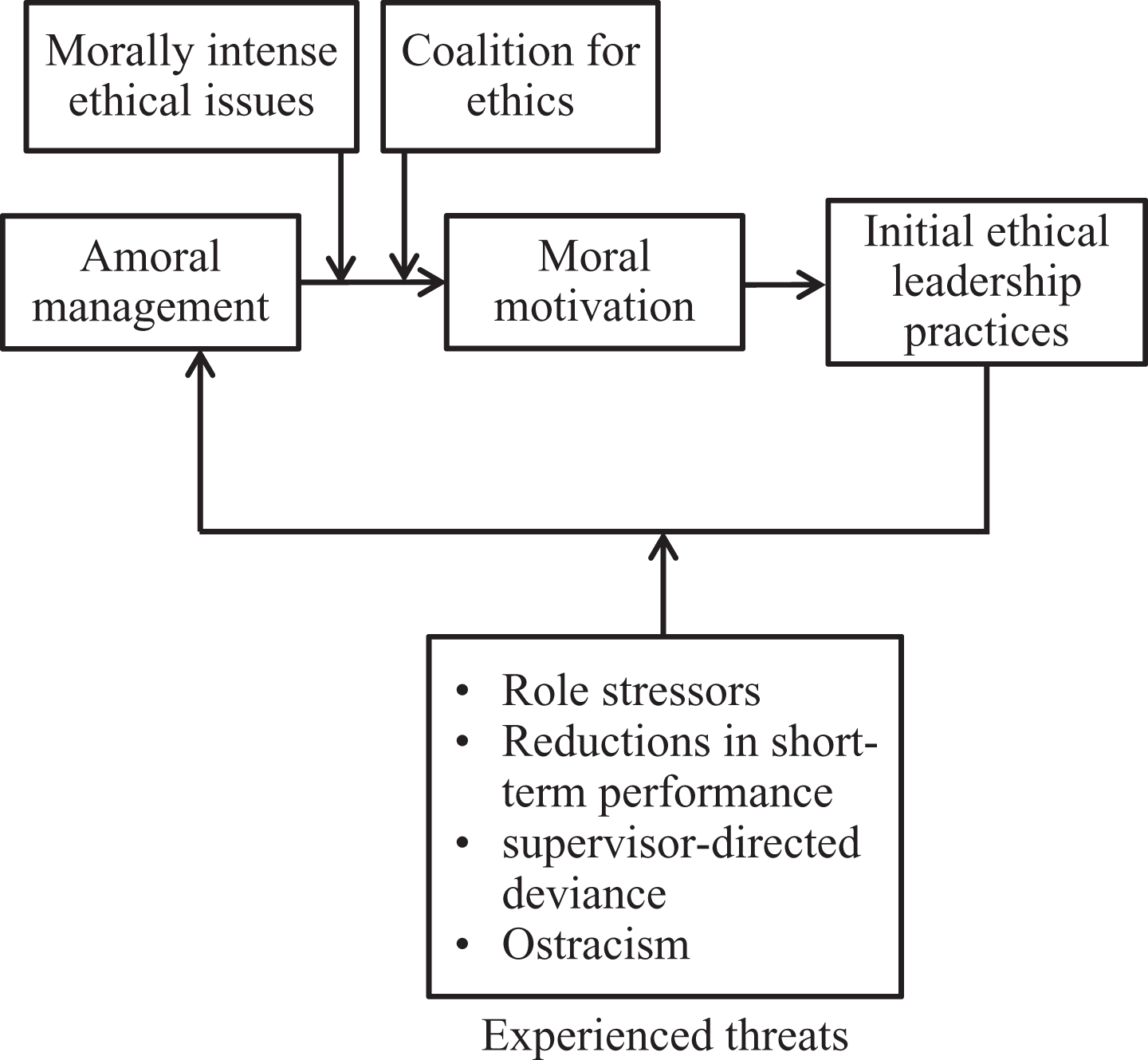
Proposed recursive model of the impediments to ethical leadership.
What is amoral management?
The ethical dimensions of leadership have been described by Carroll (1987) and Treviño et al. (2003) using roughly synonymous terms: moral management, immoral management, and amoral management (Carroll, 1987), and ethical leadership, unethical leadership, and ethically neutral leadership (Treviño et al., 2003). Carroll’s (1987) conceptualization of moral, immoral, and amoral management did not include specific definitions, but these concepts largely overlap with the definitions provided for ethical, unethical, and ethically neutral leadership. M. E. Brown et al. (2005) defined ethical leadership as: “the demonstration of normatively appropriate conduct through personal actions and interpersonal relationships, and the promotion of such conduct to followers through two-way communication, reinforcement, and decision-making” (p. 120). Although unethical leadership is often studied using specific constructs (e.g., abusive supervision), M. E. Brown and Mitchell (2010) recently provided a broader definition: “behavior conducted and decisions made by organizational leaders that are illegal and/or violate moral standards and those that impose processes and structures that promote unethical conduct by followers” (p. 588). Treviño et al.’s (2003) qualitative investigation of ethics and leadership also produced a definition of ethically neutral leadership as “a self-centered leader who lacks ethical awareness and cares mostly about himself or herself and the organization’s bottom line rather than other people” (p. 34).
In what follows we first discuss the similarities between ethical leadership and ethically neutral leadership. Although our final theoretical model uses the term “amoral management,” our model cannot be fully explained without first discussing ethically neutral leadership because of its conceptual overlap with amoral management. Next, we define and conceptualize amoral management and discuss how it is different than ethically neutral leadership. Our conceptualization of amoral management relaxes several underlying assumptions proposed in prior research (viz., Carroll, 1987). Overall, we argue that in some cases, amoral management may be fueled by a wider array of intentions, motives, and goals than originally proposed. Finally, it should be noted that because our theoretical model focuses on amoral management and ethical leadership, we spend less time discussing unethical leadership.
Ethical leadership versus ethically neutral leadership and amoral management
Treviño et al. (2003) explored the content domain of ethics and leadership by conducting an inductive, interview-based study of senior executives and ethics officers. Interestingly, the ethics officers unanimously agreed that ethically neutral leadership exists, whereas only half of the senior executives acknowledged this type of leadership. The skeptical executives said that ethically neutral leadership cannot exist because, whether leaders like it or not, they will be inundated with ethical decisions that require ethical reasoning and judgment. In fact, a considerable amount of senior executives implied that ethical leadership is primarily a function of ethical decisions and choices. However, we argue that ethical leadership embodies much more than a leader’s use of morality in making decisions and choices.
Treviño et al. (2003) strongly conveyed that perceptions of ethical leadership exist because of the leader’s socially salient behaviors. Leaders cannot simply make ethical decisions and choices behind closed doors and expect to be viewed as an ethical leader. Ethical leaders stand out as being different and unique because of their ethical approach. Ethical leaders actively promote ethics and go out of their way to demonstrate ethical behaviors. They regularly communicate a strong ethics message (M. E. Brown et al., 2005). Ethical leaders make an example of those who behave ethically or unethically by rewarding and punishing behavior in accordance with ethical standards. Ethical leaders are different than other leaders because they temper the traditional, purely economic frame of mind. They strongly care about the organization’s bottom line, but they also pay attention to the way it is obtained. They communicate to followers that one must first “do the right thing” in terms of ethics, and then high financial returns will naturally follow.
An important aspect of ethical leadership is the incorporation of ethical communication and language into leadership practices, making an overall ethical agenda very salient and transparent to followers (M. E. Brown et al., 2005; Treviño et al., 2003; Treviño, Hartman, & Brown, 2000). Indeed, M. E. Brown et al.’s (2005) definition of ethical leadership specifically states that ethical expectations are promoted to followers through two-way communication. The importance of ethical communication, however, is not always embraced by executives. Treviño et al. (2003) found that senior executives “did not explicitly mention communication at all” (p. 26) when describing ethical leadership. The risk, however, is that a leader who does not actively communicate ethical standards is likely to come across as amoral or ethically neutral—not clearly moral or immoral, ethical or unethical. 2
A significant observation regarding Treviño et al.’s (2003) definition of ethically neutral leadership is that it was largely constructed based on perceptions of leaders, with assumptions made regarding the leader’s moral awareness, motives, and goals. Treviño et al. (2003) concluded that ethically neutral leaders are not morally aware, are selfish, and primarily focus on the bottom line with little concern for other people. We agree that an ethically neutral or amoral manager may be perceived in such a way, but we also argue that the leader’s self-views may be very different. A discrepancy may exist between leader self-views and follower perceptions because of communication failure. Without a leader strongly communicating an ethical agenda, followers are left to their own judgment regarding the leader’s ethical values (Treviño et al., 2003). Because the bedrock of corporations is to create shareholder value (Treviño & Nelson, 2011), a leader’s lack of ethical communication inadvertently signals that “anything goes” to support the organization’s bottom line (Treviño et al., 2003). Hence, the ethically silent leader comes across as someone who selfishly pursues economic gains above all else.
We argue that there are two key differences between ethical leadership and our conceptualization of amoral management: (a) the use of ethical communication, and (b) the visible demonstration of ethical practices. The ethical leader uses both of these factors to support a socially salient ethical agenda, whereas the amoral manager does not. Leaders may privately make ethical decisions and choices on a regular basis, rendering themselves ethical, but followers may have a different view (Treviño et al., 2003). Without the leader’s verbal and behavioral support of ethics, followers may view the leader as amoral, which may be accompanied by harsh judgments of the leader’s selfishness and lack of care. The latter point may be contrary to the leader’s intentions of managing well and of being ethical, though in a less public manner.
Hence, we conclude that Treviño et al.’s (2003) definition of “ethically neutral leadership” may be appropriate from an observer’s perspective, with followers possibly viewing the leader as selfish, morally unaware, and narrowly focused on organizational profits. Our conceptualization of amoral management, on the contrary, implies that the leader may actually endorse ethics, but perhaps fails to support a socially salient ethical agenda. Although we agree that the leader may be perceived in a negative light, we also argue that amoral managers may not intend to be selfish, may not completely ignore moral issues, and may have concerns that encompass more than just bottom-line attainment.
Definition of amoral management
Thus far, we have not clearly distinguished “ethically neutral leadership” and “amoral management,” in part because there is considerable overlap between these constructs. Both ethically neutral leaders and amoral managers have been described as self-centered, lacking moral awareness, emphasizing bottom-line performance above all else, and not being clearly ethical or unethical (Carroll, 1987; Treviño et al., 2003; Treviño et al., 2000). Despite these similarities, we describe our theoretical model in terms of amoral management for several reasons.
First, Carroll (1987) does not provide a specific definition of amoral management, making it less confusing to introduce a definition of amoral management rather than redefining ethically neutral leadership. Second, although amoral management shares conceptual space with ethically neutral leadership, amoral management is less specific in terms of the manager’s self-interested nature and lack of moral awareness. Amoral managers may come across as egocentric because they primarily focus on organizational profitability, but their overall motive to “help the organization” may also be well intentioned (Carroll, 1987). Amoral managers may lack moral awareness, but not always. According to Carroll (1987), intentional amoral managers are morally aware but choose not to use ethical judgment in business dealings; they do not believe in the coexistence of business and moral judgment. They have different “rules” for business than other areas of life. Unintentional amoral managers, however, are not morally aware and lack moral perception. These managers are simply careless and morally casual.
Our conceptualization of amoral management is broader than Carroll’s (1987) in that we do not retain the “intentional” versus “unintentional” amoral management distinctions. However, we agree with Carroll that amoral management does not always imply a lack of moral awareness. Some managers are indeed morally aware, but still refrain from practicing ethical leadership. Unlike Carroll’s description of “intentional” amoral managers, we argue that some amoral managers do not necessarily have different rules for business than other areas of life. Instead, some managers privately uphold ethics in a way that aligns with their personal moral convictions, but they are still deemed amoral managers because they do not actively incorporate ethics into their management behaviors.
Third, we generally prefer the term management over leadership because amoral implies a lack of ethical influence. The term leadership typically implies that a person will try to influence a follower to attain some goal (Stogdill, 1950). For example, ethical leaders strive to influence followers to uphold ethical standards. The amoral manager, however, does not provide guidance in terms of ethics. In the same way that laissez-faire leadership is described as the absence of leadership (Avolio, 1999; Bass, 1998; Judge & Piccolo, 2004), amoral managers do not actively “lead” in terms of ethics. 3 Hence, our model utilizes the term amoral management over ethically neutral leadership.
Another important note regarding amoral managers is that they may or may not be moral people. Amoral managers fail to communicate ethical expectations and refrain from serving as visible ethical role models. However, amoral managers can be moral people (Treviño et al., 2000). As stated by Treviño et al. (2003), “you can be ethical and be a leader and choose not to put ethics at the forefront of your leadership” and “because of the pressure to succeed, to make a profit, to compete and survive, ethical people can be bad leaders or unethical leaders” (p. 20). Hence, managers who are otherwise good people can practice amoral management.
A final note regarding amoral management is that it is not necessarily the opposite of ethical leadership (Carroll, 1987). Ethical leaders are undoubtedly ethical in their personal and professional lives (Treviño et al., 2003; Treviño et al., 2000; Treviño & Nelson, 2011). Conversely, unethical leaders are typically immoral people and immoral managers. Amoral managers, however, are unique in that even though they do not visibly demonstrate moral management practices, they may or may not be moral people. The lack of clarity regarding the amoral manager’s personal moral character is a unique element of this construct, making it unlikely to serve as the direct opposite of ethical leadership.
In sum, we offer a broader conceptualization of amoral management than provided in past research (viz., Carroll, 1987; Treviño et al., 2003). By “broader,” we mean that we relax several of the previously endorsed assumptions of amoral management. We argue that it is unclear whether amoral managers are truly selfish and morally unaware. The lack of clarity regarding these two points exists because managers, themselves, may act with good intentions and may indeed have moral awareness, but still may choose to practice amoral management. Followers, however, may perceive that the leader’s amoral management stems from selfishness or a lack of moral awareness. Importantly, we argue that amoral management largely exists because of the manager’s failure to use ethical communication and to visibly demonstrate ethical practices. In other words, the amoral manager fails to support a socially salient ethical agenda. The amoral manager’s failure to provide a transparent ethical agenda may be contrary to the manager’s private use of ethics when making business decisions and choices. Hence, we define amoral management as a manager’s failure to support a socially salient ethical agenda by not using ethical communication and not visibly demonstrating ethical practices.
Theoretical model and propositions
In what follows, we present a theoretical model that strives to uncover why some managers may prefer to practice amoral management. We begin by identifying preconceived notions regarding the practice of ethical leadership. We argue that managers may be reluctant to serve as ethical leaders because of the inherent social and career risks of being perceived as ethical. The anticipated negative consequences of engaging in ethical leadership serve as psychological antecedents of amoral management. Given the importance of context in organizational research (Johns, 2006), we organize the remainder of our theoretical model using a social scientific approach by identifying contextual moderators of our theoretical model. We offer a parsimonious list of contextual factors that influence the transition between the leadership styles. Our goal is to stimulate thinking regarding our theoretical models by offering not an exhaustive list of contextual moderators, but those that may serve as exemplars of our key arguments. Such parsimony allows us to offer a more manageable theoretical model to achieve our research goals.
Although amoral management may serve as a manager’s dominant ethical style, we recognize that certain circumstances may encourage the manager to slip into an ethical leadership mode (Carroll, 1987). Treviño et al. (2003), too, implied that ethical leadership is not static, such that a manager’s ethical style is better understood as changing over time. Accordingly, our theoretical model identifies those contextual conditions that provide managers with enough moral motivation to engage in initial ethical leadership practices. Because our research seeks to reveal conditions that may lead to ethical leadership abandonment, we also identify moderators that prompt managers to stop initial ethical leadership efforts and to resort back to amoral management.
Anticipated negative consequences of ethical leadership
Managers may decide to practice amoral management because of the anticipated negative consequences of engaging in ethical leadership practices. People seek to fulfill two overarching goals when working within organizations: (a) to provide financial security for themselves and their families, and (b) to fulfill their need for belonging by generating harmonious relationships with others 4 (Baumeister & Leary, 1995; Kish-Gephart, Detert, Treviño, & Edmondson, 2009). Leaders may be concerned about the potentially unfavorable career and social consequences that could come from promoting an ethical leadership agenda. We propose that perceptions of such consequences serve as antecedents of amoral management. We organize such anticipated consequences in terms of “threats” to career and social goals, whereby a threat exists when people perceive that a situation could be significant enough to change one’s goals or self-views (Besser & Priel, 2010).
Threat to career goals
A recurring theme within the ethical leadership literature is that ethical leaders need to have socially salient ethical agendas (M. E. Brown et al., 2005; Treviño et al., 2003; Treviño et al., 2000). Ethical leaders stand out because they continuously encourage ethics-related discussions and incorporate “ethics talk” into their day-to-day communications and decision-making. They are typically viewed as ethically courageous because of how they handle ethical dilemmas. The ethical leader’s efforts are salient enough that they are noticed by both internal and external stakeholders (Treviño et al., 2003).
The idea of leaders embodying a highly salient ethical leadership agenda sounds good in theory and is probably well-received and highly effective in the correct environment (M. E. Brown et al., 2005). However, promoting a highly visible ethics message may be problematic because it could make the leader appear less competent (i.e., less able to perform activities at the level expected; R. B. Brown, 1993; see also Bird & Waters, 1989; Kreps & Monin, 2011). People form perceptions of others based on the overarching dimensions of warmth and competence (Fiske, Cuddy, & Glick, 2007). Those who are considered warm are also thought of as moral. Fiske et al.’s (2007) research suggests that those who are “warm” and “moral” are generally viewed as less competent, less powerful, and ineffective in getting the job done. Leaders may perceive that promoting an ethics agenda will come across as too idealistic and soft; thus, jeopardizing their standing as competent and effective leaders (Bird & Waters, 1989; Kreps & Monin, 2011; Waters, Bird, & Chant, 1986). To remain in a legitimate leadership position, leaders need to be seen as competent and effective. Hence, leaders may decide to practice amoral management out of concern that being an ethical leader will result in fewer opportunities for career stability and advancement.
Second, the salience of a strongly touted ethical agenda could put the leader on the radar too much, leading organizational members to constantly scrutinize the leader’s actions to assess word–deed alignment (Kreps & Monin, 2011). The ambiguity that often accompanies ethical dilemmas makes it difficult to properly assess the “correct” course of action (Treviño & Nelson, 2011). Leaders may find themselves in difficult predicaments where they have strongly espoused one set of ethical values, but need to respond in a different way because of the unique elements of the situation. Thus, the promotion of ethical standards may seem too rigid and inflexible for the ever-changing corporate environment (Bird & Waters, 1989; Kreps & Monin, 2011). Furthermore, organizational members may observe potential inconsistencies between leader’s espoused values and subsequent behaviors, leading to perceptions of low leader integrity, which could result in unfavorable employee outcomes (Cha & Edmondson, 2006; Greenbaum, Mawritz, & Piccolo, 2012; Simons, 2002). To avoid being seen as having low integrity (word–deed misalignment; Simons, 2002), leaders may reason that it is best to practice amoral management.
Third, leaders may fear that ethical discussions could elicit mutual finger-pointing and divisiveness among organizational members (Beals & Siegel, 1966; Bird & Waters, 1989; Kreps & Monin, 2011). Kreps and Monin (2011) note that organizations need a certain level of compliance among subordinates in order to remain effective. Leaders who promote a strong ethical leadership agenda may open the door to constant questioning of actions among employees. In addition to questioning the ethicality of the leader, employees may find themselves regularly assessing the ethicality of peers. Given that the interpretation of ethics can vary substantially among employees (Hosmer, 1995), an ethical agenda could produce an “us versus them” mentality, where group members divide themselves based on ideological beliefs. Leaders may decide that practicing amoral management is more desirable than potentially exposing themselves to insubordination and creating an inharmonious work environment (i.e., discord among the leader and subordinates).
Fourth, being an ethical leader may come at the cost of efficiency and effectiveness (Bird & Waters, 1989). Constantly “making decisions with ethics in mind,” “rewarding and disciplining employees in accordance with ethical standards,” and “regularly communicating an ethics agenda” (M. E. Brown et al., 2005) takes time. Because business is about making money (Freeman, Wicks, & Parmar, 2004), ethical leadership practices may be viewed as too time consuming and unnecessary to achieve desired bottom-line results. Furthermore, the simple act of thinking in ethical terms can generate dissonance that takes time to muddle through (Kreps & Monin, 2011). As noted by Frederick and Hoffman (1995), “It is difficult enough to evaluate a decision from, say a legal or technical point of view. To introduce moral issues into the decision making process is to add yet another element of complexity to problems” (p. 70). Hence, leaders may reason that it is best not to strongly advocate an ethical leadership agenda, for fear that such an agenda would come at the cost of efficiency and effectiveness (i.e., the ability to use resources in a way that produces the greatest returns; Yuchtman & Seashore, 1967). Remaining an amoral leader is likely to be seen as more efficient and effective.
Overall, people within organizations are fearful of losing their jobs, sacrificing promotions, and/or harming their reputations (Kish-Gephart et al., 2009). Leaders may perceive that embodying ethical leadership practices may (a) make them seem less competent, (b) open them up to integrity judgments, (c) threaten the harmony of their groups, and generally (d) detract from overall organizational efficiency and effectiveness. Even if these anticipated consequences are only imagined, and unlikely to be real, the mere perceptions of such consequences can encourage leaders to practice amoral management.
Threat to social goals
Leaders within organizations may decide to remain ethically neutral because of anticipated social consequences. Ethical leadership requires the leader to publicly moralize issues on a regular basis. Doing so could make the leader seem morally superior, even if this is not the intention (Kreps & Monin, 2011; Sabini & Silver, 1982). An ethical leader’s strong moral stance may lead others within the organization to reflect on their own moral shortcomings. Doing so could cause others to feel threatened (Monin, 2007), especially because morality is an important element of people’s self-concepts (Allison, Messick, & Goethals, 1989; Paulhus & John, 1998). Furthermore, the ethical leader’s incorporation of ethical considerations into day-to-day decision making and communication could make the leader seem inflexible and less open to alternative views. Others within the organization could perceive that the leader believes his/her ethical judgments are correct, in an absolute sense, making the leader seem judgmental and morally superior (Kreps & Monin, 2011; Monin, 2007). Given that people typically have an innately strong need to belong (Baumeister & Leary, 1995), leaders may reason that practicing amoral management is more desirable than being ethical, but not well liked (Treviño & Nelson, 2011).
Leaders may also fear that promoting an ethical agenda could reduce their social capital. Social capital entails the goodwill that is formed between people that can later be used to facilitate action (Adler & Kwon, 2002). Social capital can span across multiple social domains, such that a friendship in one domain can be used to provide resources in another domain. Leaders might be afraid that promoting a strong ethical agenda will make it difficult to receive access to resources. If a leader offends a subordinate because of their differing ethical views, the subordinate may not work as hard on behalf of the leader, thus leading to organizational inefficiencies (Bolino, Turnley, & Bloodgood, 2002). The ethical leader may not receive promotions, favorable work assignments, or other desirable resources because of his or her standing as a goody-good. Even suppliers may view ethical leaders as too idealistic and thus undesirable to work with (Uzzi, 1997). Ethical leadership practices could also jeopardize sales opportunities. People who have sales occupations, such as stockbrokers, often experience rejection for not consuming alcoholic beverages with prospective clients (Quenqua, 2012). Refraining from drinking alcohol, even if it is for health reasons and not moral reasons, could lead a person to be judged as morally superior and judgmental. Overall, if leaders desire to create and maintain favorable relationships that will provide access to attractive resources, then they may perceive that promoting an ethics agenda is too risky.
The moderating role of instrumental climate
Although our aforementioned propositions discuss the relationships between specific threats and amoral management, our moderator propositions are presented using the overarching phrase “anticipated negative consequences of ethical leadership” to represent our collective antecedents. We use such a phrase in an effort to more concisely describe our proposed moderating effects, given that we expect our moderators to exacerbate the positive relationships between each of the proposed threats and amoral management.
We propose that instrumental ethical climates are likely to exacerbate the positive relationship between anticipated negative consequences of ethical leadership and amoral management. Victor and Cullen (1987) initially defined ethical climate as “the shared perception of what is correct behavior and how ethical situations should be handled in an organization” (p. 51). Victor and Cullen identified multiple dimensions of ethical climates, including an instrumental dimension, which was originally referred to as egoism (Mayer, Kuenzi, & Greenbaum, 2009). An instrumental climate exists when the organization’s policies, practices, and procedures reward and support the maximization of one’s personal gain, as well as organizational profitability, strategic advantage, and efficiency. Instrumental climates tend to promote self-interested desires and behaviors, with extant research demonstrating that instrumental climates are positively related to organizational unethical behaviors (Mayer et al., 2009).
We argue that leaders working in organizations that have instrumental climates are even more sensitive to the anticipated negative consequences of engaging in ethical leadership, which will exacerbate their tendency to practice amoral management. Instrumental climates encourage employees to focus on their own needs and desires (Mayer et al., 2009). Such a self-centered environment leads employees to focus more heavily on meeting their career and social goals. Instrumental climates also spur employees to think primarily in terms of achieving bottom-line outcomes (Victor & Cullen, 1987). Employees, thus, are more likely to avoid any anticipated threats that could detract from the attainment of career goals, social goals, and bottom-line outcomes. Because employees may anticipate that the promotion of ethics will undermine their competence, efficiency, and effectiveness, and perhaps open them up to hypocrisy judgments, their concerns are likely to be heightened in an environment that strongly emphasizes the importance of personal and organizational bottom-line success above all else. Thus, leaders in such an environment are more likely to practice amoral management as a “safer” style of leadership that is less likely to threaten their self-interested goals. Likewise, leaders within instrumental climates manage employees who have likely adopted the selfishness inherent in the environment. Therefore, leaders are more likely to fear that the promotion of ethics will expose them to greater threats to group harmony, likability, and social capital, making the practice of amoral management a more attractive management style.
The moderating role of organizational tenure
Theoretical perspectives within the socialization literature contend that people who are new to positions and/or organizations tend to experience heightened levels of anxiety (e.g., Bauer, Morrison, & Callister, 1998; Cable & Parsons, 2001; G. R. Jones, 1986; van Maanen & Schein, 1979). Organizational newcomers often experience anxiety because they have not yet established comfortable and consistent routines for their new jobs (Kim, Cable, & Kim, 2005). They also lack experience interacting with existing organizational members, making it difficult to predict others’ behaviors. Hence, many organizational newcomers will censor their personal beliefs and biases and “play it safe” by avoiding attitudes and behaviors that are too risky.
The initial socialization phase for organizational newcomers normally takes place over the first 6 months of employment (Bauer et al., 1998). During this time, organizational newcomers have not yet established their reputation and are in the process of gaining the acceptance of incumbent employees. Hence, leaders in the initial socialization phase are less likely to display attitudes and behaviors that could be poorly received by others. As new leaders make sense of their new positions, they approach their career and social goals with much more trepidation. New leaders, fearful of failure and social rejection, are more likely to feel threatened by the anticipated negative consequences of engaging in ethical leadership, making their tendency to practice amoral management more likely. Without the same credentials of an incumbent leader, new leaders may believe that a push for ethics will more strongly compromise their competence, integrity, efficiency, and effectiveness, making the option of practicing amoral management more desirable. With “all eyes” on the new leader, incumbent employees are more likely to make quick judgments regarding the new leader’s efforts. New leaders may be more fearful of incumbent employees judging them as someone who swept into the organization with a holier-than-thou attitude. Although moral superiority may not be the leaders’ intentions, new leaders recognize the liability of being new and perceive that ethical efforts will be even more likely to threaten group harmony, likability, and social capital, thus encouraging the leader to play it safe by practicing amoral management.
Amoral management to initial ethical leadership: Conditional activators of moral motivation
Both Carroll (1987) and Treviño et al. (2003) conveyed that leaders may switch ethical leadership styles over time or when exposed to particular circumstances. If leaders are “successful” practicing amoral management, they will be reluctant to change ethical styles. Amoral management, with its foundation largely embodying ethical avoidance, is probably much easier to practice than the more labor-intensive ethical leadership. However, our research seeks to uncover those conditions that are likely to spark an otherwise amoral manager to feel motivated enough to demonstrate initial ethical leadership practices.
Importantly, we argue that the amoral management to initial ethical leadership change process occurs because of moral motivation; yet, the explanatory role of moral motivation only exists under certain conditions. Moral motivation is defined as an individual’s “degree of commitment to take the moral course of action, valuing moral values over other values, and taking personal responsibility for moral outcomes” (Rest, Narvaez, Bebeau, & Thoma, 1999, p. 101). If moral motivation encompasses “a sense of felt obligation to act” (Eisenberg, 1986, p. 206; Treviño, Weaver, & Reynolds, 2006), then certain conditions need to be present to motivate the otherwise amoral manager to exhibit initial ethical leadership practices. Indeed, extant research that examines individuals’ inclinations to change notes that one’s exposure to situational factors often ignites, and thus motivates, the change process, even if only temporarily (Banaji & Prentice, 1994). Moral motivation is often identified as an important and necessary antecedent of ethical behavior (Rest et al., 1999), making it an appropriate conditional mediator of our theoretical model.
Morally intense ethical issues
Morally intense ethical issues may strengthen the likelihood that an amoral manager will feel motivated enough to demonstrate initial ethical leader practices. An ethical issue exists when “a person’s actions, when freely performed, may harm or benefit others” (T. M. Jones, 1991, p. 367). Organizations, too, can serve as the source of moral issues by engaging in actions that harm or benefit others (Cropanzano, Chrobot-Mason, Rupp, & Prehar, 2004). A leader may be exposed to organizational events that could pose harm to others, such as the organization dumping toxic waste into the environment. Some moral issues may seem relatively innocuous, whereby the amoral manager does not feel sufficiently motivated to abandon an amoral stance in favor of ethical leadership. Yet, ethical issues that are high in moral intensity could heighten the amoral manager’s motivation to start practicing ethical leadership.
Moral intensity “captures the extent of issue-related moral imperatives in a situation” (T. M. Jones, 1991, p. 372). According to T. M. Jones’s (1991) issue-contingent model, moral intensity is composed of six components, each of which affects the intensity of ethical issues. Magnitude of consequences refers to the total harm or benefit generated by an action. Actions that are more harmful are higher in moral intensity. Social consensus is based on the level of social agreement that an act is good or bad. Probability of effect captures the likelihood that the ethical issue will indeed lead to positive or negative consequences. Temporal immediacy refers to the time period between the act and the onset of consequences. Shorter time periods make the ethical issue appear more morally intense. Proximity exists when a person is physically or psychologically close to the act. Finally, concentration of effect concerns the number of people affected by the ethical issue. Each of these components, individually and collectively, can affect an ethical issue’s level of moral intensity.
Given the potential ease of practicing amoral management over other ethical leadership styles, we argue that leaders may need to be exposed to particularly intense moral situations to motivate initial behavioral change. Theories of self-change confirm that particularly intense and meaningful contextual factors typically serve as the activators of initial behavioral change (Banaji & Prentice, 1994). Furthermore, extant research suggests that morally intense situations are more likely to initiate ethical choices (Kish-Gephart, Harrison, & Treviño, 2010), such that a person may be prompted to change from one ethical stance to another, in support of doing what is presumably “right.” Hence, as the moral intensity of an ethical issue increases, amoral managers will feel more obligated, and thus have higher levels of moral motivation, to demonstrate ethical leadership practices. In this vein, we posit the following:
Presence of a coalition for ethics
The old adage, “there is strength in numbers,” depicts the power of a coalition. Cyert and March (1963) explained that the goals of a dominant coalition strongly influence the goals of the organization. Although members of the executive team typically represent the organization’s dominant coalition (Ocasio, 1994), coalitions at lower levels of the organization can also influence employee behavior. Coalitions that form inside or outside of the top management team can be effective sources of support for attempting to institute organizational change (Lawrence, Malhotra, & Morris, 2012). Thus, when amoral managers discover the presence of a coalition for ethics (i.e., a few organizational members who collectively care about promoting and upholding ethical standards), they may experience stronger levels of moral motivation to engage in initial ethical leadership practices.
Importantly, we argue that a coalition for ethics represents just a few organizational members that can provide the amoral manager with enough moral motivation to begin instituting ethical leadership practices. We do not expect the coalition for ethics to be dominant and prevalent enough to capture “the way we do things around here,” as in an organizational climate. Rather, our conceptualization of coalition for ethics captures a nonnormative group that goes against the more pervasive ethical climate of the organization. For example, an amoral manager operating in an instrumental climate, where selfish, bottom-line gains are paramount, may discover that a coalition for ethics exists, which subsequently motivates him/her to start endorsing ethical standards in spite of the organization’s current instrumental climate.
We argue that the presence of a coalition is effective in strengthening the shift from amoral management to initial ethical leadership practices because a coalition provides the level of social consensus necessary to motivate moral action. T. M. Jones (1991) defined social consensus as “the degree of social agreement that a proposed act is evil (or good)” (p. 375). People care about the social consensus of moral issues because it allows them to predict how others will respond to moral actions. Leaders may feel uncertain about whether an ethical leadership platform will be well received by other organizational members. Leaders will be better able to manage such ambiguity if they know a coalition is in place that supports instituting ethical leadership practices. Hence, with a coalition in place, amoral managers will feel more motivated to engage in initial ethical leadership practices. Accordingly, we propose the following:
Initial ethical leadership practices to amoral management: An examination of experienced consequences of ethical leadership as exacerbating conditions
One purpose of our research is to investigate conditions that may make initial ethical leadership practices less sustainable. Although certain conditions may prompt the amoral manager to have the moral motivation to engage in initial ethical leadership practices, we propose that enduring ethical leadership may be difficult to achieve. Extant literature that examines the sustainability of newly acquired behaviors suggests that situational factors play a large role (Latham & Frayne, 1989; Tracey, Tannenbaum, & Kavanagh, 1995; Tziner, Haccoun, & Kadish, 1991; Wexley & Baldwin, 1986). Tannenbaum and Yukl (1992) specifically noted that situational factors, including being the victim of deviant behavior from peers, can discourage the sustainability of newly acquired behaviors. Support from one’s work group (Tziner et al., 1991), and the avoidance of personal setbacks (Latham & Frayne, 1989), appear critical to maintaining behavioral changes.
Although leaders may expect some level of resistance to initial ethical leadership practices, we propose that intense situational setbacks serve as activators of ethical leadership abandonment, which then results in amoral management. A person who is undergoing behavioral change is already vulnerable to relapses and typically has to endure high levels of self-control to maintain behavior (Frayne & Latham, 1987; Latham & Frayne, 1989; Marx, 1982). Self-control “occurs when a person (or other organism) attempts to change the way he or she would otherwise, think, feel, or behave” (Muraven & Baumeister, 2000, p. 247). When leaders are exposed to high levels of situational setbacks, their self-control will wane and interrupt behavioral change in favor of previously endorsed behaviors.
Accordingly, we identify situational factors that may further prompt the leader to abandon initial ethical leadership efforts and resort back to the status quo of amoral management. In this vein, our theoretical model supports a recursive relationship between amoral management and initial ethical leadership practices; however, it should be noted that this relationship is temporal in nature and not necessarily causal. Specifically, we propose that high levels of (a) role stressors, (b) reduced short-term performance, (c) supervisor-directed deviance, and (d) workplace ostracism will strengthen the likelihood of the leader becoming an amoral manager again.
Importantly, we argue that the proposed moderators of the relationship between initial ethical leadership practices and amoral management serve as “experienced consequences of ethical leadership” that relate to the initially proposed “anticipated consequences of ethical leadership” (i.e., Propositions 1–6). Whereas “anticipated” consequences of ethical leadership were presented as attitudes, we argue that “experienced” consequences of ethical leadership are best captured by specific situations. More specifically, the presence of role stressors and reductions in short-term performance serve as career consequences that correspond with initially anticipated reductions in competence, efficiency, effectiveness, and group harmony. We offer role stressors and short-term performance, specifically, as operationalizations of experienced career consequences of engaging in ethical leadership, such that lower performance may serve as a proxy for reduced competence and effectiveness, and role stressors correspond with reductions in integrity, group harmony, and efficiency. Similarly, reduced performance may capture the leader’s lack of competence.
Likewise, we argue that anticipated social consequences of engaging in ethical leadership are actually experienced when supervisors become victims of supervisor-directed deviance and ostracism. Being the victim of high levels of supervisor-directed deviance and ostracism represents threats to the manager’s likability and social capital, such that managers who are victims of such practices are presumably not well liked and are unlikely to have a strong social network for the purposes of receiving desired resources (i.e., social capital). We propose that high levels of these “experienced” consequences of engaging in initial ethical leadership practices will exacerbate the manager’s inclination to resort back to amoral management.
Role stressors
At least in the short term, we expect initial ethical leadership practices to generate additional work for subordinates. Subordinates will need to reassess past organizational practices and reevaluate them in the context of the leader’s new ethical initiatives. The very act of considering ethical standards in day-to-day business operations can create additional work and detract from bottom-line expectations (Frederick & Hoffman, 1995; Greenbaum, Mawritz, & Eissa, 2012; Wolfe, 1988). Until the leader’s new ethical standards become more established, employees will experience inconsistencies in role expectations and will not feel certain about what is expected of them. Thus, as the leader and subordinates try to adjust to the new ethical standards, both parties may experience high levels of role overload, role conflict, and role ambiguity, or what are collectively referred to as role stressors (O’Driscoll & Beehr, 1994). Role overload exists when employees “have too much work to do in the time available” (Beehr, Walsh, & Taber, 1976, p. 42). Role conflict occurs when “the behaviors expected of an individual are inconsistent” (Rizzo, House, & Lirtzman, 1970, p. 151). Role ambiguity is defined as “not knowing what behavior is expected in one’s job” (Beehr et al., 1976, p. 42). Although low levels of role stressors may be well tolerated, we argue that high levels of role stressors could serve as a condition that would make the continued practice of engaging in ethical leadership less attractive, as the leader may lack the self-control necessary to continue with the daunting task of behavioral maintenance. If the level of role stressors associated with ethical leadership becomes too great, leaders may abandon practicing ethical leadership and resort back to amoral management.
Reductions in short-term performance
Additionally, initial ethical leadership practices could result in the leader and employees experiencing initial reductions in short-term performance (Fisher & Gitelson, 1983; Gilboa, Shirom, Fried, & Cooper, 2008; Tubre & Collins, 2000), as they try to muddle through new ethical expectations and take strides to apply them accordingly. Other organizational constituents, such as customers and suppliers, may resist the leader’s ethical agenda, which could also affect potential sales and supplier relations and profitability (Brass, Butterfield, & Skaggs, 1998; Uzzi, 1997). If the leader experiences high reductions in short-term performance and profitability, then he or she may be evaluated as ineffective and simply not cut out for the job. To avoid such a possibility, the leader who experiences short-term losses may be more likely to abandon ethical leadership practices and revert back to the safer, amoral management option.
Supervisor-directed deviance
People who are not in favor of particular change efforts may use resistance tactics, including forms of retaliation, in an attempt to stop the change agent from making progress (Reger, Gustafson, Demarie, & Mullane, 1994; Tannenbaum & Yukl, 1992; Tepper, Eisenbach, Kirby, & Potter, 1998). When employees respond to the leader’s initial ethical leadership practices by engaging in high levels of supervisor-directed deviance, then the leader will feel more compelled to abandon ethical leadership efforts in favor of amoral management. Supervisor-directed deviance exists when subordinates engage in retaliatory behaviors as a way of punishing the supervisor’s unwanted acts (Mitchell & Ambrose, 2007). Subordinates may demonstrate their disapproval of the leader’s ethical leadership practices by gossiping about the leader, speaking rudely to the leader, or making fun of the leader. Supervisor-directed deviance could damage the leader’s reputation and create additional work for the leader. When high levels of supervisor-directed deviance exist, the leader may experience additional reductions in self-control because of the underlying need to maintain harmonious relationships with others (Baumeister & Leary, 1995). High levels of supervisor-directed deviance may increase the likelihood of the leader giving up on ethical leadership, in favor of amoral management.
Ostracism
Additionally, employees may reject the leader’s ethical leadership platform by engaging in workplace ostracism. Workplace ostracism exists when one is ignored or excluded at work (Ferris, Brown, Berry, & Lian, 2008). The leader may experience ostracism when followers (a) walk out of the room when the leader enters, (b) blatantly avoid the leader, and (c) do not invite the leader to lunch or coffee (Ferris et al., 2008). Theories of ostracism and social exclusion (Ferris et al., 2008; MacDonald & Leary, 2005; Williams, 2001) describe social rejection as being painful and similar to social death (Baumeister, DeWall, Mead, & Vohs, 2008; Williams, 2001). Leaders may have a hard time dealing with high levels of such rejection, as it could threaten their social standing within the organization. As leaders focus on the ill feelings associated with ostracism, they are less capable of maintaining behavioral change. Resorting back to the status quo is easier and also eliminates social punishment. In sum, we propose that a leader’s exposure to high levels of ostracism from subordinates will threaten the leader’s initial ethical leadership initiatives and increase the likelihood of the leader reverting back to amoral management.
Discussion
Organizations have been placing more emphasis on improving organizational ethical conduct. Ethical leadership has been identified as an important antecedent of employee ethical behavior (M. E. Brown & Mitchell, 2010; Mayer, Aquino, Greenbaum, & Kuenzi, 2012; Mayer et al., 2009). Despite the benefits of ethical leadership, leaders may not be on board with being strong ethical leaders. Ethical leadership is hard work. It requires leaders to proactively consider ethical standards in day-to-day business practices, to communicate ethical standards to employees, to make decisions with ethics in mind, and to continuously monitor the alignment between one’s own behavior and espoused ethical values (M. E. Brown et al., 2005). In environments that support organizational efficiency and profitability above all else, it is not surprising that leaders may second guess the value of being an ethical leader. It may be easier, and less risky, to be an amoral manager. By not actively and visibly factoring ethical considerations into business dealings, the amoral manager can be more efficient without sacrificing his or her moral conscience. After all, the leader is not being unethical and may even privately endorse ethics, but at the same time he or she refrains from being proactively ethical. As noted by Treviño et al. (2003), amoral managers can be good people, even though they avoid practicing ethical leadership.
The problem with amoral management is that employees are left to their own judgment when addressing ethical issues (Treviño et al., 2000; Treviño & Nelson, 2011). Organizations often tout strong messages regarding the importance of profits. Without a corresponding ethics message, employees may reason that the bottom line is more important than anything else, including ethics. Although the amoral manager does not necessarily engage in illegal activities or violate moral standards, the practice of being an amoral manager may be more likely to lead to organizational unethical behavior because subordinates are left to their own judgment regarding how to handle unethical dilemmas (Treviño et al., 2003). Without a strong ethical role model, subordinates may adopt loose moral standards to meet bottom-line expectations.
Importantly, we contribute to the literature by offering a refined conceptualization of amoral management. We argue that amoral management implies a lack of a socially salient ethical agenda, such that the leader chooses not to use ethical communication or to visibly demonstrate ethical behaviors. This refined conceptualization may be more appropriate for understanding the leader’s choice to practice amoral management. We remove the assumption that the leader is indeed selfish, morally unaware, and purely bottom-line focused. Although the amoral manager may be perceived in such a way, the leader may actually have ethical intentions. Our refined conceptualization leaves open the possibility that good people can practice amoral management, just as selfish or bad people can also exercise amoral management.
Overall, our theoretical model seeks to provide an initial set of propositions that may indicate the challenges associated with ethical leadership, such that amoral management may be more favored among leaders. In addition to examining antecedents of amoral management, another purpose of our research was to identify conditions that contribute to initial ethical leadership practices and then to ethical leadership abandonment. Importantly, certain “ethical” leadership styles may not endure, as leaders may change leadership styles depending on the context (Carroll, 1987). We contribute to the literature by offering an initial set of conditions that may provide managers with enough moral motivation to engage in initial ethical leadership practices. We propose that the moral intensity of ethical issues and the presence of a coalition may serve as conditions that increase the likelihood of amoral managers adopting initial ethical leadership practice. We offer a parsimonious list of moderators in an effort to begin an initial dialogue regarding the amoral management to ethical leadership change process. As research on amoral management unfolds, however, we expect to discover a more exhaustive list of triggering conditions that motivate amoral managers to start practicing ethical leadership, even if only initially.
Our research also contributes to the literature by acknowledging that initial ethical leadership efforts may not be sustainable, especially because behavioral changes typically require a substantial level of self-control that may make behavioral relapses more likely (Tracey et al., 1995; Tziner et al., 1991). Initial ethical leadership practices may be rather vulnerable to abandonment. If a leader’s initial ethical leadership efforts are accompanied by hardships, the leader may be more inclined to give up on ethical leadership in favor of amoral management. The leader may not have enough self-control to wait until initial hardships wane, revealing the actual benefits of ethical leadership.
Practically, we find our model important for understanding why leaders may choose to practice amoral management rather than serve as ethical leaders. We find this particularly important given that amoral management may be the dominant ethical leadership style practiced by leaders within organizations (Carroll, 1987; Treviño et al., 2003). Organizations will benefit from understanding the initial concerns leaders face when deciding whether or not to be an ethical leader. Higher level managers can provide lower level managers with a grace period for realizing the benefits of ethical leadership. Recognizing that the leader may be fearful of career consequences, organizations should anticipate, and be accepting of, temporary reductions in short-term performance. The leader’s performance evaluations and opportunities for advancement should be considered in light of recent efforts to promote an ethical organization. The organizations overall support of ethical leadership will also give the leader the courage to endure the social risks associated with ethical leadership. The leader may not find it as troubling to be rejected by employees, or to lose social capital, as long as the leader’s change efforts are supported by the organization.
From a practical standpoint, we hope that our research provides insight as to why some leaders may abandon ethical leadership practices in favor of being amoral managers. When the leader’s perceptions become reality, such that the leader faces actual career and social consequences of being ethical, the leader may conclude that ethical leadership is not worth it. If the organization makes a concerted effort to support the ethical leader by introducing more stringent codes of conduct and requiring that all employees attend ethics training, the leader will have some grounding to support the message that the new ethical standards are serious and are not going away. Overall, organizational support is likely to be of primary importance in making sure that ethical leadership endures.
Future research
Moving forward, we hope that the ideas presented herein will be tested empirically. An important first step will be to develop a measure of amoral management. Treviño et al. (2003) implied that amoral managers can be successful. The amoral manager may care deeply about organizational performance and thus may be proactive in leading the organization to attain desired end results. In this way, the amoral manager may indeed lead in terms of bottom-line expectations, but fail to do so with a strongly touted ethics message. Hence, it may be worthwhile to develop a measure of amoral management to test the effectiveness of such a leadership style. The scale development process should also consider the discriminant validity of amoral management, ethical leadership, and unethical leadership. Conceptual work supports the notion that these three constructs are distinct (Carroll, 1987; Treviño et al., 2003); yet, a validation study would provide further support of this claim.
We believe that our theoretical model offers a good starting place to investigate amoral management; however, our model can be expanded. First, we approach our theoretical model by using a social scientific perspective; we propose contextual factors as moderators and not personality characteristics as moderators. We offer such an approach because organizations are likely to have more control over situational factors (Maslach, Schaufeli, & Leiter, 2001), rather than personality factors, that can contribute to amoral management or ethical leadership abandonment. Furthermore, our stance that amoral managers may or may not be moral people leaves open a variety of possibilities when interpreting the role of moral personality characteristics. We certainly do not discount the role of personality, as we believe that person–situation interactionist approaches are very important for the study of behavioral ethics (e.g., Kish-Gephart et al., 2010; Treviño, 1986). Certain moral personality characteristics, such as moral identity (i.e., “a commitment to one’s sense of self to lines of action that promote or protect the welfare of others”; Hart, Atkins, & Ford, 1998, p. 515), may mitigate the likelihood of one caring about the risks associated with ethical leadership, making the manager less likely to practice amoral management. We acknowledge and support this possibility, but the introduction of a myriad of moral personality characteristics detracts from our central goal of understanding the practice of amoral management and ethical leadership abandonment. Even so, future research would benefit from a more encompassing examination of the influence of personality characteristics as it relates to amoral management.
Future research would also benefit from the examination of conditions that will increase the likelihood of initial ethical leadership practices leading to sustained ethical leadership. Models of behavioral control (Tziner et al., 1991; Wexley & Baldwin, 1986) may be helpful in identifying training efforts that will make leaders more committed to the continued practices of ethical leadership. Personality factors too, such as a leader’s resilience, may be helpful in understanding why some leaders endure as ethical leaders, while others do not.
Furthermore, our theoretical model could be expanded in other ways. For example, moral stress, defined as “a psychological state (both cognitive and emotional) marked by anxiety and unrest due to an individual’s uncertainty about his or her ability to fulfill relevant moral obligations” (Reynolds, Owens, & Rubenstein, 2012, p. 212), may have a place in our model. Reynolds et al. (2012) proposed that moral stress is negatively related to moral behavior. Relevant to our model, it could be that leaders remain amoral because of moral stress—they cannot overcome the anxiety associated with moral stress to become an ethical leader. In an effort to present a more parsimonious, manageable model, we do not expand on these ideas herein, but we do believe that there are many research opportunities to further our understanding of amoral management.
Conclusion
Research on ethical leadership has been generally positive, with extant research demonstrating that ethical leadership leads to favorable organizational outcomes. Although we, too, believe that ethical leadership is beneficial for organizations, we also think it is important to understand why and when some leaders find it detrimental to embrace ethical leadership. As ethical leadership may be accompanied by undesirable challenges and personal risks, it may be easier and more attractive for leaders to practice amoral management. Accordingly, our research provides a theoretical model of amoral management that we hope will be tested empirically and expanded in future research.