







Abstract
Wooden products are commonly used in rural areas to reflect traditional kitchen culture. Artvin is a region where rural populations are widespread, and forestry activities are heavily practiced. In this context, the study conducted specifically in the Artvin province aims to identify the use of wooden utensils in the local kitchen and reveal their place in culinary culture. Data were collected using a semi-structured interview form with 28 participants who had knowledge of Artvin's culinary culture and lived there for at least three generations. The collected data were analysed using ethnographic content analysis. Wooden products were examined under five themes related to storage, preparation, cooking, serving and other uses. The use of wooden products in kitchens is considered important for health reasons and its role as a cultural element. The durability, aesthetics and traditional, natural, authentic, long-lasting and environmentally friendly qualities of wooden products are reasons for their preference. Items such as bread, breakfast foods, spices, cheese, sugar and yogurt are stored in the kitchen for preservation purposes. Wood products, often made from walnut and oak trees, are commonly preferred. Cutting boards, mixing spoons, spatulas, plates, trays, bowls, eating spoons and tongs are prominent wooden items while serving plates, utensils, dough rollers, storage containers, strainers, cabinets, snack bowls, fruit holders, baskets, pestles, potholders, spoon holders, knife blocks and breadboxes are used for various other purposes.
Introduction
Wooden materials are among the products frequently preferred in both rural and modern structures. Wood is an important material with many uses, including handicrafts, decorations, agricultural and livestock activities, sacred places and kitchens. In other words, throughout human history, wooden products have been used in many different areas depending on their purpose and place of use. In particular, wooden products have a broad range of applications when materials such as glass, metal, copper, steel and porcelain are yet to be widespread in daily life. One of the areas where wooden products were most commonly used in the past was kitchen utensils. Wooden materials are renewable, warm, decorative, aesthetic and durable. 1 Wood products can be used for many years when properly cleaned and dried under suitable conditions. 2 Owing to these properties, wooden kitchen utensils have been used from the past to the present. Moreover, these products hold a significant and advantageous position due to their reflection of traditional culture, cultural heritage status, contribution to environmental sustainability and safety and reliability regarding health and hygiene. It is known from excavations that wooden products were used in prehistoric times in Anatolia. However, it is seen that wooden products became widespread as a kitchen utensil with the Seljuk period (1077–1308). 3
Artvin is a border city located in the easternmost part of the Eastern Black Sea Region. It is bordered by Ardahan to the east, Erzurum to the south, Rize to the west, the Black Sea to the northwest and the Republic of Georgia to the north. Throughout history, various societies and cultures have influenced Artvin and its surroundings. It holds strategic importance because of its position at the point where Anatolia meets the Caucasus and is located on the migration route of communities from the North Caucasus. This location provided the foundation for the emergence of a rich cultural heritage in Artvin. 4 Additionally, the region's rugged and mountainous terrain has served as a refuge for societies seeking protection from attack and invasion. 5 The forests in the Artvin region are spread in two different zones, the Eastern Black Sea Climate Zone and the Eastern Anatolian Climate Zone. 54.7% of the total land is covered with forests. The regional forests generally consist of pure and mixed stands of primary tree species such as Picea orientalis, Fagus orientalis, Abies nordmanniana subsp. nordmanniana, Pinus silvestris, Castanea sativa, Alnus glutinosa subsp. barbata, Quercus sp. 6 There are over twenty tree species in Artvin forests such as spruce, fir, Scots pine, beech, oak, chestnut, alder, linden, hornbeam, maple, ash, walnut, rowan, poplar, willow, acacia rock, elm, birch, juniper, boxwood, Douglas fir, stone pine and yew 7 (Figure 1).
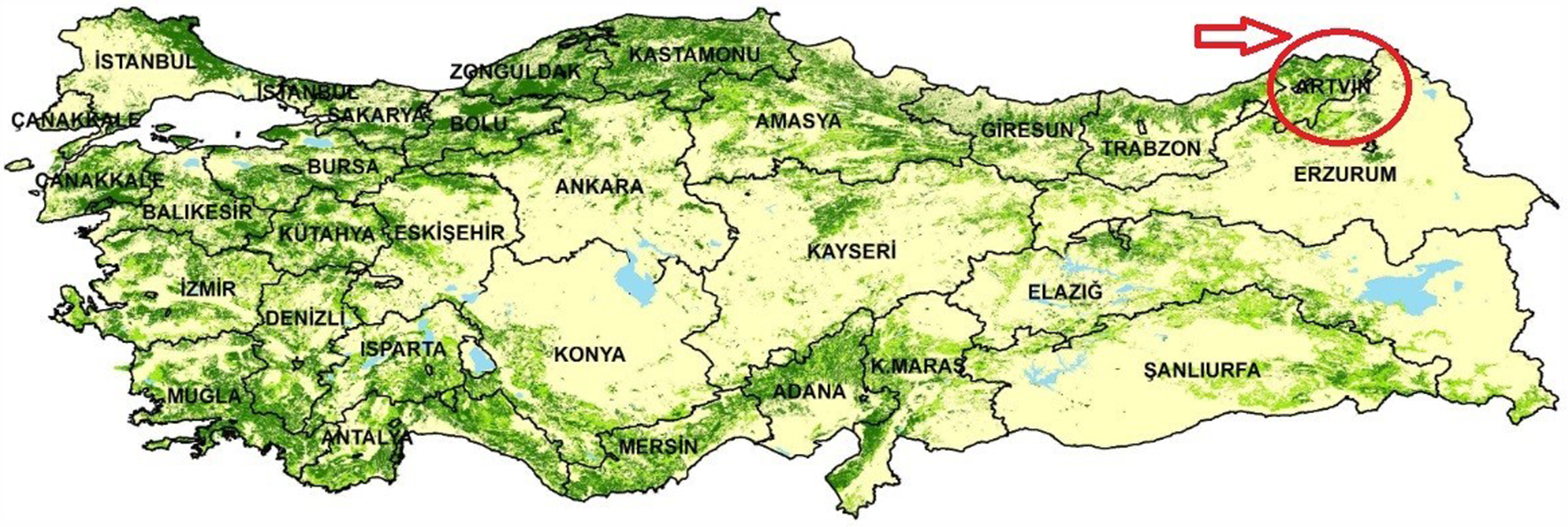
Forest assets of Artvin and Türkiye. 8
Artvin is located in the north-eastern corner of Anatolia. As more than half of the region is covered by forests, forestry activities are widespread, and wooden products are important. The geographical and climatic features of the province bordered by the Black Sea vary within itself, including coastal, inland and highland areas. Additionally, considering the demographic characteristics of the region, it is possible to find traces of different cultures, such as Turkish, Laz, Georgian and Hemshin. 9 Therefore, wooden products can vary depending on geographical and cultural factors. Therefore, it can be said that wooden kitchen utensils also hold an important place in Artvin's culinary tradition. When reviewing the relevant research on wood, Permadi et al. 10 noted that mortars, forks, spoons and spatulas are among the most commonly produced wooden kitchen tools. They stated that many household products are made from pine (Pinus mercusii), damar (Agathis borneensis Warb.) and mahogany (Swietenia macrophylla King.) trees. This is a generally valid situation. In another study conducted in Indonesia, traditional wooden kitchen utensils, including spoons, forks, graters, cups and ladles made from natural materials, were widely used. 11 Lücke and Skowyrska 12 found that wooden cutting boards are healthier than plastic boards. A different study in Italy emphasised that wooden surfaces are safe and limit pathogenic conditions. Moreover, wood has a moisture-regulating function in cheese and indoor storage areas, which affects the cheese maturation process, and no synthetic material can replace it. 13 In their study, Sümbüllü and Yaman 14 mentioned traditional wooden tools (Ordu-Türkiye), highlighting the belief that meals prepared using natural utensils are tastier. In a study by Taş, 15 which examined handicrafts in Sakarya (Türkiye), including wooden kitchen tools, it was found that interest in local handicrafts was declining, and local production started to disappear. In this context, the focus points regarding wooden products are their use in kitchens, health properties, contribution to sustainability and their place in traditional culture.
When examining studies on wooden products specific to Artvin, it is observed that they focus on architecture, decorative arts, tourism potential, rural characteristics and cultural features.16–19 However, no studies have specifically addressed kitchen utensils or conducted field research in Artvin. In this context, the present study, conducted in the province of Artvin, aimed to identify the use of wooden utensils in local kitchen and determine their place in culinary culture.
Conceptual framework
Artvin, located in the easternmost part of the Eastern Black Sea Region, stands out for its natural beauty. Culturally, it boasts a rich cultural structure with prominent influences from Turks, Laz and Georgians. Artvin is a cultural heritage site not only because of its natural geography but also because of its climate, tree species, vegetation, endemic plant species, medicinal and aromatic plants, forested areas, villages with traditional architecture, highlands, local delicacies and rivers. Moreover, the region features numerous recreational areas that attract both domestic and international tourists, such as Borçka Karagöl, Şavşat Karagöl, Macahel, the Hatila Valley National Park and Hell's Canyon. For example, there are three natural lakes called black lakes (Karagöl) in the region. Of these, Borçka Karagöl attracts a significant number of visitors. Here, plant diversity, natural life and red-spotted trout are prominent. In addition, the region has a rich potential in terms of natural tourism resources such as waterfalls, plateaus and caves. 20 Another example of tourism recreation is the İbrikli Pier, formed by the reservoir of the Çoruh River dam. 21 Artvin's diversity of medicinal and aromatic plants plays a significant role in the region's gastronomy sector. Hatila Valley is home to the richest endemic species in Turkey. 22
In terms of climate characteristics, both the Black Sea and continental climates were present. In the city centre near the Çoruh River, summers are hot and dry, whereas winters are mild and rainy. As a result, the central district of Yusufeli and the areas surrounding the Çoruh Valley exhibit a climate more similar to the Mediterranean climate than the Black Sea climate. For instance, owing to the climate diversity in Yusufeli, it is possible to grow olives, figs, grapes, dates and pomegranates. 23 Additionally, products such as cherries, plums, peaches, walnuts, mulberries and apples are cultivated in the district. 24 However, outside the Çoruh Basin, due to climate and geographical conditions, there are no suitable agricultural areas. The prominent elements of Artvin's local cuisine can be summarised as follows 9 : ‘The region has rich gastronomic potential owing to its cultural diversity. There were significant differences between coastal and inland areas. Corn, kale, dairy products, anchovies, pastries, red meat, and fruits are the region's standout products. Local dishes are known by different names in various areas. Traditional kitchen tools are preserved, and traditional cooking methods are used in rural areas. Climate diversity provides various local products (tea, hazelnuts, olives, kiwifruit, corn, etc.). As there has been no industrialization, natural and healthy products are preferred. The local dishes are nutritious. Medicinal and aromatic plants play an important role in the local diet. Pastoralism and festivals have cultural significance. Beekeeping and fishing are common practices. The region produces syrups, jams, and marmalades from natural products, such as cornelian cherries, rose hips, mulberries, and plums. Pastries are widespread, and products made from cornmeal hold special places’. Therefore, Artvin is a cuisine that needs to be discovered, with a wide variety of local food products. In addition to the information provided above, Artvin's local cuisine has a high potential. For example with dishes made from kale (stuffed leaves and soups), fried or grilled anchovies, dairy-based dishes like kuymak, mıhlama and minci, red meat dishes such as döner and cağ kebabı, pastries like pişi, corn bread, wheat bread, and the dessert Laz böreği, as well as honey, molasses, jams and marmalades.9,25,26
Three fundamental components in kitchens complement each other. The first category is food products. The quality of the ingredients plays a significant role in creating a good dish. The second component is the human factor involved in the dish preparation. Human effort is required to ensure that a dish meets a certain standard. The third component is the utensil used for food preparation. Regardless of the quality of the ingredients and human effort, it is not easy to produce a good dish without using appropriate utensils. Therefore, utensils are important for food preparation. Kitchen utensils can be made from various materials, such as wood, stainless steel, plastic, glass, porcelain, ceramic, steel and copper. 27 These utensils are used in kitchens for various purposes, such as cooking, preparation, storage and serving.
Wooden kitchen utensils have been used since ancient times. Currently, wooden utensils are preferred in kitchens for various reasons, such as hygiene, flavour, authenticity, aesthetics, convenience and health. Artvin cuisine, situated in an ancient region where rural life is common and forestry activities are prominent, reflects traditional practices. In their study, Oğan and Durlu Özkaya 9 noted that traditional kitchen utensils in the Artvin region are primarily made of wood, clay and copper. Consequently, different wooden products have been used in Artvin cuisine, varying according to the region from past to present. The characteristics and availability of wood materials vary, leading to the development of different utensils in the region. For example, the variety of tree species grown in Artvin's coastal and highland areas has led to diversity in the wooden kitchen utensils. In a study examining Şavşat-Tepeköy's traditional lifestyle, Subaşı 28 identified several kitchen utensils displayed in museums. Factors such as the abundance of forested areas in Şavşat and its villages and the settlement of locals near forest boundaries have contributed to the development of traditional wooden utensils. Many kitchen utensils are made from local tree species such as pears (Pyrus), lindens (Tilia rubra), mulberries (Morus alba), chaste (Witex agnus-castus), firs (Abies nordmanniana), pines (Pinus silvestris) and cherries (Prunus avium). Wooden utensils commonly used in the region include butter churns, low tables, tray stands, large dough troughs called ‘Persian’, mostly made from chestnut, pear and hornbeam, as well as wooden sieves, sifters and flour shovels. 28 Additionally, a wooden kitchen utensil resembling a bucket, known as ‘soç’, made from fir trees in the region. Other local terms used for wooden utensils include kod, külek, kandra and kolapa. 29
Methodology
The purpose of this study was to identify the areas of usage of wooden utensils in Artvin cuisine and to reveal their place in culinary culture. Artvin is a region with widespread rural population and forestry activities. Considering that different ethnic groups, such as Turks, Laz, Georgians and Hemshin, live together in Artvin's geography, it is assumed that wooden kitchen utensils are important. Within this scope, the research was limited to the Artvin province (Figure 2).
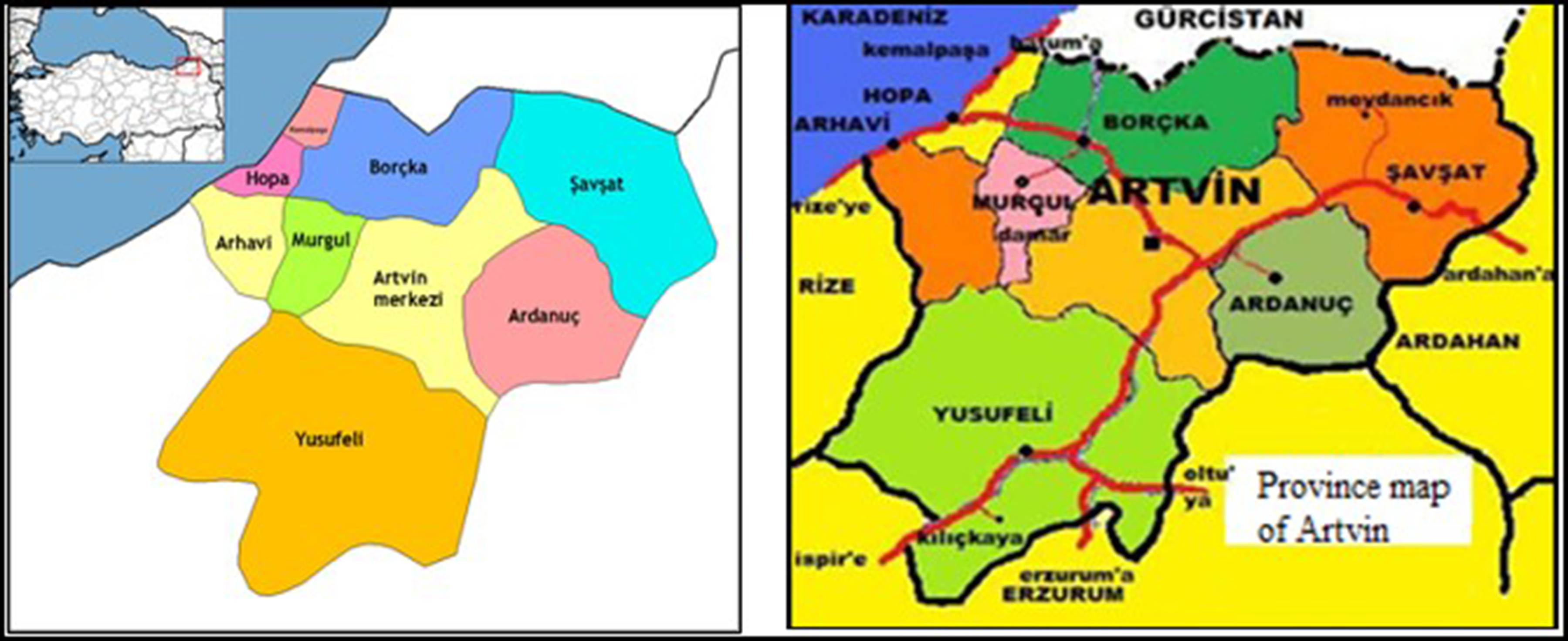
Artvin comprises nine districts: Ardanuç, Arhavi, Borçka, Hopa, Kemalpaşa, Merkez, Murgul, Şavşat and Yusufeli. Twenty-eight participants formed the sample group, with three selected from each district and four from the central district. A prerequisite for participants was knowledge of culinary culture and having lived in the region for at least three generations.
The study was designed as qualitative research, employing an ethnographic research method. Ethnographic research provides an exploratory perspective by obtaining data related to the behaviours, experiences and cultural elements of a group that shares a common culture.32,33 In ethnographic research, data can be collected through observations, interviews and archival research.
34
This study used a semi-structured interview form for data collection, and the interview questions were designed as follows.
What wooden utensils do you use to store your food and beverages? What wooden utensils do you use to prepare your food and beverages? What wooden utensils do you use to cook food and beverages? What wooden utensils do you use to serve your food and beverages? What wooden utensils do you use for other purposes? Why do you prefer using traditional wooden utensils in your kitchen?
The interview form contained open-ended questions to determine participants’ purposes for using wooden utensils. The interviews were conducted face-to-face between August 1 and August 31, 2024. Each interview lasted for approximately half an hour. Participants were asked to complete a consent form, and with their approval, voice recordings were taken, and the interviews were completed. Participants’ responses were recorded using a semi-structured interview form.
The data obtained from the interviews were transferred to Maxqda qualitative research software, and content analysis was performed. In the content analysis, the participants were coded as ‘P1, P2, P3, …………. P26, P27, P28’. A word cloud was created for the answers provided by the participants regarding why they preferred to use traditional wooden utensils in their kitchens, and key concepts related to wooden utensils were identified. In this way, it was aimed to determine the reasons why the participants preferred wooden products. The data analysis was first done in Turkish and then translated into English. This ensured that there were no translation problems and that the concepts were used correctly. Wooden utensils used in the kitchen were categorised into five themes: storage, preparation, cooking, serving and others (Figure 3).
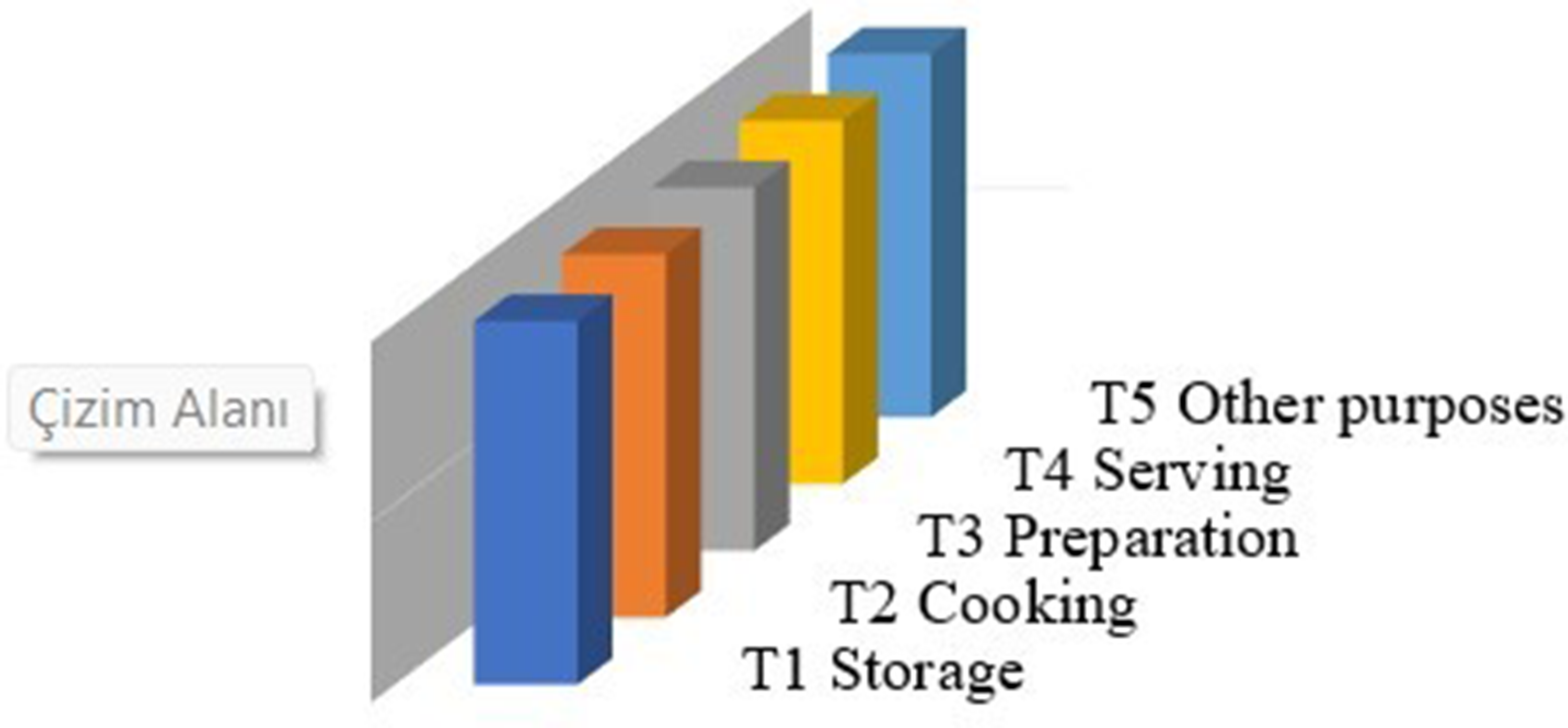
Themes used in the research.
The first theme is ‘storage’, the second theme is ‘cooking’, the third theme is ‘preparation’, the fourth theme is ‘serving’, and the fifth theme is ‘other purposes’. Based on these themes, the purpose of using wooden utensils in Artvin was identified, revealing their significance in the region's culinary culture. Finally, photographs of wooden utensils obtained during the study were presented with visuals to support the study.
Findings
Findings related to the demographic characteristics of the participants
There were 28 participants in total, with three individuals from each of the districts of Ardanuç, Arhavi, Borçka, Hopa, Kemalpaşa, Murgul, Şavşat and Yusufeli and four from the central district. Participants were required to have knowledge of culinary culture and have lived in the region for at least three generations. Demographic characteristics of the participants are presented in Table 1.
Demographic characteristics of the participants.
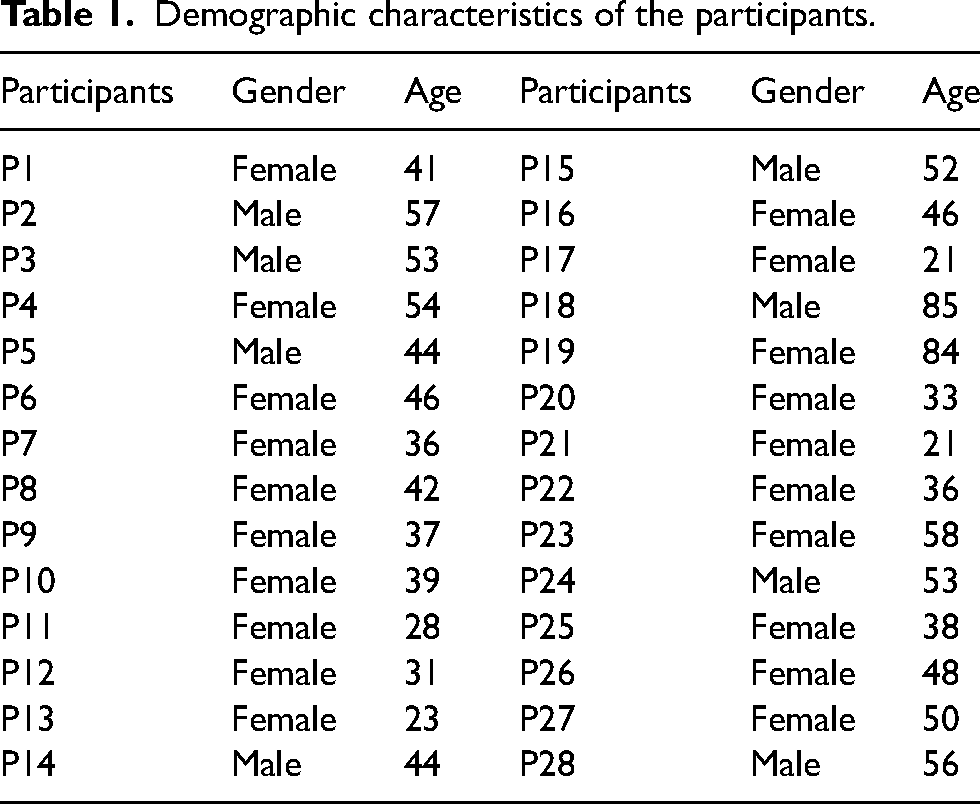
According to the data in Table 1, 28.57% of the participants were male (8), and 71.43% were female (20). When the age distribution of the participants was analysed, 14.28% of the participants were under the age of 30 (4), 50% were between the ages of 30 and 50 (14), and 35.72% were 50 years and older (10).
Word cloud on preference for wood products
In the interviews with the participants, the first question was, ‘Why do you prefer to use traditional wooden products in your kitchen?’ Thus, the participants’ reasons for preferring wooden products were determined, and the word cloud formed is shown in Figure 4.
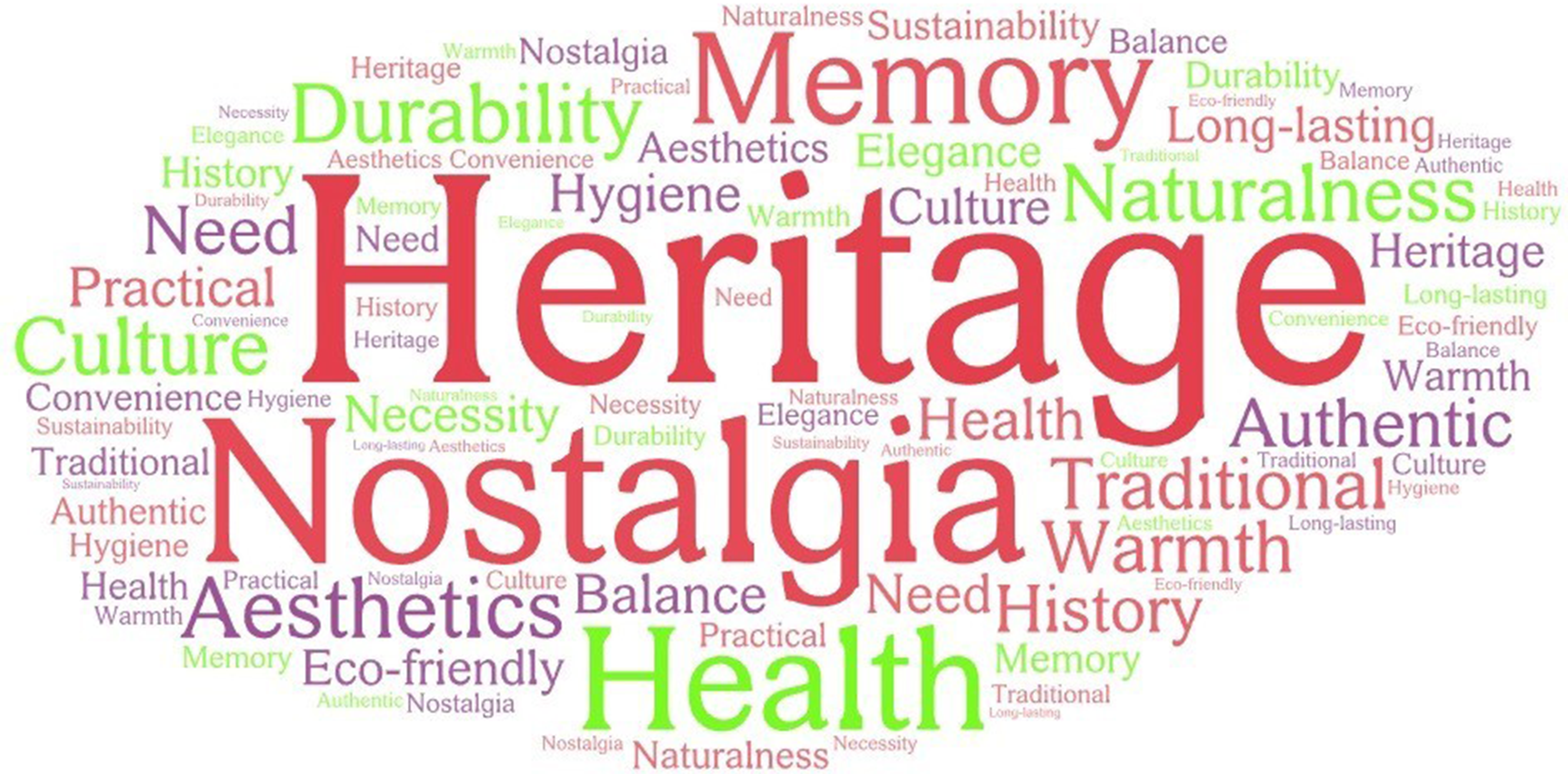
Word cloud for the preference of wooden products.
Upon examining the word cloud in Figure 4, it becomes clear that the participants most frequently considered the wooden products used in the kitchen to be healthy. Participants see wooden kitchen utensils as a legacy from the past. ‘
Findings related to research themes
This section presents findings obtained from the participants under five themes: ‘storage theme’, ‘preparation theme’, ‘cooking theme’, ‘serving theme’ and ‘other purposes theme’.
Storage theme
In the interviews with participants, the question ‘What wooden products do you use for the purpose of storing food and beverages?’ was asked under the storage theme. The participants’ use of wooden products for storage purposes is illustrated in Figure 5.
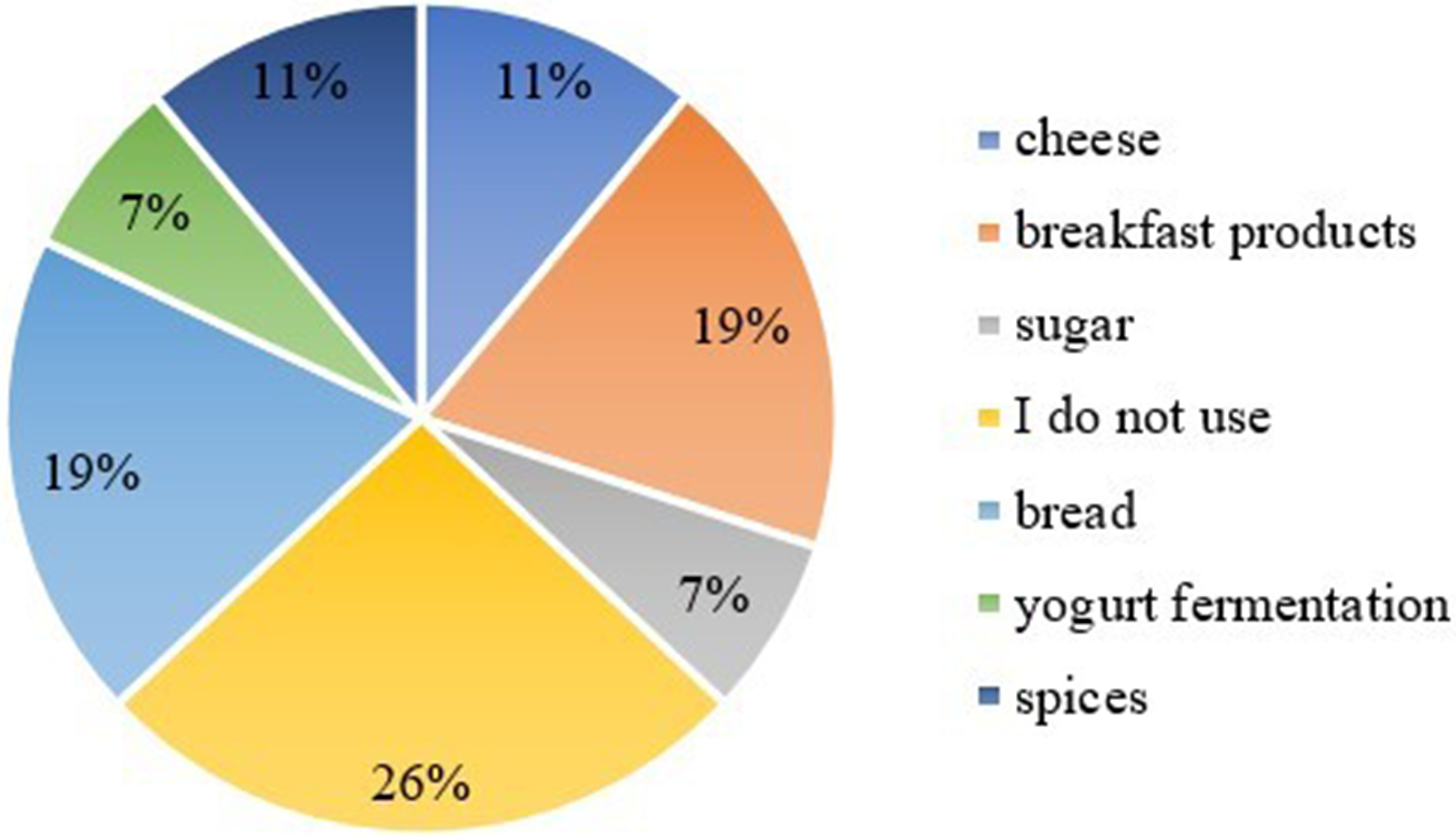
Storage purposes in wood product use.
Figure 5 shows that 26% of the participants stated that they do not use wooden products for storage in the kitchen. Therefore, most of the participants use it for storage purposes. Products used for storage purposes are as follows: bread, breakfast products, spices, cheese, sugar, and yogurt. Therefore, it is seen that wooden products are partially used in the kitchen. ‘P7: I have a small boat and a basket called tikinam in Laz, P22: Wooden chests and boxes, P25: Wooden bread box, salt and sugar boxes, P14: I store them in containers made of oak, and P27: Chests, large boxes made of wood, the material of the products that need to be protected from heat is made of walnut wood, which does not absorb heat from the outside and keeps itself cool’. From this point of view, it can be said that wooden products are produced from different materials, such as walnut or oak wood, in the form of chests, boxes, baskets and containers to keep the products cool in the kitchen.
Preparation theme
In the interviews with the participants, the question ‘What are the wooden products you use to prepare food and beverages?’ was asked in line with the theme of preparation. Thus, the situations of the participants regarding the preparation purposes of using wooden products are determined and presented in Figure 6.
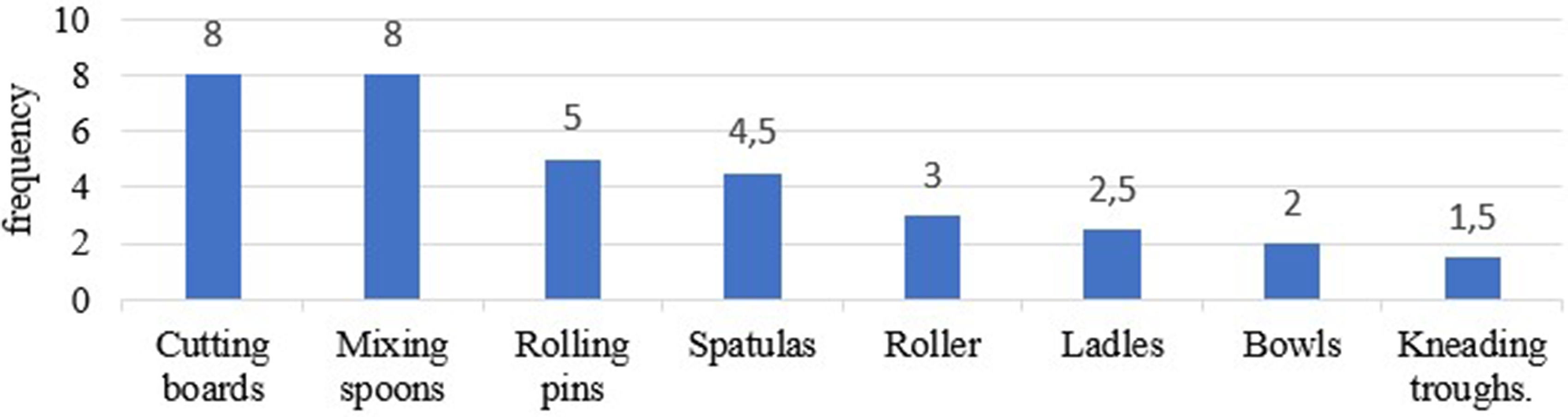
Preparation purposes in wood product use.
Figure 6 shows that most of the participants stated that they use wooden products as cutting boards and mixing spoons for preparation purposes. In addition, they are used as rolling pins, roller, spatulas, ladles, bowls and kneading troughs.
Cooking theme
In the interviews with the participants, the question ‘What are the wooden products you use for cooking food and beverages?’ was asked in line with the cooking theme. Thus, the situations of the participants regarding the cooking purposes of using wooden products are determined and presented in Figure 7.
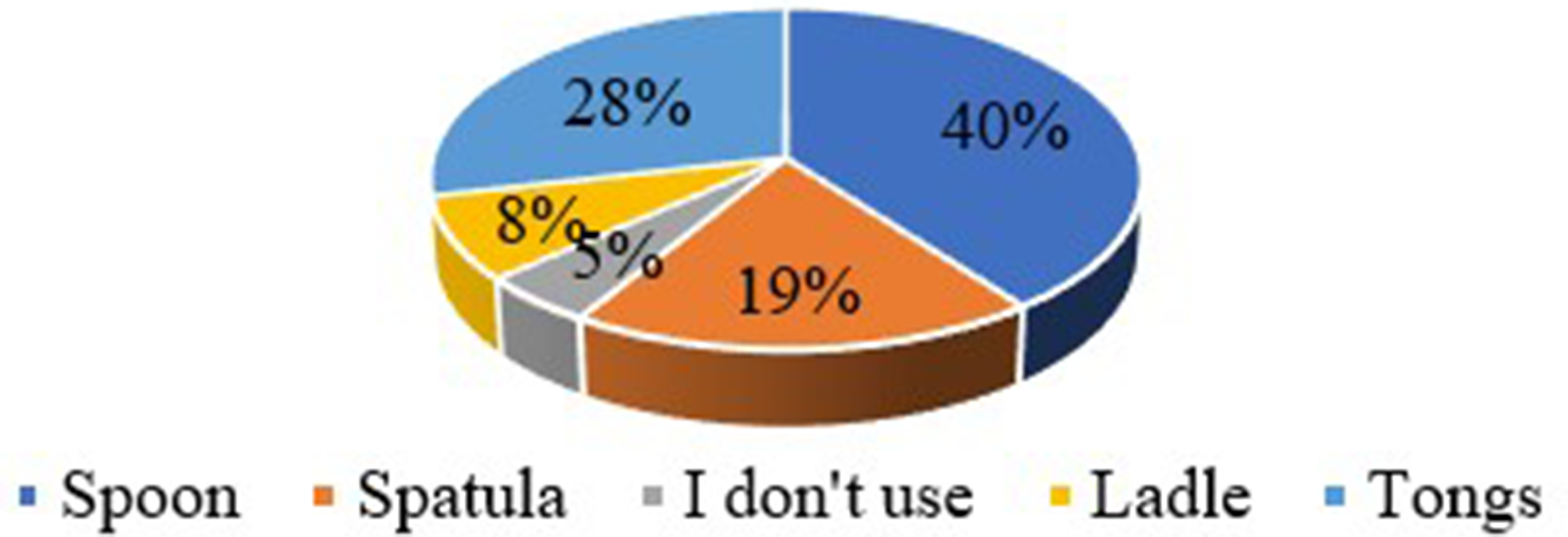
Cooking purposes in wood product use.
When Figure 7 is analysed, almost all participants use wooden products as spoons to mix food for cooking. This situation is similar to the preparation theme. Again, participants used tongs (40%), spoons (28%), spatulas (19%) and ladles (8%), respectively, while some participants (5%) stated that they did not use wooden products for cooking.
Service theme
In the interviews with the participants, the question ‘What are the wooden products you use to serve food and beverages?’ was asked in line with the service theme. Thus, the situations of the participants regarding the service purposes of using wooden products are determined and presented in Figure 8.
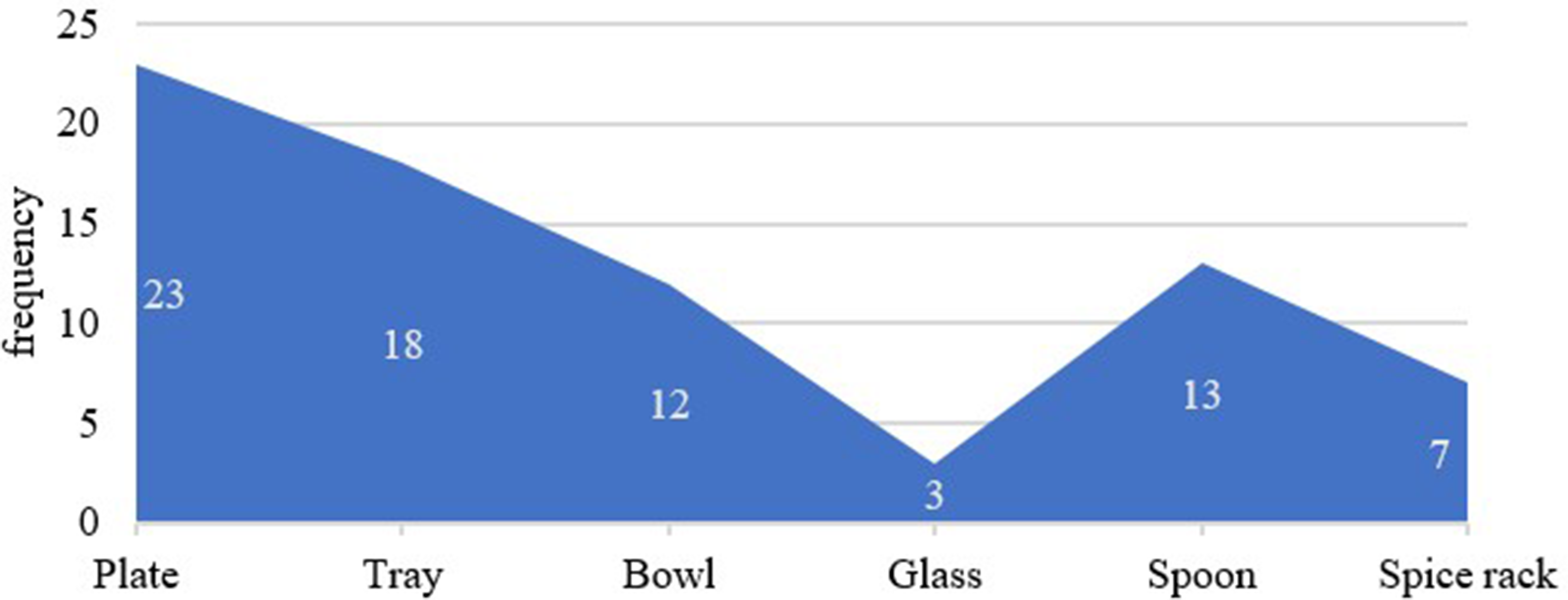
Service purposes in the use of wood products.
Figure 8 shows that the participants mostly use wooden products as plates and trays for serving purposes. In addition, they are also used as bowls, tablespoons, spice racks and glasses.
Other purposes theme
In the interviews with the participants, the question ‘What are the wooden products that you use for food and beverages for other purposes?’ was asked in line with the theme of other purposes. It is evident that participants use wooden products in the kitchen for various purposes, such as serving plates, serving, rolling dough, storage containers, strainers, cabinets, snack bowls, fruit bowls, baskets, mortars, holders, spoon holders, knife blocks, bread boxes and so on.
Some wooden utensils unique to the Artvin cuisine
The study is supported with visuals, presenting photos of the wooden products obtained in the research (Figure 9).

Prominent wooden kitchen utensils unique to Artvin cuisine.
When examining Figure 9, several wooden kitchen tools and utensils used in the Artvin region, such as külek (storage container), cutting boards, table mats, spoons, rolling pins, forks, mortars, serving plates, bowls and other examples are highlighted.
Discussion and recommendations
As a result of the study, it was determined that the majority of the participants were female, and more than half of them were between the ages of 35 and 50. When asked why they preferred wooden products in their kitchens, the first reason that came to the forefront was ‘health’. Studies have also proven that wood is healthier than other materials. Research conducted on wooden and plastic cutting boards observed a reduction in bacterial growth on wooden cutting boards.35–37 Lücke and Skowyrska 12 stated in their study that wooden cutting boards are healthier than plastic boards. Therefore, this situation supports the importance of wooden products in health. Other reasons for the preference for wood are durability, aesthetics, tradition, naturalness and so on.
When the functional use of wooden products in the kitchen was grouped into themes, the first theme examined was using wooden products for storage. When asked about using wooden products for storage purposes, most participants (74%) stated that they used them for storage. The most preferred storage item was determined to be the bread storage box.
Most participants indicated that they used cutting boards and mixing spoons for the preparation theme. The mixing spoon was also the most frequently used wooden product for cooking. Permadi et al. 10 similarly noted that mortars, forks, spoons and spatulas are among the most commonly produced wooden kitchen tools. Wooden products used for serving were specified as plates and trays. In addition, participants stated that wooden products are used for various purposes and functions in the kitchen.
Using wooden tools and utensils in the kitchen is considered important from a health and cultural perspective. The reasons for preferring wooden tools include their durability, aesthetics, tradition, naturalness, authenticity, longevity and eco-friendliness. Products such as bread, breakfast items, spices, cheese, sugar and yogurt are stored in wooden containers. Typically, wooden products made from walnut and oak trees are preferred. Prominent wooden items include cutting boards, mixing spoons, spatulas, plates, trays, bowls, eating spoons and tongs. Wooden products such as serving plates, trays, dough rollers, storage containers, colanders, cupboards, snack bowls, fruit baskets, mortars, holders, spoon racks, knife racks, breadboxes, etc., are used for different purposes in the kitchen.
This study, specific to Artvin, once again highlights the significance of wood in our culture, which has been used in every aspect of our lives from the past to the present. Despite advancements in technology and production systems, which have led to the creation of products from various materials such as composites and polymers at a lower economic cost, the naturalness, aesthetics and tradition of wood remain irreplaceable for certain cultural uses. The study results indicated that wooden products are heavily used in Artvin's kitchens for various purposes. As a result, it is essential to inform users about the advantages of using wooden products, their proper usage conditions, and which types of wood are best suited for different products. This information could be shared through regional gastronomy days organised by local governments or non-governmental organisations or through museums displaying wooden products used from the past to the present, thus promoting the use of these items in homes and food and beverage establishments. Detailed research should be conducted to catalogue items that were once used but are no longer made or available, and, if possible, these products should be re-manufactured and delivered to users. In this context, this study draws attention to kitchen utensils, guiding researchers to conduct inventory studies on the subject.
Footnotes
Declaration of conflicting interests
The authors declared no potential conflicts of interest with respect to the research, authorship and/or publication of this article.
Funding
The authors received no financial support for the research, authorship and/or publication of this article.