







Abstract
This study investigated the dual roles of mothers as models and regulators in influencing adolescents’ short video use (A-SVU). Using survey data from 7,509 Chinese mother−adolescent dyads, the study confirmed a positive modeling effect, demonstrating that maternal short video use significantly increased adolescent usage. Restrictive mediation, however, presented a more complex picture: general restrictive mediation showed an inverted U-shape relationship with A-SVU, while more specific restrictions were associated with reduced A-SVU. The style of restriction also mattered; applying restriction in an autonomy-supportive style decreased A-SVU, whereas controlling and inconsistent styles led to a counterproductive effect. Subsequent moderation analysis suggested that this boomerang effect was most pronounced when mothers used short videos infrequently but applied restrictions in a controlling manner. These findings were cross-validated by both adolescent-reported and mother-reported restrictive mediation, with adolescent-reported restrictive mediation serving as stronger predictors of A-SVU than mothers’ reports.
Introduction
In the past five years, short video platforms such as Douyin and Kuaishou have experienced explosive growth, captivating millions of young users with their simple operation, engaging content, and sophisticated recommendation algorithms (Kaye et al., 2020). According to the latest official report in China, the proportion of minor Internet users who frequently watch short videos has increased from 40.5% in 2018 to 54.1% in 2022 (China Internet Network Information Center, 2023). Among these minor short video users, 11.9% spent over 2 h watching short videos on weekdays, while 7.2% watched for more than 5 h during holidays (China Internet Network Information Center, 2023). As adolescents increasingly embrace these short videos, ranging from a few seconds to a few minutes, as a primary form of information resource and entertainment, deep concerns have arisen among parents and other educators about addiction, distraction from academic studies, and mental health risks (Xu et al., 2023; Zhang et al., 2019; Zhu et al., 2024). How to promote reasonable short video use (SVU) among teens has garnered widespread attention (Li et al., 2023; Qin et al., 2023).
The family unit plays a crucial role in shaping youth media habits (Notten et al., 2012). Parents can intervene with their adolescents’ short video use (A-SVU) through various mediation strategies, with restrictive mediation being one of the most common and straightforward approaches to reducing media use (Chen & Shi, 2019; Togar et al., 2025; Wang et al., 2023). However, short videos are distinct from traditional media due to their algorithm-driven, fragmented, highly personalized and engaging content (Yang et al., 2024), making it more challenging for parents to enforce effective restrictions. To date, the effectiveness of parental restrictive mediation in reducing A-SVU has rarely been explored. Even more scarce are studies that differentiate between quantity and quality of restrictive mediation. Besides, parents are not just regulators; they also serve as role models in the digital sphere (Wang & Lei, 2022; Yang et al., 2025). This dual role of parents further complicates the dynamics of their influence on A-SVU. While research has explored both mediating and modeling behaviors in predicting youth Internet use (Hefner et al., 2019; Lee & Kim, 2021; Vaala & Bleakley, 2015), there is a significant gap in understanding the nuanced interactions between these two forms of parenting, particularly regarding A-SVU.
To address these gaps, this study examines how maternal modeling and different types and styles of restrictive mediation impact A-SVU independently as well as interactively. We focus on maternal influence because mothers typically shoulder the primary responsibilities for child-rearing and day-to-day supervision in most Chinese households. This pattern is well documented in prior research: mothers constitute the overwhelming majority of parent respondents (Chemnad et al., 2023; Hu et al., 2018), and mother reports exceed 95% in recent longitudinal studies (Fardouly et al., 2024). Consistent with these patterns, over 90% of mothers in our sample identified themselves as the primary caregiver. In this context, centering the analysis on maternal influence captures the dominant regulatory dynamics shaping adolescents’ everyday media use and ensures that the measured behaviors correspond to the family member most directly responsible for rule enforcement. This focused approach also enables a more in-depth examination of maternal influence rather than dividing attention between both parents. Besides, an additional contribution of this study is that we cross-validated our findings using both adolescent-reported and mother-reported restrictive mediation, a method rarely employed in previous research. Considering this dual perspective, focusing on a single, clearly identifiable caregiver helps adolescents respond more accurately and consistently. They do not need to distinguish between behaviors of the mother and the father, especially when fathers are less involved in daily supervision. For most adolescents, the mother is the parent they interact with most frequently, making her the most accessible and appropriate reference for their responses. Collectively, concentrating on mothers enables the study to capture the most relevant family dynamics, allows for an in-depth examination of restrictive mediation, and ensures high-quality responses with sufficient statistical power.
We draw on two key frameworks: social learning theory and parental mediation theory, which view parents as key socialization agents in shaping their children's media habits. Social learning theory posits that individuals learn behaviors through observing and imitating others, particularly those they perceive as role models (Bandura, 1977). Parental mediation theory typically involves parenting strategies to guide children's media use (Clark, 2011). Restrictive mediation, highlighted in this study, has been widely investigated and is known as the most controversial mediation strategy (Ren & Huang, 2026; Tan et al., 2025). Our study advances existing literature by distinguishing between different types and styles of restrictive mediation, thereby allowing for a more nuanced exploration. Specifically, we consider the quantity and quality of restrictive mediation (Valkenburg et al., 2013). The former involves the intensity of implementing two types of restrictive mediation (general vs specific), while the latter encompasses three different styles of implementing restrictions (controlling, autonomy-supportive, and inconsistent). In short, by applying these theories to the domain of SVU, the study not only deepens our understanding of A-SVU but also addresses the persistent debate over restrictive mediation, thereby contributing to the field of digital parenting research.
Literature Review
Parental Modeling in SVU
Social learning theory posits that children learn by observing and imitating the behaviors of those around them, especially their parents (Bandura, 1977). In traditional media research, research has consistently shown that adolescents are more likely to mirror the media habits of their parents, especially in activities such as television watching (Notten et al., 2012; Vettehen et al., 2012), and reading (Mancini et al., 2017; Mullan, 2010). With the shift from shared media consumption to individualized digital platforms, a further question is whether the effect of modeling is complicated by such changes (Edgerly et al., 2017; Edgerly, 2026). Existing research still supports the traditional view. For example, Chemnad et al. (2023) discovered that adolescents were more likely to be dependent Internet users when their parents were also dependent Internet users. Edgerly et al. (2017) found that parental modeling continued to significantly influence adolescents’ news consumption, even on mobile devices. In a study of 629 adolescent−parent pairs, Vaala and Bleakley (2015) observed a positive correlation between the Internet activities of adolescents and their parents across various domains, including news consumption, video streaming, and social networking. In addition, a three-wave panel study showed that more parental time on social media predicted small increases in adolescent social media use a year later (Fardouly et al., 2024). Thus, we propose that maternal SVU would be positively associated with A-SVU.
Parental Mediation Theory and the Boomerang Effect of Restrictive Mediation
Parental mediation theory provides a framework for understanding how parents regulate and guide their children's media consumption (Clark, 2011). At its core, the theory categorizes mediation into three main types: active mediation; restrictive mediation; and co-viewing (Nathanson, 2008; Valkenburg et al., 1999). Active mediation is a parent's dialogic and explanatory approach to help children understand media (Chen & Shi, 2019). Co-viewing, which entails parents watching media alongside their children, fosters a shared experience but has become less common in today's personalized digital landscape (Beyens et al., 2019; Rodríguez-de-Dios et al., 2018). In contrast, restrictive mediation, the focus of this study, involves parents setting rules and limits on media use, such as screen time restrictions or prohibitions on certain content (Livingstone & Helsper, 2008; Sciacca et al., 2022). There are also other emerging forms specific to digital media, such as technical control (Livingstone et al., 2017) or participatory learning (Adigwe, 2021), but they are much less convincing and remain inconsistent in the literature (for a review, see Modecki et al., 2022). This study emphasizes restrictive mediation for two key reasons. First, it is a prevalent practice in East Asian countries that prioritize academic achievement (Lwin et al., 2021). Second, unlike other strategies, restrictive mediation offers a most straightforward approach for limiting the amount or frequency of leisure-related Internet use (Chen & Shi, 2019). Nevertheless, its effectiveness and potential drawbacks are still debated, with insufficient research addressing its relationship to A-SVU.
For restrictive mediation, one of the biggest concerns is its potential for a boomerang effect especially among older children, where excessive restrictions may inadvertently increase the behaviors that they aim to limit (Collier et al., 2016; Togar et al., 2025). This implies a U-shaped relationship between restrictive mediation and media use, with moderate restriction potentially yielding the best results. However, much existing research overlooks this nonlinear dynamic. Current studies examining the relationship between restrictive mediation and media use, as measured by time spent or frequency, primarily offer two perspectives. The first is that parental restrictions on time and Websites did not alter children's actual screen time, whether it is general Internet use (Lee & Chae, 2007), smartphone use (Huang et al., 2023), social media use (Fardouly et al., 2024) or leisure-related Internet use (Ren et al., 2022). The second perspective suggests that restrictive mediation can reduce media use, a view supported by several meta-analyses, which showed small but significant relationships between restrictive mediation and the amount of time children spent on media (Chen & Shi, 2019; Collier et al., 2016). Recently, a study on preschool children has included the quadratic term of restrictive mediation, and the quadratic term is significant, presenting a U-shaped relationship between restrictive mediation and preschoolers’ screen time (Wang et al., 2024).
However, it is crucial to recognize the distinct differences between adolescence and early childhood. Adolescents have a greater need for autonomy, making restrictive mediation particularly challenging in regulating their smartphone use (Lukavská et al., 2022). According to social domain theory (Smetana, 1995), the effectiveness of parental rules largely depends on adolescents’ perception of parental legitimacy. While they may accept control over moral or conventional issues (such as lying or chores), they increasingly view parental authority in personal matters (e.g., clothing, friendships, and media use) as illegitimate as they age (Smetana, 1995; Soenens et al., 2009). Since smartphone use falls within this personal domain, adolescents are less likely to accept parental restrictions, complicating parents’ efforts to enforce rules. Hence, even moderate restrictions may provoke rebellious behavior in adolescents, undermining the intended outcomes.
General vs Specific Restrictive Mediation
Beyond the possible nonlinear relationship, the inconsistency regarding the effectiveness of restrictive mediation is also likely related to measurement inconsistency (Navarro et al., 2023). Some researchers focused on general restrictions regarding Internet exposure or smartphone use (Ren & Chen, 2025; Ren et al., 2026), such as time and content limits, examining whether enforcing rules effectively reduced overall or specific usage domains. Others adopted a more specialized perspective, with some focusing on parental mediation targeted at certain online behaviors, such as online interaction (Dedkova & Mýlek, 2023) or privacy protection (Chen et al., 2024), while some explored which online activities parents forbid based on a wide range of online activities (Beyens et al., 2019; Livingstone et al., 2017; Livingstone & Helsper, 2008) or restrictions focused solely on behaviors related to specific platforms, such as social media use (Wallace, 2022). Given these distinctions, we can at least differentiate between two types of restrictive mediation: general restrictive mediation (GRM) and specific restrictive mediation (SRM), as also supported by Modecki et al. (2022) in their review of digital parenting. The former includes broader rules regarding general smartphone use, while the latter refers to clear and targeted rules, for example, banning certain apps. SRM, with its targeted nature, may initially be more effective in reducing A-SVU than GRM. However, the focused rule may also lead to a sense of “forbidden fruit” among adolescents, potentially leading to a rebound effect. Given these complexities, this study examines the potential nonlinear relationships between GRM/SRM and A-SVU, with polynomial regressions performed.
Styles of Restriction
The aforementioned restrictions, whether general or specific, primarily focus on the frequency or intensity with which the strategy is employed. This is the dominant measurement approach used in existing parental mediation literature. An equally important issue is how parents implement these restrictions, as conceptualized by Valkenburg et al. (2013) as restriction styles. Drawn upon self-determination theory (Ryan & Deci, 2000), which emphasized the cultivation of children's intrinsic motivation, three restriction styles have been proposed and identified in their work: controlling restriction; autonomy-supportive restriction; and inconsistent restriction (Valkenburg et al., 2013). Controlling restriction occurs when parents enforce rules in a highly authoritarian manner, while autonomy-supportive restriction happens when parents explain the rationale behind the rules and involve children in the decision-making process. Lastly, inconsistent restriction is characterized by rules being enforced irregularly or unpredictably.
When adolescents view their parents’ attempts to mediate smartphone use as illegitimate, these efforts might backfire due to reactance effects, potentially leading to an increase in the behavior parents aim to reduce (Brehm & Brehm, 2013). However, the likelihood of such potential reactance effects strongly depends on the communication strategy that is used (Byrne & Lee, 2011). In line with self-determination theory, reactance can be minimized or even avoided if the restriction occurs in an open, autonomy-supportive style, and it can be stimulated when the restriction occurs in an inconsistent or controlling way (Byrne & Lee, 2011; Ryan & Vansteenkiste, 2023; Soenens et al., 2009). Therefore, we hypothesize that as mothers increasingly employ restrictive mediation strategies in either controlling or inconsistent styles, A-SVU rises. Conversely, when mothers adopt restrictions in an autonomy-supportive style, we anticipate a decrease in A-SVU.
The Interplay Between Maternal Modeling and Restriction
In straightforward parenting philosophies, the principle of consistency between parents’ behavior and the rules they set for their children is often emphasized. This idea aligns with the concept of “the unity of knowledge and action,” suggesting that when parents’ actions reflect the restrictions they impose, their influence is likely to be more effective. While this notion seems intuitive and widely understood by parents, empirical studies have only sparingly examined this interaction, and none have specifically targeted SVU or further distinguished between the quantity and quality of restrictive mediation. For example, using a sample of 2,238 Chinese adolescents aged 12 to 19, Fu et al. (2020) found that parental phubbing (i.e., the act of ignoring others while on your phone in social interactions) served as a moderator in the relationship between parental active mediation and children's behavioral attitudes towards self-regulating mobile phone use. A previous study also identified comparable interactions between parental Internet use norms and their own online behaviors in predicting adolescents’ Internet addiction (Liu et al., 2012). Surveying 3445 parents of preschool-age children, a recent study demonstrated that when parents increased their mediation and reduced pubbing behavior, children's screen time decreased (Wang et al., 2024). Therefore, we propose that: the more parents themselves use short videos, the more they may undermine the effectiveness of GRM, SRM, and autonomy-supportive restriction. In contrast, for controlling and inconsistent restriction, which already carry a risk of backfiring, increased parental use may further intensify these unintended, counterproductive effects.
Comparisons of Mother−Adolescent Reports
Like other areas of parenting, research has consistently shown discrepancies between parent-reported and adolescent-reported parental mediation. Children generally report lower levels of parental mediation compared to their parents (Gruchel et al., 2022; Senkbeil, 2023). These discrepancies are widely accepted as valid, often attributed to biases in both reports, such as social desirability, or to measurement errors (Fan et al., 2023; Senkbeil, 2023). Furthermore, these differences may increase as children grow older, with certain parental efforts becoming less meaningful or relevant to them (Senkbeil, 2023). This raises a critical question in parental mediation research: should studies rely on reports from parents or adolescents when assessing parental mediation?
While most research relies on one perspective, either the parents’ (Chemnad et al., 2023; Lauricella & Cingel, 2020) or the adolescents’ (Beyens et al., 2024; Bonanati & Buhl, 2022; Gruchel et al., 2025), there is growing consensus that considering both perspectives provides a more comprehensive understanding of parental mediation (Beyens et al., 2019; Huang et al., 2023). However, only a few studies have investigated the agreement between parent and child reports on this issue. For example, using 422 adolescent−parent dyads, Senkbeil (2023) found that adolescent-reported parental mediations were stronger predictors of their Internet self-efficacy, whereas parent-reported were better predictors of Internet literacy. In Gruchel et al. (2022)'s study on Internet behavior, parent-reported parental instruction was negatively associated with adolescents’ entertainment-oriented Internet use, while adolescent-reported showed no correlation. Despite these findings, prior research has yet to focus specifically on restrictive mediation, nor has it compared the predictive power of parent and child reports regarding A-SVU. This study addresses these gaps by offering dual perspectives on family interactions and A-SVU. It explores whether differences exist between mother−adolescent perceptions across various dimensions of restrictive mediation, and compares their predictive power regarding A-SVU.
The Present Study
Previous research has rarely investigated the interaction between maternal modeling and restrictive mediation, particularly in the context of A-SVU. Drawn upon social learning theory and parental mediation theory, this study investigates how maternal modeling and different forms and styles of restrictive mediation—both independently and interactively—influence A-SVU. Specifically, this study aims to address the following research questions.
RQ1. To what extent does maternal SVU serve as a role model for A-SVU? RQ2. Does the relationship between GRM/SRM and A-SVU follow a nonlinear pattern? RQ3. How do different restrictive mediation styles (controlling, inconsistent, and autonomy-supportive) relate to A-SVU? RQ4. How do maternal modeling and restriction interact to affect A-SVU? RQ5. Are there discrepancies between mother-reported and adolescent-perceived restrictive mediation? If so, which perspective better predicts A-SVU?
Figure 1 presents the analytical model of this study.
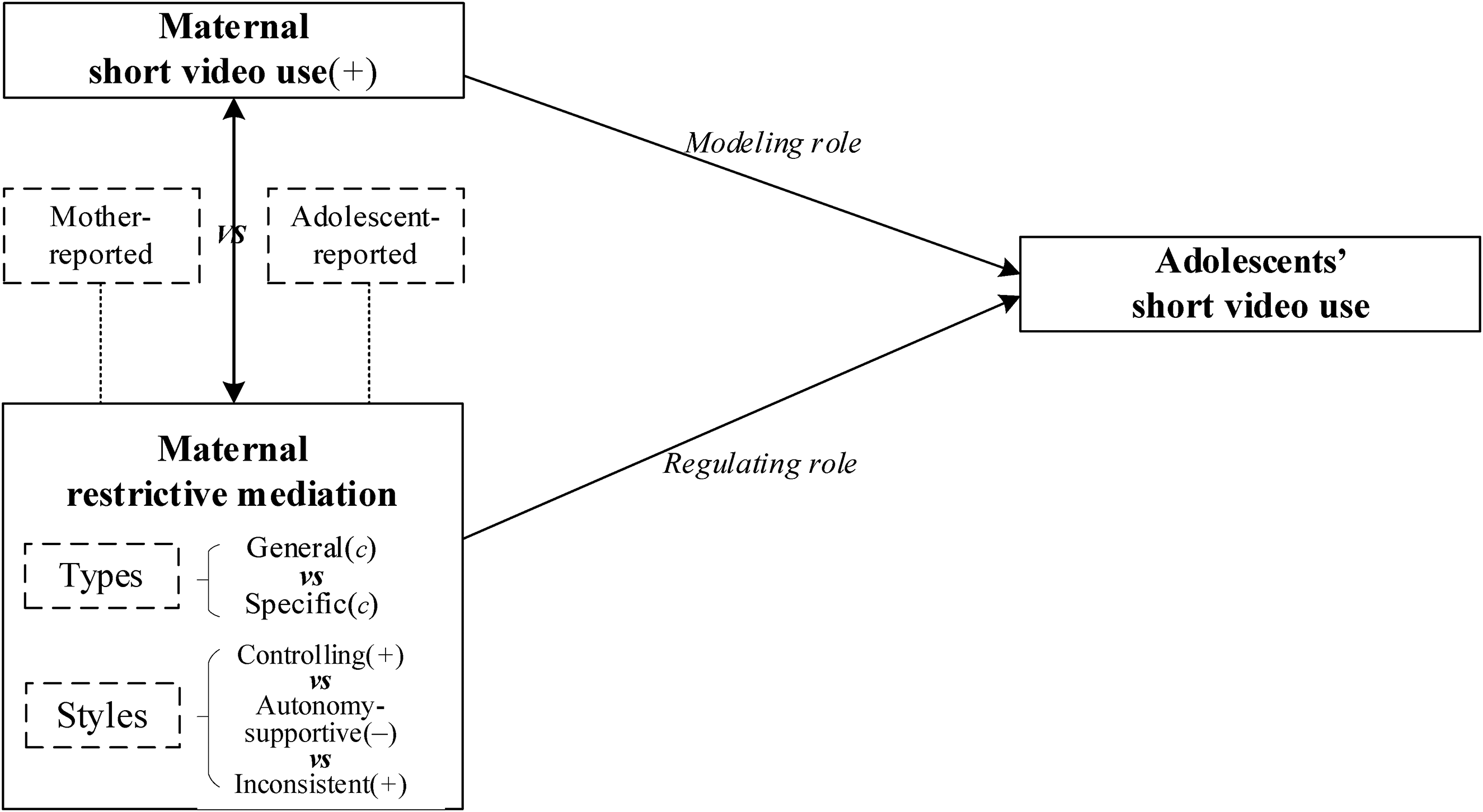
The analytical model.
Method
Participants
We collected data from mothers and adolescents via online questionnaires using https://www.surveyplus.cn/. Collaborating with school principals, we recruited samples from eight middle and high schools in urban areas across Shaanxi, Anhui, and Guangdong, representing the western, central, and eastern regions of China, respectively. Class teachers shared the survey link in WeChat and QQ groups, inviting both mothers and adolescents to participate. We collected 8,084 questionnaires, with 7,667 containing complete data. After excluding 103 mothers and 67 adolescents who failed attention checks, we retained 7,509 for analysis. Participants, aged 12 to 18, included 51.23% boys and 40.96% who did not own smartphones, though many accessed them through family and friends. A detailed sample description is in Online Appendix Table A1.
Procedures
This study received approval from the Institutional Review Board of the authors’ department. The questionnaire was reviewed by school principals before being distributed to class teachers. From September 10 to 30, 2024, it was formally distributed in urban schools across three provinces. Initially, we contacted one middle and one high school in each province, but in Anhui and Guangdong, where response rates were low, we added one more school per province. Notably, one large middle school in Anhui included several branches, resulting in a significantly larger sample size than in other regions.
The questionnaire began with an informed consent form detailing its purpose, data anonymization, confidentiality, and voluntary participation. Mothers and adolescents were instructed to complete the survey together, with the first section for mothers and the second for adolescents. After mothers finished their part, they could pass the questionnaire to their child, if both agreed. If either of them declined, they could skip the child section and submit the questionnaire. Each section started with an identity verification question; nonmothers were directed to the child section, and nonchildren to the end. Since surveys were distributed through class groups, mothers were asked to respond regarding only the child in that class, specifying that if they had two children in the same class, they should refer to the older child. The survey allowed only one submission per Internet Protocol address and required participants to complete all questions unless they opted to skip a section. Data from both mothers and children were collected within the same questionnaire, eliminating the need for later matching.
Measures
A detailed description of all measures is presented in the Online Appendix Table A2.
Dependent variable: A-SVU
Prior research typically measured SVU by time spent or frequency (Zhu et al., 2024). Similarly, we evaluated it using two questions about short video scrolling frequency during the recent summer break (1 = rarely to 5 = almost always) and time spent on weekends (1 = rarely to 6 = over 3 h). These questions showed acceptable internal consistency (Cronbach's alpha = 0.677) considering the limited number of items (Sijtsma, 2009; Tavakol & Dennick, 2011), and their high inter-item covariance (0.849). The mean of the total scores represented A-SVU, which approximated a normal distribution (Skew = 0.739, Kurt = 3.030). 1 We measured A-SVU this way because students’ time allocation varies significantly between summer breaks and school terms. Conducting the survey right after the summer vacation allowed us to assess both. Additionally, heavy weekday workloads, including evening self-study sessions, limit adolescents’ leisure time, so we chose not to inquire about weekdays’ SVU.
Independent variable
Maternal Short Video use (M-SVU)
Unlike the adolescent measurement, which differentiated between summer vacation and weekends, M-SVU was assessed with a single question asking mothers about their frequency of using short videos on their smartphones, rated on a five-point Likert scale from 1 = almost never to 5 = nearly always. In both sections, a prompt appeared after the question, defining short videos as those under five minutes in length.
GRM
Adapted from prior research (Huang et al., 2023; Ren & Zhu, 2022; Ren & Chen, 2025), the measurement of GRM consisted of three items. Using a 5-point Likert scale (1 = never to 5 = always), mothers were asked how often they took actions when their child used smartphones for nonstudy purposes, with sample items such as “I set a time limit on how long they can play with smartphones.” In the adolescent section, participants reported how often their mothers took similar actions, with identical items. The reliability coefficients for this scale were good: Cronbach's α for mothers was 0.820 and for adolescents was 0.849.
SRM for Short Video use
We measured maternal restrictions on their children's SVU with a single question: “To what extent would you prevent your child from scrolling through short videos?” Correspondingly, adolescents were asked, “To what extent would your mother prevent you from scrolling through short videos?” Responses were on a 5-point Likert scale from 1 = never to 5 = always.
Restrictive Mediation Style
This measurement, adapted from Valkenburg et al. (2013), assessed three restriction styles: controlling restriction (CR), autonomy-supportive restriction (ASR), and inconsistent restriction (IR), each evaluated through three items. Mothers were first asked whether they would prevent their children from specific online activities, such as scrolling through short videos (see measures of SRM), viewing video programs, and playing mobile games. If they answered anything other than “never,” a follow-up question explored how they enforced the restriction. For example, if a mother stated that she would stop her child from scrolling through short videos, she was presented: “When you try to stop your child from scrolling through short videos, what would you do…?” with responses reflecting the three styles: (1) If they don’t listen to me, I will get very angry (CR); (2) I explain to them why it is not advisable to do so (ASR); and (3) I’ll turn a blind eye if they refuse to follow (IR). Responses were rated on a 5-point Likert scale (1 = strongly disagree to 5 = strongly agree). A similar format applied to video viewing and gaming, with adjusted question stems. Reliability coefficients were 0.711 for CR, 0.803 for ASR, and 0.836 for IR. The adolescent section mirrored the mother's, reversing roles, with reliability coefficients of 0.800, 0.875, and 0.709, respectively. If a mother or child responded with “never” for all three activities (N = 147 for mothers, N = 307 for children), subsequent measurement of restriction style was not conducted, leading to a smaller sample size in regression models for these variables.
Control Variables
This study controlled for several individual, familial, and regional factors. Individual variables included gender, grade, whether the child was an only child, smartphone ownership, and boarding status. Family-level controls encompassed the primary guardian, family digital resources, parents’ relationship, and involvement of both fathers and grandparents in parenting. Family digital resources were assessed through seven items on devices owned at home (e.g., smart TVs or computers), yielding a mean score of 3.524 (SD = 1.537). Parents’ relationship was evaluated on a 5-point Likert scale (1 = very poor to 5 = very good), by asking adolescents about the relationship between their parents (M = 3.878, SD = 0.936); father's and grandparent's involvement in parenting were each measured on 5-point Likert scale (= never involved to 5 = often, by asking mothers about the involvement of the child's father (M = 3.480, SD = 1.352)/grandparents (M = 2.021, SD = 1.313). The school's regional location was also controlled. Descriptions of other variables are available in Online Appendix Table A1.
Analytical Procedures
All statistical analyses were conducted using Stata15.1. We began by describing all variables in the study and presenting the correlations between them. Next, we performed a stepwise regression analysis to assess changes in R-squared (R2), which indicated whether the model's fit improved. When incorporating two types of restrictive mediation, we simultaneously added quadratic terms to the model, resulting in a significant improvement in fit. Subsequently, we added interaction terms sequentially to the model. For models with quadratic terms, we also included interaction terms between the quadratic terms and M-SVU to test whether nonlinear relationships were moderated by a third variable. Although the dependent variable is not perfectly normally distributed, ordinary least squares regression is robust especially in large samples and in the absence of extreme outliers (Knief & Forstmeier, 2021).
Results
Correlations and Differences Between Mothers’ and Adolescents’ Report
Online Appendix Table A3 presents the descriptive statistics and Pearson correlations for the main variables. A significant positive correlation was found between A-SVU and M-SVU (r = .139, p < .001). For GRM, mother and adolescent reports were positively correlated (r = .318, p < .001), with mothers reporting significantly lower GRM scores than adolescents (t = –29.306, p < .001). M-SRM and A-SRM also showed a positive correlation (r = .459, p < .001), with M-SRM being significantly higher than A-SRM (t = 8.178, p < .001). This indicates that adolescents perceived a higher level of general restriction than mother-reported, while mothers indicated a higher level of specific restriction than adolescent-perceived. Positive correlations were also found for each maternal restriction style (rCR = .442, p < .001; rASR = .383, p < .001; rIR = .318, p < .001). Paired t-tests revealed that for CR and IR, mother-reported scores were significantly lower than adolescent-reported (tCR = −7.698, p < .001; tIR = −34.912, p < .001). In contrast, mothers reported significantly higher ASR scores than adolescents (t = 11.925, p < .001).
The Independent Effects of Maternal Modeling and Restriction on A-SVU
Table 1 presents the regression coefficients for M-SVU and restrictive mediation on A-SVU. Model 3 to Model 5 correspond to Model 6 to Model 8, with mother-reported restrictive mediation in the first three models and adolescent-reported restrictive mediation in the last three. Model 1 includes only control variables (see Online Appendix Table A4 for the detailed coefficients). In Model 2, which adds M-SVU as an explanatory variable, the model's adjusted R2 improved significantly from 23.8% to 25.3%, with M-SVU having a significant positive impact on A-SVU (b = 0.102, p < .001). Model 3 and Model 6 included the GRM variable. Given the theoretical possibility of a curvilinear effect, we included a quadratic term. The F-test results confirmed that the addition of the quadratic term significantly improved model fit for both mother-reported and adolescent-reported GRM (and SRM). The positive coefficient of the linear term and the negative coefficient of the quadratic term indicated an inverted U-shaped relationship between GRM and SVU, which remained robust as additional explanatory variables were added. Figure 2 illustrates this relationship, showing that A-SVU peaked at moderate GRM levels and was lower at minimal or frequent GRM. Notably, adolescents used short videos the least when mothers reported no GRM, while adolescents reported the lowest SVU when they perceived their mothers applied GRM intensively. Model 4 and Model 7 examined the effects of SRM and its quadratic term on A-SVU, yielding similar directional results to GRM. However, the vertices of the parabolas differed, as shown in Figure 3, indicating that SRM generally had a negative impact on SVU; as SRM increased, A-SVU decreased, a finding consistent across both mother and adolescent reports.
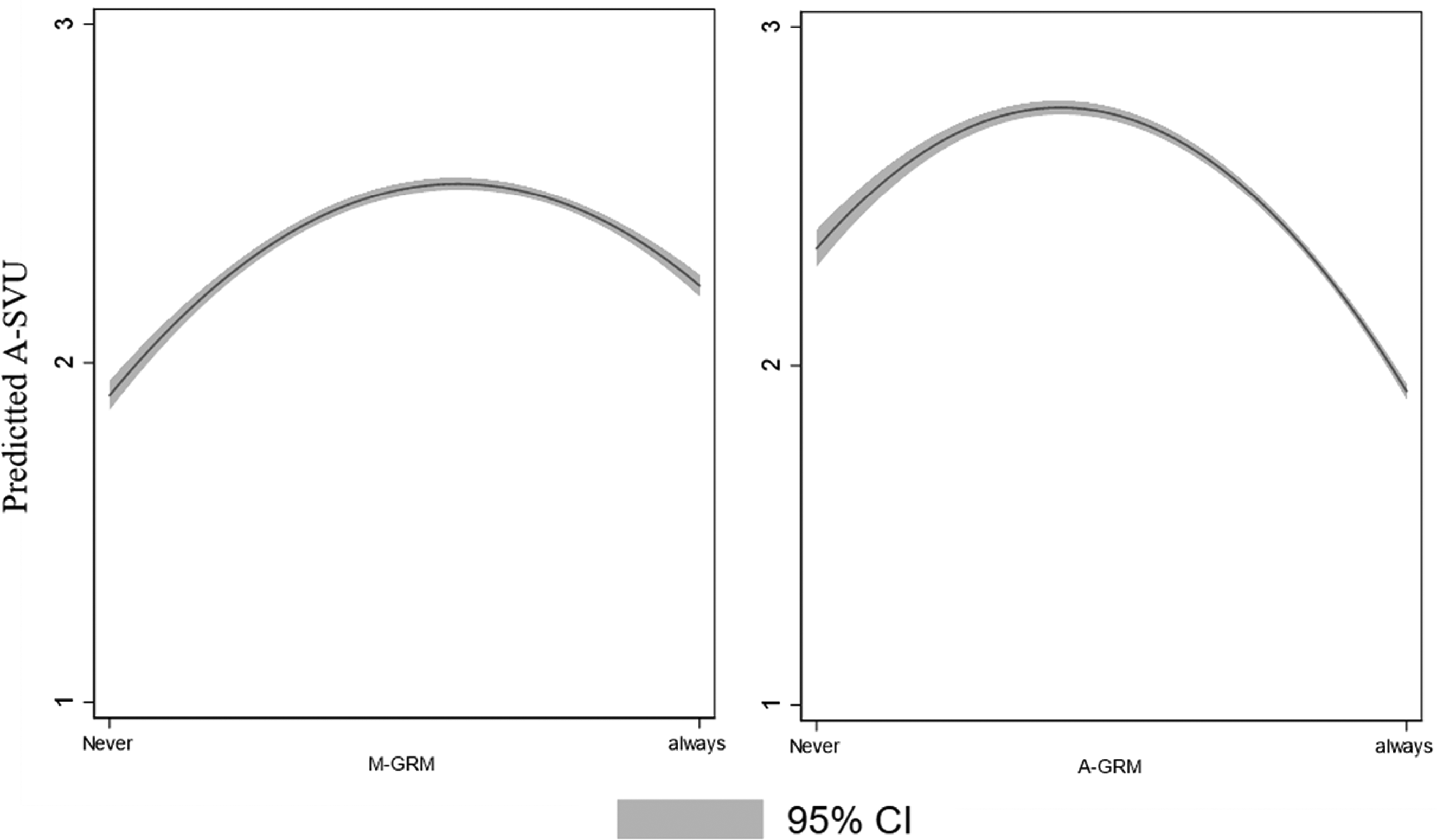
The reversed U-shaped relationship between general restrictive mediation (GRM) and adolescents’ short video use (A-SVU).
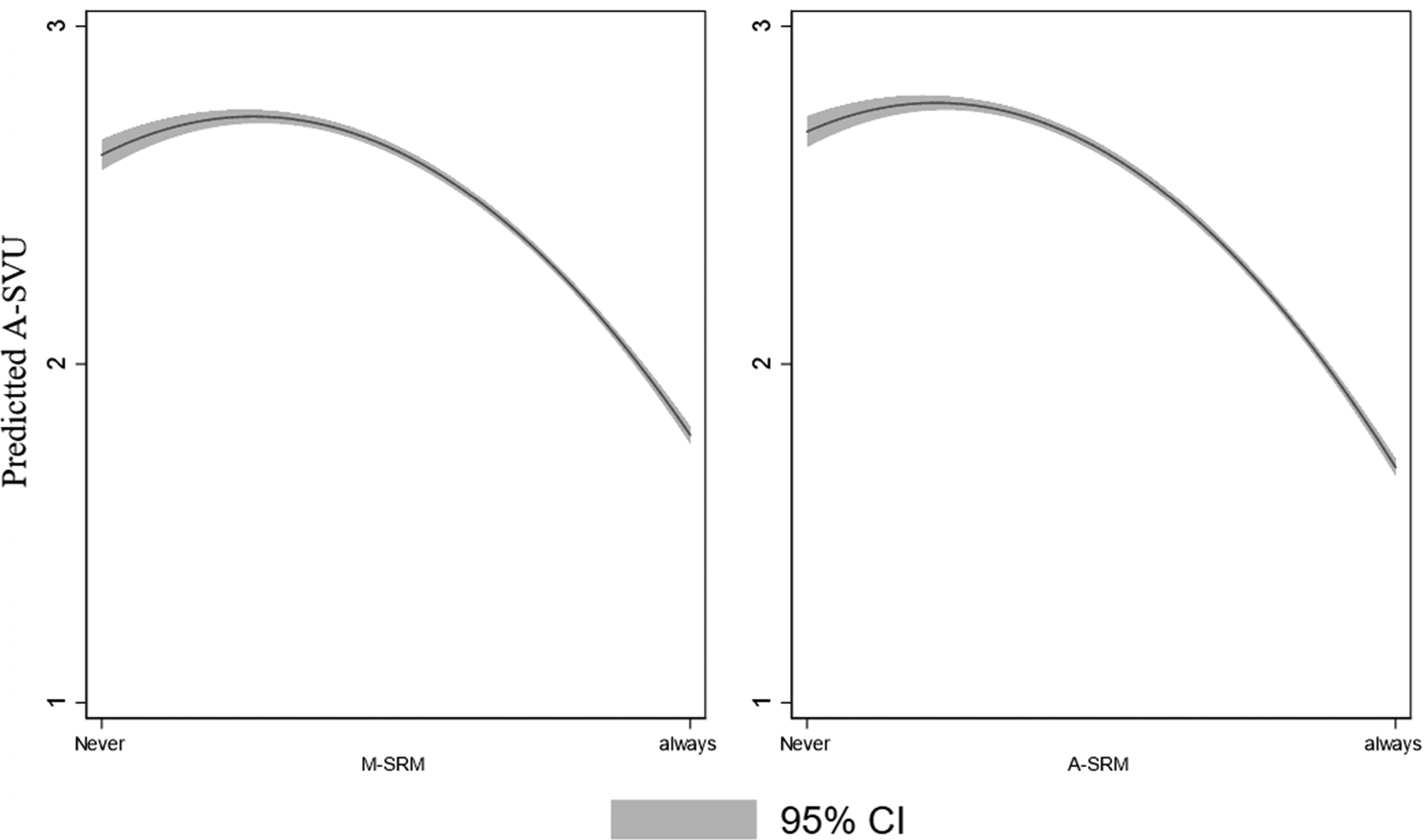
The relationship between specific restrictive mediation (SRM) and adolescents’ short video use (A-SVU).
Regressions on Adolescents’ Short Video use (A-SVU).
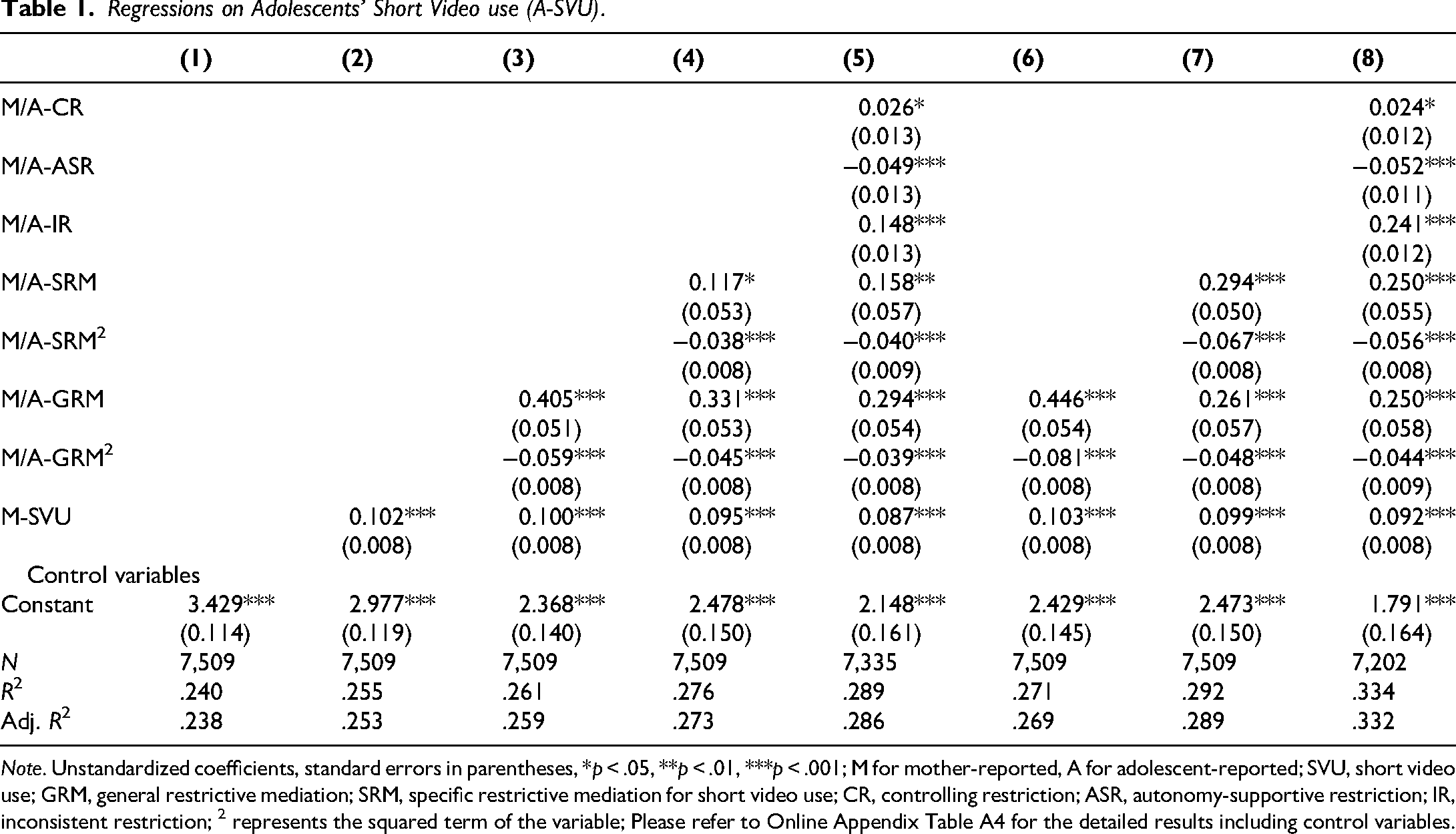
Note. Unstandardized coefficients, standard errors in parentheses, *p < .05, **p < .01, ***p < .001; M for mother-reported, A for adolescent-reported; SVU, short video use; GRM, general restrictive mediation; SRM, specific restrictive mediation for short video use; CR, controlling restriction; ASR, autonomy-supportive restriction; IR, inconsistent restriction; 2 represents the squared term of the variable; Please refer to Online Appendix Table A4 for the detailed results including control variables.
Model 5 and Model 8 introduced three restriction styles as explanatory variables. The findings showed that mothers’ use of CR and IR inadvertently increased A-SVU (bCR = 0.026, p < .05; bIR = 0.148, p < .001). Conversely, when mothers employed more ASR, their restrictions had a diminishing effect on A-SVU (b = −0.049, p < .001), with adolescents reporting similar results. The significant increase in R2 indicated that the model's explanatory power improved with the inclusion of SRM and restriction styles. Seemingly Unrelated Estimations with Wald tests revealed that adolescent-reported restrictive mediation, particularly inconsistent restriction, had stronger explanatory power for A-SVU than mother-reported measures.
The Interactions Between Maternal Modeling and Restriction
Online Appendix Table A5 presents the interactions between maternal modeling and restriction effects. Model 1 to Model 5 were based on mother-reported restrictive mediation, and Model 6 to Model 10 were based on adolescent-reported. The interaction terms in the first four models aligned with those in Model 6 to Model 9. Maternal modeling did not influence the effects of GRM and SRM but moderated the impact of CR. Figure 4 depicts that the positive effect of CR weakened as M-SVU increased; specifically, higher CR was linked to greater A-SVU when mothers used short videos infrequently, while frequent use diminished CR's boomerang effect. ASR and M-SVU interactions were insignificant across both reports. Lastly, mother-inconsistent restriction did not significantly interact with M-SVU (Model 5), but adolescent-inconsistent restriction (A-IR) did (Model 10), indicating that increased M-SVU amplified the influence of A-IR. As illustrated in Figure 5, when mothers used short videos more frequently, A-IR showed a more pronounced effect on increasing A-SVU.
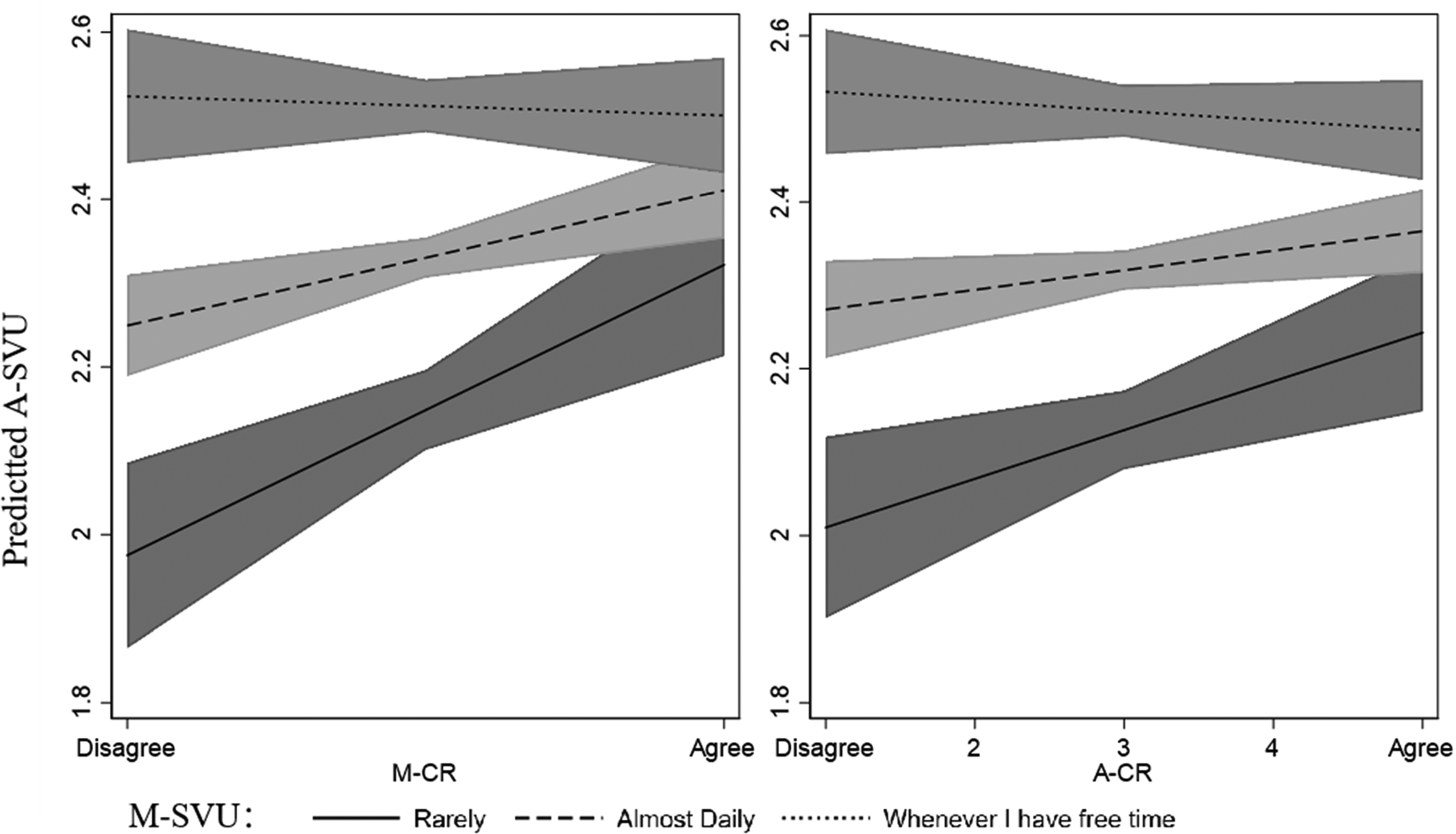
Interaction between controlling restriction (CR) and maternal short video use (M-SVU) on adolescents’ short video use (A-SVU).
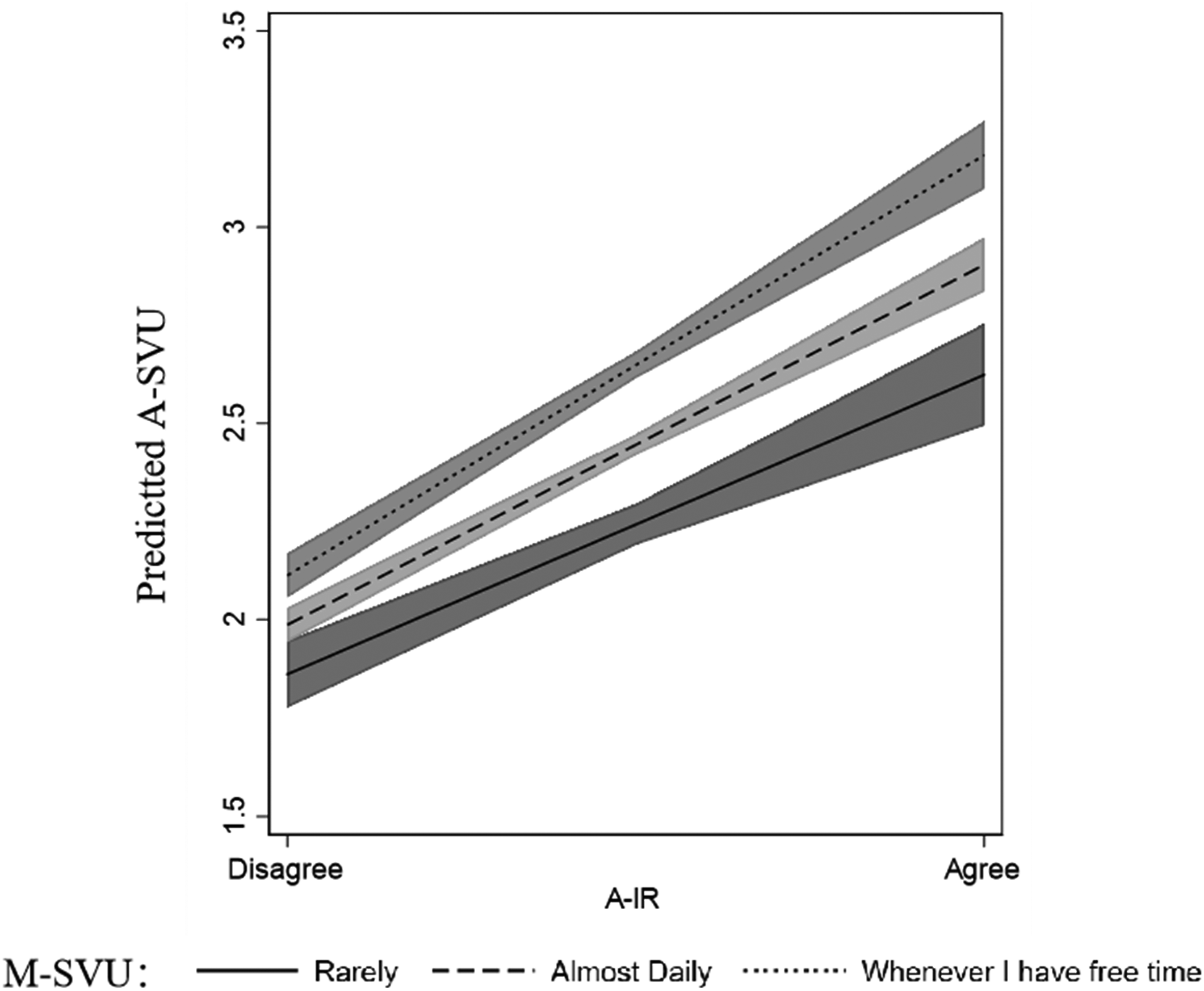
Interaction between adolescent-reportedinconsistent restriction (A-IR) and maternal short video use (M-SVU) on adolescents’ short video use (A-SVU).
Discussion
Despite the growing academic interest in SVU in recent years (Wang & Lei, 2022; Yang et al., 2025), few studies have empirically investigated whether restrictive mediation, a highly controversial parenting strategy, can effectively reduce A-SVU. To address this issue, this study integrates multiple theoretical perspectives from family communication, considering the modeling and restriction roles of mothers simultaneously. The study involves both quantity and quality measures of restrictive mediation and carefully examines their potential nonlinear effects. It further explores whether these relationships are moderated by maternal modeling, assessing whether “restriction by example” can mitigate feelings of resentment or rebellion, ultimately leading to a decrease in A-SVU. Therefore, this study contributes to resolving the enduring debate surrounding restrictive mediation. The findings offer practical recommendations for parents seeking to effectively guide A-SVU.
Main Findings
First, the findings demonstrated that M-SVU exerted a significant positive influence on A-SVU. This suggests that adolescents might adopt their mothers’ media habits through observational learning, which aligns with previous research highlighting the role of parental modeling in shaping children's digital behaviors (Edgerly et al., 2017; Fardouly et al., 2024). By applying social learning theory to SVU, our study highlights that maternal modeling remains a powerful factor even within fragmented, individualized media environments. This indicates that adolescents are not only influenced by parental mediation strategies but also by their parents’ own SVU, underscoring the enduring impact of modeling across both traditional and emerging media formats.
Second, compared to the modeling role, restrictive mediation presents a more nuanced picture regarding SVU, depending on its quantity and quality. A notable finding was that A-SVU peaked when GRM was applied at a moderate level, which might be attributed to the fragmented usage patterns typical of short videos. With moderate maternal restrictions, adolescents likely experience a mix of curiosity and mild rebelliousness while still having some freedom to use their phones opportunistically. In these instances, short videos become the most accessible and convenient form of entertainment, easily fitting into brief windows of free time throughout the day. The easy accessibility of short videos on mobile devices may further encourage this behavior, allowing adolescents to engage with content spontaneously whenever they have a few spare minutes (Yang et al., 2024). Although the relationship between SRM and A-SVU was theoretically an inverted U-shape, within the effective range of SRM values observed, the relationship tended to be negative. This suggests that targeted restrictions—those specifically limiting SVU—are more straightforward and effective at reducing A-SVU than GRM. This finding underscores the critical need to distinguish between SRM and GRM when studying the impact of parental restrictions on specific media behaviors.
Third, beyond assessing the quantity of two types of restrictive mediation, we delved into the qualitative aspect by examining the styles of restriction. Our findings revealed significant differences in outcomes based on these styles. Greater ASR was correlated with reduced A-SVU, while CR and IR inadvertently increased short video use. This finding aligns with the predictions of self-determination theory (Ryan & Deci, 2000), underscoring that the way parents implement restrictions is crucial; focusing solely on the quantity or intensity of restrictions overlooks the psychological impact of how these rules are conveyed (Valkenburg et al., 2013). Specifically, ASR, which respects adolescents’ need for autonomy while setting clear boundaries, seems to foster greater adherence and internalization of limits, helping adolescents self-regulate their SVU. In contrast, CR—characterized by strict or authoritarian rules—may trigger resistance, prompting adolescents to assert their independence by engaging more with restricted content. Similarly, IR, with its unpredictable and inconsistent enforcement, undermines the clarity of parental guidance, leaving adolescents uncertain about expectations and inadvertently encouraging them to test boundaries. These findings highlight the importance of an autonomy-supportive style in implementing restrictive mediation.
Fourth, the moderation analysis suggested that maternal restrictions, whether general or specific, did not appear to be influenced by the modeling effect in relation to A-SVU; however, the way these restrictions were imposed did seem to be affected. Specifically, one cross-validated finding was that the more mothers used short videos, the smaller the boomerang effect produced by CR. This finding can be primarily explained by the nature of CR. By enforcing rules in a controlling manner without engaging in the behavior themselves, these mothers may unintentionally amplify the allure of SVU, making it seem more forbidden and therefore more desirable. Another possible explanation is that when mothers frequently use short videos but impose restrictions in a controlling way, the boomerang effect may manifest in other forms of online entertainment, such as gaming. Another finding that aligned with expectations but was only validated by adolescent-reported data was that when restrictions were applied inconsistently, the boomerang effect was amplified if mothers were themselves frequent users. In such scenarios, the mother's frequent use coupled with inconsistent restrictions creates mixed signals, weakening her authority and intensifying the adolescent's confusion. This confusion might intensify their urge to test the limits, prompting them to engage more often with short videos as a way of breaching the forbidden territory. Overall, our results underscore the complex dynamics between parental modeling and the restrictions they impose.
Finally, consistent with other studies (Gruchel et al., 2022; Senkbeil, 2023), our findings revealed that the correlations between adolescent-reported and mother-reported restrictive mediation were weak, with significant discrepancies observed across most dimensions. Notably, adolescent-reported maternal restrictions demonstrated greater explanatory power for their own SVU compared to mother-reported restrictions. This discrepancy likely arises because adolescents’ perceptions more accurately capture how they interpret and internalize these boundaries, which directly impacts their actual media behaviors. Despite these differences, most of our findings were supported by both reports.
Implications
In conclusion, our study advances existing research in three significant ways. First, it examines the dual role of maternal modeling and restriction on A-SVU, an area where few studies underscore the complexity of family dynamics. Second, the study provides a nuanced analysis of different restriction types and styles, considering both the quantity and quality of restrictions, thereby resolving the long-standing debate on this parenting strategy. It also confirms the nonlinear effects of restriction frequency, offering a valuable addition to the research on parental mediation. Third, the study delves into the discrepancy between words and actions in educational settings, enriching the digital parenting literature by examining the interplay between parental modeling and restrictive mediation. This comprehensive approach adds depth to the theoretical discourse on digital parenting, emphasizing the complexity of parental influence in an increasingly digitalized environment.
Practically, for parents seeking to effectively limit their A-SVU, reducing their own SVU is important. Additionally, parents should adopt specific, clear, and consistent rules regarding online video use. This form of SRM has been shown to be the most effective in reducing usage. Parents should avoid applying restrictions in controlling or inconsistent styles, as these can lead to rebellious behavior or confusion, prompting adolescents to engage in even more SVU. When these two styles are employed, the desired outcomes are unlikely to be achieved, regardless of the mother's own usage behavior. Even when mothers barely use short videos, CR can lead to a strong boomerang effect. Therefore, it should be cautious of the increased curiosity in adolescents that may result from the “double isolation” of SVU.
Limitations and Future Directions
This study has several limitations that suggest valuable directions for future research. First, this study adopted a cross-sectional design due to practical constraints related to funding, time, and coordination across multiple research sites. While this limits causal inference, the large and diverse sample provides valuable insights into the associations examined. Notably, existing theory and longitudinal studies indicated that adolescent social media use did not predict parent use (Fardouly et al., 2024), but it remained possible that parents adopted certain behaviors based on their adolescents’ example, resulting in mutual reinforcement. It is also possible that adolescents’ media behaviors affected parental mediation. Future research should employ longitudinal data collection to better address these reciprocal influences and clarify causal relationships. Second, like many other studies (e.g., Zhu et al., 2024), we measured parent and adolescent SVU through self-reports, which were susceptible to bias. Future research could explore alternative methods, such as passive data collection or diary methods, to improve accuracy and provide a more comprehensive view of SVU. Additionally, the survey did not distinguish between weekday and weekend SVU, potentially overlooking variations in adolescents’ usage patterns across different days. Lastly, while our study focused on the potential of restrictive mediation to reduce SVU, it was also important to consider its unintended impacts, such as straining parent−child relationships and increasing parental stress (Nathanson, 2002). Future studies should examine these broader implications to ensure a balanced view of restrictive mediation strategies and identify ways to minimize stress in digital parenting practices.
Supplemental Material
sj-docx-1-mmc-10.1177_20501579261448864 - Supplemental material for Exploring the Impact of Maternal Modeling and Restrictive Mediation on Adolescents’ Short Video Use: Insights from Mother−Adolescent Dyads
Supplemental material, sj-docx-1-mmc-10.1177_20501579261448864 for Exploring the Impact of Maternal Modeling and Restrictive Mediation on Adolescents’ Short Video Use: Insights from Mother−Adolescent Dyads by Wei Ren and Rong Huang in Mobile Media & Communication
Footnotes
Acknowledgments
We express our sincere gratitude to the Editor and anonymous reviewers for their constructive comments and valuable suggestions, which have greatly improved the quality of this study. We also thank the teachers who provided generous support during the data collection process, as well as all the mothers and students who participated in the survey.

Funding
The author disclosed receipt of the following financial support for the research, authorship, and/or publication of this article: The study is funded by the National Natural Science Foundation of China (72404223), the 74th General Funding of the China Postdoctoral Science Foundation (2023M742808) Shaanxi Provincial Social Science Foundation (2024M001), and Shaanxi Provincial Postdoctoral Research Grant (2023BSHEDZZ45).
Declaration of Conflicting Interests
The authors declared no potential conflicts of interest with respect to the research, authorship, and/or publication of this article.
Data Available Statement
Data could be provided upon reasonable request.
Declaration of Generative Artificial Intelligence in the Writing Process
The authors used ChatGPT to assist with language editing and take full responsibility for the final content.
Supplemental Material
Supplemental material for this article is available online.
Notes
References
Supplementary Material
Please find the following supplemental material available below.
For Open Access articles published under a Creative Commons License, all supplemental material carries the same license as the article it is associated with.
For non-Open Access articles published, all supplemental material carries a non-exclusive license, and permission requests for re-use of supplemental material or any part of supplemental material shall be sent directly to the copyright owner as specified in the copyright notice associated with the article.
