






Abstract
Objective:
To compare effectiveness and safety of intravesical therapy (sodium hyaluronate and chondroitin sulphate) Ialuril versus cocktail therapy for treatment of interstitial cystitis (IC).
Materials and methods:
Prospective study from March 2013 till August 2019 including all IC patients presented to our urology clinic. All IC patients underwent basic workup including urine test, urodynamic test and gynaecological/genital exam. Postoperatively, all patients received intravesical therapy. Patients were randomly allocated to either cocktail therapy (NaOH + heparin + lidocaine) or Ialuril (Sodium hyaluronate and chondroitin sulphate) therapy as intravesical seven cycles. The primary outcome was therapy effectiveness using Interstitial Cystitis Problem Index (ICPI) and Interstitial Cystitis Symptom Index (ICSI) improvement post therapy. Secondary outcome were for complications and compliance.
Results:
Total of 32 patients were included (6 males, 26 females) with mean age of 43 years (24–72 years), mean follow-up 36 months (15–72 months). Cocktail intravesical therapy was used in 21 patients while 11 patients received Ialuril. All patients showed improvement on their ICSI and ICPI scores post therapy from their baseline. Statistical analysis showed no significant difference between both groups regarding improvement in ICSI and ICPI index with p-value = 0.552 and p = 0.79, respectively. Infection and non-compliance is significantly high in the cocktail arm p = 0.004, p = 0.027
Conclusions:
Intravesical cocktail therapy was equally effective as Ialuril in treating IC. Ialuril was preferred over cocktail therapy because of lower side effect; when considering ulcerative IC subgroup, we need large randomised controlled trials to compare therapy benefits.
Keywords
Introduction
Interstitial cystitis (IC) is a chronic bladder disease of unknown aetiology. It occurs more in females and requires treatment for symptom relief. 1 Its hallmark symptom is suprapubic pain, frequency urgency pelvic and genital pain, with a major effect on patient quality of life. 2 IC has a wide spectrum of symptoms and severity, for which recently the terms painful bladder syndrome (PBS) or bladder pain syndrome (BPS) is used.
To date, there is an agreement on the administration of intravesical therapy.3–6 Glycosaminoglycans (GAGs) are classified into four structural groups 7 (heparin and heparan sulphates; chondroitin and dermatan sulphates; hyaluronan; and keratan sulphate) and have been used as intravesical instillations for GAG substitution therapy, they have the benefit of a low risk of systemic side effects. 8 Intravesical treatment with dimethyl sulfoxide (DMSO), chondroitin sulphate (CS), hyaluronic acid and heparin have been used to repair the GAG layer with variable clinical success5,9 Heparin has commonly been used off-label for IC/BPS therapy. Other intravesical instillations containing anaesthetic solutions, such as lidocaine and bupivacaine, are also used in combination with sodium bicarbonate to control bladder pain. 10
Today, hyaluronan, the salt of hyaluronic acid (HA), and chondroitin sulphate (CS) are used for intravesical treatment, alone or in combination, while DMSO, which has a putative effect on the sensory peripheral nerves of the bladder, 11 is the only intravesical therapy approved by the FDA.
Sodium hyaluronate/chondroitin sulphate (HA/CS) Ialuril® is a pre-filled syringe commercially available option for intravesical therapy. Another option is the cocktail therapy, which is composed of heparin sulphate, lidocaine and sodium bicarbonate.
Aim of our study is to compare Ialuril (HA and CS) versus cocktail therapy (heparin, NAHCO3 + lidocaine) for treatment of IC/BPS.
Materials and methods
Study design
We conducted our prospective cohort study in King Abdulaziz University Hospital, Jeddah, Saudi Arabia, from March 2013 till August 2019 including all IC/BPS patients presented to our urology clinic. The Study was performed in accordance with Helsinki declaration after obtaining ethical approval. Written informed consent was obtained from all patients for their anonymised information to be published in this article.
Study population
We included patients who were diagnosed as IC/BPS. Diagnosis of IC/BPS was made based on the clinical symptoms history of bladder pain and discomfort related to bladder filling accompanied by frequency in the absence of infection; we included patients with normal gynaecological and genital exam with clean urine analysis and culture to exclude UTI, urodynamic was done to exclude OAB, including patients with cystoscopy findings of IC. Patients meeting the NIDDK (National Institute of Diabetes, Digestive and Kidney Diseases) criteria for IC were diagnosed as having IC/BPS. 12 Including both ulcerative and non-ulcerative types.
Exclusion criteria are bladder cancer, history of genitourinary (GU) malignancy within the last 5 years, pregnant and lactating, neurogenic bladder, patients with indwelling catheters, overactive bladder chronic bacterial prostatitis, currently receiving or having had prior therapy with intravesical treatment for IC or heparin or Bacillus Calmette-Guérin (BCG), receiving antidepressants or radiation cystitis, bladder or lower ureteral calculi, active sexual transmitted disease, current vaginitis and endometriosis.
Urodynamic test
Urodynamic test was done baseline for all patients to exclude overactive bladder using International Continence Society standards.
Intervention
All study group patients underwent bladder hydrodistention, additional ulcer fulgurations for ulcerative IC patients during the hydrodistention using laser was done. Postoperatively, all patients received intravesical therapy on the second day post hydrodistention. Patients were randomly allocated to either cocktail intravesical therapy (NaOH + heparin + lidocaine) or Ialuril (HA and CS) therapy.
Patients were blinded and randomly allocated to receive either cocktail intravesical therapy (NaOH + heparin + lidocaine) or Ialuril (HA and CS) therapy. HA/CS Ialuril® is a pre filled syringe commercially available with the composition of 800 mg low molecular weight (LMW)-HA (1.6%) / 1 g CS (2%) in 50 ml normal saline. Cocktail therapy, which is composed of heparin sulphate 40,000 IU, Lidocaine 2% 8 mL sodium bicarbonate 8.4% 3 mL in normal saline to reach 50 ml, which is prepared at the time of cycle. The bladder instillation was performed by a trained medical professional using a temporary catheter under sterile technique, the bladder is emptied first and then filled with cocktail therapy or Ialuril; patients were asked to retain intravesical therapy as long as they can with minimum of 30 minutes. Both groups received a total of seven cycles of therapy, initially once a week for 4 weeks. Further instillations were given at week 6, 8 and 12.
Outcome assessment
At the clinic visit before hydrodistention, all IC/BPS patients were asked to fill up self-rated measures of O’Leary–Sant Interstitial Cystitis Symptom Index (ICSI) and Interstitial Cystitis Problem Index (ICPI) as their baseline. The follow-up of ICSI and ICPI were done 2 weeks after finishing intravesical therapy. Patients were asked to fill in the ICSI (four questions) and ICPI (four questions). The primary outcome was therapy effectiveness using O’Leary–Sant ICPI and O’Leary–Sant ICSI improvement post therapy by comparing mean difference between pre- and post-therapy index. Secondary outcome were complications specifically developing any UTI and compliance on treatment.
O’Leary–Sant ICSI and ICPI
The ICSI and the ICPI were developed in 1997 to measure lower urinary tract symptoms (LUTS) and their impact in patients with IC/BPS. They are self-administered questionnaires, which are valid and reliable to help in IC/BPS diagnosis, not screening. These indices are useful in measuring response to therapy in clinical studies. The ICSI and ICPI are composed of four questions each. Their scoring include the total sum up of each question score.13,14
Complications
We assessed the following complications in both groups as UTI, need to repeat therapy and non-compliance. Urinary tract infection was defined as symptoms suggestive of UTI with a positive urine analysis and positive culture. Need to repeat therapy was defined as the need of intravesical instillations after 4 weeks of the last cycle. Non- compliance was defined as patient not compliant with intravesical cycles because of LUTS (without UTI) induced by intravesical therapy.
Statistical analysis
All patients demographics and data were collected into excel sheet and further analysed using software SPSS for Windows, version 26. (IBM Corp., Armonk, NY, USA). Descriptive statistics were reported as frequencies for categorical variables. Comparison between pre and post means for ICPI and ICSI was performed using t-test. Correlation analysis (two-sided Pearson with two degrees of freedom) was used between outcome results and patients’ diagnosis, and therapy-type statistical significance was considered for p-values < 0.05. Drop-outs and lost to follow-up are considered as failures.
Results
Total of 32 patients were included (6 males, 26 females) with mean age of 43 years (24–72 years standard deviation 14.98), mean follow-up 36 months (15–72 months standard deviation 33.37).
Ulcerative IC was found in 8 patients out of the 32. Patients were grouped into group 1 who received cocktail intravesical therapy total 21 patients, and group 2 received Ialuril total 11 cases, Table 1.
Patients demographics.
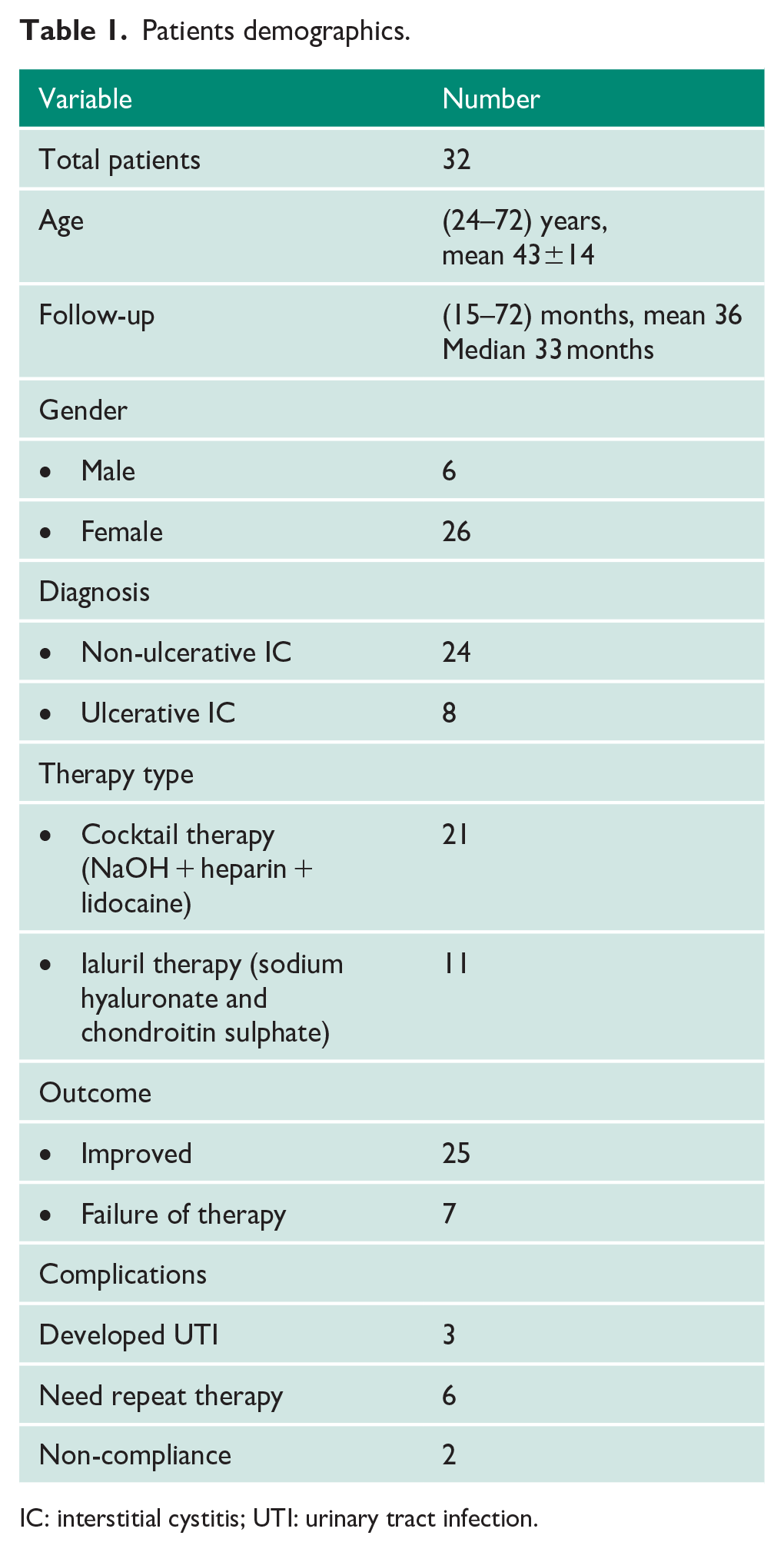
IC: interstitial cystitis; UTI: urinary tract infection.
Group 1 total (21) had 3 ulcerative IC and 18 non-ulcerative type, all received cocktail intravesical therapy and 2 cases needed to repeat therapy to maintain symptom control. Three patients developed UTI and two out of them were not compliant and needed to treat UTI and delay their intravesical therapy, five patients out of 21 had therapy failure (no symptomatic improvement).
Group 2 total (11) included those who received Ialuril intravesical, it included 6 patients with ulcerative IC type. After receiving therapy, four needed to repeat therapy to have better response.
Statistical analysis showed no significant difference between both groups regarding improvement in ICSI and ICPI index p-value = 0.552, p = 0.79, respectively. Therapy failure was reported in 2 patients out of 11.
Post-therapy scores of ICSI and ICPI in both groups did not show significant difference, infection and non-compliance is significantly high in the cocktail arm p = 0.004, p = 0.027; Figure 1, Table 2.

Boxplot for (a) ICSI and (b) ICPI score pre and post therapy categorised according to type of therapy used (cocktail and Ialuril).
Comparison between both groups 1 and 2 regarding patient details and therapy outcome.
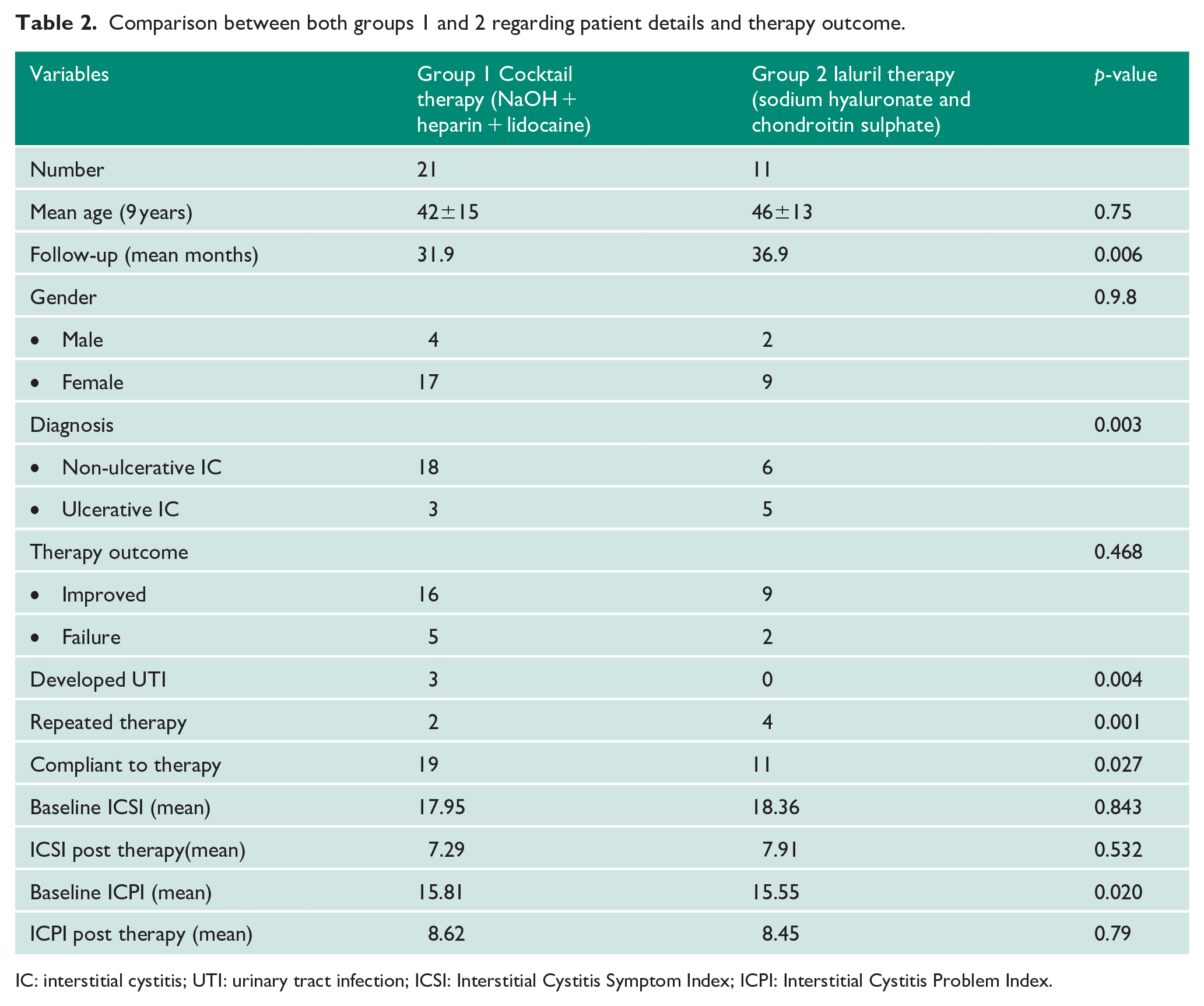
IC: interstitial cystitis; UTI: urinary tract infection; ICSI: Interstitial Cystitis Symptom Index; ICPI: Interstitial Cystitis Problem Index.
Correlation analysis showed significant correlation between IC/BPS type and need to repeat intravesical therapy p = 0.008 Pearson correlation 0.462 (ulcerative IC need repeated therapy). Ulcerative IC patients were having the worse ICSI score pre therapy p = 0.001 (Pearson correlation 0.573) and patient outcome was affected by UTI p = 0.001 (Pearson correlation 0.608).
Further subgroup analysis for therapy effect was done according to diagnosis of ulcerative and non-ulcerative IC, which did not show any significant difference between both used intravesical therapy in each diagnosis group; Figures 2 and 3, Tables 3 and 4.

Boxplot for ICPI score pre and post therapy in subgroup analysis according to diagnosis categorised according to type of therapy used (cocktail and Ialuril).

Boxplot for ICSI score pre and post therapy in subgroup analysis according to diagnosis categorised according to type of therapy used (cocktail and Ialuril).
Patient therapy groups categorised according to diagnosis IC/BPS versus ulcerative IC.
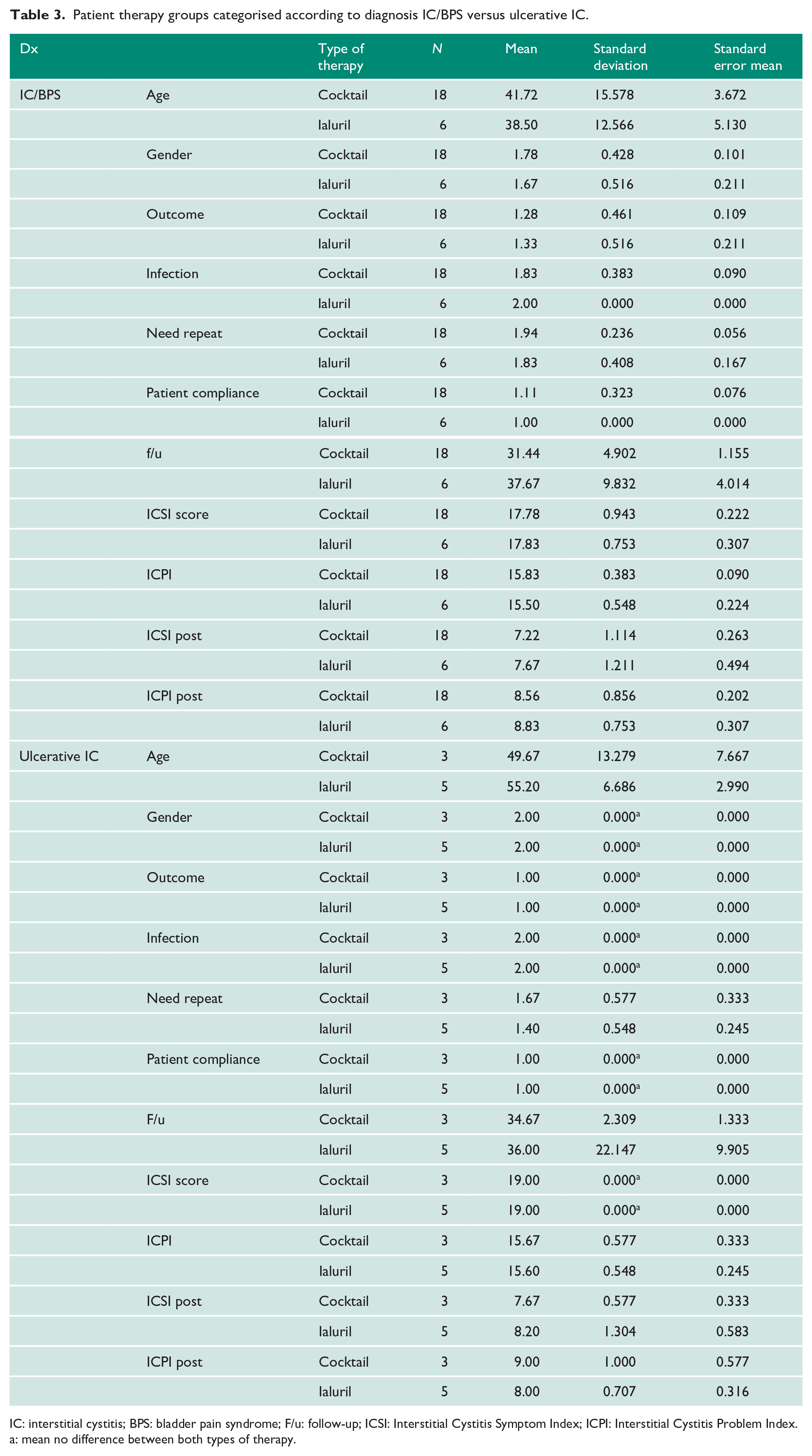
IC: interstitial cystitis; BPS: bladder pain syndrome; F/u: follow-up; ICSI: Interstitial Cystitis Symptom Index; ICPI: Interstitial Cystitis Problem Index. a: mean no difference between both types of therapy.
Patient groups divided according to diagnosis and further subgroup analysis of both therapy used in each category.
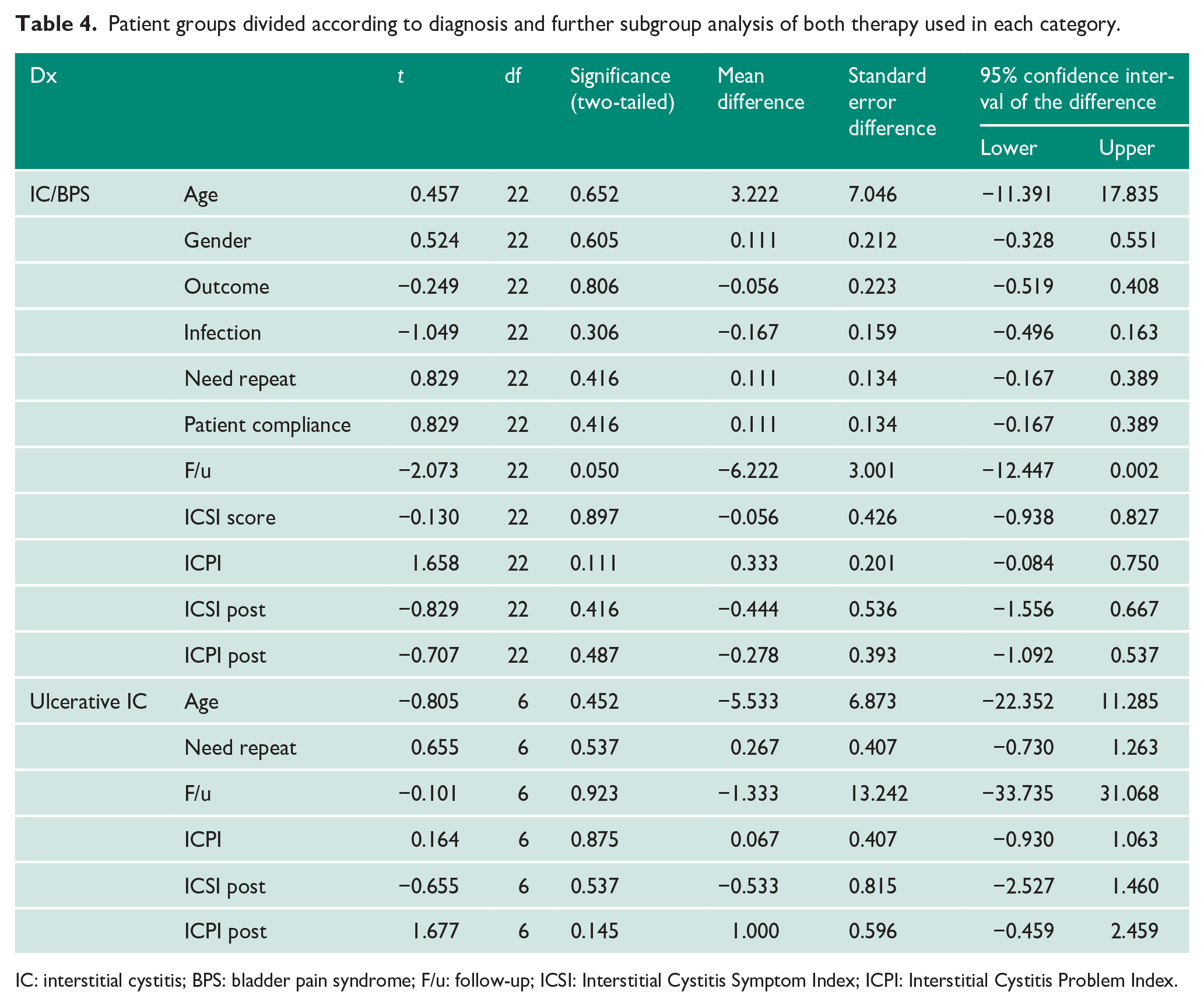
IC: interstitial cystitis; BPS: bladder pain syndrome; F/u: follow-up; ICSI: Interstitial Cystitis Symptom Index; ICPI: Interstitial Cystitis Problem Index.
Discussion
Several types of intravesical therapy have been used in IC/BPS including heparin, lidocaine, pentosan polysulphate sodium, DMSO, CS, HA (and combined with CS)8–11,15 and Botox. 16
Heparin used in combination with lidocaine and sodium bicarbonate was reported to have a good result in 56–73% by downregulating bladder sensory nerves in IC/BPS patients.17,18 Parsons et al. 19 reported the use of alkalinised lidocaine gives immediate relief of pain and urgency 50% compared to placebo 13%. Welk and Teichman 20 even reported 57% complete resolution of dyspareunia in women when using cocktail therapy. So far, all reports are from small cohorts and lacking randomised controlled trials.
Combined HA and CS reported equal effectiveness to DMSO with lower side effect.21,22 One study showed better effect with combination therapy on female sexual function in IC/BPS group in comparison to CS alone. 23 Pyo and Cho 24 reported systematic review and meta-analysis including 390 IC/BPS patients, which showed significant improvement with intravesical hyaluronate and combined HA and CS. Again all reports are still lacking randomised trials to compare its effectiveness to placebo.
Our study compared Ialuril (HA and CS) to heparin cocktail therapy. Most of our IC/BPS study group are females (81%), which is comparable to the disease gender distribution. Ulcerative IC type requires ulcer fulgurations, which can be done by transurethral resection or transurethral coagulation with equal results. 25 We used Nd: laser for ulcer fulgurations, which is reported by Rofiem et al. 26 to have good results without complication to ablate Hunner lesions in 24 patients. Our study showed that ulcerative IC/BPS patients had the worse baseline ICSI score.
Our instillation protocol of intravesical therapy was comparable to other reported studies. A systematic review and meta-analysis on the efficacy of intravesical therapy for IC/BPS reported the initial instillation therapy to be weekly in 73.7%, but with different follow-up schedules. 15
Our study was comparing the cocktail therapy to combined HA and CS; to our knowledge, here was only one conference abstract that compared two commercial types of combined HA/CS to different composition cocktail therapy containing cortisol. 27 Our study showed that both Ialuril and cocktail therapy are equally effective, but the study done by Cocci et al. 27 reported that the cocktail therapy was the most cost-effective option when compared to other combined HA/CS. Unfortunately cost-effectiveness analysis was not done in our study.
Our study showed that ulcerative IC patients required repeated cycles to control their symptoms and that UTI affected patient therapy compliance.
Limitations of our study are mainly the small sample size (not well powered) and discrepancy of case number between both groups. Another limitation is short follow-up and the lack of a placebo control group to evaluate placebo effect, while randomisation of IC patients to placebo group may be difficult with their severe pain. The patient characteristic is different between treatment groups, a lot of patients in Ialuril therapy group are ulcerative type IC, despite doing subgroup analysis but large randomised controlled trials to compare therapy benefits are needed
Conclusion
Intravesical cocktail therapy was equally effective as Ialuril in treating IC. Ialuril was preferred over cocktail therapy because of lower side effect; when considering ulcerative IC subgroup, we need large randomised controlled trials to compare therapy benefits.
Footnotes
Conflicting interests
The author(s) declared no potential conflicts of interest with respect to the research, authorship, and/or publication of this article.
Funding
The author(s) received no financial support for the research, authorship, and/or publication of this article.
Ethical approval
Ethical approval was obtained from King Abdulaziz Hospital ethical research committee (No 410-20).
Informed consent
Written informed consent was obtained from all patients for their anonymised information to be published in this article.
