






Abstract
Objectives:
The main aim of this study is to characterise the humanistic burden of bladder pain syndrome (BPS) on patients within the United Kingdom and to estimate the key healthcare resource usage and cost of treating these patients.
Method:
An online survey was administered through two charities. Respondents were asked questions on BPS diagnosis, socio-demographics and health-related quality of life using the O’Leary-Sant Interstitial Cystitis Symptom Index (ICSI) and Problem Index (ICPI), the Pelvic Pain and Urinary/Frequency (PUF) and the EQ-5D questionnaires. Healthcare resource and therapy use, for the previous 6 months, were recorded and used to calculate economic burden.
Results:
A total of 252 patients completed the survey. Mean ICSI ICPI scores were 12.6 and 11.0, respectively, indicating severe symptoms. Mean PUF score was 21.2, indicating poor health status and a high number of BPS-related symptoms and problems. Mean EQ-5D utility score was 0.541. In the previous 6 months, 172 (68%) saw their general practitioner (GP) and 80 (32%) a primary care nurse, and 165 (65%) had one or more outpatient visits, due to their BPS.
Conclusion:
This survey adds to our current understanding of BPS in the United Kingdom, highlighting that patients with BPS have poor health-related quality of life and incur high resource use.
Level of evidence:
Not applicable
Keywords
Introduction
The European Society for the Study of Interstitial Cystitis (ESSIC) defines bladder pain syndrome (BPS; also known as painful bladder syndrome (PBS) or interstitial cystitis (IC) or IC/PBS) as ‘persistent or recurrent chronic (>6 months) pelvic pain, pressure or discomfort perceived to be related to the urinary bladder accompanied by at least one other urinary symptom such as an urgent need to void or urinary frequency’. 1
The prevalence of BPS is estimated to be in the range of 45/100,000 in females and 8/100,000 in males.2,3 Recent European population-based cross-sectional data estimated bladder pain to affect around 1.22% of females. 4 However, evidence from the United States suggests that BPS may be underdiagnosed, with less than 10% of patients receiving a formal diagnosis. 5
Diagnosis is primarily based on symptoms and signs that characterise the disease, and the exclusion of other conditions that may explain the symptoms.3,6 The presence of Hunner’s lesions (ulcers), and glomerulations, represents the most distinctive clinical characteristic findings that might be encountered on cystoscopy, in patients with BPS.1,7,8 Identification of Hunner lesion disease is important as it likely represents a distinct phenotype of BPS which can respond well to targeted therapies, such as fulguration or intra-lesional steroid injection.9,10
BPS can have a significant impact on patients’ lives, arising from chronic pain as well as the disruption to daily activity and sleep, caused by urinary frequency and nocturia.11 –13 Previous surveys have found that, in addition to the burden of impaired health-related quality of life (HRQoL), BPS is associated with a reduction in work productivity and increased healthcare resource use.4,14 However, contemporary data with regard to HRQoL and healthcare resource utilisation, are relatively limited, particularly within the UK patient population.12 –15
This study aims to characterise the humanistic burden of BPS on patients within the United Kingdom, using two condition-specific measures and one generic preference-based measure, and to estimate key healthcare resource usage to generate an estimated cost of treating these patients.
Method
Survey design
An online survey was conducted through two charities (Bladder Health UK and Bladder & Bowel Community). Both charities hosted the survey link on their website, for approximately 1 month in October 2018. Bladder Health UK also emailed an invitation to participate, and link to the online survey, to patients registered with them, and posted it on social media sites.
Background questions obtained information on socio-demographics and disease history. The survey also included the EQ-5D questionnaire, two condition-specific questionnaires and a set of questions on healthcare use related to their BPS over the past 6 months.
Patient population
Patients reporting a diagnosis of BPS in the United Kingdom were included. A screener question was used to exclude individuals without a BPS diagnosis following cystoscopy, as not all patients involved in the two charities were exclusively sufferers of BPS. Geographic location (‘England’, ‘Scotland’, ‘Wales’, ‘Northern Ireland’ and ‘Other (non-UK)’) was also asked, and all non-UK respondents were excluded.
Measures to assess HRQoL
One generic preference-based measure, the EQ-5D, and two condition-specific measures, the O’Leary-Sant Interstitial Cystitis Symptom Index (ICSI) and Interstitial Cystitis Problem Index (ICPI), and the Pelvic Pain and Urinary/Frequency (PUF) patient symptom scale, were included in the survey. The measures asked patients to describe their health by indicating the level most applicable to them on each item or dimension.
Utility scores are preferred by most health technology assessment (HTA) agencies, such as NICE in the United Kingdom, and are used to inform economic models. Currently, NICE recommends the use of the crosswalk mapping function by Van Hout et al. 16 to link back to an older version of the EQ-5D (EQ-5D-3L) to generate utilities. The EQ-5D-5L consists of the EQ-5D descriptive system and the EQ visual analogue scale (EQ VAS). The descriptive system comprised five dimensions: mobility, self-care, usual activities, pain/discomfort and anxiety/depression. Each dimension had five levels: no problems, slight problems, moderate problems, severe problems and extreme problems based on health ‘today’. The response on these five dimensions was converted to a single summary index number (utility) reflecting preferability compared with other health profiles, with death as 0, and 1 representing full health.
Both the ICSI and ICPI have good psychometrics properties and have been widely used to assess symptom severity and monitor clinical progress in patients with BPS. 17 The O’Leary-Sant questionnaire consists of two brief self-administered indices: the 4-item ICSI (scored 0–20) and the 4-item ICPI (scored 0–16). ICSI scores indicate the following symptoms: none if 0–3; mild if 4–6, moderate if 7–11 and severe if 12–20.
The PUF score has not been subject to as extensive a validation process, but has additional items related to pelvic pain and dyspareunia, which is useful in the diagnosis of BPS. 18 The PUF patient symptom scale consists of a symptom score (0–23) measuring how often a patient experiences a problem, and a bother score (0–12), which notes the degree to which pelvic pain and urinary symptoms bother the patient; bother and symptom scores combine for a total PUF score (0–35).
Assessment of healthcare usage
Brief healthcare resource use questions were used to assist with economic modelling. Patients were asked about their healthcare usage due to BPS over the past 6 months, including numbers of general practitioner (GP)/nurse visits, hospital admissions and treatment usage.
Statistical analysis
Quality-of-life burden
A descriptive analysis of the HRQoL burden of BPS was undertaken. Frequency tables and graphical plots of EQ-5D values, PUF and O’Leary-Sant scores were produced to examine the distribution of responses across HRQoL for each instrument. Overall scores/utilities were summarised using mean, standard deviation, median and interquartile range statistics.
Resource use burden of illness
Healthcare resource use (healthcare visits, procedures and medication) was calculated to estimate the economic burden of treating patients with BPS. The number of healthcare visits (community, hospital and allied health), procedures (cystoscopy) and treatments (bladder distension, nerve stimulation, bladder instillation, antibiotics, injection into bladder wall and others) in the past 6 months was self-reported.
Estimating the total cost of BPS
Unit costs of the corresponding resource use items, sourced from national sources (Personal Social Services Research Unit (PSSRU) and the NHS Reference Costs reports) were applied to calculate the total cost over a 6-month duration. In addition, total cost, excluding procedures and drug costs, was estimated using regression model.
Results
Patient characteristics
A total of 252 patients with diagnosis of BPS participated in the survey. The majority of patients were female (93%) and of white ethnicity (95%), from England (86%) and aged >55 years (Table 1). Median time from onset of symptoms to diagnosis was 2 years (range <1–40 years), with nearly 30% of participants reporting a diagnosis of BPS for over 10 years. Around 40% reported being told by their healthcare professional (HCP) that, following a cystoscopy, they had ‘lesions or ulcers inside your bladder’; 14% ‘Hunner’s lesions or ulcers’; and 15% ‘glomerulations’; 126 patients (50%) reported having any one of these (Table 1).
Patient demographics and disease characteristics of the study sample.
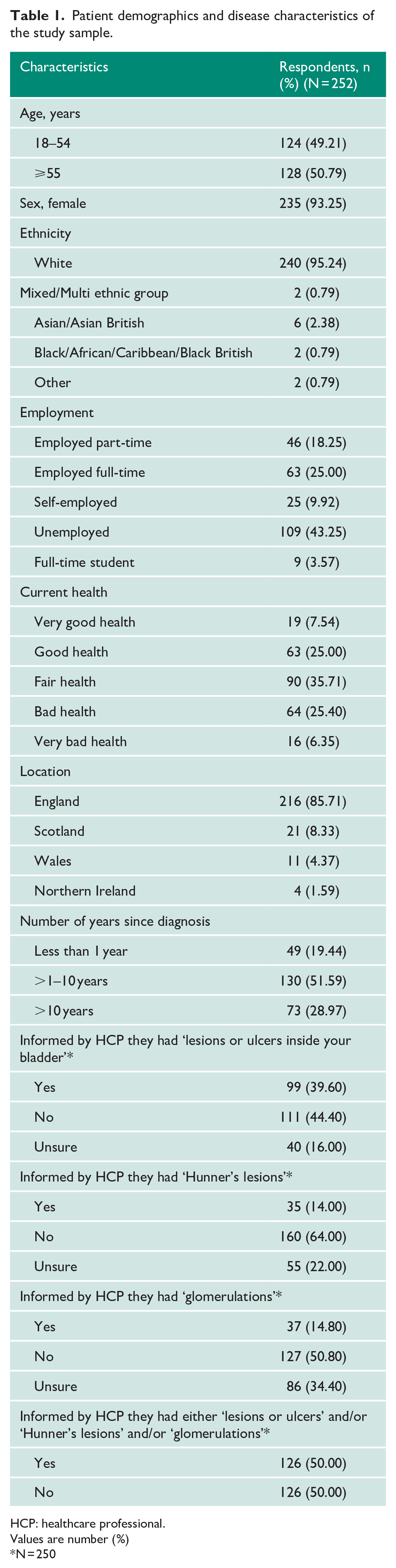
HCP: healthcare professional.
Values are number (%)
N = 250
Quality of life
A summary of the HRQoL measured in the cross-sectional survey using EQ-5D, ICSI, ICPI and PUF is presented in Table 2.
HRQoL estimates.
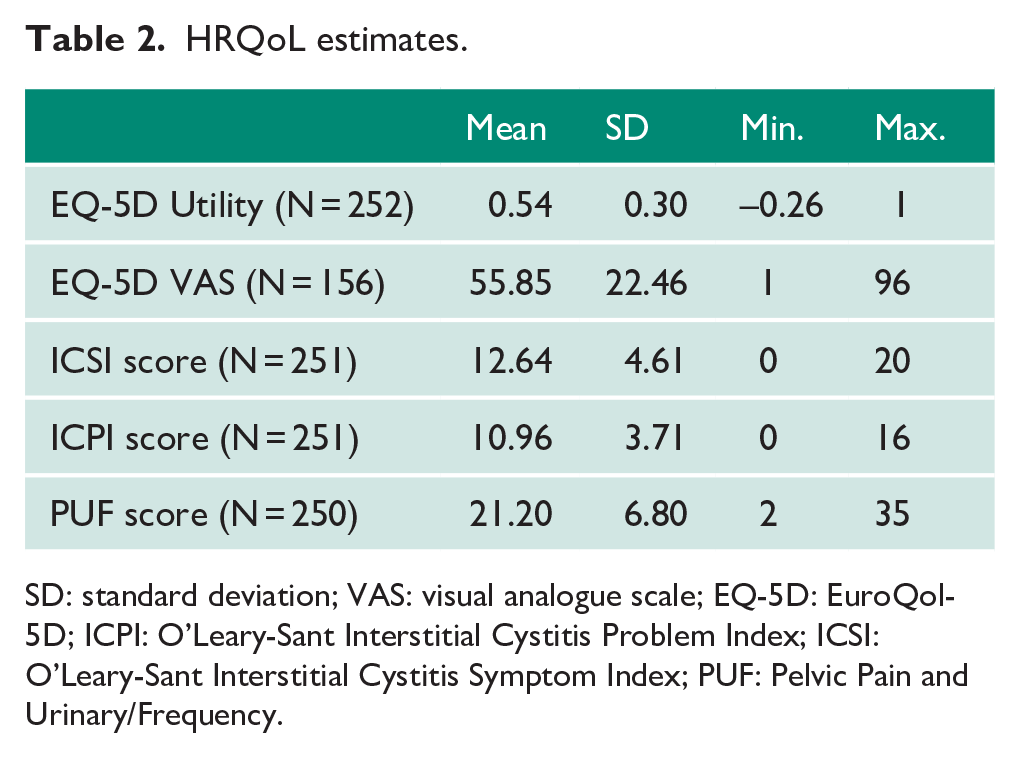
SD: standard deviation; VAS: visual analogue scale; EQ-5D: EuroQol-5D; ICPI: O’Leary-Sant Interstitial Cystitis Problem Index; ICSI: O’Leary-Sant Interstitial Cystitis Symptom Index; PUF: Pelvic Pain and Urinary/Frequency.
The mean EQ-ED utility score in the BPS patient sample was 0.541 (median 0.654), and mean EQ-5D-VAS score 55.85. These findings demonstrate that patients included in the survey had significant symptoms due to their BPS, and poor quality of life. Only 10 out of the 252 patients involved in the survey reported full health. The lowest utility score in the sample was –0.257. The majority of patients indicated slight to extreme pain or discomfort in the EQ-5D. A large proportion of the patients interviewed also had slight or moderate anxiety or depression (Table 3).
HRQoL estimates.
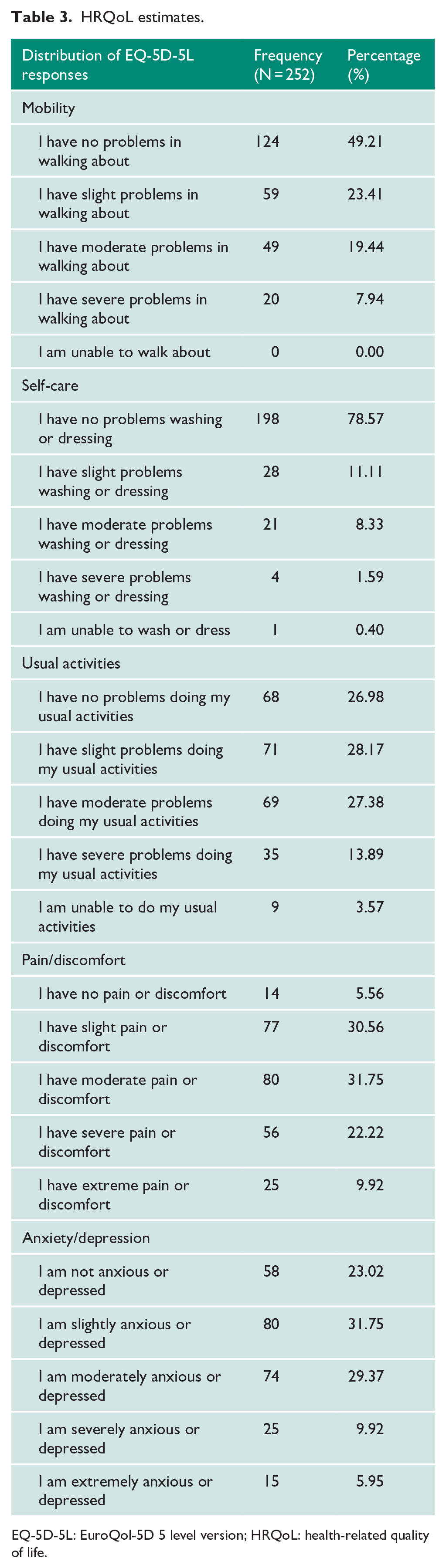
EQ-5D-5L: EuroQol-5D 5 level version; HRQoL: health-related quality of life.
Mean ICSI and ICPI score were 12.637 (median 13) and 10.964 (median 11), respectively. A total of 61% of patients had an ICSI score of ⩾12, indicating severe impact of BPS symptoms; 42% almost always had to urinate less than 2 hours after they had finished urinating; 36% almost always had bladder pain/burning; 50% had to urinate ⩾3 times per night, and 1 in 3 had urgency half the time or almost always (Table 4). Only two participants indicated no problems across all four ICSI items.
Distribution of ICSI responses.
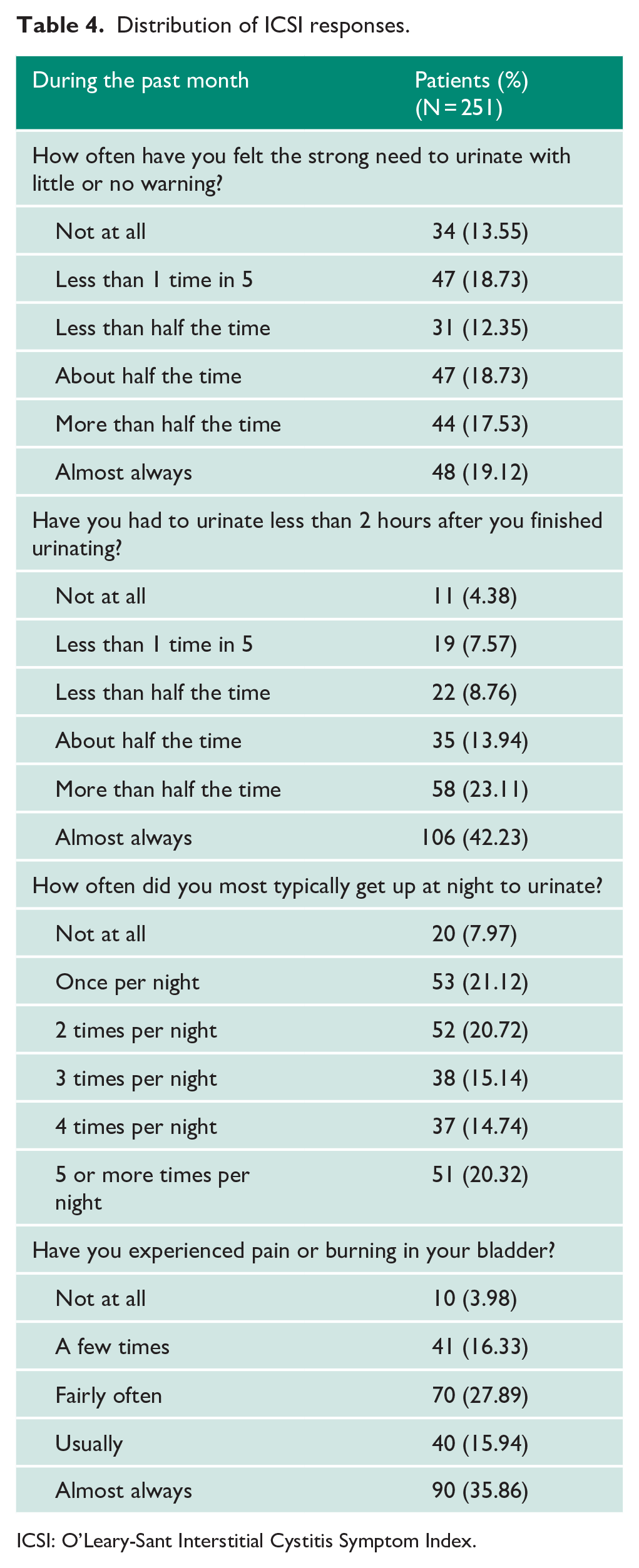
ICSI: O’Leary-Sant Interstitial Cystitis Symptom Index.
ICPI focused on problems associated with the symptoms of BPS. Over half of the participants described burning pain, discomfort or pressure in their bladder as a ‘big problem’ (55.78%), while a further 28.69% described it as a ‘moderate’ problem. Getting up at night to urinate and frequent urination during the day was indicated as a ‘big problem’ by 32.27% and 30.28% of the patients, respectively (Table 5).
Distribution of ICPI responses.
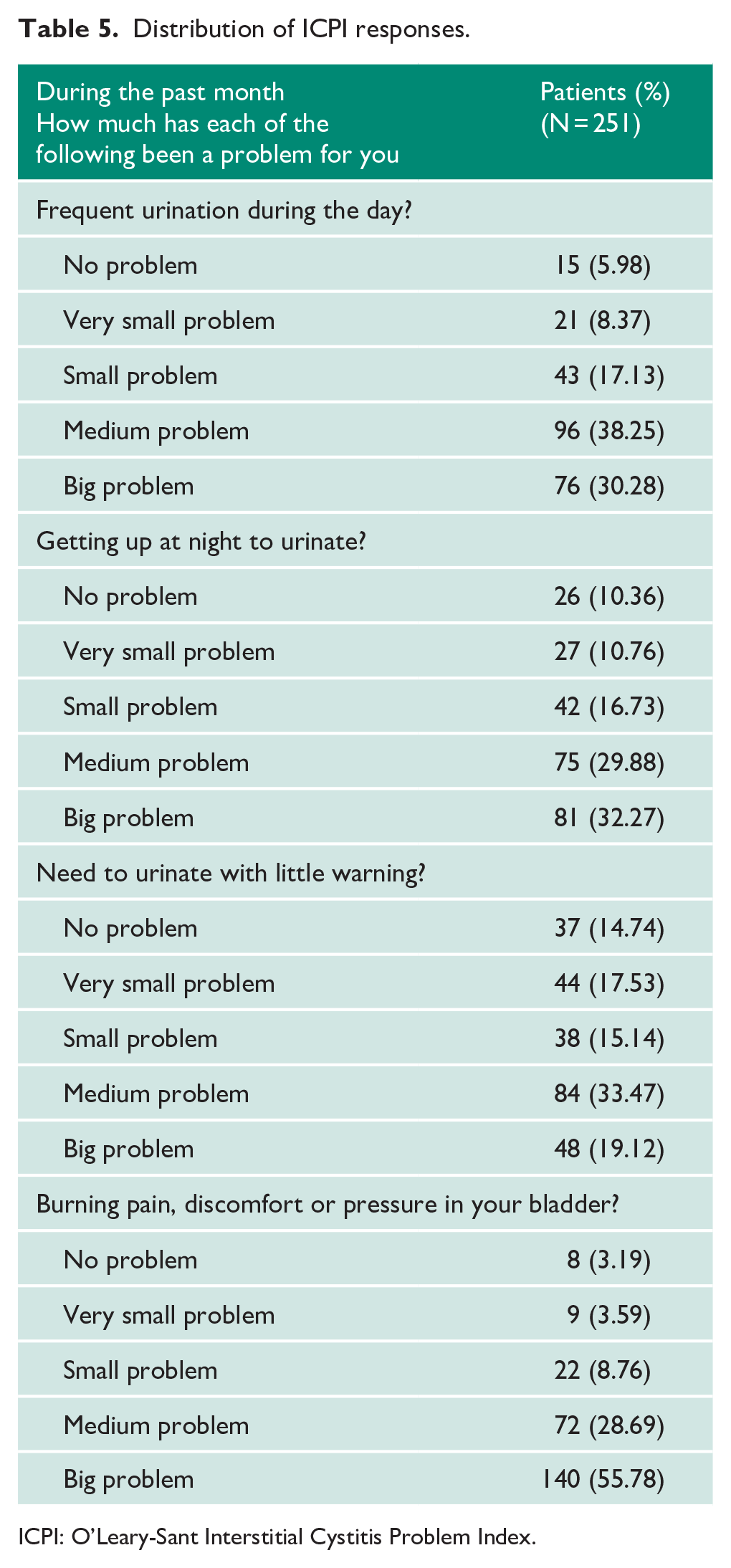
ICPI: O’Leary-Sant Interstitial Cystitis Problem Index.
Only four participants indicated no problems in the ICPI questionnaire, whereas 23 indicated the maximum problems.
A mean PUF score of 21.2 was reported. Based on the responses to PUF questionnaire, the majority of the patients with BPS go to the bathroom at least seven times or more during the day. Furthermore, half of them reported going to the bathroom three times or more at night. Over a third of patients described pain associated with the bladder or in the pelvis as occurring ‘usually’ (38%) or ‘always’ (36%) (Table 6).
Distribution of PUF responses.
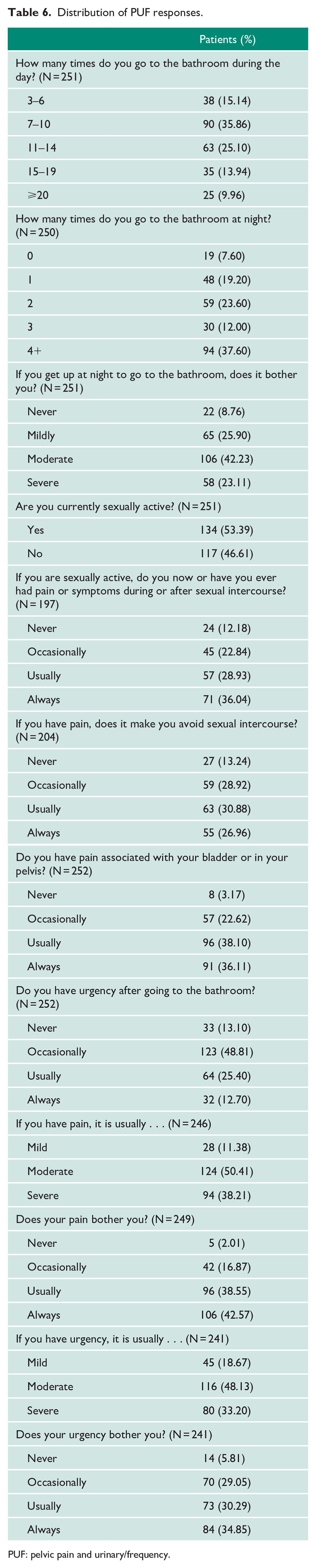
PUF: pelvic pain and urinary/frequency.
Healthcare resource use
Resource usage due to BPS and cost calculations were typically per patient over 6 months. A total of 172 (68.75%) and 80 (31.75%) patients reported visiting a GP and primary care nurse, respectively, at least once in the previous 6 months due to their BPS (Figure 1). The maximum GP and nurse visits in the previous 6 months due to BPS was 50 and 40, respectively, equating to approximately twice a week (Supplemental Table S1). Overall, 102 patients saw their GP three or more times during this period (Figure 1).
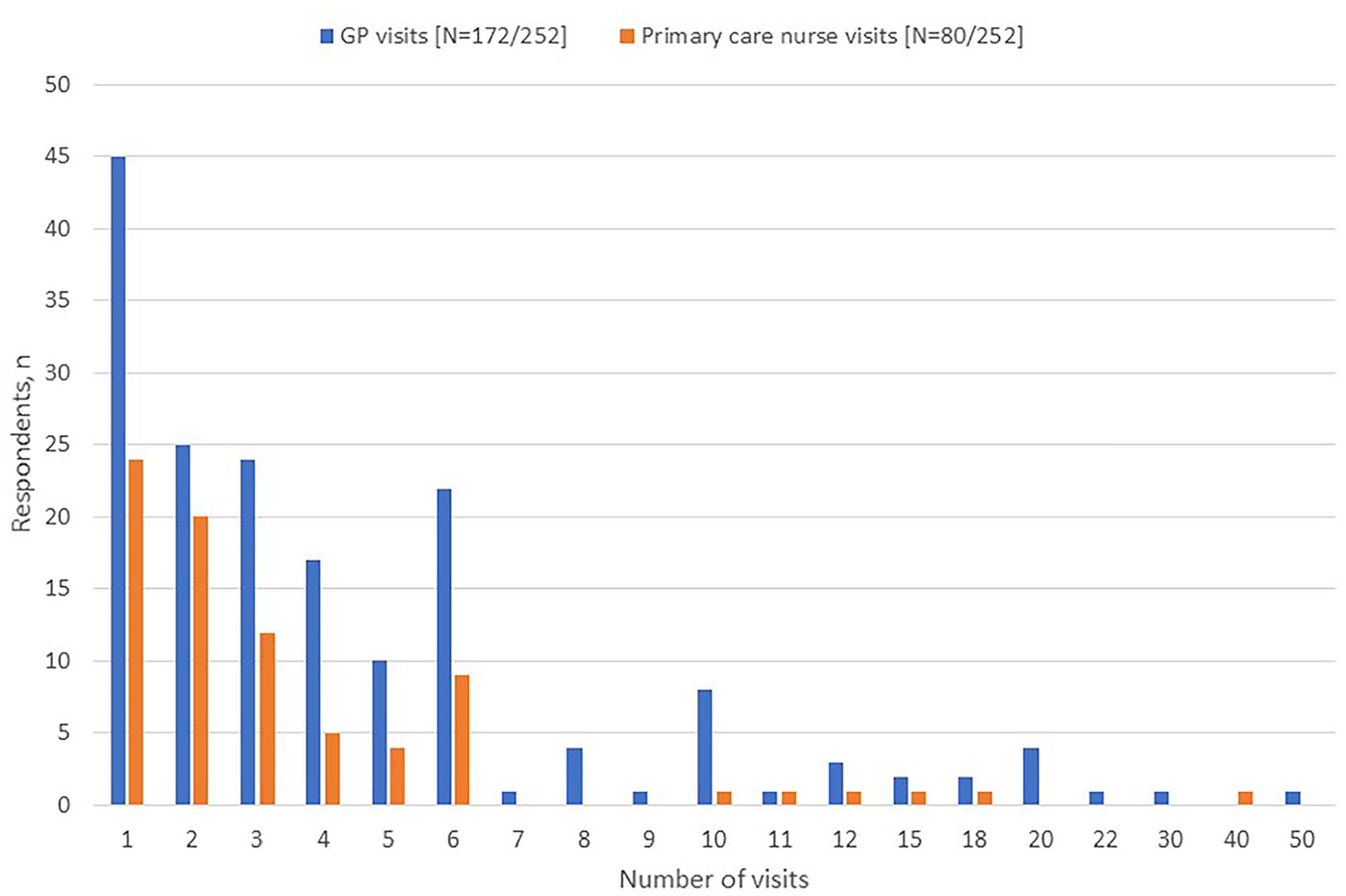
Healthcare resource use in primary care GP and nurse visits in the previous 6 months.
A total of 165 patients (65%) indicated one or more outpatient visits due to their BPS (Figure 2).
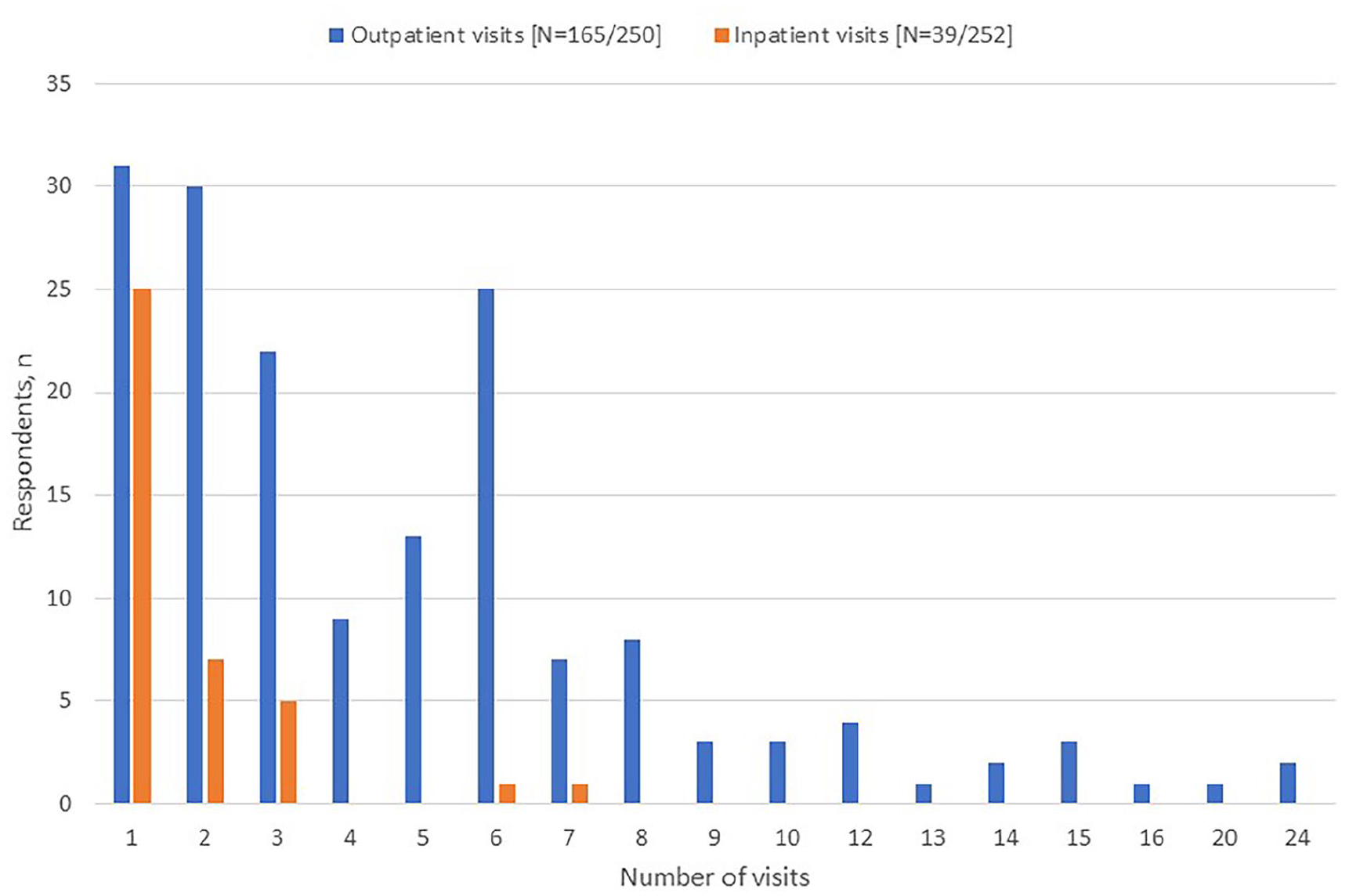
Healthcare resource use in secondary care outpatient and inpatient visits in the previous 6 months.
The maximum number of outpatient visits indicated was 24 in 6 months (mean 3.16 (SD 4.10); median 4.1; range 1–24). Approximately 15% (n = 39) of patients reported hospital admission; the general ward had the highest frequency of patients admitted (n = 12) and nights occupied (28 nights). Other procedures or treatments, carried out at least once, in the previous 6 months are shown in Supplemental Table S1. Bladder distention was carried out in 34 (13%) patients, nerve stimulation in 13 (5%) and bladder instillation in 87 (35%) patients. Antibiotics were used in almost half of the patients 123 (49%), and bladder wall injections given to 12 (5%) patients.
Resource use and unit costs
Based on the resource usage, both primary and secondary care, over 6 months, the mean total cost (excluding drugs and treatment costs) was estimated as £860.36 per patient (SE: 95.55; 95% CI = £672.18–£1048.54) (Table 7).
Resource use and total cost (over a 6-month period).
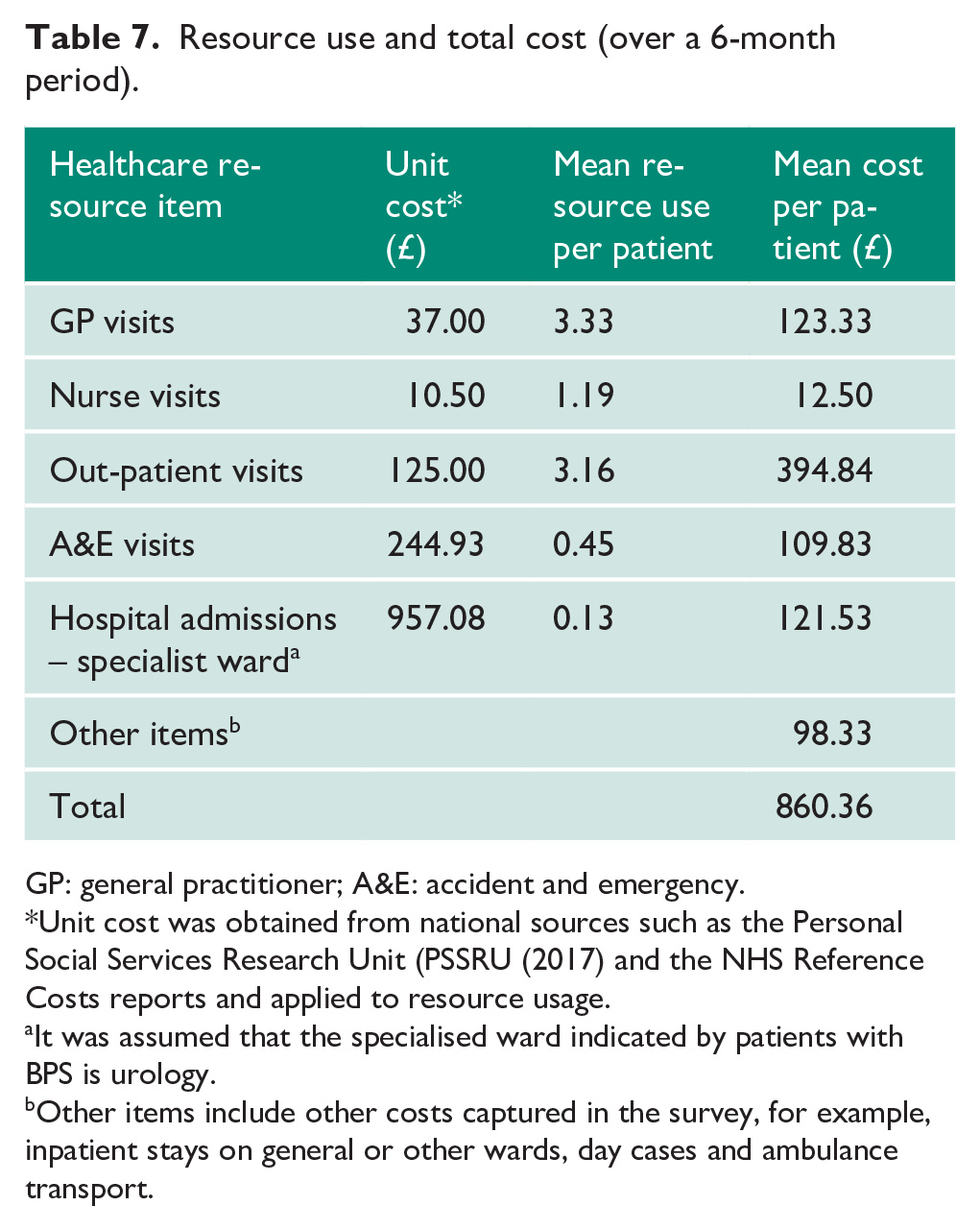
GP: general practitioner; A&E: accident and emergency.
Unit cost was obtained from national sources such as the Personal Social Services Research Unit (PSSRU (2017) and the NHS Reference Costs reports and applied to resource usage.
It was assumed that the specialised ward indicated by patients with BPS is urology.
Other items include other costs captured in the survey, for example, inpatient stays on general or other wards, day cases and ambulance transport.
A significant proportion of the total resource utilisation was attributed to treatments or procedures. Bladder instillation has the highest mean cost (£427.57), with 34.52% of the participants having had at least one over the past 6 months. The total cost of procedures carried out in BPS patients over the past 6 months was £829.19 (Supplemental Table S2).
Based on this information, the likely costs to be incurred by an average Clinical Commissioning Group (CCG) (at the time of the study) of 226,000 people 19 were calculated. An incidence of BPS with either glomerulations or Hunner’s lesions of 0.018% 20 gives an average CCG 41 patients to manage, leading to healthcare resource use cost of £35,274.76 over 6 months. In addition, based on the reported treatments and procedures prescribed to the patients surveyed, a further cost of £829.19 per patient in a 6-month period was calculated, which would cost the average CCG £33,996.79 for 6 months, for 41 patients. Thus, the total cost of treatment (6 months) for the theoretical average CCG would be £69,271.55.
Discussion
This is the first known study to describe the HRQoL using three different validated questionnaires, and the costs associated with BPS, in a UK patient population. This not only provides greater insight into the different ways BPS can impact the lives of patients, it also allows comparison with other conditions on quality of life.
Although difficult to define, due to the subjective nature of quantification, questionnaires can be a useful tool in evaluating QoL in patients with BPS.21,22 In addition to the generic preference-based measure EQ-5D, the ICSI, ICPI and PUF patient symptom scale are all well-established assessment measures used to evaluate patients with BPS.23 –26
The 252 patients included in this study had mean ICSI, ICPI and PUF scores indicative of poor health status, and high BPS-related symptoms and problems. Around 70% described pain associated with the bladder or in the pelvis as occurring usually or always. In addition to physical function, vitality and social functioning, bodily pain is known to be associated with a significantly lower QoL, and symptom severity an independent predictor of worse bodily pain, in BPS.27,28
With EQ-5D values being anchored at 1 for full health and 0 representing health states regarded as being worse than a state that is ‘as bad as being dead’, 29 only 10 out of the 252 patients involved in this survey reported full health. In addition, a mean EQ-5D utility score of 0.5 highlights the overall impact BPS has on patient HRQoL, reflective of other long-term chronic pain conditions such as rheumatoid arthritis, fibromyalgia and multiple sclerosis.30 –32
It should be noted that the instruments assessed health across different time periods and focused on different aspects; nevertheless, the findings are consistent. The high percentage of BPS population with severe symptoms in the sample could be due to recruitment via charities that include more proactive patients, who may be more concerned about their illness or are more severe.
As the clinical presentation and severity of symptoms varies between patients with BPS, the time to diagnosis has historically been slow, with time between onset of symptoms and diagnosis estimated to be 2–7 years.33 –35 With a median time of 2 years, from onset of symptoms to diagnosis, and many patients waiting longer years, the results of this survey mirror previous findings, and indicate that there is still room for improvement in this area. However, over the past few years, the COVID-19 pandemic has dramatically changed care provision in GP practices, as well as patient behaviour, and nearly a third of patients now spend more than a year without attending a GP appointment.36,37 Added to this, the current post-pandemic era sees the National Health Service (NHS) in crisis, with patients facing problems in accessing regular appointments and further delays in access to care, suggesting a worse, rather than improving, situation for many patients.38,39
An interesting finding of our survey was that 50% of patients reported having been told by their HCP that, following a cystoscopy, they had ‘lesions or ulcers inside your bladder’, ‘Hunner’s lesions or ulcers’ and/or ‘glomerulations’. While this result may be subject to recall bias, it may also reflect the nature of the survey population; recruitment through patient organisations may have led to inclusion of patients with more severe disease.
In addition to HRQoL in this survey, patients were asked about their healthcare usage over the past 6 months due to their BPS; the duration aligns with the follow-up time-period in clinical trials. In line with previous findings, outside of the United Kingdom, in addition to high humanistic burden, the results from this survey identified a significant economic burden associated with healthcare-related visits from patients with BPS.40,41 With the average total cost of treating patients, excluding drugs and treatment cost, accumulated to £860.36, the relative cost burden of BPS is not insignificant.
There is quite wide variability within the resource use data reported by patients with BPS. For example, in community healthcare, the results indicate that nine patients visited the doctor, and two patients visited the nurse 18 times or more, with one patient visiting the GP 50 times. However, visiting the GP three times a month is still possible, and the overall results highlight how often this small number of patients require GP and nurse input due to their BPS.
Estimating the prevalence of BPS is challenging because of the changes over time in how the conditions have been defined and the variable terminology used. The likely costs to be incurred by a CCG were calculated based on the mean cost of care to the respondents of the questionnaires, and a prevalence of 0.018% for patients with BPS and glomerulations or Hunner’s lesions. However, given that many patients can have BPS without Hunner’s lesions and/or glomerulations (50% in our survey), then the overall costs could potentially be higher than those calculated.
Limitations of this study include self-reporting of the diagnosis of BPS, HRQoL and resource use. Efforts were made to mitigate these by recruiting through two reputable charities, using a screener question to exclude individuals without a BPS diagnosis, and excluding those living outside the United Kingdom. While recruitment through patient organisations may have led to inclusion of patients with more severe disease, the findings from this survey highlight the significant burden BPS can have on patients’ lives.
In conclusion, this study highlights the considerable personal and social burden of BPS within the UK patient population, in addition to the substantial economic burden in terms of healthcare resource use and cost to the NHS.
Supplemental Material
sj-pdf-1-uro-10.1177_20514158231204591 – Supplemental material for Quality of life and healthcare resource use in patients with bladder pain syndrome: A survey of UK patients
Supplemental material, sj-pdf-1-uro-10.1177_20514158231204591 for Quality of life and healthcare resource use in patients with bladder pain syndrome: A survey of UK patients by Sachin Malde, Michael Ho and Jane Griffin in Journal of Clinical Urology
Footnotes
Acknowledgements
The authors acknowledge the invaluable support of Bladder Health UK and the Bladder & Bowel Community, and thank all the patients who participated in the survey. They also thank PHMR Ltd for their contribution to the design of the survey, data collection and analysis, and Paula Kidgell (PK Medical Communications Ltd) for medical writing assistance, funded by Consilient Health Ltd. These data were presented in part at the annual meeting of the British Association of Urological Surgeons, 2019.
Conflicting interests
The author(s) declared the following potential conflicts of interest with respect to the research, authorship, and/or publication of this article: The authors declare that MH is an employee of Consilient Health (UK) Limited; JG and SM have received consulting fees from Consilient Health (UK) Limited.
Funding
The author(s) disclosed receipt of the following financial support for the research, authorship and/or publication of this article: This survey was funded by Consilient Health (UK) Limited and bene-Arzneimittel GmbH.
Informed consent
An information sheet and consent form were provided to all participants, including information on the purpose of the study and how their data would be used.
Guarantor
M.H. is the guarantor of this study.
Contributorship
All authors participated in the analyses, and interpreted data. All authors reviewed and edited the manuscript and approved the final version of the manuscript.

Supplemental material
Supplemental material for this article is available online.
References
Supplementary Material
Please find the following supplemental material available below.
For Open Access articles published under a Creative Commons License, all supplemental material carries the same license as the article it is associated with.
For non-Open Access articles published, all supplemental material carries a non-exclusive license, and permission requests for re-use of supplemental material or any part of supplemental material shall be sent directly to the copyright owner as specified in the copyright notice associated with the article.
