






Abstract
In Western Denmark, commercial agriculture is displacing nutrient-poor heaths—a long-established anthropogenic shrubland. Chemical fertilizers are essential to this transformation. This paper explores the historical erasure of the heaths as a process of Holocene-to-Anthropocene state change propelled by the industrialization of the nitrogen and phosphorus cycles. Working against the universality of Anthropocene discourses that presume a clean break between epochs, we argue we are living through the Holocene/Anthropocene boundary event. Conceptualizing our current moment as a boundary event, rather than a new epoch, requires scholars to adopt a messier ontology of planetary transition—one in which Holocene and Anthropocene ecologies coexist and interact in mosaic landscapes. To illustrate this, we unfold the history of West Denmark’s heaths, showing how this late-Holocene ecology has been unevenly erased by a chemically fertilized farmscape and plumes of atmospheric nitrogen. We conclude with a general framework for studying fertilizer-induced Holocene-to-Anthropocene state changes around the world.
Introduction
We are living in a phase of Earth history in which the total biomass of livestock outweighs the combined biomass of extant wild mammals (Greenspoon et al., 2023), human population has increased to 8 billion people, and industrial cropland—40% of which is produced for livestock (Mottet et al., 2017)—consumes 1 million km2 of the Earth’s arable surface (Potapov et al., 2022). The industrial agrifood system that gives rise to these statistics is only possible through the mass production of chemical fertilizer elements, phosphorus (P) and nitrogen (N) in particular. As much as we are trained to see the current ecological crisis as one of fossil fuels and climate change, we neglect attention to the anthropogenic N and P cycles at our peril. But how exactly does planetary change materialize through the industrialization of fertilizer nutrients?
In this article, we explore how chemical fertilizers transform situated patches of the Earth surface and accelerate the expansion of the Anthropocene. Rather than treat the Anthropocene as a fully realized geological epoch, we argue that fertilizers are a primary driver of the Holocene/Anthropocene (H/A) boundary event (Caple, 2017, 2025)—an uneven planetary transition in which fragmented Holocene ecologies and novel Anthropocene environments coexist and interact. We anchor this perspective through an historical analysis of the heathland landscapes of West Jutland, Denmark. West Jutland’s anthropogenic heaths are an open shrubby ecosystem that thrives with human disturbances and has persisted for thousands of years (Løvschal, 2021; Løvschal & Grønneberg 2025; Odgaard, 1994). In less than a century, from the mid-19th century, a vast area of heath—sparsely populated with peasant farmers and their livestock—was transformed into a major agro-industrial production zone (Olwig, 1984; Riismøller, 1974). Fertilizers were essential to this transformation.
West Jutland’s heaths are a useful case study for tracing the Anthropocene-conjuring effects of chemical fertilizers for two principal reasons. First, chemical fertilizers were required for commercial farming projects to prosper. Heathland soils are notoriously nutrient poor, and early attempts at commercial agriculture were stymied by too-few nutrients. Chemical fertilization enabled an export-oriented cereal- and pork-production system to expand across the landscape, supplanting the heaths and inhibiting their regeneration. Second, heath vegetation is highly sensitive to atmospheric N deposition, a chronic problem of confined animal feeding operations (CAFOs) which rely on chemically fertilized feed. CAFOs have become a regular feature of the Danish countryside but also in the Netherlands and northern Germany. Nitrogen emissions from domestic and foreign CAFOs are accumulating in remnant heath areas in Jutland and triggering a transition to grasslands (Bak et al., 2020; Ellermann et al., 2018).
Though our case study is highly specific, we use it to elucidate how agricultural fertilizers operate as a vector of the Anthropocene’s patchy growth and spread (Caple 2017; Tsing et al., 2019). In temperate and tropical areas of the globe, chemical agriculture is creating an ever-expanding frontier of land-water changes that are driving the planet deeper into the Anthropocene. Specifically, we examine how the coupled processes of agricultural land conversion and eutrophication create a geographically specific Anthropocene footprint. 1 We describe these processes in the West Jutland case, but we could have easily focused on a different agro-fertilizer landscape. In the discussion, we lay out a general research framework focused on the place-specific impacts of N and P industrialization.
In developing this framework, we draw on the wealth of research from biogeochemists, sustainability experts, historians, and social scientists who study anthropogenic nutrient regimes. These researchers have described the social history and geopolitics of the chemical fertilizer industry (Brownlie et al., 2023; Cushman, 2013; Quitzow et al., 2025; Read, 2024; Teaiwa, 2014), the anthrobiogeochemical pathways of N and P (Galloway et al., 2008; Schlesinger, 1997; Vitousek et al., 1997), eutrophication impacts on ecosystems (Smith and Schindler, 2009), the sustainability challenges associated with nutrient recycling and food security (Iwaniec et al., 2016; Kanter and Brownlie, 2019; Peñuelas et al., 2020), and the role nutrients play in maintaining biosphere integrity (Carpenter and Bennett, 2011; Richardson et al., 2023; Schulte-Uebbing et al., 2022). These scholars have produced foundational knowledge and have alerted us to the unsustainability and environmental harms of fertilizer-based food systems. One aim of this paper is to bring these frameworks into deeper conversation with the Marxist scholarship on metabolic rift. Doing so refreshes our attention to a vast capitalist system that is re-wiring Earth’s biogeochemistry and converting Holocene ecosystems into agricultural land (Tilman, 1999).
To date, most Marxist literature on nutrients has focused on metabolic rift—the disruption of local nutrient cycling under capitalism (Foster, 2000; Foster and Magdoff, 1998). The classic story of metabolic rift begins with the Industrial Revolution in England. In the transition from feudalism to capitalism, nutrients that once cycled between fields, livestock, and peasants were exported to cities (as food) to feed growing populations of industrial workers. These exports led to nutrient deficits in the countryside, precipitating a crisis of soil exhaustion. In cities, this influx of nutrients (materialized as excrement and household waste) fouled city streets and polluted urban waterways (Foster, 2000; Foster and Magdoff, 1998). Rather than repair this rift through nutrient recycling programs (night soiling) or re-evaluate export-oriented agriculture altogether, European food producers began experimenting with artificial fertilizers as well as imported livestock feed for the production of manure. These early fertilizers derived from a host of materials, including guano, nitrates, bones, and phosphate rock. Rather than repair the rift between city and countryside, Clark and Foster (2009) argue that fertilizer imports create a “global metabolic rift” between extraction zones where fertilizer materials are procured and agricultural/urban areas where surplus nutrients concentrate.
We need Marxist studies of rift to understand how nutrients circulate within the capitalist world-system (Wallerstein, 2004). However, we contend that the rift framework does not fully grasp the revolutionary force of chemical fertilization—for both human lifeways and the planet. Fertilizers represent human manipulation of two of Earth’s most important biogeochemical cycles, the N and P cycles, which together regulate the overall quantity of life in the biosphere (Elser et al., 2007). By both increasing and accelerating the circulation of N and P through farms and cities, humans have created a massive trophic pump that channels fertilizer nutrients into the industrial production of crops, livestock, and, ultimately, human bodies. (This pump is trophic because it involves eating relations across ecological guilds, e.g. primary producers, herbivores, human eaters. See Caple et al. (2026) for discussion of capitalism as a trophic-metabolic system.) This pump supports the expansion of industrial food systems that transform the spatial, biogeochemical, and demographic composition of the planet. Framed thus, the problem of fertilizers has less to do with rift than a process of geo-metabolic escalation (Brenner and Ghosh, 2025) that is shifting the balance of life on Earth. 2
Fertilizer-assisted land conversion is widespread in agricultural production zones, but it is still possible to find patches of relatively intact historical natures within them. Patches of tallgrass prairie are scattered amidst Iowa cornfields; the Brazilian Cerrado has not been fully converted to soy; protected rainforest parcels sit side by side with oil palm plantations in Borneo. Although agro-industrial land uses often form a new spatial matrix, the fragmented persistence of historical ecosystems is a sign that the Anthropocene has not completely triumphed. That vast, unbroken territories of boreal forest still exist in North America and Eurasia is further evidence that the Anthropocene is not a complete spatial formation. These empirical observations are significant: not only do they prompt us to see the Anthropocene as patchy, they also call into question the very idea of a fully formed Anthropocene Epoch.
While the Anthropocene is often treated as an already-completed epochal rupture, we argue that Earth is in the midst of the H/A boundary event. Boundary events are major planetary upheavals—marked by abrupt environmental change and mass extinction—that define the transitions between geological time periods. The most famous example is the Cretaceous/Paleogene (K/Pg) boundary 66 million years ago, involving a massive asteroid impact that wiped out the dinosaurs (Alvarez, 2013). In our framework, we are currently living through a protracted boundary-event moment. Earth has not fully transitioned to the Anthropocene: Holocene ecologies—like West Denmark’s anthropogenic heaths—continue to persist, albeit in a fragmented and deteriorating state. This approach aligns with those of scholars who see the Anthropocene as a diachronic event (Gibbard et al., 2022; Walker et al., 2024, and Edgeworth et al., 2024; See Zalasiewicz et al., 2024 for a response to Edgeworth et al., 2024). In contrast to these frameworks, we see the Earth as straddling Holocene and Anthropocene states. While this transition can be narrated at a planetary scale, we advocate a landscape-centered analysis that explores how Holocene and Anthropocene forces come together in mosaic space. (The concept of the H/A boundary event is more fully elaborated in Caple (2025). Interested readers are encouraged to read these articles as a set.)
Figure 1 presents a graphic model of this boundary event. Blue patches signify Holocene ecologies, and the red patches denote degraded Anthropocene zones. The distinction between Holocene and Anthropocene lies with the historicity of ecological assemblages. Forged out of deep-time evolutionary histories, Holocene ecologies have persisted as dynamic assemblages for thousands if not millions of years. Anthropocene ecologies are new, emerging from outsized human disturbances of the capitalist world-system. 3 It is important to note that “Holocene” does not equal “natural” and “Anthropocene” does not equal “anthropogenic.” Humans are part of both planetary regimes, however they do not relate to the biosphere in the same way. Holocene humans are dwellers (Ingold, 1993)—people who are embedded in and make a living from ecosystems; Anthropocene humans are exploiters (Merchant, 1980; Tsing, 2016) who convert land into a commodifiable resource and fashion lives from industrial supply chains, including those sustained by the fertilizer-to-food trophic pump. This taxonomy, although overly simple, can guide more nuanced analyses of humanity’s H/A becoming.
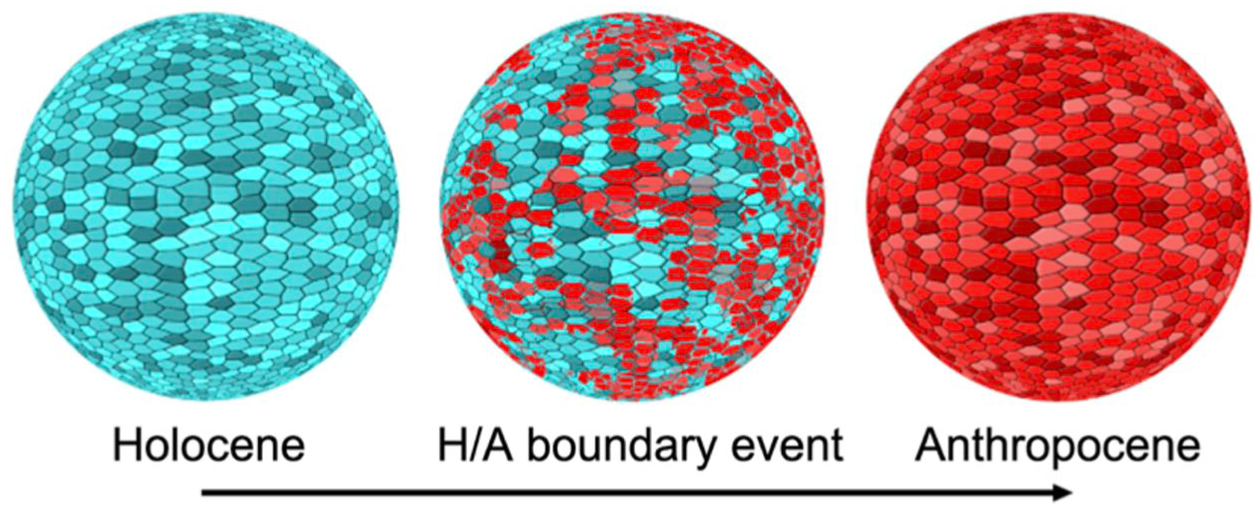
A graphic model of the H/A transition.
Whether a patch of land (or water) is in a Holocene or Anthropocene state hinges on the scale and intensity of human disturbance. High-powered industrial disturbances destroy Holocene conditions and generate Anthropocene ones. Gentler forms of disturbance are less likely to overturn Holocene relations. In fact, many Holocene ecosystems are compatible with anthropogenic disturbance and some, like heathlands and North American prairie, depend on it. In West Jutland, heaths first emerged in late prehistoric times and were subsequently maintained by people grazing and burning the land (Odgaard, 1994). Take away fire and grazers and the anthropogenic heathlands revert to forests. Such regenerative disturbance contrasts with the disturbances of the Danish Heath Society, the 19th-century corporation that led the charge to “reclaim” the heaths through deep plowing, irrigation, and chemical fertilization (Pedersen, 1971; Skrubbeltrang, 1966). 4 These high-powered disturbances were designed to both eradicate the heath ecology and erect a new monocultural landscape centered around the production and export of grain. We conceptualize this kind of disturbance as a Holocene-to-Anthropocene phase shift. Eutrophication adds to this ecosystem-tipping dynamic (Cf. Scheffer et al., 2001). In the visual language of Figure 1, these irreversible land-use and eutrophication changes are represented as blue patches turning red. Critically, these phase shifts operate on a non-uniform spatial plane: some patches turn red, while others remain blue, producing a H/A blue-red mosaic.
Attending to uneven processes of Holocene fragmentation/Anthropocene colonization is key. In West Jutland, fragmented heath patches are embedded in a matrix of fertilized cereal fields and confined pork production facilities. Although these remnants continue to pattern the landscape, their world-making power is outmatched by the forces of Anthropocene colonization: heath patches are swamped by atmospheric nitrogen, invasive conifers, and fragmentation dynamics that erode Holocene relations from within (Figure 2). While there are many ways to fragment and erase Holocene landscapes, we call attention to a major driver: the expansion of capitalist agriculture through fertilizers (Hald-Mortensen, 2023). The West Denmark case is iconic of this process but not unique, as similar processes are unfolding in agricultural landscapes around the world.
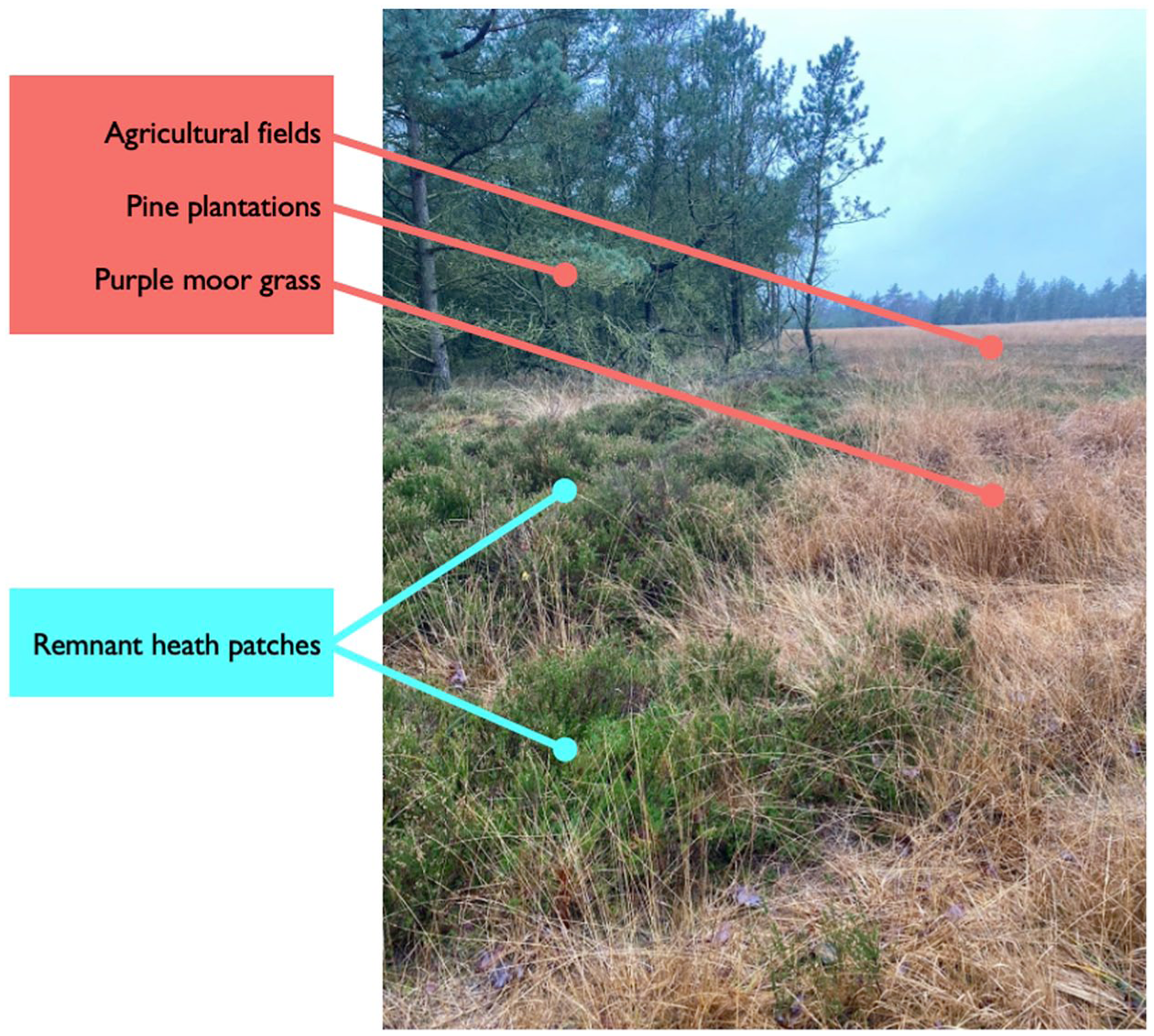
A remnant heath, fragmented by agriculture and pine plantations; atmospheric nitrogen spurs the invasion of purple moor-grass. Collectively, these elements form a H/A mosaic with both large and fine-grain spatial patches.
Fertilizers transform landscapes, but they also transform what it means to be human. Holocene dwellers produced food (and acquired dietary NP) from local soils, hunting grounds, and fishing waters. Humans were part of local ecosystems and their nutrient cycling. Anthropocene people, by contrast, eat from chemically fertilized food systems. This trophic shift involved a radical rewiring of Earth’s NP biogeochemistry as well as a profound shift in human-soil relations. With chemical fertilization, soils were transformed from a renewable nutrient source to a mere container for imported nutrients.
The transition between Holocene and Anthropocene modes of eating is a complex subject that requires dedicated analysis. But it is useful to think about imperial food systems as an important precursor to the industrial fertilizer-based regime. In imperial systems, the distance between farms (nutrient-provision zones) and settled areas (nutrient-consumption zones) grew longer as metropolitan populations expanded and agricultural commodity chains lengthened. During European colonialism, imperial centers ratcheted agricultural pressure on countrysides while also importing food and fiber from colonial territories as well as more distant production regions within Europe (Moore, 2015; Pomeranz, 2000). This slow extractive process created soil exhaustion in Europe and the colonies (Grove, 1996). The invention of the chemical fertilizer industry in the late-nineteenth century unleashed a new metabolic frontier, enabling humans to switch from soil-based sources of nutrients to vast atmospheric and geologic reserves.
Figure 3 depicts the chemical fertilizer industry as a planetary network. The red spheres represent atmospheric caches of N and geologic caches of P. For N, this cache takes the form of inert N2 gas that is converted to ammonia with the fossil-fuel intensive Haber-Bosch process (Smil, 1997); for P, the red spheres represent sedimentary deposits of phosphate rock. (Although not discussed in this paper, potash—a mineral source of potassium fertilizer—is also obtained through mining.) We refer to these caches as “non-biospheric” because they are more-or-less self-contained and lay outside of life’s reach. Chemical fertilizers are produced by withdrawing nutrients from these spheres and placing them into circulation within the terrestrial biosphere. The diagram illustrates how humans pump these stocks into arable areas of Earth’s surface for the mass production of agricultural and human life. This pumping action fertilizes Anthropocene patches—farm fields and eutrophication zones but also cities packed with nutrient-dense human bodies—that overtake Holocene space as they grow.
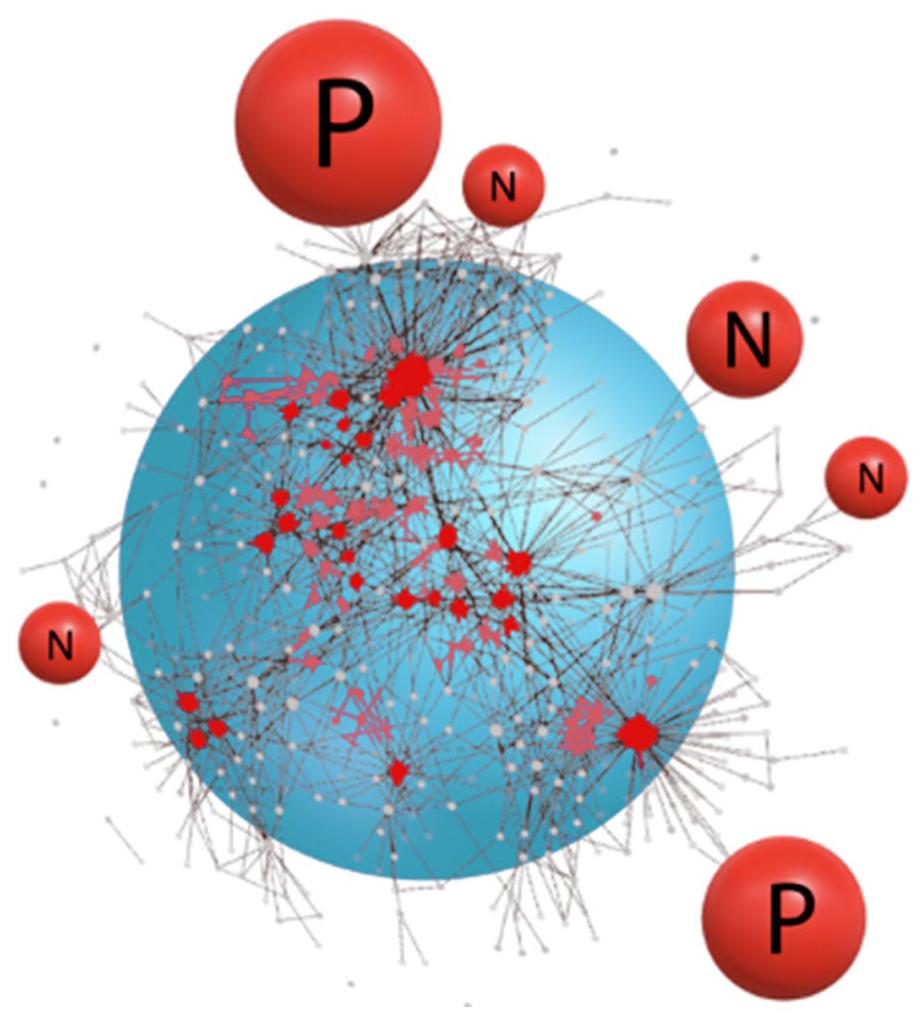
Non-biospheric caches of N and P are transformed into fertilizer, skewing the distribution of planetary life toward humans, their domesticates, and organisms that thrive in anthropogenically enriched conditions.
Mapping the patchy growth of the “fertilized Anthropocene” requires us to investigate the relation between agro-industrial systems (the trophic pump) and ecological space in relentlessly historical terms. In what follows, we present a case study that explores H/A state change in West Jutland. Our history is divided into four parts. In part one, we describe the heathland’s Holocene origins and persistence dynamics. In part two, we jump to the mid-nineteenth century with the first attempts to transform West Jutland into a commercial agricultural zone. Boosters sought to revolutionize the fertility of the landscape, but lacked chemical inputs. Part three describes how the fertilizer and livestock feed industries eventually penetrated West Jutland and enabled the expansion of cereal farms and CAFOs. Part four describes the emergence of what we call the atmospheric N frontier, encroaching plumes of ecosystem-tipping N pollution. Taken together, these stories reveal how West Jutland became a highly profitable Anthropocene farmscape, awash in nutrients and scattered with disappearing patches of remnant heaths. Following this history, we provide a general framework for studying chemically fertilized Holocene-to-Anthropocene state change. 5
West Jutland’s heaths: A Holocene socioecology
This section describes the late-Holocene origins and persistence dynamics of West Jutland’s heaths. For those interested in learning more about the heath’s pre-history, including their human-mediated nutrient dynamics, we direct you to Caple and Løvschal (2025).
The dry Atlantic heaths of Western Europe are nutrient-poor, open ecosystems dominated by ericoid shrubs, heather (Calluna vulgaris) in particular. West Danish heathlands emerged from small patches of heath that occupied the gaps of older, postglacial forests. These patches expanded across West Jutland in the late Holocene (c. 3000 BC) when humans began razing forests and burning the land for pasture and erecting ancestral monuments in the newly opened landscapes (Haughton and Løvschal, 2023, 2024; Odgaard, 1994). In addition to blocking forest regeneration, these disturbance practices set in motion a process of podzolization that stripped nutrients from the soil, producing a nutrient-poor, acidic soil with a hardpan layer. 6 For millennia, people lived in this oligotrophic environment, concentrating the land’s limited fertility through grazing, swidden farming, and manuring (Løvschal and Grønneberg, 2025.) Rather than cause the ecosystem to shift into a different state, these extractive disturbances caused the heath to rejuvenate, creating a new crop of resources for future exploitation. Although heath ecosystems were deeply conditioned by human manipulation, the heath set its own constraints on human becoming: low soil-nutrient levels and slow-to-regenerate vegetation capped humans’ ability to concentrate agricultural wealth and expand their numbers. Over thousands of years, people learned to utilize the heaths more efficiently and concentrate greater quantities of soil nutrients for food production. The Early Iron Age (c. 500 BC-200 AD) marks a notable increase in human population and settlement densities in which people transitioned from a largely pastoral way of life to more sedentary and agrarian livelihoods.
Over the course of the first and second millennia AD, peasant farmers refined these farming systems but could not escape the nutrient limitations posed by the heathland soils. Living within these constraints, peasants learned to work with the regenerative properties of the heath. For example, heath farmers—from prehistory to the 19th century—engaged in various forms of swidden agriculture. Swidden fields were burned and cereals planted in the nutrient-rich ash. These fields were cropped for 5–6 seasons until the soil was exhausted. Once exhausted, the fields lay fallow for 30–35 years (Christiansen, 2001). During this fallow period, heath plants slowly returned and, with the aid of mycorrhizal fungi, translocated soil nutrients to the land surface, thus restoring the fertility of the fields.
The heath’s meager soils and ability to rebound from human disturbance created a Late-Holocene socioecology with remarkable properties of stability. People, fire, and livestock were key to the heath’s regeneration—which also meant blocking the early-Holocene forest’s return. As resilient (cf. Løvschal, 2022) as this socioecology proved to be, the heaths were not invulnerable to transformation. Beginning in the 1870s, the heathlands gradually gave way to a modernized agricultural landscape of commercial grain fields, livestock operations, and pine plantations—spatial components of a new Anthropocene geography.
The Danish Heath Society’s pre-fertilizer “fertilization” program
This section examines early efforts to transform the heathlands through infrastructural and agronomic interventions, showing how land conversion preceded—and prepared the ground for—chemical fertilization.
In the 19th century, as Europe emerged as an industrial power, new forms of export agriculture had begun to deplete the nutrient base of the countryside, sparking widespread concerns around “worn-out soils” (Foster and Magdoff, 1998). The slow-moving crisis of soil exhaustion motivated Justus von Liebig’s inquiries into plant nutrition, the intellectual spark to the fertilizer revolution; it also sparked new patterns of agricultural intensification within Europe’s boundaries. Agricultural frontiers were rapidly spreading into peripheral landscapes abroad, but food still needed to be sourced within. As populations grew and grain prices increased, Europe’s agriculturally marginal lands were re-envisioned as objects for agricultural improvement.
Efforts to turn West Jutland into a more densely settled and productive agricultural region began in the 18th century. In the 1760s, state officials hatched a scheme to recruit German peasants ravaged by the Thirty Years’ War to colonize the heath. Denmark’s king welcomed ~1000 colonists to create farms in the heath areas of Alheden and Randbøl with the aim of recruiting an additional 9000 in the ensuing years. The monarch promised (but did not always furnish) land, houses, sheep, and agricultural implements, but the farmers were frustrated by the toil and meager yield of the heath fields. In less than a decade, three-quarters of the settlers gave up their farms and returned to Germany (Skrubbeltrang, 1966). Their abandoned fields quickly reverted to heath.
The heath’s eventual cultivation lies with the Danish Heath Society (DHS, Hedeselskabet). The Society formed in 1867 on the heels of Denmark’s defeat to the German Confederation in the Second Schleswig War (1864). In this conflict, Denmark suffered the loss of the dukedoms of Schleswig, Holstein, and Lauenburg. Boosters for reclamation used the loss of these agricultural territories to urge the nation to develop the heath, rallying around the slogan “What is lost without, shall be gained within!” The vast, sparsely populated heath zone became the object of a new national fantasy, one that promised agricultural prosperity and the restoration of Denmark’s international stature. Enrico Dalgas, founder of the DHS, promoted a vision of West Jutland as an agricultural utopia: “We have several times drawn attention to the importance of cultivating the moors in Jutland, which for Denmark can become a California when it is seriously tackled” (Tøttrup, n.d. Translation by the authors).
Initially, Dalgas advocated that the cause of heath reclamation be taken up by the state. However, failing to drum up support among state officials, he chartered the Heath Society. Although a private corporation, the DHS functioned as a quasi-governmental organization that carried out basic research and land reclamation projects while promoting the general cause of agricultural settlement. Though the activities of the society were widely hailed as a patriotic venture—and, accordingly, received massive state subsidy—its board of directors and dues-paying members were wealthy landowners, industrialists, and high-ranking administrators who stood to profit from the new agricultural regime. Indeed, the formation of the DHS was not only a response to the Schleswig War but to a decades-long period of surging grain prices.
Growing populations across Europe and rapid urban industrialization in Britain sparked demand for agricultural goods. In the fertile soil areas of East Jutland, Fyn, and Zealand—the traditional centers of Danish production—high grain prices stimulated a series of agricultural reforms that led to a two-tiered agricultural system consisiting of large estates focused on market production and medium-sized peasant-owned farms. From 1830 to 1870, Denmark’s grain exports increased fivefold (Christensen, 1983). The founders of the DHS understood that expanding this agricultural system into West Jutland would be a boon for both the nation and its shareholders. But to expand the production systems of the East into the West, the heaths would have to be dealt with. For this, Dalgas had plans.
A road engineer and careful observer of local geology, Dalgas understood that transforming the heath for commercial agriculture would require nothing short of a geographic revolution. To bring about this revolution, he advocated a holistic program of “fertilization” that involved deep-plowing, marling, irrigation, pine plantations, and new transportation infrastructures (Skrubbeltrang, 1966). Chemical fertilizers were not yet a component of this program. Dalgas’ use of the term “fertilization” to describe this package of reclamation technologies is significant as it gestures to Enlightenment curiosities around plant nutrition and widespread concerns around soil exhaustion in Europe; it also likely signals the promise of a burgeoning fertilizer industry that, in the ensuing decades, would help conquer the heaths. We briefly describe these elements:
Deep plowing of the heaths was needed to break up the hardpan to facilitate drainage and the penetration of crop roots, especially for planted pines (see below). Breaking the hardpan required large teams of horses/bullocks pulling “the great American plow.” The DHS did not undertake the plowing but advocated for this practice within the larger suite of improvement measures.
Marl is a calcareous clay with a long history of use as a soil amendment. Although marl contains traces of P and K, it primarily functions to buffer the acidity of the soil and improve cation exchange capacity for better nutrient retention. Local marl deposits were plentiful across Jutland; what was needed was a means of distributing the heavy material to individual farms. To overcome this barrier, the DHS supported the construction of hundreds of short, specialized rail lines connecting marl pits to distribution centers. The creation of the infrastructure was heavily subsidized; the state also provided interest-free loans for marl purchases (Skrubbeltrang, 1966).
Irrigation was used to improve the productivity of the heath farm, but the benefits of irrigation primarily extended to meadow areas along streams and rivers. The DHS maintained sites for irrigation research and facilitated the formation of irrigation societies for the operation of common-use canals. The influx of river water provided a much-needed pulse of fertility to the nutrient-starved farms. Hay from riparian meadows was fed to livestock with the expressed purpose of producing manure fertilizer (Villumsen, 2007).
Whereas the DHS saw the greatest potential for cultivation in meadows and more fertile soil areas of the heath, large dry areas of the heath zone were deemed unsuitable for cultivation. For these areas, Dalgas and his peers orchestrated the planting of large conifer monocultures. The forests served the cultivation cause by functioning as climate-improving windbreaks. Plantations of mountain pine, Norway spruce, and other conifers—in addition to planted shelter belts—helped tame destructive winds, thus facilitating a more rational use of the “dead land” (Villumsen, 2007). Although initially conceived as a necessary step to agricultural development, these forestry projects would become one of the Society’s most lucrative ventures.
In his capacity as an engineer, Dalgas had observed how the construction of new roads, in combination with cheap land prices, attracted farmers to the heath. But new roads were few and far between as the financial burden of construction fell to poor rural parishes. To overcome this barrier, Dalgas organized parish leaders to campaign the state to shoulder the burden of constructing new roads that DHS leaders were helping to design. The new roads brought settlers and land speculators and facilitated commercial traffic in and out of the farms. While roads were key for creating new patterns of regional integration, railways and ports were essential for international exports. The DHS advocated for the construction of a rail network terminating at a west coast port that would draw West Jutland “closer to England” (Skrubbeltrang, 1966).
Following the formation of the DHS and its penetration into the heaths, heath reclamation progressed at a steady pace. With the DHS’s improvements, farmers experienced better yields but often failed to compete with producers in the richer soil areas in east Denmark. Many of the newly reclaimed farms failed and reverted to heaths. This is an important detail as it illustrates that heath plants, in the absence of fertilizers, were able to recolonize the modified farmland: the landscape ecosystem had not been pushed into an alternative Anthropocene state (Scheffer et al., 2001). However, as the chemical fertilizer and feedstock industries gained maturity, cheap and abundant NP began streaming into West Jutland, allowing farmers to gradually increase the fertility of their fields. With this influx of nutrients, industrial croplands would finally displace the heaths.
The fertilizer and feed industries penetrate West Jutland
The permanent conversion of heath into commercial farmland required more than reclamation—it required access to industrial nutrients. This section loops back through the nineteenth century, tracing the rise of livestock feed and fertilizer supply chains.
During the period of grain sales (1830–1875), farmers first sought to increase the fertility of their cereal fields by producing more animal manure. They did so, at first, by increasing livestock numbers and converting marginal lands (heaths, meadows, woodlands, bogs, etc.) into pasture (Christensen, 1983). By directing the fertility embodied in pasture toward manure production, Danish grain producers kept pace with British demand. Extensification of the agricultural system, however, could not stem the tide of soil exhaustion. In the 1870s, as heath reclamation was underway in West Jutland, farmers in east Denmark began experimenting with feedstuffs—mostly corn but also oilseed cake—as a means of increasing the quantity of manure. Oilseed cake is a byproduct of oil production. Linseed, rape, and cottonseed oils had a long history of use in industry, but for many decades the residue from the pressing process was treated as waste (Thompson, 1968). Over the course of the 18th century, British agriculturalists discovered that the compressed cakes functioned as a cheap source of feed that improved the quality of dung. Although the cakes were manufactured in Britain, the seed material was sourced from locations as varied as Russia, India, and Egypt. Corn was imported from the American Midwest.
The importation of feed provided a much-needed boost to soil fertility levels in Eastern Denmark, but it also laid the conditions for a structural transformation from grain production to one focused on dairy and bacon. In the period from 1880 to the mid-1890s, grain prices in Europe plummeted coinciding with rapid improvements in railway and steamship technologies that enabled an influx of cheap grain from the USA and Russia. The price of animal products and feed did not fall as steeply. With this shift in market conditions, Danish farmers repurposed their cattle, transforming them from manure producers into dairy cows. (British and German tariffs on live cows blunted the formation of a beef-export industry).
Large estates with greater access to capital and technical expertise took the lead in the production of high-quality butter. Skim milk and buttermilk, a byproduct of butter manufacture, was used to fatten lean pigs, spinning off a lucrative bacon industry (Higgins and Mordhorst, 2015). Lower-quality peasant butter was sold in Danish markets. Eventually, peasants joined the “animal farming revolution” by establishing dairy cooperatives to which individual farmers delivered their milk. The formation of the cooperatives was tremendously successful and soon began to exceed the profitability of the estates. Other cooperative ventures emerged in pig slaughterhouses, eggs, and marl as well as in the coarse goods sector (fertilizers plus feedstuffs).
Coarse goods distributors played an important role in the new nutrient economy, acting as middlemen between international fertilizer companies, feed suppliers, and farmers. Distribution was divided between private companies and the cooperatives, mirroring the two-tiered system in the agricultural sector. The Grain and Feedstuff Company (Korn- og Foderstof Kompagniet) serviced the large estates while the Jutland Cooperative for Joint Purchasing of Feedstuff (Jydsk Andelsselskab for Fællesindkøb af Foderstoffer) and the Danish Cooperative Fertilizer Association (Dansk Andels-Gødningsforening) catered to the cooperatively organized farms. The port at Aarhus in East Jutland was a primary source of entry for coarse goods.
From 1870 to 1900, fertilizer imports to Denmark were low. Prior to the advances in synthetic N production beginning in the 1910s, phosphate and potash fertilizers were the most important fertilizer products. In 1890, only 500 tons of fertilizer were imported. However, given the low levels of road and railway development, it can be assumed that the majority of coarse goods in this early period were consumed in Eastern Denmark. West Jutland was undoubtedly slower to adopt chemical fertilization than East Jutland, but the lag was likely no more than a decade or two (Figure 4).
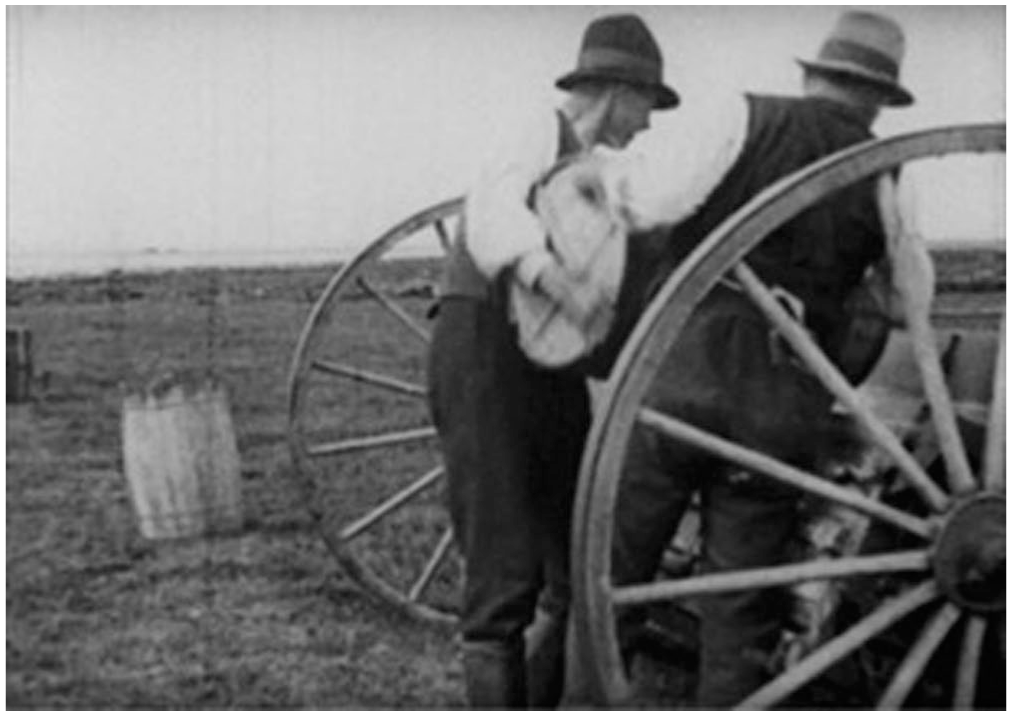
Two heath farmers load chemical fertilizer into a horse-drawn spreader. Still taken from “Vildmosens Opdyrkning” from 1920. danmarkpaafilm.dk, The Danish Film Institute.
1910 marks a period of accelerating NPK fertilizer use (Cf. Steffen et al., 2015). Denmark began producing its own superphosphate by reacting phosphate rock imported from Florida, Morocco, and the USSR with sulfuric acid produced from Spanish pyrite. Incorporated in 1891, the Danish Sulfuric Acid and Superphosphate Company (Dansk Svovlsyre og Superphosphatfabrik) operated four plants with the capacity to produce 400,000–450,000 tons of superphosphate. Potash fertilizers were imported from Germany (Lamer, 1957). Prior to WWII, Denmark was reliant on the Norwegian company Norsk Hydro for its N supply. As the fertilizer historian Marko Lamer remarked, “Denmark was an exceptional state, with a high consumption of fertilizers, but without a N industry. This country lacked not only coal, but also hydroelectric power for the establishment of synthetic N plants.” Norsk Hydro—a company that would come to dominate the European fertilizer market—generated its nitrogenous fertilizers at waterfalls in Rjukan and Eidanger with the energy-intensive Birkeland–Eyde process. Later, the company would partner with the German company IG Farben, which held the patent for the more energy-efficient Haber-Bosch process. During WWII, Norsk Hydro, under the influence of the German Nitrogen Syndicate, cut off supplies to the Allied countries and increased the supply to Denmark—an important food supplier to Germany.
Table 1 lists fertilizer and feed imports from 1875 to 1945. Figure 5 describes the rate of agricultural and forestry development relative to heathland loss. We juxtapose these figures to illustrate that the rise in fertilizer consumption coincides with the destruction of the heath and the creation of a new agro-industrial landscape. Although fertilizers were absent from the initial burst of reclamation activity, they were integral to the production of permanent commercial fields and their subsequent expansion. Heath farmers, no longer limited by the infertility of their soil, relied on an ever-increasing stream of cheap nutrients sourced from distant locales. As production skyrocketed, the heaths vanished. In a period of 60 years, the heaths in Jutland were reduced by 80%–90%—an area upward of one million ha. Species like the grouse disappeared as the heaths were reduced to small, geographically isolated fragments. Beginning in the mid-20th century, conservationists worked to stem the tide of heathland destruction, creating protections for many remnant patches.
Fertilizer and feedstuff imports from 1875 to 1945.
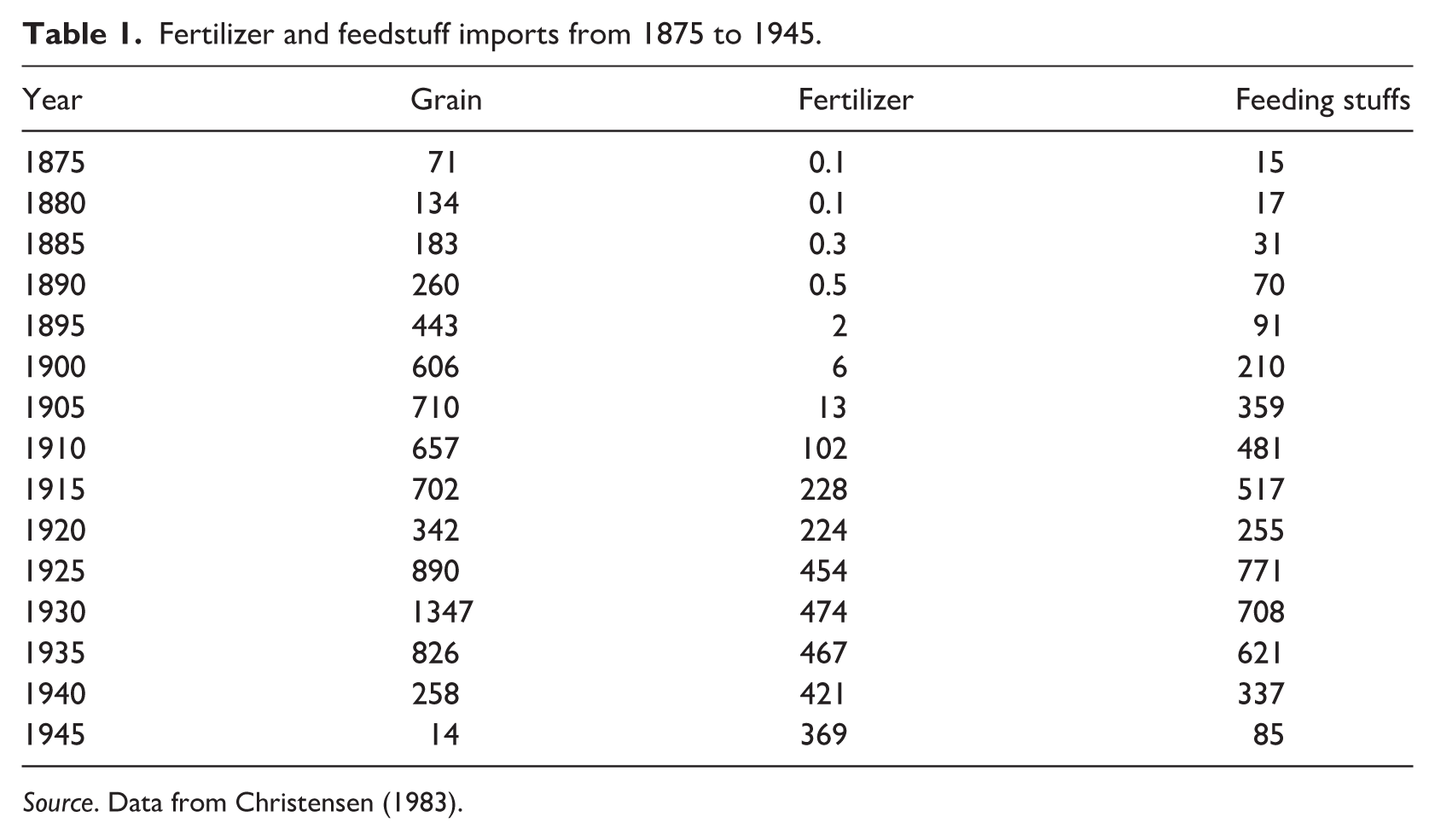
Source. Data from Christensen (1983).
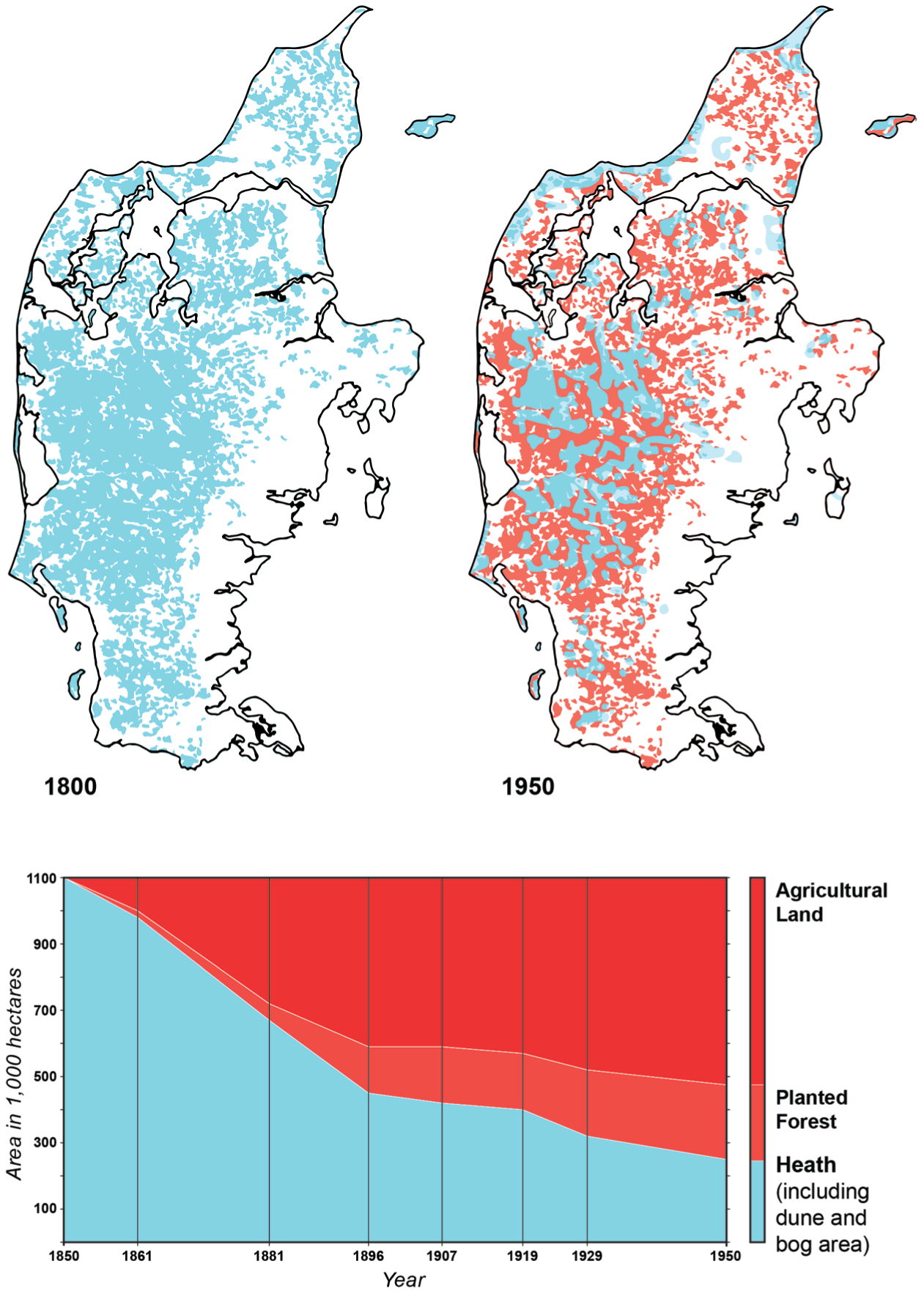
The Holocene/Anthropocene transformation of heathlands from c. 1800 to c.1950 in Jutland. Adapted from Olwig 1984, fig. 0.2-0.3 by Lili Carr. Digitization help from Kirstine Stæhr Gregersen. Graph adapted from Akin 1963.
In the 1980s, scientists began to apprehend a new threat to the remaining 85,000 hectares of heath: atmospheric N deposition. In the next section, we describe the formation and ecological impacts of the atmospheric nitrogen frontier.
The atmospheric N frontier
This section examines how atmospheric N emissions from livestock production spread across the landscape, altering remnant heath patches and expanding the Anthropocene’s spatial reach.
Following WWII, Danish agriculture entered a phase of intense modernization and consolidation. Dairies were mechanized with the introduction of feed-mixing plants, milking machines, dung-channel cleaners, and milk coolers. The production of pig feed was simplified by mass plantings of barley, “the only Danish grain specimen that can stand monoculture year after year, a property which has made it well suited for mechanized field work” (Jensen, 1984: 83). With greater corporate consolidation, farms increased in size and decreased in number; people living in the countryside migrated to cities. With these improvements, pig farms and to a lesser extent dairies achieved new economies of scale. From 1945 to 2005, pig numbers increased from 2 to 13.5 million, greatly outnumbering Denmark’s human population (Pedersen and Møllenberg, 2017).
These developments were predicated on the accelerated throughput of fertilizers and feedstock. Figure 6 charts N application to fields from 1910 to 2020. The exponential increase in chemical fertilizer and the steady rise in manure application from 1910 to 1980 were underpinned by technological developments in the fertilizer sector (e.g. the development of triple superphosphate and NPK fertilizer mixes) but also in domestic distribution. Mirroring the mergers in agriculture, the coarse goods industry in Denmark underwent major consolidation. In 1969, the Jutland Cooperative for Joint Purchasing of Feedstuff and the Danish Cooperative Fertilizer Association merged with three other cooperatives to form Dansk Landbrugs Grovvareselskab (Danish Agricultural Commodity Company) or DLG. In 1992, DLG acquired Superfos—formerly the Danish Sulfuric Acid and Superphosphate Company. These developments transformed DLG into a multinational coarse-goods and fertilizer-manufacturing company (DLG, n.d.) and a powerful node in the human-altered N and P cycles.
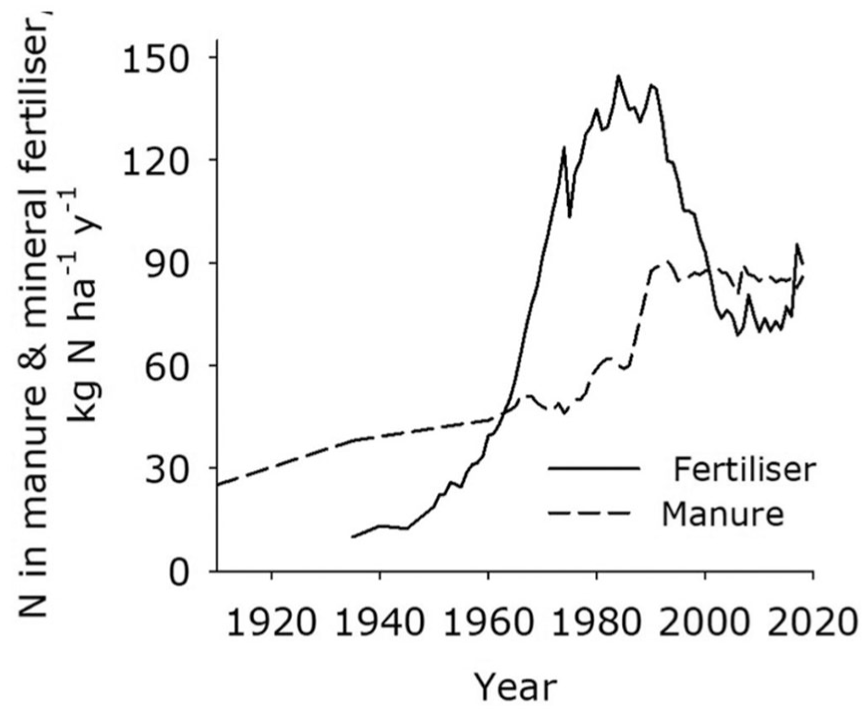
Application of fertilizer- and manure-based N to Danish fields from 1900 to 2020. From Sommer and Knudsen (2021).
Imported N and P are key to the mass production of cows, pigs, and chickens. While a significant portion of these nutrients become embodied in livestock biomass, most of the nutrient matter is excreted as waste. The mass production of livestock leads to the mass production of manure. Manure nutrients are difficult to contain and seep into the environment through hydrologic and atmospheric pathways. In contrast to P which primarily moves through the environment with flowing water, the N embodied in manure volatilizes to form ammonia gas (NH3). “Emission inventories show that livestock housing, manure stores, and applied manure contributed 70-80% of NH3 emissions in Denmark and Europe” (Sommer and Knudsen, 2021: 1). It is these plumes of ammonia that form the chemical constituents of the atmospheric N frontier.
In the 1980s, Danish scientists, alert to international concerns around eutrophication, began to observe changes in aquatic ecosystems associated with agricultural pollution. These observations quickly sparked concerns around the management and disposal of manure. In 1985, the Danish parliament instituted the Harmony Rule which established new rules for manure storage and the timing of manure application; it also limited the number of animals per hectare of cropland (Sommer and Knudsen, 2021). Policies like the Harmony Rule encourage the reuse of manure as a crop fertilizer. In Figure 6, we can see the partial substitution of manure for fertilizer beginning in the 1980s. While this represents an important recycling measure that has reduced overall N inputs, it does not alter the fact that Danish agriculture is still dependent on massive inputs of fertilizer and feed. Nor does it change the fact these measures are insufficient for protecting nutrient-sensitive ecosystems like heaths and fjords.
Atmospheric reactive N takes multiple chemical forms. Characterizing these forms and their precise pathways through the landscape is beyond the scope of this paper. What is more relevant, for our purposes, is to highlight how these plumes operate as spatial phenomena. The atmospheric N frontier in Denmark is organized along an east-west and a north-south gradient. The east-west gradient is produced by local agricultural emissions and reflects the higher concentration of confined feeding operations in West Jutland as well as elevated precipitation, leading to increased wet deposition of N. Atmospheric N deposition from local sources may be up to 6–8 kg N/ha/yr on average, with the deposition having patchy distribution with the greatest portion of N depositing on land 300–500 m from the source (Sommer and Knudsen, 2021). The north-south gradient is established through long-range transport of N, mainly particulate N and ammonia, deriving from industrial livestock operations in the Netherlands and Northern Germany (Figure 7). Long-range deposition rates average 10–15 kg/ha/yr. Twenty percent of atmospheric N deposition in Denmark stems from foreign agricultural emissions; 36% is from Danish agriculture. The bulk of the remaining percentage comes from foreign fossil fuel combustion (Hertel et al., 2013).
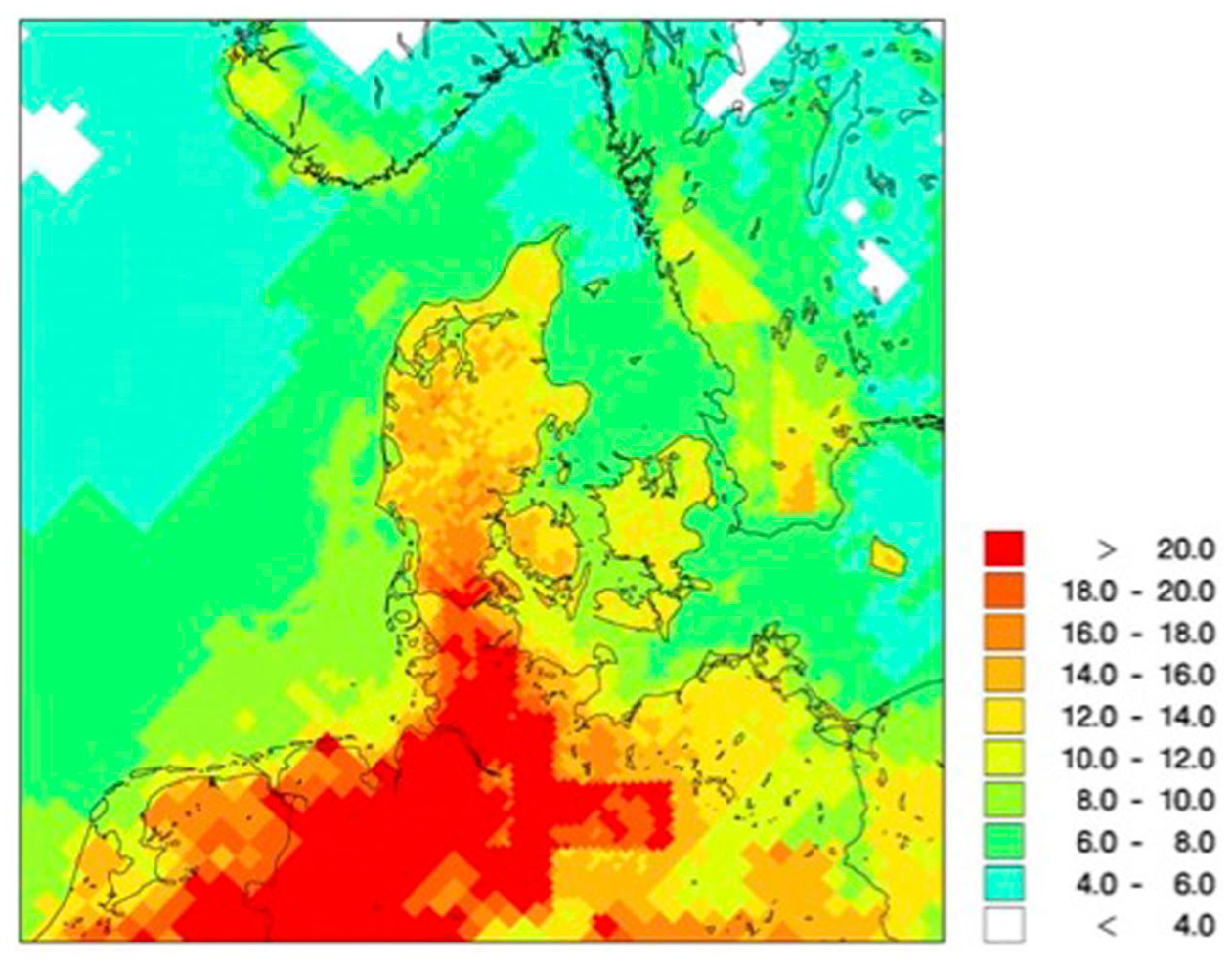
Atmospheric N deposition in Denmark, the northern areas of Germany, and the Netherlands (kg N/ha/yr). From Ellermann et al. (2018).
While atmospheric N levels can have wide-ranging effects on ecosystems, in heaths they spur a transition to grasslands. Evolved in low-nutrient environments, heath ecologies are highly sensitive to fertilization. When N levels exceed a critical threshold of 10–25 kg N/ha/yr, purple moor-grass (Molinia caerulea), a naturally occurring species, can outcompete the ericoid shrubs and form novel grasslands (see Figure 2; Friedrich et al., 2011).
Fertilizer runoff from farm fields is also triggering harmful algal blooms in Denmark’s fresh and coastal waters and contributes to the widespread eutrophication of the Baltic Sea (Carstensen et al., 2014). These fertilized algae blooms degrade water quality and precipitate biotic assemblage shifts much as they do in heathlands. In both the terrestrial and aquatic examples, these transitions represent H/A phase shifts.
Discussion: A general framework
The West Jutland heath case shows how chemical fertilizers initiate H/A state changes in which long-established heath ecologies are transformed and fragmented by nutrient-emitting agricultural land uses. In what follows, we outline an analytical framework for studying such transitions. Our framework begins by centering the historical (socio)ecologies of the Holocene “before-world.” It then examines how fertilizer-assisted land conversion and eutrophication push these ecologies into alternative Anthropocene states, generating H/A mosaics. It then links these ecological state changes to the infrastructures of the fertilizer-to-food trophic pump and the human-altered N and P cycles. Finally, it considers how the reorganization of N and P biogeochemistry has led to demographic and urban growth and severed humans’ metabolic connection with the land. Together, these elements offer a critical framework for interpreting the role fertilizers play in the H/A boundary event.
Holocene “before-worlds”
Whether or not a researcher adopts the H/A distinction, mapping the fertilizer-induced landscape change requires an understanding of the historical ecosystems and sociocultural systems that constitute a “before-world.” As we have shown in the heathland case, Holocene worlds are neither inherently good nor original. Like the Anthropocene landscapes that replace them, they are fully historical and saturated with social complexities, many of which we would find intolerable. The Holocene is no Eden. But it is also not the Anthropocene. The Holocene is the most biodiverse period in Earth history (Wilson, 2016) and represents a time in which most humans were sustainably embedded in local ecologies. It also signifies a world where humans were not everywhere. Large tracts of the Earth surface sustained historical ecosystems without humans or with only a light human presence.
Erasing Holocene worlds for agriculture (or anything else) is no small task. As the DHS learned, heath ecosystems were not easily eradicated: it took plows, marl, imported pines, new irrigation systems, and ultimately fertilizers to break the heaths. It also necessitated a social and cultural shift: peasant farmers who sustained the heath were either displaced or transformed into industrial producers. Dwelling was replaced with the agricultural system of the exploiters.
And despite the massively successful efforts of reclamation, some heath patches escaped destruction. Our attention to the Holocene must center on its before-worlds but also the Holocene fragments that survive in our midst. Conserving these patches and expanding them through bold restoration measures is key for sustaining what is left of the historical biosphere.
Fertilizing Anthropocene state change
The heathland case reveals how agricultural land clearing, chemical fertilization, and eutrophication enacts H/A ecological change. In our framework, both intentional and unintentional activities flip Holocene patches into an Anthropocene state. Anthropocene patches are created by clearing away Holocene ecologies. Land clearing occurs within the grid logic of private property regimes, contributing to its mosaic expression (see Kadir and Tsing (2025) on dispossession-oriented property). Within this grid, some patches are converted to production fields, others to CAFOs and manure lagoons, still others are left relatively unmodified. These less modified areas—woodlots, roadside verges, non-arable margins, and large conserved parcels—operate as refugia for Holocene species. Mapping the mosaic arrangement of flipped and non-flipped ecologies is essential but not enough; we must probe the social histories that underwrite present-day land use and nature management.
Cleared and fertilized agricultural land creates immobile Anthropocene patches, but the nutrients that make these patches can travel widely. Ambient nutrient flows form an unintentional Anthropocene force that threatens Holocene relations. As scholars, we need to be attentive to the spatiality of these flows and the hot spots and hot moments they create (McClain et al., 2003). In this paper, we have focused on atmospheric nitrogen plumes that cause grasses to invade the heaths, inducing a H/A shift in the plant community. Had we focused on aquatic eutrophication, we would have followed N and P through watercourses and into receiving water bodies (inland, coastal, and marine) where they induce their own Holocene-to-Anthropocene patch dynamics. We might think of eutrophication as a process of “secondary red-ification” in which nutrients from one Anthropocene patch overflow into other patches, creating additional state changes. Agricultural landscapes are a major source of secondary reddening but cities, septic tanks, and wastewater treatment facilities are also major sites of nutrient loading. The conceptual challenge is not to see these sites as isolated sources but as interconnected and leaky components of the trophic pump (Figure 8).
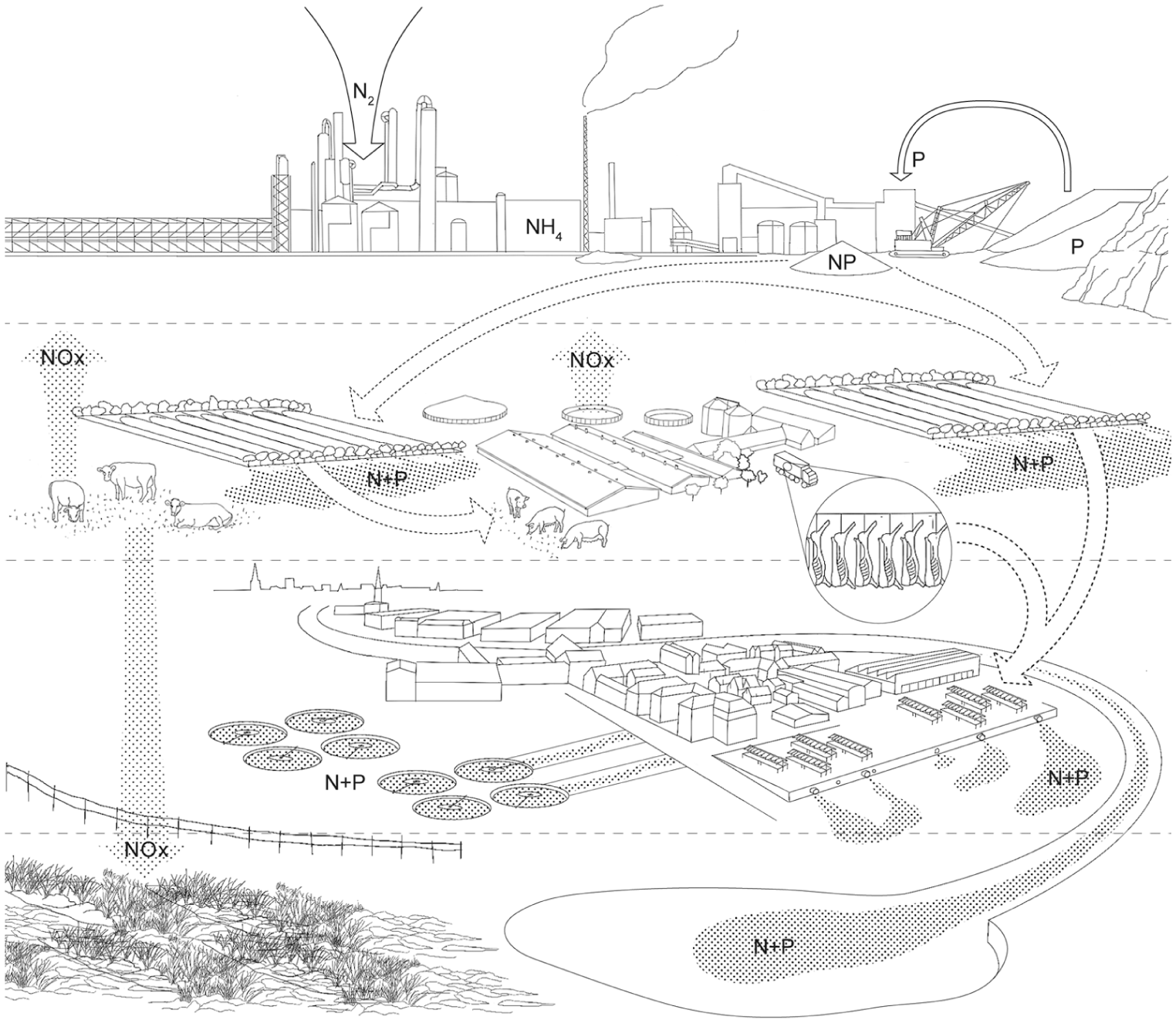
The flow of N and P through the leaky trophic pump. The top layer depicts the capture of N and P from non-biospheric stocks and its conversion to NP fertilizers. The second shows N and P being pumped into crops and livestock for human consumption. The third shows the circulation of N and P through cities (human bodies) and into wastewater treatment plants and septic drain fields. The bottom layer describes terrestrial and aquatic eutrophication. Image by Lili Carr.
Industrial nutrient circulation and the trophic pump
Fertilizers unevenly transform ecological space, creating mosaics in which Anthropocene conditions increasingly prevail over long-established ecologies. Such state changes, although local, need to be understood in relation to a vast industrial system that transfers non-biospheric N and P into the biosphere. Scientists estimate that industrial nitrogen fixation via the Haber–Bosch process produces approximately 120 Tg N yr−1 of reactive nitrogen, the majority of which is used for agricultural fertilizers (Fowler et al., 2013). Globally, fertilizer production also mobilizes on the order of ~25 Tg P yr−1 in the form of inorganic phosphate fertilizers derived from phosphate rock (Luo et al., 2024). This act of extracting, transporting, and thinly spreading these nutrient stocks over a vast terrestrial surface is only one operation of the trophic pump. Once these fertilizer nutrients are taken up by crops, those embodied nutrients are fed to livestock. Omnivorous humans, positioned at the top of the trophic hierarchy, are the ultimate beneficiary of the pump: as fertilizer throughput increases, our numbers expand. This is not a Malthusian inevitability but a biopolitical achievement of capitalist food systems.
The biogeochemists whom we have cited have developed sophisticated methods for tracking flows of N and P within the world-/Earth system (Hornborg and Crumley, 2007). The task of social scientists is to describe this pump’s historical emergence and sociotechnical operations. Mobilizing nutrients to mass produce agricultural and human life involves diverse corporate and non-corporate actors, infrastructures, crop and livestock organisms, and geopolitical arrangements. We need to understand the trophic pump as an integrated system but also as a geographically networked entity: how are extraction, agricultural, and urban consumption zones linked together? Addressing these issues is critical to mapping the social and ecological transformations of the fertilized Anthropocene.
Urban population growth and human emancipation from the land
Finally, it bears emphasizing that N and P industrialization has transformed how humans eat and how we live on the planet. Today, we are a species of 8 billion that lives mostly in cities and obtains biocritical nutrients from chemically fertilized food. By transforming atmospheric N and phosphate rock into food, humans have in the language of Mayumi (1991) become “temporarily emancipated from the land.” This notion of temporary emancipation points to the unsustainable resource appropriation that underwrites Western-styled growth and has uncoupled human eating from local ecology. A critical research program focused on the altered N and P cycles must account for this emancipation as it seeks to describe the revolutionary implications of humanity’s collective metabolism (Figure 9).
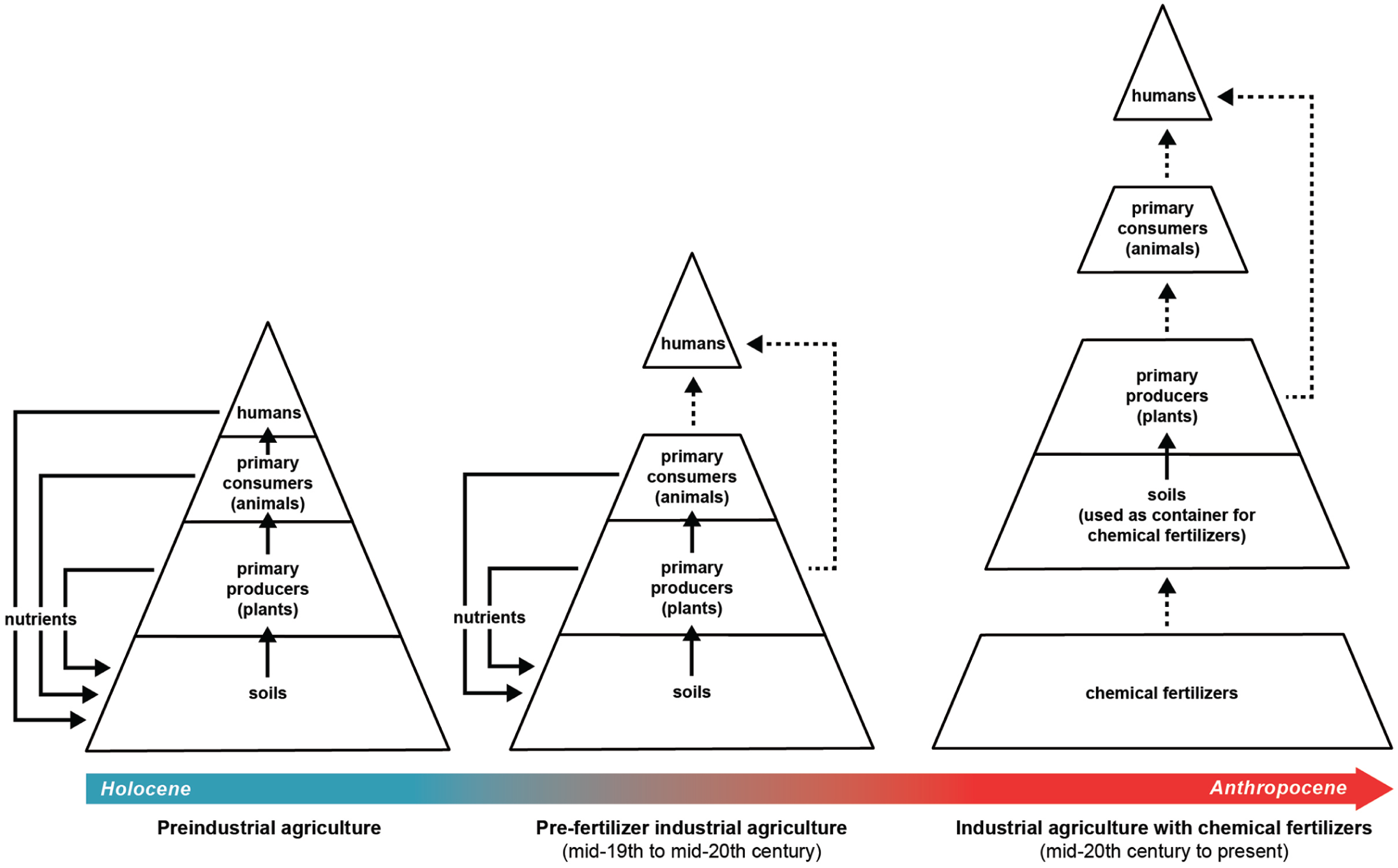
Trophic “emancipation” from the land. Solid-line arrows symbolize in-situ recycling; dashed arrows signify transfers across distant geographies. Adapted from Foster and Magdoff (1998) by Lili Carr. Use of original diagram by permission of Monthly Review magazine. All rights reserved.
Conclusion
Humanity’s appetite for fertilizers, like its consumption of fossil fuels, has fundamentally transformed what it means to be human and led to irreversible transformations of Earth’s biosphere. This focus on agro-industrial nutrient regimes both complements and challenges prevailing accounts of the Anthropocene which, arguably, take climate change as their signature matter of concern. In contrast to climate change which operates on a global atmospheric scale and thus aligns with a conception of the Anthropocene as a new planetary universal, agrichemical colonization unfolds unevenly across the terrestrial Earth surface and with mosaic spatial impacts on land-water ecologies. Telling fertilizer stories requires that we stay close to the Earth, attending to place-specific ecosystem shifts that simultaneously fragment the Holocene and produce a patchy Anthropocene. It also means attending to the history of the trophic pump and the Herculean effort to transform non-biospheric nutrient stocks into surplus life.
Without minimizing the urgency of the climate crisis, it bears noting that its damage lies largely in the future. In contrast, chemical agriculture has already erased vast sections of the Holocene biosphere. If industrial humans and their activities are the primary driver of planetary damage, then the food systems that underpin our demographic expansion are a root cause. Of course, we need not decide which is the deadlier poison. Fossil fuel and fertilizer systems are deeply entangled and their environmental crises are linked. Synthetic nitrogen fertilizers alone account for 10–11% of agriculture’s total greenhouse gas emissions (Zhang et al., 2023). The fertilizer-fuel nexus has disordered Earth’s biogeochemistry and drives the H/A boundary event. Learning to tell this story remains a key task of our times.
Footnotes
Acknowledgements
The authors are grateful to Bo Fritzbøger and Mary Hilson for their generous feedback on this manuscript. We are also deeply appreciative to Lili Carr for her graphics. Thanks also to the ANTHEA network for extensive discussions.

Ethical considerations
Ethical approval was not necessary for this research.
Funding
The authors disclosed receipt of the following financial support for the research, authorship, and/or publication of this article: The project has received funding from the European Research Council (ERC) under the European Union’s Horizon 2020 research and innovation program (grant agreement No. 853356).
Declaration of conflicting interests
The authors declared no potential conflicts of interest with respect to the research, authorship, and/or publication of this article.