







Abstract
This article explores the motivations of viewers who watch Danmaku game streams on Bilibili, a Chinese streaming platform, by analysing Danmaku comments (弹幕, danmu). Drawing upon and extending findings from previous research, I establish a framework that synthesizes different types of Danmaku (emotion-expression, information, social, and entertainment) with viewer motivations (knowledge-sharing, entertaining, and communicating). To demonstrate how it works, this study employs content analysis based on virtual observation. After examining 37,331 Danmaku comments across 9 streams in three different categories (Esports, Speedrun, and Let’s Play), it is found that the primary motive for Danmaku game stream viewing is to communicate, and the distribution of motivations varies depending on the stream category. The article addresses a gap in the research of Chinese game streaming, providing empirical insights into the behaviours and motivations of viewers on these platforms. Danmaku is identified as a prominent feature of Chinese game streaming that offers a distinctive perspective for studying viewer motivations within the context of Chinese online video culture.
Introduction
Video gaming is not only a player experience but also a viewer experience. Game streaming has become increasingly popular on platforms such as Twitch in America, Bilibili in China, and Niconico in Japan. Streamers broadcast their gameplay on personal channels, and viewers join in to watch and send real-time comments through chat charts, allowing streamers and their viewers to interact. The streams are usually recorded and later uploaded to the streamers’ channels after the live broadcast for repeated viewing. Recent research reveals that people are often more interested in watching others play games via streams than in playing the games themselves (Cabeza-Ramírez et al., 2022). A report by Newzoo (2022) projected the global game streaming audience would reach 921.2 million viewers by 2023. While videogame spectating is not an entirely new phenomenon (Orme, 2022), the rise of game streaming has nonetheless transformed the way individuals engage with games and has altered traditional concepts of videogames as interactive experiences. The popularity of game streaming, an activity that consists in watching recorded videos of others’ gameplay, raises new questions about how individuals derive pleasure from video games, as their appeal was commonly attributed to their interactive nature (Lin et al., 2019). This article explores Danmaku game streams in China and suggests that game streaming offers a new form of interaction, which helps to explain current changes in gamer preferences.
Studies on game streaming spectatorship have been extensively conducted, with researchers mainly exploring aspects including game streams as a form of media usage (Carter & Egliston, 2021; Smith et al., 2013), as a community (Hamilton et al., 2014; Speed et al., 2023), and as a cultural production (Taylor, 2018). These studies have bound game streaming to Twitch (Consalvo & Phelps, 2019; Gandolfi, 2016; Johnson, 2021; Orme, 2022; Taylor, 2018), as it is currently the largest and most popular game streaming platform, particularly in the West. However, there is a shortage of research on the Chinese game streaming platforms, such as Bilibili, Huya, and Douyu, which have experienced significant growth in recent years. The game streaming market in China started with YY Live offering online chat room services (Lu et al., 2018), and saw a surge in 2013 with the launch of Huya and Douyu (Newzoo, 2019). According to iResearch’s report on China’s game livestreaming industry, the number of game streaming users in China surpassed 350 million in 2020 (IResearch, 2021), roughly more than a third of global game streaming users according to Newzoo estimates quoted above. Given this gap, this article will look at the motivations of game streaming viewers on the dominant Chinese streaming platform, Bilibili. Established in 2009 under the influence of Japanese Nijikon culture, Bilibili was known for its AGC (Animation, Comic, and Game) content (Wang, 2022). As such, Anime, Comic and Game, displayed at the top of the early homepage, function as the initial main sections of Bilibili. Although new sections are constantly added to the homepage curation, Game has always been the important section since its inception. A report on Bilibili’s community ecosystem (Lanjinger, 2021) indicates that approximately 30% of the streams on Bilibili come from the Game section, accounting for over 20% of total views, with 30% of the top-100 streamers being game streamers.
The Chinese streaming ecosystem differs from its Western counterparts in terms of monetization, content, and viewer interaction. While Western platforms like Twitch derive most of their revenue from subscriptions, Chinese platforms like Bilibili generate income through user donations to streamers. Additionally, China’s strict internet censorship laws generally result in less toxic content, particularly towards female streamers (Newzoo, 2019). With regard to viewer interaction, differences can be observed between the commenting interfaces of Twitch and Bilibili, which are displayed at the top and bottom of Figure 1, respectively. Bilibili’s unique Danmaku feature allows comments to appear directly on the video screen (Chen, 2020), whereas Twitch’s chat bar is located next to the videos. Although the Danmaku feature is prevalent in Chinese game streams and popular among viewers, there is a lack of understanding of these Danmaku game streams (for example, on Bilibili) in comparison to chat game streams (for example, on Twitch). This study aims to explore the phenomenon of videogame spectatorship on a Chinese game streaming platform. It is motivated by a curiosity about the primary motive for Danmaku game stream viewing and whether it is different from that which motivates individuals to watch game streams that do not utilize the Danmaku feature. Additionally, since Danmaku comments inevitably reflect the thoughts and behaviours of game stream viewers, they can provide valuable insights into what motivates Chinese audiences to watch these streams. Game stream interface comparison. (Screenshot by author).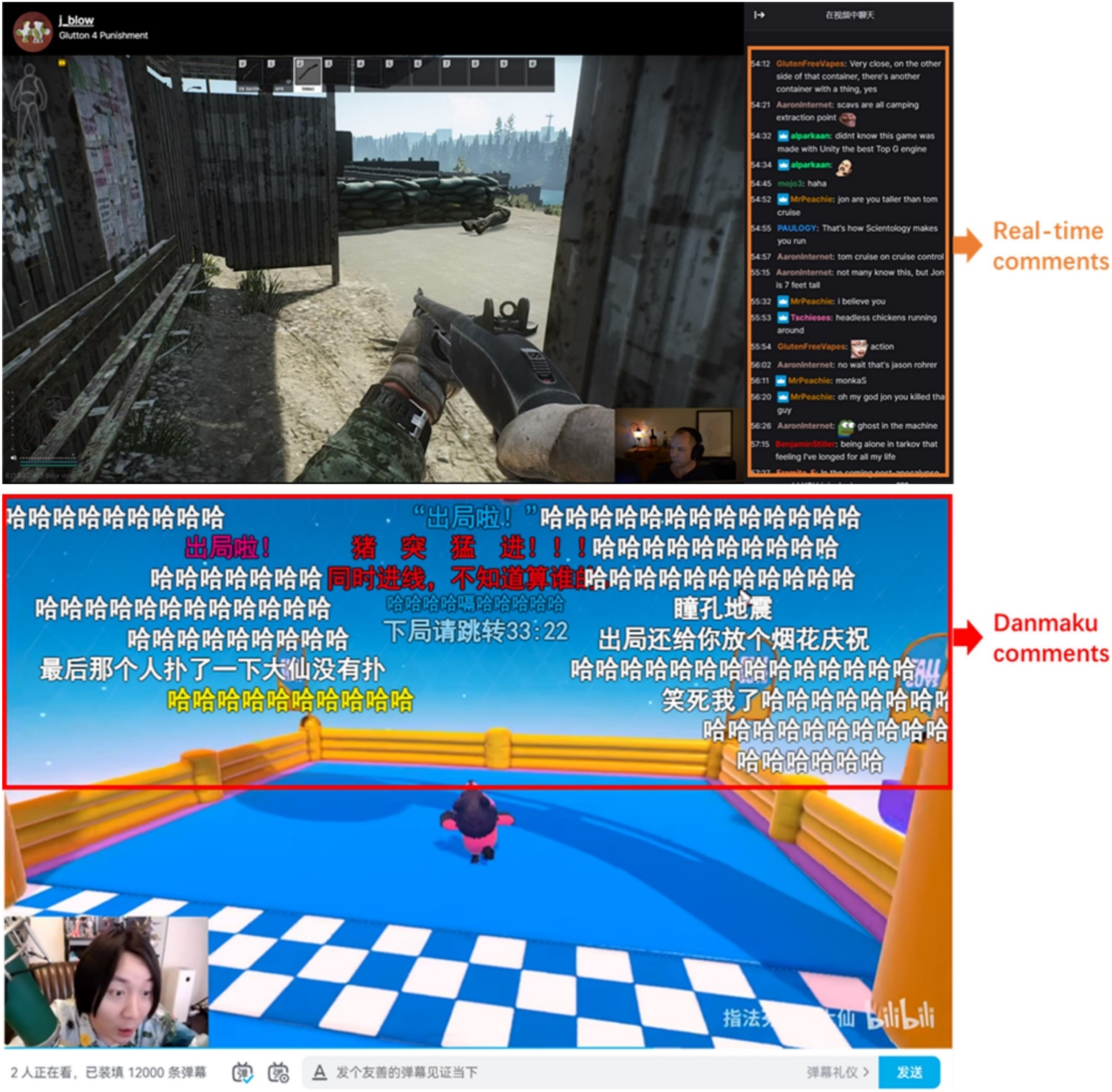
I therefore seek to offer a theoretical and empirical consideration of the role of Danmaku in Chinese game streams and its impact on the behaviours and motivations of Chinese audiences. In addition, the main purpose of this article is to offer empirical and methodological contributions to the study of contemporary Chinese media. It begins by addressing a methodological question: How can we learn about the motivations behind game streaming viewers through an analysis of Danmaku comments? The subsequent section delves into the details of game streaming audiences’ motivations by scrutinizing the content of information conveyed in Danmaku comments. This approach makes an empirical contribution by answering the following questions: What do Chinese game streaming viewers comment about on game streams through Danmaku? and What do these Danmaku comments reveal about the behaviours and motivations of them? Furthermore, different stream categories have varying influences on viewer’ behaviours, including watching, liking, and commenting. This means that the commentary on different types of game streams may differ in focus, with some centring on playing skills and others emphasizing entertainment. Therefore, this article endeavours to answer another question: What are the variations in these motivations for watching different types of game streams? By answering these questions, this paper aims to establish a new approach to studying the motivations behind video spectating and explore the role of Danmaku in game streaming studies.
Game Streams
Game streams come in various forms, ranging from amateur playthroughs to large-scale professional Esports competitions (Ma et al., 2021). The games broadcast by streamers are diverse, as they are chosen based on personal interests, abilities, and experience. According to Hagen (2018), the content of game streams is also influenced by game genres. Furthermore, research by Sjöblom et al. (2017) has suggested different types of game streams and genres of games being streamed result in different kinds of gratifications derived by viewers, with stream types having a stronger impact on viewer motivations than game genres. For example, both casual streams and sandbox games can facilitate a viewer’s motivation to socialize, yet casual streams show a higher association with this motivation than sandbox games. Therefore, this article decides to compare the motives for watching different categories of Danmaku game streams. Three major game stream categories were identified by Smith et al. (2013): Esports, Speedrun, and Let’s Play, with styles ranging from hardcore to informal and casual. It is worth noting that their categorizations are based on the way games are played and presented on Twitch, not according to the game genre classification (single-player games, mobile games, online games, music games, etc.) used by streaming platforms. These categories are also applicable to game streams on Bilibili and will be utilized later during content analysis.
Esports, defined as ‘competitive multiplayer gaming that involves spectating’ (Freeman & Wohn, 2017, p. 1602), is the most popular type of game stream. It attracts spectators to watch rather than play because of its professional and competitive nature (Cheung & Huang, 2011). According to Stahlke et al. (2018), competitive games tend to have the largest number of viewers among all types of streamed games. Speedruns showcase how to complete a particular game as fast as possible without using cheating devices. This type also has a competitive element, as streamers compete to break other players’ speed records. Viewers of this type of stream are more likely to focus on specific skills or strategies used by the streamers. However, this also means that Speedruns are limited in their choice of game genre (e.g. the type of game must have different levels). In comparison, Let’s Play (LP) is more casual and is the most common type of stream on Chinese game streaming platforms. It aims to simulate the gameplay experience of amateurs (Sjöblom et al., 2017), which originally consisted of gameplay clips for relaxation (Hagen, 2018). The gameplay skills of streamers are not crucial in LP; instead, as Xuan (2016) suggests, the popularity of this category depends on the entertainment that streamers create around their gaming experience. To be entertaining, this kind of stream is usually accompanied by comedic and relaxed content. Zhang Daxian, a famous Chinese LP streamer with around five million followers on Bilibili, is known for his humorous commentary on his gaming.
Danmaku as Specificity in China’s Game Streams
As the most prominent feature of game streams on Chinese platforms, Danmaku comments are a great lens through which to study people’s actions while watching Danmaku streams. Danmaku, also known as bullet screen, is a video commentary feature where comments flow across the screen in the form of scrolling subtitles as the video plays (Cao, 2019; Ding et al., 2021), resembling the bullet barrage in early 2D shooter games (Liu et al., 2016a; Xu, 2016). These comments are synchronized with the video and appear at specific points during playback (Chen & Crawford, 2022). Originating from the Japanese video-sharing website Niconico (Li, 2017; Zhang & Cassany, 2020), Danmaku was introduced to Chinese streaming websites through AcFun and Bilibili around 2008 (Wu et al., 2019; Yang, 2020) and rapidly popularized in China. By 2014, almost all mainstream video platforms in China had launched the Danmaku feature, which became a ‘standard interface in the Chinese online video culture’ (Li, 2017, p. 235).
Researchers from various disciplines, including computer science (Chen et al., 2015; 2017), media and communication (Li et al., 2022; Liu et al., 2016a; 2016b), and linguistics (Yang, 2021; Zhang & Cassany, 2020), have explored the Danmaku phenomenon from different angles. For scholars in media studies, discussions focused on the issue of interactivity, as Danmaku transforms video consumption into online communication. Some studies examine the interactions between Danmaku videos and the viewers. Through a questionnaire-based quantitative analysis, Liu et al. (2016a) discovered that one reason viewers prefer Danmaku videos is that the media capabilities of Danmaku enhance their perception of interactivity. Danmaku changes the way people experience videos by ‘transforming it from a passive, isolated viewing experience into an active, socially engaging experience’ (Liu et al., 2016a, p. 285). Meanwhile, viewers also participate in a process of information production (Wan et al., 2020). Other studies look at interactions between viewers. The combination of text chatting and online video viewing encourages viewers to leave comments on the stream content and engage in online conversations with other viewers. According to Liu et al. (2016b), Danmaku videos act as a virtual community where viewers can not only consume media content but also participate in social interactions by expressing themselves and connecting with others who share their interest in the content without being limited by time and space, thus creating a co-viewing experience. The interactions between viewers are reflected in Danmaku comments, which can reveal the viewers’ thoughts about the content, streamers, and other comments. In a word, the Danmaku interface provides a space for viewers to interact, and these interactions are represented in the form of Danmaku comments.
The relationship between viewers and Danmaku videos is more akin to playing than watching. This engaging aspect of entertainment is an important factor in the younger generation’s preference for Danmaku videos. Li (2017) argues that ‘communication is more important than content’ (p. 240) in maintaining the persistence of live platforms. The significance of Danmaku lies in sustaining the interaction between the stream content and the viewers. In doing so, it is easy to overlook the information provided by the Danmaku itself as a kind of commentary. Conventionally, comments are placed below the main content on the webpage, indicating their subordinate status. However, in Reading the Comments, Reagle (2015) concentrates on this marginal stuff, contending that online comments, as a form of user-generated content, have their intentions and effects. Within the context of participatory culture, ‘comment is communication, it is social, it is meant to be seen by others and it is reactive’ (Reagle, 2015, p. 2). Therefore, studying comments is becoming an approach to examining users’ online behaviour, participation, and reactions. With the popularity of Danmaku, which displays directly on top of video content, comments are gradually replacing content and becoming the main commodities being consumed. Some research suggests that the entertaining and interactive properties of Danmaku comments make them more engaging than the video content itself (Djamasbi et al., 2016). This article centres on the content of Danmaku comments and treats them as the object of investigation.
Framing the Motivations with Danmaku
This paper aims to investigate the motivations behind watching Danmaku game streams. Previous literature has indicated that Danmaku comments are a means of idea expression, the content of which can be analysed to understand viewers’ behaviours and motivations. Therefore, a framework is needed to establish a link between the categories of Danmaku and different types of motivations. This involves determining a preliminary classification of both Danmaku comments and stream viewing motivations.
Taxonomy of Danmaku Commentary
Updated taxonomy of Danmaku.
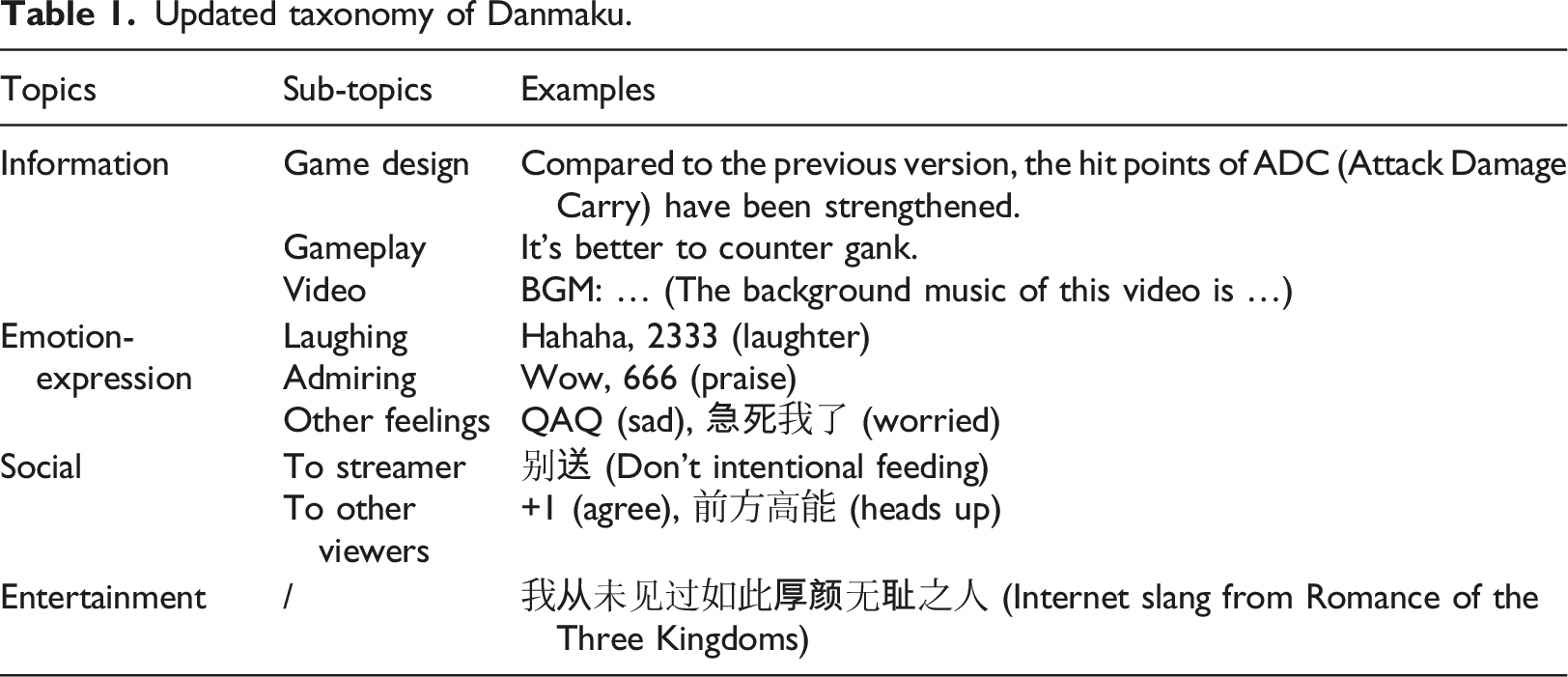
The updated version of the Danmaku taxonomy includes two levels: Danmaku topics are divided into the aspects of emotion-expression, information, social, and entertainment, whereby every category contains multiple sub-topics. The first-level topics draw from Chen et al.’s four Danmaku categories, but with modifications: emotion-expression and social replace self-expression and company, while information and entertainment remain the same. Emotion-expression Danmaku reflects viewers’ subjective and concrete feelings about the streamers, games, videos, or comments, and social Danmaku emphasizes the comments on interactions between viewers and streamers. In addition, sub-topics are utilized to differentiate between various forms of Danmaku manifested under the same first-level topic. For example, information Danmaku encompasses comments expressing character design, game narrative, game strategies, and background music, which are further divided into three sub-topics: game design, gameplay, and video. Game design Danmaku deals with the character settings, skills, modes, and versions of the games being streamed; gameplay Danmaku refers to the streamer’s in-game operations during their broadcast; and video Danmaku discusses the features of the game stream, such as its background music and image quality. Moreover, emotion-expression Danmaku primarily conveys two feelings, namely, happiness and admiration. Happiness is typically represented through phrases signifying laughter, like ‘hhh’ or ‘233’, while admiration is shown with ‘666’ or ‘wow’. Other feelings, not included in these two, are grouped together as other emotions. Social Danmaku includes communication between viewers and streamers, as well as among viewers.
Motivations for Danmaku Game Stream Viewing
Danmaku game streams can be thought of as a combination of game streams and Danmaku videos, so the motives for watching them stem from both the motivations for viewing game streams and consuming Danmaku videos. Previous studies have explored the motivations for Twitch game stream spectatorship (Gros et al., 2017; Orme, 2022; Sjöblom & Hamari, 2016; Speed et al., 2023), and Danmaku video viewing (Chen et al., 2015; 2017; Wang et al., 2019). Through a questionnaire study, Sjöblom and Hamari (2016) found that the ability to satisfy motivations related to ‘social interaction, learning, and entertainment’ is significant for Twitch viewing (p. 986). Following their research, Gros et al. (2017) divided the general motives for Twitch usage into the aspects of socialization, entertainment, and information, and discovered that being entertained (entertainment) and learning new gaming strategies or techniques (information) are the most popular motivations for Twitch users. Orme (2022) employed semi-structured interviews to understand the motivations of ‘just watchers’ in video game spectatorship. These non-players believe that the high time commitment and lack of skills are major barriers to playing games themselves. Watching game streams is a compensatory entertainment activity that can replace playing games alone. It provides a more accessible way to learn about game content or stories while aiding in time management. This result is compatible with Gros et al.‘s study, as both found entertaining and information-seeking to be the main motivations for watching game streams. On the other hand, Chen et al. (2015) extracted four gratifications from Danmaku comments: entertainment, the feeling of companionship, sense of belonging, and information seeking. Their 2017 research further explored three needs that drive people to consume Danmaku videos: utilitarian, hedonic, and social needs. Through focus groups, they discovered that utilitarian needs such as learning and seeking information and hedonic needs are the most critical factors.
Based on the synthesis of common motivations from the studies discussed above and the features of Danmaku, three motivations that are relevant to watching Danmaku game streams have been identified: knowledge-sharing, entertaining, and communicating. Knowledge-sharing refers to the motivation to share, seek, and obtain information. Not only does this motivation fulfil the utilitarian need for acquiring knowledge about a particular game during the viewing process (Gros et al., 2017), but it also allows viewers to share valuable information with others (Cheung & Huang, 2011), as is often seen in the detailed game strategy and technique discussions in Danmaku comments. Entertaining motivation corresponds to hedonic needs (Bantz, 1982) and tension release (Sjöblom & Hamari, 2016). Both video content and entertainment Danmaku comments offer viewers an entertaining media experience, allowing them to pass time, obtain relaxation and amusement, and temporarily escape from the tense reality of life (Hilvert-Bruce et al., 2018; Wulf et al., 2020). Finally, communicative motivation satisfies the need for developing and maintaining social interaction, expressing thoughts and feelings, and feeling part of a community. Through Danmaku comments, viewers are provided with a platform to express themselves, share their opinions, and release personal emotions such as tension and happiness.
The framework of a corresponding relationship between Danmaku topics and different motivations for watching Danmaku game streams was developed based on the two classifications described above (see Figure 2). As mentioned earlier, information Danmaku and its three sub-topics are about objectively stating different information that the viewers have known about the stream content. There is no causal relationship between this kind of Danmaku, as each comment is not a response to others. Thus, information Danmaku is linked solely to knowledge-sharing motivation. Social Danmaku is clearly directed towards communicative motivation: both sub-topics of this category aim to initiate conversations that meet the need for social interaction. Additionally, entertainment and emotion-expression Danmaku correspond to both entertaining and communicative motivations. In terms of entertaining motivation, comments manifest themselves not only in parodies created for entertainment purposes, but also in the release of emotions. As Johnson (2022) suggested, emotional reactions can be sources of humour in game streaming. As for communicative motivation, both entertainment and emotion-expression Danmaku are associated with gaining a sense of community. Hamilton et al. (2014) show that game streams act as a third place where a group of people are encouraged to converse about the content they are watching, establish relationships and then form participatory communities. One typical example is that some entertainment Danmaku that contain internet memes are only understood by a specific group of people (those who are familiar with the context of these memes), fostering a sense of belonging among these people. Framework of the connection between Danmaku topics and motivations.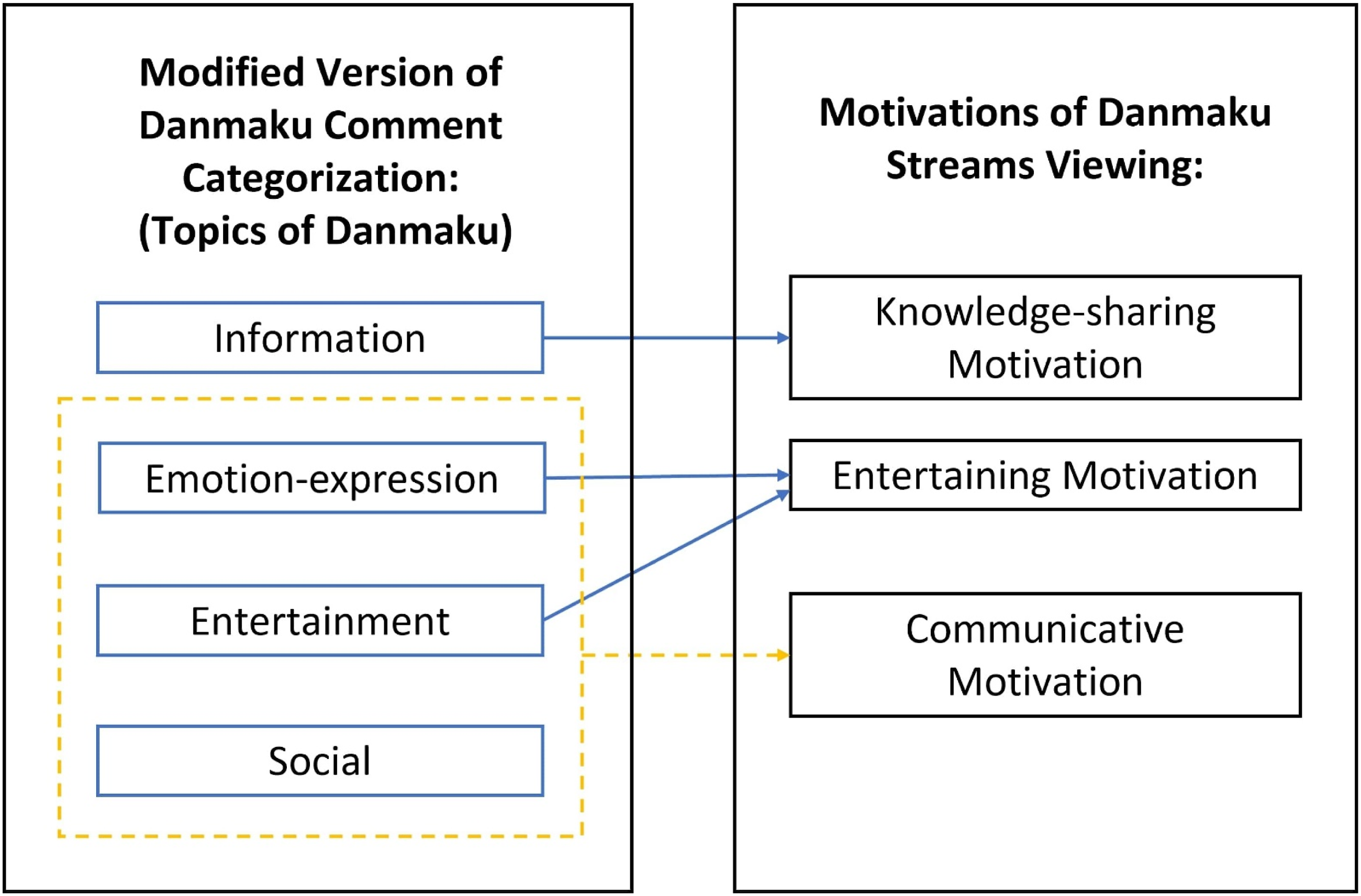
Method
This research uses a content analysis approach based on virtual observation of game streams on Bilibili. Existing research on Danmaku videos and game streaming has largely relied on qualitative methods such as questionnaires and interviews (Hu et al., 2017; Liu et al., 2016a) to investigate users’ information behaviours and motivations, while neglecting the content of comments, which is also an essential aspect of idea expression. As a result, the data collected has been largely subjective, limiting the depth of evaluation. In contrast, content analysis provides an objective and quantitative way of analysing comments and can handle the vast volume of data through categorization and coding. Given the high volume and low structure of Danmaku comments, it is challenging to use other network text mining methods without additional metadata, such as tags or hashtags. Nevertheless, content analysis has limitations when applied to digital media contexts such as weblogs, since it only focuses on manifestation, which cannot capture elements like hyperlinks that point to crucial information for understanding the blog content (Herring, 2010). It is thus necessary to expand the methodological paradigm by combining traditional content analysis with other approaches. To address this, this research on Danmaku comments incorporates virtual observation and qualitative in-depth analysis of the coding results to gain a more comprehensive understanding of the comments.
By taking these Danmaku comments as the research object, this article aims to shed light on the behaviours and motivations of Danmaku game streaming viewers from a novel perspective. The framework linking Danmaku topics with viewer motivations served as a valuable tool for achieving this goal and is demonstrated in the following content analysis. In brief, Danmaku comments were categorized and coded according to the four Danmaku topics presented on the left side of the framework shown in Figure 3. Subsequently, based on their correspondences, these coded Danmaku comments were mapped onto the three motivation categories, as depicted on the right side of the framework. This process allowed us to calculate the frequency with which particular Danmaku topics arose and allowed us to create a distribution to assess varying motivations. Dictionaries of three game stream categories. (Screenshot by author).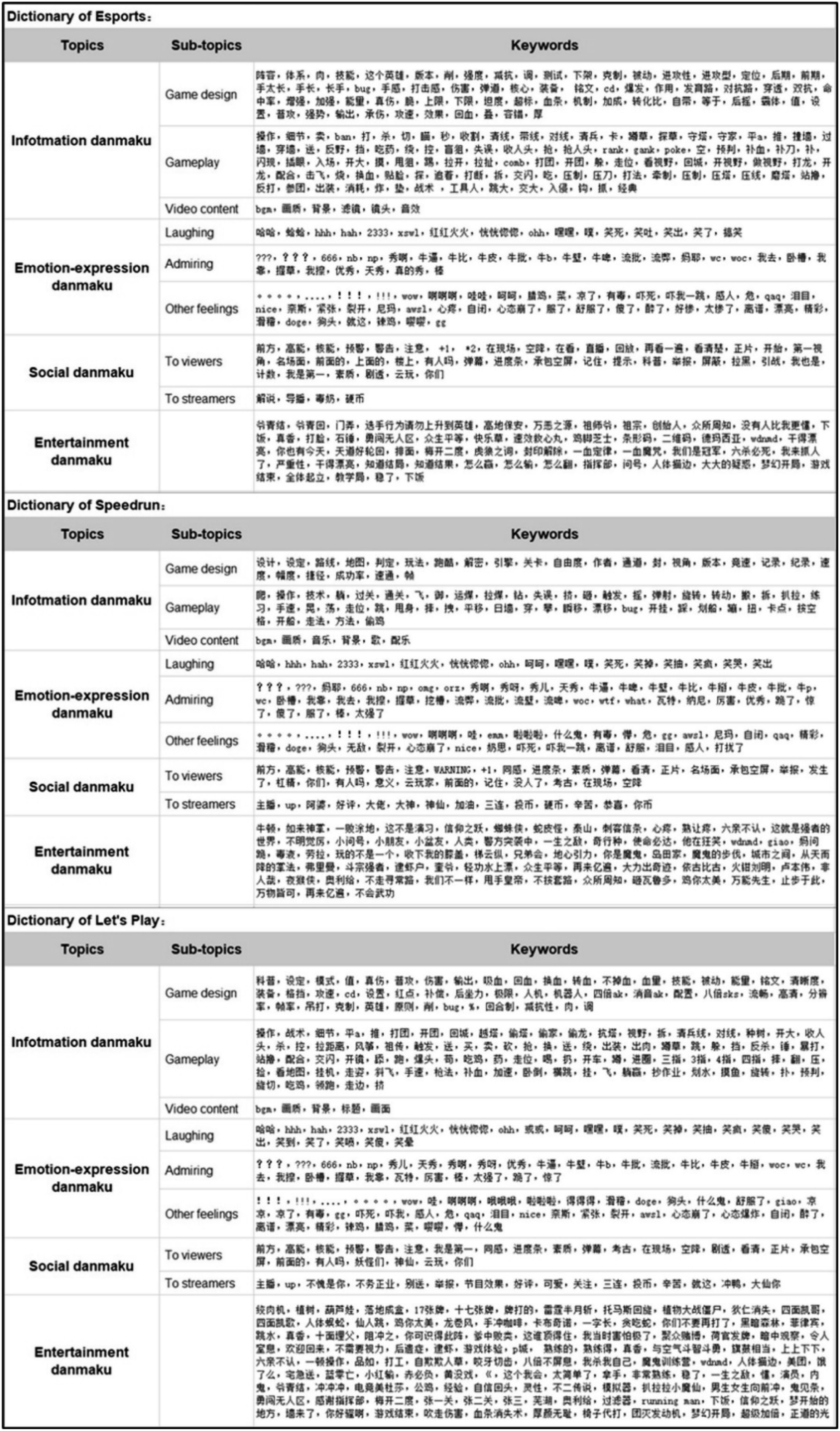
Data Collection
Nine Bilibili game streams with high volumes of plays and Danmaku comments from different streamers were selected for this study. These videos, which varied in length from 6 to 50 minutes and were uploaded between 2018 and 2020, were subjected to a content analysis using the framework developed above. Three samples were selected from each category of Esports, Speedrun, and LP streams, respectively. Specifically, the Esports category streams were selected from the three largest Esports competitions in China (LPL, KPL, and KCC). The streams in the LP category were determined according to the three most popular games in China during this period (2018–2020), namely, Honor of Kings (Tencent, 2015), Player Unknown’s Battlegrounds (KRAFTON, 2017), and Fall Guys (Mediatonic, 2020). The streams in the Speedrun category are videos of different streamers playing Human Fall Flat (No Brakes Games, 2016). An API called BiliPlus was used to crawl and export the Danmaku comments from these streams. In total, 19,863 Danmaku comments from Esports streams, 19,751 Danmaku comments from LP streams, and 20,057 Danmaku comments from Speedrun streams were collected.
Coding and Dictionary
The Danmaku comments obtained through BiliPlus were stored as nine Excel worksheets that need to be sorted for further analysis. The dictionary in this study serves as a coding frame to identify keywords from these Danmaku comments and assign them to the corresponding topics. These Danmaku comments can then be classified into topics and sub-topics using the framework established already. To achieve this, three dictionaries of keyword use in Danmaku comments were created for Esports, Let’s Play, and Speedrun, respectively (see Figure 3). These dictionaries were compiled based on the updated taxonomy of Danmaku comments presented in Table 1, which classifies Danmaku into two levels of topics. By looking through the collected comments, keywords for Danmaku topics and their sub-topics were identified and coded. At first glance, some common keywords, such as those used to express emotions and socialize (e.g. ‘hhh’ and ‘+1’) were found in all types of streams. Meanwhile, some keywords related to entertainment or information about certain games were specific to particular categories of streams.
In accordance with the three dictionaries, both the number and the frequency of Danmaku topics in the three stream categories were determined using Python Pandas, a data analysis and manipulation tool built on top of the Python programming language (McKinney, 2011). The statistical results were recorded in an Excel spreadsheet with columns for counting the frequency of both first-level topics and sub-topics. The column of number of topic types was also included to show the sum of different topics in each Danmaku comment, as some comments may contain keywords from multiple topics. Word frequency was counted by Pandas in this way: the value for each sub-topic column depends on the number of times the corresponding keywords appear in a Danmaku comment. The frequency of sub-topics is then added together to obtain the value for its corresponding first-level topic. For example, based on the dictionary of Speedrun keywords, it is found that the Speedrun Danmaku comment ‘!!! 太秀了’ (meaning ‘wow, that’s awesome’) contains the two keywords, ‘!!!’, and ‘秀”’ (awesome), both of which belong to the sub-topic admiring. In this situation, the value for the sub-topic admiring column and the first-level topic emotion-expression column should both be 2, and its number of topic types should be 1.
Results
Overview of Sample
Figure 4 shows the basic information regarding the topics of Danmaku comments in three stream categories. The majority of the comments are emotion-expression Danmaku, with a total of 20,079. On the other hand, social Danmaku had the least number of comments with only 5,751. The number of topics of these Danmaku was calculated to understand the amount of effective data implemented in this research. Overall, 37,331 Danmaku comments were identified by the coding system, around 60% of the total, and most of them have a single topic. Approximately 37% of the Danmaku comments could not be matched during the research. The number of comments with sub-topics was also counted to determine whether there were differences within each topic. The quantity of the Danmaku sub-topic and the percentage of the first-level topic to which it is subordinate were both counted. For instance, the proportion of gameplay Danmaku in LP is 67.15%, indicating that 67% of the information Danmaku comments in LP streams talk about gameplay. General information about Danmaku collection.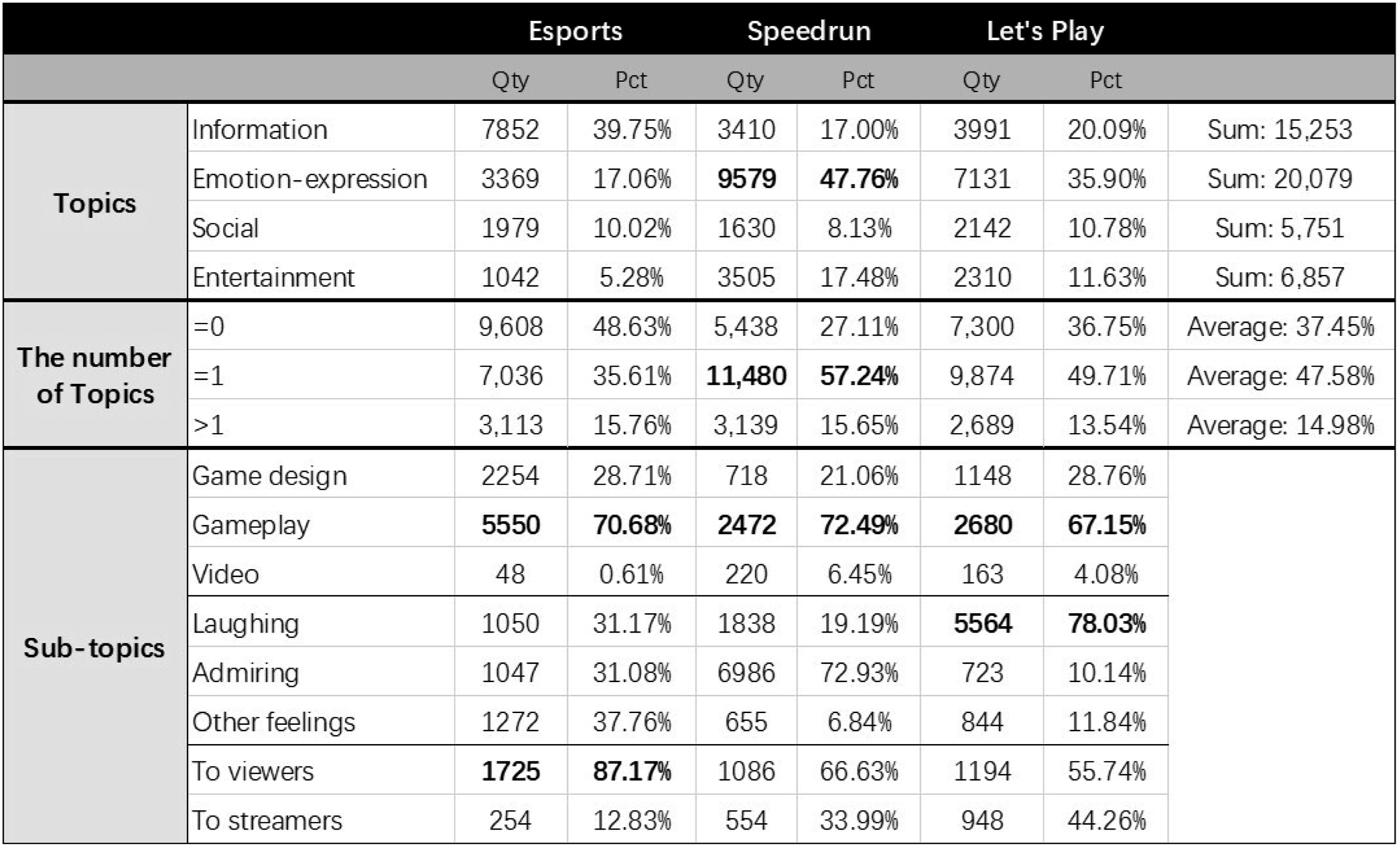
Comments
Figure 5 shows the distribution of the four first-level Danmaku topics in different types of game streams. It is evident that the genres of game streams affect the composition of Danmaku topics. The Danmaku’s compositions of LP and Speedrun exhibit some similarities, while notable differences can be found when comparing the first-level Danmaku topic’s compositions of the Speedrun and Esports streams. The primary differences are embodied in the proportion of information Danmaku and emotion-expression Danmaku in these videos. In particular, information Danmaku comments dominate in Esports streams, accounting for roughly 40%. Meanwhile, the ratios of this type of comment in both LP and Speedrun streams are only half of that seen in Esports streams, at 20% and 17%, respectively. Intriguingly, the situation is reversed when it comes to the proportion of emotion-expression Danmaku. While these comments are relatively scarce in Esports streams, they occupy a substantial percentage in LP and Speedrun streams, especially in Speedrun streams, where almost half of the effective Danmaku comments are emotion-expression. Danmaku topic distribution comparison across different stream categories.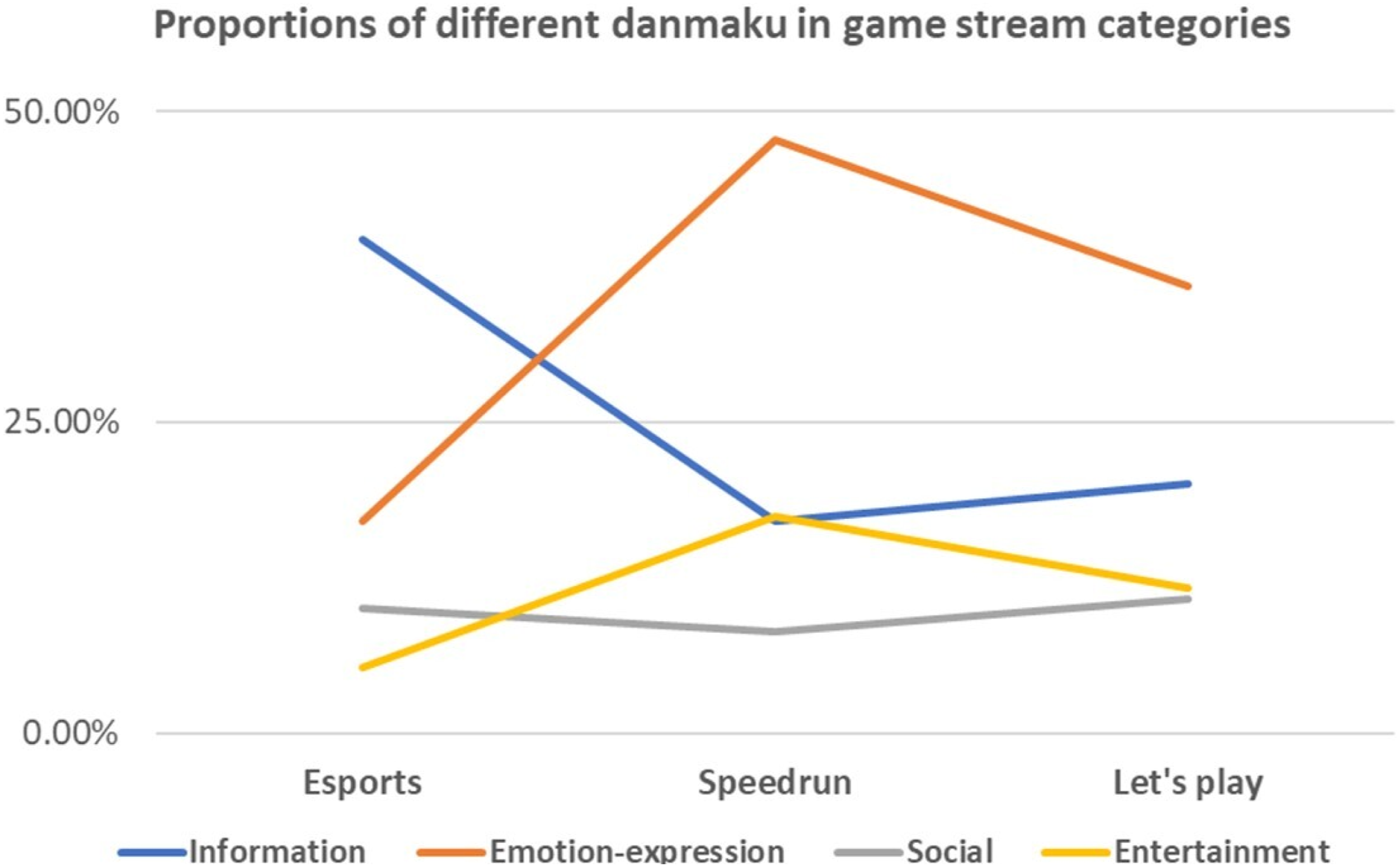
Social and entertainment Danmaku make up a relatively small proportion of the data. The proportion of social Danmaku across all three stream types is approximately 10%, indicating that this kind of Danmaku remains at a stable level in game streams on Bilibili. By contrast, although the average percentage of entertainment Danmaku is around 11%, which is nearly equivalent to the average proportion of social Danmaku, this Danmaku topic varies greatly between stream types: the proportion of entertainment Danmaku in Speedrun is approximately three times higher than that in Esports. After conducting participatory observations of these Danmaku comments, it became apparent that entertainment Danmaku possesses several characteristics that cannot be captured by data. First, unlike other Danmaku which generally share the same keywords across different streams (such as game terminology), entertainment Danmaku is stream-specific, meaning that the keywords used in each stream are completely different. Another noteworthy observation revealed that some entertainment Danmaku comments are related to fandom, with fans of particular streamers often creating unique phrases that are exclusive to that streamer’s videos. This characteristic determines that the funny element in this type of Danmaku can only be appreciated if the viewer understands the context and intertextuality behind it. Second, most entertainment Danmaku are internet memes, whose popularity is rapidly changing, which can, to some extent, help us get a glimpse of internet culture for a certain period of time.
In terms of sub-topics, Figure 6(a) presents that the compositions of the three sub-topics of information Danmaku across different streams are almost the same: gameplay Danmaku occupies the largest proportion, whereas video Danmaku occupies the smallest. A general behavioural pattern for the viewers who send these Danmaku on game streams can be inferred: when discussing information about a game stream, they tend to focus more on the streamers’ gameplay operations and tactics, rather than the design of characters, modes, or values in games. Danmaku sub-topic distribution patterns across different stream categories.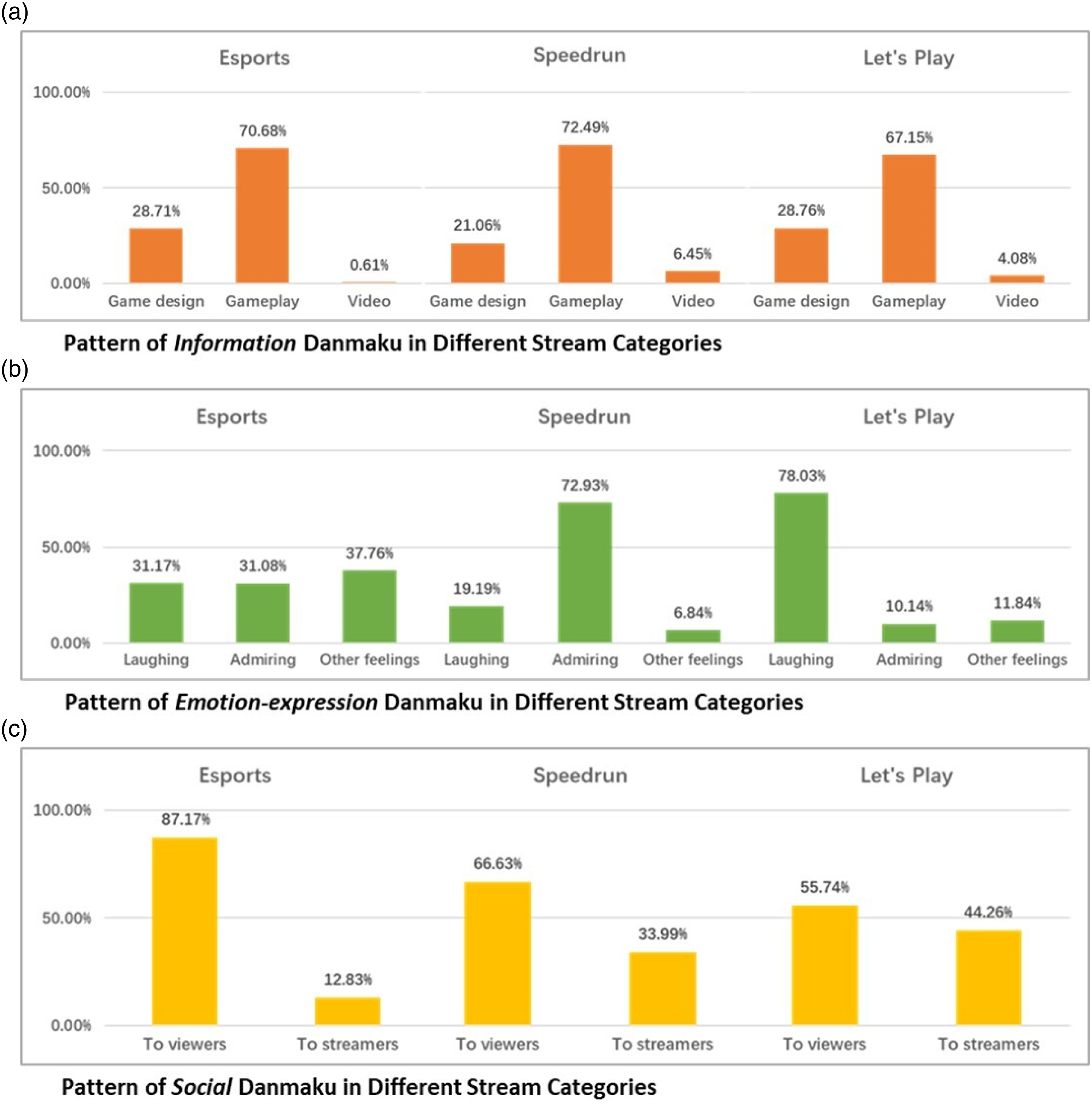
Conversely, the compositions of sub-topics in emotion-expression and social Danmaku show significant distinctions across stream types. Although emotion-expression Danmaku represents a high proportion in both LP and Speedrun streams, most of these comments in LP streams express laughter, whereas they show admiration in Speedrun streams. This suggests that viewers have varying emotional responses depending on the type of stream they are watching. One possible explanation is that LP streams are more entertaining and relaxing, and do not require high-level gaming skills from the streamers, leading LP streamers to be more likely to perform funny operations that make viewers laugh. In contrast, Speedrun streamers always show techniques or operations that are unknown to other players, which often garners admiration from viewers. Furthermore, viewers are less likely to express emotions when watching Esports streams because they are more engaged in discussing the accuracy of the gameplay operations. In terms of social Danmaku, viewers tend to communicate with other viewers when watching Esports, while they have more interactions with streamers when watching LP. This is understandable as Esports streams are often broadcast during tournaments when the conversation with the streamers would disturb their play, whereas LP streamers are more recreational players who care less about the game outcomes.
Motivations
On the basis of the analysis of Danmaku comments, a further examination of the motivations behind them can be conducted. A distribution of Danmaku motivations is shown in Figure 7, in accordance with the framework of the correlation between Danmaku topics and motivation types. The most prevalent Danmaku comments found in all streams are those about communicative motivation, demonstrating the significance of socializing and gaining a sense of community while watching game streams. Knowledge-sharing motivation is not as significant a driving force as previous literature on consuming Twitch streams has suggested. Distribution of motivations across different stream categories.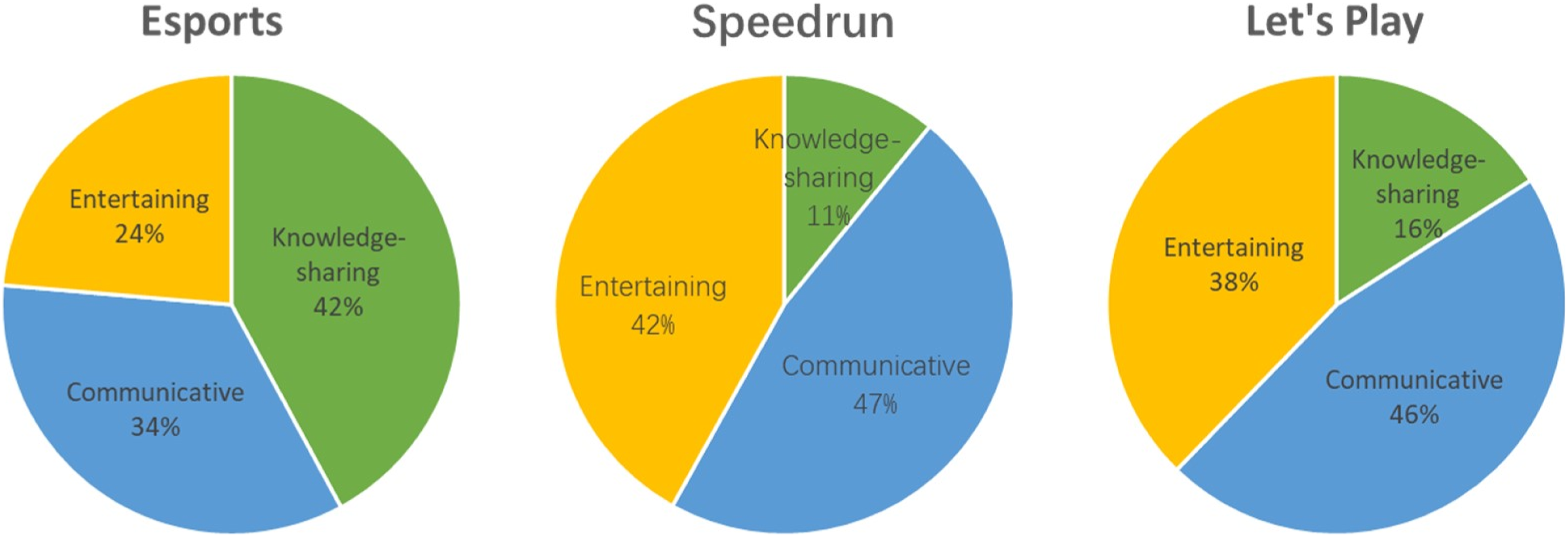
Overall, comments that serve the purpose of entertainment and communication account for a relatively stable proportion across all three stream categories, whereas knowledge-sharing motive is heavily dependent on the type of game streams being viewed. Resembling the pattern of Danmaku’s composition in different streams, LP and Speedrun exhibit similar structures of motivation, while the motivational composition of Esports shows a clear difference from the other two. To be specific, in terms of content analysis of motivations for watching Esports, knowledge-sharing is the primary reason, followed by communicative motivation, and entertaining motivation has the least impact. Viewers’ motivations for watching LP and Speedrun are fairly similar: the main motive for both is communicative, and knowledge-sharing is the least influential. In short, stream categories can affect the motivations of people who watch game streams; viewers of LP and Speedrun streams have a greater preference for entertainment compared to Esports viewers. Besides, considering the common motivations, all three stream types reflect strong social elements in general. Zhao and Tang (2016) suggest that the consumption of Danmaku videos is closely related to the awareness of being part of a virtual community. The results of this study can support their intuition by being interpreted as a strong desire for collectivity and identification among game streaming viewers. The following section elaborates on these three motivations.
Knowledge-Sharing Motivation
The Danmaku comments motivated by knowledge-sharing are mainly for acquiring specific information to improve one’s skills or to gain a better understanding of a game. Thus, knowledge-sharing motivation shares the same structure with information Danmaku. This is consistent with the result that knowledge-sharing is the primary motivation for watching Esports, where viewers prefer to post information Danmaku. There are two possible reasons for this. First, the one-way nature of information Danmaku’s dissemination leads to low motivation for knowledge-sharing in LP and Speedrun streams, which are communication-oriented. In contrast, the serious and intense atmosphere of Esports streams limits opportunities for interaction. Second, Esports viewers are relatively more professional and familiar with the games they watch, making them more willing to share relevant information. Although the percentage of Danmaku comments related to knowledge-sharing motivation shows a large difference between game stream categories, the three types of streams share a similar constituent structure of this motivation (see Figure 8). This demonstrates that game stream viewers show a greater interest in information related to gameplay. Distribution of knowledge-sharing motivation.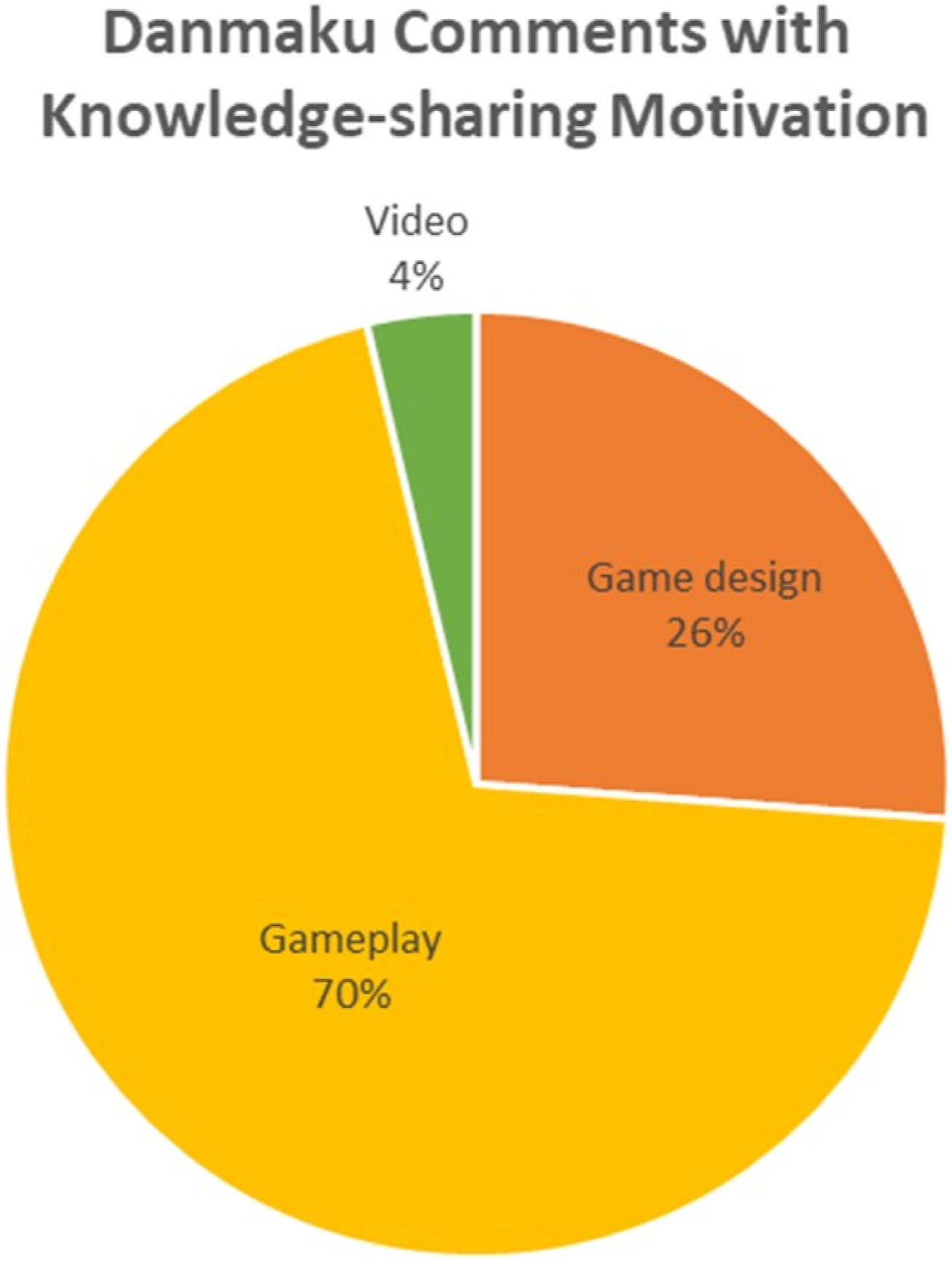
Communicative Motivation
The emotions of viewers undergo significant changes from watching LP to Speedrun streams. Laughing is the main expression of communicative motivation when watching LP streams, whereas admiration is the primary emotion displayed while watching Speedrun streams. Interestingly, players who broadcast Esports tend to be more skilled in practice compared to Speedrun streamers, but there are not as many Esports viewers expressing their admiration as one might expect. In contrast, the communication that occurs while watching Esports streams focuses on interactions between viewers, which is noticeably higher than that in the other two types (Figure 9). Distribution of communicative motivation across different stream categories.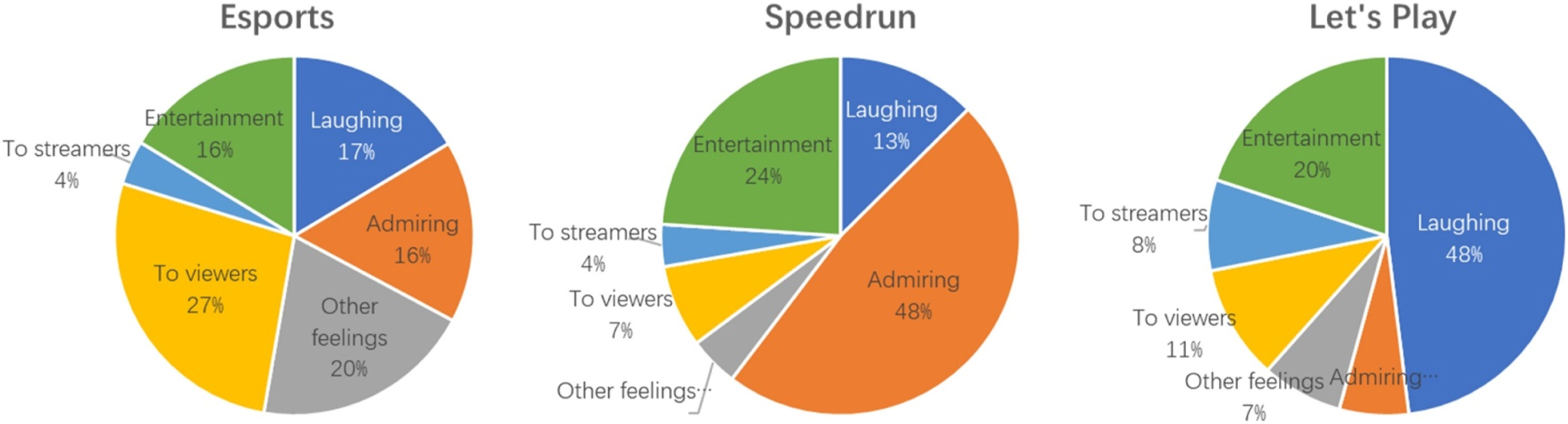
Entertaining Motivation
The proportion of Danmaku comments related to entertaining motivation remains fairly balanced across Esports streams, while there is a significant gap between their proportions in the other two streams. The same as communicative motivation, LP viewers prefer to send laughing-related phrases such as ‘hahaha’ to relax, and those who watch Speedrun streams express admiration to please others. The comments that are purely for amusement, such as jokes and memes, remain steady across all stream types. This demonstrates that regardless of the type of stream they watch, there is a certain number of viewers watching Danmaku game streams just for fun (Figure 10). Distribution of entertaining motivation across different stream categories.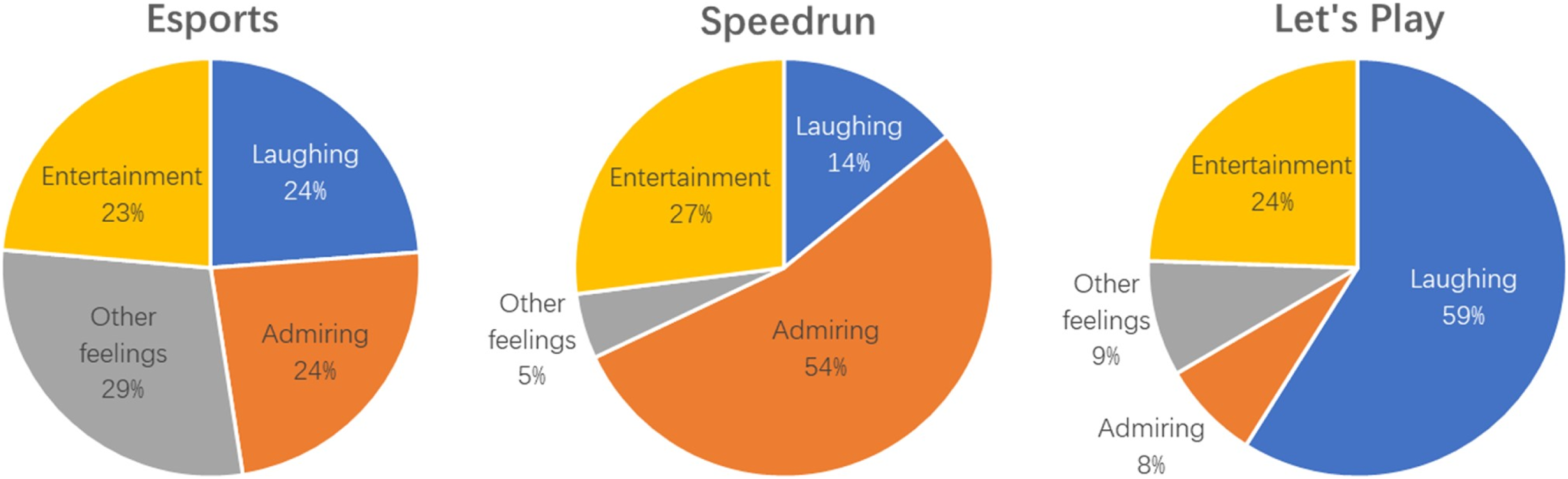
Discussion
The results pertaining to viewers’ motivations revealed that a Danmaku game stream does not simply consist of a Danmaku video and a game stream; rather, it possesses distinct features that attract viewers. In general, the dominant motivation that prompts viewers to watch Danmaku game streams is the communication based on emotional expression. This differs from previous findings which have suggested that information and entertainment are the primary factors contributing to the viewership for both non-Danmaku-commented game stream viewers (e.g. Twitch streams) and Danmaku video viewers (Chen et al., 2017; Gros et al., 2017). According to social identity theory, the desire for social interaction is manifested through meeting new people, communicating with others, and gaining a sense of community (Hu et al., 2017). In this case, Danmaku game streaming viewers experience a stronger sense of community compared to general Danmaku viewers. This is because most of them also play the games they watch, and these shared gaming experiences facilitate easier identification and emotional resonance with other participants. Additionally, the number of comments made by fans reflects the presence of the fandom community. Popular game streamers like Zhang Daxian have a large fan base, which further strengthens emotionally expressive communication within the community. From another perspective, Danmaku game streaming viewers tend to communicate more than non-Danmaku game streaming viewers, due to the interactive nature of the Danmaku interface.
The variation in the primary motivations also reflects the influence of the methods employed in different studies on the research results. Qualitative methods used in the previous literature, which start from individuals as the research subjects, tend to focus on personal experiences and needs. As such, the main motivations obtained by research using this approach are more (intra)personal, such as personal interest in information seeking and entertainment. On the other hand, quantitative methods deal with large amounts of data, diminishing the significance of individualized motivations. Danmaku comments, which are posted in public space, act as a means of communication and information exchange between people, emphasizing interpersonal needs.
Furthermore, viewers’ motivations for watching game streams vary depending on the type of stream. From a broad perspective, Speedrun and LP viewers exhibit similar motivational patterns that are quite different from those of Esports viewers. This can be attributed to the nature of the game being streamed. The games featured in Esports streams should be competitive, skill-required, professional, and sometimes team-based, which restricts the available choices of games. In contrast, the games selected for Speedrun and LP streams are more flexible. LP streamers can also play Esports games in a casual manner. On a finer scale, distinctions in motivational patterns between Speedrun and LP streams can be observed. Although there is no significant variation in the proportions of entertaining and communicative motivations between both stream types, it is noted that in Speedrun streams, the main reflection of entertainment and communication is the admiration of the streamers’ skills, while in LP streams, these motivations are generally manifested in laughing at the streamers’ gameplay.
Regarding Danmaku itself, this research demonstrates its multifaceted role, which not only provides content (in the form of comments) and an interactive interface but also holds potential as a research tool. This paper sought to contribute a novel approach to studying the motivations underlying video media consumption. Instead of relying on traditional methods such as questionnaires and interviews, this study instead examined video comments directly, treating them as windows into viewers’ thoughts. By utilizing a framework that established the connection between Danmaku and types of motivations, I have identified the primary motivation driving Danmaku game streaming viewership. The results of this exploratory research demonstrate the effectiveness of this methodology. Furthermore, the content analysis showed that Danmaku comments can provide insights into viewers’ behavioural patterns.
An important point that has probably been overlooked is that the percentage of entertainment Danmaku is not very high. This may seem to contradict the results of the motivations, and it is also counterintuitive given the common assumption that Danmaku is highly entertainment-oriented. Returning to the characteristic of entertainment Danmaku mentioned above, it lacks actual function and is usually meaningless, taking the form of internet memes, for instance. The content of memes is relatively difficult to identify, but the act itself of creating and sending memes as Danmaku is entertainment. In other words, the content or meaning of this kind of Danmaku is no longer crucial, what matters more are the effects or feelings that these Danmaku evoke. This illustrates the challenge of using content analysis to understand Danmaku, as this approach may overlook the significance of the behaviour of sending Danmaku. For example, playing with Danmaku as a form of metagaming is also an expression of the entertaining motivation of watching Danmaku game streams, which can only be experienced through virtual observation, as it cannot be reflected directly in the comments. This supports the famous phrase ‘the medium is the message’, highlighting the significance of the type of Danmaku over its content. Spectatorship has expanded the game space, making the meaning of certain games and the act of playing them not limited to the players alone. Once the process of playing is presented to the spectators, those who have watched it also engage in this ecology of gameplay.
The relatively low proportion of entertainment Danmaku can be attributed to its stream-specific nature, which reflects one limitation of the research method. Understanding certain comments requires substantial knowledge about specific cultural and contextual references, making it challenging to accurately categorize certain Danmaku comments during the coding process. Additionally, it must be acknowledged that the methodology employed in this study has a subjective element. The development of dictionaries, the selection and classification of keywords, and the coding process were rooted in my personal experiences reading Danmaku comments. Using this approach, it seems likely that different researchers could reach different conclusions when analysing the same dataset. To mitigate this subjectivity and ensure the accuracy of the findings, the framework for this research drew upon previous research that utilized surveys (Chen et al., 2015; Chen & Crawford, 2022; Li et al., 2022). For relevant studies in the future, incorporating mixed research methods is a possible way to address this limitation.
Conclusion
This study employed content analysis to explore game streams with Danmaku comments on Bilibili with the goal of providing empirical insights into the behaviours and motivations of Chinese game streaming viewers. It was determined that the primary appeal of watching Danmaku game streams is the emotion-based communicative aspect, which differs from the primary motivations of chat game stream spectators. From a medium perspective, Danmaku game streams act as social platforms offering a virtual community for viewers by facilitating a sense of identification. In this context, Danmaku comments not only serve information to be consumed but also provide a means of communication and research. When the motivations for watching different stream categories were examined, it was found that Esports streams tended to attract viewers with communicative motivation, while the appeal of LP and Speedrun was rooted in a desire for entertainment. Furthermore, even when viewers shared the same motivations for stream viewing, their actions sometimes differed, and this was also reflected in the Danmaku comments. Although both instances are motivated by communicating, viewers of LP streams preferred to express feelings of happiness, while Speedrun viewers typically commented in ways that showed their appreciation.
Beyond empirical contributions to understanding the relationship between Danmaku comments and viewer motivations in Esports, Speedrun, and Let’s Play streams, this article also prompts a reflection on the methods used to study motivation. The findings of this study demonstrate the potential for examining viewer comments as a means to understanding viewers’ motivations and interests. By adopting this exploratory methodology, this article provides a new perspective for analysing viewer motivations within the context of Chinese online video culture. Additionally, the Danmaku feature raises questions about how viewers engage with games and how their viewing experiences are influenced by social factors, such as the presence of a community. It is hoped that this article might catalyze future research on contemporary online Chinese media, particularly in the context of game studies and related fields. While this study has revealed that the motivations and behaviours of Esports viewers are significantly different from those of other types, future research could focus specifically on online Esports viewers, exploring the relationship between gameplay and spectatorship and examining the distinctions between online and offline viewing experiences. Beyond game studies, this research can also serve as a resource for studying topics such as Bilibili, livestreaming, Danmaku interfaces, and even comment studies. Ultimately, it is hoped that this article can raise awareness regarding the significance of video comments in the study of contemporary online video media.
Footnotes
Acknowledgements
I would like to thank the anonymous reviewers, Bjarke Liboriussen, and Nathaniel Tkacz for their generous feedback on earlier drafts of this article. My special thanks to Wenting Chen and Jiahui Wu for their kindly support.
Declaration of Conflicting Interests
The author(s) declared no potential conflicts of interest with respect to the research, authorship, and/or publication of this article.
Funding
The author(s) received no financial support for the research, authorship, and/or publication of this article.
