






Abstract
The end of a romantic relationship is one of the most emotionally challenging life events. Social media platforms such as Instagram enable users to monitor an ex-partner, a behavior known as Interpersonal Electronic Surveillance (IES), which may complicate coping. This study examined associations with retrospectively reported IES on Instagram during the first 3 weeks post-breakup, focusing on attachment, personality, and breakup-related emotional distress. Previous studies suggest that higher anxious attachment and emotional distress are related to increased monitoring behaviors on Facebook. The present research extends this approach to Instagram, a popular platform among Generation Z, and additionally examines personality factors. Data from N = 232 participants (aged 18–27 years; 84 percent women), who had experienced a breakup within the past year and followed their ex-partner on Instagram, were collected using a cross-sectional online questionnaire. The survey included standardized measures and self-constructed items. Hierarchical regression analyses including breakup-related variables, mediation analyses, and independent-samples t-tests were conducted. Due to extremely low internal consistency, Agreeableness was excluded from inferential analyses. The analyses indicated that Extraversion was the only personality trait directly associated with increased IES. Attachment styles showed no direct associations after emotional distress was included in the model. Emotional distress emerged as the most consistent factor associated with IES, showing patterns consistent with indirect associations involving Neuroticism and anxious attachment, suggesting a central role of emotional distress in post-breakup surveillance behavior. These findings highlight digital monitoring as a potentially maladaptive coping strategy and underscore the importance of addressing social media use in post-breakup adjustment.
Keywords
Introduction
The end of a romantic relationship is one of the most emotionally challenging life experiences.1–4 Particularly during the first 3 weeks post-breakup, individuals often experience intense emotions, and contact with an ex-partner may delay coping.5–7
Social media platforms such as Facebook and Instagram facilitate post-breakup contact by providing continuous insight into an ex-partner’s life.8,9
The deliberate search for digital information about others is referred to as Interpersonal Electronic Surveillance (IES). 10 IES ranges from occasional checking to frequent monitoring and is not inherently maladaptive. Its significance likely depends on its intensity and underlying motives. After breakups, such behavior may reduce uncertainty about an ex-partner’s emotional or social status and help (re)establish a sense of control or closeness,10,11 but it has also been associated with increased emotional distress.12,13
Individuals with higher anxious attachment14–16 and breakup-related distress 5 are more likely to monitor ex-partners on social media. Emotional distress following a relationship dissolution may further be intensified by societal stressors such as the coronavirus disease 2019 (COVID-19) pandemic, which has been associated with increased psychosocial distress and social disconnection. 17
The influence of Big-Five personality traits18,19 in this context remains largely unexplored, despite their role in emotional coping and adjustment after relationship dissolution.6,20 Because both attachment styles20–24 and personality traits such as Neuroticism 21 shape emotional responses to breakup, breakup-related emotional distress may represent a central factor underlying post-breakup surveillance.
Previous research has focused on Facebook, whereas Instagram-specific surveillance following breakups has received little empirical attention. This gap is particularly relevant given Instagram’s popularity among Generation Z.25,26
This study investigates associations of attachment style, personality traits, and breakup-related emotional distress with retrospectively reported IES on Instagram during the first 3 weeks post-breakup. It focuses on Generation Z adults (18–27 years), who grew up with digital media shaping their patterns of social interactions and relationship dynamics.27–29
Based on prior research, we expected anxious attachment, Neuroticism, and Extraversion to be positively associated with Instagram surveillance; Agreeableness to be negatively related to surveillance behavior; and the associations of anxious attachment and Neuroticism with IES to be consistent with indirect associations via post-breakup-related emotional distress.
Theoretical Background
Attachment style and IES
Attachment styles are internalized relational patterns formed through early caregiver interactions that influence how individuals perceive themselves and their relationships.30–32 Based on attachment theory by Bowlby 30 and Ainsworth, 33 three styles are commonly distinguished: Secure, avoidant, and anxious/ambivalent.
Hazan and Shaver 32 demonstrated that these internalized attachment patterns shape romantic love in adulthood and, consequently, affect how individuals cope with breakups. Secure attachment is linked to more effective coping and lower post-dissolution stress,4,20,23 whereas anxious attachment is associated with greater emotional distress and poorer adjustment.21–23 Avoidant attachment is typically characterized by distancing behaviors, less distress, and less interest in post-breakup contact.15,20
Previous research on post-breakup surveillance behavior suggests that individuals high in attachment anxiety are more likely to monitor their ex-partner on social media.14–16,34 This study examines whether this association also applies to Instagram.
Anxious attachment is expected to be positively associated with IES of an ex-partner on Instagram.
Findings on avoidant attachment and post-breakup social media surveillance are mixed.14,15,34 Due to its association with emotional distancing and reduced contact interest, avoidantly attached individuals may be more likely to unfollow or block their ex on Instagram to avoid distress caused by viewing their ex-partner’s content. 12
Individuals who unfollow or block their ex-partner on Instagram are expected to report higher avoidant attachment than those who continue following them.
Personality traits and IES
The Five-Factor Model by McCrae and Costa18,19 describes five core personality traits: Neuroticism, Extraversion, Openness to Experience, Agreeableness, and Conscientiousness. 35
Certain traits have been linked to specific patterns of social media use. For instance, Neuroticism, Extraversion, and Openness are associated with higher usage levels, with differing underlying motivations.36–38
However, little is known about how personality traits relate to IES after a breakup. Studies on IES in ongoing relationships 39 and on cyber dating abuse 40 on Facebook suggest that higher Neuroticism and Extraversion, and lower Agreeableness, are associated with increased online partner monitoring.
Accordingly, the present study focuses on these traits and proposes:
Neuroticism is expected to be positively associated with IES of an ex-partner on Instagram. Extraversion is expected to be positively associated with IES of an ex-partner on Instagram. Agreeableness is expected to be negatively associated with IES of an ex-partner on Instagram.
Emotional distress after breakup and IES
Previous studies identify emotional distress after a breakup as a predictor of ex-partner online surveillance.5,34 Its intensity is linked to factors such as time since breakup, separation initiator, and gender11,34,41,42 and is associated with higher anxious attachment20,43 and greater depressive and negative affect. 21
Based on these findings, we expected the association of (a) anxious attachment and (b) Neuroticism with surveillance behavior to be consistent with indirect associations via emotional distress.
The association between anxious attachment and IES of an ex-partner on Instagram is expected to be consistent with an indirect association via breakup-related emotional distress. The association between Neuroticism and IES of an ex-partner on Instagram is expected to be consistent with an indirect association via breakup-related emotional distress.
Method
Sample and procedure
A total of 232 participants (aged 18–27 years, M = 23, SD = 2.24) who had experienced the end of a romantic relationship within the past year and (still) follow(ed) their ex-partner on Instagram completed an online questionnaire. Recruitment was conducted via snowball sampling on Instagram, the university’s email list, and posters. Data were collected between December 2024 and January 2025.
Most participants identified as female (84 percent, 14 percent male, and 2 percent diverse) and heterosexual (78 percent, 5 percent homo-, and 17 percent bi-/pan-/polysexual) and held a high school diploma (43 percent) or bachelor’s degree (45 percent, 9 percent master’s degree, 4 percent compulsory schooling/vocational training/doctoral degree). Relationship status was balanced (51 percent single and 49 percent in a relationship).
Measures
At the beginning of the survey, participants confirmed voluntary participation; provided sociodemographic data; and met inclusion criteria, including current or former Instagram use and (former) connection with an ex-partner on the platform. Ex-romantic relationship was defined as any romantic involvement, regardless of duration or type. The survey referred to the most recent breakup within the past year, consistent with previous studies.2,12,13,44 Variables referring to experiences during 3 weeks post-breakup (e.g., Instagram behavior) were assessed retrospectively and could, therefore, relate to events up to 12 months earlier.
The questionnaire included self-constructed items and standardized scales. Emotional support resources were provided at survey completion.
Instagram use
Average daily Instagram use was assessed with five response categories ranging from “<30 minutes” to “>3 hours.”
Breakup characteristics
Items were adapted from the breakup characteristics used by Schroeder et al. 44 (e.g., ‘Who initiated the breakup?’ with response options “I,” “my partner,” or “mutual”). Additional items assessed relationship type (“casual dating,” “exclusive,” “engaged/married,” and “other”) and duration in months.
Post-Breakup Instagram behavior
Participants reported their behavior on Instagram during the first 3 weeks post-breakup. Items capture interactions with ex-partner’s profile and profiles of her/his family and friends (“continued following,” “unfollowed,” “blocked,” and “viewing via fake or third-party accounts”) and whether Instagram was temporarily discontinued.
Breakup distress
Emotional distress during the first 3 weeks post-breakup was measured using the Breakup Distress Scale. 2 The scale includes 16 items on a 4-point Likert scale (1 = “strongly disagree” and 4 = “strongly agree”). Items were translated into German using the back-translation method. Higher scores indicate greater distress (M = 2.22; SD = 0.77, Cronbach’s α = 0.93).
Instagram surveillance of ex-partner
Instagram surveillance in the first 3 weeks following the breakup was assessed using a modified version of Tokunaga’s 10 IES) scale. The 13 items were adapted to refer to Instagram and ex-partners (see Table 1), translated into German using back-translation, and rated on a 7-point Likert scale (1 = “strongly disagree” and 7 = “strongly agree”). The scale showed excellent reliability in the present sample (M = 3.54; SD = 1.73, Cronbach’s α = 0.96).
Modified Items of the Interpersonal Electronic Surveillance Scale
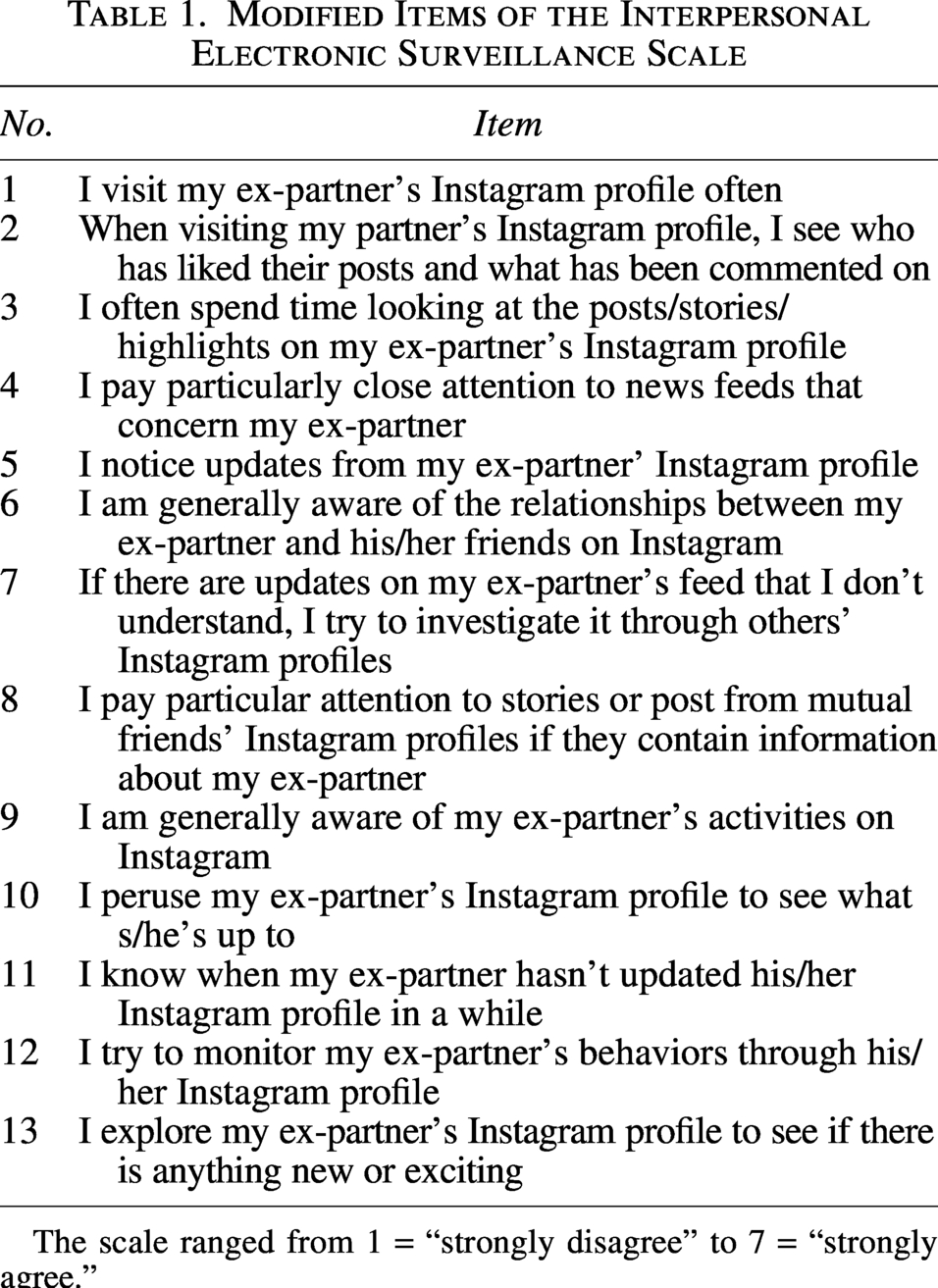
The scale ranged from 1 = “strongly disagree” to 7 = “strongly agree.”
Attachment style
Levels of anxious and avoidant attachment were captured with the German short form, Experience in Close Relationships-Revised Questionnaire by Ehrenthal et al. 45 The scale includes 8 items on a 7-point Likert scale (1 = “strongly disagree” and 7=“strongly agree”). Scores were calculated for both anxious (M = 3.45; SD = 1.54, α = 0.84) and avoidant attachment (M = 2.49; SD = 1.15, α = 0.78).
Personality
Personality traits were assessed using the German Big-Five Inventory-10 (BFI-10) by Rammstedt and John, 46 which measures the Big-Five traits with two items per dimension, on a 5-point Likert scale (1 = “strongly disagree” and 5 = “strongly agree”). In the present study, items were averaged. All scales except Agreeableness showed acceptable internal consistency (Table 2).
Descriptive Statistics
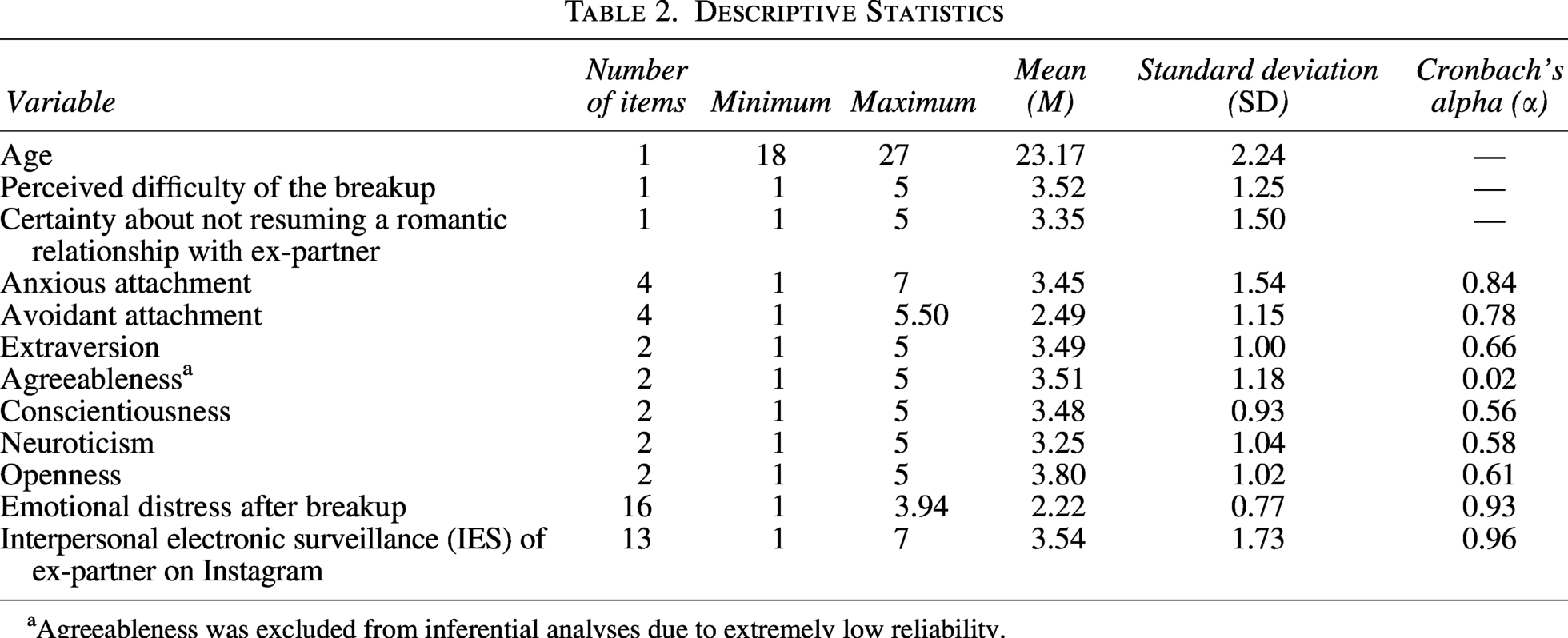
Agreeableness was excluded from inferential analyses due to extremely low reliability.
Statistical analysis
Statistical analyses were conducted using IBM SPSS Statistics (Version 29.01.0 [171]) and the PROCESS Macro (Version v4.3). 47 Hypotheses were tested using hierarchical regression analyses, independent-sample t-tests, and mediation models.
Results
Descriptive statistics
Most participants reported using Instagram for over an hour daily (<30 minutes/day: n = 44, 19 percent; 30–60 minutes/day: n = 75, 32 percent; 1–2 hours/day: n = 82, 35 percent; >2 hours/day: n = 31, 13 percent). For the majority, the breakup occurred 6–12 months prior (n = 184, 79 percent; 3–5 months: n = 23, 10 percent; 1–2 months: n = 19, 8 percent; <1 month: n = 8, 3 percent).
>41 percent (n = 96) had initiated the breakup, while 32 percent (n = 73) reported ex-partner as initiator, and 27 percent (n = 63) described it as mutual. Most had been in an exclusive relationship (n = 161, 69 percent), 29 percent (n = 68) described the relationship as casual, and three participants (1 percent) reported a nonmonogamous relationship. Ex-relationship duration was commonly between 1 and 6 months (n = 87, 38 percent), followed by 6–12 months (n = 39, 17 percent), 1–2 years (n = 45, 19 percent), 3–4 years (n = 44, 19 percent), and over 4 years (n = 16, 7 percent).
Within 3 weeks post-breakup, 70 percent (n = 163) continued following their ex-partner on Instagram, while the remaining 30 percent (n = 69) unfollowed or blocked them. Of these, 13 percent (n = 9) continued visiting their ex-partner’s profile using their own, fake, or a third-party account. In addition, 82 percent (n = 190) continued following mutual contacts. Instagram was not discontinued after the breakup in 95 percent (n = 220) of cases.
Descriptive statistics for the main variables are presented in Table 2. Most variables showed mid-range values, with avoidant attachment slightly scoring in the lower mid-range (M = 2.49, SD = 1.15) and emotional distress showing a slightly restricted range. All scales demonstrated reliability levels considered adequate for two-item measures (α > 0.50), except Agreeableness (α = 0.02), which was, therefore, excluded from inferential analyses.
Direct effects on Instagram surveillance
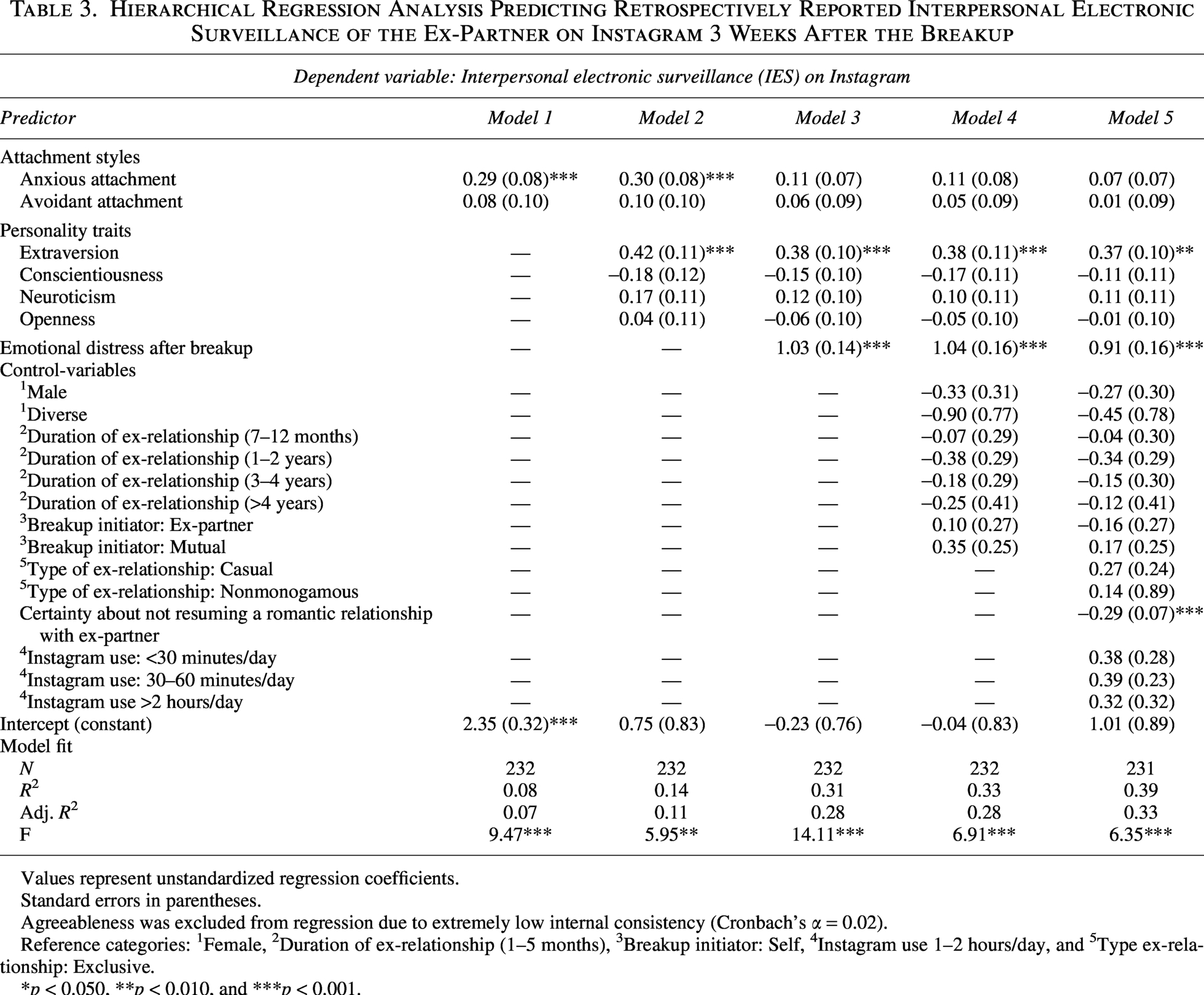
Given the limited research on personality and Instagram surveillance post-breakup, hierarchical multiple regression analyses were conducted to examine associations with IES. Due to the extremely low internal consistency of the Agreeableness scale (α = 0.02), this variable was excluded from all regression models.
All models were significant (see Table 3). Assumptions were met (Durbin–Watson = 1.90; VIF ≤ 2.60). In Model 1, anxious attachment was significantly associated with IES (B = 0.29, p < 0.001), but this association was no longer significant after emotional distress (B = 1.03, p < 0.001) was added in Model 3. Across models, Extraversion was consistently associated with IES. In the final model, emotional distress (B = 0.91, p < 0.001), Extraversion (B = 0.37, p = 0.001), and certainty about not resuming the relationship with the ex-partner (B = −0.29, p < 0.001) remained significant predictors.
Hierarchical Regression Analysis Predicting Retrospectively Reported Interpersonal Electronic Surveillance of the Ex-Partner on Instagram 3 Weeks After the Breakup
Values represent unstandardized regression coefficients.
Standard errors in parentheses.
Agreeableness was excluded from regression due to extremely low internal consistency (Cronbach’s α = 0.02).
Reference categories: 1Female, 2Duration of ex-relationship (1–5 months), 3Breakup initiator: Self, 4Instagram use 1–2 hours/day, and 5Type ex-relationship: Exclusive.
*p < 0.050, **p < 0.010, and ***p < 0.001.
Model 5 explained the most variance (39 percent) and served to evaluate the hypotheses. H1 and H3 were not supported, as neither anxious attachment nor Neuroticism significantly predicted IES. H4 was supported, indicating a positive association between Extraversion and IES. H5 could not be meaningfully tested due to measurement limitations.
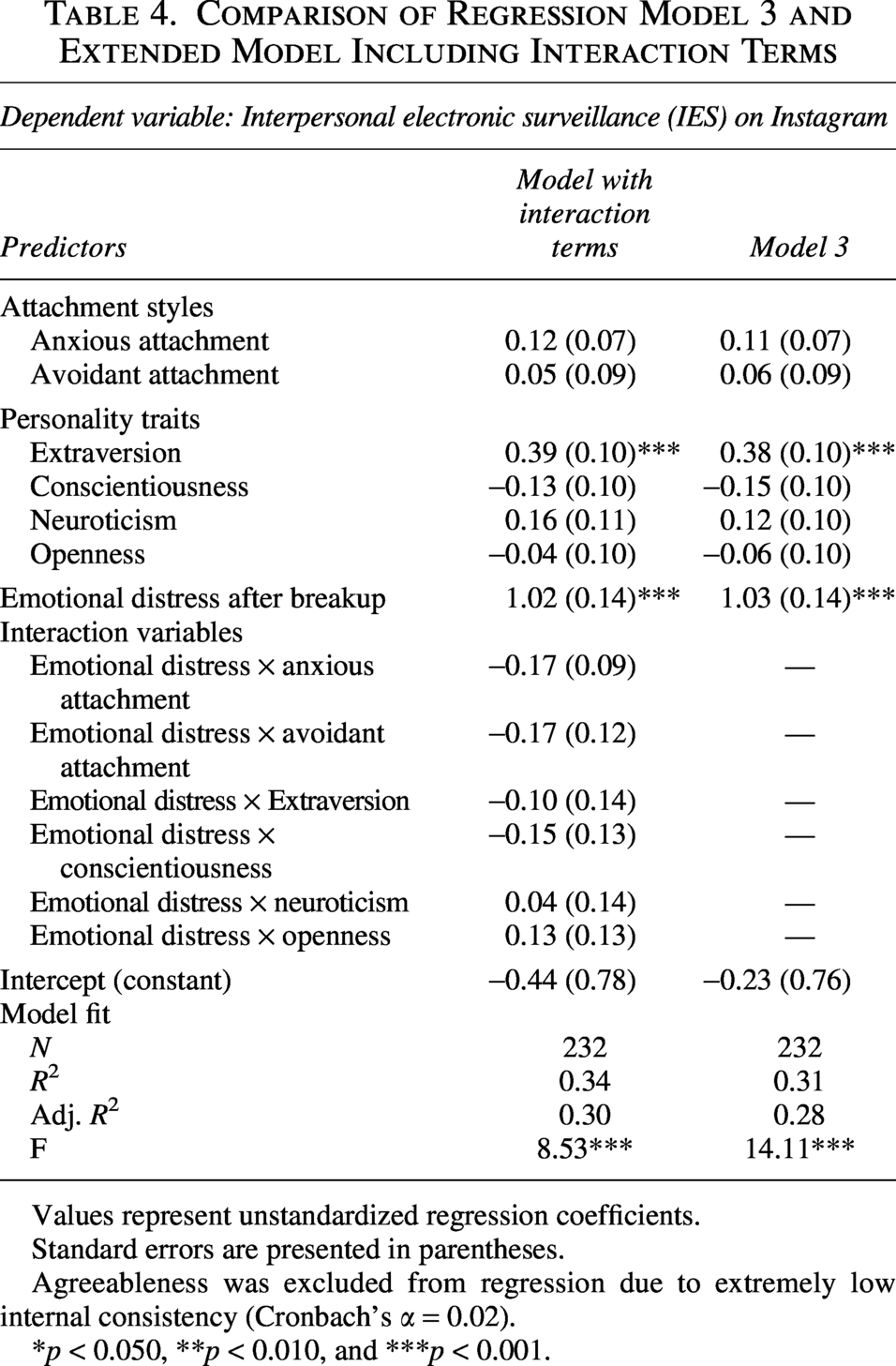
An additional model including interaction terms between emotional distress and the predictors showed no significant interactions (Table 4). Extraversion (B = 0.39, p < 0.001) and emotional distress (B = 1.02, p < 0.001) remained significant.
Comparison of Regression Model 3 and Extended Model Including Interaction Terms
Values represent unstandardized regression coefficients.
Standard errors are presented in parentheses.
Agreeableness was excluded from regression due to extremely low internal consistency (Cronbach’s α = 0.02).
*p < 0.050, **p < 0.010, and ***p < 0.001.
Group differences in avoidant attachment
An independent-samples t-test examined differences in avoidant attachment between participants who continued following their ex-partner and those who unfollowed/blocked them. Assumptions were met. The test was nonsignificant (t(230) = −.42, p = 0.674, d = −0.06), not supporting H2.
Exploratory analyses further examined anxious attachment and Big-Five factors. Participants who continued following their ex-partner (M = 3.57, SD = 0.9) scored higher on Extraversion than those who unfollowed or blocked them (M = 3.28, SD = 1.07).
Indirect associations via emotional distress
Analyses examined whether the data were consistent with indirect associations via emotional distress. For anxious attachment, a significant total effect with IES was observed (B = 0.31, p < 0.001). Anxious attachment was also positively associated with emotional distress (B = 0.20, p < 0.001), which in turn predicted IES (B = 1.05, p < 0.001; see Figure 1). The indirect effect was significant (B = 0.21, 95 percent-CI [0.13,.29]), consistent with H6. Although the direct effect was no longer significant, the results indicate an indirect association via emotional distress, which may explain the nonsignificant direct effect in H1.
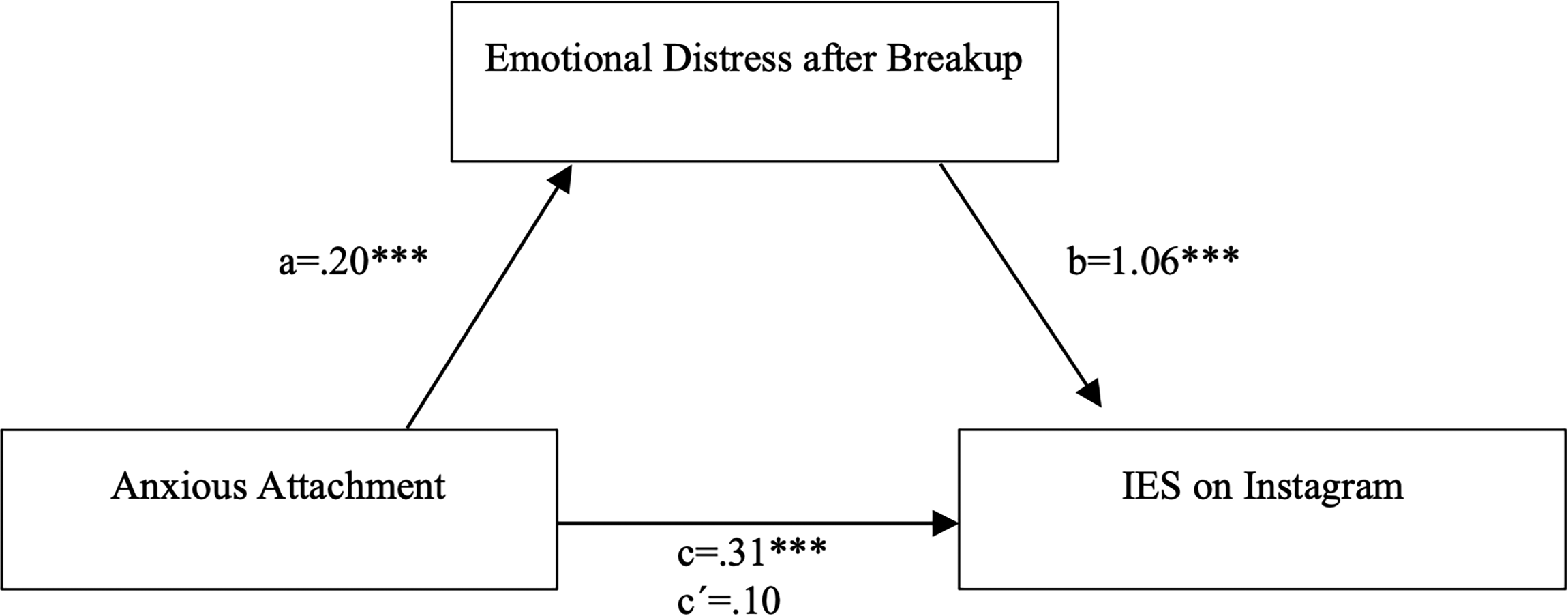
Mediation analysis (x = anxious attachment, y = interpersonal electronic surveillance (IES) on Instagram, and M = breakup distress). *p < 0.050, **p < 0.010, and ***p < 0.001. Path coefficients are labeled as followed: a = effect of x on M, b = effect of M on y, c = total effect of x on y, and c′ = direct effect of x on y controlling for M.
For Neuroticism, the total effect on IES was nonsignificant (B = 0.19, p = 0.09). However, Neuroticism predicted emotional distress (B = 0.12, p = 0.012), which in turn predicted IES (B = 1.12, p < 0.001). Although the direct effect remained nonsignificant (B = 0.06, p = 0.597), the indirect effect was (B = 0.14, 95 percent-CI [0.03,.25]; see Figure 2), consistent with an indirect association via emotional distress and with H7.
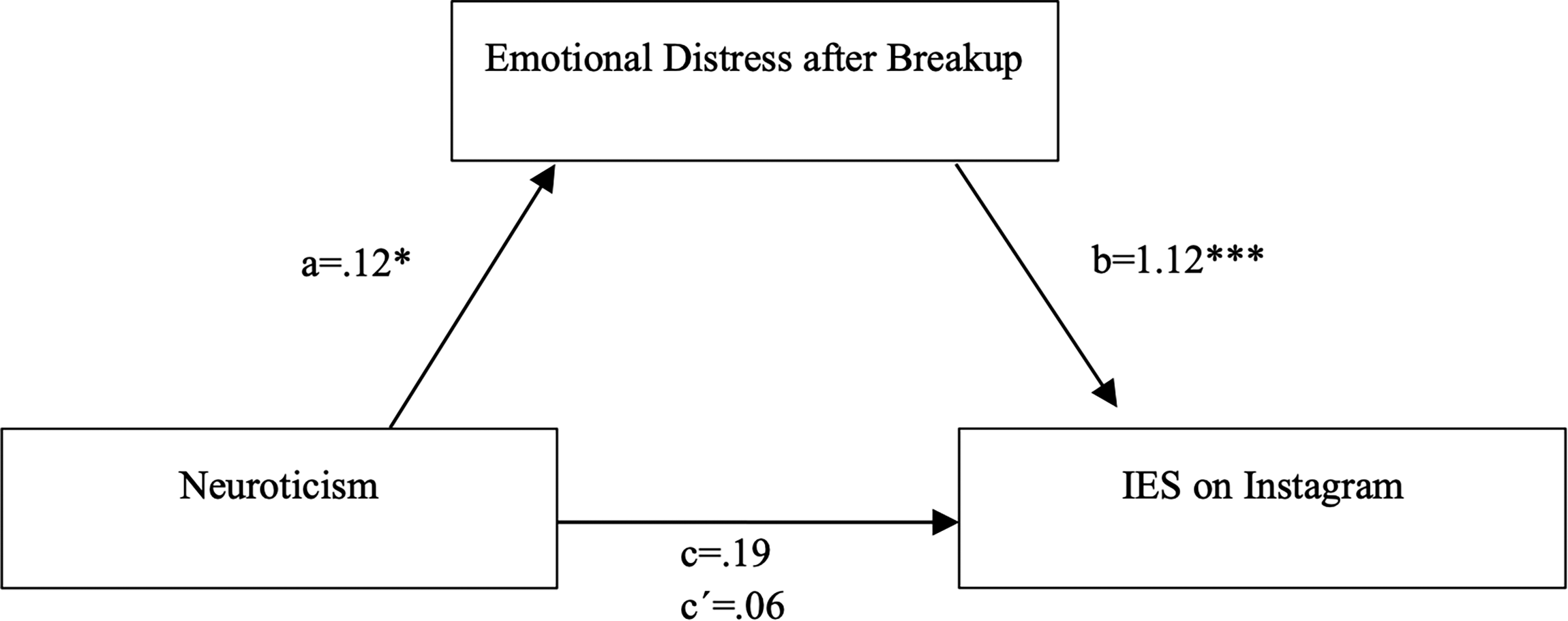
Mediation analysis (x = neuroticism, y = interpersonal electronic surveillance (IES) on Instagram, and M = breakup distress). *p < 0.050, ** p < 0.010, and *** p < 0.001. Path coefficients are labeled as followed: a = effect of x on M, b = effect of M on y, c = total effect of x on y, and c′ = direct effect of x on y controlling for M.
Discussion
This study examined associations between attachment styles, personality traits, and emotional distress with retrospectively reported IES of an ex-partner on Instagram during the first 3 weeks post-breakup. Emotional distress emerged as the most consistent predictor of post-breakup Instagram surveillance, whereas no direct associations were found for attachment styles or personality traits other than Extraversion. In addition, indirect associations with anxious attachment and Neuroticism via emotional distress were observed.
These findings suggest that emotional distress appears to be a key factor underlying post-breakup surveillance behavior and may help explain the limited direct effects of attachment and personality. However, this association may not be unidirectional. IES can serve as a coping strategy to reduce uncertainty or maintain a sense of connection to the ex-partner,10,11 while also potentially maintaining or amplifying emotional distress, suggesting a cyclical association.5,7 Given the cross-sectional and retrospective design, however, causal interpretation should be made with caution.
Extraverted individuals may be more likely to engage in IES due to stronger social orientation and higher engagement in online communication.37,48–50 While primarily linked to social interaction rather than information seeking,37,49 such tendencies may extend to monitoring or checking an ex-partner’s online activity. Higher reward sensitivity 51 and fear of missing out 52 may further contribute. Group comparisons support this, as extraverted individuals were more likely to continue following their ex on Instagram.
The association between distress and IES is consistent with previous findings.5,34 However, interaction analyses indicate that the association between emotional distress and IES did not vary significantly as a function of attachment or personality traits.
Contrary to earlier findings,14–16,34 anxious attachment was not directly associated with IES once emotional distress was included. The analyses indicated that anxious attachment was indirectly associated with IES via emotional distress, consistent with H6. Based on early attachment experiences,32,33 individuals with high anxious attachment tend to experience greater emotional distress following a breakup,21–24 which may increase the likelihood of IES as a way of restoring a sense of control or closeness,10,11 thereby temporarily reducing breakup-related distress.
Avoidant attachment also did not predict IES. Individuals high in avoidance, shaped by early attachment experiences,32,33 tend to maintain emotional distance and seek less contact after breakup.15,20 This may help explain the lack of excessive monitoring and the absence of significantly higher unfollowing/blocking behavior, as the ex’s profile may not evoke sufficient distress. Given the mixed findings in the literature,14,15,34 further research is needed.
No conclusions can be drawn regarding Agreeableness, as the scale showed extremely low internal consistency and was therefore excluded from inferential analyses. For Neuroticism, only an indirect association via distress emerged. As Neuroticism is associated with emotional instability and negative affect, 35 individuals high on this trait may react more intensely to breakups, which may lead to increased surveillance. This indirect-only effect may be moderated by factors such as social support, indicating the need for further research.
Overall, post-breakup Instagram surveillance in the present sample appears to be driven less by attachment or personality styles—except Extraversion—and more by breakup-related emotional distress. However, these findings should be interpreted regarding sample characteristics, particularly the predominantly female composition, which has been associated with heightened emotional reactivity after breakups,2,53 as well as the Generation Z cohort, a group socialized with digital media as an integral component of relationship communication, potentially shaping both emotional responses and social media behaviors following a breakup.27–29
Limitations
The findings are subject to several limitations. First, the sample was not representative and relatively homogeneous, particularly regarding gender (84 percent women), limiting generalizability. Future research should examine more diverse and gender-balanced samples.
Second, due to the cross-sectional and retrospective study design, causal conclusions cannot be drawn and temporal ordering cannot be confirmed.
Third, the study relied on retrospective self-report data covering the past year, which may be subject to recall bias and limit temporal precision of findings. Responses may also have been influenced by social desirability.
Another limitation concerns the measurement of Agreeableness. Due to extremely low internal consistency, Agreeableness was excluded from inferential analyses. No conclusions can, therefore, be drawn about its role in the present study. Due to its brevity, the BFI-10 may have limited measurement precision, which has particularly been shown regarding for Agreeableness, which is less reliably captured in very short scales. 54 Rammstedt and John 46 recommend including a third item (“Is considerate and kind to almost everyone”) to improve its measurement.
Furthermore, IES was assessed as a global construct and did not differentiate between types, frequency, or motives of surveillance behaviors, which may have distinct psychological meanings and should be examined separately in future research.
Conclusions
This study examined the combined effects of attachment style, personality traits, and emotional distress on post-breakup IES on Instagram. Breakup-related emotional distress emerged as the most consistent factor associated with post-breakup Instagram surveillance, whereas other traits showed limited direct effects except Extraversion. Overall, IES appears more strongly associated with emotional distress, with attachment and personality factors mainly relevant through their impact on how individuals experience relationships and cope with their dissolution.
Given this potentially bidirectional relationship, emotional distress may not only contribute to post-breakup IES but also be maintained or amplified by ongoing exposure to an ex-partner’s social media content, potentially prolonging post-breakup adjustment.5–7 Interventions targeting breakup-related distress and digital contact with an ex-partner might help prevent maladaptive monitoring and support emotional recovery.
Future research should investigate motives for IES, long-term implications for psychological well-being, the role of social media in post-breakup adjustment, the potential influence of broader societal stressors on breakup-related distress, and replicate findings in more diverse samples.
Authors’ Contributions
V.W.: Conceptualization (lead), data curation, formal analysis, investigation, methodology (lead), resources, software, validation (lead), visualization, and writing—original draft. H.B.: Conceptualization (supporting), methodology (supporting), supervision (equal), validation (supporting), writing—review and editing, and validation (supporting). C.E.: Conceptualization (supporting), project administration, supervision (equal), and writing—review and editing (lead).
Use of AI Systems
ChatGPT (GPT-5 and OpenAI) was used to support the translation and language editing of the article (spellings, grammar, synonyms, and suggestions for shortening). The authors are responsible for the content and interpretation of the article.
Ethical Statement
The study was approved by the Ethics Committee of the Sigmund Freud University (approval date: November 22, 2024; internal reference: EDAJQCJDC@IPBI91236). Participation was voluntary, and informed consent was obtained electronically.
Footnotes
Author Disclosure Statement
No competing financial or personal interests exist.
Funding Information
This research received no specific grant form any external funding agencies. The publication costs were supported by the Sigmund Freud Private University, Vienna.