






Abstract
This study employs Cultural-Historical Activity Theory (CHAT) as an analytical framework to explore the impact of AI-based digital textbooks (AIDTs) on educational activity systems in Korean high schools. A qualitative case study was conducted at two high schools actively operating AIDTs, collecting data through in-depth interviews with teachers, students, administrators, and administrative staff, complemented by policy document analysis. Thematic analysis based on CHAT revealed changes across all components of the educational activity system: teachers evolved from knowledge transmitters to learning facilitators; students developed enhanced self-regulation abilities; educational goals shifted toward creative thinking and questioning skills; and new rules for device use and data management were established. Simultaneously, multi-layered contradictions surfaced, including technical instabilities, misalignment between educational goals and AI-driven methods, digital dependency concerns, data privacy tensions, financial imbalances, and equity issues. These tensions and contradictions functioned not merely as obstacles but as potential catalysts for educational system development. The findings suggest that successful AIDTs integration requires an approach centered on educational values, stakeholder collaboration, and systematic innovation to resolve structural contradictions. This research contributes to understanding AI technology integration in education by examining structural transformations and adjustment mechanisms from diverse stakeholder perspectives, rather than focusing solely on technological characteristics or effectiveness.
Keywords
Introduction
Education in the 21st century is undergoing rapid digital transformation. Traditional educational approaches, where a single teacher delivers standardized instruction to students of diverse learning levels (Mpho, 2018), have ensured a minimum standard, learning opportunities (Ravitch, 1995; Y. Zhao et al., 2023), and increased educational efficiency through unified learning standards and assessments (Bishop, 1997). However, they have failed to fully accommodate learners’ diverse needs (Tetzlaff et al., 2021). Although calls for reform have been ongoing, the rigidity of educational systems (Cuban, 2020), heavy teacher workloads (Creagh et al., 2025), and standardized assessment frameworks (Bingham et al., 2018) have hindered meaningful change. To address these limitations, the integration of AI in education has gained attention, opening possibilities for providing personalized learning experiences tailored to each student (Bhutoria, 2022; Lokare & Jadhav, 2024).
Globally, educational integration of AI technology is already actively progressing. In the U.S., adaptive learning systems like DreamBox Learning and ALEKS in K-12 curricula provide individualized learning paths using real-time data (Strielkowski et al., 2025; Wang et al., 2023). China has launched national AI education initiatives since 2022 (Ministry of Education, China, 2022) and plans to systematically integrate AI into primary and secondary education (De Masi et al., 2025; Ministry of Education, China, 2024), using platforms like Squirrel AI to deliver personalized content. The European Union, following the AI Act of 2024, has designated education as a high-risk domain and is establishing a standardized framework for educational application of AI technology, focusing on analyzing the changes and ethical issues (European Union, 2024; Pehlivan, 2024).
South Korea is also actively pursuing digital education innovation utilizing AI technology, with the introduction of AI-based digital textbooks (AIDTs) as a core policy. The Ministry of Education aims to realize “personalized education for all” through AIDTs, defined as “textbooks that incorporate various learning materials and learning support functions utilizing intelligent information technologies including artificial intelligence” (Ministry of Education, Republic of Korea, 2023). Unlike traditional textbooks, AIDTs feature AI-based learning diagnosis and analysis, personalized learning reflecting individual levels and pace, and human-centered learning courseware (Ministry of Education, Republic of Korea, & Korea Education and Research Information Service, 2023, p. 12). The government plans to introduce these textbooks in mathematics, English, informatics, and Korean language (for special education) from 2025, with expansion into other subjects later (Ministry of Education, Republic of Korea, 2023).
The introduction of AIDTs is not merely a change in teaching-learning tools but, from Engeström’s (2001, 2015) activity system perspective, will bring fundamental transformation in the educational activity system where various elements interact (Karanasios et al., 2021). However, such changes may bring challenges, including conflicts in teachers’ changing roles (Guilherme, 2019; C. P. Lim et al., 2020), clashes with existing educational policies (Andrews et al., 2021) and assessment systems (Swiecki et al., 2022), and issues related to students’ learning attitudes (C. Zhai et al., 2024) and increased learning gaps (Bulathwela et al., 2024). Nevertheless, existing AI education research has primarily focused on technological effectiveness or the experiences of individual stakeholders, while offering limited systematic analysis of how these changes reconfigure the components of the overall educational activity system and what multi-layered contradictions they generate.
In this context, it is important to systematically analyze the impact of AIDTs on the educational activity system and the multi-layered contradictions that arise in the process. However, existing analytical frameworks in AI education research have not adequately explained how these changes unfold through interactions across the overall activity system. To address these analytical limitations, Cultural-Historical Activity Theory (CHAT) provides an effective theoretical framework for analyzing multi-layered contradictions and exploring change drivers and development potential during educational innovation process (Engeström, 2015). In particular, CHAT goes beyond learning outcomes approaches and enables analysis of how new technologies interact with and conflict with existing rules, roles, and objectives (Levin & Mamlok, 2021).
Accordingly, this study aims to analyze the impact of AIDTs implementation on high school educational activity systems and explore emerging contradictions. Specifically, using CHAT as a theoretical framework, the study seeks to conduct an in-depth analysis of the structural changes that these AIDTs bring to teachers, students, and educational administrative systems, highlighting how they extend beyond the role of a mere instructional tool and contribute to the structural transformation of the educational system.
Literature Review
Concept and Key Functions of AIDTs
Digital textbooks have evolved with educational technology advancements. Early versions were merely electronic conversions of printed textbooks into PDF or ePub formats with static content (Osih & Singh, 2020). While these had advantages in accessibility and portability (D’Ambra et al., 2022), they were limited in providing interactive or individualized learning experiences (Berking & Robson, 2017; Gu et al., 2015). In contrast, AIDTs implement dynamic learning environments—including learner-centered diagnosis, adaptive learning, real-time feedback, and learning data analysis—by integrating artificial intelligence into educational content (Jiang et al., 2023; J. Lee et al., 2023; Ministry of Education, Republic of Korea, & Korea Education and Research Information Service, 2023; Ministry of Education, Republic of Korea, 2023). This represents a significant paradigm shift enabling personalized educational experiences tailored to each learner’s characteristics and level, beyond simple information delivery.
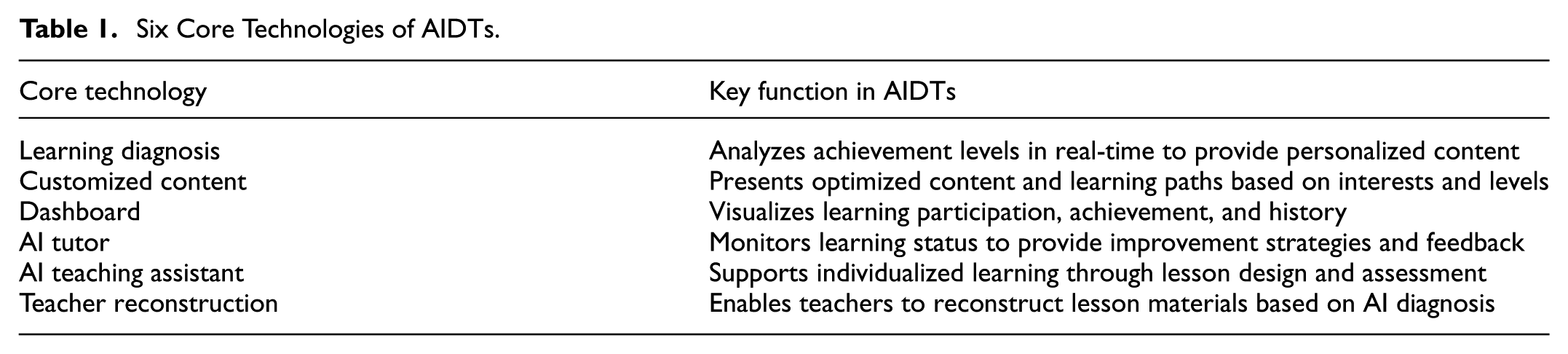
The key functions of AIDTs can be defined based on six core technologies in the “AIDTs Development Guidelines” (Ministry of Education, Republic of Korea, & Korea Education and Research Information Service, 2023; see Table 1). First, the learning diagnosis function provides personalized content by analyzing students’ achievement levels in real time. Second, the customized content function presents optimized content and learning paths considering learners’ interests and levels. Third, the dashboard function analyzes and visually presents learning participation, achievement, and history. Fourth, the AI tutor function monitors students’ learning status to provide improvement strategies and feedback. Fifth, the AI teaching assistant function supports teachers in individualized learning for students through lesson design, feedback and assessment. Finally, the teacher reconstruction function ensures educational autonomy and creativity by allowing teachers to freely reconstruct lesson materials based on AI diagnosis results.
Six Core Technologies of AIDTs.
Thematic Perspectives on AI-based Learning Effects
AI-based learning has been reported to have various positive impacts on educational environments. The main expected effects confirmed through research are as follows (S. J. Lee & Kwon, 2024). First, AI technology collects and analyzes individual students’ learning data to provide customized learning paths tailored to each learner’s level and characteristics (Gligorea et al., 2023). This personalized learning has been shown to be more effective in improving learning outcomes than traditional batch education methods (Murtaza et al., 2022). An AI tutor program by the World Bank (2025) in Nigeria reported learning effects equivalent to 2 years of progress in just 6 weeks, with participating students showing achievement levels more than 0.3 standard deviations higher in English learning. This demonstrates that AI-based learning systems can maximize learning effects by providing individualized learning paths. Second, AI learning systems support real-time monitoring of learners’ learning processes, provide immediate feedback, and enable dynamic adjustment of learning paths (Strielkowski et al., 2025). This technology helps suggest immediate supplementary learning when students fail to understand specific concepts (Strielkowski et al., 2025), quickly correct learners’ misconceptions (Baidoo-Anu & Owusu Ansah, 2023; D. Lee & Yeo, 2022), consolidate concepts through repeated learning (Qadir, 2023), and maintain learning flow (X. Zhao, 2023).
Third, AI-based personalized learning environments encourage students to improve self-directed learning abilities by allowing them to set their own learning goals and adjust learning processes (Younas et al., 2025). According to Mohebbi (2025), learners in AI-based environments show enhanced responsibility and autonomy, positively affecting long-term learning effects and motivation maintenance. In particular, the learning analytics data generated by AI systems helps learners objectively recognize their learning status and adjust learning strategies. Finally, AI technology alleviates teachers’ workload and supports effective teaching-learning activities (Ji et al., 2023). S. S. Lee and Moore (2024) argue that AI enables teachers to focus more on their role as facilitators by supporting tasks like learning data analysis, instructional design, and assessment development. This allows teachers to invest more time and energy in areas that are difficult for AI to replace, such as interaction with students, emotional support, and fostering creative thinking.
Key Challenges in AI-based Learning
Despite the positive effects of AI-based learning, previous studies have identified several limitations. First, AI-based learning raises concerns about privacy protection and algorithmic bias when collecting and analyzing student learning data (Holmes & Tuomi, 2022; Memarian & Doleck, 2023). In particular, when minor students’ data is accumulated over time, the risk of data misuse and privacy violations increases (Mintz et al., 2023), and AI algorithms may make discriminatory decisions (Akgun & Greenhow, 2022). This reveals the structural tension inherent in the provision of personalized learning paths discussed earlier. Second, Grinschgl and Neubauer (2022) and C. Zhai et al. (2024) warned that students may become overly dependent on AI feedback, potentially diminishing their ability to solve problems independently. Ahmad et al. (2023) and Gao et al. (2023) noted that learners might develop learning attitudes that uncritically accept answers provided by AI systems, weakening their creative problem-solving and critical thinking abilities. These concerns suggest a paradoxical outcome that real-time feedback and enhanced self-directed learning may bring.
Third, as AI-based learning expands, reduced face-to-face interaction between teachers and students (Hasanein & Sobaih, 2023), decreased classroom attentiveness (Yu, 2024), and diminished teacher roles may arise (X. Zhai et al., 2021). According to the Korean Educational Development Institute (2024), parents worried that AIDTs might reduce direct communication between teachers and students and decrease concentration as students spend more time looking at screens. Additionally, if AI automated assessment systems expand, teachers’ authority in evaluations might be weakened, potentially shifting teachers’ role into mere administrators. This creates tension with the expectation that AI alleviates teacher workload. Fourth, as AI-based learning environments expand, unequal learning opportunities may emerge for students with low technological access or insufficient digital literacy (Bulathwela et al., 2024; Imran, 2023). Reich (2020) pointed out that while wealthy students use AI-based learning creatively with sufficient guidance, low-income students are likely use AI technology in a limited way for simple repetitive learning due to a lack of adult support. This suggests that AIDTs, rather than providing equal learning opportunities, may exacerbate existing educational inequalities.
Finally, technical limitations are also important challenges, including computer software or hardware functionality issues (Timotheou et al., 2023), internet access problems (Adeshola & Adepoju, 2024), and AI systems’ limited ability to understand learners’ situational or cultural context (C. Zhai & Wibowo, 2023). Thus, while AI-based learning offers potential for improved educational efficiency and personalization, these benefits co-occur with various social, educational, ethical, and technological challenges. Notably, these challenges are likely to manifest not as isolated problems but as interconnected contradictions within the educational activity system. Therefore, it is important to systematically analyze the multi-layered contradictions and conflicts that may arise when introducing AIDTs and to understand how these contradictions impact the entire educational system.
The Need for Analysis Using CHAT
In analyzing complex changes in educational activity systems, CHAT provides a useful analytical framework for understanding tensions and adjustment processes when existing educational systems interact with new technologies (Miles, 2020). Pettersson (2021) discussed that CHAT offers a framework for analyzing contradictions arising during digitalization in educational environments, enabling exploration of how digital technology affects existing teaching and learning methods, structures, and role distributions within school organizations. Additionally, considering that digitalization is not merely the adoption of technology but a process involving educational and organizational change, application of CHAT has been highlighted as an effective approach to systematically analyze changes in objectives and interaction structures within school organizations.
Similarly, Al-Huneini et al. (2020) applied CHAT to analyze various contradictions in teachers’ technology integration processes. Their research demonstrated that contradictions arising during tablet introduction were not simply obstacles to overcome, but could function as catalysts for qualitative change and development of educational practice, such as changing interactions between teachers and students and promoting student learning autonomy. This perspective could reinterpret conflicts arising when introducing AIDTs not as negative phenomena, but as potential opportunities for educational system development. Thus, CHAT provides a useful theoretical tool for understanding complex sociocultural aspects of educational technology innovation. Since introducing advanced technologies such as AIDTs involves structural changes across the entire educational activity system beyond mere changes in tools, analysis through CHAT helps comprehensively understand the multi-layered aspects of these changes.
Limitations of Previous Research and Contributions of This Study
While research on AI-based educational technologies and digital learning environments has been actively conducted, AIDTs are an initiative being pioneered by Korea, and systematic analysis is still in its early stages. Accordingly, this study aims to address the following theoretical and explanatory gaps. First, existing studies tend to analyze AI-based educational technology merely as a tool or focus only on technological characteristics (Kim & Heo, 2025; H. Lee, 2023) and learning effectiveness (Cho & Jung, 2024; Elliott & Kim, 2025). However, such approaches reduce educational change to linear causal relationships between isolated variables, thereby offering limited theoretical explanation of how AIDTs reconfigure the educational activity system and what multi-layered contradictions arise in the process.
Second, most studies have focused on primary (Cho & Jung, 2024; Kim & Heo, 2025; H. Lee, 2023) or middle school contexts (Elliott & Kim, 2025), or have been limited to specific academic subject areas (Cho & Jung, 2024; Kim & Heo, 2025; H. Lee, 2023), failing to adequately illuminate how activity system changes unfold across various disciplines in the high school context—particularly under the institutional pressures of a college entrance exam-centered assessment system. Third, previous research has mainly conducted fragmented analyses from the perspective of specific educational agents such as teachers or students (Kiaer & Jeon, 2024; Xie et al., 2025), with limited research that integratively analyzes the tensions and adjustment processes experienced by various stakeholders, including school administrators and administrative staff, at the activity system level.
To address these gaps, this study adopts CHAT to analyze the patterns of structural contradictions generated by AIDT implementation within the educational activity system, and explores how various stakeholders perceive and negotiate these tensions to bring about qualitative changes in the system. The following section introduces the philosophical foundations and conceptual framework of this study, presenting CHAT as the analytical tool necessary to examine these complex, multi-layered dynamics.
Theoretical Framework
This study is grounded in social constructivist ontology and interpretivist epistemology. This philosophical stance stems from the researcher’s experience as an educator and practitioner during the implementation of AI technology in Korean high school educational settings, viewing the introduction of AIDTs not as a simple technological innovation, but as a social and cultural change process within the entire educational activity system. Furthermore, this perspective holds that educational reality is socially constructed through the interactions of various stakeholders, and knowledge about this reality can be understood through the subjective experiences and interpretations of participants (Creswell & Poth, 2024; Schwandt, 2015). Based on this philosophical foundation, this study adopts CHAT (Engeström, 2015) as its main theoretical framework. CHAT is recognized as an appropriate analytical tool for contextualizing complex phenomena like educational innovation, analyzing structural tensions, and exploring possibilities for systemic change (Bligh & Flood, 2017).
In activity theory, “activity” refers to collective, purpose-oriented units of human action formed within historical and cultural contexts. Among the analytical tools in this theory, the “activity system model” is prominent, providing a framework for analyzing interactions among six key elements—subject, tools, object, rules, community, and division of labor (see Figure 1). A key concept in this theory is “contradictions,” referring to structural tensions that arise within or between activity systems. This study analyzes four levels of contradictions (Engeström & Sannino, 2021): primary contradictions occurring within single elements; secondary contradictions arising from interactions between different elements; tertiary contradictions representing conflicts between existing and newly introduced activity systems; and quaternary contradictions emerging from tensions between central and peripheral activity systems (Engeström, 2015).
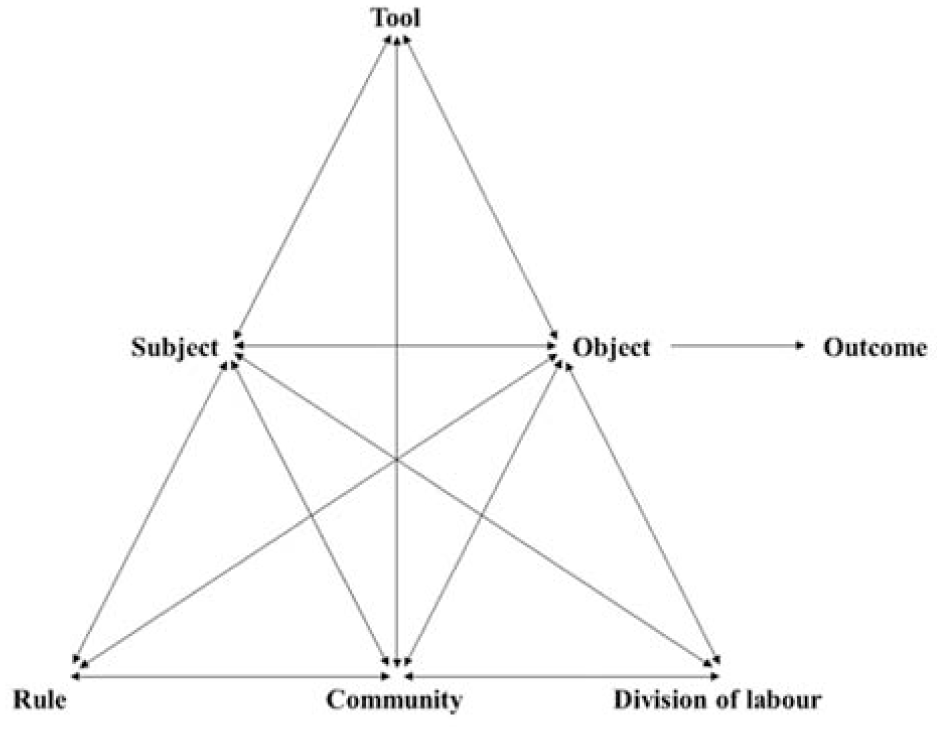
CHAT’s triangular model adapted from an original by Engeström (2015, p. 87).
CHAT serves as an analytical lens throughout this study. Specifically, the six components of the activity system were utilized as an analytical framework for structurally categorizing changes in the educational field following AIDT implementation. Furthermore, the concept of four-level contradictions functioned as criteria for identification to characterize the nature of latent tensions and conflicts within the collected data. These theoretical devices not only influenced research design and data collection methods, but also provided rigorous grounds for reinterpreting participants’ individual narratives from a macro perspective of structural transformation in the educational system. Based on this theoretical foundation, the following research questions guide this inquiry:
Methodology
Research Design
This study employed a qualitative case study method to analyze the impact of AIDTs implementation on Korean high school educational activity systems (Yin, 2018). The case study approach is suitable for holistically exploring complex phenomena in real-world contexts (W. M. Lim, 2025) and is effective for analyzing how AIDTs influence various stakeholders and generate contradictions in the educational environment. This study considered the phenomenon of AIDT implementation in the Korean high school educational activity system as a single case, wherein the “case” represents the systemic transformation process rather than individual schools. Two high schools in Chungcheongnam-do Province actively operating AIDTs were selected as instrumental research sites to observe this phenomenon across multiple contexts. Both schools are general academic high schools located in K City with mid-sized enrollments (School A: about 420 students, 46 teachers; School B: around 480 students, 50 teachers) and mid-level academic achievement (approximately 55th–60th percentile nationally). To support AIDT implementation, all first-year classrooms in both schools were equipped with high-speed Wi-Fi, interactive smartboards, and tablets/laptops (provided to students as needed).
To analyze the impact of AIDTs implementation on high school educational activity systems, this study aimed to recruit diverse members who directly participated in or experienced its effects. Using purposive sampling, 10 participants with various roles were selected to comprehensively explore changes in the educational system from multiple perspectives (see Table 2). Inclusion criteria were individuals with direct experience related to the use, introduction, or operation of AIDTs within the school and those representing key functional positions within the high school educational activity system. Exclusion criteria included individuals without direct interaction with the AIDT platform and members of other grade levels where AIDTs had not yet been integrated. In addition, rather than focusing on the absolute number of participants, this study was designed to capture all key stakeholder groups within the high school activity system.
Characteristics of Research Participants.

Data Collection
This study employed semi-structured in-depth interviews and analysis of policy documents related to AIDTs. Each participant took part in two interview sessions, each lasting 60 to 90 min. The first interview explored initial perceptions, experiences, expectations, and concerns regarding AIDTs. The second interview addressed changes and challenges during implementation, contradictions, and response strategies. During the two rounds of in-depth interviews, the researcher confirmed that data saturation was achieved, as no new conceptual themes or types of contradictions emerged within each participant category.
Additionally, 15 policy documents (approximately 350 pages in total) were reviewed to contextualize and triangulate the interview data. These documents were purposively selected based on the following criteria: (1) official authority (issued by Ministry of Education, provincial/municipal offices of education, or public educational institutions; e.g., Ministry of Education, Republic of Korea, & Korea Education and Research Information Service, 2023; Ministry of Education, Republic of Korea, 2023); (2) direct relevance to AIDT implementation and operation; and (3) temporal proximity to the study period (2023–2025).
Data Analysis
The transcribed interview data and documents were combined into a unified dataset and systematically analyzed using Clarke and Braun’s (2017) six-step thematic analysis method—(1) data familiarization, (2) initial code generation, (3) potential theme exploration, (4) theme review, (5) theme definition and naming, and (6) report preparation. Manual coding methods were used to repeatedly review the data and derive meaningful patterns and themes through a hybrid approach, where initial codes were deductively generated based on the components and contradiction levels of CHAT, while inductive themes were simultaneously derived from the raw data. These themes were subsequently mapped onto the activity system elements and categorized according to Engeström’s four levels of contradictions. The results were then synthesized and reinterpreted from a CHAT perspective. Specifically, the analysis examined changes that AIDTs implementation brought to each component of the activity system and identified various levels of contradictions, as well as how these contradictions were recognized, addressed, and how the activity system developed in this process.
Ensuring Trustworthiness
To ensure the trustworthiness of this study, strategies addressing credibility and confirmability were employed, including triangulation, member checking, and systematic reflexivity (Berger, 2015). The researcher works as a teacher at one of the research sites, providing an insider perspective that contributed to deeper understanding of the research context and improved participant access. However, to minimize potential researcher bias and socially desirable responses inherent in insider research, a reflexive stance was maintained throughout the process. Prior to interviews, the researcher clearly distinguished their role as a researcher from their professional role, emphasizing anonymity and confidentiality to ensure psychological safety for participants. Additionally, triangulation was employed through cross-verification of interview data and document analysis to secure data objectivity. Analysis results and interpretations were shared with participants through member checking to confirm that the findings accurately reflected participants’ authentic experiences rather than the researcher’s subjective expectations. This multifaceted validation process minimized subjective bias and strengthened the trustworthiness of the research findings.
Ethical Considerations
This study was approved by the Institutional Review Board (IRB) of the Lancaster University (Application ID: TEL/CH17/Mod3/36676856) and complied with relevant ethical standards, prioritizing protection of participants’ rights and personal information. Institutional approval was additionally obtained from the principals of the participating schools prior to data collection.
All participants received an information sheet detailing the research purpose, procedures, voluntary nature of participation, confidentiality measures, and their right to withdraw at any time without penalty or disadvantage. Written informed consent was obtained from all adult participants prior to their involvement. In addition, as student participants were minors, consent was obtained from their parents or legal guardians, with student assent also confirmed.
The study design minimized potential risks by ensuring that no sensitive or confidential information was collected. All data were pseudonymized using codes (e.g., “Student 1,”“Teacher 2”), and identifying information was removed from transcripts and securely stored with restricted access. The potential benefits of this research—contributing to a deeper understanding of AI-based digital textbook implementation and informing future educational policy and practice—were judged to outweigh the minimal risks involved.
Findings
This section presents the findings in relation to the three research questions by first outlining the major changes observed in each element of the educational activity system following the introduction of AIDTs (RQ1), and then examining the key contradictions that emerged during this process along with stakeholders’ responses to them (RQ2 and RQ3). The findings synthesize perspectives across all key stakeholder groups within the activity system, including students, teachers, school administrators, and administrative staff. Quotations were selected to represent each group’s experiences, while claims about systemic changes reflect triangulation across multiple roles rather than extrapolation from isolated individual accounts. Accordingly, the following findings do not merely report individual classroom experiences or aggregate personal opinions but illustrate the structural dynamics of the activity system.
Changes in the Educational Activity System Following the Introduction of AIDTs
Changes in the Object Aspect
In the educational activity system, the “object” represents the ultimate goal and serves as the key element that drives the actions of subjects. The implementation of AIDTs transformed this object into a more complex and expanded form. School administrators noted a shift in educational goals from knowledge acquisition to developing questioning skills, creative thinking, and digital literacy competencies. Teachers perceived that personalized learning—one of the core objectives of AIDTs—was gradually being realized in practice. The introduction of AIDT also influenced assessment methods, shifting from result-oriented to process-oriented approaches. Teachers evaluated that this change enabled a better understanding of students’ learning processes.
The ability to develop creative and integrative questioning power, rather than simply memorizing given knowledge, will become a core factor determining individual competence in the era of artificial intelligence. [School Administrator 1, Interview 1, March 19, 2025]
Changes in the Subject Aspect
The key actors in educational activities with AIDTs are teachers and students. Though they have different roles and perspectives, they function as joint subjects within a single activity system, as they directly use AIDTs to carry out shared educational practices together. Teachers perceived the introduction of AIDT as bringing complex changes to teaching and learning practices. Notably, there was an expansion in the perception of the teacher’s role from knowledge delivery to becoming a facilitator who monitors individual learning processes and provides personalized feedback. This shift is attributed to dashboard features allowing real-time monitoring and more detailed personalized support through learning data analysis.
I can immediately check each student’s learning process and outcomes through the dashboard, and I can identify in real-time what each student doesn’t understand and which parts they’re struggling with, making it much easier to provide individualized feedback. [Teacher 1, Interview 1, March 7, 2025]
Students also perceived the adoption of AIDTs as a fundamental change in their learning experience. Students reported that through outcome visualizations (e.g., dashboards, evaluation reports), they were able to self-assess and regulate their learning status, which enabled them to strengthen their metacognitive abilities. These changes were perceived as positive experiences contributing to students’ transition from passive learners to self-directed learners. Additionally, students positively evaluated that they had differentiated learning experiences, as AIDTs enabled extended learning tailored to each subject’s characteristics (English speaking assessments, mathematics visualization, information coding practice).
Dashboard and reports were useful because they allowed me to see the learning process and results at a glance. Through these, I could more accurately identify what I didn’t know. [Student 1, Interview 1, March 3, 2025] After introducing the AI textbook, the English class has completely changed. While it used to focus on reading, grammar, and vocabulary, now we spend much more time practicing speaking. [Student 1, Interview 2, March 17, 2025] (see Figures 2 and 3)
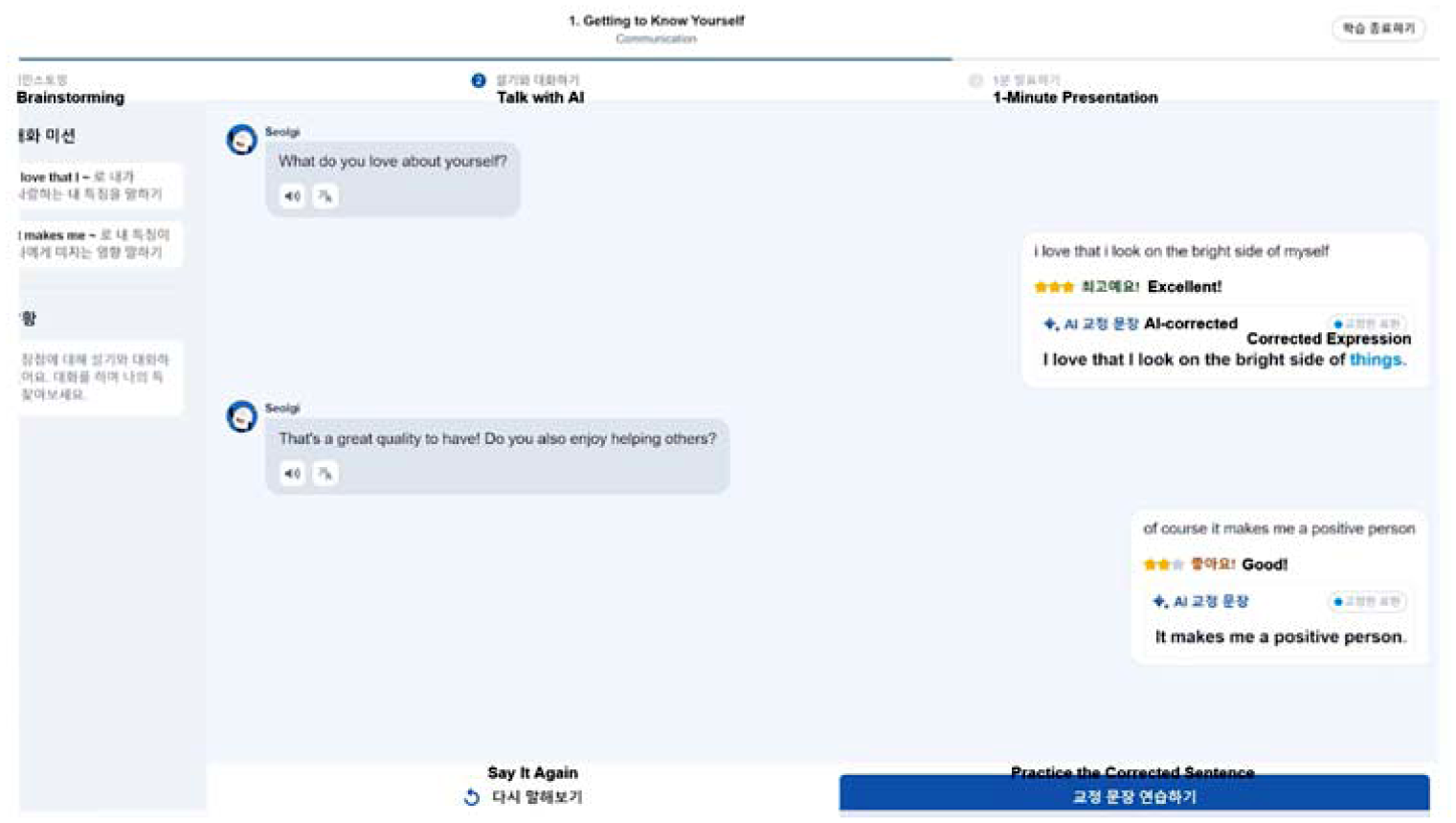
Interactive English speaking activities with AIDTs (dialog-based practice).
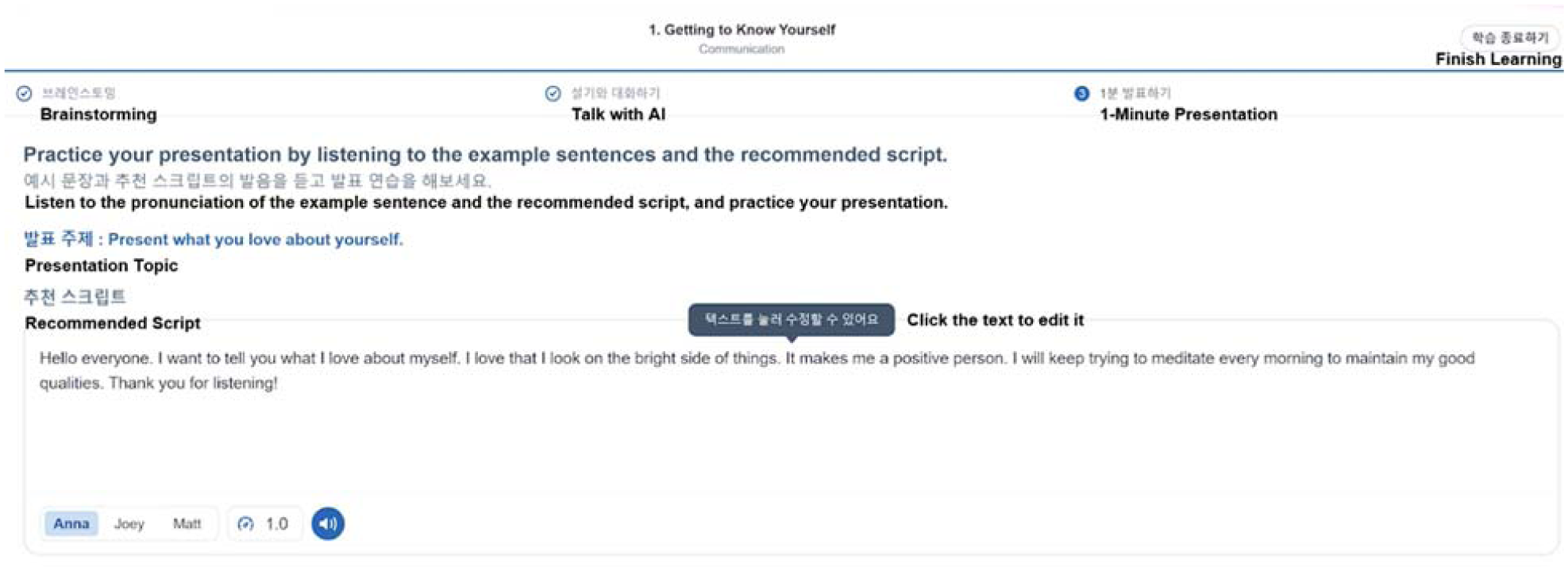
Individual English speaking practice with AIDTs (1-min presentation).
Changes in the Community Aspect
AIDTs brought changes to the roles and modes of interactions within the school community (school administrators and administrative staff). School administrators viewed this change as triggering a paradigm shift in education, expanding their role from administrative tasks to setting new educational visions and exercising digital leadership. Consequently, they emphasized supporting teachers and students while guiding the digital transition. Notably, the teacher-student relationship was reconfigured as AIDTs functioned as an active mediating platform for interaction, bringing changes in the direction and mode of communication. Rather than replacing face-to-face communication, AIDTs inserted a platform-based layer of interaction between teachers and students, and among peers. Specifically, students and teachers exchanged opinions and feedback through posts, replies, and comment threads within the AIDT environment. This record-based interaction made participation patterns and peer dynamics—previously less visible in face-to-face settings—more explicit and restructured. Students also reported that digital mediation lowered psychological barriers to communication, enabling more active peer interaction through collaborative commenting.
As the AIDTs mediated between students and teachers, and between students and other students, it was possible to form communication channels different from before. [Student 2, Interview 1, March 4, 2025]
Changes in the Tools Aspect
In the educational activity system, tools mediate how subjects perceive and achieve the object. The introduction of AIDTs represented educational tools with fundamentally different characteristics from traditional printed textbooks, performing complex roles that enabled teachers and students to “see,”“organize,” and “diagnose” learning objects in new ways. Hardware included tablets, laptops, and smartboards, while network infrastructure comprised Wi-Fi, learning platforms, and cloud-based storage. These tool-related changes went beyond transforming the form of learning materials to promote new content delivery methods and personalized learning experiences. Unlike static textbooks, AIDTs could be restructured in real-time according to classroom environment and learning situations, making it easier for teachers to design lessons and provide customized materials (see Figure 4).
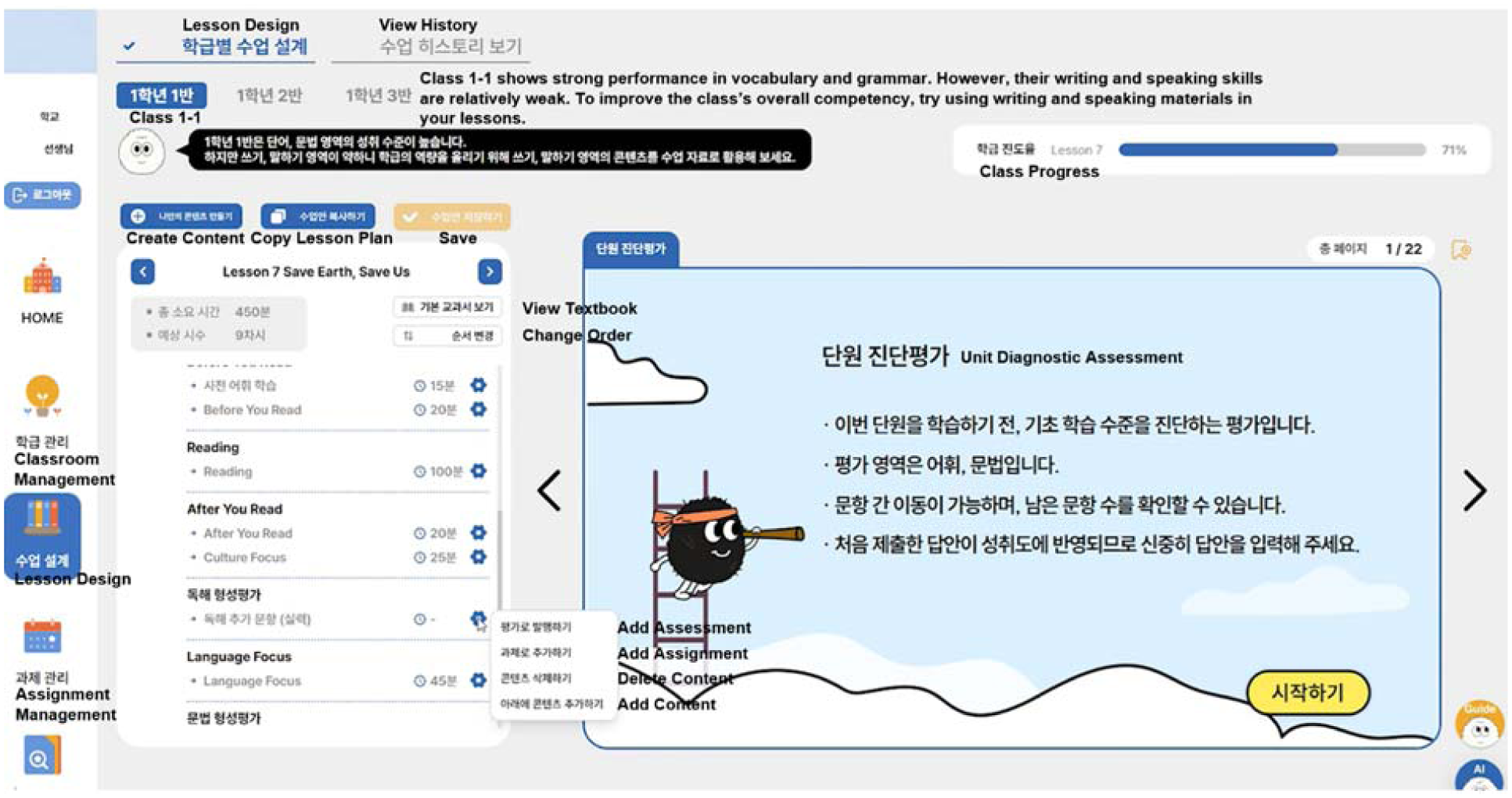
Real-time curriculum restructuring with AIDTs.
Furthermore, through the dashboard function, one of the core functions of AIDTs, learning processes and results were collected, analyzed, and visualized in real-time, allowing teachers to use this information for lesson planning and providing students with continuous feedback (see Figure 5). Subject-specific features were emphasized—speaking assessment and feedback in English, manipulable tools for visual understanding in mathematics, and coding practice with automatic evaluation in informatics (see Figure 6).
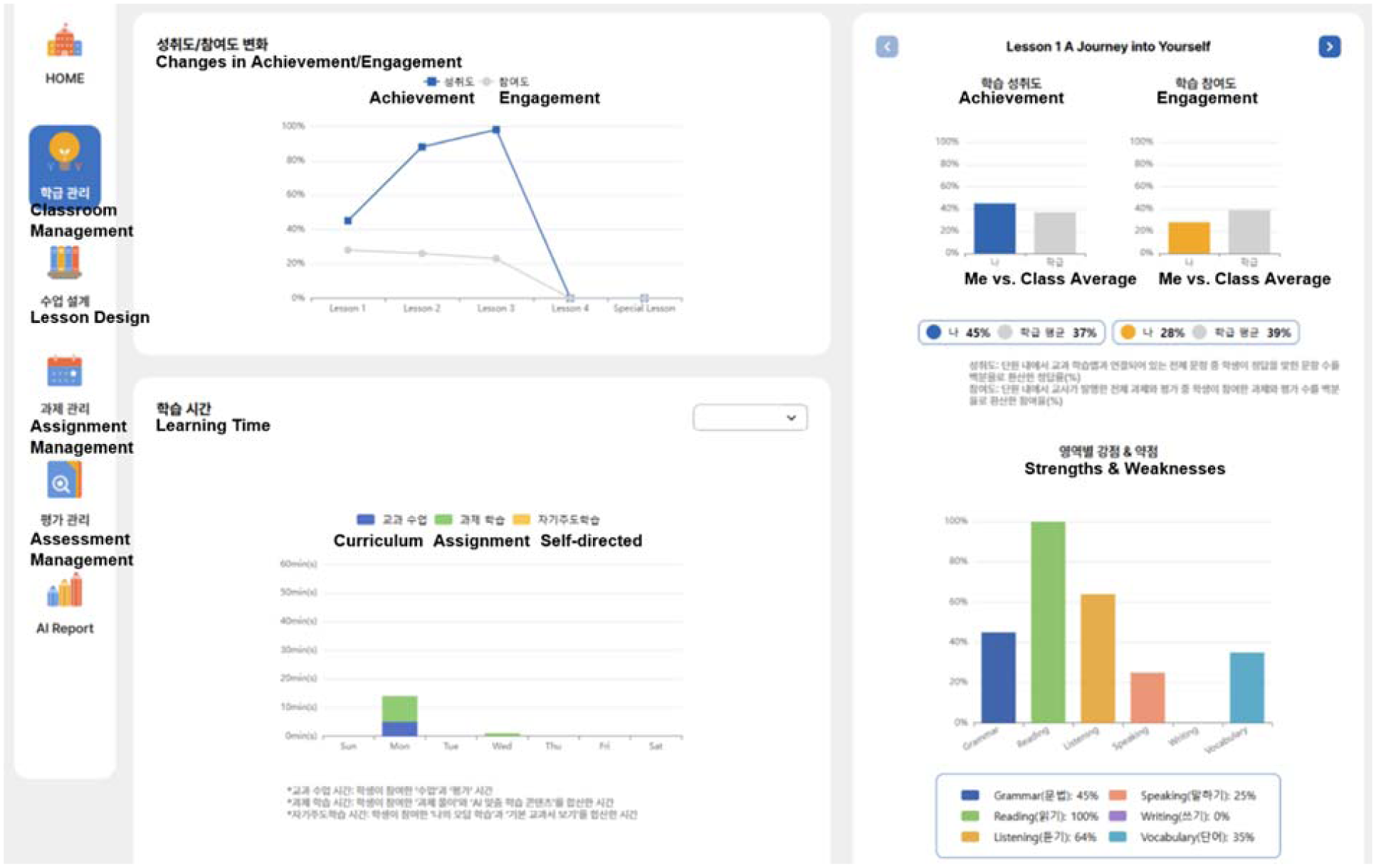
Real-time visualization of learning analytics through AIDTs dashboard.
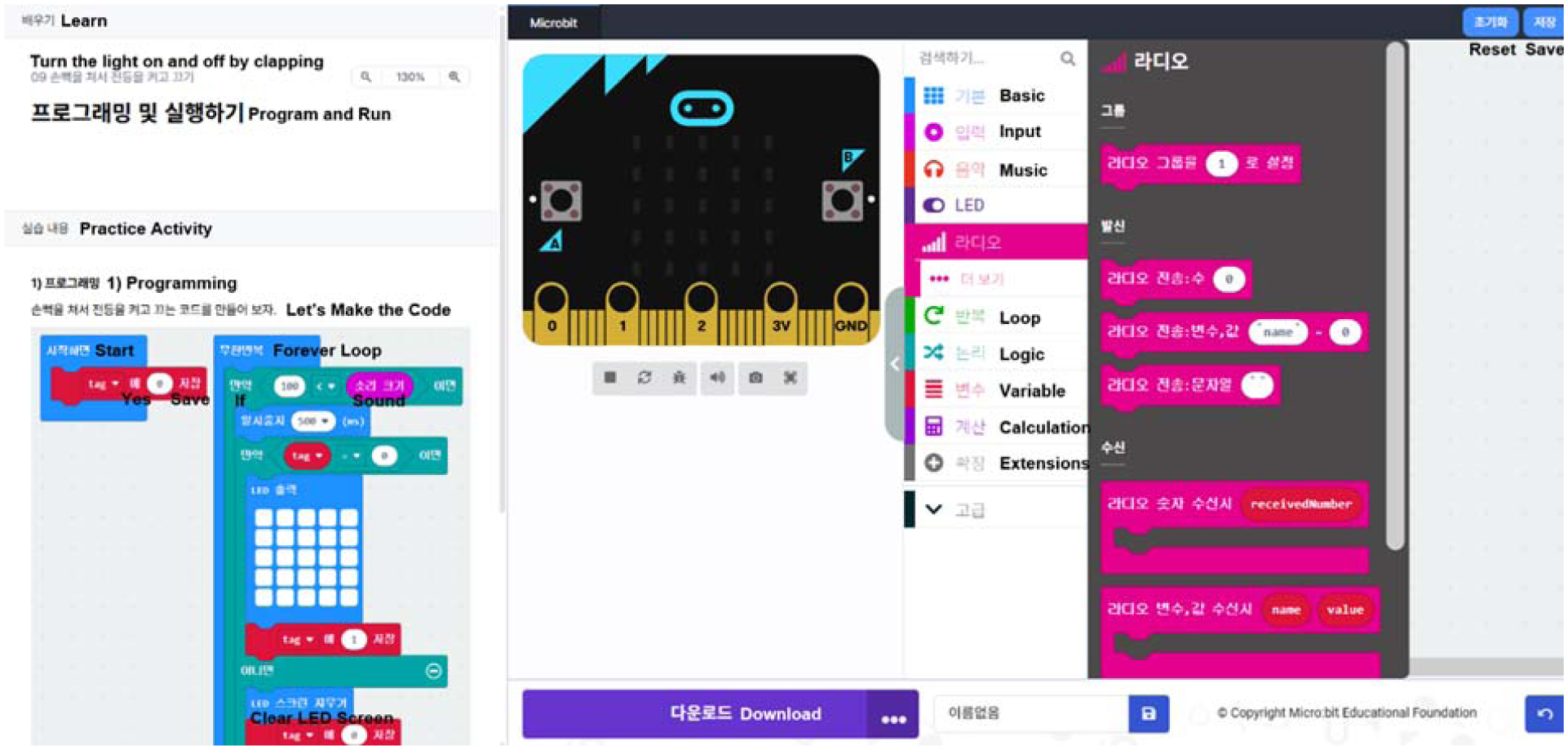
Coding practice using Micro:bit in Informatics class.
Changes in the Rules Aspect
The use of AIDTs led to changes in rules and regulations governing school activities. New device management and responsibility regulations regarding digital device use became necessary. Behavioral guidelines for appropriate device use during class were also established. Additionally, the need for policies on collection, management, and protection of learning data generated during the use of AIDTs increased. All educational stakeholders recognized the importance of data security and ethical use, which also influenced the formation of a digital ethics culture throughout the school community.
Only AIDT platform and class-related apps such as calculator permitted during lessons. Also, students must check whether their learning data had been successfully uploaded to the dashboard and log out properly before class ends. [Teacher 3, Interview 2, March 19, 2025]
Changes in the Division of Labor Aspect
The introduction of AIDTs brought changes to the role allocation and work structure among educational subjects. School administrators emphasized that AI does not replace teachers; rather, highlights their irreplaceable core role, and they stressed teachers should focus on student growth and learning essentials by utilizing AI’s technical assistance. As AI handled repetitive tasks, an environment, where teachers could concentrate on essential activities like individual guidance, creative lesson design, and emotional support, was created. Administrative staff assumed new roles in digital device management and infrastructure support, with expanded responsibilities in budget management and financial operations (Figure 7).
AI handles repetitive tasks like grading over 20 students’ work, so I’ve been able to focus more on essential educational activities. [Teacher 2, Interview 1, March 6, 2025]
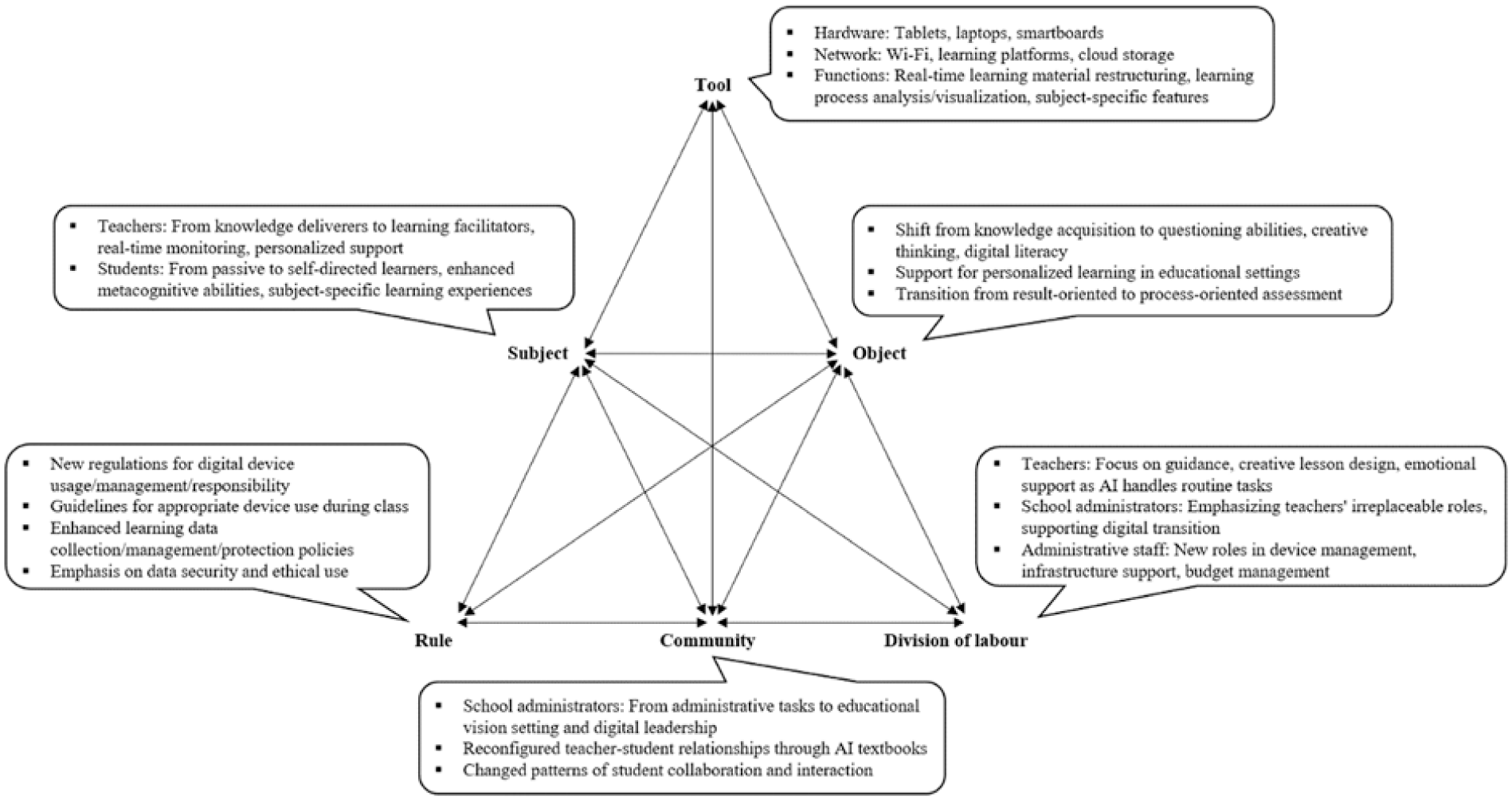
Components of the activity system in the context of AIDTs-integrated Korean high schools.
Contradictions and Responses Within the Educational Activity System Following the Introduction of AIDTs
Technical Instability and Infrastructure Issues
[Secondary Contradiction: Tool ↔ Object]
A prominent contradiction during AIDTs implementation was technical instability. Unstable wireless network (or Wi-Fi) connections, access errors on the AIDTs platform, and device malfunctions repeatedly interrupted classes. Teachers experienced situations where lessons became useless when internet connections were lost, making AIDTs platform access impossible. Additionally, when students encountered technical issues, teachers had to assist by rebooting devices and reconnecting to networks, so the flow of the lesson was disrupted.
When the internet connection or Wi-Fi is disrupted, we can’t access the application, so the entire lesson becomes useless. [Teacher 1, Interview 2, March 18, 2025]
School administrators and administrative staff recognized the need to improve physical infrastructure, conducting periodic infrastructure checks and continuously requesting additional budget allocations from the education office for infrastructure upgrades. Teachers were burdened with the dual responsibility of preparing entire lessons using traditional methods in parallel, as technical instabilities could render all AIDTs-based materials inaccessible, so they emphasized the necessity of developing offline-compatible systems that would allow basic functions to operate without internet access to ensure learning continuity.
Teachers always need to prepare a back-up plan for when internet access is unavailable. [Teacher 3, Interview 2, March 19, 2025]
Discrepancy Between Educational Goals and AI-Based Learning Methods, and Misconceptions About Learning Cognition
[Tertiary Contradiction: Traditional Educational Activity System ↔ AI-Based New Educational Activity System]
The contradiction between AIDTs-based learning methods and education’s essential goals emerged as an important issue. Teachers expressed concern that immediate feedback from AI severely shortened the reflective thinking process where students ask “why?” and find solutions on their own, potentially weakening their deep thinking.
AIDTs’ immediate feedback allows students to get answers too quickly without time to think slowly... this can be a fatal element for students who need to develop deep thinking and problem-solving skills... [Teacher 2, Interview 1, March 6, 2025]
The changes in learning methods also affected students’ cognitive aspects. In the early stages, some students showed tendencies to become overly reliant on the AI’s judgments or became accustomed to simple click-based usage rather than engaging with the learning itself. Teachers observed that some of these students exhibited signs of “cognitive hallucination,” overestimating their knowledge beyond their actual understanding level. As a result, teachers began to emphasize the need for metacognitive education, and through these efforts, students gradually began to critically recognize the limitations of AI in their usage and started to show efforts to self-regulate.
Since the AI digital textbook marks content as ‘learned,’ I sometimes have the illusion that I understand everything. I feel like I know things even when I actually don’t know them well. [Student 3, Interview 2, March 20, 2025]
Digital Overdependency and Health Issues
[Secondary Contradiction: Tool ↔ Subject]
Digital overdependency and health issues were raised as important concerns. Both students and teachers expressed concerns that the use of AIDTs would increase the frequency of digital device use and screen time, potentially exacerbating digital dependency.
It’s not just students who become dependent; even teachers might struggle to conduct assessments or design curricula on their own without AI. [Teacher 1, Interview 2, March 18, 2025]
Health problems from prolonged digital device use were reported. Visual display terminal (VDT) syndrome symptoms—including forward head posture, eye strain, carpal tunnel syndrome, and headaches—occurred or worsened among students and teachers. In response, educators proposed creative solutions such as implementing an “active learning break” application system that encourages learners to stand up and engage in physical activities at regular intervals. They also called for accompanying educational approaches, such as continuous digital citizenship education (i.e., education on responsible and ethical use of digital technologies) and preventive programs targeting digital overdependence.
Constantly looking at screens makes my eyes tired, and my neck and wrists hurt too. [Student 3 & Teacher 2, Interview 2, March 18 & 20, 2025]
Educational Data Utilization and Privacy Protection
[Multiple Contradictions: Primary (Internal Contradiction Within the Tool) + Secondary (Tool ↔ Rules) + Tertiary (Traditional Copyright Norms ↔ AI-Based Educational System)]
Tensions between educational data use and personal information protection were clearly observed. All stakeholders expressed concerns about potential leakage and privacy violations when collecting and storing sensitive information (e.g., students’ grades and learning records) through the AIDTs platform. In particular, they were alarmed by potential severe consequences of assessment data leakage. The contradiction between data accumulation and AI performance improvement emerged as another issue. Privacy regulations require annual student data reset in AIDTs platform, yet this practice was identified as a fundamental limitation to AIDTs technological advancement since AI typically improves through continuous data accumulation.
Since AI digital textbooks are developed and operated by private companies, student data is reset annually to protect personal information. This makes it difficult for the AI system to analyze learning patterns long-term or continuously improve personalized recommendation features. [Teacher 3, Interview 2, March 19, 2025]
In addition, copyright issues also emerged as a major concern when materials edited by teachers or submitted by students are distributed via publishers’ digital platforms. Teachers and students worried about inadequate protection guidelines. Stakeholders strongly demanded concrete legal and institutional supplements beyond simple theoretical responses, emphasizing the need for systematic training and education.
What happens to the copyright of the materials I edit or the assignments submitted by students on the AI platform? [Teacher 1, Interview 2, March 18, 2025]
Financial Burden and Imbalance in Resource Distribution
[Quaternary Contradiction: Educational Activity System (Central) ↔ Financial Activity System (Neighboring)]
The discrepancy between AIDTs implementation costs and existing educational finance systems was a prominent contradiction. AIDTs cost between 50,000 and 90,000 KRW (approximately $37–$66 USD) per book—up to six times higher than traditional textbooks (approximately 15,000 KRW, $11 USD)—making sustainability difficult with local education finances alone. Estimated national costs for AIDTs implementation over the next 4 years are projected at approximately 4.72 trillion KRW (approximately $3.5 billion USD). This raises concerns about distortions in the education finance distribution system.
The budget for AI textbooks is so large that existing essential educational programs are facing downsizing. [Administrative Manager 1, Interview 2, March 10, 2025]
Some provincial education offices have already reduced student guidance budgets by over 80% (from 11.1 to 2.2 billion KRW), completely eliminated 16 projects, and reduced budgets for 38 unit-level projects, contracting existing foundational educational programs. This reallocation creates conflicts between traditional education systems and digital transformation policies, raising concerns that it could even diminish investments in other areas essential for future education. To resolve these financial contradictions, administrators and administrative staff suggested that the government should actively induce educational investment to secure additional resources, establish dedicated budget categories, and expand direct financial support for AIDTs.
Equity in Access and Social Stigma Issues
[Quaternary Contradiction: School Educational Activity System (Central) ↔ Family Economic Environment/Social Perception (Neighboring)]
Regional education offices implemented a policy of lending tablets free of charge to students without personal devices to ensure equitable access to AIDTs. However, this divided students into two groups: those using publicly provided entry-level tablets and those with privately purchased more expensive and high-performance tablets.
Despite minimal performance differences in AIDTs usage, a social stigma emerged where students using school-provided devices were perceived as “economically disadvantaged.” Adolescents, sensitive to social comparison, began avoiding school devices and pressuring parents to purchase expensive alternatives, and some families experienced unexpected financial burden. Accordingly, concerns arose that these experiences could negatively impact adolescents’ identity formation and sense of belonging.
Students who use school tablets feel like they’re poor. [Student 2, Interview 2, March 17, 2025]
As an alternative solution, students proposed a voucher system allowing them to select their preferred device. After a fixed usage period (e.g., 3 years), the devices could be collected and redistributed to other institutions through a recycling system, promoting both equity and sustainability.
Discussion
This study aimed to fill a gap in the existing literature by analyzing the impact of AIDTs on high school educational activity systems and illuminating multi-layered contradictions through the CHAT framework. The academic contributions of this study can be organized into the following key areas:
First, this study contributes by expanding the scope of existing research through analyzing AI integration from multiple stakeholder perspectives within high school contexts. While previous studies focused on technical characteristics of AI-based learning tools (Kim & Heo, 2025; H. Lee, 2023) and their effectiveness (Cho & Jung, 2024; Elliott & Kim, 2025), primarily in elementary (Cho & Jung, 2024; Kim & Heo, 2025; H. Lee, 2023) and middle school contexts (Elliott & Kim, 2025), or analyzed from the perspective of specific subjects (Cho & Jung, 2024; Kim & Heo, 2025; H. Lee, 2023) or particular stakeholders (Kiaer & Jeon, 2024; Xie et al., 2025), this study broadened the research scope by exploring the structural changes and tensions in high school education activity systems from various stakeholders’ perspectives.
Second, this study bridges the gap between theoretical expectations and empirical realities of AI integration. The observed shifts in teacher roles empirically support S. S. Lee and Moore’s (2024) argument that teachers evolve from knowledge transmitters to learning facilitators in AI-integrated contexts. Students’ improved self-directed learning confirms effects of AI-based personalized learning environments by Younas et al. (2025), and the enhancement of metacognitive abilities through dashboard use aligns with Mohebbi (2025). Furthermore, role redistribution within school communities reflects the characteristics of digital-driven organizational change as discussed by Pettersson (2021), and this study enriched such findings by showing how school leaders’ digital leadership and administrative staff duties were reorganized.
Third, this study identifies challenges and adaptive strategies in the implementation of AIDTs. Technical instabilities during implementation of AIDTs connect to Adeshola and Adepoju (2024), while concerns about immediate feedback weakening reflective thinking align with warnings from Ahmad et al. (2023) and Gao et al. (2023). In response, teachers’ strengthening of metacognitive education suggests active adjustment to preserve core educational values. The issue of digital overdependence links to Grinschgl and Neubauer (2022) and C. Zhai et al. (2024). Additionally, this study confirmed that health issues (e.g., VDT syndrome), resulting from the use of AIDTs, affect both students and teachers, expanding discussions on educational technology’s impact on physical well-being of educational stakeholders.
Fourth, this study newly illuminates tensions between data privacy and AI performance while presenting the psychosocial extension of digital educational inequality. Tension between data utilization and privacy protection aligns with Holmes and Tuomi (2022), Memarian and Doleck (2023), and Mintz et al. (2023). This study identified a new contradiction where data initialization for privacy protection potentially may limit AI performance improvement. Equity in accessibility and social stigma issues connect to Bulathwela et al. (2024) and Imran (2023), with this study identifying stigma from public device usage suggesting socioeconomic gaps in digital educational environments (Reich, 2020) can extend to the psychosocial dimension.
Finally, this study expands the theoretical application of CHAT by providing rigorous grounds for reinterpreting participants’ individual narratives from a macro-level perspective of structural transformation in the educational system. In particular, this study reframed contradictions in the field not as mere individual inconveniences or temporary implementation barriers but as opportunities for systemic development. This empirically supports Al-Huneini et al.’s (2020) argument that multi-layered contradictions can function as catalysts for qualitative advancement in educational systems. Furthermore, by empirically demonstrating the “simultaneity of multi-level contradictions,” where contradictions at different levels emerge simultaneously and overlap within a single educational phenomenon (e.g., the overlapping of primary + secondary + tertiary contradictions in Section 5.2.4), this study moves beyond the conventional CHAT approach that primarily analyzes individual contradiction levels separately, and presents theoretical possibilities for explaining the intertwining and cumulative effects of tensions within activity systems (Engeström, 2015).
Implications
The findings of this study provide the following concrete practical implications for the successful implementation of AIDTs in school settings. First, it is essential to establish stable technological infrastructure and ensure sustainable funding. The technical instability identified in this study suggests that systematic inspection and upgrading of network infrastructure must precede the successful implementation of AIDTs. Local education authorities need to regularly diagnose the wireless internet environment of each school and secure sufficient bandwidth for simultaneous access. Additionally, AIDT platforms should be designed to operate basic functions (e.g., accessing learning materials) even in offline environments to alleviate teachers’ burden of preparing backup lesson plans. From a financial perspective, this study confirmed that AIDT budgets have encroached upon existing essential educational programs. This indicates the need to establish dedicated AIDT budget items and expand direct financial support at the central government level. Furthermore, to ensure the sustainability of the estimated implementation cost of approximately 4.72 trillion KRW over 4 years, diversified funding strategies—such as attracting private investment and public-private partnerships with publishers—should be explored.
Second, it is necessary to strengthen learners’ metacognitive competences and establish protective systems for digital well-being. This study observed a phenomenon of “cognitive hallucination” where students overestimated their level of understanding due to AI’s immediate feedback. This suggests the need to systematically reinforce metacognitive instruction alongside AIDT use. Teachers should require students to first respond to metacognitive questions such as “Why do you think this answer is correct?” before AI provides the solution, and regularly operate “problem-solving without AI” sessions to enable students to assess their actual learning competences. Additionally, to prevent health issues raised in this study, such as digital overdependence and VDT syndrome, schools need to embed features such as “mandatory break alerts” that encourage stretching at regular intervals during 50-min classes or “eye-protection mode” into AIDT platforms. Furthermore, to institutionally support the digital well-being of students and teachers, school should establish “digital device usage self-assessment” workshops and school-level digital health management protocols at the beginning of the semester.
Third, it is necessary to balance data utilization and privacy while realizing educational equity. This study identified a structural contradiction where the annual data initialization policy for privacy protection limits AI performance improvement. Accordingly, edtech companies and policymakers need to adopt technical solutions such as differential privacy or federated learning to protect personally identifiable information while utilizing learning pattern data for AI improvement. It is also important to include “data sovereignty” options in platforms so that students and teachers can choose the scope of their data utilization. Meanwhile, this study’s finding that differences between school-provided devices and personal high-end devices create economic marginalization and social stigma among students has significant social implications. To mitigate this issue, a voucher system proposed by participants in this study—that allows students to directly select their preferred devices—can be introduced, along with establishing a circular system that collects, refurbishes, and redistributes devices to other institutions after a certain usage period (e.g., 3 years). Simultaneously, efforts should be made to expand cloud-based processing and streamline and optimize AIDT platforms to ensure smooth operation even on lower-spec devices.
Conclusion
This study analyzed changes and contradictions within the educational activity system resulting from implementing AIDTs in Korean high schools through CHAT framework. By encompassing various stakeholders’ perspectives and exploring structural changes and tensions in educational settings, the research confirmed that the introduction of AIDTs has multi-layered impacts across the entire educational activity system, beyond a simple change in tools.
The findings revealed distinct changes in all six components of the educational activity system. In terms of subjects, teachers’ roles expanded from knowledge transmitters to learning facilitators, while students became more self-directed. Regarding tools, AIDTs’ real-time data analysis and dashboard functions enabled personalized learning. In the object dimension, educational goals gradually shifted from knowledge acquisition to cultivating creative thinking and questioning abilities. In terms of rules, new norms for digital device management and data protection emerged. Within the school community, school administrators’ digital leadership was emphasized and administrative staff roles expanded. In terms of division of labor, the role distribution between AI and human teachers was readjusted.
Simultaneously, various contradictions were observed during this process, including technical instability and infrastructure issues, misalignment between educational goals and AI-driven learning methods, digital overdependence and health problems, tensions between educational data utilization and privacy protection, financial imbalances and distorted resource allocation, and issues of educational equity and social stigma. Particularly, these contradictions not only occur within single elements but also arise from interactions between multiple elements within the activity system, as well as between the educational activity system and external systems.
Additionally, by analyzing the structural changes and multi-level contradictions that AIDT implementation brings to the entire educational activity system in Korean high school contexts from a CHAT perspective, this study provides theoretical insights for understanding AI educational technology not merely as a teaching tool but as a mediator of systemic transformation. In particular, by empirically demonstrating how contradictions at different levels can emerge simultaneously and overlap within a single educational phenomenon, this study expands the analytical framework to explain the intertwining and cumulative effects of contradictions, moving beyond the conventional CHAT approach that has primarily analyzed individual contradiction levels separately.
However, despite its meaningful contribution to capturing the early stages of digital transformation in high schools, this study has the following limitations. First, as a qualitative case study conducted with a small sample (N = 10) from two high schools in a specific region, there are constraints in generalizing the findings to the broader Korean high school context. Second, as an insider with the researcher being a teacher at one of the schools, the possibility of social desirability bias or expectation effects influencing participant responses cannot be completely ruled out. Lastly, because this study analyzed the operational aspects of the early implementation stage of AIDTs, it did not adequately capture long-term effects or sustainable change processes.
Future research should address these limitations by conducting comparative studies that include various regions and school types (e.g., special education schools, vocational high schools) to analyze differences in activity system change patterns following AIDT implementation. Additionally, large-scale quantitative research or mixed-methods studies should be employed to simultaneously verify general patterns and contextual characteristics of activity system changes. Furthermore, longitudinal research designs are needed to track the long-term effects and sustainability of changes from AIDT implementation. Finally, design-based research or action research approaches are also required to experimentally validate instructional strategies or policy intervention models that mitigate the structural contradictions identified in this study.
In conclusion, while AIDTs have the potential to bring innovative changes to Korean education, the realization of such transformation depends not on the technology itself but rather on the harmonious integration of various elements within the educational activity system and the creative resolution of newly emerging contradictions. Therefore, successful implementation must be grounded not only in technological innovation but also in approaches centered on educational values and goals, as well as collaborative stakeholder participation. Through such a holistic approach, contradictions and tensions can be transformed into creative opportunities for the development of the educational system.
Footnotes

Ethical Considerations
All procedures performed in studies involving human participants were in accordance with the ethical standards of the institutional and/or national research committee and with the 1964 Helsinki Declaration and its later amendments or comparable ethical standards. All procedures followed were in accordance with the ethical standards and principles for conducting research at Lancaster University. Ethical approval was granted by the Educational Research Ethics Committee, Faculty of Arts and Social Sciences, Lancaster University (Application ID: TEL/CH17/Mod3/36676856). Institutional approval was also obtained from the principals of the participating schools prior to data collection.
Consent to Participate
In February 2025, written informed consent was obtained from all participants prior to their involvement in the study. As student participants were minors, written consent was obtained from their parents or legal guardians, and student assent was also confirmed. All participants were provided with an information sheet explaining the purpose, procedures, voluntary nature of participation, data confidentiality, and their right to withdraw at any time without penalty. This study posed minimal risk to participants, as no sensitive or confidential information was collected. All data were pseudonymized and identifying information was removed prior to analysis. The potential benefits of the study—advancing understanding of AI-based digital textbook implementation to inform future educational policy and practice—were judged to outweigh the minimal risks involved.
Funding
The author disclosed receipt of the following financial support for the research, authorship, and/or publication of this article: This research was supported by open access funding from Lancaster University.
Declaration of Conflicting Interests
The author declared the following potential conflicts of interest with respect to the research, authorship, and/or publication of this article: The author declares that the research was conducted in the absence of any commercial or financial relationships that could be construed as a potential conflict of interest.
Data Availability Statement
The data supporting the findings of this study cannot be made publicly available. This decision aligns with the ethical guidelines of the approving institution. However, a summary of the findings or non-identifiable data can be provided by the author upon reasonable request.