







Abstract
Short-form video applications, such as TikTok, have gained significant popularity among emerging adults. We conducted a longitudinal study to gather data at three time points from two universities in South China. A total of 590 university students (M age = 19.83; SD age = 1.24) completed the questionnaires measuring active and passive TikTok use behaviors at time 1 (T1, April 2022), self-concept clarity at time 2 (T2, October 2022), and anxiety both at Time 1 (T1, April 2022) and at Time 3 (T3, April 2023). The results showed that T1 active TikTok use had a negative correlation with T3 anxiety (r = −0.23, p < .001), while T1 passive TikTok use had a positive correlation with T3 anxiety (r = 0.30, p < .001). Both T1 active TikTok use (95% CI [0.03, 0.09]) and T1 passive TikTok use (95% CI [0.07, 0.16]) can predict T3 anxiety indirectly by reducing T2 self-concept clarity. Moreover, even after considering T2 self-concept clarity, the direct impact of T1 active TikTok use on T3 anxiety remained significant (95% CI [−0.24, −0.09]), but the direct effect of T1 passive TikTok use on T3 anxiety was not significant (95% CI [−0.04, 0.12]).
Keywords
Introduction
Anxiety is a prevalent mental health issue among emerging adults (Kranzler et al., 2019), particularly university students (Islam et al., 2020). Certain university students may struggle with concerning body image perceptions or high levels of appearance-related anxiety, manifesting in behaviors such as preoccupation with self-image, compulsive shopping, and meticulous dressing habits (Harnish et al., 2019; Lucas & Koff, 2017). Additionally, such concerns may even escalate to the extent of seeking unhealthy cosmetic procedures (Clarke et al., 2012; Zhou, 2023). Social anxiety among university students can impede the quality of their friendships and hinder the development of intimate relationships (Parade et al., 2010; Rodebaugh et al., 2015). Academic anxiety is also prevalent among university students, potentially undermining their learning efficiency (Shakir, 2014) and resulting in diminished academic performance (Krispenz et al., 2019). According to a recent meta-analysis, the prevalence of anxiety among Chinese university students between 2010 and 2020 ranges from 12% to 16% (Chen et al., 2022). Examining the influencing factors and mechanisms of anxiety in university students can offer valuable insights for preventing and addressing anxiety among emerging adults.
TikTok Use and Anxiety
Social networking site (SNS) use is one of the significant reasons for anxiety among emerging adults. The utilization of social media may diminish young individuals’ inclination towards participating in offline social endeavors, ultimately contributing to heightened anxiety within authentic, real-life social contexts (Erliksson et al., 2020; She et al., 2023; Vannucci et al., 2017). Numerous studies have tested the influence of different types of social media, such as Facebook and Instagram, on anxiety among young individuals (Jiang & Ngien, 2020; Shaw et al., 2015; Vannucci et al., 2017). Nevertheless, there is a paucity of studies examining the potential impact of TikTok, a widely-used application in today’s mobile Internet age, on anxiety.
In the present mobile Internet environment, short-form video applications such as TikTok have grown exceedingly popular among emerging adults in different countries. Young people represent a considerable demographic of short-form video users, with approximately 17% of TikTok’s audience consisting of individuals aged 18 to 24 (Aslam, 2024). According to the latest data from the China Internet Network Information Center (2023), as of December 2022, the number of short-form video users in China has reached 1.012 billion, accounting for 94.8% of overall netizens. Approximately 70% of Chinese university students use short-form video applications for at least 1 hour daily, with around 30% spending more than 2 hours per day (China Youth Daily, 2022). Emerging adults not only frequently watch various short-form videos, but some of them also frequently share some of these videos (Montag et al., 2021; Pan et al., 2023).
Watching short-form videos on TikTok can be categorized as passive TikTok use, representing a form of passive SNS engagement, involving information browsing behaviors on SNSs. In contrast, sharing short-form videos (whether self-produced or by other creators) and participating in interactions with other users on TikTok can be classified as active TikTok use, demonstrating an active form of SNS engagement, which encompasses information generation activities on SNS platforms (Pan et al., 2023). According to the Active-Passive Model of SNS use (Verduyn et al., 2017, 2022), active SNS use may help enhance subjective well-being by increasing social capital and reinforcing positive emotions, such as feelings of connectedness, whereas passive SNS use can reduce subjective well-being by triggering social comparison and intensifying negative emotions, such as feelings of envy or inferiority. Empirical research has shown that active SNS use has a positive effect on reducing anxiety in young people, while passive SNS use has been found to intensify anxiety (Lai et al., 2023; Thorisdottir et al., 2019; Zheng et al., 2020). As a result, active TikTok use may negatively predict anxiety, while passive TikTok use may positively predict anxiety. However, whether the two different types of short-form video use behaviors will affect anxiety, and whether the impact will be different, remains unknown.
Mediating Role of Self-Concept Clarity
The impact of short-form video apps on emerging adults’ self-concept has also received a lot of attention, and changes in self-concept structure may be an important mechanism by which TikTok usage behaviors affects anxiety. Self-concept clarity is an indicator of the structure of self-concept, which refers to whether individuals have a clear and firm self-concept (Campbell et al., 1996). Individuals with low self-concept clarity often demonstrate a disordered self-concept structure, which can lead to an ambiguous self-understanding (Campbell et al., 1996; Guerrettaz & Arkin, 2016). Numerous studies have indicated that individuals with low self-concept clarity are likely to experience low self-esteem (Morawiak et al., 2018; Wong et al., 2016) and may resort to self-handicapping behaviors in their academic endeavors during college (Thomas & Gadbois, 2007). Emerging adults are engaged in a crucial phase of self-identity exploration (Arnett, 2000). If their self-concept structure is adversely affected by Internet media, resulting in confusion (Appel et al., 2016), it could hinder the alignment of different self-aspects into a coherent whole (Schwartz et al., 2011). Furthermore, self-concept clarity is closely linked to individual psychological well-being (Alessandri et al., 2021; Wong et al., 2019). Individuals with low self-concept clarity may perceive strong stress when facing negative stimuli because of unclear self-awareness (Wong et al., 2019), which may exacerbate their feelings of anxiety (Ghorbani et al., 2008). Empirical research has demonstrated a significant positive correlation between low self-concept clarity and levels of anxiety (Kusec et al., 2016). Self-concept clarity not only directly predicts general anxiety (Kusec et al., 2016) but also has significant predictive effects on social anxiety (Li & Xu, 2022; Liu et al., 2017a; Park et al., 2022), and future anxiety (Yang et al., 2015).
Moreover, both types of short-form video usage behaviors are likely to have an impact on individual self-concept. The self-concept fragmentation hypothesis of Internet use suggests that not only do individuals shape multiple self-images through impression management, but they also encounter multiple character images through information browsing on the Internet, which can lead to more differentiation in their self-concept (Valkenburg & Peter, 2008, 2011). As a result, the Internet may make it difficult for individuals to integrate multiple aspects of themselves into a unified whole, which can lead to a confusing self-concept. According to the self-concept fragmentation hypothesis (Valkenburg & Peter, 2008, 2011), both active and passive TikTok use may have negative effects on self-concept clarity. Previous research on social media has also found that the intensity of SNS use significantly predicted low self-concept clarity (Appel et al., 2016; Yang et al., 2022), passive SNS use behavior negatively predicted self-concept clarity (Liu, Niu et al., 2017), and self-concept clarity was also negatively correlated with active SNS use (such as self-presentation) (Fullwood et al., 2016; Yang & Brown, 2016). However, it is important to note that research has also reported a positive relationship between active social media use and self-concept clarity (e.g., Drogos, 2015). In other words, the current evidence does not entirely support the assumption that active TikTok usage is negatively associated with self-concept clarity. Therefore, when proposing the mediation role of self-concept clarity in the relationship between active TikTok use and anxiety, both positive and negative effects should be considered.
The Present Study
Studies have demonstrated a significant positive correlation between social media use intensity and anxiety (She et al., 2023; Vannucci et al., 2017). Active and passive social networking site (SNS) use both predict anxiety in distinct ways, with passive SNS use positively correlating with anxiety (Lai et al., 2023; Shaw et al., 2015; Thorisdottir et al., 2019; Zheng et al., 2020) and active SNS use negatively correlating with anxiety (Lai et al., 2023; Thorisdottir et al., 2019). Furthermore, passive SNS use negatively predicts self-concept clarity (Liu, Niu et al., 2017), while the impact of active SNS use on self-concept clarity remains inconclusive (Drogos, 2015; Yang & Brown, 2016). Overall, several issues are still worthy of further exploration. Firstly, while traditional social media platforms like Facebook, Instagram, and WeChat have been extensively studied (Shaw et al., 2015; Thorisdottir et al., 2019; Zheng et al., 2020), there is limited research focusing on popular short-form video media like TikTok. Furthermore, previous studies have mainly employed cross-sectional questionnaire designs (e.g., Fullwood et al., 2016; Lai et al., 2023; Shaw et al., 2015; Thorisdottir et al., 2019; Zheng et al., 2020), which cannot rigorously determine the predictive effects of social media use on individual mental health. Therefore, conducting longitudinal studies focusing on TikTok to compare the direct and indirect effects of two different usage behaviors would undoubtedly help to address the shortcomings of previous research and deepen our understanding of how social media influences emerging adults.
The present study aimed to explore the effects of two types of TikTok use behaviors on anxiety in emerging adults, both directly and indirectly through self-concept clarity. Specifically, we investigated whether self-concept clarity acted as a mediator linking active and passive TikTok use to anxiety among university students. Drawing from the insights of the previous one-year longitudinal study, we employed a longitudinal design spanning one year to examine whether active and passive TikTok use at baseline (Time 1, T1) had direct and indirect effects on anxiety one year later (Time 3, T3), mediated by self-concept clarity six months later (Time 2, T2). Our hypotheses are presented below, and Figure 1 illustrates the integrated model proposed in this study. Conceptual mediation model.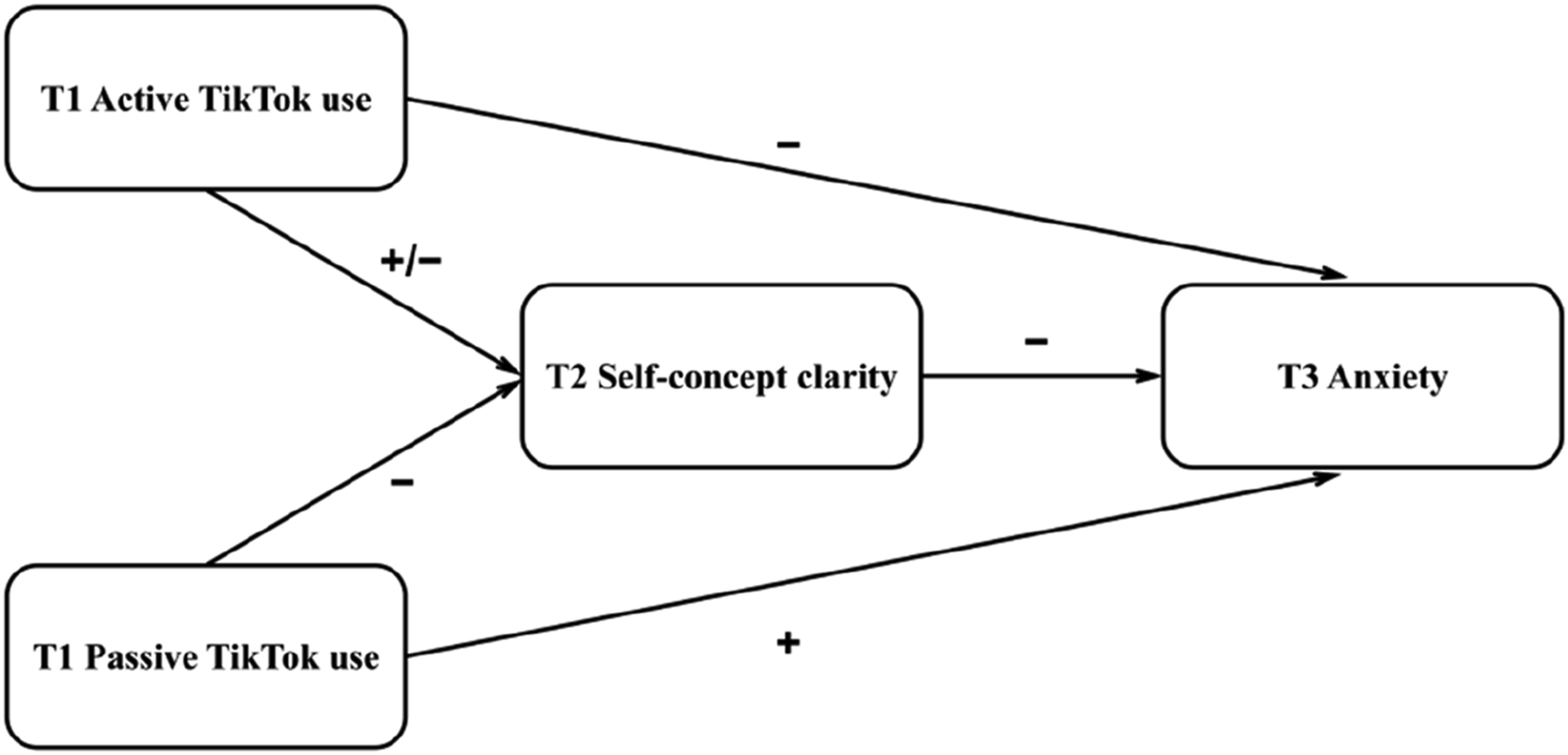
T1 Active TikTok will negatively predict T3 anxiety.
T1 Passive TikTok will positively predict T3 anxiety.
T1 Active TikTok will negatively predict T2 self-concept clarity.
T1 Passive TikTok will negatively predict T2 self-concept clarity.
T2 Self-concept clarity will mediate the association between T1 active TikTok use and T3 anxiety.
T2 Self-concept clarity will mediate the association between T1 passive TikTok use and T3 anxiety.
Methods
Participants and Procedure
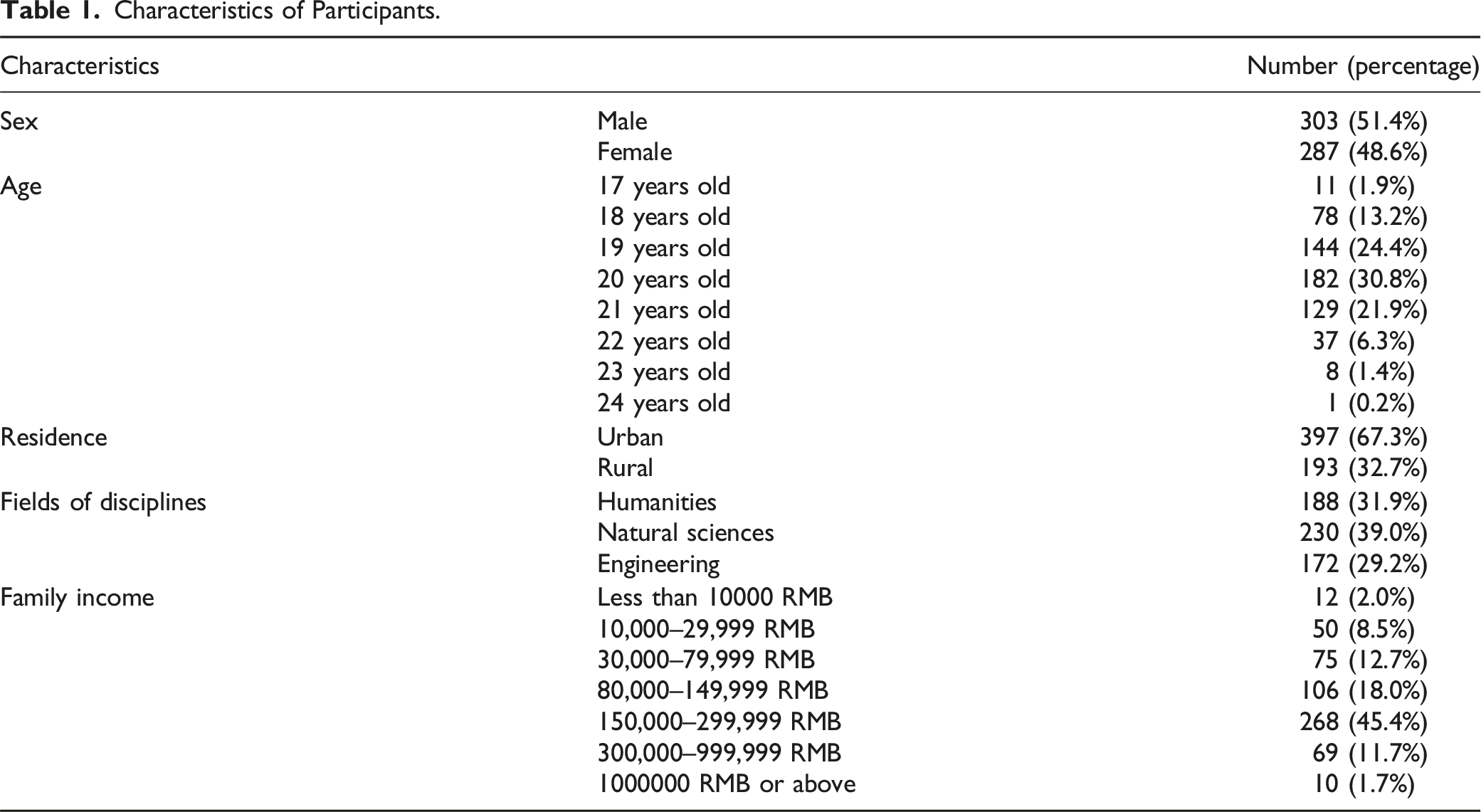
The present study we conducted received approval from the Ethics Committee of College of Education for the Future (No. 310432115), Beijing Normal University at Zhuhai. We selected two target schools using convenience sampling. Following the 10-times rule (Hair et al., 2011; Kock & Hadaya, 2018), we established the number of participants to exceed ten times the number of items on the core variable scales. In this study, the three scales used to measure the core variables consist of a total of 25 items. Consequently, having a sample size exceeding 250 participants complies with the 10-times rule. We excluded university students who do not engage with short-form video platforms, particularly TikTok, from the pool of participants. The administration of questionnaires was carried out within the classroom environment, specifically during allocated study hall sessions, utilizing a traditional pen-and-paper format for data collection. All experimenters received comprehensive training and administered the survey in accordance with a standardized protocol to minimize experimenter bias. Furthermore, we emphasized to all participants that their responses were not subject to right or wrong distinctions, encouraging them to deliver the most authentic answers based on their true circumstances in order to mitigate subject bias.
Characteristics of Participants.
Measurements
TikTok use behaviors
Current research on short-form video use considers short-form video apps as an innovative type of social media, modifying established social media usage scales from prior studies to evaluate short-form video use behaviors. For instance, Pan et al. (2023) assessed active short-form video use by adapting the Facebook Use Scale (Frison & Eggermont, 2016). To measure active TikTok use behavior, we used three items adapted from the Active Facebook Use Scale (Frison & Eggermont, 2015). Additionally, to assess passive TikTok use behavior, we adapted three items from the Chinese version (Liu, Niu et al., 2017) of the passive SNS use scale (Tandoc et al., 2015). Participants were asked to evaluate their behaviors, as described in three questions, on a scale of 1–7 (with 1 representing “strongly disagree” and 7 representing “strongly agree”), based on their actual usage of short video applications, particularly TikTok. Necessary modifications were made to the referenced scales. Firstly, slight adjustments were made to the wording of the items to better capture TikTok short-form video usage behavior. Specifically, the key terms (such as “message”, “photo”, and “picture”) in the original items were changed to “short-form videos”. Secondly, after these key term changes, some statements in the original scale became repetitive and were therefore deleted. The three items assessing active TikTok use are outlined below: (1) I post short-form videos about my life publicly, (2) I publicly share short-form videos created by others, and (3) I engage with other users through short-form videos. The three items assessing passive TikTok use behavior are as follows: (1) I scroll through the news feed of short-form videos without engaging in commenting or reposting, (2) I view short-form videos created by others but do not make any comments, and (3) I explore other users’ personal profiles without initiating any interaction. The Cronbach’s α for the active TikTok use scale and passive TikTok scale were 0.93 and 0.90, respectively.
Self-concept clarity
To measure self-concept clarity, we utilized the Self-concept Clarity Scale (Campbell et al., 1996) (see Appendix), which was adapted into Chinese by Niu et al. (2016). The scale comprises of 12 items, with two sample items being “I seldom experience conflict between the different aspects of my personality” and “In general, I have a clear sense of who I am and what I am.” These items were rated on a five-point Likert scale ranging from 1 (strongly disagree) to 5 (strongly agree). The Cronbach’s alpha for this measure was 0.88.
Anxiety
The Anxiety subscale of the Depression-Anxiety-Stress Scale (DASS-21; Lovibond & Lovibond 1995) (see Appendix) was used to measure anxiety in Chinese emerging adults, following adaptation by Gong et al. (2010). The subscale comprises seven items, with two sample items being “I was worried about situations in which I might panic and make a fool of myself” and “I felt scared without any good reason.” These items were rated on a four-point Likert scale ranging from zero (does not apply to me) to 3 (applies to me very much or most of the time). The Cronbach’s alpha for the anxiety measure was 0.81 at Time 1 and at Time 3.
Analytic strategies
Descriptive statistics and Pearson correlation analysis were conducted using SPSS 23.0 (IBM Corporation, Armonk NY, USA). A mediation analysis was performed with the PROCESS macro for SPSS (model 4) (Hayes, 2013) to explore the mediating role of self-concept clarity in the longitudinal association between TikTok use behaviors and anxiety. The PROCESS macro in SPSS can produce results of causal steps approach testing three regression effects in a mediation model: (1) the effect of TikTok use behaviors on anxiety while not including self-concept clarity, (2) the effect of TikTok use behaviors on self-concept clarity, and (3) the effect of both TikTok use behaviors and self-concept clarity on anxiety. Notably, the PROCESS macro in SPSS (Hayes, 2013) can also perform mediation analysis using the bias-corrected percentile bootstrap method, allowing for direct assessment of the mediation effect and providing more precise confidence intervals (Preacher & Hayes, 2008; Taylor et al., 2008). Gender, age, and TikTok use time were included as control variables in the analysis of the hypothesized mediation model. Due to the potential influence of initial anxiety levels on anxiety levels one year later, T1 anxiety has been included as a control variable in the analysis.
Results
Preliminary Analysis
Descriptive Statistics and Correlations Between Variables.
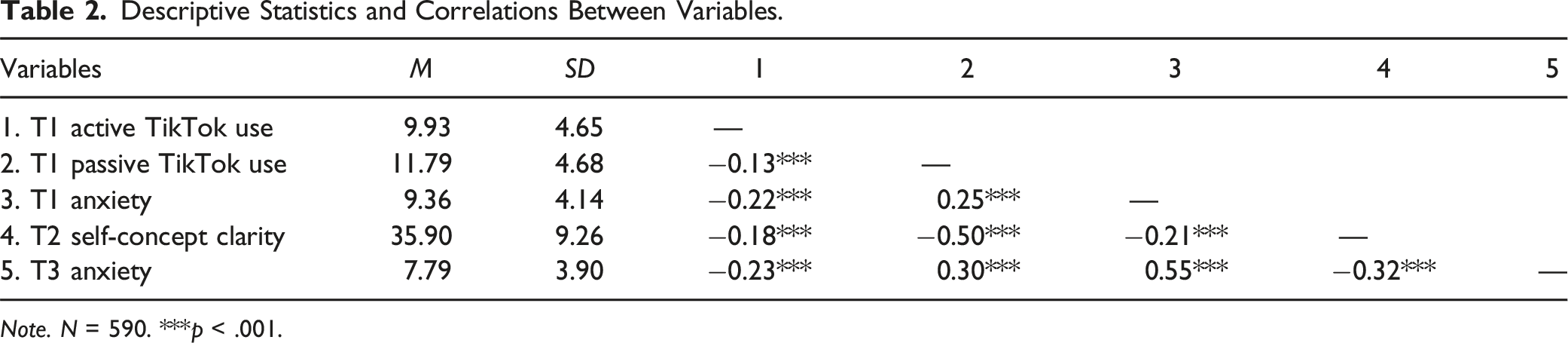
Note. N = 590. ***p < .001.
Testing for the Mediation Model
Mediation Analysis of Self-Concept Clarity.
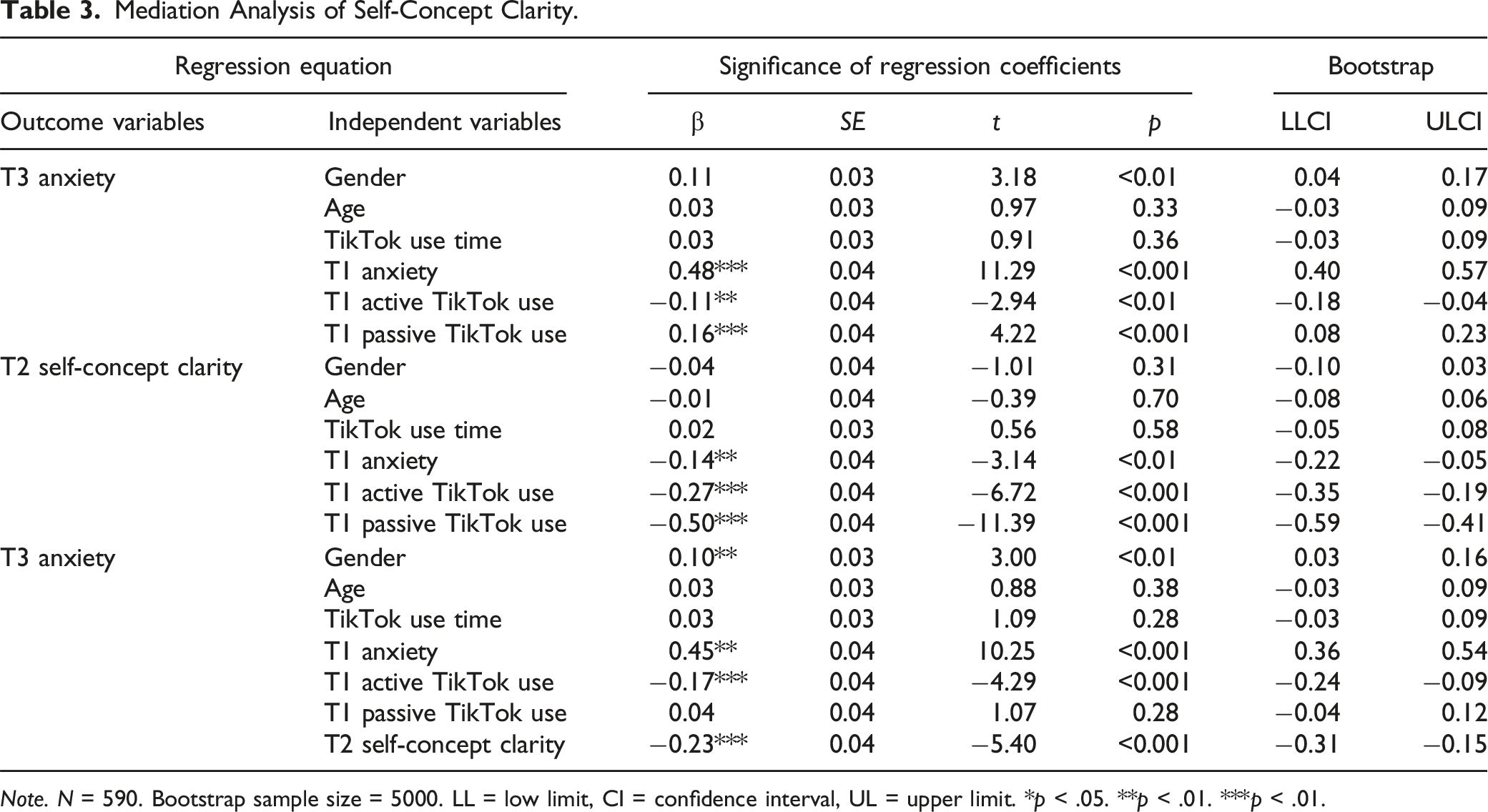
Note. N = 590. Bootstrap sample size = 5000. LL = low limit, CI = confidence interval, UL = upper limit. *p < .05. **p < .01. ***p < .01.
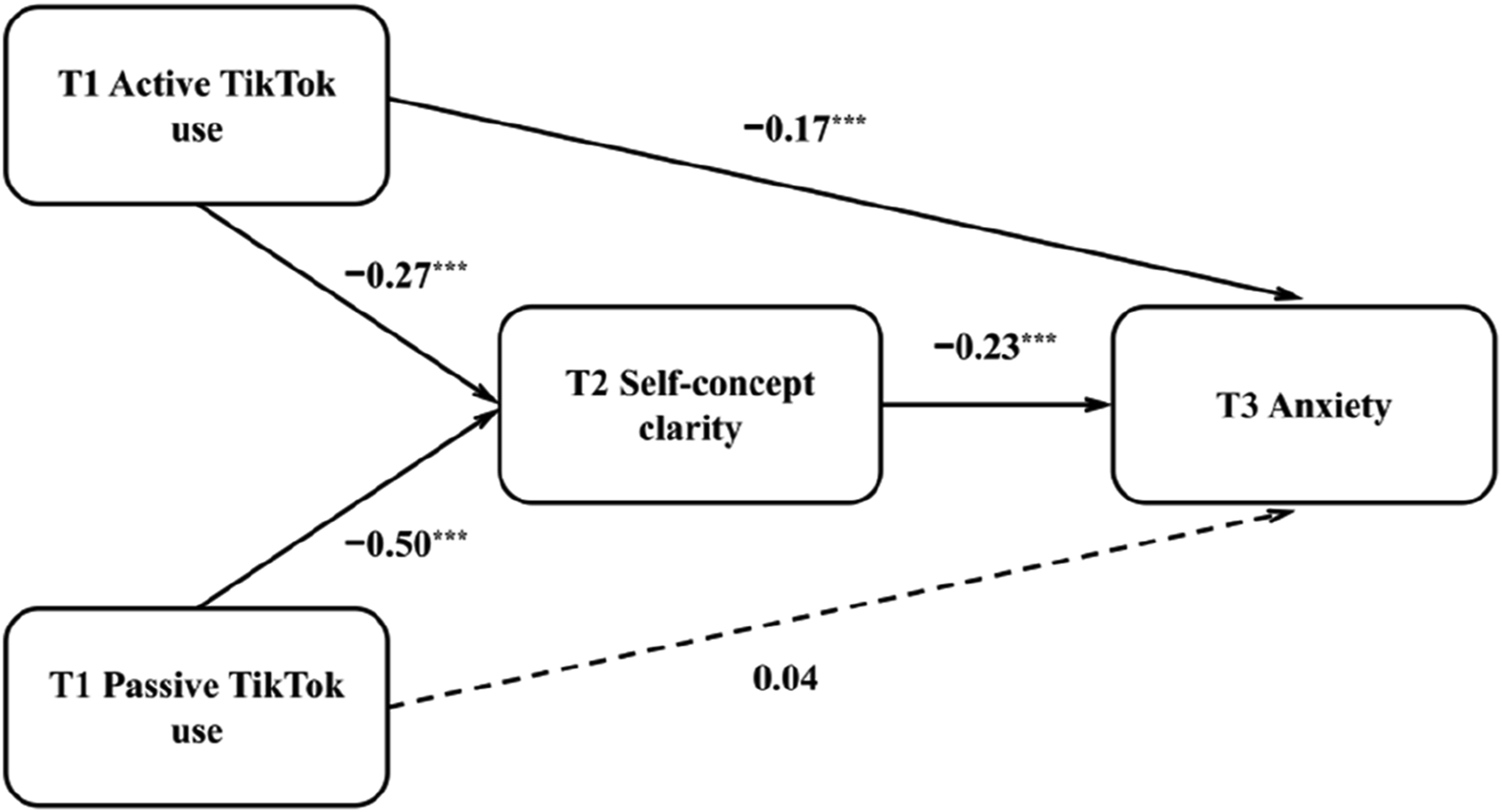
Mediation model of self-concept clarity. Note. Age, TikTok use time, and T1 anxiety were controlled in the model. ***p < .001.
Total, Direct, and Indirect Effect.
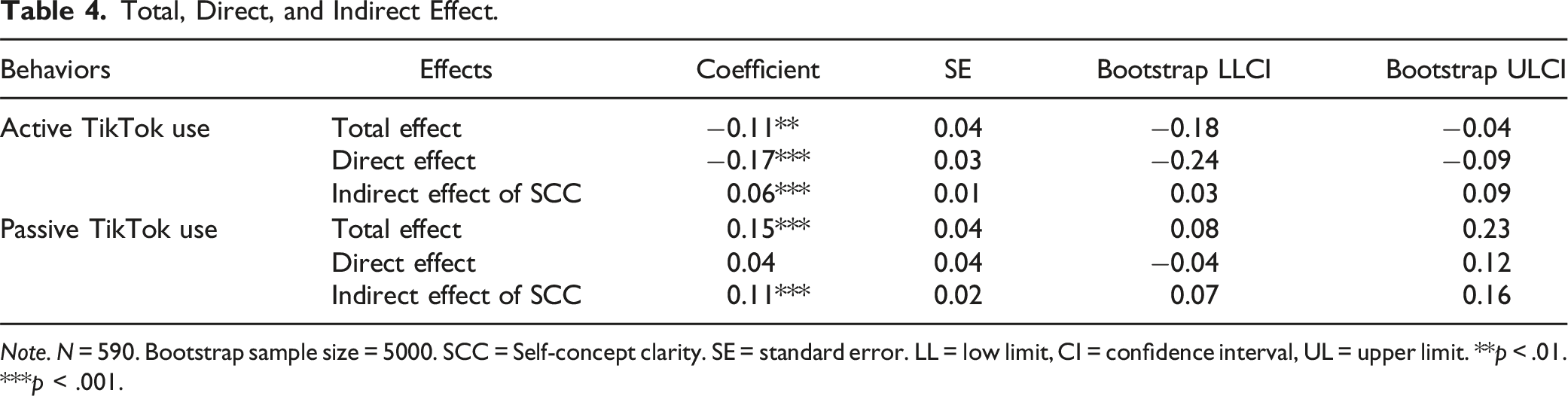
Note. N = 590. Bootstrap sample size = 5000. SCC = Self-concept clarity. SE = standard error. LL = low limit, CI = confidence interval, UL = upper limit. **p < .01. ***p < .001.
Discussion
The negative impact of short-form video on young people in China has become a growing concern among both the public and researchers. We conducted a longitudinal study spanning one year to investigate the influence of TikTok use on anxiety and its underlying mechanisms among emerging adults. The findings revealed that the direct predictive effects of distinct types of TikTok use behaviors on anxiety were not identical, but they had similar indirect paths. Self-concept clarity was identified as a factor through which both active and passive TikTok use predict anxiety. To the best of our knowledge, the present study is one of the first to examine the effects and mechanisms of various short-form video usage behaviors on anxiety. The results can contribute to the theoretical model and empirical evidence of the association between Internet use and mental health, primarily anxiety. They can also offer fundamental insights for young adults on enhancing self-concept clarity and mental health.
In line with Hypothesis 1a and Hypothesis 1b, our study showed that both active and passive use of TikTok were strongly linked to anxiety, with distinct effects observed for each. Specifically, passive TikTok use was found to positively predict anxiety, while active TikTok use negatively predicted anxiety. Passive SNS use often leads to social comparison with individuals who are better off (Burnell et al., 2019; Hu & Liu, 2020). Videos have a stronger impact on emotions compared to images (Chen & Sun, 2012; Yadav et al., 2011), thus, prolonged exposure to short-form videos is more likely to intensify upward social comparison and aggravate symptoms of anxiety. Consistent with prior findings indicating that passive use of traditional social media, such as Facebook and WeChat, significantly predicts higher levels of anxiety (Lai et al., 2023; Shaw et al., 2015; Thorisdottir et al., 2019; Zheng et al., 2020), this study focuses on the short-form video platform TikTok and further affirms that passive TikTok use also exhibits a statistically significant negative correlation with anxiety levels. In contrast, active SNS use frequently results in obtaining positive feedback online (Frison & Eggermont, 2016; Lian et al., 2020). Positive online feedback can be a crucial form of social support in the digital age and may help alleviate anxiety and other negative emotions (Yu et al., 2020). Previous research documenting a negative relationship between active use of traditional social media and anxiety (Lai et al., 2023; Thorisdottir et al., 2019) has been corroborated in our study, which utilizes TikTok as the medium. Overall, our research, in comparison to earlier studies, focuses specifically on the currently popular short-form video platform (i.e., TikTok), thereby enriching the existing body of knowledge regarding the relationship between social media use and mental health. The findings indicate that the direct effect of short-form videos on mental health is multifaceted, not solely negative. It is important not to only focus on the detrimental aspects of short-form video media but also acknowledge the potential positive effects they may offer.
Aligned with Hypotheses 2 and 3, the present study provides evidence emphasizing the pivotal role of self-concept clarity as a mediator in the association between TikTok use and anxiety. Regardless of whether emerging adults engage in active or passive TikTok use behaviors, these activities negatively impact their self-concept clarity, which subsequently influences their anxiety levels. Our findings on the association between self-concept clarity and anxiety are consistent with prior research (Kusec et al., 2016; Liu et al., 2017a). Those with low self-concept clarity are more likely to believe that the world is chaotic, disordered, and full of pressure and danger, which increases the likelihood of experiencing higher anxiety (Lodi-Smith & DeMarree, 2018). Additionally, those with low clarity of self-concept may find it more difficult to effectively integrate multiple aspects of themselves, resulting in difficulty in self-regulating (Jiang et al., 2022; Ritchie et al., 2011), which may further lead to stronger anxiety (Powers et al., 2020).
Regarding the relationship between two TikTok use behaviors and self-concept clarity, our study suggests that both active and passive TikTok use have a detrimental effect on young individuals’ self-concept clarity. These results are consistent with the self-concept fragmentation hypothesis, which suggests that Internet use often hinders individuals in developing an integrated self-concept (Valkenburg & Peter, 2008, 2011). TikTok’s short-form videos enable individuals to easily craft different character images and showcase them in a somewhat exaggerated manner. Engaging in browsing and watching these videos undoubtedly exposes individuals to a wide array of character images. As a result, whether actively participating or passively consuming content, both behaviors can heighten the risk of confusion of self-concept.
Additionally, our research largely supports the Extended Active-Passive Model of SNS use, which indicates that active use may not exclusively produce positive outcomes, but can also result in negative consequences (Verduyn et al., 2022). The findings suggest that the indirect effects of various short video usage behaviors on mental health exhibit a certain degree of consistency. While different patterns of TikTok use have diverse effects on mental health indicators (e.g., anxiety), our study emphasizes their collective negative influence on aspects of self-concept, albeit with varying levels of intensity (weak or strong). In addition, it is worth noting that when including the mediating factor (self-concept clarity), the direct effect of active TikTok use remained significant, while the direct effect of passive TikTok use was no longer significant. These results suggest that, to some extent, the effect of active TikTok use on anxiety is relatively stronger, while the effect of passive TikTok use operates more through some mediating factors. Hence, it is crucial to differentiate and assess both the direct and indirect effects of TikTok usage employing various indicators.
Limitations and Implications
There are several shortcomings that require attention. Firstly, the data on TikTok use comes from self-reported measures, which may contain subjective bias due to individuals’ memory or social desirability. In future research, we will attempt to combine subjective self-reports with objective usage characteristics to more rigorously analyze the effects of TikTok use behaviors. Secondly, TikTok use may affect individuals through multiple paths, but our study only examines the role of self-concept clarity. In future research, we will continue to examine other factors that may be closely associated with anxiety, such as self-esteem (Liu et al., 2022; Sowislo & Orth, 2013) and social comparison (Jiang & Ngien, 2020; Zheng et al., 2020). Thirdly, the dichotomous gender may pose limitations. By restricting gender to a binary classification of male and female for emerging adults, without acknowledging the full spectrum of gender diversity, it fails to capture the richness and complexity of various gender identities, including transgender, non-binary, and intersex individuals. In future studies, it would be beneficial to expand the range of gender options available for participants and investigate potential variations in the effects of TikTok usage across different gender groups. Fourthly, since our study focused solely on Chinese university students, the findings may not be readily applicable to other countries or age groups. Future research endeavors could consider comparing individuals across multiple countries and developmental stages. Furthermore, it is important to acknowledge that the present study may include individuals with pre-existing anxiety diagnoses. We assessed the baseline levels of anxiety for all participants and controlled for these levels in our statistical analyses. However, if a small number of participants had prior anxiety diagnoses, these factors could potentially influence our results. In future research, we will consider excluding individuals with known anxiety diagnoses or applying additional statistical controls.
Despite its limitations, the present study provides important implications for promoting mental health. Firstly, our study focused on TikTok as a prominent short-form video app, expanding on previous research that primarily examined traditional social media platforms like Facebook or Wechat. We also analyzed two distinct types of TikTok usage behaviors to comprehensively understand the nuanced impacts of short videos, promoting a multifaceted perspective on short-form video media. Secondly, we conducted a thorough analysis of the mechanisms by which these behaviors impact the anxiety levels of emerging adults. The results shed light on how different TikTok usage behaviors are indirectly linked to anxiety and whether these indirect pathways vary. Thirdly, our findings support the self-concept fragmentation hypothesis of Internet use, suggesting its relevance to understanding issues related to short-form video usage and enhancing the theory’s external validity. In addition to theoretical contributions, our study has some practical implications. One key finding is the need to manage TikTok use, especially passive use, as watching short-form videos can have negative effects on self-concept and mental well-being. Policymakers and software developers should therefore consider imposing viewing-time limits for emerging adults, especially vulnerable groups in emerging adulthood. Another important consideration is the double-edged sword of active TikTok use behavior. While sharing short-form videos can sometimes alleviate anxiety and boost mental health, it can also erode self-concept clarity and worsen anxiety. Emerging adults with less well-defined self-concepts should be aware of these negative effects and take measures to avoid them. Moreover, self-concept clarity plays a crucial mediating role in the impact of TikTok usage on anxiety, and improving self-concept clarity will undoubtedly help alleviate the reinforcing effect of short-form videos on anxiety. Schools and parents can guide emerging adults to gradually establish clear and stable self-concepts through effective measures such as enhancing cultural identity, learning from elders’ life experiences, and mindfulness meditation training. Research indicates that enhancing cultural identity can improve self-concept clarity among college students, further enhancing their self-esteem and subjective well-being (Usborne & Taylor, 2010). Participating in life story encounter programs and discussing existential questions about life with the elderly (e.g., important values in life, how to deal with failure and regret) significantly enhances self-concept clarity among adolescents (Thomas et al., 2022). Additionally, numerous studies suggest that mindfulness levels positively predict self-concept clarity (e.g., Hanley & Garland, 2017; Stenhaug & Solem, 2024), indicating that mindfulness interventions may also improve self-concept clarity. Emerging adults can proactively enhance their self-concept clarity in daily life through these measures.
Conclusion
Both active and passive TikTok use were found to be significantly associated with anxiety, demonstrating distinct effects. Self-concept clarity mediated the relationship between TikTok use behaviors and anxiety. Active TikTok use had a direct weakening effect on anxiety, but it indirectly reinforced anxiety through the reduction in self-concept clarity. In contrast, passive TikTok use had a reinforcing effect on anxiety, but the decrease in self-concept clarity accounted for the effect of passive TikTok use on anxiety. It is essential to note that passive use of TikTok consistently shows negative effects, while active use of TikTok can decrease anxiety but may impact self-concept negatively. Therefore, it is crucial to differentiate between various TikTok use behaviors and different psychological indicators when examining the impact of TikTok.
Supplemental Material
Supplemental Material - Longitudinal Associations Between TikTok Use, Self-Concept Clarity, and Anxiety Among Chinese Emerging Adults: Exploring Differential Impacts of Active and Passive TikTok Use
Supplemental Material for Longitudinal Associations Between TikTok Use, Self-Concept Clarity, and Anxiety Among Chinese Emerging Adults: Exploring Differential Impacts of Active and Passive TikTok Use by Qingqi Liu, Jiani Wen, Ningxi Wang, and Manjun Wang in Emerging Adulthood
Footnotes
Declaration of Conflicting Interests
The author(s) declared no potential conflicts of interest with respect to the research, authorship, and/or publication of this article.
Funding
The author(s) disclosed receipt of the following financial support for the research, authorship, and/or publication of this article: This work was supported by the Educational Science Planning Fund of Guangdong Province (No. 2024GXJK683) and the Fund of Philosophy and Social Science of Guangdong Province (No. GD20CXL05).
Transparency and Openness Statement
The raw data, analysis code, and materials used in this study are not openly available but can be obtained from the corresponding author following the completion of a privacy and fair use agreement. No aspects of the study were pre-registered.
Ethical Statement

Supplemental Material
Supplemental material for this article is available online.
Appendix
Author Biographies
References
Supplementary Material
Please find the following supplemental material available below.
For Open Access articles published under a Creative Commons License, all supplemental material carries the same license as the article it is associated with.
For non-Open Access articles published, all supplemental material carries a non-exclusive license, and permission requests for re-use of supplemental material or any part of supplemental material shall be sent directly to the copyright owner as specified in the copyright notice associated with the article.
