






Abstract
First-generation college students from historically marginalized backgrounds often face a cultural mismatch between interdependent family obligations and independent academic demands during the transition to college. Guided by cultural mismatch and biculturalism theories, this study examined whether internalizing symptoms mediated the association between cultural mismatch and academic problems, and whether this indirect effect was moderated by cultural harmonization (tendency to balance family and academic obligations). Participants were 561 first-generation college students from historically marginalized backgrounds (93.4% Latinx; Mage = 18.0) attending Hispanic-Serving Institutions in California. Greater mismatch between family and academic obligations was associated with greater internalizing symptoms, which in turn were associated with more academic problems. However, the cultural mismatch → internalizing symptoms → academic problems indirect effect was not significant among students who harmonized. Students who harmonized also reported lower internalizing symptoms and fewer academic problems. Findings identify cultural harmonization as a protective factor, informing individual- and institutional-level efforts to support first-generation college students.
Keywords
Empirical studies have documented that home–school cultural value mismatch—a mismatch between interdependent family obligations and independent academic demands (e.g., having to decide between attending a family event versus studying; Vasquez-Salgado et al., 2015; 2021)—is a common lived experience among first-generation college students from historically marginalized backgrounds during the transition to college, a period that overlaps with emerging adulthood (ages 18–25; Arnett, 2007). This mismatch is associated with increased psychological and physical health distress as well as academic problems (Serrano et al., 2025; Valle & Covarrubias, 2024; Vasquez-Salgado et al., 2015, 2021), outcomes that may ultimately reduce the likelihood of college completion (Credé & Niehorster, 2012). More recently, this cultural mismatch has been linked to accelerated biological aging, suggesting potential long-term implications for health and mortality risk (Vasquez-Salgado et al., 2025).
Despite these growing concerns, it remains unclear whether a student’s tendency to balance family and academic obligations—referred to here as cultural harmonization—might serve as a protective factor. Identifying such a protective factor is essential for expanding our understanding of cultural mismatch and informing interventions to support historically marginalized students during the college transition. The present study addresses this gap by investigating whether cultural harmonization can protect historically marginalized first-generation college students from the negative outcomes associated with home–school cultural value mismatch during the transition to college.
A Critical Window: The First-Year Transition for Historically Marginalized First-Generation College Students
Early research on home–school cultural value mismatch focused primarily on Latinx first-generation college students (Vasquez-Salgado et al., 2015, 2018). Subsequent research has demonstrated that this mismatch extends to first-generation college students more broadly (Vasquez-Salgado et al., 2021), including Black students represented in studies examining consequences of mismatch (Serrano et al., 2025; Vasquez-Salgado et al., 2025). First-generation college students and historically marginalized students are more likely to endorse interdependent values and emphasize close social and family ties (Brannon et al., 2015; Covarrubias, 2021; Stephens, Fryberg, et al., 2012; Vasquez-Salgado et al., 2021). Latinx students tend to endorse strong interdependent values and family obligation (Covarrubias, 2021; Fuligni et al., 1999; Vasquez-Salgado et al., 2021), whereas research with Black students highlights centrality of family ties and responsibilities during college (Wiggins, 2025). Together, these patterns suggest that family obligations remain highly salient during the transition to college, increasing the likelihood of experiencing home–school cultural value mismatch.
These dynamics unfold within emerging adulthood (Arnett, 2007), a developmental period during which family obligation intensifies (Fuligni & Pedersen, 2002) and overlaps with the transition to college. The first year of college represents a particularly critical window, marked by the highest rates of attrition among first-time freshmen (Pitcher & Parsons, 2023) and heightened vulnerability to psychopathology (Schulenberg et al., 2004). Therefore, examining home–school cultural value mismatch during college students’ first term allows for early identification of processes that may shape long-term trajectories of psychological adjustment and academic persistence.
The focus is especially important for historically marginalized first-generation college students, as Latinx and Black students have been historically underrepresented in higher education (National Center for Education Statistics, 2022) and continue to graduate at lower rates than their peers (Sólorzano et al., 2005). Together, these disparities underscore the importance of understanding how these students experience and navigate home–school cultural value mismatch during the transition to college.
Theoretical Frameworks
Home–School Cultural Value Mismatch
Cultural mismatch theories suggest that first-generation college students experience a disadvantage in their transition to higher education, in part, because their interdependent norms (e.g., focus on others’ needs, group goals)—socialized in lower social class backgrounds—conflict with the independent norms (e.g., focus on self-expression, personal goals) socialized in American higher education institutions (Greenfield, 2009; Stephens, Fryberg, et al., 2012). In contrast, continuing-generation students, accustomed to middle-class environments that prioritize independence, experience a seamless transition to university. There is robust evidence linking this general cultural mismatch to increased negative emotions, heightened physiological stress reactivity, and poorer performance on academic tasks (Stephens, Fryberg, et al., 2012; Stephens, Townsend et al., 2012).
The present study focuses on a specific form of cultural mismatch: home–school cultural value mismatch, defined as the perceived mismatch between interdependent family obligations (e.g., spending time with family, assisting family) and independent academic obligations (e.g., doing homework, studying for exams; Vasquez-Salgado et al., 2015, 2021). According to the home–school cultural mismatch framework, sociodemographic factors such as identifying as Latinx, being a first-generation college student, having a lower parental income, being female, and living closer to home are associated with greater experiences with mismatch (Vasquez-Salgado et al., 2021). However, when Latinx, first-generation college status and low parental income were examined within the same model, only first-generation college status predicted higher levels of mismatch via stronger interdependent values. This pattern suggests that home–school cultural value mismatch may be driven by interdependent values linked to first-generation college status, supporting its relevance across first-generation college students from diverse backgrounds, not only those who identify as Latinx.
In terms of consequences, a triangulation of methodologies (qualitative, survey, experiment, biomarkers) has demonstrated the health and academic costs associated with home–school cultural value mismatch (Vasquez-Salgado et al., 2015, 2018, 2021, 2025). Central to the present study, this mismatch has been linked with mental and physical health distress as well as academic problems around attention and learning (Serrano et al., 2025; Vasquez-Salgado et al., 2015, 2018, 2021), with distress serving as the key mechanism that connects these associations together (cultural mismatch → distress → academic problems).
Bicultural Competence
Biculturalism is one potential outcome of acculturation, a process of adaptation that emerges in response to changes or transitions in one’s social ecology (Sam & Berry, 2010; Schwartz et al., 2020), such as the transition to college. A prominent model of acculturation outlines four strategies: assimilation (identification mostly with the dominant culture), separation (identification mostly with the heritage culture), marginalization (low identification with both cultures), and biculturalism (identification with both cultures; Berry et al., 2006). Individuals who manage cultural conflict by internalizing the values of both groups (i.e., being bicultural) may demonstrate greater integrative complexity—the ability and willingness to acknowledge competing perspectives and form novel links between these perspectives—enabling greater flexibility in adapting to diverse cultural situations (Benet-Martínez et al., 2006; Tadmor et al., 2009; Tadmor & Tetlock, 2006). This cognitive flexibility, along with access to social support across both cultures, is theorized to buffer against the psychological and sociocultural challenges that often accompany acculturation stress (Nguyen & Benet-Martínez, 2013). A substantial body of research has found that biculturalism, relative to other acculturation strategies, is more strongly associated with positive outcomes in psychological (e.g., depression, anxiety) and academic adjustment (Nguyen & Benet-Martínez, 2013; Pham & Harris, 2001; Phinney, 1992; Sam & Berry, 1995; Schwartz et al., 2007).
The present study draws on LaFromboise et al.’s (1993) biculturalism theory, which emphasized the development of bicultural competence as a key factor to well-being among bicultural individuals. Bicultural competence consists of six domains: (1) knowledge of cultural beliefs and values, (2) positive attitudes toward both majority and minority groups, (3) bicultural efficacy, (4) communication ability, (5) role repertoire, and (6) social groundedness (LaFromboise et al., 1993). Central to this study is the construct of bicultural efficacy—the confidence that one can live effectively in both cultures without compromising one’s cultural identity. Bicultural efficacy is theorized to play a critical role in navigating complex demands of maintaining supportive relationships in both dominant and heritage cultures. Bicultural efficacy may also facilitate the development of role repertoire—the ability to engage in a range of culturally and contextually appropriate behaviors. Empirical evidence supports the protective role of bicultural competence, particularly among historically marginalized students, in mitigating depression linked with minority stress, such as discrimination and prejudice (Wei et al., 2010). However, findings have been mixed; for example, one study did not observe a moderating effect of bicultural competence in the relationship between parental cultural mismatch and depressive symptoms (Carrera & Wei, 2014). Nonetheless, other research consistently demonstrated associations between bicultural competence and lower levels of depression and anxiety, both concurrently and over time (David et al., 2009; Schwartz et al., 2015, 2019).
Cultural Harmonization as a Novel Theoretical Bridge
Although the home–school cultural value mismatch framework has identified the conflict between family and academic obligations, it has yet to explore the possibility that students may strategically enact on both types of demands. Prior qualitative research using cultural mismatch scenarios has documented students’ hypothetical strategies for navigating such mismatch—for example, by prioritizing one domain over the other or attempting to balance both (Vasquez-Salgado et al., 2015). However, to our knowledge, no published empirical studies have examined students’ typical responses to their own lived experiences of home–school cultural value mismatch. A review of APA PsycInfo, EBSCO, and Google Scholar databases (2015–2025) using combinations of keywords related to home–school cultural value mismatch, resolution, and harmonization did not yield studies directly addressing this question. Across the broader literature on cultural mismatch and home–school cultural value mismatch, a critical gap remains regarding how students resolve these conflicting cultural demands in practice. To date, the resolution of cultural mismatch has been studied primarily in the context of peer-to-peer interactions, focusing on interpersonal communication styles (Burgos-Calvillo et al., 2024; Burgos-Cienfuegos et al., 2015).
This study seeks to address this theoretical and empirical gap by integrating insights from the home–school cultural value mismatch framework and bicultural competence theory. Specifically, it examines whether students’ tendency to harmonize competing cultural obligations may serve as a protective force against the negative psychological and academic consequences of cultural mismatch. To that end, the study introduces the novel construct of cultural harmonization, defined as a student’s typical behavioral resolution strategy when faced with a mismatch between interdependent family obligations and independent academic obligations (see Figure 1). Cultural harmonization is conceptualized in two forms: (1) full cultural harmonization, wherein students report prioritizing both family and academic obligations (“balancing” family and academic obligations), and (2) partial or no cultural harmonization, wherein students report occasional prioritization of both or prioritization of one domain over the other. Thus, cultural harmonization represents a situational behavioral response to home–school cultural value mismatch rather than an identity-based capacity related to biculturalism. Bicultural competence reflects an individual’s ability to function effectively across cultural contexts—encompassing identity integration, values, attitudes, and behavioral repertoires—whereas cultural harmonization is focused on how students resolve specific family and academic mismatches. Nevertheless, both constructs are needed because bicultural competence provides the theoretical basis for the protective effect of cultural harmonization. By incorporating cultural harmonization into the home–school cultural value mismatch framework, this study responds to calls for research to identify resilience factors that protect against the negative psychological and academic consequences of mismatch (Serrano et al., 2025; Vasquez-Salgado et al., 2021). Home–School Cultural Value Mismatch and Bicultural Competence as Guiding Frameworks for Cultural Harmonization. Note. Informed by Vasquez-Salgado et al. (2021) and LaFromboise et al. (1993). Cultural harmonization is a new construct proposed by the authors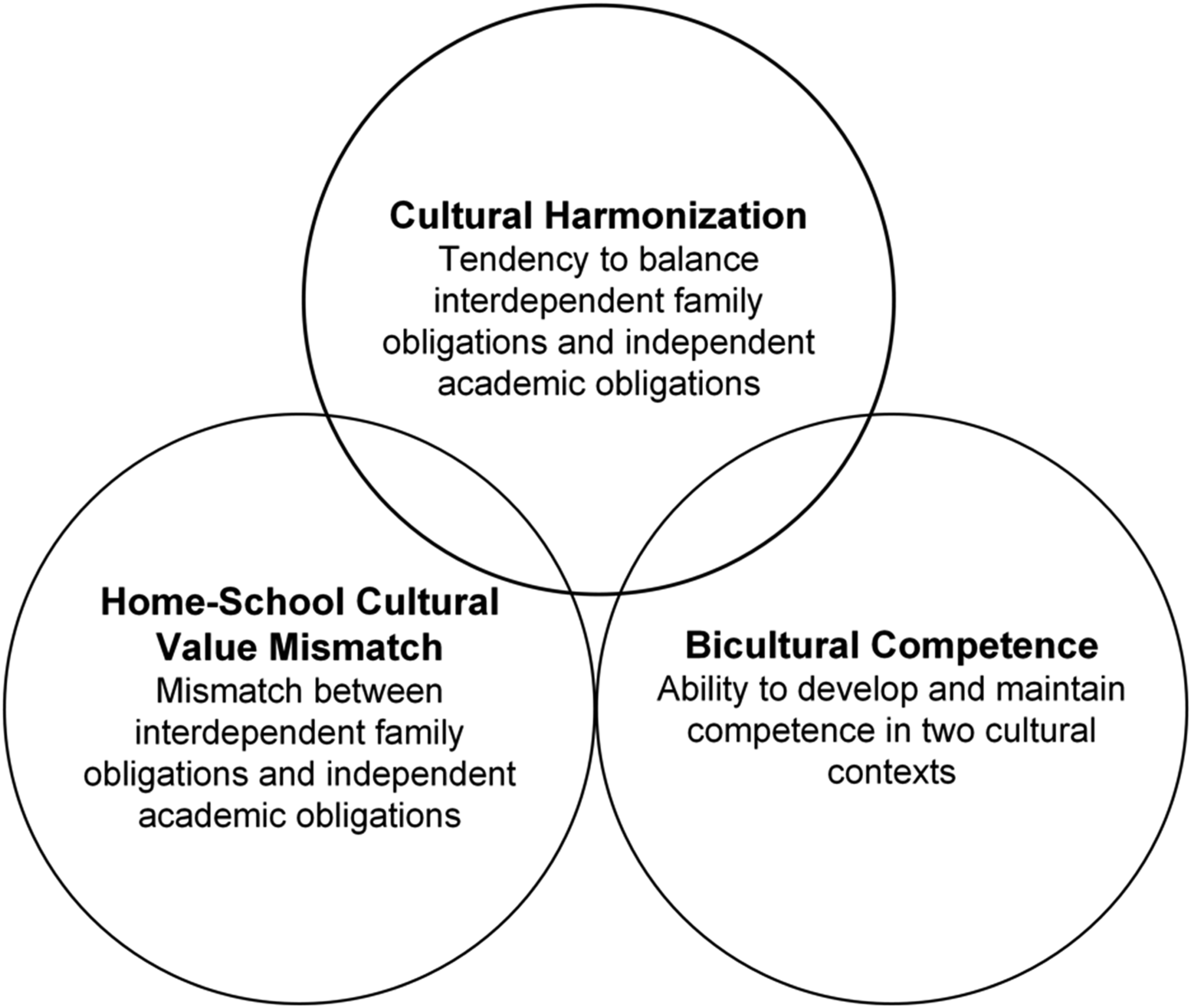
Internalizing Symptoms as a Mediator in the Link Between Cultural Mismatch and Academic Functioning
Qualitative research with Latinx first-generation college students has shown that internal conflict between interdependent family obligations and independent academic demands was connected to perceived emotional distress, as well as attention and learning difficulties (Vasquez-Salgado et al., 2015). Subsequent studies with larger, multi-ethnic samples provided quantitative support for these findings: greater home–school cultural value mismatch was associated with greater distress (i.e., anxiety, depression, and physical health complaints), which in turn was associated with greater academic problems around attention and learning (Serrano et al., 2025; Vasquez-Salgado et al., 2021). Notably, Vasquez-Salgado et al. (2021) identified distress as the mediator, whereas Serrano et al. (2025) focused on anxiety, with both studies showing significant indirect effects and non-significant direct effects.
Building on this literature, the present study focuses specifically on internalizing symptoms—namely, anxiety and depression—which are among the most prevalent challenges to academic performance among college students (American College Health Association, 2025). Although prior research has emphasized anxiety (Serrano et al., 2025), no study has isolated internalizing symptoms as a unified mediator. Including depression is critical given its high co-occurrence with anxiety, overlapping affective and cognitive mechanisms, and shared negative impacts on attentional control, executive functioning, and academic performance (Eysenck et al., 2007; Meyers et al., 2014; Rock et al., 2014; Rozek et al., 2019). By examining internalizing symptoms as a mediating mechanism, this study offers a more comprehensive examination of the affective pathways through which home–school cultural value mismatch is linked with academic problems.
Cultural Harmonization as a Moderator
Cultural harmonization may serve as a moderator in the relationship between home–school cultural value mismatch and internalizing symptoms. Students who endorse full harmonization may be better equipped to navigate cultural mismatch, employing flexible and adaptive strategies that protect against symptoms of anxiety and depression. This aligns with research linking cognitive control and flexibility to effective emotional regulation under stress, with deficits in these domains associated with elevated internalizing symptoms (Gabrys et al., 2018; Park & Moghaddam, 2017). Furthermore, the ability to engage in both cultural demands may facilitate the development of strong, supportive relationships across family and school—a factor linked to psychological adjustment among college students (Hefner & Eisenberg, 2009).
In contrast, students who endorse partial or no harmonization may be less equipped with flexibility to generate effective solutions to the stressful nature of cultural mismatch. Qualitative research suggests that students who exclusively prioritized family or academic demands often engaged in post-decision rumination (Vasquez-Salgado et al., 2015). Students who prioritized academics reported feeling conflicted, guilty, or concerned about missing important family experiences, while those who prioritized family described having limited time for their studies or the lack of a conducive environment for studying (Vasquez-Salgado et al., 2015). In both cases, students experienced suboptimal psychological and academic outcomes—such as being unable to focus because they “couldn’t be [with family]” or being preoccupied by “the need to study” during family events (Vasquez-Salgado et al., 2015). Although no prior research has examined the effects of occasionally prioritizing both demands, such inconsistency may be linked to psychological and academic outcomes comparable to those experienced by students who prioritize one domain over the other.
Cultural harmonization may also serve as a moderator to the indirect effect of mismatch on academic problems via internalizing symptoms. This is consistent with moderated mediation theory (Preacher et al., 2007), which posits that the strength of an indirect effect can vary as a function of a moderator—whether a student endorses full harmonization. While direct empirical evidence remains limited, existing research offers a basis for examining cultural harmonization as a moderator within the home–school cultural value mismatch framework, particularly in understanding individual differences in students’ psychological and academic outcomes related to cultural mismatch. By introducing cultural harmonization as a moderator, this study extends the home–school cultural value mismatch framework and suggests that the linkages between home–school cultural value mismatch, internalizing symptoms, and academic problems may be more nuanced than previously understood. Figure 2 depicts this moderated mediation hypothesis. Conceptual diagram of moderated mediation hypothesis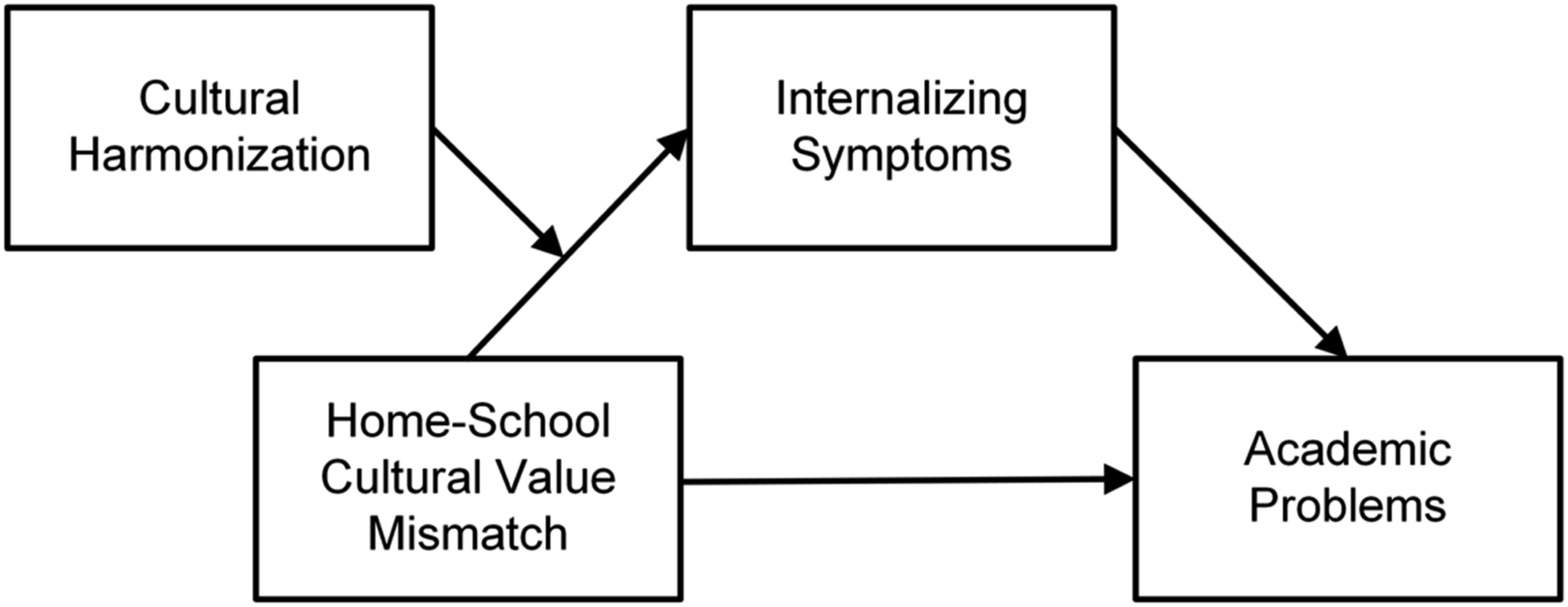
Purpose and Hypotheses
The purpose of the present study is to test a moderated mediation model guided by the home–school cultural value mismatch framework and bicultural competence theory. Specifically, the present study aims to (1) examine whether internalizing symptoms mediate the association between home–school cultural value mismatch and academic problems and (2) whether the strength of this indirect effect is moderated by students’ level of cultural harmonization. This study represents the first empirical effort to explore how students’ own behavioral strategies—specifically, cultural harmonization—shape the psychological and academic costs associated with home–school cultural value mismatch. Based on prior theory and empirical research, the following hypotheses are proposed:
Hypothesis 1: Simple Mediation
(a) Greater home–school cultural value mismatch will be associated with greater internalizing symptoms, which in turn will be associated with greater academic problems. (b) The total effect between home–school cultural value mismatch and academic problems will be significant, such that greater mismatch will be associated with greater academic problems. (c) Internalizing symptoms will fully mediate the association between home–school cultural value mismatch and academic problems, such that the effect of home–school cultural value mismatch on academic problems will be non-significant when internalizing symptoms are accounted for in the model (Figure 2). Instead, a significant indirect effect is anticipated, whereby home–school cultural value mismatch is associated with academic problems through internalizing symptoms.
Hypothesis 2: Simple Moderation
Cultural harmonization will moderate the association between home–school cultural value mismatch and internalizing symptoms, such that the association will be weaker among students who endorse full cultural harmonization compared to those who endorse partial or no cultural harmonization.
Hypothesis 3: Moderated Mediation
The indirect effect of home–school cultural value mismatch on academic problems via internalizing symptoms will be moderated by cultural harmonization, such that the indirect effect will be weaker for students who endorse full cultural harmonization compared to those who endorse partial or no cultural harmonization.
It is important to note that although this study focuses on students’ strategies for navigating cultural mismatch, it does not suggest that the responsibility for resolving such mismatch should rest solely on students. Broader institutional and policy-level efforts remain critical to addressing the structural roots of cultural mismatch. By examining cultural harmonization as an individual-level protective factor, this research contributes to a more comprehensive understanding of how students manage cultural mismatch, while underscoring the continued need for systemic changes that foster cultural inclusivity in higher education.
Method
Design, Participants, and Procedure
Participants were first-year college students recruited during their first semester or quarter at two large Hispanic-Serving Institutions in Southern California. This study was approved by an Institutional Review Board and was part of a larger, longitudinal research project that included an online survey, a health-related activity, and a virtual interview component. The present analysis focused on data from the online survey component, which included 561 participants from five cohorts: Fall 2019 (n = 87), Fall 2020 (n = 52), Fall 2021 (n = 44), Fall 2023 (n = 179), and Fall 2024 (n = 199).
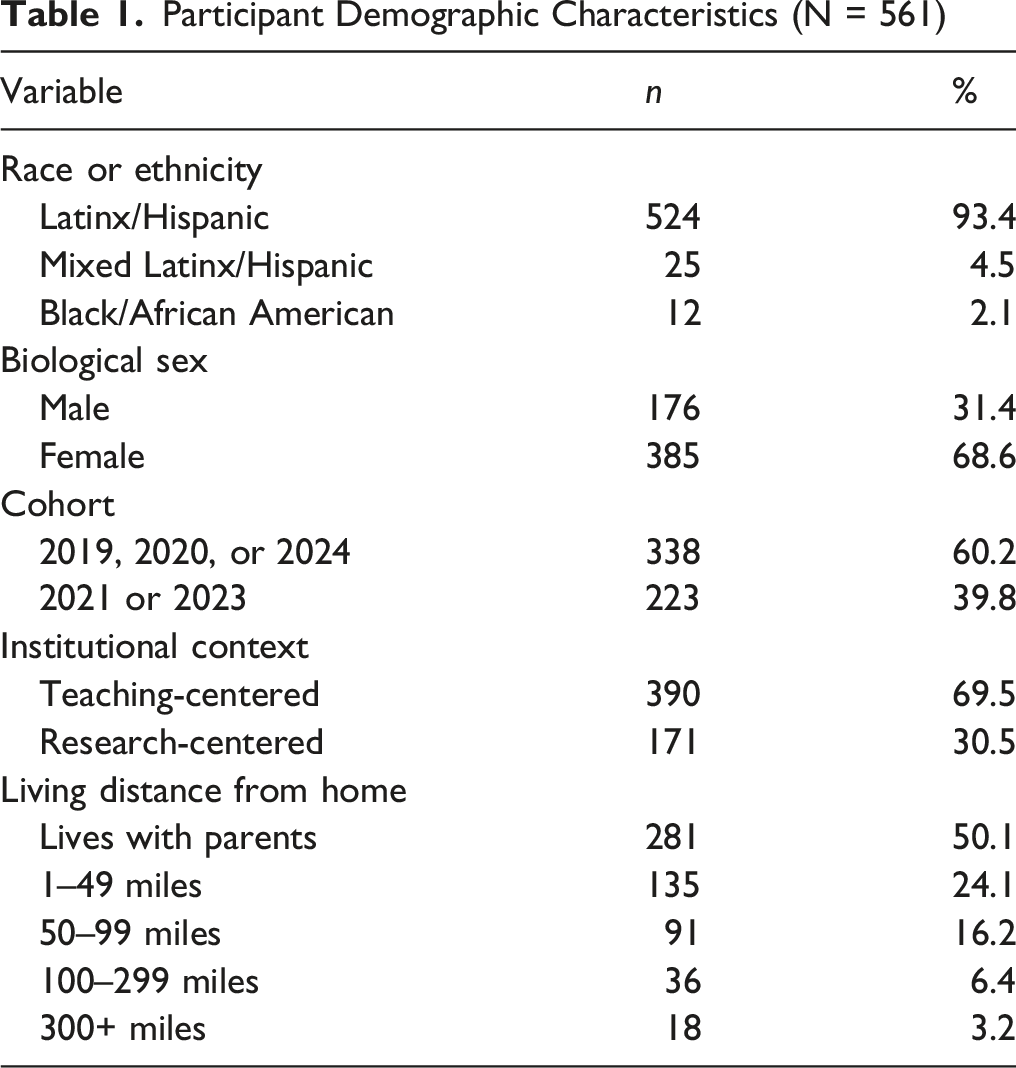
The sample primarily identified as Latinx (n = 524; 93.4%), with additional representation from individuals of mixed Latinx (n = 25; 4.5%) and Black backgrounds (n = 12; 2.1%). Participants included 385 females (68.6%) and 176 males (31.4%), with an average age of 18.02 years (SD = 0.38). All participants were first-generation college students, determined based on participants’ reports of their parents’ highest level of education; participants were first-generation if neither parent earned a bachelor’s degree or higher. In cases where information for one parent was missing—specifically, for 35 participants (mother: n = 3; father: n = 32)—first-generation college student status was determined on the available parent’s education level. The average combined parental income fell within the $40,000 to $49,999 range. Most participants were second-generation immigrants (at least one parent born outside the United States; n = 519; 92.5%), with a smaller proportion identifying as first-generation immigrants (participants and their parents were born outside the United States; n = 42; 7.5%).
Participants were recruited into the study through campus-wide emails, social media, and hard-copy flyers. Interested students completed a 5-min prescreening survey. To be eligible for a study invitation, students had to meet the following criteria: (a) be a first-time, first-year undergraduate student; (b) be at least 18 years of age; and (c) self-identify with a historically marginalized racial or ethnic background (Latinx or Hispanic, Black or African American, Native American or Alaskan Native, Native Hawaiian or Pacific Islander, mixed race or ethnicity). Students were excluded if they were transfer, exchange, or international students or if they had underlying health conditions (e.g., cardiovascular, respiratory, autoimmune, inflammatory, gastrointestinal, periodontal, color blindness, learning disability).
Students who accepted the invitation to participate completed an online consent form outlining the study’s procedures. Thereafter, they completed an online survey hosted on Qualtrics and received $10 for completing the survey.
Measures
Home–School Cultural Value Mismatch
A subset of items from the Home–School Cultural Value Mismatch Scale was used to assess participants’ perceived mismatch between interdependent family obligations and independent academic obligations (Vasquez-Salgado et al., 2021). Specifically, nine items were selected from the first two factors identified in the scale’s principal components analysis (Vasquez-Salgado et al., 2021), capturing students’ perceived internal tension in navigating academic demands alongside more daily familial obligations, such as attending family events, spending time with family, or assisting them by completing tasks. The third factor, which referenced less frequent or less agentic scenarios, such as holiday participation, decision about college living arrangements, or financial expenditures, was excluded to enhance the measure’s conceptual alignment with the construct of cultural harmonization.
All items were prefaced with the prompt: “Since you started [Institution], how often have you had to choose between your academic work and….” Sample items include: “attending family events,” “spending time at home with your family,” and “helping take care of family members.” Responses ranged from 1 = Never to 5 = Very Frequently. A composite score was calculated by averaging the nine items, with higher scores indicating higher cultural mismatch. The scale demonstrated strong internal consistency in the analytic sample (α = .87), replicating the reliability from the full 14-item version in a multi-ethnic student sample (α = .90; Vasquez-Salgado et al., 2021).
Internalizing Symptoms
Participants’ level of internalizing symptoms, which included symptoms of depression and anxiety, was measured using a combination of two scales, each with eight items. The items were prefaced with “Since you started [Institution]….” The PROMIS Depression Short Form was used to measure depressive symptoms (Pilkonis et al., 2011). Sample items included: “I could not stop feeling sad,” “I felt alone,” and “I felt everything in my life went wrong.” The Neuro-QOL Anxiety Short Form was used to measure anxiety symptoms (Cella et al., 2012). Sample items included: “I felt uneasy,” “I felt nervous,” and “I had difficulty calming down.” Responses ranged from 1 = Never to 5 = Always. Participants’ responses were averaged, with greater scores indicating greater internalizing symptoms. The internal consistency of the combined measure was .96.
Academic Problems
Participants’ attention and learning problems were assessed using a 6-item measure adapted from Telzer and Fuligni (2009). Items were prefaced with “Please rate how many times you experienced each of the following situations since you started the Fall [semester/quarter] at [Institution]….” Attention problem items included “Had a difficult time focusing in class,” “Had a difficult time focusing on studying,” and “Had a difficult time focusing during an exam.” Learning problem items included “Did not understand something taught in class,” “Did poorly on a test, quiz, or homework,” and “Did not turn in homework that was due.” Responses ranged from 1 = Never to 5 = Always. All item contents reflected the attention and learning difficulties that were shared in focus groups by first-generation college students (Vasquez-Salgado et al., 2015). The internal consistency of the items was .78, within range of the internal consistency of the items from a multi-ethnic student sample (α = .83; Vasquez-Salgado et al., 2021).
Cultural Harmonization
Participants’ typical behavioral resolution strategy when faced with a mismatch between interdependent family obligations and independent academic obligations was assessed using a single item. Participants were asked, “Think about the time since you started [Institution]…when you had to choose between something involving academics versus family…what did you typically choose?” Responses included: “I found a way to do both,” “Family,” “Academics,” “I tried to do each of them some of the time,” and “Not Applicable.” Responses were dichotomized for analysis. Participants who selected “I found a way to do both” were coded as 1 (full harmonization), and all other responses (“Family,” “Academics,” or “I tried to do each of them some of the time”) were coded as 0 (partial/no harmonization).
Covariates
The following covariates were included in all analyses: cohort, institutional context, biological sex, and living distance from home. The section below outlines the rationale for their inclusion and describes how each variable was coded.
Given that data were collected across five academic cohorts (2019, 2020, 2021, 2023, 2024), cohort was considered as a covariate to account for potential differences in outcomes associated with the historical or social contexts of each cohort. For instance, the COVID-19 pandemic prompted a shift to online education from the implementation of stay-at-home orders. Research has documented greater levels of anxiety and depression (Browning et al., 2021), as well as increased attention problems (Copeland et al., 2021), among college students during this period. Cohort differences were examined across key study variables: home–school cultural value mismatch, internalizing symptoms, academic problems, and cultural harmonization. The only significant difference emerged for internalizing symptoms, with participants in 2021 and 2023 reporting higher levels than those in 2024. Notably, 2021 and 2023 did not significantly differ from one another, nor did 2019, 2020, and 2024. Based on this pattern, a binary cohort variable (0 = 2019, 2020, 2024 and 1 = 2021, 2023) was created and included as a covariate in analyses.
Institutional context was also included as a covariate, with institutions classified as either teaching-centered (coded as 0) or research-centered (coded as 1). Theoretically, students at research-centered institutions may experience greater home–school cultural value mismatch due to more academically demanding environments and stronger socialization toward independence. Prior research supports the notion that universities differ in the extent to which they promote independence as a cultural norm, as evidenced by first-tier institutions emphasizing independence more than second-tier institutions (Stephens, Fryberg, et al., 2012).
Additional demographic covariates were included based on prior research linking them to home–school cultural value mismatch. Specifically, identifying as female and living closer to home have been associated with greater levels of perceived mismatch (Vasquez-Salgado et al., 2015, 2018, 2021). Participants reported their biological sex in response to the question, “What is your biological sex?” Responses were coded as 0 = female and 1 = male. To assess living distance from home, participants provided their current residential address, current living situation, and parents’ residential address. For participants who did not live at home, the shortest driving distance between their residence and their parents’ residence was calculated using Google Maps. Given that the continuous version of this variable was significantly skewed (z = 90.6), this distance was converted into an ordinal variable: 0 = lives with parents, 1 = 1–49 miles, 2 = 50–99 miles, 3 = 100–299 miles, and 4 = 300+ miles.
Statistical Analyses
All data analyses were performed using IBM SPSS (Version 29). Although 621 participants completed the online survey, 31 (5.0%) participants were excluded for being continuing-generation college students and two (0.3%) for missing data on both parents’ education. Of the 588 first-generation college students, 27 participants (4.6%) were excluded, resulting in a final analytic sample of 561. Specifically, 24 participants were excluded for not providing a valid response to the cultural harmonization question—either skipping the item (n = 1) or answering, “Not Applicable” (n = 23). An additional three participants were excluded for missing more than 20% of items on at least one key variable. When more than 20% of a participant’s responses on a given scale are missing, imputed values become increasingly speculative and may introduce bias or reduce validity (Dong & Peng, 2013; Imai et al., 2014). Therefore, these cases were excluded to maintain the integrity of the data.
Proration was used to address missing data on key interval variables (home–school cultural value mismatch, internalizing symptoms, academic problems). This method involves averaging the available responses for a scale, provided that at least 80% of the items were completed. Proration was applied to 14 participants: 13 were missing a single item on one measure, and one participant was missing two items. This approach is supported by prior research showing that proration provides a valid estimate of scale scores when the proportion of missingness is below 20% (Imai et al., 2014) and is consistent with established guidelines recommending proration when internal consistency is high (α > .70; Schafer & Graham, 2002)—a criterion met for all study measures.
Imputation based on the mean value of participants with similar ethnicity and biological sex was used to address missing data on covariates. This approach was applied to the “living distance from home” variable for one participant who did not report their current living situation (imputed as “1–49 miles”).
Descriptive statistics were used to characterize the sample and Pearson correlations examined associations among variables. All continuous predictors were mean-centered prior to hypotheses testing.
To test whether internalizing symptoms fully mediated the relationship between home–school cultural value mismatch and academic problems (Hypothesis 1), PROCESS macro Model 4 (Hayes, 2013) with 10,000 bootstrap samples was used. The indirect effect of home–school cultural value mismatch on academic problems was quantified as the product of the coefficients estimating home–school cultural value mismatch on internalizing symptoms and internalizing symptoms on academic problems. A significant indirect effect was inferred when the 95% bootstrap confidence interval (CI) did not include zero (Hayes, 2013).
To test whether cultural harmonization moderated the relationship between home–school cultural value mismatch and internalizing symptoms (Hypothesis 2), PROCESS macro Model 1 (Hayes, 2013) with 10,000 bootstrap samples was used. The interaction term, computed as the product of home–school cultural value mismatch and cultural harmonization, tested moderation, and conditional effects of home–school cultural value mismatch on internalizing symptoms were probed at each level of cultural harmonization.
Finally, to test whether cultural harmonization moderated the indirect effect of home–school cultural value mismatch on academic problems via internalizing symptoms (Hypothesis 3), PROCESS macro Model 7 (Hayes, 2013) with 10,000 bootstrap estimates was used. A significant index of moderated mediation was inferred when the 95% bootstrap CI did not include zero. Conditional indirect effects of home–school cultural value mismatch on academic problems through internalizing symptoms were probed at each level of cultural harmonization.
Results
Preliminary Analyses
Participant Demographic Characteristics (N = 561)
Zero-Order Correlations and Descriptive Statistics for Variables of Interest
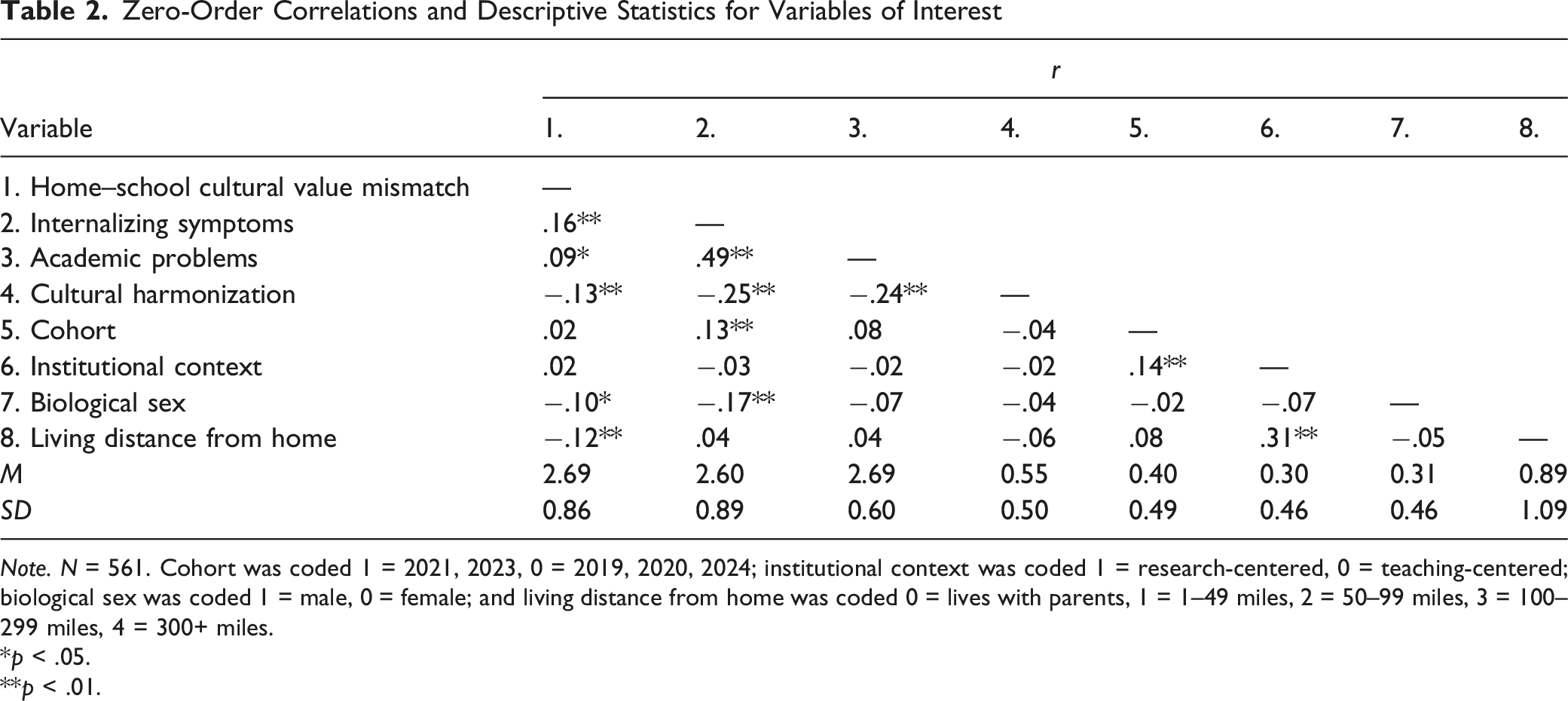
Note. N = 561. Cohort was coded 1 = 2021, 2023, 0 = 2019, 2020, 2024; institutional context was coded 1 = research-centered, 0 = teaching-centered; biological sex was coded 1 = male, 0 = female; and living distance from home was coded 0 = lives with parents, 1 = 1–49 miles, 2 = 50–99 miles, 3 = 100–299 miles, 4 = 300+ miles.
*p < .05.
**p < .01.
Full Cultural Harmonization Distinguished Student Outcomes From Partial/No Harmonization
To empirically validate the dichotomous classification of cultural harmonization, one-way analysis of variance (ANOVA) tests were conducted to compare the four original response categories (“I found a way to do both,” “Family,” “Academics,” “I tried to do each of them some of the time”) on home–school cultural value mismatch, internalizing symptoms, and academic problems. Significant group differences were found across the four original response categories for home–school cultural value mismatch, F (3, 557) = 4.36, p = .005, η2 = .02; internalizing symptoms, F (3, 557) = 13.06, p < .001, η2 = .07; and academic problems, F (3, 557) = 11.65, p < .001, η2 = .06.
Post hoc Tukey tests revealed that participants in the “I found a way to do both” group reported significantly lower home–school cultural value mismatch compared to the “I tried to do each of them some of the time” group, mean difference = −0.28, SE = 0.09, 95% CI [−0.509, −0.056], p = .007, but not the two other groups. Additionally, the “I found a way to do both” group reported significantly lower internalizing symptoms compared to the “Family” group, mean difference = −0.69, SE = 0.16, 95% CI [−1.097, −0.275], p < .001; the “Academics” group, mean difference = −0.40, SE = 0.10, 95% CI [−0.672, −0.132], p < .001; and “I tried to do each of them some of the time” group, mean difference = −0.40, SE = 0.09, 95% CI [−0.631, −0.174], p < .001. Finally, the “I found a way to do both” group reported significantly lower academic problems compared to the “Family” group, mean difference = −0.35, SE = 0.11, 95% CI [−0.635, −0.074], p = .007; the “Academics” group, mean difference = −0.22, SE = 0.07, 95% CI [−0.406, −0.038], p = .011; and “I tried to do each of them some of the time” group, mean difference = −0.31, SE = 0.06, 95% CI [−0.468, −0.156], p < .001.
Notably, no significant differences emerged between the “Family,” “Academics,” and “I tried to do each of them some of the time” groups on any of the outcome variables at the α = .05 level, supporting their combination into a single “partial/no cultural harmonization” category. This resulted in a relatively balanced split, with 54.9% of participants (n = 308) classified as demonstrating full cultural harmonization.
Internalizing Symptoms Mediated the Association Between Cultural Mismatch and Academic Problems
Supporting Hypothesis 1a (as shown in Figure 3), greater home–school cultural value mismatch was associated with greater internalizing symptoms (B
a
). In turn, higher levels of internalizing symptoms were associated with greater academic problems (B
b
). Consistent with Hypothesis 1b, when internalizing symptoms were not included in the mediation model, participants reporting greater home–school cultural value mismatch reported greater academic problems, B
c
= 0.06, SE = 0.03, 95% CI [0.005, 0.123], p = .033. Path Coefficients for Mediation Analysis. Note. N = 561. B
c
(dashed line) represents the effect of home–school cultural value mismatch on academic problems when internalizing symptoms was not included as a mediator. Bc′ (solid line) represents the effect of home–school cultural value mismatch on academic problems when internalizing symptoms was included as a mediator. Unstandardized regression coefficients are presented. Cohort, institutional context, biological sex, and living distance from home were included as covariates but not depicted. *p < .05. **p < .001.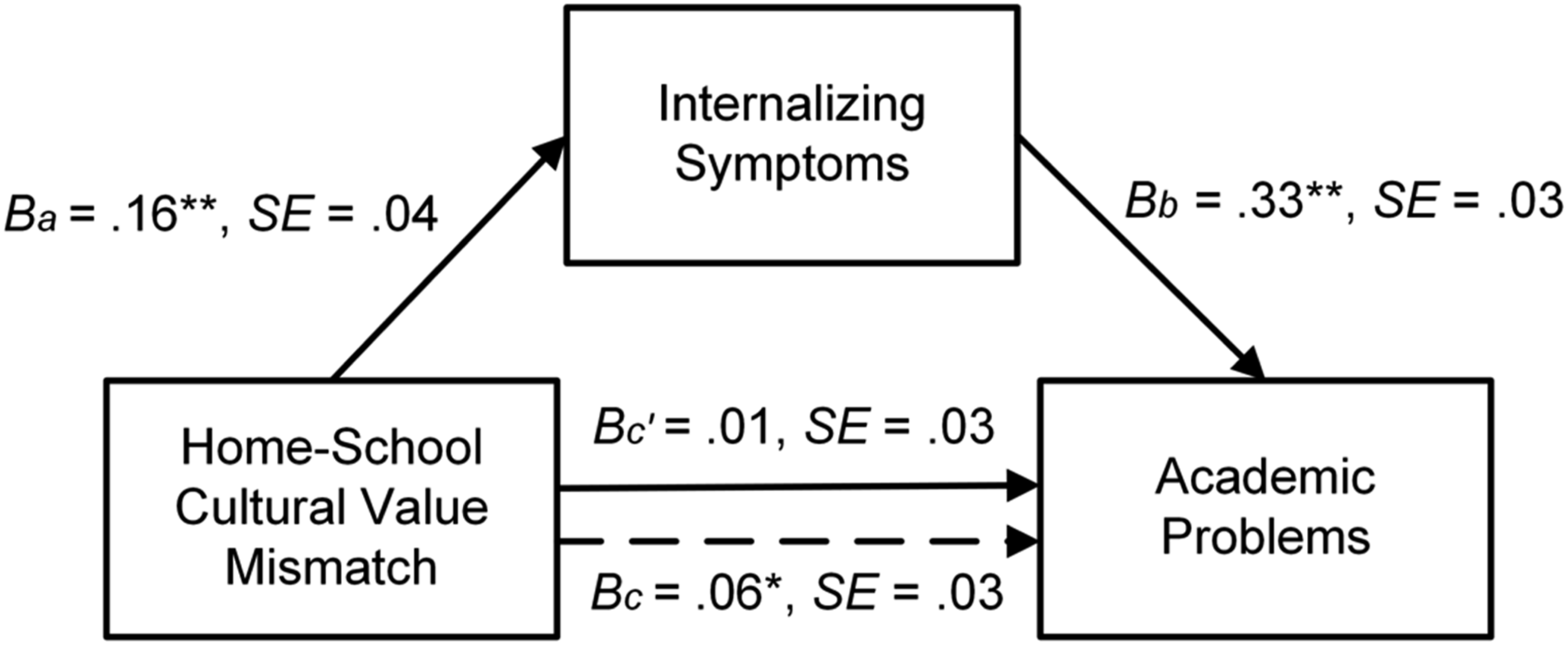
Consistent with Hypothesis 1c, the effect of home–school cultural value mismatch on academic problems was no longer statistically significant after accounting for internalizing symptoms, Bc’ = 0.01, SE = 0.03, 95% CI [−0.040, 0.064]. Instead, there was a significant indirect effect of home–school cultural value mismatch on academic problems via internalizing symptoms, B ab = 0.05, SE = 0.01, 95% CI [0.023, 0.082], suggesting full mediation.
Cultural Harmonization Moderated the Association Between Cultural Mismatch and Internalizing Symptoms
Consistent with Hypothesis 2, the interaction term between mismatch and harmonization was statistically significant (B
a3
), indicating that the effect of mismatch on internalizing symptoms depended on level of cultural harmonization (see Figure 4). Path Coefficients for Moderation Analysis. Note. N = 561. Unstandardized regression coefficients are presented. Cohort, institutional context, biological sex, and living distance from home were included as covariates but not depicted. *p < .05. **p < .001.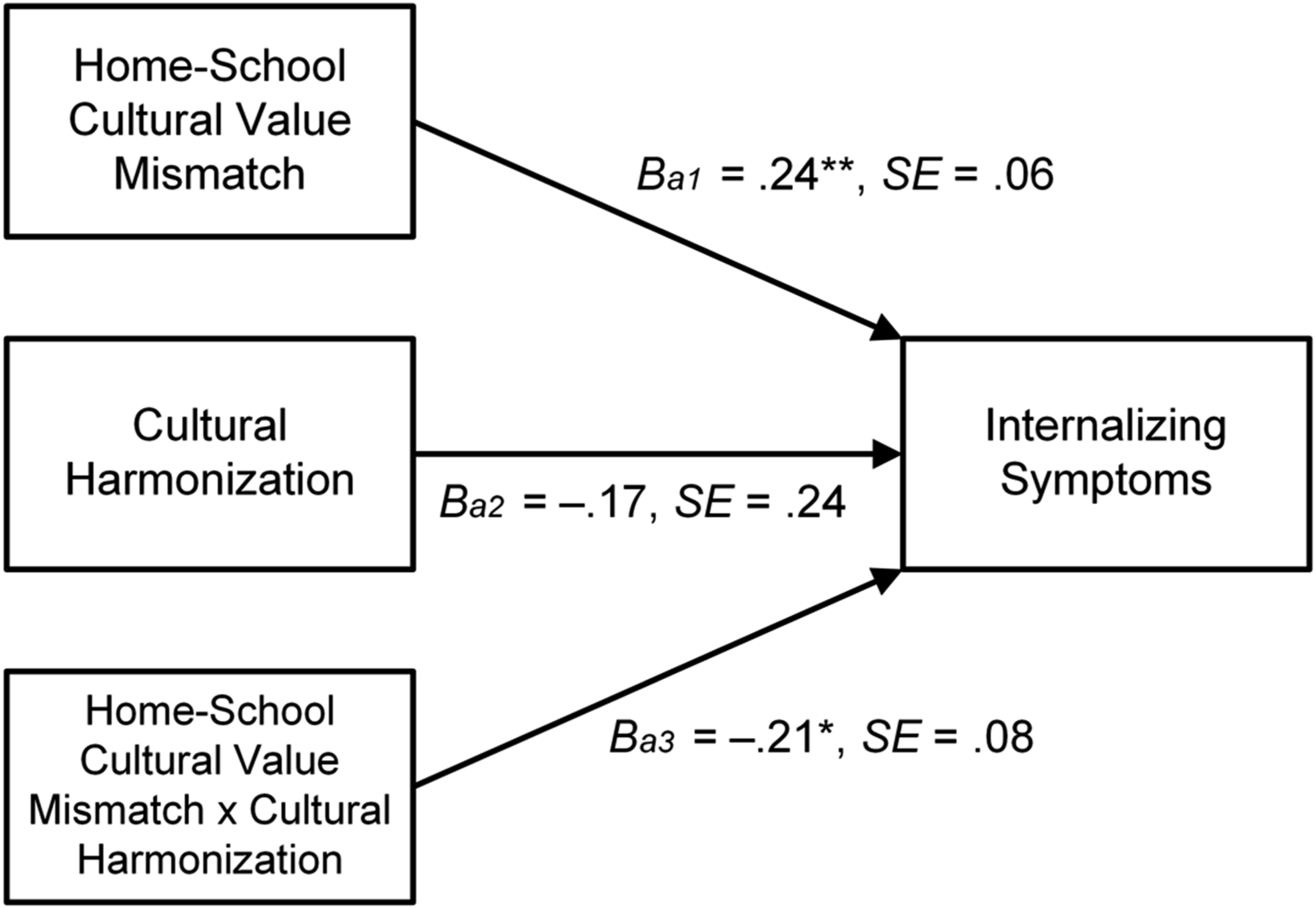
Conditional effects showed that the strength of the association between home–school cultural value mismatch and internalizing symptoms varied as a function of cultural harmonization strategy. Among participants who endorsed partial or no cultural harmonization, greater home–school cultural value mismatch was associated with greater internalizing symptoms, B
a1
= 0.24, SE = 0.06, 95% CI [0.117, 0.358], p < .001. In contrast, among participants who endorsed full cultural harmonization, this association was not significant, B
a1
= 0.02, SE = 0.06, 95% CI [−0.088, 0.135], p = .679. The nature of this moderation is depicted in Figure 5. Notably, participants who endorsed full cultural harmonization reported lower internalizing symptoms than participants who endorsed partial/no cultural harmonization (B
a2
), further demonstrating the protective nature of balancing home and academic obligations. Moderation of Home–School Cultural Value Mismatch on Internalizing Symptoms by Cultural Harmonization. Note. N = 561. Home–school cultural value mismatch was mean-centered. Controlled for cohort, institutional context, biological sex, and living distance from home.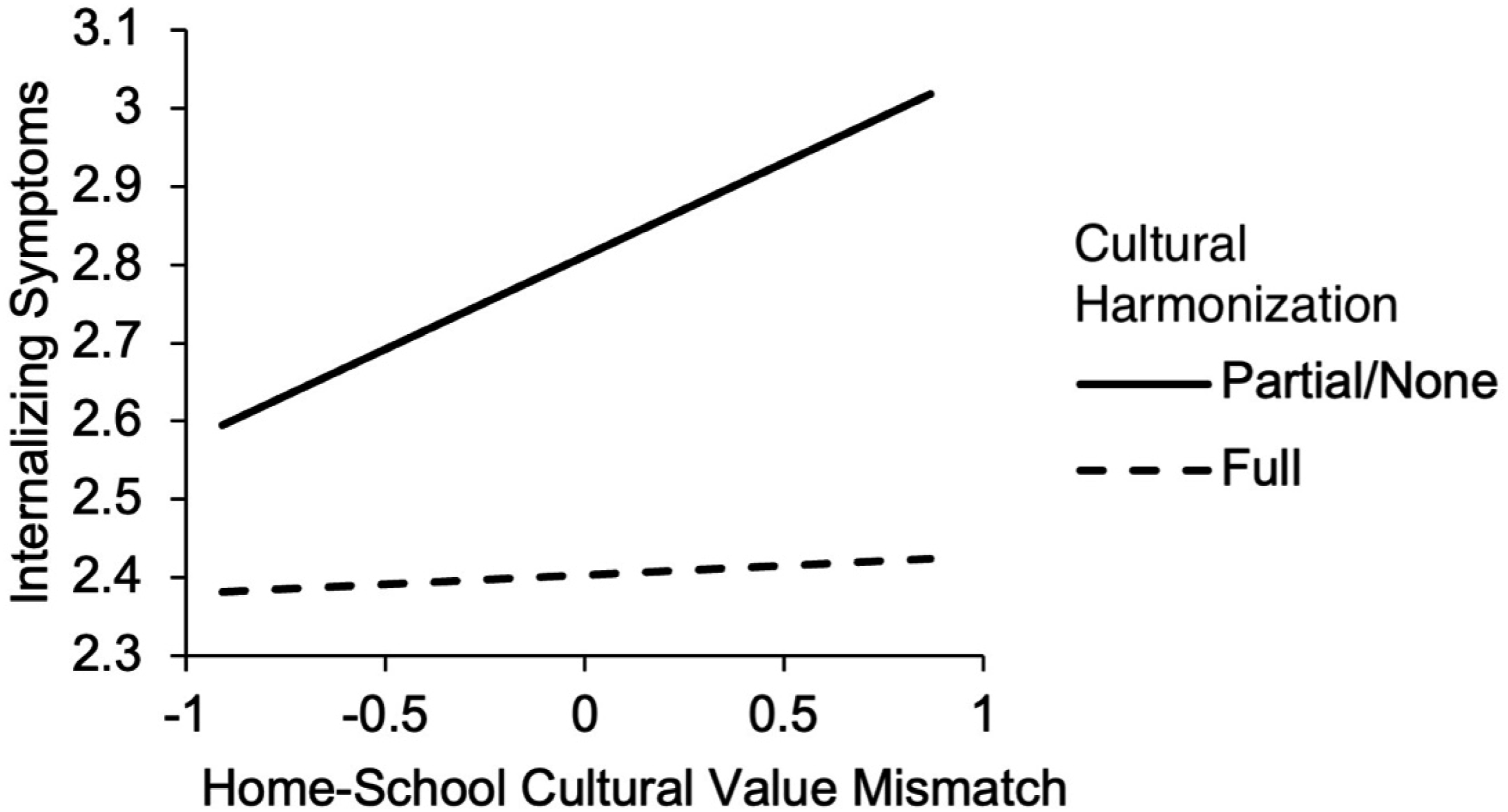
Cultural Harmonization Moderated the Indirect Effect of Cultural Mismatch → Internalizing Symptoms → Academic Problems
Consistent with Hypothesis 3, the index of moderated mediation was significant, Index = −0.07, SE = 0.03, 95% CI [−0.126, −0.017], indicating that the strength of the indirect effect differed significantly across levels of cultural harmonization. Among participants who endorsed partial or no cultural harmonization, the indirect effect was significant, B ab = 0.08, SE = 0.02, 95% CI [0.040, 0.120]; greater home–school cultural value mismatch was associated with greater internalizing symptoms, which in turn was associated with greater academic problems. In contrast, this indirect effect was not significantly different from zero among participants who endorsed full cultural harmonization, B ab = 0.01, SE = 0.02, 95% CI [−0.031, 0.045].
Discussion
Guided by the home–school cultural value mismatch framework (Vasquez-Salgado et al., 2021) and bicultural competence theory (LaFromboise et al., 1993), the present study examined (1) whether internalizing symptoms mediated the relationship between home–school cultural value mismatch and academic problems and (2) whether the strength of this indirect effect was moderated by cultural harmonization. The study focused on a sample of historically marginalized first-generation college students enrolled in their first semester or quarter of college—a subgroup of emerging adults who navigate the tensions between increasing autonomy and maintenance of familial ties (Arnett, 2000). Findings highlight internalizing symptoms as a mechanism linking cultural mismatch to academic problems and cultural harmonization as both a direct protective factor and a moderator to the mismatch → internalizing symptoms → academic problems indirect effect.
Consistent with Hypothesis 1, internalizing symptoms fully mediated the relationship between home–school cultural value mismatch and academic problems. Students reporting higher levels of mismatch also reported greater internalizing (anxiety and depression) symptoms, which were in turn associated with more attention and learning problems. These results replicate and extend previous qualitative and quantitative work (Serrano et al., 2025; Vasquez-Salgado et al., 2015, 2018, 2021) by identifying internalizing symptoms as a key mechanism that may explain how this cultural mismatch disrupts academic functioning. These findings also highlight the psychological toll of navigating competing familial and academic obligations during the transition to college.
Supporting Hypothesis 2, cultural harmonization moderated the association between home–school cultural value mismatch and internalizing symptoms. Among students who endorsed full cultural harmonization (balanced both family and academic obligations), the association between mismatch and internalizing symptoms was not statistically significant. These students appeared protected from the distress typically associated with cultural mismatch. Although cultural harmonization was not a direct measure of bicultural competence, it shares conceptual overlap with components such as bicultural efficacy (confidence in navigating two cultures) and role repertoire (development of behaviors and roles appropriate to both cultures). Thus, findings align with bicultural competence theory (LaFromboise et al., 1993) and literature documenting its protective role on depressive symptoms (Wei et al., 2010).
In contrast, among students who endorsed partial or no cultural harmonization, greater home–school cultural value mismatch was associated with greater internalizing symptoms. These findings support prior qualitative work that suggested students who resolved the mismatch by deciding to participate in either family or academic obligations only may be susceptible to post-decision rumination, which may have negative implications for academics (Vasquez-Salgado et al., 2015). Note too that the one-way ANOVA revealed comparable levels of internalizing symptoms and academic problems among students who endorsed “family,” “academics,” or “I tried to do each of them some of the time.” These similarities justified grouping these subgroups into a single partial or no harmonization category. Together, these preliminary and hypothesized findings suggest that inconsistency in prioritization (“I tried to do each of them some of the time”) may not offer the same psychological protection as full harmonization (“I found a way to do both”).
Beyond this moderating role, full cultural harmonization was also directly associated with lower internalizing symptoms and fewer academic problems. This aligns with biculturalism theory, which suggests better psychological and academic adjustment among individuals who are bicultural relative to those endorsing other acculturation strategies (Berry et al., 2006; Phinney et al., 2001). Greater cognitive flexibility, integrative complexity, and social support across cultures (Benet-Martínez et al., 2006; Nguyen & Benet-Martínez, 2013; Tadmor et al., 2009; Tadmor & Tetlock, 2006) may account for this direct protective association.
Hypothesis 3 was also supported. The indirect effect of home–school cultural value mismatch on academic problems through internalizing symptoms was significantly weaker among students who endorsed full cultural harmonization, compared to those who endorsed partial or no harmonization. Notably, for students who endorsed full cultural harmonization, the indirect effect was not significantly different from zero, suggesting that this form of harmonization may interrupt the sequence linking cultural mismatch to academic problems. These findings extend the home–school cultural value mismatch framework by showing that the pathway from cultural mismatch → internalizing symptoms → academic problems (Serrano et al., 2025; Vasquez-Salgado et al., 2021) is conditional on students’ resolution strategies. Importantly, these findings underscore that not all historically marginalized college students experience the consequences associated with cultural mismatch in the same way.
Taken together, the present study is the first to identify a potential protective factor in the established links between cultural mismatch and negative mental health and academic outcomes among historically marginalized students—responding to calls for such research (Serrano et al., 2025; Vasquez-Salgado et al., 2025). This study also bridges two previously separate bodies of literature: the home–school cultural value mismatch framework and bicultural competence theory, by introducing the novel construct of cultural harmonization. Finally, this study represents the first quantitative effort to investigate students’ resolutions to their lived experiences of home–school cultural value mismatch, deepening our understanding of the cultural mismatch framework.
Limitations and Future Directions
The contributions of this study should be considered in light of several limitations. First, the cross-sectional design limits the ability to draw causal inferences. Although the hypothesized directions are theoretically grounded, longitudinal research is needed to examine whether the protective effects of cultural harmonization are sustained over time. Longitudinal studies could also shed light on the developmental processes that underlie cultural harmonization. Following students prior to their college transition may illuminate how early experiences shape strategies for managing competing family and academic demands. For instance, social stratification factors such as racism and prejudice may influence the development of adaptive cultural competencies (Garcia Coll et al., 1996).
Second, while the sample focused on students from historically marginalized backgrounds, the majority of participants identified as Latinx. While this is the key population at Hispanic-Serving Institutions, it may limit generalizability of findings. Nonetheless, the mechanisms examined are theoretically and empirically relevant to first-generation students across multi-ethnic populations (Vasquez-Salgado et al., 2021).
Third, although reliance on an online self-report survey may introduce bias, this method aligns with the study’s emphasis on students’ subjective perceptions of cultural mismatch, internalizing symptoms, and harmonization strategy. Future research could employ multi-method approaches (e.g., daily diaries, interviews, or family and peer reports) to provide richer data and mitigate self-report biases. Such approaches may also capture the interpersonal dynamics of cultural harmonization, which often involve active negotiation with family members (Vasquez-Salgado et al., 2015) and may vary by gender or household structure.
In addition, cultural harmonization was assessed using a single item, which may not fully capture the complexity of this construct or the variation in harmonization strategies across different types of family obligations. However, single-item measures can demonstrate validity and reliability while also reducing participant burden (Allen et al., 2022). Furthermore, although dichotomizing an interval or ratio measure may weaken the correlations between variables, the dichotomization of the cultural harmonization construct (full harmonization vs. partial or no harmonization) utilized in this study is justifiable. The underlying construct is conceptually categorical, the resulting groups are relatively balanced in size, and the sample is sufficiently large, which reduces concerns about loss of statistical power (DeCoster et al., 2009). Future research will aim to develop a more comprehensive self-report measure of cultural harmonization.
Finally, participants who selected “Not Applicable” in response to the harmonization question were excluded from analyses, potentially limiting the generalizability of findings to students who endorse a particular resolution strategy. Future research should explore why some students perceive the harmonization question as irrelevant—whether due to low perceived mismatch, disengagement from either culture, or other contextual factors.
Implications
This study offers implications for the design of programs, interventions, and institutional practices aimed at supporting first-generation college students from historically marginalized backgrounds during the transition to college. This study’s implications are theoretically grounded in cultural harmonization—emerging from the integration of cultural mismatch and biculturalism theories. Whereas cultural mismatch theory highlights how institutional norms of independence can disadvantage students socialized in interdependent contexts, bicultural competence emphasizes individuals’ capacity to effectively navigate multiple cultural contexts. By bringing these perspectives together, the present study positions cultural harmonization—a student’s behavioral strategy to resolve the mismatch between interdependent family obligations and independent academic obligations—as a potential strength that may shield students from the negative mental health and academic outcomes associated with home–school cultural value mismatch. This integrated framework therefore suggests that improving first-generation college student outcomes requires both reducing institutional sources of mismatch and strengthening students’ capacity to navigate multiple cultural contexts.
It is therefore important to acknowledge that individual characteristics and structural conditions interact in a dynamic process (Stephens, Markus, & Fryberg, 2012). Students’ behaviors are not merely shaped by internal traits or external systems in isolation. Rather, behaviors emerge from the selves they construct in ongoing interactions with their sociocultural environments. Accordingly, efforts to support first-generation college students should attend to both individual and institutional levels.
At the individual level, programming can help students gain skills to balance family and academic obligations. Workshops can address topics such as the experience of home–school cultural value mismatch and time management strategies for navigating multiple commitments, while affirming students’ cultural strengths (Yosso, 2005; for examples of workshops, see Guan et al., 2025; Lin et al., 2026). However, encouraging students to “balance” their obligations without changing the structures that shape their daily experiences risks reinforcing inequities.
Thus, institutions must work towards ensuring that university administrators, faculty, counselors, and staff recognize and understand cultural mismatch experiences that many first-generation college students face. University counseling centers should train clinicians to assess for cultural mismatch-related stress and respond using culturally sensitive, strength-based approaches that incorporate students’ values and identities. Likewise, faculty and staff should receive training in culturally responsive pedagogy and advising to recognize students’ family obligations not as competing distractions, but as important components of their lived experience and potential sources of motivation.
Finally, institutions must move beyond an independence-as-default culture and work towards cultivating identity-congruent environments for first-generation college students. For instance, family-inclusive programming and multilingual communication materials can foster family involvement and bridge understanding between students and their families regarding academic demands. Taken together, addressing the challenges of home–school cultural value mismatch requires a shift from deficit-based models and toward systemic transformation that affirms the salience of family obligations and recognizes the family as a source of strength for first-generation college students.
Supplemental Material
Supplemental Material - Cultural Mismatch and Academic Problems Among First-Generation College Students: The Protective Role of Cultural Harmonization
Supplemental Material for Cultural Mismatch and Academic Problems Among First-Generation College Students: The Protective Role of Cultural Harmonization by Gabrielle Halim, Andrew T. Ainsworth, Yolanda Vasquez-Salgado in Emerging Adulthood.
Footnotes
Acknowledgements
The authors thank Patricia Greenfield for her guidance in the development of the cultural harmonization item and for her feedback on this manuscript. The authors also extend their appreciation to Juventino Hernandez Rodriguez for his insightful comments.

Funding
This work was supported by the National Institutes of Health under Award Numbers RL5GM118975, TL4GM118977, UL1GM118976, GM136450, and R16GM146693. The development of this manuscript was also supported by the California State University, Northridge Association of Retired Faculty 2025 Memorial Award. The content is solely the responsibility of the authors and does not necessarily represent the official views of the National Institutes of Health.
Declaration of Conflicting Interests
The authors declared no potential conflicts of interest with respect to the research, authorship, and/or publication of this article.
Transparency and Openness Statement
The raw data used in this study are not openly available but are available upon request to the corresponding author. No aspects of the study were pre-registered.
Supplemental Material
Supplemental material for this article is available online.
Author Biographies
References
Supplementary Material
Please find the following supplemental material available below.
For Open Access articles published under a Creative Commons License, all supplemental material carries the same license as the article it is associated with.
For non-Open Access articles published, all supplemental material carries a non-exclusive license, and permission requests for re-use of supplemental material or any part of supplemental material shall be sent directly to the copyright owner as specified in the copyright notice associated with the article.
