






Abstract
Objective:
To evaluate the prevalence of unsuspected uterine sarcomas undergoing morcellation at the time of hysterectomy or myomectomy.
Design:
A retrospective cohort study.
Settings:
A teaching health service in Melbourne, Australia, consisting of four hospitals which provide gynecology and gynecology oncology services including one tertiary referral center.
Population:
All women undergoing any form of hysterectomy or myomectomy from 1998 to 2016.
Methods:
Patient demographics and the presence of morcellation were collected. All cases of confirmed uterine sarcomas were further examined and their histological subtype, patient demographics, preoperative investigations, and surgical indication were also identified.
Results:
A total of 7584 cases were studied. Overall, 33 uterine sarcomas were identified. Of these, seven cases were unsuspected malignancies. All seven cases were leiomyosarcomas. None of the malignant specimens underwent morcellation. The overall prevalence of uterine sarcomas in the total study population was 0.44%. The rate of unsuspected uterine sarcomas in women undergoing hysterectomy or myomectomy for presumed benign indications was 0.13% or 1 in 769. The rate of unintended morcellation of a uterine sarcoma in our center was 0%. The diagnosis of endometrial sarcoma was prompted by endometrial sampling in 58% of the cases when performed.
Conclusion:
The risk of inadvertent morcellation of unsuspected uterine sarcomas is low. Patients should be appropriately selected with adequate investigations and a detailed history and examination prior to surgery. Further studies are needed to identify effective preoperative screening methods for uterine sarcomas.
Introduction
Minimally invasive surgery has significantly changed the practice of gynecology with well-documented benefits. 1 A Cochrane review of 27 randomized controlled trials has shown shorter length of stay and fewer perioperative complications in those who had a laparoscopic or vaginal approach compared to abdominal hysterectomy.1–3 Overall abdominal hysterectomy rates have declined due to the rise of minimally invasive options. 4 However, the small incisions used in laparoscopy may create a challenge in the removal of large specimens. The advent of power morcellation has offered a solution to this problem. Morcellation is a technique used to fragment tissue into smaller pieces to facilitate minimally invasive surgery. Tissue morcellation using an electromechanical device was first introduced in 1993 and involves an instrument that shaves or cores tissue to allow removal through laparoscopic ports. 5 This technique has made minimally invasive surgery possible even in cases of enlarged uteri and uterine fibroids. 1 Despite fewer overall complications, morcellation and minimally invasive surgery are not without risk. Morcellation has recently come under scrutiny due to concerns regarding dissemination of malignant tissue in the peritoneal cavity. A highly publicized case in 2013 prompted the US Food and Drug Administration (FDA) to issue a warning against the use of morcellators. 6
The risk of inadvertently morcellating presumed benign tissue which is then revealed to be malignant on final histopathology is a rare but inherent possibility. Several subtypes of uterine sarcomas exist but leiomyosarcoma (LMS) is the most feared and most difficult to predict preoperatively. Uterine sarcomas are uncommon making up 2%–6% of uterine malignancies. 7 They are classified into LMSs, endometrial stromal sarcomas, adenosarcomas, and undifferentiated sarcomas. Carcinosarcomas were historically considered a uterine sarcoma but have since been reclassified as a form of endometrial carcinoma. 8 LMS accounts for only 1%–2% of all uterine malignancies. 9 It is most commonly seen in women over 40 years of age with the average age of diagnosis at 60 years.9,10 Patients usually present with symptoms similar to benign fibroids, rendering preoperative distinction between the two extremely difficult. 11 Morcellation with subsequent intra-peritoneal spread of malignant tissue is believed to worsen the prognosis with upstaging of disease. 12 A recent systematic review and meta-analysis showed that morcellation increased the risk of death, intra-abdominal recurrence, and overall recurrence rate. 13 The risk of having an unsuspected uterine sarcoma in an operation for the treatment of a fibroid uterus has been estimated at 1 in 350 by the FDA, 14 but fewer than 1 in 1000 by the Society of Gynecologic Oncology (SGO). 15 However, given the lack of large multicenter trials, it is difficult to conclude the true risk of unsuspected sarcomas during surgery for presumed benign indications.
The primary aim of our study was to evaluate the prevalence of inadvertent power morcellation of occult uterine sarcomas at the time of hysterectomy or myomectomy in a multicenter tertiary referral health service over a period of 18 years. A secondary aim was to assess the preoperative diagnosis of uterine sarcomas.
Materials and methods
This is a retrospective cohort study performed at a teaching health service which provides general gynecology and gynecology oncology services. The health service consists of four centers performing gynecological procedures including a tertiary referral center. All women who underwent any form of hysterectomy or myomectomy except hysteroscopic myomectomy from 1 July 1998 to 29 February 2016 were included. Both benign and malignant indications for surgery were included to better understand the overall prevalence of uterine sarcomas and its clinical characteristics. The prevalence of unsuspected uterine sarcomas was noted. Uterine sarcoma subtypes included in this study were LMSs, endometrial stromal sarcomas, adenosarcomas, or undifferentiated sarcomas. Institutional Review Board Project #16197Q was approved on 10 June 2016 (Monash Health, Clayton, Victoria, Australia).
Patient histories were identified through surgical coding for the following procedures: “total abdominal hysterectomy,” “subtotal abdominal hysterectomy,” “laparoscopic hysterectomy,” “laparoscopic-assisted vaginal hysterectomy,” “vaginal hysterectomy,” “laparoscopic myomectomy,” and “open myomectomy.” Subjects were excluded if their medical history or pathology results were not available.
The presence of power morcellation was identified if morcellation was described in the operative notes or if the power morcellator was identified in the operation equipment list and confirmed in corresponding pathology report of the specimen.
All cases of confirmed uterine sarcoma were examined by gynecologic medical staff in greater detail. Uterine sarcomas were identified through diagnostic coding of medical records or manual review of the medical notes. Cases were confirmed through a review of the pathology result. Demographics including age, height, weight, menopausal status, smoking status, parity, preoperative investigations, suspicion of malignancy, and clinical symptoms were extracted and entered into a database. Pathology results and surgical methods including the use of morcellation were also retrieved from the medical history and entered into the database. In addition, the entire pathology database was also searched for all cases of uterine sarcomas from 1998 to 2016 and then correlated with the medical histories. This did not yield any additional cases.
Cases were identified as confirmed malignancies if a diagnosis was confirmed by other methods prior to hysterectomy or myomectomy such as endometrial biopsy. Cases were identified as suspected malignancies based on clinical notes and if there were acknowledged suspicious features on preoperative workup and performed by the gynecologic oncology team instead of the general gynecology team. Cases were identified as unsuspected malignancies if the operative indication was benign and performed by the gynecologic team.
Data were collected on a standard spreadsheet (Microsoft Excel 2010). Descriptive parameters are expressed as mean standard deviation (SD) or median (range). Frequencies are presented as percentages. Statistical analysis was performed using SPSS software (version 15). Values of p < 0.05 were considered statistically significant. Continuous variables were compared using Student’s t test for parametric variables and chi-squared test was used to compare frequencies.
Results
A total of 7172 hysterectomies and 412 myomectomies were performed giving a total of 7584 cases of hysterectomy or myomectomy over the study period. The rate of minimally invasive procedures rose with the number of total laparoscopic hysterectomies increasing by nearly fourfold in 2014 (n=97) when compared to 2004 (n = 16). Overall, there were a total of 33 uterine sarcomas identified, 7 (21%) of which were unsuspected malignancies (Figure 1). None of these cases underwent morcellation. There were no cases of uterine sarcoma in the myomectomy specimens. Two cases of LMS were excluded as they were cases referred from other hospitals after initial diagnosis. There were a total of 5404 cases (71%) performed for benign indications. Of note, there were 368 hysteroscopic myomectomies which were not included in the final total number, and there were no uterine sarcomas in this group. These cases were excluded as hysteroscopic resection is a common method for the treatment of submucosal fibroids and there is no current debate regarding the use of this technique.
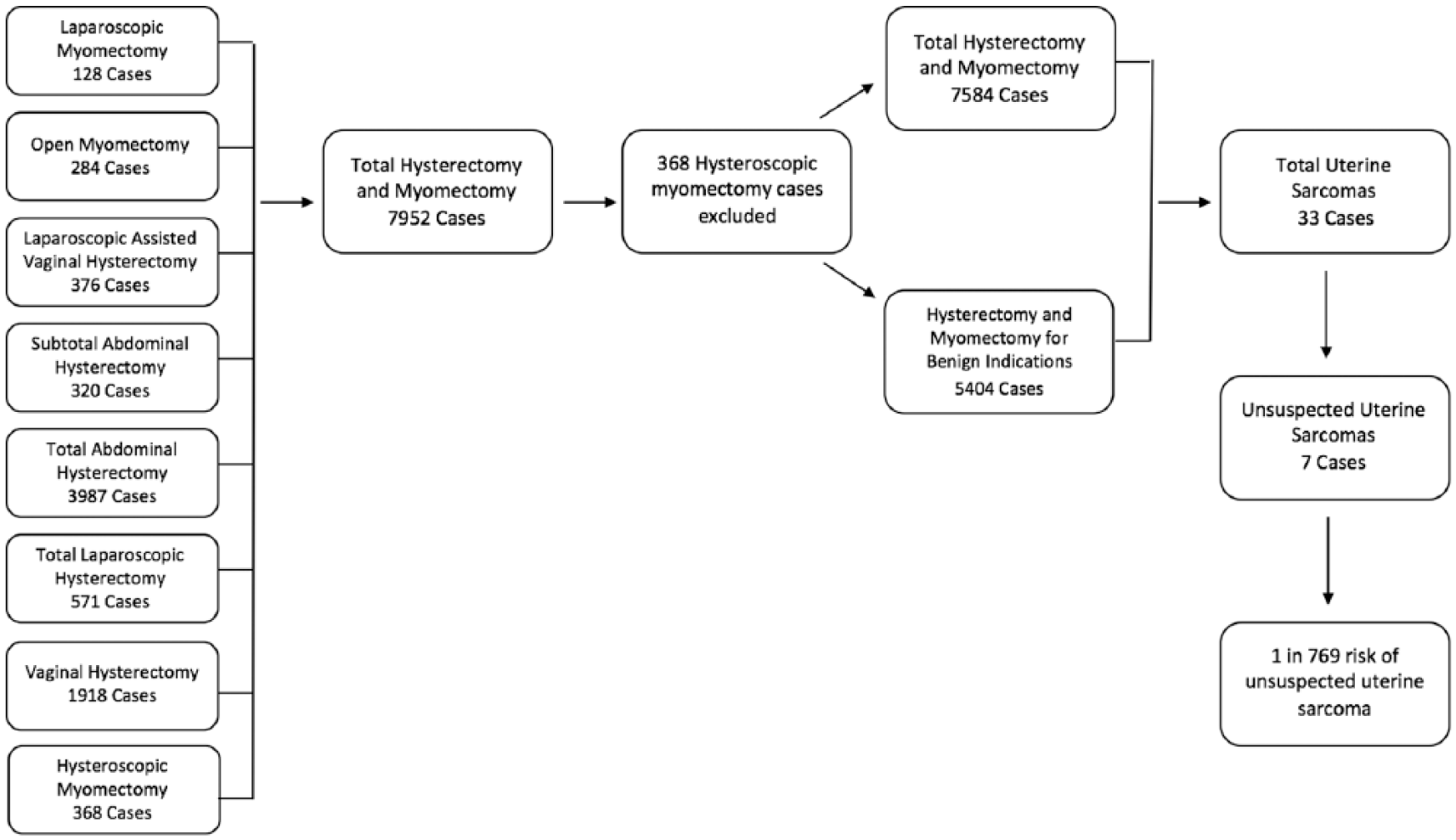
Breakdown of total number of hysterectomy and myomectomy cases.
The mean age of women with a uterine sarcoma was 59.1 years (range: 32–92 years, SD = 14.5) which was significantly higher than women undergoing surgery for benign indications which was 48.9 years of age (p < 0.001). Those with a uterine sarcoma had a mean body mass index (BMI) of 30 (range: 16–46, SD = 6.88) (Table 1). The majority of women (64%) were postmenopausal. The predominant symptom was postmenopausal bleeding (33%) followed closely by dysfunctional uterine bleeding (Table 2). Postmenopausal bleeding was more prevalent in non-LMS uterine sarcomas (82%) than in LMS (9%) (p < 0.001). Other symptoms included abdominal or pelvic pressure and pain, weight loss, or a palpable abdominal or pelvic mass.
Demographics of women with uterine sarcoma in our study population.
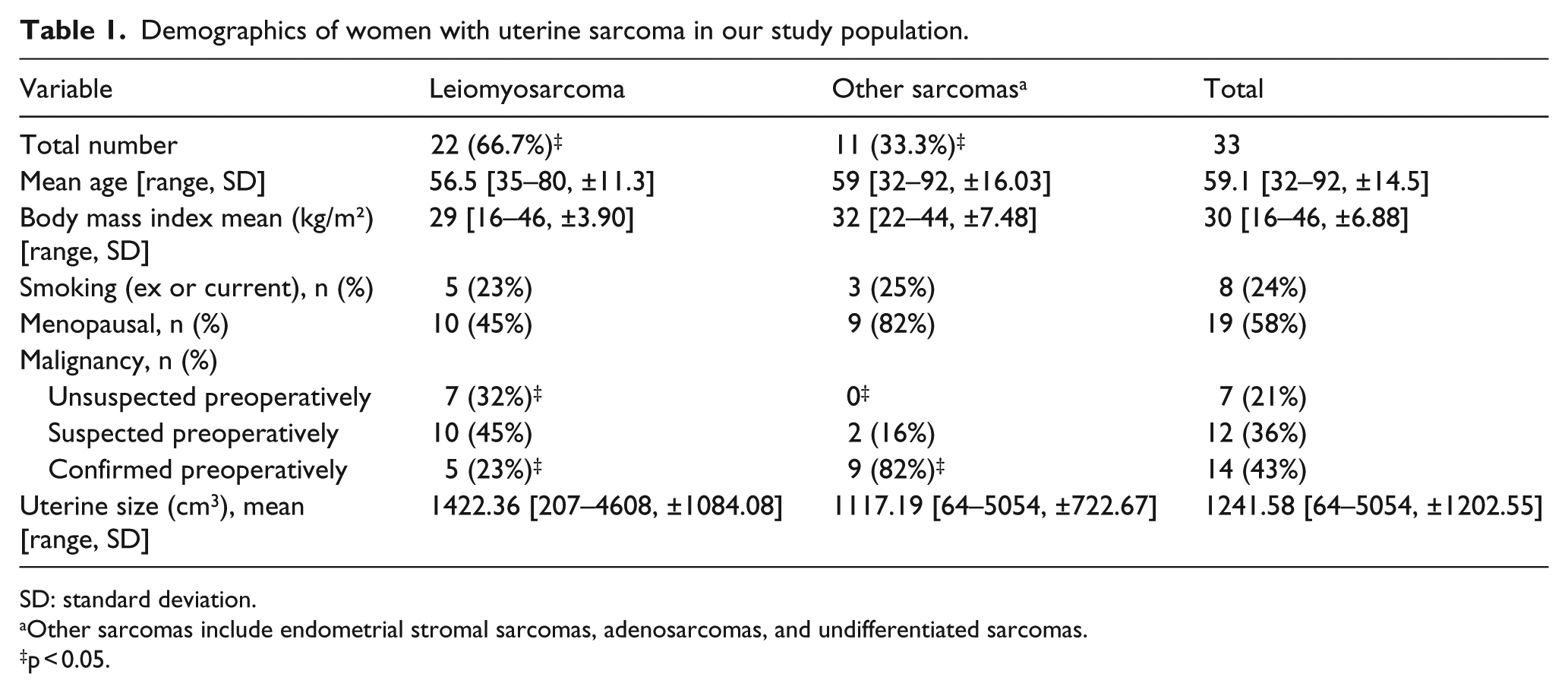
SD: standard deviation.
Other sarcomas include endometrial stromal sarcomas, adenosarcomas, and undifferentiated sarcomas.
p < 0.05.
Predominant presenting symptom of uterine sarcomas in our research population.
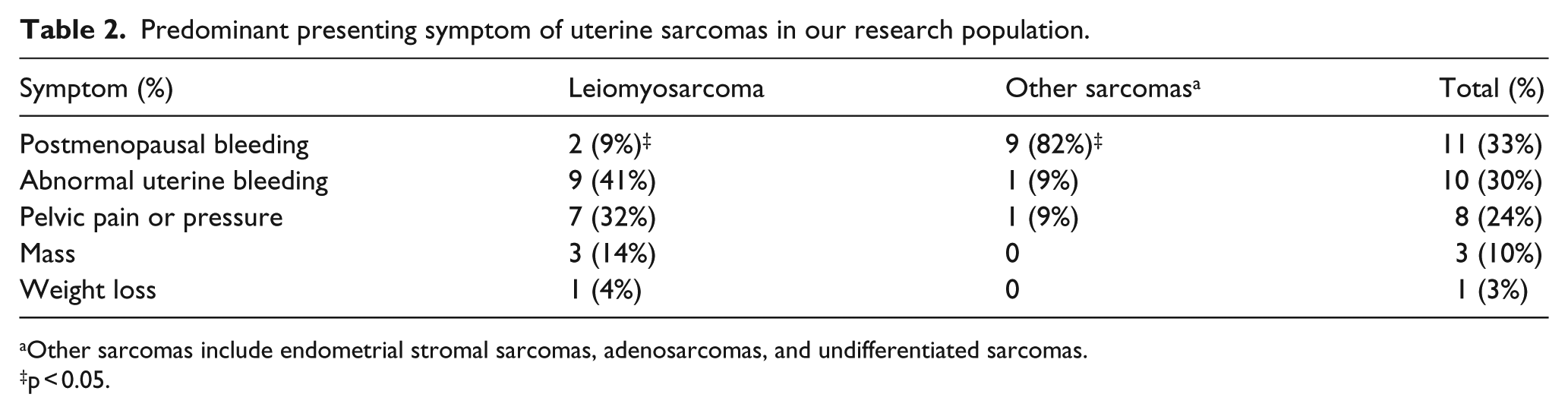
Other sarcomas include endometrial stromal sarcomas, adenosarcomas, and undifferentiated sarcomas.
p < 0.05.
Most uterine sarcomas consist of those in the LMS group (67%, p = 0.007) (Table 1) with other subtypes including endometrial stromal sarcoma, adenosarcoma, and undifferentiated sarcoma. LMS tumors were more difficult to diagnose preoperatively (23% detection rate) compared to other sarcomas (p = 0.001).
Preoperative workup varied among the cohort. Endometrial sampling was performed in 58% of all uterine sarcomas (n = 19). Of these, endometrial sampling subsequently confirmed a diagnosis of malignancy in 58% (n = 11); 45% comprised LMS and 55% other sarcomas. Similarly, imaging was performed in 97% (n = 32) of all patients with sarcoma and contributed to a preoperative suspicion of malignancy in 75% of cases which were approached as possible malignancies. A biopsy of a prolapsing tumor was only performed in four cases (12%) of sarcomas but diagnosed two adenosarcomas and one undifferentiated sarcoma.
In total, 43% of uterine sarcoma cases (n = 14) were preoperatively diagnosed as malignant prior to hysterectomy or myomectomy via endometrial sampling or biopsy of a prolapsing mass. In 36% of uterine sarcoma cases (n = 12), the diagnosis of malignancy had not been established at the time of operation but was highly suspected based on concerning imaging features or symptoms. These symptoms included heavy postmenopausal bleeding with pain, a rapidly enlarging mass in a postmenopausal or perimenopausal woman, or presence of ascites. Only three of these patients underwent endometrial biopsy which was negative for malignancy. All 12 patients had pelvic imaging with either ultrasound or computed tomography (CT), and one patient also had a positron emission tomography (PET) scan. Suspicious imaging features included presence of metastases or a large heterogeneous mass with increased vascularity in the setting of postmenopausal status. The majority of patients in this group (75%) were postmenopausal. One patient was pre-menopausal and found to have a 5-cm single fibroid on ultrasound with increased vascularity and cystic areas. She was offered a myomectomy with a magnetic resonance imaging (MRI) to detect features suggestive of malignancy or a total abdominal hysterectomy (TAH). Two patients were perimenopausal. One presented with ascites and the other with a rapidly enlarging mass of 5–13 cm on ultrasound in a 3-month period. Rapid growth was also seen on imaging in two of the postmenopausal patients. These patients were managed by the gynecological oncology team and underwent definitive surgery.
There were seven cases of unsuspected uterine sarcomas which were all LMSs (Table 3). The cases occurred between 2001 and 2015. All were performed abdominally with no power morcellation. The mean age of patients in this group was 49 (range: 38–65, SD = 10.2) years with a mean BMI of 30 (range: 24–36, SD = 4.8); however, data relating to BMI were unavailable for two patients. Only one patient was postmenopausal and only one patient was a smoker. The mean uterine size was 1860 cm3 (range: 220–3780 cm3, SD = 1168.5). All patients had preoperative imaging with a pelvic ultrasound. Two of the patients also had a CT performed. A total of 71% of these patients (n = 5) had preoperative endometrial sampling which was benign.
Clinical characteristics of seven patients with unsuspected uterine sarcoma.
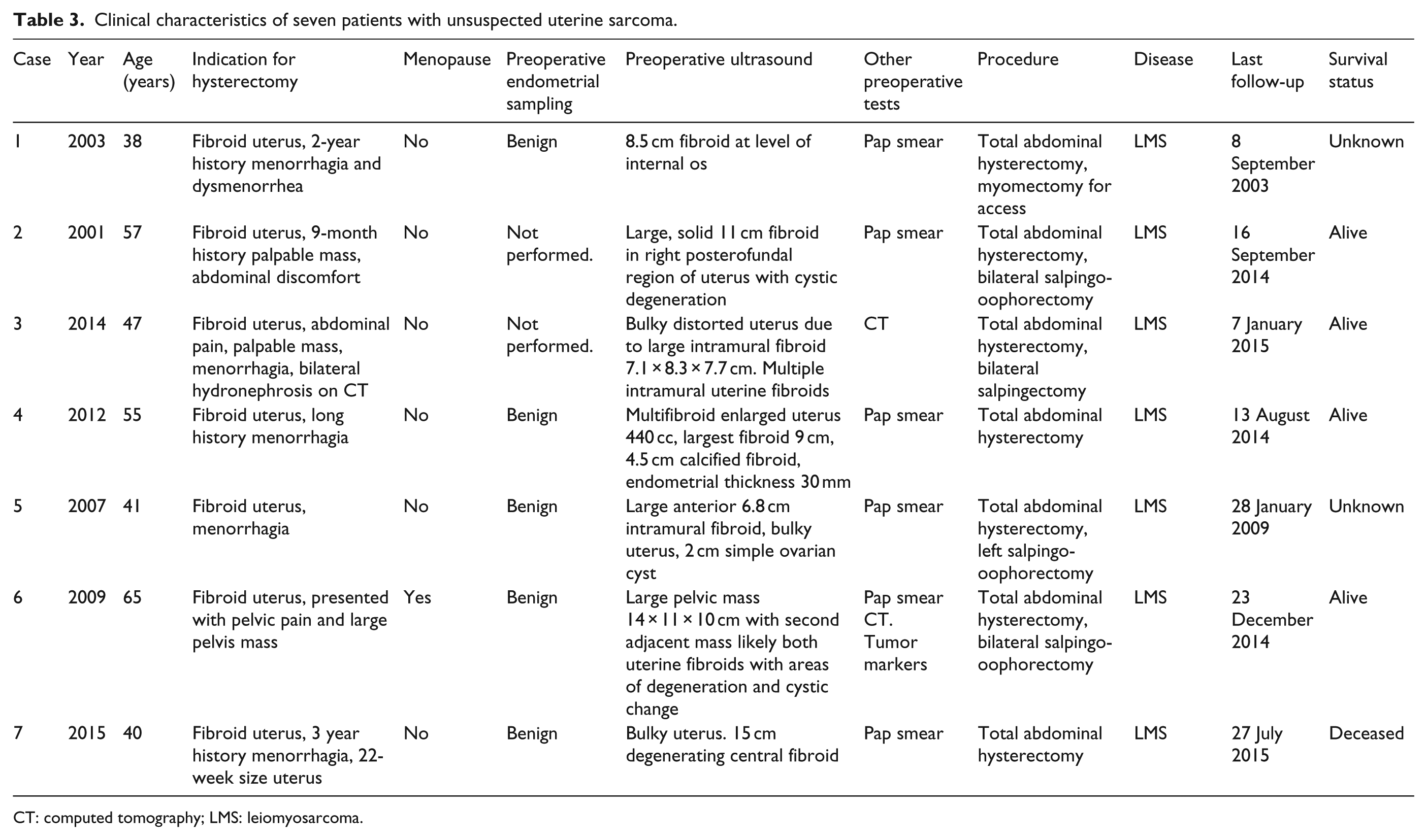
CT: computed tomography; LMS: leiomyosarcoma.
Discussion
This large multicenter study has analyzed more than 7500 cases of hysterectomies and myomectomies. The primary objective of this study was to identify the prevalence of unsuspected uterine sarcomas undergoing morcellation at the time of hysterectomy or myomectomy. Tan et al. 16 in Australia reported a 0.41% incidence of morcellated occult uterine malignancies. In a study of 3523 women undergoing laparoscopic hysterectomy, Tan-Kim et al. 17 identified a rate of 0.6% of uterine sarcoma in power morcellated specimens. In our population, there were no cases of power morcellation of uterine sarcomas; however, we did find seven cases (0.13%) of unsuspected uterine sarcomas in women undergoing hysterectomy or myomectomy for benign indications.
Seven cases of uterine sarcomas were unsuspected and treated as presumed benign pathology; thus, the prevalence of occult malignancies at the time of hysterectomy or myomectomy performed for benign indications is 0.13% or 1 in 769. This is much lower than the prevalence of 1 in 350 quoted by the FDA. 14 In a study of 1332 women undergoing hysterectomy for fibroids, Parker et al. 18 found the total prevalence of sarcoma was 0.15%. Kho et al. 19 reported a slightly lower rate of 0.089% of occult sarcomas in women undergoing hysterectomy for benign indications. All seven cases of unsuspected uterine sarcomas in our study were LMS. In a large retrospective study in Norway of 4791 women, 26 referred for anticipated benign fibroids were found to have LMS (0.54%) by Lieng et al. 20 Other smaller studies have quoted rates of occult LMS from 0.01% to 0.49%. 10
A limitation of our study includes its retrospective design and possible biases such as missing data and misclassification. While it is plausible that some cases using morcellation were missed, we believe our search strategy which included examining each history undergoing laparoscopic myomectomy or hysterectomy as well as identifying all cases of uterine sarcomas through pathology reports and diagnostic coding ensured that all possible power morcellated unsuspected malignancies were recognized.
The strengths of our study include the large cohort and the involvement of multiple centers. To our knowledge, it is the largest study to date in the Australian population. Our study findings suggested that a high index of suspicion by clinicians may have prevented inadvertent morcellation of sarcomas. The rate of unsuspected sarcomas in the study population was lower than estimated by the FDA which may be also due to differences in patient characteristics.
The most prevalent sarcoma in our study population was LMS which was significantly more likely than other sarcomas. Unfortunately, LMS was also significantly less likely to be diagnosed preoperatively compared with other sarcoma subtypes. SGO advise that no effective preoperative screening exists for LMS. 15 Current guidelines including those from the American Congress of Obstetricians and Gynecologists (ACOG), Royal Australian and New Zealand College of Obstetricians and Gynaecologists (RANZCOG), and the Australasian Gynaecological Endoscopy & Surgery Society (AGES) recommend that all patients have a thorough history and examination with preoperative investigations including cervical cytology and a pelvic ultrasound or MRI. Other investigations such as endometrial sampling, tumor markers, and further imaging should be considered based on individual patient characteristics.1,14,21
Preoperative workup allowed for detection and suspicion of a large number (68%) of the LMS cases in our study population. A total of 79% of the total malignancies in our study were managed appropriately by the gynecologic oncology team, and 43% of these were detected either prior to surgery on biopsy of mass or through endometrial sampling. The role of endometrial sampling in the diagnosis of LMS is still undetermined. Bansal et al. 22 reported a detection rate of up to 86% in uterine sarcomas. A larger study using the Canadian Task Force III database showed that endometrial sampling had a sensitivity of 51.5% in diagnosis of suspicious smooth muscle malignancies and performs best in women with postmenopausal bleeding. 23 In our study population, endometrial sampling was performed in cases of abnormal uterine bleeding allowing for a preoperative diagnosis in 58% of sarcomas when performed. In total, 36% of cases were suspected due to concerning features on preoperative evaluation such as postmenopausal bleeding with pain, rapid fibroid growth, or suspicious imaging features. Parker et al cast doubt on the significance of rapid growth of a uterine mass. In a study of 1332 women undergoing hysterectomy or myomectomy for fibroids, they showed that this was not associated with uterine sarcoma. 18 Interestingly, rapid fibroid growth was associated with a diagnosis of LMS in 23% of the total number of sarcoma cases in this study suggesting this symptom may still be useful in raising suspicion for a malignancy particularly in the postmenopausal patient. Consequently, we believe there is value in preoperative workup including comprehensive history and examination plus cervical screening, imaging with a pelvic ultrasound, and endometrial sampling for patients with abnormal uterine bleeding. Further imaging modalities and LDH could be considered in suspicious cases.
ACOG and the European Society for Gynecologic Endoscopy (ESGE) advise higher risk patients include increasing age especially over 35 years, menopausal status, and rapid growth. 2 EGSE guidelines suggest the highest risk patients are those aged over 40 years. 24 Notably, of our unsuspected uterine sarcomas, all patients were above 35 years of age with only one patient aged below 40; however, only one patient was postmenopausal. None previously had tamoxifen or pelvic irradiation. Preoperative work up had been otherwise unremarkable highlighting the great difficulty in preoperative diagnosis of LMS.
In conclusion, as found in our large research population, the rate of unsuspected uterine sarcomas is low (1 in 769 of the patients operated for benign indications). Appropriate preoperative workup may assist in the diagnosis of uterine sarcomas but cannot exclude all cases of malignancy. LMS is the most common uterine sarcoma 9 yet remains the most difficult to diagnose preoperatively. Further studies are needed to identify effective preoperative screening methods for uterine sarcomas as well as a focus on developing improved techniques for contained morcellation. Comprehensive patient counseling and discussion regarding all possible risks and benefits of minimally invasive surgery should be performed prior to proceeding with surgery.
Footnotes
Acknowledgements
Preliminary findings of this study were presented at the AGES XXV Annual Scientific Meeting, Melbourne Victoria Australia, 4–7 March 2015. A.W.Y.W. and O.B. wrote the manuscript; A.W.Y.W., R.T.R., and C.C.M.Y. carried out the analysis and data collection; and J.T., O.B., and T.R.M. designed the study.
Declaration of conflicting interests
The author(s) declared no potential conflicts of interest with respect to the research, authorship, and/or publication of this article.
Ethical approval
Institutional Review Board Project #16197Q was approved on 10 June 2016 (Monash Health, Clayton, Victoria, Australia).
Funding
The author(s) received no financial support for the research, authorship, and/or publication of this article.