






Abstract
Study objective:
To characterize the incidence, clinical features, and demographic characteristics of women with catamenial pneumothorax with the use of a large national database in the United States.
Design:
Retrospective case control study of the Healthcare Cost and Utilization Project, Nationwide Inpatient Sample (HCUP-NIS) database between 2004 and 2014.
Setting:
Not applicable.
Patients:
Women, aged 18–50 years, who were diagnosed with a pneumothorax between 2004 and 2014.
Intervention:
Not applicable.
Measurements:
The cohort was constructed using the appropriate ICD-9 codes utilizing HCUP-NIS, checking for women with spontaneous and catamenial pneumothorax .
Main results:
Of a total 6234 women with spontaneous pneumothorax, 80 women (1.3%) had a diagnosis of catamenial pneumothorax. Women with catamenial pneumothorax were more likely to be black, have private insurance and be treated in an urban hospital. In addition, fewer patients in this group reported a history of tobacco consumption. Patients in the study group were more likely to have concomitant pelvic endometriosis, dysmenorrhea, and infertility. Compared to women with non-catamenial pneumothorax, those with catamenial pneumothorax were more frequently treated with thoracic drainage and underwent pleural and diaphragm biopsies.
Conclusion:
Catamenial pneumothorax is a rare entity with a distinct clinical profile. This condition is associated with pelvic endometriosis, has a predilection for surgical intervention and is associated with lower rates of smoking.
Introduction
The most common extra-pelvic manifestation of endometriosis is thoracic endometriosis. Thoracic endometriosis frequently manifests as catamenial pneumothorax, which is the presenting symptom in over 70% of cases.1,2 The condition refers to the phenomenon where air leaks into the pleural space during or within 72 h of menses and is associated with endometriotic lesions of the pleura and/or diaphragm. Clinical manifestations are usually chest or shoulder pain during menses. Other common clinical symptoms and manifestations include hemoptysis and hemothorax.1 –7
The pathophysiology of thoracic endometriosis is debatable and usually is attributed to the classic theories of pelvic endometriosis including retrograde menstruation, coelomic metaplasia, and lymphatic or hematogenous dissemination of endometrial cells into the thoracic cavity.8–10 A newer, emerging theory involves prostaglandin F2α (PGF2α), a potent constrictor of the bronchioles and vasculature that is detectable in the plasma of women during menstruation. It is hypothesized that increased circulating prostaglandin F2α levels leads to the constriction of bronchioles and blood vessels. This in turn leads to alveolar rupture of previously formed sub-pleural blebs and bullae, resulting in pneumothorax.11,12
The reported incidence of primary spontaneous pneumothorax is 1.2 per 100,000 women per year. 13 Out of all primary spontaneous pneumothorax events in reproductive aged women, at least 7% are believed to be catamenial in origin and occur predominantly in the right thorax. It can be diagnosed clinically and radiologically by CT and MRI and is mostly treated with video assisted thoracoscopic surgery (VATS). 6 Risk factors for primary spontaneous pneumothorax include smoking, being tall and lean, and having a genetic predisposition.13,14 In addition, pleurodesis with either abrasion or talc has been shown to be more effective then wedge resection in reducing recurrences. In addition, recent publications have demonstrated that in case of diaphragmatic implants and fenestrations resection or plication reduces recurrences as well.2,6,15,16 To date, the exact pathophysiology of catamenial pneumothorax remains unclear, as does the epidemiology, long-term treatment and methods to prevent recurrence.
Earlier work performed by our team analyzed the different parameters of this intriguing phenomenon. 6 However, due to inconsistencies in previous reporting, we felt there is plenty more to uncover when dealing with catamenial pneumothorax, thus leading us to this current study.
The objective of our study was to characterize the incidence, clinical features, and demographic characteristics of catamenial pneumothorax using a large national database in the United States, the Healthcare Cost and Utilization Project, Nationwide Inpatient Sample (HCUP-NIS).
Materials and methods
This was a retrospective analysis of the Healthcare Cost and Utilization Project, Nationwide Inpatient Sample (HCUP-NIS) database of 2004–2014.17,18 The HCUP-NIS is a database containing patient’s clinical and resource use information on hospital admissions and discharges. It was developed in 1988 through a federal to industry partnership. The database includes clinical information, demographic information, and discharge diagnosis of the patients. It is the largest database of healthcare inpatient representing over 96% of hospital discharges in the United States. The database information is based on billing while relating to the insurance type and depending on the Health Maintenance Organization (HMO) system can manifest trends and differences according to demographic aspects.
Our cohort consisted of women, aged 18–50 years, who were diagnosed with a pneumothorax between 2004 and 2014. It was constructed using the International Classification of Diseases, ninth edition (ICD-9) codes “512.XX and 86.01-86.02-86.05-86.06,” the study group included all women with the ICD-9 code “617.8 and 617.9,” which stands for “endometriosis not otherwise specified,” the combination of the codes translates into a diagnosis of catamenial pneumothorax. Traumatic pneumothorax (ICD-9 code 86.01-86.02-86.05-86.06) and iatrogenic pneumothorax (ICD-9 code 512.1 and 512.2) were excluded. We also used the corresponding diagnosis codes for co–morbidities such as hypertension and diabetes mellitus (DM), presence of pelvic endometriosis, dysmenorrhea and infertility, and different procedure codes which are routinely reported for pneumothorax, such as insertion of intercostal catheter, thoracoscopic drainage, or thoracocentesis.
Statistical analyses were performed using STATA software, release 16 (College Station, TX, USA). Skewed data was presented as median (with inter quartile range) and Mann-Whitney test was used for comparison. Chi-square test was used for categorical data. Univariate analysis was performed to evaluate the socio-demographic and clinical characteristics between subjects with catamenial pneumothorax and those with other spontaneous pneumothorax. Given the publicly accessible and anonymized nature of the data in the HCUP-NIS, and according to articles 2.2 and 2.4 of Tri-Council Policy statement (2010), institutional review board approval was not required.
Results
Of 34,898 women with confirmed cases of pneumothorax, 18,391 cases had traumatic pneumothorax, 10,273 cases had iatrogenic pneumothorax. The remaining 6234 cases had spontaneous pneumothorax. Of those, 80 women (1.3%) had a diagnosis of catamenial pneumothorax. The flowchart depicting the cohort’s makeup is shown in Figure 1.
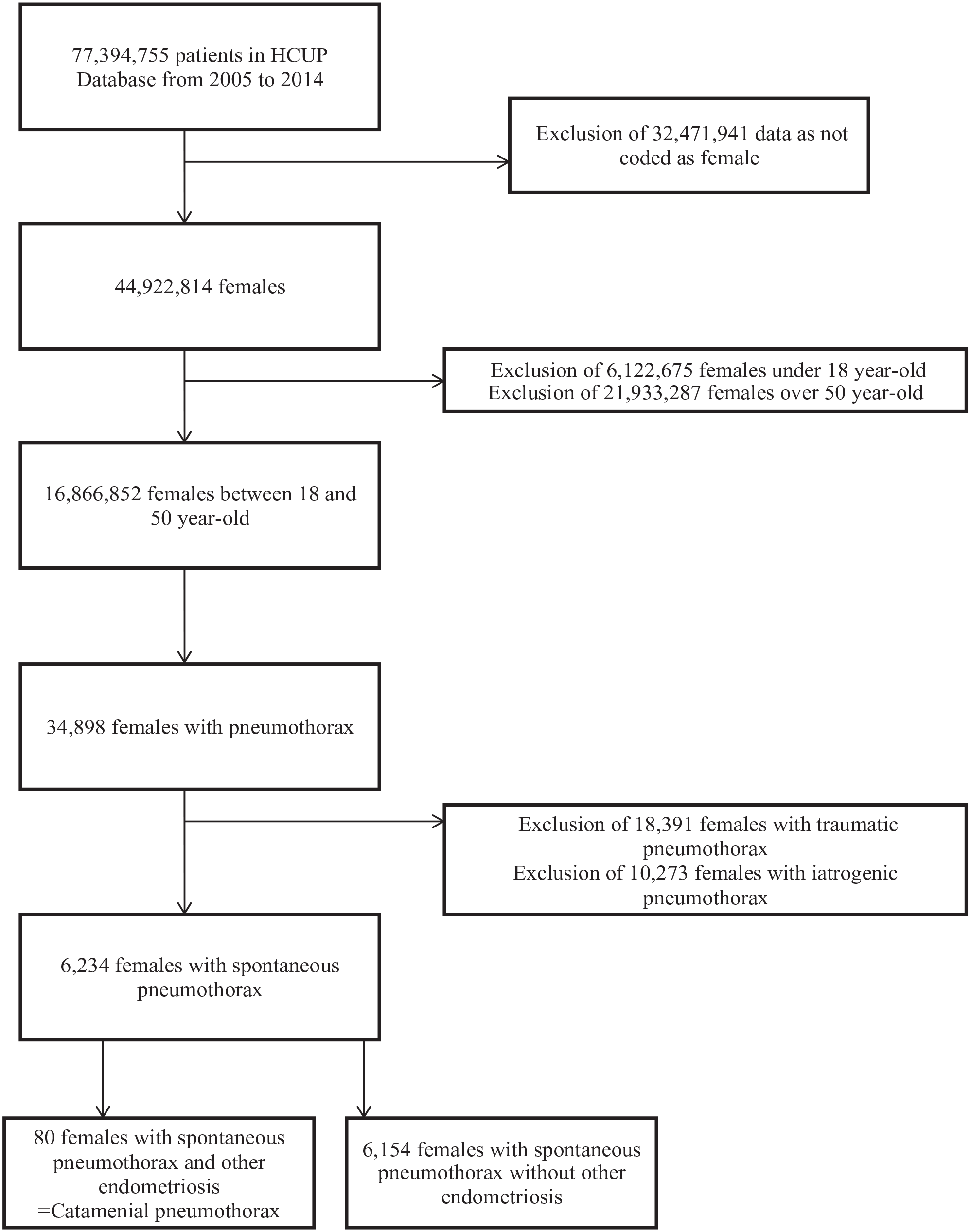
Cohort makeup.
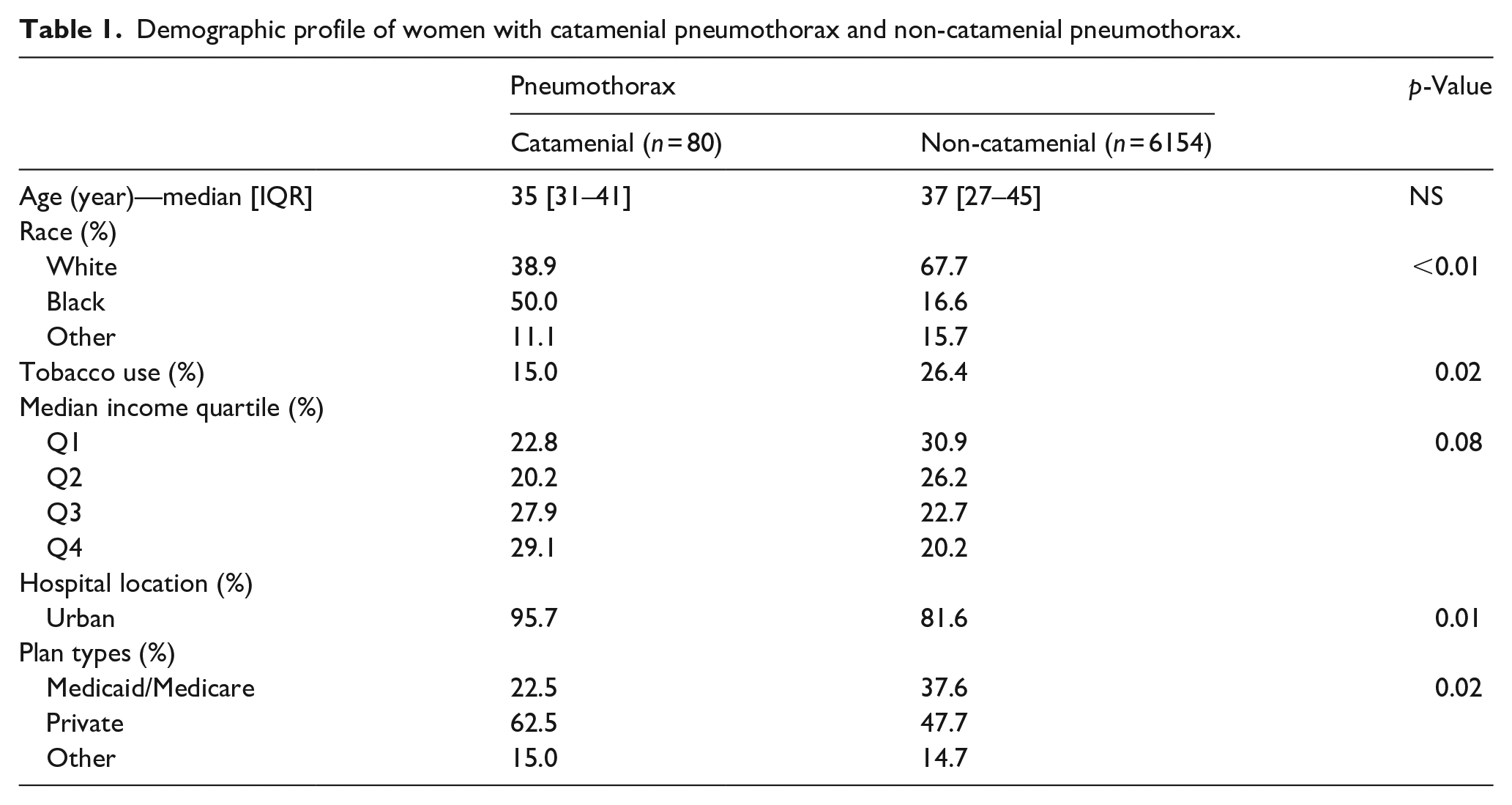
Table 1 demonstrates demographics and clinical data of the cases. No significant difference in the age of women with catamenial pneumothorax and those with non-catamenial pneumothorax. Women with catamenial pneumothorax were more likely to be black (50.0% vs 16.6%; p < 0.01), have private insurance (62.5% vs 47.7%; p = 0.02), and be treated in an urban hospital (95.7% vs 81.6%; p < 0.01). In addition, they were less likely to have diabetes mellitus (1.3% vs 7.0%; p < 0.01), and fewer patients reported a history of tobacco consumption (15.0% vs 26.4%; p = 0.02). Rates of obesity, hypertension, and hyperlipidemia were similar between groups. Patients in the study group were more likely to have concomitant pelvic endometriosis (6.3% vs 0.2%; p <0 .01), dysmenorrhea (3.8% vs 0.1%; p < 0.01), and infertility (3.8% vs 0.03%; p < 0.01).
Demographic profile of women with catamenial pneumothorax and non-catamenial pneumothorax.
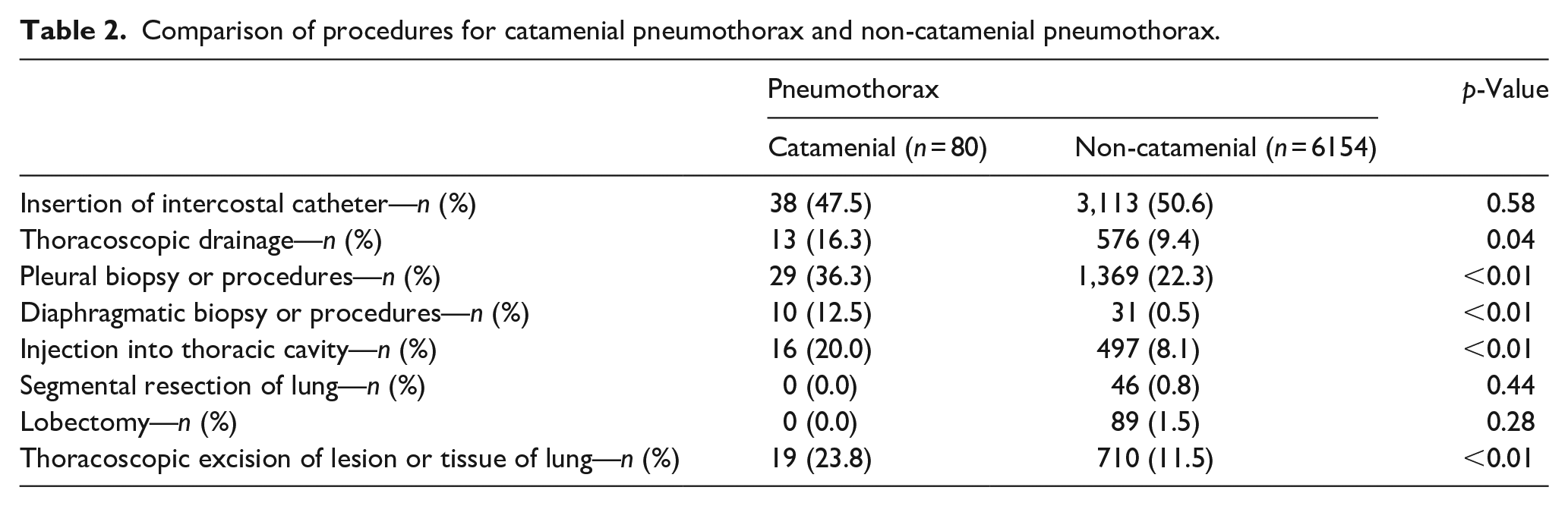
Treatment summary is demonstrated in Table 2. Thoracic drainage was significantly more frequently performed in the catamenial pneumothorax group (16.3% vs 9.4%; p = 0.04). Pleural and diaphragm biopsy or procedures were also more frequently performed in the study group; with 36.3% versus 22.3% for pleura procedures (p < 0.01) and 12.5% versus 0.5% for diaphragmatic procedures (p < 0.01). Laparoscopic exploration of the abdomen and the pelvis was rarely performed in both groups.
Comparison of procedures for catamenial pneumothorax and non-catamenial pneumothorax.
Discussion
Catamenial pneumothorax is a rare entity which epidemiology remains unclear. In this study, we characterized the incidence, clinical features and demographic characteristics of catamenial pneumothorax with the use of a large nationwide database in the United States. We find that relative to cases of non-catamenial pneumothorax, women with catamenial pneumothorax were more likely to be black, treated in urban centers, have private insurance, and have underlying endometriosis and associated symptoms of dysmenorrhea and infertility. Likewise, they were more likely to have thoracoscopic drainage, as well as lung excision and pleural and diaphragmatic biopsies.
The rate of smoking in cases with catamenial pneumothorax was lower than in those with non-catamenial pneumothorax. Jablonski et al. 19 reported similar findings, though their cohort was smaller, and they did not explain the possible mechanism. An emerging theory for the pathogenesis of catamenial pneumothorax involves PGF2α which leads to the constriction of bronchioles and blood vessels. This subsequently leads to alveolar rupture of previously formed subpleural blebs and bullae, resulting in pneumothorax. The subpleural blebs and bullae represent focal regions of emphysema with no discernible wall measuring more than 1 or 2 cm in diameter. The primary risk factor for the development of these lesions is smoking. This seeming paradoxical finding raises the question for the role of smoking in the mechanism of catamenial pneumothorax. However, due to the small number of cases in the group of catamenial pneumothorax, this difference could also be related to type 1 statistical error.
As for the finding of concomitant pelvic endometriosis, some previous studies have reported a high rate of association. Tulandi et al. 5 reported that 76% of women with catamenial pneumothorax have concomitant pelvic endometriosis. However, the rate of associated pelvic endometriosis reported varied between studies with as low as 11% and as high as 85%. 6 In this study, we found a low rate of pelvic endometriosis, dysmenorrhea, infertility, or gynecologic procedures (less than 10%). Both the variations in reporting and the low result in our cohort can be due to the fact that patients are usually managed by thoracic surgeons and the custom of a gynaecological consultation/investigation may not be routine practice.
In the catamenial pneumothorax group, we found higher rates of lung, pleural and diaphragmatic biopsies suggesting the necessity to obtain a pathological diagnosis. Previous authors have suggested performing the biopsy during menses in order to enhance the accuracy and sensitivity of the procedure. However, since not all studies report the presence or absence of thoracic and diaphragmatic lesions, it is difficult to evaluate its sensitivity.16,20,21
The higher rate of interventions, specifically thoracoscopic drainage and thoracic cavity pleurodesis injections may imply that catamenial pneumothorax has a different disease course than spontaneous, non-catamenial pneumothorax, necessitating more surgical interventions. These results are in agreement with previous reports, such as by Visouli et al. 22 which reported that surgical management has to be performed in thoracic endometriosis in order to decrease the risk of recurrences. Korom et al. 21 has also reported a high rate of surgical management (78.9%) in patients with catamenial pneumothorax.
The strengths of the present study include the use of a large, anonymous, nationwide, and validated database, which may reduce information bias with regards to the study question. Likewise, to the best of our knowledge, our cohort of catamenial pneumothorax is amongst the largest in the literature for a single study. In fact, previous publications with a high number of cases are mainly systematic reviews. This study has also some limitations. First, the number of demographic and clinical characteristics was limited by the data collected in the dataset. Second, we could not report longitudinal data on outcomes of intervention, treatment and disease progression, nor data regarding recurrence rate.
In conclusion, catamenial pneumothorax is a rare entity with a distinct clinical profile than cases of non-catamenial pneumothorax. This condition is associated with pelvic endometriosis, has a predilection for surgical intervention and is associated with lower rates of smoking.
Footnotes
Declaration of conflicting interests
The authors declared no potential conflicts of interest with respect to the research, authorship, and/or publication of this article.
Funding
The authors received no financial support for the research, authorship, and/or publication of this article.
Ethical approval
This article does not contain any studies with human participants performed by any of the authors. In addition, given the publicly accessible and anonymized nature of the data in the HCUP-NIS, and according to articles 2.2 and 2.4 of Tri-Council Policy statement (2010), institutional review board approval was not required.
