







Abstract
Although women’s empowerment was not the Mahatma Gandhi National Rural Employment Guarantee Act’s (MGNREGA) primary purpose, it did include provisions such as equal wage rights for men and women and crèche facilities to encourage women’s involvement, correct some gendered inequalities in the labour market and raise their share of benefits. Similarly, the Act’s demand-driven strategy encourages the lowest-caste unskilled labour, women and most marginalised rural and agricultural workers to participate in large numbers. Women’s empowerment is central to human development. Empowerment of women could only be achieved if their economic and social statuses were improved. This study analyses the socio-economic empowerment effects through the MGNREGA scheme on rural women of Haryana. Using the field survey study, we found that women earned a livelihood through paid employment under MGNREGA and contributed their income as the largest share of household income. They gained income-consumption effects along with raising their decision-making power, freedom of mobility and bargaining power after joining the scheme. Despite its positive impact, the success of the programme faces several implementation challenges, including delays in wage payments, delayed work allocation, administrative negligence and inadequate worksite facilities. Furthermore, key provisions such as unemployment allowance and accident compensation are often not effectively implemented. Addressing these issues and strengthening the involvement of self-help groups and labour unions could enhance the transformative impact of MGNREGA on women’s empowerment.
Keywords
Introduction
Empowerment of women is not only imperative but also crucial for all-round development of society and the nation as a whole. The issue of ‘women empowerment’ has become a central point in the programmes and activities of the United Nations and other government and non-government organisations. Subsequently, it has also become a major concern for social scientists, politicians, bureaucrats and researchers, because history demonstrates that, out of all deprived groups in the world, women have suffered the most. They are subject to discrimination and exploitation and occupy a lower status in the domestic, political and economic scenarios. Women, particularly in rural areas, have proportionately the fewest possessions, skills, education, social status, leadership qualities and capabilities for mobilisation, which determines the degree of decision-making and power, and as a result, their dependence on men increases. They have been confined to the four walls of the household, overburdened with domestic work and controlled in their mobility and personal freedoms by the men of the household since time immemorial. So they have lagged behind in the fields of education, skill development and employment, and as a result, their work is greatly undervalued in economic terms. Rural women’s contribution to the economy is quite significant. Over 80% of the working women in rural areas are engaged in agriculture and allied activities. Rural women ensure food security for their communities, build climate resilience and strengthen economies. Yet, gender inequalities, such as discriminatory laws and social norms, combined with a fast-changing economic, technological and environmental landscape, restrict their full potential, leaving them far behind men and their urban counterparts. Women’s empowerment is a critical determinant of economic well-being, social status and political power (Purty, 2018).
The Mahatma Gandhi National Rural Employment Guarantee Act (MGNREGA) scheme is the way to uplift the rural women’s socio-economic status and to bridge the gap between men and women by providing them equal wage rates and the right to paid and decent work in the current economy (Pankaj & Tankha, 2010; Thapar-Björkert et al., 2019). It directly promotes women’s development by providing opportunities to get guaranteed wage employment for 100 days and a reason for them to go out of the household unpaid work trap and know the outside world. It also prioritises them by requiring that 33% of workers be women. Aside from that, there are numerous provisions that allow them to participate in the labour force and contribute to economic growth.
Haryana has experienced strong economic growth, with its gross state domestic product (GSDP) growth often surpassing the national GDP growth rate, reflecting the state’s robust industrial and service sectors. Despite this economic progress, gender disparities have historically persisted in the state. The sex ratio, which declined from 867 in 1901 to 835 in 1911, gradually improved to 879 in 2011, indicating some progress toward gender balance. However, women’s workforce participation remains relatively low due to sociocultural constraints and limited employment opportunities. In this context, the MGNREGA has emerged as an important policy intervention promoting rural employment and increasing women’s participation, which rose from 45.62% in 2016–2017 to 61.05% in 2023–2024 in Haryana as per the data in the MGNREGA report published by the Ministry of Rural Development (2005).
Figure 1 reflects that Haryana stands as one of the states with the highest women’s participation under the scheme among the five best-performing states like Arunachal Pradesh, Bihar, Assam and Uttar Pradesh (Pankaj & Tankha, 2010; Salian & Lulavathi, 2014). The women’s participation in employment generation in the scheme continuously increased during the time period 2014–2015 (41.65%) to 2022–2023 (59.88%), but there was only a decrease trend in the women’s participation rate in 2020–2021 (48.79%) due to the COVID-19 pandemic lockdown effects.
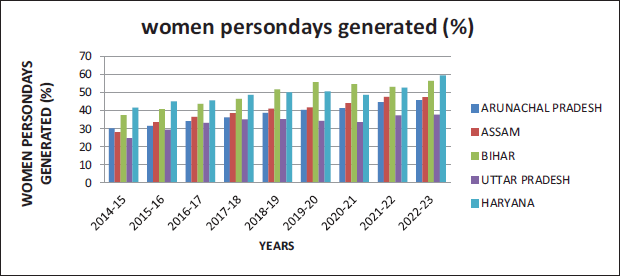
Women’s high participation in the MGNREGA scheme is reflected in Figure 1; does this also reflect the empowerment effect? Means of empowerment reflect different meanings in different sociocultural, economic and political contexts. These terms include self-strength, self-control, self-power, self-reliance, personal choice, capability of fighting for one’s rights, independence, own decision-making power, freedom and others. When women engage in paid work under the scheme, they interact with different kinds of institutions and people who have knowledge of other aspects like banking, labour rights, administration, NGO’s, microfinance companies and self-help groups (SHGs). These things include financial independence, women’s rights, education, raising bargaining power, decision-making power, freedom of choice and others (Biswas, 2010, p. 27; Khera & Nayak, 2009; Mohanty, 1999). So, empowerment has both intrinsic and instrumental values.
‘Empowerment is multi-dimensional and refers to the expansion of freedom of choice and action in all spheres (social, economic, and political) to shape one’s life. It also implies control over resources and decisions’ (Chattopadhyaya, 2005).
This study uses the field survey to evaluate the empowerment effects of the MGNREGA scheme on rural women at the socio-economic status at individual and household levels. This has been evaluated through: (a) income consumption effects and (b) social empowerment effects (decision-making roles, mobility and autonomy in society and others). The study also examines the constraints faced by women at worksites and during work under the scheme, and after that, some policy implications are discussed for further improvement in the scheme to encourage empowerment effects on rural women.
This article starts with a brief review of the background literature in Section ‘Review of Literature’. Section ‘Research Methodology and Sampling’ provides brief details of the data and the methodology used in estimating the socio-economic impact of the programme. A brief background of women workers is discussed in Section ‘Background of Women Workers’ of the study. Socio-economic empowerment effects estimated are presented in Section ‘MGNREGA and Socio-economic Empowerment Effects’, and Section ‘Constraints Faced by Women Workers During Works’ elaborates the major constraints faced by women during scheme works and discusses the major findings of the study. After that, Section ‘Policy Recommendation and Conclusion’ comprises policy implications and concludes with some observations on the effectiveness of the programme.
Review of Literature
A subject advances when prior studies are synthesised logically based on the findings of prior studies (Kumar et al., 2019). Literature reviews, as a research methodology (Snyder, 2019), contribute significantly for conceptual, methodological and thematic development of different domains. The reviews of articles provide readers with a state-of-the-art understanding of the research topic, help identify research gaps and signal future research avenues (Paul & Criado, 2020).
Social protection programmes with a transformative approach play a significant role in improving the socio-economic conditions of marginalised groups. Devereux and Sabates-Wheeler (2004) conceptualised social protection through four dimensions—protective, preventive, promotive and transformative—arguing that the transformative dimension is particularly important for addressing structural inequalities and empowering disadvantaged communities. Within this framework, programmes such as the MGNREGA aim to provide inclusive employment opportunities while strengthening rural livelihoods. Studies on governance and accountability mechanisms also highlight the importance of transparency in the effective implementation of such programmes. For instance, Chawla (2021) examined the practice of social audits in Andhra Pradesh and found that participatory monitoring enhances accountability and encourages rural citizens to actively engage in decision-making processes. Similarly, Rajasekhar et al. (2013) emphasised that the involvement of Panchayati Raj Institutions (PRIs), local youth and SHGs strengthens monitoring and transparency, thereby improving programme effectiveness.
A substantial body of literature has examined the impact of MGNREGA on women’s empowerment and labour market participation. Holmes et al. (2010) found that the scheme encourages women’s participation through provisions such as equal wages, employment within a 5-km radius of villages and childcare facilities at worksites, although the implementation of such provisions remains inconsistent. Similarly, Pankaj and Tankha (2010) observed that participation in MGNREGA enhances women’s income, decision-making power within households and interaction with local governance institutions. Thapar-Björkert et al. (2019) also reported that the scheme contributes to financial independence and improves the socio-economic status of marginalised women, particularly those belonging to disadvantaged caste groups. However, several studies point out challenges such as inadequate worksite facilities, longer working hours and social norms that continue to limit women’s full participation in the labour market.
Researchers have also explored the broader economic and social impacts of MGNREGA. Dasgupta and Sudarshan (2011) highlighted that women’s participation in the programme has increased over time, although regional disparities persist due to differences in implementation. Ahuja et al. (2011), in their study of Mewat and Karnal districts of Haryana, found that small and marginal farmers show greater interest in participating in the scheme, while migration patterns are often influenced by market wage differentials. Further studies indicate that the scheme contributes to improvements in child welfare, health and nutrition by increasing household income and access to rural infrastructure (Dev, 2011). Recent research also emphasises the role of SHGs and financial inclusion in strengthening women’s participation in public programmes (Kumar & Paul, 2018; Singh, 2021). The study asserts that National Rural Livelihoods Mission (NRLM) significantly improved the livelihood conditions of women beneficiaries and helped them mobilise into SHGs, which raised their institutional reliability, financial income and interlinkage with local government PRI. This approach is significant in terms of community-level effects (Pandey & Gupta, 2022). More recent evidence suggests that MGNREGA not only enhances women’s economic contribution but also improves social recognition and awareness of welfare programmes (Behera et al., 2025). Despite these positive outcomes, the existing literature highlights the need for further empirical research at the regional level to better understand the programme’s impact on women’s empowerment.
The existing literature highlights that MGNREGA has contributed significantly to rural employment generation and women’s socio-economic empowerment through increased income, improved decision-making power and enhanced participation in community activities. However, several studies also report challenges related to implementation gaps, inadequate worksite facilities, delayed wage payments and regional disparities in programme performance. Moreover, much of the existing research is based on secondary data or focuses on national and multi-state analyses, with relatively limited empirical studies examining the scheme’s impact at the district level using primary data. In particular, there is a lack of comprehensive evidence on the empowerment outcomes of women beneficiaries in the context of Haryana, despite the state showing relatively high levels of women’s participation in MGNREGA. Therefore, the present study aims to fill this gap by analysing the socio-economic empowerment of women beneficiaries of MGNREGA in selected districts of Haryana using primary survey data.
Mahatma Gandhi National Rural Employment Guarantee Act and Its Transformative Element Retain Women Empowerment
According to the concept of Pellissery and Jalan (2011), the role of social protection has been primarily divided into two functions: preventive and promotive. While the preventive function of social protection is to save people from destitution, the promotive function is to lift people out of poverty (Drèze & Sen, 1991). Devereux and Sabates-Wheeler (2004) found in their studies that social protection programmes like MGNREGA have potential for empowerment, since they can have a transformative role regarding gender perspective, specifically for women, by providing choices of work to breastfeeding, single and widowed women or disabled and old men. MGNREGA did not include the transformation of gender relations as an intended goal, but three important clauses in the Act make legal provisions relating specifically to women.
At least one-third of the workers at the jobsite are female. Schedule II (paragraph 6).
Childcare facilities are provided at the worksite if children under the age of 6 are accompanying their working mothers. Schedule II (28).
Provides legal space for prohibiting gender discrimination in wages (equal wages for men and women). Schedule II (34).
These provisions create an enabling environment for women’s participation in the rural labour market. The programme also facilitates access to wage income, banking services, social audits and improved worksite conditions, which enhance women’s economic independence, decision-making power, mobility and awareness of rights. As noted by Khera (2008), the transformative potential of MGNREGA becomes more evident where local communities actively engage with SHGs (Pellissery & Jalan, 2011), NGOs, labour union, micro-finance companies and other empowerment initiative programmes.
Research Methodology and Sampling
The present study is empirical in nature and is based on primary data collected from 480 women respondents through a field survey conducted in selected districts of Haryana. The data were collected from women beneficiaries of the MGNREGA using a structured questionnaire. Descriptive statistical techniques, including frequency distribution and cross-tabulation, were employed to analyse the responses and compare the conditions of women beneficiaries before and after participation in the scheme (Malhotra & Dash, 2021).
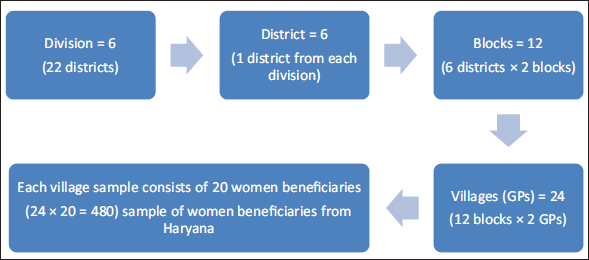
A multi-stage stratified random sampling technique (probability sampling) was used for the selection of respondents. In the first stage, Haryana was selected as the study area due to its relatively high rate of women’s participation in MGNREGA among the better-performing states, according to data from the official MGNREGA portal. In the second stage, six districts like Kurukshetra, Mewat (Nuh), Gurugram, Fatehabad, Karnal and Bhiwani were selected from six different administrative divisions of the state based on the higher participation of women in MGNREGA over the last 5 years.
In the third stage, two blocks from each selected district were chosen randomly while considering areas with relatively higher women’s participation. The selected blocks included Pipli and Shahabad (Kurukshetra), Indri and Pinangwan (Mewat), Farrukhnagar and Pataudi (Gurugram), Nagpur and Tohana (Fatehabad), Karnal and Kunjpura (Karnal) and Bhiwani and Siwani (Bhiwani).
In the fourth stage, two Gram Panchayats (villages) from each block were randomly selected based on the presence of active MGNREGA worksites. From each selected village, twenty women beneficiaries of MGNREGA were surveyed randomly. Thus, a total of 480 respondents were included in the study, providing a comprehensive representation of women workers participating in MGNREGA across the selected districts of Haryana.
Cross-tabulations
‘Distinct nominal variables that categorise the characteristics of each observation in a sample of events can be tabulated in a contingency table to display the frequency of co-occurrence of each variable’s mutually exclusive characteristics, as labelled by the rows, columns and other layers of the cross-tabulation’ (Alberti, 2024; White, 2004). During cross-tabulation, chi-square is applied to examine the association between two variables.
Background of Women Workers
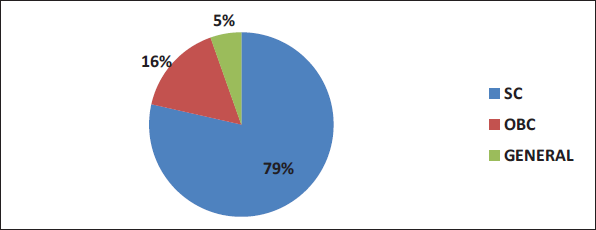
This section deals with personal and MGNREGA-related information among the female beneficiaries. In total, 90% of women were married, and 7.7% were widows, who mostly belonged to joint families. Two-thirds of women were illiterate (69%), and the other 25% comprised primary and middle education, or only 4% belonged to higher education, who attained education after joining SHG interaction through the MGNREGA scheme. Some 74.6% belonged to fertility age groups, who comprised the age groups 18–25 (30.6%), 26–35 (14.6%) and 36–45 (30.4%) of working women. Another 17.3% belonged to the 46–60 age group, and 7.1% were from the 60 above age group. In Figure 2, data reveal that the participation rate of the Scheduled Castes (SC) is higher (79%) than that of other castes, with only 5% enrolled from the General Caste and 16% involvement of Other Backward Castes in the scheme.
Category-wise Women Workers’ Participation in Mahatma Gandhi National Rural Employment Guarantee Act (MGNREGA) in Haryana.
The economic profile of women workers was poor. Two-thirds of women workers engaged in agriculture labour (61.5%), and the others remaining were housewives. Most of the 73.1% were landless, and only 26.9% had agricultural land that is less than 1 acre. The house type of 58.1% was kaccha, and only 23.5% had a concrete (pucca) house through Pradhan Mantri Awas Yojana (PMAY) benefits; some women lived in rental houses. One-half of women workers had Below Poverty Line (BPL) cards, and 45.2% did not attain this benefit. Whereas 85% of women still used wood as a fuel source along with LPG gas connections due to the high prices of gas filling cylinders.
Here is a brief of MGNREGA-related information about women workers. One-half of respondents learned about the scheme from the Gram Panchayat in their home village, 23.5% from media sources such as TV and radio and 8% from relatives. One-third of women workers completed their 1–25 work days in the scheme and 22.3% of 76–100 days. Another 16.9% got 51–75 workdays. Most of the women (51%) informed us that they are getting work far from the 5-km radius and also not attaining sufficient fare charges.
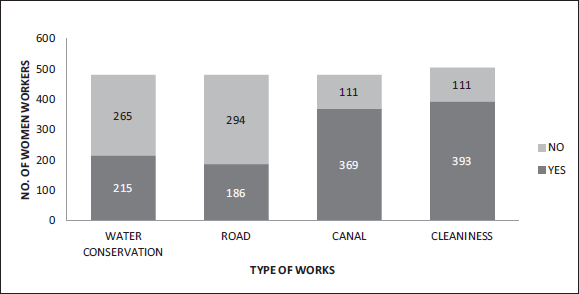
Figure 3 shows information about the work done by women workers in the scheme: 44.8% work on water conservation and 38.8% on road construction. Most women workers do cleanliness (81.1%) and canal (76.9%) work in schemes.
Works Done by Women Workers on Mahatma Gandhi National Rural Employment Guarantee Act (MGNREGA) Worksites (in Numbers).
Mahatma Gandhi National Rural Employment Guarantee Act and Socio-economic Empowerment Effects
The study mainly analyses whether MGNREGA is effective in raising confidence, self-esteem, freedom of mobility, bargaining power, financial inclusion among women workers and others. Empowerment of women now can be classified into five major aspects, that is, social, educational, economic, political and psychological (Mandal, 2013). This study’s purpose is only to analyse the social and economic empowerment of women from the MGNREGA. Women’s economic empowerment is determined by their contribution to household income and consumption patterns, while their social empowerment is determined by their decision-making power, permission to mobility, domestic violence and knowledge of social audit aspects. This section elaborates on the above aspects in two parts:
Income-consumption effects and Social empowerment effects
Later, the study described the major constraints faced by them during work. Besides that, some suggestions and policy implementations are also confined to it.
Income-consumption Effects
The question of what is the women’s paid and unpaid income share in household income and how much they spend their income on things like personal needs, domestic expenses, children’s health and education is raised in every researcher’s mind, and these calculations are more difficult (Boserup, 1970; Mukherjee, 2017; Pankaj & Tankha, 2010). ‘Economic empowerment is a powerful tool against poverty’ (Biswas, 2010, p. 27). Wage employment means economic power, which is a necessary precondition for sustainable economic and social development. Without economic self-sufficiency, other rights and scopes remain meaningless to the people. Economic empowerment can be described as a means by which the poor, landless, deprived and oppressed people of all societies can be freed from all kinds of deprivation and oppression. Many studies claim that transformation capacity can be built through wage bargaining power among agricultural and MGNREGA wages, social auditing, banking access and collective interaction, with the highest female participation in the MGNREGA scheme. MGNREGA helps to push up agricultural wages and provides an alternative source of income for the rural poor, especially dalits and women. Together, these effects combine to enhance the bargaining power of rural labourers (Carswell & De Neve, 2013, p. 17).
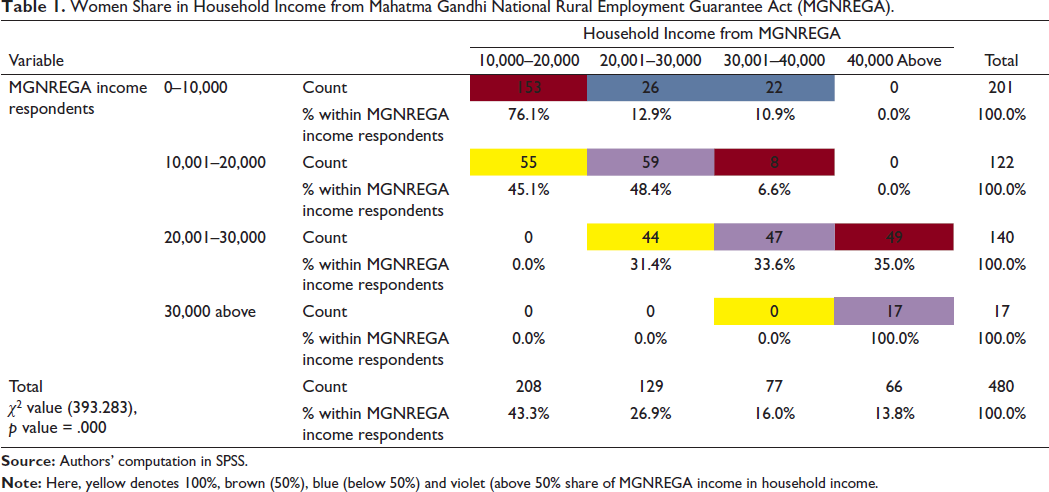
Women Share in Household Income from Mahatma Gandhi National Rural Employment Guarantee Act
Through employment, women earn money, and it enables women and girls to become ‘bread earners’, contributing members of households with a strong sense of their own economic independence (Mukherjee, 2017). MGNREGA gives women a chance to earn a livelihood and contribute their income to household and personal expenses, which means the ability to choose a consumption basket.
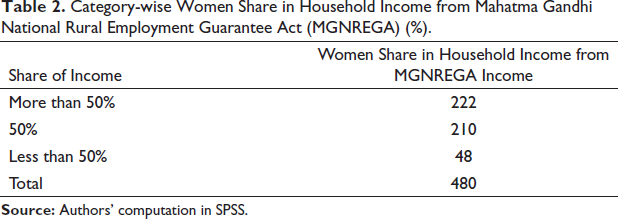
Table 1 represents the income share of women in household income from MGNREGA, in which 76.1% women with incomes of 0–10,000 performed highly in household incomes of 10,000–20,000. So, more than 50% of the income shared by 222 respondents, 50% by 210 respondents and less than 50% by 48 women contributed to household income from MGNREGA, as shown in Table 2. So, only 17.1% of women with an income of 30,000 and above contributed to a household income of 40,000 and above. This also reflects that ninety-nine respondents are the sole earners from MGNREGA in their households, and the full portion of their income is contributed to household income.
Women Share in Household Income from Mahatma Gandhi National Rural Employment Guarantee Act (MGNREGA).
Category-wise Women Share in Household Income from Mahatma Gandhi National Rural Employment Guarantee Act (MGNREGA) (%).
Consumption Pattern of Women Worker
Earning is important, but retention and freedom to choose a consumption basket are more important for empowerment (Mukherjee, 2017; Pankaj & Tankha, 2010). When women earn income by themselves, it also gives them the liberty to choose their consumption basket (Jena, 2012). It also reflects from the study that women have control over their wages and collect wages themselves. It also reflects their freedom of choice and enhances their bargaining capabilities.
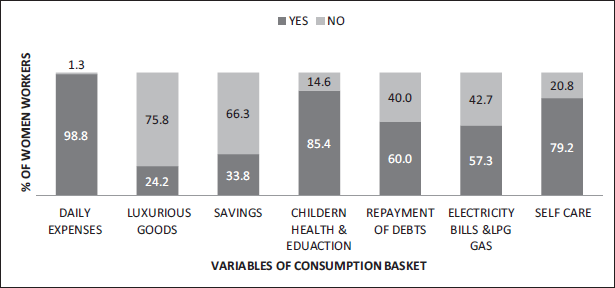
The women use their earnings for many kinds of purposes, like daily expenses, which include vegetables, milk, grains and others; luxury goods, savings; children’s health treatment and education; repayment of debts; electricity bills and LPG gas and others; they also spend it on fulfilling their personal needs. MGNREGA improves the consumption pattern of women workers by providing them with paid employment. Figure 4 shows that women spend 99% of their income from MGNREGA on their daily expenses, followed by children’s education and health (85.4%). Women also express that their income share of 80% is also spent on fulfilling their personal needs (self-care), which includes clothes, cosmetics, ceremonies and others. This also reflects that a smaller portion of income is spent on the purchase of luxurious goods (24.2%) and savings (33.8%) by women workers.
Consumption Pattern of Women Workers of Mahatma Gandhi National Rural Employment Guarantee Act (MGNREGA).
Social Empowerment Effects
Earning is important, but along with enhancements in capability, social mobility, freedom of choice and others (Mukherjee, 2017), it raises the social status of women in society. The history of India demonstrates that out of all the deprived groups in the world, women have suffered the most. Their suffering knew no bounds based on culture, race, region or religion. Women are victims of abuse, molestation, violence, rape, poverty, malnutrition and ill treatment—in a word, all sorts of deprivation. They have been victims of social, political, religious and economic subordination and deprivation in Indian society. Also, they are treated unequally and cannot participate in democratic activities equally with men. The MGNREGA scheme, introduced in 2005, has given a platform to rural women to earn livelihood income and simultaneously raises their socio-economic status with the provision of the scheme. Social empowerment refers to the enabling force that strengthens women’s social relations and their position in social structures. Social empowerment addresses issues of social discrimination existing in society based on disability, race, ethnicity, religion or gender (Dasgupta & Sudarshan, 2011; Devereux & Sabates-Wheeler, 2004). Throughout the study, social empowerment has been assessed through various indicators such as women’s decision-making power, freedom of mobility, participation in MGNREGA joining decisions, awareness regarding social audits, status recognition within the family and society, and changes in domestic violence. These variables have been analysed to evaluate the effectiveness of MGNREGA in enhancing the social empowerment of women beneficiaries. According to the World Bank, empowerment is the process of increasing capacity of individuals or groups to make choices and to transform those choices into desired actions and outcomes. That derives through the household autonomy (decision-making) and mobility and domestic violence.
Decision-making
Household autonomy is based on the position of the woman in the household and her decision-making ability and power within the household, freely as per her choice (Malhotra et al., 2014). The dominance of men in household decisions is a trend in Indian society, and women bind with their partners to take permission for everything. But MGNREGA has some provisions to change this stigma by providing paid, guaranteed and unskilled labour work, access to banks, control over wages and equal wages with men, social audit and a mandate of 33% women’s participation, crèche facilities and others to build a force of decision-making power for them. Decision-making power means not considering anyone’s decision in any aspect or ‘self-decision-taker’ on a household or personal level.
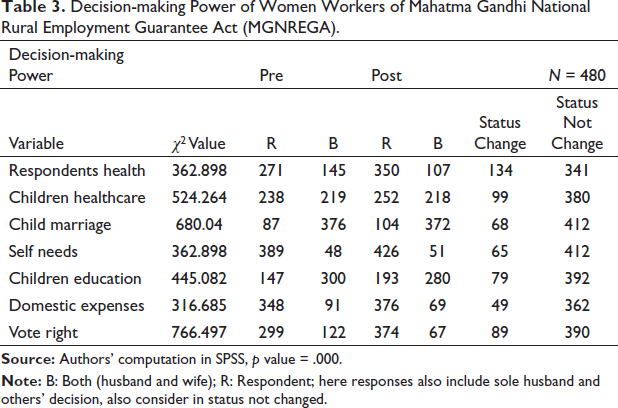
Table 3 reflects that women’s decision-making power improves after joining the scheme; their perceptions and decisions are considered by their husbands, and even women themselves also take sole decision-making for themselves or household decisions. In which, after joining the scheme, the majority of 134 respondents make healthcare decisions for themselves. Women respondents inform us that their decisions also consider with their husbands regarding healthcare (ninety-nine), education (seventy-nine) and marriage (sixty-eight), which they did not consider before joining the scheme. Before MGNREGA works, 348 respondents took decisions about domestic affairs, but now the earnings of 49 respondents have also changed in their social status, making them decision-makers.
Decision-making Power of Women Workers of Mahatma Gandhi National Rural Employment Guarantee Act (MGNREGA).
The MGNREGA has improved the freedom of choice for rural women in three ways. First, provide paid work opportunities to them; second, broaden their choices to join the scheme and third, provide opportunities to interact with SHGs, NGOs, labour unions and others. The main evidence is that 87% of women self-decide to join the scheme, and only 13% of women are mandated by others to join the scheme.
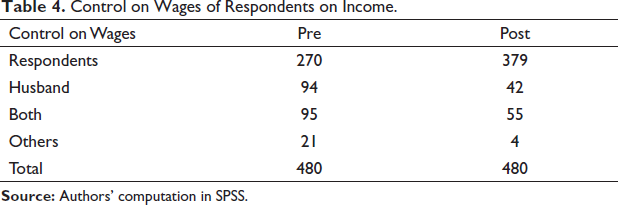
MGNREGA provision to collect wages through bank or post offices empowers women to collect and control their own wages. Table 4 reflects the empowerment light, in which 270 respondents controlled their wages before joining the scheme, whereas these numbers increased to 379 respondents after joining the scheme. There is also control of husbands 94–42 and others 95–55 on wages decreasing. The results reflect the less bargaining power of these women. These show the empowerment effects of the scheme.
Control on Wages of Respondents on Income.
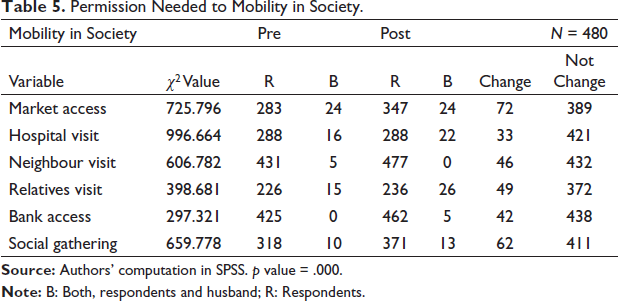
Mobility in Society
Mobility in society measures a woman’s freedom to move about freely as per her choice, which is a fundamental human right (Malhotra et al., 2014). The freedom of mobility also reflects the social empowerment of an individual. If women need permission to move in society, that reflects the dominance of their husbands and other family members over them.
Table 5 reflects that women already have high mobility before joining MGNREGA in case of neighbour visits and bank access, and here, there is no need to ask anyone permission for that purpose. But here, women’s mobility in society after joining MGNREGA improved in market access; seventy-two respondents did not need permission for visits to markets as they followed it. In total, sixty-two respondents attend social gatherings, and forty-nine respondents themselves go to relative visits without informing their husbands and others after joining the scheme, and there is only a slight change in hospital visits (thirty-three).
Permission Needed to Mobility in Society.
Domestic Violence
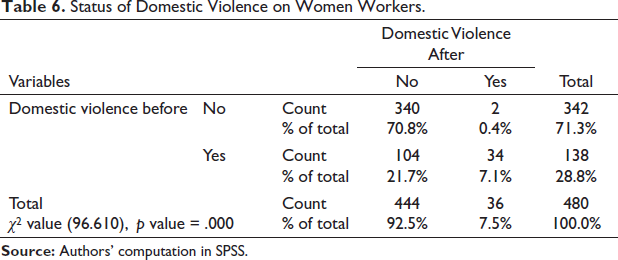
Domestic violence has become a part of the daily routine (Malhotra et al., 2014; Sarma, 2022), and every woman faces it. At the survey time, many women workers did not reply to those questions, and most of them denied that any further violence had happened to them. Some females said that it is the right of men (Malhotra et al., 2014), and we cannot escape from it. So it seems that achieving a domestic violence-free society is still a distant dream.
Table 6 summarises the proportion of women who faced domestic violence. Only 28.8% of women inform us that they bear domestic violence, and 71.3% of women say that no more violence happened to them before joining the scheme. Most of the women (92.5%) inform us that no violence happened to them after joining MGNREGA. So it reflects that the MGNREGA has a positive impact on women’s harmony and raises their honour in family.
Status of Domestic Violence on Women Workers.
Social Audit
MGNREGA 2005, mandatory social audit, is recognised as an important accountability tool for transparency and effective governance (CAG, 2010; Rajasekhar et al., 2013). While the scheme is to be implemented by villages, Gram Panchayats will work with government officials to involve the scheme workers and account for their problems or work investigations. The social audit involves accountability and accounting practices that demonstrate their capacity to contribute to a sustained socio-economic transformation in the traditional discriminatory balance of power and hegemony at the micro-village level (Chawla, 2021).
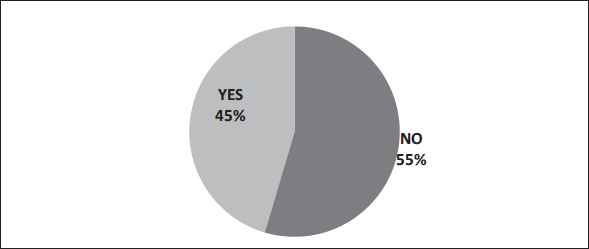
Figure 5 demonstrates that social audit knowledge among the women workers at MGNREGA is low, which relatively affects their social status and reduces their transformative empowerment effects. Out of 480 women workers, only 45% have knowledge of social audit, in which most women have a mere share in group discussions, and others discuss their problems, or some women are mate of workers.
Knowledge of Social Audit Among Women Workers.
Constraints Faced by Women Workers During Works
MGNREGA benefits have not come lightly; women’s working hours have grown, their rest time disappeared, and they must deal with physical and emotional strains. Women in Haryana told us that before going to work, they get up early to collect water, prepare food and manage sufficient facilities for their children. Even when they have the official break for lunch, some of them go home to look after their children and members of their family. Women must work extremely hard to obtain the minimum wage. This is even more challenging for elderly, physically challenged or lactating women.
Figure 6 shows the constraints faced by women workers at the worksite due to heavy work, low availability of worksite facilities and others. It reflects that a larger proportion (76.5%) of women workers feel anxiety from work because of the heavy work assigned to them and neglect the critical situation of women. A woman from Bazidpur village in Kurukshetra told me that they work in a pond filled with waste and garbage (Johad) in the village, and there is no concern about physical or internal care of the body. Most of the respondents also stated that they also used spades (Kassi) for work, and this type of work is heavy for female workers. After the delay in payment, most of the major problems for 73.1% of respondents were that Mate wages were not paid on time. Here, 14.2% of parents send their children for their replacement for attendance on the worksite because of household work that is pending and urgent.
Constraints Faced by Women During Mahatma Gandhi National Rural Employment Guarantee Act (MGNREGA) Works.
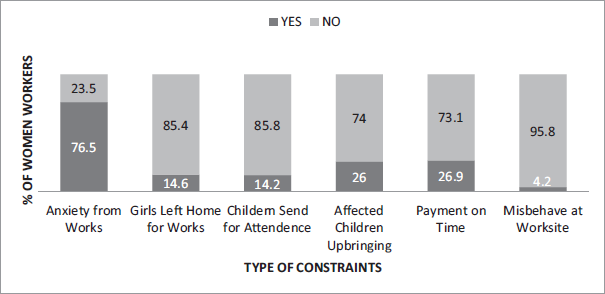
Besides that, it also reflects the positive attitude after joining the MGNREGA scheme; only 14.6% of women left their girls for domestic work. There are also 4.2% cases of misbehaviour at the worksite because some reports indicate the continued presence of contractors and harassment of women workers (Khera & Nayak, 2009). Whereas 96% of the workers have denied the misbehaving activities at the worksite because they made themselves self-protectors against it and felt safe within the boundaries of their villages. That reflects the positive effects of MGNREGA works and enhancement of their participation in the scheme.
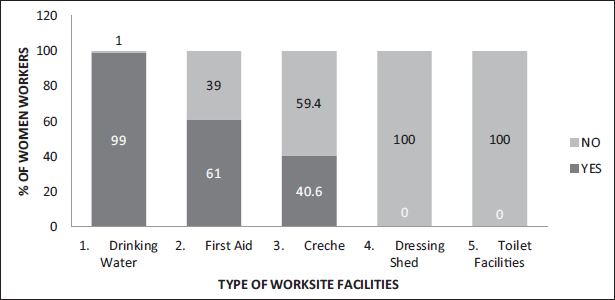
Figure 7 reflected that, lactating women and women with young children leave their children at home while working at the worksite due to a shortage of crèche facilities (Figure 8). Only 41% of women with children under the age of 5 brought their children to work; 59% left their youngsters with relatives or elders. They are apprehensive and emotionally strained about their children’s well-being because they must be away from home for a minimum of 8 h at the MGNREGA job. There have also been reports of contractors remaining on the job and harassing female employees (Khera & Nayak, 2009). Furthermore, the provision of MGNREGA worksite facilities was inadequate on worksites (Khera & Nayak, 2009).
Status of Worksite Facilities in Mahatma Gandhi National Rural Employment Guarantee Act (MGNREGA).
Procedure for Selecting Samples of Women Beneficiaries in Haryana.
Result and Discussion
The findings indicate that women who participate in MGNREGA largely belong to socially and economically disadvantaged groups in Haryana. The results show that 79% of the beneficiaries belong to the SC category, while 69% are illiterate women, indicating that the programme has successfully reached marginalised populations. The study also reveals that widowed women experience relatively higher levels of empowerment compared to other women beneficiaries.
In terms of economic status, the majority of respondents belong to economically weaker households. Approximately 73.1% of women workers are landless, while 11.5% are engaged as agricultural labourers. Housing conditions also indicate economic vulnerability, as 59% of respondents live in kutcha houses, which are more susceptible to damage during the rainy season. Furthermore, 85% of women workers rely on firewood as their primary source of fuel, as LPG cylinders remain unaffordable for many households. Nearly half of the respondents fall below the poverty line, highlighting the socio-economic vulnerability of women workers participating in the scheme.
Economic Empowerment
MGNREGA participation has significantly increased women’s contribution to household income. Table 2 indicates that 46.25% of women contribute more than 50% of household income through MGNREGA, while 43.25% contribute approximately 50%. Only 10% of women contribute less than half of their income to the household. These results demonstrate that participation in MGNREGA has enhanced women’s financial contribution to family income. The statistical analysis further supports this finding. The chi-square test result (p value = .00 < .05) indicates a statistically significant association between income earned from MGNREGA and women’s economic status.
Consumption Pattern of Women Workers
Participation in wage employment through MGNREGA has also influenced household consumption patterns. As shown in Figure 3, women workers spend a large portion of their earnings on essential household consumption. The frequency distribution results indicate that approximately 99% of women spend their MGNREGA income on daily household necessities, including milk, vegetables, cooking oil and flour. Additionally, 85.4% of respondents allocate income toward children’s education and healthcare, reflecting a strong focus on family welfare. Around 80% of women reported spending part of their income on personal needs, including clothing, cosmetics and social ceremonies. However, relatively smaller proportions of income are allocated to luxury goods (24.2%) and savings (33.8%), largely because MGNREGA wages are often insufficient to allow higher levels of savings.
Social Empowerment of Women
Participation in MGNREGA has also improved women’s decision-making power within households. Table 3 shows that 134 respondents reported making independent healthcare decisions for themselves after joining the scheme. Women respondents also reported participating in joint decision-making with their husbands regarding important family matters such as children’s healthcare (ninety-nine respondents), children’s education (seventy-nine respondents) and children’s marriage (sixty-eight respondents). Control over wages has also improved significantly. The chi-square test (p value = .00 < .05) confirms that participation in MGNREGA significantly influences women’s decision-making power.
Self-decision to Join Mahatma Gandhi National Rural Employment Guarantee Act (MGNREGA) by Women Workers.
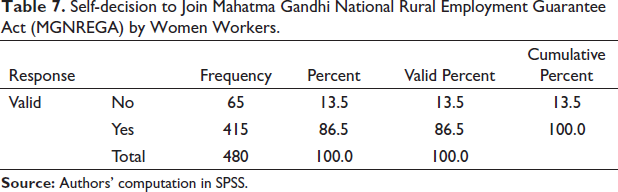
Table 4 indicates that the number of women controlling their own wages increased from 270 before participation to 379 after joining the scheme, suggesting a considerable reduction in husbands’ control over women’s earnings.
Similarly, women’s mobility and social participation have improved after joining the scheme. Table 5 shows that women reported greater independence in visiting markets, attending social gatherings and visiting relatives. For example, seventy-two respondents reported visiting markets independently, sixty-two attended social gatherings and forty-nine visited relatives without seeking permission after joining MGNREGA. The chi-square test (p value = .00 < .05) indicates a statistically significant association between participation in MGNREGA and improvements in women’s social mobility.
Despite these positive outcomes, women workers continue to face several challenges while participating in the scheme. Figure 6 reveals that 55% of respondents lack awareness about social audits, which limits their ability to monitor programme implementation and raise grievances.
Constraints Faced by Women Workers
In addition, several constraints were reported at worksites. A large proportion of respondents (76.5%) reported experiencing physical strain due to the heavy nature of work. Some women also reported the absence of medical facilities at worksites in cases of injury. Another major concern reported by 73.1% of respondents is the delay in wage payments, which discourages continued participation in the programme.
Worksite infrastructure also remains inadequate. Figure 6 indicates the absence of basic facilities such as dressing sheds and toilets at most worksites in Haryana. The lack of these facilities creates difficulties for women, particularly during menstruation. Furthermore, 60% of respondents reported the absence of crèche facilities, while 39% reported the lack of first-aid facilities at worksites. Among the basic facilities, only drinking water was reported to be adequately available at most worksites.
Discussion
The findings of this study indicate that MGNREGA plays a significant role in improving the socio-economic conditions of rural women in Haryana. The high participation of marginalised groups, particularly SC women and landless households, suggests that the scheme effectively targets vulnerable populations. These findings are consistent with earlier research that highlights the inclusive nature of the programme in reaching disadvantaged communities.
The results further demonstrate that participation in MGNREGA enhances women’s economic empowerment by increasing their contribution to household income. Greater financial participation strengthens women’s bargaining power within the household and allows them to influence household consumption decisions. Similar observations were made by Pankaj and Tankha (2010), who argued that the scheme enhances women’s economic autonomy by providing an alternative source of wage employment.
The study also shows that women prioritise essential household consumption and children’s education when allocating their earnings, indicating that women’s income contributes significantly to household welfare. This finding supports earlier research by Dev (2011), which reported that MGNREGA contributes to improved nutrition, health and education outcomes within households.
In terms of social empowerment, the study finds that participation in the programme has improved women’s decision-making power, mobility and control over wages. The observed decline in domestic violence cases also suggests that women’s economic independence contributes to improved household relationships. These findings are consistent with the work of Sarma (2022), which highlighted the positive relationship between women’s income and reductions in domestic violence.
However, despite these positive impacts, several implementation challenges remain. Delays in wage payments, physically demanding work conditions, lack of awareness about social audits and inadequate worksite facilities continue to limit the transformative potential of the programme. These findings align with previous studies (Hussain, 2017; Kundu & Talukdar, 2017), which also identified implementation gaps and infrastructure deficiencies in MGNREGA worksites. Addressing these issues is essential for strengthening the programme’s effectiveness and enhancing its contribution to women’s empowerment.
Policy Recommendation and Conclusion
Throughout the survey, several administrative lapses in the implementation of the MGNREGA were observed, which are also highlighted in previous studies (Narayanan & Das, 2014; Pani & Iyer, 2012). Major issues reported include the absence of basic worksite facilities, lack of medical compensation, non-payment of unemployment allowances and failure to provide the guaranteed 100 days of employment. In addition, entries were often not recorded in the muster roll at worksites, worksite information boards were missing and contractors were sometimes engaged to carry out projects, which contradicts the scheme guidelines. A significant proportion of respondents (73.1% of 480 workers) reported delays in wage payments, while only 22% received the full 100 days of employment. Evidence also suggests misuse of funds through intermediaries involving administrative officials (Hussain, 2017; Pani & Iyer, 2012; Singh, 2021). Workers reported that when they raised concerns regarding unemployment allowance and medical compensation with Block Development and Panchayat Officer (BDPO) officials, they were informed that such provisions exist mainly in official documents and are rarely implemented in practice.
Housing security and livelihood improvement: During the survey, many women workers reported living in kutcha houses, reflecting poor living conditions. Integrating Pradhan Mantri Awas Yojana with MGNREGA could help provide pucca houses to workers and improve their living standards and livelihood security. Since most workers belong to economically weaker sections, they rely on the scheme for livelihood support (Choudhury & Alam, 2021; Mishra et al., 2021). Ensuring availability of regular employment: Workers expressed willingness to work beyond 100 days but reported limited availability of work (Fernandes, 2015; Kelkar, 2015). Ensuring regular employment opportunities and improving worksite facilities, especially for women workers, would significantly increase female participation in the scheme (Choudhury & Alam, 2021). Provision of crèche facilities at worksites: Previous studies indicate that the number of children negatively affects women’s participation in MGNREGA (Hussain, 2017; Mukherjee, 2017). Establishing crèche facilities at worksites would enable women with young children to participate more actively in the programme. Maternity support for women workers: Maternity benefits should be provided to women workers who have completed at least 75 days of work under MGNREGA (Chopra & Krishnan, 2022). Incorporating special provisions for maternity support would improve women’s welfare and participation (Hussain, 2017; Lingam & Yelamanchili, 2011). Environmental sustainability through MGNREGA: In the context of global warming and environmental degradation, MGNREGA can contribute to environmental sustainability by supporting activities related to natural resource management in rural areas (Hussain, 2017). Strengthening such initiatives can provide long-term livelihood security for rural communities dependent on natural resources. Gender-sensitisation work allocation: Work activities should consider gender vulnerabilities, particularly for single women, breastfeeding mothers and elderly women (Hussain, 2017). Providing less physically demanding work and adequate support can ensure income security and social protection for these groups (Drèze & Sen, 1991; Khera & Nayak, 2009). Strengthening the role of SHGs and labour unions: Greater involvement of SHGs and labour unions in MGNREGA implementation can strengthen women’s empowerment. Labour unions can help workers understand labour rights and access scheme provisions such as accident compensation and unemployment allowances (Hussain, 2017; Khera, 2008; Krishna, 2022). Similarly, SHGs can promote financial inclusion, income generation opportunities and social empowerment among rural women (Kothari, 2014).
Conclusion
This study examines the socio-economic empowerment of the MGNREGA scheme in Haryana. The highly extensive funding through MGNREGA creates corruption among the local governments and intermediaries, which draws attention to the most prominent problems facing rural workers. The most critical condition of scheme provisions mentioned in the MGNREGA, 2005, like unemployment allowance, accidental grievance, medical assistance, crèche facilities and not providing minimum legal wages to workers, was revealed after interaction with women workers, who asserted that district officials did not attend to their problems gracefully and even created problems by stopping their allotment of work and wages. There is also a poor situation at worksite facilities in Haryana. Here, administrative negligence became the most problematic constraint for every worker.
Aside from that, the scheme’s effects on women’s empowerment have increased as a result of women’s high employment participation. Thus, the most that can be said is that choices for women have increased, and their economic dependence on male members has been reduced. The observation of the study indicates that the cash paid to scheme workers from MGNREGA was only used for daily expenses, children’s education and health and personal needs, but was not used for any income enhancement purpose (such as investing in savings, luxury goods or investing in small businesses). This was because the money came as small weekly payments, which were sufficient only to pay for day-to-day household needs. Now turn to social aspects; women’s decision-making power has improved, especially in market access, financial aspects and social gatherings. There are also cases of women gaining bargaining power by controlling their wages and choosing consumption baskets that are possible only by increasing mobility in society.
Footnotes
Acknowledgements
The authors have acknowledged the financial support given under the JRF scheme by UGC for PhD research work and supervisor Professor Dara Singh to guide them in this article analysis. The authors are indebted to JNL (Central library of Kurukshetra University, Kurukshetra), senior research fellow and various anonymous references for comments that helped to improve the article. All views and any errors are the authors’ responsibility alone.
Declaration of Conflict of Interests
The authors declared no potential conflicts of interest with respect to the research, authorship and/or publication of this article.
Funding
The authors disclosed receipt of the following financial support for the research, authorship and/or publication of this article: The authors have received the financial support given under the JRF scheme by UGC for PhD research work.
