






Abstract
This article examines how democratic competition, under conditions of institutional fragility and fiscal constraint, can undermine state coherence and developmental capacity. While liberal democratic theory often portrays multiparty elections as mechanisms for accountability and responsiveness, this study complicates that narrative by analyzing how partisan rivalry has fragmented the governance of urban water provision in Accra. Drawing on two years of qualitative fieldwork in urban Accra, including interviews, focus groups, and documentary analysis, the article traces how electoral turnover, the strategic depoliticization and repoliticization of policymaking, and institutional misalignment have destabilized long-term planning and eroded commitments to equitable access. Focusing on the structural tensions between Ghana’s regulatory authority (the Public Utilities Regulatory Commission) and the state-owned utility, the Ghana Water Company Limited, the study reveals how competing logics of technocratic autonomy, populist responsiveness, and fiscal survival have undermined institutional coordination and produced contradictory policy outcomes. These dynamics have contributed to policy volatility, underinvestment, and widening inequality in water access, particularly for underserved urban communities in Accra. By foregrounding the spatial and institutional consequences of democratic rivalry, the article contributes to critical debates on state transformation, infrastructure governance, and the uneven geographies of service delivery in urban and comparable contexts across the global South. It concludes that democratic competition does not inherently foster inclusive development; rather, effective governance depends on institutional alignment, fiscal realism, and sustained political commitment to the public good.
Keywords
Introduction
Democracy is often celebrated as a vehicle for citizen empowerment and accountable governance (Gyimah-Boadi, 2019; Paller, 2019), yet its practice can generate institutional tensions that remain underexplored, especially in contexts like Ghana. Since transitioning to democratic rule in 1992, Ghana has shed its legacy of military authoritarianism, marked by four coups between 1966 and 1979 (Crawford, 2009; Oquaye, 2000). The return to constitutional governance ushered in a competitive multiparty system that has enabled meaningful electoral participation and regular alternation of power between the National Democratic Congress (NDC) and the New Patriotic Party (NPP), parties broadly aligned with social-democratic and market-oriented ideologies, respectively (Nathan, 2019; Paller, 2019). With nine peaceful elections and multiple transfers of power, Ghana has earned recognition as a ‘beacon of democracy’ in Africa (Arditti, 2017). Yet beneath this narrative of democratic consolidation lies a more ambiguous reality: whether sustained electoral competition reinforces or undermines the state’s capacity for long-term policy planning and effective service delivery remains an unresolved and urgent question, particularly in critical sectors such as urban water provision.
Liberal theories of democratic governance present electoral competition as a driver of state capacity, accountability, and improved service delivery (Lewis, 2008). In this view, political rivalry compels leaders to respond to citizen demands, govern transparently, and deliver public goods with fiscal discipline (Dahl, 1971; Inglehart and Welzel, 2009). Democratic institutions, such as elections, legislative oversight, and civic engagement, are understood as mechanisms that constrain elite power and align state action with the public interest (Boix, 2003; Fukuyama, 2014; Gyimah-Boadi, 2019). Voting, then, can function as a disciplinary force when electoral processes are accessible and competitive, linking political survival to government performance. These dynamics are especially pronounced in sectors such as water, sanitation, and electricity, where daily visibility and material urgency render service delivery highly electorally salient (Nathan, 2019). Politicians seeking to secure electoral margins, particularly in underserved areas, are expected to prioritize these services (Besley and Burgess, 2002). In this framework, water becomes not just a public good but a form of political capital, a site where developmental promises and electoral incentives converge (Sultana, 2018).
Yet this normative account of democracy often obscures the disruptive, and at times, regressive consequences of political competition in contexts marked by institutional fragility, fiscal constraint, and deep partisan polarization (Fukuyama, 2013). In many low- and middle-income democracies, the imperative to win elections fuels a politics of immediacy (Resnick and Van de Walle, 2013). Political leaders frequently privilege short electoral time horizons, investing in symbolic projects, patronage networks, and populist appeals rather than building institutional capacity or supporting technocratic governance (Grindle, 2009; Keefer, 2007; Pitcher, 2012). The result is a governance paradox: while elections may compel leaders to appear responsive, this responsiveness often takes the form of fragmented, ad hoc decisions that undermine bureaucratic continuity and fiscal sustainability (Paller, 2019; Van de Walle, 2001). Under such conditions, public institutions become arenas of contestation, pulled between the logic of electoral expediency and the imperatives of sound administration (Geddes, 1994). Technocrats charged with ensuring regulatory coherence and service sustainability frequently find their mandates subordinated to the political calculus of ruling parties (Bratton and Van de Walle, 1997). The absence of strong bureaucratic autonomy and stable financing further weakens the state’s ability to insulate core services from political interference or capture (Mkandawire, 2001; Samatar, 1999). As a result, in many contexts, democratic competition in Africa and the global South often produces accountability in form but not in substance, functioning more as political performance than as a vehicle for transformative development (Hickey and Mohan, 2004).
Building on these critiques, this article conceptualizes democratic rivalry not simply as the presence of multiparty elections, but as a condition of sustained electoral competition in which political survival becomes tightly bound to short-term performance, partisan loyalty, and the continuous recalibration of policy priorities in anticipation of electoral turnover. Under such conditions, democratic accountability operates less through long-term programmatic commitments and more through competitive signaling, symbolic responsiveness, and the strategic deployment of public resources for immediate political gain. In Ghana, this dynamic has become especially pronounced in critical sectors characterized by high capital intensity, long planning horizons, and politically sensitive distributive outcomes, such as urban water provision.
This article advances the claim that, under conditions of institutional fragility and fiscal constraint, intensified democratic competition can unintentionally erode policy coherence and bureaucratic stability in public service provision. In the case of urban water governance in Accra, democratic rivalry reshapes state behavior through three interrelated mechanisms. First, frequent electoral turnover and partisan polarization encourage the systematic replacement of senior officials and board members across water institutions, weakening technocratic autonomy and disrupting institutional memory. Second, rival political actors strategically fragment authority across overlapping agencies in order to retain influence, diffuse blame, or avoid politically costly decisions such as tariff reform. Third, electoral incentives prioritize visible, short-term interventions over long-term infrastructure investment, producing a governance environment in which agencies compete for legitimacy, resources, and political favor rather than coordinate around redistributive goals.
These dynamics have not created inequality in water access ex nihilo; rather, they have deepened and reconfigured longstanding spatial and socio-economic inequalities by eroding the institutional coherence required to address them. While neoliberal reforms and market-based logics have reshaped water provision in urban Accra and Ghana in general, this study shows that their effects are mediated and, in important ways, intensified by democratic rivalry operating within the state itself. The result is not a simple retreat of the state, but a fragmented governance landscape in which democratic responsiveness and technocratic rationality increasingly pull in divergent directions, with adverse consequences for equitable access to urban water services.
In doing so, this article contributes to critical debates on the geographies of urban governance, infrastructure politics, and state transformation in the global South. First, it engages with critical democratic theory (Agnew, 2011; Jessop, 2016) by challenging liberal assumptions that competitive multiparty elections inherently produce equity and accountability. Ghana’s experience reveals how democratic rivalry, under conditions of institutional fragility and fiscal constraint, can undermine policy coherence, bureaucratic stability, and inter-agency coordination. Second, the paper advances critical state theory (Jessop, 2008; Mkandawire, 2001; Samatar, 1999) by offering a strategic-relational account of how electoral imperatives reshape governance logics, fragment institutional authority, and weaken the developmental capacity of the state. Third, it contributes to the literature on infrastructure politics and urban service delivery by showing how technocratic autonomy and neoliberal regulatory reforms, though discursively framed as neutral, depoliticize structural inequalities while reinforcing elite advantage and excluding the urban poor. By drawing on two years of fieldwork in Accra (2020-2022), the article offers an empirically rich and theoretically grounded analysis of how democratic institutions can paradoxically produce governance incoherence in core infrastructure sectors.
The study is organized into five sections, including this introduction. The following section reviews the broader theoretical debates on democratic competition and state capacity. Next, it outlines the research methodology, followed by a presentation of the Ghanaian case study, demonstrating how partisan turnover and political contestation have disrupted policy coherence and constrained affordable urban water services. It explores the institutional tensions between populist electoral promises and the technical and fiscal demands of sustainable water delivery. Finally, the study concludes by synthesizing the key findings and reflecting on their implications for the study of democratic governance, state capacity, and public service provision in a global South context.
Theorizing competitive politics and the development of state capacity
Mainstream theories of modernization and governance often assert a strong, positive relationship between democratic competition and the development of state capacity (Przeworski et al., 2000). According to this perspective, electoral contestation compels governments to become more responsive to citizen demands and to deliver public goods more efficiently (Inglehart and Welzel, 2009; Paller, 2019). The underlying logic is straightforward: political leaders, in pursuit of electoral survival, are incentivized to improve performance in key service areas such as infrastructure and social welfare, sectors where outcomes are directly visible to voters. In this view, democracy functions not merely as a tool of political inclusion but as a catalyst for institutional reform and developmental progress (McNeil and Malena, 2010; Przeworski et al., 1999). For scholars such as Acemoglu and Robinson (2012), democratic institutions promote accountability by empowering citizens to shape policy agendas while constraining the arbitrary exercise of state authority. Others emphasize that democratic regimes are more likely to generate and sustain inclusive development outcomes through pluralistic bargaining and institutionalized feedback loops (Boix, 2003; Haggard and Kaufman, 2008). Elections, in this formulation, are central to governance, disciplining political elites and compelling them to allocate public resources in ways that are equitable, transparent, and efficient (Besley and Burgess, 2002).
This optimistic view is rooted in the normative ideal of a social contract: governments secure legitimacy by fulfilling public expectations, and citizens, in turn, reward effective leadership with electoral support (Nugent, 2010). Competitive politics is thus thought to reinforce this reciprocal relationship by making the performance of governments a prerequisite for political survival (Stasavage, 2005). From this vantage point, democracies are assumed to be more likely than autocracies to invest in human capital, sustain competent bureaucracies, and institutionalize transparency in public administration (Gyimah-Boadi, 2009; Resnick and Van de Walle, 2013). Furthermore, deliberative democratic practices, such as participatory budgeting and citizen oversight mechanisms, are believed to strengthen these dynamics by embedding accountability within everyday governance processes (Dryzek, 2000; Fishkin, 1991, 2018). These participatory mechanisms are said to generate more socially inclusive and developmentally aligned policy outcomes, thereby enhancing both institutional legitimacy and administrative effectiveness.
A growing body of empirical research supports the proposition that democratic competition can enhance state performance, particularly in middle-income and emerging democracies. Besley and Burgess (2002), for example, show that increased political competition across Indian states led to greater government responsiveness to natural disasters, as elected officials sought to improve their electoral prospects through visible and effective service delivery. Similar patterns emerge in the health sector: Besley and Kudamatsu (2006) find a positive association between democratic governance and improvements in population health outcomes, such as life expectancy, suggesting that competitive democratic politics can incentivize investments in health systems. In Brazil, Boulding and Wampler (2010) demonstrate that participatory budgeting initiatives facilitated the redistribution of municipal resources toward historically marginalized neighborhoods, thereby promoting more equitable access to essential services. These findings align with the core tenets of selectorate theory (Bueno De Mesquita et al., 2003), which argues that leaders in democratic systems must appeal to broader constituencies, incentivizing the provision of public goods. From this perspective, democratic competition helps institutionalize mechanisms of civic engagement and government responsiveness in politically salient sectors such as water, sanitation, and health care, where the visibility of outcomes can significantly influence public perceptions and electoral accountability.
Yet critical political economy scholarship complicates this optimistic narrative, revealing that the relationship between democratic politics and state capacity is far more uneven and contingent than liberal theory suggests. Mkandawire (2001) cautions that the mere existence of electoral competition does not guarantee the emergence of coherent or capable state institutions, especially in contexts where bureaucracies remain fragile and public sectors are chronically under-resourced. Similarly, Samatar (1999) and Leftwich (1995) argue that democratic governance requires more than electoral turnover; it depends on developmental coalitions, professionalized administrations, and institutional architectures that are both historically grounded and contextually resilient. Jessop (2016) further critiques the liberal tendency to conflate electoral legitimacy with effective governance, insisting that enduring state capacity hinges on technocratic competence, institutional continuity, and long-term policy coordination. Yet, in many postcolonial African democracies, electoral incentives often produce fragmented authority, reactive policymaking, and politicized bureaucracies, with the effect of hollowing out the very capacities that democratic systems are expected to strengthen (Mkandawire, 2001).
These critiques call for a rethinking of how we conceptualize state capacity under democracy, not merely in terms of institutional strength or weakness, but in relation to the alignment (or misalignment) of mandates, incentives, and governance logics across public agencies. Particularly in service sectors that require high coordination and long-term planning, democratic competition may not erode the state as a whole but instead produce internal contradictions that disrupt policy coherence and delivery effectiveness (Agnew, 2013). As Grindle (2009) and Keefer (2007) observe, political leaders in competitive systems often favor visible, short-horizon projects that deliver immediate electoral dividends over complex, multi-cycle reforms that lack short-term political payoff. This logic of short-term incentives produces fragmented policy landscapes, frequent reversals, and the erosion of institutional capacity.
This article argues that democratic rivalry can undermine coordination among public institutions, even when they are formally aligned around shared developmental goals. Drawing on critical state theorists such as Mkandawire (2001), Poulantzas (1978), Agnew (2013), and Jessop (2008, 2016), it conceives of the state not as a unified actor, but as a contested and uneven institutional terrain shaped by shifting ideological configurations and the selective empowerment of agencies. In competitive multiparty systems, public institutions are frequently restructured or reoriented in line with the electoral interests of ruling parties. In Ghana, this dynamic has produced persistent institutional incoherence that weakens policy coordination, undermines fiscal discipline, and disrupts long-term infrastructure planning, particularly in sectors like urban water, where continuity and inter-agency cooperation are essential.
Ghana exemplifies how democratic competition can fragment governance and undermine policy coherence. Often praised as a model of democratic consolidation in Africa, marked by peaceful transfers of power and vibrant civic engagement, Ghana nonetheless grapples with deep political polarization and entrenched partisanship. The rivalry between the NDC and NPP has fostered a recurring pattern of abrupt policy reversals and partisan restructuring of public agencies with each electoral cycle. Incoming governments routinely replace senior officials across ministries and departments, weakening bureaucratic autonomy and disrupting technocratic leadership. These cycles of politicized turnover fracture institutional memory and compromise the state’s capacity to sustain long-term planning in essential sectors such as water. As the empirical section will show, Ghana’s urban water sector illustrates how democratic competition alone does not guarantee effective governance; under certain institutional and political conditions, it may instead produce incoherence that hinders equitable service provision.
Methodology
This article draws on over two years of qualitative fieldwork conducted in urban Accra between May 2020 and October 2022, spanning Ghana’s 2020 general election cycle. The broader research project from which this article is derived recruited 125 participants, combining in-depth interviews, focus group discussions, field observations, and documentary analysis to examine how democratic politics, institutional arrangements, and technocratic practices intersect in urban water governance.
Case selection and research scope
Accra was selected as the primary case study because it concentrates Ghana’s most complex urban water governance challenges: rapid urbanization, stark socio-spatial inequality, high electoral competitiveness, and overlapping institutional authority. As the capital city and largest urban settlement, Accra is also where national-level political dynamics most directly intersect with technocratic decision-making in the water sector. While the analysis is grounded in Accra, the article reflects on how the identified dynamics may inform understanding of urban water governance in other Ghanaian and Global South contexts with similar institutional and political characteristics.
Data collection and analysis
The empirical material analyzed in this article draws from the broader dataset of 125 participants, including: senior and mid-level officials from Ghana Water Company Limited (GWCL) and the Public Utilities Regulatory Commission (the Commission), including both current and former officials; policy actors and technocrats involved in urban infrastructure planning and regulation; and ordinary urban residents and households navigating everyday water access in underserved communities within Accra.
In-depth interviews (IDIs) were conducted primarily on a one-on-one basis, allowing participants to speak candidly about politically sensitive and professionally consequential issues. Focus group discussions (FGDs) were conducted with urban residents to capture shared experiences of water access, cost, and service reliability. Interviews and discussions were conducted in English and local languages, depending on participants’ preferences, with translation conducted where necessary. The choice of IDIs and FGDs was driven by their capacity to elicit rich, interpretive insights that are not readily accessible through survey instruments or statistical analysis (Gomez & Jones III, 2010; Secor, 2010). IDIs allowed for in-depth engagement with key stakeholders, uncovering individual motivations, political calculations, and institutional constraints. FGDs, on the other hand, provided a forum for shared reflection (Grace & Mikal, 2019) and revealed how collective understandings of governance, service delivery, and equity are socially constructed and contested. These primary data sources were further triangulated with documentary evidence, including government reports, meeting minutes, donor evaluations, household surveys, and the researcher’s field notes. This multi-source verification process enhanced the reliability and analytical depth of the findings.
In addition to interviews and focus group discussions, the broader fieldwork included a structured household survey conducted in Adenta between June and August 2022. The survey covered 50 households selected through purposive and spatially distributed sampling across low- and middle-income sections of the municipality to capture variations in access to piped water, dependence on informal vendors, and household expenditure on water. The survey was used to complement qualitative interviews by providing indicative patterns of access, cost, and service reliability. The quantitative figures reported in the empirical section, including household water access and expenditure estimates, are drawn from this survey and are used descriptively rather than for statistical generalization.
Participants were selected through purposive sampling due to their direct involvement in, or exposure to, water governance processes. This sampling strategy prioritized institutional and experiential relevance over statistical generalizability (Gomez & Jones III, 2010; Palinkas et al., 2015). It allowed the research to access diverse perspectives across policy, technical, and consumer domains, and to uncover the co-production of urban water economies by state and non-state actors under conditions of infrastructural neglect. While the broader research engaged a wide range of participants, this article analytically foregrounds interviews with institutional actors in order to trace how governance fragmentation, policy incoherence, and technocratic constraints emerge within the state. These elite perspectives are analytically central but are situated within a wider evidentiary base that includes resident experiences and community-level data.
Data were analyzed thematically, with particular attention to how electoral incentives, institutional arrangements, and technocratic rationalities interact to shape urban water governance. The analysis focuses specifically on urban water governance in Accra, examining how democratic rivalry manifests within state institutions and how these dynamics affect coordination, investment, and equity in water provision.
Positionality
The author is Ghanaian and has prior familiarity with Accra’s urban environment, which facilitated access to institutional actors and community participants. This positionality enabled informed engagement with local political dynamics, bureaucratic practices, and everyday experiences of water access, but it also required reflexive attention to power asymmetries and expectations during fieldwork. Throughout the research process, care was taken to minimize assumptions of insider knowledge and to create space for participants to articulate their own interpretations of governance challenges.
Ethics and anonymization
Ethical considerations were rigorously observed. All participants were briefed on the purpose of the study and gave informed consent. Identities have been anonymized unless explicit permission was granted, in line with the ethical standards approved for this research. This ethical commitment ensured that participants could speak freely without concern for personal or political repercussions, thereby enhancing the authenticity of the data collected.
The empirical discussion that follows builds directly on this methodological foundation, offering a detailed account of how Ghana’s urban water sector has been shaped by political competition, institutional discontinuities, and policy volatility. By tracing these dynamics, the analysis illustrates how the aspirations of democratic accountability can be undermined by the very political competition intended to uphold them, especially when institutional coherence, technocratic autonomy, and long-term planning are persistently disrupted.
Political competition, institutional fragmentation, and urban water provision in Ghana
Brief context to urban water infrastructure and governance in Accra
Urban water supply in Accra is primarily sourced from surface water systems, with the Kpong–Accra water treatment plant and the Weija–Accra water treatment plant constituting the backbone of potable water provision for the metropolitan area (Ghana Water Company Limited (GWCL) n.d.; GWCL, 2015). However, the Accra-East region, which forms the primary focus of this study, relies predominantly on the Kpong–Accra water treatment plant (Figure 1). Treated water is distributed through a centralized network managed by GWCL, the state-owned urban water utility responsible for production, transmission, and distribution. Regulatory oversight, tariff setting, and consumer protection fall under the mandate of the Public Utilities Regulatory Commission, which operates as Ghana’s statutory regulator for public utilities. A Sectional View of the Kpong-Accra Water Treatment Plant source: Gwcl.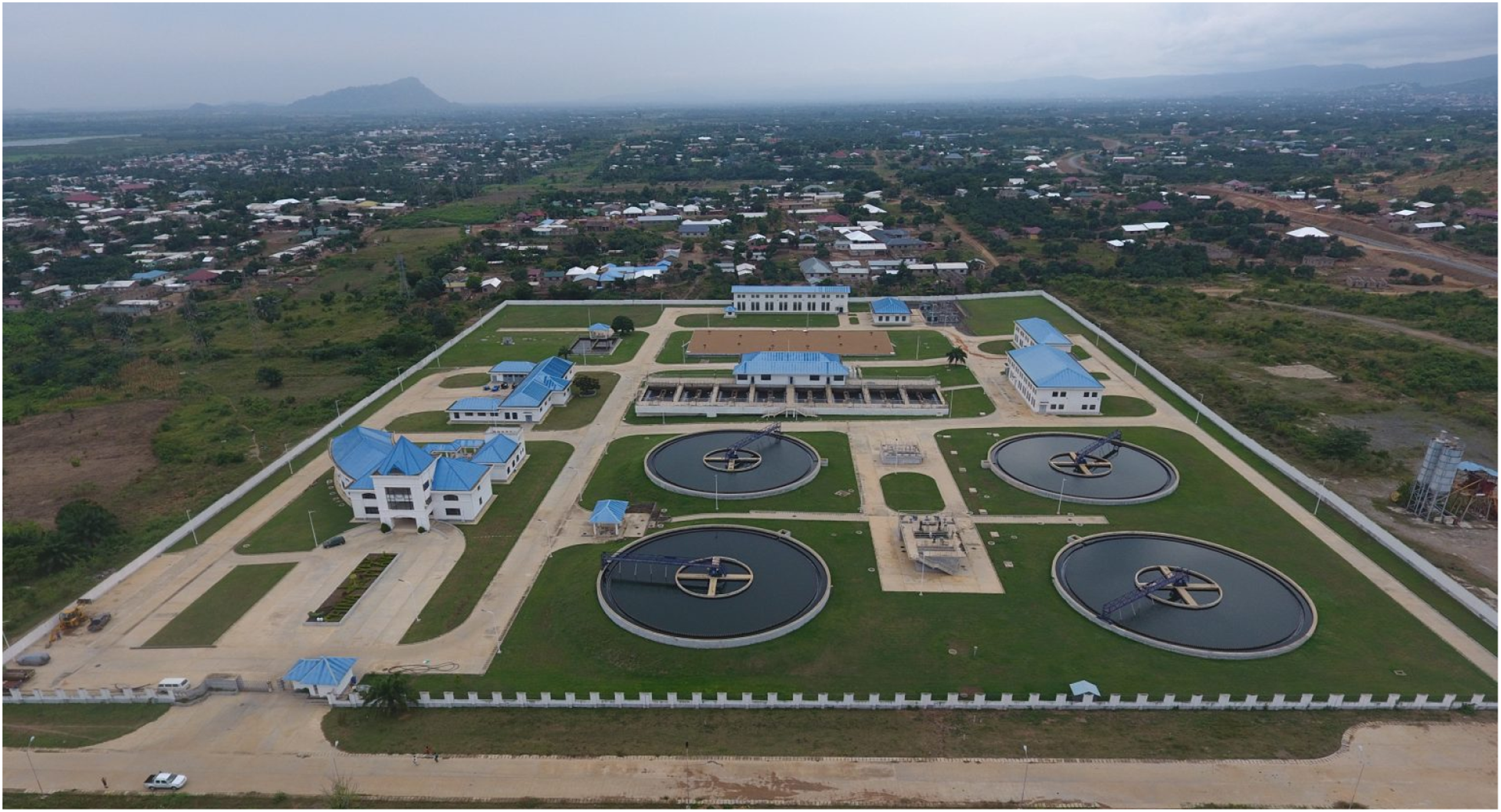
Despite this formally centralized infrastructure, water provision in Accra is characterized by uneven coverage, aging distribution networks, and chronic supply interruptions, particularly in low-income and peri-urban neighborhoods (Ainuson, 2010; Yeboah, 2006). Limited treatment capacity, high rates of non-revenue water, and underinvestment in maintenance constrain the system’s ability to meet rapidly growing urban demand (Asante-Wusu and Yeboah, 2020). As a result, households in underserved areas frequently rely on alternative sources such as tanker services, sachet water, and informal vendors, often at significantly higher per-unit costs.
These infrastructural constraints intersect with institutional arrangements in ways that are politically consequential. While GWCL is responsible for operational delivery, the Commission regulates tariffs and service standards, creating a governance landscape in which financial sustainability, political affordability, and social equity must be continuously negotiated (Braimah et al., 2017). The introduction of commercially oriented reforms, including cost-recovery imperatives and performance benchmarking, has further complicated these negotiations, particularly where tariff adjustments or infrastructure investments carry electoral risk. Understanding how water is physically produced and distributed in Accra is therefore essential to interpreting how democratic rivalry shapes institutional behavior, coordination, and conflict within the urban water sector.
Political–electoral logic and the problem of equitable water provision
This empirical section analyzes how institutional fragmentation of key actors, driven by conflicting interests, electoral incentives, and technocratic norms, has undermined Ghana’s ability to deliver equitable and sustainable urban water services. Focusing on the relationship between GWCL and the Commission, it demonstrates how democratic contestation has exacerbated institutional incoherence, distorted policy priorities, and ultimately weakened the developmental capacity of the state.
Politics plays a pivotal role in shaping the implementation of urban water policies and infrastructure projects, influencing not only the allocation of resources but also the prioritization of vulnerable populations (Anand, 2011; Björkman, 2015). Political leadership is instrumental in setting policy agendas, mobilizing support for reform initiatives, and directing investments toward reducing disparities in water accessibility, particularly in marginalized urban communities (Agnew, 2011). In democratic settings, leaders are expected to respond to citizen demands, promote equitable water management, and ensure the sustainable provision of water services (Galvin, 2016; Sultana, 2018; Susskind, 2013).
In Ghana, however, intense political rivalry and frequent leadership transitions have contributed to policy fragmentation and inconsistent investment in water infrastructure and service delivery. Over the past three decades, successive governments have repeatedly reaffirmed their commitment to equitable water access, recognizing its political salience in shaping electoral outcomes. This culminated in the 2007 launch of a comprehensive National Water Policy by the Ministry of Water Resources, Works, and Housing (MWRWH), which sought to reframe water as a guaranteed public good rather than a market commodity reserved for the privileged (MWRWH, 2007). 1 The policy explicitly acknowledged deep-seated structural inequalities rooted in colonial urban planning and persistent poverty, introducing progressive measures such as tiered water tariffs and targeted subsidies to improve affordability for low-income households. Yet despite its ambitious goals and rhetorical commitment to equity, to date, the policy has largely failed at the level of implementation. This failure is less a result of technical deficiencies and more a consequence of the unstable political and fiscal landscape inherent in Ghana’s multiparty democratic system.
Since Ghana’s return to democratic rule in 1992, its political landscape has been characterized by frequent partisan alternation, with no single party able to retain power beyond two consecutive terms. 2 While this electoral competitiveness affirms democratic vibrancy, it has also undermined the policy continuity essential for executing complex infrastructural projects. The 2008 general elections provide a compelling illustration of how electoral calculations shape water sector priorities. In pursuit of a third consecutive electoral victory, the ruling New Patriotic Party (NPP) made universal access to clean water a centerpiece of its campaign. President John Agyekum Kufuor’s administration introduced a tiered water tariff system anchored by a ‘lifeline’ provision, which offered the first 20 cubic meters of monthly water consumption—considered the minimum necessary for hygiene and sanitation—at a heavily subsidized rate. This initiative was emblematic of the party’s commitment to equity and broadened access, particularly for the urban poor.
However, the policy’s financial underpinnings proved unsustainable. In the absence of a robust funding framework, the subsidy exerted mounting fiscal pressure on GWCL, the state-owned urban water utility. The program’s populist appeal was not matched by a clear strategy for reconciling affordability with the technical and budgetary demands of water service provision, rendering the lifeline a growing fiscal liability. When the NPP lost power in December 2008, the incoming National Democratic Congress (NDC) administration under President John Atta Mills opted to retain the policy, recognizing both its popularity and its congruence with the party’s pro-poor platform. Yet by 2012, under President John Dramani Mahama, the annual cost of the lifeline subsidy, estimated at $8 million or GHS15.2 million 3 , had become increasingly burdensome. In response, the government reduced the lifeline threshold from 20 to five cubic meters in an attempt to alleviate pressure on GWCL while preserving a basic guarantee of affordability. Although this adjustment was framed as a pragmatic compromise between equity and fiscal sustainability, it also marked a subtle retreat from the initial ambition of universal access.
A core vulnerability of the lifeline policy was the lack of reliable socio-economic data on urban households, particularly those within Ghana’s vast informal sector. Household income was often inconsistently self-reported, rendering conventional means-testing both impractical and politically sensitive. Under pressure to implement the program rapidly, the Public Utilities Regulatory Commission (the Commission) adopted proxy indicators of poverty. Chief among these was the categorization of residents living in compound houses, structures with shared water and sanitation facilities, as ‘poor.’ 4 Although administratively convenient, this approach failed to capture the complex, fluid, and often obscured realities of urban deprivation. By 2012, it had become increasingly clear that the policy’s overly broad eligibility criteria were inflating subsidy costs and further undermining the financial sustainability of the Ghana Water Company Limited (GWCL).
In an interview, a senior regulatory official reflected on the design flaws of the original policy and the motivations behind subsequent reforms: Over the years (from 2007 to 2012), we observed that the national per capita consumption was 50 L, indicating that a national average household size of 3.6 would have a per capita consumption of about 5400 L at the end of the month. Moreover, it was becoming clear that residing in a compound house did not necessarily mean that you were poor. In light of this, we made the bold decision to revise down the lifeline threshold. Additionally, the Commission opted to reduce the lifeline threshold and overhaul the tariff structure, aiming to discourage extravagant water usage, while fostering water conservation and responsible environmental stewardship.
5
The reduction of the lifeline threshold from 20 to five cubic meters marked a critical institutional recalibration, aimed at restoring the policy’s redistributive focus. The Commission’s emphasis on ‘water conservation and responsible environmental stewardship’ reflected a growing recognition that the original threshold was overly generous. Rather than benefiting only low-income households, the policy had inadvertently subsidized water consumption among more affluent users, some of whom used treated water for non-essential purposes, such as watering lawns and ornamental gardens. That such users, many aligned with the NPP’s wealthier electoral base, 6 gained from a policy framed as pro-poor, highlights how populist political promises can reproduce class-based inequities. The revised lifeline threshold, while narrowing eligibility, was intended to better target economically disadvantaged communities and foster more sustainable usage practices. Nonetheless, this policy shift illuminated a deeper structural dilemma: the persistent tension between equity and efficiency in a democratic context shaped by electoral competition and fiscal constraint.
Political mandates and the constraints of institutions
Ghana’s competitive electoral landscape has consistently encouraged populist promises that collide with the fiscal and infrastructural demands of sustainable urban water provision. Political parties routinely campaign on expansive pledges to increase affordable access to clean water, especially for underserved urban populations. Yet fulfilling these commitments requires long-term investment, unpopular tariff adjustments, and inter-agency coordination, each of which is politically fraught and prone to electoral backlash. As a result, ambitious policy rhetoric often masks a persistent gap between political promises and the material realities of service delivery.
This contradiction between populist expectations and the operational requirements of water service delivery has deep roots in the historical context of civic resistance to structural adjustment reforms of the early 1990s (Konadu-Agyemang, 2000, 2001). Under the auspices of the International Monetary Fund and World Bank, the Rawlings-led NDC government embarked on a series of market-oriented reforms aimed at depoliticizing the governance of essential services, including urban water supply. A cornerstone of this agenda was the creation of the Public Utilities Regulatory Commission in 1997 through Act 538. Rooted in neoliberal principles of institutional autonomy and market discipline, the Commission was mandated to promote cost recovery in the utility sector and to shield tariff and investment decisions from the pressures of electoral cycles. 7
Yet this attempt at technocratic insulation soon collided with the political imperatives of democratic governance. Successive administrations, acutely aware of the political volatility surrounding water pricing, consistently refrained from fully implementing cost-reflective tariffs. Concerned about alienating urban voters already burdened by economic austerity, political leaders treated tariff increases as electorally hazardous. Previous experiences with public protests and widespread backlash against water price hikes had cultivated a political environment in which even modest adjustments were fraught with risk (Wiseman, 2001; Bayliss, 2001). Consequently, although the Commission was formally empowered to enforce regulatory reforms, its practical authority was significantly constrained by the enduring political sensitivity surrounding water tariffs. The Commission’s institutional legitimacy depended not only on its autonomy from political elites but also on its procedural transparency and mechanisms for structured civic engagement, tools designed to legitimize decisions carrying significant electoral risk by framing them as participatory, accountable, and technically justified.
This civic orientation was deliberately embedded within the Commission’s institutional architecture. As Ghana’s principal regulatory authority for public utilities, the Commission was tasked with reviewing and approving tariffs, ensuring cost recovery, and promoting the financial sustainability of service providers in both the water and electricity sectors. Its technocratic mandate sought to mediate the widening gap between citizen demands for universal access and the financial imperatives of effective utility management. At the same time, its institutional design reflected a conscious effort to democratize regulatory authority. The Commission’s nine-member board included representatives from a broad spectrum of civil society, such as trade unions, consumer advocacy groups, and the private sector, signaling a normative commitment to participatory governance and social accountability.
This inclusive institutional configuration initially enhanced the Commission’s responsiveness to public concerns, particularly regarding affordability. Civic representatives frequently played a moderating role in tariff deliberations, challenging proposals perceived to disproportionately burden working-class households. Their interventions occasionally led to revisions in proposed tariffs or the postponement of rate hikes altogether, reinforcing the idea that technocratic regulation could be rendered more socially accountable through embedded participatory mechanisms. However, this responsiveness also placed the Commission in a politically precarious position, caught between the imperatives of fiscal sustainability and the normative demands for equity within a fiercely competitive electoral context.
In an interview, a regulatory official reaffirmed the Commission’s institutional mandate: to shield tariff-setting from the day-to-day volatility of partisan politics and to uphold professional autonomy in a highly politicized policy arena: We are not under any ministry, so we have always reported solely to parliament, minimizing political interference from the executive branch in our operations. Once our decisions are made and gazetted, they are final. These decisions can only be altered through another gazetting or until the next tariff review cycle.
8
This statement encapsulates the institutional ethos of the Commission, one that valorizes technocratic autonomy as a bulwark against political opportunism. Both interviews and internal documents confirm that the Commission consistently framed its regulatory decisions as technical judgments, rather than political choices. Yet this claim to neutrality exists uneasily alongside the enduring influence of political actors, particularly the executive. Notably, the President appoints five of the Commission’s nine board members, with selections often drawn from professional backgrounds in law, engineering, or stakeholder representation. While intended to enhance institutional expertise, these appointments are not insulated from partisan considerations. As a result, such technocratic institutions in Ghana’s politically sensitive environment often become enmeshed in partisan agendas through executive control over board compositions and leadership appointments. 9 In the case of the Commission, board members operate under a dual mandate: to uphold technical and regulatory integrity while remaining responsive to public expectations of affordability and fairness.
Over time (circa 2012), the Commission’s regulatory posture shifted decisively toward a technocratic framework that treats potable water not as a social entitlement, but as an economic commodity. In public interviews and institutional communications, officials from the Commission consistently framed tariff decisions in terms of cost recovery, inflation, investment protection, and operational efficiency. This shift reflected a deeper realignment of governance priorities, wherein regulatory autonomy was leveraged to shield tariff-setting from partisan pressures, but often at the expense of social responsiveness. By embedding neoliberal logics into its institutional architecture, the Commission embraced a depoliticized tariff regime and the erosion of water’s status as a collective right, narrowing the scope for civic engagement and equity-centered policymaking.
This institutional orientation was further articulated in an interview with a senior regulatory official: Much of what the Commission now does actually deals with the financial aspect of service delivery, meaning our tariff regime is guided by technical and economic principles and trends, not partisan politics. Even hardcore politicians now know that the Commission is not in thrall to any government. We believe that proponents of water as an economic good have [a] much more logical point. The moment you expect someone to extract the water from the river, treat it, transport it, and deliver it to you through the tap, then access to clean water ceases to be a social good, because the water would have undergone economic processes and quality would have been significantly improved from its raw form [that] you would find in the river. Although our public hearings touch upon some social needs, our core objective is to guarantee that the utility provider obtains value for its investment and can recuperate the operational costs associated with delivering the service.
10
This statement offered a candid exposition of the Commission’s governing logic: water was no longer primarily conceptualized as a social right but as a commodified service, subject to market-based rationalities. The emphasis on cost recovery, investment protection, and operational viability reflected a deeper institutional alignment with neoliberal governance paradigms. While this approach arguably contributed to the financial stabilization of GWCL, it also exemplified a technocratic reframing of public service provision, one that potentially eroded commitments to equity and social inclusion. By privileging financial logic over redistributive concerns, the Commission’s regulatory posture risked marginalizing economically vulnerable populations, particularly in urban areas where access to clean water remained precarious and infrastructural coverage uneven. This institutional shift—from framing water as a social entitlement to treating it as an economic commodity—thus embodied a broader transformation in state-society relations and raised fundamental questions about the normative goals of public utility governance under market-oriented reforms.
Structural misalignment and the erosion of pro-poor commitments
The evolution of Ghana’s urban water tariff regime was marked by an often-contentious relationship between the Commission and GWCL. Although both institutions ostensibly pursued the shared goal of equitable and sustainable water access, their divergent mandates—regulatory oversight versus operational delivery—generated persistent institutional friction, particularly within an environment shaped by electoral volatility and fiscal constraints. This tension intensified with the implementation of the lifeline tariff program in 2008, introduced under the NPP government. While politically popular and framed as a pro-poor intervention, the program lacked a dedicated public financing mechanism, effectively shifting the financial burden onto GWCL. What began as a symbol of social equity quickly evolved into a source of operational strain.
By 2012, GWCL’s leadership had grown openly critical of the program, viewing it as a politically expedient measure that failed to account for the utility’s structural and financial vulnerabilities. Field interviews with senior GWCL officials revealed deep frustration over what they described as a persistent disconnect between political promises and service delivery realities. The lifeline policy, they argued, prioritized short-term electoral gains over long-term fiscal sustainability. These tensions were further exacerbated by the utility’s staggering non-revenue water (NRW) rate, which was estimated at 50% due to aging infrastructure, illegal connections, and unbilled consumption. The resulting financial losses, conservatively estimated at GHS (Ghanaian cedi) 400 million annually, plunged the utility into a deepening fiscal crisis.
Despite mounting structural constraints, the Commission and GWCL were enmeshed in deep conflicts. The Commission upheld affordability as a normative priority, asserting that GWCL had an obligation to ensure universal access regardless of users’ ability to pay. This normative emphasis on affordability stood in direct tension with GWCL’s operational imperatives, namely, cost recovery, infrastructure maintenance, and network expansion. As a result, GWCL vetoed or rejected the Commission’s insistence on below-cost tariffs, arguing that such directives compromised its viability and capacity to expand access. While cost-recovery pressures reflected broader neoliberal reforms, democratic rivalry intensified these tensions by making tariff decisions electorally sensitive. Successive governments repeatedly delayed or reversed adjustments when affordability became politically salient during election cycles. What emerged was not a collaborative framework for equity-driven service delivery, but a fragmented institutional terrain where pro-poor commitments were subordinated to the competing imperatives of fiscal austerity, political expediency, and technocratic rationality. This misalignment not only weakened service provision but also deepened the exclusion of low-income urban communities and underserved areas from the benefits of public water infrastructure.
During a 2022 focus group with GWCL staff, a mid-level management official articulated the utility’s operational rationale while expressing growing frustration with political interference and regulatory constraints. Reflecting on investment decisions, he explained: We are the technocrats, but the Commission and politicians wanted us to invest in places where revenue generation was extremely low. Things simply don’t work that way. While everyone needed water, certain operational systems were more profitable for our business. It’s crucial not to undermine these profitable ventures because they support the overall operation. And you don’t kill the hen that lays the golden eggs.
11
This statement underscores the intensifying tension between GWCL’s commercial logic and the state’s mandate for equitable service delivery. Regulatory expectations to expand service to low-income areas clashed with the utility’s efforts to remain financially solvent. While fragmentation in urban water governance is most visible within state institutions, its effects are most acutely experienced at the household level. These dynamics were also reflected in focus group discussions conducted in Adenta. One participant linked service instability directly to electoral cycles, stating that “Sometimes the water flows for a few days and then stops for weeks. When elections are near, it improves briefly, but after that, we are back to buying water from water tanker drivers. Politicians talk about access, but our daily reality is rationing.” 12 Another participant noted the financial burden this created: “We are told tariffs must remain low, but when the taps are dry, we pay much more to vendors. That cost is never discussed.” These accounts highlight how electoral responsiveness at the political center can coexist with persistent infrastructural neglect at the urban periphery.
In response to mounting political and regulatory pressures that exposed the limits of cross-subsidization, GWCL gradually recalibrated its operational strategy, privileging revenue stability over redistributive service expansion. This shift was operationalized through two distinct strategies that reflected GWCL’s evolving focus on profitability over its public service mandate.
The first strategy centered on prioritizing industrial consumers, particularly sachet and bottled water producers, who were charged substantially higher tariffs than residential users. These clients offered a more stable and lucrative revenue stream, demanded relatively modest service delivery investments, and presented lower infrastructure maintenance risks compared to low-income residential neighborhoods. By shifting focus toward industrial users, GWCL sought to bolster its financial position through an implicit cross-subsidization model. Yet, in practice, this approach often resulted in the diversion of already limited water resources away from marginalized urban communities and toward commercial enterprises, thereby deepening existing disparities in water access.
The second and more emblematic expression of GWCL’s commercial turn was its entry into the bottled water market. In 2018, the utility repurposed a section of the Kpong-Accra water treatment plant—originally designated for future pipeline extension into underserved urban areas, according to internal planning documents and interviews with GWCL technical staff—into a production facility for its own branded bottled water, G-Water. The reconfiguration of part of the Kpong-Accra water treatment plant symbolized a deeper institutional shift, where the valve, once imagined as a conduit for collective welfare, was redirected to serve private accumulation and market logics. Rather than investing in the expansion of networked infrastructure to address urgent social needs, GWCL redirected public resources toward market competition within the commodified bottled water sector. This move reflected not only a financial strategy but also a profound transformation in the utility’s institutional ethos, raising critical concerns about mission drift, public accountability, and the erosion of its social mandate under neoliberal policy pressures. Yet commercialization alone does not explain the timing or scale of this institutional shift. The acceleration of these strategies was shaped by partisan turnover and board reshuffling following electoral transitions, which encouraged short-term revenue generation over politically uncertain infrastructure expansion.
While this commercial strategy was framed as a pragmatic response to GWCL’s fiscal crisis, it produced far-reaching and regressive consequences. The reallocation of treated water to support the bottling operation intensified domestic water shortages, particularly in low-income and underserved communities. For example, in Adenta, where I conducted interviews and surveys, 68% of respondents in a 2022 field survey reported lacking access to the piped water network altogether. With limited or no public supply, residents were compelled to purchase water from retail vendors at inflated prices. Some households reported spending up to 30% of their monthly income on water, a clearly unsustainable financial burden that strained already fragile household budgets. By privileging profitability over equitable access, GWCL effectively reproduced and deepened the very inequalities it was mandated to address. What initially appeared as a financial workaround evolved into a mechanism of exclusion, with the urban poor disproportionately bearing the costs of a governance model increasingly defined by market logics rather than social need.
These developments must be situated within Ghana’s broader democratic and political context. GWCL’s turn toward commercial strategies, and the resulting institutional tensions with the Commission, reflected deeper structural contradictions embedded within Ghana’s intensely competitive political system. In a landscape dominated by two rival parties locked in perpetual electoral competition, policymaking was frequently subordinated to short-term political expediency. Successive administrations prioritized symbolic, high-visibility interventions capable of yielding immediate electoral gains, while systematically avoiding difficult but necessary decisions such as comprehensive tariff reform or long-term infrastructure investment that risked provoking public backlash. Consequently, policy continuity was routinely sacrificed to partisan turnover, and the institutional coherence essential for delivering equitable public goods steadily eroded.
During a focus group discussion, a mid-level technical official at GWCL described how electoral competition and partisan turnover undermine institutional continuity in urban water provision. Reflecting on routine project implementation, he observed: Every administration comes with new priorities. Projects started under one government are often questioned or stalled under the next. Technically, it makes little sense, but politically, no one wants to take ownership of decisions they did not initiate.
13
The account above helps explain the deeper dilemma at the heart of Ghana’s democratic governance within the urban water sector. Competitive electoral politics, operating in the absence of stable and depoliticized financing frameworks, have eroded the institutional coherence required to fulfill core public mandates. Rather than fostering continuity and inter-agency coordination, partisan turnover incentivizes political disavowal of prior decisions, fragmenting urban water governance into opposing institutional logics—one anchored in technocratic regulation and consumer protection, the other in fiscal survival and commercial pragmatism. These conflicting imperatives pull urban water service delivery in divergent directions, producing not only inefficiencies but also a gradual retreat from the political promise of safe, affordable water as a right of citizenship. What emerges, then, is a democratic system that valorizes electoral legitimacy while systematically undermining the institutional capacity needed to translate that legitimacy into equitable outcomes.
Conclusion
This article has examined how democratic rivalry reshapes water governance in urban Accra, revealing the unintended consequences of sustained electoral competition for institutional coherence and equitable public service delivery. Drawing on two years of qualitative fieldwork, the analysis demonstrates that competitive multiparty politics, operating within conditions of fiscal constraint and institutional fragility, can fragment authority, disrupt technocratic continuity, and undermine the long-term planning required for redistributive infrastructure provision.
These findings do not suggest that democratic governance is inherently inimical to equitable or accountable public service delivery. Rather, they show how intensified political competition, when coupled with unstable financing frameworks and politicized institutional appointments, can erode the state’s capacity to coordinate complex public goods. In Accra’s urban water sector, this dynamic has contributed not to the creation of inequality per se, but to the deepening and reconfiguration of longstanding socio-spatial disparities, as short-term electoral incentives repeatedly displace long-term infrastructure investment and policy continuity.
By examining how democratic rivalry is embedded in everyday bureaucratic practices such as project interruption, institutional contestation, and risk-averse decision-making, this study develops a strategic-relational account of state capacity in democratic contexts. Electoral legitimacy is not what is undermined; rather, it is the institutional coherence required to sustain pro-poor commitments, fiscal sustainability, and infrastructural reliability beyond a single electoral cycle. This produces a form of governance that rewards political responsiveness while constraining the capacity of public institutions to deliver equitable outcomes.
While the analysis is grounded in urban Accra, the dynamics identified here are not unique to this case. Similar patterns may emerge in other urban contexts characterized by high electoral competitiveness, centralized infrastructure systems, and fragmented regulatory authority. The findings therefore speak more broadly to debates on democratic governance, infrastructure politics, and state capacity in urban and comparable settings across Ghana and the Global South, while underscoring the importance of attending to local institutional configurations and political histories.
Safeguarding equitable access to essential public goods requires more than competitive elections or technocratic reform alone. It demands institutional arrangements that protect long-term infrastructure planning from short-term electoral pressures, stabilize financing across political cycles, and sustain political commitment to the diverse and heterogeneous needs of the urban poor. Without such mechanisms, democratic rivalry risks undermining the redistributive promises on which democratic legitimacy ultimately rests.
Footnotes
Acknowledgement
I am grateful to Professor Abdi Samatar for his constructive feedback on earlier drafts of this paper. I also thank Professor Benjamin Forest and Professor Emeritus Alec Murphy for their helpful comments on a previous version presented during the session “Electoral Geography, Election Systems, and Political Representation” at the 2025 American Association of Geographers Annual Meeting in Detroit. I also thank the three anonymous reviewers for their thoughtful comments and constructive suggestions, which significantly strengthened the paper. I deeply appreciate the invaluable assistance of my research team in Ghana during the fieldwork that informed this study. This paper forms part of a broader research project conducted during my doctoral studies at University of Minnesota and was supported by the Department of Geography, Environment and Society and the Interdisciplinary Center for the Study of Global Change.

Funding
The authors disclosed receipt of the following financial support for the research, authorship, and/or publication of this article: This work was supported by the University of Minnesota Interdisciplinary Center for the Study of Global Change, University of Minnesota Department of Geography, Environment, and Society.
Declaration of conflicting interests
The authors declared no potential conflicts of interest with respect to the research, authorship, and/or publication of this article.