







Abstract
The fashion industry is witnessing a major paradigm shift because of the increasing consciousness about the environment and the changing preferences of the consumers. Sustainable fashion and circular fashion have appeared on the agenda because of their importance in reducing the effects on the environment, in addition to keeping pace with the rising demands of consumers. In order to determine the influences of Generation Y consumers on sustainable fashion and circular fashion, there is a need to study the behavior of consumers in terms of fashion purchase and the measures taken by fashion brands to satisfy the consumers’ demands generation-wise. Since Generation Y consumers are the generation of people growing up with an intensive idea about the environment and technology, they have distinct demands in favor of clothing items produced in ethical environments, in an eco-friendly manner, and with sustainable fashion trends. PLS–SEM methodology, which includes a survey of 500 individuals aged differently, both male and female, and consumers belonging to a different social status and possessing differing levels of education, is used for analyzing major parameters, such as affordability, brand consideration, use of eco-friendly materials, and digital marketing influences in fashion merchandising. Findings suggest that younger generations (consumers aged 29–32 years) are more concerned with affordability (50%), while older generations (37–above 44 years) are more interested in sustainability and ethical fashion (85%). Seventy percent of women participants are more concerned with making ecologically conscious and socially responsible purchasing decisions compared to men, who are more concerned with the functionality and online marketing of the product. Higher education and income are equally strong predictors of environmentally sustainable purchasing decisions with 91% each. Results indicate the need for the fashion industry to incorporate sustainable principles and transparent product labeling and marketing that are more in line with the preferences of Generation Y.
Keywords
Introduction
Sustainability has emerged as an important factor in purchase decisions in the modern fashion merchandising arena. It has particularly been observed in the younger generation of purchasers.1,2 Generation Y represents a new and rapidly growing segment of purchasers who significantly impact circular fashion, today’s fashion trends, and environmental issues.3,4 They belong to the generation that was born in the early 1980s and 1990s. 5 Generation Y, who were brought up in an environment of social media, cellular phones, and the internet, tend not just to fashion trends, but also continue to get influenced by interesting digital narratives, ethics, and environmental issues.6–9 The trend of fast fashion, which has been the hallmark in the industry for several decades, is gradually slowing down in light of the growing concern for an ethical, open, and sustainable development trend in the fashion industry.10,11 In light of the climate crisis, worker rights, and sustainable development, the fashion industry is one of the most polluted industries.12–14 The world is witnessing an escalation in demand for sustainable trends and practices.15,16 Being sustainable in the fashion industry today is associated with a reduced carbon footprint, ethical fashion, fair worker practices, and sustainable development of a circular economy through an increasing rate of recycling, reusing, and reducing.17–19 Consumer preference for more environmentally and socially sustainable apparel items is closely related to sustainable fashion.20–22 This trend is not limited to Generation Y, but it is more pronounced among them.23,24 It has been observed that consumers show a preference for sustainable packaging, where eco-friendly materials aim at minimizing environmental impact.25,26 Circular fashion, which is an emerging sector, require an increasing need of apparel designed to be reused, recycled, or upcycled, reflecting conscious consumption. 27 Transparency and sustainability have lately been two of the important features within apparel merchandising. It would also be expected that garments function well in terms of durability, comfort, and functionality, while there is a balance between eco-conscious choice and quality and performance. 21
A considerable percentage of consumers throughout the world belong to Generation Y, which is sometimes also considered tech-savvy and socially sensitive.28,29 Unlike other generations, which were more likely to pay greater attention to pricing, eco-friendly raw materials, and brand loyalty, Generation Y has demonstrated a strong affinity for brands whose values are consistent with their own, especially on matters relating to sustainability.30,31 Due to the above transformation in the purchase behavior of the transitioning generation of consumers, the fashion industry had to reassess its strategies in terms of manufacturing, marketing, and merchandising activities.32,33 Moral and ethical considerations have a profound effect on the purchase behavior of Generation Y, and they are mostly drawn to those fashion brands which are committed to sustainable fashion, ethical working practices, and clarity in brand activities.34,35“Sustainable fashion” is a term used to define several methods, which can contribute to minimizing the damaging effects associated with fashion and clothing consumption.36,37 It encompasses the promotion of circular business models, in the fashion industry specifically, that are centered on recycling and upcycling, the utilization of organic and renewable resources, the reduction of water and energy, and ethical labor practices.38–40 Today, many retail brands have switched to adopting a sustainable business approach, focusing more on the well-being of society and the environment than on profit and growth objectives, as far as their impact on the business environment is concerned.41,42 It can be attributed in part to the younger generation, specifically Generation Y, for promoting ethical business activities, leading to the focus on sustainability today.43,44 Purchasing environmentally friendly apparel is only one aspect of the sustainability pledge of Generation Y. This generation appreciates brands with social responsibility and transparency in manufacturing practices. 45 Generation Y is willing to ensure the ethical behavior and environmental impact of a brand before making a purchase decision. 46 Furthermore, individuals belonging to this generation are also likely to patronize brands that are involved in activities that are linked to Corporate Social Responsibility (CSR). 47 Within this framework, sustainable fashion is more than just a trend, it reflects the larger vision and beliefs of Generation Y. 48
It is impossible to underestimate the impact of digital marketing on Generation Y’s purchasing behaviors. Social media platforms have become the primary source of information and inspiration for this generation, influencing everything from political opinions to fashion choices. 49 Generation Y’s purchasing behavior is increasingly driven by social media influencers and celebrities, many of whom are advocates of sustainable fashion. 50 They often partner to promote sustainable fashion on social media platforms through sponsored posts and product previews in collaboration with sustainable fashion brands.37,51 Social platforms have given rise to a different consumer behavior in the sense that it has become influenced by social pressures. Unlike the previous consumer behavior where consumers were influenced by celebrity endorsements and advertisements, consumers from Generation Y are more influenced by the opinions of fellow consumers or opinion leaders on social platforms. 52 Consequently, a dramatic shift in consumer influence has pushed the different brands to rely on the influence of social opinion leaders to influence their targeted markets.53–55 As a result, there is a growing concern for sustainable fashion in the fashion industry, and sustainable fashion brands make extensive use of social media to market their concern for social and sustainable issues.56,57 Furthermore, the social media platforms have developed into a site for activism and campaigns, and thus, Generation Y consumers have an effective space to vocalize their worries regarding the state of the environment and urge the adoption of changes by businesses and companies. 58 Hashtags such as #sustainablefashion, #ethicalfashion, and #slowfashion act as platforms that increase an individual’s knowledge about the effects of the fashion industry on the environment and, thus, sustainable practices in the fashion industry. 59 In addition to promoting eco-friendly clothing, Generation Y prefers structural changes in the fashion industry. 60 Many use their purchasing power to encourage brands that share their values, and this generation expects brands to be more accountable for their social and environmental impacts.61,62
A considerable amount of literature has been studied in regards to the basic tenet of sustainable fashion and its acceptance level to younger generations.64–69,24,63–65 Former studies have examined the influence given to digital platforms and social media in shaping consumer attitude towards sustainable fashion.66–70 The principal purpose of this study is to examine the purchasing behaviors associated with Generation Y in relation to sustainable apparel merchandising and recycling in the apparel industry. Additionally, it will concentrate on GenerationY’s ideas about sustainability through their behaviors. It will try to capture information about GenerationY’s preferences, behaviors, and motivations to gain insights regarding new shifts in the current fashion trend that are influencing the apparel merchandising industry.
Literature review
With the fashion industry giving more importance to sustainability, consumer purchasing behavior has taken a big shift, especially for Generation Y. 71 The purchasing patterns of this generation are characterized as being very ethical. 63 With this generation becoming a powerhouse in the consumer market, fashion brands now prefer to study the opinions of Generation Y about sustainable apparel merchandising, strategies of circular fashion, and pattern of purchasing. The clothing industry has been considered detrimental to the ecology for a long period since it generates pollution problems, creates waste in abundance, and results in the consumption of natural resources. 72 Fast manufacturing cycles promoted by fast fashion have increased these problems. Strategies of environmental sustainability seek to decrease the utilization of chemicals, water, and non-renewable resources. 73 Fashion sustainability discusses these aspects by adapting to sustainable materials, sustainable production and consumption, eco-marketing, and promoting a circular economy. To respond to consumer demands related to environmental sustainability in fashion, brands look to decrease carbon emission footprints, waste, and harmful working conditions. 74 Generation Y is known as “the most socially and environmentally conscious generation and responsible in their adoption of new technologies in social and environmental contexts, in particular in relation to their passion for digital media and global issues such as environmental changes.”75,76 Various studies report that Generation Y considers sustainability to be in the highest value, especially when it involves buying a product.77,78 It is expected from this generation to be more aware of the ethical and environmental impact of a purchase than previous generations, which have placed a higher value on price and compliance. 79 Furthermore, Generation Y consumers are those most likely to reward brands for proving their social responsibility, sustainability, and transparency. 80 The trend started with this generation in encouraging brands to go green showed that the very fundamentals of the principles guiding consumers in making purchases had changed. 81
Eco-innovation in textile circularity
Eco-innovation in textile circularity focuses on designing sustainable clothing and manufacturing processes that minimize waste and extend the life cycle of materials. It promotes the utilization of biodegradable fibers, recycled textiles and eco-friendly dyeing techniques. 82 By incorporating circular business models such as reuse, repair, and recycling, the industry offsets its footprint against the environment. This strategy has not only met environmental objectives but also engendered economic value by means of sustainable innovation. The circular economy has exposed some risks of a prevailing techno-economic model of “take, make, and dispose.”62,83 It shows in which direction a system, that is, resilient, restorative, and regenerative by design should go forward. 84 According to UNEP, strong policies play an important role in ensuring eco-innovation. These can contribute to several things: reducing greenhouse gas emissions, increasing resource efficiency, and making low pollution possible. 85 It is also related to CSR. The more a fashion brand cares about eco-innovation, the better socially responsible behavior is followed by it. 86 In the manufacturing sector, eco-innovation is driven by several factors. These factors include environmental rules, the technology capabilities of the company, and consumer demand. 87
Sustainable fashion merchandising
Sustainable fashion merchandising encourages sustainable processes to extend the lifespan of clothes through reuse, recycling, and sustainable production. 88 Sustainable production meets all environmental standards while reducing costs. Merchandisers help to create sustainable collections, thereby influencing consumers to make sustainable fashion choices. Sustainable fashion encourages a shift from fast fashion to sustainable fashion. 89 In apparel or textile production, sustainable fashion merchandising methodologies help to create sustainable processes to develop sustainability awareness through creativity and consumers’ participation. 90 Environmental and ethical factors of a brand can be enhanced and environmentally responsible consumer behavior can be encouraged by encouraging circular fashion, for example, through activities such as recycling, clothing rental services, and repairs.91,92 Clothing items with ethical and environmental parameters can be easily and accurately marked by eco-labeling and certification. Global Organic Textile Standards, OEKOTEX, and Fair-Trade, among others, ensure that the clothing products are compliant with sustainability factors. This begins from organic materials, fair worker factors, and minimal effect on the environment, among others. 93 Campaigns related to take-back programs encourage the merchandising of circular fashion as it eliminates landfill, obviates any need for extra materials, and closes the loop on consumption patterns of any fabric-related products. 94
Purchasing pattern of Generation Y
Generation Y is also known as Millennials. The consumers of this generation have unique buying behavior shaped by technology and internet connectiveness, as well as awareness of social values and convenience. 95 The generation of Generation Y born between 1981 and 1996 consumes goods and services extensively using internet platforms for research and purchasing. They are more likely to purchase influenced by reviews on internet platforms, suggestions from friends, and social trends. 96 Influencers and customer-driven content are more likely to persuade them than traditional promotional advertising. Authenticity, personalization, and honesty are key issues of concern for Generation Y. 97 They are more likely to be interested in brands that share common values, specifically when it comes to sustainability, ethics, and social accountability. Price sensitivity remains important, but customer experience and quality matter more to them. 98 Integration of online and offline platforms should be seamless in purchase behavior. Discounts, offers, and customer loyalty programs may affect long-term business. 99 Moreover, customer awareness of m-commerce platforms and applications is also possessed by customers of Generation Y. 100 Customer service responsiveness, speed of delivery, and ease of conveniences are also key determinants in purchase behavior. 101 Other areas of interest are subscription options, personalization options, digital product passport, and packaging sustainability. In addition to the above characteristics, Generation Y consumers appear to favor trial of new products and new brands compared to previous generations of consumers. They often look for more than the product value for the consumption experience. If fashion brands wish to appeal to Generation Y purchasers, they need to focus on building emotional engagements and innovation. 108
Circular fashion trends and styles
Circular fashion trends include waste reduction and sustainability. The trend emphasizes the recycling and upcycling of fabric materials. Merchandisers are involved in designing items that could last for an extended period of time and be reused in different ways. In circular fashion trends, clothes are not only sold but also planned in relation to their entire life span. 103 Merchandisers assist in collecting used clothes and making new ones out of them. Additionally, they support recycled clothes and fashion rentals. The trend also relates to a reduced carbon footprint in the fashion industry. Merchandisers are central in increasing consumers’ awareness in relation to sustainability. 104 Additionally, they apply digital technologies to monitor or follow the product right from manufacturing to when it is reused again. Merchandisers also assist in making designs that are in fashion for an extended period of time. The trend enables reduced pressure from fashion that was experienced because of increasing fashion needs within short periods of time. Today, fashion brands are investing in repair services as part of their businesses. 105
Research methodology
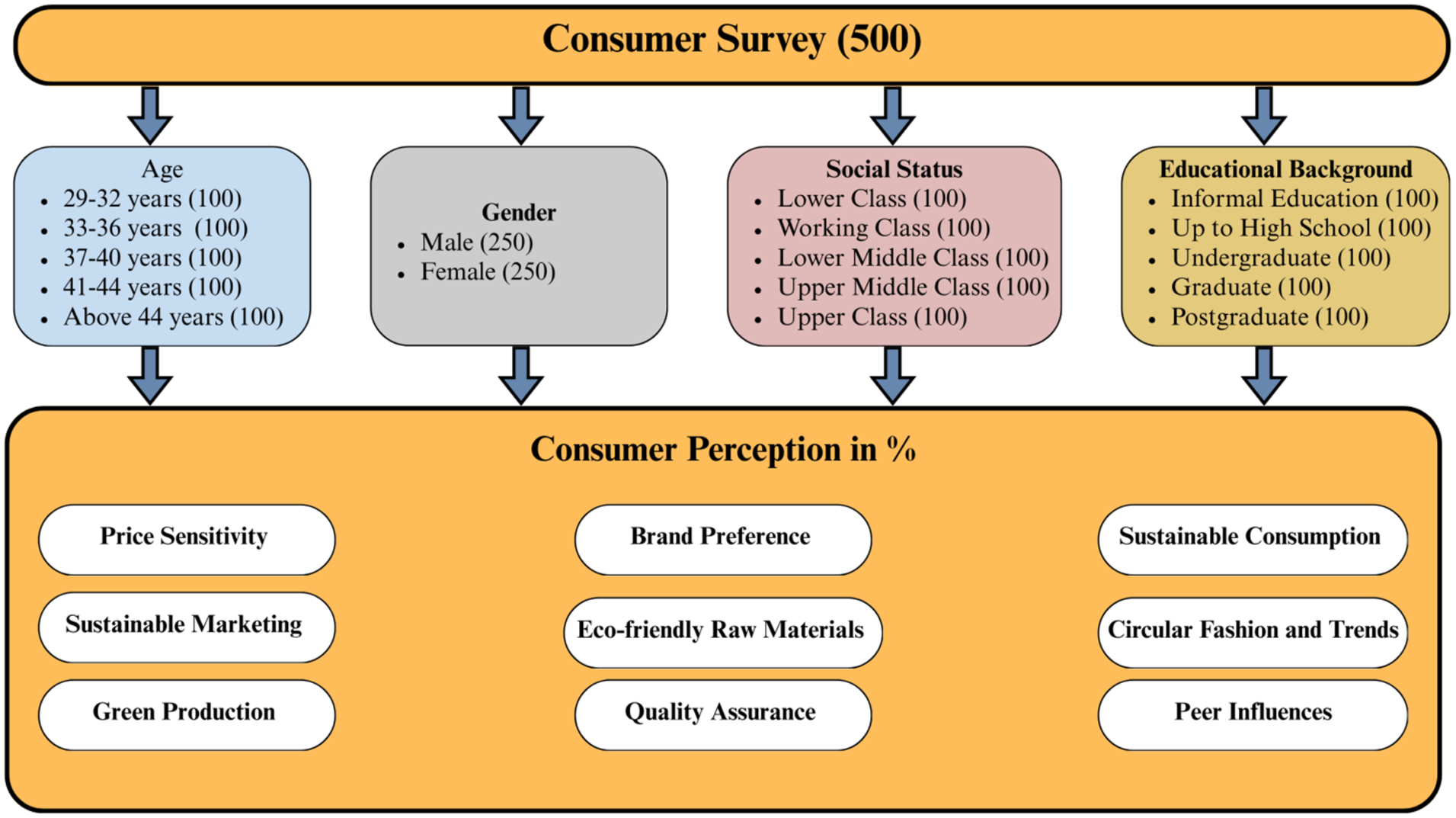
This research targeted consumer preferences and purchasing behaviors regarding the purchase of sustainable apparel. It considers personal attributes like age, namely, 29–32, 33–36, 37–40, 41–44, and >44 years, gender, namely, male and female, socioeconomic status, namely, lower class, working class, lower middle class, upper middle class, and upper class, and finally, educational background, namely, informal, up to high school, undergraduate, graduate, postgraduate, and doctorate, as depicted in Figure 1. The consumer survey is meant to capture information from the respondents about the attitude on motives for purchasing sustainable apparel to analyze the psychology of Generation Y while making a purchase decision. It emphasizes the quantitative theoretical and experimental standpoints. Since it can handle complex models and limited sample numbers, PLS–SEM was chosen for this research.106,107 Its use has been preferred since it is flexible and because of its orientation to predictions over any other modeling system, like, for example, the theory of perceived marketplace influence (TPMI) and norm activation model (NAM). Quantitative phase of this research used a consumer survey with a questionnaire for collecting data and analyzing viewpoints.
Study population
Participants in the data survey program are Generation Y consumers from the Asian region.
Sample framing
A total of 500 individuals participated in the survey, comprising an equal number of males and females. One hundred participants were included in each category based on age, socioeconomic status, and educational background, as illustrated in Figure 2.
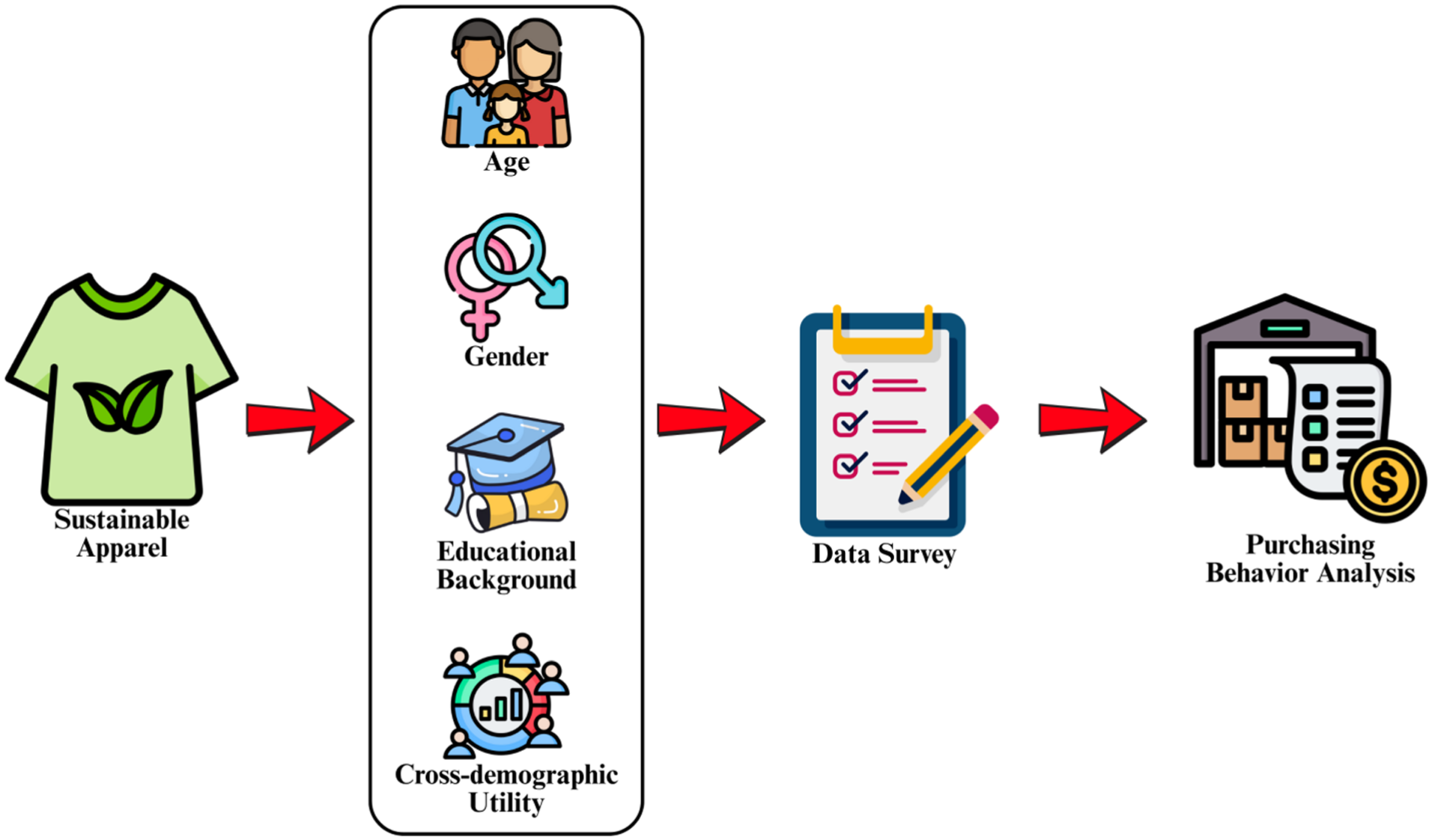
Cross-demographic entity of the sample population. Reprinting with permission (Copyright©2025, Elsevier) 108
Result and discussions
Effects of age ranges on purchasing pattern of Generation Y
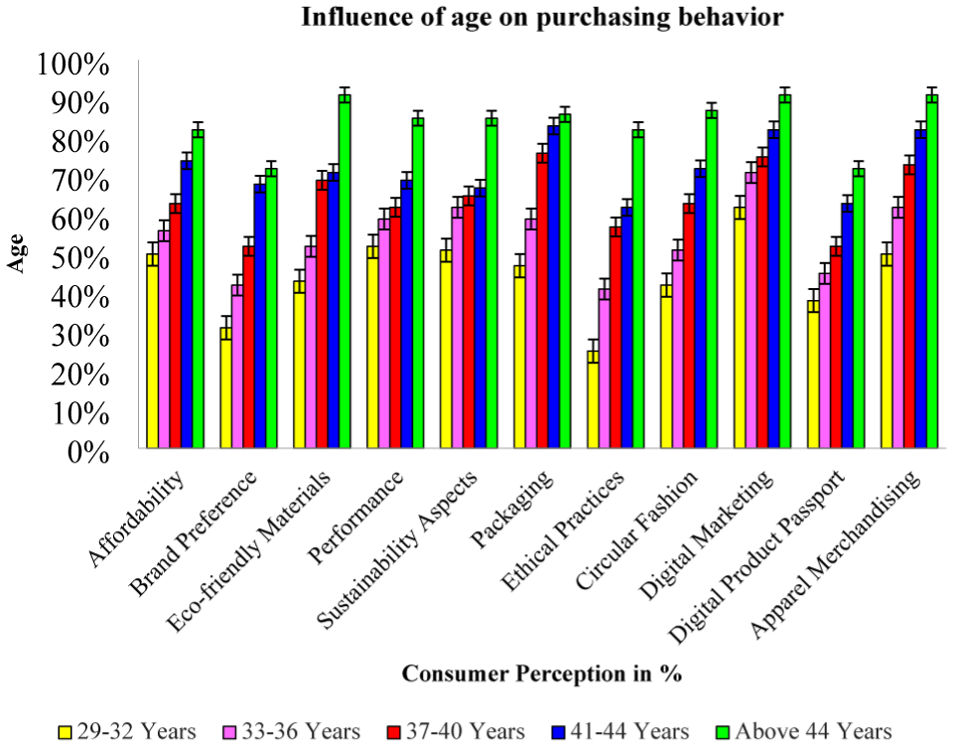
The purchasing behavior of Generation Y shows a gradual progression with the age groups portrayed in the correlations between various variables of psychological maturity, affordability, and ethical marketing in the production and usage of apparel. Analyzing data from Figure 3 denotes a progressive increase in all the variables related to sustainability with the advancement of age groups. 108
Effect of age on purchasing behavior of Generation Y consumers.
In the case of the sub-group aged 29–32 years, finding shows that affordability (50%) and digital marketing pressure (62%) are more important in purchase behavior. These are in line with young adulthood, which is a stage in life where there are a lack of disposable income and a concern for self-expression through fashion options, which are affordable and fashionable. 109 Priorities for environmentally sustainable materials (43%) and practices (25%) are still quite low, suggesting that practical considerations and a desire to stay in fashion trends were given greater importance than eco-sustainability considerations. In terms of psychology, it matches the lower levels in Maslow’s needs theory, in which economic security and belonging in the social order substitutes for moral or ethical directions. 110
A major change is evident in the 33–36-year age category, in which there is a remarkable rise in preferences related to sustainability (62%), eco-friendly materials (52%), and circular fashion (51%). On the other hand, preferences related to performance (59%) and packaging (59%) emphasize the amplified demand for quality. 111
The trend strengthens for the 37–40 and 41–44 age groups. A preference for green materials (69%), sustainability (65%), and ethics (57%) indicates a shift towards sustainable consumption. For individuals aged 41–44 years, there is a prominent shift towards sustainable packaging (83%), sustainable fashion (82%), and brand ethics (62%). This shift in behavior is supported by Erikson’s stage of Generativity, where one wants to leave a positive impact on society and upcoming generations.
Furthermore, the consumer group of 44 years and above as identified in the above bar diagram shows the highest engagement rate on every parameter with 91% of consumers valuing eco-friendly materials and circular fashion and 85% of consumers valuing sustainability. The trend is evident that as consumers belonging to Generation Y age, they are translating their increased moral and environmental responsibilities. The results prove that aging in Generation Y as a generation is strongly linked with consumers transitioning towards morally and sustainably driven clothing consumption.
Effect of gender on purchasing pattern of Generation Y
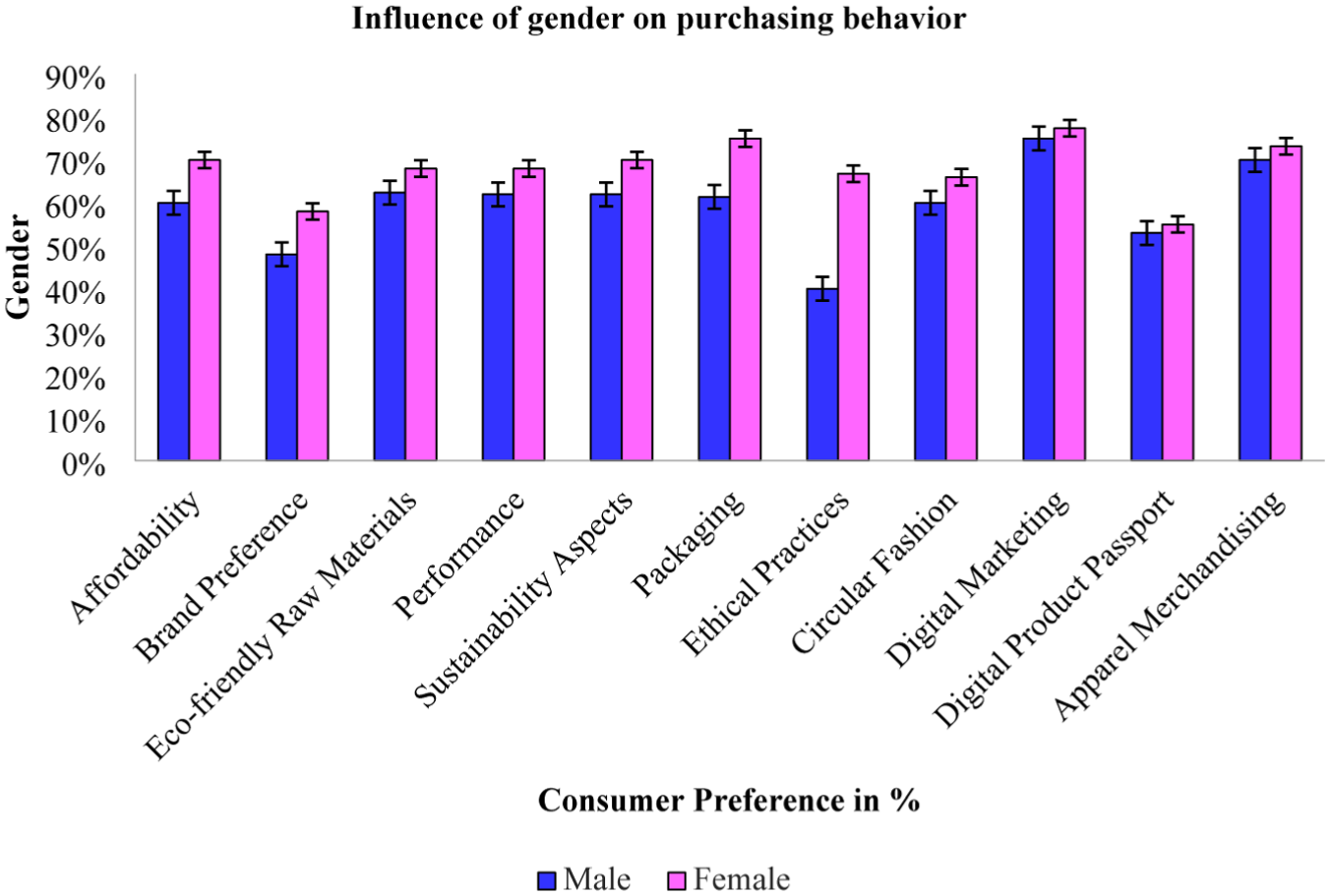
The gender-specific study for purchasing behavior pattern of Generation Y has some fascinating results in relation to their psychological, socio-cultural, and ethical issues. Figure 4 depicts a quantitative representation to identify differentiated consumer pattern for higher preference in sustainability criteria for females compared to that of males. 108 Hence, for example, as part of comparison for different drivers related to sustainability criteria, females have higher preference for environmentally friendly raw materials at 68% compared to 62.4% of males; sustainability at 70% of female choice against 62% of males; ethical processes at 66.8% of female preference against 40% of males; and for sustainable packaging at 75% of female preference against 61.4% of males and hence confirming females to hold better value alignment for purchasing product/services for environmental and social sustainability stringency because females have better environmental and ethical concerns embedded in higher sustainability concerns due to higher socialized embeddedness for women in comparison to males because of gender role socialization theories in alignment to gender standards. 112
Influences of gender on purchasing decision of Generation Y consumers.
Affordability and brand preference are also considered crucial by both males and females. In comparison, females show more concern towards affordability (70%) and brand preference (58%) than males (60% and 48%, respectively). It highlights that females are more evaluative in their purchasing behavior, which involves not only considering the economic viability of an item but also staying updated regarding its ethics. The higher preference of females towards apparel merchandising (73.2%) and circular fashion (66%) than males (70% and 60%, respectively) also signify their integrative nature, which not only emphasizes on product esthetic and functional values but also its life cycles and social values. On a psychological standpoint, it signifies “Theory of Planned Behavior,” where females have demonstrated higher perceived behavior control and normative beliefs towards sustainable consumption practices. 113
On the other hand, male consumers put relatively more emphasis on performance (62%) and digital engagement (75%), indicating a more utilitarian and technologically influenced purchasing mindset. Although both genders are similarly exposed to digital marketing, females (77.4%) slightly outperform males, reflecting higher responsiveness to interactive information-rich marketing channels. Female consumers have much better awareness of the digital product passport (55%), indicating growing interest in product traceability and authenticity-key precursors for conscious consumption behavior.
Furthermore, the results show that while Generation Y males are driven by the factors of functionality and quality, the female gender maintains an integrated decision-making model that encompasses the factors of affordability, esthetics, ethical considerations, and sustainability. The aforementioned differences in gender preferences clarify the rationale that women of Generation Y are the principal actors for sustainable fashion consumption behavior on the basis of an empathetic and value-driven motivation paradigm.
Effects of social status on the purchasing patterns of Generation Y
Generation Y’s purchasing behavior is clearly differentiated by social class, reflecting economic status, cultural, and psychological orientation regarding apparel consumption. Figure 5 denotes a gradual transition from price/affordability as key drivers of purchase decisions in the lower-income classes to ecological and ethical concerns in the higher social strata. 108 Such a stratified outcome reflects the validity of both economic and behavioral theories of consumption, carrying implications of the mediating role of financial capabilities and social identity in the development of necessity-based purchasing behavior toward value-based purchasing among Generation Y consumers.

Influences of social status on purchasing decision of Generation Y consumers.
In the lower-class group, the key buying factor identified through various surveys is related to “affordability” (83%), while the elements showing concern about “ethics and environment” like “eco-friendly materials” (29%), “ethics” (21%), and “sustainability” (38%) stand significantly lower. The degree of digital marketing used in this class (71%) aptly reveals a strong aspirational need, although limited budget hampers the fulfillment of those aspirations. Psychologically, it relates to the theory of economic constraint, which aligns well with Maslow’s hierarchy of needs, implying that people value more the utilitarian, practical, or survival benefit offered by money. 114
The working-class consumer segment has a transition stage, wherein the awareness level regarding sustainably (53%) and ecologically friendly (61%) products gradually increases. Ethical motives (43%) and packaging issues (63%) also attain a certain level of relevance, marking a gradual shift in their awareness pattern triggered by their interactions with the surrounding media and storytelling about sustainable fashion. At the start of the transition into the lower-middle-class segment, consumer purchase behaviors begin to strike a balance between cost considerations (68%) and sustaining values (73%) and ecologically friendly (71%) options available in consumer products. This behavioral shift can be interpreted through “Value–Belief–Norm” theory, where individuals begin to align consumption choices with self-identity and social values, reflecting both aspiration and growing financial flexibility.
Sustainability-driven trackers are prominent in the upper-middle class. A strong preference for environmentally responsible materials (82%), ethical purchasing (70%), and eco-packaging (81%) defines a shift in the direction of conscious consumerism. However, the focus on brand preference (67%) and fashion merchandising (85%) reveals the ideology of symbolic consumerism, where fashion might act as an exposition of one’s social status and ideology. By ranking the upper class at the top of the trend, there is massive participation in the sustainability element (91%), ethical purchasing (81%), and fashion circles (83%); however, its least relevance is noticed in “affordability” with a score of 46%.
In addition, the above highlights the strong positive relationship existing between socio-economic status and sustainable consumption behavior in Generation Y. With increased income, educational levels, and awareness, clothing buying improves from being necessitated by cost constraints towards self-directed, morally driven, and environmentally sustainable consumer behavior.
Effects of educational background on purchasing pattern of Generation Y
The level of education has emerged as a factor having an important influence on the purchasing trends of Generation Y consumers in the apparel sector, indicating the role of cognitive evolution and aspects related to ethics in value-configuration among customers. Upon evaluation of the data depicted in Figure 6 above, there seems to be a positive trend reflecting an inverted relationship between the education level and the adopters of both the classification related to cost considerations and sustainable and ethical performance in the customer purchase trends based on performance-related attributes associated with the targeted customers.108,115
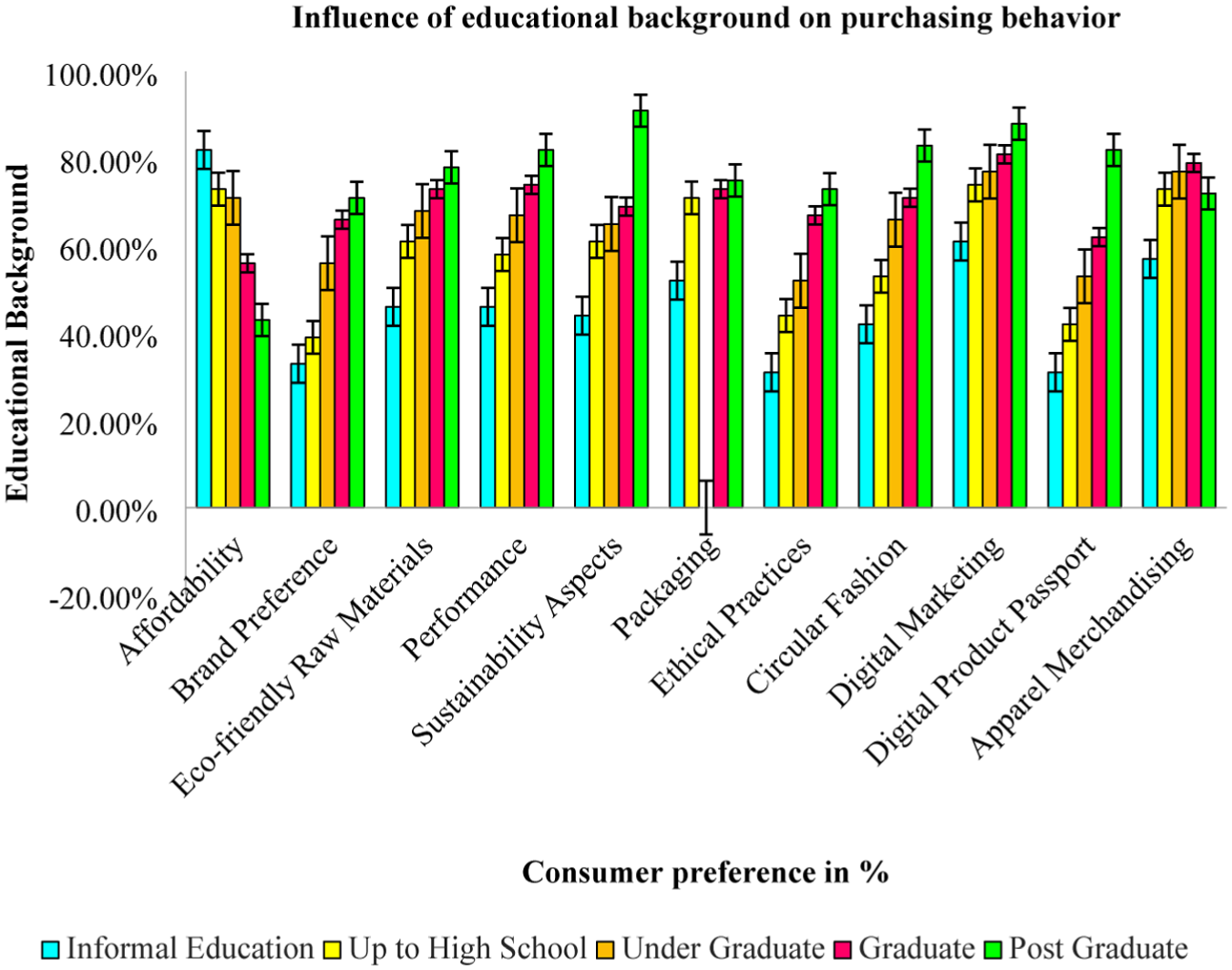
Influences of educational background on purchasing decision of Generation Y consumers.
Consumers with an informal education value the factor of affordability (82%) the most and least value factors like consumer preference (33%), ethical conduct (31%), and sustainability (44%). It can thus be observed that their purchase decision seems pragmatic and utility-oriented, in the manner proposed in Maslow’s hierarchy of needs. Engagement with digital marketing (61%) indicates exposure to trends, yet limited education constrains informed, value-driven decision-making.
Consumers educated up to high school level have a consumption pattern in transition. Affordability remains highly important at 73%, but interest in eco-friendly materials at 61%, sustainability at 61%, and packaging at 71% starts to grow. Ethical practices at 44% and circular fashion at 53% begin to play in decisions, mirroring the emergence of value-conscious consumption, where practical needs increasingly cross with growing awareness of environmental sustainability.
In terms of university versus postgraduate consumers, there is a greater degree of involvement and engagement with sustainability and indicators. Undergraduates exhibit higher preferences for sustainable materials (68%), performance (67%), and sustainable fashion (66%), whereas postgrads exhibit higher preferences for ethical processes (67%), sustainability (69%), and digital engagement (81%), implying an increased level of education leading to more advanced intellectual and moral acuity to consolidate all three elements: quality, sustainability, and credibility.
Postgraduate students portray the strongest consumer segment of Generation Y in conscious consumption, and the core drivers of purchase are sustainability issues (91%), ethical methods (73%), eco-friendly materials (78%), and performance (82%), while affordability becomes less important at 43%. It highlights that more educated consumers practice values-driven consumption, where social or moral responsibility and sustainability issues are more responsible for purchasing than affordability.
In fact, there is evidence of a positive link between education and sustainable fashion consumption for Generation Y. Educational achievement not only improves knowledge about factors such as environment and ethics but also assists in moving from frugal and necessity-based consumption driven by budget and needs, to a knowledgeable and mature consumption pattern.
Conclusions
This consumer research provides an in-depth review of the engagement of Generation Y with sustainable apparel and circular fashion, based on consumer preferences, demographic factors, and merchandising strategies. The results clearly showed a generational effect. Consumers increasingly prioritize sustainability, ethics, and circularity in purchase decisions as they get older. Significantly, the age group of 33–44-year-olds-especially those with high education and social status-show much more awareness and commitment to environmentally sustainable consumption than younger members of Generation Y (29–32 years) and older consumers above 44 years. It reflects a combination of increased financial stability, social consciousness, and value reorientation, indicating that as consumers advance in life, they gradually shift from purchasing driven by affordability and trends toward ethically grounded and sustainability-driven consumption.
Gender differences were introduced as a consideration for sustainable consumption practices. Females clearly demonstrate higher levels of engagement with green materials, ethical methods, sustainable packaging, and sustainable fashion compared to their male counterparts. The incorporation of a multidimensional strategy also encompasses a sense of balance regarding cost effectiveness, personal taste, and moral responsibility, in accordance with the “Theory of Planned Behavior.” On the other hand, male consumer engagement exhibits the priority of product performance, e-engagement, and utility use, representing a utilitarian and technology-driven decision-making strategy, respectively.
Socioeconomic status and educational level have also been proven to play an important role in purchasing decisions. More superior social status and higher educational levels are more likely to have an affinity towards sustainable fashion, while lesser status and less education are more likely to be fixated on price and usability. It represents that it is imperative to consider economics and intellect when studying preferences towards sustainable fashion.
Additionally, the research points out a number of factors that hinder the adoption of sustainable fashion, which range from costs, quality, and sustainability, to the level of transparency between brands and customers and the successful application of merchandising strategies. Addressing these issues demands a collective response from stakeholders who should align clothing production and consumer needs.
There may be some bias in sampling since not all Generation Y consumers may be represented through the selection of the sample group. There is potential for biased responses based on self-reports because people do not necessarily provide accurate information about their behaviors. This type of research does not allow for any trends within the sample group since it uses a cross-sectional approach. The research was conducted in a very limited geographic region, which would not provide global perspectives of Generation Y consumers.
Future studies can be directed towards the consumption of sustainable fashion in a multicultural and multifaceted manner so that the driving forces behind the same can be understood. In addition, research can be conducted on new product design and social engagement so that the same can attract and appeal to a wider audience. Further, the influence of social media in circular fashion merchandising can be studied for valuable insights.
Footnotes

Ethical considerations
Ethical approval was obtained from the Institutional Ethical Review Committee of Mawlana Bhashani Science and Technology University, Bangladesh under application number: ERC/APP/16/2025.
Consent to participate
Participants provided consent to use relevant data in the research purpose.
Consent for publication
Given to publish the article.
Funding
The research has been supported by the Research Cell, Mawlana Bhashani Science and Technology University, Tangail 1902, Bangladesh.
Declaration of conflicting interests
The authors declared no potential conflicts of interest with respect to the research, authorship, and/or publication of this article.
Data availability statement
The data used for analysis during this study is not publicly accessible due to the inclusion of personal information. The de-identified data may, however, be obtained through the corresponding author by making a request.