






Abstract
Grieving children may wonder about questions of illness, dying, and death as they navigate the death of, or grief for, someone who matters to them. Parents and caregivers, as well as health and psychosocial clinicians frequently report feeling uncertain and unprepared to engage in these conversations even if they are aware of their helpfulness. Interested in examining the questions bereaved children wonder about, this study analyzed 710 anonymous questions submitted by children aged 5–17 during Ask Us Anything sessions at a bereavement camp in Ontario, Canada between 2009 and 2024. Through an iterative, collaborative process of thematic analysis, this interdisciplinary team constructed a two-dimensional framework to organize grieving children’s concerns according to the focus and function of the question being asked. Question focuses (i.e., what it says about the core topic) spanned across: Body, Condition, Dying and Death, Grief, while question functions (i.e., what it says about what the person seeks to understand about the topic) spanned: How it Works, Catch, Cause, Cure, Care, Connect. Question foci and functions were overlaid to form a four-by-six matrix. Adjacent to this matrix were also two self-contained focus categories identifying Existential and Personal/Relational dimensions of bereaved children’s questions. Children’s questions can be helpful windows into what their grief experiences are like and what their emotional, existential, and/or informational needs are within this experience. By showcasing the layers of bereaved children’s questions, this study contributes to advancing knowledge about the depth and breadth of children’s curiosities in relation to grief. Further, the resulting framework is proposed as a tool that can foster greater death and grief literacy by guiding caring adults in inviting, anticipating, exploring, and responding to bereaved children’s questions and the needs embedded within them.
Plain language summary
This study analyzed 710 anonymous questions from bereaved children and young people who attended grief camp. Researchers created a framework to organize bereaved young people’s questions, to help clinicians understand and respond with clarity and compassion, supporting both emotional and informational needs.
Keywords
Background
Grief is an embodied response to loss, either lived or anticipated, and can be experienced by anyone at any age. 1 Evidence suggests that many children and youth in Canada and across the world experience the death of someone who matters to them and this experience is incredibly impactful.2,3 Young people’s grief experiences, like those of any person, do not occur in isolation of those around them. Their grief experiences can be influenced by the grief of others in their life, by the impacts the losses had on their families, the social support available to them, and their broader everyday environments. 1 When faced with the death of someone important to them, young people can benefit from the support of caring others in their lives. However, many adults in such caring roles, including parents and healthcare providers, can feel uncertain about how to communicate topics of illness, death, and loss with young people and avoid such topics altogether.4–7 Research suggests that some reasons adults might hesitate to approach these conversations can include: fear of causing harm by broaching tender topics; concern about saying the ‘wrong’ thing; and feeling ill-equipped to respond to grieving young people’s questions. 7 However, evidence suggests that an approach of avoidance can leave grieving young people feeling like a burden, feeling confused, and even feeling like their needs are less important.7,8 Rather, children have a right to information about matters that affect them, even if communicating that information feels uncertain 9.
To better equip caring adults to support grieving children, it is important to enhance our knowledge about how to approach and understand grieving children’s unique experiences and needs for support.10,11 Grieving children’s questions are powerful expressions of their curiosities and can be helpful windows into their grief experiences and what their emotional, existential, and/or informational needs are within those experiences. Therefore, it is with this goal in mind that this study sought to qualitatively examine over 15 years of young people’s questions gathered during an Ask Us Anything program offered by a bereavement camp for children. The research questions guiding this study were: What do bereaved children want to know when offered the opportunity to anonymously ‘ask anything’? And how can this inform approaches for caring others to engage with matters that grieving young people are curious about?
Prior research
To the authors’ knowledge, two prior studies offer foundational analyses of children’s anonymous questions about death. The first study, by Thompson and Payne, 12 categorized 123 questions by bereaved children for a doctor, asked in the context of a grief support camp in the UK. The aims of these questions were grouped into themes, such as cause of death, dead body, and grieving. They proposed a communication model, based on their doctors’ experiences answering these questions, to guide responses to children’s questions with phases of validation, reflection, and description. The second related work, by Joy et al., 2 analyzed 213 questions submitted by 5–12-year-olds about death and grief in the context of an Australian day-camp. These authors identified five thematic categories: causes and processes of death, human intervention, managing grief, the meaning of life and death, and after death. The current study expands on this early body of work both in depth (i.e., by exploring any questions grieving children may want to ask), and in breadth (i.e., by examining 15 years of data, across 710 questions, from campers aged 6-17 years old). This study also brings a unique lens, grounded in strengthening grief and death literacy for people supporting young grievers. Further, giving young people the opportunity to ask anything may showcase various elements of curiosity as experiencing the death of someone important can raise questions about many aspects of a young person’s life.
Study lens
This study aligns itself with a growing body of literature advocating for death and grief literate responses in relation to children’s grief and bereavement. 9 Whereas death literacy refers to the “knowledge and skills that make it possible to gain access to, understand, and act upon end-of-life and death care options”, 13 grief literacy represents a movement seeking to increase knowledge about grief in order to grow capacity of the public and professionals to acknowledge and respond to this experience. 14 In the context of childhood, death literacy can involve exploring young people’s understandings of death, causes and processes, and ideas about what happens to a person and their body when they are dying, and after death. When considered together, death literacy and grief literacy in childhood aims to equip people with knowledge and skills about death and grief, as well as growing their capacity to acknowledge and respond to such experiences. Through this lens, everybody has a role to play in building a supportive community around grieving children. Some ways this can be mobilized include: learning words and concepts to help children understand serious illnesses and injuries, dying, death and related processes and customs, as well as to make sense of and express their own grief experiences; creating a listening environment that promotes connection and honesty; and promoting better community support. 9
One widely used approach to engaging with grieving young people’s questions is the concept of the ‘Cs,’ which refer to commonly expressed questions and concerns by children who are grieving the serious illness, dying, or death of someone important to them. 15 The concept of the Cs was originally published fifteen years ago as a practice-based approach to engaging with young grievers about matters that affect them. This concept was informed by the collective clinical experiences of the children’s grief counsellors and therapists who initially led the children’s grief camp examined in this study, alongside individual, family, and peer support programming, in a community-based organization. 15 The initial Cs included three main questions, centered around: catch (e.g., “Is this contagious?”); cause (e.g., “Is it my fault?”); and care (e.g., “who will take care of me?”). Over time and informed by colleagues practicing in various grief-focused settings, the Cs have expanded to include: condition (e.g., “what’s this disease called and how does it work?”), cure (e.g., “why couldn’t anyone save them?”), and connection (e.g., “is he still my dad?”). The Cs continue to be widely used as an approach to guide health and psychosocial care providers in conversations with grieving young people, including Ask Us Anything sessions, and as the foundation for many resources for parents, teachers, and other in the grieving child’s circle of care.16,17
Design
This qualitative study involved the secondary analysis of data generated by children and youth who experienced the death of someone important to them (herein referred to as ‘bereaved children’), in the form of anonymous questions posed to a team of health and psychosocial clinicians. Thematic analysis was selected because of its suitability with various forms of qualitative data (e.g., children’s written questions) and employability within a range of epistemological positions. 18 Collectively, the research team brings a range of perspectives and substantial experience with navigating grieving children’s questions, both in bereavement camp settings and otherwise. The team’s professional backgrounds in child life, palliative care, pediatric medicine, and nursing were greatly enhanced by the engagement of two university students, one of whom attended camp as a volunteer in the course of this study, while the other had attended as a young camper and returned as a leader-in-training and a volunteer. It is the position of all authors that these identities contribute to a proximity and familiarity that afford them important perspectives on grief and supporting grievers. Coming from constructivist and pragmatic epistemologies, the authors were sensitized by intimate familiarity with camp and campers’ questions and practiced reflexivity throughout collaborative analysis sessions to avoid making assumptions about the underlying meanings of individual questions where multiple possibilities existed (see Analytic Approach).
Written informed consent for the collection of campers’ art, written work, and photographs for the program promotion or evaluation research, was included in the consenting process for camp. All questions submitted and analyzed in this study were obtained anonymously. In consultation with the local Community Research Ethics Board it was determined that their review was not required based on the Tri-Council Policy Statement (TCPS 2), which states that “REB review is not required for research that relies exclusively on secondary use of anonymous information […] so long as the process of data linkage or recording or dissemination of results does not generate identifiable information”. 16 Campers submitted their questions on individual slips of paper that did not include their name, age, or any information besides their questions, and as such there was no possibility of linking this secondary, anonymous data to individuals, or generating identifiable information based on the submitted questions. Therefore, the local Community Research Ethics Board determined that formal ethics review of this study was not warranted. 19 Photographs of questions included in this article were obtained from a cohort where all campers consented to media.
Methods
Setting and participants
The bereavement camp where this study’s questions were obtained is an annual, free, weekend-long program facilitated by clinicians and trained volunteers, for children aged 5–17 who have experienced the death of a close family member (i.e., any familial relationship or cause of death). Approximately 110 campers typically attend per year, garnering the camp over 1,500 participants since 2009. No restrictions to attendance at camp currently exist regarding time since the death or cause of death.
Every year, each cabin is equipped with an accessible envelope for campers to submit their anonymous Ask Us Anything questions. On the final day of camp, campers are divided into groups to meet with health and psychosocial clinicians who have collected the questions in advance and collaborated to prepare responses. All campers attend these sessions, however, submitting a question is optional.
Although extensive demographic data is collected by camp organizers, none of those details are associated with the specific questions that are submitted for Ask Us Anything since the activity is anonymous. Therefore, question-level demographic information is unknown in this study.
Data collection
Between 2009 and 2024, 710 anonymous, hand-written questions were collected from campers over the course of the annual camp weekend. Some campers submitted multiple questions (e.g. on the same single slip of paper, or multiple slips of paper with the same handwriting), while others may not have submitted any, therefore the unit of analysis is the individual questions rather than campers. Questions were originally transcribed verbatim into a spreadsheet in 2016 for the purpose of guiding clinical training and education, then added to each year following the collection of new questions from camp. This spreadsheet was used in the context of this study and shared with the research team for collaborative analysis and the development of an associated codebook.
Analytic approach
In order to unpack campers’ questions and highlight what it is they might want to know, elements of both deductive and inductive thematic analysis were employed.20,21 This approach involved deductive coding based on an a priori framework (the concept of the Cs), as well as inductively assigning codes to segments of data that reflect a ‘new’ theme. 21 This approach helped answer this study’s research questions by allowing practice-based concepts (the Cs) to inform deductive thematic analysis, while also allowing for themes to emerge directly through the data using inductive coding. This type of analysis brings value by generating new knowledge, which not only consists in the ‘discovery’ of the previously unknown, but also the reconceptualization of (whether that be affirming or reconfiguring) what is presently understood. 22 In other words, the Cs, a practice-based approach to bereaved children’s questions, might reflect core elements of children’s questions; and their questions might also go beyond the Cs.
After becoming familiar with the data through repeated readings and discussing patterns and recurring themes, the research team began a collaborative, deductive process by exploring the alignment of children’s questions with the Cs.21,22 Each question in the spreadsheet was discussed and assigned a label for any of the Cs (condition, cause, catch, cure, care, connection) that were reflected.
Labelling some questions was straightforward given the similarity between the wording of the question and one of the Cs, e.g., “What causes a brain to bleed?” —> cause. Other questions whose underlying concerns were less clear required a greater depth of discussion, considering multiple possible interpretations. For example, the question, “If someone in your family or parent has cancer can you also have it?” may have reflected a camper’s worry about cancer being contagious, or a genetic component heightening their risk, or that another family member may coincidentally also have cancer. In these instances, questions were assigned each of the potential codes that were identified, e.g. “contagious,” “assessing risk,” “vulnerability,” listing them in multiple columns in the study-specific spreadsheet to capture varied possibilities.23,24 A constant comparative approach was used to identify themes and patterns of meaning, defining and redefining codes, and revising the codebook.19,23
In an effort to discern the subgroups of questions across the Cs, our team engaged in further inductive coding using an additional column in the spreadsheet to code each question according to its explicit focus. Tables and mind maps were also created to organize and visualize relationships between codes and themes as part of this iterative analytic process.
Ultimately, this process led to the creation of six overarching themes that were used to organize the data based on the focus of campers’ questions: human bodies (i.e., the purpose, function, and processes of different body parts), conditions (i.e., mental and physical conditions), dying and death (i.e., the process of dying and what happens after death), grief (i.e., their own and others’ experiences), existential (i.e., spirituality, meaning, moral, or ethical questions), and personal/relational (i.e., questions about themselves, relationships, or the person responding). These were considered to be ‘semantic’ level themes as they relate to the explicit focus of the written questions, rather than interpreting or theorizing their meaning. 17
By contrast, the Cs were conceptualized as ‘latent’ level themes as each C reflects an underlying idea, or function of the question. The Cs describe an interpretative layer (what the child is seeking through the question), or a “central organizing concept,” expressed in different ways in each of the campers’ questions.15,17 For the C that is labelled 'condition,' we reviewed the data and distinguished between questions about different conditions (which were thus assigned the semantic level code, 'condition') versus questions that sought to understand how something works (which applied to body parts, various medical or mental health conditions, as well as aspects of death and grief). Therefore, six latent themes were generated, reflecting the C’s: how it works; can I catch it; what caused it; can it be cured; care for self/others; and connecting with others.
Results
Thematic analysis of 710 anonymous questions informed the creation of a conceptual framework or a “thematic map.” 20 Six semantic-level themes arose reflecting the topic of focus of each question: human bodies, conditions, dying and death, grief, existential, and personal/relational. Six latent themes were constructed, reflecting the function of question being asked: how it works; can I catch it; what caused it; can it be cured; care for self/others; and connecting with others.
Conceptual framework
In line with this study’s deductive analysis utilizing the “Cs,” five of these six elements (Catch, Cause, Cure, Care, Connect) were identified and reflected in the lefthand side of the framework (see Figure 1), representing the function of the question being asked. The sixth C (Condition), however, was recognized as including questions related to both focus and function and was thus reconfigured to distinguish between the two, creating a new latent theme, how it works, to capture questions related to function. Conceptual framework of bereaved children’s questions.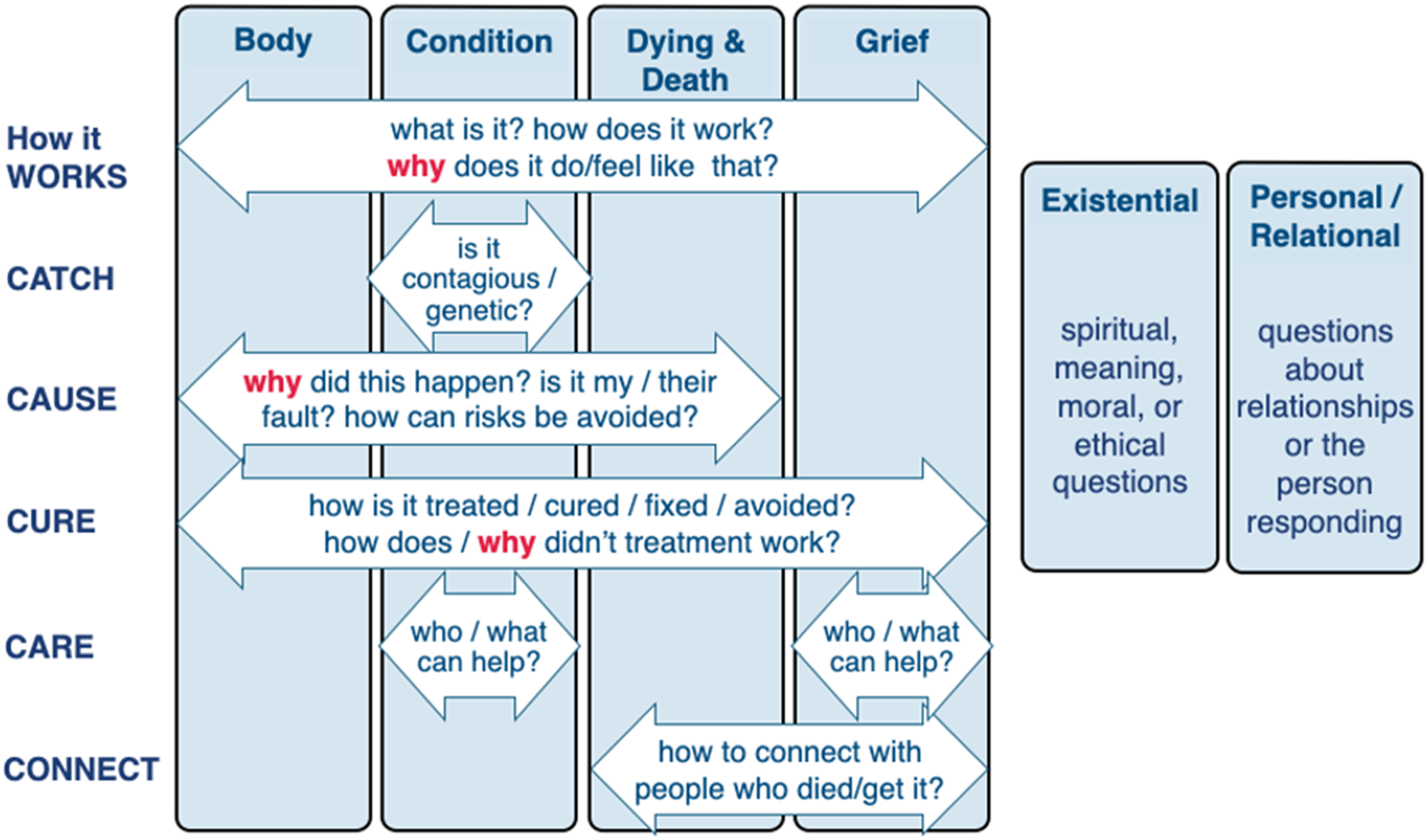
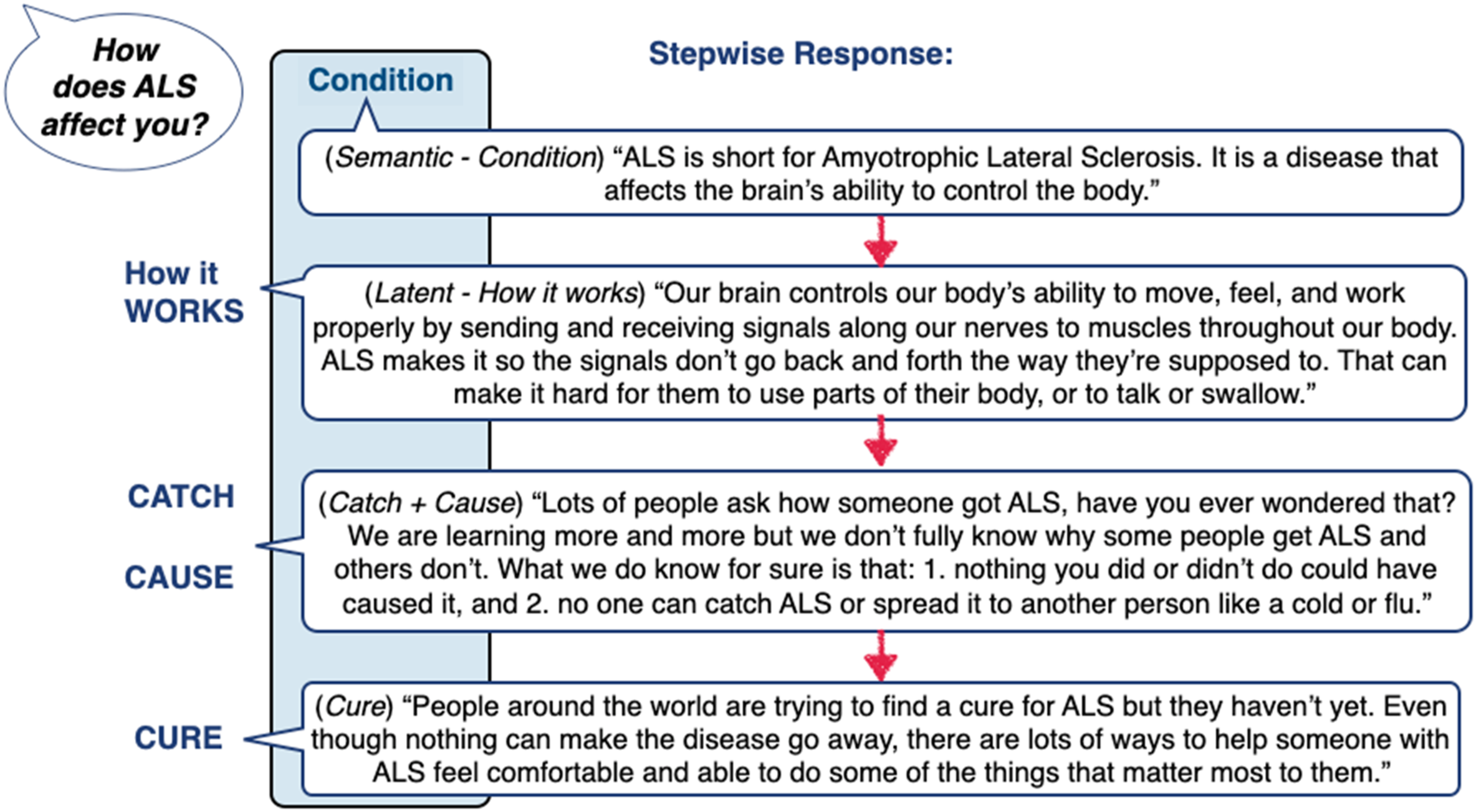
In practice settings, discussing a condition includes responding to questions focused on: (a) understanding what it is, what it is called, or what it means (e.g., semantic aspects), such as “What does ALS stand for?” or “What does PTSD mean?”), as well as (b) questions focused on understanding the function (e.g., latent aspects), such as “How does ALS affect you?” or “What happens in an overdose?”
Rather than retaining both types of questions within an overarching Condition category, distinguishing the focus and functional aspects into their semantic and latent categories respectively, was more analytically and clinically meaningful, and consistent with the construction of other themes in the matrix. Further, many questions about the body, dying and death, and grief sought to understand the function, or how it works. As such, the latent theme, how it works, was delineated and situated in the matrix alongside the other function-oriented questions (e.g. Catch, Cause, Cure, Care, Connect).
Exemplar questions by function and focus.
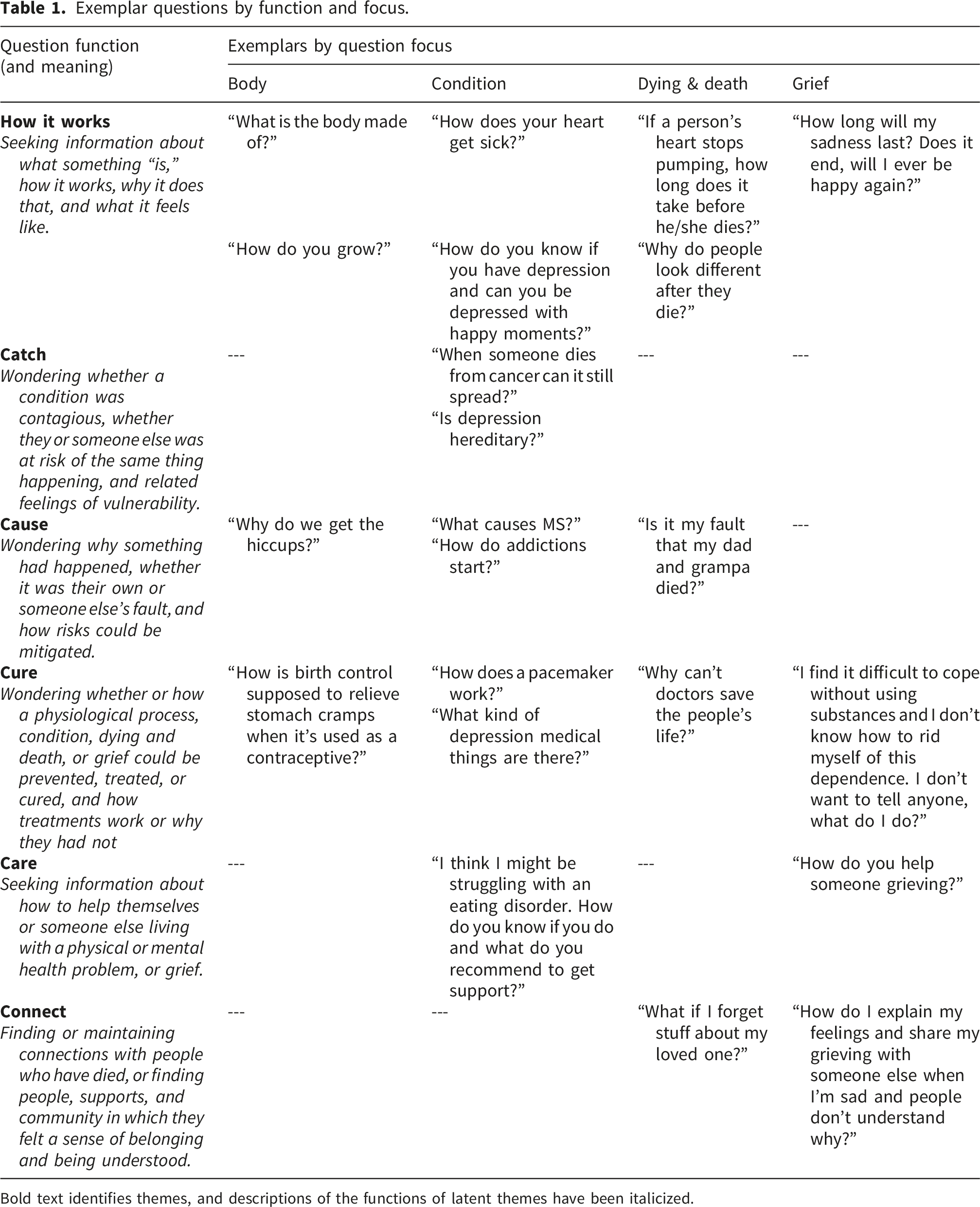
Bold text identifies themes, and descriptions of the functions of latent themes have been italicized.
Existential or Personal/Relational categories included, respectively, questions that were spiritual, meaning, moral, or ethical in focus, such as “Is God real? Tell the truth”; or that were questions about relationships or personally directed towards the people answering the questions, such as, “How should you tell your mom when you get your period without it being weird?” and “Why do the volunteers choose to help out with this camp?” Some questions in both categories (existential or personal/relational) also related to death; e.g., “Why do people have to die?” and “What does it feel like to help someone?” These questions were attributed multiple codes to reflect their focus on death, grief, aspects of cause, care, and how it works that would be addressed in response to the questions, as well as being coded as existential or personal/relational matters respectively.
Early in the process of analysis, before the Existential category was constructed, many questions were assigned the code, “Why?” which was treated as a latent theme alongside the Cs. However, through the process of constant comparison, two analytic tensions arose. First, the research team recognized that there were two types of “why” questions included in this category: those that were intertwined (and thus, had been double-coded) with another of the C’s (e.g., asking why something happened or works this way, why it had affected their person, why some people could not be cured, etc.); and those that were distinctly existential, moral, ethical, or spiritual without overlapping with the C’s, such as “Is there good without bad?” and “What is the meaning of life?” Second, many “why” questions – particularly within the categories of how it works, cause, and cure – varied in terms of how concrete (e.g., “Why do people sleep?”) or existential (e.g., “Why did God make us even though he wants most of us to die?”) they seemed to be. Retaining this category on the basis of the literal inclusion of the word “why” seemed to sacrifice interpretive richness, meaningfulness, and utility. Therefore, the research team decided to highlight the importance of “why” questions that are included the categories of how it works, cause, and cure (as highlighted in Figure 1) as well as creating a distinct category for those that seemed more Existential, and assigning multiple codes as needed.
It is important to note that some of the cells in Figure 1 remain blank, indicating that campers did not appear to pose questions that illustrated the intersections of those semantic and latent themes, or focus and function. In some instances, this made logical sense; for example, there were no questions about body parts or functions being contagious, or questions about body or condition intersecting with the desire to connect with others.
In other instances, however, research team members attributed the absence of questions in particular cells with contextual influences that differ for grieving children at camp compared other settings. For example, team members reflected on our collective experience facilitating “Ask Us” sessions in clinical settings with children before a person has died, and noted there are often questions at the intersections of: care and dying and death, (e.g. wondering how they and others can help care for the person who is dying, and who will care for them after the person dies); care and condition or dying and death, (e.g. wondering how to interact with the dying person as their energy and function declines). Our perception is that these questions may not have been asked in the camp context because campers had already experienced the death, so opportunities to care for and interact with their person had passed.
“Ask Us” conversations with bereaved children outside of the camp context commonly include questions about, “What if someone else dies, too?” Although this is not literally a question of contagiousness, there appears to be an underlying sense of vulnerability and a worry that mortality might spread, representing the intersection of the categories, dying and death and catch. Similarly, grieving children and young people often wonder about whether they have caused or worsened others’ grief and worry that they might spread their grief to others if they express it, illustrating the intersections between grief with cause and catch respectively. Campers may not have expressed these questions because of psychoeducational interventions provided to their parents and caregivers as part of the intake process, as well as pre-camp activities geared towards campers themselves.
The goal of this study and its analytic exercise was to better understand what bereaved children might want to know, and the analytic process highlighted many ways these wonderings can overlap with multiple foci and functions. The aim of these categories was to help untangle some of the complexity in young people’s questions when they were representative of that category, while recognizing that the underpinning concerns or curiosities may not always ‘fit’ in neat boxes.
Forty-four questions were not categorized within the framework because they were distinctively different; whereas the framework provided a way of organizing campers’ questions and concerns, these questions were alternately conceptualized as curiosities. Initial codes that were collected within the category of curiosities included: jokes and riddles (e.g., “What is the plural of moose?”), and questions about science or trivia (e.g., “Is there a planet just like earth?”), and questions about camp (e.g., “Why can’t we bring electronics?”). Despite this, the authoring team reflected on their Ask Us Anything sessions at camp, and felt that these questions were important, served a purpose, and warranted a response, whether that be because children were seeking information, wondering whether they or their question would be treated seriously, or perhaps to add a moment of levity to the discussion. However, as the proposed framework offers a means or organizing questions and underlying concerns to guide adults’ exploration, clarification, explanation, and responses to support grieving children and young people’s making sense of matters that affect them, these curiosities were not included within the framework.
Discussion
This study offers a clinically grounded, empirically informed framework for examining bereaved children’s questions. This framework emphasizes the various functions and foci of each question, thereby inviting appropriate and nuanced responses. Further, this structure can help caregivers and clinicians recognize the types of questions bereaved children may ask and respond to the potential underlying wonderings driving the inquiry.
Recognizing bereaved children’s questions
Grieving children have a broad range of thoughtful and emotionally salient questions about human bodies, illness, treatment, dying, death, and grief. Although this study did not collect demographic information associated with individual questions, various writing styles and language proficiency levels suggest that many children (perhaps regardless of age) wonder about a range of topics. This observation contrasts with dominant views of children as incapable of grappling with abstract and existential topics.9,23 Child developmental theories have been used to suggest that young children may lack a mature understanding of death’s finality and universality and continue to be used in clinical and social spaces as rationale for what adults imagine children can/cannot or should not know.9,24,25 However, such developmental assumptions can obscure the diverse ways children make sense of loss. From the authors’ experience of participating in Ask Us Anything sessions, even young children can think and ask about death and grief in ways beyond what developmental models presume. Grief can affect the way that a person makes sense of things; it is not always a question of understanding (i.e., a child being ‘incapable’ of grasping certain information) but a question about how grief demands grappling with a world that looks different than was known before. Abstract concepts like finality, causality, irreversibility, and universality are hard (and sometimes impossible) at any age. The questions evidenced in this study suggest that bereaved children wonder about a myriad of significant things as they navigate grief. While children’s understandings of death and grief have largely been approached as functions of cognitive and emotional development, we propose that grieving children’s questions should instead be seen as morally meaningful expressions of their aspirations and concerns as they navigate a world that feels different than it did before.26,27
During the collaborative coding process, the research team came to recognize that children would frequently submit questions of seemingly varying intensity together (see Figure 2, Figure 3, and Figure 4). In clinical practice, this has been described as “puddle jumping” wherein children might show deep sorrow in one moment and laugh or play in the next.26,27 This variety in expression also came through in questions submitted. For instance, one camper submitted five questions, appearing quite different from one another, on the same slip of paper (seen below in Figure 4): “(1) How can I understand grif?
2
Why do I need to use cream for my face?
3
How do I now if I am grifing
4
What cream can I use on my face?
5
How do people get cancer??” For the research team, this excerpt (along with similar-natured excerpts shown under Figure 2 and Figure 3) suggests that grieving children have the capacity to grieve while simultaneously experiencing other moments reflective of everyday childhood. The back and forth in intensity of questions seen in these excerpts suggests alignment with the concept of puddle jumping and similar observations elaborated in adult grief theories,28,29 suggesting, at their most fundamental level, that people (including young people) might oscillate between ways of attending to, and expressing their grief. Example of camper questions submitted: on death and itchy mosquito bites. Example of camper questions submitted: on choice of profession and cancer. Example of camper questions submitted: on grief, cancer, and face cream.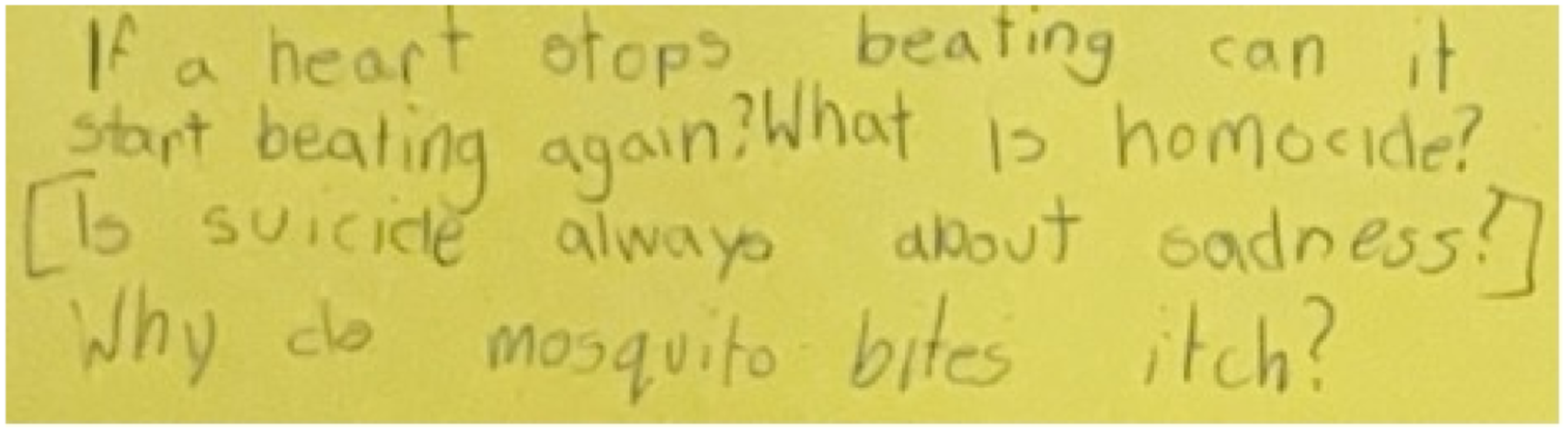
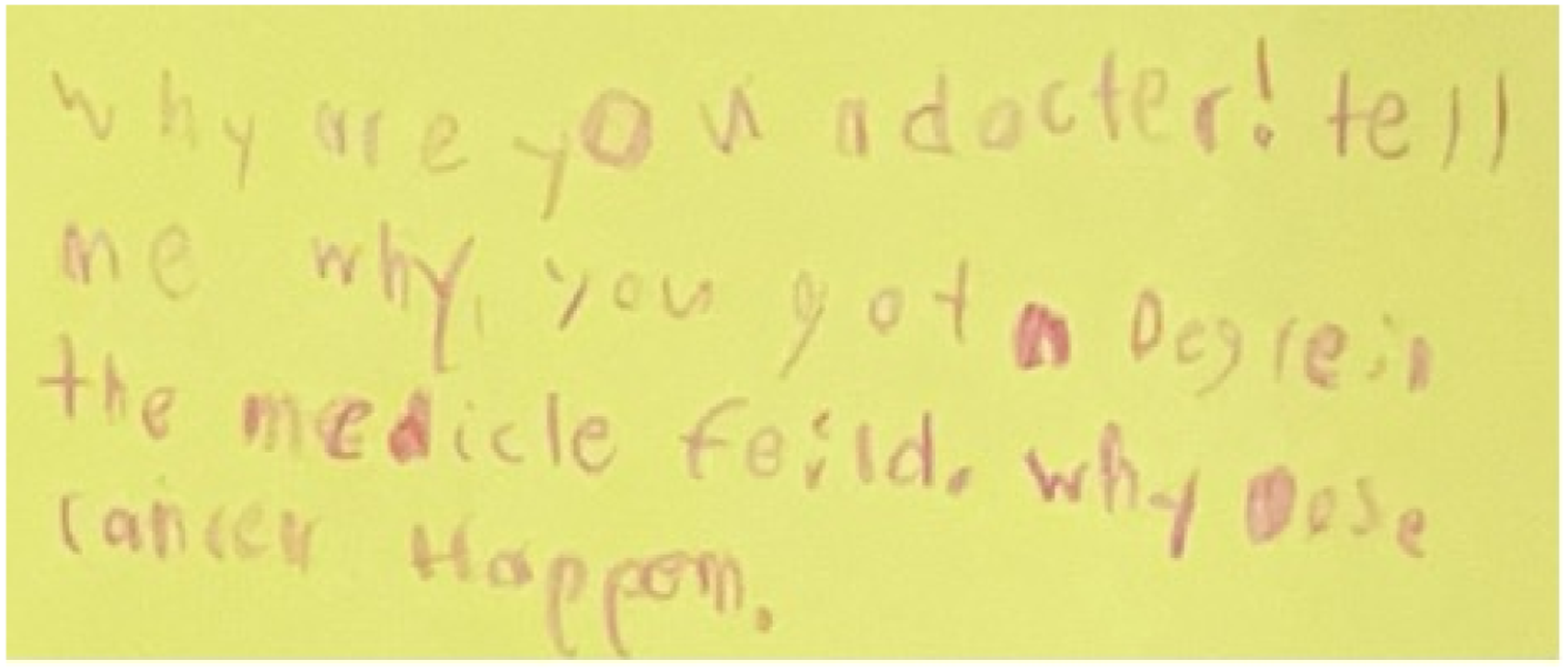
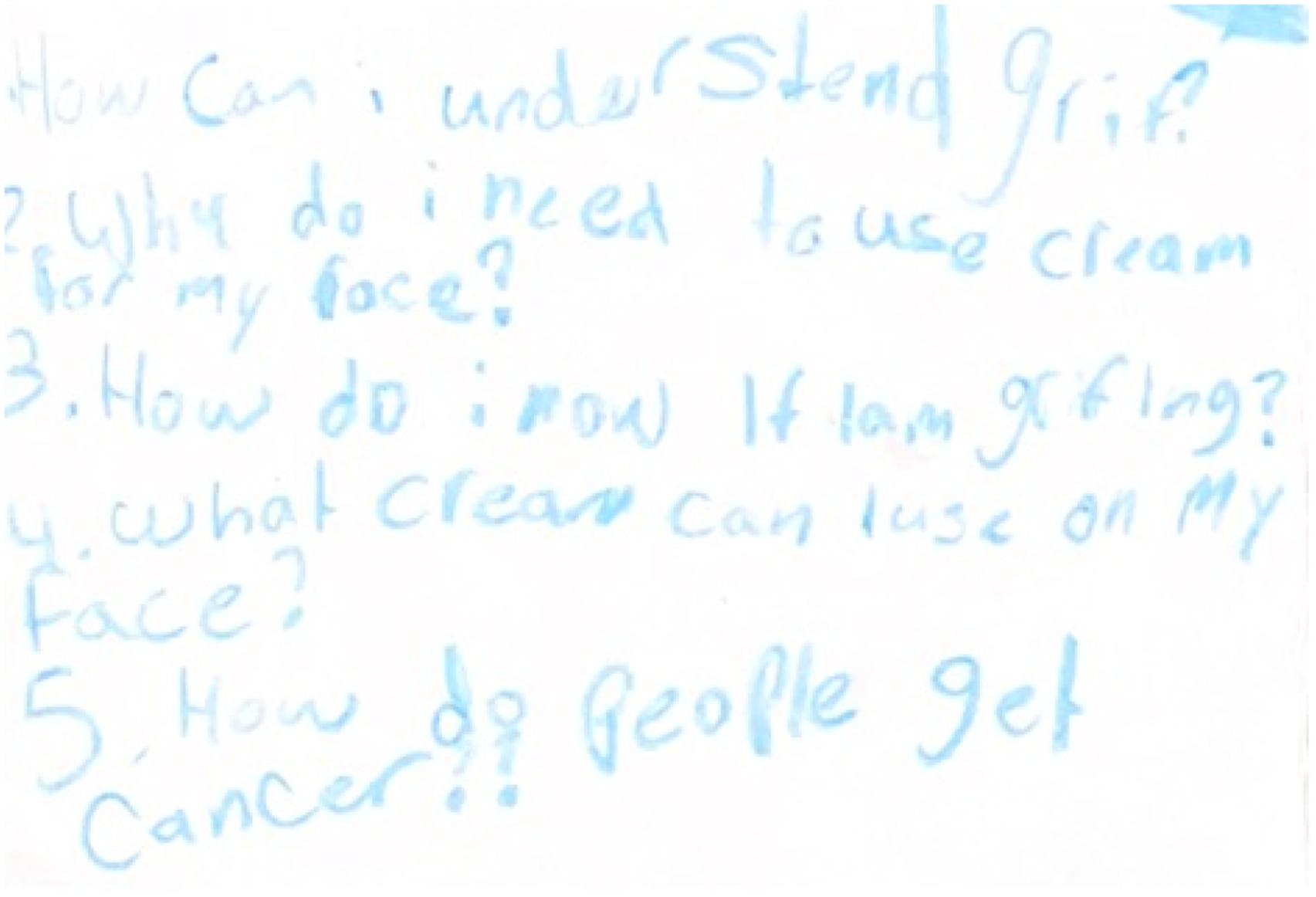
Caution is required when exploring these anonymous questions, because only the child may know the root of their concern. The examination of anonymous questions does not allow deeper probing. It is possible that the child from Figure 4 had a person who mattered to them die from skin cancer, and that is their reason for asking about face cream. Alternatively, it is possible that the child was talking about face cream with their fellow campers and had this topic on their mind. Without knowing this, no matter the apparent levity of a question, every question should be treated as a legitimate wonder that merits acknowledgment and exploration.
Responding to bereaved children’s questions
All bereaved children’s questions deserve to be taken seriously. Insights about what bereaved children want to know about illness, death, and grief, can be drawn from the questions they ask about these topics. Throughout the coding process, the research team reflected on the range of possible understandings, worries, emotions, and beliefs that could underlie and be expressed in each of these anonymous questions. Sensitized by collective personal and clinical experiences with childhood grief, the team recognized that questions contained informational, emotional, and existential components; since it is not possible to know for certain which the child may be seeking, each component should be meaningfully addressed in response. Returning to related studies on bereaved children’s questions,10,12 the proposed framework builds on prior work by highlighting a range of concerns about anything grieving young people find meaningful to ask. Further, this study examines not only what children ask about (focus) but what they may be seeking through their questions (function). In doing so, this framework offers a practical interpretive tool to support caring adults to recognize children’s underlying concerns. In the work by Thompson and Payne, 12 the authors also identified three key pieces doctors in their camp mobilized in their responses to questions: validation, reflection, and description. While the present study did not examine responses to children’s questions, the conceptual framework developed as a result of this study suggests that these elements of responding matter.
Questions could invite a variety of responses: informational aspects of questions may invite more ‘concrete’ responses, whereas responses to emotional and existential elements could feel less like definitive answers. In the experiences of the research team, responses to emotional and existential questions offer support and validation for difficult emotions, encouragement to wonder together, and offer a sense of community and compassion in the face of uncertainty and unanswerable questions. This expands on Thomson and Payne’s 12 description phase which focused on informational needs by providing explanations about the body, illness, and death. Extending their proposed “staging” or stepwise approach, the proposed framework can be used to guide an additional phase of exploration, including acknowledgment and validation of the emotional and existential aspects of children’s questions, as well as wondering together, after providing concrete information that may be relevant to the description phase.
For instance, “Why do people have to die?” could invite responding to two or more elements: an informational element about why human bodies cannot live forever, that every living being is made up of cells and systems that eventually deteriorate; as well as an emotional element, acknowledging that understanding how bodies work and that they cannot physically live forever does not ease the grief and longing for the person who died. The latter may not feel like an adequate ‘answer’ to significant feelings and existential questions like, “but why?” however such a response can still address the child’s question because it validates the feelings that may come with the question (e.g., sadness, fear, helplessness, confusion) and affirms that it is natural to grieve endings and to grapple with significant questions like this.
Figure 5 and Figure 6 provide visual illustrations of how the framework can be used to help situate a child’s question, consider its focus and function, identify the informational and potential existential or emotional needs, and inform a supportive response. Figure 5 depicts a relatively existential question and a response that progresses from concrete information sharing at the intersection of the themes, how it works and dying and death, before shifting from left to right towards abstract, existential ideas. In contrast, the question illustrated in Figure 6 is more informational, at the intersection of how it works and condition. Beginning with a response to the semantic and then latent aspects of the question as posed, arrows suggest a possible progression of responses and exploratory questions from the top down, to inviting subsequent, related questions that children may wonder about. Example of camper question, “Why do people have to die?” and possible responses informed by the framework. Example of camper question, “How does ALS affect you?” and possible responses informed by the framework.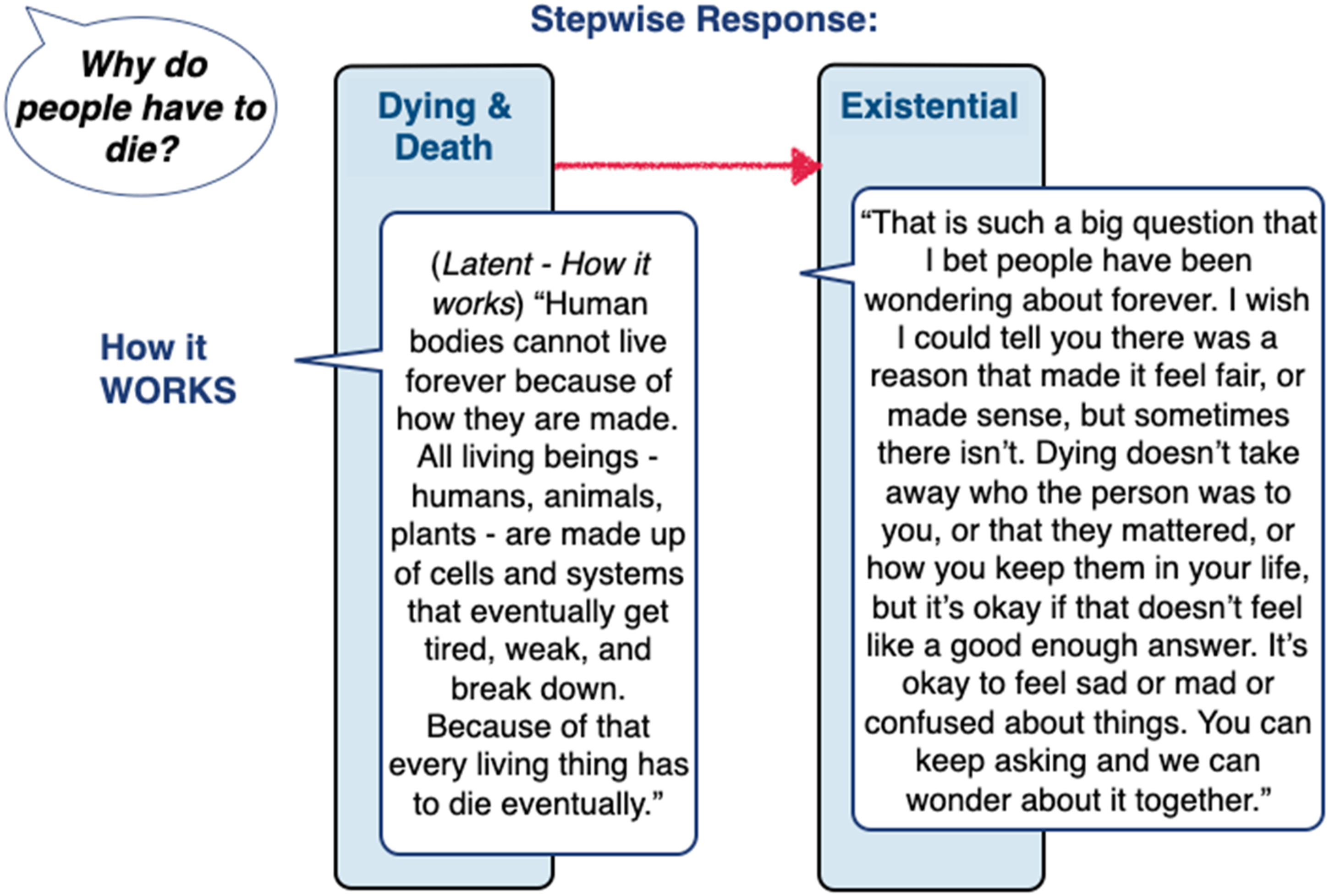
Caregivers and providers should recognize children’s questions as opportunities for connection, making sense of the world, and examining what feels significant to the person. More than offering ‘answers,’ the process of inviting and exploring grieving children’s questions demonstrates the importance of listening and responding. Sometimes there is no definite answer to be given, and the best thing one can do is to simply respond by bearing witness and acknowledging the magnitude of what this child is holding. Inviting bereaved children’s questions and responding to their concerns is meaningful even if it feels like there is no ‘right’ answer.
Practical implications
Caregivers and providers can use this framework to prepare for grief-related conversations with children, recognize possible questions, and explore possible underlying emotional or informational needs. This matrix enables providers to consider and explore deeper concerns behind children’s questions. The following implications have arisen from this study: • Caregivers and providers caring for dying people and their families need to be aware that bereaved children of all ages have various questions, and all their questions merit to be taken seriously. • Bereaved children’s questions express a range of biomedical as well as emotional and existential elements. Healthcare providers are well positioned to answer questions about ‘how and why’ people die.
30
The proposed framework can guide exploration of a broader range of themes and underlying informational and emotional needs. • Inviting and responding to questions is important, even if the person inviting those questions does not have an ‘answer.’ Creating spaces for bereaved children to feel comfortable expressing their questions is paramount.
31
• In valuing and taking seriously bereaved children’s questions, anybody can play an essential role in bolstering a child’s sense of feeling heard and cared about, especially in a time that can otherwise feel lonely and isolating.
31
Limitations
This study provides, to the authors’ knowledge, the most comprehensive accounting of grieving children’s questions (710 questions) alongside a robust and reflexive analytic exploration by a group of health and psychosocial care providers and young adults with camp experience. Nonetheless, this study might be considered limited by the absence of demographic data linked with individual questions, which prevents exploring variations or trends in the questions asked by children depending on their age, cultural, ethnic, or spiritual contexts, cause of death time since death, or relationship to the person who died. Further, children who attended this bereavement camp are not representative of all bereaved children, particularly those who face sociopolitical, geographic, demographic, and other barriers to accessing supports, including stigma that may preclude families from sending a child to a bereavement camp. 31 Additionally, follow-up questions asked during sessions were not recorded.
Future studies should invest focused efforts in connecting with bereaved children and young people who may not have access to camp or similar grief supports. As well, further study is needed to understand how children’s questions may be influenced by variables related to demographics and social locations, as well as the deaths they have experienced. The aim of the present study is not to draw conclusions or generalize about children’s grief experiences, but rather to inform and guide adults’ exploratory dialogues with grieving children, in order for them to invite and respond to children’s unique questions, concerns, perceptions and priorities with care and compassion. Future research should explore grieving children and young people’s perceptions and experiences of communication about these questions, including discussion of the informational, emotional, existential, and relational elements.
Conclusion
Young people have a myriad of questions as they navigate their grief experiences; these questions can help provide insights into their needs, aspirations, and concerns. Having the opportunity to ask questions anonymously, or to be invited into an open conversation about tender topics may help provide a safe and welcoming space to ask those questions. Such opportunities are critical for young people, whose unanswered questions can otherwise build into feelings of worry, burden, and confusion amidst their grief.7,8 The proposed framework provides clinicians with a structured guide to help explore and respond to children’s questions and the needs embedded within them. By fostering open dialogue, children may feel better supported in expressing their thoughts and feelings, and may feel heard, supported, included, and connected. By helping children know that they, and their questions matter, collectively we can better support young people in their grief. 31
Supplemental material
Supplemental material - Research Ethics Board documentation for “Ask us anything”: A framework for understanding bereaved Children’s questions about illness, dying, and grief
Supplemental material for “Ask us anything”: A framework for understanding bereaved Children’s questions about illness, dying, and grief by Ceilidh Eaton Russell, Liana Bailey, Ashwini Pugazhendhi, Karleigh Sutton, Sandra Ross Twiner and Joanna Humphreys in Palliative Care and Social Practice.
Footnotes
Acknowledgements
Over the past 15 years, this project has been inspired and supported by dozens of clinicians, research team members, students, volunteers, and program alumni from Camp Erin Toronto, and the Dr. Jay Children’s Grief Centre, and informed by many hundreds of bereaved campers. We are deeply grateful to the skilled and caring individuals who generously invested their expertise and insights in this project, and especially to the campers whose willingness to express their questions and their grief have inspired and guided this work.

Ethical considerations
Ethics Board review was not required for this research since it relied exclusively on anonymous, unidentifiable, and unlinked data. Consent to participate has been waived by the research ethics committee because data was anonymous, unlinked, and without identifying information.
Consent for publication
Consent for the use of campers’ data and images was obtained from their parents and guardians.
Funding
The authors disclosed receipt of the following financial support for the research, authorship, and/or publication of this article: This research did not receive any specific grant from funding agencies in the public, commercial, or not-for-profit sectors. The preparation of this manuscript was supported in part by Canada’s Pediatric Palliative Care Alliance, and in-kind support for data generation was provided the Dr. Jay Children’s Grief Centre, and Camp Erin Toronto.
Declaration of conflicting interests
The authors declared no potential conflicts of interest with respect to the research, authorship, and/or publication of this article.
Data Availability Statement
Supplementary materials such as scanned images of exemplar questions, and spreadsheets containing original questions may be accessed by contacting the corresponding author.
Supplemental material
Supplemental material for this article is available online.
References
Supplementary Material
Please find the following supplemental material available below.
For Open Access articles published under a Creative Commons License, all supplemental material carries the same license as the article it is associated with.
For non-Open Access articles published, all supplemental material carries a non-exclusive license, and permission requests for re-use of supplemental material or any part of supplemental material shall be sent directly to the copyright owner as specified in the copyright notice associated with the article.
