







Abstract
Despite rapid technological advancement, women’s marginalization in skill development programs remains a significant challenge, particularly in rural areas. Cultural and social barriers often hinder women’s participation in TEVTA programs, negatively impacting individual empowerment and societal progress. This study investigates the influence of these barriers on women’s participation and examines the mediating role of perceived program accessibility. An explanatory research design was employed, utilizing structural equation modeling (SEM) with SmartPLS. A survey questionnaire, developed based on literature, was used to collect data from 276 female students from six TEVTA institutes in rural areas, selected through purposive sampling. The questionnaire demonstrated high reliability, with Cronbach’s alpha values ranging from 0.933 to 0.958 and composite reliability values between 0.942 and 0.962. Findings revealed that social barriers significantly impact women’s participation (β = 0.454, t = 7.100, p = 0.000), as do cultural barriers (β = 0.177, t = 2.848, p = 0.004). Both barriers negatively affect perceived program accessibility (social: β = 0.368, t = 5.499, p = 0.000; cultural: β = 0.319, t = 4.617, p = 0.000). In turn, perceived program accessibility positively influences participation (β = 0.261, t = 3.522, p = 0.000). These results suggest that improving perceptions of program accessibility can alleviate barriers and enhance enrollment, supporting the Theory of Planned Behavior (TPB). This study recommends aligning TEVTA curricula with women’s aspirations, incorporating digital skills, and fostering community engagement to reshape societal attitudes. Future research could broaden the scope by exploring societal perceptions of vocational education among female and male students.
Introduction
Although women’s empowerment is emphasized globally, in Pakistan, it often remains a rhetorical topic without sufficient practical implementation strategies (Jamil and Iqbal, 2020). The Technical Education and Vocational Training Authority (TEVTA) offers a wide range of programs designed to equip individuals, particularly women, with practical skills in IT, healthcare, engineering, and business management. These programs aim to foster women’s economic independence, reduce gender disparities in employment, and provide an alternative pathway to education, especially in rural areas where access to higher education is limited (Rehman et al., 2024). Despite these opportunities, cultural and social barriers, including limited mobility, societal expectations, and a preference for gender-segregated education, hinder women’s full participation in TEVTA programs.
The Sustainable Development Goals (SDGs), particularly Goal 5, emphasize the importance of women’s skills development as a crucial driver for achieving gender equality and economic empowerment (United Nations, Goal 5). TEVTA plays a pivotal role in this agenda by offering vocational training programs to equip women with the necessary skills for economic participation. While TEVTA’s role in enhancing employability and financial independence for women in lower-income countries is widely recognized (Gamboa et al., 2021; Hou et al., 2020; Kitada and Harada, 2019), in Pakistan, cultural and social barriers continue to limit women’s ability to benefit fully from these programs.
Countries such as China, India, and Bangladesh have successfully increased the representation of women in vocational programs, leading to positive economic outcomes (Alam et al., 2024). In contrast, Pakistan faces significant challenges due to its diverse culture and Islamic governance, which often result in gender-segregated education systems (Ali et al., 2022). While TEVTA programs are co-educational, rural and conservative areas present barriers to women’s participation, particularly due to familial concerns about co-education, despite the higher literacy levels among women (Khan and Ali, 2024). Urban areas are relatively less restrictive, with more TEVTA institutes available and fewer familial barriers regarding women’s education (Gull and Chaudhary, 2021). However, the major challenge remains in rural areas, where limited educational facilities hinder women’s access to skill development programs.
These barriers significantly restrict women’s access to higher education and vocational training opportunities in rural regions. Conversely, urban areas offer more TEVTA institutes with fewer familial constraints, underscoring the need for more significant efforts to enhance women’s vocational education in rural settings (Gull and Chaudhary, 2021; Siddiqui et al., 2024). Providing women in these areas with vocational training through TEVTA programs is essential for their economic empowerment, improving their living standards and contributing to the broader community and national development (Azeem et al., 2022; Iftikhar et al., 2024). Investing in women’s education can foster a more inclusive society where women’s contributions are vital to the economy (Figure 1). Gender-wise distribution of Technical and Vocational Institutes across different provinces in Pakistan.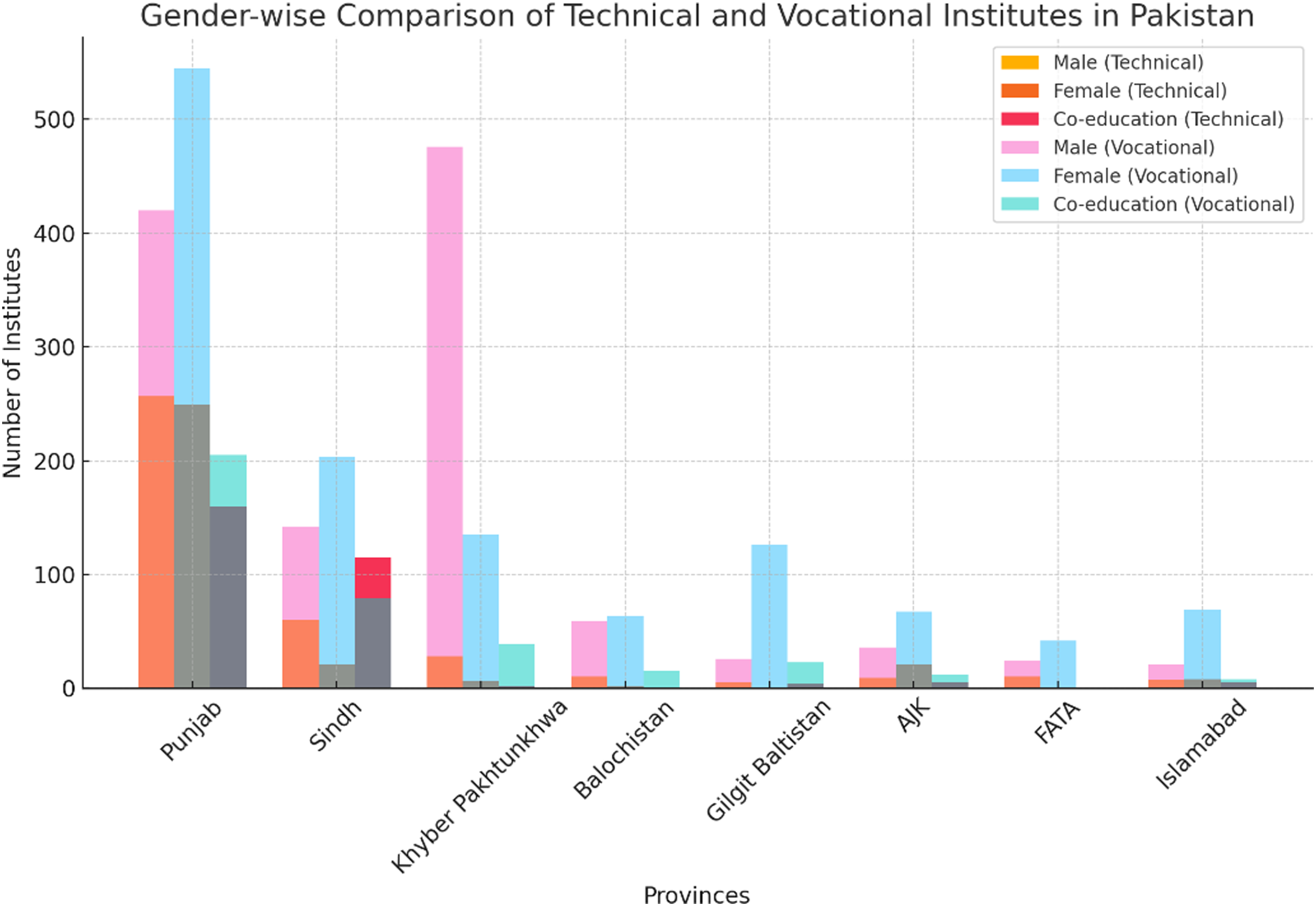
Gender inequality in TEVTA
In Pakistan, the total number of Technical Institutes across the provinces stands at 963, while the total number of Vocational Institutes is significantly higher, at 2,671 (NAVTTC, n.d). This disparity indicates a broader focus on vocational training programs than technical education. Technical Institutes primarily offer courses in engineering, information technology, and other specialized technical fields. At the same time, Vocational Institutes provide training in hands-on skills such as cooking, beauty therapy, dressmaking, and various trades. When comparing gender distribution in these institutions, there is a notable gender imbalance (Asghar et al., 2022). In technical institutes, there are 386 male and 286 female students. In contrast, in vocational institutes, the number of male students (1,204) surpasses female students (1,250), although the gender gap is less pronounced here (Ali et al., 2022). Despite this, female participation in technical institutes is particularly low in provinces like Khyber Pakhtunkhwa and Balochistan. This indicates the need for more targeted efforts to increase female involvement in technical education (Siddiqui et al., 2024). The trend suggests that while more efforts are needed to encourage female participation in technical institutions, vocational training is a viable pathway for empowering women, especially in rural areas where educational opportunities for women are limited (Moye et al., 2020). A significant challenge in TEVTA is the shortage of female instructors, with male teachers vastly outnumbering female ones, further limiting the accessibility and effectiveness of technical and vocational training for women (Siddiqui et al., 2024). This imbalance limits the effectiveness and accessibility of TVET programs for women. Many women are enrolled in gender-specific courses, such as beauty therapy and cooking, while their participation in technical fields, such as engineering, remains minimal (Pirzada et al., 2022). Additionally, many programs offered by TEVTA institutions are outdated and disconnected from global industry demands (Rizwan et al., 2021). This leaves women with limited skills not aligned with contemporary job market needs, such as AI, online business, or e-commerce platforms like Amazon and Shopify (Rizwan and Sohail, 2024). These educational gaps and societal and familial pressures restrict women’s workforce participation and economic empowerment (Amjad et al., 2022). Given Pakistan’s conservative cultural context, especially in rural areas, there is a pressing need for TEVTA to offer more modern, technology-oriented programs to empower women, reduce economic disparity, and address the country’s economic challenges (Altaf and Shabir, 2024). TEVTA institutes provide an essential opportunity for women to gain practical skills and start businesses from home, benefiting both individuals and families. To maximize their impact, TEVTA must offer more contemporary, tech-oriented programs to empower women and contribute to the country’s economy, particularly in today’s challenging economic environment (Asad et al., 2023).
Social and cultural barriers
In Pakistan, especially in rural areas, women’s participation in the workforce is often not seen as culturally or religiously acceptable (Jabeen et al., 2020). In the traditional joint family system, where a household might consist of 10 or more people, the male member is usually expected to be the sole breadwinner. This societal structure limits women’s opportunities to contribute economically, leading to financial constraints where basic needs are often unmet, and children’s education remains incomplete (Ahmad and Faridi, 2020). The rising cost of living exacerbates this issue as families struggle to meet daily needs. Women’s economic contributions are vital for families to thrive, but cultural and social norms in Pakistan discourage female participation in the workforce (Ge et al., 2022).TEVTA institutes have the potential to address this issue by offering programs that empower women to start their businesses and earn income from home (Adamuti-Trache et al., 2020). Women can acquire the necessary skills to participate in modern economic activities like e-commerce or small businesses, contributing to their families and the broader economy (Bernhard et al., 2021). However, a significant challenge remains: co-education is not widely accepted in many parts of Pakistan, particularly rural areas (Amin et al., 2020). As a result, girls are often not admitted to TEVTA institutes, limiting their chances to develop essential skills. This lack of access to education and skill-building opportunities perpetuates a cycle where women remain financially dependent, and their potential goes untapped (Andriamahery and Qamruzzaman, 2022). Mobility constraints, including transportation issues, safety concerns, and restrictions on movement imposed by family or cultural norms, severely limit women’s access to vocational training opportunities.
Cultural and religious norms in Pakistan often necessitate women-only TEVTA programs, especially in rural regions, where resistance to co-educational institutions limits women’s access to education and skill development opportunities (Koburtay et al., 2020). This resistance is further compounded by the perception of TEVTA institutes, which are often viewed as low-reputation institutions that fail to lead to well-paying jobs (Pasha, 2023). A study by Rehman et al. (2024) shows that TEVTA institutions in Pakistan suffer from low reputation and perception, with many people not valuing these degrees or seeing them as a pathway to good jobs. As a result, parents in rural areas are hesitant to encourage their daughters to enroll in these programs, opting instead for universities or, in many cases, choosing early marriage over further education. Globally, examples from countries like China, India, and Bangladesh highlight the transformative potential of skilled labor in economic development. For instance, China’s economic growth, driven by a robust skilled workforce, and India’s advancements in vocational training to secure global jobs illustrate the importance of aligning vocational curricula with industry demands (Ahmed and Hyndman-Rizk, 2020; Najeeb et al., 2020; Xie et al., 2021). Similarly, Bangladesh’s garment industry, powered by vocationally trained women, underscores the value of targeted vocational education (Lata et al., 2021). Pakistan, however, lags behind due to outdated TEVTA programs and insufficient job opportunities for graduates, which reinforce negative perceptions of these institutes (Bano et al., 2022). Addressing these challenges requires modernizing the curriculum, training faculty, and focusing on emerging sectors such as e-commerce, technology, and AI to make TEVTA programs more relevant and effective.
Despite these challenges, the TEVTA in Pakistan strives to provide women with essential skills to improve their socio-economic status. However, mobility constraints, familial resistance, and societal norms remain significant barriers to participation, limiting women’s empowerment (Ali et al., 2024; Saeed et al., 2022). Despite some recognition of these obstacles in existing literature, there remains a gap in understanding how these barriers specifically impact women in TEVTA programs and the effectiveness of proposed solutions. Addressing this gap requires a more comprehensive exploration of the interplay between these social and cultural factors and the perceptions of program accessibility, offering insights into actionable strategies that can enhance women’s engagement in vocational training. This study aims to fill this gap by exploring the interplay between social and cultural barriers and program perceptions, offering actionable strategies to increase Women’s intention to participate in TEVTA programs and enhance their socio-economic prospects.
Problem space and research gap
Several studies have explored the social and cultural barriers that impede women’s participation in various fields, including vocational training, entrepreneurship, and education. Muhammad et al. (2021) examined the unique challenges faced by Pakistani women entrepreneurs, identifying barriers such as limited spatial mobility and family restrictions that hinder entrepreneurial success. Their findings emphasized the importance of women-only training modules in mitigating these barriers, thereby empowering women in a conservative Islamic context. Similarly, Sarwar and Imran (2019) investigated career obstacles for women in Pakistan, uncovering a complex web of structural barriers, including religious interpretations and socio-cultural norms that limit career advancement. They proposed policies that consider these constraints to foster gender equality. Raza et al. (2022) focused on the factors restricting female participation in sports in Southern Punjab, noting family support, religious constraints, and cultural norms as significant barriers. These findings are highly relevant to vocational education, where gender-segregated roles and conservative family expectations likely limit women’s access to vocational programs. Naheed et al. (2021) examined the political participation barriers faced by women in Pakistan, revealing socio-cultural constraints rooted in conservative gender norms, which further limit women’s involvement in public and professional spheres. Similarly, Ali Shah et al. (2024) explored women’s empowerment through education and labor participation in Khanewal, highlighting the role of vocational training in women’s socio-economic empowerment but noting that it is hindered by limited rural infrastructure and socio-cultural restrictions. However, a significant gap remains in understanding how these barriers impact women’s perceptions of program accessibility and their subsequent decision to participate, particularly in rural Pakistan, where such constraints are most pronounced.
This gap in the literature highlights the need for targeted solutions to improve Women’s intention to participate in TEVTA programs, ultimately empowering them economically and socially. Given that women’s marginalization in educational and skill development programs is a global issue, especially in rural areas, this study’s findings are crucial for informing policies and strategies that can be adapted to various international contexts. The research questions guiding this study are as follows: (1) How do social and cultural barriers influence Women’s intention to participate in TEVTA programs in rural Pakistan, and how does the perception of program accessibility mediate this relationship? (2) To what extent does the perception of program accessibility influence women’s decisions to participate in TEVTA programs?
Conceptual definition
Contextual definition of terms.
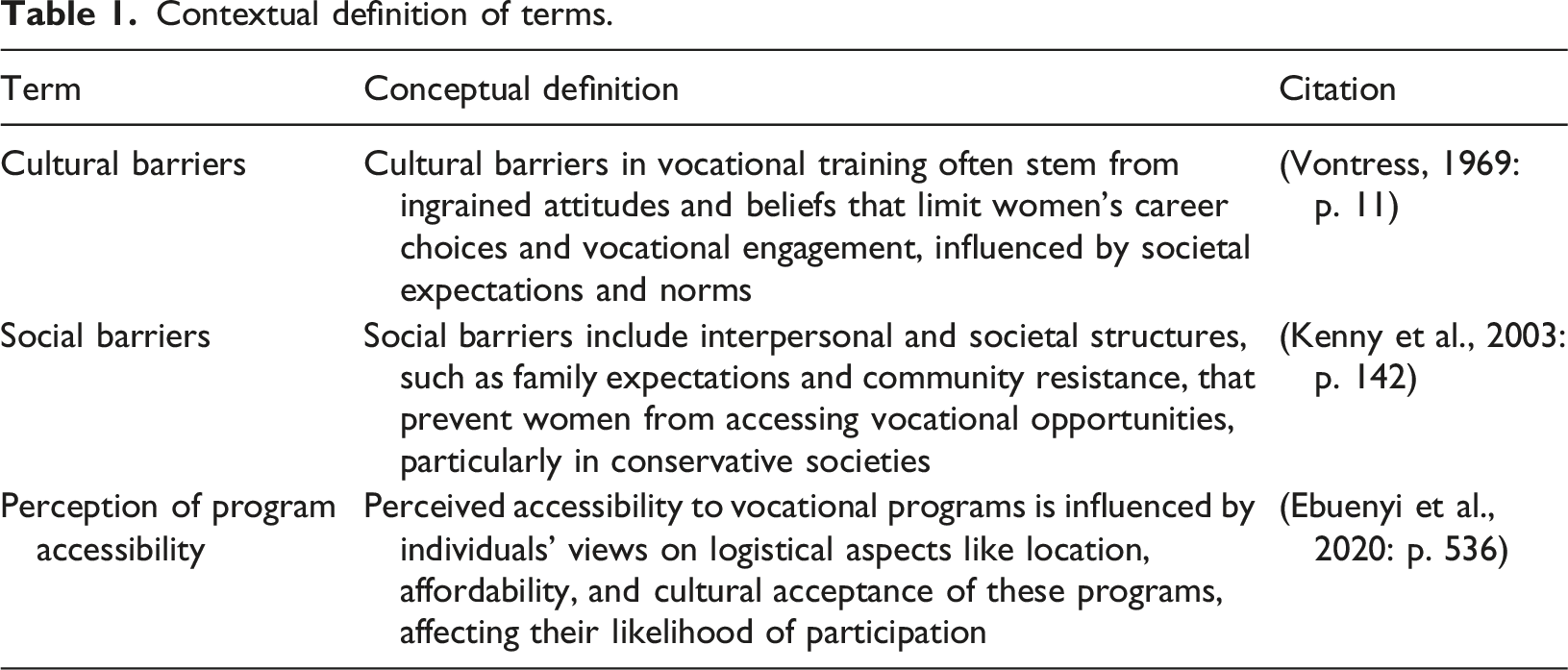
In this study, cultural barriers and social barriers were treated as conceptually related but distinct constructs. Cultural barriers refer to deeply embedded norms, values, and gender-role beliefs that shape whether women’s participation in vocational education is considered socially and morally acceptable. Social barriers, in contrast, refer to the more immediate interpersonal and structural constraints that women encounter in practice, such as family resistance, community disapproval, restricted mobility, transport difficulties, and limited social support. Thus, cultural barriers reflect the broader normative environment, whereas social barriers capture the practical and relational constraints through which those norms are experienced in everyday life. These constructs were analyzed separately because they represent different levels of influence on Women’s intention to participate in TEVTA programs: one normative and belief-based, the other interpersonal and access-related. Distinguishing them conceptually strengthened the theoretical framework and reduced the risk of treating all barriers as a single undifferentiated phenomenon.
Theoretical framework and hypothesis development
This study draws on four key theories to develop and test the research hypotheses: Social Cognitive Theory (SCT), Theory of Planned Behavior (TPB), Feminist Theory, and Human Capital Theory. These theories were selected for their relevance in explaining the impact of cultural and social barriers on women’s participation in Technical and Vocational Education and Training (TVET) programs, specifically in the context of TEVTA programs in South Punjab, Pakistan. Each theory provides insights into how different factors, such as personal, societal, and economic influences, shape women’s educational and vocational aspirations. In this study, we conceptualize cultural barriers as those rooted in deeply ingrained societal norms and beliefs, which limit women’s engagement in vocational training due to cultural expectations (Vontress, 1969). On the other hand, social barriers are viewed as the external constraints imposed by social structures, including familial and community expectations (Kenny et al., 2003). These conceptual definitions, summarized in Table 1, guided the survey design used to collect data in the study. The survey instrument operationalized cultural barriers through items focused on cultural expectations of gender roles, such as “Women should stay at home rather than pursue vocational education” and “Vocational training for women is discouraged in our community.” On the other hand, social barriers were measured using items related to family expectations, mobility constraints, and community resistance, such as “My family does not support me attending a co-educational institution” and “I face difficulty in accessing vocational training due to mobility restrictions.” This distinction between cultural and social barriers was vital for understanding women’s unique obstacles in participating in TEVTA programs in rural Pakistan. By measuring these barriers separately, we identified their individual and combined effects on women’s perceptions of program accessibility and their decisions to participate in vocational training.
Social Cognitive Theory (SCT)
SCT, proposed by Albert Bandura in 1999, emphasizes the interaction of personal, behavioral, and environmental factors in shaping individuals’ actions (Bandura, 1999). Within the context of TEVTA programs in South Punjab, Pakistan, SCT offers a valuable framework for examining the role of women in vocational education and skill development. In Pakistan, particularly in more traditional areas, societal norms and socio-economic conditions impose significant barriers on women’s educational and professional ambitions (Roomi and Harrison, 2010). Nevertheless, TEVTA programs represent a promising avenue for women to acquire skills, achieve economic independence, and contribute to local and national economies. Their self-efficacy and belief influence women’s participation in TEVTA programs in the value of vocational education. In conservative regions, low self-confidence or a lack of role models often discourages women from enrolling in technical fields. Empowering women through mentorship, showcasing successful female graduates, and promoting self-efficacy can enhance their engagement and interest in these programs (Hasan, 2020).
Moreover, societal and familial expectations in Pakistan may discourage women from pursuing technical skill acquisition or behaviors associated with independence (Muhammad and Ximei, 2022). SCT suggests that observing other women succeed in TEVTA programs can inspire participants to emulate these behaviors. By establishing a supportive culture and strong role modeling within TEVTA, more women may be encouraged to join and complete these programs (Gohar et al., 2022). Pakistan’s unique cultural and societal context also presents specific environmental challenges to women’s participation in vocational training. Gender-based expectations, family commitments, and limited transportation facilities can restrict their access to TEVTA programs. Modifying the environment, such as creating women-only centers or providing transportation facilities, can make a more enabling context (Khan, 2020). Additionally, community engagement and awareness campaigns can shift societal attitudes, encouraging families to support women’s participation in TEVTA programs (Aparicio et al., 2022). SCT’s emphasis on the interplay of personal beliefs, observed behaviors, and environmental conditions illuminates the barriers and opportunities for women in TEVTA programs in South Punjab, Pakistan. Fostering self-efficacy, establishing positive role models, and cultivating supportive environments can promote gender equity in technical education, ultimately advancing women’s economic empowerment in Pakistan. Thus, the theory supports the following hypotheses: H1: Social barriers negatively influence Women’s intention to participate in TEVTA programs. H3: Social barriers negatively influence the perception of program accessibility. H6: Perception of program accessibility mediates the relationship between social barriers and Women’s intention to participate in TEVTA programs.
Theory of Planned Behavior (Ajzen, 1991)
The Theory of Planned Behavior by Ajzen (1991), posits that attitudes, subjective norms, and perceived behavioral control influence behavior (Ajzen, 1991). This theory highlights the role of cultural and social norms in shaping women’s attitudes toward education and their decisions to participate in educational programs (Asare, 2015). The theory’s emphasis on subjective norms explains how cultural barriers and societal norms (as subjective norms) influence women’s perceptions of program accessibility and, ultimately, their participation in TEVTA programs (Rizvi et al., 2023). A woman’s positive or negative attitude toward education or vocational training influences her motivation to participate (Llorens et al., 2021). In Pakistan, traditional cultural attitudes often emphasize women’s roles in the home, limiting their perceived need for technical education or employment skills. A positive shift in attitude can encourage women to view TEVTA programs as valuable tools for personal and economic empowerment, fostering more significant interest and motivation (Rana et al., 2024). In Pakistan, cultural expectations and societal attitudes play a significant role in shaping women’s educational decisions. If a woman perceives that her family or community expects her to remain in traditional roles, she may be less inclined to participate in TEVTA programs (Sarwar and Imran, 2019).
Conversely, supportive norms, such as encouragement from family members or seeing other women succeed in these programs, can enhance her likelihood of enrolling (Khalid, 2021). Thus, TPB highlights how cultural barriers, as subjective norms, can reduce the perceived accessibility of programs, ultimately leading to lower participation rates. The practical challenges, such as limited mobility, transportation issues, or the absence of women-only centers, affect perceived behavioral control (Liao et al., 2023). If a woman feels she lacks the resources or support to attend vocational training, her likelihood of participating decreases (Ghouse et al., 2021). Therefore, improving accessibility (through provisions like transportation, women-only facilities, and community support programs) can enhance perceived behavioral control, making TEVTA participation seem more achievable. TPB suggests that for women in Pakistan, the cultural environment, societal expectations, and attitudes toward women’s roles profoundly influence their attitudes toward vocational education and the perceived accessibility of programs. Addressing these social norms and improving logistical support can increase participation rates, helping more women access TEVTA’s offerings. The TPB supports the following hypotheses: H2: Cultural barriers negatively influence Women’s intention to participate in TEVTA programs. H4: Cultural barriers negatively influence the perception of program accessibility. H7: Perception of program accessibility mediates the relationship between cultural barriers and Women’s intention to participate in TEVTA programs.
Feminist Theory
Feminist theory provides a critical lens to examine the structural inequalities that women face, especially those arising from patriarchal systems and rigid gender roles. This theory highlights how deeply entrenched societal structures and norms perpetuate gender-based inequalities, significantly limiting women’s access to education, vocational training, and employment opportunities (Garland-Thomson, 2020). Feminist theory emphasizes that patriarchal structures, which reinforce male dominance in family, society, and institutions, are primary contributors to the barriers women encounter (Biana, 2020). In Pakistan, traditional gender roles often place women in caregiving and domestic positions, with limited encouragement for pursuing education or professional careers (Anjum, 2020). These norms are so deeply ingrained that many women face discouragement, if not active resistance, when they seek to participate in public or professional spheres (Yunis et al., 2020).
Consequently, their educational and economic potential remains underdeveloped, further reinforcing their dependence on male family members. For many families, especially in rural or conservative areas, vocational training is considered unnecessary or even inappropriate for women (Krauss et al., 2019). This belief restricts women’s educational and skill-development opportunities, reinforcing that they should remain in subordinate roles rather than gain skills that could lead to economic independence. Family members may fear that women entering the workforce will challenge traditional family dynamics or attract social stigma (Bermúdez Figueroa et al., 2023). Additionally, concerns about women’s safety and reputation can discourage families from allowing women to travel for educational or vocational training (Iqbal et al., 2020). These social pressures thus act as powerful constraints, limiting women’s access to programs like TEVTA. For instance, TEVTA centers may not provide adequate support, such as safe transportation, flexible scheduling, or women-only facilities, which are crucial for accommodating the needs of female participants (Hyland et al., 2020). Structural inequities within educational programs remain unaddressed without such institutional adjustments, perpetuating gender-based exclusion (Hartman and Barber, 2020). Feminist theory underscores that societal structures and norms in Pakistan create pervasive barriers to Women’s intention to participate in TEVTA programs. These barriers are rooted in patriarchal values and reinforced by cultural and social pressures that limit women’s educational and economic opportunities (Swati and Dua, 2024). Addressing these structural inequalities involves re-evaluating societal attitudes, challenging gender roles, and reforming institutional practices to create an environment that supports and empowers women to pursue vocational training and education, ultimately contributing to a more equitable society. This supports the research hypotheses by indicating how societal constraints and gender-based expectations limit women’s access to programs. It supports the following hypothesis: H2: Cultural barriers negatively influence Women’s intention to participate in TEVTA programs.
Feminist theory highlights how cultural norms prevent women from accessing vocational training, especially in conservative contexts.
Human Capital Theory
Human Capital Theory asserts that education and skill development investments lead to improved productivity and economic outcomes (Eide and Showalter, 2010). This study uses HCT to explain how women’s perceptions of the accessibility of TEVTA programs influence their participation, thereby enhancing their human capital. Women who perceive these programs as accessible and relevant are more likely to engage, recognizing that such training improves their skills and provides economic opportunities (Leoni, 2023). When TEVTA programs align with the needs and aspirations of women, they are more likely to view their participation as an investment in their human capital (Deming, 2022). These programs offer essential vocational skills in fields like technical trades, information technology, and business management, which can open doors to better employment opportunities or entrepreneurial ventures. The potential for these skills to translate into financial independence motivates women to participate, seeing it as a pathway to improve their quality of life. As suggested by the Human Capital Theory, the easier it is to access these resources (e.g., proximity to training centers, availability of women-only classes, and safe transport options), the more likely women are to invest in developing their human capital (Deming, 2022). In rural Pakistan, where women face additional barriers, making TEVTA programs accessible can reduce the perceived obstacles to participating. Addressing accessibility barriers creates an environment where more women feel empowered to participate (Bawono, 2021). Human Capital Theory also underscores the importance of investing in education and skills development to increase productivity and economic well-being (Baharin et al., 2020). When TEVTA programs are seen as accessible, relevant, and valuable, women are more likely to participate, recognizing them as essential tools for enhancing their skills, productivity, and economic security. This supports the following hypotheses: H5: Higher perception of program accessibility positively influences Women’s intention to participate in TEVTA programs. H6: Perception of program accessibility mediates the relationship between social barriers and Women’s intention to participate in TEVTA programs. H7: Perception of program accessibility mediates the relationship between cultural barriers and Women’s intention to participate in TEVTA programs.
Integrating these four theories provides a comprehensive understanding of the barriers to Women’s intention to participate in TEVTA programs, from cultural and social factors to perceptions of accessibility and the economic benefits of vocational training. By grounding the hypotheses in these established theories, this study aims to provide a deeper understanding of how barriers can be addressed and how women’s participation in vocational training can be enhanced for greater socio-economic empowerment (see Figure 2). Proposed model based on theories.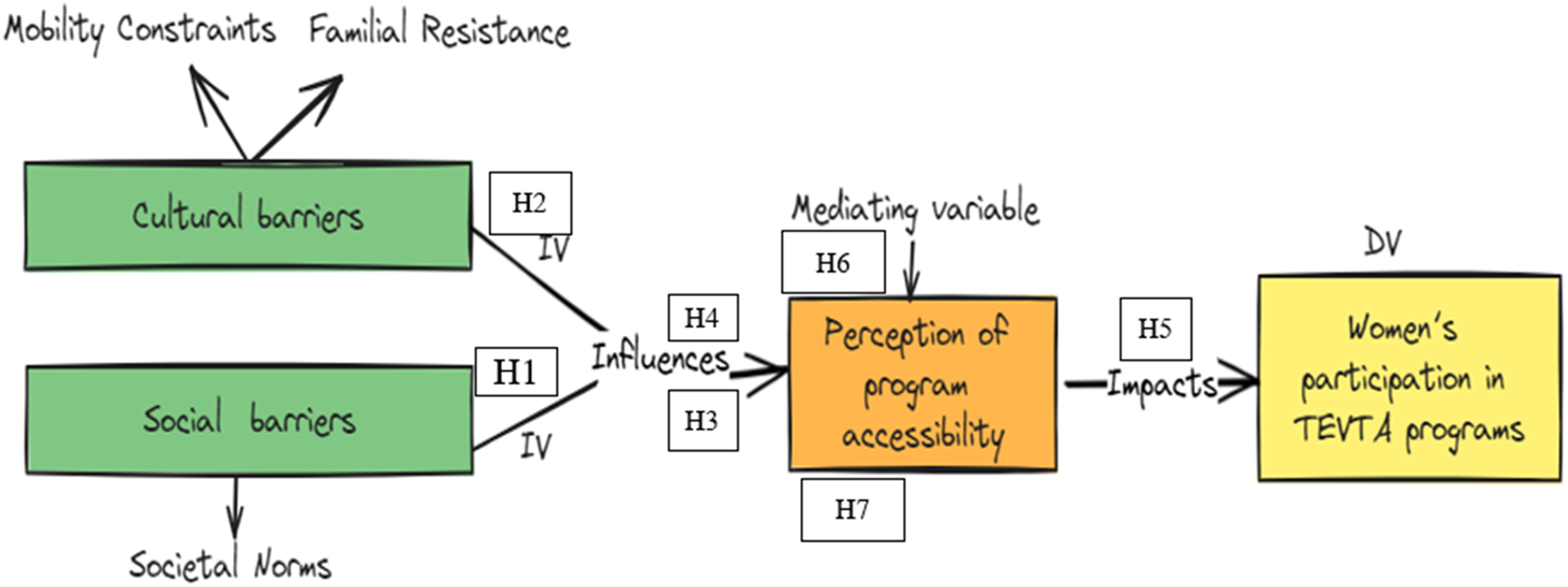
Methodology
This study used an Explanatory Research Design with structural equation modeling (SEM), specifically utilizing SmartPLS, to examine the impact of cultural and social barriers on Women’s intention to participate in TEVTA programs. SEM was chosen for its ability to model complex relationships between multiple variables and assess both direct and indirect effects, making it ideal for understanding how social and cultural barriers influence women’s engagement with vocational training programs (Mohajan, 2020). SEM’s ability to test mediating relationships allowed for a comprehensive exploration of how perceptions of program accessibility mediate the link between cultural barriers and women’s participation (Toyon, 2021). This study provides evidence from rural South Punjab, Pakistan, that social and cultural barriers significantly affect Women’s intention to participate in TEVTA programs, providing a clear framework for assessing causal relationships and patterns between key variables (Dash and Paul, 2021). This approach provided valuable insights into the structural factors that shape women’s engagement with vocational training programs in Pakistan. However, while the quantitative design was appropriate for testing these relationships, it was not intended to capture the full contextual and lived experience of specific barriers in the depth that qualitative methods such as interviews or focus groups could provide.
Participants
A purposive sampling technique was employed to select 276 female students from six TEVTA institutes in rural areas of South Punjab. This sampling approach was considered appropriate because the study specifically targeted young women who had expressed interest in joining TEVTA programs by filling out application forms but were unable to enroll due to various barriers. These participants had completed their junior high school education and represented a particularly relevant group for examining the cultural and social barriers that restrict access to vocational training. This group was selected because the study specifically aimed to understand barriers at the point of access and entry into TEVTA programs rather than experiences after enrollment. Women who had applied or expressed concrete interest but were unable to enroll were especially relevant for examining how social, cultural, and accessibility-related barriers influence participation intention. However, excluding students who were already enrolled means that the findings primarily reflect pre-enrollment barriers and may not capture the perspectives of women who successfully entered TEVTA programs despite such constraints.
The primary barriers identified were lack of access to nearby colleges, poor transportation, limited family support, and concerns regarding the safety and social acceptability of commuting independently. Many participants came from families that did not permit them to travel long distances for further education, making access to formal education nearly impossible. Despite TEVTA programs offering a valuable alternative, several challenges remained, including limited availability of TEVTA institutes in rural areas, societal reluctance toward co-educational settings, and the outdated nature of some courses. Exclusion criteria included students already enrolled in TEVTA programs or those who had not applied but only expressed general interest in vocational training. This specific group was chosen due to its direct relevance to the study’s focus on the cultural and social barriers limiting women’s access to vocational training. Their experiences offer valuable insights into how TEVTA programs might be improved to better support skill development and economic empowerment for young women in rural Pakistan, where traditional educational pathways are often inaccessible. Because the participants were not currently enrolled in TEVTA programs, the dependent construct in this study is more accurately interpreted as women’s intention or willingness to participate in TEVTA programs rather than actual participation behavior. However, the use of purposive sampling may limit the external validity and generalizability of the findings beyond the selected rural context of South Punjab. The study was geographically limited to six TEVTA institutes located in rural areas of South Punjab. This regional focus was appropriate for examining women’s participation in a context where social and cultural barriers are particularly pronounced; however, it also means that the findings primarily reflect the socio-cultural dynamics of rural Punjab rather than those of Pakistan as a whole. Therefore, the results should be interpreted with caution and should not be generalized to all regions of Pakistan or to other forms of vocational training without further empirical evidence. Future studies may strengthen external validity by employing probability-based sampling techniques, such as random or cluster sampling, across multiple provinces and diverse vocational education settings. To ensure sufficient statistical power for the analysis, an a priori power analysis was conducted using G*Power. Based on a medium effect size (f2 = 0.15), an alpha level of 0.05, and 80% power, the required sample size for a model with 7 predictors was approximately 120–150 participants. With 276 participants, the sample exceeds the required size, ensuring adequate power for detecting significant relationships and robust results. Additionally, the 10-times rule for SEM, which recommends a sample size of at least 10 times the number of estimated parameters (Hair et al., 2019), further supports the adequacy of this sample size, as the current sample size comfortably exceeds this requirement.
Procedure
The participants in this study were female students aged 16 to 18 years from six TEVTA institutes in rural regions of South Punjab, Pakistan. These institutes were selected based on their geographical location in rural areas where women face significant cultural and social barriers to educational opportunities. The selection of these institutes was purposeful to capture the unique challenges women face in vocational education in these areas. The six institutes were chosen to represent a diversity of institutional settings within the rural TEVTA context of South Punjab. These settings included vocational and technical training environments differing in institute type, gender orientation, and local accessibility conditions. Additional contextual information regarding the institutional environment is provided in Supplemental Table S1. The study focuses on women because they are disproportionately affected by mobility constraints, familial expectations, and economic limitations, which hinder their participation in vocational programs like those offered by TEVTA. The sampling procedure followed a purposive sampling technique, selecting participants who had expressed an interest in joining TEVTA programs but had not enrolled due to various barriers. This approach allows for a deeper understanding of women’s specific challenges in accessing these programs, which are key to the research objectives.
A questionnaire survey was distributed to 305 students across the selected institutes, with 276 valid responses, yielding a response rate of 90.4%. The questionnaire was designed to capture detailed insights into the participants’ perceptions of barriers to accessing vocational training and how these barriers impact their intention and willingness to participate. To ensure ethical compliance, all participants were informed that their responses would be kept confidential and used solely for research purposes. Participants were assured privacy, and written informed consent was obtained before data collection. This procedure was intended to enhance the reliability and authenticity of the data by ensuring that participants felt secure in sharing their experiences.
Measures
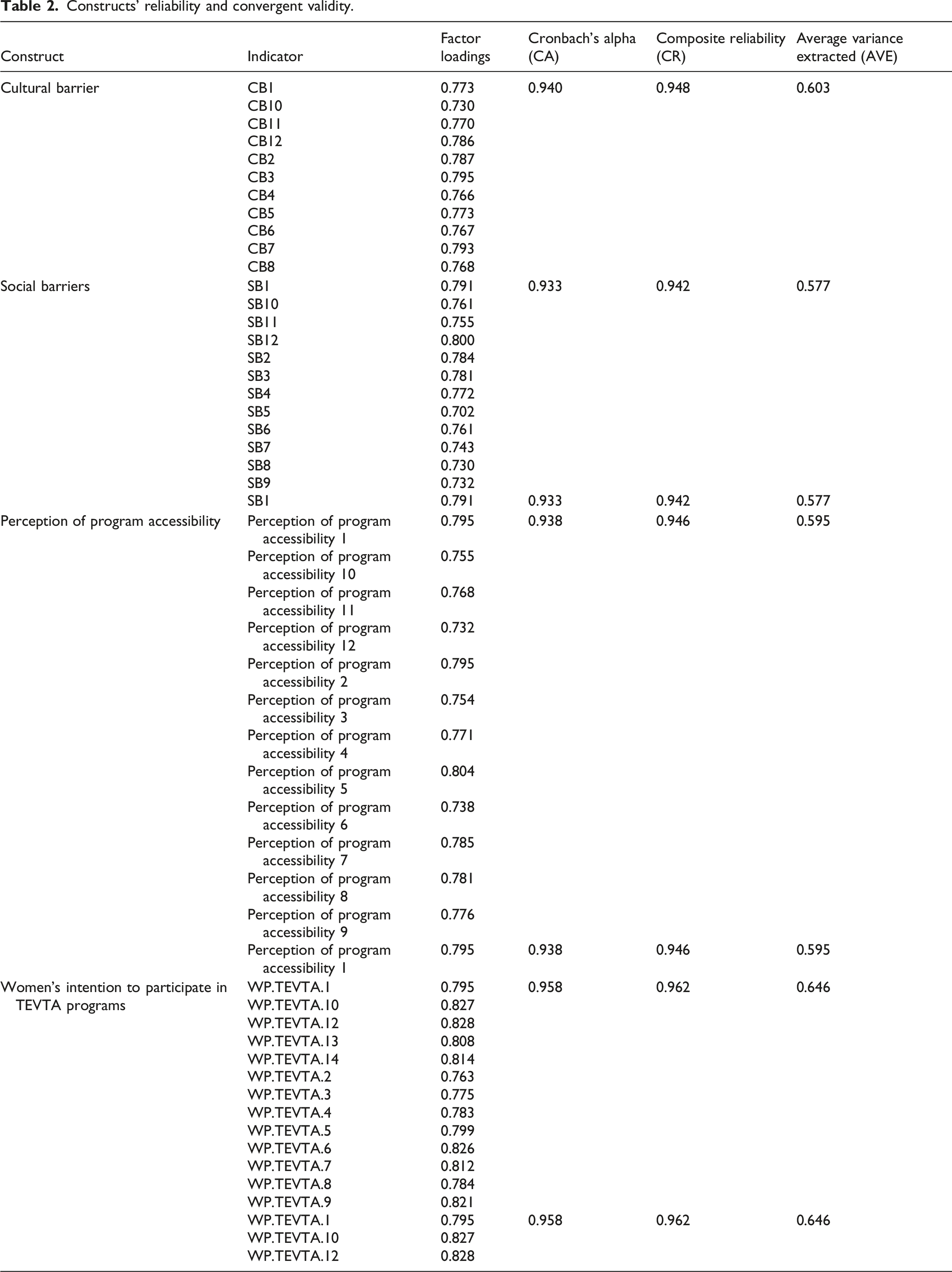
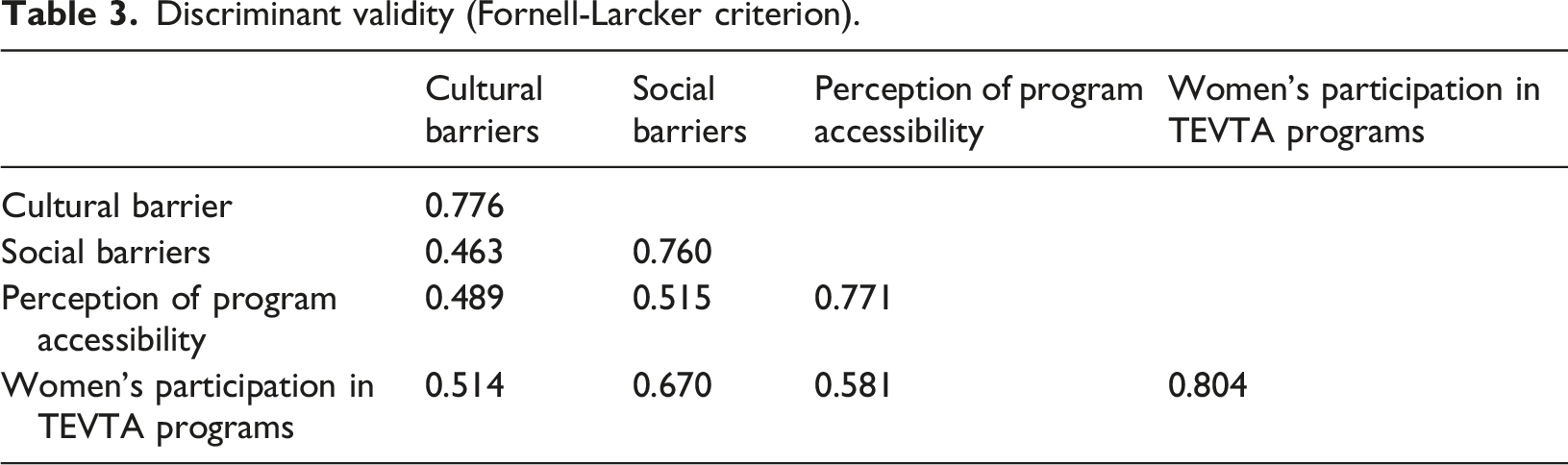
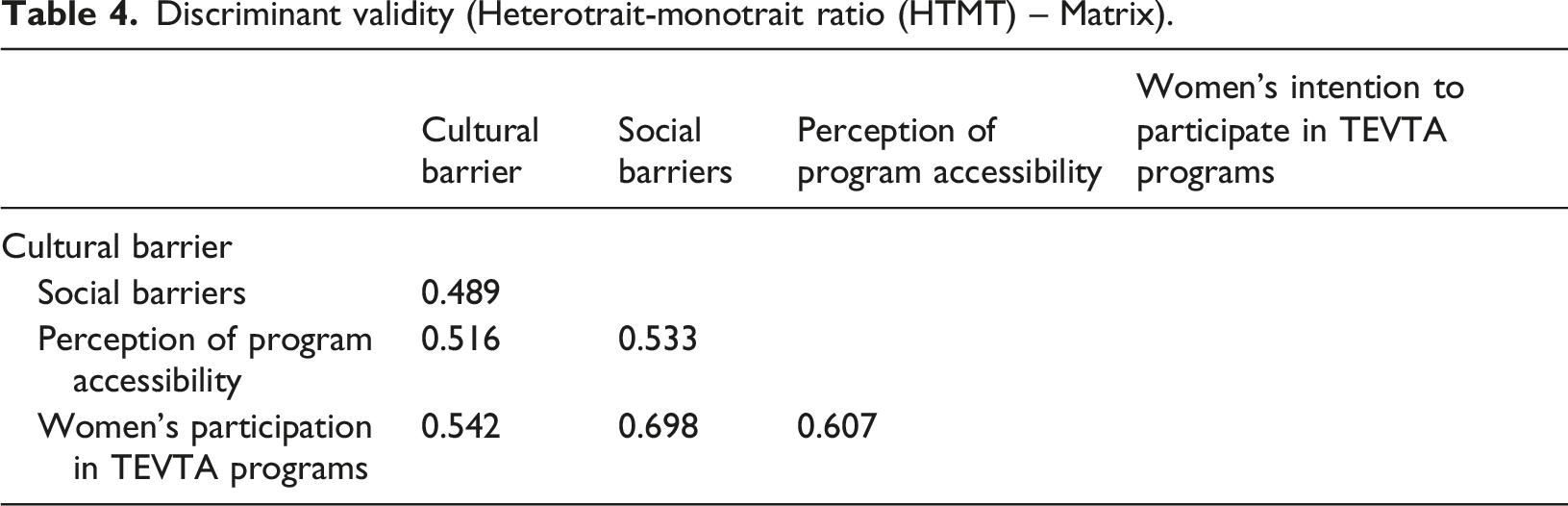
The survey questionnaire for this study was developed based on previous research, specifically the studies by Hidalgo (2023), Najoli (2019), and Rehman et al. (2024). Cultural Barrier: Cultural Barriers were measured using indicators intended to capture cultural norms, gender-role expectations, and beliefs that discourage women’s participation in vocational education and training. This construct was measured using relevant indicators (CB1 to CB12). The Cronbach’s alpha for this construct was 0.940, and the composite reliability was 0.948, indicating high internal consistency. Social Barriers were measured using separate indicators reflecting interpersonal and structural constraints, such as family expectations, community resistance, mobility limitations, and access-related challenges that women face in pursuing TEVTA programs. This construct was measured using indicators (SB1 to SB12). The Cronbach’s alpha for this construct was 0.933, and the composite reliability was 0.942, also indicating strong reliability. Perception of Program Accessibility comprised 12 indicators focusing on participants’ views regarding the accessibility, suitability, and relevance of TEVTA as an alternative educational pathway. The Cronbach’s alpha for this construct was 0.938, and the composite reliability was 0.946, indicating robust reliability. Women’s intention to participate in TEVTA programs was measured using 18 indicators capturing aspects such as willingness, motivation, interest, and engagement toward future enrollment in TEVTA programs. Because the respondents were not currently enrolled in TEVTA programs, this construct reflects participation intention rather than actual participation behavior. This construct achieved a Cronbach’s alpha of 0.958 and a composite reliability of 0.962, demonstrating excellent internal consistency. Cultural barriers were operationalized through items reflecting norms, beliefs, and gender-role expectations, whereas social barriers were operationalized through items capturing family resistance, community pressure, mobility limitations, and related structural constraints. Although related, the two constructs were measured separately to capture distinct dimensions of women’s barriers to participation. Each item in the questionnaire was rated on a 5-point Likert scale ranging from 1 (Strongly Disagree) to 5 (Strongly Agree), allowing participants to express the degree of their agreement or disagreement with each statement. Although cultural and social barriers are related in practice, they were operationalized as separate latent constructs in this study to capture different dimensions of women’s barriers to participation. Furthermore, the distinctiveness of these constructs was examined empirically through discriminant validity testing using the Fornell-Larcker criterion and the HTMT ratio. However, because the instrument was survey-based and standardized, it did not aim to generate detailed qualitative accounts regarding which specific barriers were perceived as the most salient in participants’ everyday lives.
Common method variance (CMV) assessment
Given that this study utilizes SmartPLS software for mediation analysis, common method bias (CMB) was carefully considered due to the self-reported nature of the survey data. CMB can distort results by inflating relationships between variables when data is collected from a single source, potentially affecting the validity of the findings (Podsakoff et al., 2003). Although partial least squares structural equation modeling (PLS-SEM) with SmartPLS is generally robust against CMB concerns (Hair et al., 2019), assessing its potential impact on the results is still important. Harman’s single-factor test was employed to assess CMB, which helps identify whether one factor accounts for the majority of the variance in the data. The results indicated that no single factor dominated the variance, suggesting that CMB is not a significant issue in this study (Podsakoff et al., 2003). Additionally, the variance inflation factor (VIF) values were calculated to check for multicollinearity in the model. Hair et al. (2019) state that a VIF value exceeding 3.3 indicates problematic collinearity. In our study, all VIF values were well below this threshold, indicating that multicollinearity is not a concern. Thus, the mediation analysis conducted with SmartPLS is unlikely to be significantly affected by common method bias, ensuring the validity and reliability of the findings. This supports the robustness of the study’s conclusions regarding the mediating role of program accessibility perceptions in the relationship between social/cultural barriers and Women’s intention to participate in TEVTA programs.
Results
Model measurement (outer)
Constructs’ reliability and convergent validity.
Discriminant validity (Fornell-Larcker criterion).
Discriminant validity (Heterotrait-monotrait ratio (HTMT) – Matrix).
Evaluation of structural model
Inner or structural model evaluation.
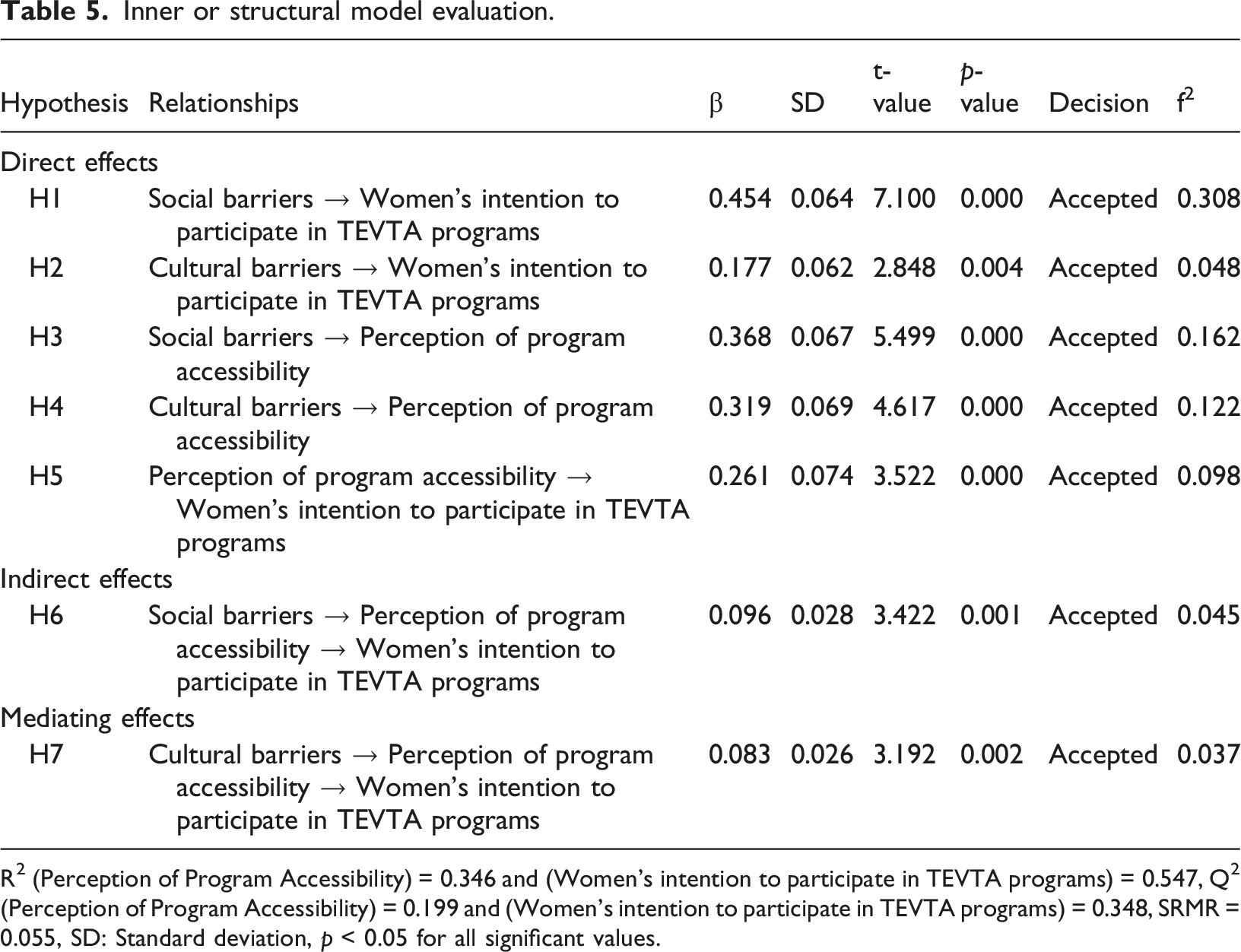
R2 (Perception of Program Accessibility) = 0.346 and (Women’s intention to participate in TEVTA programs) = 0.547, Q2 (Perception of Program Accessibility) = 0.199 and (Women’s intention to participate in TEVTA programs) = 0.348, SRMR = 0.055, SD: Standard deviation, p < 0.05 for all significant values.
The Q2 for Perception of Program Accessibility is 0.199, and the Q2 for Women’s intention to participate in TEVTA programs is 0.348. Since both values are more significant than zero, the model shows adequate predictive relevance for these constructs (see Table 5). This indicates that the model can predict the dependent variables, supporting its predictive validity accurately (Hair et al., 2019). The standardized root mean square residual (SRMR) was calculated to assess model fit. The SRMR value is 0.055, below the threshold of 0.08, indicating a good fit between the model and the data. Other fit indices, such as the Chi-square value of 1625.871 and NFI of 0.768, further confirm the model’s overall fit. The structural model assessment demonstrates that the proposed model satisfies all reliability, validity, and model fit criteria. The significant path coefficients, moderate R2 values, positive Q2 values, and good SRMR support the model’s explanatory and predictive capabilities in examining the impact of cultural and social barriers on women’s participation in TEVTA programs.
Mediation analysis
To investigate the mediating impact of Perception of Program Accessibility on the relationship between cultural and social barriers and the dependent variable Women’s Participation in TEVTA Programs, the bootstrapping technique was applied to estimate direct, indirect, and total effects. As outlined in Table 5, Perception of Program Accessibility shows a positive and statistically significant mediating effect on the relationships involving cultural barriers and social barriers with Women’s Participation in TEVTA Programs.
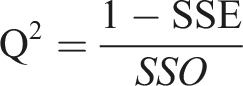
Following the recommendations by Hair et al. (98), the variance accounted for (VAF) was calculated to determine the strength of the mediation using the following formula: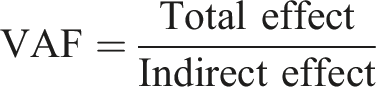
For example, in the mediation effect of Perception of Program Accessibility on the relationship between Cultural Barriers and Women’s Participation in TEVTA Programs, the total effect (sum of direct and indirect effects) is calculated as follows:

Then, the VAF for the mediation effect of Perception of Program Accessibility on the relationship between Cultural Barriers and Women’s Participation in TEVTA Programs is:

According to Hair et al. (2021), VAF values below 20% indicate no mediation, between 20% and 80% indicate partial mediation, and above 80% suggest complete mediation. This VAF calculation shows the partial mediation relationship between cultural barriers and women’s participation in TEVTA programs, which the Perception of Program Accessibility mediates.
Discussion
The present study investigated the role of social and cultural barriers in influencing women’s participation in TEVTA programs, with the mediating effect of perceived program accessibility. The study was grounded in four theoretical frameworks: Social Cognitive Theory (SCT), Feminist Theory, Theory of Planned Behavior (TPB), and Human Capital Theory, which informed the development of seven hypotheses. The results indicate that Women’s intention to participate in TEVTA programs is significantly affected by both social barriers and cultural barriers. However, the effect of social barriers (β = 0.454, t = 7.100, p = 0.000) is substantially stronger than that of cultural barriers (β = 0.177, t = 2.848, p = 0.004). This suggests that although traditional norms and cultural values shape the broader social environment in which women make educational decisions, more immediate social constraints may play a more decisive role in limiting their intention to participate. An important finding of this study is that social barriers exerted a stronger effect on Women’s intention to participate than cultural barriers. One possible explanation is that, although cultural barriers create the broader normative environment in which women’s educational choices are judged, social barriers are experienced more directly in everyday life through family resistance, community disapproval, mobility restrictions, transport difficulties, and limited social support. These direct interpersonal and structural constraints may have a stronger influence because they affect whether participation is practically possible, even when women hold favorable attitudes toward vocational education. In this way, cultural norms may shape the background climate of acceptability, whereas social barriers operate as the more immediate mechanisms through which those norms are enacted and enforced.
This finding is consistent with Social Cognitive Theory, which emphasizes that behavior is shaped by the interaction between personal beliefs and immediate environmental influences. In the present context, social barriers may have a stronger impact because they represent the direct environmental constraints that women face in making educational decisions. The finding also aligns with the Theory of Planned Behavior, particularly the role of subjective norms and perceived behavioral control. While cultural barriers reflect broader value systems, social barriers more directly affect women’s sense of whether participation is socially supported and practically feasible. Their stronger influence on intention is therefore theoretically meaningful and highlights the importance of the immediate social environment in shaping women’s access to vocational education.
This implies that traditional norms and cultural values restrict women’s access to such programs. This aligns with previous research (Najoli, 2019; Shaheen et al., 2023), which found that social and cultural factors like gender roles and limited role models deter women from enrolling in vocational training programs. Shaheen et al. (2023) further emphasize the importance of perceived accessibility and social support in overcoming these barriers, supporting the role of program accessibility as a mediator.
In rural areas of Pakistan, women face significant cultural barriers that hinder their ability to participate in educational and vocational programs like TEVTA. A key factor is the societal norm that restricts women from traveling alone, as they are traditionally expected to remain within the household, and male family members largely determine their mobility. In many cases, parents, especially in farming communities, are preoccupied with fieldwork, leaving women without a means to attend schools, colleges, or training programs. In Islamic culture, women are generally not allowed to travel alone after puberty without a male guardian (mehram), such as a father, brother, husband, or son (Baykal, 2023). This cultural restriction limits women’s access to education and training, as they cannot independently travel to these programs. As a result, cultural constraints, combined with familial expectations, create a substantial barrier to women’s participation in TEVTA programs, further perpetuating gender inequality in education and employment.
These findings align with SCT, which provides a framework for understanding how social and cultural barriers (environmental factors) influence women’s self-efficacy and perceived ability to participate in TEVTA programs. SCT highlights that societal norms and perceived support, or lack thereof, significantly influence women’s decision-making regarding vocational training. The perception of program accessibility was also significantly influenced by Social Barriers (β = 0.368, t = 5.499, p = 0.000) and Cultural Barriers (β = 0.319, t = 4.617, p = 0.000), supporting H3 and H4, respectively. This finding underscores the critical role that societal and cultural factors play in shaping women’s perceptions of accessibility to vocational programs. Furthermore, perceived program accessibility positively influenced women’s participation (β = 0.261, t = 3.522, p = 0.000), validating H5. This suggests that improving women’s perception of accessibility could encourage greater enrollment in TEVTA programs. This aspect of the findings is consistent with research by Barrios and Villarroya (2021) and Sougou et al. (2022), who identified family expectations and gender norms as barriers to women’s participation in professional fields, with a notable effect on program accessibility perceptions. These studies highlight that accessibility perceptions, shaped by societal and cultural pressures, are pivotal for enabling women’s participation in vocational programs.
The mediation analysis demonstrated that Perception of Program Accessibility partially mediates the relationship between both Social and Cultural Barriers and Women’s intention to participate in TEVTA programs (indirect effects: β = 0.096, t = 3.422, p = 0.001 for H6; β = 0.083, t = 3.192, p = 0.002 for H7). This partial mediation implies that, although social and cultural barriers significantly affect Women’s intention to participate, enhancing perceptions of accessibility can mitigate these impacts to some extent. The mediating role of perceived accessibility aligns with TPB, which posits that attitudes, subjective norms, and perceived behavioral control shape behavioral intentions. Even if women value vocational training, social and cultural barriers may prevent them from engaging unless they perceive the programs as accessible. This is also in line with Human Capital Theory, which advocates reducing barriers to facilitate vocational training as an investment in human capital that can yield economic benefits for women (Ghore et al., 2023). The finding of partial mediation is particularly important for interpretation. It suggests that improving women’s perceptions of program accessibility can reduce some of the negative effects of social and cultural barriers, but it cannot eliminate them. In other words, even when TEVTA programs become more accessible through better transport, proximity, safer facilities, female instructors, women-only learning arrangements, or flexible schedules, women may still face direct resistance arising from family disapproval, community attitudes, and rigid gender expectations. More specifically, improving perceived accessibility may mitigate the effects of these barriers by changing how women and their families evaluate the feasibility, safety, and acceptability of participation. When programs are seen as nearby, secure, socially appropriate, and economically worthwhile, women may be more likely to intend to participate despite prevailing constraints. Similarly, clear information about course relevance, employment opportunities, and options for home-based or digital work may help families perceive TEVTA participation as both practical and beneficial. Thus, improved accessibility can weaken part of the negative influence of social and cultural barriers by making vocational education appear more manageable, legitimate, and compatible with local realities. Nevertheless, because the mediation is partial, interventions focused only on access and infrastructure are unlikely to be sufficient unless they are accompanied by broader efforts to address the social environment in which women make educational decisions. SCT, which emphasizes the interplay of personal, behavioral, and environmental factors, underpins the hypotheses concerning social and cultural barriers (H1, H2, H3, H4). According to SCT, societal norms and perceived support influence individuals’ decisions to engage in activities, such as women’s participation in vocational training. Our findings support SCT by showing that social and cultural barriers significantly impact women’s participation and perception of program accessibility. This suggests that women’s decisions are driven by personal attitudes and heavily influenced by external social pressures and cultural expectations. TPB, which focuses on attitudes, subjective norms, and perceived behavioral control, informs hypotheses about perceived accessibility (H5, H6, H7). TPB posits that social and cultural barriers can deter participation even when women have positive attitudes toward vocational training unless the programs are perceived as accessible (Grindstaff, 2022). Our results align with TPB by highlighting that perceived accessibility mediates the relationship between barriers and participation. This mediating role suggests that improving perceptions of accessibility can help overcome the limitations imposed by social and cultural norms, enabling more women to pursue vocational education (Ho et al., 2022). Feminist theory, which critiques societal structures perpetuating gender-based inequities, supports the hypotheses addressing cultural and social barriers (H1, H2).
The theory provides a lens to understand how patriarchal norms restrict women’s access to education and skill development. Our findings validate this perspective, demonstrating that deeply ingrained cultural norms limit women’s vocational participation (Jayachandran, 2020). By identifying these barriers, the study emphasizes the need for gender-sensitive policies within TEVTA programs, addressing logistical challenges and cultural biases that discourage female enrollment. Human Capital Theory, which advocates for investments in education and skill development to enhance productivity and economic agency, is foundational to the hypothesis on program accessibility (H5) and its influence on participation. This theory suggests that vocational training is an investment in human capital that can benefit women economically (Aboobaker and Renjini, 2020; Ghore et al., 2023; Woodhall, 1973). Our findings align with this theory by showing that when women perceive TEVTA programs as accessible, they are more likely to participate. This highlights the importance of reducing social and cultural barriers to enable women to invest in their human capital, thereby enhancing their economic independence and contributions to the workforce.
Implications and broader context
This study not only corroborates previous findings regarding the role of cultural norms and social constraints in limiting women’s participation in vocational education (Najoli, 2019; Shaheen et al., 2023) but also extends the literature by empirically demonstrating that perceived program accessibility serves as a partial mediator in this relationship. The stronger influence of social barriers suggests that interventions targeting immediate interpersonal and structural constraints may yield more immediate improvements in Women’s intention to participate than strategies aimed only at longer-term cultural change. This finding highlights the nuanced role of accessibility perceptions in shaping women’s participation decisions and supports the Theory of Planned Behavior, particularly its emphasis on perceived behavioral control. In comparison with studies such as Sougou et al. (2022) and Barrios and Villarroya (2021), which emphasized family expectations and gender norms as barriers, the present study contributes by quantifying the mediating role of accessibility. This offers empirical support for the argument that program accessibility is an important enabling factor for women’s participation in vocational training. At the same time, the finding of partial rather than full mediation is especially significant (Shaheen et al., 2023). It suggests that improving women’s perceptions of accessibility can reduce some of the negative effects of social and cultural barriers, but cannot eliminate them. Women’s participation is therefore shaped not only by whether TEVTA programs are physically, economically, or administratively accessible, but also by whether participation is socially approved and culturally acceptable. This finding has broader implications for the understanding of women’s vocational participation in rural Pakistan and similar contexts. It indicates that accessibility is a necessary but insufficient condition for increasing participation. Even where infrastructure, transportation, safety, and proximity are improved, direct barriers such as family resistance, community disapproval, and rigid gender expectations may continue to discourage women from enrolling. Furthermore, while Rehman et al. (2024) highlighted that the general perception and reputation of TEVTA programs hinder participation, this study adds that program structure, accessibility, and modernization can positively shape those perceptions. By proposing curricula that include remote and digital skill sets, the study moves beyond identifying barriers and offers practical directions for aligning TEVTA’s offerings with women’s aspirations in Pakistan’s evolving socio-economic landscape.
Policy recommendations
The findings underscore the importance of tailored and multi-level policies within TEVTA programs to address the barriers limiting Women’s intention to participate. The statistical results provide a clear basis for prioritizing these interventions. Since social barriers showed the strongest direct effect on Women’s intention to participate in TEVTA programs (β = 0.454), policy responses should give particular attention to the immediate interpersonal and community-level constraints that women face. This suggests that interventions should not focus only on institutional provision, but also on the social environment surrounding women’s educational decisions. In practical terms, TEVTA and policymakers should prioritize family and community awareness initiatives, including outreach sessions with parents, community elders, religious scholars, and local influencers, to reduce social resistance and build acceptance of women’s vocational education.
At the same time, the finding that perception of program accessibility significantly influenced intention to participate (β = 0.261) and partially mediated the effects of both social and cultural barriers indicates that policy should also improve how accessible TEVTA programs appear to women and their families. This means that policies should aim not only to improve actual infrastructure but also to strengthen public confidence in TEVTA’s accessibility and suitability. Measures such as safe transport arrangements, proximity of institutes, flexible scheduling, women-only training sessions where needed, female-friendly support services, and clearer communication about admission procedures and program benefits could help make participation appear more feasible, secure, and socially acceptable.
The significant effect of cultural barriers on Women’s intention to participate (β = 0.177) also suggests the need for longer-term interventions aimed at shifting restrictive gender norms. In this regard, awareness campaigns should not only encourage enrollment but also challenge the belief that vocational education is inappropriate for women. Such efforts are particularly important in rural settings where women’s educational decisions are often shaped by wider expectations regarding mobility, domestic roles, and social reputation.
Another important recommendation is the modernization of TEVTA’s curriculum to better reflect the demands of the contemporary labor market, particularly through digital, remote, and home-based skill pathways. Incorporating areas such as e-commerce, graphic design, digital marketing, and online entrepreneurship could increase the attractiveness and relevance of TEVTA programs for women, especially in rural areas where mobility constraints remain significant. As Bano et al. (2022) noted, these fields cater to women’s increasing interest in professions that allow flexibility, which is particularly important for women in rural areas facing mobility and socio-cultural constraints. In line with Human Capital Theory, these reforms could strengthen women’s economic independence and workforce participation by making vocational training more relevant, accessible, and socially feasible. Furthermore, improving infrastructure to address accessibility barriers, such as providing transportation options and building partnerships with local communities, can further support women’s increased participation in vocational training. These improvements are essential for reducing logistical barriers that disproportionately affect women in rural areas and for ensuring that TEVTA programs are genuinely accessible and effective (Yeap et al., 2021).
Practical implication
To strengthen the social acceptance of women’s participation in vocational training, TEVTA can implement practical outreach strategies that directly engage families and communities. For example, awareness sessions can be organized with parents, community leaders, religious scholars, and local influencers to build trust and reduce cultural resistance to women’s vocational education. In addition, showcasing success stories of women who have benefited from TEVTA programs can provide visible role models and encourage broader acceptance. This approach aligns with Social Cognitive Theory, as it uses positive reinforcement and role modeling to influence attitudes and behavior. At the institutional level, TEVTA can also pilot integrated support mechanisms such as women-friendly help desks, local transport facilitation, flexible delivery modes, and community-based satellite training centers in rural areas. These practical measures can improve perceived accessibility while also demonstrating sensitivity to the social realities that shape women’s educational decisions. In this way, TEVTA can address not only logistical barriers but also the wider trust and approval structures that influence participation.
Limitations and future directions
The present study focused on the social and cultural barriers affecting Women’s intention to participate in TEVTA programs. While this provides valuable insights, several limitations should be acknowledged. First, the study did not examine other potentially influential factors, such as individual beliefs, personal interests, or family economic status, which may also shape women’s decisions regarding participation in vocational training. Future research could incorporate these variables to provide a more comprehensive understanding of the factors influencing women’s engagement in TEVTA programs. Another limitation is that the study did not include students who were already enrolled in TEVTA programs. As a result, the findings mainly reflect the perceptions and experiences of women who faced barriers at the stage of access and intended participation, rather than those who successfully entered and continued in TEVTA. Including enrolled students in future research would allow comparison between pre-enrollment barriers and actual post-enrollment experiences, thereby providing a more complete understanding of women’s participation in vocational education.
Second, this study employed purposive sampling, which was appropriate for identifying participants with direct experience of the barriers under investigation. However, this approach may limit the external validity and generalizability of the findings. Since the sample was drawn from six TEVTA institutes in rural South Punjab, the results may not fully represent women in other provinces, urban settings, or different vocational training contexts. Future studies should employ probability-based sampling methods, such as random or cluster sampling, to enhance the generalizability of findings across broader populations and institutional settings.
Third, the study adopted an exclusively quantitative design. Although SEM was effective in examining the relationships among social barriers, cultural barriers, perceived program accessibility, and women’s participation, it does not provide detailed qualitative insight into how these barriers are experienced in everyday life or which specific barriers are perceived as most salient by participants. For example, while the survey captured dimensions such as family resistance, mobility constraints, and transportation-related difficulties, it could not fully explore the contextual meaning, intensity, or lived experiences associated with these barriers. Future research may therefore benefit from a mixed-methods design that combines SEM with qualitative approaches, such as interviews or focus groups, to provide richer and more context-sensitive understanding of women’s barriers to participation in TEVTA programs.
In addition, the data were collected from women who had expressed interest in enrolling in TEVTA institutes but were unable to join. Future studies could also include girls and boys at the high school level, as well as students already enrolled in TEVTA programs, to examine broader perceptions of vocational education before and after enrollment. Such an approach could help identify early influences on attitudes toward vocational training, reveal possible gender-based differences in perception, and highlight misconceptions that may discourage participation. Comparative studies involving both male and female students could further enhance understanding of how social and cultural expectations shape educational choices differently across gender. Another limitation of this study is its geographical scope. The data were collected only from six TEVTA institutes in rural South Punjab, and therefore, the findings primarily reflect the socio-cultural realities of that region. Given that Pakistan is a multicultural and multi-ethnic society with substantial differences across provinces such as Punjab, Sindh, Khyber Pakhtunkhwa, and Balochistan, the results should not be generalized to the entire country without caution. Cultural norms, mobility restrictions, family expectations, and access to educational opportunities may vary significantly across regions. Future research should include participants from multiple provinces and diverse rural and urban settings to better capture Pakistan’s cultural diversity and improve the external validity of the findings. By addressing these areas, future research could contribute to a more comprehensive understanding of vocational education participation and provide actionable insights for designing more inclusive and appealing TEVTA programs.
Conclusion
This study highlights that social and cultural barrier, mediated by perceptions of accessibility, significantly impact women’s participation in TEVTA programs. The findings emphasize the importance of targeted interventions to improve accessibility perceptions, encourage cultural shifts, and modernize vocational training to meet women’s unique needs within Pakistan’s socio-cultural framework. To advance women’s economic empowerment, future policies should prioritize creating inclusive environments and adapting vocational training content to align with current job market demands. Women are the backbone of families and play an essential role in any country’s social and economic fabric. In Pakistan, women comprise a larger percentage of the population than men, with many residing in rural areas where educational and employment opportunities are limited. As a result, many women lack the skills and qualifications that would allow them to earn an income and achieve financial independence. Most rural women are uneducated, lack vocational skills, and depend on family members for their basic needs.
Given Pakistan’s economic challenges, empowering women with updated, relevant skills is beneficial for individuals and crucial for supporting household expenses and boosting national productivity. However, vocational training in Pakistan has stagnated, with TEVTA programs needing significant improvements in curriculum, teacher training, and infrastructure. There is also an urgent need to establish partnerships with countries that have successfully modernized their vocational training sectors, such as China and the USA. By collaborating internationally, Pakistan can learn from best practices and incorporate global advancements into TEVTA to create programs that truly equip women with the skills needed to thrive in today’s economy. Strengthening TEVTA programs to meet these needs can pave the way for a more inclusive, skilled, and economically empowered female workforce, ultimately contributing to Pakistan’s development and stability.
Supplemental material
Supplemental Material - Impact of social and cultural barriers on women’s participation in TEVTA programs: The mediating role of perception of program accessibility
Supplemental Material for Impact of social and cultural barriers on women’s participation in TEVTA programs: The mediating role of perception of program accessibility by Amir Mahmood, Xiao Huang, Nadia Rehman, Swera Latif in Equity in Education & Society
Footnotes
Acknowledgments
We want to express our gratitude to everyone who contributed to this manuscript. Their dedication, expertise, and unwavering support have been instrumental in making this research successful.

Ethical considerations
This study received ethics approval (Approval No: ZSRT20274) from the
Author contributions
Funding
The authors disclosed receipt of the following financial support for the research, authorship, and/or publication of this article: The National Social Science Fund of China (BHA210121) and the National Office for Education Science Planning supported this work.
Declaration of conflicting interests
The authors declared no potential conflicts of interest concerning this article’s research, authorship, and publication.
Data Availability Statement
The data supporting this study’s findings are available at https://doi.org/10.7910/DVN/BBXSQG and can be requested from the corresponding author. (Rehman, 2025)
Supplemental material
Supplemental material for this article is available online.
References
Supplementary Material
Please find the following supplemental material available below.
For Open Access articles published under a Creative Commons License, all supplemental material carries the same license as the article it is associated with.
For non-Open Access articles published, all supplemental material carries a non-exclusive license, and permission requests for re-use of supplemental material or any part of supplemental material shall be sent directly to the copyright owner as specified in the copyright notice associated with the article.
