







Abstract
For nearly two decades, immigrant teachers’ professional integration has been a significant field of inquiry within educational research. While existing scholarships extensively document the barriers to accessing the teaching profession, there is a paucity of research regarding how the lived experiences during induction stage influence long-term career development and leadership aspirations. This interpretive qualitative research fills this gap by examining the nexus between initial induction experiences of eight African-born educators, and subsequent aspirations for leadership roles. Mobilizing Huberman’s (1989) life-cycle framework, the study reveals that successful professional integration facilitated by comprehensive induction program, mentoring, and rapid tenure serves as a fundamental precursor to leadership pursuit. Furthermore, the data elucidates the role of informal sponsorship (shoulder tapping), social capital and adaptability as critical factors for career mobility. Finally, by synthesizing Path-Goal and transformational leadership theories, the authors advocate for a paradigm shift in education management. By shifting principals’ roles from administrative oversight to trajectory facilitation, the study suggests an approach that dismantles institutional barriers while fostering inclusive educational governance where representation is the corollary of shared leadership and racial equity.
Keywords
Introduction
Immigration is a cornerstone of Canada’s demographic sustainability, economic resilience, and ethno-linguistic vitality. In this context, Alberta has emerged as the third destination for French-speaking immigrants (Canadian Institute for Research on Linguistic Minorities, 2025). The province’s Francophone population experienced a transformative 50% increase between 1991 and 2016. Currently, approximately 261, 435 residents—representing 6.2% of the provincial population—maintain conversational proficiency in French. Significantly, 29% of this Francophone community are immigrants, with a substantial proportion originating from African nations, such as Democratic Republic of Congo, Cameroon, and Côte d’Ivoire (Statistics Canada, 2023). While Africa represents the second-leading source of recent migration to Canada (Statistics Canada, 2022), these newcomers encounter the highest labor market barriers and the lowest employment rates among all immigrant cohorts (Statistics Canada, 2018).
Consistent with broader labor market trends, the education sector exhibits a persistent underrepresentation of African diaspora within both teaching and leadership roles (Abawi and Eizadirad, 2020; Essiomle et al., 2024). Paradoxically, enrollment data indicates a significant increase of racialized immigrants within teacher education programs. At the University of Alberta’s Campus Saint-Jean, for instance, they represent over one-third of the student population in Education programs (Jacquet, 2023).
Despite this burgeoning pipeline, the transition into the workforce remains fraught with systemic and interpersonal hurdles. Extant literature identifies a multifaceted array of barriers, including limited access to permanent employment, pedagogical misalignment, professional isolation, accent-based discrimination, racism and skepticism toward their pedagogical expertise (Bascia,1996; Carr & Klassen,1997; Deters, 2006; Jabouin and Duchesne, 2018; Jacquet, 2023; Morrissette and Demazière, 2018; Morrissette et al., 2014; Mujawamariya, 2002; Mulatris and Skogen, 2012; Myles et al., 2006; Niyubahwe et al., 2013; Schmidt et al., 2010). Prior studies have also highlighted how these teachers negotiate their place in their school culture through acculturation strategies (Duchesne, 2017, 2018; Duchesne et al., 2019; Prophète, 2020). Despite these valuable insights, there remains a notable dearth of research examining immigrant teachers’ career trajectories through a temporal lens. This study addresses this scholarly gap by investigating the following central question: To what extent do the lived experiences encountered during the professional integration shape the career trajectories of immigrant teachers?
The concept of career trajectory
The conceptualization of career trajectories, while relatively recent in the field of education (Mukamurera, 1998), is historically rooted in mid-twentieth-century sociological and organizational research (Form and Miller, 1949; Spilerman, 1977). Scholarly discourse underscores the polysemic nature of the “career trajectory” construct, bifurcating its definition between a linear sequence of organizational roles (Mantai and Marrone, 2023; Nicole-Drancourt, 1994) and a developmental progression through distinct life stages (Super, 1980). The present study adopts the latter perspective. It employs Huberman’s (1989) sequential phases of the teaching career to elucidate the temporal and experiential transitions embedded within educators’ professional journeys.
Huberman’s (1989) framework delineates the teaching career into four distinct phases. The entry phase is characterized by the dual challenge of navigating labor market integration and the “reality shock.” This transition leads to stabilization, a period marked by the consolidation of pedagogical practices and enhancement of professional identity. Subsequently, the experimentation phase heightened self-efficacy often serves as a catalyst for career re-evaluation and the emergence of leadership aspirations. The final phase, namely, disengagement, marks a progressive withdrawal from the teaching workforce. It is characterized by a gradual withdrawal from the profession as retirement or career shifts.
Additionally, Huberman identifies four distinct career pathways that emerge from the interaction between these stages and individual contexts: (1) Harmonious Career: A linear and seamless trajectory exemplified by successful early-career integration and a steady progression toward leadership roles. (2) Acquired Harmony: A non-linear path where initial adversity—such as precarious employment, professional isolation, or pedagogical instability—is eventually overcome through resilience, allowing the educator to reach the stabilization phase. (3) Questioning Career: Marked by a smooth entry into the profession, this path is later disrupted by an existential reassessment of career goals. In the absence of upward mobility or leadership opportunities, the teacher often experiences monotony and premature disengagement. (4) Difficult Career: The most precarious trajectory, combining a fraught entry period with subsequent dissatisfaction and disengagement.
In sum, Huberman’s typology provides a robust analytical framework for investigating how the lived experiences of immigrant teachers during their early years dictate their long-term professional orientation and their ultimate decision to pursue or not pursue leadership roles.
Methodology
Adopting a social constructivist framework, this qualitative study investigates how professional integration delineates the career paths of teachers. This epistemological stance recognizes that social reality and knowledge are inherently subjective, emerging from the interpretative lenses through which individuals view their experiences (Crotty, 1998; Lincoln et al., 2018; Lock and Strong, 2010). By prioritizing the sociocultural context of these narratives, the research utilizes an interpretive methodology to uncover the nuanced ways in which teachers reconstruct their professional identities and aspirations over time.
Participants
Sociodemographic characteristics of participants.
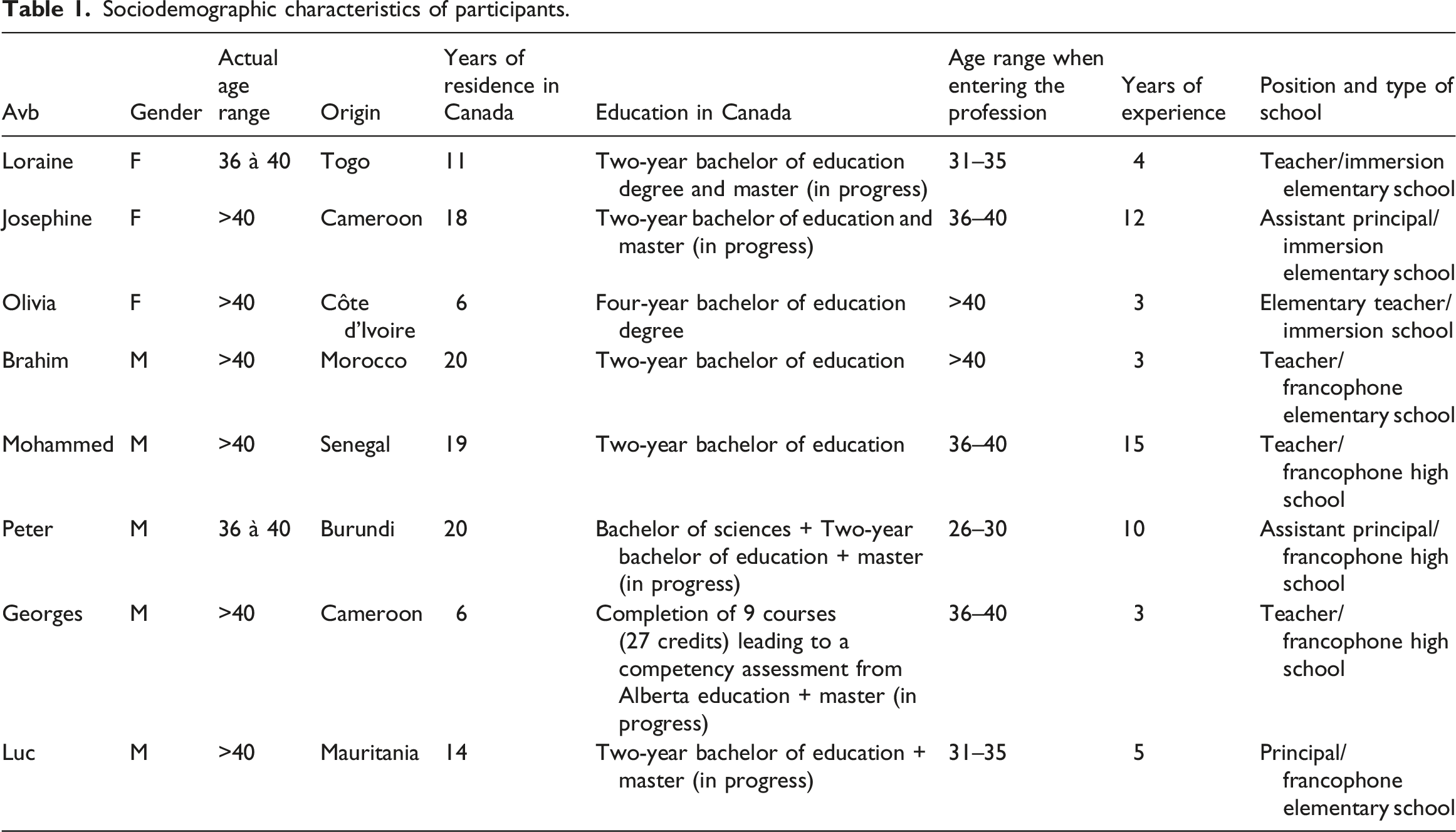
The participants’ educational backgrounds varied: Olivia completed a traditional four-year Bachelor of Education, while Georges, an internationally trained educator, obtained his provincial certification through a bridging process of course validation. The remaining educators entered the profession via after-degree Bachelor of Education program. This accelerated certification model is designed for candidates who already possess an undergraduate degree in a non-education discipline and typically allowing them for completion the program within a two-year timeframe.
Data collection
Data were collected via semi-structured interviews conducted through Zoom videoconferencing platform between September 2024 and April 2025. The interview protocol was organized into three distinct sections. The first focused on participants’ sociodemographic profiles. The second sought to elicit their lived experiences during their entry into the profession and stabilization phases, specifically targeting labor market access, pedagogical adaptation, school culture dynamics, and the efficacy of support systems in consolidating their teaching practices. Finally, the third examined participants’ aspirations, qualities and perceived core professional behaviors leading to leadership positions.
Data analysis
Data analysis followed the systematic framework outlined by Creswell and Creswell (2018). Interview recordings were initially processed using Transkriptor software, followed by rigorous manual verification to ensure the linguistic and contextual accuracy of the transcripts. The finalized data were imported into NVivo 15 to facilitate data reduction, a process defined by Miles and Huberman (1984) as the systematic selection, prioritization, and abstraction of raw information into manageable analytical units.
The analytical process was operationalized through an inductive coding approach, drawing on the principles of grounded theory (Corbin and Strauss, 2008). During the initial cycle, text segments were partitioned into discrete units and assigned codes—concise labels capturing the salient characteristics of the data (Saldaña, 2016). Subsequently, through axial coding, the researchers systematically eliminated redundancies and consolidated related codes into coherent categories.
The final phase involved identifying overarching themes that emerged from these categories. This iterative process required a meticulous re-examination of the data through systematic questioning to uncover the fundamental essence of the participants’ experiences. Consistent with an interpretive paradigm, this thematic analysis was conducted in constant dialogue with the research question and the study’s theoretical underpinnings (Braun and Clarke, 2006; Creswell, 2012).
Results
The thematic analysis yielded five interconnected themes: (a) occupational precarity during early years, (b) dual experience of survival and discovery during induction phase, (c) complex adaptation to school culture, (d) induction and mentoring as resources to support professional growth, and (e) transition from classroom to leadership.
Occupational precarity during early years
In contrast to the employment obstacles highlighted in previous Canadian research (Mujawamariya, 2002; Mulatris and Skogen, 2012; Niyubahwe et al., 2013; Provencher, 2024), 75% of the participants navigated the initial hiring process with relative ease. This discrepancy suggests that provincial labor market dynamics or specific institutional contexts in Alberta may mitigate common entry-level barriers to the teaching workforce. […] After my graduation, everything went smoothly. […] I finished my program in April and in June, I received an offer. The school board was eager for me to relocate and start immediately, but I needed more time since my partner was working. Otherwise, it only took two months to find a job. (Luc) […] I had been approved to receive my teaching certificate in May or June. It was at the end of the school year. Once I had completed all the administrative requirements, I started applying for jobs between June and July. […] In August, I received two offers, and I chose the best one. (Georges)
Olivia and Loraine were the two cases that encountered distinct impediments during their entry into the labor market. For Olivia, personal variables regarding geographic location and contract stability acted as self-imposed constraints on her job search. In Loraine’s case, external factors such as the broader hiring freezes associated with the COVID-19 pandemic, coupled with the absence of a formal recommendation from her internship supervisor, significantly hindered her chances of securing a job offer. These findings suggest that even for domestically trained immigrant educators, the path to the career survival stage can be disrupted by a convergence of individual agency and lack of institutional social capital, such as professional endorsements. […] I applied outside the province of Alberta, where I had a strong chance of securing a contract. However, among the two people I had listed as references, one informed me that she could no longer provide a recommendation. This white person was both my advisor during my internship and a professor at the University I attended. To be honest, we had good relations [hum] if you saw us, you would assume she genuinely likes me, but it is all pretenses. As for the second reference, she was the teacher I worked closely with during my internship and truly valued my efforts. She supported my application. However, I did not get the job, because the first person declined to recommend me. (Loraine)
In her narrative, Loraine explicitly attributed the withholding of the recommendation to racial discrimination. “I heard a lot about her afterwards and how she is not really courteous to people of color, so it did not surprise me” (Loraine). To mitigate these structural barriers, Loraine employed a dual-track strategy. This involved prioritizing rural regions and targeting school boards offering French immersion programs. She justified this pivot by critiquing the perceived lack of inclusivity within Francophone schools, which she characterized as less accommodating toward francophone educators of immigrant backgrounds—a group often marginalized or categorized by natives as “other Francophones.” […] I chose to work in immersion schools because I had no interest in being part of Francophone school culture. I was already aware of the situation there. Even before moving to Edmonton, I noticed that the Francophone community was not very inclusive towards people of color. They often hire us for less significant roles. I saw friends who had graduated before me, still being used as substitutes. Hiring them in permanent full-time positions? Not at all. So, when I finished my training, I decided not to waste my time looking there. (Loraine)
This perspective was corroborated by four participants who described similarly negative experiences regarding the hiring practices within the Francophone school boards. […] We had meetings with a Francophone school board when we discovered that people of colour applying for jobs were often overlooked, while white teachers were being brought in from Quebec instead. This occurs even though we have graduated here, are familiar with the curriculum, and possess all the necessary qualifications. It is deeply disappointing, but there is nothing we can do […] I couldn't find a permanent or probationary position in Edmonton, where I was living. It was always substitution, that’s why I left for St. Paul and then Grande Prairie. (Brahim)
In Mohammed’s view, Brahim’s excerpt does not necessarily signify pervasive racial bias in recruitment. Rather, the difficulty may be attributed to the high density of applicants in urban centers, which typically attracts a significant cohort of experienced educators. This heightened competition within metropolitan hubs like Edmonton or Calgary may disproportionately impact early-career immigrant teachers, as their candidacy is evaluated against a surplus of locally established applicants with extensive seniority. […] People tend to say, yes, teachers graduate from Campus Saint-Jean, so why they are not hired in francophone schools? That is a fair point. But it is like a school located next to a company. There is no reason for the company to hire its graduates. In urban areas, applications come from everywhere and people only recruit the best. It is very difficult to find a job because, in these cities, employers want people with experience. (Mohammed)
In terms of initial contractual status, most of the interviewees (63%) entered the profession via precarious employment pathways. This included temporary full-time contracts—held by participants such as Georges, Mohammed, and Olivia—or substitute teaching roles, as in the cases of Josephine and Brahim. Only three participants (Loraine, Luc, and Peter) began their career with full-time probationary contracts. Their success was contingent upon contextual or conjunctural factors, such as occupying vacancies created by retiring or departing staff following their internship or targeting schools in rural areas. These respondents noted a trend where African immigrant educators may undervalue job opportunities within small towns, despite these regions offering a higher demand for educators and a significantly less saturated labor market. […] I live in Peace River, which is about five hours from Edmonton and eight hours from Calgary. Even though I completed my program in Edmonton, I chose not to apply to any divisions in Edmonton because I knew the chances of being hired were slim. Instead, I made a deliberate decision to work in a remote area where opportunities were more accessible, allowing me to gain experience and secure the permanent teaching certificate. The reality is that 80% of my peers who stayed in Edmonton are working as substitute teachers and remain in that position, so I have no regrets about my choice. (Loraine)
Regarding professional stabilization, most participants—including Loraine, Luc, Mohammed, Peter, and Josephine—successfully transitioned to permanent status within their respective schools, typically following a two-year probationary period. While Olivia and Georges expressed optimism regarding their imminent attainment of tenure, Brahim’s trajectory serves as a notable exception. His career path has been characterized by continued instability, attributed to the intersection of health-related challenges and the significant pedagogical demands inherent in managing multi-level classrooms. […] My first job was as a substitute teacher with Edmonton Public Schools for just a month before securing a contract with a school board in Grande Prairie. The position was temporary, lasting for half the school year. However, by the end of the year, there were no longer any students enrolled, and I was let go. I continued my job search and eventually found a new opportunity with a school board in St. Paul. They provided me with a one-year probationary contract, which was later renewed. Unfortunately, I faced health issues and had to take a three-month leave. As a result, my evaluation process couldn’t be completed, and I wasn’t eligible for a permanent contract. The school board offered me another probationary year, but I chose to decline. As a high school teacher, I had been assigned to teach across grades 1 through 12. I requested that my workload be reduced so that I could focus solely on teaching secondary classes, as this aligned with my expertise. However, the administration declined my request. Prioritizing my well-being, I decided to resign from the position. Currently, I am looking for a new job. (Brahim)
These experiences led Brahim to reconsider the pursuit of a tenured position, opting instead for a more flexible path, with substitute teaching opportunities becoming a priority.
Dual experience of survival and discovery during professional induction
Empirical data from this study indicates that 75% of interviewees encounter multifaceted challenges during their professional integration. These obstacles are primarily categorized into three domains: pedagogical stressors, including classroom management and instructional complexity; structural constraints, such as unfavorable student-teacher ratios (class sizes) and intensified workload; and organizational competencies, specifically regarding professional self-regulation and time management. […] During my decade of teaching in private schools in Morocco, there was no real obligation to submit an annual plan. You just followed the curriculum as you saw fit and progressed at your own pace. There was not any oversight from a principal asking for annual, monthly, or daily plans. However, here, it is a different story—it involves so much more work. For instance, with the school year approaching, all planning must be presented by the end of September. One of the reasons I chose to resign was the overwhelming workload—I was teaching kindergarten through grade 12 and had to create plans for each grade. It was simply too much. Last year, I would get home from school around 3:30 p.m. and then stay in my office until midnight or sometimes even 1 a.m., preparing lessons. Sometimes I would spend Saturdays or Sundays at school doing grading. It is painful. (Brahim) […] My first year, I was teaching 17 students, and it proved to be far from easy. The class presented significant challenges, with several students coping with ADHD, while others exhibited high levels of anxiety. This often meant I had to dedicate more time to addressing behavioral issues than to actual teaching. It was a complex and demanding situation, as I frequently found myself in meetings with parents. (Olivia)
Furthermore, the findings reveal that a significant proportion of participants possessed a limited understanding of the educational norms and practices of the host country, which often intensifies challenges related to classroom management. They bring a set of values and a professional identity shaped by educational philosophies from African countries where teaching is largely rooted in an authoritarian approach. Such a context may result in a misalignment between their methods—including classroom management, and assessment—and the social constructivist principles prevalent in the Canadian education system, which emphasize more egalitarian teacher-student relationships (Jacquet, 2023; Morrissette et al., 2018). […] My first year of teaching was a good experience, with ups and downs. At the beginning of the school year, my relationship with the students seemed to be on the right track, but things began to unravel over time. By late January, I was reassigned from teaching grade 7 because managing them had become quite overwhelming. As immigrants, we often approach situations based on how we were raised. Even after traveling to western countries for studies, it is hard to completely throw off deeply ingrained habits and ways of thinking [laughs]. Classroom management was a major hurdle. One key lesson I learned from this experience is the importance of recognizing and adapting to the unique sociocultural dynamics of a new environment. Understanding these realities and learning to navigate them is crucial, and it is equally important to foster cultural awareness among colleagues. (Mohammed)
Reflecting on classroom management strategies, Olivia identified emotional self-regulation—manifested through patience and interactional restraint—as a vital competency for immigrant educators. This highlights the intra-psychic dimension of professional integration, where the teacher’s internal emotional state is leveraged to stabilize the external classroom environment. […] Children are not always aware of the implications of their words or actions. Within the context of African culture, some behaviors or expressions may be perceived as shocking; however, these might simply reflect the norms of Canadian culture. For people coming from Africa or other regions with cultural frameworks distinct from this one, it is essential to approach such situations with flexibility and a critical mindset. Admittedly, this is easier said than done. Nevertheless, it is imperative to engage in continuous self-reflection, as our classrooms encompass a diverse group of children, and each brings unique habits. While it is challenging to delve into specifics, we strive to navigate these complexities to the best of our abilities. This is Canada—a place where we endeavor to embrace these differences and rise above our initial discomfort. (Olivia)
Olivia’s narrative underscores the imperative for immigrant educators to undergo a purposeful reconstitution of their professional identities during the integration process. This transition, characterized by Mulatris and Skogen (2012) as a movement from a legacy identity (identité héritée) toward a targeted identity (identité visée), necessitates a critical re-evaluation of the teacher’s foundational pedagogical habitus. Such transformation involves a rigorous interrogation of prior knowledge, values, and beliefs, culminating in the adoption of instructional practices that are socioculturally situated within the host country’s educational ontology.
Complex adaptation to school culture
The interviewees exhibited diverse viewpoints about their inclusion into their school team. Existing literature on this topic highlights a spectrum of experiences, encompassing both favorable and unfavorable aspects, which are predominantly shaped by the organizational culture and the attitudes of staff toward diversity. Most participants of this study reported having harmonious professional relationships with their colleagues, the leadership team, and the school community. […] I did not encounter any difficulties related to organizational socialization. The school community welcomed me warmly, and when I joined the leadership team, it was the parents who endorsed the decision, showing their satisfaction. I have never faced any issues with colleagues, teachers, or students. It has been an incredible journey, and I genuinely feel fulfilled in my role. (Luc)
Loraine, Brahim, and Olivia were the ones who stood out for having a unique experience, characterized by a feeling of isolation within the school team, shaped by the lack of collaboration from their white colleagues, racism and linguistic discrimination. […] The challenges I faced in establishing relationships with my colleagues were even addressed in my performance review. I wonder if my somewhat introverted nature contributed to these difficulties. However, the language barrier undoubtedly played a crucial role. I cannot confidently ascertain whether cultural differences were not a contributing factor, but I observed that my colleagues seldom engaged in conversation with me. There was a stark absence of connection or communication. (Olivia)
These participants also expressed concern regarding the lack of commitment of some principals in fostering a supportive work environment. They emphasized that, in some schools, African immigrant teachers are perceived as inferior and sometimes encounter dismissive or disrespectful behavior. […] During a meeting, the administrative assistant told a Congolese colleague that he was just a stopgap, and this colleague resigned on the spot. The principal said nothing, and neither did the school board. (Brahim) […] My principal criticizes me for having extensive knowledge but not sharing it with my colleagues. […] However, the truth is that they rarely show much interest in what I have to say. Sometimes, their responses include remarks like, you just started, what do you know? Or what can you teach us, coming from Africa? (Loraine)
Nevertheless, participants universally acknowledged that the development of intercultural competencies and the deployment of strategic acculturation were essential for African-born educators. These competencies serve as critical navigational tools, enabling teachers to effectively bridge cultural divides with their White colleagues and negotiate the normative expectations of their local school cultures.
Induction and mentoring as resources to support professional growth
The efficacy of induction programs in providing the institutional scaffolding necessary to bridge the gap between the pre-service training and autonomous practice is well documented (Smith and Ingersoll, 2004). These comprehensive supports facilitate dynamic re-socialization, enabling teachers to navigate the complexities of identity negotiation. In the present study, seven of the eight participants identified induction programs and mentorship as a cornerstone of their professional development, highlighting its pivotal role in fostering their successful integration. Georges emerged as the sole divergent case, expressing explicit dissatisfaction with the institutional induction program. […] As a new teacher, having additional support is essential. In a small school, the lack of staff often means there is no one available to offer coaching. While resources were provided, there was still the need for someone to guide you—someone to explain the system, how it works, and how to effectively use those materials. It was challenging at times, but I managed to overcome it by collaborating with colleagues from other schools and participating in teacher groups. These strategies helped me navigate the challenges and grow in the role. (Georges)
The participants collectively argued that pre-service teacher education program provides an incomplete foundation for mastering the diverse competencies required to meet student needs. While institutional induction programs offer a foundational baseline of support, the findings suggest that immigrant educators must exercise high level of personal agency through continuous self-directed learning. This proactive engagement with lifelong learning is important for navigating the dynamic educational landscape and ensuring sustained career success.
Transition from classroom to leadership
The final theme delineates the transition from classroom to formal leadership roles. Participants reported that biased and opaque hiring practices, alongside patronage and informal gatekeeping, continue to recreate a persistent diversity gap in school leadership. Furthermore, while gender-based disparities appeared negligible during initial induction, the narratives reveal that familial dynamics function as a primary determinant of leadership aspirations among Black educators. Participants identified the intensification of workload, challenges to work-life balance, and asymmetrical domestic obligations as deterrents to pursuing the principalship. These findings suggest that traditional gender-role expectations continue to condition the aspirations of Black women, effectively reinforcing institutional glass ceilings through the intersection of race and gender. […] When I observe the workload of principals, I tell myself I might consider this role only when my children are much older. It is extremely demanding. I see lot of pressure on principals. I am not afraid of these pressures, but I must have the time. Our principals are generally individuals whose children are already grown. Those with young children are typically men whose wives manage the household. As a woman, I am the one who must frequently be there for the children. Consequently, when I see the workload and the after-school hours job, it is discouraging. (Joséphine)
Regarding the construction of leadership pathways, interviewees emphasized that racialized educators must leverage individual agency and proactive career self-management to surmount persistent systemic barriers. The findings suggest that while school boards manifest a rhetorical commitment to diversifying school leadership, access to principalship remains elusive in the absence of rigorous self-preparation. Participants, notably Joséphine, Peter and Luc identified enrollment in internal leadership development programs as a critical prerequisite for aligning professional identity with the school district’s strategic vision and mission. However, they also maintained that formal credentialing alone is insufficient; it must be supplemented by community engagement and acceptance of informal leadership roles in the school.
Furthermore, these three participants were invited to reflect on the journey leading to their current appointments. Their narratives reveal a bifurcation in the pathways toward leadership attainment. For Joséphine and Luc, advancement was facilitated through informal shoulder tapping practices of white supervisors. Their experiences reveal a tension between the rhetoric of meritocracy and the reality of leadership attainment, suggesting that for racialized educators, institutional entry is often mediated by subjective networks and the benevolence of established power structures. […] One day, my vice principal approached me and encouraged me to apply for an assistant principal position, reassuring me that she would support my application. (Josephine) […] We had a designated teacher, but she struggled to get along with her colleagues and had to be replaced. There were ongoing internal conflicts within the teaching staff, and I was offered the role although I was the least experienced. Few months later, our principal became ill and went on sick leave. As the designated teacher, I stepped in to take on the role of interim principal. Unfortunately, the principal was no longer able to return to work due to her health. So, the superintendent called me and said: I want to offer you the position of principal. Of course, I could look elsewhere to fill this position, but I have observed certain qualities in you and received positive feedback from parents. I have confidence in your abilities. That is how I became principal. (Luc)
In contrast, Peter’s experience highlights an agentic and reflexive approach to career mobility. In this instance, burnout served as a critical juncture for self-reflection, prompting an internal realignment that fostered a robust, purpose-driven professional identity independent of external endorsement. Peter’s motivations for leadership roles were threefold: have a significant impact on the education system, be a role model for immigrant teachers and students, and pursuit a high-stakes challenge. […] After the COVID-19 pandemic, a colleague and I had a discussion in which we both acknowledged a noticeable drop in our drive to continue with teaching. This got me thinking about what else I might want to pursue. I had been teaching the same courses for a while, and I started craving an additional challenge. That period of reduced motivation pushed me to consider moving in a new direction. It was not just restlessness; it was also a genuine curiosity to try something different. Adding to that, I had heard from a few people here and there suggesting that I should consider stepping into a leadership role. They believed I possessed the qualities to excel in such a position, and this insight further fueled my interest in exploring that direction.
Consequently, he pursued professional development by attending a school board-led leadership academy and completing a master’s degree. These credentials fulfilled the Ministry of Education’s certification requirements, facilitating his transition into his current role. […] Within my school board, leadership positions are accessible to all. The key factor in attaining such roles seems to revolve around possessing the necessary knowledge and skills for the job. […] In September 2022, my school board introduced a leadership academy, which I had the chance to join. It was through this experience that I began to grasp the concept of leadership—its characteristics, and the influence it can exert. That program, I would say, constituted the cornerstone of my training. Beyond that, engaging with mentors in leadership roles provided me with valuable insights into various aspects of the job. Additionally, pursuing a master’s degree in educational leadership served as another important step in preparing myself while simultaneously gaining practical experience in the field. (Peter)
In nutshell, these three cases demonstrate that interpersonal synergy and rigorous preparation are fundamental to securing leadership roles. For racialized educators, navigating systemic barriers often requires a high level of personal agency—specifically through their capacity for networking and the manifestation of extroverted and adaptable traits. […] We often place the blame on white people for the racial imbalance in school leadership, but when we migrate, who tends to isolate themselves? Is it not Black people? We frequently stick to our own groups and avoid connecting with others. This reluctance to engage can hinder us from accessing wider networks, and we lose out on many opportunities, such as learning about job openings or where they are advertised. For example, how did I learn about the position I currently hold? Someone shared the information with me. It did not come from within the Black community. My experience is not unique—two Black colleagues, who are assistant principals, had similar experiences. Their principals encouraged them to apply for their roles. (Josephine)
Discussion
This research explores the extent to which the lived experiences encountered during professional integration influence the career trajectories of immigrant teachers. The findings reveal a multifaceted labor market that facilitates a relatively seamless initial entry for most African immigrant teachers. However, this entry is marked by employment precarity during the induction phase, as most participants initially navigate the workforce through substitute roles or short-term temporary contracts. Despite this job instability, the data indicates a trend toward stabilization, with a gradual transition to permanent status occurring as teachers gain seniority (Figure 1). Career paths of 8 teachers with immigrant backgrounds.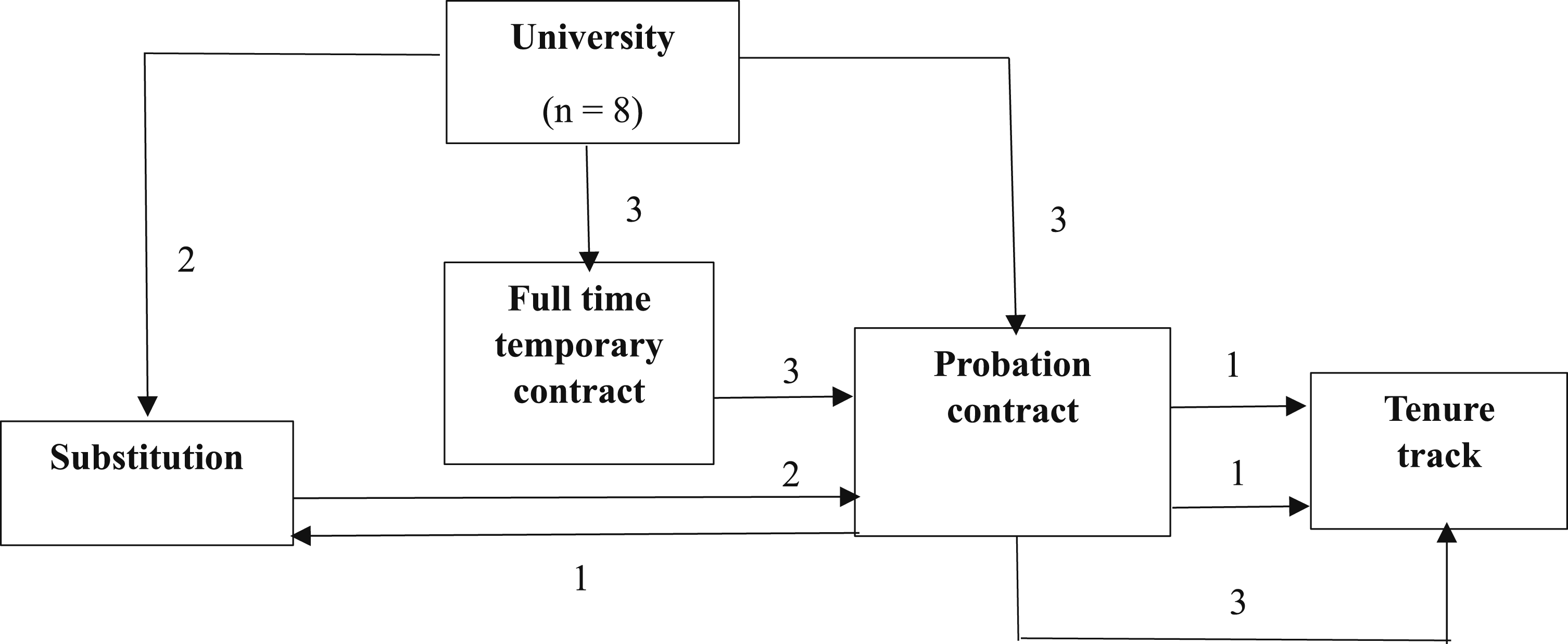
Two distinct career patterns are evidenced within participants’ narratives. The first, exemplified by Loraine, Luc, and Peter, reflects a linear itinerary. This trajectory represents a seamless transition through sequential milestones, beginning with degree completion and advancing directly to a probationary appointment and, ultimately, the attainment of tenure. In contrast, the remaining interviewees followed a fragmented or non-linear route, characterized by occupational precarity and inter-school board mobility (Mukamurera, 1999). This latter typology involved overlapping phases of temporary contracts and job seeking, illustrating the complex and often precarious nature of professional integration for many immigrant educators.
In addition, the present study illuminates perceived systemic biases within Francophone school board recruitment, specifically a nativist preference for Canadian-born Francophones over their immigrant counterparts. This finding corroborates Miller’s (2019) assertion that race and origin function as powerful inhibitors of professional integration and upward mobility. Such evidence suggests that the obstacles encountered by immigrant educators in Alberta are not merely administrative but are rooted in entrenched sociocultural hierarchies. To navigate this professional stratification, participants demonstrated what Miller (2007) defines as a “brain gain.” By exercising strategic agency—specifically through a shift toward rural districts and French immersion schools often neglected by native Francophone Canadians—participants like Loraine and Mohammed successfully bypassed urban gatekeeping to secure long-term career stabilization.
Furthermore, the research elucidates significant barriers within the broader dimensions of professional integration, reinforcing established scholarship on the subject (Jacquet, 2023; Niyubahwe et al., 2013). For most participants, the quintessential challenge was pedagogical acclimatization—a process Jacquet (2023) describes as a confluence of “cultural disorientation” and “reality shock.” Participants highlighted a clash of pedagogical habitus, specifically regarding intensified workloads and unfamiliar educational norms.
This struggle with classroom management and shifted teacher-student power dynamics necessitates what Miller (2011, 2018) terms an epistemic shift in teacher identity. According to Miller, immigrant teachers must often dismantle and reconstruct their professional identities to align with the host country’s pedagogical frameworks, a transition that, as evidenced in this study, remains a source of significant personal friction. In the same vein, Morrissette and Demazière (2018) argue that the professional integration of immigrant educators transcends mere adjustment; it demands a profound ontological transformation. This process of professional re-socialization occurs at the nexus where a teacher’s inherited values encounter the normative expectations of the host country. Whether catalyzed by critical self-reflection or external peer feedback, the transition from legacy identity to an aspired identity becomes a central component of acculturation. Within this framework, teachers iteratively refine their pedagogical praxis to align with the specific standards of the host culture. Gohier and colleagues (2001) add that such moments have an impact on the choices teachers make in relation to their practice, on their self-image—including their knowledge, beliefs, attitudes, values, behaviors, skills, goals, plans, and aspirations—and on their image of the teaching profession—including professional knowledge, educational ideologies and values, the education system, deontology, and social demands.
Furthermore, the study investigates the nexus between professional integration and leadership aspirations through an analysis of three administrators’ narratives (Josephine, Peter, and Luc), utilizing Huberman’s (1989) framework. Two distinct trajectories emerged: the “harmonious” paths of Josephine and Luc—marked by stabilization and competency consolidation—and Peter’s “questioning” path, where stagnation was mitigated by the renewed motivation of a promotion. Despite these differences, these three cases experienced seamless induction, characterized by rapid tenure, robust mentoring, and consistent collegial support. These findings suggest that successful professional integration and supportive organizational networks function as critical precursors to leadership pursuit. Thus, it can be argued that the induction phase and the emergence of leadership aspirations are inextricably linked, forming a fluid developmental trajectory rather than two isolated phases.
Previous research suggests that induction programs enhance teachers’ job satisfaction and self-efficacy (Holloway, 2001; Smith and Ingersoll, 2004; Wilson et al., 2001). Moreover, a strong sense of self-efficacy has been found to improve their motivation to engage in school committees or professional development activities and mentoring junior colleagues. Therefore, it can be inferred that educators who go through meaningful and enriching induction experiences are more likely to demonstrate leadership qualities and pursue formal leadership positions (Tipton, 2018; York-Barr and Duke, 2004). This finding underscores that career success is not merely an individual achievement but an institutional responsibility. Establishing favorable conditions—comprised of inclusive school climates, structured induction frameworks, and robust mentorship—is essential during the formative career stage to prevent professional alienation and facilitate a seamless transition toward leadership roles. Ultimately, these dynamics highlight the critical importance of providing novice teachers with supportive conditions—including a welcoming environment, structured mentoring, and collegial collaboration—at the early stage of their careers to foster long-term professional growth.
Conclusion
This study investigates the career pathways of immigrant educators, specifically examining how professional integration shapes long-term career development and progression. Although two decades of scholarship have mapped the challenges of these teachers’ inductions, it has largely overlooked the longitudinal impact of the early experiences on leadership aspirations. This study bridges that gap, demonstrating the positive link between carefully planned and managed induction support and the subsequent emergence of aspirations for upward career mobility.
Additionally, the research identifies workload as the primary demotivator for racialized teachers considering leadership positions. Consequently, there is a clear mandate for the Ministry of Education and school divisions to restructure principals’ portfolios by alleviating non-essential duties. Such a reappraisal of their roles is critical not only for attracting talents but also for fostering sustained retention.
Furthermore, the present study elucidates how informal sponsorship—operationalized through shoulder tapping and bridging networks—facilitates access to the principalship. Simultaneously, it isolates key personality constructs, such as proactivity, extraversion, and openness to experience, as psychological precursors to leadership aspirations. Based on these findings, the authors advocate for a paradigm shift in educational management, contending that the convergence of Path-Goal theory (House, 1971, 1996; House and Mitchell, 1974) and transformational leadership (Bass et al., 2003) provides a robust framework for fostering inclusive governance in K-12 education landscape. This recommendation aligns with Miller’s (2019) assertion that school leaders must leverage “their status and the power associated with that status to challenge the government to create a more equal welcoming climate” (p. 165) for racialized educator.
Our evidence demonstrates that when White principals support the career aspirations of Black educators through informal sponsorship—most notably through shoulder tapping—they actively deconstruct entrenched institutional barriers. This targeted intervention serves to mitigate systemic exclusion, rendering formal leadership positions accessible to a cohort previously marginalized by traditional promotional gatekeeping. By deploying individualized consideration and inspirational motivation, principals provide the explicit validation required to bolster the professional self-efficacy of racialized educators. This leaders intervention serves to counteract internalized barriers, recalibrating educators’ self-perception of their potential. Consequently, this research redefines the principal’s role—shifting from traditional administrative oversight to trajectory facilitation. By adopting this framework, school leaders can transform existing structures into models of inclusive governance, where representation is intrinsically linked to shared leadership and substantive racial equity.
While this study provides deep insights into the career trajectories of African-born educators, it is subject to several limitations. First, the qualitative nature and small sample size focused on eight participants lived experiences preclude the broad generalizability of the findings to all immigrant teachers. Second, the study is situated within the specific geopolitical and educational context of Alberta; therefore, the findings may not fully account for the varying certification and promotion policies found in other provinces or international jurisdictions. Third, since professional integration is a multidimensional construct, the research approach does not capture which specific dimensions influence the development of leadership aspirations. Future research could address these gaps by using mixed methods to provide deeper insights into the interplay between induction and educators’ career aspirations. Investigations could also delve into the impact of leadership traits identified in this research on talent identification for the principalship.
Footnotes
Acknowledgments
The authors would like to express their sincere gratitude to the anonymous reviewers for their insightful comments and constructive feedback. Their expertise and suggestions have significantly strengthened the analytical rigor and clarity of this manuscript.

Ethical considerations
The University of Alberta Research Ethics Board has approved this research (Pro00141187).
Funding
The authors received no financial support for the research, authorship, and/or publication of this article.
Declaration of conflicting interests
The authors declared no potential conflicts of interest with respect to the research, authorship, and/or publication of this article.