







Abstract
For years, assessment scores have revealed that significant percentages of students in the United States struggle to read effectively. Pandemic recovery efforts have zoomed in on this challenge, centralizing the urgent need to respond. While most efforts to address below-basic reading occur in primary years, critical numbers of adolescents struggle with foundational reading skills, and fewer curricular efforts engage and support this audience. Instructional leaders have adopted methods centered on a science of reading conceptualized by Scarborough’s Reading Rope, but this offers little guidance for adolescent reading development, typically promoting systematic phonics instruction as the focal lever while minimizing critical comprehension and offering few opportunities to center cultural, linguistic, and place-based assets adolescents bring to reading. This concept paper illustrates how combining the reading rope with Aukerman and Schuldt’s framework for robust asset-based instruction can enhance our knowledge of what works for adolescents and shift intervention away from current ineffective practices and toward a unified approach that builds critical comprehension and enhances engagement while developing foundational skills. We draw on experimental studies of the Strategic Adolescent Reading Intervention to illustrate how culturally responsive, asset-based approaches can combine with foundational skills instruction to produce significant reading growth for adolescents.
“Reading is the epicenter of equity” (Hammond, 2024).
Preparing all students to read successfully is a vital concern for educators and parents. In the U.S., pandemic learning loss (Goldhaber et al., 2022) centered this concern in public and political narratives. What seems relatively straightforward for some students is heartbreakingly difficult for many, lending gravity to the search for methods that will produce consistent improvement in reading for all students who struggle. To address this laudable goal, more than 40 U.S. states have adopted Science of Reading laws (Schwartz, 2022). All require evidence-based literacy instruction and most mention the Science of Reading, although these terms are not well-defined for instruction. The issue of reading progress and proficiency develops more nuance in adolescence and gains a sense of urgency as students grapple with the broad content knowledge necessary for college and career readiness.
The science of reading
A broad body of scientific research about reading development, processes, and instructional methods exists (Petscher et al., 2020), yet current public narratives (e.g., Heubeck, 2023) rest largely on research promoting systematic phonics instruction as the primary lever for reading development. Underpinning this approach is the simple view of reading (Gough and Tunmer, 1986) conceptualized by Scarborough’s (2001) reading rope and singularly labeled as the Science of Reading, hereafter referred to as SoR. The SoR has been widely disseminated in popular U.S. press outlets by journalists (e.g., Hanford, 2018) and positioned as the definition of successful reading instruction (MacPhee et al., 2021). It stands at the forefront of debate on how to prepare successful readers, what successful reading is, and literacy in general (Cervetti et al., 2020). However, SoR research fails to acknowledge similarly well-supported work in the broader body of research on reading instruction and learning to read. Additionally, there is a profound disconnect between research on best practices for teaching reading and the instructional approaches enacted in classrooms. Distillation of reading research is necessary to make it accessible for school contexts, but Seidenberg and colleagues (2020) lamented the overreliance in classrooms on a small number of key ideas, negating much of what is known about reading acquisition. For example, applying programs and approaches designed for students with dyslexia to instruction for all students, in the belief that what works for some will work for all, is something Seidenberg et al. (2020) specifically call out as ineffective due to lack of sensitivity to differences among students. They go on to note that some schools may have gone too far with phonics “overteaching” (Schwartz, 2026: np). Applying such popular interpretations of SoR tenets to specific curriculum and classroom practices often promotes a “problematically narrow slice of reading” (Aukerman and Schuldt, 2021: S85) focused on prescriptive instruction of phonics and decoding (Seidenberg et al., 2020; Shanahan, 2020) and limiting practice to carefully controlled texts that de-emphasize meaningful comprehension development (Au and Raphael, 2021; Cervetti et al., 2020; Jackson et al., 2025).
The science of reading and adolescent readers
In the U.S., a prominent marker for reading achievement is the National Assessment of Educational Progress (NAEP) given to a representative sample of students ages 9 and 13 every 2 years, and to students aged 17 every 4 years. The most recent NAEP reading assessment was administered in 2024 to over 250,000 students nationwide (NCES, 2026). Results continued a trend of 30+ years. Nearly one-third of students in these age groups tested below basic reading level, indicating lack of mastery of foundational skills such as decoding and fluency. Historically, below basic reading scores were predominantly evident along racial and demographic status lines; however, the 2024 below basic scores trended across all demographic groups, indicating that the challenges in reading mastery have grown more widespread.
Sorting and tracking students by perceptions of reading ability provided by assessments like the NAEP sends a powerful message about the skills valued by a society (Milner, 2020). However, the SoR conceptualized through the reading rope (Scarborough, 2001) offers very little guidance for reading development with age groups assessed by the NAEP (Scarborough, 2023) and thus, below basic scores on the NAEP pathologize and “other” students without offering ready responses. The need to continue developing foundational skills should not exclude adolescents from rich literacy experiences, where they respond critically to complex texts and develop strategies to engage with the world through practice with texts, but the carefully controlled texts students encounter in SoR instruction provide few opportunities to center assets adolescents bring to reading by diminishing the influences of culture, language diversity, and place-based considerations on literacy development (Jackson et al., 2025; Yaden et al., 2021). When adolescents don’t see connections to themselves, their lives, their interests, and abilities in the texts they encounter (Kirkland, 2011; Milner, 2020) the result is students who “can’t, won’t, and don’t read” (Jones, 2026).
All of this is complicated by the drop in reading engagement that occurs for all students as they enter adolescence, a decline most pronounced for those who struggle with reading (Kim et al., 2017; Wolters et al., 2014). So, a necessary first step in adolescent reading intervention is careful attention to the texts used. Proficient reading in adolescence relies on amalgamation of decoding, efficiency, and verbal knowledge, applied while negotiating word frequency, sentence length, and genre and referential supports (Cervetti et al., 2020; Francis et al., 2018) in increasingly complex texts across disciplines. To comprehend successfully, adolescent readers must leverage all these supportive skills and text features to build and apply inferential and critical comprehension, with far less direct teacher support than they received in primary years.
Conceptualizing a new approach to adolescent reading intervention
In this concept paper, we describe how one research-supported reading intervention for adolescents ages 11–18 synthesizes two theories of reading instruction: Scarborough’s (2001) reading rope and Aukerman and Schuldt’s (2021) asset-based, robust reading instruction, to provide this amalgamation of skill and strategy construction. Saunders (2018) notes that “By definition, a conceptual paper doesn’t present original data…but it must present an original concept … [synthesize] knowledge from previous work on a particular topic, and [present] it in a new context to provide a springboard for new research that will fill knowledge gaps” (np). Concept papers show how moving beyond current norms can enhance knowledge. Our goal is to show how these two theories can combine to support a shift in instructional approaches to adolescent reading intervention: moving away from problematically narrow, one-dimensional skill development to a more unified approach that builds critical comprehension and enhances engagement while continuing to develop decoding and fluency skills. To illustrate this, we draw on results of experimental, longitudinal studies producing statistically significant reading outcomes to validate the Strategic Adolescent Reading Intervention (STARI) as an effective reading intervention for adolescents. We explain the ways STARI centers culturally responsive, asset-based approaches while improving foundational skills depicted by the reading rope.
Rios-Aguilar’s (2014) recommendations for critical scholars employing quantitative results in educational research are valid here: “Ask relevant questions (about equity and power), [c]hoose relevant data …. pay attention to both statistical and educational significance, [e]mploy challenging and enriching theories … [and] inform and challenge existing … practices” (p. 101). Disparities in reading skill raise serious and highly relevant questions about equity in educational practices and ultimately power, since successful reading is linked to improved economic outcomes (Cherry and Vignoles, 2020). The COVID-19 pandemic exacerbated and reified existing disparities in reading achievement and educational access (Fahle et al., 2024). Since educational equity, access, and power vary along demographic lines, asking relevant questions about why these disparities still exist involves exploring curricular elements related to cultural relevance and context. Therefore, we attend to these aspects as indicators of STARI’s educational significance first in the following sections and then move on to the statistical significance of STARI.
Two challenging and enriching theories undergird our conceptual design. Scarborough’s (2001) visualization of reading acquisition as a two-stranded rope has become almost synonymous with SoR. Aukerman and Schuldt (2021) re-envisioned the SoR to provide “a more expansive vision” (p. S86) of reading achievement and success, with two domains of reading instruction and assessment that center the assets adolescents bring to reading tasks, including cultural knowledge, linguistic knowledge, place-based knowledge, and experience of the world. We employ both these theories to explore the educational significance of STARI’s culturally responsive approach to adolescent reading intervention.
A widely utilized conceptualization
The SoR lens is premised on the simple view of reading (Gough and Tunmer, 1986) and represented most frequently by Scarborough’s (2001) reading rope. A broad body of research supports many aspects of the simple view, including the primacy of decoding and linguistic comprehension in accounting for variance in reading comprehension (Foorman et al., 2015; Lonigan et al., 2018; Petscher et al., 2020) and four decades of evidence linking letter-sound connections to meaning of specific words in memory (Ehri, 2020). Scarborough (2001) described skilled readers as those who are “able to derive meaning from printed text accurately and efficiently” (p. 98) and depicted reading acquisition as dependent on two strands of knowledge: language comprehension and word recognition. Each strand consists of individual fibers or elements, and these eight fibers form a strong rope of skills and knowledge that Scarborough noted are specific to reading acquisition versus general learning (Figure 1). Scarborough’s reading rope, adapted by Neuman and Dickinson (2001).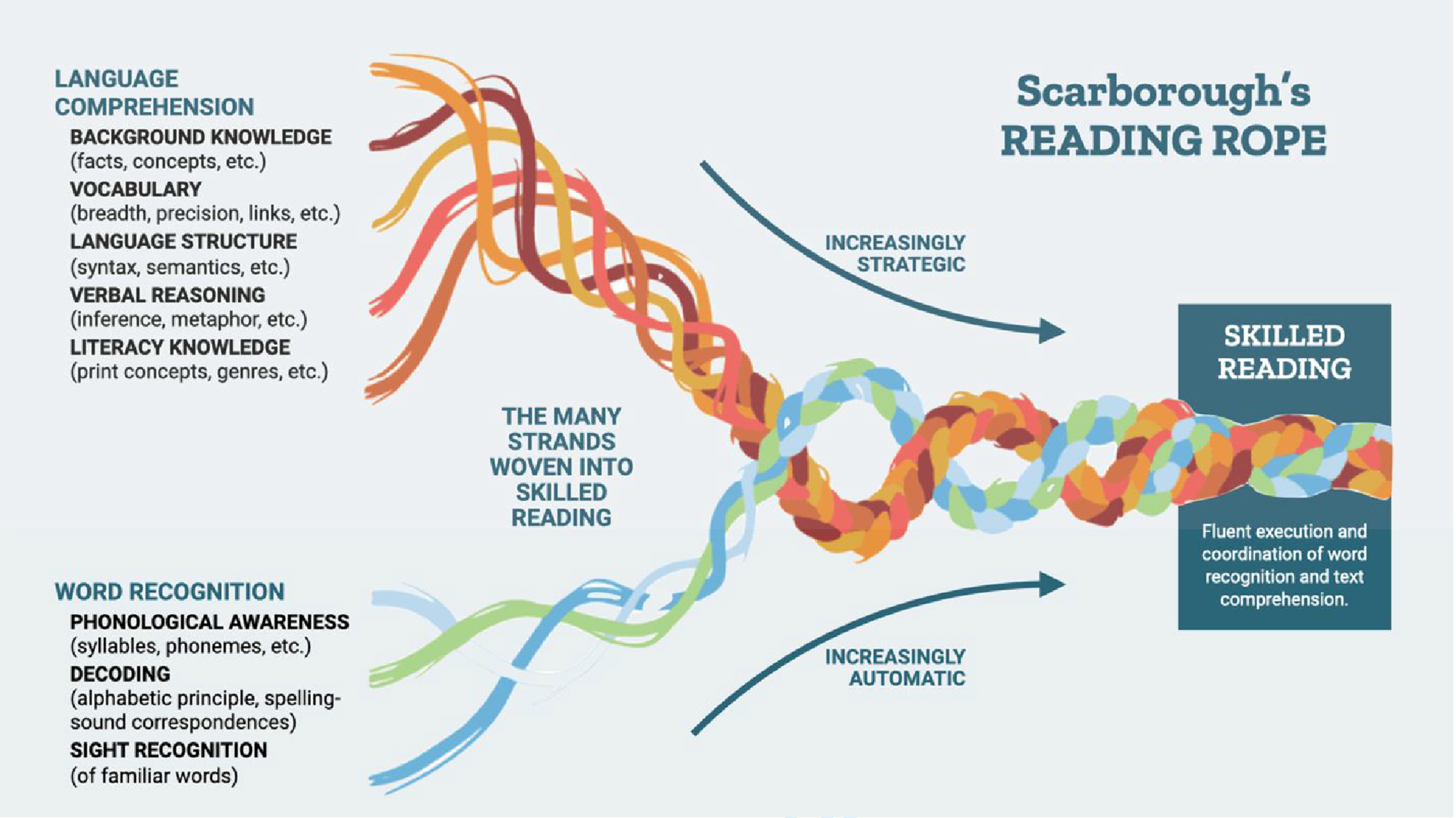
Importantly, Scarborough acknowledged that many other intrinsic and extrinsic factors have an undeniable impact on learning to read, including attention, executive function, social-emotional competencies, socioeconomic status of the home and school district, and multiple language/literacy status; but argued that these factors are not specifically tied to reading acquisition (Scarborough, 2023). This distinction is problematic, since these dismissed factors include elements we identify as essential influences on literacy development, having to do with context and place-based considerations, culture, and linguistic diversity (Conradi Smith et al., 2024). Scarborough (2001) noted that skill with word recognition becomes increasingly automatic over time, while language comprehension becomes increasingly strategic. Along the way, language comprehension becomes synonymous with text comprehension, although how this happens is not clear (Foorman et al., 2015), and Scarborough ultimately defines skilled reading as the “fluent execution and coordination of word recognition and text comprehension” (Scarborough, 2023: 9).
Two features of Scarborough’s (2001) conceptualization are notable for our purposes. First, Scarborough views learning to read as a cognitive act only, mainly dependent on instruction and practice, thus minimizing the impact of factors tied to equity, access, and power. Accordingly, these social and cultural aspects are not represented in the reading rope. Second, this conceptualization of reading was designed specifically with early childhood reading acquisition in mind. Its application for adolescent learners is less clear. Petscher et al. (2020) noted that the influence of decoding and linguistic comprehension changes as students progress through developmental stages, and for older students, reading problems may have “multiple contributing causes” (p. S275) that are not necessarily accounted for by the reading rope.
A new vision
Aukerman and Schuldt (2021) proposed a framework expanding the two strands of the reading rope and advocated a more nuanced view of successful reading and literacy. They argued that a solid foundation for robust reading requires more than simply ensuring proficiency in decoding plus comprehension, and they asserted that a science of reading should consider a broader span than early grades alone, and include writing, speaking, and comprehension with multiple text modalities. Furthermore, they envisioned reading as a social and cultural practice rather than merely cognitive, and valued the assets and experiences of readers within and beyond the act of reading as crucial to the development of robust reading skill. To center their vision, they described two domains.
Textual dexterity
This domain encompasses “what readers can do with text,” including all elements of the word recognition strand of the reading rope, as well as additional capacities that readers negotiate to “access, understand, use, and scrutinize text” (Aukerman and Schuldt, 2021: S87). As students advance beyond primary grade years, literacy landscapes become increasingly multimodal and discipline-specific. Word recognition components of phonological awareness, decoding, and sight recognition are vital but insufficient when students encounter texts that require discipline-specific understandings of words, or when texts require contextual understandings not immediately apparent. Science provides many examples of this. Hayden and Eades-Baird (2016), reported one such example used by a 7th grade science teacher guiding her class to build contextual understanding of the word “compression” while studying the geography of Antarctica. Teacher: So, the snow becomes compressed. What does that mean to you? Student: Well, that’s like pushed together. Teacher: Where else have we learned something about compression? What [geographic] boundary were we talking about? Student: Oh, that’s a convergent boundary. Teacher: See you can make connections with the thing you learned before and use a word, and now you have a visual too because you can see the snow that’s compressed (p. 194).
When teachers emphasize word recognition skills along with flexible use of those skills to access, understand, use, and scrutinize text (Aukerman and Schuldt, 2021), students become better prepared to access discipline-specific text: a crucial element of success as students progress through school.
Textual dexterity supports readers as code breakers, text participants, text users, and text analysts (Freebody and Luke, 1990). When students have opportunities to develop phonics skills and practice segmenting and blending real words in connected text, they are concurrently able to develop vital skills such as fluency and self-monitoring: skills not described in the reading rope. When they practice these skills with meaningful texts, they become better able to use text in flexible ways, developing critical thinking and knowledge-building strategies that can be applied inside and outside of the school walls. Inviting collaborative text work in classrooms, such as partner and group problem solving and discussion with meaningful texts, acknowledges that even if students still need support for decoding skills, they are able to think critically and seriously about complex topics. Such acknowledgment engages and draws students in. This is especially relevant during adolescence, when many students struggle with engagement and stamina for difficult tasks (Pelletier et al., 2024).
Literate dispositions
This domain describes the “affective and intellectual involvement” (Aukerman and Schuldt, 2021: S89) with text that promotes ownership and agency in the reading process. Engagement, motivation, and self-efficacy for the task are key, and especially important for adolescents, who frequently struggle to engage with text (Kim et al., 2017; Troyer et al., 2025) stay motivated (Conradi Smith et al., 2024) and persist through a text (Troyer et al., 2025; Hiebert et al., 2010), and who may lack self-efficacy for reading (Toste et al., 2020). Development of literate dispositions requires specific support, especially for adolescents who have struggled with reading. Aukerman and Schuldt (2021) noted that, “engaged readers are willing to critically engage with ideas to construct meaning; they also care about the quality of their own and others’ textual ideas” (p. S89) Adolescents who are continuing to build decoding skills are able to think critically and seriously about complex topics. Acknowledging this by presenting texts that respect their experiences engages students. Providing support by breaking text into manageable chunks, teaching academically productive talk moves, allowing partner work, and scaffolding comprehension strategies helps to ensure that students begin to view themselves as readers: people who are motivated to read because they want to, not only because they are told to. This kind of support helps develop self-efficacy for reading. As students build skill for decoding and comprehending longer chunks of text, they can approach reading with an expectation of success (Vaughn and Masterson, 2024).
A unified approach
The Strategic Adolescent Reading Intervention (STARI) enacts both these conceptual frameworks in a culturally responsive approach to adolescent reading intervention. STARI was developed in response to a problem of practice posed more than 10 years ago by leadership at Boston Public Schools, where high schools were encountering significant roadblocks to reading and comprehending texts in their content-area classrooms. Recognizing that intervention needed to happen before high school, researchers from Harvard and Wheelock College worked with a group of Boston teachers to design, pilot, revise, and develop the instructional materials that ultimately became STARI. A randomized controlled trial of STARI conducted during the 2013–14 school year in two urban districts in Northeast U.S. states revealed statistically significant growth in multiple reading skill areas, with students across racial, socio-economic, linguistic, and ability demographic characteristics (Kim et al., 2017). This study earned STARI a Tier 1 Rating for Evidence of Effectiveness from the U.S. Department of Education (2021) and was replicated in 2021–22 with students in an urban district in the U.S. South (Troyer et al., 2025).
A note on positionality
This concept paper draws on both authors’ deep experience with STARI. The descriptions of the intervention benefit from both robust theoretical underpinnings, and close knowledge of the strengths and challenges of the intervention’s implementation in practice-based settings. Evidence of STARI’s effectiveness is drawn from rigorous, randomized controlled trials led by an independent evaluator. Author One came to STARI in 2022, with responsibilities including ongoing support of research into STARI’s efficacy and significance, and development and enactment of the curriculum. Prior to this role, Author One was a professor in research universities in the midwest and northeast U.S. She designed and implemented literacy research and taught pre-service teacher preparation classes, bringing more than a decade of experience as a teacher and administrator for students aged 5–18 in high-poverty public schools to these roles. Author Two worked on the first efficacy study of STARI in 2013–14 and led the second (2021) study as project director and co-PI. Prior to this work, she spent years as a middle school English teacher and literacy coach, supporting students, primarily struggling readers, and teachers in urban schools.
The structure and educational significance of STARI
STARI is a daily reading intervention for adolescents 11 years and older who read two or more years below grade level. It does not replace the core English Language Arts class but is designed to be completed in addition. Four full years of STARI curriculum have been developed, with three units per year. The authentic novels used in STARI are accessible, with a Lexile range of 410–1200 corresponding to decoding levels for students ages 7–13 years old (Lexile.com, 2025). However, the topics in these accessible texts are specifically crafted for adolescent audiences.
STARI novels and unit titles.
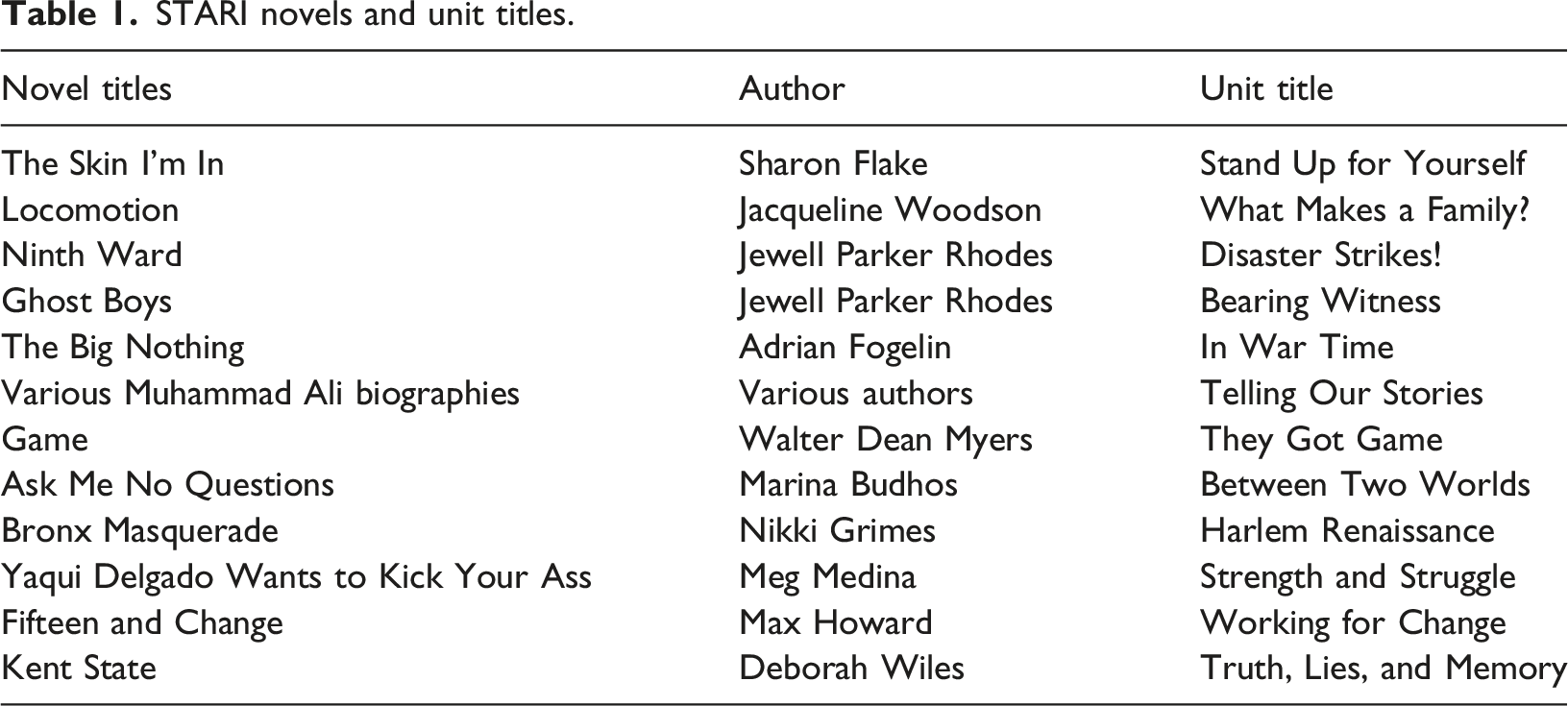
STARI unit topics are relevant and impactful for adolescent audiences and also provide opportunities for students to build disciplinary knowledge that they may have missed due to difficulty reading content area texts. For example, the unit Bearing Witness explores restorative justice and the wide-ranging impacts of police violence. Personal identity and talent are themes in a unit entitled Harlem Renaissance. The unit Working for Change provides opportunities for students to build knowledge of U.S. labor movements and laws, past and present. Opportunities to build historical knowledge continue with the unit Truth, Lies, and Memory, designed for readers ages 15–18 and focusing on the Vietnam era in the U.S.
Weaving the domains with the reading rope
Textual dexterity, word recognition, and language comprehension
While SoR curricula frequently develop word recognition skills in isolation from connected text, textual dexterity emphasizes the use of word skills as students participate with text, applying code breaking skills to analyze, comprehend, and use text for specific purposes. While engaged in these processes, students draw on their personal knowledge, experiences, and contexts to bring appropriate meaning to text. Students’ engagement, motivation, and self-efficacy for reading provide the supportive framework for this work.
Consecutive lessons in “Strength and Struggle”, with theoretical codes.
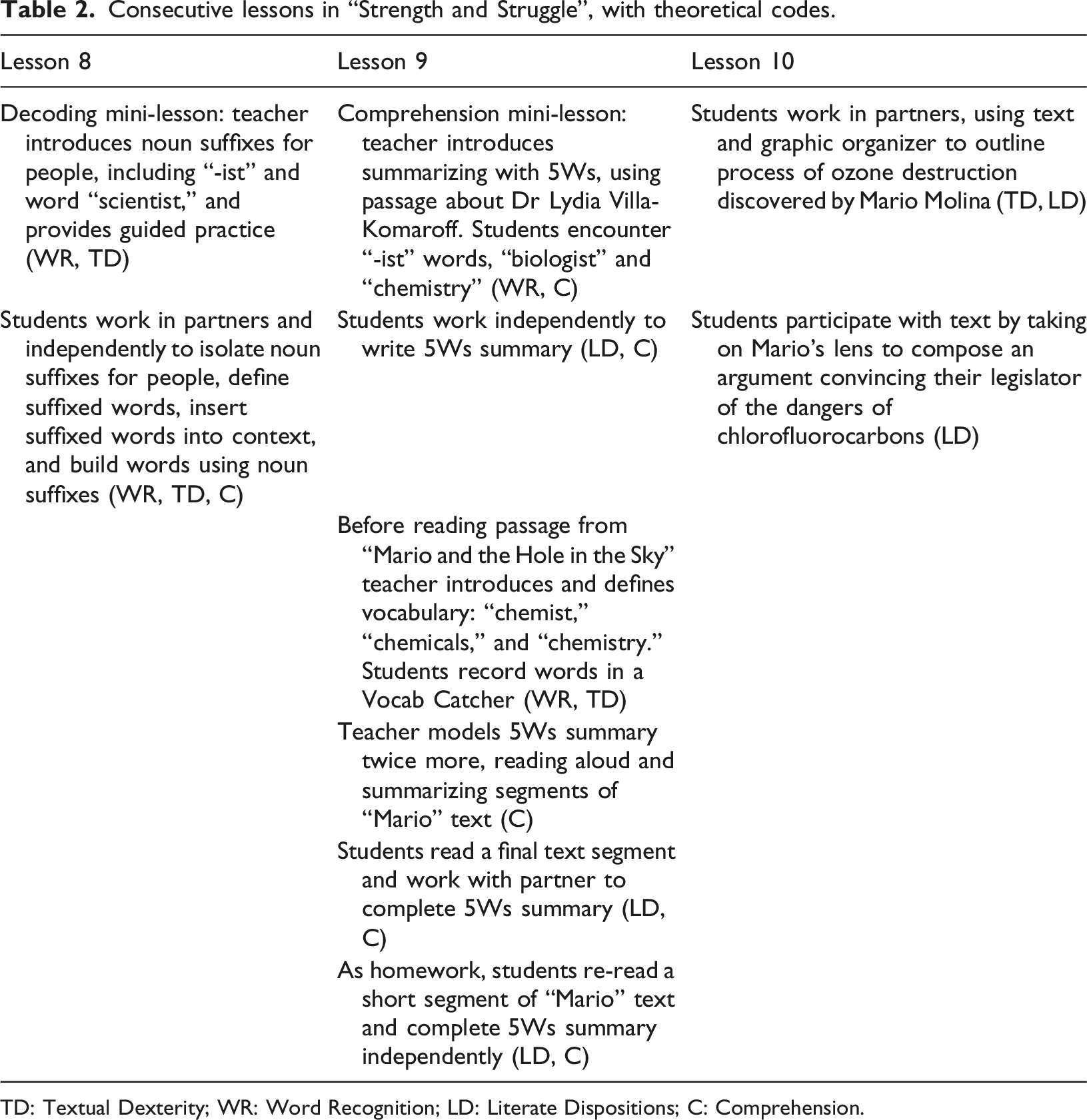
TD: Textual Dexterity; WR: Word Recognition; LD: Literate Dispositions; C: Comprehension.
Consecutive lessons in “Working for Change,” with theoretical codes.
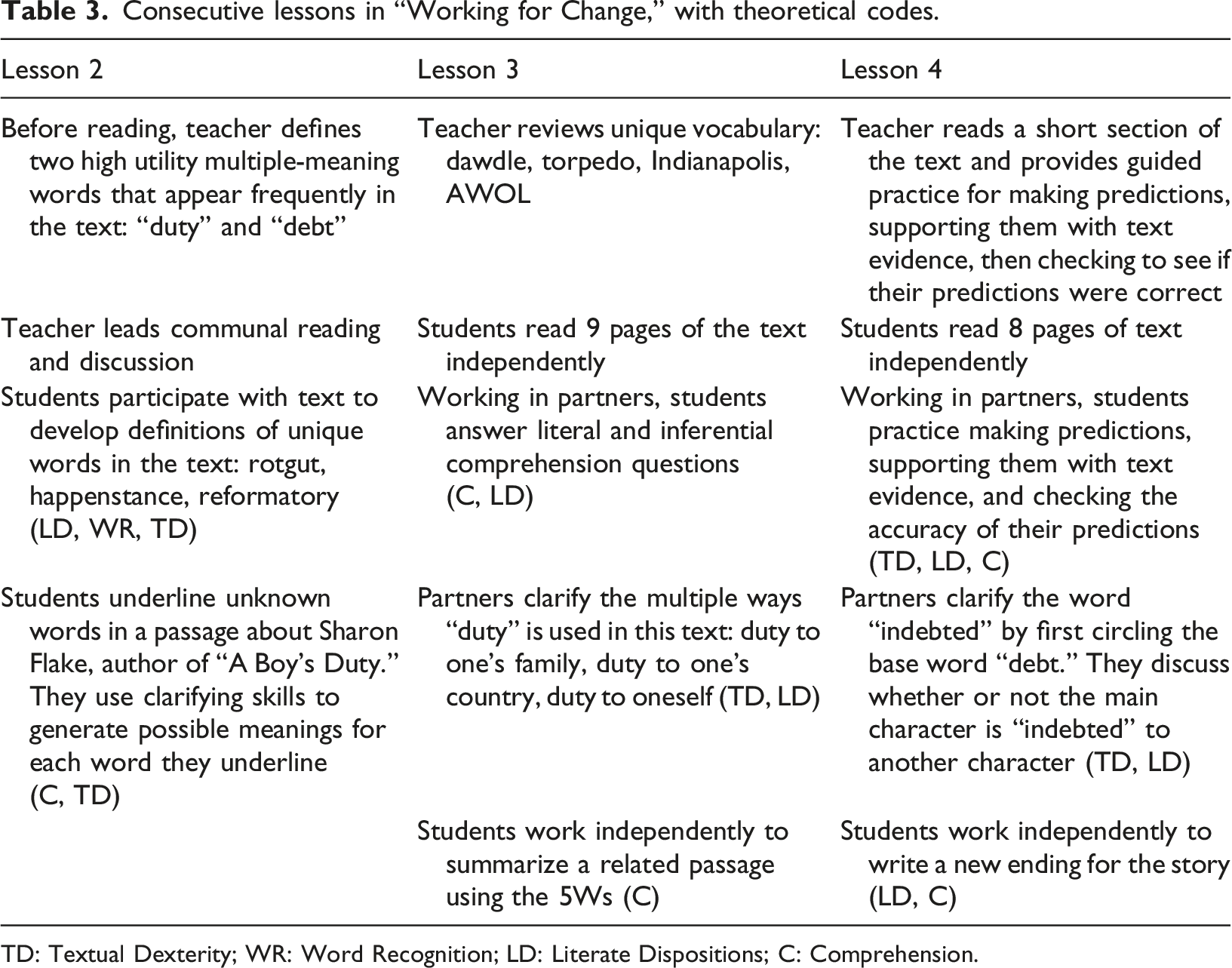
TD: Textual Dexterity; WR: Word Recognition; LD: Literate Dispositions; C: Comprehension.
Engagement, motivation, and self-efficacy
The literate dispositions of engagement, motivation, and self-efficacy are difficult to untangle, and Nagy and colleagues (2022) assert that the typical separation of “motivation as intent, and engagement as action” (p. 2) minimizes the multidimensionality of these constructs. Conradi Smith and colleagues (2024) addressed this interconnectedness in their exploration of motivation with adolescents who struggle with reading, noting that “students are motivated both by whether they expect to be successful with the given task/activity and whether they value it” (p. 1, emphasis original). This definition encapsulates the three literate dispositions described by Aukerman and Schuldt (2021).
Motivation is dynamic and context dependent, “never as simple as flipping a switch” (Conradi Smith et al., p. 1), and interest in a novel or a task is a situational element of context. Self-efficacy for the task is inseparable from motivation because part of motivation is the expectancy of success. All people are more likely to be motivated to engage with a task when they have a reasonable expectation of success: self-efficacy rests on the awareness of one’s capacity to be successful with the tasks involved.
Another aspect of motivation is the value students place on tasks. The perceived usefulness of learning something about a topic impacts students’ willingness to engage with the tasks we propose. All of these elements: interest in the task, including situational as well as curricular elements, expectancy of success, and the value students perceive in completing the task, combine to influence whether or not students will engage with tasks.
STARI incorporates scaffolds for each of these literate dispositions. Novels are selected to foreground diverse identities, backgrounds, and real-world challenges that adolescents may already be personally engaged with and find valuable. For example, the unit Bearing Witness features non-fiction readings about Emmett Till and the impact of his murder on the U.S. civil rights movement, restorative justice, and current responses to police violence. The unit Working for Change combines non-fiction texts providing background knowledge on wages and workers’ rights with a novel in verse, Fifteen and Change (Howard, 2019), that provides a realistic narrative of how these issues affect a high school student in his first job. Recognizing the engagement and motivational value of dialogue with peers (Troyer et al., 2025; Pelletier et al., 2024), STARI includes daily opportunities for talk with partners or the whole group. STARI teachers incorporate talk moves to scaffold discussion, and over time students build skill in academically productive talk (Michaels & O’Connor, 2015): sharing their reasoning with the group and working to deepen this as well as understand the reasoning of others. Additionally, every STARI unit incorporates at least one debate: a research-supported activity that improves students’ engagement as well as achievement (Nystrand and Gamoran, 1991; Soter et al., 2008). STARI debates provide students the opportunity to take a position about the novel, support that position with text evidence, and then defend that position as part of a debate team. There are scaffolds for debate preparation, including persuasive and transitional phrases to use as starters.
The novels, unit themes, discourse scaffolds, and opportunities for partner work and debate serve as situational motivating factors and increase the likelihood that students will see value in engaging with STARI lessons. Using texts written at an accessible reading level supports students’ perceptions of the possibility of success and thus their self-efficacy. Rubrics for assessing academically productive talk and debate preparation and participation provide opportunities for teachers to give specific feedback, further supporting students’ self-efficacy. Thus, STARI incorporates Aukerman and Schuldt’s (2021) literate dispositions in ways that Conradi Smith et al. (2024) denote as key for teachers working with adolescents: in an assets-based approach that values diverse identities and funds of knowledge (Moll, 2019), with supports for self-efficacy, grounded in meaningful texts, with tasks that leverage opportunities to talk and use language.
STARI’s statistical significance
The effectiveness of STARI has been demonstrated in several quantitative studies. A year-long study during the 2013–2014 school year (Kim et al., 2017) earned the highest rating from the U.S. Institute of Education Sciences (2021) by producing statistically significant growth of participants. This randomized controlled trial included 402 students in grades 6–8 who were either assigned to receive STARI as an intervention class (treatment) or to receive a different intervention (control). Half the students in the sample identified as White, 25% as Latina/o, and 20% Black. Seventy percent of the participants qualified for free or reduced-price lunch, 13% were English learners, and 30% qualified for special education services. This study was conducted in eight schools in four districts in the northeastern U.S.: two urban districts and two rural/suburban. In all the schools, more than half of the students were eligible for free or reduced-price lunch. All participants had scored below proficient levels on their state literacy assessment in the year before the study.
The STARI treatment group out-performed students in the control group on measures of word recognition, efficiency of basic reading comprehension, and morphological awareness. These results provided support for STARI instructional activities and for teachers’ ability to deliver STARI with sufficient fidelity, and suggest that STARI’s positive impact on phonics and morphological skills led to greater ability to read multisyllabic words accurately and growth in basic reading comprehension, a measure of comprehension as well as fluency.
The Kim et al. (2017) study was replicated during the pandemic in one large urban district in a high needs state (Troyer et al., 2025). In 2018, state testing revealed that only 25% of students were proficient readers. That number dropped to 18% in Spring 2021 testing, after a year of district-wide closures and inadequately resourced remote instruction. During the 2021–2022 school year, STARI was evaluated in six middle schools in this district. Students had returned to face-to-face instruction, but experienced multiple interruptions, with short-term quarantines and frequent shifts back to virtual learning. Because of this, none of the STARI treatment classes were able to complete all three units offered by the curriculum for the year. Half of the classes completed less than one unit during the year, 33% completed one unit, and 17% completed two units. The 166 participants in this second study were all enrolled in 6th grade, and all read more than 1 year below grade level according to state testing. Ninety-nine percent of the participants were Black, all qualified for free or reduced-price lunch, and 4% qualified for special education services. Teachers implementing STARI in this study had on average fewer years of teaching experience than teachers in the Kim et al. (2017) study, and nearly 20% of these teachers were uncertified.
Despite the challenges and interruptions of this context, students who received STARI were able to make significant growth over control group students who received a different intervention. Additionally, students who received STARI outperformed their control group peers on the state reading test, with a significant effect translating to an extra year of gains beyond what is typically seen on that test. This growth exceeded the estimated learning loss caused by the pandemic (Goldhaber et al., 2022) as well as the growth seen in the Kim et al. (2017) study. Results from this second study of STARI suggest that student learning can be accelerated to recover lost learning time, even in the less-than-ideal circumstances STARI participants experienced in this pandemic-era intervention.
Conclusions
In closing, we return to the caveats Rios-Aguilar (2014) offered for critical researchers who use quantitative data, to “Ask relevant questions (about equity and power), [c]hoose relevant data …. pay attention to both statistical and educational significance, [e]mploy challenging and enriching theories … [and] inform and challenge existing … practices” (p. 101). STARI has a solid record of statistical significance in quantitative studies, earning the highest rating from the U.S. Institute of Education Sciences (2021) for strong evidence of effectiveness. STARI also has notable educational significance, building as it does on two challenging and enriching theories: Scarborough’s (2001) reading rope and Aukerman and Schuldt’s (2021) framework for a robust science of reading. STARI is designed around principles that utilize elements of the reading rope in ways that are age-appropriate for adolescents and that include daily application to reading connected text. This embedded daily practice of word recognition skills with authentic, connected text provides space and support for developing textual dexterity, with opportunities to participate with text, applying code-breaking skills to use text for real-world purposes. Finally, STARI is built on the framework provided by the literate dispositions Aukerman and Schuldt (2021) described, with curricular elements and teacher tools designed to motivate and engage students, provide opportunities for students to leverage their interests and assets, and build their self-efficacy for reading.
Limitations and opportunities
STARI lessons rely heavily on academically productive talk, with partners and in whole class discussions. Willingness to engage with and discuss text is a key to literate dispositions (Aukerman and Schuldt, 2021) and STARI features abundant support for implementing a discussion-based culture, through explicit lesson plans and supportive teacher training. However, Reynolds et al. (2025) found it difficult to enact such a culture in their study of STARI, noting that their team, “felt like [we were] trying to build a discussion culture not widely shared schoolwide” (p. 395). While there is certainly more work to be done to support critical engagement with discussion, exploration is needed into how the discussion techniques and talk moves used by STARI could be generalized beyond the STARI classroom.
Students in the Reynolds et al. study were also critical of the repetitive nature of some aspects of the curriculum, and although STARI features elements designed to enhance engagement, including discussion, peer collaboration, and culturally responsive texts that are accessible and debatable (Troyer et al., 2025), exit interviews with students in the Reynolds et al. study (2025) reinforced our awareness that both motivation and engagement are “contextualized, situated, and malleable” (Kim et al., 2017: 376). Previous studies of STARI have explored motivation and engagement of students with the curriculum, since these are particular challenges for adolescents in general (Troyer et al., 2025; Wolters et al., 2014) and especially those who struggle with reading tasks (Conradi Smith et al., 2024; Pelletier et al., 2024). This exploration should continue.
Both Kim et al. (2017) and the more recent COVID-era study of STARI (Troyer et al., 2025) assessed behavioral indicators of engagement using task completion and teacher-observation indices. In the COVID-era study, students were also surveyed to gather data on motivation and self-efficacy for reading. Current research continues this data collection to further explore the motivational aspects of STARI and their impact on reading growth. Our field would benefit from expanded focus on student interview data exploring engagement and motivational facilitators within curricula.
STARI gains its educational and statistical significance from the two challenging and enriching theories it is built upon, and it challenges existing practices utilized with adolescents who continue to need support in foundational reading skills. In the 2021–2022 pandemic-era study of STARI, students in a high need state were able to interrupt narratives of unrecoverable pandemic learning loss (Hayden, 2023; Troyer et al., 2025). Thus, we propose that longstanding research narratives projecting limited potential for students attending high poverty, diverse schools should be re-examined. It may be that programs designed to implement the SoR within robust models such as described by Aukerman and Schuldt (2021) could interrupt stubborn research hierarchies and shape more positive trajectories for students.
Footnotes

Funding
The authors received no financial support for the research, authorship, and/or publication of this article.
Declaration of conflicting interests
The authors declared no potential conflicts of interest with respect to the research, authorship, and/or publication of this article.