







Abstract
Extensive experimental investigations into the behavior of reinforcement concrete and steel frames with infill have been conducted worldwide. However, there are very few systematically created and publicly available databases on infilled frame experiments. This article assembles a database of 264 experiments on single-story infilled frames, which includes specimens with different types of frames and panels. It has been utilized by the authors (in separate studies) to develop (1) empirical equations for modeling the infill panels as equivalent struts and (2) machine learning models for failure mode classification. The intent is for the database to be augmented and further used in various other applications in studying the seismic behavior of masonry-infilled frames.
Introduction
Masonry infill panels are commonly used as non-structural walls and partitions in reinforced concrete (RC) and steel frame buildings (Shing and Mehrabi, 2002). Extensive studies have been carried out to investigate the seismic behavior of masonry-infilled frames, especially the influence of frame–infill interaction on overall structural performance (Asteris et al., 2011; Liberatore et al., 2017; Noh et al., 2017). However, the design and assessment of infilled frame structures remains a challenging task. To enable the implementation of the performance-based earthquake engineering (PBEE) framework for seismic risk assessment of infilled frames, reliable numerical models are needed to simulate the full range of the nonlinear behavior from the onset of damage through collapse (Haselton et al., 2008; Koliou and Filiatrault, 2017; Lignos, 2008). The development of such numerical models requires reasonably simplified representations of the structure as well as reliable estimates of the parameters that characterize the nonlinear behavior. Both of these aspects rely on calibration and validation using adequate data from physical experiments.
Experimental databases for various types of structural components have been developed and are publicly available to enable nonlinear modeling and analysis. Such databases have been developed for steel frame members (Lignos and Krawinkler, 2011), RC columns (Berry et al., 2004), and wood and steel diaphragm connectors (Koliou and Filiatrault, 2017). Experimental investigations of infilled RC and steel frames have been performed worldwide. However, there are several challenges to the development of an infilled frame database: the data from these experiments exist in various sources, such as journal papers, conference proceedings, and technical reports; the programs were carried out in different countries and time-periods, resulting in different design methodologies, test setups, characteristic parameters, and the associated notations and units, and the standards for reporting and classifying failure modes. Recently, several studies have made efforts to develop databases for infilled frame experiments. Liberatore et al. (2017) assembled a database of 116 masonry-infilled RC frames, 7 masonry-infilled steel frames, and 39 confined masonry specimens and used them to assess and modify a series of analytical equations for characterizing the in-plane response of infilled frames. In the supplementary material, they provided a table with metadata and structural properties (with varying levels of detail) from each experiment and an excel spreadsheet with the parameters computed using their proposed equations. Luca et al. (2016) compiled a database of 101 masonry-infilled RC frames, which includes the testing protocol, structural properties, and piecewise linear backbone curves, and the damage to the specimens was classified using a previously developed standard. Several studies assembled infilled frame databases and used them to develop drift-based empirical fragility functions for in-plane response. Examples include the ones by Cardone and Perrone (2015), Sassun et al. (2016), and Chiozzi and Miranda (2017), which contain 55, 50, and 152 specimens, respectively. De Risi et al. (2018) assembled a database of 219 specimens, focusing on damage assessment of RC frames with unreinforced hollow clay brick panels. These studies provide diverse sets of valuable information on experimental investigations of infilled frames. However, to date, only Liberatore et al. (2017) provided public access to their electronic data.
The database presented in this article consists of 264 infilled frame specimens, including 191 constructed with RC frames and 73 constructed with steel frames. The intent is to contribute toward (1) the improvement of nonlinear analysis models for characterizing seismic behavior, (2) the development of empirical predictive models for estimating the characteristic parameters in various analysis models, and (3) the understanding and systematic classification of the failure modes in infilled frame structures. The data were assembled from 49 journal publications, conference proceedings, and technical reports. A broad range of infill panel types are included, and unified parameters and notations for the attributes of data are adopted. Information contained in the database includes the metadata from each experiment, the structural properties of the infilled frame components, and the experimental results (force–displacement curves), as made available in the relevant source. The database (Huang and Burton, 2019b) is accessible electronically on the DesignSafe cyberinfrastructure (Rathje et al., 2017). A subset of the database has been used to calibrate parameters for a pinched hysteretic material model for infill struts used to model RC infilled frames (Huang et al., 2019). In this study, a set of empirical equations were developed for describing the relationship between the backbone curve parameters and the properties of the infill panel. A subset of the database has also been used to develop a machine learning model to classify the in-plane failure modes of RC infilled frames (Huang and Burton, 2019a). Such models are able to predict the mode of in-plane failure (e.g. shear sliding of the infill and column flexural hinging; shear sliding of the infill and column shear failure) given the properties of the infilled frame. This data article provides details of the key aspects of the database and statistical summaries of important parameters.
Summary and sources used to develop the database
The infilled frame database is collected from experimental investigations reported in 49 journal publications, conference proceedings, and technical reports, which are summarized in Table 1. The information included in the database can be categorized as follows:
Database sources
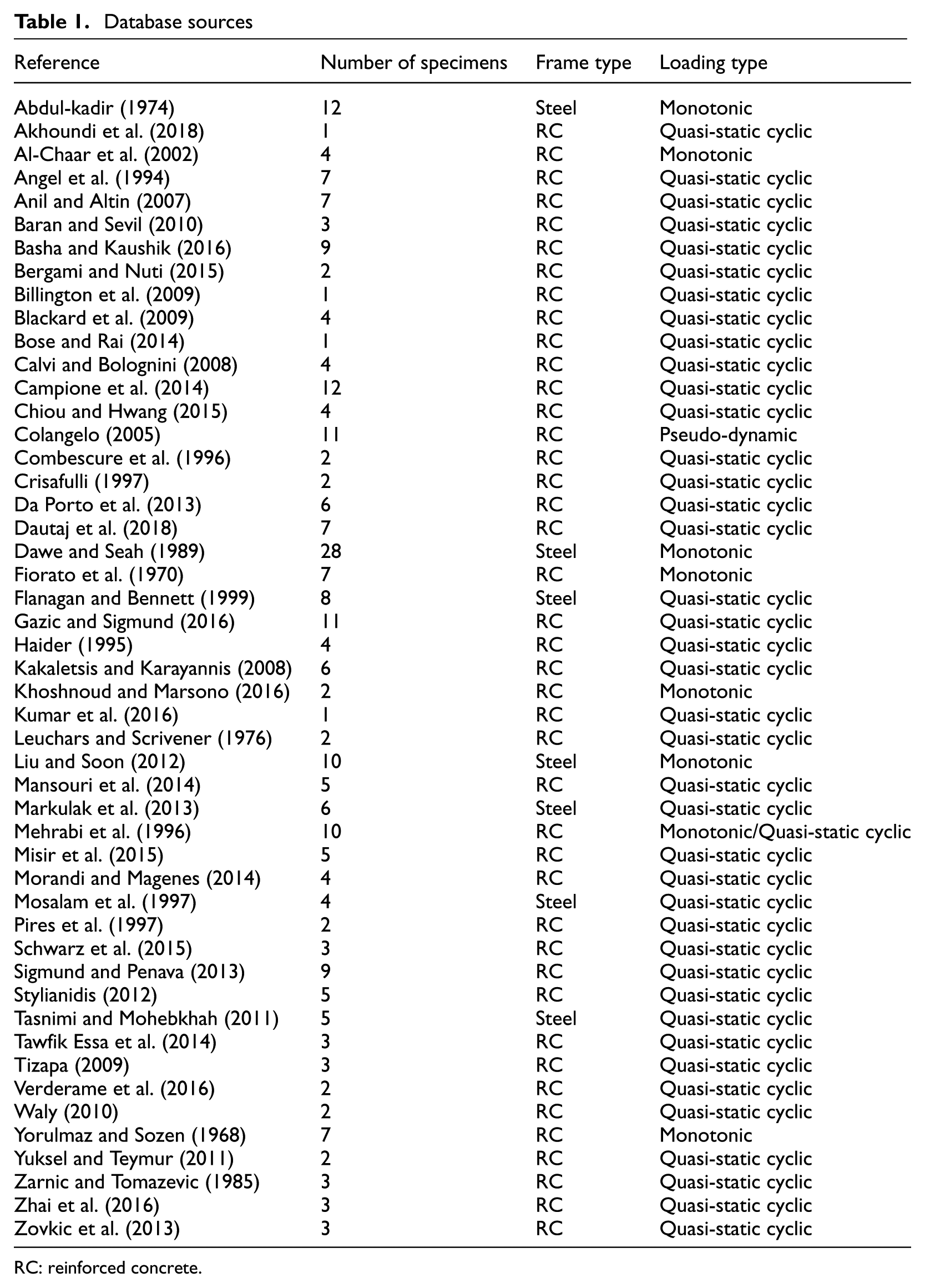
RC: reinforced concrete.
Metadata: general information about each test specimen, including details about the frame, the type of masonry unit used, whether there are openings in the infill panel, and loading protocols.
Structural properties: the geometric and material properties of the frame and infill, the reinforcement details of concrete frames, and the section sizes.
Experimental results: the hysteretic curves from each experiment (if provided by the original authors), which have been extracted using a digitization software, are made available in .csv format.
Metadata
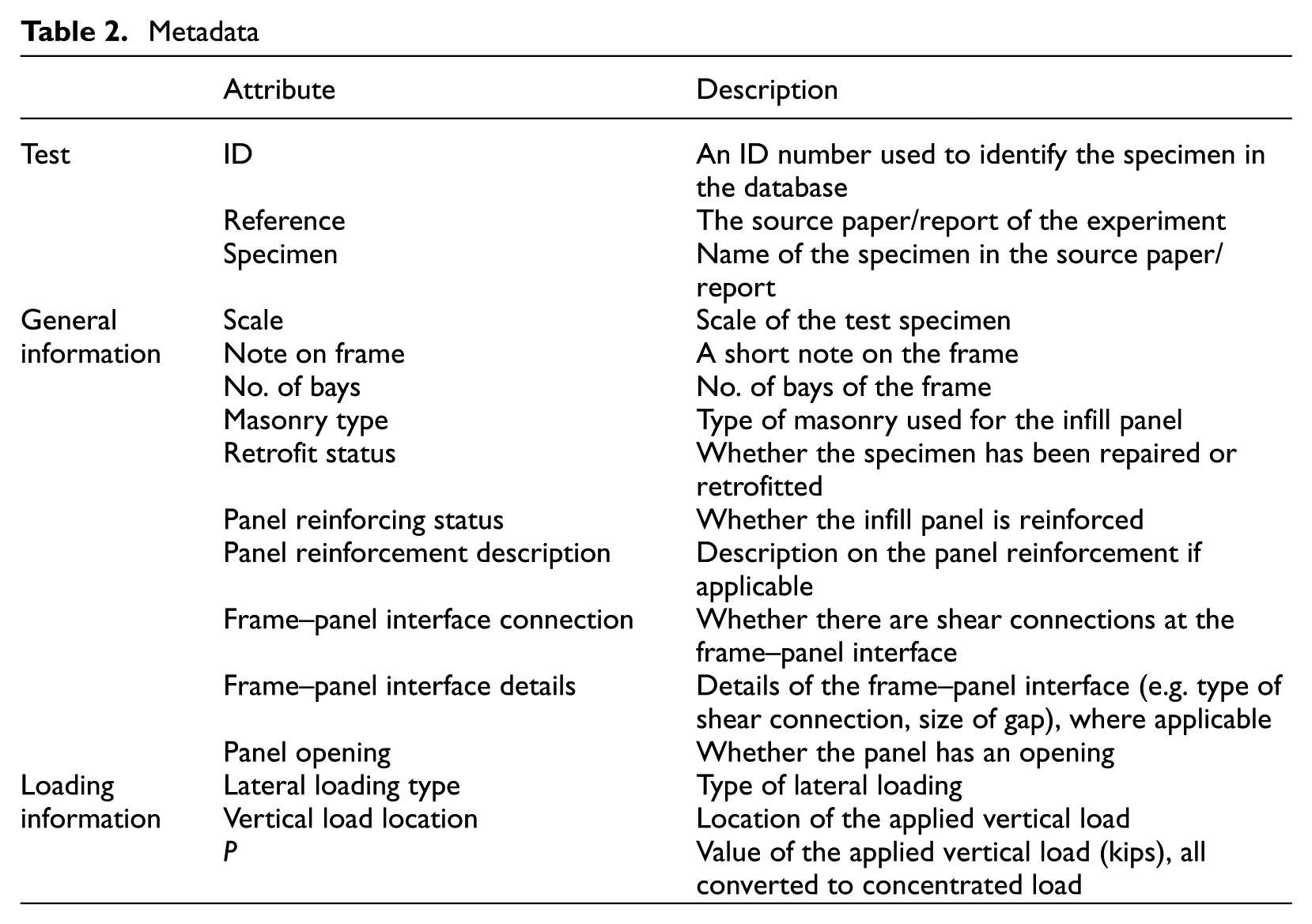
The data attributes contained in the metadata are listed in Table 2 along with a brief description for each one. Three types of information are included in the metadata: (1) Test, which provides the references and identifying information associated with each test specimen; (2) General information, which includes characteristics of the frame and infill panel; and (3) Loading information, which documents the lateral and vertical loading used in each test.
Metadata
The entire database consists of 257 one-bay one-story and 7 multi-bay one-story masonry-infilled frames. A total of 191 RC frames and 73 steel frames are included, which are recorded in separate excel sheets. The infill panels include a range of different types of masonry units, reinforced and unreinforced masonry, panels with and without opening, and with and without retrofit measures. Figure 1 presents a graphical summary of the types of infill frames included in the database.
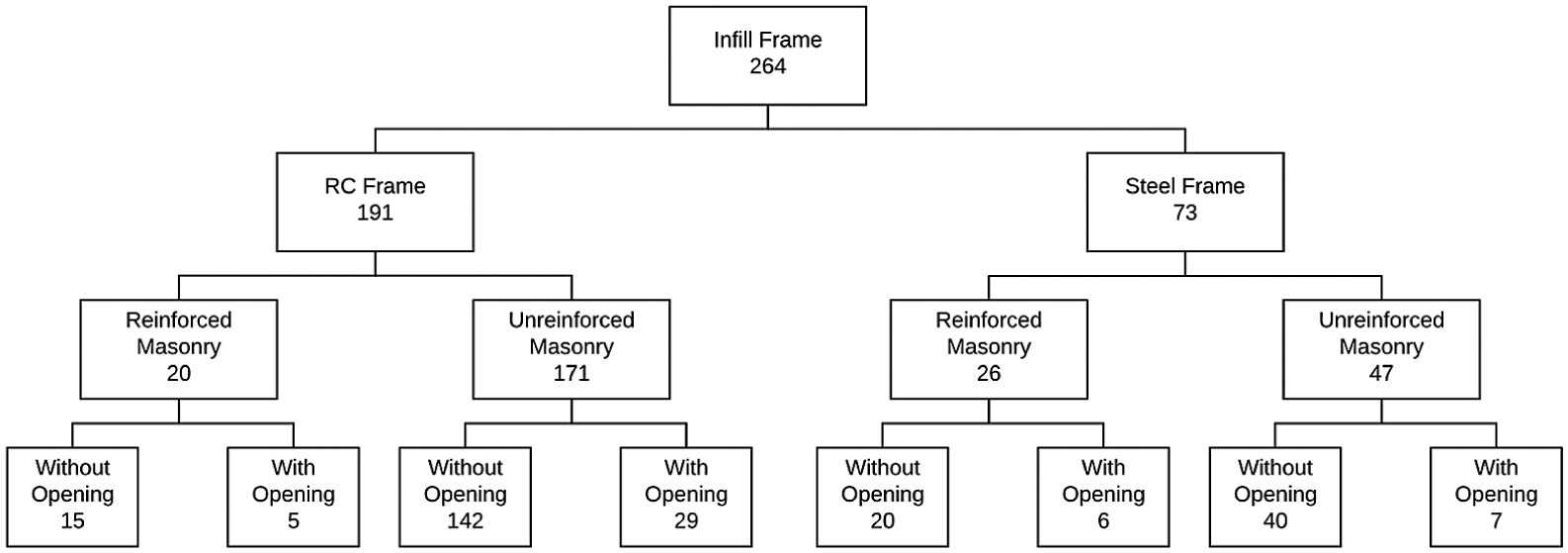
Summary of the specimen types included in the database.
Structural properties
This section describes the data collected on the structural properties of the test specimens. The properties are organized as geometric and material properties of the frame (depending on whether it is RC frame or steel frame), the reinforcing details of the concrete frame, and the geometric and material properties of the infill panel. All the properties are converted to U.S. customary units.
Geometric properties of the RC frames
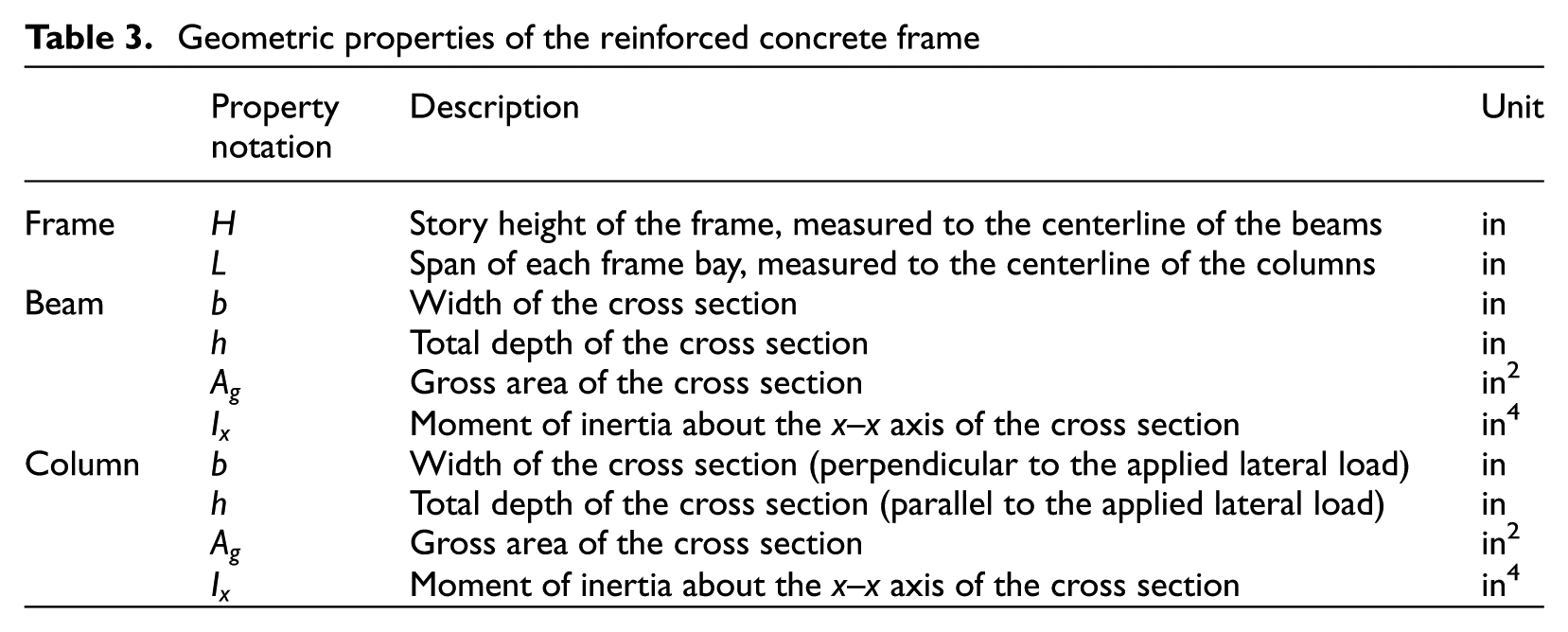
The geometric properties provided for RC frames are listed in Table 3, which include the story height and span of the bay (centerline dimensions) and the cross-sectional properties of the beam and column.
Geometric properties of the reinforced concrete frame
Material properties of the RC frames
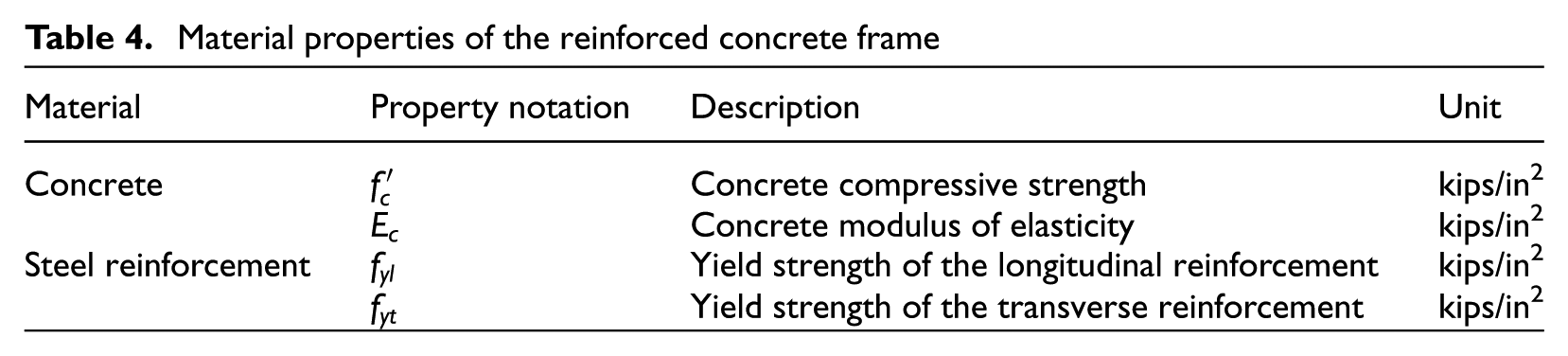
Table 4 lists the material properties of the RC frames recorded in the database. For specimens where the modulus of elasticity of the frame concrete is not provided in the source paper/report, the empirical equation recommended by ACI-318-14 (ACI Committee 318, 2014) is used to calculate the corresponding value:
Material properties of the reinforced concrete frame

where
Reinforcing details for the concrete frames
The geometric properties of the concrete frame reinforcement are listed in Table 5. The collection, organization, and notation of these properties are consistent with that of Haselton et al. (2008), who developed a set of empirical equations to predict the modeling parameters of beam–column elements used in the nonlinear analysis of RC frames.
Reinforcing properties
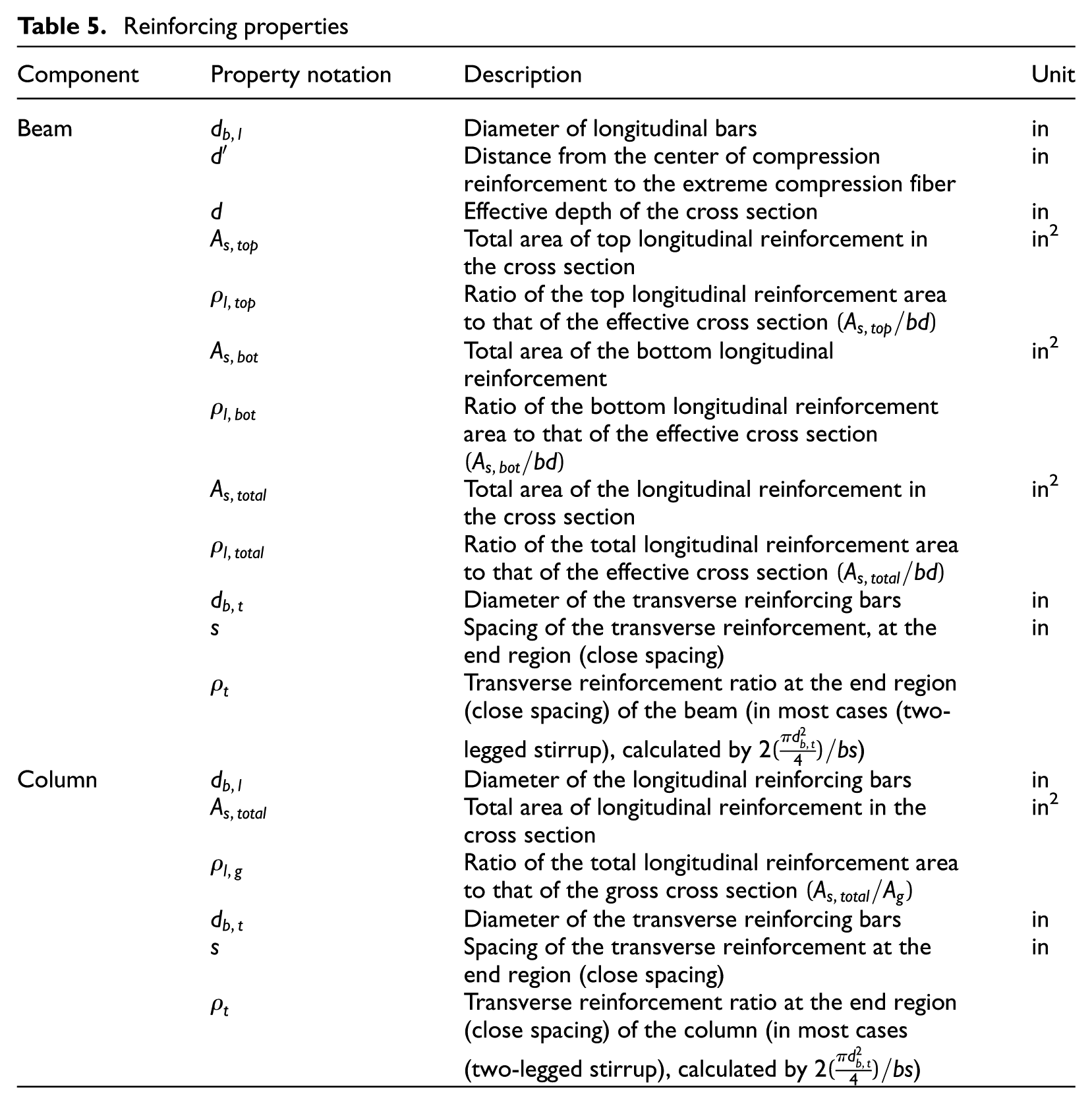
It should be noted that the values of clear cover to the rebar are not reported in many of the data sources. Therefore, most of the recorded values of the distance from the center of the compression reinforcement to the extreme compression fiber
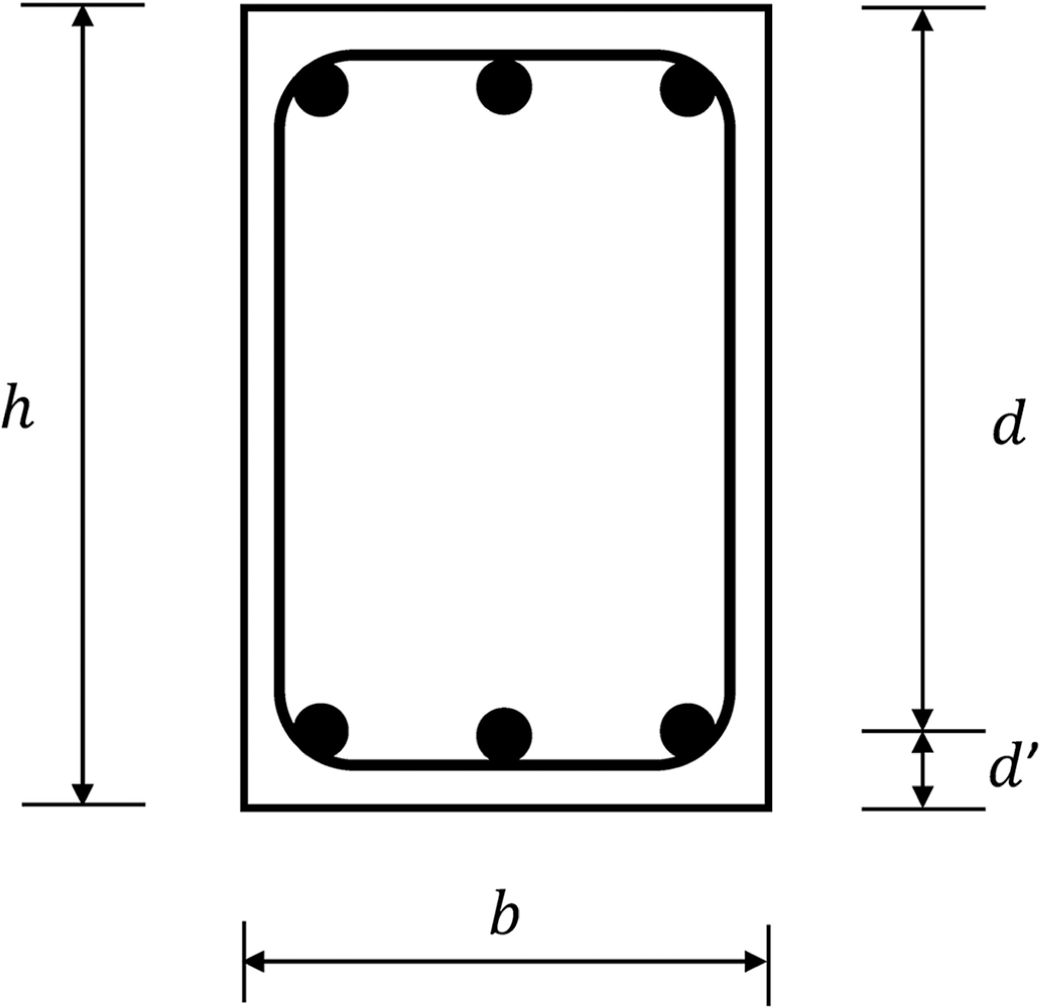
Cross section of an RC beam.
Geometric properties of the steel frames
Table 6 lists the geometric properties of the steel frame members. All notations for the steel section properties are in accordance with ASTM specifications (ASTM A6/A6M-17a, 2017). Figure 3 shows the cross section of the wide-flange steel member.
Geometric properties of the steel frame
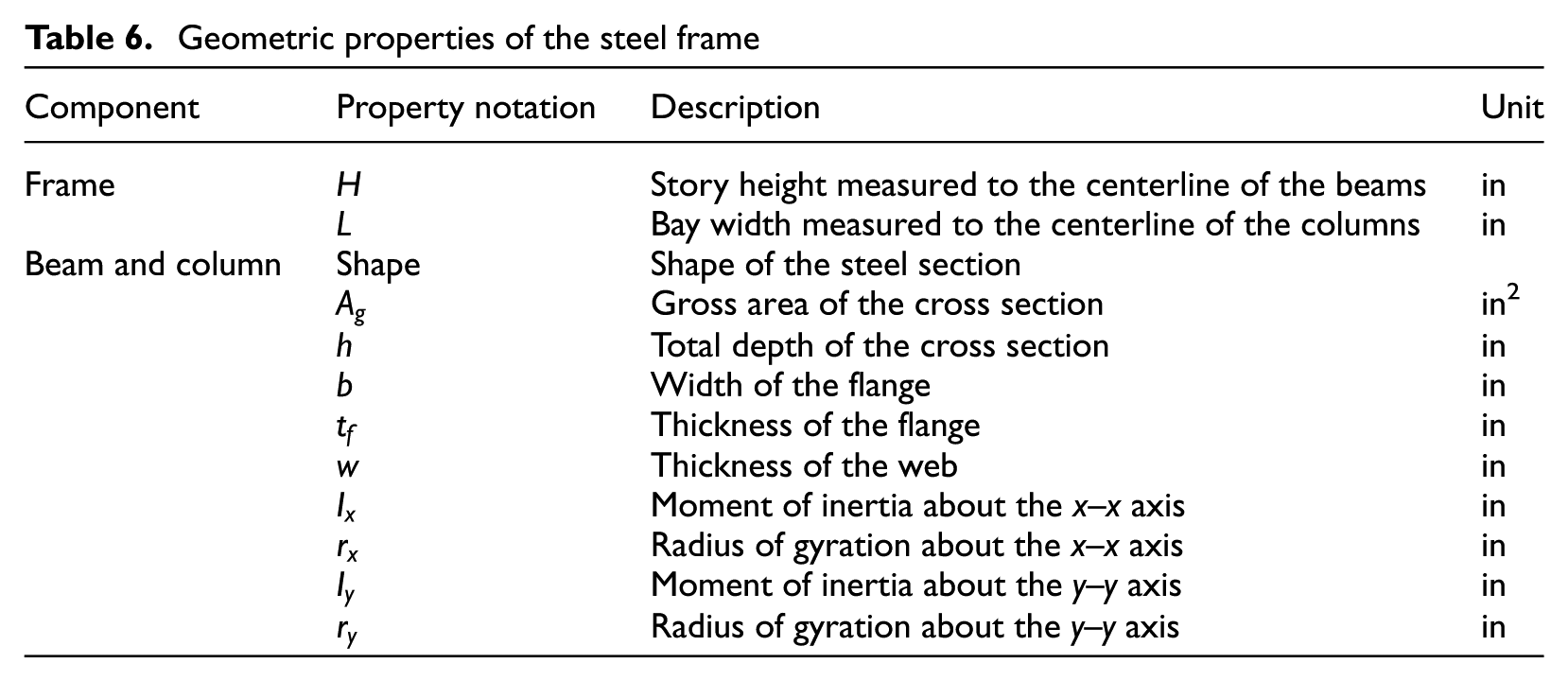
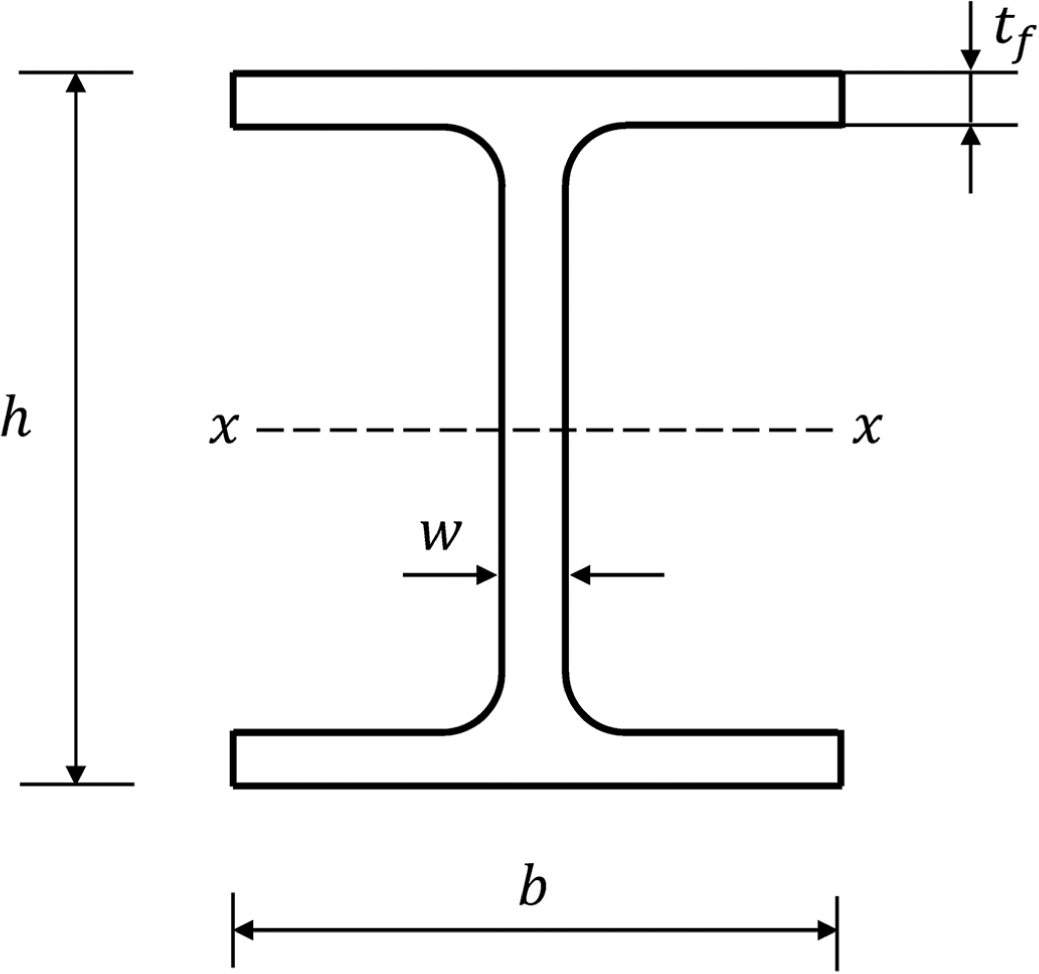
Cross section of a typical wide-flange steel member.
Material properties of the steel frames
Where available, the yield and ultimate strength (very few available) of the steel frame members are provided (see Table 7).
Material properties of the steel frame members

Geometric properties of the infill panels
As noted in the beginning of “Summary and sources used to develop the database” section, the database incorporates infilled frames with and without panel openings. The geometric properties of the panel and opening are listed in Table 8. Three measurements are used to document the location and size of the opening: the length
Geometric properties of the infill panel
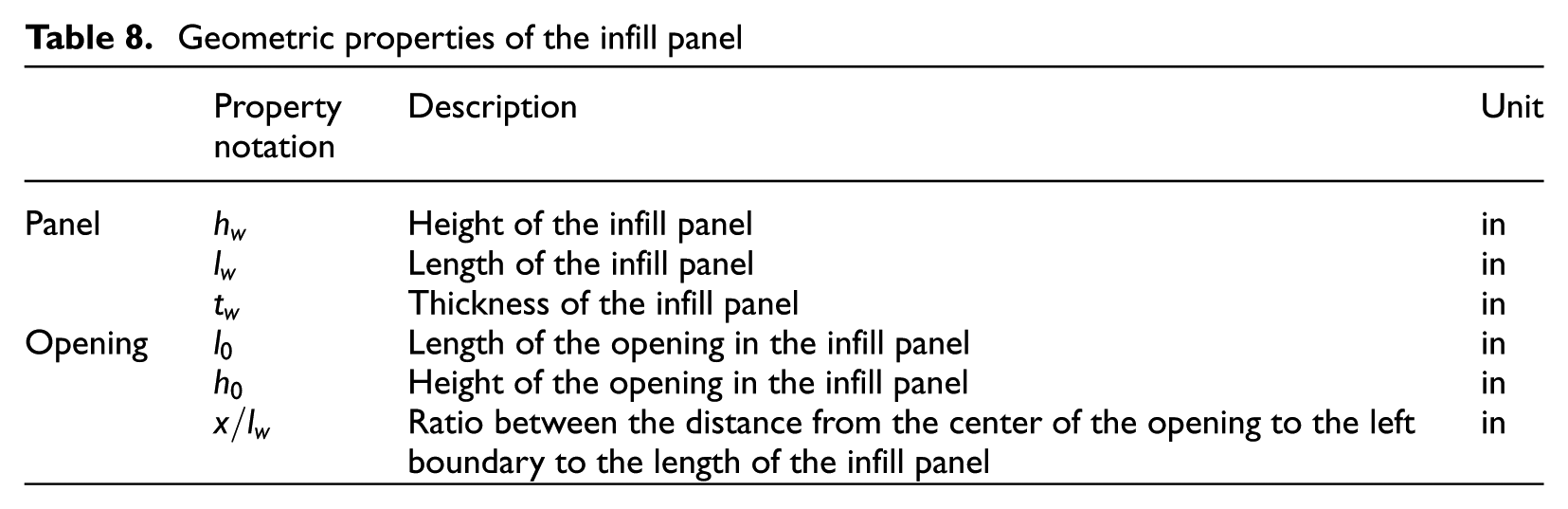
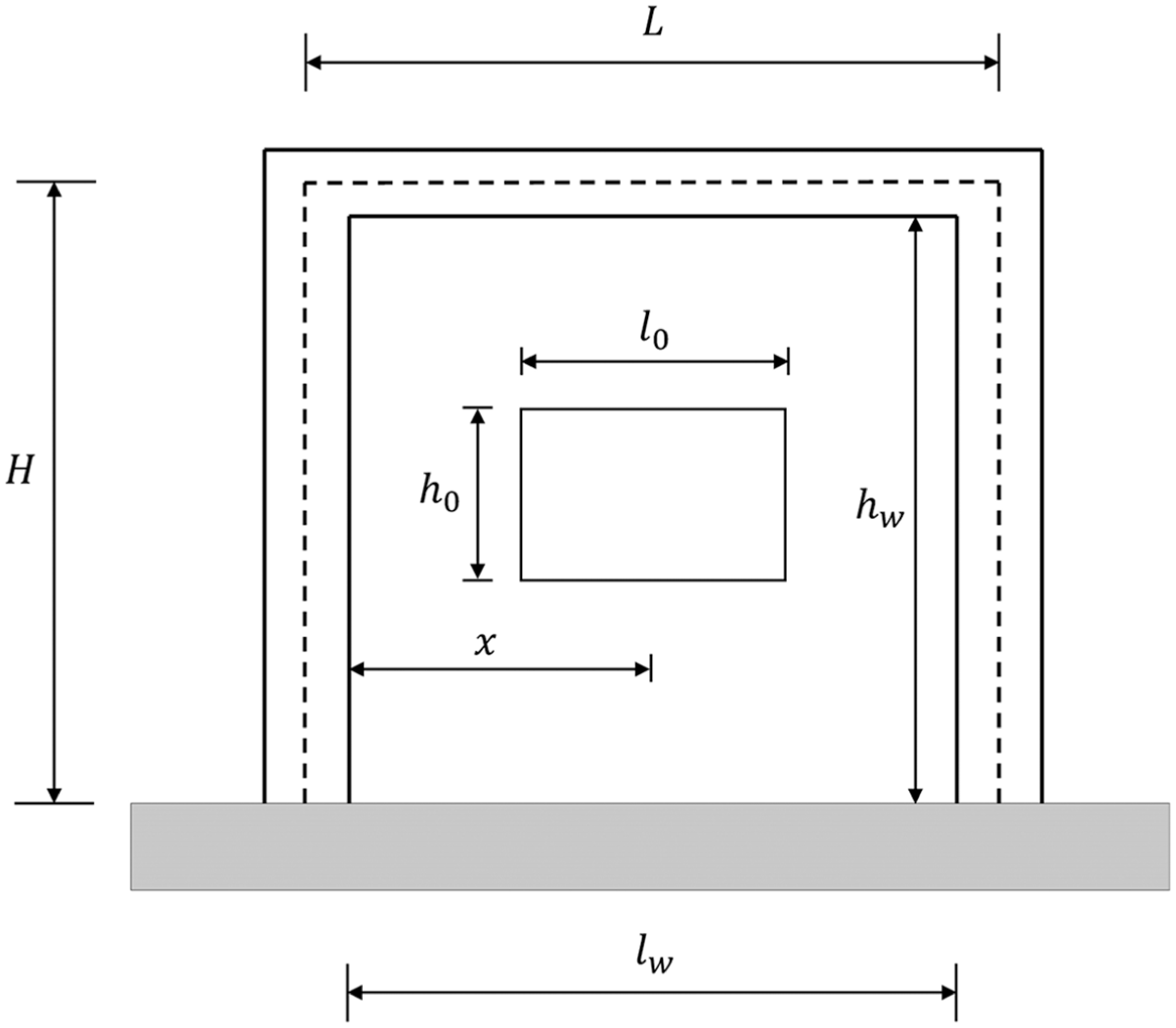
Geometry of the infilled frame.
Material properties for the infill panel
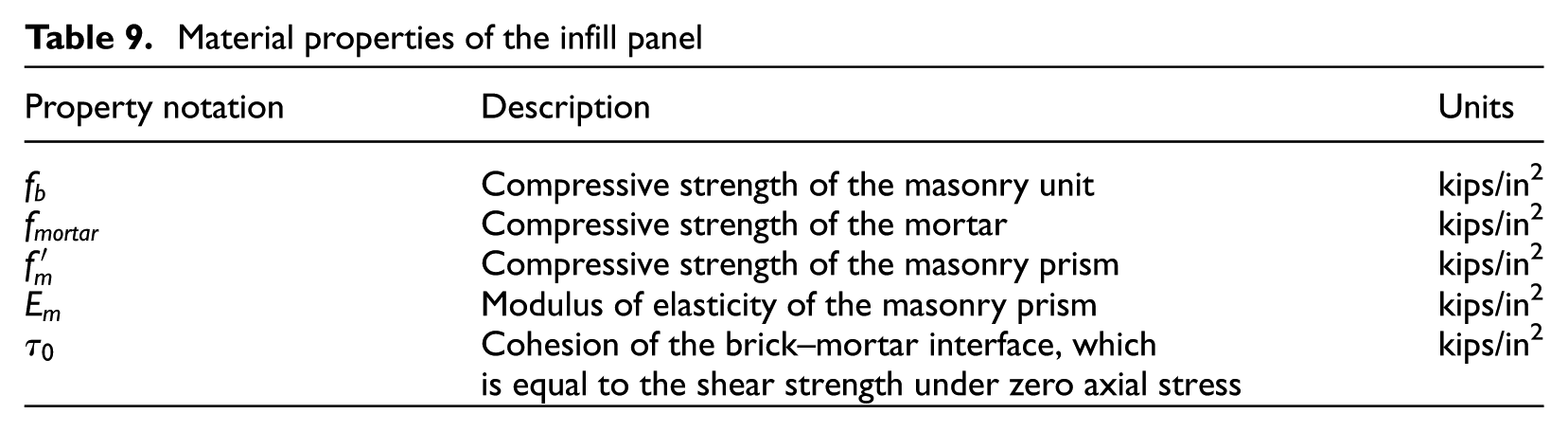
The material properties for the infill panel are listed in Table 9. The compressive strength of the masonry prism

The compressive strength of the masonry units
Material properties of the infill panel
Force–displacement curve
A force–displacement curve provides information on the nonlinear response history of the test specimens under monotonic, cyclic, or dynamic loading, which is critical for analyzing the overall behavior, calibrating numerical model parameters, and developing analytical equations for response estimation. However, there are several challenges associated with acquiring the force–displacement data. Several sources did not provide the force–displacement curves for all the specimens tested. Moreover, in many cases, the provided force–displacement curves are only available graphically instead of in the original digital format.
In order to extract key response parameters from the force–displacement curves, the authors converted the plot images to digital format. However, for cyclically loaded specimens, the sequences of the original hysteretic cycles cannot be inferred from the digitized data. In other words, the plotted figure can reproduce the curve visually but the information about the sequence of the load–displacement cycles cannot be extracted. Therefore, such data can inform visual calibration but not energy-based analysis. However, we were able to extract the envelope curves from the digitized data, which is ordered from the largest negative displacement to the largest positive displacement.
The database provides the force–displacement data (in comma-separated (.csv) format) for test specimens where such information is available in the source paper/report, as well as the envelope curves for cyclically loaded specimens. The first column in the .csv file records the displacement values, and the second column has the corresponding force values. Figure 5 shows an example of the plotted force–displacement and envelope curve data for the test specimen in the experimental program by Bose and Rai (2014).
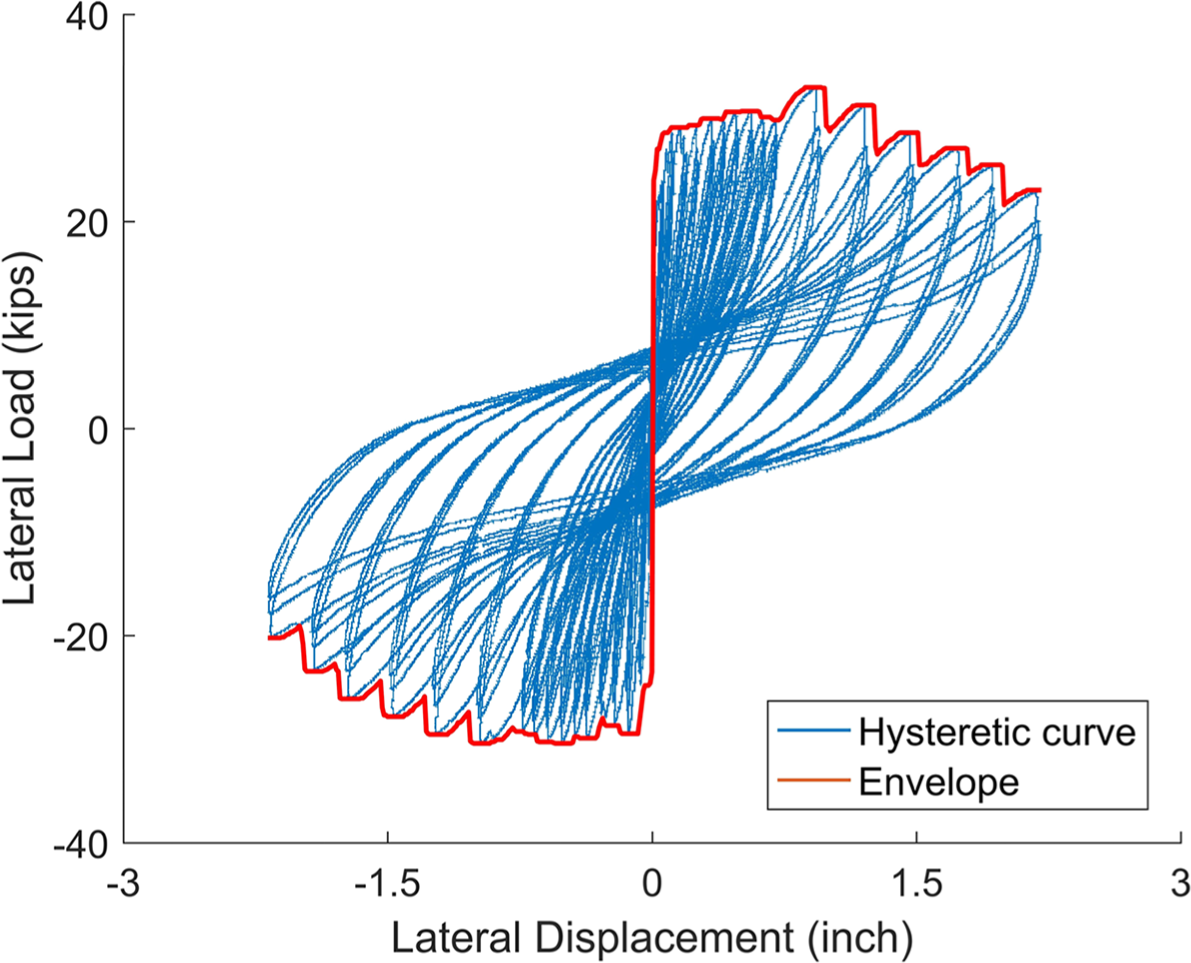
Force–displacement hysteretic curve and envelope.
Statistical summary of the structural properties
This section provides a statistical summary of the data in the structural property category. All notations and units correspond to those described in the previous section.
RC frame
The distributions of key properties of the RC frame and the components (beam and column) for the 191 specimens are presented in Figures 6 to 8 as histograms. The story heights range from 16.50 to 123.03 in, with a mean of 62.92 in (5.24 ft). Approximately 70% of the specimens have a story height in the range of 50 in (4.17 ft) to 100 in (8.33 ft). Approximately 50% of the test specimens have a concrete compressive strength
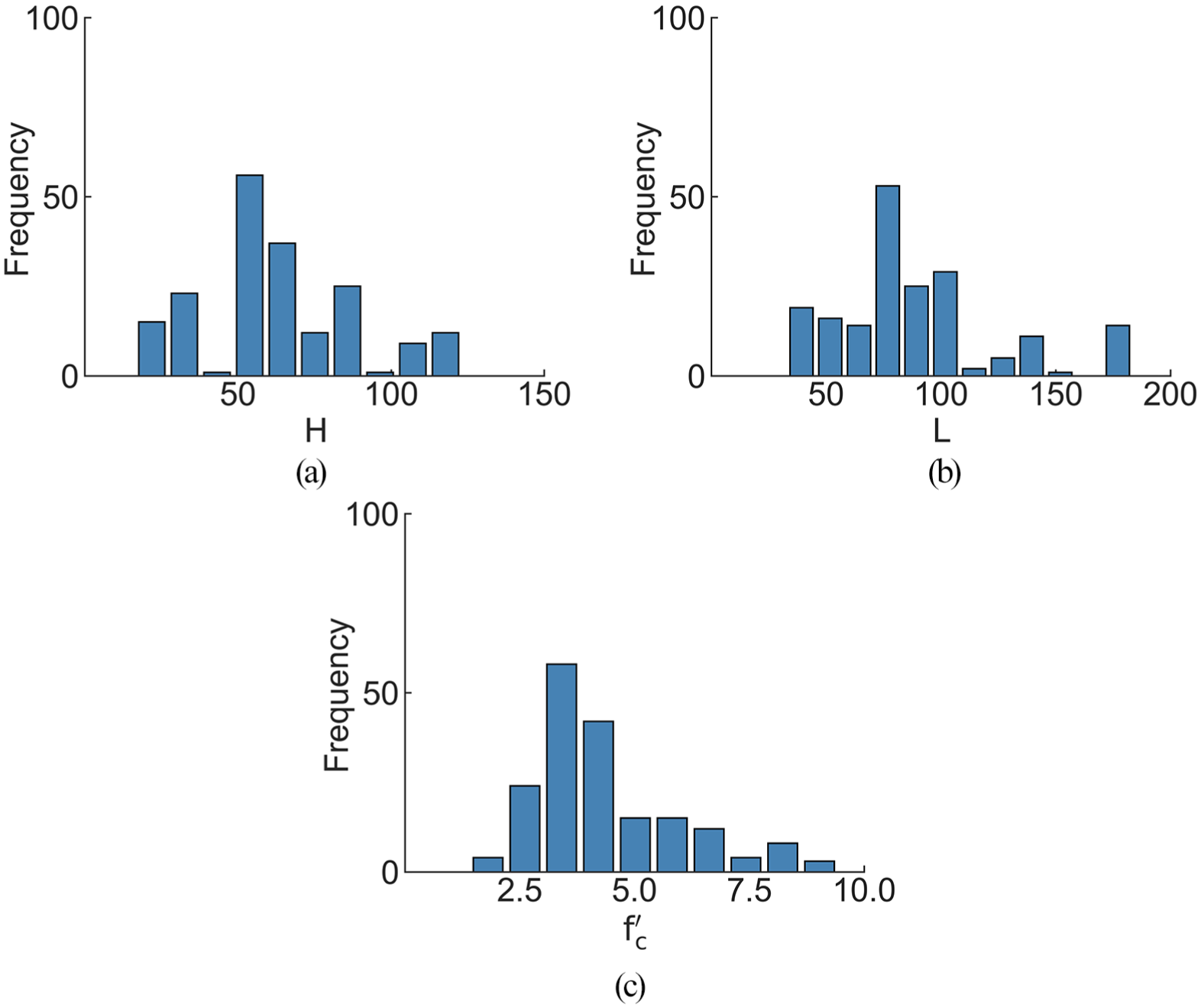
Distribution of the RC frame properties: (a)
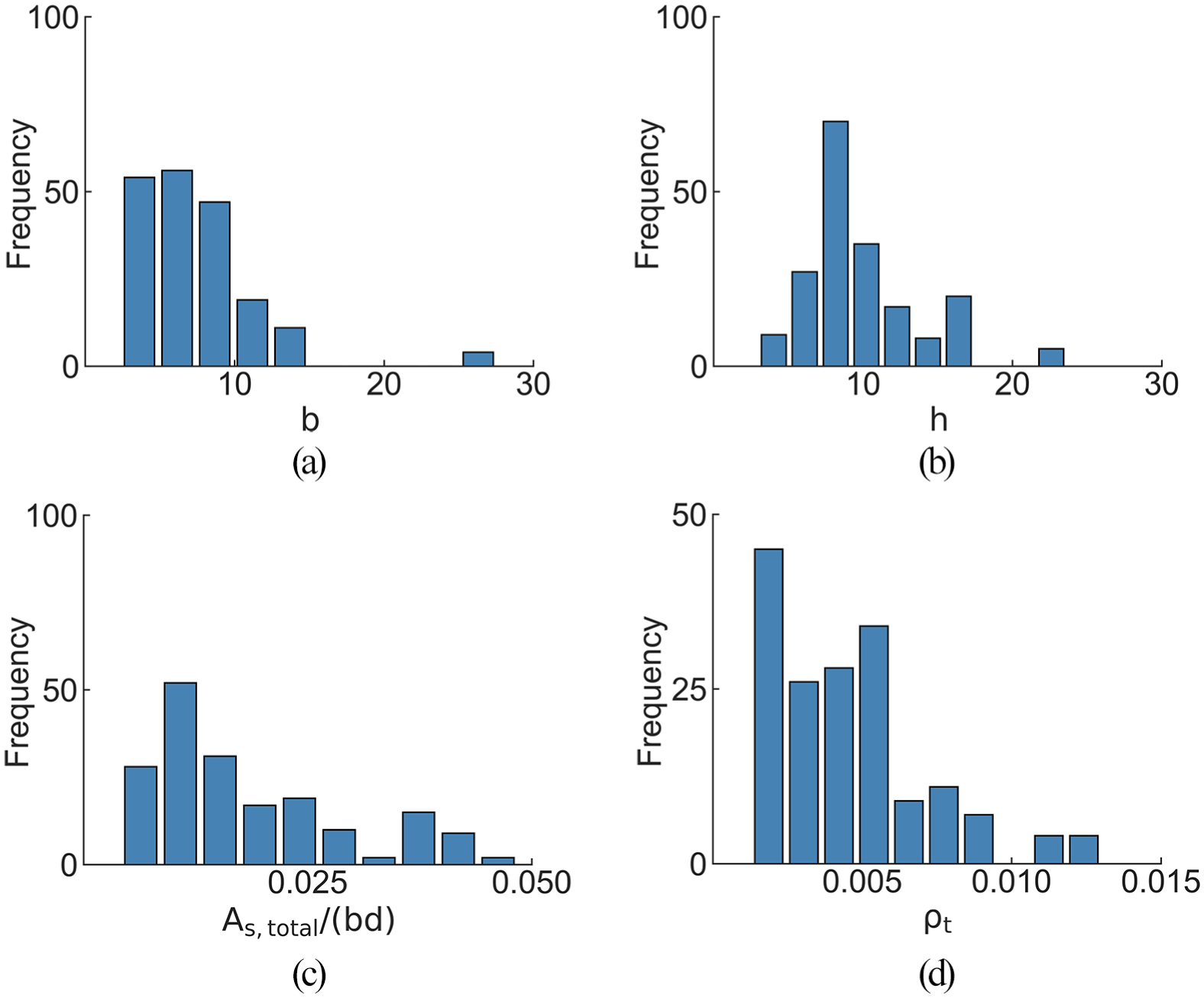
Distribution of the RC beam properties: (a)
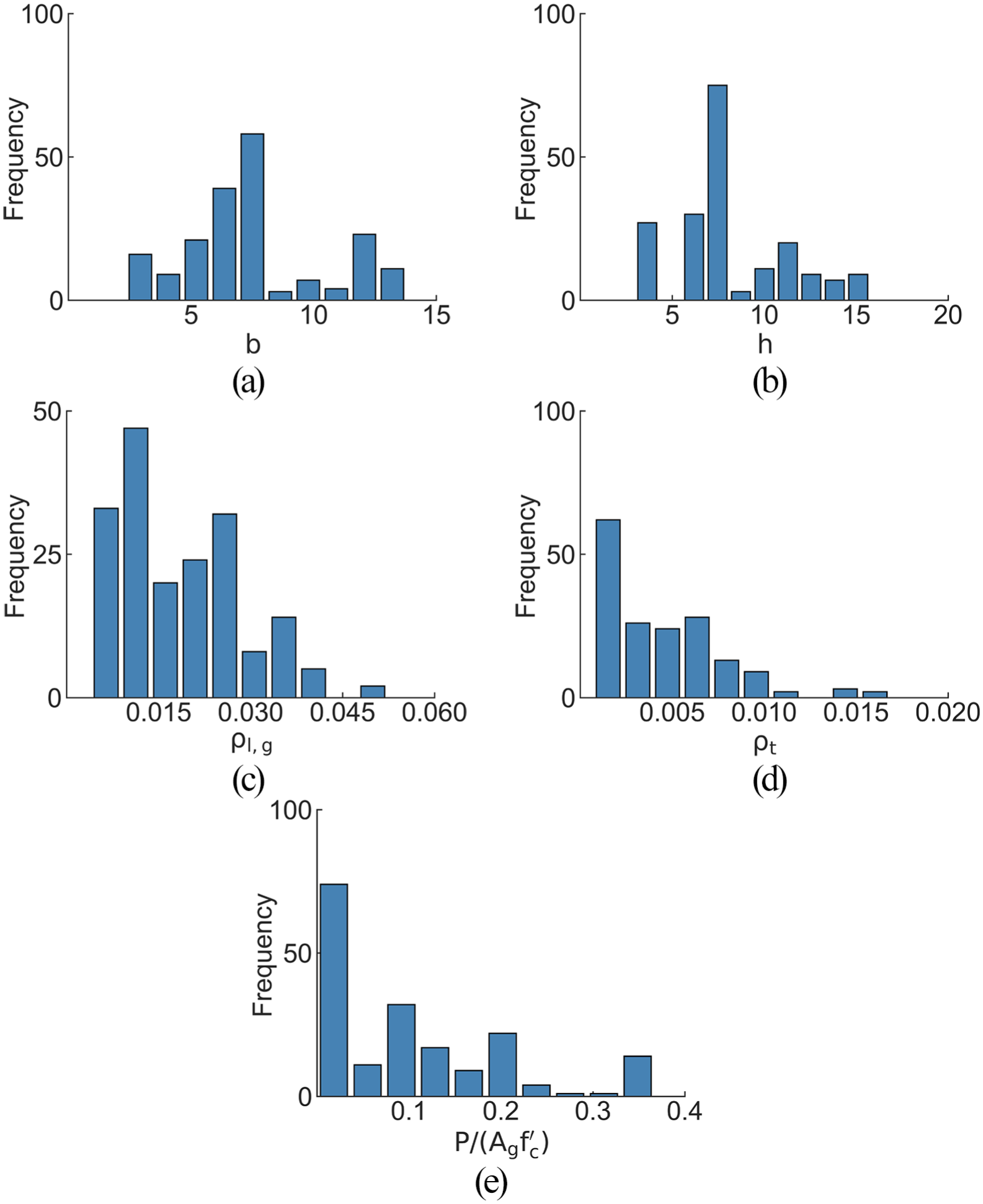
Distribution of the RC column properties: (a)
The distributions of key properties of the RC column are presented in Figure 8. The axial load ratio
Steel frame
The distribution of the key properties for the steel frame and its components (beam and column) for 73 specimens are shown in Figures 9 to 11. The story height of the steel frame specimens ranges from 16.3 in (1.36 ft) to 115.7 in (9.64 ft). Among the 45 specimens for which the yield strength of steel
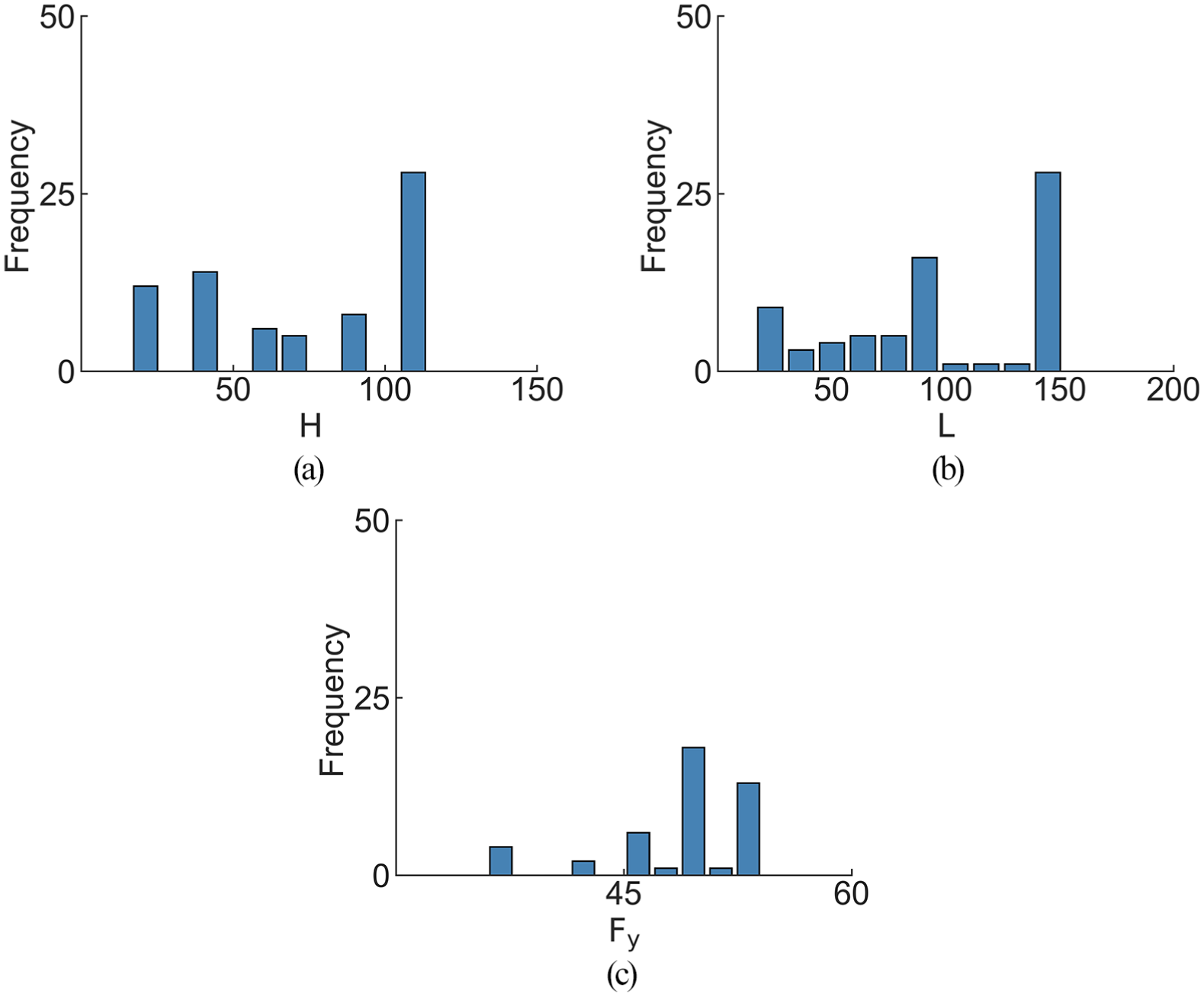
Distribution of the steel frame properties: (a)
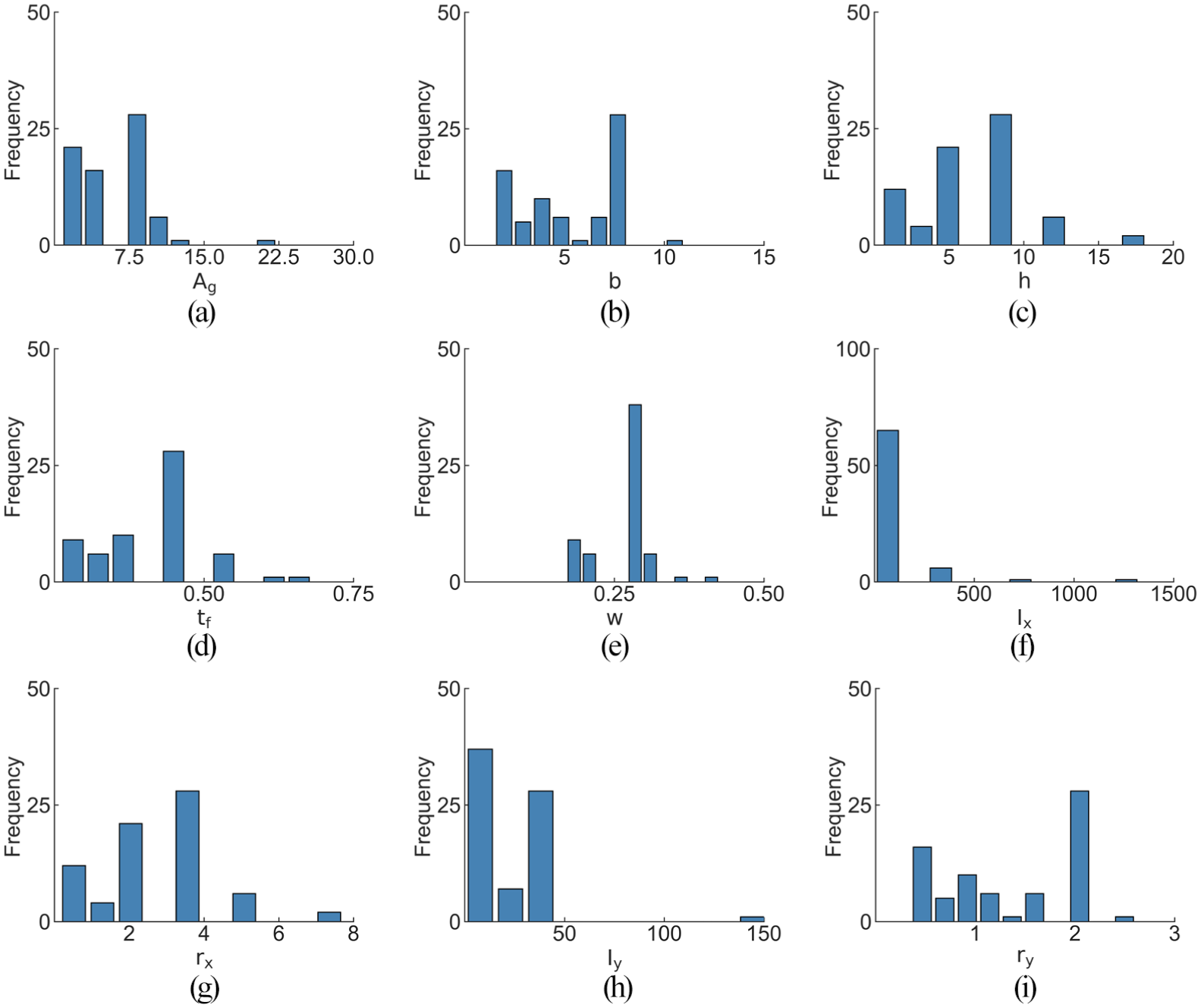
Distribution of the steel beam section properties: (a)
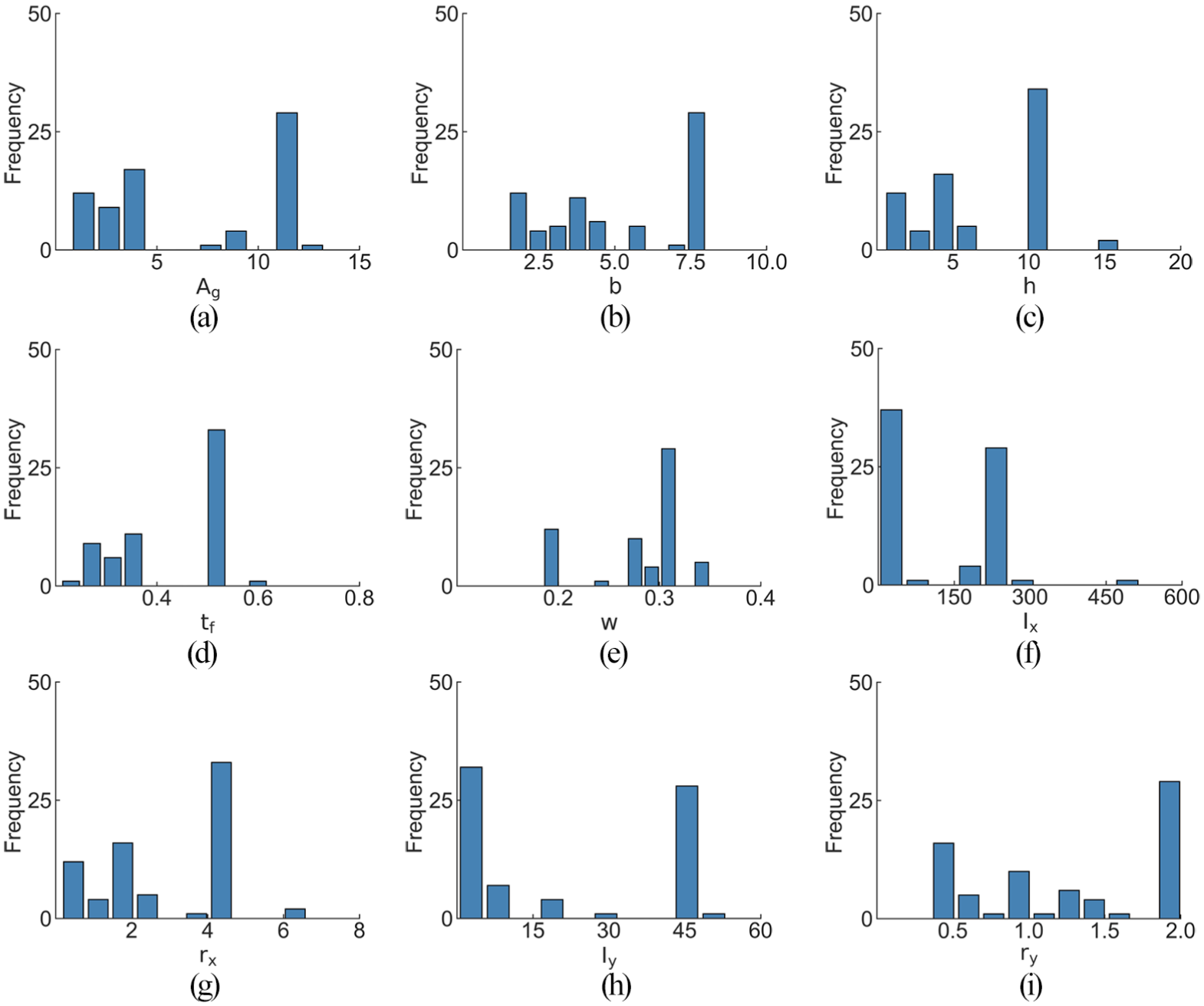
Distribution of the steel column section properties: (a)
Masonry infill panel
The distributions of key geometric and material properties for the infill panel in the 264 test specimens are shown in Figure 12. Here, 76% of the specimens have an aspect ratio
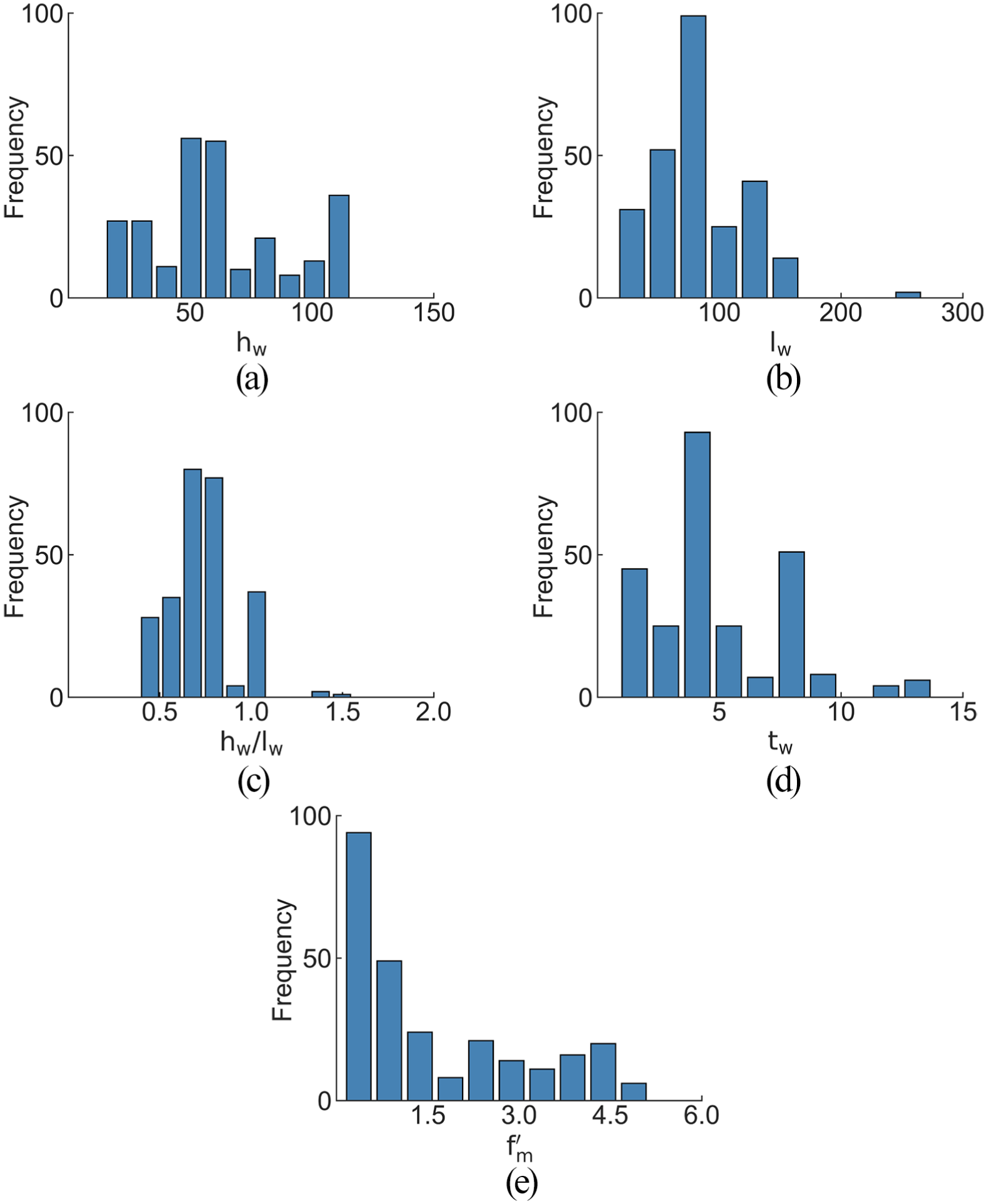
Distribution of the infill panel properties: (a)
Figure 13 shows the distribution of panel opening geometries for 45 specimens. Here, 66.7% of the specimens have openings located at the center of the panel, while 33.3% have openings located away from the center of the panel.
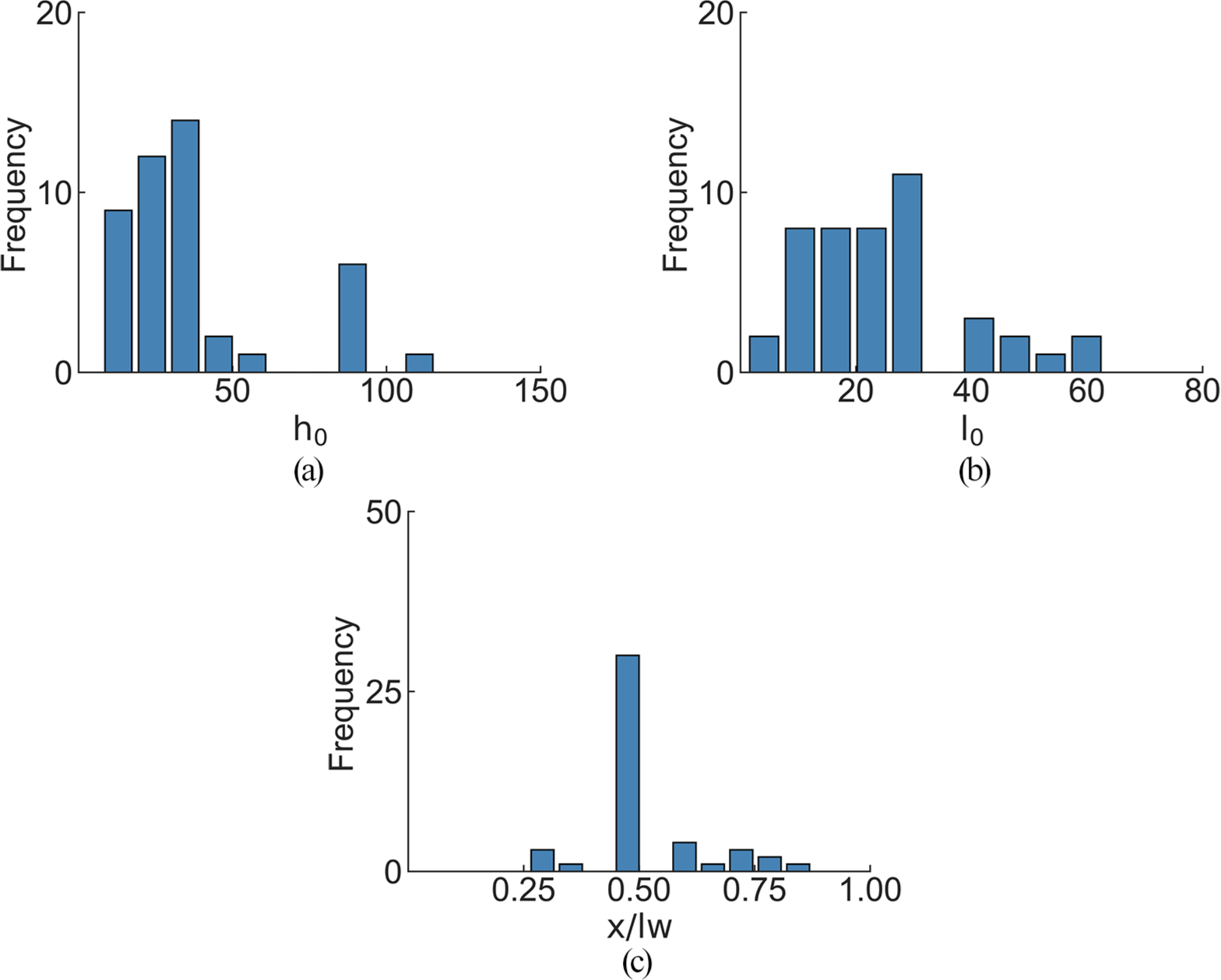
Distribution of the panel opening geometry: (a)
Summary of prior applications of the database
A subset of the developed database was utilized in a study by the authors to develop empirical equations for the backbone curve parameters that characterize the nonlinear response of infill panels modeled as equivalent diagonal struts (Huang et al., 2019). The dataset utilized in that study consists of 113 specimens that are constructed using RC frames with unreinforced masonry panels without openings or retrofit measures. The RC beams and columns are represented using a concentrated plasticity model consisting of elastic beam–column elements with two zero-length hinges at the ends. The beam hinge is modeled using a flexural spring with the peak-oriented hysteretic model developed by Ibarra et al. (2005), and the column hinge is modeled with two springs in series: a flexural spring with the peak-oriented hysteretic material model (Ibarra et al., 2005) and a shear spring with the shear failure model (LimitState material model) developed by Elwood (2004). The infill panel is modeled with two diagonal struts (one in each direction) using a truss (axial-only) element with the Pinching4 material model developed by Lowes et al. (2004) in the Open System for Earthquake Engineering Simulation (McKenna et al., 2000).
The parameters of the Pinching4 material for the infill struts are calibrated iteratively by seeking a visual match between the experimental hysteretic curve of the entire infilled frame and the hysteretic curve from the numerical analyses in OpenSees. Further details of the assumptions used to calibrate the Pinching4 parameters can be found in Huang et al. (2019). Some of these modeling assumptions are based on the paper by Noh et al. (2017), which provides a comprehensive review and assessment of the numerical modeling methods for infilled frames. For illustration, we again use the test specimen in the experimental program by Bose and Rai (2014) as an example. Additional specimen calibrations can be found in Huang et al. (2019). Figure 14 shows the result of the calibration, where the blue solid line represents the experimental hysteretic curve and the brown dashed line represents the response simulated using the OpenSees model.
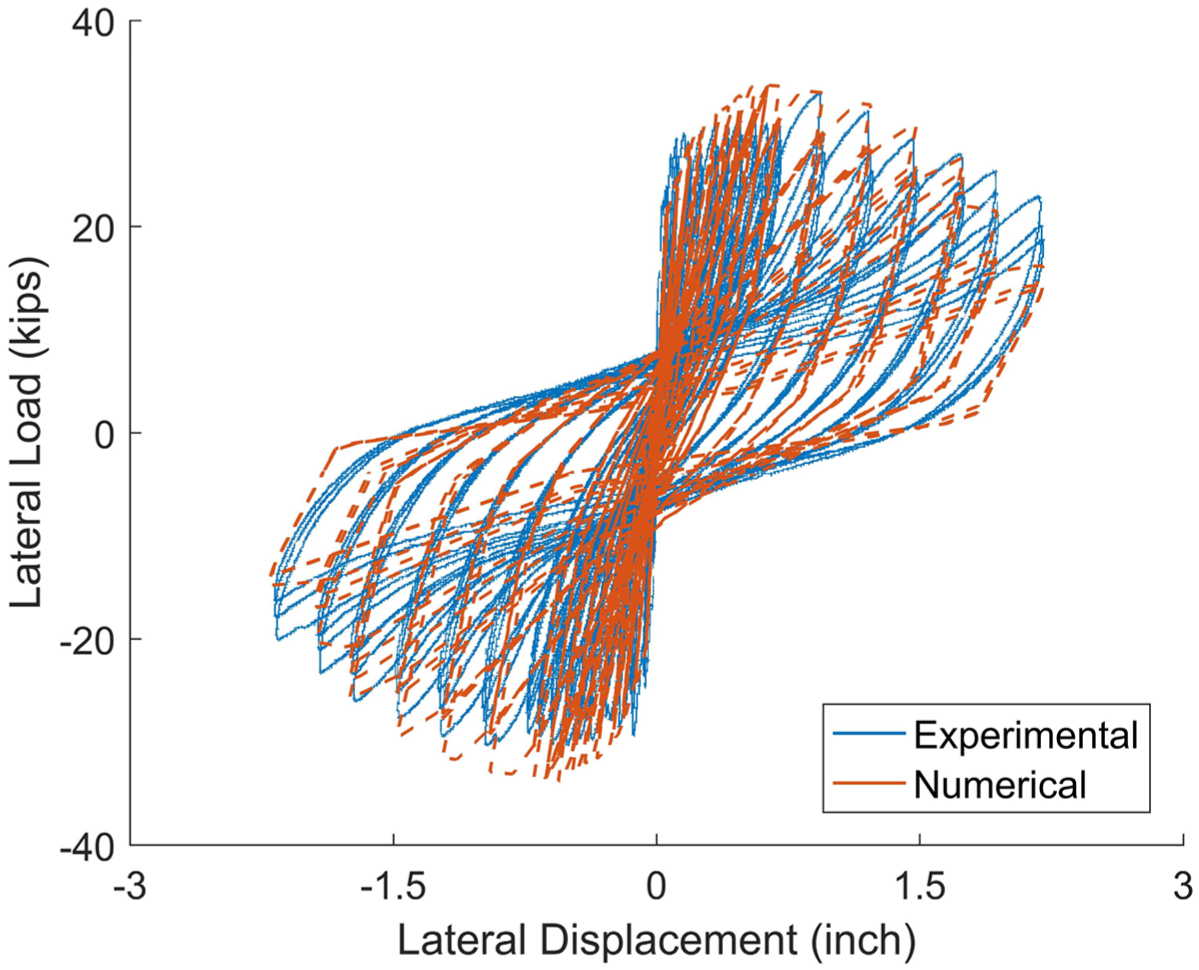
Calibration result for the test specimen in Bose and Rai (2014).
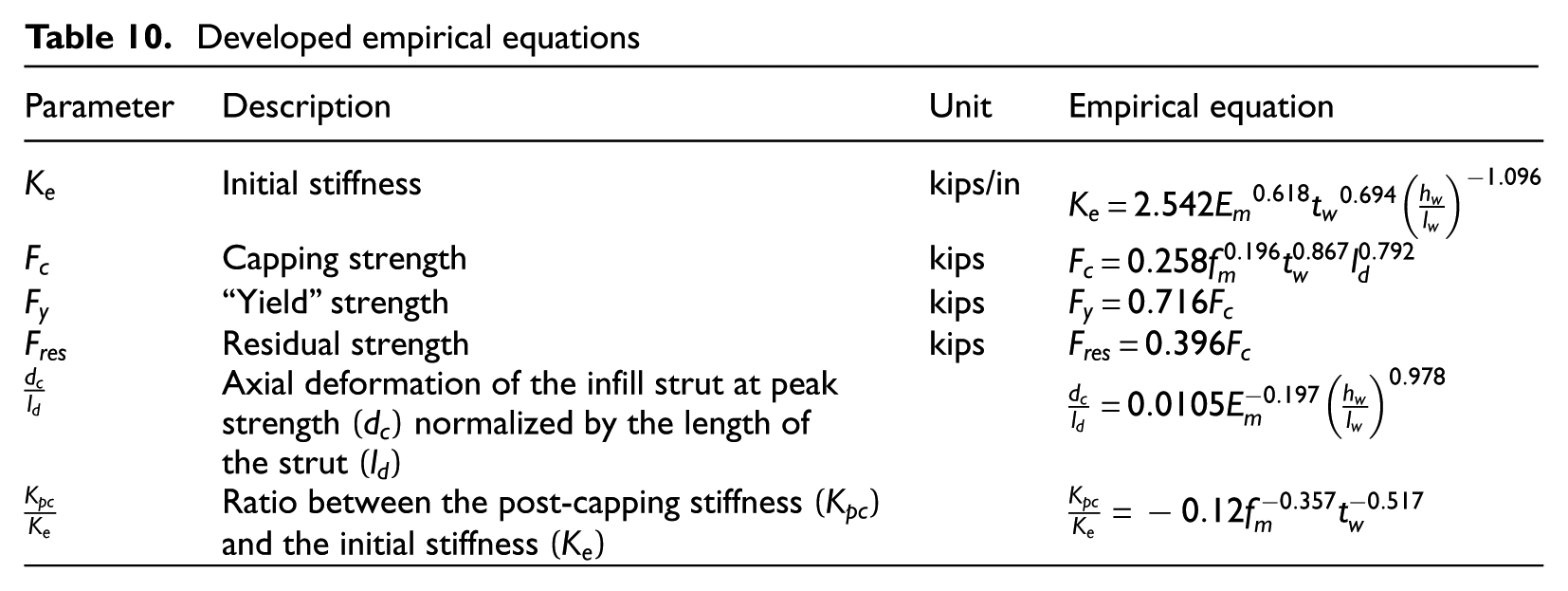
The developed empirical equations for the backbone curve parameters for the axial response of the equivalent infill struts are listed in Table 10 (in U.S. customary units). The parameters are based on the Pinching4 material but are adaptable to other similar models.
Developed empirical equations
Another subset of the dataset comprising 114 RC infilled frame specimens without openings was used to develop machine learning models to classify their in-plane failure modes (Huang and Burton, 2019a). To obtain the learning labels, the four distinct in-plane failure modes described by Tempestti and Stavridis (2017) were adopted (their proposed classification rule based on two quantitative metrics was not used). The labels were assigned by classifying the observed and documented failure mechanism from each experiment based on the following categories:
Infill sliding and column flexural hinging (SF): diagonal shear sliding of the infill and formation of flexural hinges in the columns;
Infill sliding and column shear failure (SS): diagonal shear sliding of the infill and brittle shear failure in the columns;
Infill crushing and column flexural hinging (CF): sliding in the early stages of loading and the presence of infill crushing and the formation of flexural hinges in the columns;
Infill crushing and column shear failure (CS): sliding in the early stages of loading and the presence of infill crushing and brittle shear failure in the columns.
Because of the small number of specimens in the dataset with the CS failure mode, it was deemed inadequate to support the development of a data-driven model and was therefore excluded.
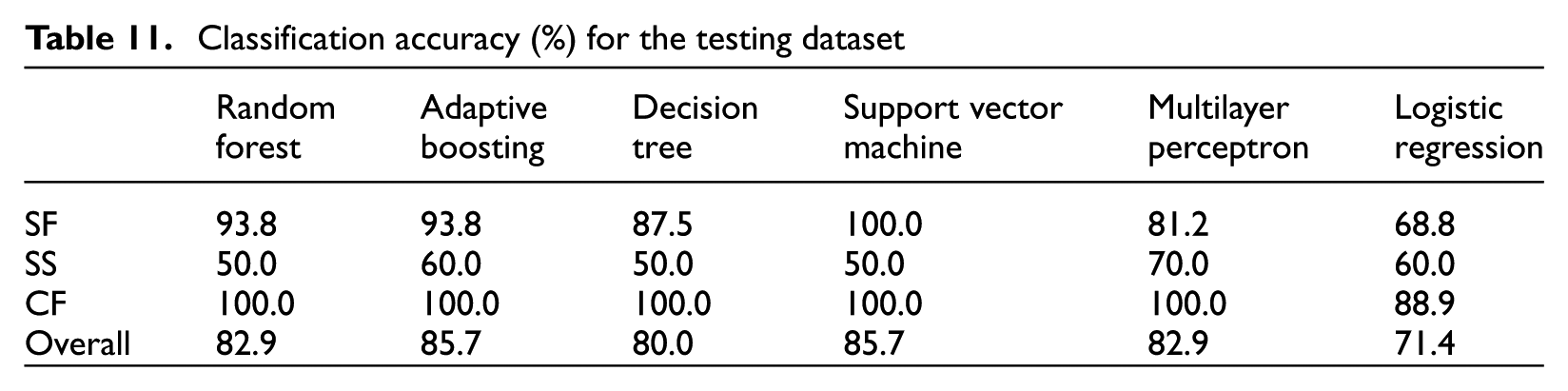
To develop the classification model, the dataset was randomly split into 70% for model training and hyperparameter tuning, and the remaining 30% for evaluating the performance of the machine learning models. Logistic regression (Hastie et al., 2009), decision trees (Breiman et al., 1984), random forests (Breiman, 2001), adaptive boosting (Freund and Schapire, 1997), support vector machine (Cortes and Vapnik, 1995), and multilayer perceptron (Hinton, 1989) were employed for classifying the infilled frame failure modes using nine features related to the geometric and material properties. Detailed descriptions of each algorithm can be found in Huang and Burton (2019a). The machine learning models were first formulated using the training set, during which five-fold cross-validation was performed to optimize the hyperparameters. The trained models were then applied to the testing dataset, and the classification accuracies are presented in Table 11.
Classification accuracy (%) for the testing dataset
There are several other potential applications of the assembled database that can be undertaken in future research efforts. First, the data can be used to validate numerical models for infilled frames. Second, more empirical equations for the parameters that define the material models in OpenSees can be developed. Emphasis can be placed on the model parameters that control cyclic degradation, which are especially challenging to analyze and, as a result, have received very little attention in the research literature. Furthermore, the data for the infill panels with openings, and the infilled steel frames, which have not been utilized by the authors, can be used for various research applications.
Conclusion
A database of experiments conducted on infilled frames has been assembled and made publicly available through the DesignSafe cyberinfrastructure. In its current form, the database includes 191 infilled RC frames and 73 infilled steel frames. All the test specimens are one story, which is common for two-dimensional tests performed with pseudo-dynamic, quasi-static cyclic or monotonic loading. Among the 264 test specimens, 7 are one-story multi-bay frames and the rest are one-story one-bay frames. A variety of infill panel types are included.
The information provided in the database includes metadata, structural properties, and test results, which are valuable for studying the nonlinear behavior of infilled frames, especially the interactions between the frame and the infill panel. The database was originally assembled with the goal of calibrating material parameters for infill strut models and developing empirical equations to predict those parameters. However, various other research applications can benefit from this unified experimental database.
The current database has several limitations, which needs to be improved with additional input from the civil engineering community. Due to differences in the data quality and level of details reported in the various sources, there is missing information for several attributes of the experiments. In most instances, the force–displacement data are not available in digital format. For these cases, the figures provided for the force–displacement curves were digitized for visualization and calibration purposes. However, such data do not provide complete information on the original response and should therefore be used with caution. Finally, additional detailed information on the experiments can be found in the source paper/reports provided in the list of references.
Footnotes
Declaration of conflicting interests
The author(s) declared no potential conflicts of interest with respect to the research, authorship, and/or publication of this article.
Funding
The author(s) received no financial support for the research, authorship, and/or publication of this article.