







Abstract
Response to intervention (RTI) allows schools to support the academic success of English learners (ELs) while helping educators rule out cultural or linguistic differences and educational background as the root of ELs’ academic or behavioral struggles. However, in rural schools, insufficient training in how to effectively instruct ELs and limited experience teaching ELs due to local demographics may lead RTI teams to prescribe inappropriate interventions or to avoid putting ELs through the RTI process altogether. The framework proposed in this article guides rural RTI teams through the process of considering the factors that might be influencing the performance of struggling ELs to provide these students with the supports they need to benefit from core instruction and tiered interventions.
Keywords
Response to intervention (RTI) is a multitier system of support (MTSS) intended to provide students with high-quality, research-based instruction that matches their academic or behavioral needs (Fairbanks et al., 2007; L. S. Fuchs, 2006). D. Fuchs and Fuchs (2005) described two main models of RTI: standard treatment protocol and problem-solving. As part of their RTI process, schools often use published, benchmark assessments to complete universal screening in basic reading, math, and writing skills to identify students who are making unsatisfactory progress toward grade-level academic standards (Mellard et al., 2009). Some schools also use behavior rating scales to gather information about student behavior domains and school records to identify students who need behavioral support (Hawken et al., 2008; Riley-Tillman et al., 2005). Screening data collected on individual students are compared to general outcome measures and peers’ scores to identify those at risk for failing (Barrera & Liu, 2010; Shapiro, 2008). Several students exhibiting similar struggles within a class may indicate a need to examine the quality of core instruction and to develop teachers’ capacity to accelerate student learning. When this happens, schools must examine why core instruction is not meeting students’ needs, select (Tier 1) interventions that do, and use adequate tools for monitoring student progress in the target area (Dougherty Stahl, 2016). Individual students performing below expectations receive targeted (e.g., Tier 2) or individualized (e.g., Tier 3) interventions (Mellard et al., 2010). Students’ progress is monitored to determine the effectiveness of interventions; students’ failure to respond to targeted interventions may lead to more intensive interventions and, eventually, a referral for a special education evaluation (D. Fuchs & Fuchs, 2005). However, the almost exclusive use of general outcomes measures, such as curriculum-based measures (CBMs), for conducting universal screening may create challenges for the RTI team because they do not explain the reasons for students’ deficits (Barrera & Liu, 2010). This reliance on general outcome measures and overly prescriptive protocols as the backbone of the RTI process may diminish schools’ ability to personalize instruction (Balu et al., 2015).
The problem-solving approach of RTI is an inductive process which has four major objectives: (a) to identify and define the problem presented by an individual student in observable terms, (b) to analyze the problem and identify the variables influencing a student’s performance in order to develop an intervention plan, (c) to implement the intervention plan while monitoring the fidelity of implementation, and (d) to evaluate the effectiveness of the intervention and determine next steps (D. Fuchs et al., 2003). According to Marston et al. (2011), within the problem-solving approach to RTI, general education instruction and universal screenings occur before the first stage of the model. Stage 1 consists of classroom interventions equivalent to Tier 2 interventions provided in the standard-protocol model while Stage 2 focuses on the provision of individualized interventions similar to—but usually more rigorous than—those provided in Tier 3 of the standard protocol. Stage 3 of the problem-solving RTI model refers to the special education evaluation.
Although there is an increasing tendency in the literature to use the more general term MTSS, rather than RTI, to refer to the process used by schools to provide the level of academic and behavior support students need to meet standards (Harris & Sullivan, 2017), the term RTI is used throughout this article to follow the terminology used in the majority of the literature reviewed for this project. Still, the information and ideas presented here apply to most variations of MTSSs currently used in schools, RTI, or otherwise.
RTI in Rural Schools
RTI has become widely used in rural school districts across the United States. In a study involving almost equal numbers of rural and urban teachers conducted by Werts et al. (2014), some of the potential benefits of RTI reported by teachers included having the ability to intervene early, using differentiation more effectively, and reducing the number of students referred for special education evaluations. Consistent with those findings, results from a survey of rural teachers about the effectiveness of implementation of RTI in their schools revealed that, since the implementation of RTI, a higher percentage of students referred for special education evaluation actually qualified for services (Brendle, 2015). This finding suggests that RTI might not only help rural RTI teams address the needs of struggling students who do not have a disability but also assist teams in making more accurate referrals. Despite the progress, studies have identified ongoing challenges in the implementation of RTI within rural school settings. For example, Robinson et al. (2013) found that although rural educators were developing an understanding of data-based decisions, using universal screening, and progress monitoring to identify students in need of additional support, they still struggled to adequately implement RTI due to their limited understanding of evidence-based instruction in academic skills areas and restricted access to research-based core instructional programs. Similarly, Robinson et al. (2013) found that rural teachers had difficulty implementing the problem-solving component of RTI, presumably as a result of their insufficient experience with and knowledge about the practice and the time-consuming nature of the problem-solving process. Rural schools’ limited access to effective professional development (PD), instructional and financial resources, and specialized staff make it imperative for the different professionals involved in the implementation of RTI to expand their roles to include additional responsibilities associated with the RTI process and develop a common focus and knowledge base (Shepherd & Salembier, 2011).
Responding to the Needs of English Learners
Educational policies have emphasized the need for schools to address English learners’ (ELs) academic needs (Every Student Succeeds Act, 2015; No Child Left Behind, 2002) and conduct unbiased assessments to guarantee that disability diagnoses are not the product of English language or acculturation deficits (Individuals with Disabilities Education Improvement Act, 2004). Relatedly, researchers have warned about the need to conduct culturally and linguistically appropriate assessments to avoid giving erroneous diagnoses, which might contribute to disproportionality of diverse students—including ELs—in special education (Counts et al., 2018; Harris et al., 2015; Ortiz et al., 2006). More specific to rural school districts, Barrio (2017) provided recommendations for developing, implementing, and evaluating local educational policy to address the disproportionality of ELs in special education programs within rural schools. However, the persistent use of inadequate assessment methods and instruments (García et al., 2008) and educators’ limited training and expertise in working with culturally and linguistically diverse populations still make it difficult for many schools to accurately assess ELs’ cognitive and socioemotional needs (Orosco & Klingner, 2010), perpetuating the underrepresentation and overrepresentation of ELs in high-incidence disability categories at different points of K-12 (Artiles et al., 2005; Levinson et al., 2008).
Studies involving rural schools have found that most rural teachers received little to no training on how to adapt instruction for ELs and perceived themselves as being unprepared to teach these students (O’Neal et al., 2008). Although the struggle to effectively teach ELs is not exclusive to rural teachers, the challenges faced by these educators tend to be exacerbated by the historical underfunding of rural schools (Yettick et al., 2014), as well as the difficulties that rural school districts usually have to recruit and retain special education or EL education professionals and to offer adequate PD to staff teaching ELs due to isolation and limited resources (Lavalley, 2018). Because of these challenges, some scholars view RTI as an opportunity to introduce dynamic assessments that provide educators with more accurate information about ELs’ abilities and allow them to support the academic and behavioral needs of struggling ELs before beginning the special education prereferral process (Resendiz & Peña, 2015). However, the fixed nature of standard treatment protocols commonly used by RTI teams around the country—including rural schools—does not consider the linguistic and cultural factors that influence ELs’ performance. Schools must reject over-simplified, prescriptive RTI models that rely on a limited menu of assessments and interventions in favor of culturally responsive models that focus on problem-solving and allow individualization at all stages of the RTI process (Sanford et al., 2012).
RTI With ELs
Despite recommendations for implementing culturally and linguistically responsive RTI (J. E. Brown & Doolittle, 2008; Rinaldi & Samson, 2008), many RTI teams struggle to interpret EL data gathered through universal screening assessments (Orosco & Klingner, 2010) and to make sound decisions about which interventions are most likely to benefit specific ELs. Although CBMs are sensitive to the progress of ELs, especially in reading (Kim et al., 2016; Linan-Thompson et al., 2006), scholars agree that RTI teams should avoid relying solely on general outcome measures and prescriptive protocols that prevent the personalization of instruction for struggling ELs (Barrera & Liu, 2010; Richards-Tutor et al., 2016). Instead, they should adopt a problem-solving approach to understanding individual ELs’ strengths and weaknesses and selecting responsive interventions (Xu & Drame, 2008). Teams must reframe their implementation of RTI for ELs into a process that includes (a) comparing the EL’s performance to that of true peers, (b) exploring cultural, linguistic, socioemotional, and educational factors that affect EL’s performance; (c) selecting interventions that address the EL’s unique needs and have been found to work with similar students; and (d) establishing a progress-monitoring system that accurately measures progress on the targeted skill (Dougherty Stahl, 2016).
Hoover et al. (2019) collaborated with rural schools in implementing a multitiered level of supports for ELs which involved five components, including (a) multilevel instruction, (b) research-based instruction, (c) culturally and linguistically relevant instruction in Tiers 1 and 2, (d) multiple forms of assessment, and (d) ecological decision making. During their work with rural teachers and RTI teams, Hoover et al. (2019) emphasized the need to consider the effect of the learning and living environment on ELs’ learning when interpreting data; also, they reported evidence of long-term sustainability of multiple aspects of the suggested components of the implementation of RTI with ELs after substantial, explicit training. In addition, Hoover and Erickson (2015) have emphasized the need for RTI teams in rural schools to consider the EL’s language development and performance relative to true peers, as well as the quality of English instruction that the EL had received. In a study involving schools where ELs were instructed within an MTSS, Hoover and Erickson provided guidelines for conducting referrals of ELs for special education. These guidelines involved (a) using multiple progress-monitoring data points, (b) delivering high-quality Tier 1 core instruction (c) delivering high-quality Tier 2 instruction, (d) providing multiple sources of evidence to justify referral, (e) including work samples as a form of evidence, and (f) providing evidence of the presence of learning disability indicators in the student’s native language and English.
To move toward the goal of redefining RTI for ELs, schools must go beyond emphasizing principles of good teaching to provide staff with PD that explicitly addresses EL’s characteristics and needs and that exposes educators to evidence-based practices for teaching and supporting the linguistic and academic growth of ELs (Haager, 2007; Ortiz et al., 2006; Samson & Collins, 2012; Xu & Drame, 2008). For example, schools could provide teachers with PD on how to apply the Specially Designed Academic Instruction in English (SDAIE) model in their classroom to ensure access to content and opportunities (California Department of Education, 1993). When providing SDAIE, Cline and Necochea (2003) emphasized that teachers should learn to connect new content and skills to ELs’ previous learning; integrate visuals, manipulatives, and realia into daily instruction; include language supports within daily lessons; use text chunking and webbing to help ELs comprehend new concepts; plan for multiple points of access to content that match ELs’ different academic and language proficiency levels; use cooperative learning and interaction to support ELs’ cognitive, linguistic, and social development; create a safe environment where there are opportunities for exploration and risk-taking; and consider and respect ELs’ affective states at different points of instruction. Providing explicit PD on how to adapt instruction for ELs within the general education classroom or during the delivery of interventions might help increase rural teachers’ confidence in their ability to effectively teach the increasingly higher number of ELs they have in their classrooms.
Furthermore, to make culturally and linguistically responsive decisions, RTI teams must include all school professionals whose expertise might help team members understand the ways in which an EL’s unique characteristics and circumstances might influence his or her learning (Linan-Thompson & Ortiz, 2009). Thus, the RTI team may comprise the general and special educators, English as a second language (ESL) or bilingual teachers, speech and language pathologists, counselors or social workers, and school psychologists, and any other staff member who could serve as a linguistic or cultural bridge to the EL and his or her parents. This recommendation is particularly relevant to rural schools due to the limited access to highly specialized professionals who could guide RTI teams in the process of deciding whether an EL needs interventions and, if so, select the interventions that are most likely to address that individual EL’s needs.
Rethinking RTI for Students Who Are Learning English
In this article, a framework for teams implementing RTI with ELs in rural schools is proposed. Although this framework could be used in any school setting, it has been designed with rural schools’ scarce resources and limited access to specialized PD in mind. Accordingly, the framework seeks to provide a low-cost, structured guide for rural RTI teams to use when interpreting ELs’ academic and behavioral performance and deciding whether an EL is in need of further intervention. The proposed framework considers the body of knowledge in the areas of RTI, special education, rural education, and EL education. It can be applied to any MTSS used by rural schools to provide academic and behavioral support to ELs, regardless of the label that school districts might assign to it. The framework includes three major components: (a) comparing the struggling EL to true peers, (b) considering the unique factors that may influence ELs’ academic and behavioral performance, and (c) applying the framework to the RTI process. The following section describes the rationale for each component of the framework. Figure 1 outlines the steps involved in applying this framework when implementing RTI with ELs.
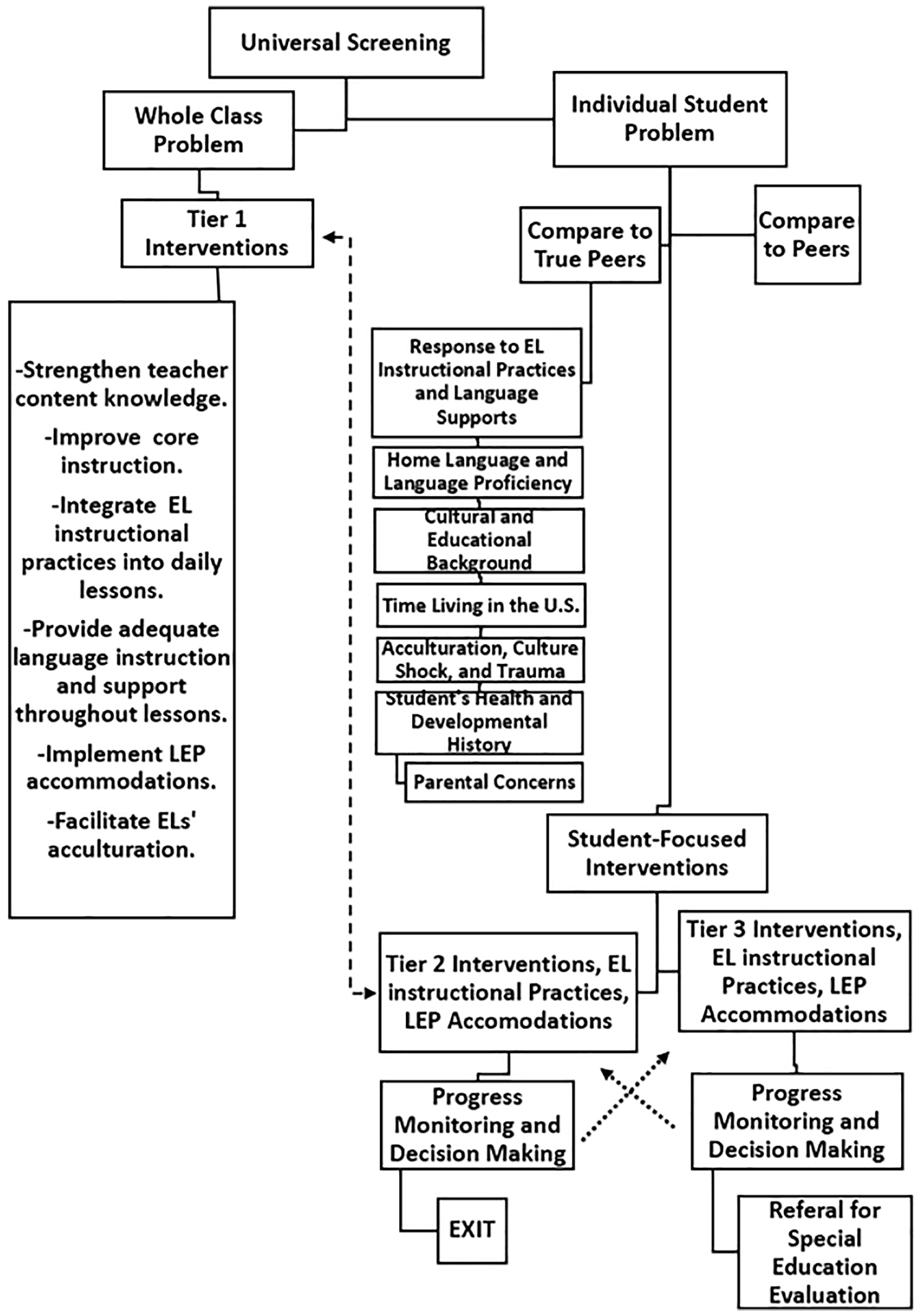
Framework for implementing response to intervention with English outline.
Comparing ELs to True Peers
ELs are diverse compared to not only native English speakers but also other ELs. They can originate from any geographic location (including the United States) and be born into any race, ethnicity, culture, religion, educational system, political system, and socioeconomic level. ELs enter U.S. schools at different points of their language, academic, and socioemotional development, bringing with them different degrees of exposure to the English language. To avoid misinterpreting ELs’ academic and behavioral performance, RTI teams must compare ELs to true peers; this is, other ELs from similar cultural, linguistic, and educational backgrounds (Barrera & Liu, 2010; J. E. Brown & Doolittle, 2008), who have lived in the United States for approximately the same length of time as the target student. Comparing the student’s English language acquisition trajectory to that of true peers can assist the team in identifying patterns associated with the student’s native language—or other languages the student has learned—which might be influencing language production in English (Chrabaszcz & Jiang, 2014). ESL teachers can assist RTI teams in identifying and examining the linguistic and academic progress of potential true peers. In rural school districts serving few ELs, teams could seek collaboration with staff at schools with more experience working with ELs who have a similar cultural and linguistic background as the focus student.
In some cases, the RTI team may have to seek assistance from the office in charge of overseeing second-language acquisition programs to identify potential true peers at the district level. To facilitate this process, rural school districts could maintain a database containing information about each EL’s date of initial enrollment in the district, gender, age, grade level, native language, country of origin, race and/or ethnicity, and scores and skill level (e.g., beginner, intermediate, and advanced) obtained on the required initial—and subsequent—English assessments and yearly statewide test scores. Even if a perfect match cannot be found, examining the linguistic and academic progression of ELs with backgrounds somewhat similar to the target student’s might facilitate RTI teams’ interpretation of student data and provide a more systematic mechanism for teams to make decisions regarding the supports they must offer struggling ELs. Aside from having to remove students’ identifiable information for confidentiality reasons, the creation of the suggested database should require minimal effort from the district because schools already collect this information as part of required state and federal accountability documentation (Ragan & Lesaux, 2006).
In a study involving rural K-5 schools, Hoover and Erickson (2015) recommended that before referring a struggling EL for a special education evaluation, teams justify why that student was being referred over other struggling ELs in the same group. Thus, when comparing a struggling EL to true peers, RTI teams must look beyond the ELs’performance on single measure screenings and consider differences and similarities in repeated-measures trends between the focus student and true peers. When comparing the struggling EL to true peers is impossible due to the number of ELs served in the school district being too small, the ESL teacher still can provide information about typical language development and patterns of the native, or other, language(s) spoken by the EL in order to assist the team in interpreting the EL’s progress and response to instruction.
Factors that Influence the Performance of ELs
When reviewing assessment data and deciding the next steps within the RTI process with ELs, the team must keep in mind that ELs are themselves diverse. It is, therefore, necessary to consider the unique factors that might influence an EL’s academic and social behaviors.
Response to language instruction and support
The RTI team must rule out inadequate language instruction and support as the cause of the student’s inability to benefit from core instruction. The team must consider whether the student’s response to instruction improves when language support (native, English, or bilingual) is provided during instruction and recommended accommodations are integrated into the lesson (Rinaldi & Samson, 2008; Thorius & Sullivan, 2013). Significant improvement in student performance when these supports are in place would suggest instructional shortfalls that could be easily rectified by incorporating effective EL teaching practices (e.g., adding more visuals to support language and providing simpler oral or written instructions) into daily instruction. Unresponsiveness to instruction that adequately integrates such support may indicate issues specific to the student which must be explored.
Home language and language proficiency
Although commonly used in educational policy and guidelines at the federal and state level, terms such as English language learners (ELLs), ELs, and Limited English Proficient (LEP) depict a limited picture of the process these students undergo by overemphasizing the language skills they lack and downplaying the language they possess. This terminology fails to consider that while learning English, ELs continue to learn at least one more language; therefore, when assessing ELs’ language proficiency, RTI teams would do better to think of them as emergent bilinguals (García et al., 2008). With that in mind, the RTI team must assess the EL’s overall receptive and expressive language skills in his or her native language and English, as well as his or her combined bilingual verbal abilities. Information about the language the EL uses—or has used in the past—at home and in the community will offer the team a better idea about the vocabulary and skills a specific EL is likely to possess in each language. For example, in a study involving 10 Latino families living in rural areas in a U.S. midwestern state, Li and Renn (2018) found that while many parents asserted currently using more English than Spanish when engaging in a variety of activities at home, most of them had communicated with their children in the native language until the child entered school and started speaking English. Knowing how much exposure to the academic language the student had in his or her native tongue can also help the team determine the type of language support that would be most helpful to the student (e.g., translating familiar terms or providing visuals to help develop a new concept in both languages). For some ELs, English may not be the second but the third or fourth language they learn (e.g., a newcomer raised in an indigenous village in Guatemala might have received formal instruction in Spanish but speak a Mayan language at home). In these cases, the team should try to understand the part that each language plays in student’s overall communication ability and consider this information when interpreting data.
Cultural and educational background
Culture shapes students’ preferred learning style, behaviors, and interests (Levinson et al., 2008; Ma & Oxford, 2014; Reid, 1987). Therefore, when teaching an EL, understanding school expectations and instructional styles favored in the family’s country of origin may help the RTI team develop more responsive plans for facilitating the student’s transition to the new learning environment. The relevance of this information may seem obvious when teaching foreign-born students who received formal instruction in the native country before moving to the United States. However, it should also be considered when instructing U.S.-born ELs whose parents had no previous schooling in the United States and may have difficulty preparing their children for the expectations they will encounter at school due to their lack of familiarity with the American educational system. Information about the student’s past educational experiences, in the United States or abroad, may assist the RTI team in understanding his or her strengths and weaknesses, selecting academic goals, and determining the support the student needs to succeed. RTI teams must inquire about the student’s past learning experiences and identify any gaps in his or her formal education. Many immigrants have experienced poverty in their native countries and may continue to live in low-income areas after moving to the United States (Capps et al., 2013). Since socioeconomic status (SES) influences language performance and executive functioning in all students, including ELs (Calvo & Bialystok, 2014), educators should rule out the potential role of family’s SES in the EL’s performance. Before interpreting an EL’s language or academic difficulties as a general lack of ability, educators must consider whether the perceived deficits might be the result of the EL’s limited access to experiences that supported his language and academic development due to the family’s scarce resources. Based on this understanding, educators should plan for additional supports that specific EL may require. As ELs’ families can be significantly diverse among themselves (Winsler et al., 2014), the team should avoid assuming that the educational and socioeconomic backgrounds of a family originating from a particular country or ethnic group is evidence of another family’s struggles or fortune, even if both families come from similar backgrounds. To determine the role of family SES on an EL’s performance, educators must get to know each family individually.
Time living in the United States
Time living in the United States plays a vital role in how much exposure ELs have had to the English language and the American culture and educational system. For example, the time in the United States can influence ELs’ academic achievement in reading (Betts et al., 2009), possibly because it determines how much instruction and practice the student has had. This finding makes sense, given that ELs enter American schools at different points in their school paths. The misconception that all ELs learn English in the same way and at the same rate (Harper & De Jong, 2004) may lead some teachers to intuitively and automatically compare an EL’s performance to that of others who have been in the country for approximately the same time. However, ELs’ language development and academic achievement are also influenced by a multitude of factors (e.g., English proficiency) determined by various variables (Halle et al., 2012). Thus, comparing ELs based on time lived in the United States can only offer insight into how the target EL is responding to language and academic instruction when the comparison occurs within the context of true peers. If so, the team can assume that, provided that core instruction has been adequate, the struggles exhibited by an EL whose pace of progress is similar to that of true peers may merely indicate that the student is going through a particular stage of the second-language acquisition or acculturation processes. However, subpar performance compared to true peers may suggest difficulties resulting from individual characteristics and call for further assessments.
Acculturation, culture shock, and trauma
Individuals going through the acculturation process often oscillate between the stages of euphoria (enthusiasm and optimism about everything related to the new culture), culture shock (hostility toward the new culture), and anomie (acknowledgment of positive and negative aspects of the new culture often accompanied by an identity crisis) before reaching assimilation or acceptance (H. D. Brown, 2000). Thus, the length of time a student has lived in the United States is not an exact measure of how acculturated that student is. One of the most challenging stages of the acculturation process is culture shock. Students who are going through culture shock may experience anxiety, confusion in the locus of control, withdrawal, silence or unresponsiveness, cognitive and emotional response fatigue, distractibility, disorientation, and other stress-related behaviors (Zapf, 1991). Culture shock can interfere with students’ ability to perform the cognitive activities essential to school success, resembling attention, or learning difficulties (Hoover & deBettencourt, 2018).
In addition, many newcomers experience psychological trauma and stress related to living conditions in their native countries or the move to the United States. Like some U.S.-born ELs, they may spend their childhoods watching their parents struggle with feelings of discrimination and legal proceedings related to the immigration process (Pumariega & Rothe, 2010). Longer time and adverse incidents while attending EL programs can also erode students’ emotional resilience, make them feel marginalized, and diminish their sense of belonging to the school community (Castro-Olivo et al., 2011; Vera et al., 2018). The social and emotional strain suffered by these children may affect both their behavior (Mendoza et al., 2017) and their motivation and readiness to learn. The RTI team must ensure that academic and behavioral expectations of the new school culture are clear to newcomers and guide staff in facilitating newcomers’ adjustment to the current educational environment. If the team detects signs of psychological and emotional struggle, the team must consider referring the student to the bilingual counselor or social worker, when available. In the absence of bilingual mental health staff, a school counselor with training in cultural sensitivity and competence can provide the EL with emotional support assisted by an interpreter or cultural broker. The team should also reach out to the community to secure additional social support for the student.
Student health and developmental history
The RTI team must rule out a history of health, developmental, or learning issues as the cause of the student’s unsatisfactory performance. This step is especially important when working with immigrant students born and raised in impoverished regions of the world where children may not be diagnosed or treated for disability-related conditions due to limited access to health care services (The United Nations Children’s Fund, 2013). The team must consider that parents in those regions may not recognize developmental issues associated with environmental conditions in their native countries or realize the effect that such issues may have on their child’s learning. In addition, studies have found that foreign- and American-born children of immigrants from distinctive groups may be at a higher risk for certain health conditions and developmental delays, which can become a challenge for the family due to their higher likelihood to have limited access to health care (Hamilton et al., 2011). The team must communicate with the student’s parents early in the RTI process to ensure that relevant information about the child’s health and developmental history has not been unintentionally concealed. To avoid offending possible cultural sensitivities, the team must refrain from making comments which may suggest to the parents that they suspect that the child has a disability. When feasible, collaboration with interpreters and cultural brokers (staff or community members who are familiar with the family culture) may help the team identify cultural boundaries to be kept when inquiring about the child’s health and developmental history.
Parental concerns
Researchers have found that teachers in isolated rural communities often transferred unwelcoming community beliefs about diverse families into their role as educators (Walker et al., 2004). These beliefs can cause some educators to never develop a sense of responsibility for the success of ELs or to interpret certain behaviors exhibited by ELs’ parents (e.g., not attending school events) as evidence of parents’ lack of interest in their children’s education (Shim, 2013). To develop a full understanding of the needs of a particular EL, the team must be open to learning about the past and recent concerns that parents have had regarding the EL’s behavior, development, or learning. Members of the RTI team should understand that culturally and ethnically diverse parents may interpret their children’s behaviors in ways that do not conform to definitions and expectations held by the predominant culture in the United States (Harry, 2002) and that differences in the perception or interpretation of their children’ performance may be the result of cultural diversity. Bilingual and bicultural staff can facilitate communication between the RTI team and student’s parents. In rural schools with a low incidence of ELs, where such staff may not be available, community liaisons (e.g., another parent, local organization staff, or religious leader) may act as cultural brokers, helping parents and team members understand each other’s concerns and expectations for the student, as well as the cultural factors that may influence each other’s beliefs about education (Yohani, 2013). Sometimes, RTI teams might have to resort to technology or distance interpreting services to help bridge the linguistic gap. Asking parents to describe differences they may have noticed in the student’s development or behavior compared to other children in the family may clarify questions about the student’s development for some parents (Rinaldi & Samson, 2008). Although some rural educators may find it challenging to communicate with ELs’ parents due to parents’ limited proficiency in English (Hansen-Thomas et al., 2016), team members must avoid appearing judgmental or condescending when ELs’ parents cannot supply the information requested or provide information that does not fit expectations shared by the team members’ own cultural or ethnic group.
Applying the Framework to the RTI Process
After reviewing information on the struggling EL, the team must determine if additional data are required to aid their understanding of the student’s needs and the influence that the discussed factors may have on the student’s performance.
Deciding if the data justify immediate intervention
The team must consider the data available at this point: Were adequate assessment tools used to gather data? Does the available data consist mostly of subjective impressions from school staff? While teachers can generally gauge an EL’s English proficiency, decisions about student English progress for instructional and accountability purposes must be based on a student’s performance on specific subcomponents of language proficiency which vary across grades and are more difficult for teachers to assess through classroom work and observation (Llosa, 2012). Even if teachers are using assessments deemed appropriate for use with ELs, those assessments may require accommodations that go beyond translating instructions or questions (DelliCarpini & Guler, 2013). However, teachers may be unprepared to provide such accommodations due to insufficient training on how to design instruction for ELs, misconceptions about the nature of the second language acquisition process, or inability to move away from deep-rooted personal conflicting beliefs about teaching and/or ELs in order to honor the new knowledge they acquired through PD (Karabenick & Noda, 2004). The RTI team must examine any factors that might affect the validity of assessment data provided by teachers and staff before deciding if the information they have is enough for making sound instructional decisions for the student.
Gathering and analyzing additional data
If data seem insufficient, the team must collaborate with teachers and other school staff involved in the student’s education (e.g., paraprofessionals and social worker) and the student’s parents to gather additional evidence. Parents are the best source of information about a student’s cultural and linguistic background and developmental and educational history. Collaborating with parents is essential to the success of the RTI process. Once they collect and analyze all the necessary data, the team can decide if interventions should be prescribed. If the data collected thus far strongly suggest the presence of a disability (e.g., the student has a history of developmental delays significant enough to suggest the presence of a low-incidence disability; the student’s health history reveals a medical condition associated with a disability; the student’s parents are concerned about the student’s overall functioning and requested an evaluation), a referral for evaluation should be started.
Going through the RTI process with ELs
If the team decides to provide intervention, the RTI team must develop a plan to address the student’s needs. Possible decisions include improving the quality of core instruction (Tier 1), offering targeted interventions (Tier 2), or delivering an individualized intervention (Tier 3). The team must consider all three options to avoid the tendency to frame decisions around results from outcome measures, overlooking the potential effect of the quality of instruction that the student received in Tier 1 as well as other teacher- and school-related factors on student performance (Thorius & Sullivan, 2013). The RTI team should take the following steps when selecting and implementing interventions.
Selecting evidence-based interventions
As much as possible, the team should choose interventions proven to benefit ELs. Although ELs may respond to basic features of effective instruction used with native English speakers (Vanderwood et al., 2014), the RTI team must bear in mind that some ELs may need more time and practice to acquire skills in the new language. Often, standard protocol and prepackaged intervention programs either provide one-size-fits-all accommodations intended to address the needs of ELs or ignore this student population entirely. To accelerate student response, instructional practices that facilitate learning of academics for ELs (Choi et al., 2012; Coleman & Goldenberg, 2010; Pereira & de Olivieira, 2015; Walqui, 2006) must be incorporated into interventions. However, even if district constraints force the team to select such interventions, they can make instruction more accessible and relevant for these students by (a) building prior academic, language, and cultural knowledge required to participate in the intervention; (b) using visuals and including examples and nonexamples while explicitly teaching academic vocabulary needed to benefit from the intervention, and (c) using collaborative learning to provide ELs with academic and language models and increase engagement in challenging tasks (Linan-Thompson & Ortiz, 2009). The team would want to provide teachers and interventionists with concrete guidelines for incorporating those elements to ensure that these practices are systematically implemented across tiers. For example, they could request that when adapting or implementing selected interventions with an EL, teachers and interventionists follow the PLUSS Model: Preteaching vocabulary; Language modeling and opportunities to use of academic language; Using visuals and graphic organizers; Systematic and explicit instruction; and Strategic use of native language (Sanford et al., 2012).
Implementing interventions with fidelity
Studies have shown that the effectiveness of multitier systems of support is associated with the degree of fidelity with which schools implement the selected, evidence-based interventions (Grow et al., 2009). Therefore, upon selecting interventions for a specific student, the RTI team must ensure that staff can implement them with fidelity. Staff’s ability to implement the intervention with fidelity will likely depend on the environment in which the intervention takes place, the quality of the organization process, the nature of the selected intervention, and the skills of the interventionist (Hagermoser Sanetti & Kratochwill, 2009).
To address the challenges that the lack of support, guidance, and PD impose on school staff’s ability to implement culturally responsive practices within RTI (Robinson, 2016), the RTI team must provide staff with the knowledge and skills to execute the proposed intervention plan with fidelity. They must provide staff with direct training which includes enough modeling and rehearsal (Sterling-Turner et al., 2001, 2002) and continuous performance feedback on how interventions are being implemented (Noell et al., 2005). By ensuring that staff understand the concept and importance of implementing interventions with fidelity, the team may increase the likelihood of a successful intervention. Implementation fidelity allows RTI teams to interpret intervention data accurately and to understand the relationship between the prescribed intervention and students’ outcomes (Gresham, 2005), both of which are essential for responding to the needs of individual students. Teams must ensure that interventions have been conducted with fidelity before referring an EL suspected of having a disability for a special education evaluation.
Monitoring student progress on the target skill
The team must select assessments that measure the target skill(s) and that are sensitive enough to detect progress made by ELs. Even if general outcomes measures or benchmarks for the selected assessment tool consider students who are learning a second language, ELs are a diverse group, and it is difficult to establish similarities between students in the assessment’s normative samples and the focal student (Barrera & Liu, 2010). Before beginning interventions, the team must decide if progress-monitoring data will be compared against benchmarks or individual goals set by the team. Teams must consider the degree of the gap that the intervention is expected to address, the intensity of instruction the EL needs, and the way the student’s current level of English proficiency may affect his ability to learn at the pace required to reach the benchmark within the allotted time. For instance, an EL who is slightly behind benchmark may benefit from rigorous goals that reflect grade-level benchmarks while one experiencing more significant gaps may benefit more from ambitious, individualized goals that focus on skills needed to move closer to the same grade-level benchmarks. The reader can consult Shapiro (2008) for detailed information about how to develop and monitor individual goals for students who are considerably below grade level and with whom benchmark goals would show little to no progress. Interventionists must monitor student progress at least once per week and evaluate the slope of improvement across 8–15 weeks to determine the effectiveness of the intervention (Stecker et al., 2008).
Reviewing progress-monitoring data regularly and deciding the next steps
If the student shows satisfactory progress while receiving the intervention, the team may decrease the intensity of the instruction or dismiss the student from RTI. If the student is making insufficient progress toward the target skill, the team must decide whether to increase the language support provided during the intervention (e.g., using bilingual materials, increasing the use of visuals and multimedia during lessons, and simplifying language) to maximize student access to the instruction. If adequate support is already in place, the team may decide to intensify the interventions. For instance, besides core instruction, they may offer a student receiving Tier 1 instruction some Tier 2 interventions to accelerate his or her learning progress, or they could provide a student who is receiving Tier 2 interventions with more individualized interventions rather than delivering additional standard, targeted interventions. If the student fails to respond to the most intensive level of intervention provided within the RTI process, even after receiving appropriate language and acculturation support, the team must consider referring the student for a formal evaluation to rule out a specific disability as the cause of student’s limited RTI.
Applying the Framework With Real ELs
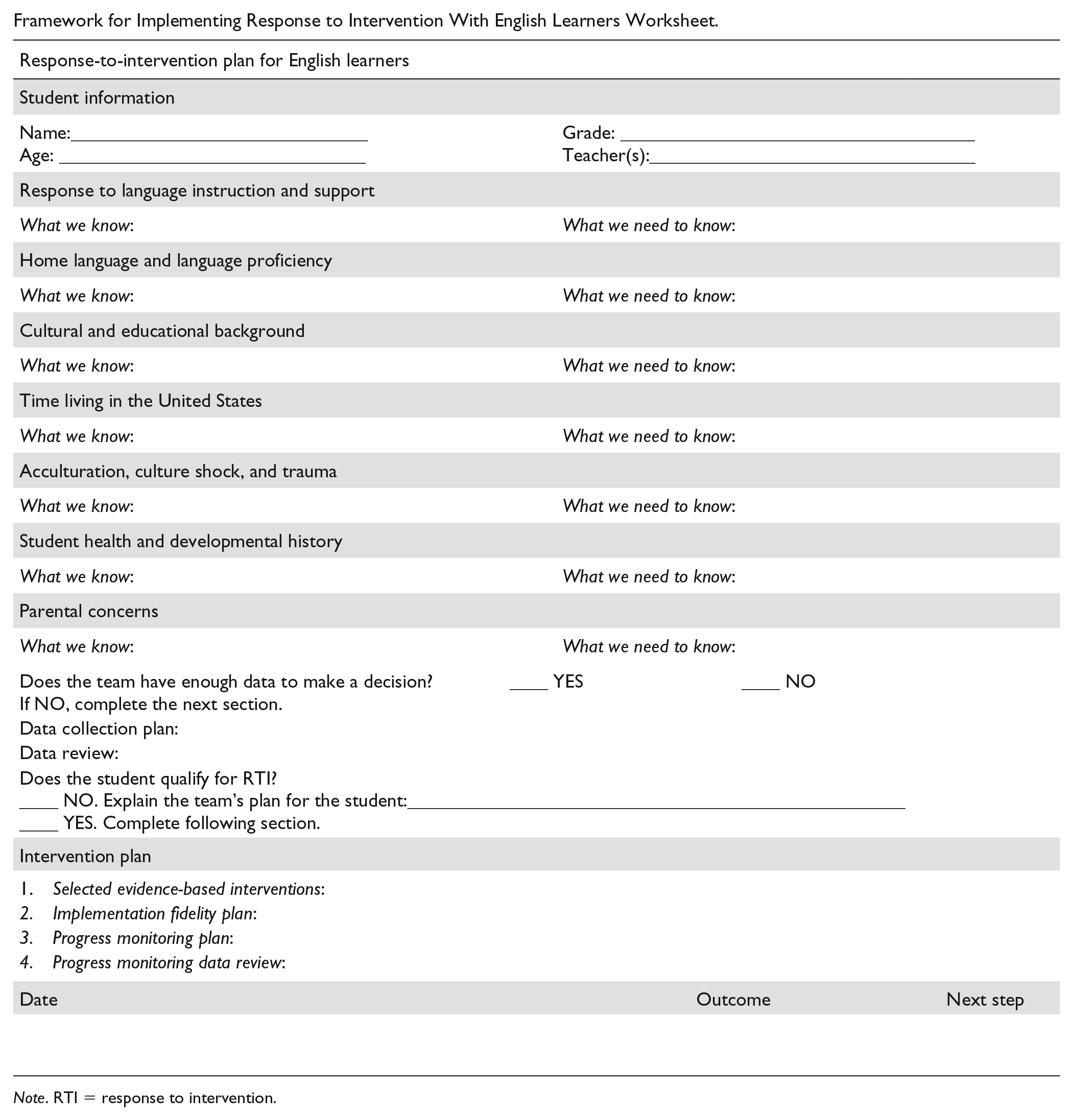
Two scenarios inspired by actual students are used to model how the proposed framework might be used by RTI teams working in rural schools to ensure that all potential intervening factors are considered when making assessment and instructional decisions for at-risk students who are also learning ESL. The students, “Luis” and “Carlos,” attended two schools within the same district. Each school relied on different staff to coordinate its RTI process. Although the students’ names have been changed to maintain confidentiality, the scenarios were constructed using authentic data collected directly by the author or provided by school staff and parents during multiple consultation meetings. The framework was created to aid RTI teams in analyzing available data related to these and other real cases in which the author acted as a consultant. To help the reader understand how to apply the framework within the RTI process, the information presented in these case scenarios was organized to fit the different elements of the framework (see Appendix). By doing so, the author hopes to facilitate the process of discerning which data were available or missing for the reader. Suggestions for follow-up actions are offered for each scenario to illustrate how teams in rural schools could use the framework to guide the RTI process and make more culturally and linguistically appropriate decisions, even in the absence of ideal resources and specialized personnel.
Scenario 1: Luis
Considering factors that might influence Luis’ performance
Luis is a 10-year-old boy enrolled in fourth grade. He is classified as a student with LEP based on assessments by the school district at the beginning of the school year.
Luis’ response to language instruction and support
Based on her daily observations and work with the student, the bilingual paraprofessional believes that Luis has trouble “grasping academic content regardless of the language,” English or Spanish, in which she instructs him or supports the instruction delivered by the classroom teacher. However, neither the teachers nor the paraprofessional provided any specific data or examples of Luis’ work in either language to substantiate this statement.
Luis’ home language and language proficiency
According to a home language survey completed by Luis’ parents upon registering him at school, the family speaks Spanish at home; therefore, Spanish is Luis’ primary language. Luis’s mother reports that she can communicate in English about “simple things” but requires a Spanish interpreter during meetings. A Bilingual Verbal Abilities Test or B-VAT (Muñoz-Sandoval et al., 1998) administered to Luis upon request from the principal showed that Luis’ verbal abilities fall in the low average range in Spanish and in the very low range in English. According to school staff, this test was the only bilingual verbal ability assessment tool available in their school district.
Luis’ cultural and educational background
Luis’ parents were born in Mexico, and their native language is Spanish. The school claims to have no information about their educational background. Luis is repeating the fourth grade due to failure to pass the high-stakes state test. Although Luis presumably attended school in another state before enrolling in his current school district over a year ago, school staff could not obtain any previous school records. Luis’ grades have improved this year. However, his teachers report that Luis “continues to struggle academically” and performs significantly lower than most peers. The principal and RTI team coordinator at Luis’ school do not have data on Luis’ universal screening scores in reading or math. Neither the principal nor the school interventionist knows if Luis’ teacher has implemented the accommodations in his Individual Learning Plan (ILP) or any targeted Tier 2 interventions with Luis.
Luis’ time living in the United States
Luis was born in the United States and, according to school staff, “has lived here his whole life.” The principal believed that the family had spent time in Florida before coming to their district but could not assert whether this information was accurate. She had not spoken with Luis’s parents about it and did not know about the type of community where Luis’ had lived before coming to this region of the United States or how often Luis visited his parents’ native land.
Luis’ experiences with acculturation, culture shock, and trauma
When asked about Luis’ social performance at school, the principal reiterated that Luis had lived in the United States “his whole life.” To her knowledge, neither the teachers nor the RTI team had discussed Luis’ social and emotional adjustment to the new school or the community. She could not tell whether Luis was comfortable socializing in the classroom, socialized more in English or Spanish, or felt at ease navigating both his native and the American cultures. School staff had never requested assistance from the ESL teacher or school counselor to examine possible acculturation issues affecting Luis’ academic performance. They did not know how Luis’s parents had adjusted to the community or school.
Luis’ health and developmental history
The principal could not provide any information about Luis’ health or developmental history before attending their district. As the school could not gain access to Luis’s earlier files, she could not answer questions about developmental or health issues noticed or investigated during his attendance at the previous school. In addition, the principal did not think that the RTI team had asked Luis’ parents about Luis’ developmental or health history.
Concerns expressed by Luis’s parents
The principal could not provide information regarding parental concerns. She had not spoken with Luis’ parents about her and Luis’ teacher’s apprehensions regarding Luis’ insufficient academic progress and could not tell if the RTI team had approached the parents on this topic.
Implementing the Framework With Luis: What is the RTI Team to Do?
At first glance, it is evident that communication between school staff and central office staff coordinating the RTI process at the school must be improved. Based on the information related by the principal, teachers had communicated concern about Luis’ insufficient progress to her but had not consulted the school RTI team. Considering that the school reportedly has an active and effective RTI team, that the RTI team had not been involved in discussions about Luis’ academic struggles, and the principal did not know whether the classroom teachers had provided Luis with interventions suggest that the school lacks a protocol for responding to the academic needs of ELs such as Luis. Therefore, before diving into this scenario, the RTI team should discuss and establish necessary procedures for addressing the academic and behavioral needs of ELs. The team could then use the proposed framework to analyze the information it already has regarding Luis’ learning needs and decide which steps to take to ensure that Luis receives the support he needs to succeed in school.
Deciding if available data justify immediate intervention on Luis
The available information indicates that additional data must be collected for the team to understand Luis’ needs and determine the best next step to facilitate his academic progress.
Gathering additional data
Before conducting any assessments, the RTI team must check to see if Luis’ universal screening data, and the formative and summative assessment data collected by his teachers, indicate the need for more intensive instruction according to the school’s RTI protocol. The team should then inquire about accommodations (aside from explaining the content in Spanish) provided to Luis throughout the day as well as specific strategies used to support Luis’ language and academic development during core instruction. If adequate accommodations and instructional strategies have not been implemented, or have been implemented without fidelity, the team must provide Luis’ teachers with the training and guidance to select and integrate appropriate supports into daily lessons. To ensure classroom teachers’ access to potentially needed assistance while implementing such supports, the ESL teacher should be part of the RTI team. Once these elements are in place, the team must track Luis’ performance and decide if Luis requires additional intervention to overcome his academic difficulties (e.g., Tier 2 interventions). If, on the contrary, it is confirmed that necessary supports have been offered, the team must investigate whether Luis’ teachers have implemented any targeted interventions. Provided they have done so, the RTI team must review any data collected during implementation. Since such interventions have presumably been ineffective, the team should now investigate whether interventions matched Luis’ needs and were implemented with fidelity. The team also must gather information regarding the provision of ILP accommodations and language support during interventions, investigate whether those accommodations matched Luis’ language and learning needs, and confirm that the prescribed accommodations were provided regularly. In addition to information related to actions taken as part of the RTI process, data must be systematically collected on the type and amount of language instruction and support offered to Luis during the school day as well as Luis’ response to them.
Because the validity of standardized tests used with linguistically diverse students is often considered questionable (Faulkner-Bond & Sireci, 2015), using results from the B-VAT to make generalizations about students’ abilities can be problematic. To verify that Luis’ English language skills are as low as results from the B-VAT suggest, the RTI team must compare B-VAT scores to Luis’ performance on English language acquisition assessments and observational data of his use of Spanish and English in social and academic contexts. Given that Luis shows deficits in reading, struggles to comprehend the content in both English and Spanish, and has B-VAT scores that suggest low to very low language skills—even when assessed bilingually, the RTI team should further investigate Luis’ first language development and second language acquisition trajectory. Dynamic assessments involving pretest, mediated learning experiences, and posttest of target skills can help the team decide if Luis’ communication struggles are more likely to be explained by language differences or a language disorder (Resendiz & Peña, 2015). Asking Luis’ parents specific questions about Luis’ language abilities in Spanish may also assist the team in deciding if he needs further language assessments. Finally, if efforts to gain access to Luis’ educational records from previous school district continue to prove fruitless, an interview with Luis’ parents could shed light on Luis’ educational history, including the programs attended before coming to the district (e.g., ESL pull-out or pull-in, bilingual education, structured English immersion), language and cognitive development, possible health issues, and socioemotional factors that might help explain Luis’s academic struggles.
Going through the RTI process with Luis
Once the RTI team has a better understanding of Luis’ strengths and weaknesses and the factors that may be influencing his performance, they must determine if Luis’ academic needs can be addressed through improvements to core instruction or if he also requires more intensive (Tier 2 or Tier 3) interventions to make adequate progress toward grade-level standards. Research has shown that reading instruction and interventions that focus on critical components of literacy (i.e., phonemic awareness, decoding, oral reading fluency, reading comprehension, vocabulary, and writing) have positive effects in developing literacy skills among ELs (August & Shanahan, 2006). ELs can generally benefit from interventions that target basic reading skills (Amendum et al., 2018), which seems to be an area of need for Luis. However, language abilities affect the development of reading skills (Lovett et al., 2008). If the need for reading interventions is confirmed, the team must certify that Luis regularly receives explicit ESL instruction and ongoing, intensive language support during core reading instruction.
Selecting evidence-based interventions for Luis
Data suggest that Luis has language deficits in both English and Spanish. The team must ensure that the core instruction and interventions provided to Luis include enough language support and incorporate effective instructional practices, such as providing explicit vocabulary instruction and regular opportunities to participate in peer-assisted activities (Gersten et al., 2007). Research has shown that learning academic language requires not only a more significant effort from the EL but also the provision of explicit language instruction during all academic subjects (DiCerbo et al., 2014). Therefore, the RTI team should train all of Luis’ teachers on how to create linguistically rich lessons that explicitly address academic vocabulary within lessons. The team should also train bilingual paraprofessionals on how best to support Luis’ language development during core instruction by (a) teaching academic vocabulary words for several days and in a variety of activities; (b) integrating oral and written language instruction into content-area lessons, (c) providing opportunities to practice written language skills during regular instruction; and (d) providing small-group interventions (Baker et al., 2014). Collaboration with Luis’ ESL teacher can offer the RTI team additional resources to help general education teachers and interventionists facilitate Luis’ progress.
Implementing Luis’ interventions with fidelity
Once a plan has been developed, the team must systematically train Luis’ interventionist to ensure that interventions are delivered with fidelity. The interventionist must follow the implementation protocol established by the RTI team, including guidelines regarding the intervention procedure, duration, and frequency as well as additional support that Luis may need to benefit from the intervention.
Monitoring Luis’ progress on the target skill
Besides teaching the interventionist about the importance of fidelity of implementation, the team must provide staff with the tools and training to monitor Luis’ progress toward the target skill. Appropriate accommodations to the selected assessment tool or method must be discussed in advance. As with the intervention, the team must ensure that progress monitoring procedures are followed with fidelity to provide accurate and unbiased data about Luis’ response to instruction. In addition, the team should create a monitoring schedule that gives the interventionist information about how often Luis’ progress must be monitored and when Luis’ progress-monitoring data will be reviewed.
Reviewing Luis’ progress-monitoring data regularly and decide next steps
Before starting interventions, the team must decide who will review Luis’ intervention data and make the decision about the effectiveness, or lack thereof, of the intervention. Besides deciding whether to discontinue or continue the initial intervention plan, the team should consider what they know about Luis to determine if additional support is needed to increase the effectiveness of the intervention and facilitate Luis’ progress toward the established goal.
Scenario 2: Carlos
Considering factors that might be influencing Carlos’ performance
Carlos is a 9-year-old boy enrolled in the second grade. He is classified as a student with LEP based on district assessments performed at the beginning of the school year.
Carlos’ response to language instruction and support
Results from benchmark and informal assessments in reading, writing, and mathematics indicate that Carlos has made “no academic gains” since starting school. The ESL and general education teachers report that although they have consistently provided Carlos with the accommodations on his ILP, Carlos has made little progress in his academic and English skills.
Carlos’ home language and language proficiency
Carlos’ primary language is Spanish. According to Carlos’ parents, their English language skills are “very limited,” and the family communicates in Spanish at home and with friends and relatives. By his parents, Carlos struggles to “make sense” when communicating in Spanish. He received 2 months of speech and language therapy before the family moved to the United States. Carlos’ ESL teacher reported that based on scores from district English language proficiency assessments and daily classroom observations, Carlos’ English skills have not progressed at the same speed as those of other newcomers in his class. However, she provided no documentation of this statement.
Carlos’ cultural and educational background
Carlos’ family originated from a rural town in Honduras. Carlos’ parents completed elementary education, but neither graduated from high school. Carlos was 8 years old when he started attending school in the United States a year ago. Information provided by parents indicates that Carlos had limited schooling in Honduras due to his teachers’ inability to manage Carlos’ hyperactivity. Carlos never learned to read in Spanish.
According to Carlos’ teachers, Carlos displays significant attention difficulties and hyperactive behaviors in class. He does not remain seated or in the designated area during classroom activities, does not follow directions, needs constant redirection and prompting, and is “in constant motion.” Carlos’ previous ESL teacher provided behavioral support in the classroom and had other teachers keep daily charts to track Carlos’ behavior. Carlos’ behavior improved until support was discontinued when the ESL teacher went on maternity leave. The RTI team refused to discuss Carlos’ difficulties, claiming that they are part of the second-language acquisition process. The team has not reviewed any documentation of Carlos’ reported attention, behavior, or academic difficulties. The lack of support from the RTI team and increasing pressure from teachers led the principal to contact the district’s central office to request a special education evaluation for Carlos. She was then told that the district did not evaluate students who had been in the country for less than a year. The principal then placed Carlos in a kindergarten class where “he seems to function better.”
Carlos’ time living in the United States
Carlos was born in Honduras, which is his parents’ country of origin. He and his family have lived in the United States for less than a year.
Carlos’ experiences with acculturation, culture shock, and trauma
Carlos’ teachers have not discussed his reactions to culture shock or acculturation, or the effects that these could be having on Carlos’ learning and behavior. School staff lacks information about any possible emotional trauma suffered by Carlos before or as part of moving to the United States.
Carlos’ health and developmental history
A phone interview with Carlos parents’ revealed a long history of health issues, which presumably caused language delays and learning difficulties. Carlos was premature at birth. He developed normally until 14 months when two separate, but severe seizures caused him to be hospitalized twice for several weeks. Then, Carlos stopped verbalizing and did not speak in complete sentences until age seven. Carlos’ parents stated that Carlos had problems retaining information and usually had to be taught the same content repeatedly.
Concerns expressed by Carlos’ parents
Carlos’ parents could not document Carlos’ health and educational history but maintained that finding adequate help for Carlos was the main reason for moving the family to America. Due to financial problems, Carlos’ parents had not taken Carlos to a doctor since arriving in the United States, but they believed that Carlos met criteria for an Attention Deficit-Hyperactivity Disorder (ADHD) diagnosis. No formal medical or educational evaluation has been done in Honduras or in the Unitd States to rule out the presence of this disorder. Carlos’ parents planned to find medical treatment for ADHD and Carlos’ seizure disorder.
Implementing the Framework With Carlos: What is the RTI Team to Do?
Deciding if available data justify immediate intervention on Carlos
The absence of official corroboration of Carlos’ health and developmental issues and lack of systematic data showing Carlos’ struggles in his present school may prevent the RTI team from immediately referring Carlos for a special education evaluation. However, the information provided by Carlos’ parents justifies the immediate provision of more intensive instruction within his current placement.
Gathering and analyzing additional data about Carlos’ performance
Carlos’ delays in first-language development put him at risk of needing more time than other ELs to acquire a second language (Paradis, 2016). Therefore, the team must carefully consider data on Carlos’ English language acquisition, including anecdotal information from his teachers and parents. Doing a bilingual language screening, with emphasis on obtaining more information about Carlos’ overall language abilities, might help the team decide if a referral for a formal speech and language evaluation can be substantiated. If so, the team must use a range of assessment tools since across-test scoring offers much more accurate information about a child’s language ability than single-test scoring (Anaya et al., 2018). Having assistance from bilingual and bicultural staff will be vital in ensuring that assessments are completed in a culturally and linguistically unbiased manner.
Likewise, the team must gather more data about Carlos’ specific academic strengths and weaknesses. Teachers should be asked to elaborate on the skills that Carlos lacks and the instructional strategies they have implemented with him. If universal screening assessments are determined to be inappropriate for use with Carlos, teachers’ records of daily performance can provide the team with insights into Carlos’ learning process. If such records do not exist or have not been systematically maintained, the team should collaborate with general and ESL teachers to select informal assessments that would permit Carlos’ teachers to gather accurate information about his performance in reading, written language, and math. Once enough data have been collected to develop a better understanding of the reasons for Carlos’ struggles, the team must make initial instructional decisions.
Going through the RTI process with Carlos
Although keeping Carlos in the kindergarten classroom may make it easier for school staff to manage his reported inattentiveness and hyperactive behaviors, it denies him the opportunity to access grade-level academic content and to learn desirable social and learning behaviors from same-age peers. Therefore, the team must develop a plan for returning Carlos to a more age-appropriate class as soon as possible.
Due to Carlos’ considerable academic gaps, targeted grade-level interventions seem inappropriate and unlikely to address his instructional needs. Therefore, the RTI team should provide more intensive, individualized Tier 3 interventions. The team must ensure that Carlos’ academic and social language development, in both Spanish and English, is supported throughout the instructional day. Due to the severity of the issues reported by teachers and parents, from the start of the process, the RTI team should make special efforts to include Carlos’ parents in discussions about Carlos’ academic and behavioral needs, and share their rationale for making the instructional decisions they have. If possible, the team should recruit qualified bilingual staff within the district or through community agencies to facilitate communication with parents. When interpreters are unavailable at the local level, schools can use interpreting service agencies that could offer this support via telephone or video-conference. Although not a substitute for an official interpreter, allowing Carlos’ parents to invite bilingual relatives or friends to attend meetings could help them feel more comfortable while providing additional language support from a trusted source. If the school concludes that the RTI team lacks the expertise to make sound decisions, the school may consider bringing in a bilingual consultant to help the team select evidence-based practices likely to benefit Carlos and to guide the interventionist in implementing culturally and linguistically appropriate supports during interventions (Harris & Sullivan, 2017).
Selecting evidence-based interventions for Carlos
The team must select evidence-based interventions that address Carlos’ individual needs by helping build his knowledge and skills in the identified academic areas (e.g., basic reading skills). As in Luis’ case, the team must ensure that adequate language support and accommodations are incorporated into the selected interventions. An additional factor the RTI team should consider is Carlos’ history of inattentiveness and hyperactivity in the classroom, which both his parents and teachers believe is playing an important role in Carlos’ difficulty to learn. The RTI team must collaborate with Carlos’ ESL and general education teachers to develop a culturally and linguistically responsive behavioral support plan that would help school staff to transition him to a more age-appropriate classroom environment and effectively support him across school settings.
Implementing Carlos’ interventions with fidelity
The RTI team must train Carlos’ classroom teacher, ESL staff, and interventionists on how to implement the selected academic and behavioral interventions with fidelity. They must facilitate collaboration between the ESL or bilingual staff and general education personnel to ensure that all interventions implemented with Carlos’ incorporate appropriate accommodations and language and behavior supports.
Monitoring Carlos’ progress on the target skill
The team must establish a process for reviewing Carlos’ intervention data weekly and using the data to inform timely decisions about reasonable next steps.
Reviewing Carlos’ progress-monitoring data regularly and decide next steps
A sustained, positive RTI may lead the team to maintain current levels of support to ensure continuous progress until the student can benefit from less-intensive interventions. A limited RTI (even after several adjustments) may suggest a need for sustained individualized, intensive instruction for Carlos to progress toward grade-level standards. The RTI team must remember that schools should refer students suspected of having a disability for timely evaluation, even if they are learning ESL. This expectation differs from referring students for evaluation because of their limited English proficiency (Individuals with Disabilities Education Improvement Act, 2004; Lhamon, 2016). Therefore, the team should confidently refer Carlos for a full evaluation if progress-monitoring data show unsatisfactory growth after interventions have been implemented for a reasonable length of time or if documentation is provided to confirm Carlos’ medical condition or possible disability.
Conclusion
ELs who attend rural school districts are at a higher risk of struggling academically due to teachers’ and school administrators’ lack of knowledge of effective EL instructional practices (Hansen-Thomas et al., 2016), limited experience with students from different linguistic backgrounds, and deficit perspective regarding immigrant students and families (Lee & Hawkins, 2015; Shim, 2013). RTI allows schools to intervene to address ELs’ needs early and rule out whether ELs’ struggles are part of the second language acquisition and acculturation processes or the result of learning issues. The case scenarios presented in this article served to illustrate how insufficient knowledge about ELs and second-language development might lead teams to miss essential information about factors that influence ELs’ learning, delay the provision of necessary interventions, prescribe inappropriate interventions, or avoid putting ELs through the RTI process at all. The proposed framework for implementing RTI with ELs provides rural RTI teams with a guide for considering the factors that could affect ELs’ school performance and the support that ELs need to actually benefit from core instruction and tiered interventions. Given the increased likelihood of rural educators lacking personal or professional experiences which would allow them to understand the factors considered here or be aware of the relationship between those factors and ELs’ learning, this framework is of particular value to RTI teams working in rural school districts. Recommended next steps include researching the effects that systematic application of this framework would have on RTI teams’ ability to support rural teachers in addressing students’ needs and improving ELs’ academic and behavioral outcomes. This framework is based on recommended practices drawn from available research. Although implementing some of the actions proposed in the framework (e.g., using bilingual staff as culture brokers) may require more effort from rural RTI teams due to their limited resources and access to adequately trained personnel, teams still can use the framework to identify the data and resources they have and to determine the areas in which they might need to seek external assistance. Future research should focus on further examining alternative ways in which monolingual, monocultural educators in rural areas can compensate for the lack of such resources and still be able to support the language, academic, and social development of emergent bilinguals, or ELs, in their classrooms.
Footnotes
Appendix
Framework for Implementing Response to Intervention With English Learners Worksheet.
| Response-to-intervention plan for English learners | ||
|---|---|---|
| Student information | ||
| Name:_______________________________ Age: ________________________________ |
Grade: _____________________________________ Teacher(s):__________________________________ |
|
| Response to language instruction and support | ||
| What we know: | What we need to know: | |
| Home language and language proficiency | ||
| What we know: | What we need to know: | |
| Cultural and educational background | ||
| What we know: | What we need to know: | |
| Time living in the United States | ||
| What we know: | What we need to know: | |
| Acculturation, culture shock, and trauma | ||
| What we know: | What we need to know: | |
| Student health and developmental history | ||
| What we know: | What we need to know: | |
| Parental concerns | ||
| What we know: | What we need to know: | |
| Does the team have enough data to make a decision? ____ YES ____ NO If NO, complete the next section. |
||
| Data collection plan: | ||
| Data review: | ||
| Does the student qualify for RTI? ____ NO. Explain the team’s plan for the student:____________________________________________________ ____ YES. Complete following section. |
||
| Intervention plan | ||
| 1. Selected evidence-based interventions: | ||
| 2. Implementation fidelity plan: | ||
| 3. Progress monitoring plan: | ||
| 4. Progress monitoring data review: | ||
| Date | Outcome | Next step |
Note. RTI = response to intervention.
Declaration of Conflicting Interests
The author(s) declared no potential conflicts of interest with respect to the research, authorship, and/or publication of this article.
Funding
The author(s) received no financial support for the research, authorship, and/or publication of this article.