







Abstract
Since 2006 and the implementation of environmental regulations, the electronic industry has moved to Pb-free solders. Harsh environment industries that were exempted from the regulations will soon have to follow suit. However, a suitable replacement solder for use in harsh environments still has to be validated and reliability models are yet to be established. In this review, research that led to the selection of currently used Pb-free alloys and the continuing search for high reliability alloys are described. Sn pest and Sn whiskers, potential major threats for electronics operating in harsh environments, are highlighted. This review also focuses on the microstructure, mechanical properties and deformation mechanisms of Pb-free alloys. Emphasis is placed on Sn–Ag–Cu alloys, now considered to be the alloys of choice for replacement of Sn–Pb solders. The reliability of Pb-free electronic assemblies is studied, focusing on thermal fatigue, believed to be the main source of failure through creep–fatigue mechanisms. The validity of models for Pb-free solder joints life time prediction is assessed and the lack of cohesiveness among the available reliability data is examined.
Introduction
Solder joints are critical features in electronic assemblies: they provide the mechanical and electrical connection between the electronic components and the printed circuit board (PCB). However, they are the parts that are the most prone to failure in electronic packages. Failure usually occurs through creep–fatigue mechanisms when solder joints are submitted to mechanical and thermal stresses in service. Therefore, a design that promotes solder joint reliability is the key to long life time electronic assemblies. With the need for reduction in assembly sizes, the electronic industry is increasingly using surface mount technology (SMT) packages, in which packaged integrated circuits are directly soldered to the pad surfaces of the PCB, enabling significant space saving compared with traditional leaded packages such as pin-through-hole packages. The lack of compliant leads makes SMTs more vulnerable to thermal strains, potentially leading to early failure.
Since July 2006, the worldwide electronic industry supply chain has implemented the European Union RoHS (Restriction of Hazardous Substances in Electrical and Electronic Equipment)1 directive that bans the use of lead (Pb) in most electronic assemblies. Although the RoHS legislation only applies to products on the European market, almost all global manufacturers have moved to Pb-free as it is uneconomical to produce both RoHS compliant and non-RoHS compliant electronic assemblies in parallel. However, industries operating in harsh environments (automotive, defence, aerospace, subsea and maritime, instruments for down hole applications, power generation/distribution) are exempt from this regulation because of concerns over the reliability of Pb-free solders in harsh environments. These industries account for a marginal share of the world electronic equipment production (8 for the automotive industry, 7 for the aerospace and defence industry)2 and find it increasingly difficult and expensive to continue using Sn–Pb based electronics.
While traditional eutectic Sn–Pb has been used for over 50 years with well known time to failure knowledge and reliable life time prediction models for the different assembly types, Pb-free solders do not have such a legacy of performance data. The sudden necessary move to Pb-free has fostered the development of many research projects which aim at finding a suitable alloy for the electronics production that would match the manufacturing and reliability requirements of Sn–Pb.
First, the main past research projects are reviewed, which provides criteria for selection of a suitable replacement material. The fatigue behaviour of Sn–Ag–Cu (SAC) solders is studied and linked to their microstructure. The reliability of solder joint under specific testing conditions is outside the scope of this review. In particular, drop impact is increasingly important with the miniaturisation of electronic assemblies.3–6 The issues of Sn pest and Sn whiskers may arise in harsh environments. They are briefly examined, Sn pest and Sn whisker formation being unlikely in solder joints and unpredictable respectively. Finally, the basis for further alloy development having been set and the main causes for failure having been identified, the extension of life time prediction models to Pb-free solders is critically assessed.
Towards a ‘drop-in’ Pb-free solder material for Sn–Pb replacement?
Past research projects
Research on Pb-free soldering for electronic assemblies began in the early 1990s, when the US government wanted to restrict the use of Pb for environmental reasons but was unable to legislate because of the lack of Pb-free substitute materials for Sn–Pb. Research projects were subsequently catalysed by European Union legislations such as the RoHS and Waste from Electrical and Electronic Equipment directives. 1 1,7 The Japanese government encouraged a move to Pb-free from their electronic manufacturers. Other countries have followed suit. Although the US does not have federal legislation regarding Pb in electronics, several States have enacted laws that legislate the content, manufacture and disposal of Pb in electronic assemblies. Since the first regulation projects, many industry groups and consortia have recommended a wide variety of compositions (Table 1). Preferred solder materials have been identified but all research groups agreed that there was no ‘drop-in’ replacement alloy for Sn–Pb eutectic.
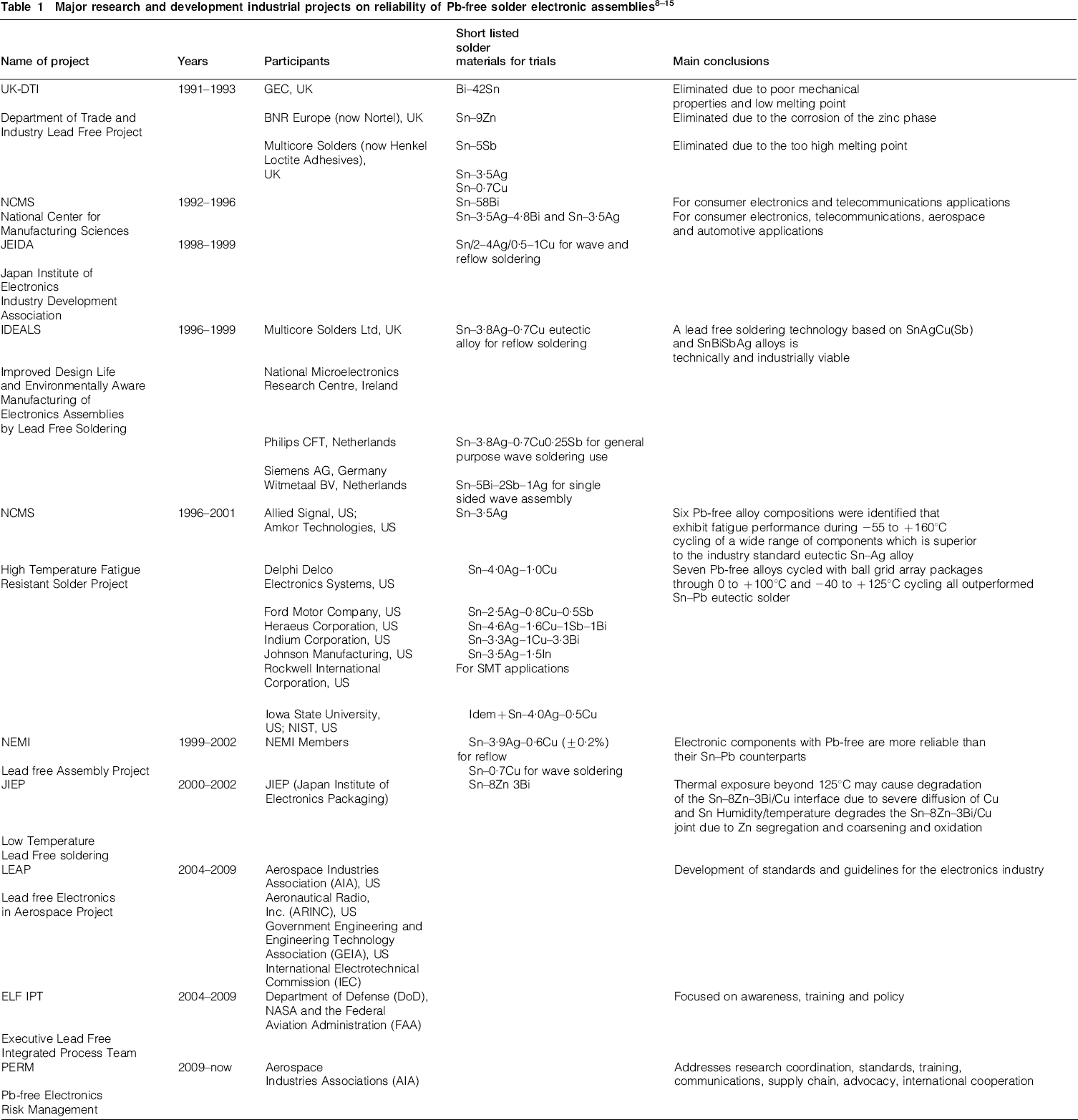
A Sn–Pb replacement alloy must comply with the many soldering material requirements. It must have a melting point Tm that is low enough to enable processing and to avoid component damage (Tm<230°C) and high enough to withstand the operating temperature range from −55 to +125°C (Tm>175°C). Also, any mushy range of more than a few degrees is undesirable due to the danger of hot cracking developing during freezing, so a eutectic or near eutectic composition is desirable. A solder must wet and bond to a metallic substrate, therefore a constituent of the solder must form intermetallic compounds with Cu, Ni and other metallisations used in electronic assemblies. Sn and In are the only two low melting elements that have these properties. Sn is preferred because of the high cost and limited availability of In. Also, it forms well understood intermetallic compounds with Cu. Sn–Pb has been used successfully for decades because of its solderability and reliability. The eutectic composition is Sn–37 wt-Pb, resulting in a low melting point solder (183°C). Pb is also cheap, reduces the surface tension of Sn and enhances wettability. Pb has significant solid solubility in Sn, strengthens the Sn phase but does not form intermetallic compounds with Sn, so alloys do not contain potentially brittle phases.
Sn–Ag was the basis for the development of Pb-free solders. Alloying elements were added to Sn–Ag for improvement of its solderability and a lower Tm. Given the drive for the move to Pb-free is the toxicity of Pb, both during the manufacture of electronics but also when the electronics are discarded in landfills at the end of their life, resulting in possible contamination of ground waters and subsequent human poisoning, alternatives to Sn–Pb have to be free from similar risks (Fig. 1). The aim in alloy development is to improve the creep resistance of the solders, which is the life limiting property at elevated temperatures. Methods for raising the creep resistance of alloys are solid solution strengthening, dispersion hardening and grain refinement. The latter method is not applicable for high temperature applications, so only the two first approaches were considered useful. Alloying elements such as Cu, Bi, Zn, Sb and In were considered to be the least toxic metals to be added to eutectic Sn–Ag in binary or ternary compositions. The addition of In lowers the liquidus of the alloy but is too expensive to be used in electronics assembly processing. Ni enables intermetallic formation and a solid solution hardening effect. Bi and Sb both provide solid solution hardening, but while Bi lowers the liquidus of Sn based systems, Sb increases their liquidus temperature. Lowering the melting temperature of a solder also means higher homologous temperature in service (the homologous temperature is the ratio of the temperature of the material T to its melting temperature Tm in K), which enhances thermally activated processes (creep and grain growth), reducing the reliability of solder joints. Therefore, Bi and Cu were the main alloying elements added to enhance the performance of eutectic Sn–Ag.
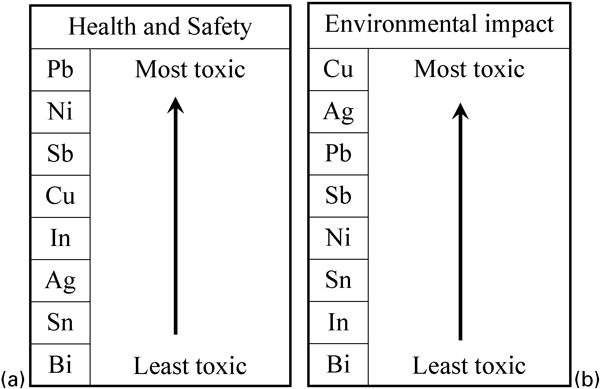
Ranking of toxicity of possible alloys for a health and safety and b environmental impact as established by health and safety experts16
Since 2000, the industry has converged towards the near ternary SAC solder system. SAC Solders are now considered the most suited to replace Sn–Pb solder because they exhibit good mechanical properties (in particular strength, elongation, creep and fatigue resistance). The alloys proposed by industry consortia include Sn–3·0Ag–0·5Cu (SAC305) in Japan,17 Sn–3·8Ag–0·7Cu (SAC387) and Sn–4·0Ag–0·5Cu (SAC405) in the EU and Sn–3·9Ag–0·6Cu (SAC396) in the US18 (in Sn–xX–yY, where X and Y are alloying elements in Sn, the composition is x mass fraction×100 of element X, y mass fraction×100 of element Y and remainder being Sn). Many potential applications have not been studied systematically across the full SAC family and debate still continues over which alloy to use. The IPC Solder Products Value Council19 showed that there is no significant reliability difference between SAC305, SAC405 and SAC387 and recommended SAC305 asa general Pb-free solder paste alloy replacement. However, in recent studies, SAC387 exhibited improved performance under accelerated thermal cycling.20 According to a survey on 48 European organisations, SAC alloys accounted for ∼70 of the market for reflow soldering in 2002.21
Pb-free solder alloys for harsh environments
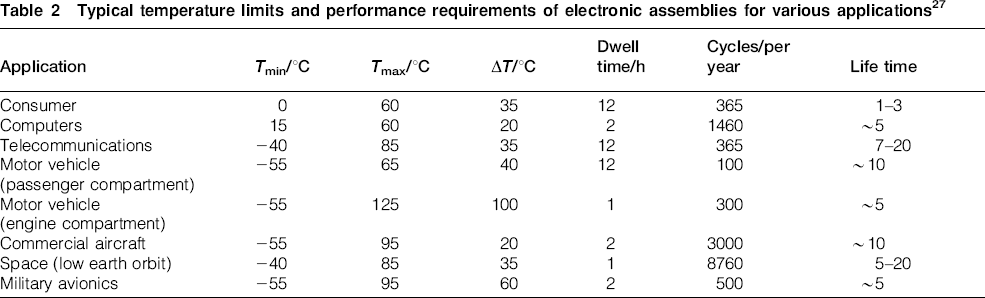
There have been reports that a RoHS2 directive will soon expand the RoHS scope to all electrical and electronic equipment sold in the European Union, including the currently exempted industries (aerospace, automotive, military, subsea and maritime, instruments for down hole applications, power generation and power distribution). The electronics of these industries operate in harsh environment conditions that more rapidly degrade reliability and life times (extended operating thermal ranges from −55 to +125°C and longer service lives). Therefore, commercial Pb-free solutions may not apply to harsh environment applications (Table 2). In particular, higher reliability than conventional materials is needed because of the dramatic consequences of potential failure. Recent consortia focused on the reliability of Pb-free soldered electronic assemblies subjected to high reliability accelerated testing. Although great progress has been made in the knowledge of suitable Pb-free solder alloys for consumer electronics and telecommunication appliances, a preferred Pb-free candidate for the harsh operating conditions remains to be selected. Research is based on currently used Pb-free solders with the addition of alloying elements such as Fe, Bi, Mn, Sb, Ni, Co and Ce.22–26
Typical temperature limits and performance requirements of electronic assemblies for various applications27
Microstructure, mechanical properties and failure mechanisms
Deformation modes during operation
During operation, solder joints are submitted to both low cycle fatigue (associated with temperature cycling loads), and high cycle fatigue (usually associated with mechanical or vibration cyclic loads). These mechanisms may lead to eventual failure of the joint. For harsh environments, vibrations can be a major issue. However, there is very little work that compares high cycle fatigue performance of Pb-free with Sn–Pb,28 probably because mechanical vibrations are considered a lesser issue for harsh environment applications, where traditional leaded packages are still being used. The rest of this review focuses on low cycle fatigue, generally considered to be the primary source of failure in electronic packages. 29 29,30 In ‘isothermal fatigue’, the thermal loading is static during operation and the solder joint is submitted to constant load at elevated temperature, i.e. creep. The other type of low cycle fatigue is ‘thermal fatigue’ and occurs because of thermal cycling loads, either from environmental temperature changes or cyclic active power on/off.
Thermal cycling induces expansion or shrinkage of the components and PCB because of the difference in the coefficients of thermal expansion (CTE) between the PCB, the solder joint and the electronic component, producing stresses at the interfaces of the different parts (Fig. 2). The generated stresses are mainly relaxed by the less creep resistant solder joint. If the temperature varies on a larger time scale than stresses relax through creep, the deformation is plastic and leads to material fatigue. Although solder joints are not subject to pure shear or pure tensile loading, the crucial stress environment conditions is often best approximated by strain controlled fatigue in shear, especially leadless solders, where the shear strains developed often exceed 10.27
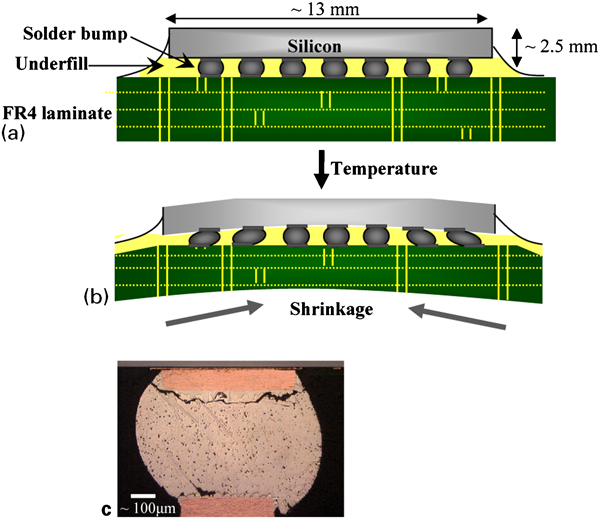
a schematic of ball grid array (BGA), type of SMT electronic package, showing chip, PCB and array of solder balls, with typical dimensions, b schematic of stresses applied to a BGA during thermal cycling due to CTE mismatch (in operation, both shrinkage and expansion may occur) and c optical micrograph of failure in a Sn–3·8Ag–0·7Cu BGA due to thermal cycling at 0–100°C31
The plastic response of both SAC and Sn–Pb solder alloys depends on both the processing and testing conditions. Significant variations were observed for solder joint testing: while various sources find that SAC solders exhibit lower yield strength, lower hardening and lower ultimate strength than Sn–37Pb under identical shear loading conditions,32–35 other sources found opposite results. 36 36,37 Variations in reliability testing may be explained by the many parameters that can influence test data: solder joint geometry, varying microstructure (grain size, intermetallic size and dispersion), substrate finishes, soldering process (different reflow temperature profiles, cooling rates, voids, brittle phases), size of the joint (small joints will have increased interfacial effects and decreased fatigue creep effects) or the temperature dependence of the mechanical behaviour of solders.
Microstructure of SAC solders
Eutectic and near eutectic Sn–Pb alloys are composed of alternate lamellae of Pb rich and Sn rich phases in a small number of eutectic colonies (defined as areas where the lamellae have similar orientation). The microstructures of Pb-free alloys differ significantly. SAC Solders are composed of intermetallics embedded around a β-Sn matrix.38 During solder joint processing, β-Sn has difficulty nucleating during cooling, which leads to supercooling of the liquid phase, possible formation of metastable phases and comparatively rapid formation of β-Sn in Sn dendrites once nucleation has started (Fig. 3).
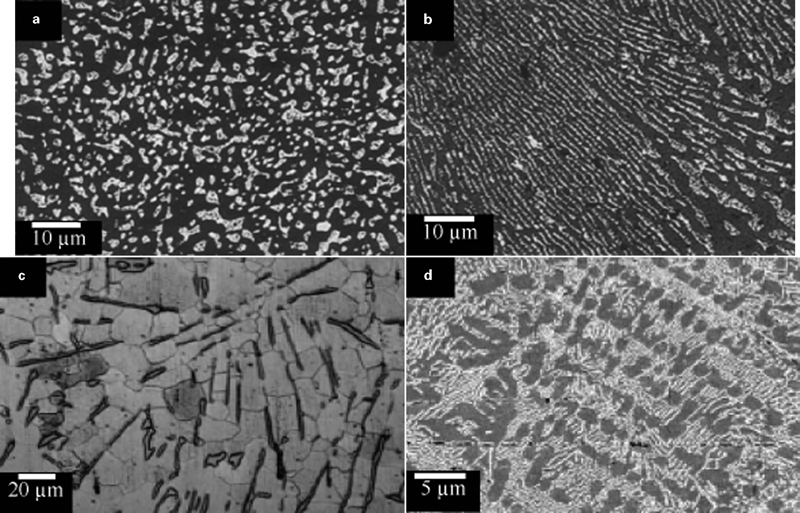
Scanning electron microscope (SEM) image showing the microstructure of eutectic Sn–Pb a equiaxed after slow cooling and b lamellar after rapid cooling27 and as cast SAC387 with c β-Sn+Ag3Sn+Cu6Sn5 ternary eutectic microstructure after slow cooling and d interdendritic ternary eutectic-like microstructure, β-Sn dendrites are formed as a result of melt undercooling.38 Slow cooling leads to an equiaxed structure for both eutectic Sn–Pb and SAC solders. Owing to solder joint processing, the microstructure of SAC solders is very often dendritic. Upon recrystallisation, the dendritic structure may evolve to the equiaxed structure
SAC alloys all have a pasty range <3°C, with the liquidus ranging from 217 to 220°C. The melting temperature of eutectic SAC alloys is close to 217°C, compared with a eutectic melting point of 183°C for Sn–37Pb. Therefore, a drawback for processing Pb-free solders is the highest reflow temperatures required, which leads to increased interfacial reactions and subsequent decreased soldered joints reliability. The expected equilibrium phase reaction at the eutectic point of SAC systems is: L Ag3Sn+Cu6Sn5+Sn. The formation of intermetallics can be deduced from binary phase diagrams (Fig. 4). Therefore, upon solidification, only three phases are formed in SAC solder systems: Ag3Sn and Cu6Sn5 intermetallics dispersed in β-Sn (Fig. 5). The presence of intermetallic particles gives strength and creep resistance to SAC alloys through dispersion or precipitation strengthening mechanisms, hence improved thermal fatigue resistance of SAC solders compared with Sn–Pb solders.41 The varying Ag content in SAC alloys leads to varying volume fraction, size and distribution of intermetallics and Sn dendrites.42 Besides, the microstructure and mechanical properties depend on reflow temperature and time, cooling rate and aging. The wide range of intermetallic compound (IMC) morphologies (obtained through various compositions and processing techniques) and the presence of large anisotropic Sn grains in SAC solders give various mechanical behaviours, resulting in a spread of failure mechanisms in SAC alloys compared with Sn–Pb alloys.43
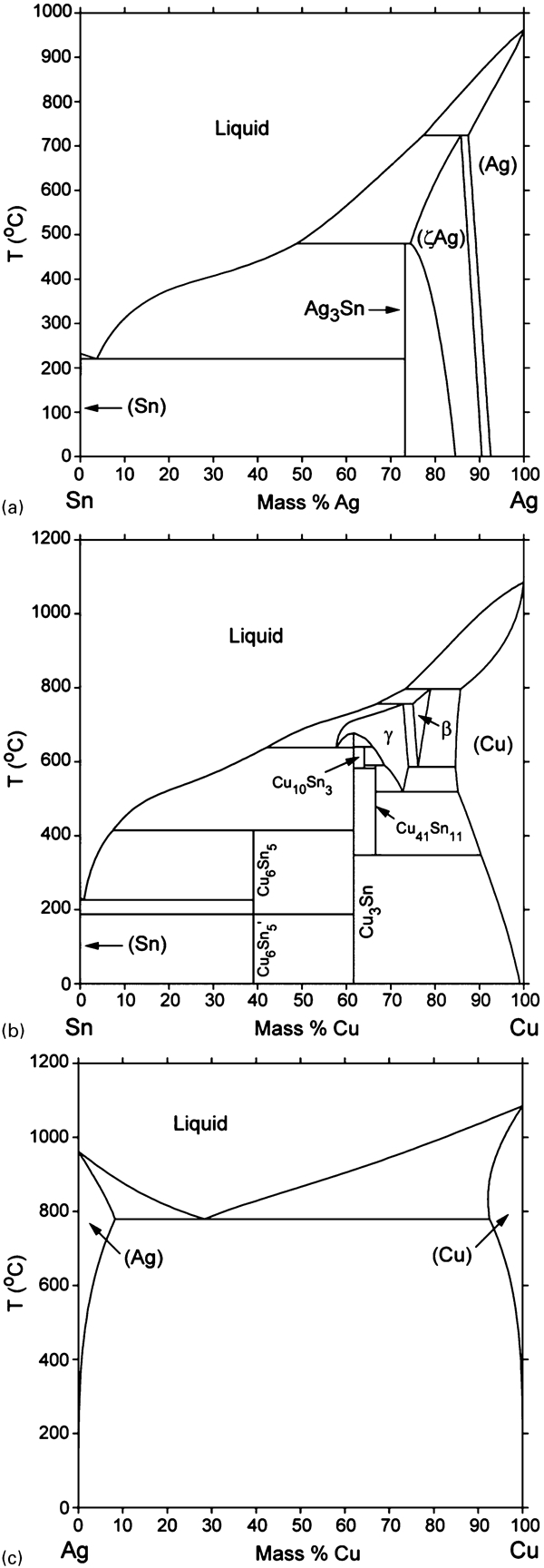
Binary phase diagrams of a Sn–Ag, b Sn–Cu and c Cu–Ag.39 Three intermetallics may form in SAC systems: Ag3Sn from the reaction of Sn and Ag, Cu6Sn5 and Cu3Sn from the reaction of Sn and Cu. Cu3Sn does not normally form at the eutectic point unless the Cu concentration and the temperature are high enough
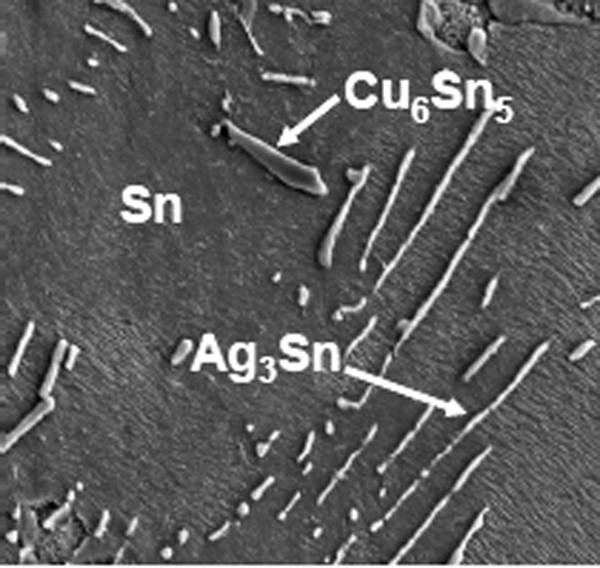
Image (SEM) showing typical SAC387 microstructure:40 SAC387 is a precipitation hardened alloy with Ag3Sn and Cu6Sn5 intermetallics dispersed in β-Sn; while Cu6Sn5 intermetallics are equiaxed particles, Ag3Sn are frequently elongated plates
Failure of SAC solders
Microscopic failure induced by thermal fatigue
In many metals, failure from low cycle fatigue occurs because of cyclic deformation followed by microstructure dependent mechanisms such as crack initiation, microcrack growth and propagation. Under cyclic stress, Sn–Pb exhibits grain coarsening. For SAC alloys, a different mechanism takes place: recrystallisation often occurs resulting in finer grains. These grains then separate at grain boundaries, enabling crack growth. Zeng et al.44 conducted a study on SAC387 with an equiaxed grain structure to understand how low cycle fatigue behaviour relates to micromechanisms of fatigue damage. Microcracking was the dominant fatigue damage mechanism, leading to macrocrack development. The microcrack formation arose as early as 30 cycles for a 1 strain amplitude. The number of microcracks increased with the number of fatigue cycles so that strong cyclic dependent softening developed. When the density of microcracks was high enough, they linked to form a fatigue crack. These cracks were primarily located in recrystallised areas or regions with fine grains and a comparatively high density of grain boundaries. Consistently, another study on equiaxed SAC387 found that microcracks developed early (<5 of the fatigue life) and along the grain boundaries.38 In dendritic structures, deformation concentrated in the dendritic phase, as evidenced by the development of slip bands,38 while another study on Sn–3·5Ag suggested two different crack initiation locations in dendritic structures depending on the frequency of loading.45 In the latter case, the initiation of fatigue cracks occurred either along the boundary between β-Sn dendrites and the eutectic mixture (at low frequency loading) or inside the β-Sn dendrite (at high frequency loading) (Fig. 6). Nevertheless, further work showed that the stresses and cyclic loading frequencies dependence only influenced the path of the crack growth (either transgranular or intergranular).38
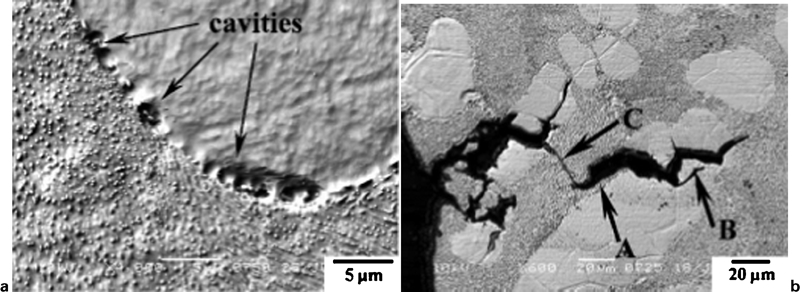
Images (SEM) of a fatigue crack initiation in dendritic Sn–3·5Ag alloy and b fatigue crack propagation in dendritic Sn–3·5Ag alloy strained to 1 vertically, showing various growth paths: intergranular along Sn dendrite boundary (A), intergranular along subgrain boundary (B) and transgranular through Sn–Ag eutectic (C)45
The presence of IMCs can impede the linkage of microcracks, slowing down the subsequent crack propagation.38 In particular, as outlined above, Ag3Sn plates may influence mechanical fatigue mechanisms. 46 46,47 During solidification, the nucleation of the Ag3Sn phase is easier than β-Sn, so large Ag3Sn plates can grow rapidly across the joint. These large Ag3Sn plates can have a profound effect on joint plasticity in lead free solders, causing strain localisation at the interface between the plate and β-Sn,48 and promoting a failure path during thermomechanical fatigue (Fig. 7).49
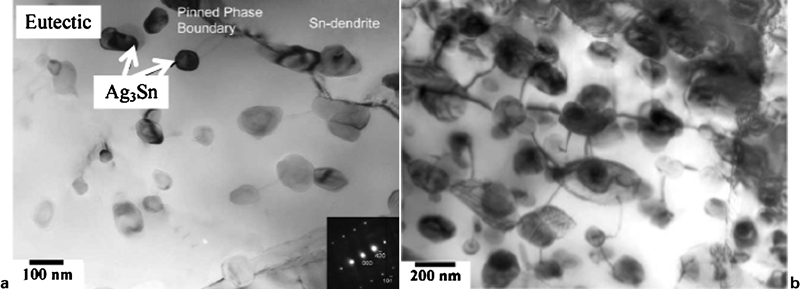
Transmission electron microscopy micrographs of a initial microstructure of Sn–3·5Ag and b pinning of dislocations by Ag3Sn particles after creep deformation induced by loading (22 MPa at 60°C with strain rate of 10−4 s−1):49 initially, many homogeneously dispersed Ag3Sn particles pinned the Sn/eutectic boundary; following deformation, more Ag3Sn precipitates as well as dislocations produced by deformation pinned the grain boundary
The interface at the circuit board metallisation pad/solder and the interface between component pad/solder usually contain an intermetallic layer formed during manufacture. In the case of Cu pads, the scalloped type Cu6Sn5 interface forms first whereas the layered type Cu3Sn interface forms after thermal exposure because of the high concentration of Cu at the solder/pad interface and the reduction in Sn concentration due to the formation of the Cu6Sn5 layer.50 The intermetallics undergo growth coarsening at room temperature and above, and growth may extend into the solder either by needle-like growth or by detached fragments from the intermetallics layer, leading to joint embrittlement. Cracking often occurs along or within the intermetallic layer leading to eventual failure (Fig. 8).51 This is all the more worrying as with the ever decreasing size of solder connections, the role of the intermetallic layer is likely to increase.
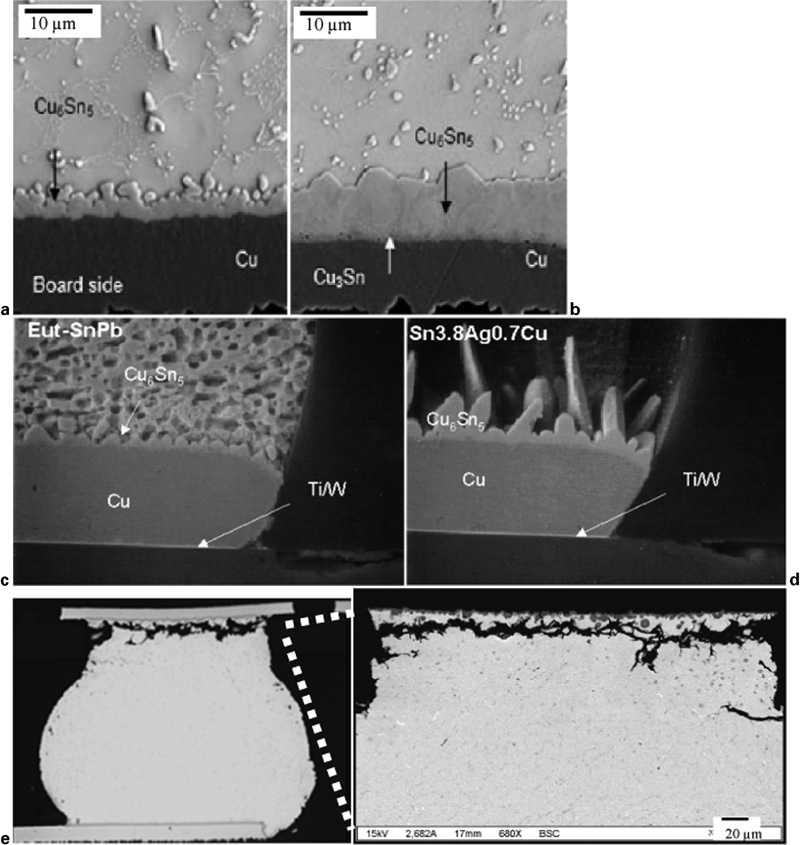
Images (SEM) of a unaged and b aged at 150°C for 1000 h intermetallic layer at a SAC305/Cu pad interface showing growth of intermetallic layer with thermal aging,50 c eutectic Sn–Pb/Cu and d SAC387/Cu under bump metallurgy interfaces showing sharp elongated intermetallics of Pb-free solder joints as opposed to smoother intermetallic layer for Sn–Pb solder joints;31 e typical failure along Pb-free solder joint/pad interface52
Also, the manufacturing of mixed Sn–Pb and Pb-free solders by electronic manufacturers raises the question of possible small traces of Pb in Bi containing Pb-free alloys. Such traces of Pb can produce a ternary alloy with a very low eutectic temperature, resulting in catastrophic failure during thermal aging. This is a serious issue as Bi containing SAC alloys are very promising materials for harsh environments.
The complexity and dynamic situation in joints makes comparison between failure studies difficult (Fig. 9).

Main factors influencing mechanical properties of solder alloys
Specific issues for harsh environments
Sn pest
Pb-free alloys may be vulnerable to Sn pest in case of prolonged exposure to low temperatures. Sn pest is when Sn undergoes an allotropic transformation at 13·2°C (β-Sn→α-Sn). α-Sn (or grey Sn) has a brittle, diamond cubic structure, while β-Sn (or white Sn) has a body centred tetragonal form. The transformation induces a 27 volume expansion. 54 54,55 The thermodynamic transformation temperature is 13·2°C but in practise, grey Sn forms during long exposure to temperatures below 0°C. The wartlike appearance of grey Sn spreads over the sample surface, where the constraints are minimised. Sn pest results in embrittlement and ultimately disintegration of the sample (Fig. 10). The damage that Sn pest can cause after prolonged exposure at low temperatures has been widely studied and recently reviewed.57 Tin pest is a slow process that can take months or years. The nucleation and growth phases start after an incubation period. The mechanisms for nucleation and growth are still unclear.
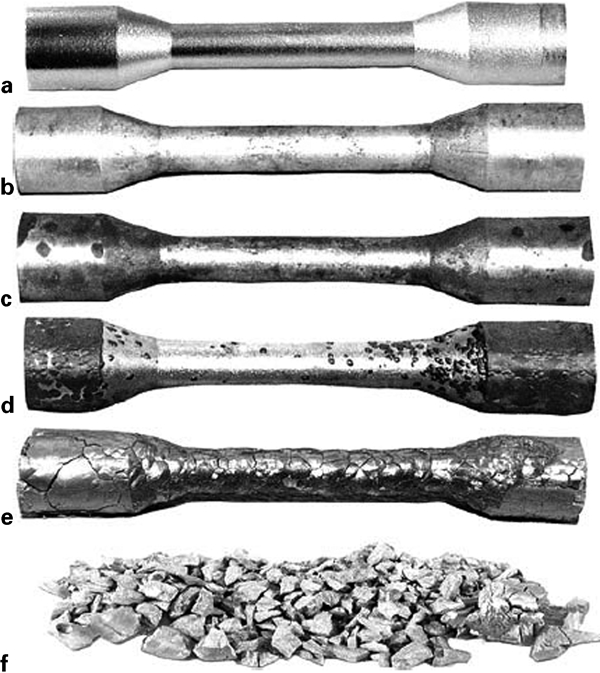
Sn pest in as cast samples with increased times of exposure to low temperatures
Sn pest growth suffers a huge lack of consistency in both occurrence and time scale, depending on the experimental conditions and composition of samples.57 Partial reversal can occur upon heating because the α-Sn→β-Sn transition may occur 20°C above the β-Sn→α-Sn transformation.58 In practise, reversal was observed after heating from 60°C.57 However, in case of reversal, the material is still porous and cracked. A controlling factor for the growth of Sn pest is the matrix into which Sn pest grew.59 It was proposed that growth depended on stress relaxation ahead of the expanding α-Sn phase.56 When high stresses were caused by volume expansion, the resistance to Sn pest growth was greater. Alloys with a strong matrix were more resistant to Sn pest because stress relaxation ahead of the matrix becomes more difficult, inhibiting growth.59 Strengthening factors such as a reduced grain size and solute atoms made Sn pest growth more difficult.56
The nucleation phase depended on the local composition. Elements that are soluble in Sn (Pb, Sb or Bi) tended to suppress the transformation by raising the β-Sn→α-Sn temperature, whereas elements that are insoluble in Sn (Zn, Al, Mg or Mn) accelerated the transformation by lowering the transformation temperature.57 Even impurity traces of Sn pest inhibitors could prevent Sn pest formation. The addition of Cu and Zn to pure Sn both promoted grey Sn formation but the influence of an alloying element depended on the presence of other elements. 60 60,61 Also, heavy cold work (up to 90) on a Sn–0·8Cu alloy enhanced the transformation at −30°C.61
Many electronic sectors have operating conditions that fall within the Sn pest formation domain (aeronautical, aerospace and automobile).62 But the presence of Pb, Sb or Bi in traditional solders makes it very unlikely for Sn pest to occur in traditional electronic packages. On the other hand, the microstructure of the newly developed Pb-free alloys is much closer to Sn (the second phases are small intermetallics in a Sn rich solution), suggesting possible Sn pest formation. Also the strength of Pb-free solders is generally higher than that of traditional eutectic Sn–37Pb at room temperature and above. However, below −10°C, the strength and creep resistance of Sn–37Pb is higher, hence a higher chance for Sn pest growth. Sn pest has now been observed in a range of Pb-free solders (Sn–3·5Ag, Sn–0·5Cu, SAC387 and SAC305) left at −18 and −40°C.56 No Sn pest was observed in Sn–8Zn–3Bi or in Sn–37Pb after exposure for up to 4 and 10 years respectively.56 However, Sn pest has not been observed in solder joints so far. Solder joints have little free surface and have greater strength due to their being constrained between the intermetallic layer and the component, which limits possibilities for Sn pest formation.
Sn whiskers
As a result of the transition to Pb-free electronics, Sn or high Sn content Pb-free alloys have widely replaced the standard Sn–37Pb alloy as the simplest manufacturing substitute for terminal finishes. Sn whiskers are Sn crystals growing spontaneously from finished metal surfaces.63 While Sn whiskers are very unlikely to appear in Pb bearing solders (Pb is a Sn whisker growth inhibitor), Sn whiskers may develop on high Sn containing alloy surfaces. After an unpredictable incubation period (1500–3000 h), the filaments may grow, with risks for electrical shorts or disruption of moving parts, resulting in potential catastrophic failure in high reliability equipment. Growth rate from 0·03 to 9 mm/year have been reported.64
Although the phenomenon has been extensively studied for decades, the risk for whisker formation is still hardly quantified. Whisker growth depends on many variables. However, studies coherently designate processes of stress relief within the Sn layer as the driving forces for whisker nucleation and growth. In particular, compressive stress is a necessary but not sufficient factor for Sn whisker formation.65–67 Compressive stress can be induced by mechanical loading, residual stresses from processing, surface damage, CTE mismatch and formation of IMCs between the interface of plating and the substrate. Environmental factors such as elevated temperatures, barometric pressure, humidity, thermal cycling and electric fields may promote the diffusion and formation of whiskers.64 High reliability industries cannot afford the risk of Sn whisker formation so they avoid Sn finishes. Cheaper mitigation strategies include blocking whisker growth by means of non-conductive barriers such as epoxies, selecting matte Sn as the finish material (bright finishes are particularly prone to whisker formation), varying the thickness of Sn plating, or heat treatments that relieve internal stresses.
Life time predictions of Pb-free electronic assemblies
Low cycle fatigue behaviour of Pb-free solders and accelerated thermal cycling (ATC)
Thermal cycling tests that would mimic the operating conditions would be ideal to assess the reliability of electronic packages. However, such tests would be much too costly and time consuming to implement. Therefore, ATC tests have been used for over 40 years (since the first major paper by Norris and Landzberg in 1969) as a method to assess thermomechanical reliability of electronic assemblies.68 Cycles to failure data are translated into life time predictions by means of experimentally determined acceleration factors. Fatigue tests are used to calculate and plot the Weibull fatigue life data, i.e. shear stress versus shear strain. Typical hysteresis loops are obtained and allow for the observation of softening or hardening over cycles (Fig. 11). After a few cycles, the maximum stress begins to drop due to a reduction of the load bearing area, significant of fatigue cracking. The number of failures as a function of thermal cycles can then be studied. The fatigue life of the alloys is a strong function of the strain amplitude, cyclic frequency, temperature and microstructure. There are well established thermal cycling conditions to evidence failure for specific classes of Sn–Pb assemblies. However, the electronics industry has just started establishing ATC conditions for Pb-free assemblies.
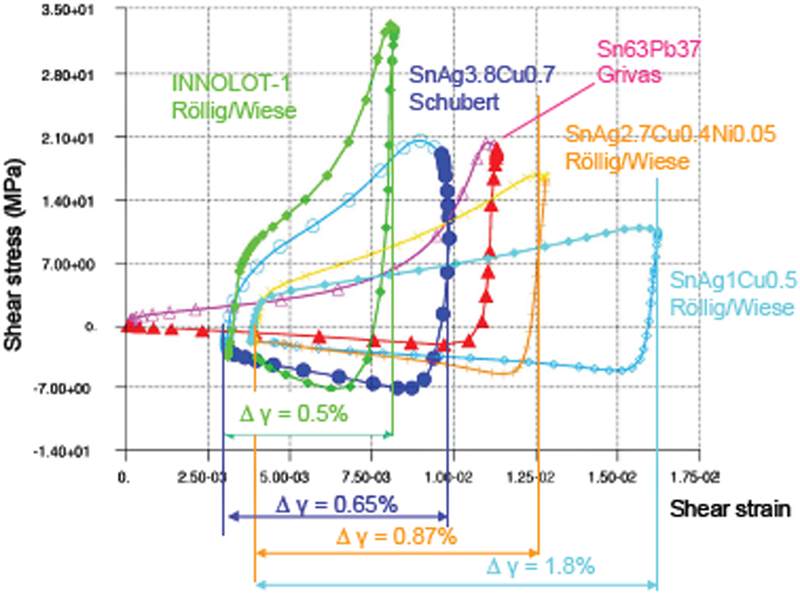
Creep hysteresis curves for various Sn–Pb and SAC solders of chip resistor during 90 min thermal cycle from 150 to −40°C at constant strain range69
Coffin–Manson, cycle to failure relationship
Most models used to determine the number of cycles to failure are empirical, based on Coffin–Manson curves and were developed for eutectic Sn–Pb.69 The Coffin–Manson model
70
70,71 uses the Weibull fatigue life data and links the creep strain that has accumulated over one thermal cycle to the number of mean cycles to failure. It predicts the number of cycles needed to lead to failure of a given percentage of parts when exposed to temperature variations. The amplitudes of the accumulated creep strain ϵp over one thermal cycle can be related to the mean cycles to failure Nf by the following Coffin–Manson equation

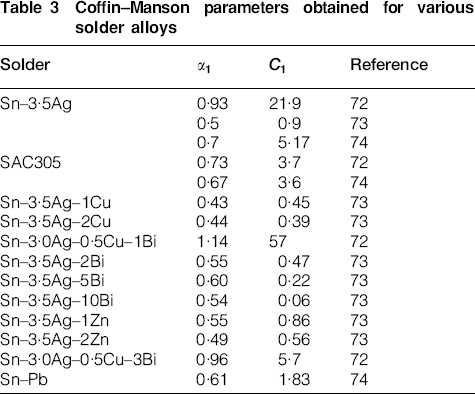
Table 3 shows the values obtained for various solder alloys. Good correlation coefficients were found for the Coffin–Manson relationship (>0·97).72 However, over a few sets of fatigue life data, in particular depending on the cyclic load range, large variations were observed in terms of Coffin–Manson parameters.38 These uncertainties can be explained by lack of sufficient experimental data, which leads to significant errors (especially as fatigue data have large scatter). Direct comparisons between the Coffin–Manson constants and different studies in the literature should be made carefully. The coefficients in the Coffin–Manson relationship depend on the dimension of the soldered assembly, the difference in thermal expansion between assembly parts, the upper and the lower temperature of the temperature variation, the frequency of the temperature variation and the thermomechanical properties of the joint. They can also depend on the testing conditions: at smaller strain ranges, α may increase.27 The slope of the Coffin–Manson curve may also vary if data are obtained from shear straining or from actual solder joints. The Coffin–Manson model comes down to fitting curves to experimental data. A true model would include geometry dependent parameters. Modifications to the model have been explored, for instance to account for the microstructure of the sample.38
Coffin–Manson parameters obtained for various solder alloys
Acceleration factors: Norris–Landzberg equation
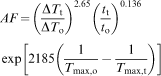
The Norris–Landzberg equation is an extension of the Coffin–Manson equation that includes the effects of thermal cycling test frequency and maximum temperatures to determine the ‘acceleration factor’ (AF) that scales ATC test conditions to field conditions. The main assumption in the Norris–Landzberg acceleration model is that ΔT/Δϵs is constant (ΔT and Δϵp are the cycle temperature range and plastic strain range respectively).
The acceleration factor is given as

This model has been widely accepted for Sn–Pb over the decades of use by the electronics industry.
For Sn–Pb, the acceleration factor has been given as

The corresponding equation for SAC solders has been proposed as75
The reliability of Pb-free assemblies was the subject of an impressive number of ‘point studies’ that address specific package geometries and soldering conditions. There is a lack of cohesiveness among the available data, with varying results for different experimental conditions. Depending on service conditions, the prediction of current models can have errors by 1–2 magnitude, which would mean errors in life time predictions from 1 to 100 years.15 Nevertheless, Pb-free reliability trends can be spotted. Studies on SAC387 and SAC396 showed that the ratio of SAC to Sn–Pb lifetime decreases with increases in either the temperature range/cyclic shear strains (Fig. 12), the mean temperature, or the dwell times at the temperature extremes.76 Under higher strains, the life of SAC solder joints was less than that of Sn–Pb. The difference in the slope of the SAC and Sn–Pb trendlines and the intersect of the trend lines suggested that although Sn–Pb assemblies perform better than SAC assemblies under highly accelerated tests, SAC solder joints are more reliable under milder conditions.76 Similarly, in a joint study between the NASA and the DoD,78 SAC solders were as reliable as their Sn–Pb counterparts for −20 to +80°C thermal cycling, but they were often less reliable during −55 to +125°C thermal cycling. At low stresses, Pb-free solders generally outperformed Sn–Pb while the reverse occurred for high stress conditions.78 But the correlation cannot be used for safe extrapolation to real temperature cycling as dwell times and test frequency are different. Besides, only one out of the 27 data points was below the 1 shear strain range, which is already a high strain, leading to reduced cyclic life. These results highlight the lack of data in the low to medium stress condition, most likely to be encountered in a wide range of applications. It is estimated that joints in service undergo a 1–10 MPa stress. Further testing in the low and medium stresses range is required to confirm the Sn–Pb reliability trend reversal.76
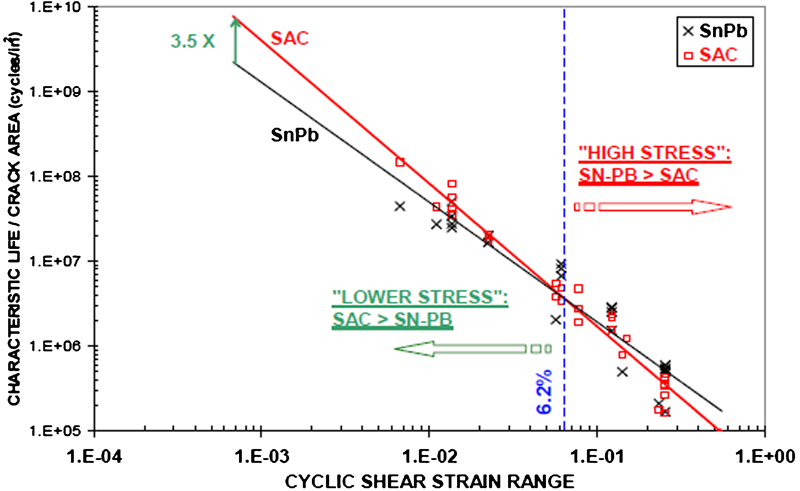
Scaled characteristic life (number of cycles to 63·2 of the total cycles to failure) against the average cyclic shear from failure distributions of SAC387, SAC396 and Sn–Pb soldered assemblies subjected to accelerated thermal cycling under different thermal conditions (0 to 100°C, −40 to 125°C, −55 to 125°C). A cross-over point at 6·2 cyclic shear strain was observed. At the left of the cross-over point, SAC assemblies had longer lives than Sn–Pb assemblies77
The cycles to failure relationship also depends on the type of package used. Sn–Pb solder joints had improved fatigue life for stiff components and loads induced by high thermal mismatch whereas SAC solders had better mechanical properties for compliant packages and low thermal mismatch induced loads.79
Finite element analysis (FEA) modelling
The high number of Pb-free options and electronic packages hinders the development of reliability databases, acceleration models and therefore life prediction models. A suitable soldering material for harsh environments is yet to be selected. Speeding up the life prediction process through FEA modelling is critical. Accurate modelling requires a full understanding of failure modes, an accurate constitutive model and an experimental reliability database to characterise solder constitutive properties for later input of material parameters in the model. The package geometry and the thermal cycles are modelled in a FEA code that provides stress–strain behaviour with time. The model constants being known, the damage model thus developed can be used on other assemblies and thermal cycling conditions. Modelling minimises the need for costly prototype development and testing. The interest in computer modelling is growing as the design of electronic packages gets more and more complicated with the continuous decrease in assembly size.
Constitutive behaviour of solder alloys: Creep
The constitutive behaviour of solders is the way the material responds to various loading conditions (stress–strain behaviour, including creep). It is estimated that when T>0·5Tm, creep dominates the deformation kinetics in metallic materials.80 Therefore, operation at a high homologous temperature makes solder joints very prone to creep. Creep refers to the time dependent plastic deformation under constant uniaxial stress. The high temperature hold periods during operation are opportunities for creep (under stress controlled conditions) and for stress relaxation (under fixed strain range). The most widely used method for creep behaviour study is the conventional tensile creep test.81 Typically, a specimen is subjected to prolonged constant tension or compression loading at constant temperature. Deformation is recorded over time and three stages are typically observed. Primary creep (or transient) first occurs in the material. The strain rate starts high and then decreases to the steady state value in the steady state (or secondary) creep region, when the competition between strain hardening and strain softening (recrystallisation and recovery) leads to a stable strain rate. The third stage is tertiary creep: nucleation and growth of cavities induce microcracking and necking until rupture.
The mechanisms involved in creep are thermally driven diffusion processes that depend on strain rate and stress ranges (Fig. 13).82 In harsh environments, solder alloys all operate at high homologous temperatures. Therefore, the creep mechanisms mainly depend on the stress level. At low stress levels, the deformation will be caused by lattice diffusion and grain boundary diffusion. Dislocation creep will occur at intermediate stress levels. High stresses will induce dislocation gliding.83 Grain boundary sliding (displacement of grains) may also occur at high temperatures in conjunction with any of the other creep mechanisms. The hard IMCs embedded in the Sn matrix limit grain boundary sliding in the early stage of the deformation, but the finer Sn structure obtained by cyclic fatigue loading may increase grain boundary sliding.52
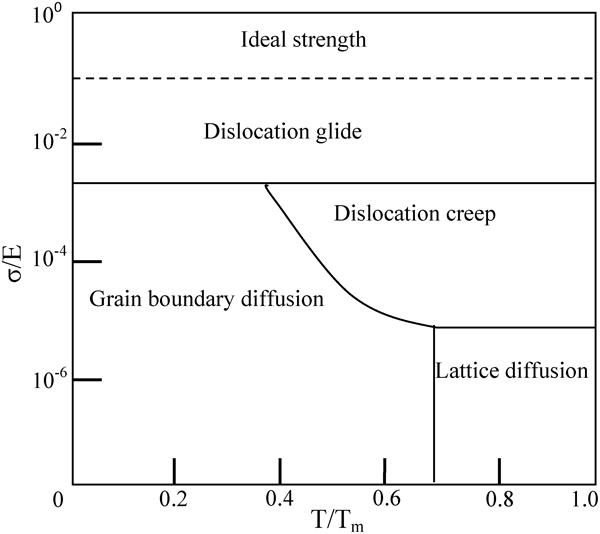
Creep deformation map of Pb based and Pb-free solder alloys after Ma and Suhling.83 Dislocation glide occurs in the high stress region for all homologous temperatures (dislocations moving along a slip plane). Dislocation creep occurs at medium stresses and when Th>0·5Tm (dislocations climbing away from dislocation barriers, diffusion controlled). Lattice diffusion mechanisms occur at low stresses and high temperatures (migration of interstitial atoms and lattice vacancies along the gradient of a grain boundary in the presence of tension or compression pressure in reversed directions)
Characterisation of constitutive properties of solder alloys
The determination of the solder material parameters for subsequent input in a life prediction model requires a reliable constitutive model. Steady state creep accounts for most of the creep time so most models concern the temperature and time dependent secondary creep only. Steady state creep behaviour is generally expressed by the simplified Dorn power law equation53
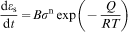

For solders, the simple power law breaks down at low and high stresses. This behaviour is consolidated into a single expression, the Garofalo hyperbolic sine law

Table 4 summarises best fit creep constants for both Sn–Pb and Pb-free solders for the most widely used Dorn power law and Garofalo hyperbolic sine law models. There are large discrepancies in creep data and materials constants, even among studies using the same creep models. Research groups often use different sets of strain rates and temperature, making the data difficult to compare as creep is strain rate and temperature dependent. In order to gain results on a sensible time scale, studies were often carried out at much higher strain rates (>10−4 s−1) than the ones encountered in operation (∼10−7 s−1). The specimen microstructure (e.g. grain size), which depends on processing, also has an effect. Besides, the ever reducing size of electronic assemblies, with solder joint dimensions <1000 μm, makes the length scale of solder joints comparable to that of their microstructure. Most results stem from experiments carried out on samples from bulk solder material or melted solder paste in a mould. Not only do these test specimens have a significantly different microstructure from real solder joints, but testing bulk samples instead of real solder joints may also result in inaccurate modelling of field mechanical properties. Some studies have focused on directly loading95–99 or indenting real solder joints.100 However, errors may be induced by the varying cross-sectional area of a joint and the non-uniformity of the stress–strain distribution at the constrained interfaces with the board and component. Constitutive models are currently being improved for Pb-free solders. Recently, an obstacle controlled creep model based on the rate dependent plasticity models described by Frost and Ashby101 was developed to account for the ‘obstacles’ (dispersed intermetallics, grain boundaries, lattice of the Sn matrix).102 An athermal flow strength parameter, which represents the maximum flow strength of the material at the absolute zero temperature, was introduced in the Dorn power law expression. This model proved to resolve the issues of stress and/or temperature dependence of the power law exponents often observed in the literature.88–104 The Anand model is another improved model, currently being developed for Pb-free solders. A single scalar internal variable, the deformation resistance, represents the isotropic resistance to plastic flow and takes into account the inelastic deformation behaviour of solder alloys.105–107
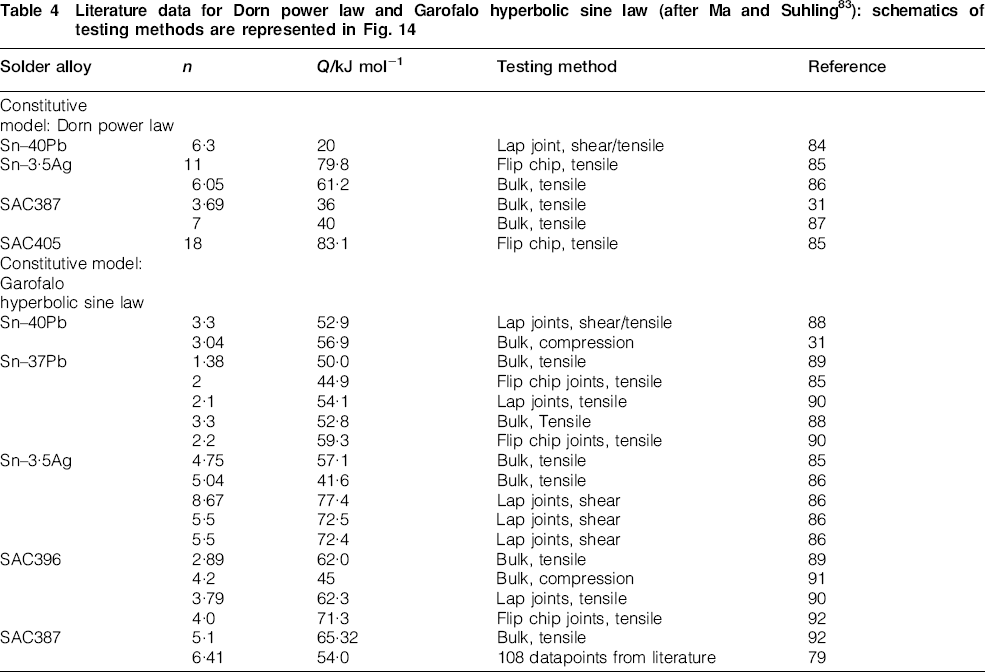
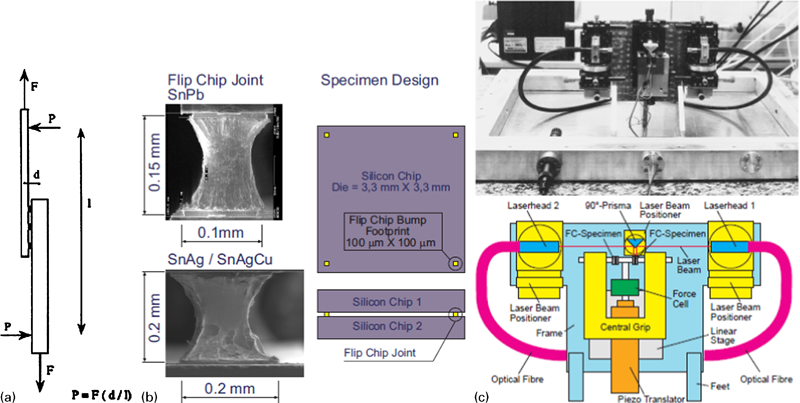
a single shear specimen showing lap joint testing as described by Mei et al.,93 P and F represent the tensile load and the applied force respectively; b two silicon chips connected by four flip chip joints for tensile tests;94 c tensile testing set-up for measurement of the force displacement of the flip chip joints. Loading conditions are applied by means of a piezoelectric translator, which provides a smooth movement with subnanometer resolution. High resolution displacement is measured by a dual beam laser interferometer94
Conclusions and future work
The multiplicity of Pb-free solder materials for the replacement of Sn–Pb has hindered the development of reliability databases, test standards, acceleration factors and life prediction models. Although SAC alloys are now the preferred alloys for Sn–Pb solder replacement in consumer electronics, very little research has focused on harsh environment conditions. Sn pest is unlikely to occur in Pb-free assemblies because of the presence of elements suppressing the transformation. Sn whiskers growth is a concern for high reliability industries but techniques to mitigate the risk are being developed. Long time testing data on Pb-free solders under harsh environment conditions are not yet available. Therefore, there is no life time prediction for Pb-free solders in extended operating thermal ranges (−55 to +125°C) and service lives (>10 years). This is a concern because preliminary research tends to suggest that Pb-free assemblies do not perform as well as Sn–Pb assemblies under harsh conditions. Thermal fatigue was the main focus of reliability studies as it is considered to be the primary cause of failure for harsh environments and long service life times. However, conclusions and recommendations on Pb-free assemblies are sometimes contradictory, mainly because reliability is package geometry dependent. The component type, more than the type of solder alloy, has an effect on the reliability performance. Besides, the imposed temperature profiles used in ATC tests are required due to time constraints. They do not represent the heating/cooling rates and dwell times encountered in service. Therefore, analysis of the ATC tests results does not always produce accurate predictions of the mechanical response of the solder joint in operation.
Modelling alongside ATC is necessary to speed up the characterisation of suited Pb-free alternatives for specific applications. A challenge for research on Pb-free solders is the estimation of stress, strain and plastic work by a set of constitutive equations that will allow for more accurate analytical or finite element model predictions of the reliability of various types of electronic assemblies. Creep models such as the power law or the Garofalo hyperbolic sine law have been applied successfully to fit data and are still being improved. While Pb-free alloys are still being developed, techniques that would speed up mechanical testing are very valuable. Micro-/nanoscale techniques were developed in recent years and offer very promising time and materials saving alternatives to conventional tensile tests.108–110
Footnotes
Acknowledgements
The author would like to thank Professor P. S. Grant for his support, guidance and encouragement. Financial support from EPSRC is also gratefully acknowledged.