







Abstract
In pressurised water reactor primary water, there is generally growing concern that stress corrosion cracking (SCC) may occur in occluded locations where residual oxygen and other impurities may be trapped. For these critical components, the deployment of more SCC resistant materials is desirable. In this paper, the effect of 1 wt-%Ru additions on the SCC susceptibility of 304 austenitic stainless steels was investigated in high temperature water. Slow strain rate tensile tests were performed on standard and 1 wt-%Ru modified 304 stainless steels in both sensitised and cold worked conditions. Preliminary results showed that, although both ruthenium doped and standard 304 stainless steels exhibited intergranular SCC, the former was less susceptible as indicated by a greater strain to failure. The results obtained suggest an improved performance of the Ru doped 304 stainless steel towards SCC susceptibility in these environments.
Introduction
Austenitic stainless steels are widely used in light water reactor internals due to their good general corrosion resistance at high temperature. However, both field experience and laboratory testing have shown that these materials are susceptible to stress corrosion cracking (SCC) and corrosion assisted fatigue. Historically, SCC of austenitic stainless steels (ASS) has been associated with sensitised materials exposed to oxidising environments, such as those in boiling water reactors (BWRs), or on neutron irradiated materials. 1 However, in the last decade, it has become clear that SCC of ASS is an issue even on non-sensitised materials, in both oxygenated and hydrogenated water where the detrimental role of cold work (CW) has become of prime concern.2–7
The SCC resistance of ASS is generally better in pressurised water reactor (PWR) primary coolant than in BWR coolant.2,6,8 This can be attributed to the oxidising conditions of the latter environment, which is particularly detrimental for sensitised materials. Sensitisation refers to the depletion of chromium at grain boundaries due to precipitation of chromium rich carbides. Sensitisation is known to be a major SCC enabling factor in oxygenated conditions but not in good quality hydrogenated PWR primary water. This is because the net beneficial effect of grain boundary (GB) carbides prevails over the Cr depletion at the GBs. 2 In fact, it has been clearly shown that GB carbides impede SCC at high potentials provided that Cr depletion was not present.2,9–11 Conversely, anionic impurities (e.g. sulphate and chloride) in the primary water have a much stronger role than Cr depletion, even in the absence of oxygen whose role is merely to drive a build-up of such impurities at the advancing crack.12,13
Although the primary circuit of a PWR operates at very low levels of dissolved oxygen due to the addition of hydrogen in the primary water, there is growing concern regarding the role of O2 in low or nil flow locations that are not easily refreshed with primary coolant. It might be noted, for example, that one-third of PWRs are no longer fully deaerating their make-up water during the start up (e.g. after refuelling), and thermal stratification may allow aerated water to persist to the pressure vessel. 14 Furthermore, occluded locations such as control rod driving mechanism and canopy seals can be subjected to a relatively high level of impurities not representative of bulk primary water chemistry, and some instances of SCC have been observed in PWR primary circuits. 15
The complex nature of SCC impacts significantly on the long term reliability and integrity of nuclear power plants, and thus, new SCC resistant materials are greatly desired. However, relicensing of new material would also be associated with large cost implications. On the other hand, no reapproval would be required if the SCC resistance of the material was improved via microalloying so that the material specification remains the same. These considerations lead to the rationale of developing stainless steels doped with platinum group metals (PGMs), which could be employed for critical applications where other mitigating methods might not be successful.
Platinum group metal additions have been previously studied in several Fe–Cr alloys, where Ru has been shown to improve the passivation in acid solution when added via bulk alloying16–18 or via surface deposition.19,20 More recently, it was shown that Ru additions improve the SCC resistance of 304 stainless steel (304SS) in polythionic acids. 21
In the nuclear industry, and more specifically in hydrogen water chemistry BWRs, PGM additions have been widely investigated and are known to enhance the recombination efficiency of hydrogen and oxygen, thus lowering the corrosion potential and consequently SCC susceptibility.22,23 Pt and Pd alloying additions to engineering materials such as 304SS, alloy 600, cobalt alloy UNS R30006 and low alloy steels have been shown to enhance catalytic behaviour.22–26 Similar results have been found in 304SS 27 and alloy 600 27 with PGM surface deposition 26 or with the addition of Pt and Rh compounds to the water environment (online NobleChem).28,29
However, no significant work has been carried out on the SCC susceptibility of PGM modified alloys in oxidising environments without the presence of hydrogen. Furthermore, in the context of nuclear applications, ruthenium additions have not been investigated, or at least such work is not readily available in the literature. In addition, bearing in mind that the role of oxygen in SCC is to promote an aggressive environment rather than by direct oxidation,12,26 the removal of oxygen via a recombination process with hydrogen would probably not suppress SCC if high levels of anionic impurities were still present.
The aim of this paper is to show SCC susceptibility results of sensitised standard and 1%Ru doped 304SS obtained by slow strain rate testing (SSRT) in 260°C oxygenated high temperature water. Some of the sensitised test samples were also cold worked to simulate the straining occurring on welded components from thermal contraction. Other tests were also carried out on samples pre-exposed in tetrathionate solution with the dual scope of precracking the samples and introducing high levels of impurities to the surface of the samples, thus simulating an aggressive surface contamination.
Experimental
Materials and sample preparation
The chemical compositions of the alloys used in this study are given in Table 1. The samples tested were cylindrical dog bone with a gauge length of 16·5 mm and a gauge diameter of 2·5 mm. The tensile specimens were machined from plates that had been annealed in argon for 4 h at 1050°C and then water quenched to reduce the level of residual delta ferrite. All plates were thermally sensitised in an argon atmosphere at 650°C for either 24 h (304SS) or 100 h (1%Ru 304SS) followed by air cooling. The ruthenium modified alloys were subjected to longer sensitisation heat treatments (100 h) as they were found to be significantly more resistant to achieving a fully sensitised microstructure compared to the base alloy. 21
Chemical compositions of alloys/wt-%

Some of the sensitised samples were subsequently cold rolled by 20% reduction. The sensitisation and cold work process was idealised to simulate the microstructural transformation on welded structure: sensitisation during welding occurs at temperature ∼650°C, while straining from thermal contraction continues to lower temperatures. The sensitised and cold worked samples were machined so that the tensile direction of the samples was the transverse to the cold rolling direction; this is believed to be the most detrimental to SCC due to enhanced intergranular (IG) strain localisation. 30 After machining, the SSRT samples were ground up to 1200 grit silicon carbide paper to remove any machining lines from the milling tool. The samples were then thoroughly rinsed in deionised water and degreased in acetone then ethanol and finally dried in a stream of cold air.
Since it is known that stainless steels have a lower SCC susceptibility in the annealed condition, 6 two thermally sensitised (but not cold worked) samples were precracked by exposure in 0·1M potassium tetrathionate (K2S4O6) solution acidified to pH 1·5 using sulphuric acid (H2SO4). Examination, post-failure, revealed that both samples were ‘precracked’ to a depth of ∼80 μm, although there might be a high variability in size and geometry throughout the samples. Furthermore, while almost all high angle GBs of 304SS were attacked, only a sporadic numbers were attacked on 1%Ru modified 304SS. After the precracking, the samples were again thoroughly rinsed in deionised water, degreased in acetone then ethanol and finally dried in a stream of cold air.
High temperature testing
The rig used to test the coupons was a recirculating 0·5 L Hastelloy C-276 autoclave equipped with a 5 kN slow strain rate loading device. The feed water was conditioned and stored in a stainless steel tank and was pumped using a high pressure liquid chromatography (Shimadzu LC6A) isocratic pump into an inline preheater and then into the autoclave. An inline mixed bed ion exchange resin was used to eliminate any ionic impurity build up and to ensure ultrahigh purity water in the feed tank. The concentration of dissolved oxygen in the water was set by purging the gas mixture (N2–2%O2) at 2·59 bar at 25°C as calculated by Henry's law and was also calibrated using an oxygen orbisphere. Slow strain rate testing in oxygenated water was carried out at strain rates of 1·5×10−7 or 5×10⁻⁸ s−1. Some tests were repeated in 4 ppm hydrogenated water (to ensure removal of oxygen) at higher strain rate (2·5×10−5 s−1) to obtain an indicative stress–strain curve for these materials in the absence of environmental interactions. Hydrogen embrittlement in this alloy is not of concern for these short term exposures; 31 furthermore, the crack growth rate (CGR) of sensitised stainless steels is almost undetectable in high temperature hydrogenated water.32,33
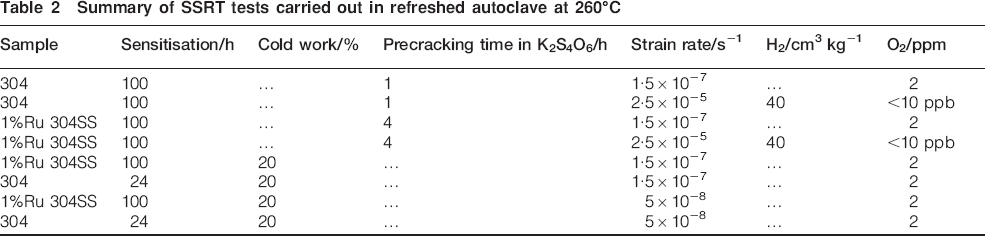
It is important to note that with this experimental set-up (i.e. without the use of strain gauges), it was not possible to measure the elastic strain, because the compliance of the tensile frame can be relatively high. Therefore, strictly speaking, it is not possible to measure the yield strength although the knee point in the stress–strain curve is a good indication. All the tests were carried out at 260°C. This temperature is lower than the operating temperature of any commercial PWR (290-343°C) but reflects the fact that some occluded regions, such as canopy seals, are subjected to a lower temperature than the bulk water chemistry. 34 The detailed list of the test matrix is reported in Table 2.
Summary of SSRT tests carried out in refreshed autoclave at 260°C
Results and discussion
The stress–strain curves for non-cold worked and precracked 304SS and 1%Ru 304SS measured either in oxygenated water or in hydrogenated water are shown in Fig. 1. Ideally, the comparison of the SSRT results should be carried out with baseline of the materials obtained in an inert environment (for instance, in Ar gas). However, the system used for this study was not suitable for gaseous exposure, and using a different rig would have not allowed a direct comparison, because the results are very system specific due to the compliance of the mechanical test frame in the autoclave. Nevertheless, recalling that the tests in hydrogenated water were aimed to minimise the environmental interactions, the samples tested in hydrogenated water are indicative of a reference baseline. Furthermore, it is expected that the higher strain rate would have little effect on the stress–strain curve (i.e. dynamic strain aging would not be very significant), which is a fair assumption considering that none of the tensile curves showed a serrated yield associated with a strain rate dependency.
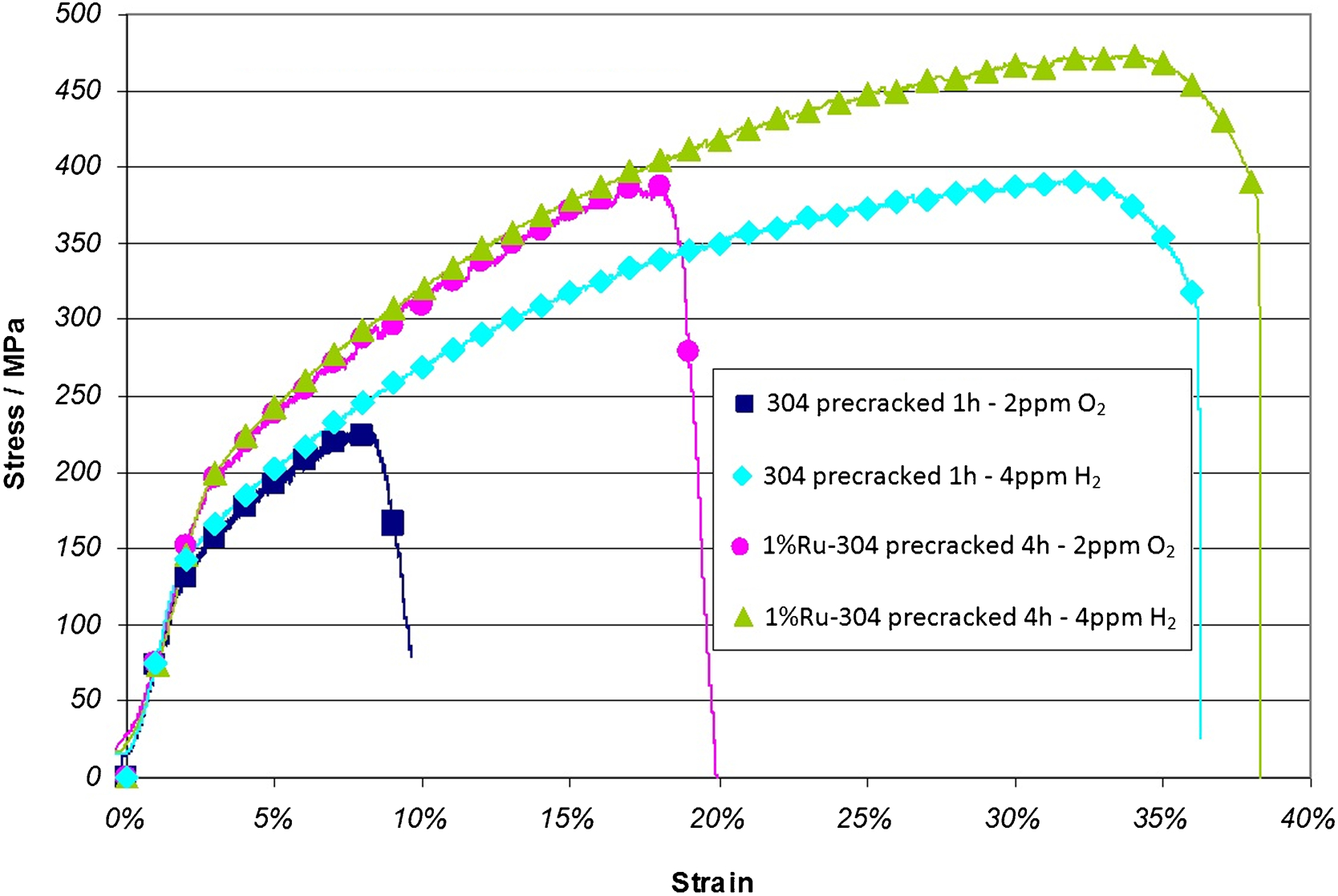
Stress–strain SSRT curves in oxygenated water and inert environment for 304SS sensitised for 100 h and precracked for 1 h and 1%Ru 304SS sensitised for 100 h and precracked for 4 h
From Fig. 1, only minor differences in the stress–strain behaviour in the elastic region between the tests in oxygenated and hydrogenated water were found. This confirms the prediction that SCC occurs predominantly under plastic strain. However, the yield strength of 1%Ru 304SS was higher than that of 304SS. This is probably due to solid solution strengthening from the ruthenium, which is fully soluble in stainless steel. 35 The fracture surface of the 304SS sample tested in hydrogenated water is shown in Fig. 2a. The outer layer of the sample showed IG cracking to a depth of ∼80 μm (this was generated during the precracking phase), while the rest of the sample failed in a ductile manner. On the other hand, the fracture surface of 1%Ru 304SS tested in hydrogenated water showed a fully ductile fracture with evidence of precracking to a depth of ∼100 μm, although the cracks were more sporadic and not generalised to all the GBs, despite longer periods of pre-exposure to tetrathionate (Fig. 2b).
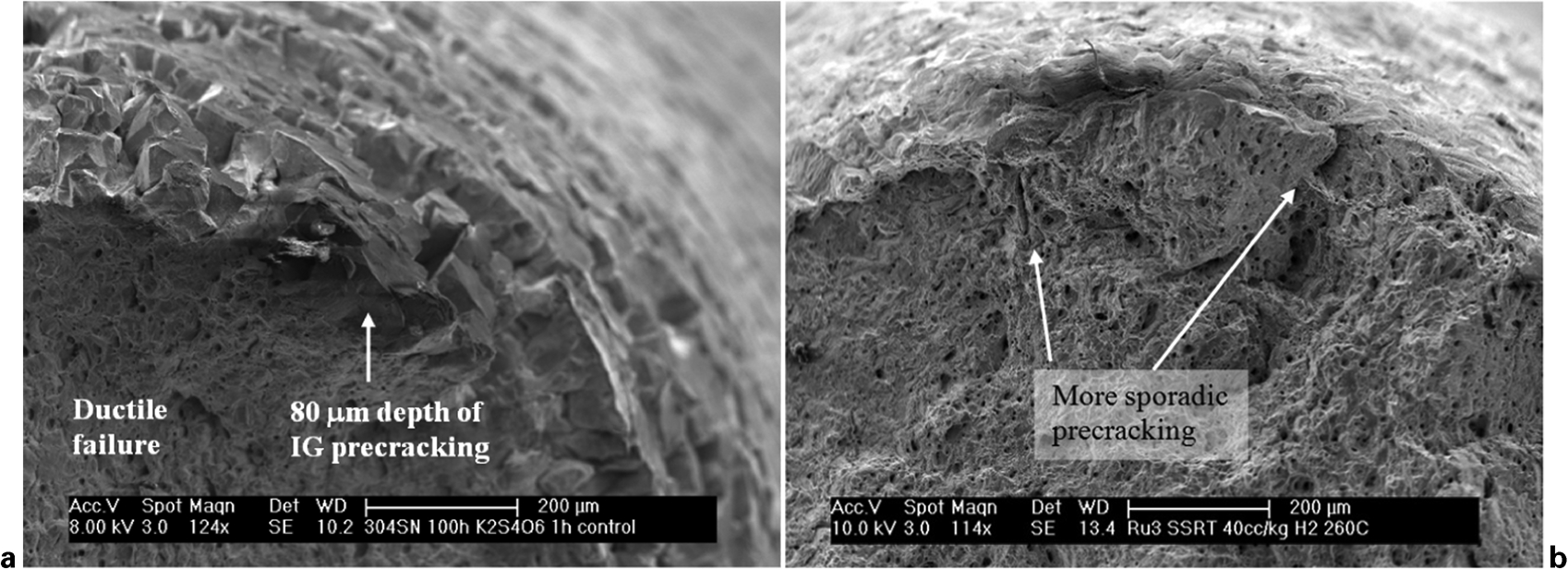
Fractured surface of a 304SS sensitised for 100 h, precracked for 1 h and b 1%Ru 304SS sensitised for 100 h, precracked for 4 h tested in inert environment at 260°C
Both 1%Ru 304SS and 304SS showed a susceptibility to SCC in oxygenated water with a significant drop in ultimate tensile strength and elongation to failure with respect to the sample tested in the hydrogenated water environment. Nevertheless, 1%Ru 304SS was notably less susceptible to cracking than 304SS and also exhibited different failure modes in both environments. Thus, in hydrogenated water, failure occurred suddenly (which is typical of plastic collapse), while in the oxygenated environment, samples cracked continuously until the load dropped to a low value.
Fractographic examinations confirmed the high SCC susceptibility of 304SS in the oxygenated water. As observed in Fig. 3, the fracture surface was mainly IG, although a dimpled surface region was also evident, which was probably the last ligament to break in a ductile manner. The fracture surface for 1%Ru 304SS tested in oxygenated water was mainly IG (Fig. 4); however, there were some regions where transgranular (TG) cracking occurred close to the end of IG cracking. The appearance of TG cracking is evidence for significantly reduced susceptibility to IGSCC compared with the 304SS alloy.
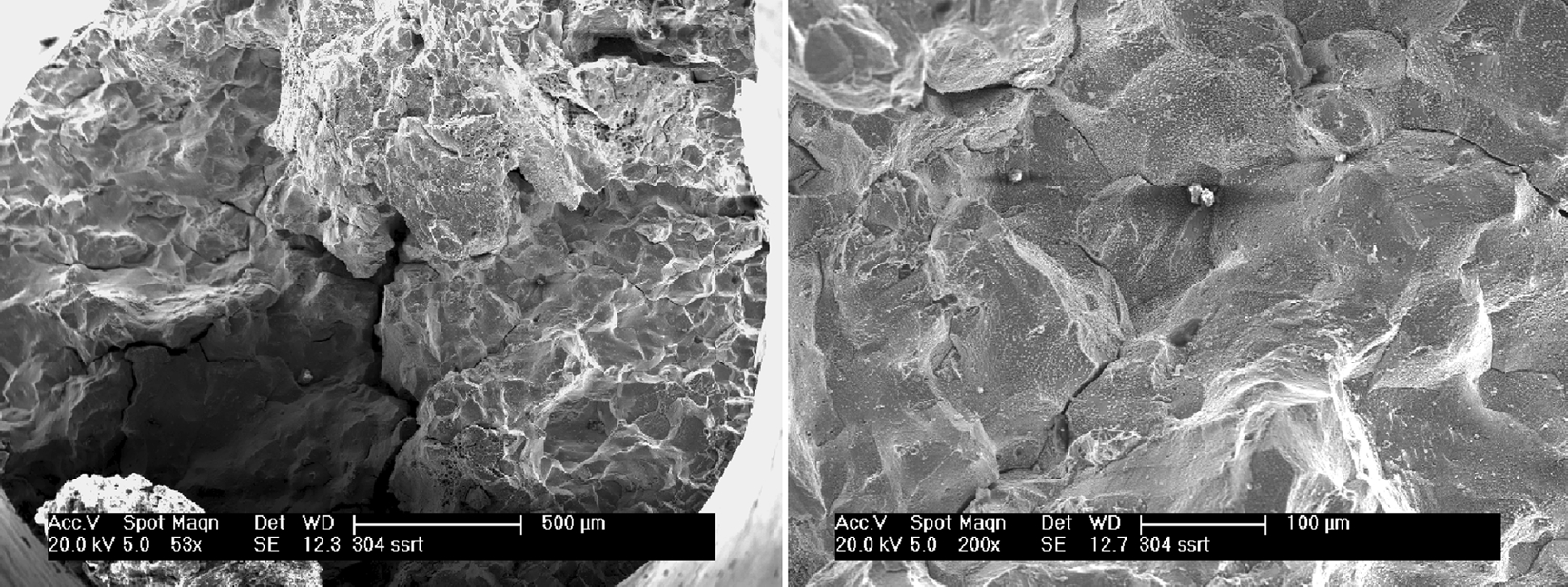
Fractured surface of 304SS sensitised for 100 h and precracked for 1 h and exposed to SSRT at 260°C in high purity oxygenated water
Fractured surface of 1%Ru 304SS sensitised for 100 h and precracked for 4 h and exposed to SSRT at 260°C in high purity oxygenated water
To investigate the effects of cold work on SCC susceptibility, a second set of mechanical tests were performed on sensitised and cold worked tensile specimens at 260°C in high purity water containing 2 ppm O2 at a strain rate of 1·5×10−7 s−1. 304SS and 1%Ru 304SS were sensitised for 24 and 100 h respectively and subsequently 20% cold rolled before being machined. The SSRT stress–strain curves during exposure in oxygenated water at 260°C are shown in Fig. 5. The non-linearity between stress and strain in the initial stages of the test is due to an initial adjustment of the slack in the loading frame. The graphs have been plotted so that the linear part of the test is extrapolated to the origin of the graph as visible from the construction line shown in Fig. 5. Although the differences between these two samples were not as great as for non-cold worked sensitised and precracked samples, it appears that 1%Ru 304SS has a better resistance to SCC (larger strain to failure) with respect to 304SS. Also, the stress–strain curve of 304SS shows an unusual drop before complete failure, while 1%Ru 304SS displayed sudden fracture. The arrest and restart of the cracking in 304SS before complete failure is due to the effective load on the sample being reduced due to fast crack growth; this phenomenon is also known as ‘popping’. The elastic part of the stress–strain curve of both 304SS and 1%Ru 304SS overlaps completely, and both samples yield at ∼650 MPa. The ultimate tensile strength of 304SS and 1%Ru 304SS were similar (695 and 712 MPa respectively). As previously mentioned, since the strain is calculated directly from the pull rod displacement without subtraction of the device compliance, the results do not show the accurate sample strain; however, if elastic strains are similar, then the sample performance may be directly compared. It is notable that 1%Ru 304SS had a clearly larger strain to fracture than 304.
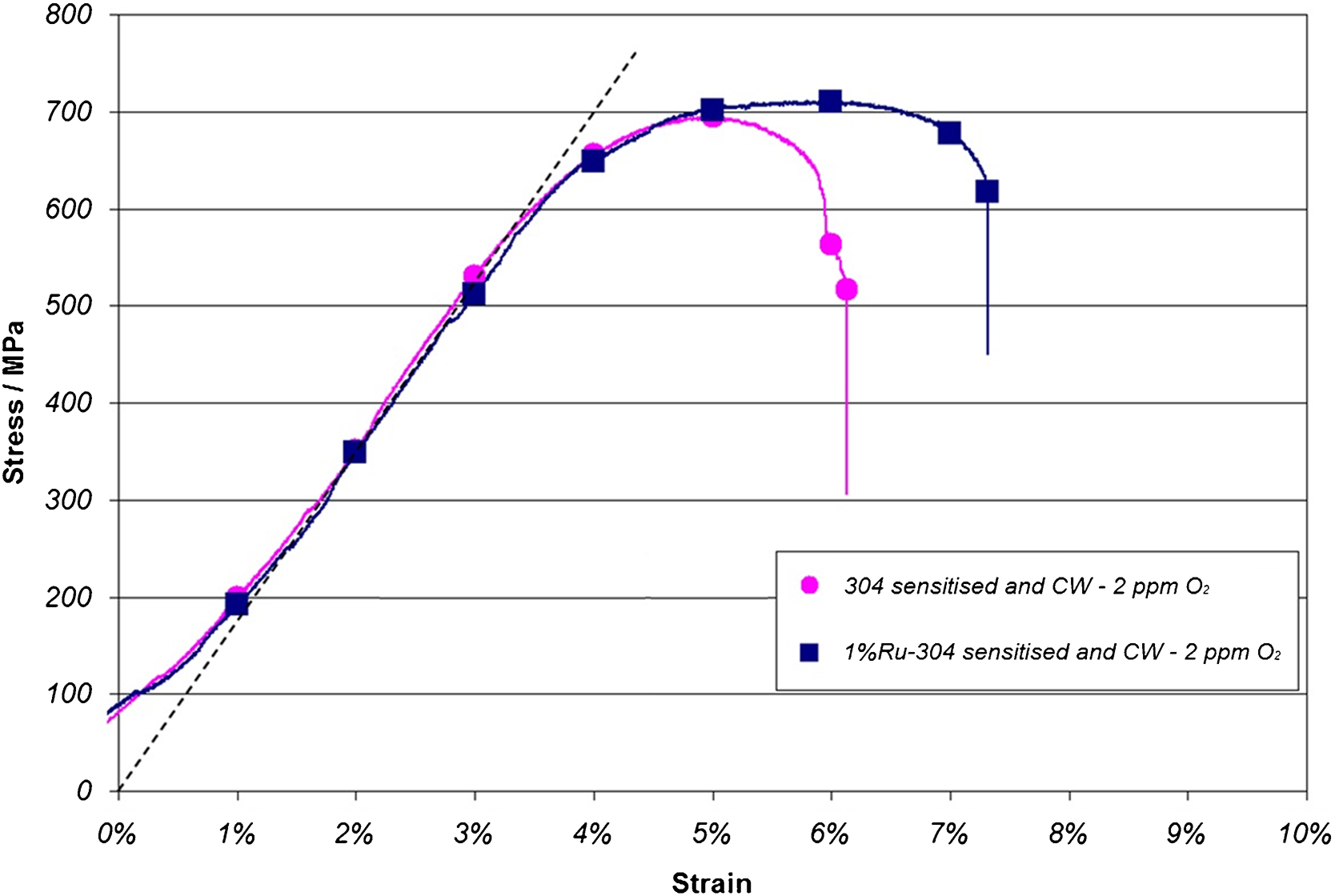
Stress–strain SSRT curves in oxygenated water and inert environment for 304SS sensitised for 24 h and 20% cold worked and for 1%Ru 304SS sensitised for 100 h and 20% cold worked tested at 1·5×10−7 s−1 strain rate
From the fracture surface of sensitised and cold worked 304SS, it is possible to detect several regions where IGSCC occurred (Fig. 6). These regions do not appear to be connected, and this indicates the occurrence of several initiation sites. It is apparent that the grains are not equiaxed but, as expected for a cold worked sample, appear elongated in one direction (transverse rolling direction) and compacted in the other direction (short transverse rolling direction). The geometry of two IGSCC regions is particularly interesting because, in a region where the elongation direction of the grain is perpendicular to the surface (Fig. 6), the cracked region is narrow (∼420 μm) and long (∼1·1 mm). In a different location where the elongated direction of the grains is parallel to the external surface (Fig. 6b), the SCC region is wide (∼720 μm) but shallower (∼360 μm). This is an indication of the greater SCC crack growth along the elongated direction of the grains. As expected for a sensitised sample tested in oxygenated water, the cracking mode is mainly IG; however, there are some regions where TGSCC occurred.
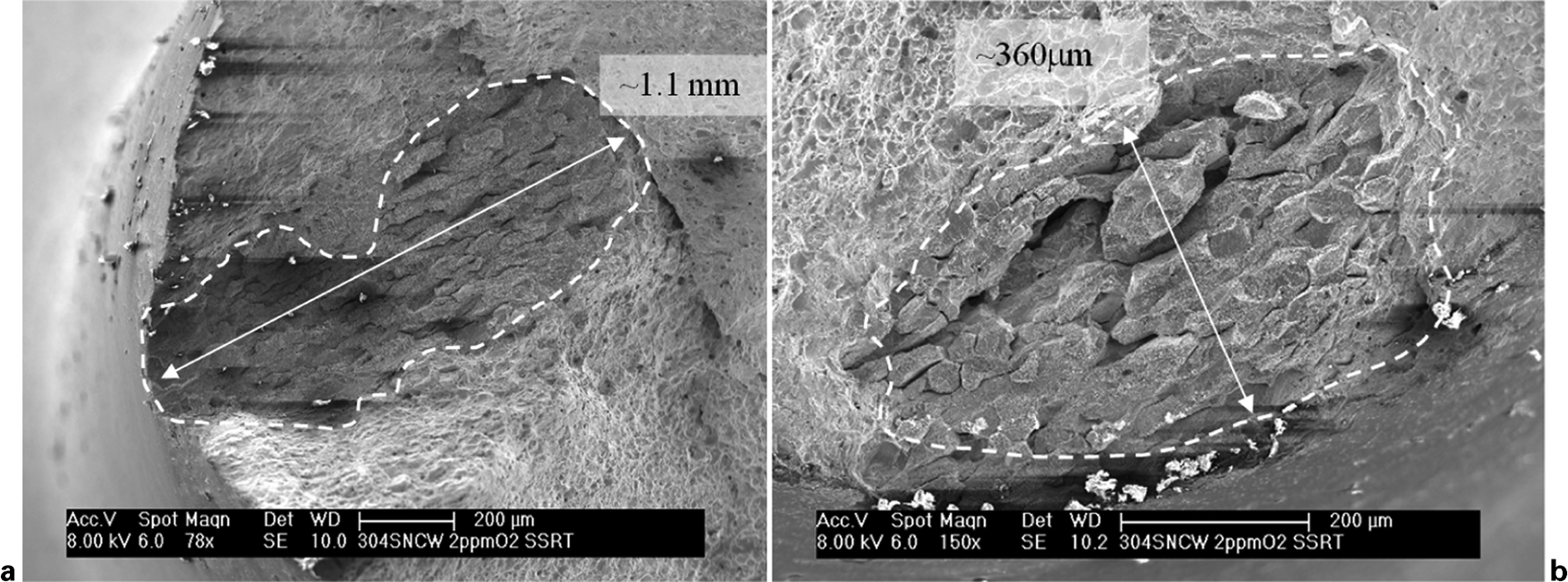
Fracture surface of sensitised and cold worked 304SS tested in oxygenated water: two regions where environmentally assisted cracking occurred are encircled, showing deeper attack along the grain elongation direction (left) than in the other direction (right)
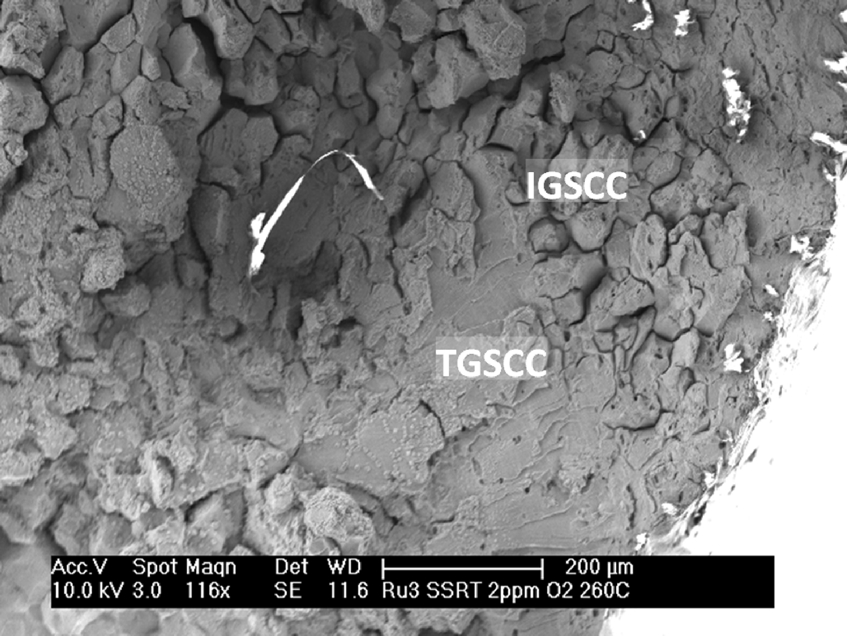
The fractographs of the sensitised and cold worked 1%Ru 304SS specimen revealed at least four unconnected initiation sites where SCC occurred (Fig. 7) and the elongated grain structure due to the 20% cold rolling. Furthermore, as with the sensitised and cold worked 304SS, it appears that SCC propagated along the direction of the grains; the maximum cracking extension measured was ∼730 μm (Fig. 7). At a different site, where the geometry of the grain was not as favourable for IGSCC propagation, the maximum cracking extension measured was ∼430 μm (Fig. 8). The cracking mode was mainly IG; however, some regions of TG cracking were also evident within a clearly IG cracked surface (Fig. 8). Moreover, at the edge of the SCC region and the ductile failure, the cracking mode seems to have transitioned between IG and TG cracking (Fig. 8).
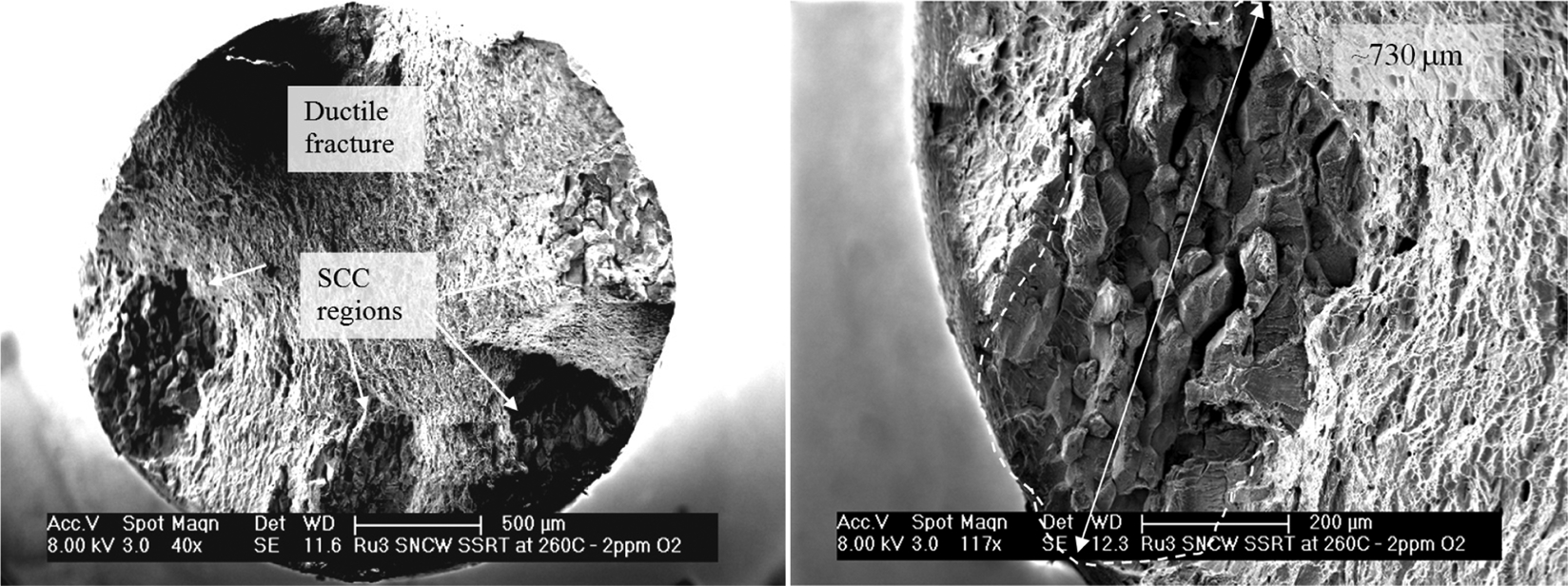
Fractured surface of sensitised and cold worked 1%Ru 304SS in oxygenated water: initiation sites for environmentally assisted cracking are indicated by arrows and larges one is encircled
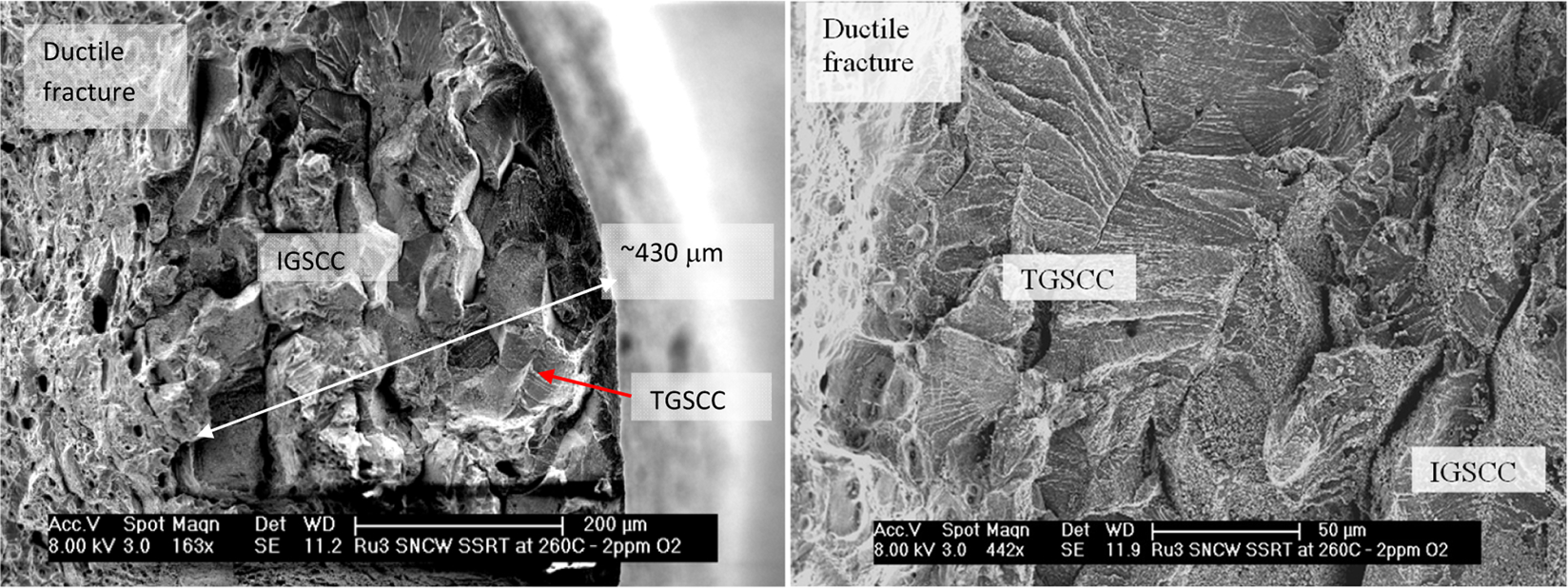
Mixed mode TG and IG SCC region on 1%Ru 304SS sensitised and cold worked sample in oxygenated water
Finally, experiments were carried out at a lower strain rate (5×10⁻⁸ s−1) to better understand the doping effect of Ru on the SCC susceptibility. For comparison, the SSRT results are shown in Fig. 9 alongside the results obtained at higher strain rate (Fig. 5). By decreasing the strain rate, the duration of the test increases, the environmental interaction with the material increases, and, predictably, the strain to fracture decreased. Some slight differences in the yield strength measured in two strain rates are also visible. This could be due to sample to sample variation but, at least for 304SS, it may also be due to the increasing environmental interaction and corrosion. Importantly, the 1%Ru 304SS had a larger strain to fracture than 304SS (6·37% for 1%Ru 304SS and 5·38% for 304), confirming the results from the faster strain rate. Furthermore, 1%Ru 304SS tested at the lower strain rate had also a slightly higher strain to fracture than 304SS tested at the higher strain rate (6·37% for 1%Ru 304SS at 5×10⁻⁸ s−1 compared with 6·13% for 304SS strained at 1·5×10−7 s−1).
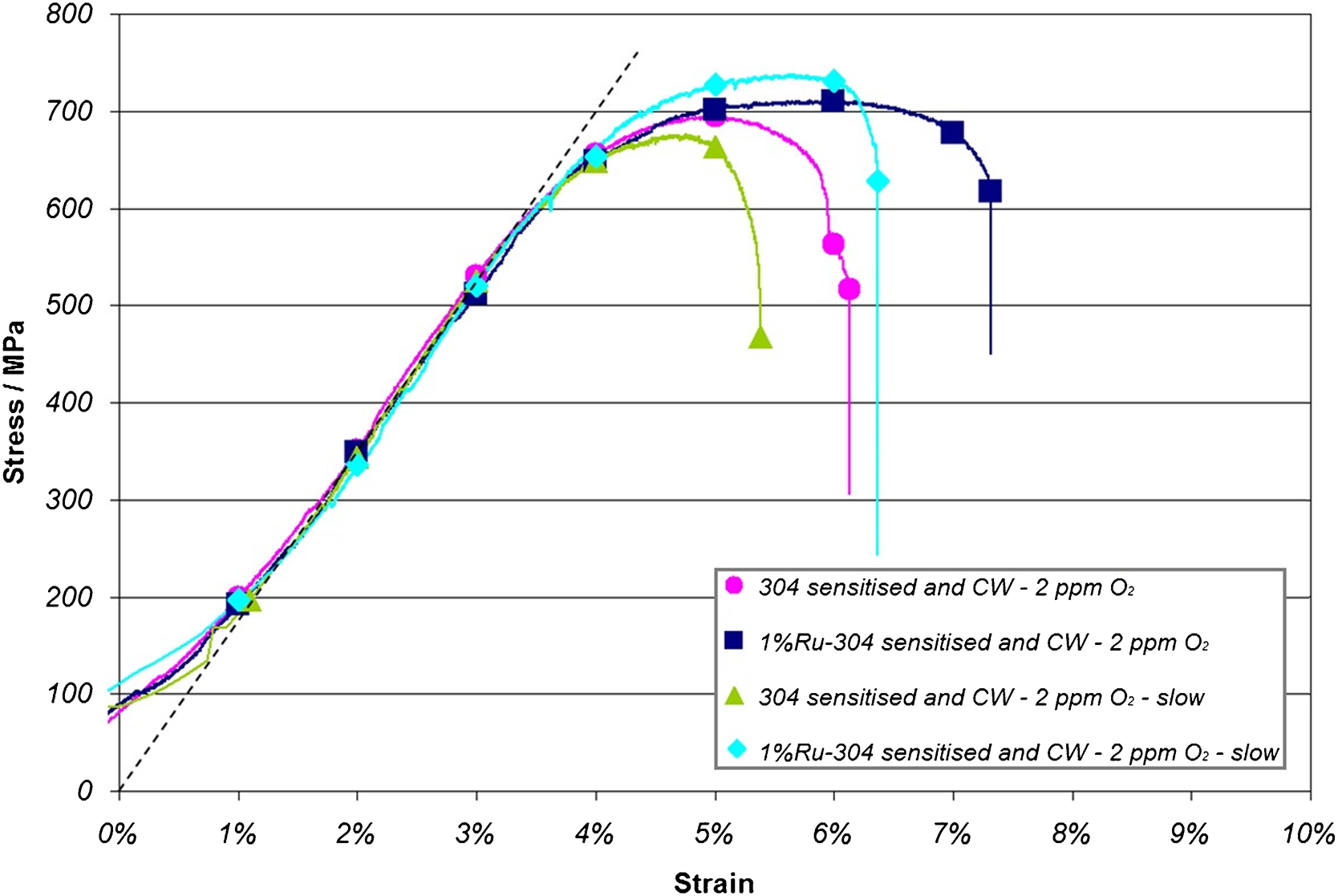
Stress–strain SSRT curves in oxygenated water for 304SS sensitised for 24 h and 20% cold worked and for 1%Ru 304SS sensitised for 100 h and 20% cold worked tested at 1·5×10−7 and 5×10⁻⁸ s−1 (labelled as slow)
As well as using the strain to failure to compare the performance of the alloys, another parameter that can be used to compare 304SS and 1%Ru 304SS is the mean CGR. The calculated CGR (reported in Table 3) was based on the measurement of the length of the environmentally cracked ligament as a function of the time from yielding to complete failure. In summary, from the data available from the above experiments, it appears that the mean CGR for 1%Ru 304SS is approximately one-half that for 304SS and is consistently the same for non-cold worked and cold worked samples. Note that CGR is usually measured on compact tensile samples, which are loaded at constant stress intensity factor. This is a different regime to SSRT, which by definition involves samples being constantly strained and cold worked throughout the duration of the test. This could be the reason that there appears to be no difference between different levels of CW on CGR as would be expected. 8
Estimated mean CGR in oxygenated water

Overall, it was found that the cracking mode seems to have transitioned from IG to TG cracking (Fig. 10). This transition has been documented on several SCC systems including brass in ammonia, 36 Zr alloys in halide37,38 and stainless steel in high temperature water 39 when subjected to strain. Intergranular fracture is favoured at small strains and in alloys of high stacking fault energy, 36 and the transition occurs when a critical value of the stress intensity factor is reached. 40 With respect to the cracking mode, it appears, in a qualitative sense, that in 1%Ru doped 304SS, the extent of TGSCC is greater than in 304SS. A possible explanation is that Ru hinders IGSCC cracking; therefore, the SCC crack advances via an alternative path such as along the slip planes. Lower levels of IGSCC on 1%Ru 304SS are also an indication of greater resistance to IG corrosion. For instance, it is not uncommon that stainless steels with a lower degree of sensitisation are more prone to TGSCC than a fully sensitised sample. 41 The mechanistic explanation for the improved resistance to SCC of Ru doped steels is not clear, and its investigation is beyond the scope of this paper. Nonetheless, greater SCC resistance can be associated to an improved passivity by Ru (e.g. doping the oxide, thus modifying the transport mechanism through the barrier layer) or other microstructural effects such as the variation of the stacking fault energy. In fact, the stacking fault energy is thought to be a key parameter for the IGSCC resistance of ASS in oxygenated water. 42 Further studies should be aimed at addressing this specific point.
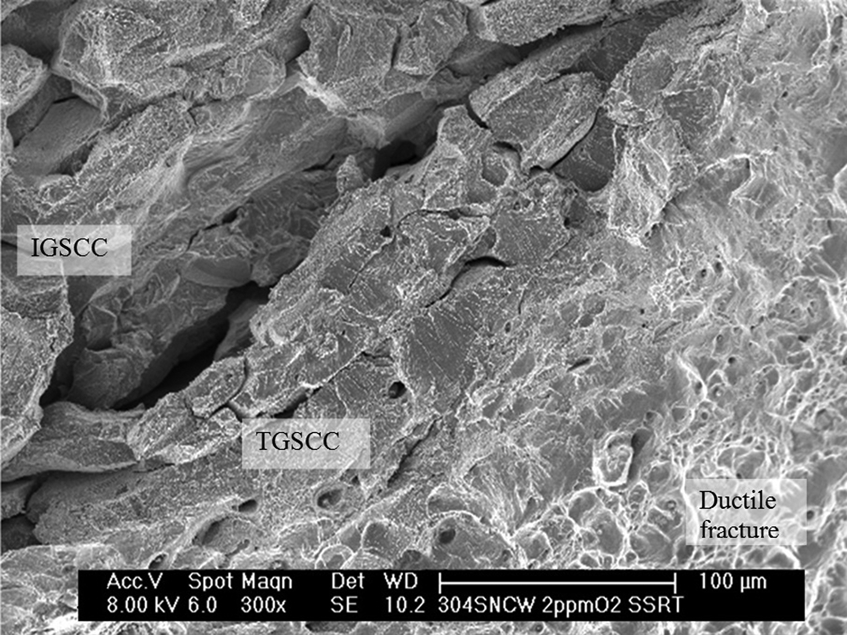
Site of transition from IGSCC to TGSCC and to ductile plastic fracture on 304SS sensitised and cold worked tested in oxygenated water
Conclusions
Standard and 1%Ru doped 304SS were strained in oxygenated 260°C high purity water employing tensile specimens that were either sensitised and precracked (in acidified potassium tetrathionate solutions) or sensitised and cold worked specimens. Preliminary SSRT conducted in oxygenated environments showed IGSCC on both 304SS and 1%Ru 304SS specimens that were sensitised before the test. Although 1%Ru 304SS specimens were susceptible to IGSCC in oxygenated water, this was much lower than 304SS. On cold worked samples, the differences were noted but not as marked. However, the calculated mean CGR for 1%Ru 304SS samples was typically half the value recorded for 304SS and was independent of the level of CW. Nonetheless, these results are preliminary and further tests, for instance, using compact tensile samples, are suggested to measure the CGR more accurately. There is also evidence that in oxygenated environments, the cracks undergo a transition from IG to TG before plastic failure. In addition, the extent of TG cracking for 1%Ru 304SS was greater than for 304SS, thus indicating an improved resistance to IG corrosion and cracking. The results obtained suggest that ruthenium doping of 304SS significantly improves its SCC susceptibility in high temperature water containing residual oxygen.
Footnotes
Acknowledgements
This work was part of a larger programme carried out by a consortium between the University of Manchester, The University of Oxford, The University of Birmingham and Johnson Matthey. The useful discussions with all the parties involved in this work are thankfully acknowledged.