







Abstract
The corrosion inhibition properties of trithiocyanuric acid (TTCA) self-assembled monolayers (SAMs) on copper surfaces in hydrochloric acid have been investigated by electrochemical impedance spectroscopy, potentiodynamic polarisation and cyclic voltammetry methods. These results show that TTCA SAMs could keep the long term stability and provide a better corrosion protection for copper in acidic solution. The high quality SAMs depend mainly on the TTCA concentration and suitable self-assembly time. Fourier transform infrared spectroscopy, contact angle and SEM measurements reveal that TTCA is liable to interact with copper forming SAMs and produces a hydrophilic surface with an orderly layer structure. The adsorption behaviour of TTCA follows the Langmuir isotherm. Quantum chemical calculations show that the sulphur and nitrogen atoms act as the main active sites, and the small energy gap ΔE between the highest occupied molecular orbital and the lowest unoccupied molecular orbital and the low dipole moment μ favour the adsorption of TTCA on the copper surface.
Introduction
Copper has a wide range of industrial applications primarily related to its excellent thermal and electrical conductivity, mechanical workability and its relatively noble properties.1 Although copper does not displace hydrogen from non-oxidising acid environments, the presence of dissolved oxygen enables some corrosion to take place,2 which greatly limits its application in practice. Thus, corrosion of copper and its inhibition in a variety of acidic media, particularly in the presence of chloride ions, have attracted attention of a number of researchers.3 – 8
One of the important approaches to improve anticorrosion ability is to use surface modification by self-assembled monolayers (SAMs) on the metal surface.9,10 Since initial SAMs on the Au surface using organic alkanethiol/disulphides compounds have been performed,11,12 a few investigations have been devoted to the preparation of sulphur containing thin film on the metal surface in the field of material science.13 – 18 These organic molecules were adsorbed onto the metal surface in an initial ‘lying down’ phase through strong sulphur–metal bonds, followed by rearrangement into a ‘standing up’ phase resulting in highly ordered monolayers, which act as an effective electrochemical barrier to prevent the penetration of corrosive species, like water, oxygen and aggressive ions, to the metal surface.
Among various types of corrosion inhibitors, heterocyclic compounds, especially containing both nitrogen and sulphur in their molecular structures, have displayed their excellent inhibition properties against copper corrosion.19,20 Thus, these heterocyclic compounds hold promise as protective coatings prepared by self-assembly method. The trithiocyanuric acid (TTCA) (Fig. 1), also named 2,4,6-trimercapto-1,3,5-triazine, is usually used in wastewater treatment to remove heavy metals as either a chelating or bridging ligand21 and is also utilised as an additive to natural and synthetic rubbers or resin to improve adhesion on metals or alloys surface.22 Many extensive investigations were dedicated to the structural properties of both TTCA and its metallic complex.23 – 26 Osaka et al. investigated the adsorption structure of TTCA SAMs formed on evaporated silver film using Fourier transform infrared spectroscopy (FTIR) and ab initio density functional theory calculation.26 They found that TTCA is stable in the trithione form at room temperature, while it is adsorbed on evaporated silver film in the trithiol form through the interaction between two sulphur atoms and the substrate. However, it has not been reported that TTCA acts as a corrosion inhibitor in acidic media through self-assembly formed on a copper surface.
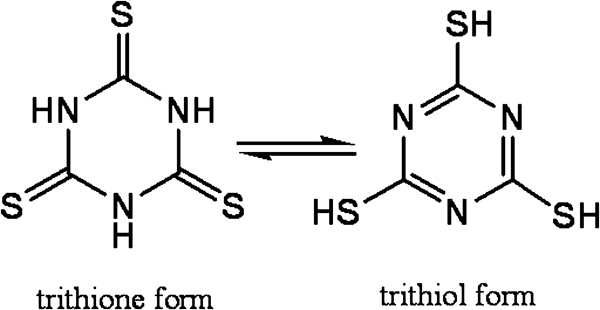
Tautomeric forms of trithiocyanuric acid (TTCA)
The purpose of this work is to investigate the protective effects of TTCA SAMs against copper corrosion in hydrochloric acid solution. Electrochemical techniques were used to study the influence of concentration of TTCA solution and assembly time on the quality of SAMs, and the anticorrosion stability of SAMs. The functionalised copper surfaces were characterised by FTIR reflection absorption spectroscopy, contact angle (CA) and scanning electron microscopy (SEM) measurements. Based on the experimental results and quantum chemical calculations, the probable adsorption mechanism of TTCA on the copper surface was discussed.
Experimental
Materials
Trithiocyanuric acid (purity >98%, Sigma-Aldrich Chemical Co.) was dissolved in absolute ethanol to prepare assembling solution. Hydrochloric acid and absolute ethanol are of analytical reagent grade. The working electrodes were prepared from pure copper plate (nominal purity of 99·9 wt-%) embedded in epoxy resin, and square cross-sectional area of copper specimen exposed to the corrosive medium was 1 cm2. Before assembling process or electrochemical measurement, the copper specimens were abraded with a series of SiC emery papers (800, 1200, 1500 and 2000) and followed by 0·3 μm alumina abrasives. These samples were washed and degreased through three consecutive steps of 5 min each with acetone, absolute ethanol and ultrapure water in an ultrasonic bath, and finally dried with a flow of nitrogen gas.
Preparation of TTCA monolayers on copper
The TTCA ethanol solution was first deoxygenated by a stream of N2 (99·99%) for 30 min before the self-assembling process. The pretreated copper specimens were etched with 5M nitric acid for 30 s to obtain a fresh and oxide free copper surface, washed with ultrapure water followed by the absolute ethanol as quickly as possible, and then immersed in different concentrations of TTCA ethanol solutions to self-assemble for various times. Then, the modified samples were thoroughly rinsed with absolute ethanol to get rid of excess TTCA from the surface, dried with a nitrogen stream and stored under nitrogen atmosphere until characterisation.
Electrochemical measurements
All the electrochemical experiments were carried out using an Autolab PGSTAT302 potentiostat/galvanostat (The Netherlands) in a standard three-electrode cell at room temperature. A bare copper electrode or a SAMs modified copper electrode acted as the working electrode. A large platinum plate (2 cm2) was used as the counter electrode, while a saturated calomel electrode with a salt bridge was used as the reference electrode. All the measured potentials presented in this paper were referred to the saturated calomel electrode.
Electrochemical impedance spectroscopy (EIS) measurements were performed at the open circuit potentials with the ac voltage amplitude ±5 mV in the frequency range of 100 kHz to 10 mHz. After a 1 h waiting period, impedance data were collected. The impedance data were analysed with ZSimpWin3·10 impedance analysis software and fitted to the appropriate equivalent circuits. The polarisation curves were recorded from −0·5 to 0 V at a scan rate of 1 mV s−1. Cyclic voltammetry (CV) measurements were performed with a sweep rate of 20 mV s−1 in the deoxygenated solutions. For the above mentioned tests, an aqueous solution of 1·0M HCl was used as the aggressive environment.
Surface characterisation
The morphology of the copper surface with and without SAMs was examined by a scanning electron microscope (Hitachi S-3000N, Japan) at 15·0 kV. The CAs on the bare copper and SAMs modified copper were measured using a CA goniometer (JC2000C1, Shanghai Zhongchen Digital Technical Equipment Ltd, China) at ambient temperature. The FTIR spectrum of the TTCA film, which was prepared by modification of copper plate in 5·0 mM TTCA for 12 h, was carried out using a Tensor 27 FTIR reflection spectrometer (Bruker, Germany). The spectral resolution was 2 cm−1, and the wave number range of 500-3500 cm−1 was applied to the collection of infrared spectra.
Results and discussion
Fourier transform infrared spectroscopy
Figure 2a shows the FTIR spectrum of pure TTCA in solid state. There are three major bands at 1540, 1362 and 1122 cm−1 with shoulders at 1576 and 1384 cm−1, which are typical for the non-aromatic thione form of the neutral TTCA.27 The 1576 and 1540 cm−1 bands can be assigned to the N–H in plane deformation vibration [βN–H], and the bands at 2910-3163 cm−1 region can be attributed to the N–H stretching vibration [νN–H]. The bands at 1384 and 1362 cm−1 correspond to the ring stretching vibration [νR], and the bands at 1122 cm−1 correspond to the ring stretching vibrations coupled with bending vibrations of the N–H and C = S groups.
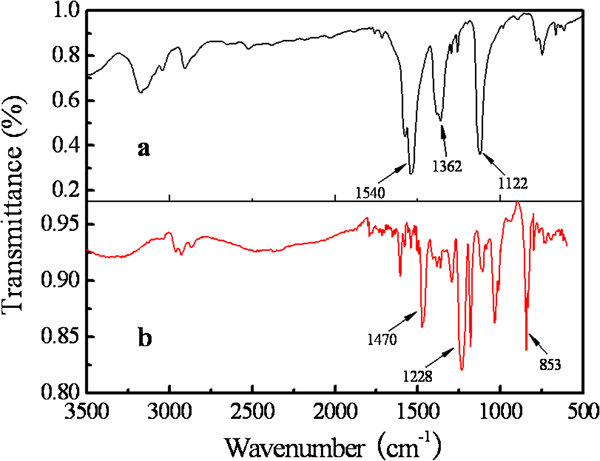
Fourier transform infrared spectra of a TTCA powder and b TTCA film assembled on copper surface
Compared with the infrared spectrum of pure TTCA, some bands shifted and some new bands occurred in the FTIR spectrum of TTCA film (Fig. 2b). The spectrum exhibits three representative bands at 1470, 1228 and 853 cm−1, suggesting that the TTCA moiety exists in the aromatic, trithiol form and behaves as a tridentate ligand of thiolate sulphur.28 At the same time, the bands around 2910-2925 cm−1, which are associated with the triazine ring overtone, are found in both pure TTCA and TTCA SAMs, but the positions of these bands seem to be split and shift due to coordination formation.28 Moreover, the disappearance of the band approximately at 2602-2612 cm−1, corresponding to the S–H stretching vibration [νS–H],26 also suggests that the interaction between the S atoms and the copper could take place during the adsorption of TTCA.
Contact angle measurements
The wettability and repellency of the TTCA SAMs were examined by measuring the CA. Figure 3 shows the images of the sessile water drop on the bare and SAMs modified copper surfaces. The CA of the bare copper was measured to be 71±3° (Fig. 3a) and that of the TTCA covered copper was 43±3° (Fig. 3b). It is evident that the CA decreased after copper was modified by TTCA. In general, the value of CA strongly depends on structural property of adsorbed molecule and heterogeneity of solids outer surface.29 – 31 In comparison to those alkane thiol SAMs, the TTCA SAMs provide a low CA, which may be related to a high degree of homogeneity and the presence of polar groups in TTCA film, resulting in a hydrophilic surface.
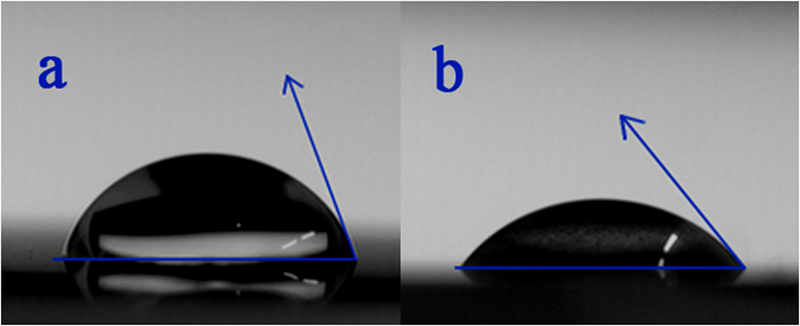
Sessile water drop images on a bare copper surface and b copper surface covered with TTCA film
Effect of TTCA concentration on SAMs properties
In order to evaluate the influence of the concentration of TTCA on the SAMs against the copper corrosion, five modification solutions with different TTCA concentrations have been prepared. The electrochemical measurements were performed after 12 h of modification.
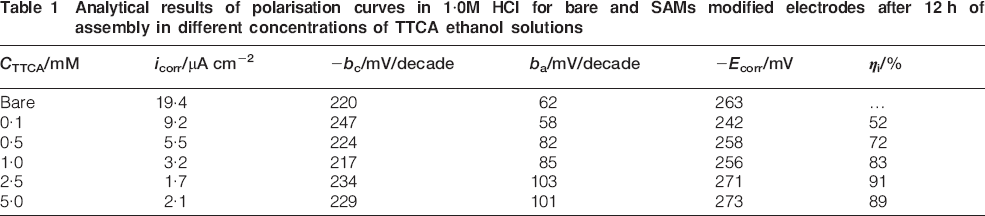
Figure 4 shows the potentiodynamic polarisation curves in 1·0M HCl solutions for the bare copper and SAMs modified copper electrodes. The values of associated electrochemical parameters and inhibition efficiencies η I (%) of the studied systems are given in Table 1. The inhibition efficiencies are defined as
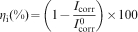
 and I corr represent the corrosion current densities of the bare copper and SAMs modified copper electrodes respectively.
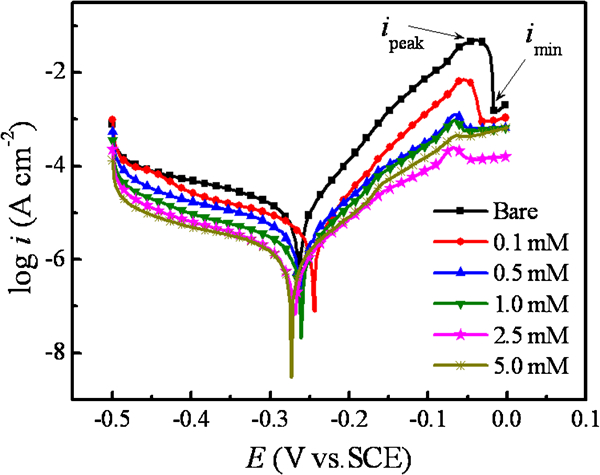
Potentiodynamic polarisation curves in 1·0M HCl for bare and SAMs modified copper electrodes after 12 h of assembly in different concentrations of TTCA ethanol solutions
Analytical results of polarisation curves in 1·0M HCl for bare and SAMs modified electrodes after 12 h of assembly in different concentrations of TTCA ethanol solutions
The anodic dissolution mechanism of copper in acidic solutions containing chloride ions has been studied extensively.32 – 35 The accepted anodic reaction in a 1·0M HCl solution is the dissolution of copper via the following process



 dissolution into the bulk solution and/or its further oxidation to Cu2+ (Refs. 34 and 35)




In Table 1, with increasing the concentration of TTCA, the corrosion current density I corr for the SAMs modified copper gradually decreases to the minimum value, 1·7 μA cm−2, at 2·5 mM TTCA and the η i (%) reaches the maximum value, 91%. It implies that the increase in TTCA concentration offers a clear advantage to form closely packed monolayers. However, it should be pointed out that the I corr and i peak at 5·0 mM TTCA are lower than those at 2·5 mM TTCA, indicating that the excessive concentration of TTCA may be disadvantageous for the quality of SAMs. It can be explained that when the number of the adsorbed TTCA molecules exceeds a certain value, ‘steric effect’ may occur due to competitive adsorption among molecules, which is accessible for oxygen and chloride ions to attack the copper substrate through the interspaces between the adsorbed molecules.39
Figure 5 shows a set of typical EIS spectra obtained for the bare and SAMs modified copper electrodes prepared at different TTCA concentrations in 1·0M HCl solutions. The Nyquist plot of the bare copper electrode displays a small suppressed semicircle at high frequencies followed by a straight line at low frequencies. The high frequency semicircle is always associated with the relaxation of the electrical double layer due to the rapid charging and discharging process. In general, these high frequency loops are not perfect semicircles, which can be attributed to the frequency dispersion as a result of the roughness and inhomogeneity of electrode surface.40 The low frequency straight line corresponds to the characteristic of the Warburg impedance, which is attributed to the diffusion of soluble reactant or product species, such as the diffusion of soluble complexes ( ) to the bulk solution, the transport of chloride ions to the substrate surface as well as dissolved oxygen in cathodic reduction.41 This indicates that the corrosion reactions of bare copper in HCl solution are controlled by mass diffusion process. The experimental fitting obtains fairly good results for use of electrical equivalent circuit EEC involving Warburg impedance W shown in Fig. 6a.
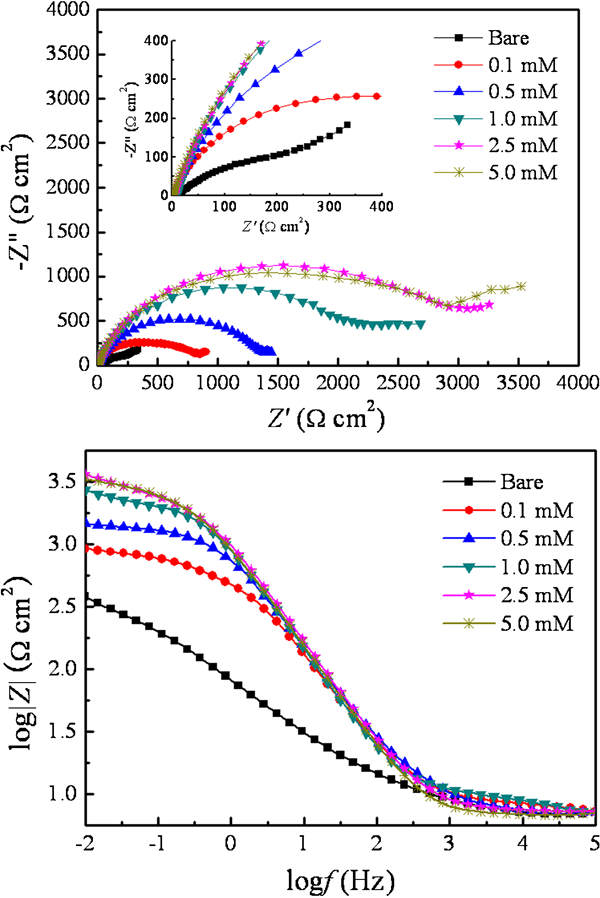
Nyquist and Bode impedance magnitude plots in 1·0M HCl for bare and SAMs modified copper electrodes after 12 h of assembly in different concentrations of TTCA ethanol solutions
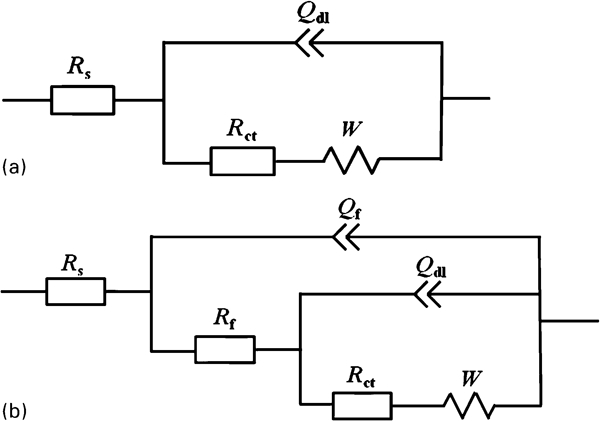
a bare copper electrode; b TTCA modified copper electrode in 1·0M HCl solution
Compared with that of bare copper, some larger capacitive loops are observed for the SAMs modified coppers from high to low frequency regions at all concentrations, indicating that the presence of TTCA film markedly changed the corrosion kinetics of the copper surface, and the charge transfer resistance became dominant in the corrosion process. In addition, the absolute impedance at the lowest frequencies (0·01 Hz) in Bode impedance magnitude plot, indicating the polarisation resistance of SAMs against penetration of corrosive hydrochloric acid, also increases with increasing the TTCA concentration, suggesting that the SAMs can improve the corrosion resistance of the copper significantly and make the dissolution of copper more difficult.
Nahir and Bowden have reported that electrons can penetrate the SAMs even though they are defect free.42 Indeed, the SAMs always contain molecule sized defects, and the corrosion starts preferentially in defects and pores in the protective layer.18 Therefore, the electrical equivalent circuit shown in Fig. 6b is proposed to fit the obtained data. Here, R s is the solution resistance, R ct is the charge transfer resistance corresponding to the corrosion reaction at the copper/solution interface, R f is the SAMs film resistance representing the extent to prevent ionic conduction through defects and pores, W stands for the Warburg impedance and Q dl and Q f are the constant phase elements (CPEs). The CPE is often used to interpret data for rough solid electrodes as a substitute for the capacitance.43 Its admittance and impedance are respectively calculated by the follow equations44,45


The protection efficiency η ct (%) of copper corrosion can be calculated according to the following formula
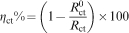
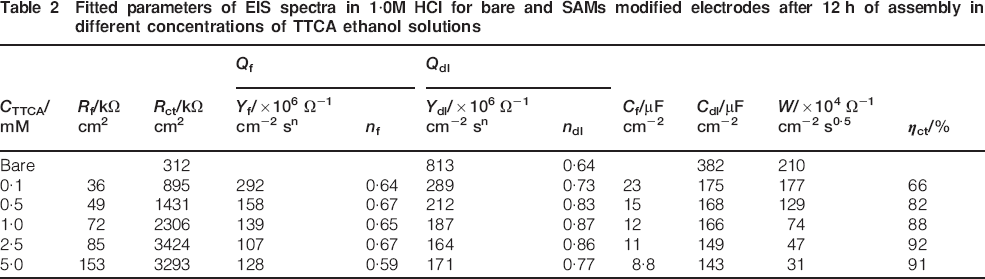
 and R ct are the charge transfer resistance of the bare copper and the SAMs modified coupons respectively. The electrochemical parameters and the η ct (%) values calculated from fitted data are presented in Table 2. Inspection of Table 2 reveals that with the increase in the concentration of the assembling solution, the R ct values of the modified electrodes are evidently higher than those of the bare copper, indicating the substantial decrease in the dissolution of the copper under the protection of TTCA film. At the same time, the decrease in C dl values may be attributed to the adsorption of TTCA on the copper electrode, leading to decrease in dielectric constant and/or increase in the thickness of the double electrical layer, therefore enhancing the corrosion resistance of the studied copper.48 The increase in n values also implies a certain decrease in the surface inhomogeneity due to the SAMs adsorbed on the most active centre.46 When the concentration of TTCA arrives at 2·5 mM, the values of R ct and η ct (%) also reach the maximum values 3424 Ω cm2 and 92% respectively. Nevertheless, these values tend to decrease with further increasing TTCA concentration. These results further confirm that SAMs exhibit very good inhibitive performance for copper in 1·0M HCl and reasonably agree with those from polarisation curves that TTCA concentration plays an important role in the assembling process.
Fitted parameters of EIS spectra in 1·0M HCl for bare and SAMs modified electrodes after 12 h of assembly in different concentrations of TTCA ethanol solutions
Effect of assembly time on SAMs properties
In general, the formation process of the SAMs on metal includes a rapid adsorption and then a slow structural rearrangement to improve the quality of SAMs. To determine the effect of assembly time on the properties of TTCA film, polarisation curves and EIS were performed after different assembly times in 2·5 mM TTCA. Figure 7 shows polarisation curves of the bare and the SAMs modified copper electrodes in 1·0M HCl solutions. It can be seen from Fig. 7 that both cathodic oxygen reduction and anodic copper dissolution were repressed to various extent evidently after different assembly periods in TTCA ethanol solution. The fitted electrochemical parameters and the η i (%) obtained are listed in Table 3. It is apparent that the I corr values gradually decrease with prolonging the assembly time, and the η i (%) reaches up to a maximum of 92% after 12 h assembling process. However, the I corr values tend to increase with further extending assembly time. These results imply that suitably extending the assembly time could facilitate rearrangement of the adsorbed molecules to form a denser and more ordered film. When the amount of TTCA adsorbed on the copper surface is saturated, the η i (%) value is almost invariable.
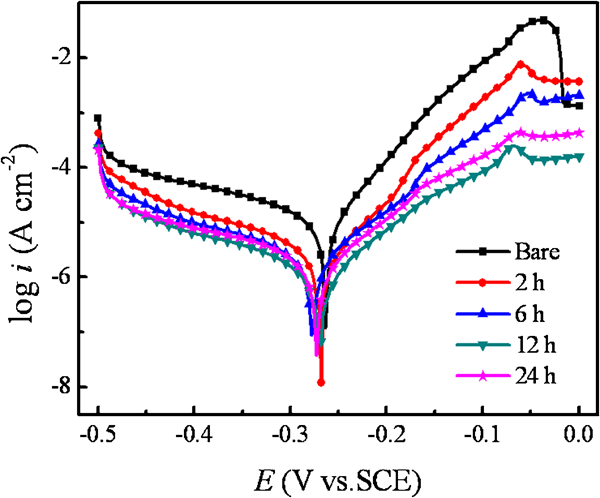
Potentiodynamic polarisation curves in 1·0M HCl solution for bare and SAMs modified copper electrodes after different assembly time in 2·5 mM TTCA ethanol solutions
Analytical results of polarisation curves in 1·0M HCl for bare and SAMs modified electrodes obtained after different assembly time in 2·5 mM TTCA ethanol solutions

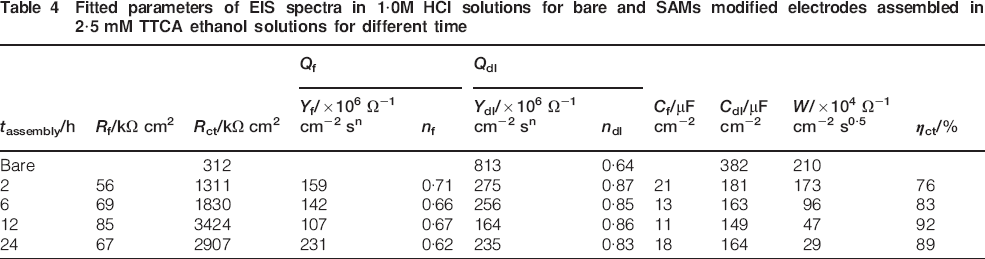
The EIS spectra of the bare copper and the SAMs modified copper electrodes under the same conditions as before mentioned are shown in Fig. 8, from which it can be seen that at different assembly times, both the Nyquist and Bode plots display similar electrochemical properties. It indicates that prolonging assembly time cannot change the protection property of SAMs film. The fitted results listed in Table 4 show that the values of R ct and η ct (%) firstly increase with the self-assembling time and then decrease, which confirms those results from polarisation curve that excessive assembly time has a negative influence on the quality of SAMs. The self-assembling process is a dynamic process, including the adsorption of the inhibitor to the electrode and desorption from the electrode.49 It is advantageous for the film formation when time is prolonged until equilibrium is attained. However, further prolonging the assembly time would lead to desquamation of the film from copper surface. In this system, 12 h may be characterised as the appropriate assembly time.
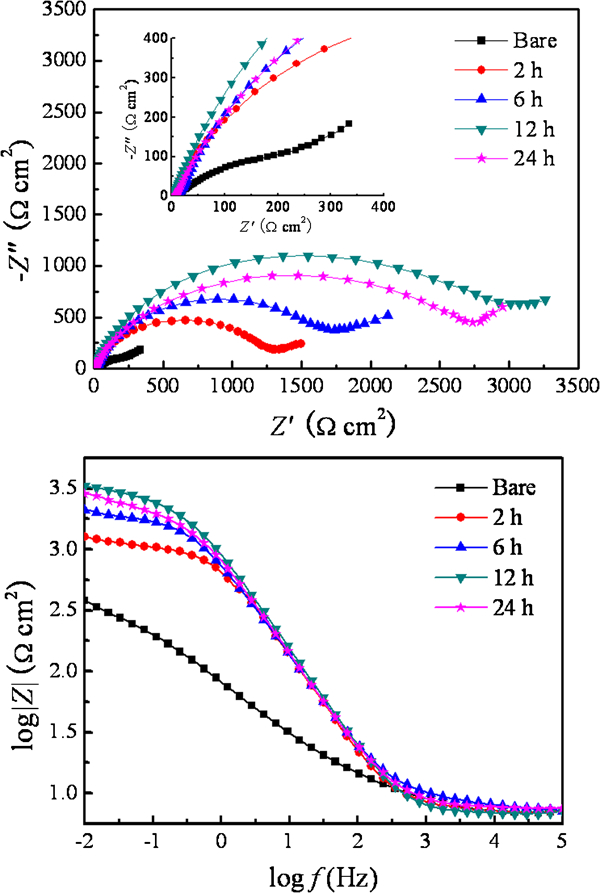
Nyquist and Bode impedance magnitude plots in 1·0M HCl solutions for bare and SAMs modified copper electrodes after different assembly time in 2·5 mM TTCA ethanol solutions
Fitted parameters of EIS spectra in 1·0M HCl solutions for bare and SAMs modified electrodes assembled in 2·5 mM TTCA ethanol solutions for different time
Stability characterisation of TTCA SAMs
The stability of SAMs is an important criterion to evaluate its performance in corrosion inhibition. Figure 9 shows CVs of the bare and the SAMs modified copper electrodes after different immersion times in 1·0M HCl solution. The CV of bare copper is shown in Fig. 9a, which exhibits two oxidation peaks at +55 and +220 mV in forward scan, which are related to the formation of CuCl complex layer and the oxidation of Cu(I) to soluble Cu(II) species.50 In the reverse sweep, a large reduction peak at approximately −230 mV may arise from the reduction of soluble CuCl2 complex and the CuCl layer formed on the copper surface. Figure 9b describes the scan curves of the SAMs modified electrodes after immersion in 1·0M HCl solution for various times. Compared with the CV of the bare copper, the magnitudes of the oxidation and reduction currents are remarkably decreased, indicating that the TTCA SAMs can inhibit effectively the oxidation and reduction processes of copper. Furthermore, the oxidation and reduction currents increase to a limited extent after 6 h of immersion, especially for the oxidation current, which suggests that the oxidation–reduction process is substantially inhibited by the SAMs film after longer exposure in HCl solution.
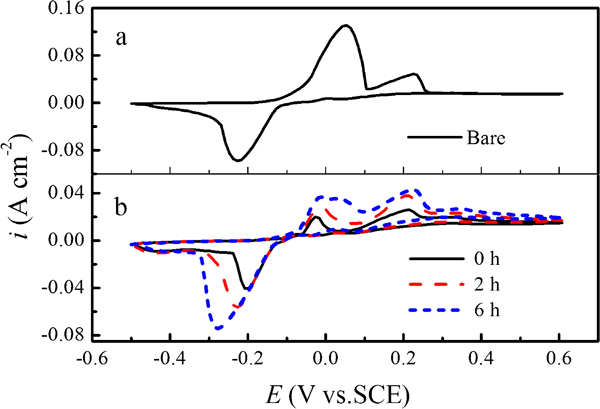
Cyclic voltammograms for a bare copper and b SAMs modified copper electrodes immersed in 1·0M HCl solution for different periods of time
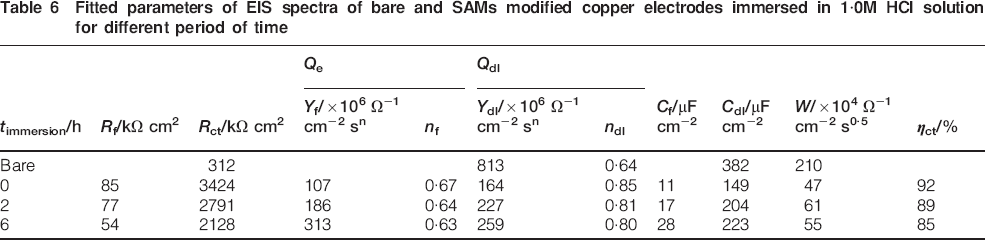
Polarisation curves and EIS were carried out to further investigate the influence of immersion time in HCl solution on the stability of TTCA film. Figure 10 shows the polarisation curves for the SAMs modified electrodes after different immersion periods, and its corresponding fitted results are listed in Table 5. Clearly, compared with that of the bare copper, E corr only shifted slightly in the negative direction, and a small increase in the I corr was also observed with further exposure up to 6 h. After 6 h of immersion, the TTCA film is still very high η i (81%). It indicates that the TTCA film on the copper surface possesses higher stability against corrosion under the studied period. From the Nyquist plots in Fig. 11, the size of the capacitor loop gradually reduced with the immersion time, which means a decrease in corrosion resistance and an increase in corrosion rate to some extent. The relevant impedance parameters are listed in Table 6. With increase in immersion time, R ct values decreased slightly, capacitance values increased slightly and n values decreased slightly due to long exposure of SAM to the corrosive ions. The slight increase in capacitance may be attributed to the presence of corrosion products on the metallic surface with time.51 The variety of n suggests that the development of defects in the film makes the protective layer more porous and inhomogeneous after the immersion test. Nevertheless, the inset (Fig. 11) shows the plot of capacitance versus immersion time, which reveals that the capacitance values in all cases are lower obviously than those of the bare electrode despite a small increase after immersion test. The inhibition efficiencies obtained also agree with the result from polarisation curves. Based on these considerations, TTCA SAMs are relatively stable and can satisfactorily protect the copper substrate from corrosion in HCl solution during the immersion periods.
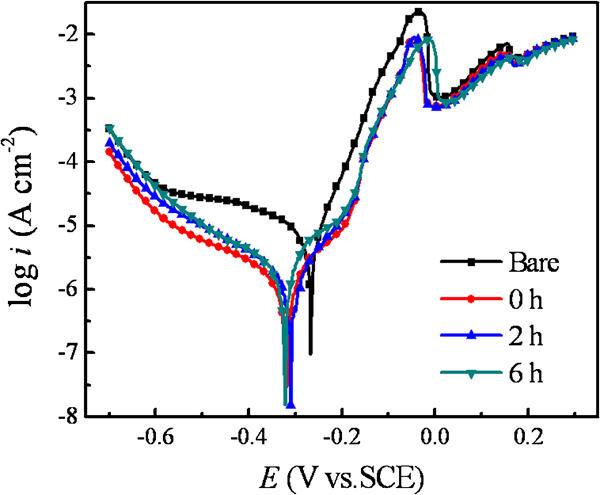
Potentiodynamic polarisation curves of bare copper and SAMs modified copper electrodes immersed in 1·0M HCl solution for different periods of time
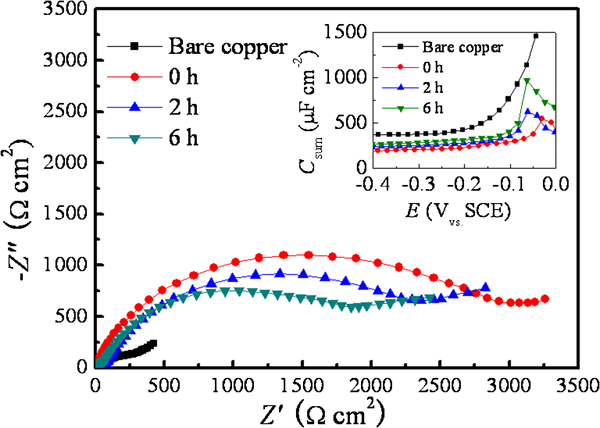
Nyquist plots of bare and SAMs modified copper electrodes immersed in 1·0M HCl solution for different periods of time; inset is corresponding capacitance–potential curses under same conditions
Analytical results of polarisation curves of bare and SAMs modified copper electrodes immersed in 1·0M HCl solution for different periods of time

Fitted parameters of EIS spectra of bare and SAMs modified copper electrodes immersed in 1·0M HCl solution for different period of time
In conjunction with the electrochemical methods, SEM was applied to determine the surface morphology of the bare and SAMs modified electrodes before and after being corroded in 1·0M HCl solution for 6 h, and the results are shown in Fig. 12, from which it can be seen that there are distinct differences between the two copper electrodes before and after the immersion test. As for the bare copper, the surface was seriously damaged as various pits and deep cracks were found after corrosion. On the contrary, the surface of SAMs modified electrode always keeps an ordered and regular layer structure irrespective of small discrepancy. This is in accordance with the result of electrochemical methods that TTCA film holds good stability and durability in acidic solution.
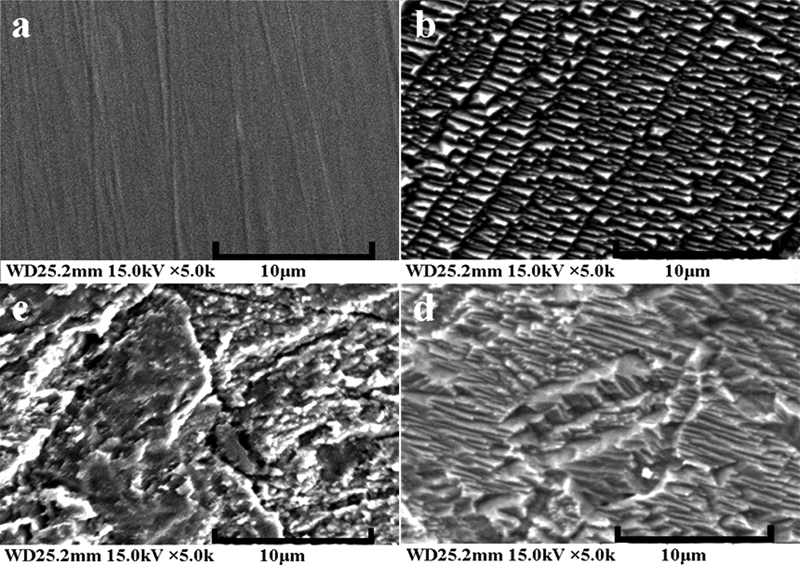
a bare electrode; b SAMs modified electrode; c, d bare and SAMs modified electrode immersed in 1·0M HCl solution for 6 h
Adsorption isotherm of SAMs
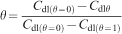
It is well known that the basic information dealing with interaction between organic compound and the metal surface can be provided by adsorption isotherms. The degrees of surface coverage θ for different concentrations of TTCA were evaluated by capacitance values from EIS using the following equation52
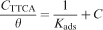
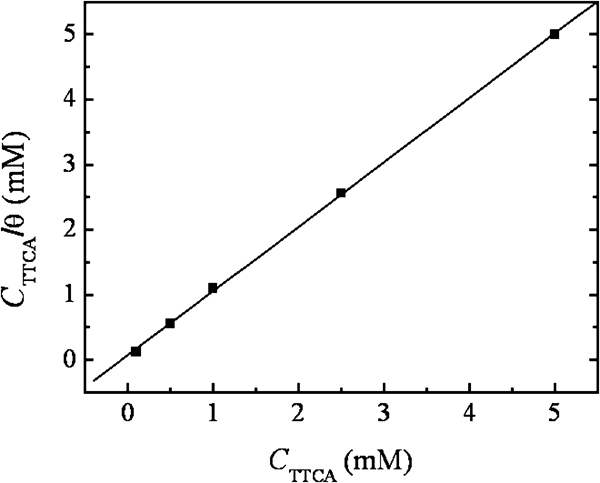
Curve fitting of EIS data for copper electrode according to Langmuir adsorption isotherm
Quantum chemical calculations
Quantum chemical calculations are performed to investigate the effect of structural parameters of TTCA on the inhibition efficiency and its adsorption mechanisms on the metal surface. The geometries of TTCA were fully optimised by the Gaussian 03 software package employing the B3LYP/6-31G (d,p) method.54 Mulliken charge distributions of TTCA molecule as well as the highest occupied molecular orbital (HOMO) and lowest unoccupied molecular orbital (LUMO) have been calculated and are presented in Fig. 14. It can be seen that the three nitrogen atoms in the triazole ring have more negative Mulliken atomic charges, which are −0·122e, −0·183e and −0·152e respectively. In addition, both HOMO and LUMO are localised considerably on three exocyclic sulphur atoms, indicating that they are potential active centres for the adsorption of TTCA. Nevertheless, nitrogen atoms would conjugate with the π electron of the ring and the sulphur atoms have small steric hindrance, so the adsorption of TTCA molecules might primarily arise from the formation of coordinating bond between exocyclic sulphur atoms and copper. In addition, the adsorption can also occur through the formation of copper–nitrogen coordinate bond or the π electron interaction between the triazine ring and the copper substrate. In view of this adsorption, inhibitor molecules block the reaction sites and reduce the rate of corrosion reaction. On the other hand, because the nitrogen atoms in the triazole ring possess more negative charges, the formation of hydrogen bonds between these nitrogen atoms and the hydrogen atoms in water molecules may take place. It indicates that the TTCA SAMs should hold a hydrophilic property. This is consistent with the results from CA measure.
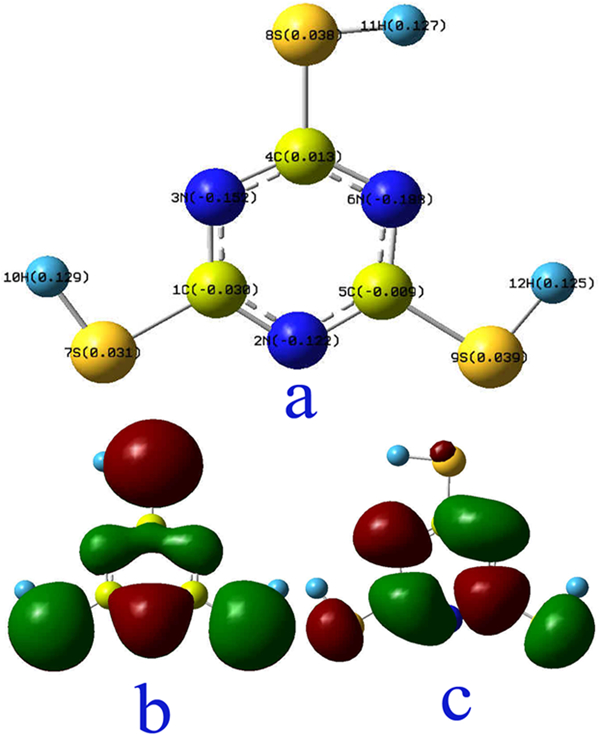
a charge distribution, b HOMO, c LUMO of optimised TTCA
Furthermore, some correlative quantum chemical data were calculated, which include the energy of the HOMO (E HOMO = −0·275 eV), energy of the LUMO (E LUMO = −0·067 eV) and the energy gap ΔE (E LUMO−E HOMO = 0·208 eV). It is well known that the molecular reactivity is determined by molecular orbital distribution. Lower values of the ΔE will enhance the reactivity of TTCA molecule leading to increase the inhibition efficiency of the molecule.55,56 For the dipole moment (μ = 1·853D), lower values of μ could be attributed to high symmetry of charge distribution in the TTCA molecule, which will favour accumulation of the inhibitor in the surface layer.57 As a result, TTCA molecule would be adsorbed onto metal surface through sulphur and nitrogen atoms as active sites, and the low dipole moment μ and small energy gap ΔE will facilitate the formation of TTCA SAMs on copper surface.
Conclusions
Investigations using FTIR, SEM and CA reveal that TTCA is adsorbed on the copper surface with an orderly layer structure to produce a hydrophilic surface.
Trithiocyanuric acid SAMs show inhibition ability against copper corrosion in 1·0M HCl solution.
The inhibition efficiencies increase with the concentration of assembly solution and assembly time under operating conditions and reach to the maximum value at 2·5 mM TTCA and 12 h respectively.
The stability of TTCA SAMs against corrosion was explored by polarisation curves, EIS, the capacitance–potential curves and SEM, which indicates that SAMs could keep the long term stability and provide a better corrosion protection for copper in acidic solution.
Adsorption of TTCA is found to follow the Langmuir adsorption isotherm.
The quantum chemical study shows that the sulphur and nitrogen atoms are active adsorption sites for the adsorption of TTCA and small energy gap ΔE between HOMO and LUMO, and the low dipole moment μ favour the adsorption of TTCA on the copper surface.
Footnotes
Acknowledgements
This project is supported by the Municipal Science Foundation of Chongqing City (grant nos. CSTC-2004BA4024 and CSTC-2008BB4012), and all authors here express their deep thanks.