






Abstract
Phytate had been investigated as a corrosion inhibitor for NdFeB magnets in an aqueous salt solution. Potentiodynamic polarisation, electrochemical impedance spectroscopy, X-ray photoelectron spectroscopy, scanning electron microscopy and energy dispersive spectroscopy were employed for this investigation. The polarisation curves results revealed that phytate acted as a mixed type inhibitor. The inhibition efficiency was found to increase by maximum 96.5% through increasing the phytate concentration to 0.5 mM at 30°C. The inhibition was proposed to result from the adsorption of phytate on NdFeB magnets, which was found to obey the Langmuir adsorption isotherm. The inhibition mechanism was explored by the potential of zero charge (E pzc) measurement at the solution/metal interface.
Keywords
Introduction
As the third generation of permanent magnet materials, NdFeB permanent magnets are widely used owing to their excellent magnetic properties. However, the low corrosion resistance limits their further applications1,2. To reduce the corrosion, various protective coatings are employed by electroplating or electrophoresis in industry3–6. Before the deposition of these protective coatings, groundwater or city water containing Na+, K+, Ca2+, HCO3 − , Cl− , SO4 2 − , etc., are widely used during chamfering, degreasing and acid pickling7,8. NdFeB magnets are prone to corrode in this aqueous salt medium. Thereby, it is particularly important to develop an effective method to prevent the corrosion.
The use of inhibitors is an inexpensive and easy approach to minimise the damage in corrosive medium. Most of the inhibitors are organic compounds containing hetero atoms, such as oxygen, nitrogen, sulphur, phosphorus, unsaturated bonds or plane conjugated systems 9 . In recent years, green and environment friendly inhibitors have become an important research aspect. Especially, much attention has been paid to the extracts of plants due to their low cost and eco-friendliness. Suedile et al. had studied the Mansoa alliacea extract as corrosion inhibitor for zinc in sodium chloride media 10 . Mourya et al. also investigated the Tagetes erecta (marigold flower) extract as corrosion inhibitor for mild steel in acidic solution 11 .
Phytic acid and its salts (phytate) are widely available plant extracts. They exist naturally in all plant seeds; most of the roots and tubers are used as food additives 12 . They are environmentally acceptable and effective corrosion inhibitors. There exist 24 oxygen atoms and 6 phosphate carboxyl groups13,14 in the molecules, as shown in Fig. 1. This peculiar structure gives them a powerful capability of chelating with many metal ions, which is expected to act as an effective corrosion inhibitor for NdFeB magnets.
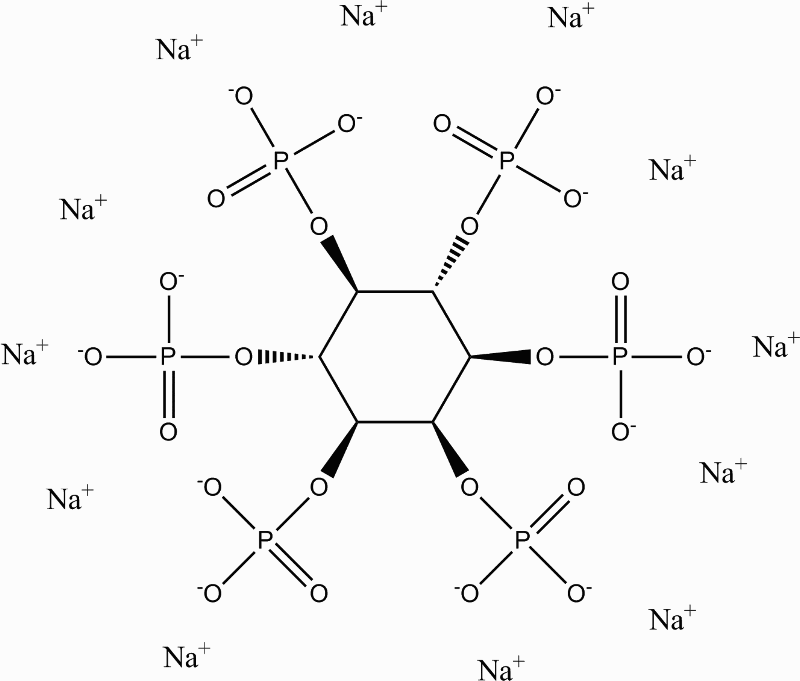
Structure of sodium phytate
In this paper, the inhibition behaviour of phytate for NdFeB magnets in aqueous salt solution was investigated. In addition, the interaction mechanism between the phytate molecule and the metal surface has also been discussed.
Experimental
Materials
The powder sintered NdFeB magnets of grade 42 H (Nd10.1Tb3.1Fe77.4B9.4) were used in the investigation. The working electrode specimens were embedded in epoxy resin, leaving an exposure area of 0.785 cm2. Before each test, the specimen surface was abraded with SiC papers (of grades in the range 600-2000). Before immersion into the medium, the abraded specimens were ultrasonically cleaned in ethanol and thoroughly dried.
The aqueous salt solution containing 0.25 g NaHCO3, 0.25 g K2SO4, 0.25 g MgCl2 and 0.25 g CaCl2 per liter was used to simulate the groundwater or city water7,8. Phytic acid solution (70%, Sinopharm Chemical Reagent Co. Ltd) was neutralised by sodium hydroxide and used as inhibitor. All the chemicals are of analytical grade. The NdFeB magnets were tested in aqueous salt solution with different phytate concentrations (0.15, 0.25, 0.5 and 0.75 mM) at 30°C.
Electrochemical measurements
A three-electrode system was employed for the open circuit potential–time curves, potentiodynamic polarisation and electrochemical impedance spectroscopy (EIS) measurements on a CHI660e electrochemical workstation. The NdFeB magnets were used as the working electrodes, while the saturated calomel electrode (SCE) and platinum electrode were used as reference electrode and counter electrode respectively. The electrochemical tests were carried out under air atmosphere without stirring the solutions. All the electrochemical corrosion tests were normally repeated at least three times under the same conditions to obtain reproducible data.
Potentiodynamic polarisation measurements
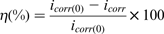
The working electrodes were immersed in the electrolyte for 0.5 h to establish a steady state open circuit potential (OCP). The polarisation measurements were carried out in the potential range from − 0.9 to − 0.4 V (SCE) with a scanning rate of 0.5 mV s− 1. The linear Tafel segments of the cathodic curves were extrapolated to the corrosion potential (E corr) to obtain the corrosion current density (i corr). The percentage inhibition efficiency η (%) was determined by equation (1)
9
.
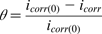
The values of surface coverage (θ) were defined as η/100 and were calculated from polarisation measurements using equation (2)
9
.
EIS measurements
The impedance spectra were carried at OCP in the frequency range 100 kHz to 0.01 Hz at alternating current amplitude of 10 mV sine wave. Nyquist and Bode plots were analysed to interpret the corrosion characteristics. The impedance parameters like double layer capacitance (C dl), charge transfer resistance (R ct), film capacitance (C f) and film resistance(R f) were deduced by simulating impedance behaviour with suitable equivalent electrical circuits
15
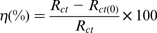
. The impedance data of Nyquist plots were fitted with ZSimpWin software version 3.10. The inhibition efficiency η (%) was generated from R ct values using equation (3)
9
.
Surface characterisations
The surface morphology and chemical analysis of NdFeB magnets exposed to the aqueous salt solution in the presence and absence of inhibitor were characterised by scanning electron microscopy (SEM, Apollo 300). X-ray photoelectron spectroscopy (XPS) measurements were conducted using an ESCALAB 250 spectrometer with monochromated Al Kalph 200 W radiation to investigate whether phytate had been adsorbed.
Results and discussion
Potentiodynamic polarisation measurements
The OCP of NdFeB magnets finally reached a stable value after 0.5 h immersion, as a stable state was reached for the NdFeB magnet/electrolyte interface. There was no great difference in the OCP versus time plots. For the following investigation, all the electrochemical measurements were tested at OCP under the steady state. Figure 2 shows the potentiodynamic polarisation curves of the NdFeB magnets in aqueous salt solution with different phytate concentrations at 30°C. The electrochemical parameters, such as corrosion potential (E corr), corrosion current density (i corr), cathodic Tafel slope (b c) and inhibition efficiency (η), are calculated and listed in Table 1.
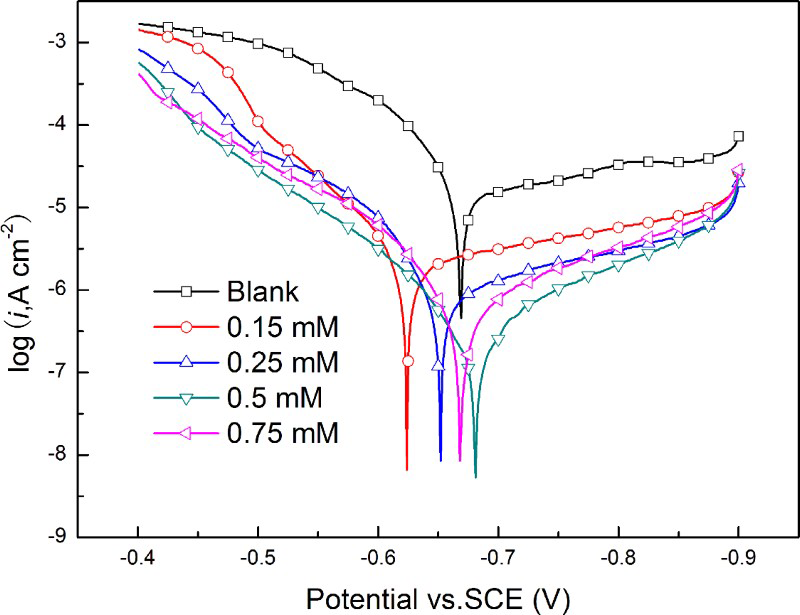
Polarisation curves of NdFeB magnets in aqueous salt solution with different phytate concentrations at 30°C
Electrochemical parameters of NdFeB magnets in aqueous salt solution with different phytate concentrations at 30°C
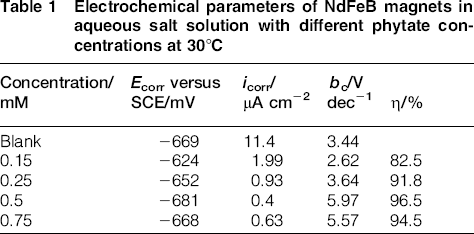
The results in Table 1 demonstrated that the corrosion current densities decreased significantly with the increasing phytate concentration < 0.5 mM. The corrosion current densities became quite low when the phytate concentration was 0.5 mM, indicating that phytate was an effective inhibitor for NdFeB magnets in aqueous salt solution. When the phytate concentration was higher than 0.5 mM, the increase of the corrosion current density of NdFeB magnets was mainly induced by desorption of the phytate 16 . The inhibition efficiency of plant extract, such as Mansoa alliacea for zinc and Tagetes erecta for mild steel, was ∼90% and close to the results of phytate10,11.
It can be seen in Fig. 2 and Table 1 that the values of E corr did not change significantly with increasing phytate concentration. An inhibitor can be classified as an anodic or cathodic type inhibitor when the change in value of E corr is larger than 85 mV9,16, but the largest displacement exhibited was 45 mV in this present investigation, implying that phytate acted as a mixed type inhibitor. Moreover, the cathodic and anodic curves in the presence of phytate were both lower than that in the absence of phytate, which indicated that phytate adsorbed on the surface of anodic and cathodic regions. It also demonstrated that phytate was a mixed type inhibitor 17 .
EIS measurements
EIS measurements offered a great insight into the electrochemical interfaces. The Nyquist and Bode plots of NdFeB magnets obtained in aqueous salt solution without and with phytate are shown in Figs. 3 and 4 respectively. It can be seen that the Nyquist plots showed two depressed capacitive loops and the Bode plots exhibited two time constants. The capacitive loop was not a perfect semicircle. It was often referred to frequency dispersion due to the roughness and inhomogeneity of electrode surface 18 . There was an inductance arc at low frequencies in Nyquist plot of NdFeB magnets in aqueous salt solution without phytate, implying the formation of pitting corrosion nuclei on the surface 4 .
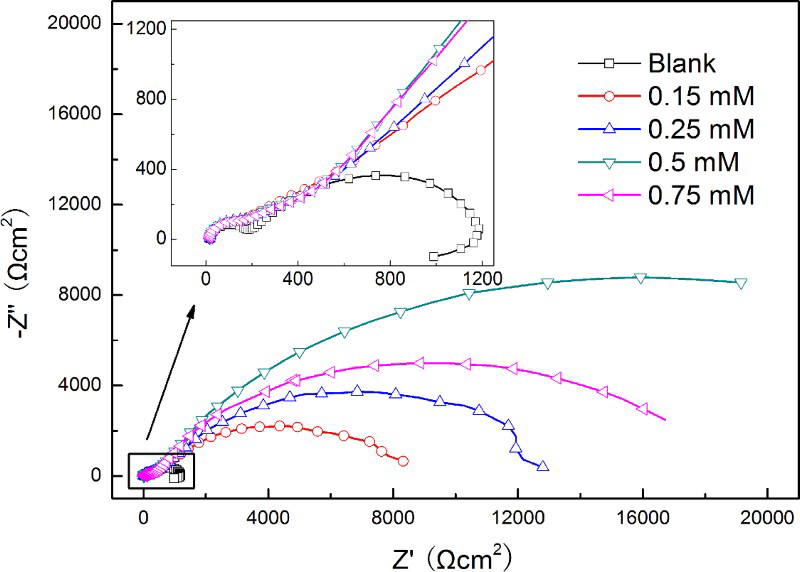
Nyquist plots of NdFeB magnets in aqueous salt solution with different phytate concentrations at 30°C
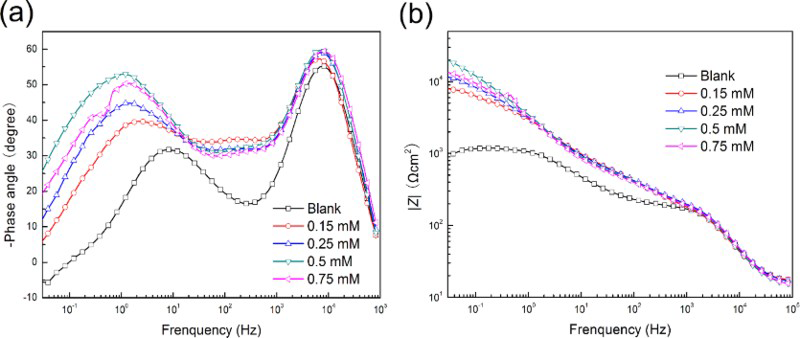
a Bode-phase angle plots and b Bode-modulus plots
The equivalent electrical circuits given in Fig. 5 were utilised to fit the impedance results. A representative simulation plot is shown in Fig. 6. The electrochemical parameters obtained from the equivalent circuits by simulation are presented in Table 2. In Nyquist plots, the high frequency capacitive loop reflected the transfer process of electrons through the surface film, while the second capacitive loop reflected the transfer process of electrons through the electric double layer19,20. In this circuit, R s was the electrolyte resistance between working electrode and reference electrode. R f was the transfer resistance of electrons through the surface film. R ct represented charge transfer resistance. C f and C dl were constant phase elements corresponding to capacitance of the surface film and the double layer respectively.
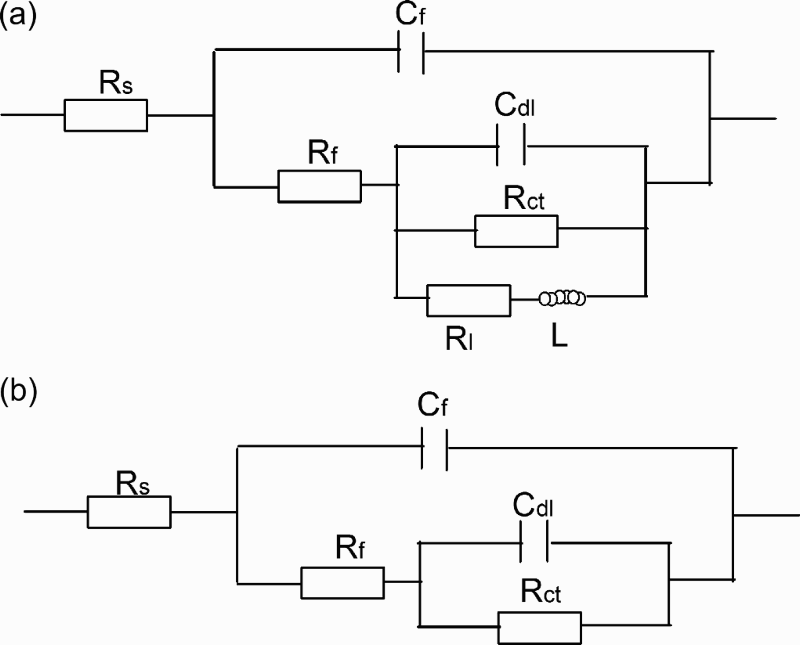
Equivalent circuits of Nyquist and Bode plots of NdFeB magnets in aqueous salt solution without (a) and with (b) phytate
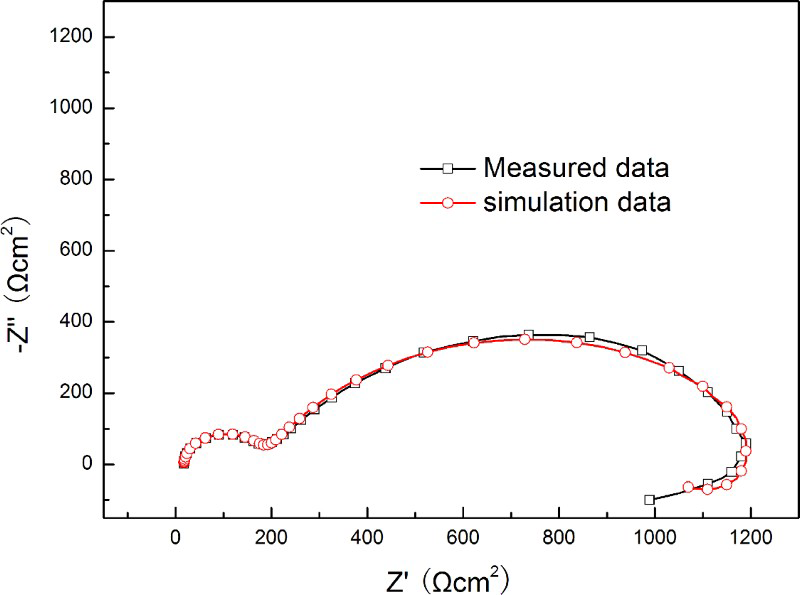
Comparison between measured and simulation data of Nyquist plots of NdFeB magnets in aqueous salt solution
Electrochemical parameters obtained from equivalent circuits by simulation

Table 2 clearly shows that the R ct values increased with the increasing phytate concentration < 0.5 mM. Consequently, η increased with the increase in R ct values, indicating that phytate acted as a good corrosion inhibitor for NdFeB magnets in aqueous salt solution. Comparatively, the C dl values decreased with the increasing concentration of phytate. The diminution of C dl values can be the outcome of the reduction in local dielectric constant and/or the increase in the thickness of electrical double layer. This correlation was provided by the Helmholtz model, as shown in equation (4)
15
.

Adsorption isotherm and XPS characterisation
Figure 7 shows the XPS characterisation for NdFeB magnets in aqueous solution with phytate. There were obvious peaks of P, O and Na elements in the survey scanning spectrum, indicating the adsorption of phytate on the NdFeB magnet surface.
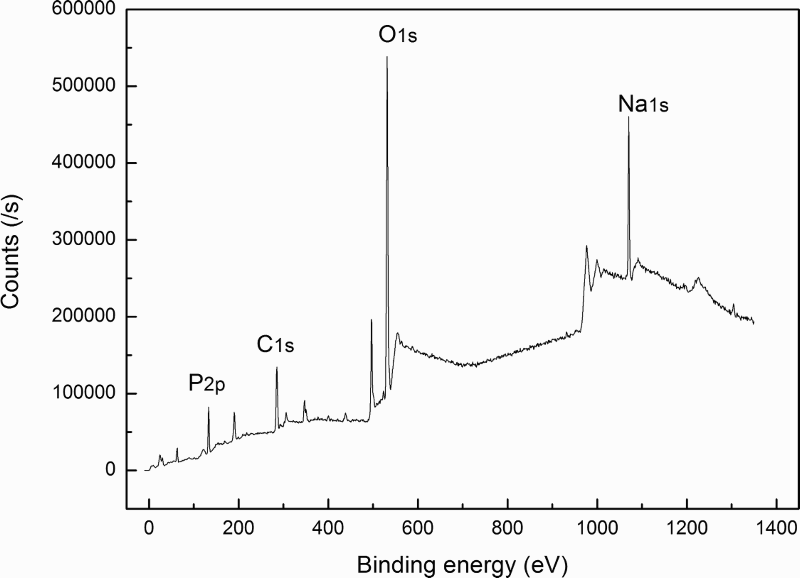
Survey scanning spectrum of XPS characterisation for NdFeB magnets in aqueous solution with phytate
The adsorption isotherm can give important information about the interaction of the phytate molecules and metal surface. The adsorption of phytate molecules from the aqueous salt solution can be considered as a quasi-substitution process between the phytate molecules in the aqueous phase [Phy(sol)] and water molecules associated with the metallic surface [H2O(ads)] as represented by the following equilibrium equation (5) 15,21:

The plots of C inh/θ versus C inh yielded straight line, and the linear correlation coefficient was close to 1 (as shown in Fig. 8), indicating that the adsorption of phytate on the NdFeB magnet surface was well fitted to the Langmuir adsorption isotherm (equation (6))16,18:
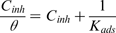

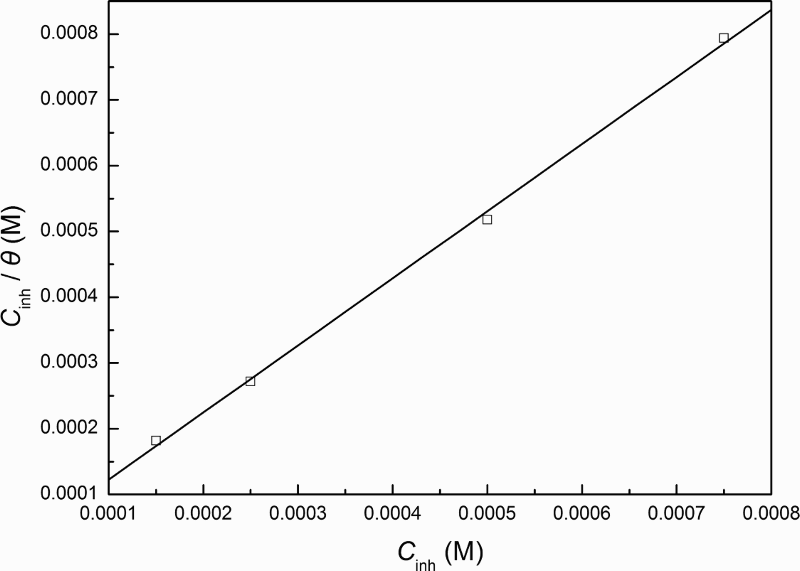
The langmuir adorption isotherm for the adsorption of phytate on NdFeB magnet surface at 30°C.
With this equation, the calculated values of K ads and ΔG ads 0 for phytate were 4.87 × 10⁴ M− 1 and − 37.3 kJ mol− 1 respectively. Generally, values of ΔG ads 0 up to − 20 kJ mol− 1 are consistent with the electrostatic interaction between the charged molecules and the charged metal (physical adsorption), while those more negative than − 40 kJ mol− 1 involve sharing or transfer of electrons from the inhibitor molecules to the metal surface to form a coordinate type of bond (chemical adsorption) 23 . In the present study, the value of ΔG ads 0 was in the range from − 20 to − 40 kJ mol− 1, which indicated that the adsorption process of the phytate on NdFeB magnet surface might involve complex interactions (both physical and chemical adsorption), and chemical adsorption was predominant.
Potential of zero charge (E pzc)
The adsorption of inhibitor may depend on many factors, such as the chemical structure of the inhibitor, the charge or dipole moment of the inhibitor molecules and the charge of the metal surface. 24 The surface charge of metals can be determined by the comparison of open circuit potential (E ocp) with the potential of zero charge (E pzc). In order to evaluate the value of E pzc, EIS measurement was conducted to obtain the plot of double layer capacitance (C dl) versus applied electrode potential (E).
Figure 9 displays the dependence of C dl on the applied potential of NdFeB magnets in aqueous salt solution with 0.5 mM phytate. The values of E ocp and E pzc were − 0.678 and − 0.760 V respectively. The value of ψ (ψ = E ocp − E pzc) was 0.082 V, indicating that the surface of NdFeB magnets was positively charged. In aqueous salt solution, the phytate molecules may exist in the anion form in equilibrium with the corresponding molecular form. The anionic phytate molecule can easily approach the positively charged NdFeB magnet surface because of the electrostatic interaction. Furthermore, the free electron pairs of O atoms can form donor–acceptor interaction with the unoccupied d orbitals of Fe and Nd atoms17,25.
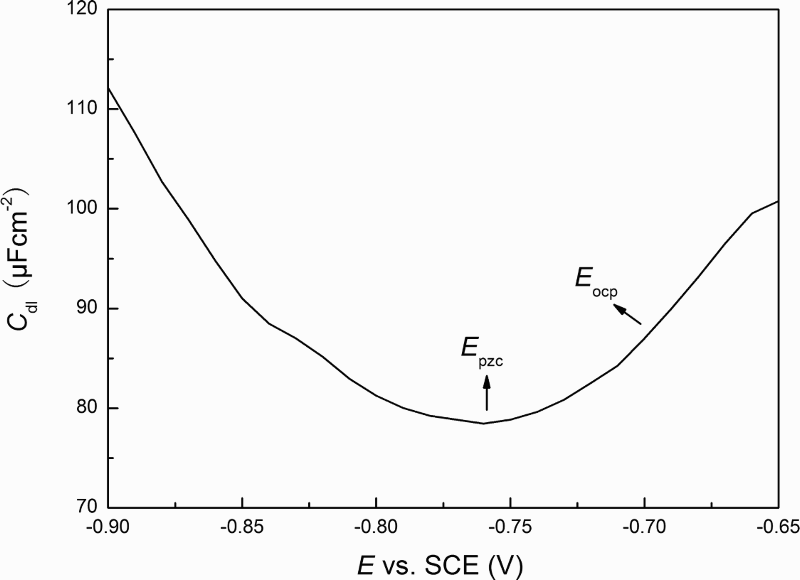
Plots of C dl versus applied electrode potential for NdFeB magnets in aqueous salt solution with 0.5 mM phytate at 30°C
Surface morphology
To further study the surface characterisation of NdFeB magnets in aqueous salt solution, SEM and EDS (energy dispersive spectroscopy) were utilised to investigate the uninhibited and inhibited NdFeB magnets in this study. As shown in Fig. 10, the surface of NdFeB magnets in aqueous salt solution was seriously damaged and a strong peak of O element appeared (Fig. 10a and c), while that in aqueous salt solution with 0.5 mM phytate was uniform and had no significant corrosion (Fig. 10, b and d), indicating that the phytate was an effective inhibitor for the NdFeB magnets in aqueous salt solution.
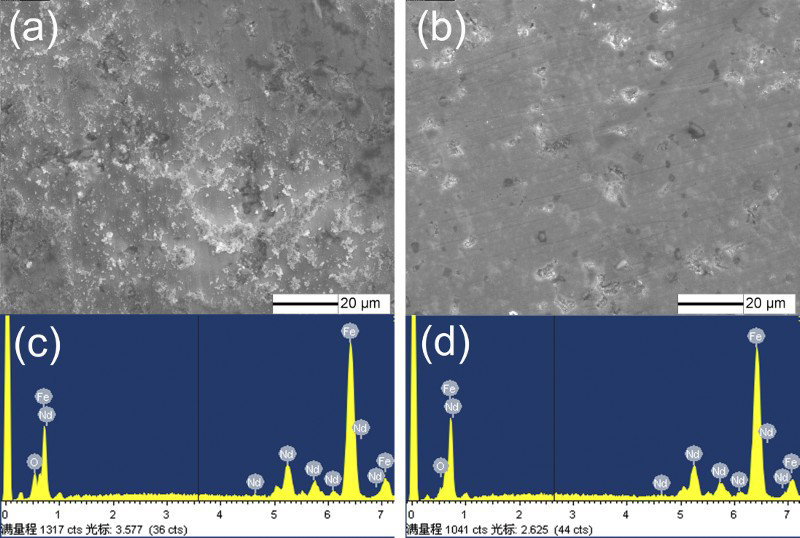
SEM and EDS of NdFeB magnets in aqueous salt solution without (a, c) and with (b, d) 0.5 mM phytate for 1 h at 30°C
Conclusions
In this paper, the corrosion inhibition behaviour of phytate for NdFeB magnets in aqueous salt solution was investigated. The main conclusions can be summarised as follows.
Polarisation curves showed that phytate inhibited both the anodic and cathodic corrosion processes, which was a mixed type corrosion inhibitor. EIS measurements showed that the charge transfer resistance increased and double layer capacitance declined in the presence of phytate, indicating the adsorption of inhibitor molecules on the NdFeB magnet surface. The adsorption of phytate on NdFeB magnet surface obeyed the Langmuir adsorption isotherm. The values of ψ (ψ = E ocp − E pzc) indicated that the surface of NdFeB magnets was positively charged in aqueous salt solution with 0.5 mM phytate. SEM and EDS showed an uncorroded surface for inhibited NdFeB magnets due to the adsorption of inhibitor. Phytate was an efficient and green inhibitor for NdFeB magnets in aqueous salt solution.