







Abstract
The refinement of inclusions in molten steel induced by a continuous electric current pulse was investigated at 1823 K. The results revealed that due to the application of electric current, the melted sulphide inclusions in molten steel were refined. Analysed from the thermodynamic theory, the refinement mechanism was ascribed to the decrease in the system free energy that resulted from the formation of the refined sulphide inclusions in molten steel at 1823 K. Hence, the electric current pulse treatment may be a new method to refine inclusions in molten metallic materials in the future.
Introduction
Much further attention has been paid to an important instantaneous non-equilibrium processing technique, namely, electric current pulse (ECP), due to its unique effect on metallic materials.1–2 Application of ECP will greatly influence the behaviour of materials, such as electromigration, 3 electroplasticity, 4 solidification5–7 and microstructural refinement.8–12 On the basis of the available knowledge of ECP, the grain refinement from the coarse grained solid materials is always an attractive investigation, and many significant progresses have been reported in recent decades.8–12
Recently, Zhang et al. have applied the electropulsing to separate the non-metallic inclusions from the molten steel between the inclusions and liquid metal. 13 Accordingly, it gives us an insight into whether the application of ECP could refine the melted inclusions in molten alloys at high temperature. If it is feasible, then the mechanical properties of metallic materials might be greatly improved. However, there are few reports on the refinement of inclusions in molten metallic materials.
Coarse non-metallic inclusions >20 μm are usually detrimental to the mechanical properties of steel. 14 For the conventional industrial processes, there are still no effective methods to remove these inclusions. For example, it is difficult to remove inclusions < 30 μm by bubble flowing process, and the removal efficiency of electromagnetic stirring process was at relatively low level. (Fe,Mn)S is one of the most common non-metallic inclusions in steel, which is so harmful to the material properties. Great efforts have been made to eliminate it in high quality steel. However, there is currently no method to completely eliminate the inclusions from the steel. Therefore, it is urgent to explore a method to improve the steel quality.
In fact, the mechanical properties of the steel could be greatly improved if the inclusions were effectively refined. The aim of this work is to propose a new method to refine inclusions in molten metallic materials. To clear the effect of ECP treatment on the inclusion refinement in molten steel, the possible refinement mechanism of the inclusions in molten steel under ECP is profoundly discussed.
Experimental
A steel sheet with a composition (wt-) of 0·82 C, 0·515 Mn, 0·135 Si, 0·023 Al and 0·02 S was used in the present study. Cylinder specimens with a diameter of 30 mm and height of 55 mm were cut by the electrospark discharge technique from the sheet. Ahead of melting under argon atmosphere at 1823 K in an electrical resistance furnace powered by molybdenum disilicide (MoSi2) elements shown in Fig. 1a, all the specimens were cleaned to prevent the undesired pollution. A crucible with perforated diameter of 6 mm at the bottom was made of high density fused magnesia brick. A magnesia carbon (MgO–C) brick was filled into the hole as a cathode (Fig. 1b). After the temperature of the furnace reached 1823 K for 30 min, an anode made of MgO–C was dipped into the molten steel to conduct ECP, and the ECP treatment duration was 30 min. In the subsequent cooling process, the ECP was switched off and the molten steel was solidified to 1273 K at 10 K min− 1. After that, the investigated steel was air cooled to room temperature. In the present study, ECP was a continuous direct current square wave pulse with a frequency of 500 Hz, duration of each pulse of 800 μs and maximum current density of 1·0 × 104 A m− 2. In comparison with the pulsed steel, a sample was performed with the same experimental conditions but without the application of the ECP.
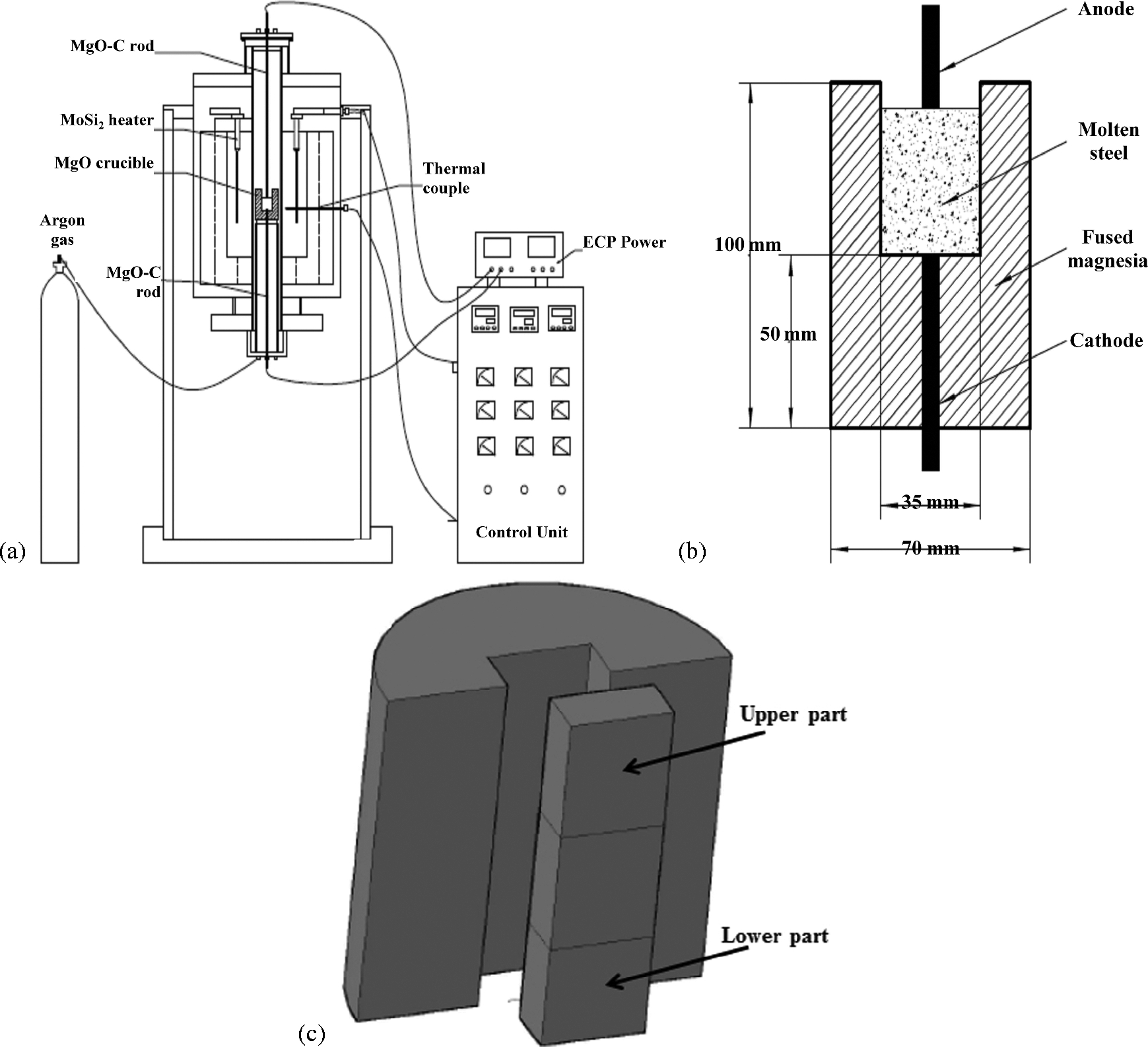
a schematic of ECP treatment in molybdenum disilicide electrical resistance furnace; b detailed crucible size and electrode position; c upper and lower parts in sample
The investigated samples were examined by scanning electron microscopy (SEM) equipped with energy dispersive spectroscopy (EDS) after being mechanically ground and polished (Fig. 1c).
Results and discussion
Figure 2 shows the morphology of the sample without ECP treatment. The inclusions were concentrated to form several big irregular shape defects with cavities in the matrix. In the upper part shown in Fig. 2a and c, some 300 μm long and 40 μm wide defects made up of a large quantity of global shape inclusions in various sizes were randomly distributed. Further EDS analysis in Fig. 2d revealed that the inclusions were (Mn,Fe)S, and the concentration of iron in big inclusions, such as A point ∼30 μm, was much higher than that in small inclusions, such as B point ∼3 μm. As shown in Fig. 2b, the sizes of defects in the lower part were < 200 μm in length and 20 μm in width, which were notably smaller than the upper part. Moreover, the average size of the inclusions and the cavities in the defects in the lower part were smaller than those in the upper one.
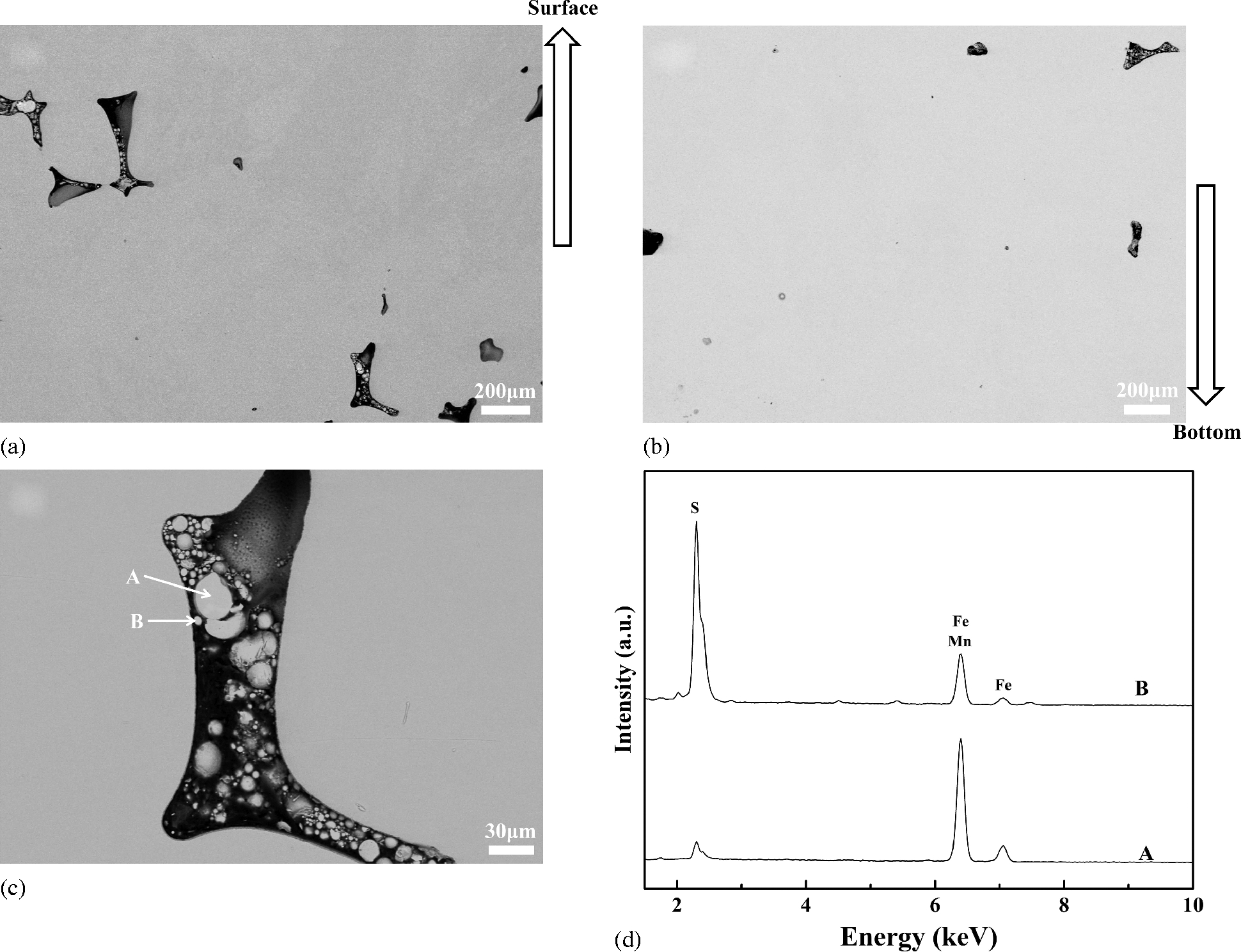
Morphology of sample without ECP treatment: a upper part; b lower part; c magnified upper part; d EDS results of points in c
Figure 3 shows the microstructure of the ECPed sample. It was obviously different from the sample without ECP treatment shown in Fig. 2. The inclusions in the ECPed sample were not enclosed in the cavities, and they were separated from each other in the matrix with a dimension of 8 μm. Hence, the inclusions in molten steel were refined during the ECP treatment at 1823 K. However, a big cavity ∼150 μm in length and 20 μm in width was observed in the lower part near the cathode (Fig. 3b).
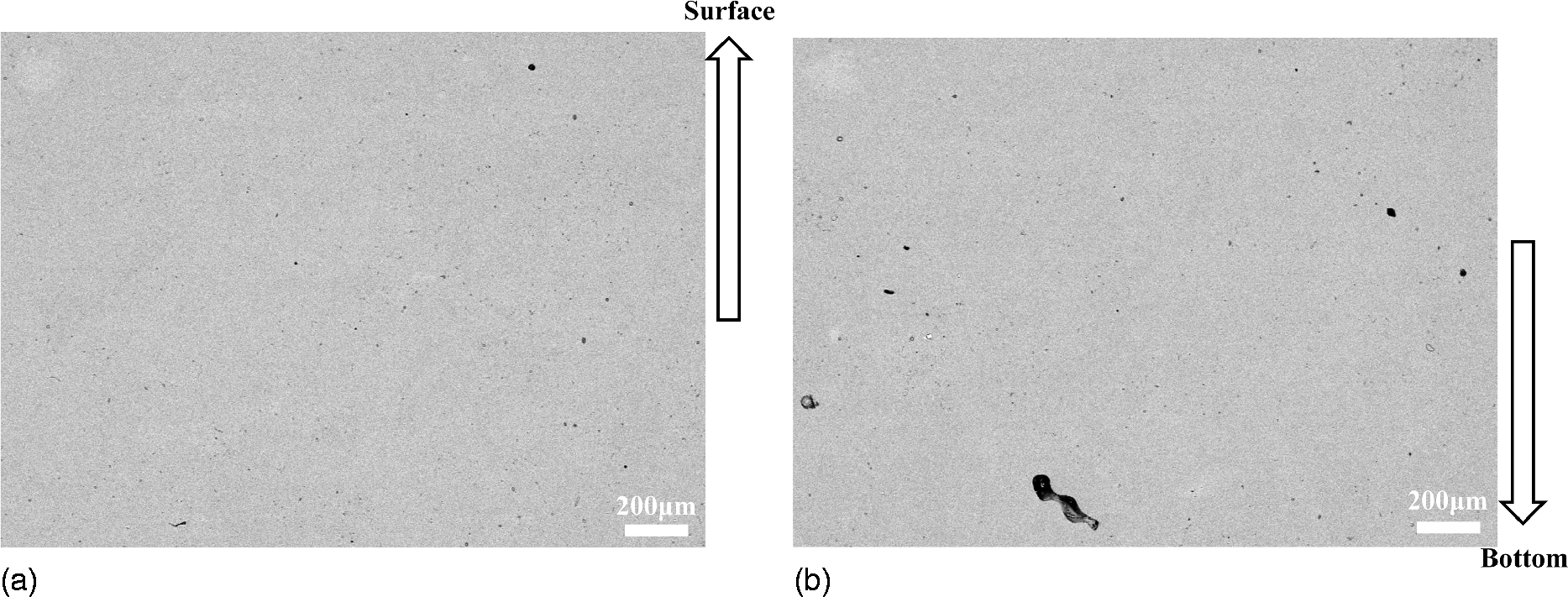
Microstructure of ECPed sample [grey particles are (Mn,Fe)S inclusions and dark ones are cavities]: a upper part; b lower part
As known, the element of sulphur in the molten steel has three states, that is, [FeS], [S] and S2 − .
15
In the molten steel, the following reactions occur at high temperature.




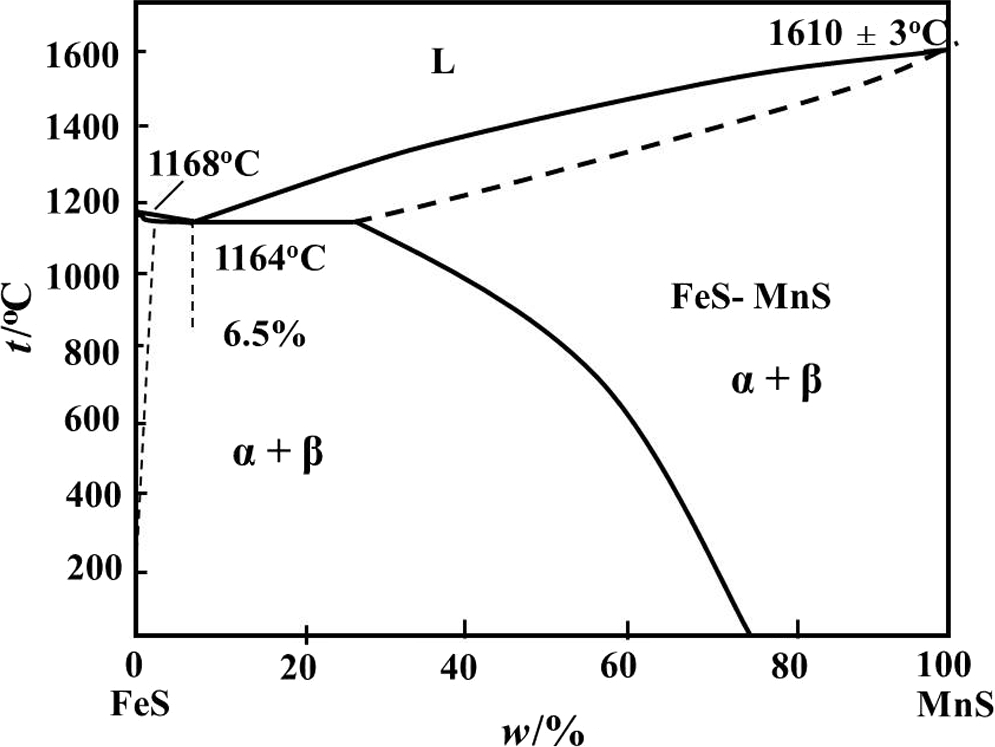
Phase diagram of MnS–FeS
Because of the relative high concentration of C and O in the investigated steel, a small amount of CO gas bubble is inevitably formed. In the sample without ECP treatment, [(Mn,Fe)S] inclusions are able to contact or enclose with bubbles to form defects by collision in the molten steel. With the increasing inclusions and bubbles, larger defects are formed at 1823 K.
The forces on the defects in molten steel without ECP treatment are gravity (Fg), buoyancy (Fb) and drag force (Fd). The former two forces of inclusions in the molten steel can be calculated as follows:


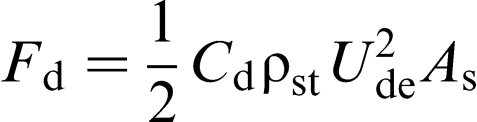
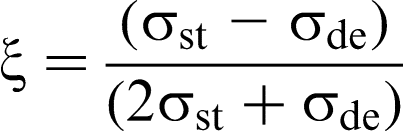
As to the ECPed sample at 1823 K, the current density must have some differences in the area with or without inclusion when the current passes through. As shown in Fig. 5, the current density beside the low conductive defects is higher than that in areas without defects. Hence, the free energy change (ΔU) in molten steel with or without defects has some differences due to the deformation of the current lines, and that with defects can be written as follows:
19


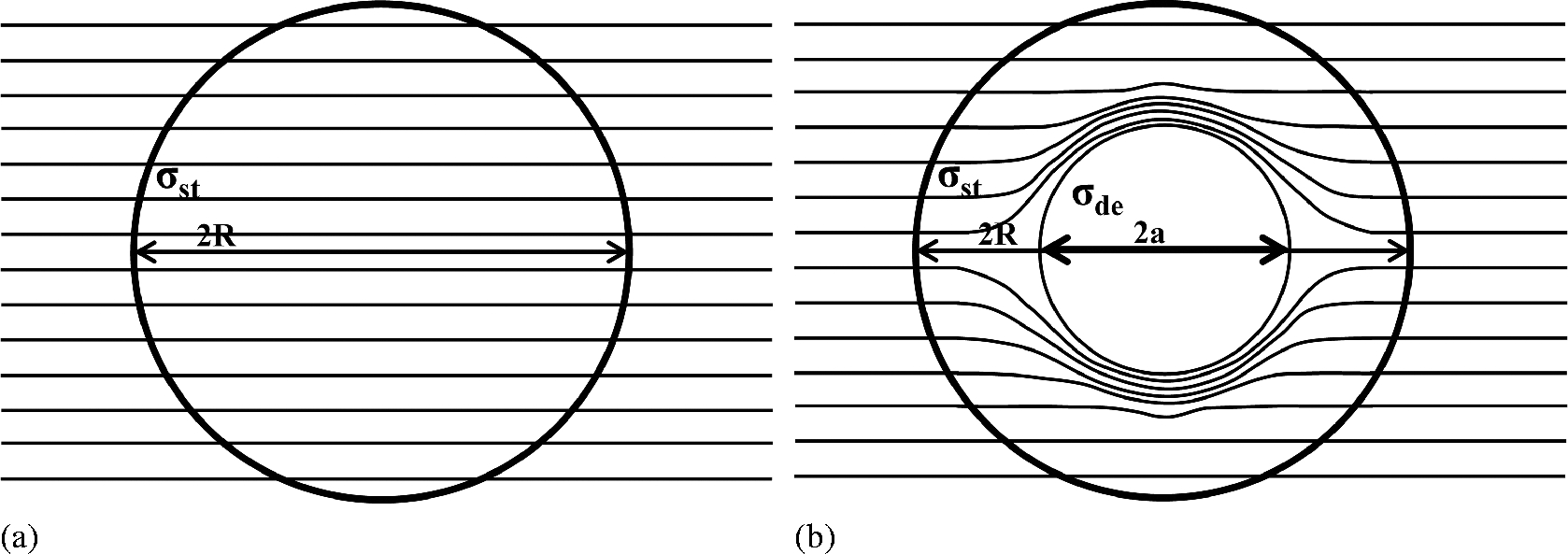
Current line distribution during ECP passing through: a without inclusions in the radius R area; b defect of radius a at centre
Conclusions
Owing to the change of distribution of the current between the inclusions and the molten steel when a current passes through, energy changes will be formed in the molten steel system. To decrease the system energy changes, the (Mn,Fe)S inclusions would be refined, and the steel quality would be improved. Therefore, the ECP treatment provides a novel and practical approach to refine the inclusions in the molten metallic materials in future.
Acknowledgements
This work was supported by the National Nature Science Foundation of China (grant nos. 51304039 and 51471047) and the Fundamental Research Funds for the Central Universities (grant nos. N130418001 and N130402021). The authors thank Professor J. D. Guo of Institute of Metal Research, Chinese Academy of Sciences, for many helpful discussions.