







Abstract
Carbothermal reduction of ilmenite concentrates and synthetic rutile was studied in isothermal experiments in hydrogen, argon and helium in a tube reactor. Concentrations of CO, CO2 and CH4 in the off gas were measured online using an infrared gas analyser. The reaction products were analysed by X-ray diffraction. Pseudorutile and ilmenite were the main phases in ilmenite concentrates. Reduction of ilmenite concentrates and synthetic rutile in hydrogen was significantly faster than that in inert atmosphere. The effect of gas atmosphere became stronger for lower grade ilmenite containing more iron oxides. The conversion rate of titania to titanium oxycarbide in hydrogen decreased with increasing grade of ilmenite concentrate. In inert gas, the reduction rates of secondary ilmenite and HYTI70 were close to that of primary ilmenite. Reduction of synthetic rutile was faster in comparison with ilmenite concentrates.
Introduction
Ilmenite is an important and abundant mineral for production of metallic titanium, titanium dioxide white pigment, titanium carbide and other titanium containing compounds. More than 90% of the titanium ores are processed into titania pigment by chloride or sulphate processes via synthetic rutile or TiO2 rich slag. Synthetic rutile is produced by reduction of iron oxides in ilmenite concentrates and removal of iron. The chloride process is considered to be more advanced and favoured as it generates much less wastes than the sulphate process. In chloride process synthetic rutile is chlorinated in the fluidised bed reactor at 800–1100°C. The fluidised bed operation dictates requirements to the ilmenite ore, as such impurities in the ore as MgO and CaO can clog the chlorinator and cause the collapse of the bed.
The chlorination temperature can be significantly reduced if titanium oxides in the ilmenite concentrates are reduced to titanium oxycarbide TiOxCy (Adipuri et al., 2008). The low temperature chlorination in the range 200–400°C (Adipuri et al., 2008) has a higher selectivity than conventional chlorination at 800–1100°C. This will relax requirements for raw materials and decrease chlorine consumption and generation of waste chlorides.
Reduction of ilmenite by hydrogen was studied (Yamaguchi et al., 1966; Hussein and Eltawil, 1967; Briggs and Sacco, 1991; Zhao and Shadman, 1991; Vijay et al., 1996) and by carbon monoxide (Jones, 1973, 1975; Yakubovich et al., 1975; Merk and Pickles, 1988). Both hydrogen and CO reduce iron oxides to metallic iron, while titanium dioxide can be reduced only to lower oxides.
In the process of ilmenite reduction by solid carbon or methane, iron oxides are reduced to metallic iron, and titanium oxides can be reduced to titanium carbide (oxycarbide), which strongly depends on the reduction temperature.
In the reduction of ilmenite by methane–hydrogen gas mixture (Zhang and Ostrovski, 2001a, 2001b, 2002), reduction of iron oxides was completed within 15 min at 950°C. Titanium oxycarbide started to form at 950°C, and was close to completion at 1150°C after 60 min reaction. However, reduced iron catalysed methane cracking and solid carbon deposition with a negative effect on the reduction of titanium oxides.
El-Guindy and Davenport (1970) in the study of carbothermal reduction of ilmenite reported that the reaction between ilmenite and graphite started at 860°C. Gupta et al. (1987) observed no measurable reduction by carbon at 1000°C. The difference in the reduction behaviours may be caused by the difference in chemistry of ilmenite ores or the forms of carbon used in these studies. Li et al. (2005) reported formation of Fe and Ti3O5 in the carbothermal reduction up to 1400°C. Tang et al. (2003) claimed complete conversion of ilmenite to a Ti(C, N)–Fe composite at 1350°C in a ‘mixed air’ environment. Welham and Williams (1999) reported formation of TiC at a temperature as low as 1100°C. This low temperature for TiC formation was achieved by mechanical milling of the raw materials. The formation of TiC was favoured by increasing temperature.
A study of titanium oxycarbide synthesis by carbothermal reduction of pure titania in a previous work (Welham and Williams, 1999) showed that reduction was strongly affected by the gas atmosphere. Dewan et al. (2010) examined carbothermal reduction of primary ilmenite and presented the reduction sequence. This paper extends the investigation to second and HYTI70 ilmenite concentrates and synthetic rutile, and compares the results obtained in the reduction of primary ilmenite reported previously (Dewan et al., 2010). The aim of the investigation is to establish the effect of the grade of ilmenite concentrates on the reduction and formation of titanium oxycarbide. The carbothermal reduction of ilmenites and synthetic rutile was examined in isothermal experiments at different temperatures in hydrogen, helium and argon.
Experimental
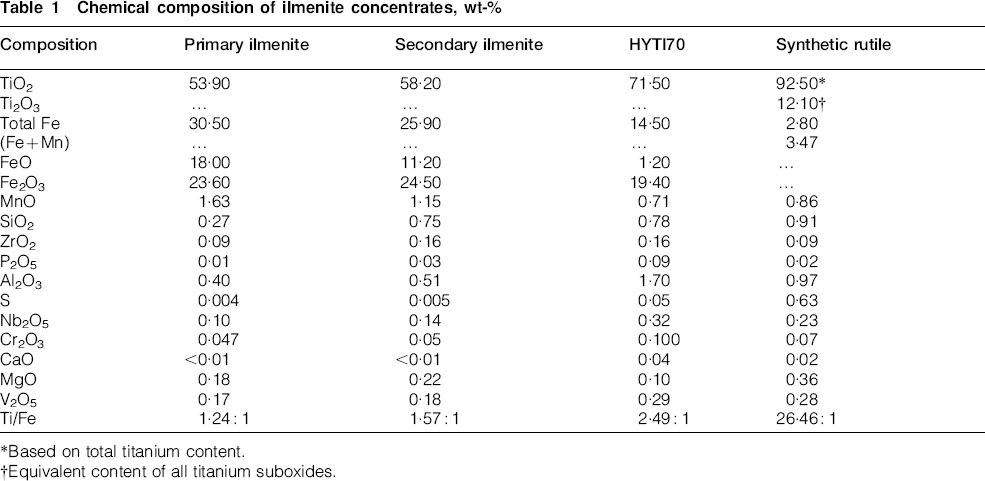
The ilmenite concentrates and synthetic rutile were supplied by Iluka Resources Ltd (Perth, WA, Australia). Their chemical compositions are given in Table 1.
Chemical composition of ilmenite concentrates, wt-%
*Based on total titanium content.
†Equivalent content of all titanium suboxides.
Ilmenite concentrates of different grades are distinguished by titanium and iron contents: iron concentration was the highest (30·5 wt-%Fe) and titanium concentration was the lowest (53·9 wt-%TiO2) in the primary ilmenite, while synthetic rutile contained only 2·80 wt-% total iron and 92·5 wt-%TiO2. The X-ray diffraction (XRD) patterns of the ilmenites and synthetic rutile are presented in Fig. 1. Main phases in the primary ilmenite were ilmenite FeTiO3 and pseudorutile Fe2Ti3O9, while secondary and HYTI70 ilmenites also contain rutile. Titania (TiO2) was the major phase in the synthetic rutile. Chemical analysis showed that synthetic rutile contained titanium suboxides equivalent to 12·1 wt-%Ti2O3. Some particles of synthetic rutile also contained metallic iron, which was identified in optical images and confirmed by energy dispersive spectroscopy analysis. Optical images of all three ilmenite concentrates were similar and different from that of synthetic rutile. The particle sizes for all ilmenite ores and synthetic rutile were in the range of 50–300 μm with an average size of 152 μm.
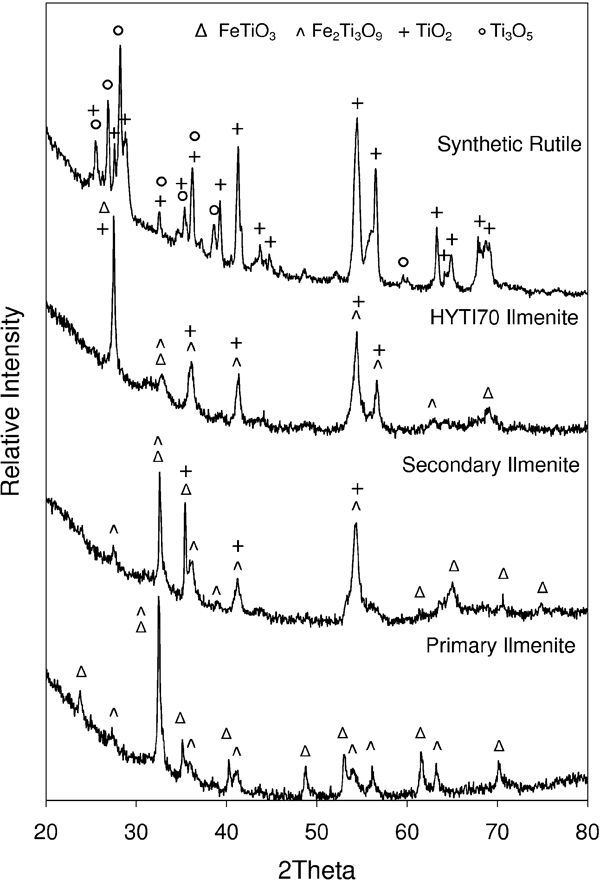
X-ray diffraction patterns of ilmenite concentrates and synthetic rutile
As received ilmenites and synthetic graphite (99·5% purity, <20 μm in particle size) were wet mixed and pressed into cylindrical pellets. The ilmenite–graphite mixtures contained 10 mol.-% extra graphite relative to the stoichiometric amount of carbon needed to reduce titanium oxides to titanium carbide, and iron and manganese oxides to a metallic state. The contents of other oxides were very low, and they were considered to be unreducible under given experimental conditions. The pellets with a mass of ∼2 g were 8 mm in diameter and ∼12 mm in height.
Reduction of ilmenite concentrates and synthetic rutile by graphite in H2, Ar and He gases was studied in a laboratory fixed bed reactor in a vertical tube electric furnace. Experimental set-up and gas system were presented elsewhere (Zhang and Ostrovski, 2000). The gases used in the investigation were in 99·999% purity. The outlet gases were analysed online by an infrared CO/CO2/CH4 analyser (Advanced Optima AO2020, ABB, Ladenburgh, Germany). The total gas flowrate was maintained at 1·00 NL min−1.
The reduced pellets were analysed by XRD with a Philips X'Pert-Pro MPD diffractometer (PANalytical, Lelyweg, The Netherlands) and Cu Kα radiation. Oxygen and carbon contents in reduced samples were determined using LECO analyses (TC-436DR oxygen and nitrogen analyser and CS-444 carbon and sulphur analyser).
The extent of reduction was defined as a fraction of oxygen in titanium, iron and manganese oxides removed in the course of reduction, and was calculated based on the gas composition and oxygen and carbon contents of reduced samples. The error of measuring oxygen content by LECO analysis depends on the residual oxygen content in the reduced sample. For a sample with the extent of reduction 90%, the error was ∼0·1%, which gave an error to the extent of reduction 0·3%. Including other errors such as in weighing and gas flowrate, the overall error of the final extent of reduction was estimated to be <1%.
Results
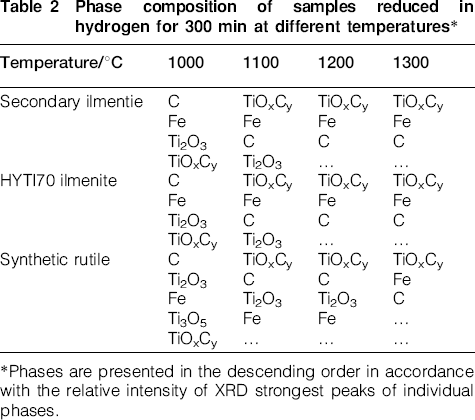
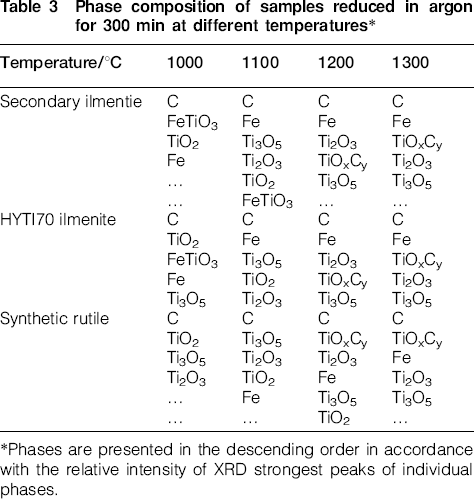
Carbothermal reduction of secondary and HYTI70 ilmenite concentrates and synthetic rutile was studied in the temperature range 1000–1300°C in hydrogen, helium and argon. The extent of reduction in hydrogen and argon is presented in Figs. 2 and 3 respectively. Phase compositions of samples reduced in hydrogen and argon at different temperatures for 300 min, detected by XRD, are summarised in Tables 2 and 3 respectively. The reduction curves and phase compositions of ilmenites and synthetic rutile reduced in helium were close to those reduced in argon; the reduction rate in helium was marginally higher than that in argon. In all cases, the reduction rate increased with increasing temperature; the reduction in hydrogen was much faster than that in an inert atmosphere. Secondary ilmenite and HYTI70 reduced in hydrogen at 1200°C consisted of metallic iron and titanium oxycarbide; no titanium oxides in these samples were detected by the XRD analysis (Table 2). Traces of Ti2O3 were observed in the sample of synthetic rutile reduced in hydrogen at 1200°C. The extent of reduction after 300 min in hydrogen at 1200°C was 95% for secondary ilmenite, 91% for HYTI70 and 88% for synthetic rutile. The difference in the extent of reduction at 1300°C was less visible (reduction time 300 min): 96% for secondary ilmenite, 95% for HYTI70 and 83% for synthetic rutile.
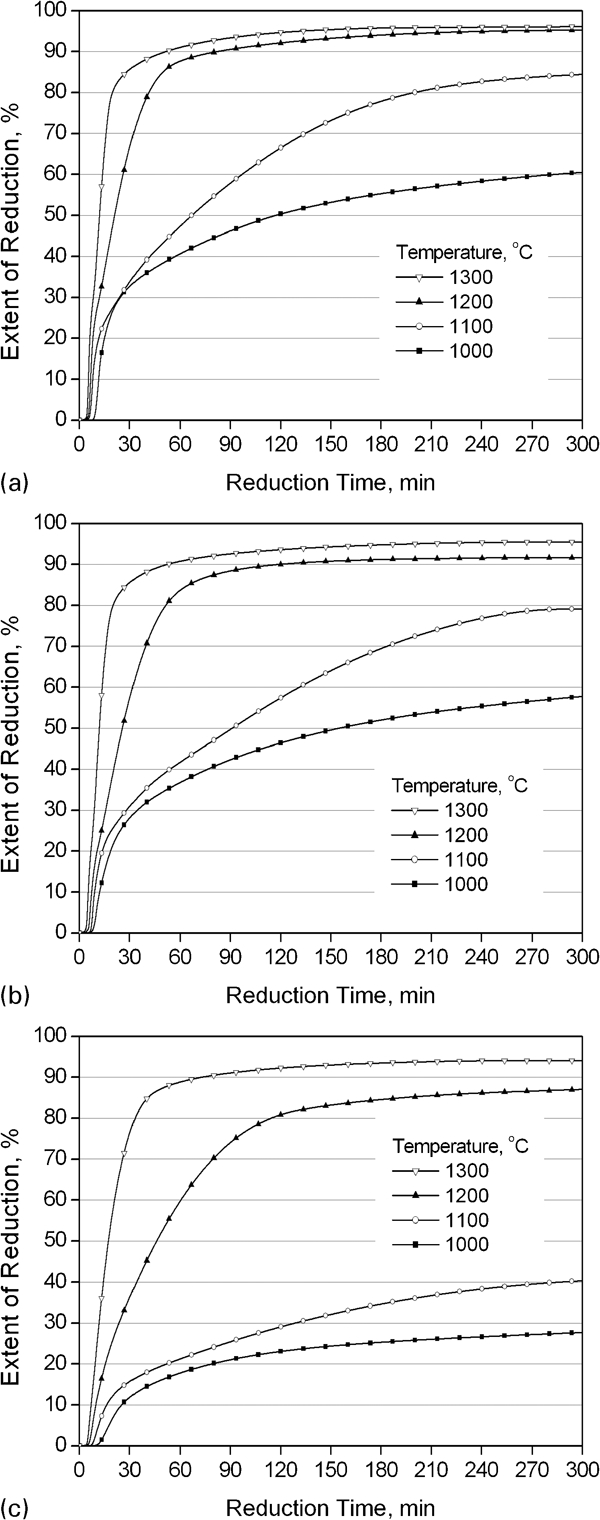
Effect of temperature on reduction of a secondary and b HYTI70 ilmenite concentrates and c synthetic rutile in hydrogen
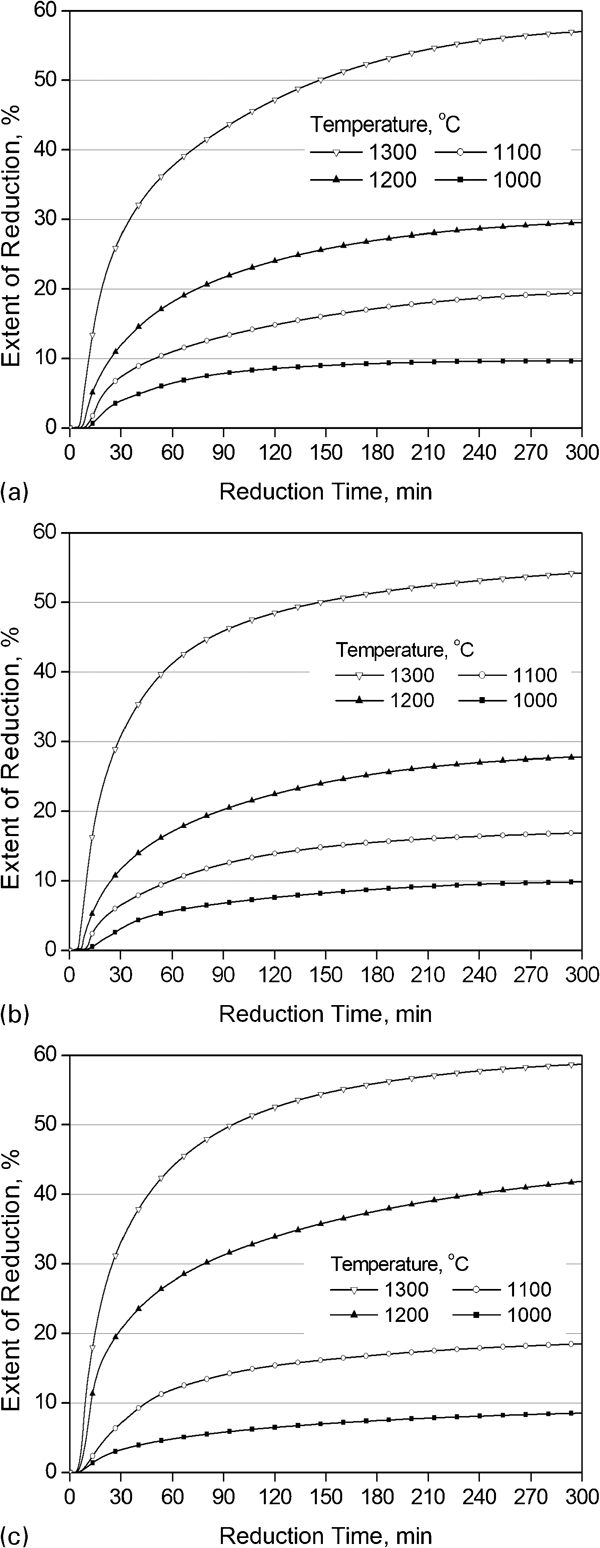
Effect of temperature on reduction of a secondary and b HYTI70 ilmenite concentrates and c synthetic rutile in argon
Phase composition of samples reduced in hydrogen for 300 min at different temperatures*
*Phases are presented in the descending order in accordance with the relative intensity of XRD strongest peaks of individual phases.
Phase composition of samples reduced in argon for 300 min at different temperatures*
*Phases are presented in the descending order in accordance with the relative intensity of XRD strongest peaks of individual phases.
Reduction of ilmenite concentrates and synthetic rutile in the inert atmosphere was not completed after 300 min reaction at 1300°C. Spectra of all samples reduced in argon or helium contained peaks of titanium suboxides. The extent of reduction after 300 min reaction at 1300°C in argon was 56% for secondary ilmenite, 54% for HYTI70 and 59% for synthetic rutile. Corresponding values in helium were 65% for secondary ilmenite, 64% for HYTI70 and 58% for synthetic rutile.
In reduction experiments in hydrogen, reduction of iron oxides by hydrogen formed water, which reacted with graphite to form CO and H2. As a result, a dew point monitor detected a negligible amount of water in the off gases. The rate of carbothermal reduction in hydrogen in the temperature range of this investigation can be represented by the CO evolution rate. Figure 4 compares the CO evolution rates measured during reduction of ilmenite concentrates, synthetic rutile and pure titania at 1200°C in hydrogen and argon. Reduction curves at 1100°C in hydrogen and at 1200°C in argon are compared in Figs. 5 and 6 respectively.
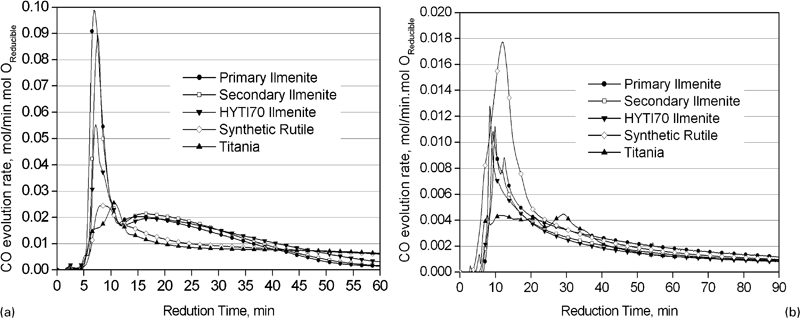
CO evolution rate during reduction of ilmenite concentrates and titania in a hydrogen and b argon at 1200°C
Reduction curves of ilmenite concentrates and synthetic rutile in hydrogen at 1100°C
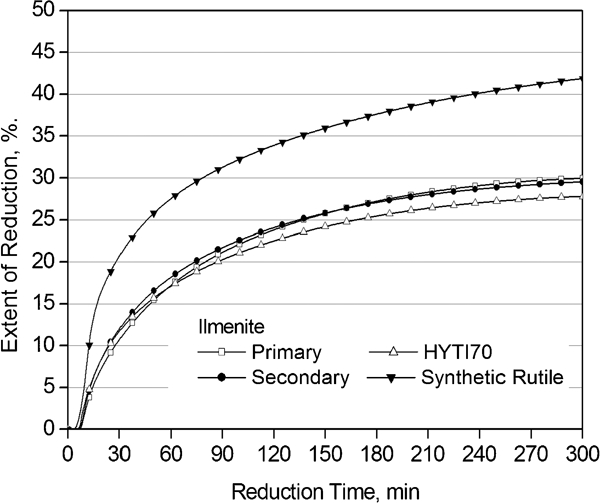
Reduction curves of ilmenite concentrates and synthetic rutile in argon at 1200°C
Discussion
Gas atmosphere has a strong effect on the carbothermal reduction of secondary and HYTI70 ilmenite concentrates and synthetic rutile, which is consistent with previous results obtained for primary ilmenite (Dewan et al., 2010). Reduction of ilmenites of all grades in hydrogen was faster than that in the inert atmosphere under otherwise the same conditions. This was also observed in reduction of pure titania (Welham and Williams, 1999), MnO and manganese ore (Kononov et al., 2009). Hydrogen is directly involved in reduction of iron oxides to metallic iron and titania to titanium suboxides. Furthermore, hydrogen reacts with carbon to form methane, which transfers carbon to oxide particles. Therefore, the reaction kinetics is remarkably enhanced by hydrogen in the carbothermal reduction of ilmenite concentrates and synthetic rutile. This was discussed in more detail by Dewan et al. (2010).
Two reduction stages in the reduction of ilmenite concentrates in hydrogen can be identified from the CO evolution curve (Fig. 4a). At the first stage, iron oxides were reduced by hydrogen to metallic iron and titania to titanium suboxides. At the second stage, titanium oxycarbide was formed. The formation of titanium oxycarbide in the reduction of ilmenite concentrates was faster than that in the reduction of pure titania (rutile). The conversion rate of titania to titanium oxycarbide in hydrogen decreased with increasing grade of the ilmenite concentrate (Fig. 5).
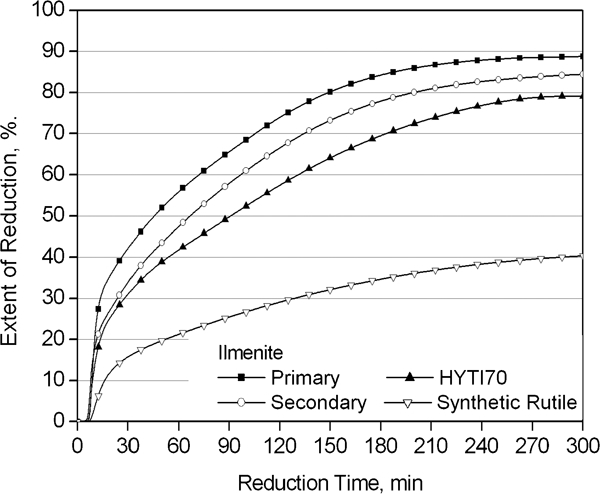
Figure 7 summarises the extent of reduction of ilmenites and synthetic rutile in hydrogen in isothermal experiments at 1000–1300°C after 300 min reaction. This figure also includes data for primary ilmenite from the literature (Dewan et al., 2010). Extent of reduction decreased from the primary ilmenite to secondary ilmenite, and further to HYTI70 concentrate. Extent of reduction of synthetic rutile was lower than that of ilmenites, particularly at 1000 and 1100°C.
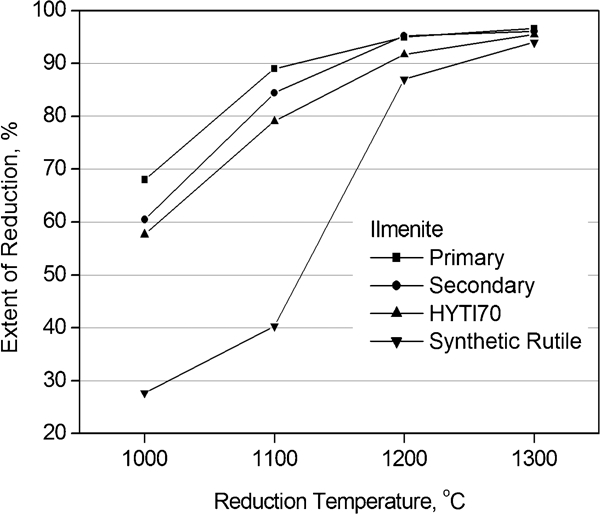
Extent of reduction of ilmenite concentrates and synthetic rutile in hydrogen after 300 min reduction
When reduction was in an inert gas (Figs. 4b and 6), the difference in reduction rates for ilmenite concentrates was much smaller. Especially, at the later stage of the reduction when titanium oxides were converted to titanium oxycarbide, the CO evolution rates for ilmenite concentrates of different grades were very close; the reduction rate was higher for synthetic rutile than for ilmenites.
X-ray diffraction spectra of ilmenite concentrates and synthetic rutile reduced for 300 min in hydrogen at 1100°C and in argon at 1200°C are presented in Figs. 8 and 9 respectively. Conversion of ilmenite concentrates in hydrogen to metallic iron and TiOxCy at 1100°C was close to completion after 300 min reaction. Traces of Ti2O3 were also detected in the reduced samples. Conversion of titania in synthetic rutile to TiOxCy was not complete and a significant amount of Ti2O3 was detected in the reduced sample (Fig. 8). X-ray diffraction analysis of samples reduced in argon at 1200°C revealed metallic iron, TiOxCy, Ti2O3, Ti3O5 and unreacted graphite. The content of TiOxCy in the reduced primary ilmenite was very low; it increased with increasing grade of ilmenite concentrates, and became significant in reduced synthetic rutile (Fig. 9).
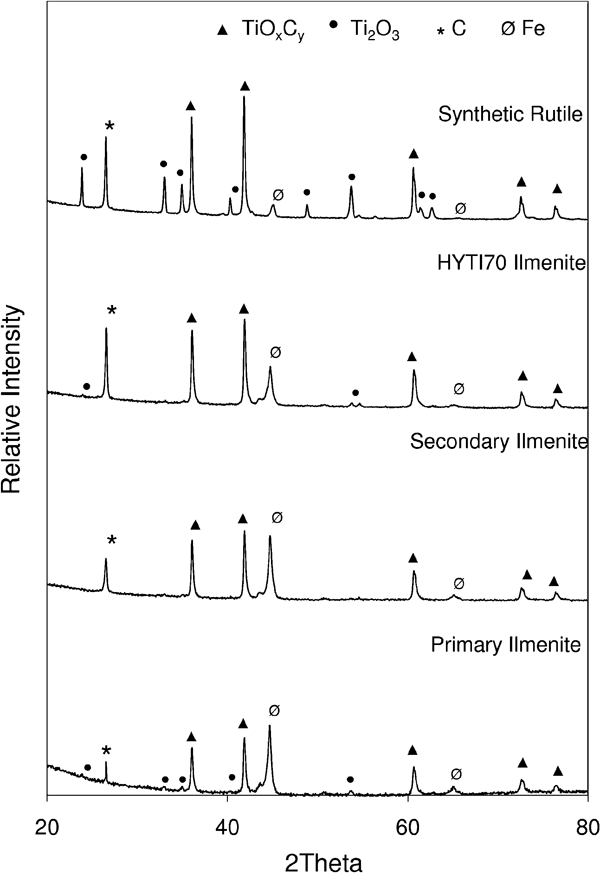
X-ray diffraction patterns of ilmenite concentrates and synthetic rutile reduced in hydrogen at 1100°C for 300 min
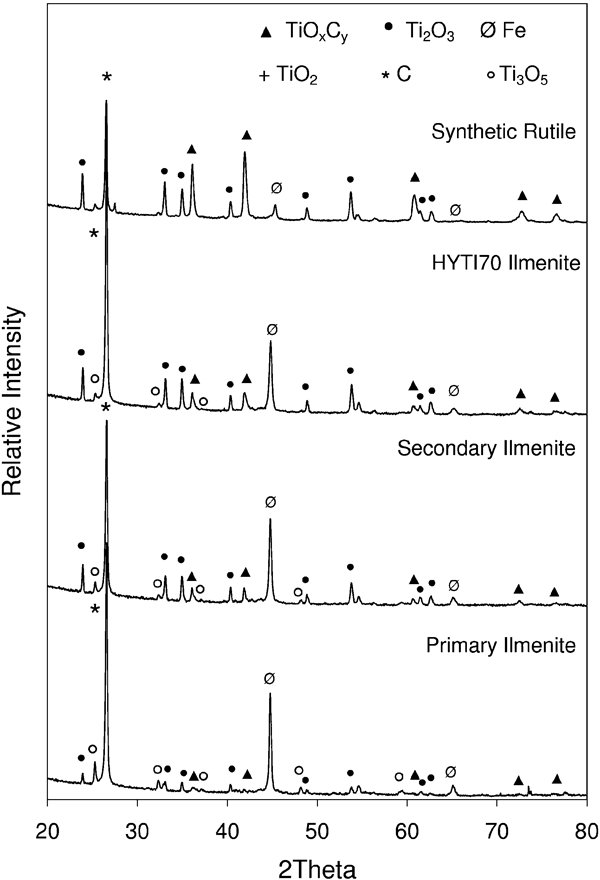
X-ray diffraction patterns of ilmenite concentrates and synthetic rutile reduced in argon at 1200°C for 300 min
The effect of gas atmosphere on the reduction of ilmenite concentrate increased with increasing iron oxide content in the ilmenites. When ilmenite concentrates were reduced in hydrogen, the reduction rate was very fast at the earlier stage because of iron oxide reduction to metallic state. Hydrogen also reduced titania to titanium suboxides. These reactions accelerated conversion of Ti2O3 to TiOxCy.
In argon, reduction of iron oxides to metallic iron and titania to titanium suboxides was relatively slow with no significant difference for different ilmenite grades. Moreover, it was slightly slower for the lower grade, i.e. primary ilmenite, and was the fastest for synthetic rutile. The mechanism of the effect of iron content on the conversion rate of titania to titanium oxycarbide requires further examination.
Conclusion
Ilmenite concentrates of different grades and synthetic rutile were reduced by carbon isothermally at 1000–1300°C in different gas atmospheres. The major findings are summarised as follows.
Pseudorutile and ilmenite were the main phases in ilmenite concentrates; synthetic rutile contained titania, titanium suboxides and a small amount of residual iron.
The conversion rate of titanium suboxides to titanium oxycarbides in hydrogen decreased with increasing ilmenite concentrate grade, and was higher for ilmenites compared to synthetic rutile. The conversion rate of titania to titanium oxycarbide in an inert gas was higher for synthetic rutile than for ilmenite concentrates.
Reduction of ilmenite concentrates and synthetic rutile was faster in hydrogen and started at a lower temperature than in argon and helium. Reduction in argon and helium had a similar rate and extent.
Footnotes
Acknowledgements
This research was supported under Australian Research Council's Linkage Projects Funding Scheme (project no. LP0455085). Professor Ostrovski is the recipient of Australian Research Council Professorial Fellowship (project no. DP0771059). Primary ilmenite concentrate was supplied by Iluka Resources Ltd (Perth, WA, Australia).