Abstract
Iron and steel slag (ferrous slags) are a potential heat/energy source. The currently wasted heat of liquid slag during solidification in the range between more than 1600 and 1000°C should be used to generate hot air, steam or electricity. The main challenge is to solidify the liquid ferrous slag to achieve a good quality product while recovering the heat. The authors describe both the historical failures and the latest research efforts of the FEhS-Institute to recover heat from blast furnace (BF) slag as well as from steel slags.
Introduction
Key driving forces in the steelmaking industry today include major efforts to reduce energy costs and emissions while ensuring maximum reuse of otherwise wasted energy. The iron and steel slags, which besides the off-gas represents a huge energy loss, have therefore, become a major focus of investigations. Finding a method of heat recovery would not only lower production costs, but also reduce the CO2 footprint in the steel production chain. Worldwide, each year approx. 400m t of BF slag and approx. 350m t of steel slags [basic-oxygen-furnace (BOF) and electric-arc-furnace (EAF) slag] are produced. The different slags are usually processed into a suitable byproduct, but until now no attempt has been made to utilise the associated heat energy, which amounts to approx. 1–2 GJ of energy per ton of slag. For example, this means for a flow of 60 t blast furnace (BF) slag per hour, the possibility of a recovery was more than 20 MWthermal or 6 MWelectrical.
The current state-of-the-art practice to solidify molten slags is to rapidly cool it in granulation plants using large volumes of water (McDonald 2012 ), slowly cool it in slag pits eventually with small amounts of cooling water or to dip the complete slag pot in water basins to cool down the hot slag. In all cases, the slag has direct water contact and no heat recovery is possible. Today, after conventional solidification and processing, all ferrous slags from different metallurgical processes are widely used in different fields of applications, e.g. in the building industry. The use of byproducts in the iron and steelmaking industry is not new. Early in the beginning of metal production, the use of slags as a source for earthworks was also reported. With the extension of the iron and steel production the amount of slags has been increasing and the driving forces to utilise such materials are becoming more important. In the recent past, the availability of natural raw materials decreased and their costs increased, which exerted additional pressure on aspects such as better recycling and quality of industrial byproducts. Utilisation of remaining byproducts in high quality applications is an important focus of the steel industry. The slag production processes and the properties of the byproducts itself have to be stable in the future to ensure their sustainable use. The treatment and alternative solidification of liquid slag can lead to interesting new aspects, e.g. heat recovery, and new properties of the newly formed products that guarantee their use in the future (Drissen, Ehrenberg, Kühn, and Mudersbach 2009 ).
Promotion of environmental protection is a declared goal of the European Union and part of its policy. One aspect of the environmental protection policy is the conservation of raw material resources. Nowadays, the use of ferrous slags in the cement industry or for road construction is the state-of-the-art. There is a long tradition of using especially ferrous slag as cement constituent or as artificial aggregates. The use of BF slag in road-building and other applications has been documented for about 150 years (N. N. 1868 ). By contrast, the marketing of steel slag for a long time was mainly focused on its utilisation as a fertiliser, disregarding its use within the steelworks as a source for lime and iron. In recent decades, its use as a building material has gained significance. One important task of the FEhS-Institute is now to develop methods for dry solidification with heat recovery of ferrous slag without putting this long-time experience in slag utilisation at risk for the new technique.
Blast furnace slag
Owing to good technical properties and in addition today to the necessity to reduce CO2 emissions in cement, making the partial substitution of cement clinker with granulated BF slag has become an established procedure worldwide practiced for decades. Because of its latent-hydraulic property, water granulated BF slag has been employed as a cement constituent and as a concrete addition for more than 100 years. Two-thirds of all the steel manufactured worldwide come from BF/BOF converter-route (Ehrenberg 2010 ). In Europe, each year approx. 30m t of BF slag are produced (20% air cooled crystalline slag and 80% water granulated glassy slag), two-thirds of the complete amount of BF slag in Europe are used in the cement industry.
The conventional water granulation process has to ensure that the complete stream of slag is dispersed into fine particles and also that it is rapidly cooled to below the transformation temperature (approx. 840°C) (Ehrenberg 2010 ). This cooling leads to such a quick increase in slag viscosity that the formation of a crystalline structure is prevented and a glass is formed. In order to produce conventional water granulated BF slag, the liquid slag is either fed into a slag pot, in which it is then transported to a centrally located granulation plant, or it is directly fed via a runner to a granulation plant beside the BF. Owing to the fact that liquid BF slag has a low thermal conductivity, it tends to form a shell and top crust already in the tapping gutter and especially in the slag pots, which hinders the granulation process and reduces the yield. A heat loss of only 50 K can already have a negative effect on the granulation properties and on the reactivity of the product. For these reasons, a nearby water granulation system is usually preferred next to the furnace. However, space problems sometimes make it difficult to implement the granulation close to the BF, especially when new granulation devices are installed in old BF works.
Nowadays, the most commonly used method is wet granulation with dispersion and quenching of the liquid BF slag in a large excess of water (ratio of water to slag = 6–10/1) (Ehrenberg 2010 ). This involves feeding the slag through one or more water jets and into a granulating spout or a granulating tank, so that it is dispersed into fine particles and rapidly cooled to below the transformation temperature before onwards conveying. Modern granulation plants have to handle very large slag input quantities (up to 12 t min−1) that are supplied discontinuously. Finally, the conventional wet granulation process produces a mixture of granular slag <5 mm and a lot of water. The wet slag is first dewatered in drums, screw conveyors or gravel beds and subsequently stored in silos or outdoor storage facilities. The slag is supplied to cement factories after dewatering, however, it still contains a certain amount of residual moisture depending on the period of dewatering, because of its particle size distribution and its more or less distinct porous structure. The residual moisture content is normally between 6 and 15 wt-%. In the case of older plants or certain slag characteristics, the residual moisture content may even be considerably higher (>20 wt-%). An energy-intensive, and therefore, costly drying process is then needed before or during the grinding to reduce the moisture to below 1 wt-%. On the other hand, the storage of residually moist granulated BF slag causes noticeable consolidation even after just 6 months, so it has to be fed to a crushing device before further processing. Wet granulated BF slag is used worldwide as a cementitious material, which has technical, ecological and economical advantages. Therefore, each alternative cooling technology for liquid BF slag must guarantee material properties comparable to those of wet granulated slag. Besides the chemical composition and the fineness, the glass content is the main relevant parameter for the latent hydraulic property of rapidly cooled BF slag. Also the physical properties (bulk and apparent density, porosity, grading curve) and the grindability are important with respect to handling, storing and grinding of the slag. As alternative for conventional water granulated BF slag production, several proposals for liquid slag dry granulation have been made in the past to avoid the high energy demand for drying before grinding.
Former developments for blast furnace slag
In the past, various alternative granulation and solidification processes for liquid BF slag, e.g. granulating mill (Ehrenberg 2010 ), air granulation (Jantzen 1910 ) or pelletising (Kunicki 1977 ) were developed and applied, but are no longer industrially employed. Quite often, the fundamental problem of wet granulation was the reason for their disappearance, because of its considerable energy requirement. If the residual moisture content is, for example, 10 wt-%, the energy requirement is approx. 130 kW h of drying energy per ton, which mainly has to be covered by thermal energy (e.g. hot gas generator) and makes up around 40% of the primary energy input for the granulated BF production. ‘Efforts have therefore been made over a long period of time to develop a granulation process that produces cool, dry blast furnace slag without impairing its hydraulic properties’ (Jantzen 1910 ). Attempts have also been made to atomise the BF slag to save on grinding energy, which makes up approx. 45% of the primary energy input for ground granulated BF slag production. Moreover, there have been numerous attempts to utilise the heat content of the liquid BF slag before and during granulation, but none of these methods has so far led to the realisation of a feasible plant.
No newly developed alternative granulation process has yet become available on an industrial scale (Kühn, Mudersbach, and Wolf 2005 ; Woltron, Potocan, and Tessadri 2005 .; N. N. 2005 ). The principal reasons for this are the inability to achieve adequate cooling rates (therefore inadequate glass content), transformation of heat to energy (e.g. hot gas generation), unsatisfying slag morphology (high content of fibres or compact granules that are difficult to grind) or the process has hitherto only been demonstrated on a laboratory or technical scale and does not appear suitable for large input rates of slag in operational practice.
In the beginning of the 1980s, a Swedish group of researchers and companies developed another method for slag solidification, which was combined with heat recovery named MEROTEC (Tiberg 1981 ). This method involves mechanical destruction of liquid slag film by impingement with solid slag particles that have previously been solidified and sieved in the same device with simultaneous heat recovery in a fluidised bed, which produces dry and dust-free granules. The size of the granules produced by this method, when slag has normal viscosity, is around 6 mm. The mixture of these solid slag particles is injected into a fluidised bed where the heat is absorbed by air. The typical solidified slag temperature in this fluidised bed is between 500 and 800°C, which is controlled mainly by the ratio of recycled solid slag particles to liquid slag at the beginning. The hot air can then be used for generation of steam of up to 300°C and can also be used for drying, preheating or combustion purposes by heat exchangers (Esfahani and Barati 2012 ). By this process, approx. 65% of the slag energy input is recovered as high pressure steam and approx. 10% from the process fluidising air (Broadbent and Warner 1985 ). But the problem is the insufficient glass content of the product due to the low cooling rate in consequence of the low heat conductivity of the cold slag being used for solidifying the liquid slag.
Solid-state cooling of blast furnace slag
Paul Wurth has approached the topic of dry slag granulation (DSG) with a radically different principle: the mixing method, not with solid slag but with steel spheres (Kappes 2011 ). The aim is to achieve fast cooling and thus full vitrification of the BF slag while creating a product with highest possible energy content.
The basic principle of the mixing method is rather simple: liquid slag is poured into moulds of slag caster and steel spheres are added evenly over the whole cross-surface of the liquid slag in the mould and penetrate into the liquid slag. The steel spheres act as cooling elements (compare with MEROTEC: steel has a much higher thermal conductivity than slag) by providing a large contact surface for heat transfer, thus enabling rapid cooling of the BF slag. Within 30 s, heat transfer between the slag and the steel spheres has taken place, resulting in a solidified cake consisting of vitrified BF slag and enclosed steel spheres at a temperature between 600 and 800°C, Fig. 1.
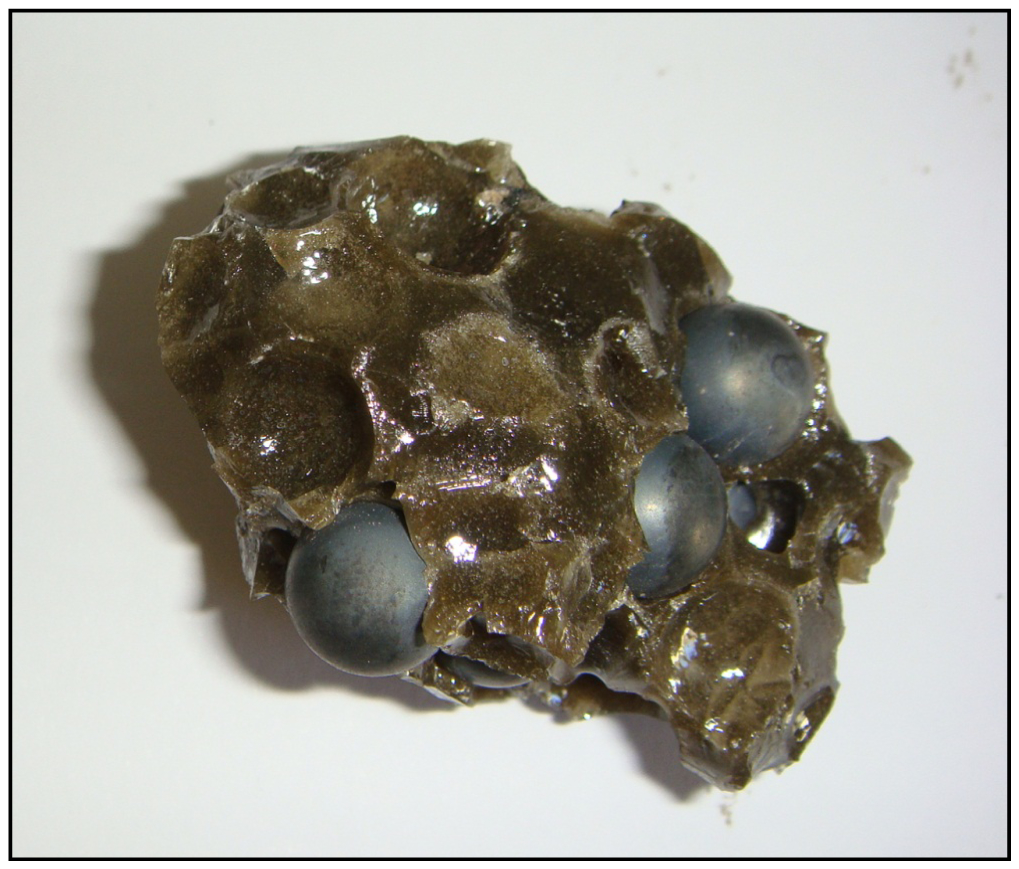
Fully vitrified blast furnace (BF) slag after cooling with Paul Wurth system
The cake breaks easily apart upon impact on a rigid surface and the resulting loose mixture is then conveyed into a refractory lined heat exchanger where it is cooled down to ambient temperature by a counter current air flow. Owing to the counter current arrangement, high air temperatures of up to 500–700°C may be achieved, satisfying the requirements for further use in subsequent ‘Rankine’ processes for instance. Finally, the steel spheres are extracted from the cooled mixture by means of magnetic separators and fed back to the slag caster. Paul Wurth sees one of the main advantages of its dry slag solidification technology compared to the other DSG projects in its robustness in dealing with differing slag mass flows and slag physical properties; an assumption that has been proven in the different test series (Kappes 2011 ). Just like state-of-the-art wet granulation systems, the Paul Wurth system offers the certainty of being able to treat the liquid slag at the rate at which it is flowing out of the furnace.
Paul Wurth has undertaken extensive research on this topic. Following first preliminary tests in 2009, different test facilities have been erected to establish the validity of the process on slags with different chemical and physical properties.
A large scale testing series was conducted in 2011/2012 on the premises of the Dillinger Hütte steelworks (ROGESA) where slag flowrates of more than 500 kg min−1 were treated successfully, as shown in Fig. 2 (left side). The cooling speeds of the BF slag were measured and the shape and size of the cooling bodies could be optimised. In a further test, 700 kg of slag was solidified in a mould with the same size as the moulds to be installed in the upcoming pilot plant, giving good results and the confidence that high slag mass flows may be mastered without problems. High vitrification rates comparable to those of wet granulation systems were achieved in the tests with BF slag. Moreover, a test rig for the counter current heat exchanger was built and filled with solidified slag from the test series in Dillingen in order to determine the necessary parameters for a full scale heat exchanger.
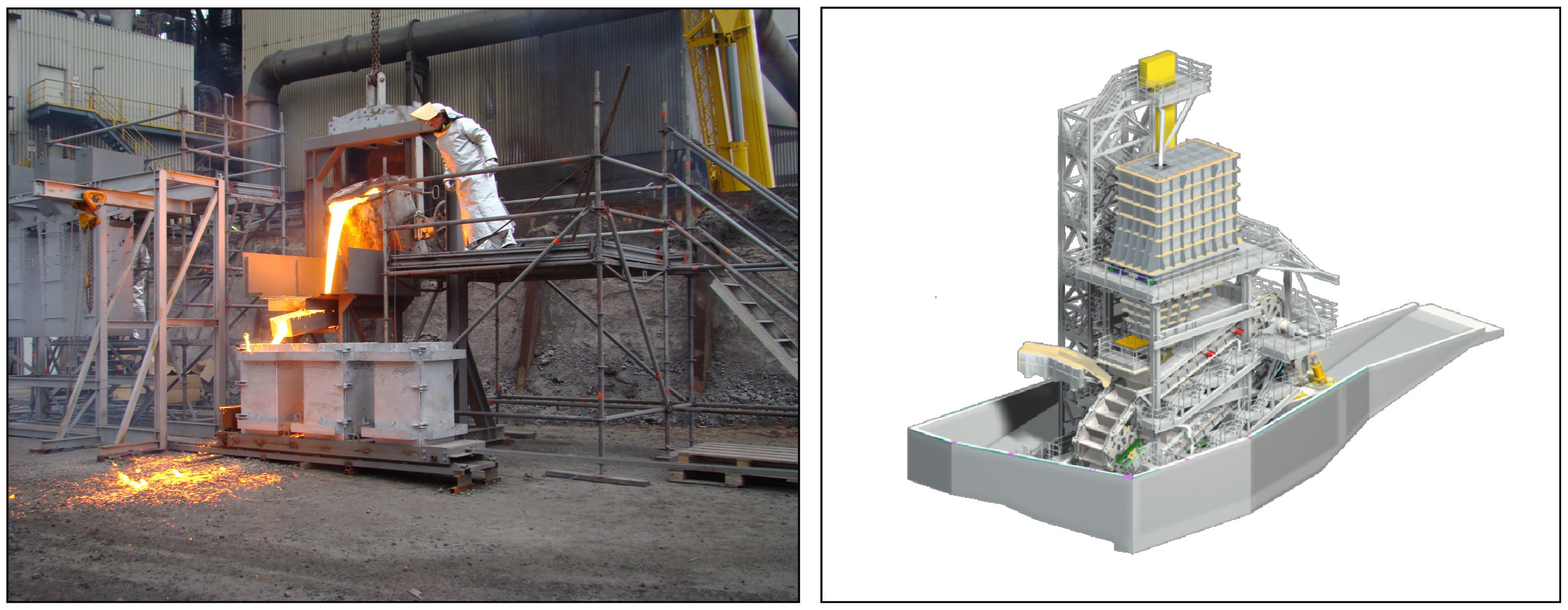
Large scale test series at Dillinger Hütte (ROGESA) and slag caster with steel sphere storage hopper for the pilot plant, which has been built at Dillinger Hütte BF No. 4 with a capacity of up to 68 t min−1 of liquid blast furnace (BF) slag
In 2012, several comparative studies were made by FEhS-Institute for Paul Wurth comparing wet and dry cooled slag coming from the same BF. The test results show that the cementitious properties of dry cooled BF slag (Paul Wurth system) are equivalent to the properties of conventionally produced granulated BF slag, when chemical composition, glass content and fineness (grain size distribution of the ground slag) are comparable. This is also true for the strength development and the workability (water demand, setting time, spread) of slag cements with 50 and 75 wt-% BF slag. Other effects of using the dry cooling procedure were not observed.
The glass content and the physical properties of the dry cooled BF slag (Paul Wurth system) depend on the slag cooling conditions: intensive cooling conditions and a short handling time result in sufficiently high glass contents ≥90 Vol.-%, which form the basis for above-mentioned cement properties.
The dry cooled slag (Paul Wurth system) has to be broken before further handling. The broken particles have grain sizes up to 50 mm, which can be ground in most of the grinding systems that are installed in the cement industry. With respect to the physical properties of the broken dry cooled BF slag, high bulk and apparent densities as well as very low grain porosity can be observed. This might be an advantage with respect to storing and transport aspects. Lab scale tests of FEhS-Institute in a Zeisel grinding tester made with samples precrushed to a grain size ≤5 mm (higher grain sizes are not testable) did not show relevant differences considering the grinding energy demand in comparison with conventional wet granulated BF slag, which is usually ≤3 mm. It is well known that the material porosity mainly influences the first step of the comminution, but not the energy intensive finish grinding to cement fineness (Ehrenberg 2003 ). First semi-technical grinding tests with samples precrushed ≤8 mm indicate a slightly higher grinding resistance and abrasion compared to wet granulated slag with identical slag chemistry. However, the results are still within the range of conventional wet cooled BF slag and the economic impact is some orders of magnitude below the economic benefit generated by the dry solidification.
Following the favourable outcome of the large scale testing series, Paul Wurth found an agreement with ROGESA for implementation of a full scale dry slag solidification pilot plant to be built on Dillinger Hütte number 4 BF, Fig. 2 (right side). The pilot plant is to be built in two phases. The first phase features the slag caster with steel sphere injection, which is dimensioned to handle up to 8 t min−1 of liquid BF slag. In this first phase, one tap per day will be treated by the pilot plant in order to optimise the slag handling and steel sphere injection. Energy recovery is not yet included in this first phase. Site works have been finished and the first operational test has been done in January 2014. The second phase of the pilot plant is then to be engineered upon successful optimisation of the solidification process. In this second phase, the existing slag caster is to be augmented with a hot conveyor, a counter current heat exchanger for generation of hot air and a steam generator. The completed plant will be able to take all the slag from the BF (up to 2000 t day−1) for continuously producing superheated steam by buffering hot material in between taps. It will thus be the first industrial scale reference for this technique.
Rotating cup granulation of blast furnace slag
Already 20 years ago a prototype rotary dry granulation system for BF slag had shown that a valuable highly glassy slag can be produced with applications similar to those of slag produced by conventional wet granulation systems. ‘Dry slag processing minimises emissions and offers the potential for useful heat recovery’ (Macauley 1996 ). The DSG process was a Davy International development based on an original British Steel patent and developed with the co-operation of former British Steel at their Redcar BF with an average of 3 t min−1 of molten slag at 1550°C.
Currently, Siemens AG and Siemens VA, as successor company of Davy, and the FEhS-Institute are developing further the rotating cup technique in laboratory scale (FEhS) and following in a technical centre [Montan University Leoben (MUL)] to produce a dry glassy material guaranteeing a high latent hydraulicity for cement production and to recover the heat from the liquid slag during solidification (McDonald 2012 ).
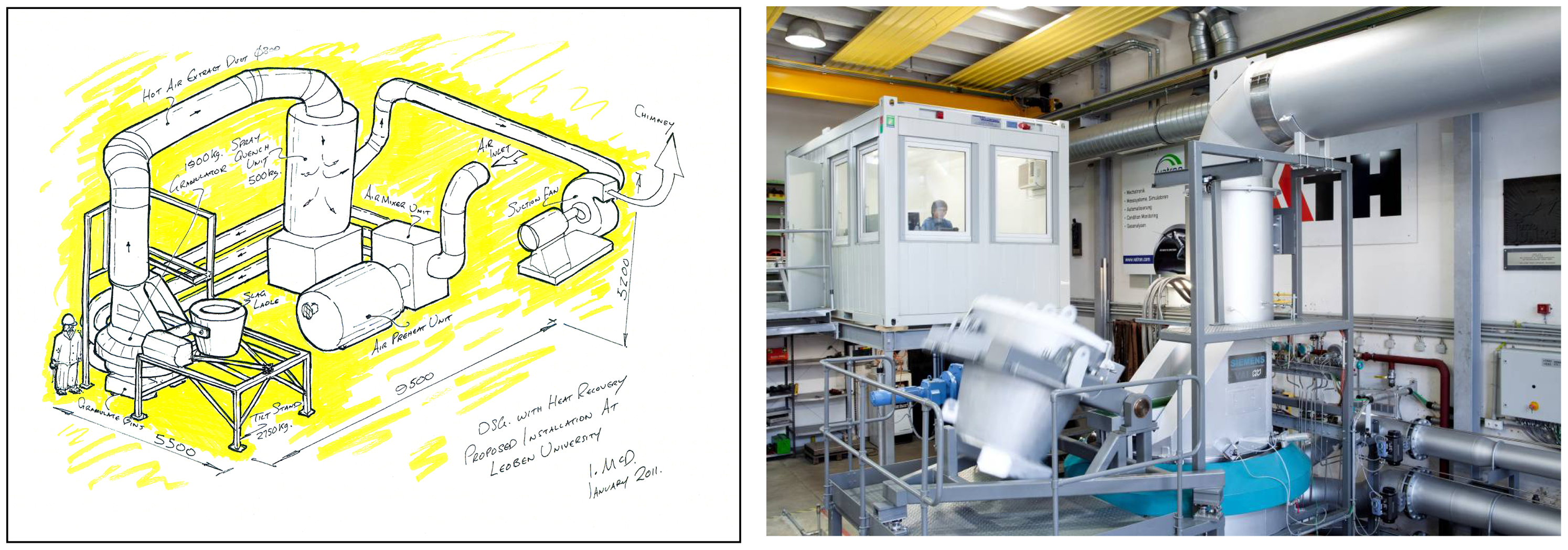
Technical test plant of dry slag granulation (DSG)-rotating cup at Montan University Leoben (MUL)
During the DSG by rotating cup the liquid slag stream falls vertically onto a rotating cup. As the slag is thrown from the lip of the cup, it forms droplets which cool as they travel to the water-jacketed wall of the granulator enclosure. After contact with the wall, the now-partly-solidified particles fall into a fluidised bed where they are further cooled by air without agglomeration and recrystallisation before discharge. DSG is an energy-efficient, non-polluting way of producing an easily handleable, glassy, granulate. The advantages of the DSG process are
Quality of slag product is suitable for cement manufacturing
No direct contact of water and slag, therefore, dry product saves energy costs
Significantly lower sulphur emissions
No steam emissions
Potentially lower capital, operating and maintenance costs
Highly efficient utilisation of the remnant heat of the molten BF slag for other applications, therefore, a significant decrease of the CO2 footprint.
FEhS-Institute and Siemens AG in conjunction with steelworks in Germany and Austria have embarked on a research project funded by the German Federal Ministry of Economics and Technology to develop this reliable dry-quenching technology for molten BF slag with the rotating cup technique. The research project pursues two main objectives, the otherwise wasted high-temperature heat shall be recovered for other applications, such as the preheating of combustion air or the generation of steam to drive a power turbine, and simultaneously a granulated slag shall be produced with a latent hydraulic property. The research team intends to identify the optimum operating conditions of a dry granulation process with heat recovery, and to determine the process boundary conditions that would apply at a full-sized industrial pilot plant.
The research is carried out on a laboratory- and technical-scale rig using remelted BF slag under reproducible conditions. The tammann furnace at the FEhS-Institute allows remelting the BF slag without any change of chemical composition and physical properties. The flash reactor housed in the university research centre of Leoben provides the remelted BF slag at a predetermined temperature for the technical tests. The big advantage of laboratory tests is the maximum flexibility concerning the variation of boundary conditions. In sum more than 100 granulation tests with the rotating cup so far have been carried out in the laboratory of FEhS-Institute. The influence of specific varied slag composition and temperature (therefore also viscosity and surface tension), rotating cup design, material, temperature or speed and other parameters has been investigated. This number of different laboratory tests would be too expensive if they have to be carried out in technical scale or operational practise. The results of these laboratory tests at FEhS-Institute served as the basis for theoretical calculations at Siemens AG and for the technical tests at MUL.
With the technical tests in Leoben, the optimum mixture of slag and airflow can then be determined. Repeatable trials would not be possible if the rotating cup device was placed in an operational BF slag stream, as the slag from a BF is variable in quantity and quality, mean flowrate, chemical composition and temperature. The findings from all these laboratory and technical trials will be used to calibrate a 3-D computational fluid dynamics (CFD) model of the pilot granulator. The model will then be scaled up to replicate a full-sized industrial plant in the future. Combined research project with laboratory and technical trials and one pilot research project will allow researchers to demonstrate not only that the process will work but that it will also function in an industrial plant.
Another important aspect that is considered is whether the granulate produced by the rotating cup process (Fig. 4) is suitable for use in the cement industry. The test results indicate that the cementitious properties of dry cooled BF (Siemens system) are as good as conventional granulate.
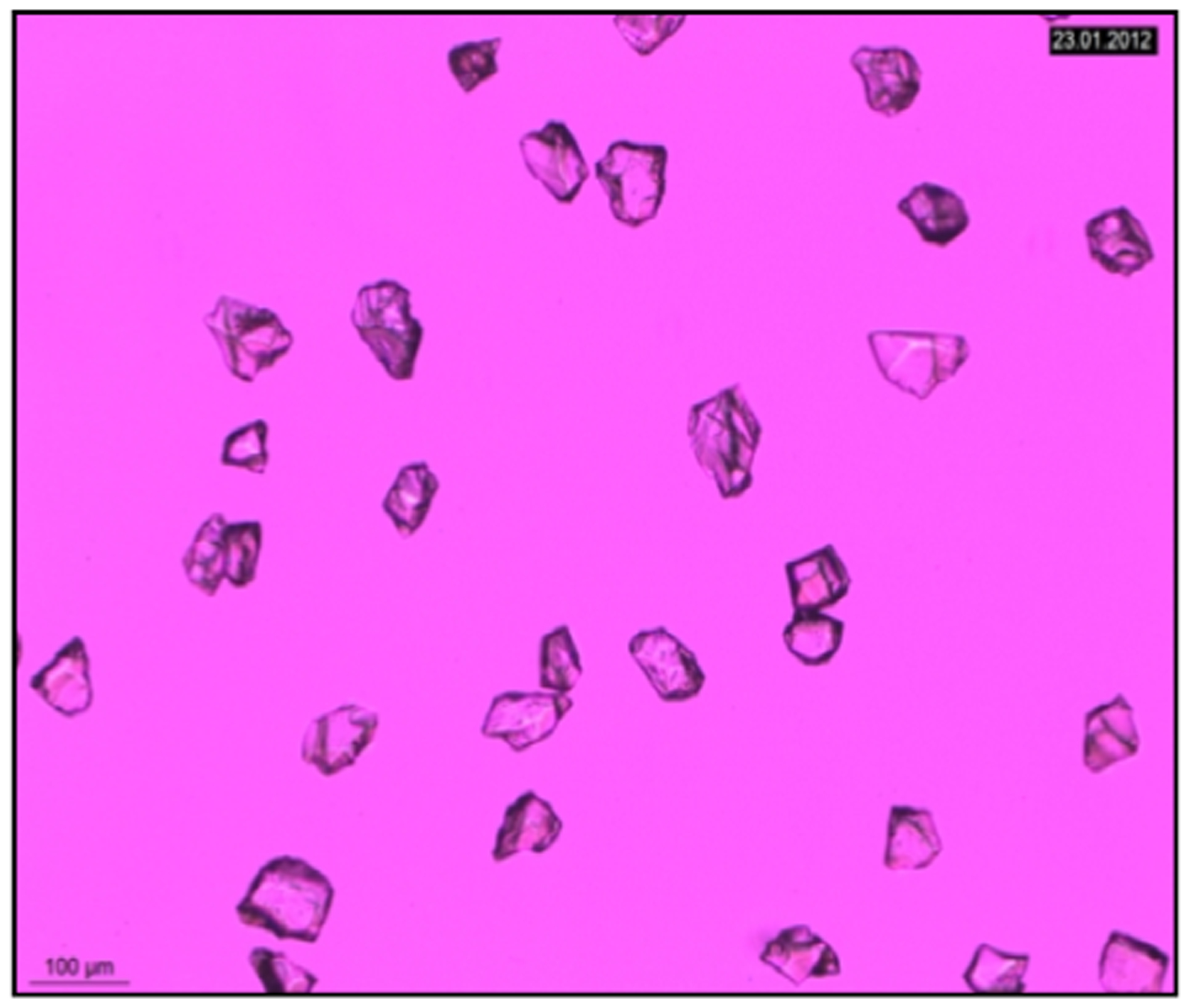
Fully vitrified blast furnace (BF) slag after cooling with Siemens system (broken particles being used to measure the glass content)
Steel slags
Today, there is vast experience in the use of steel slags (BOF slag and EAF slag: in sum more than 20m t in Europe) in road construction (more than 55%) all over Europe. The raw material is processed like natural stones in processing plants by crushing and screening to produce aggregates and mixtures conforming to national and European standards.
The main objective of processing is to ensure that the produced aggregates and mixtures will conform to the requirements given in these standards. These mainly include the grain size distribution, strength, shape and resistance to weathering. Concerning steel slag, the European aggregate standards cover separate requirements due to volume stability. A test method for the volume stability – steam test – and other requirements of steel slag aggregates are included in these standards. The volume stability of steel slag is mainly influenced by the free lime and free MgO content. Comprehensive investigations during the past 30 years have led to specific production and processing methods to ensure appropriate volume stability in accordance to application purpose (Motz and Geiseler 2000 ).
For example, today one of the dominant application fields for processed steel slag is the use as aggregates in unbound mixtures for road bases and sub-bases as well as asphaltic or concrete mixtures. Steel slag has proven particularly valuable for these applications because of their rough surface, caused by the porosity, which results in a high stability of all slag mixtures. In addition, unbound slag mixtures are almost not affected by variation in the water content. This brings substantial advantages in comparison with other aggregates particularly during the construction period.
The use of slag is not only related to the application in road construction as unbound mixture. During the past 30 years the properties of steel slag have been investigated intensively, especially in comparison to established natural aggregates. It has been proven that steel slag can be processed to aggregates of high quality, comparable with the best natural aggregates. The technical properties are comparable or even better than those of natural aggregates. Especially, the high strength level determined by impact value or crushing value and the rough surface texture are superior in slag. Both properties together with a high skid resistance measured by the polished stone value (PSV) and a binder adhesion over 90% qualify steel slag as aggregate for heavy traffic road layers – especially, for asphaltic surface layers. Therefore, during the past 30 years in Europe many roads have been built using steel slag, particularly, as an aggregate for bituminous bound mixtures. Test results confirm good quality of the slag. The asphaltic layers have been resistant to deformation, rutting and polishing over long-term periods. Steel slag aggregates are ideally suited to build stone mastic asphalt and thin surface layers. The same goes for porous asphalt layers that will be built more often than in the past to reduce noise and surface spray (Jones 2000 ).
High particle density of over 3·5 Mg m−3 qualifies steel slag in addition as a construction material for hydraulic engineering purposes. In Germany and in the Netherlands, about 400 000 t year−1 are used as armourstone aggregates (approx. 3% in Europe). Armourstones are coarse aggregates used for protection and regulation in hydraulic engineering to guarantee stability of structures not only in rivers and waterways, but also in coastal and offshore areas (Merkel 2000 ). The properties of armourstone aggregates made of steel slag have been investigated intensively. The resistance against abrasion and the volume stability were tested in comparison to natural rock materials. Through tests in a rotary drum it was shown that slag has better resistance to abrasion than basalt and diabase.
However, in Germany the introduction of the EU Groundwater Protection Directive (Directive 2006/118/EC 2006) will have considerable consequences on the future use of steel slag and other artificial aggregates. Currently, the German Ministry for the Environment (2012) is drafting a new regulation for the utilisation of alternative materials as building materials. This regulation is based on the concept of no-adverse-effect-level for environmentally relevant components, which are specified in the Groundwater Protection Directive (German Ministry for the Environment 2012 ). In consequence, traditional fields of use of the steel slag will not be permitted in the future. That may mean prohibition of the use of slag in areas like unbound layers (sub-base), unbound use in rural roads and earthworks and unbound use under block-pavement. That is why the steel industry reminds the administration that all these activities should consider the existing experience in slag use and the intention to save natural resources and on the other hand, the motivation to find alternative cooling processes and new applications for steel slags (Mudersbach et al. 2012 ).
Former developments for steel slags
Not only techniques for alternative solidification of BF slag had been developed in the last 100 years, also different methods for dry solidification of steel slags with and without heat recovery had been engineered in laboratory, technical and pilot scale in the past. The targets of these research projects were sometimes better logistics, decrease of free lime or reduction of water consumption, but heat recovery was not considered in every case. Besides the problems of all ferrous slag with high viscosity or low thermal conductivity, the steel slags, both BOF slag and EAF slag, have the additional problem of parallel tapping of liquid crude steel. This liquid crude steel has a complete different behaviour as liquid slag and interferes with the solidification process of slag or even destroys the device. Tapping of liquid slag in a slag pit remains the easiest method, all other alternatives have higher costs for handling and maintenance.
Nevertheless, researchers worldwide and especially in Asia developed some remarkable processes for dry solidification of steel slag. For example, the air blast ‘granulation’ was first established by Mitsubishi approx. 40 years ago (Anko et al. 1985 ; Ono et al. 1983 ). Also the FEhS-Institute together with German steelworks tried to improve this technique with the aim of decreasing free lime in the produced BOF slag (Merkel et al. 2006 ). The resulting material after laboratory and pilot trials showed an increased oxidation degree and unsuitable technical properties, and the project was not extended to investigate heat recovery. On principle in this method, the liquid untreated or pre-treated (adjustment of viscosity and surface tension) steel slag is poured to a gutter under which the air nozzle(s) is (are) located or tapped directly before the air nozzle(s). Sometimes other nozzles are also used to avoid scattering upward and sideways or a small quantity of water is injected for better cooling or for the decrease of oxidation. Through this process, molten steel slag is atomised to granules below 5 mm, but the slag and air flowrate, position of gutter and nozzles or the nozzle(s) size have to be carefully controlled to meet the requirements and to produce a suitable size distribution of the slag granules. Then the flying slag granules could be collected in a closed system and introduced into a heat exchanger. However, a slag granule product without acceptable environmental behaviour or technical properties is not suitable for the market and does not justify a process for heat recovery.
A lot of proposals deal with systems working with drums and/or conveyors, high speed drums to sputter the liquid slag or low speed drums to cool down the liquid slag in direct contact with the surface of the drum. Laboratory trials at FEhS-Institute have demonstrated that the surface temperature of the drum has to be adjusted to a suitable temperature by indirect cooling. But a surface temperature that is too low means only a short contact time of slag and drum, but too high surface temperature results in insufficient cooling rate. The system is very sensitive, also concerning the supply of the liquid slag. In a tundish or in the chamber between the drums, the liquid slag could be partly solidified and could lead to problems with the device. One current example of a slag drum cooling system is the so-called ‘Slag-Rec’ for dry ‘granulation’ of EAF slag, which transforms the liquid slag into flat solid pieces by controlling the cooling cycle. Italian ASO Siderurgica in co-operation with researchers from the University of Brescia had developed this technique. It consists of two contra-rotating horizontal cylinders (drums), which cooled the slag to a solidified granulate while it is laminated. ‘The whole cooling cycle of the EAF slag is then taken under control by means of additional air or air/water sprinkles impinging on the falling slag and during its transfer’ (Roberti et al. 2012 ). Then water cooled cylinders should rapidly cool down the liquid slag. The disadvantage of this system is the limitation of the maximum grain size of the slag product by the width of the gap between the drums. On the other hand the width of the gap is limited by the solidification conditions. A comparable pilot facility has been developed from JFE. It consists also of twin drum rollers (rotating away from each other) indirectly cooled with a coolant flowing inside the drums, but the drums are made of copper and the molten slag is transferred outwards of the drums (Akashi et al. 2008 ). In addition, JFE investigated in the laboratory a combination of a cooling drum and conveyor with a heat recovery ratio of more than 30% (Ta et al. 2012).
Indirect water cooling of steel slag
In contrast to the so-called DSG, research project for BF slag in the research project DEWEOS – also funded by the German federal ministry of economics and technology – the partners Georgsmarienhütte GmbH, KME Germany AG & Co. KG and FEhS-Institute investigate in detail the boundary conditions not only to produce a crystalline, coarse material for high quality applications in the construction industry from the liquid steel slag (in a first step from EAF slag) but also combined with heat recovery.
The proposed process concept Definierte Erstarrung mit Wärmerückgewinnung aus Elektroofenschlacke (DEWEOS) for dry – but indirect water cooled – solidification of liquid EAF slag consists of three different steps, which have to be developed:
thin layers of liquid slag have to be obtained on an indirect water cooled chute made of copper for ideal suitable contact of the liquid slag to the copper for best feasible heat transfer,
sufficient liquid slag has to be achieved for tapping the EAF slag from this chute into a copper mould for a second heat recovery and a well-defined solidification to a high quality product (Fig. 5) and
the demand for the quality of the slag product has to be reached and simultaneously regained energy on a high level.
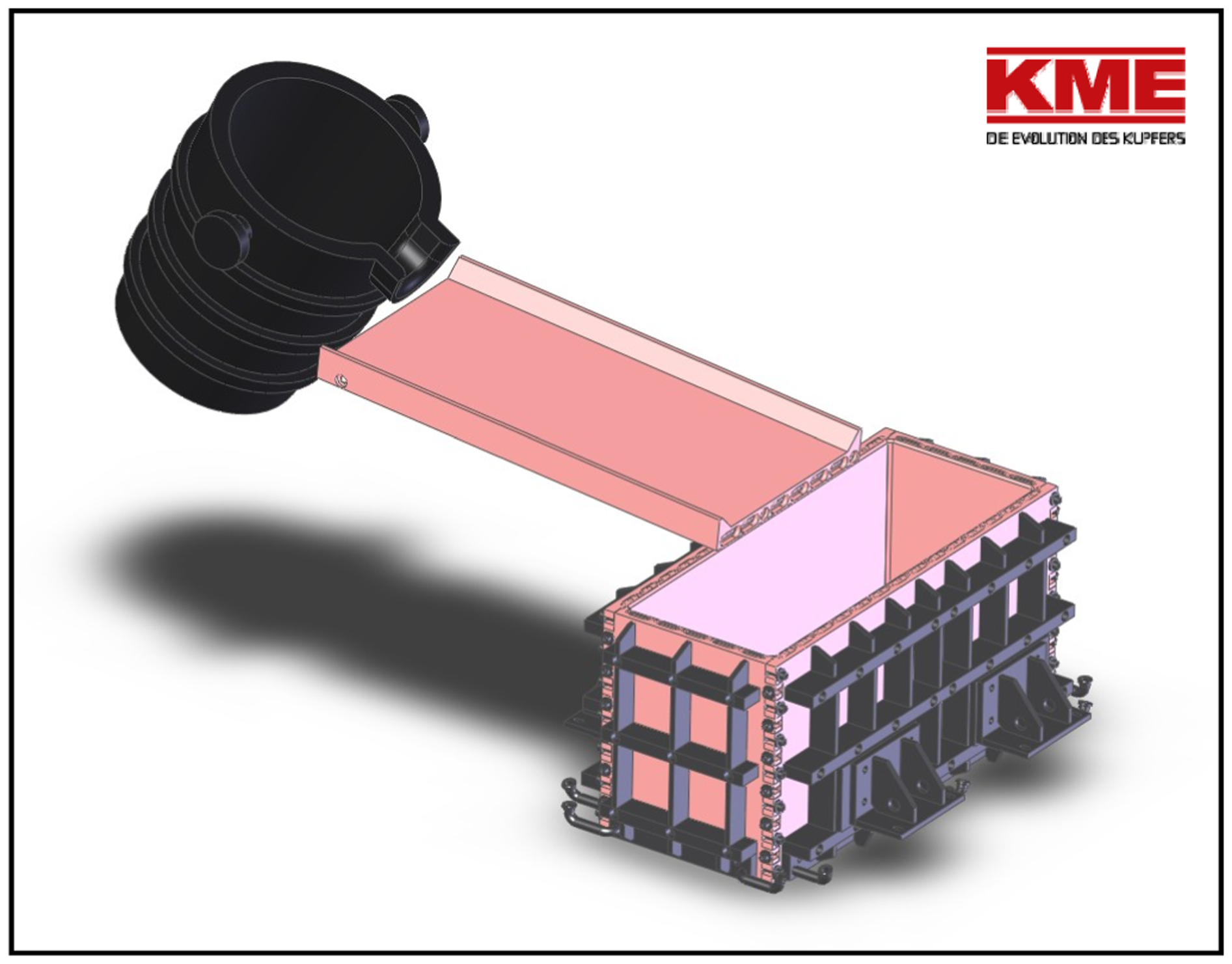
Scheme of slag solidification by ‘Definierte Erstarrung mit Wärmerückgewinnung aus Elektroofenschlacke’ (DEWEOS) technique
To fulfil all these objectives, the liquid EAF slag has to be tapped directly from the furnace to the chute without any heat and viscosity loss. In addition, the device should not be destroyed by the possible coming liquid crude steel at the end of tapping EAF slag and should have low maintenance costs and high availability.
Modification of the liquid EAF slag could be advantageous first for viscosity of the liquid slag, second for well-defined solidification and third for the technical properties of the slag product for subsequent applications. FEhS-Institute has a long-standing experience in conditioning liquid iron and steel slags to optimise the chemical and mineralogical composition of the solidified slag in laboratory scale and in operational practice. Georgsmarienhütte GmbH and KME Germany have the know-how to implement these laboratory results in the engineering and construction of a prototype.
The advantage of this new solidification method DEWEOS for steel slags is the avoidance of direct contact between slag and water, and therefore, no problems with the new planned regulation (German Ministry for the Environment 2012 ).
Rotating cup-drum granulation of steel slag
Nowadays, POSCO, Korea, targets to be the ‘Global Green Growth Leader’, therefore, they created a program ‘Green People’ among others with efforts for energy efficiency and energy recovery. That is the reason for comprehensive research in dry slag solidification with heat recovery in the most recent past.
The first step was to carry out laboratory tests at the Research Institute of Industrial Science & Technology (RIST) in Pohang for the granulation and heat recovery not only of molten BF slag but also of liquid steel slag by using the so-called rotating cup-drum atomiser. In this system, the molten slag is first poured in the centre of the disk and atomised by centrifugal force (comparable to the DSG rotating cup for BF slag). Then the particles are dispersed into drums, which are located parallel to the disc, from there the granulated slag particles are moved into a fluidised bed heat exchanger and rapidly cooled by upstream blowing air. The experimental setup consists of four parts: solid slag feeder, slag melting burner, rotating disk-drum atomiser and heat recovery chamber. The laboratory tests were successfully carried out with approx. 5 kg min−1, 90% of the granulated steelmaking slag particles were smaller than 3 mm. The particle size of granulated steel slag was smaller than that of BF slag with the same rotating conditions. This phenomenon is because of the viscosity of steel slag, which is much lower (FeOn is a liquefier) than that of BF slag at the same temperature. Generally, viscosity is known to be a very important parameter in granulation/pelletising/atomising processes. The range of heat recovery temperature was from 250 to 420°C and the heat recovery ratio was between 40 and 60% during the laboratory tests at RIST (Park and Ryu 2011 ).
The second step was to transform the good results from the laboratory tests to pilot trials at POSCO with a continuous operation of more than 1 h and a slag capacity of 2 t h−1 or 35 kg min−1. The rotating cup had a diameter of 300 mm and a speed of 1800 RPM, the drums had the same diameter but only a speed of 700 RPM and the cooling chamber size was 1·1×1·1 m. More than 50% of the otherwise wasted slag heat has been recovered (Park 2012 ).
Conclusion
Solidification of large quantities of slag, independent of the metallurgical process (BF, BOF, EAF, ladle furnace), in the absence of any particular system to accelerate the cooling rate, takes a long time, usually more than 24 h depending on the slag quantity and the size of the surface. Operational trials of the FEhS-Institute have shown after 3 days solidification in a 15 m3 slag pot a remaining liquid core in the middle after tilting.
To accelerate the solidification of ferrous slag, it is usually cooled with water, typical examples are the water granulation of BF slag or the spraying of water on the steel slag in a pit. All conventional techniques to cool down the liquid slag with direct water contact are not suitable for an efficient heat recovery. In the recent past, a lot of research work has been done to develop systems of dry solidification, but not every method incorporated heat recovery. In order for a new technique to be converted to operational practice it has to generate a quality slag product comparable to the quality of the product generated from conventional solidification.
For example, in the case of BF slag, there is a conflict between the technique for heat recovery, which needs sufficient time, and the need for rapid cooling to create a suitable glass content. In the past, some ambitious projects failed despite successful heat recovery because of a low glass content of, e.g. ≤80%. On the other hand some research projects resulted in sufficient slag quality but the heat recovery ratio was below 50%.
In the case of steel slag, an additional problem makes the handling, storage, distribution and solidification of liquid slag difficult. It is the risk of parallel tapping of liquid crude steel, which can destroy the devices. In addition to this problem all liquid ferrous slag has unfavourable physical properties like high viscosity and low thermal conductivity, which makes the handling difficult and could reduce the yield.
The FEhS-Institute is currently developing two completely different techniques for dry solidification with heat recovery with the funding of the German ministry of Economics and Technology, one for the BF slag (DSG) and one for the steel slag (DEWEOS). Not only is the technique completely different but also the generated products. The liquid BF slag should be converted to a fine-grained material for the cement industry with sufficient glass content and cementitious properties. The liquid steel slag should be solidified to a coarse-grained material with high strength and good environmental behaviour.
In the DSG-project, the liquid BF slag is granulated by a rotating cup to a suitable particle size. As the hot particles cannot stick to the water-jacketed wall, a fluidised bed prevents the agglomeration of the slag. The products of this ‘Dry Granulator’ are glassy BF slag and hot air. If the hot air is passed through a heat exchanger, it can be used, e.g. to preheat combustion air or to produce process steam or electricity.
In contrast, the products of the DEWEOS-system are a crystalline steel slag and high pressure steam. Especially for the dry solidification of steel slag a basic and resistant system is needed. The FEhS-Institute develops a combination of a chute and mould both made of alloyed copper with indirect water cooling.
These projects show that the slag production processes and the byproducts themselves can be improved in the future to ensure their sustainable use. The treatment and alternative solidification of liquid ferrous slag can lead to interesting new aspects, e.g. heat recovery, and also new properties of the newly formed products and thus guarantee their use in the future.
Acknowledgement
The authors would like to thank the Projektträger Jülich, Department Energy Technologies (PTJ-ERG) and the German Federal Ministry of Economics and Technology (BMWi) for the financial support for the research project for BF slag ‘DSG’ (project No. 03ET1052 A-B) and for the research project for steel slag ‘DEWEOS’ (project No. 03ET1141 A-C).