







Abstract
Post-blast nitrogen oxide fumes (NOx) from coal overburden blasting may occur in a variety of geological conditions with the use of bulk ammonium nitrate (AN) based explosive products. In Australia, government directives to stop blasting activities because of NOx fume incidences have led to costly delays in production, which has directly impacted on the ability of operations to meet production targets. Nitrogen oxide and nitrogen dioxide can cause serious health risks to persons exposed, with excessive levels of NO2 also affecting the viability of flora and root systems. A number of research projects in Australia have focussed on minimising the risk of NOx fumes by better understanding the behaviour of current explosive products. The main outcomes from these projects have been the development and implementation of guidelines or administrative controls to minimise the NOx fume risk and reduce the potential exposure to the hazard. This paper describes preliminary work to provide a step-change solution that has the potential to completely eliminate the NOx hazard. A novel formulation that substitutes the use of AN with oxygenated water (OW) as the main oxidising agent has been developed and recently patented as part of a PhD program at The University of Queensland. The detonation properties of mixtures made with OW and fuel were studied. Unconfined velocities of detonation (VODs) tests of OW sensitised mixtures were conducted. It was found that for reliable detonation to occur, a minimum level of sensitisation must be accomplished. Adequately sensitised mixtures, with a water content of 47% by weight, were able to detonate at velocities in the range of 2600–5000 m s−1, with a critical diameter of the order of 23 mm. The recorded detonation velocities were clearly dependent on the mixture density and charge diameter, similar to the non-ideal behaviour of AN-based commercial explosives.
Introduction
Post-blast fumes are toxic nitrogen oxides, a direct product of the detonation process, which can be easily identified as the resultant yellow to orange to purple post-blast clouds. These nitrogen oxides are produced by the burning reaction and then the secondary oxidation of NO to NO2 as the blast fumes mix with air.
With a growing number of coal mines operating in close proximity to towns, there is significant concern over the detrimental effects of post-blast fumes on the surrounding communities. Exposure to these toxic gases can have a range of negative effects on the health and safety of exposed persons and on the surrounding environment.
A comprehensive review of the literature in conjunction with an industry survey conducted and published by Onederra et al. (2012) indicated that fume incidences are associated with a complex set of factors that are very difficult to isolate in an operational environment. From laboratory scale tests, there is a general agreement that the conditions leading to fumes are associated with fuel deficiencies or incomplete detonation of the explosive product. From a practical perspective, this can be due to one or a combination of factors such as explosive product characteristics; confinement effects; ground conditions; inappropriate blast design parameters; explosive product selection; poor on-bench loading practices and potential contamination of explosive product in the blasthole. Mining companies, explosives suppliers and government regulatory agencies have worked together to address the NOx issue by implementing procedures, code of practices and guidance (Rio Tinto Coal, 2011; AEISG, 2011; Queensland Explosives Inspectorate (Australia), 2011).
It should be noted that AN-based commercial explosives will always produce NOx, either in low amounts (when explosives products properly detonate) or large amounts (as per the above reasons). It is worth noting that since the introduction of AN to make Ammonium Nitrate and Fuel Oil (ANFO) or make variants such as emulsions or water gels, research and development of new explosive formulations for civil and mining applications has been virtually at a stand-still. Explosive suppliers have established AN as their key commodity and investment into new AN plants has been steadily increasing, particularly in countries where mineral extraction activity has been the strongest (e.g. South America, Australia and Africa).
In order to eliminate the NOx hazard, oxygenated water (H2O2, hydrogen peroxide, OW), a chemical that has the potential to replace the AN and thus the nitrogen in the chemical structure of current explosives, is used. In addition to the elimination of NOx fumes, other future benefits may include the elimination of the potential risk of discharge of AN into groundwater systems, particularly when mining below the water table, and potential improvements in overall community safety associated with manufacturing and transportation processes.
Oxygenated water based explosives
Oxygenated water is a powerful oxidant that is produced in large amounts around the world. The production as of 2010 was of 2 600 000 t (SOLVAY Presentation, 2010). The main applications of OW are in the paper mill industry, detergents, synthesis, propellants, etc. Because of its oxidising behaviour, OW could also be used as an explosive. In fact, the first evidence that mixtures of OW and fuel were able to detonate dates back to 1947 (Shanley, 1948). This work proved that mixtures of OW/glycerol/water in different ratios were able to detonate. Results from this work are shown in the ternary diagram in Fig. 1.
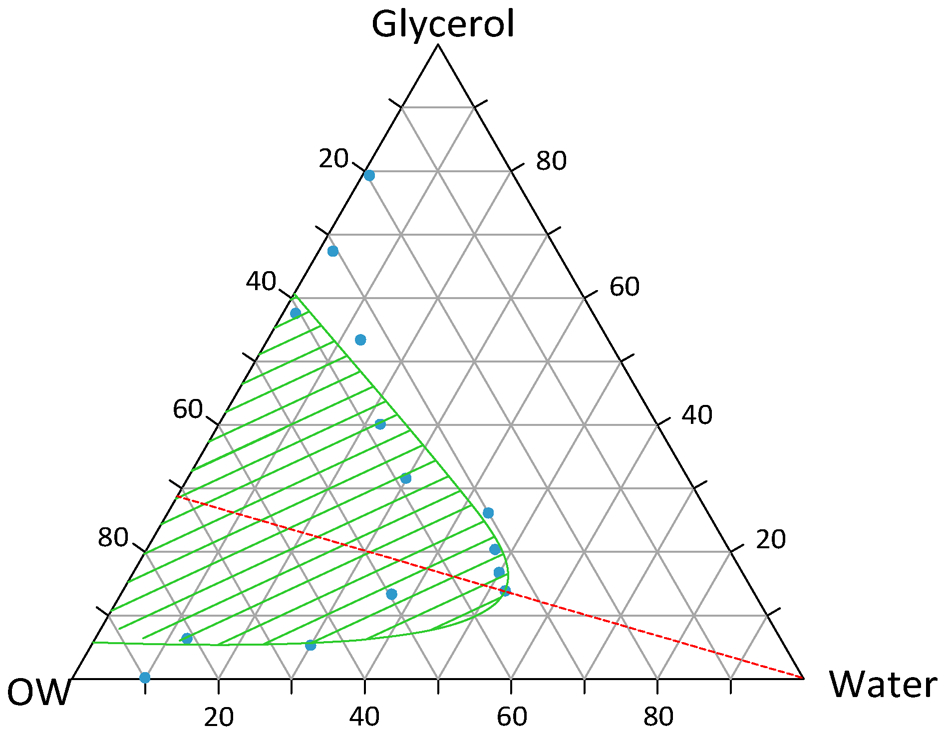
Ternary diagram for the detonation range of oxygenated water (OW)/glycerol/water mixtures
The green dashed area displays the zone at which the OW/glycerol/water mixtures would detonate. The red line shows the stoichiometric ratio for OW/glycerol mixtures (i.e. oxygen balance = 0). Although Shanley's document does not provide velocity of detonation (VOD) data, the mixtures detonated when loaded in tubes that offered strong confinement (i.e. lead tubes).
A few years later, a patent using OW/fuel-based mixtures was granted to Baker (Baker and Groves, 1962) In this patent, a range of different combustibles were used (e.g. wood products, hulls and metals). Mixtures of OW and gel-forming materials (corn starch) were disclosed. The mixtures were sensitive to detonator No. 6, however no VOD measurements were disclosed.
In 1990, mixtures of OW and resins were patented as packaged explosives (Bouillet et al., 1990). Examples provided in the patent showed that some of the mixtures detonated at velocities above 6000 m s−1 in 33 mm diameter PVC tubes. Finally, a team at Los Alamos National Laboratory showed that OW, at high concentrations, was able to detonate without fuel and without sensitisation (Sheffield et al., 2010). The above work indicated that both concentrated OW and OW/fuel-based mixtures had the potential to detonate under strong or weak confinement. Despite this, there has been little evidence of work conducted that evaluates the detonation properties of relatively low concentration of OW and fuel based mixtures together with void sensitisation techniques. These techniques incorporate voids (hot spots) into the bulk of the explosive and have been widely used in mining explosives to increase their sensitivity and change their detonation characteristics.
The mechanisms that support initiation to detonation with void sensitisation are well known (Bowden et al., 1947). Nowadays, this technique is commonly used with AN-based blasting agents. Voids can be provided by gas bubbles injection (Ferguson and Hopler, 1966), glass or plastic microballoons and/or perlite (Mullay, 1978), materials that have air entrapped (Edamura et al., 1985) or gas bubbles generated in the bulk of explosives (Alfred, 1968; Edmonds et al., 1981).
The combined knowledge of OW as an oxidiser and void sensitisation helped drive the idea that there was a potential to develop an OW/fuel-based mixture that could be prepared with low concentrations of OW solution (Araos, 2013). A new formulation was subsequently developed and the following research questions were posed:
Would the mixture detonate under no confinement and low OW content?
Would the mixture detonate at different densities?
If the mixtures detonate, how would they behave (as a non-ideal or ideal explosive)?
This paper discusses the preliminary results of research conducted to answer the above questions.
Preliminary analysis based on ideal detonation theory
Results of the theoretical energy content for the OW/fuel-based mixture (made with different OW strength solutions), AN emulsion (ANE) and ANFO at densities of approximately 0·80 g mL−1 are given in Table 1. The ANE example was assumed to have a 74% of AN in the total formula (i.e. prepared with AN solution 80% by weight and assuming 7% of fuel phase). The heat of formation (▵Hf°) for OW is −44·84 kCal mol−1 (Cooper, 1996).
Energetic content comparison between OW/fuel- and ammonium nitrate-based mixtures
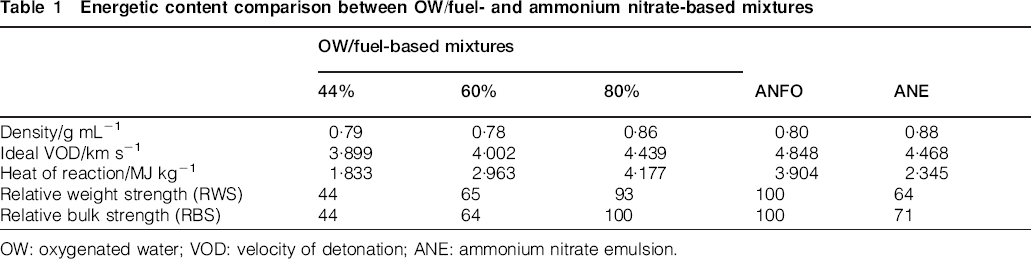
OW: oxygenated water; VOD: velocity of detonation; ANE: ammonium nitrate emulsion.
As shown, the heat of reactions of the OW/fuel-based mixture (concentrations below 80% OW by weight) is clearly lower than the one for ANFO at densities 0·80 g mL−1. However, the comparison may not be straightforward. For example, for a situation under confinement, the reaction of the OW/fuel-based mixtures will release only CO2 and H2O. Instead, AN-based explosives release CO2, H2O and N2. How this will affect the breakage performance of the product during blasting practices is difficult to anticipate at this stage of the research. In addition, traditional AN-based mining explosives have up to 20% of water by weight. In the case of OW/fuel-based explosives, the water content could be higher. This theoretical analysis raised a number of different questions which could only be answered experimentally. The first stage of experiments is discussed in the following sections.
Formulations and experimental set-up
Unconfined VOD was measured to determine if the product would detonate; and if that was the case, how the density and diameter of the charge would influence it. The density of the OW solution used was 1·18 g mL−1. According to density tables (Huckaba and Keyes, 1948), the density indicated that the total concentration of the sourced OW was in the neighbourhood of 44% w/w. OW was mixed with glycerol (fuel). Sugar, another type of fuel, was also tested to see if it was able to influence the detonation properties of the final product.
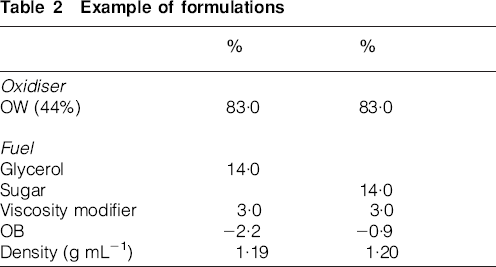
A viscosity modifier was added to the OW/fuel-based mixtures. The reason for this is that the sensitisation was achieved by using glass microballoons (GMB). The viscosity modifier keeps the GMB dispersed throughout the explosion and prevents them from ‘floating’. The sensitising agent used was GMB Q-Cel 520 (density 0·13-0·15 g mL−1). The sensitising agent was added in different amounts to target five predetermined densities (0·80, 0·90, 1·00, 1·05 and 1·12 g mL−1). It was noticed that the more GMB were incorporated, the higher the viscosity of the final product and the longer the mixing took to achieve a good homogenisation of GMB in the product. A summary of the mixtures prepared is given in Table 2.
Example of formulations
The OW/fuel-based mixtures were loaded into PVC tubes (23, 44 and 87 mm inner diameter, 1 mm wall thickness and 400 mm in length). Pipes with the explosive were loaded and fired the same day. The VOD was continuously measured using the MREL-Microtrap data acquisition system. The VOD cable was externally attached to the PVC pipe and charges were initiated with a 50 g pentolite booster. The booster was initiated with an electric detonator. Figure 2 illustrates the set-up of the one of the firing tests.
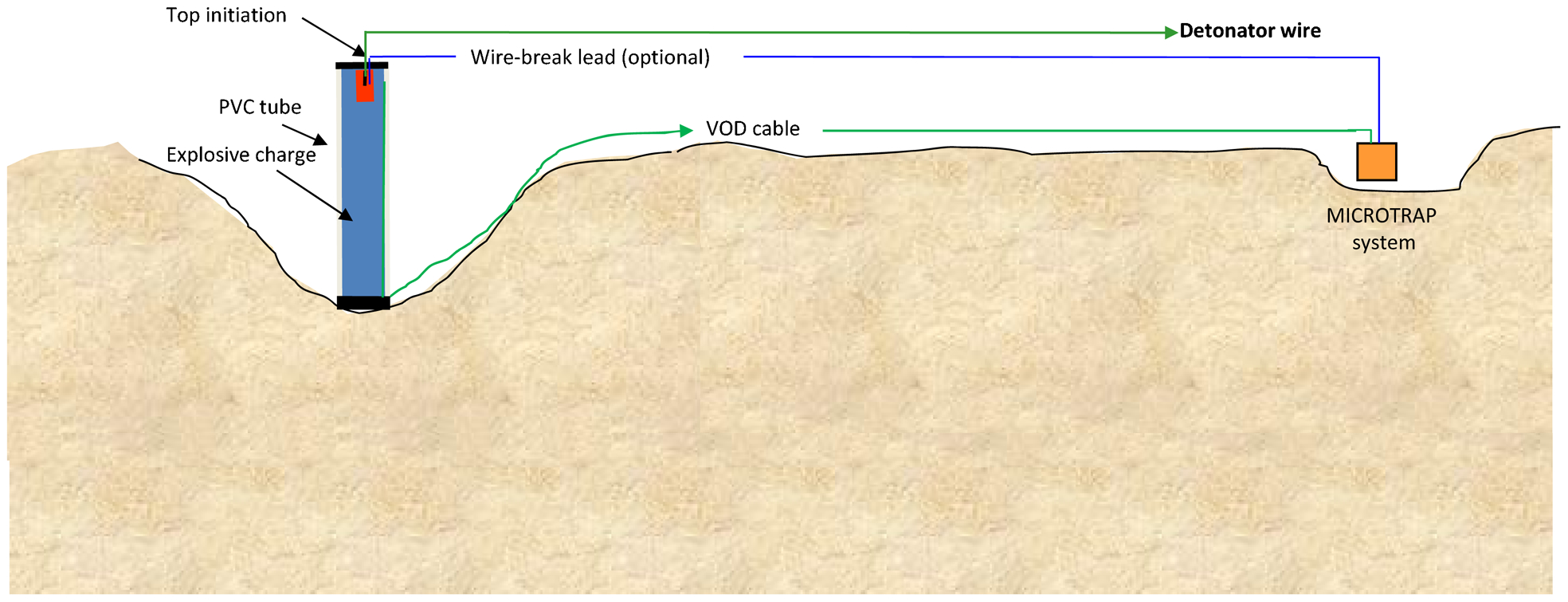
Set-up of unconfined velocity of detonation (VOD) tests
Detonation test results
The initial density (or unsensitised density) of the OW/fuel-based mixture, made with glycerol, was 1·19 g mL−1. It is worth noting that before these tests there was no literature available on sensitised OW/fuel-based mixture and therefore we tried to be cautious with the test regime. Glass microballoons were used to slightly drop the density from 1·19 to 1·12 g mL−1. Then the OW/fuel-based mixtures were tested from small to large diameters.
At density 1·12 g mL−1, the OW/fuel-based mixture did not detonate in either 23 or 44 mm diameter. The mixture, however, when tested in 87 mm, did detonate.
Figure 3 shows a sample of typical VOD trace resulting from one of the tests. As shown, the traces obtained were well defined and it was easy to identify if the explosive detonated or not. Figure 4 shows an example of an unconfined VOD test with one of the OW/fuel-based mixtures prepared.
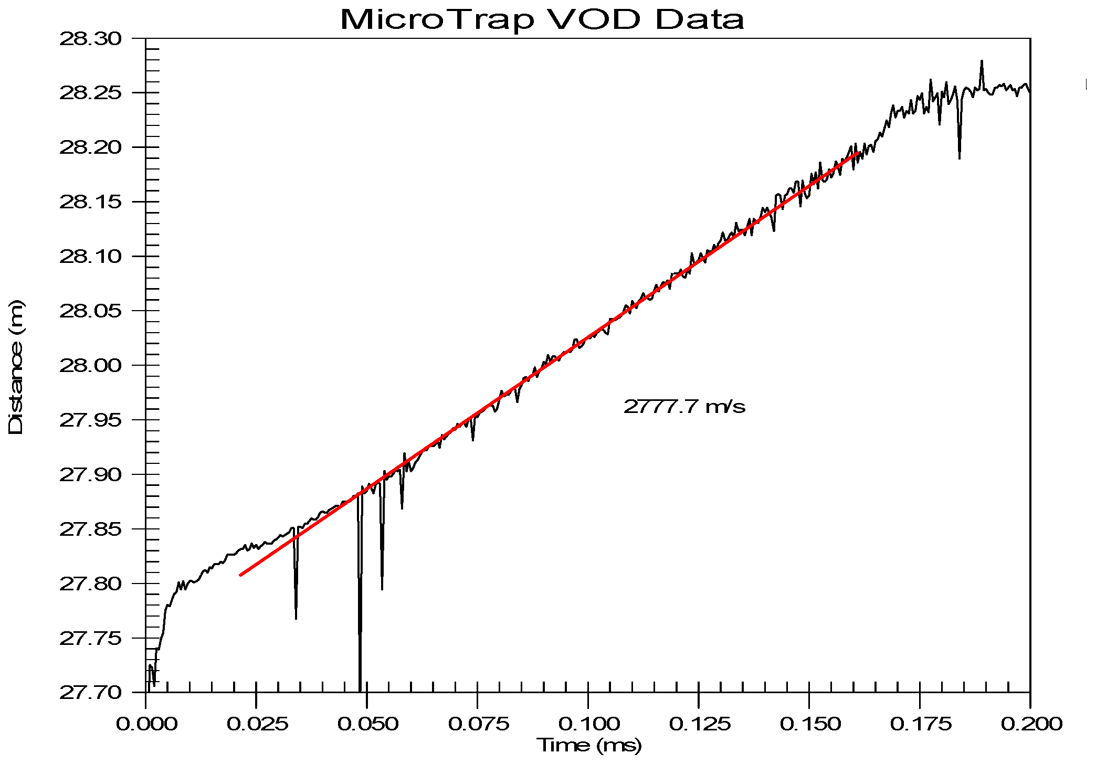
Velocity of detonation (VOD) trace for 23 mm diameter pipe at 0·79 g mL−1
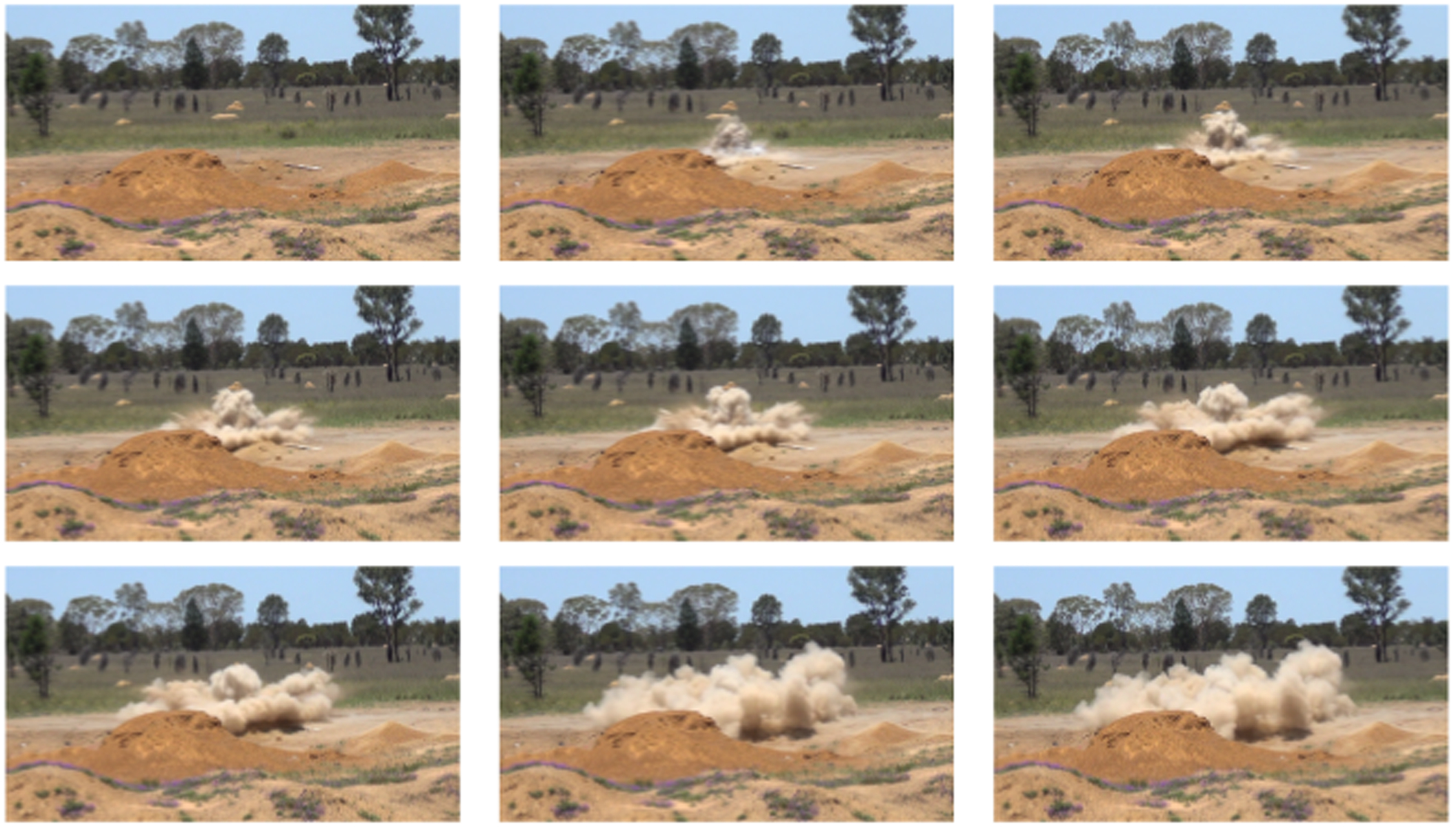
Unconfined velocity of detonation (VOD) test of oxygenated water (OW)/fuel-based mixture
A second round of tests was conducted with the OW/fuel-based mixture at density 1·04 g mL−1. At this time, the mixture detonated in 44 and 87 mm diameter and failed in 23 mm.
The mixture in 23 mm also failed to detonate when tested at density 0·98 g mL−1. However, the mixture began detonating at density 0·84 g mL−1. The mixture in diameters of 44 and 87 mm detonated at densities of 0·98 and 0·84 g mL−1, respectively.
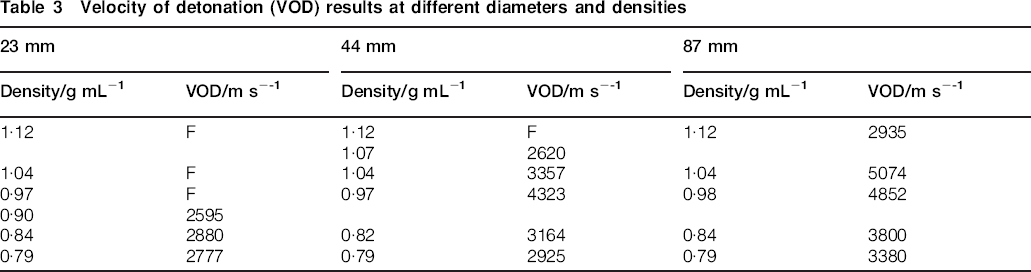
Additional charges, for 23 mm and 44 mm diameters, were prepared with the OW/fuel-based mixture. For 23 mm, a charge with a density of 0·90 g mL−-1 was made (noting that for 23 mm, the charge failed at 0·98 g mL−1 and detonated at 0·84 g mL−1). In the case of 44 mm charges, a density of 1·07 g mL−1 was prepared (at 44 mm diameter, the charge failed at 1·12 g mL−-1, but detonated at 1·04 g mL−1). The intention of this new set of tests was to find densities at which the products were able to detonate, and thus have enough data to evaluate the unconfined VOD, diameter and density relation.
Table 3 displays a summary of the results.
Velocity of detonation (VOD) results at different diameters and densities
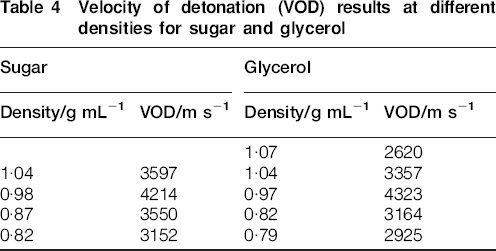
After the above tests, the OW/fuel-based mixtures made with sugar as fuel were fired. All the samples detonated in 44 mm diameter pipes. The VOD results are summarised in Table 4.
Velocity of detonation (VOD) results at different densities for sugar and glycerol
Data analysis and discussion
The initial density of the product (unsensitised) was 1·19 g mL−1. From the results of the first series of tests with sensitised product (density 1·12 g mL−1 in PVC pipes 23, 44 and 87 mm), we observed that the product needed a minimum diameter to detonate (in this case around 87 mm). The OW/fuel-based mixtures loaded and tested in smaller diameter (23 and 44 mm) did not sustain the detonation. At this stage, results were strongly indicating that the detonation of the product would depend on the diameter of the charge. Because the product did not detonate at densities 1·12 g mL−-1 and in 23 and 44 diameters, we can infer with a high degree of certainty that the unsensitised product (density 1·19 g mL−1) in those diameters will not detonate. This is also important as it was indicated that the detonation depended on the degree of void sensitisation.
When the density of the OW/fuel-based mixture was dropped by the incorporation of more GMB, to density of 1·04 g mL−1, the OW/fuel-based mixtures in 44 mm diameter began detonating. On the other hand, the mixture at 23 mm did not detonate at that density of 0·98 g mL−1 or even lower. However, by decreasing the density further, to 0·84, the mixtures loaded in 23 mm did detonate. These results confirm that the detonation properties of the OW/fuel-based mixtures would also depend on its density. This finding is described in Fig. 5. As the density moves down from 1·12 to around 0·80 g mL−1, the mixture began detonating (regardless of the diameter of the test). The VOD increased to a maximum, and then it drops at lower densities. The analysis in Fig. 5 also confirms the VOD dependence with the diameter of the charge.
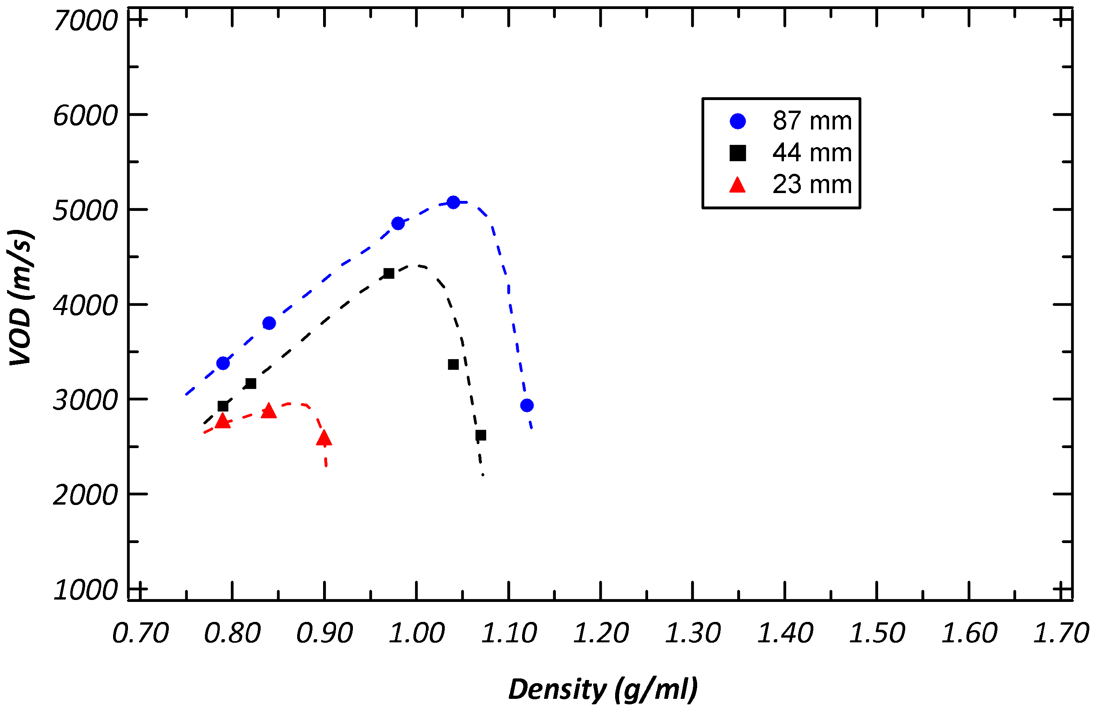
Density v. velocity of detonation (VOD) for different diameters and densities
The two above observations confirmed that the newly proposed OW/fuel-based mixtures behave as a non-ideal explosive (Price, 1966). Figure 6 shows the plot of density v. VOD for examples of non-ideal explosives (Clairmont et al., 1967; Lee et al., 1989) as well as the results obtained from this study. Note that these results are for 76·2, 77·9 and 87·0 mm diameter tubes [ammonium perchlorate (AP), ANE, and OW respectively]. Also, AP (in Clairmont's wok) was detonated using no fuel (hence it has lower overall VOD). The similarity of the curves density v. VOD for these three explosives is clear and we could infer that OW/fuel mixtures belong to the non-ideal class of explosives.
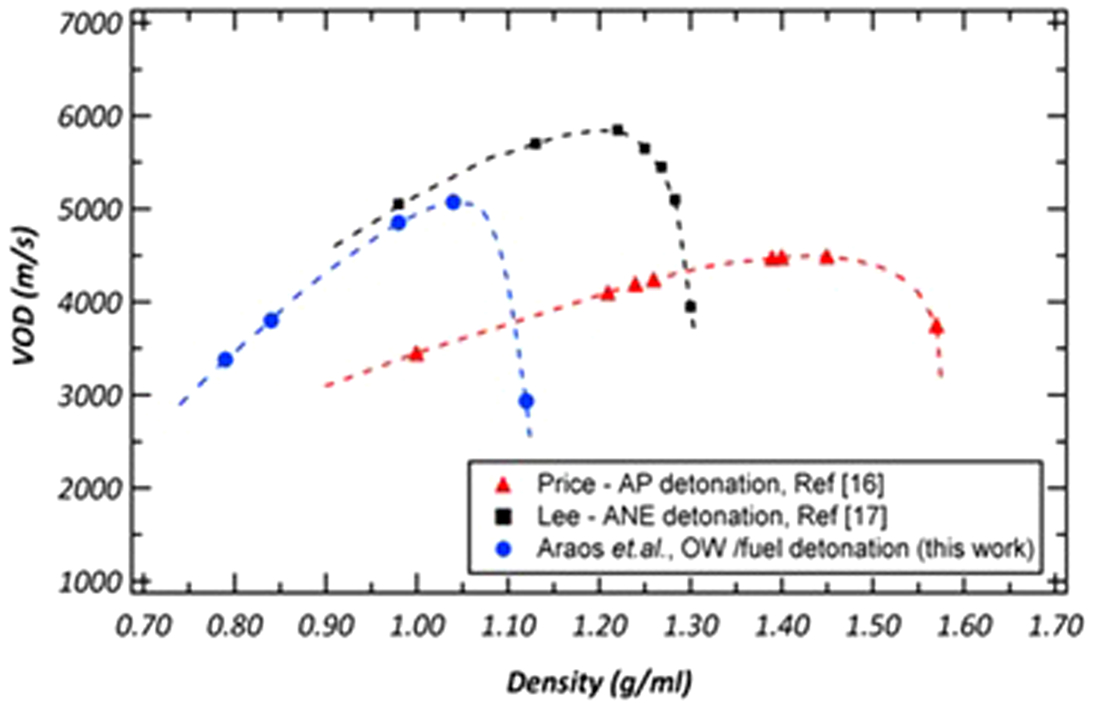
Plot of density v. velocity of detonation (VOD) for ammonium perchlorate (AP), ammonium nitrate emulsions (ANE) and oxygenated water (OW) tests
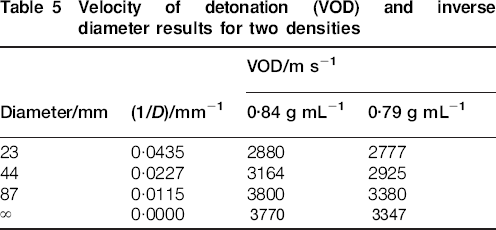
The data obtained from the tests allowed us to plot the inverse of diameter (1/D (mm−1)) v. VOD (m s−1) in order to obtain the VOD at infinite diameter, for density 0·79 and 0·84 g mL−1. Note that the values in bold in Table 5 were calculated by extrapolating the fitted line for each density data.
Velocity of detonation (VOD) and inverse diameter results for two densities
The plot in Fig. 7 shows the calculated VOD at infinite diameter. As expected the VOD depends on the charge diameter.
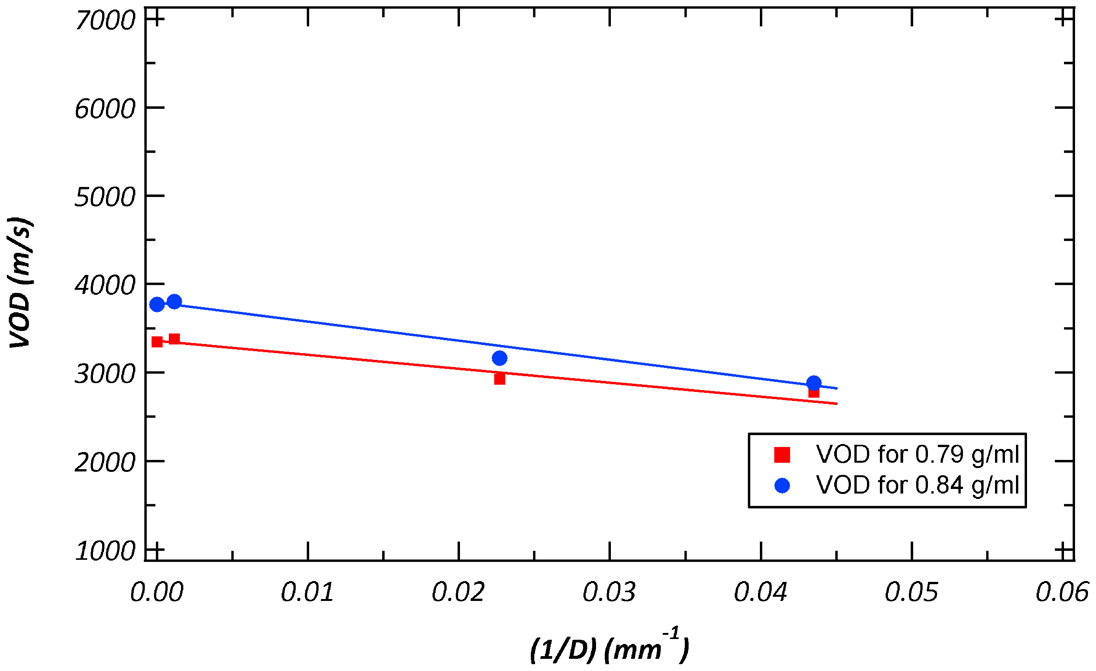
Plot of (1/diameter) v. velocity of detonation (VOD) for two densities
The relationship between VOD and charge diameter was already described by Eyring et al. (1949). At larger diameter the VOD increases and by extrapolation, the VOD at infinite diameter could be found – as we did in our case. At low diameter, usually the curve veers off the straight line as the VOD decays rapidly (right hand side of the plot). At this stage, the lack of data from our experiments does not allow us to see that part of the curve. More testing will be conducted in the future to confirm whether or not the OW/fuel-based mixtures follow that trend.
Figure 8 displays the theoretical VOD at infinite diameter for the density range between 0·67 and 1·20 g mL−1. The theoretical VOD for OW/fuel-based mixtures at different densities was calculated using ideal detonation theory.
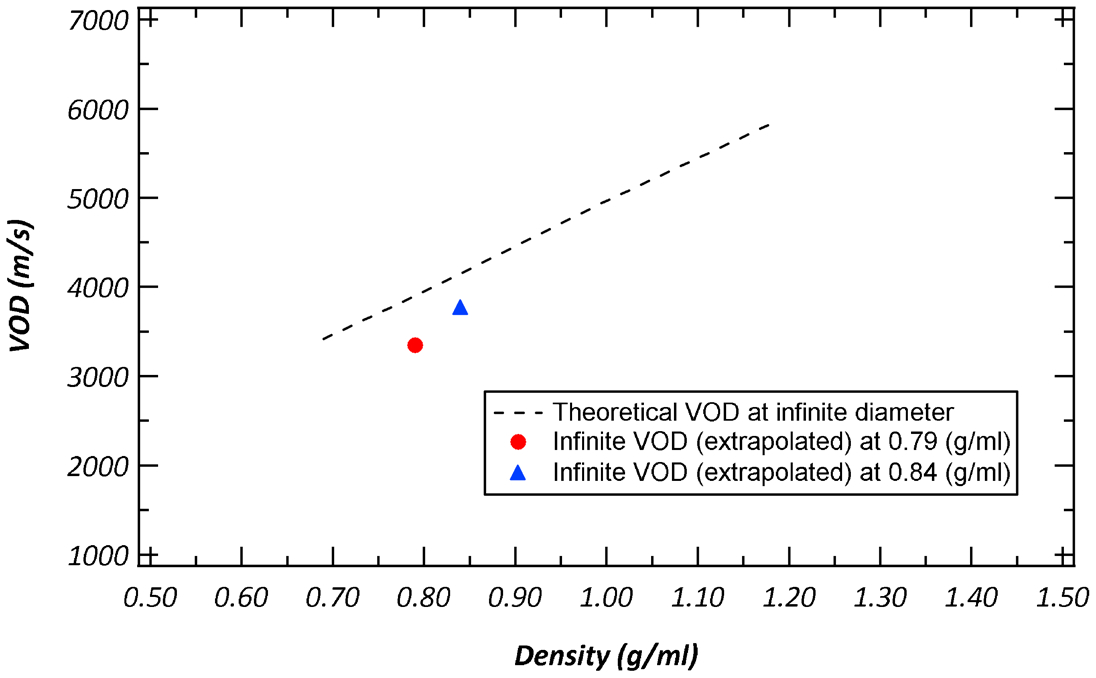
Density v. theoretical velocity of detonation (VOD) at infinite diameter and infinite VOD for 0·79 and 0·86 g mL−1, respectively (calculated from extrapolation)
As shown in Fig. 8, the calculated VOD at infinite charge diameter (for products at densities 0·79 and 0·84 g mL−1) is lower than the theoretical VOD calculated from thermodynamic data. This needs further investigation.
It is worth noting that the OW/fuel-based mixtures detonated with a 47% by weight of water in the formula. Previous studies conducted by Allum et al. (1997) in AN-based emulsions showed that those products were able to detonate with up to 35% of water and density of 0·86 g mL−1, in polypropylene pipes (unconfined) having a diameter of 39 mm. That work did neither study lower densities nor smaller diameters. In our case, the product detonated unconfined (PVC tubes) in a diameter of 23 mm with a density of 0·79 g mL−1. It is possible that the lower density of the OW/fuel-based mixtures (which means much more hot spots present to sustain the reaction) tested in this study may have contributed in the detonation process. At this stage, we can assume that the OW/fuel-based mixture from this study could have a lower critical diameter than 23 mm (at density 0·79 g mL−1) and that may be room to increase the water content of the OW/fuel-based mixtures. Tests also showed no difference in the VOD when other types of fuels are used in the OW/fuel mixtures. A density v. VOD plot for tests with glycerol and sugar for a diameter of 44 mm is given in Fig. 9.
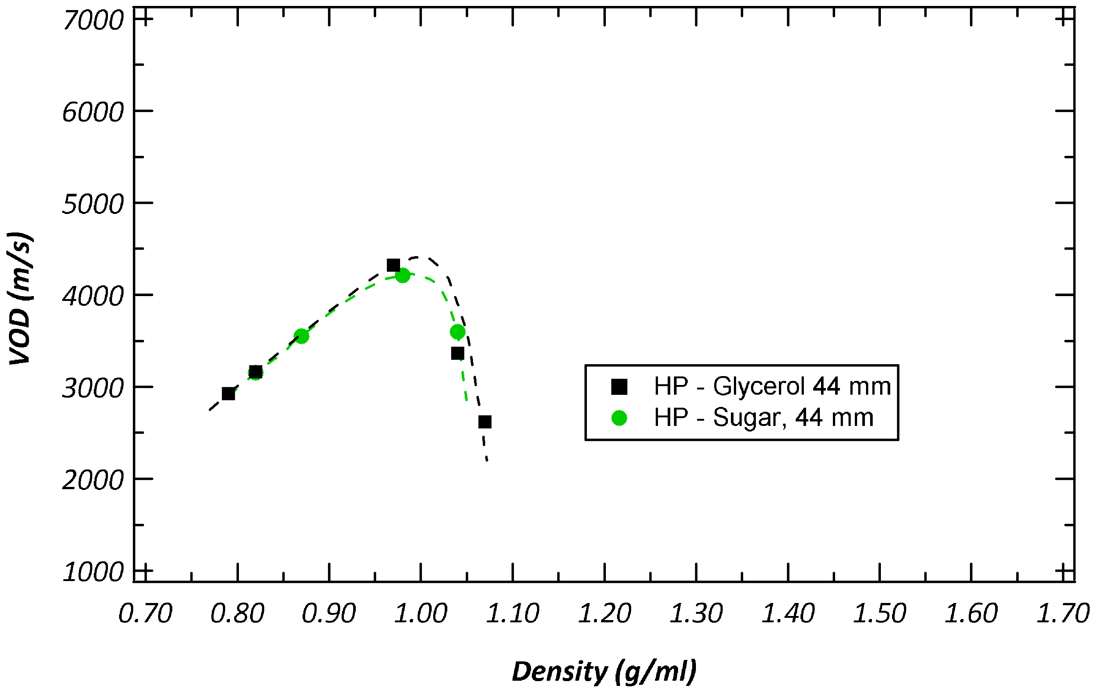
Density v. velocity of detonation (VOD) curve, for oxygenated water (OW)/fuel mixtures using different fuels
Conclusion and future work
Previous work has shown that OW/fuel-based mixtures can detonate either under strong confinement or using a high concentration of OW solution. There was, however, little evidence of work conducted that evaluates the detonation properties of relatively low concentration of OW and fuel based mixtures together with void sensitisation. A new formulation has been developed and patented that incorporates the above characteristics.
Tests conducted with this novel mixture have indicated the following:
At small diameters (below 44 mm), in unconfined conditions, unsensitised OW/fuel-based mixtures are unable to detonate.
The sensitised OW/fuel-based mixtures behave as non-ideal explosives. This was confirmed by the fact that the VOD depends on both density and diameter of the charge. However, the VOD at infinite diameter, for densities 0·79 and 0·84 g mL−1, does not agree well with theoretical calculations.
The mixtures are able to detonate even in the presence of large amounts of water (47% by weight in the total formula).
Further work is required to fully characterise a range of mixtures at different densities; conduct chemical stability analysis; provide feedback on their safety characteristics and conduct controlled and fully instrumented tests to evaluate breakage performance. In addition to important occupational health, safety and environment (OHSE) benefits, further research and development could lead to other significant benefits to industry, including:
Delivering cost savings in open pit coal mining through reductions in the use of AN.
Providing mine sites with a viable alternative to increase productivity and competition in the mining explosive market.
Improvements in overall community safety. Currently, approximately 2·5m t year−1 of AN and ANE are transported within Australia. Potential on site manufacturing of OW based products currently under investigation could reduce the interface with the public. Transport of explosives by roads is of great concern to government regulators
Contribution to sustainable practices by eliminating the potential risk of discharge of AN into groundwater systems, particularly when mining below the water table.
Footnotes
Acknowledgement
The authors would like to thank Mark Anger for providing support during on-site tests.