







Abstract
The waterborne polyurethane acrylate (PUA) dispersion was prepared based on polyester polyol, isophorone diisocyanate, dimethylol propionic acid, butyl acrylate and trimethylolpropane triacrylate. Then, a series of PUA/SiO2 hybrid dispersions were prepared from PUA dispersion, coupling agent 3-glycidyloxypropyl trimethoxysilane and different content tetraethoxysilane hydrolysis solutions by the sol–gel process. The physical properties of PUA/SiO2 hybrid dispersions and the mechanical properties of PUA/SiO2 hybrid composites were measured. The PUA/SiO2 hybrids were characterised. The results showed that the nano-SiO2 particles of the hybrids had good dispersion and formed a good interfacial bonding layer on its surface. When the tetraethyl orthosilicate content was 0·5 wt-%, the hybrid film exhibited excellent comprehensive mechanical properties and water resistance. The tensile strength, hardness and water absorption of the film were 3·32 MPa, 90 and 6·7% respectively. The obtained PUA and hybrid composites have great potential application, such as coatings, leather finishing, adhesives, sealants, plastic coatings and wood finishes.
Introduction
Polyurethane (PU) materials are known to offer high performance with their toughness, mechanical flexibility, chemical resistance, thermal stability and strong adhesion.1, 2 In recent years, waterborne PU (WPU) has become one of the major research and development fields because of its environmental friendliness, good processability and mechanical properties.3 The WPU dispersions are widely used for applications such as adhesives and coatings of various materials, textiles, metals, plastics and wood. However, WPU has some defect, such as weak water resistance, low adhesion in moist environment and relatively low heat resistance and mechanical properties, which inhibits extensive application. By improving such properties as mechanical stability, solvent and chemical resistance and toughness of an individual PU system, mixtures with polyacrylate (AC) systems can be used while reducing costs at the same time. The modified WPU emulsion has the advantages of both PU and polyacrylate (AC); therefore, it is known as the third generation WPU.4
Nano-SiO2 is often used in emulsion polymerisation to improve the polymer properties5 and has some influence during these emulsion polymerisations, especially on polymerisation rate, monomer conversion, etc.6 Therefore, nanocomposite emulsions composed of polymer and inorganic nanomaterial have been extensively researched, which combined both advantages of the polymer and the inorganic material.7–9 The organic polymer–inorganic hybrid can be prepared by directly blending organic materials with inorganic nanoparticles or by the sol–gel process using a metal alkoxide, such as tetraethyl orthosilicate (TEOS) in the case of silicon dioxide–polymer systems. Since 1970s, the sol–gel process has been used for the deposition of inorganic minerals in situ in an organic polymer matrix. The starting materials for the sol–gel process are metal alkoxides M(OR)n and a small amount of acid or base as a catalyst. The metal alkoxides are hydrolysed, and metal hydroxides M(OH)n are formed. The reaction is shown as follows

Sow et al.12 investigated the effects of alumina and silica nanoparticles on the mechanical, optical and thermal properties of UV waterborne PU acrylate (WPUA) nanocomposite coatings. The addition of nanoalumina and nanosilica could decrease the hardness and enhance the glass transition temperature of PU acrylate (PUA) nanocomposite coatings. Silica, which was recommended in the wooden furniture and kitchen cabinet manufacturing industry as nanoreinforcement, provides improved properties well suited in surface coating applications to efficiently protect the surface of wood substrates. Nam et al.13 prepared PUA/SiO2 hybrid films and investigated their surface properties by hardness and adhesion tests. Of the controlled silica content, highly desirable films were achieved, and the scratch resistance and hardness property of films were also enhanced, which indicated that the crosslinked silica particles were homogeneously dispersed within the PUA film. Zhang et al.14 prepared WPU/silica nanocomposites by in situ method using aqueous silica sol. The obtained results showed that the incorporation of silica nanoparticles had a significant effect on the colloidal properties of composite dispersions. The average particle size and the viscosity of the composite dispersions increased with increasing silica content. With increasing the silica content to 15 wt-%, the signs of silica and PU rich phases disappeared and showed obviously protruded domains. The mechanical properties of the hybrid films displayed higher storage modulus, tensile strength and elongation at break with increasing the silica content to 10 wt-% due to the interactions between organic polymer and silica particles.
In this work, coupling agent 3-glycidyloxypropyl trimethoxysilane (GLYMO) was used as precursor, which provided two different reactive functionalities, namely, the organic functional epoxy group and the inorganic alkoxysilane Si(OCH3)3 group. It has the ability to form simultaneously an organic network through the reaction of the organic functional epoxy group with the organic PUA and also an inorganic SiO2 network former with TEOS through the hydrolysis and subsequent condensation reactions of alkoxy silane groups. A series of waterborne PUA/silica hybrid composites were prepared by the sol–gel technique and characterised using Fourier transform infrared spectroscopy (FTIR) spectra, scanning electron microscope (SEM), transmission electron microscope (TEM) and X-ray diffraction (XRD) measuring apparatus to determine their structures, surface morphologies, etc. Moreover, the mechanical and water resistance properties of the WPUA/SiO2 hybrid films were also determined.
Experimental
Materials
Polyether polyol (NJ-330, Mn = 3000 g mol−1) was produced by Ningwu Chemical Co., Ltd, Jurong, Jiangsu, China. Dimethylpropionic acid (DMPA) was produced by PERSTOP Co., Helsingborg, Sweden. Isophorone diisocyanate (IPDI) was supplied by Rongrong Chemical Ltd, Shanghai, China. Hydroxyethyl methyl acrylate was provided by Yinlian Chemical Ltd (Wuxi, China). Butyl acrylate (BA), dibutylbis (lauroyloxy)tin, TEOS, triethylamine, acetone, azobisisobutyronitrile and N-methyl-2-pyrrolidone were obtained from Sinopharm Chemical Reagent Co. Ltd, Shanghai, China. Trimethylolpropane triacrylate (TMPTA) was supplied from Mingda Macromolecule Science and Technology Co., Ltd (Suzhou, China).
Preparation of PUA
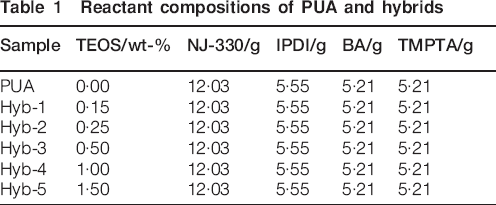
Polymerisation was performed in a 500 mL round bottom, four-necked separable flask with a mechanical stirrer, thermometer and condenser with drying tube. Polyester polyol (NJ-330), IPDI and dibutylbis (lauroyloxy)tin as a catalyst were charged into the dried flask. The mixture was heated to 60°C for ∼2 h to obtain the NCO terminated prepolymer. A certain amount of DMPA dissolved in N-methyl-2-pyrrolidone was added to the prepolymer at 80–85°C for another 2 h so that the NCO terminated prepolymer containing carboxyl group was obtained. Then, the reactant was diluted by a small amount of acetone to decrease the viscosity. Then, the reactants were cooled down to 60°C, and hydroxyethyl methyl acrylate was added dropwise for 5 h. The prepolymer with ethylene linkage was obtained, and the neutralising solution, triethylamine, was added and stirred for 30 min while maintaining the temperature at 40°C. The mixture of calculated BA and TMPTA was added into the prepolymer. The prepolymer/monomer mixture was then dispersed into deioniser water under vigorous stirring. Azobisisobutyronitrile was added into the dispersion subsequently. The waterborne PUA dispersion was prepared after the co-polymerisation of vinyl monomers at 70°C. The amounts of chemicals used for the synthesis are listed in Table 1.
Reactant compositions of PUA and hybrids
Preparation of PUA/silica hybrid composites
The PUA
Preparation of PUA or hybrid film
The PUA or hybrid composites were prepared by casting the newly synthesised PUA or hybrid dispersions onto poly(tetrafluoroethylene) at room temperature for 2 days; this was followed by drying at 60°C for 3 h. This trend of drying was just for slow drying. It was also possible to evaporate the solvent at a fixed temperature, either at room temperature or at elevated temperature. After demoulding, the films were stored in a desiccator at room temperature for further studies.
Measurements and characterisation
Apparent viscosity of PUA or hybrid dispersion
The apparent viscosities of PUA or hybrid composite dispersion were measured by a numerical viscometer (NDJ-9S, Shanghai Precision and Scientific Instrument Co., Ltd, Shanghai, China); when the shear rate was 2000 s−1, the high shear rate warranted highly reliable measurements at a temperature of 25°C.
Particle size of WPUA or hybrid dispersion
The PUA or hybrid composites were added to 100 mL test tubes and diluted with deionised water. The particle diameters of the PUA and hybrid dispersions were measured by a laser particle size analyser (BIC-9010; Brookhaven Instrument Co, Holtsville, NY, USA).
Surface tension of PUA or hybrid dispersion
Surface tension σ is an important parameter of the physical properties for the application performances of materials. In this study, the measurement of σ was conducted on a single tube manner set-up by the maximum air bubble method, as shown in Fig. 1. When the liquid end of the capillary was tangent with the sample's liquid end, the liquid went up along the capillary. A piston of the tap funnel was opened, and water dropped slowly to reduce the system pressure. In this way, the liquid surface of the capillary had a bigger pressure than that of the cuvette, and a pressure difference was formed. When the pressure, which was the result of the pressure difference acting on the capillary surface, was a little larger than σ of the capillary nozzle liquid, the air bubble transgressed from the capillary nozzle. The maximum pressure maximum was obtained from a manometer, and the value is expressed by equation (1)

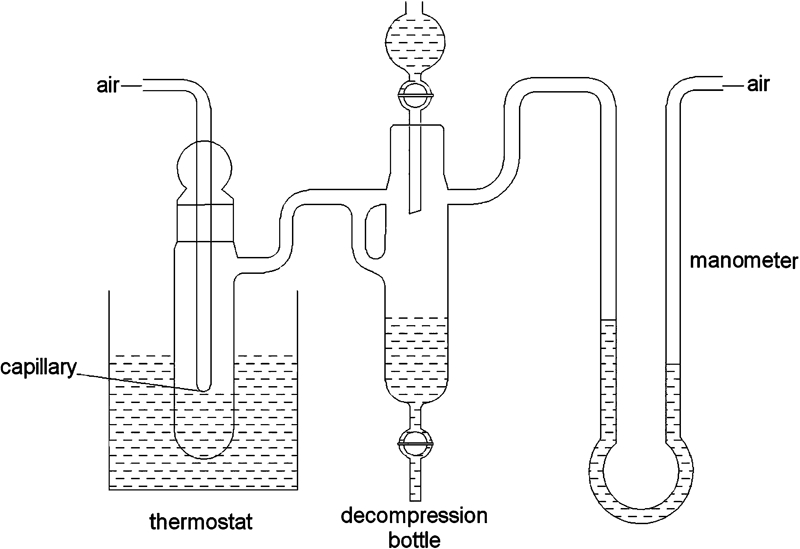
Measurement of surface tension
When the air bubble transgressed from the capillary nozzle, the pressure was πr2Pmax, where r is the radius of the capillary. The pressure, which was brought by σ of the air bubble in the capillary, was 2πrσ. The two pressure values were equal and are described by equation (2)


Tensile strength and elongation at break of PUA or hybrid film
Tensile strength testing and elongation at break testing for all of the specimens were carried out on a tensile tester (KY-8000A; Jiangdu Kaiyuan Test Machine Co., Ltd, Jiangdu, China) at room temperature at a speed of 50 mm min−1. All measurements had an average of three runs. The dumbbell type specimen was 30 mm length at two ends, 0·2 mm thick and 4 mm wide at the neck.
Hardness of PUA or hybrid film
The hardness of the film was measured with a sclerometer (KYLX-A; Jiangdu Kaiyuan Test Machine Co., Ltd, Jiangdu, China); measurements were performed three times for each sample, and the average value was calculated.
Water absorption of PUA or hybrid film
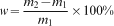
The water absorption values of the PUA and hybrid films were obtained as follows. Preweighed dry films (20×20 mm) were immersed in distilled water at 25°C. After 24 h, the films were then blotted with filter paper and weighed. The water absorption w was calculated by as follows
FTIR spectra
The FTIR spectra of WPUA and hybrid films were obtained on a KBr powder with an FTIR spectrometer (Avatar 360; Nicolet, Madison, WI, USA). A minimum of 32 scans was signal averaged with a resolution of 2 cm−1 in the 4000–400 cm−1 range.
Scanning electron microscopy (SEM)
To investigate the morphology of the hybrid film, the fracture surface was investigated with a 20 kV accelerating voltage with a field emission SEM (S-4800; Hitachi Corp., Tokyo, Japan).
Transmission electron microscopy (TEM)
The morphology of the hybrid film was observed by TEM (Tecnai 12; Philips Company, Eindhoven, The Netherlands) with an acceleration voltage of 120 kV. The hybrid particles were dispersed in deionised water in an ultrasonic bath for 10–30 min and then prepared by the deposition of the emulsion onto a copper net after it was stained by phosphor wolframic acid.
X-ray diffraction (XRD) characterisation
The XRD pattern was recorded by reflection scan with nickel filtered Cu Kα radiation (D8; Bruker-AXS, Karlsruhe, Germany). The X-ray generator was run at 50 kV and 70 mA. The XRD measurement was performed at 2θ value between 3 and 60°.
Thermal properties
Differential scanning calorimetry (DSC) and thermogravimetric analysis (TGA) of the samples were performed on a Netzsch instrument (STA449C; Netzsch, Seligenstadt, Germany). The programmed heating range was from room temperature to 500°C at a heating rate of 10°C min−1 under a nitrogen atmosphere. The measurement was taken using 6–10 mg samples. The DSC and TGA curves were recorded.
Results and discussion
Physical performance of PUA and hybrid composite dispersions
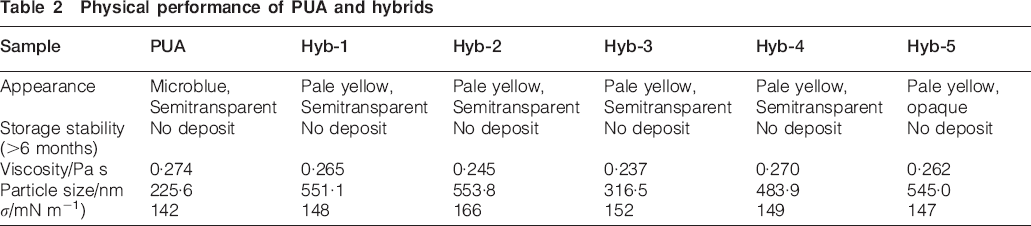
The physical performances of the dispersions, such as storage stability, viscosity and surface tension, are shown in Table 2. According to Table 2, all of the dispersions were stored at room temperature for 6 months and exhibited satisfactory stabilities. The dispersions had little apparent change in viscosity. The particle sizes of all the hybrid dispersions were larger than that of the pure PUA dispersion. The σ of hybrid material dispersion is a significant physical performance parameter. It depends on the number and size of polarity base in the chain of big molecule. The smaller the surface tension, the better the performance of infiltration. The surface tensions of PUA and hybrid dispersions are listed in Table 2. The results showed that all hybrid dispersions had smaller σ values than water (72 mN m−1) and a little bigger than the pure PUA, showing an excellent infiltrative performance in the substrate.
Physical performance of PUA and hybrids
Mechanical properties of PUA and hybrid composite films
In the preparation of aqueous dispersion, the different substance compositions of the hard segment in macromolecular chain would lead to the distinctness in molecular weight of prepolymer and also vary in cohesion of PU molecules, which directly impacts on the mechanical properties of PU membranes. The tensile strength, elongation at break, hardness and water absorption of the PUA and hybrid films are listed in Table 3. The results indicated that the tensile strength of the hybrids was higher than that of the WPUA. The improvement of the mechanical properties could be explained by the results of the formation of crosslinking. When the content of the TEOS increased, the interpenetrating polymer network structure of the hybrids was more compact. On the whole, the tensile strength increased while the content of TEOS increased from 0 to 0·5 wt-%. However, the tensile strength decreased when the content of TEOS was > 0·5 wt-%. The excessive nanosilica particles are disadvantageous to tensile strength improvement. The nanosilica can improve the mechanical properties of PUA films by increasing the crosslinking density of the polymer. Increasing the content of TEOS leads to higher crosslinking density between crosslinking points. the excessive crosslink structure of the macromolecule leads to the increasing particle size of PUA emulsion, and PUA emulsion will be unstable due to the severe aggregation of the sample. Unstable PUA emulsion is a great disadvantage to the film forming properties, which result in the decrease in tensile strength of the films.17 When the TEOS content was 0·5 wt-%, the tensile strength of the hybrid was best.
Mechanical properties of PUA and hybrid films
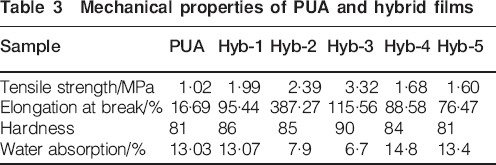
From Table 3, the elongations at break of the hybrids were larger than that of pure WPUA. Owing to the particular flexibility of the macromolecular chain paragraph of acrylic resin, the hybrid material shows better flexibility, which makes it get high elongation at break. In our study, the hybrids may endure higher stress due to the incorporation of silica, though an excess of silica negatively effected the elongation of the sample. That is, as the TEOS content increases initially, the formed silica makes the composite more reinforced gradually without hindering elastic deformation of soft segments, resulting in higher breaking strength and elongation at break. However, the incorporation of excess silica hinders the deformation of soft segments in PUA and thus leads to lower elongation at break. The result indicated that the hardness of the vast majority of hybrid materials was bigger than that of pure PUA. Because polycondensation was generated by the hydroxyl from the silica surface and that from the hydrolysis of coupling agent, firstly synthesised dimers, and then gradually becomes a linear network structure, finally the interpenetrating polymer networks with PUA were generated, which improved the effect of the interface between organic and inorganic phases. With the increase in silica content, the structure of interpenetrating polymer network became denser; moreover, the microarea formed by the hard segment showed a characteristic large strength, high hardness and not easy to be destructed by solvent, so the hardness of the materials increased. However, it can be found that the hardness of the materials does not cause a further increase as the increase in TEOS (SiO2) content or even decline (for example, Hyb-4) when the SiO2 content continued to increase. That is because only the amount of SiO2 added to the organic materials could improve the hardness of the membranes. Therefore, when the amount of SiO2 increased to a certain extent, the nanoparticles showed a non-uniform dispersed phase, reducing the hybrid toughness.
Water absorption is an important parameter for the practical application of PU. From Table 3, when the TEOS content was 0·5 wt-%, the hybrid had the best water resistance in all the hybrid materials.
FTIR spectra of hybrids
The FTIR spectra of the hybrids are shown in Fig. 2. As shown in Fig. 2, there was a strong absorption peak at ∼1730 cm−1 corresponding to the carbamate carbonyl of –C = O groups, suggesting that more polyester segments and urethane groups interacted with silanol groups on silica particles based on the coupling agent. The band of C–H was observed at ∼2950 cm−1. Clearly, there was a wide and strong absorption peak from 1050 to 1150 cm−1 in the hybrid samples, and the result showed the existence of a Si–O–Si backbone, which is due to the polycondensation between the siloxane side the of coupling agent GLYMO and the hydrolysis of TEOS, forming the Si–O–Si network and generating the interpenetrating polymer network between the organic and inorganic phases. Moreover, there was a weak absorption peak at ∼930 cm−1 corresponding to the Si–O–C bond in the samples of hybrid materials, indicating that it was not a simple mixture of silicon dioxide and PU, but the bonding of some kind of chemical bond; therefore, it formed a strong bond linked complex hybrid interaction system between the organic polymer and the inorganic phase, weakening the key single phase body, which provided the basis for the excellent performance of the hybrid materials.18
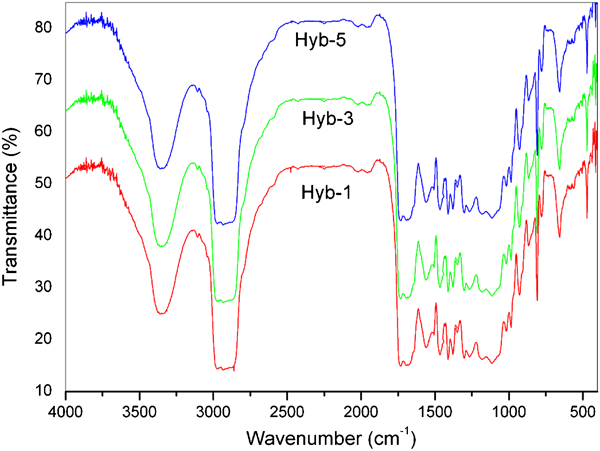
FTIR spectra of hybrids
SEM, TEM and XRD of hybrid film
The cross-section of the selected hybrid (Hyb-1) observed by SEM is shown in Fig. 3. Evidently, the surface of Hyb-1 was relatively smooth and with almost no cracks; it showed some relatively rule cracks in the hybrid material, and the majority of white spots emerged at the bottom of the cracks, which indicated that the existence of SiO2 particles was the cause of cracks. The existence of cracks illuminated that the fracture region extended along the SiO2 particles, so that the SiO2 particles dispersed in the body of hybrid. The rule cracks indicated that the particles were uniformly dispersed in the hybrid system, weakening the agglomeration phenomena. We can see that the inorganic SiO2 particles embed in organic–inorganic network structure; in the other words, the three-dimensional inorganic network was introduced in the system, and inorganic particles were besieged by the organic phase, which acted as the continuous phase.
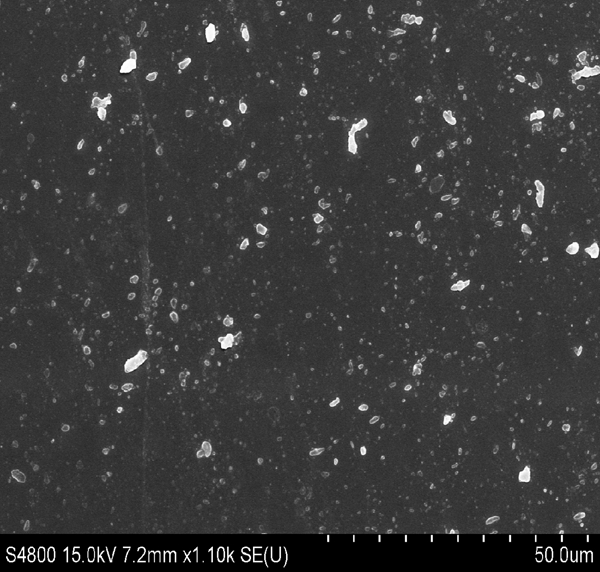
Image (SEM) of Hyb-1
In order to obtain further characterisation of the film, such as the microphase structure and compatibility, TEM of the selected hybrid (Hyb-1) was observed and is shown in Fig. 4. As shown in Fig. 4, the particles of the hybrid dispersed are well distributed. The adding of coupling agent made the nano-SiO2 dispersed well distributed in PUA, and the particle size was ∼40–50 nm, which was mainly due to nano-SiO2 being effectively limited to the regular molecular network structure of poly(urethane acrylate). On the other hand, covalent bonding (Si–O–Si) between the organic and inorganic components enhanced the miscibility. They were homogeneously and uniformly dispersed at a molecular level. The formation of silica particles in the as prepared PUA and coupling agent matrix indicated that the –Si(OCH3)3 groups may have functioned as internal ‘bridging’ groups between organic and inorganic segments for sol–gel reactions of TEOS molecules. The condensation reaction steps of TEOS in PUA solution followed the sequence: nucleation, nucleus propagation formed colloid and particle growth through colloid collision. However, the WPUA chain in the solution inhibited particle growth. These micrographs showed a fine interconnected or co-continuous phase morphology. It is estimated that these materials will be pretty good for practical application.
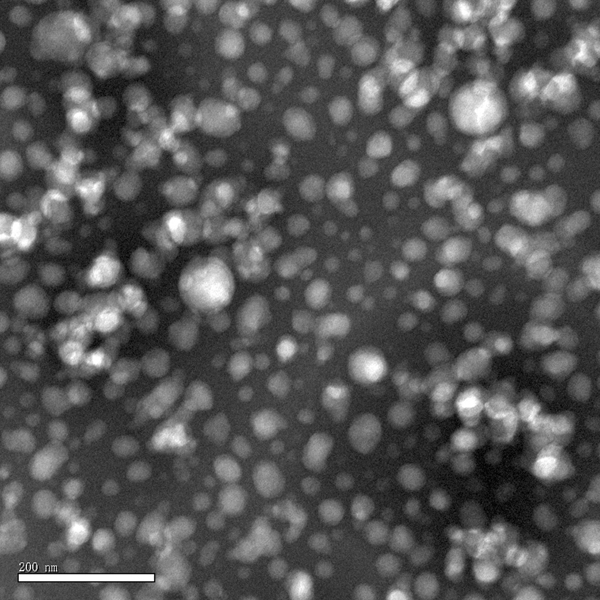
Image (TEM) of Hyb-1
Figure 5 shows the XRD curve for the selected hybrid (Hyb-1). As shown in Fig. 5, a diffused diffraction peak appeared near 20° for nanocomposites, and this peak was attributed to the short range order arrangement of chain segments of amorphous PU and the formation of uniform three-dimensional network structure, which interspersed with the PUA segment.
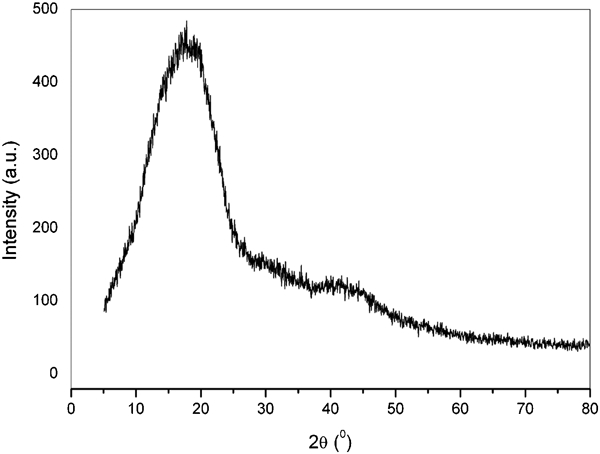
X-ray diffraction curve of Hyb-1
Thermal properties of PUA and hybrids
Figure 6 shows the DSC scan curves for the PUA and hybrids. When the TEOS content was low, the DSC curve of the hybrid was similar to that of the PUA. The hybrid composites had a higher glass transition temperature Tg of the hard segment than the pure WPUA. The Tg of hybrid materials increased with the increase in TEOS moiety. The result indicated that the hybrid polymers had a strong and uniform interaction between PUA and silica, which was due to the bridge effect by GLYMO. Figure 7 shows the typical TGA curves for the prepared samples. From the TGA curves of the hybrids, the small weight loss at lower temperature (<110°C) was probably due to the evaporation of residual water and physically absorbed water. The temperatures at weight loss of 10, 30 and 50% decomposition of the samples are shown in Table 4. It was verified from the obtained results that the thermal stability was influenced by the TEOS content. According to Table 4, T0·05, T0·1, T0·3 and T0·5 of the hybrids were higher than PUA. The decomposition temperatures of the hybrid samples increased with the increase in TEOS content. The enhanced thermal stability of the hybrid materials was due to the formation of a network of PUA and inorganic moieties, which resulted from the restriction of polymer chain mobility and became more intertwined with the rigid silica network. Therefore, the hybrids exhibited better thermal stability.
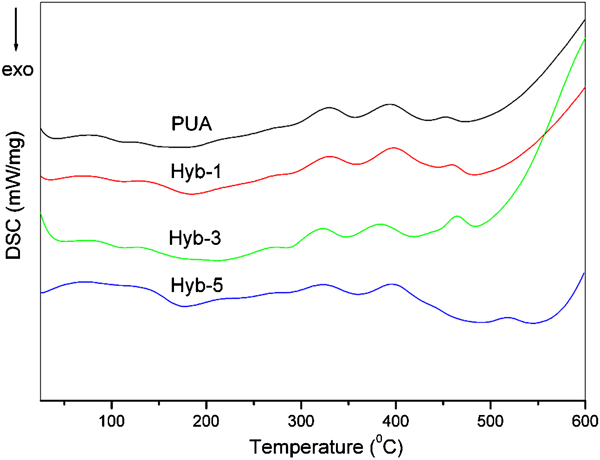
DSC curves of WPUA and hybrids
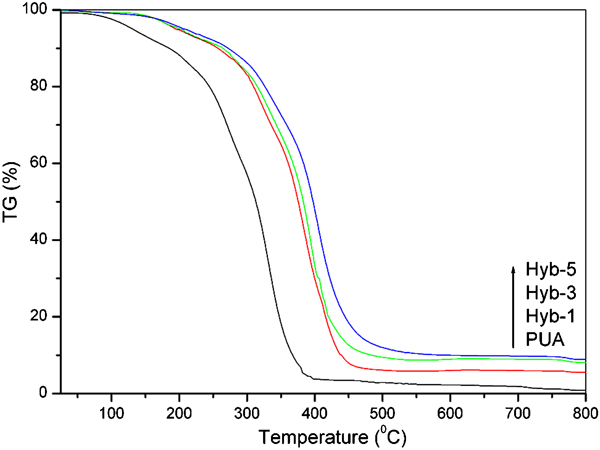
TGA curves of WPUA and hybrids
Thermal properties of PUA and hybrid films*
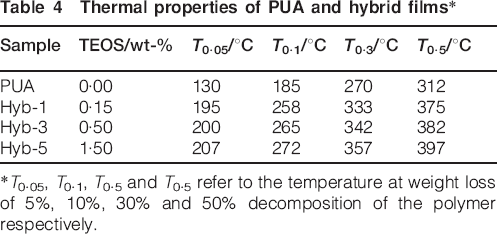
*T0·05, T0·1, T0·5 and T0·5 refer to the temperature at weight loss of 5%, 10%, 30% and 50% decomposition of the polymer respectively.
Conclusions
A series of hybrid materials were prepared from NJ-330, IPDI, DMPA, BA, TMPTA, GLYMO and different content TEOS hydrolysis solutions by sol–gel process. The physical properties of hybrid composite dispersions and the mechanical properties of hybrid composite films were measured. When the TEOS content was 0·5%, the hybrid composite had good mechanical property (tensile strength and hardness) and the best water resistance in all the hybrid materials. The tensile strength and hardness of the film were 3·32 MPa and 90. The water absorption was only 6·7%. The hybrid showed a homogeneous morphology, which supported the compatibility improvements by SEM and TEM measurements. The results also showed that the organic and inorganic components in the hybrid composite enhanced miscibility, they were homogeneously and uniformly dispersed at a molecular level, generating the interpenetrating polymer network, and the particle size was about 40–50 nm.
Footnotes
Acknowledgements
This project was supported by the Agricultural Independent Innovation of Jiangsu Province [grant no. CX(11)2032], Jiangsu Planned Projects for Postdoctoral Research Funds (grant no. 1002033C) and Jiangsu Province Key Laboratory of Fine Petro-chemical Technology (grant no. 213164).