







Abstract
A series of ashless alkylthioperoxydiphosphates antiwear lubricant additives were synthesised via oxidation of O,O'-dialkyldithiophosphoric acids under mild condition. The compounds were characterised using NMR, FT-IR and mass spectrometry, and their antiwear performance was systematically evaluated using a high frequency reciprocating ball (HFRB). Tribofilms generated by alkylthioperoxydiphosphates were investigated by scanning electron microscopy, optical profilometry and X-ray absorption near edge structure (XANES) spectroscopy. Formulations with alkylthioperoxydiphosphates in base oil at 0·1% (w/w) phosphorus level exhibit significantly better antiwear performance compared to zinc dialkyldithiophosphate (ZDDP), in particular for compounds with medium or long alkyl chains. The XANES analysis of thermal films and tribofilms indicate that thermal films are made up of short chain zinc phosphates when ZDDP is used and short to medium chain iron phosphates when the alkylthioperoxydiphosphates are used. Tribofilms from ZDDP have Zn3(PO4)2 while tribofilms from alkylthioperoxydiphosphates have Fe4(P2O7)3 near the surface with both tribofilms having sulphates near the surface of the tribofilms.
Introduction
Zinc dialkyldithiophosphates (ZDDP) have been the primary antiwear source in engine oil and other industrial lubricant formulations for more than 60 years.1,1–28 Over the past half century, considerable amount of research efforts have been focused on characterisation of ZDDP tribofilm to elucidate its chemical composition and molecular structure, and mechanism of tribofilm formation. Although the exact pathways leading to the formation of antiwear film on metal surface are not well understood due to the complicated characteristics of reactions in lubricant formulations, to date it is generally accepted that thermal, hydrolytic and oxidative decomposition of ZDDP and its degraded intermediates actively involved with the formation of protective tribofilm on metal surface, which prevents the direct contact of metal surfaces in boundary condition, therefore, reduces wear.3,20–23,29
During the investigation of lubrication mechanism of ZDDP, many attempts to simulate combustion engine condition and identification of decomposed intermediates have been reported.21,23,23,30–33 It is generally accepted now that the rapid decomposition of ZDDP generates both soluble and insoluble organic and inorganic phosphorus intermediate compounds. These soluble products identified by 31P-NMR may include (RO)2P( = S)SSP( = S)(OR)2, (RO)2P( = S)SR, (RO)2P( = S)SH, (RO)3P = S, (RS)3P = O and (RO)3P = O.21,23,33 The insoluble residue may consist of zinc sulphate, polyphosphate and/or pyrophosphate compounds.
Over the past two decades, environmental concerns were the major driving force to push for replacing ZDDP with other zinc free, lower phosphorus and lower sulphur antiwear additives, at least partially, especially in automobile industry.18,34–40 Ashless lubricant additives are a potential alternative to ZDDP, and provide necessary protection against wear. Earliest research work and application of ashless lubricant additives date back to 1940s.41 In general, based on the elements contained in their chemical structures, ashless lubricant additives can be classified as phosphorus additives, e.g. phosphate esters, phosphites, sulphur additives, e.g. sulphurised olefins, and additives with multiple elements, e.g. alkyldithiophosphates, dithiocarbamates, amine phosphates.36,42 More recently, some novel ashless antiwear and/or extreme pressure (EP) additives containing other elements, i.e. boron, fluorine, have been reported.33,43,44
It is believed that ashless additives function as either promoting physical adsorption of additives to metal surfaces, or accelerating chemical reactions with iron to form protective tribofilms.18 Investigation of chemical composition of tribofilms via modern surface techniques, such as X-ray photoelectron spectroscopy (XPS), X-ray absorption near edge structure (XANES), X-ray photoemission electron microscopy (XPEEM) and Fourier transform infrared (FT-IR) spectroscopy, shows iron polyphosphates, sulphides and sulphates were generated.18,39,45
Willermet21 identified alkylthioperoxydiphosphates as the principal decomposed product of ZDDP. In an attempt to determine the contribution of these chemistries and develop new antiwear chemistries this study involves the synthesis of alkylthioperoxydiphosphates with various alkyl chain lengths coupled with a systematic evaluation of their antiwear performance. Searching for ashless lubricant additive from the product pool of ZDDP decomposed intermediates might be a convenient and straightforward approach to identify ashless antiwear additives. In an earlier study Sarin et al.46 reported the synthesis of alkylthioperoxydiphosphates (also known as O,O'-dialkylphosphorodithioic sulphides) with short alkyl chains (≤C 10) by I2 oxidation, and subsequently evaluated their antiwear properties on four-ball machine where they showed that antiwear and antioxidant behaviour were comparable to that of ZDDP, however, the mechanism of wear protection was not elucidated. Khaskin47 also showed that phosphorous containing disulphides can be synthesised by oxidation of phosphorothioic and phosphorodithioic acids or their salts.
In this study, we report on the synthesis and characterisation of a series alkylthioperoxydiphosphates with different alkyl chain lengths through H2O2 oxidation reaction, followed by evaluation of antiwear performance using high frequency reciprocating ball (HFRB) tests. The tribofilm and thermal film generated by wear tests using alkylthioperoxydiphosphates were also systematically investigated using scanning electron microscopy (SEM) and X-ray absorption near edge structure (XANES) spectroscopy.
Experimental procedure
Chemicals
All of the reagents were purchased from commercial suppliers and were used without purification unless otherwise specified. Reactions involving air- or water-sensitive compounds were conducted in oven dried (overnight) glassware under an atmosphere of dry argon. Neutral-100 base oil and zinc dialkyldithiophosphates (ZDDP) were obtained from Chevron Oronite (Richmond, CA, USA).
Instrumental
Nuclear magnetic resonance (NMR) spectra (1H, 13C and 31P) were recorded on JEOL eclipse instrument at 500, 125 and 202 MHz respectively using CDCl3 as solvent and TMS as reference. The sweep width of 1H is 7508 Hz (−2·5–12·5 ppm), and chemical shifts were calibrated by tetramethylsilane (TMS). The sweep width of 31P is 50 760 Hz (−75–175 ppm), and chemical shifts were externally calibrated by phosphoric acid. All NMR experiments were performed at room temperature of 21°C. Melting points were obtained in capillary tubes on a Mel-Temp II apparatus, and the thermometer was uncorrected. Fourier transform infrared spectra were obtained on a Bruker Vector 22 FT-IR spectrometer, using KBr pressed pellets for solids or neat films between KBr plates for liquids and oils, and are reported in cm−1 with a resolution of 4 cm−1. High resolution electrospray ionisation time-of-flight (ESI-TOF) experiments were performed on an Agilent ESI-TOF mass spectrometer at Scripps Center for Mass Spectrometry (La Jolla, CA, USA). Sample was electrosprayed into the TOF reflectron analyser at an ESI voltage of 4000 V and a flow rate of 200 microlitres/minutes. MALDI-TOF spectra were obtained on Applied Biosystems Voyager–STR mass spectrometer. The thermogravimetric analysis (TGA) measurements were performed using a TA 2050 thermo gravimetric analyser (TA Instruments) at a heating rate of 5°C min−1 under nitrogen. All column chromatography separations were performed on Sorbent Technologies silica gel (standard grade 60, 32–63 μm). High frequency reciprocating ball tests were performed on a home built HFRB machine with test condition: 1·0 kg load, 100°C, 50 Hz, 1 h and travel distance of 2·5 mm and a ball diameter of 6·25 mm. Both the moving ball and stationary disc were made of 52 100 steel with the ball having a hardness of 55 HRC and the stationary disc having a hardness of 40 HRC. Wear volume was measured by Veeco Wyko NT9100 Optical Profiler System equipped with Vision software. Scanning electron microscopy images were obtained with Hitachi S-3000N Variable Pressure SEM. X-ray absorption near edge structure (XANES) spectra were obtained at VLS-PGM beamline at the Canadian Light Source (Saskatoon, SK, Canada). A 100 μm slit size was used with a 0·1 eV step size, the energy sweep for the absorption spectra was between 160–190 eV for sulphur L-edge and 130–155 eV for phosphorous L-edge. The PGM entry slit size was 200 by 200 μm. The P and S K-edge spectra were acquired at the double crystal monochromator (DCM) beamline at Synchrotron Radiation Center, University of Wisconsin at Madison. The P K-edge spectra were acquired between 2110 and 2200 eV with an energy increment of 0·15 eV and the S K-edge spectra were acquired between 2460 and 2510 eV with an energy increment of 0·15 eV. All measurements were normalised to the incident flux I0 and the background subtracted.
Results and discussion
Synthesis of alkylthioperoxydiphosphates
Preparation of alkylthioperoxydiphosphates was achieved via a two-step reaction. O,O'-dialkyl dithiophosphoric acids was obtained by mixing phosphorus pentasulphide with alcohols at an elevated temperature in toluene, this facile reaction usually gives a quantitative yield (Fig. 1).48

Preparation of O,O'-dialkyl dithiophosphoric acids
The oxidation of O,O'-dialkyl dithiophosphoric acids was carried out by adding H2O2 solution (37%) into a vigorously stirred O,O'-dialkyl dithiophosphoric acids/ice mixture held in an ice bath, the details of the reaction is outlined in Fig. 2.

Oxidation of O,O'-dialkyl dithiophosphoric acids to yield alkylthioperoxydiphosphates48
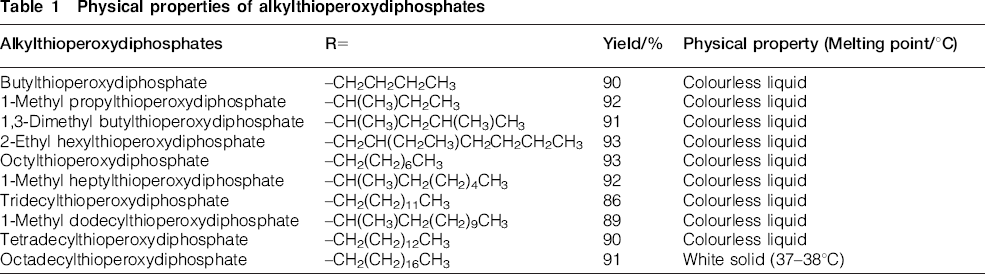
The general structure of alkylthioperoxydiphosphates is illustrated in Fig. 3, and their properties are summarised in Table 1. All reactions give fairly good yields as detailed in Table 1, and crude products can be conveniently purified using column chromatography.
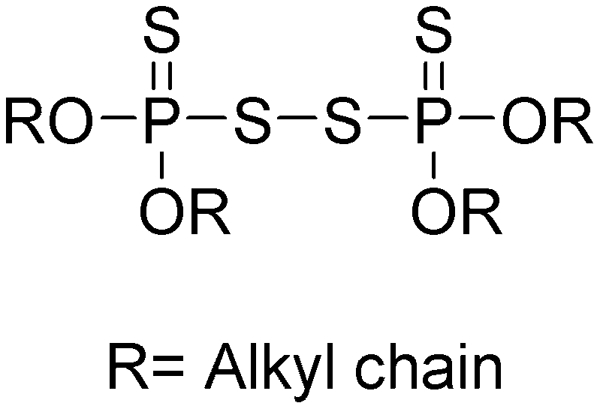
General chemical structure of alkylthioperoxydiphosphates48
Physical properties of alkylthioperoxydiphosphates
NMR of alkylthioperoxydiphosphates
1H and 31P-NMR spectra of tridecylthioperoxydiphosphate are illustrated in Figs. 4 and 5. 1H-NMR spectrum of tridecylthioperoxydiphosphate (Fig. 4) exhibits two sets of multiplets with chemical shifts of 4·18–4·24 and 4·06–4·13 ppm respectively, corresponding to the four sets of CH2 (methylene group) protons next to oxygen atoms of four tridecyoxyl chains. Neighbouring oxygen atoms result in less shielded proton, and multiplicity is due to spin coupling between –O–CH2– and it's neighbouring –CH2– with different chemical shifts of 1·71–1·76 ppm. The methylene protons of the other ten –CH2– groups of tridecyoxyl chain give a broadened multiplet with chemical shifts ranging from 1·23–1·39 ppm, and the end methyl protons show a triplet (0·88 ppm) with an H-H coupling constant of 6·87 Hz. Integration of proton peaks gives a ratio that perfectly matches that of tridecyoxyl chains. 31P-NMR spectrum of tridecylthioperoxydiphosphate (Fig. 5) shows only one P resonance peak due to tridecylthioperoxydiphosphate present in solution is in rapid dynamic equilibrium on the NMR time scale yielding a time averaged spectrum. [NMR spectra of alkylthioperoxydiphosphates are included in the Supporting Information (Supplementary Material 1 http://dx.doi.org/10.1179/1751584X12Y.0000000009.S1).]
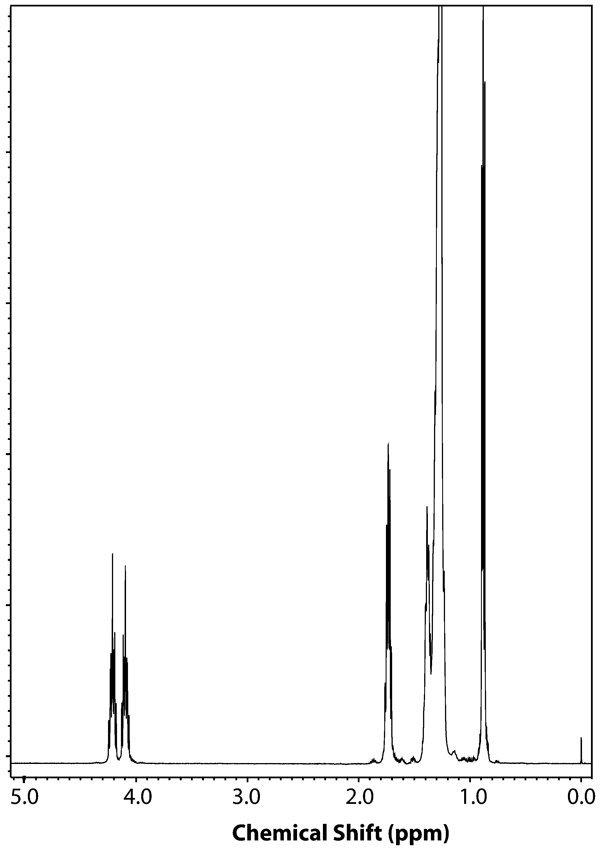
1H-NMR spectrum of tridecylthioperoxydiphosphate
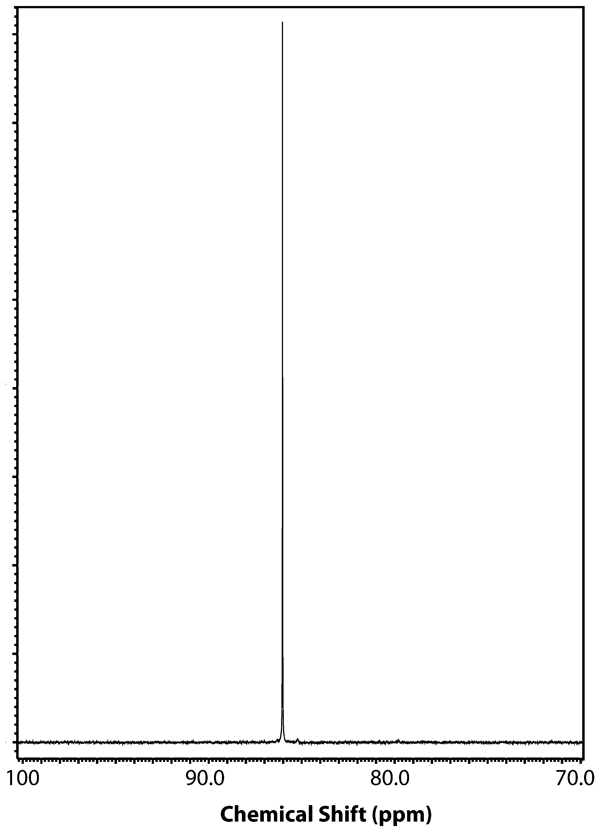
31P-NMR spectrum of tridecylthioperoxydiphosphate
1H-NMR spectrum of 1-methyldodecylthioperoxydiphosphate (Fig. 6) exhibits one set of multiplet with chemical shifts of 4·69–4·72 ppm corresponding to the four-methine protons in these four methyldodecyoxyl chains. The neighbouring four methylene (–CH2–) protons give two sets of multiplets with chemical shifts of 1·70–1·76 and 1·53–1·61 ppm. The methyl protons next to methine groups overlap with other methylene protons to afford a broadened multiplet of 1·23–1·40 ppm, and the four end methyl groups yield a triplet of 0·88 ppm with a spin coupling constant of 6·87 Hz, which resulted from H-H spin coupling with neighbouring methylene protons. 31P-NMR spectrum of 1-methyldodecylthioperoxydiphosphate (Fig. 7) exhibits a more complicated pattern than that of tridecylthioperoxydiphosphate due to introduction of four chiral 1-methyldodecyoxyl chains and the pseudo asymmetry of phosphorus atoms which results in the fact that 1-methyldodecylthioperoxydiphosphate exist in several diastereomeric forms.49
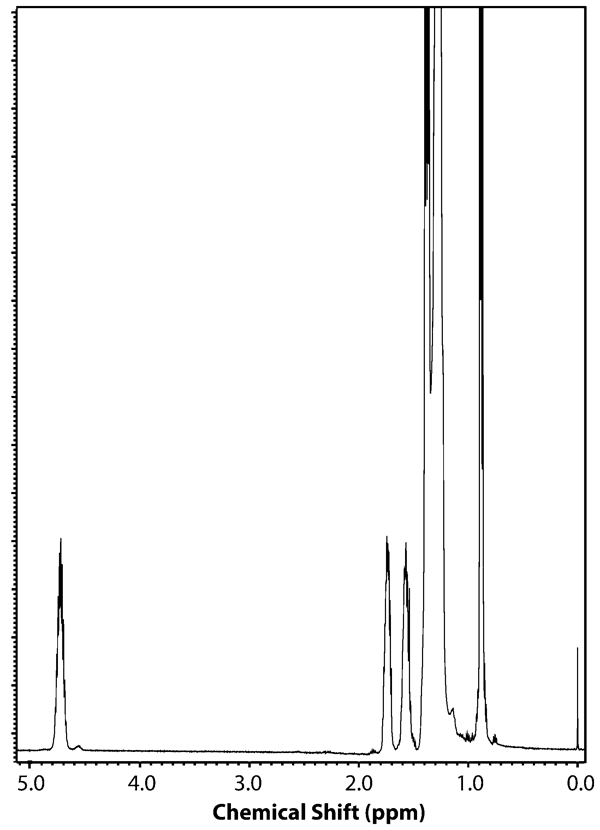
1H-NMR spectrum of 1-methyldodecylthioperoxydiphosphate
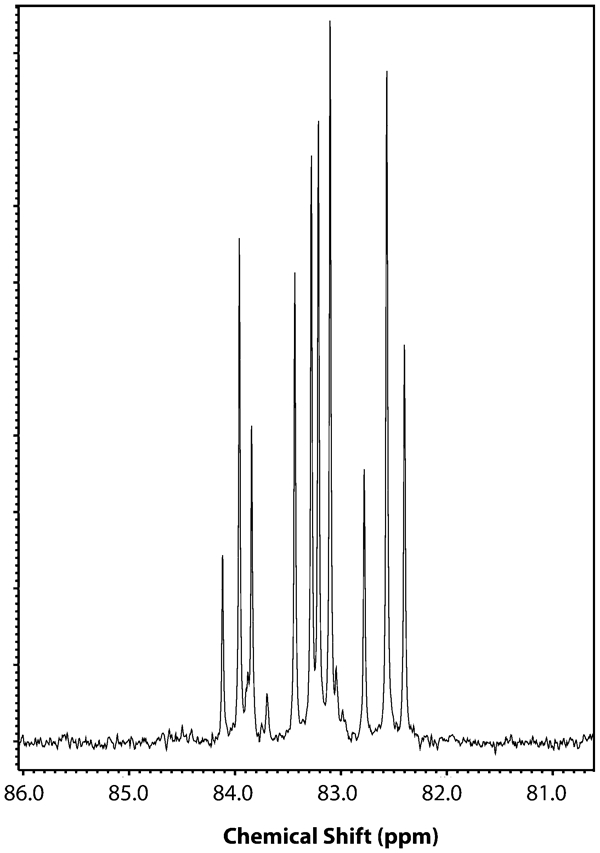
31P-NMR spectrum of 1-methyldodecylthioperoxydiphosphate
FT-IR of alkylthioperoxydiphosphates
FT-IR has been used extensively to examine oxidative stability and structure of lubricant additives.21,50–52 FT-IR spectra of tridecylthioperoxydiphosphate and 1-methyldodecylthioperoxydiphosphate are illustrated in Fig. 8. Strong absorption arising from alkyl (aliphatic) C-H stretching vibrations occurs in 2925, 2855 cm−1 region, and C-H bending vibrations at 1463, 1379 cm−1.53 989 cm−1 absorption corresponds to P-O-C stretching vibrations.21 A strong absorption from P = S stretching occurs around 648 cm−1.51,54 These stretching and bending vibrations are present in all the synthesised compounds as detailed in the section on ‘Thermal stability of alkylthioperoxydiphosphates’.
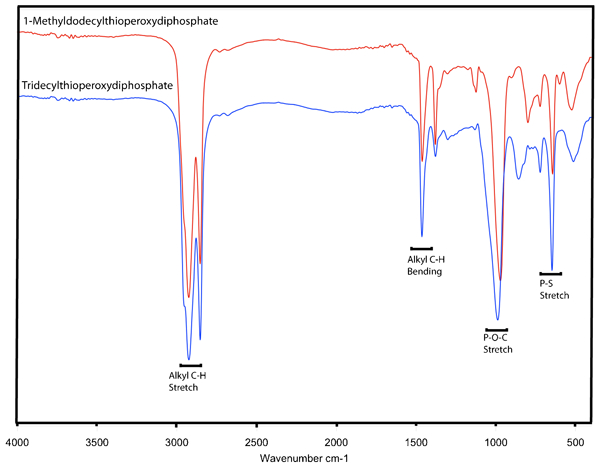
FT-IR spectra of alkylthioperoxydiphosphates
Spectral data of key compounds
Listed below are the spectral data from NMR and FT-IR for all the compounds synthesised as well as ESI-TOF and MALDI-TOF spectral data for select compounds. The spectra of the different compounds are provided in the supplementary data provided with the manuscript.
Butylthioperoxydiphosphate
Colourless oil. 1H-NMR (500 MHz, CDCl3): 4·20–4·26 (m, 4H), 4·08–4·15 (m, 4H), 1·70–1·76 (m, 8H), 1·39–1·47 (m, 8H), 0·96 (t, J = 6·87 Hz, 12H). 13C-NMR (125 MHz, CDCl3): 68·7, 68·6, 32·02, 31·96, 18·8, 13·7. 31P-NMR (202 MHz, CDCl3): 86·1. FT-IR (KBr): 2961, 2934, 2874, 1464, 1382, 1148, 1015, 979, 902, 855, 803, 737, 646, 520 cm−1.
1-Methylpropylthioperoxydiphosphate
Colourless oil. 1H-NMR (500 MHz, CDCl3): 4·64–4·73 (m, 4H), 1·71–1·81 (m, 4H), 1·61–1·69 (m, 4H), 1·394 (d, J = 6·0 Hz, 3H), 1·390 (d, J = 6·0 Hz, 3H), 1·37 (d, J = 6·0 Hz, 6H), 0·97 (t, J = 7·3 Hz, 6H), 0·96 (t, J = 7·3 Hz, 6H). 13C-NMR (125 MHz, CDCl3): 79·42, 79·37, 79·31, 79·27, 30·40, 30·36, 30·10–30·18 (m), 20·9, 20·8, 9·6, 9·54, 9·51. 31P-NMR (202 MHz, CDCl3): 83·9, 83·8, 83·7, 83·3, 83·2, 83·1, 82·6, 82·5, 82·4. FT-IR (KBr): 2974, 2936, 2880, 1462, 1381, 1173, 1013, 975, 856, 814, 761, 646, 522 cm−1.
1,3-Dimethylbutylthioperoxydiphosphate
Colourless oil. 1H-NMR (500 MHz, CDCl3): 4·76–4·84 (m, 4H), 1·69–1·80 (m, 8H), 1·41 (d, J = 6·4 Hz, 6H), 1·36–1·39 (m, 6H), 1·29–1·35 (m, 4H), 0·91–0·97 (m, 24H). 13C-NMR (125 MHz, CDCl3): 76·7–76·9 (m), 46·9, 46·8, 46·63, 46·59, 24·6, 24·47, 24·45, 22·90, 22·85, 22·80, 22·77, 22·55, 22·14, 21·84. 31P-NMR (202 MHz, CDCl3): 84·1, 84·0, 83·8, 83·2, 83·1, 83·0, 82·9, 82·3, 82·1, 82·0. FT-IR (KBr): 2960, 2932, 2871, 1467, 1382, 1121, 976, 790, 640, 541cm−1.
2-Ethylhexylthioperoxydiphosphate
Colourless oil. 1H-NMR (500 MHz, CDCl3): 4·10–4·16 (m, 4H), 3·98–4·04 (m, 4H), 1·64–1·69 (m, 4H), 1·27–1·47 (m, 32H), 0·89–0·93 (m, 24H). 13C-NMR (125 MHz, CDCl3): 71·2, 40·0, 39·9, 39·8, 30·1, 30·0, 29·0, 28·9, 23·44, 23·40, 23·0, 14·1, 11·0, 10·9. 31P-NMR (202 MHz, CDCl3): 86·7–86·9 (m). FT-IR (KBr): 2960, 2930, 2862, 1462, 1380, 1003, 870, 661, 512 cm−1.
Octylthioperoxydiphosphate
Colourless oil. 1H-NMR (500 MHz, CDCl3): 4·18–4·25 (m, 4H), 4·07–4·13 (m, 4H), 1·71–1·77 (m, 8H), 1·28–1·40 (m, 40H), 0·89 (t, J = 6·4 Hz, 12H). 13C-NMR (125 MHz, CDCl3): 69·0, 68·9, 31·9, 30·1, 30·0, 29·3, 29·2, 25·6, 22·7, 14·2. 31P-NMR (202 MHz, CDCl3): 86·0. FT-IR (KBr): 2955, 2926, 2856, 1464, 1380, 989, 856, 647, 510, 499 cm−1.
1-Methylheptylthioperoxydiphosphate
Colourless oil. 1H-NMR (500 MHz, CDCl3): 4·69–4·77 (m, 4H), 1·71–1·77 (m, 4H), 1·53–1·61 (m, 4H), 1·29–1·40 (m, 44H), 0·87–0·90 (m, 12H). 13C-NMR (125 MHz, CDCl3): 78·4, 78·3, 78·2, 37·60, 37·55, 37·50, 37·29, 31·8, 29·23, 29·16, 25·19, 25·16, 22·7, 21·6, 21·4, 14·2. 31P-NMR (202 MHz, CDCl3): 84·2, 84·0, 83·9, 83·4, 83·3, 83·2, 83·1, 82·8, 82·5, 82·4. FT-IR (KBr): 2930, 2858, 1462, 1380, 1121, 973, 803, 643, 519 cm−1.
Tridecylthioperoxydiphosphate
Colourless oil. 1H-NMR (500 MHz, CDCl3): 4·18–4·24 (m, 4H), 4·06–4·13 (m, 4H), 1·71–1·76 (m, 8H), 1·23–1·39 (m, 80H), 0·88 (t, J = 6·87 Hz, 12H). 13C-NMR (125 MHz, CDCl3): 68·91, 68·87, 32·0, 30·0, 29·9, 29·73, 29·70, 29·64, 29·57, 29·4, 29·2, 25·6, 22·7, 14·1. 31P-NMR (202 MHz, CDCl3): 86·0. FT-IR (KBr): 2954, 2925, 2855, 1463, 1378, 989, 858, 723, 648, 514 cm−1. ESI-TOF (High Accuracy) calculated for C52H108O4P2S4 as 987·6678 (MH+), found 987·6632.
1-Methyldodecylthioperoxydiphosphate
Colourless oil. 1H-NMR (500 MHz, CDCl3): 4·69–4·72 (m, 4H), 1·70–1·76 (m, 4H), 1·53–1·61 (m, 4H), 1·23–1·40 (m, 84H), 0·88 (t, J = 6·87 Hz, 12H). 13C-NMR (125 MHz, CDCl3): 78·3, 78·2, 37·60, 37·56, 37·5, 37·3, 32·0, 29·4–29·8 (m), 25·3, 25·2, 22·8, 21·6, 21·4, 14·2. 31P-NMR (202 MHz, CDCl3): 84·1, 83·9, 83·8, 83·4, 83·3, 83·2, 83·1, 82·8, 82·6, 82·4. FT-IR (KBr): 2925, 2854, 1465, 1380, 972, 800, 644, 524 cm−1. ESI-TOF (High Accuracy) calculated for C52H108O4P2S4 as 987·6678 (MH+), found 987·6663.
Tetradecylthioperoxydiphosphate
Colourless oil. 1H-NMR (500 MHz, CDCl3): 4·18–4·24 (m, 4H), 4·06–4·13 (m, 4H), 1·70–1·76 (m, 8H), 1·26–1·40 (m, 92H), 0·88 (t, J = 6·9Hz, 12H). 13C-NMR (125 MHz, CDCl3): 68·9, 68·8, 32·0, 30·1, 30·0, 29·81, 29·80, 29·78, 29·7, 29·6, 29·5, 29·3, 25·6, 22·9, 14·2. 31P-NMR (202 MHz, CDCl3): 86·0. FT-IR (KBr): 2955, 2922, 2854, 1463, 1380, 989, 852, 722, 648, 512 cm−1.
Octadecylthioperoxydiphosphate
White solid. Melting point: 37–38°C. 1H-NMR (500 MHz, CDCl3): 4·18–4·25 (m, 4H), 4·06–4·13 (m, 4H), 1·71–1·76 (m, 8H), 1·22–1·40 (m, 124H), 0·88 (t, J = 6·9 Hz, 12H). 13C-NMR (125 MHz, CDCl3): 69·0, 68·9, 32·0, 30·05, 29·99, 29·7–29·8 (m), 29·7, 29·6, 29·4, 29·3, 25·6, 22·8, 14·2. 31P-NMR (202 MHz, CDCl3): 86·0. FT-IR (KBr): 2919, 2850, 1466, 1381, 989, 852, 722, 647, 537, 508 cm−1. MS (MALDI-TOF): m/z 1267·84 (MH+).
Thermal stability of alkylthioperoxydiphosphates
Volatility and thermal degradation play a critical role in the antiwear performance of lubricant additives. Thermal stability of alkylthioperoxydiphosphates was studied by TGA under nitrogen atmosphere at a heating rate of 5°C min−1. The results were shown in Fig. 9.
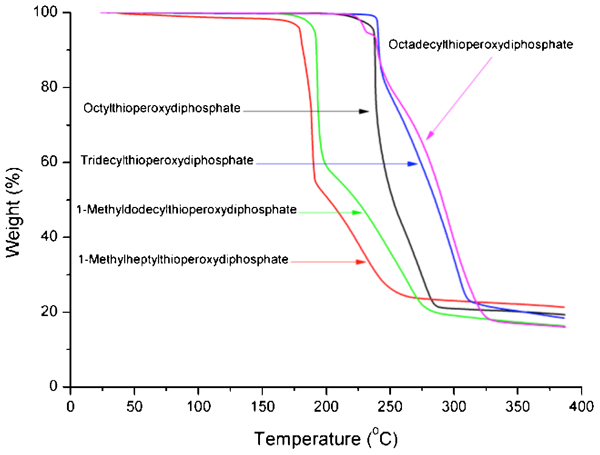
Thermogravimetric plots of select alkylthioperoxydiphosphates
Alkylthioperoxydiphosphates prepared from primary alcohols demonstrated slightly better thermal stability than those from secondary alcohols, and compounds with long chain length (>13 carbon atoms) are thermally stable under nitrogen beyond 200°C. In a study of thermal decomposition of ZDDP using DSC it was shown that in a flowing nitrogen environment ZDDP decomposes between 170 and 200°C depending on the heating rate with higher heating rates (5°C min−1) yielding a decomposition endotherm at 200°C and a slow heating rate (0·1°C min−1) yielding a decomposition endotherm centred around 170°C.31 These alkylthioperoxydiphosphates can be synthesised with tunable decomposition temperatures in the same range as ZDDP based on alkyl chain lengths and whether they have a primary or secondary structure.
High frequency reciprocating ball (HFRB) test
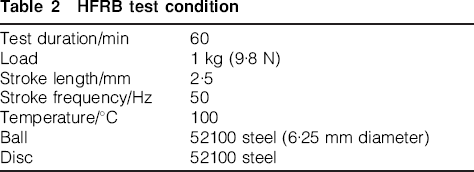
High frequency reciprocating ball (HFRB) tests were carried out to evaluate antiwear performance of alkylthioperoxydiphosphates, and test conditions are listed in Table 2. All formulations were tested at 0·1 wt-% P level in base oil. Steel discs of 52 100 are ground with 100, 240, 400 and 600 grit sandpapers, followed by polishing with 25, 5 and 0·5 μm Al2O3 aqueous solutions to achieve reproducible surface condition. Each lubricant formulation was tested independently three times on the HFRB to obtain wear results.
HFRB test condition
Topography of the wear scar was measured using the Veeco Wyko NT9100 Optical Profiler. Typical wear scars from three additives are shown in Fig. 10 and they include wear scars when ZDDP, tridecylthioperoxydiphosphate and 1-methyldodecylthioperoxydiphosphate were used as antiwear additives. Calculated wear volume for all the formulations is shown in Fig. 11.
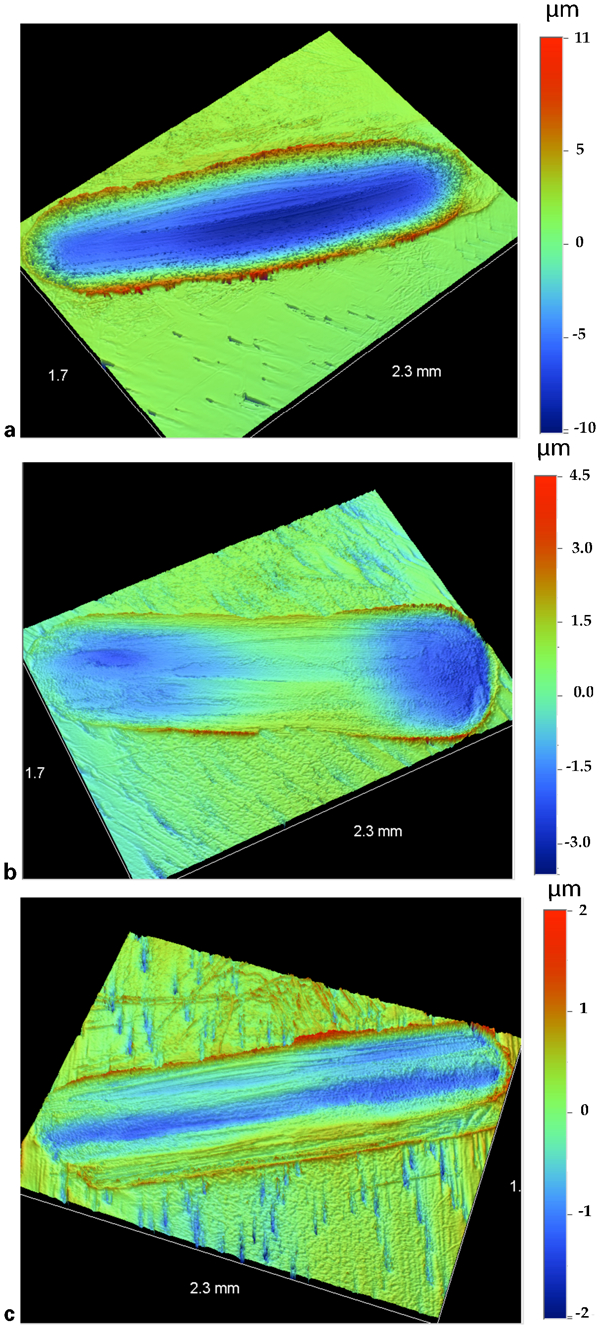
Optical profilometric traces of wear scars when a zinc dialkyl dithiophosphate, b tridecylthioperoxydiphosphate and c 1-methyldodecylthioperoxydiphosphate are used in base oil at nominal composition of 0·1 wt-% phosphorous: scale on right of wear scars is in micrometres
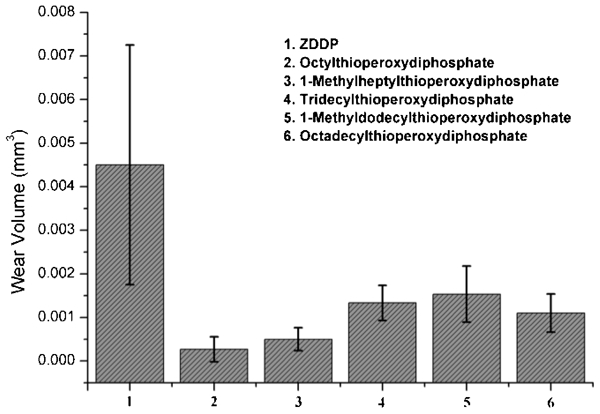
Wear scar volume of HFRB test of alkylthioperoxydiphosphates in base oil
The results indicate that formulations with alkylthioperoxydiphosphates of long alkyl chain length produce significantly lower wear volume in comparison to ZDDP at the same phosphorus level. The topographical image derived from optical profilometry shown in Fig. 10 illustrates the differences in wear performance. Figure 10a, the profile for ZDDP in base oil shows a wear scar with a maximum depth of 10 μm which remains more or less uniformly deep along the length of the wear scar, on the other hand the wear scar from tridecylthioperoxydiphosphate has a maximum depth of 3·5 μm with many regions much shallower than that. 1-methyldodecylthioperoxydiphosphate exhibits the best wear performance with a maximum depth of only 2 μm for similar test conditions. The differentiation in extent of wear is also reflected by the amount of debris build up on the sides of the wear track with ZDDP exhibiting the largest build up and the 1-methyldodecylthioperoxyldiphosphate exhibiting the smallest build up.
Scanning electron microscopy
Scanning electron microscopy using secondary electrons was used to examine local morphology of the wear scar in all compositions. Figure 12 shows typical wear scars for the different ashless alkylthioperoxydiphosphates in comparison to ZDDP. The morphology and characteristics of the wear track provides insight to explain the wear behaviour of the different chemistries. Under the test conditions used, it is evident that the ZDDP exhibits some level of abrasive wear and tribofilm pullout that may be responsible for the relatively poor performance in comparison to the different alkylthioperoxydiphosphates. All alkylthioperoxydiphosphates exhibit a small pad like structure, which is discontinuous on the wear surface, in some cases such as octylthioperoxydiphosphate, and 1-methyldodecylthioperoxydiphosphate the pads grow to become more continuous across the wear surface. The wear test with octylthioperoxydiphosphate had the best wear performance, but cannot be directly correlated to the tribo pad size as the 1-methyldodecylthioperoxydiphosphate had larger pad sizes but a slightly higher wear volume. However, none of the ashless alkylthioperoxydiphosphates exhibited the kind of abrasive wear observed in ZDDP which leads to significantly improved wear performance.
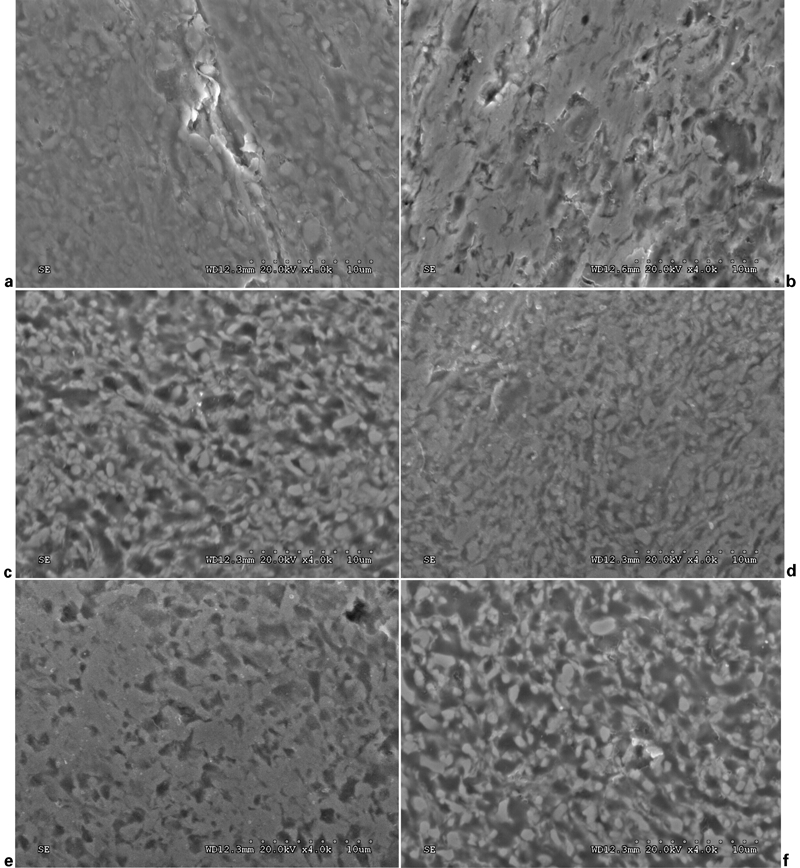
Secondary electron micrographs of wear scars from a zinc dialkyldithiophosphate, b octylthioperoxydiphosphate, c 1-methylheptylthioperoxydiphosphate, d tridecylthioperoxydiphosphate, e 1-methyldodecylthioperoxydiphosphate and f octadecylthioperoxydiphosphate
XANES analysis of thermal films
XANES has been used extensively in the past to examine the chemical structure of tribofilms formed when ZDDP and ashless thiophosphates are used as an antiwear agent.9,18,55–61 Thermal films formed at typical tribological temperatures offer important insight into the formation of films on the surface, such thermal films formed by ZDDP have been examined by XANES.27
P and S L-edge XANES of thermal films
In this study, thermal films were deposited at temperatures of 160°C with air being bubbled into the oil mixture to ensure oxidising environments. Thermal films were grown for periods of 30 min under these conditions. In order to ensure that the observed XANES spectra were indeed from films formed on the surface, reference spectra of the pure compounds used in this study were acquired at the P and S L-edge. Shown in Fig. 13 are the P L-edge FY spectra of pure ZDDP and octadecylthioperoxydiphosphate powder along with model compounds FePO4, Zn3(PO4)2 and Fe4(P2O7)3. The absorption edges for the pure antiwear additives are well to the left of the model compounds and it is also evident that the edge for the Zn is at lower energy in comparison to the two iron phosphates. This is because of the fact that in the model compounds of both ZDDP and ashless alkylthioperoxydiphosphates, the P is coordinated with two oxygen and two sulphur atoms, where as in the case of FePO4 and Zn3(PO4)2 the P is coordinated with four oxygen atoms. The difference in peak positions between the ZDDP and octadecylthioperoxydiphosphate and the FePO4 and Zn3(PO4)2 arises from this difference in electronegativity between O and S.62 Figure 14 is the S L-edge FY spectra of pure ZDDP and octadecylthioperoxydiphosphate together with model compounds Fe2(SO4)3, FeSO4, ZnSO4, FeS2, FeS and ZnS. It is easy to differentiate between the sulphates and the sulphides due to the distinguishing peaks at lower energy in the sulphides that are absent in the case of the sulfates.18,57,60,62 The large difference in energies associated with sulphides and sulphates can be attributed to the big difference in the oxidation state of S in the sulphide to the sulphate, e.g. −2 in FeS to +6 in FeSO4.27 In addition the sulphide antiwear additives have their primary edge at lower energies and the post-edge structure is very diffuse.
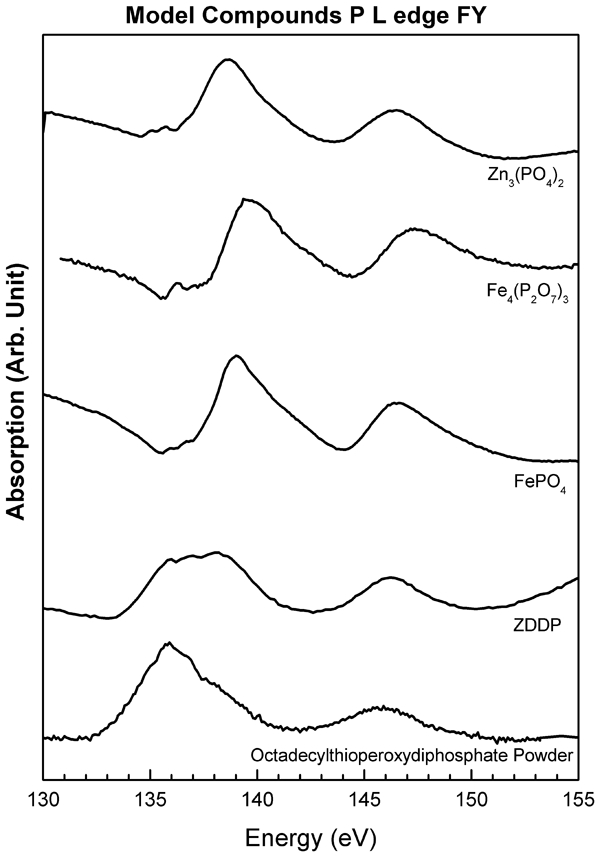
P L-edge FY spectra of pure ZDDP and octadecylthioperoxydiphosphate powder along with model compounds FePO4, Zn3(PO4)2 and Fe4(P2O7)3
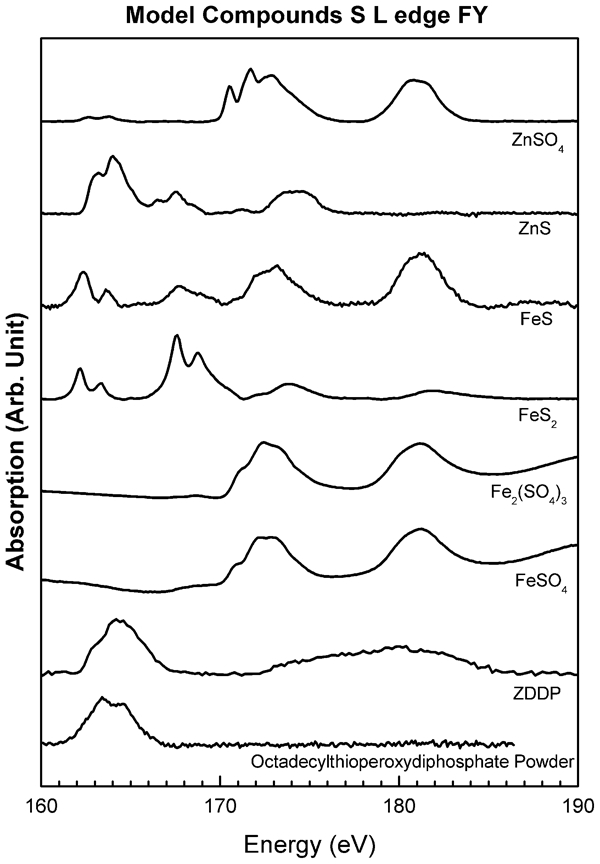
S L-edge FY spectra of pure ZDDP and octadecylthioperoxydiphosphate together with model compounds Fe2(SO4)3, FeSO4, ZnSO4, FeS2, FeS and ZnS
Figure 15 is the P L-edge TEY spectra of thermal films formed at 30 min of thermal exposure. It is clearly evident that the primary absorption edge present at 139 eV corresponds to Zn3(PO4)2 that is shown in Fig. 13. In an earlier study it has been shown that the presence of pre-edge peaks before the white line for the P L-edge is characteristic of the longer chain Zn polyphosphates63 with the relative peak heights representative of the polyphosphate chain length.13 In an earlier study of thermal films formed from ZDDP at 150°C it was shown that it took over 4 h to develop longer chain polyphosphates of Zn.27 In the current case even though temperatures of 160°C were employed in the thermal film study the absence of any pre-edge structure in the ZDDP thermal film indicates that the phosphates in these thermal films are short chain and have not cross-linked or polymerised. The P L-edge peaks for the three ashless additives, tridecylthioperoxydiphosphate, 1-methyldodecylthioperoxydiphosphate and octadecylthioperoxydiphosphate have their edges at the same location as the thermal films of ZDDP. The Fe4(P2O7)3 model compound shown in Fig. 13 has a binding energy of 139·3 eV which is right at the location of the absorption edge of the thermal films. In addition, the presence of a faint pre-edge structure in the thermal film from 1-methyldodecylthioperoxydiphosphate suggests the possible formation of longer chain polyphosphates of iron. The temperature used in this study of 160°C helps in the cross-linking of the phosphate films of the shorter alkyl chain length antiwear chemistries. The thermal stability of the tridecylthioperoxydiphosphate and octadecylthioperoxydiphosphate in a nitrogen environment are very similar as illustrated in the TGA plot in Fig. 9, however, in an oxidising environment it is believed that the longer alkyl chain length in the latter molecule may result in better thermal stability and incomplete decomposition as evidenced by the noisy spectra from the thermal film generated by the octadecylthioperoxydiphosphate compound.
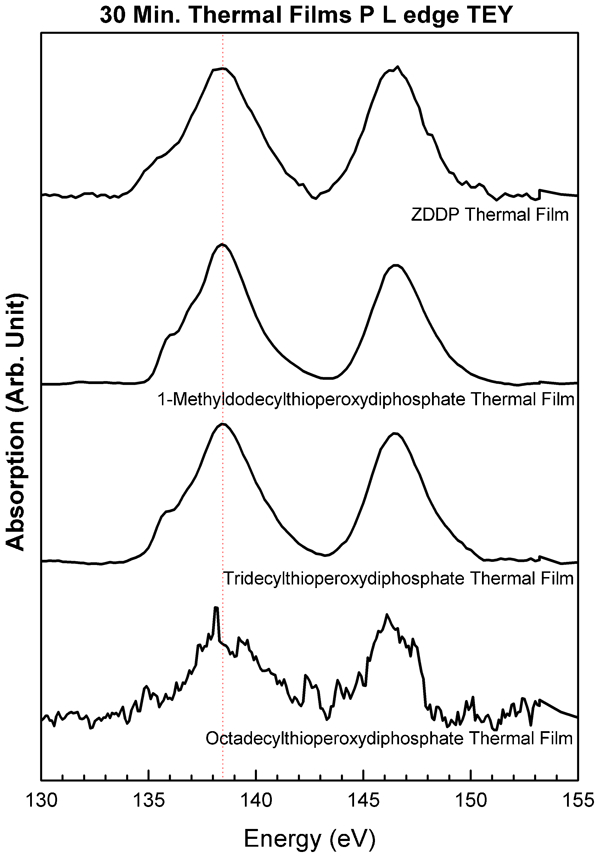
P L-edge TEY spectrum of thermal films formed from ZDDP, 1-methyldodecylthioperoxydiphosphate and tridecylthioperoxydiphosphate after 30 min of thermal exposure at 160°C
Figure 16 is the S L-edge TEY spectra of the thermal films formed on the surface for the same conditions described for the P L-edge spectra. The position of the peaks clearly indicates that the S is present in the form of sulphates and not sulphides in all three cases. The position of the main absorption edge for ZnSO4 and FeSO4 are identical and it is not possible to distinguish between the two; however, in the case of ZDDP there is a small amount of sulphide that is not present in the case of the ashless additives. The minimal amount of sulphides in the films suggests that the active oxidative conditions preclude the reduction of the sulphates to sulphides at the surface. Even in this case it is evident from the weak signal and larger noise to signal ration for the octadecylthioperoxydiphosphate thermal film the better stability of this compound in an oxidising environment results in incomplete decomposition and thinner thermal films.
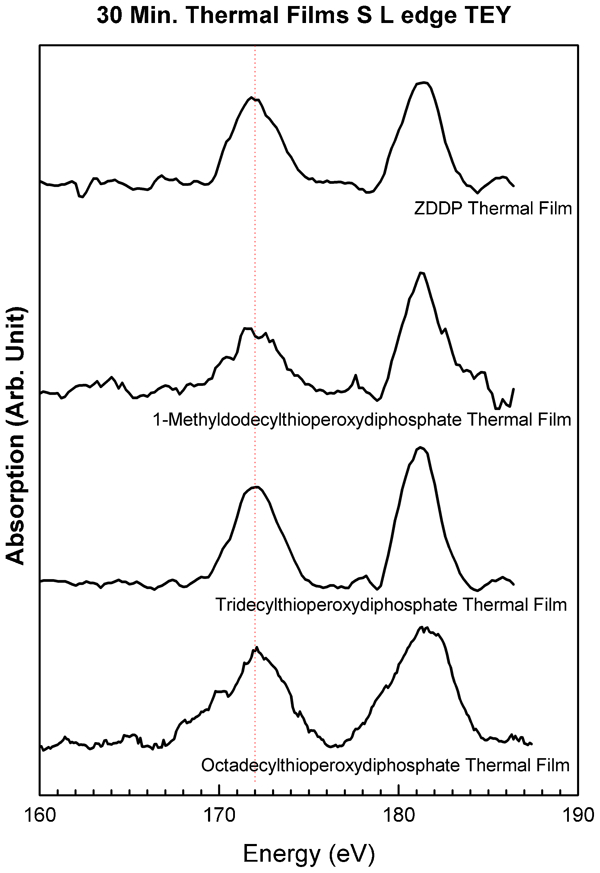
S L-edge TEY spectrum of thermal films formed from ZDDP, 1-methyldodecylthioperoxydiphosphate and tridecylthioperoxydiphosphate after 30 min of thermal exposure at 160°C
P and S K-edge XANES of thermal films
The P K-edge provides insight into the formation of phosphates while the S K-edge provides information on the sulphates and sulphides. The TEY at the P and S K-edge typically provides information from the top 50–100 nm of the thermal films64 which is deeper than what is acquired from the L-edge. The K-edge has been used extensively in the past to study tribofilms7,18,57,60,62,65 and is well suited to study thermal films as well. Figure 17 shows the P K-edge TEY XANES spectra of the model compounds Zn3(PO4)2 and FePO4 along with thermal films formed from ZDDP, tridecylthioperoxydiphosphate and 1-methyldodecylthioperoxydiphosphate. The difference in white line energy between Zn3(PO4)2 and FePO4 is ∼1·5 eV with Zn3(PO4)2 located at 2151·5 eV and FePO4 located at 2153 eV. Another distinguishing difference between Zn3(PO4)2 and FePO4 is the presence of a small pre-edge at 2149 eV in the case of FePO4. The ZDDP thermal film has a white line which aligns perfectly with the Zn3(PO4)2 which indicates that the substrate does not play a significant role in the formation of the thermal film and the film is largely composed of decomposition products of ZDDP. On the other hand the thermal film from the tridecylthioperoxydiphosphate and 1-methyldodecylthioperoxydiphosphate appear to have white lines that match the peaks from FePO4. The absence of the weak pre-edge before the primary peak does not preclude the presence of FePO4. As detailed in the L-edge spectra is highly unlikely that the peaks present are from undecomposed compounds as their white lines lie at lower energy.
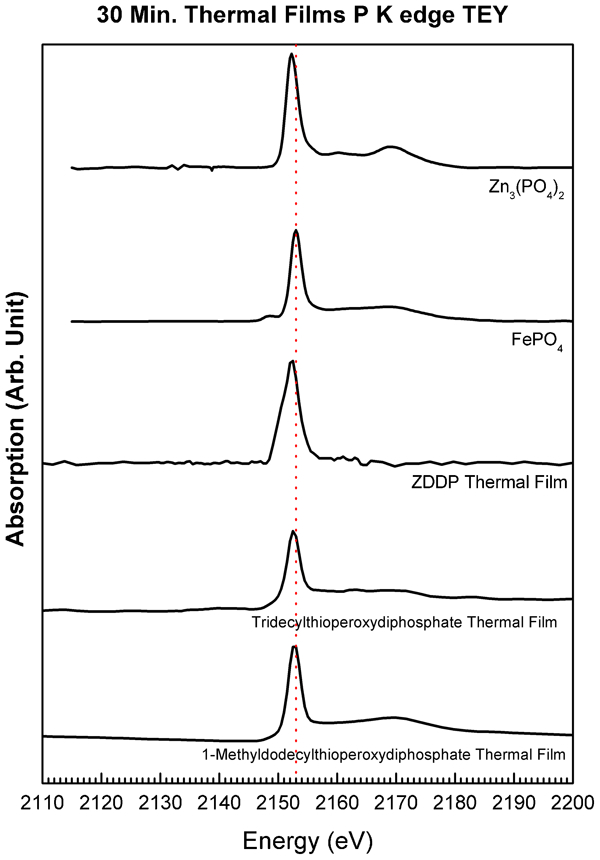
P K-edge TEY spectrum of thermal films formed from ZDDP, 1-methyldodecylthioperoxydiphosphate and tridecylthioperoxydiphosphate after 30 min of thermal exposure at 160°C along with model compounds
Figure 18 illustrates the S K-edge TEY XANES spectra of model compounds ZnSO4, ZnS, FeS2, FeS, FeSO4 and Fe2(SO4)3. In addition, this figure has the spectra for the thermal films from ZDDP, tridecylthioperoxydiphosphate and 1-methyldodecylthioperoxydiphosphate. The model compounds clearly illustrate the difference in the spectra of the sulphides and sulphates. The white lines for the sulphates lie around 2482 eV with the energy for ZnSO4 slightly lower that the iron sulphates. On the other hand, the sulphides of both Zn and Fe have very sharp characteristic features at lower energies between 2470 and 2475 eV as illustrated in the Fig. 18. All three thermal films indicate that the dominant peak is associated with the sulphates in a fashion similar to what is seen in the L-edge spectra indicating the oxidising environment results in oxidation of the sulphur species in the thermal films. The ZDDP thermal film shows a small pre-edge at 2473 eV which arises from a contribution from ZnS while the 1-methyldodecylthioperoxydiphosphate thermal films shows a small bump at 2472 eV that arises from FeS2/FeS. This indicates while most of the thermal film is made up of sulphates deeper within the thermal films some sulphides are present as well.
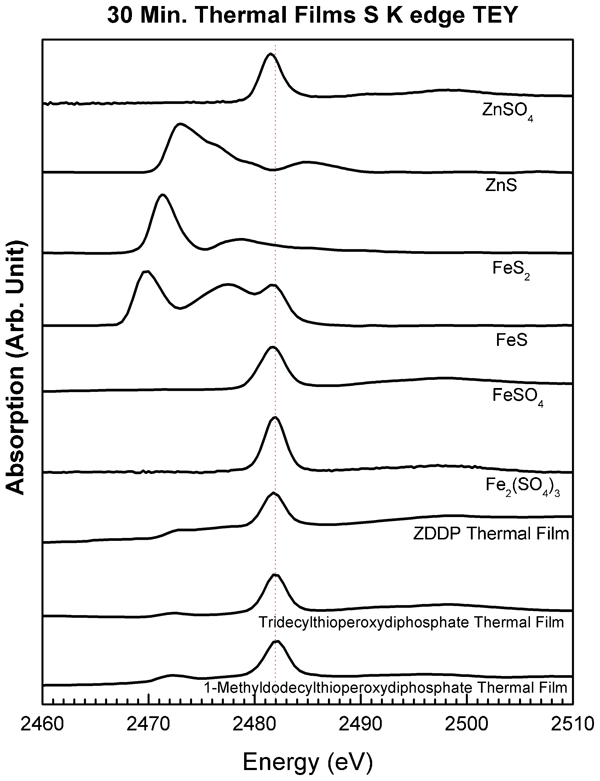
S K-edge TEY spectrum of thermal films formed from ZDDP, 1-methyldodecylthioperoxydiphosphate and tridecylthioperoxydiphosphate after 30 min of thermal exposure at 160°C along with model compounds
XANES analysis of tribofilms
Subsequent to the HFRB test the tribological specimens were preserved with a layer base oil (sulphur free) on the surface until it was examined at the Canadian Light Source. Total electron yield (TEY) and fluorescent yield (FY) spectra were acquired. The L-edge spectra are much more sensitive to the surface in comparison to the K-edge spectra and TEY spectra for the L-edge of P and S provide information from the top ≈5 nm of the tribofilm while FY spectra provides information from the top ≈50 nm of the tribofilm.64 As tribofilms are generally <100 nm in thickness in most cases, these two edges provide useful information on the distribution of P and S in the tribofilm.
Figures 19 and 20 are the P L-edge TEY and FY spectra of tribofilms from ZDDP, octadecylthioperoxydiphosphate, 1-methyldocecylthioperoxydiphosphate and tridecylthioperoxydiphosphate. It is evident from the TEY spectra the surface region of the ZDDP tribofilm is composed of a short chain zinc phosphate. In an earlier study in a pin on disc configuration which results in lower Hertzian contact loads it was shown that when ZDDP was used at higher temperatures and longer rubbing time it was possible to form longer chain Zn polyphosphates.66 On the other hand the tribofilms for the three ashless chemistries in this study have edges at energies lower than their thermal film counterparts and match the edge corresponding to Fe4(P2O7)3 a medium chain polyphosphate. However, the broad nature of the peaks suggests that it is made up of a mixture of polyphosphates as opposed to a single chemistry. The FY spectra of the tribofilm indicates that in the case of ZDDP the tribofilm is still comprised largely of short chain Zn phosphates. On the other hand the very noisy and low intensity of the spectra for the three ashless chemistries suggest that deeper in the tribofilm the contribution from the polyphosphate film is less significant.
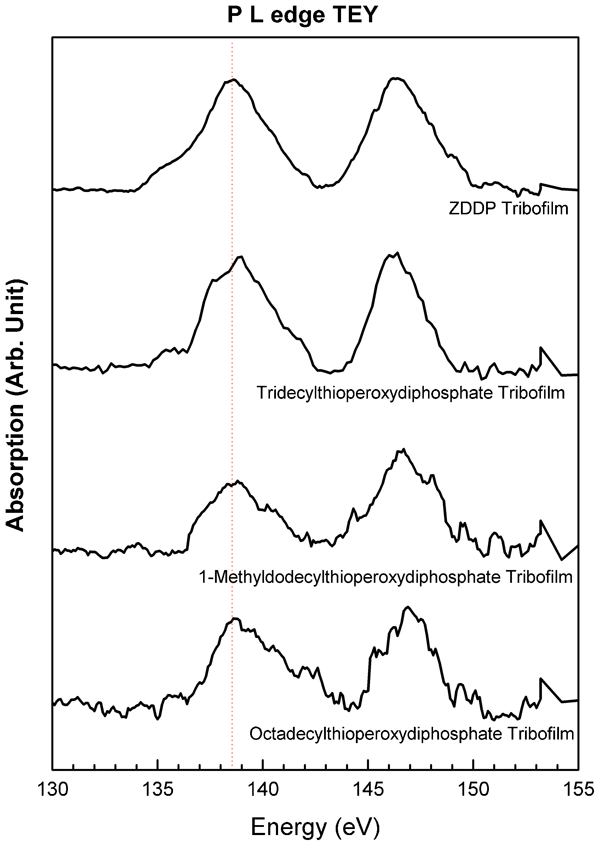
P L-edge TEY spectrum of tribofilms formed from ZDDP, octadecylthioperoxydiphosphate, 1-methyldodecylthioperoxydiphosphate and tridecylthioperoxydiphosphate
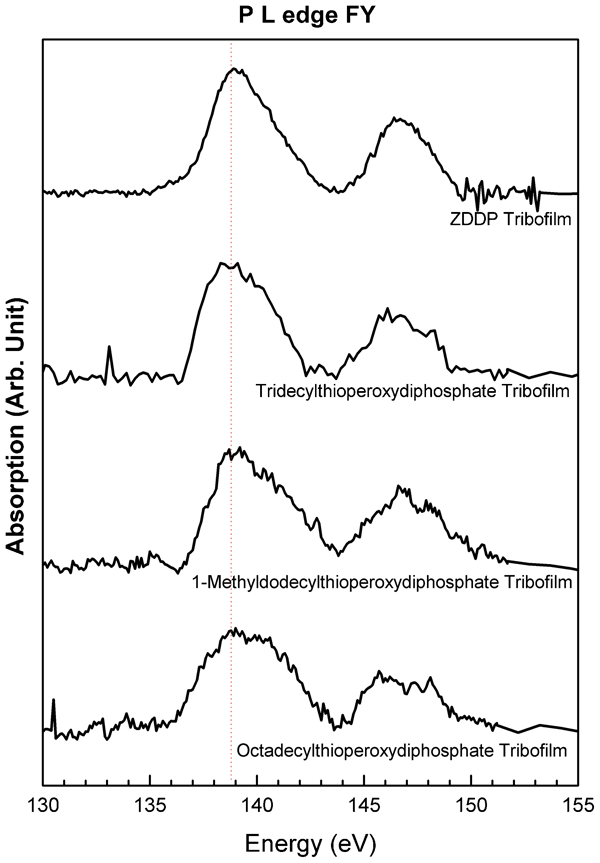
P L-edge FY spectrum of tribofilms formed from ZDDP, octadecylthioperoxydiphosphate, 1-methyldodecylthioperoxydiphosphate and tridecylthioperoxydiphosphate
Figures 21 and 22 are the S L-edge TEY and FY spectra from ZDDP and three ashless alkylthioperoxydiphosphates detailed in the earlier section. The TEY spectra indicate that in the case of ZDDP and three ashless chemistries there is a strong contribution from the formation of the sulfates. The FY spectra indicates that deeper into the tribofilm in both the case of ZDDP and ashless additives sulphur is preferentially present in the form of sulphates.
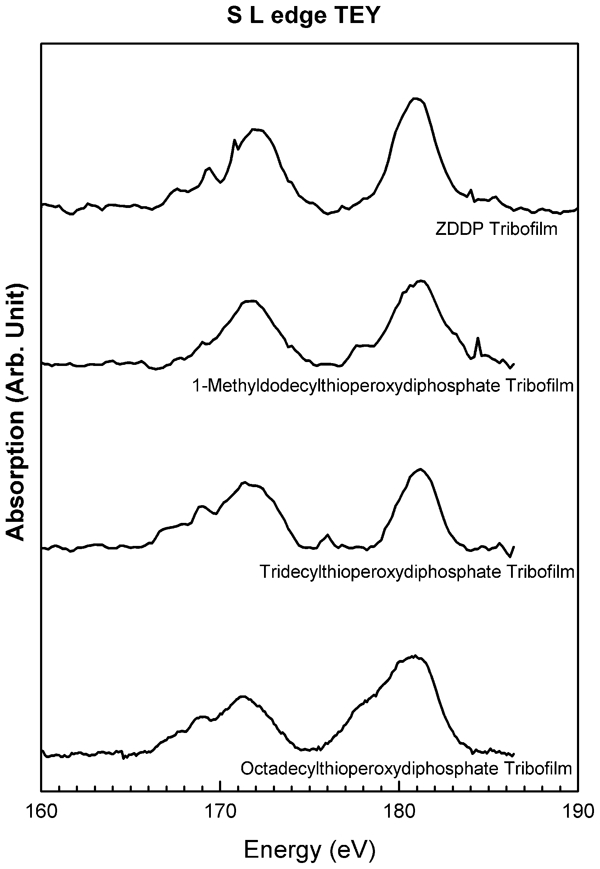
S L-edge TEY spectrum of tribofilms formed from ZDDP, octadecylthioperoxydiphosphate, 1-methyldodecylthioperoxydiphosphate and tridecylthioperoxydiphosphate
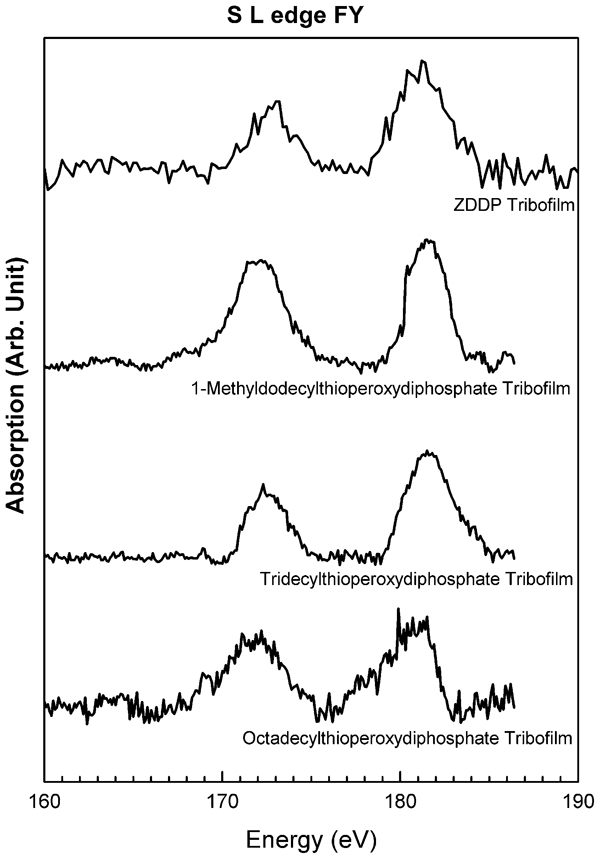
S L-edge FY spectrum of tribofilms formed from ZDDP, octadecylthioperoxydiphosphate, 1-methyldodecylthioperoxydiphosphate and tridecylthioperoxydiphosphate
Conclusion
Alkylthioperoxydiphosphates with different alkyl chain lengths have been successfully synthesised via H2O2 oxidation. These compounds were systematically characterised with NMR, FT-IR, ESI-TOF and MALDI-TOF.
Antiwear performance of alkylthioperoxydiphosphates was evaluated by HFRB tests. Wear scar results show alkylthioperoxydiphosphates outperformed ZDDP in base oil formulations at 0·1% (w/w) phosphorous.
All tribofilms generated from alkylthioperoxydiphosphates exhibit a small pad like morphology on the wear surface, which is discontinuous, however, the tribofilms from ZDDP exhibit evidence of abrasive wear that is responsible for larger wear in comparison to alkylthioperoxydiphosphates.
XANES analysis of thermal films suggests the formation of phosphates of Zn when ZDDP is used and those of Fe when ashless alkylthioperoxydiphosphates are used. However, the severe oxidative conditions of the test result in sulphur being oxidised into sulphates in the thermal films. However, the K-edge spectra indicate the presence of small amounts of sulphides in the thermal films as well.
XANES analysis of tribofilms suggests the formation of polyphosphates of iron near the surface of tribofilms from ashless alkylthioperoxydiphosphates while Zn3(PO4)2 is formed when ZDDP is used. In addition in the near surface region both ZDDP and ashless additives have a mixture of sulfates with ZDDP having zinc sulfate and ashless additives having iron sulfate.
Footnotes
Acknowledgements
The S and P L-edge XANES experiments were performed at the Canadian Light Source, which is supported by NSERC, NRC, CIHR, and the University of Saskatchewan. The authors would like to thank Dr Lucia Zuin of the Canadian Light Source for assistance with the XANES experiments. The S and P K-edge XANES experiments were performed at Synchrotron Radiation Center, University of Wisconsin at Madison, which is supported by The National Science Foundation under award number DMR-0537588. The NMR and FT-IR data were acquired in the Department of Chemistry and the SEM images at CCMB at University of Texas at Arlington. The authors acknowledge Dr Meletis for providing the use of the optical profilometer for measurement of the wear scar diameter.
This paper is part of a special issue on Enabling and Emerging Lubrication Technologies