







Abstract
Emission of volatile organic compounds (VOC) from wood during processing to pellets – significance of wood extractives. Cellulose, hemicelluloses and lignin are the main components of the cell wall in wood. Moreover, wood contains different amounts of extractives, depending on the wood species. Extractives in softwoods play an important role during processing of wood to different wood products. This work studies the influence of storage on the change of extractives as well as on the emission of monoterpenes (primary emission) and aliphatic aldehydes, as degradation products of fats and fatty acids (secondary emission). In case of pine wood storage for 2 days at 80°C proved to be more efficient in the reduction of emissions of terpenes and aldehydes than 4 weeks at 40°C. Quantitative differences between pine (Pinus sylvestris) and spruce (Picea abies) wood chips in the emission were evaluated and discussed. Pinewood emits about 10 times higher amounts of terpenes and aldehydes than spruce wood. The results indicate that the intense of change in primary and secondary emissions due to storage depends on the wood species as well as on the boundary conditions under which storage is carried out. In general, storage at high temperature (80°C) is much more effective than at low temperature (40°C). The results also reveal that removal of wood extractives from pine wood by extraction with ethanol-cyclohexane or treatment with sodium hydroxide decreases the emission of primary and secondary volatile organic compounds drastically. Nevertheless, after such treatments minute amounts of volatile organic compounds are still detectable.
Introduction
In the last decade the use of wood as a source of bioenergy increased tremendously and is now facing renaissance, especially in Europe. In Germany wood pellets are, in general, made from softwoods like pine (Pinus sylvestris L.) and spruce (Picea abies (L.) Karst). Hardwoods like beech (Fagus sylvatica L.) attracted so far little attention as a raw material for this industry (Döring 2010). However, different poplar wood species are gaining some importance. For pellet making in Germany mainly saw mill residues (82·8%) and to a lesser extent round wood (17·2%) are used (DEPV 2014). Wood chips are used either in the fresh state or after storage for several weeks or even months.
In the process of pellet making fresh or stored wood chips are dried to a moisture content of about 8–10% at temperatures ranging from 100 to 140°C. Lower temperatures can also be used for drying. Thereafter, the dried chips are ground by a hammer mill to fine particles and pressed at a temperature around 100°C through the holes of a die. During the pressing step water or steam may also be injected to increase the moisture content to 12–14% in order to reach some sort of thermal plasticisation (Goring 1963, Back 1973). The high temperature and pressure created during the pressing operation also enhance the self-bonding of wood particles. Natural binders like native or modified starches can also be added as an external bonding agent (Döring 2010).
Wood experiences several chemical changes during the process of pellet making. Roffael and Kraft (2010) determined the change in the pH value of wood during the different steps of pellet making and established that the pH value of spruce wood decreases noticeably and the alkaline buffering capacity of its water extractives increases significantly during the process of pellet making. Moreover, the amount of cold water extractives of spruce wood increases indicating some hydrothermal degradation of wood during the process of pellet making. Especially the pressing process under high temperature and pressure seems to thermally degrade wood.
During storage wood chips used for pellet making experience significant changes in their extractives (Ekman 2000), which impact the emission of volatile organic compounds (VOC) (Roffael 2006, Roffael and Uhde 2011). Also, the storage of pellets in big silos after production is relevant to the emission as the temperature during storage may reach 80°C or even higher (Svedberg et al. 2004). Pellets are usually stored for several days after production.
During storage of wood, wood extractives undergo several changes both in amount and in chemical composition. During storage wood extractives, especially lipophilic extractives migrate to the surface of wood (Back 1988). In the surface of wood oxidation processes (autoxidation) unfold leading to formation of products of pungent odour like hexanal (Arshadi and Gref 2005). In this context, unsaturated fatty acids, their glycerides and sterylesters seem to play an important role, particularly in the formation of saturated aldehyde compounds like hexanal and heptanal via autoxidation etc. (Back and Allen 2000; Back 2000a). Wood based panels like oriented strand boards (OSB) made from pinewood and medium density fibreboards (MDF) emit also hexanal as a degradation product of wood extractives (Brown 1999; Baumann et al. 2000). Excessive degradation of wood extractives may lead to the formation of carbon monoxide, a gas of high health relevance (Svedberg et al. 2008; Kuang et al. 2008). However, the mechanism of formation of carbon monoxide is still not well established. Svedberg et al. (2004) found that the emission of carbon monoxide during storage of wood pellets peaked after about 8 weeks, the release of carbon monoxide reached values of 120 mg m−3 and that of aldehydes nearly 100 mg m−3.
During storage hydrolysis of esterified fatty acids, especially fats, takes place (Assarson and Croon 1963) leading mainly to the formation of free unsaturated fatty acids, which are susceptible to autocatalytic oxidation leading, among others, to the formation of saturated aldehydes like pentanal, hexanal, octanal up to decanal. The oxidation rate of unsaturated acids depends among other factors on the nature of the acid itself. According to Back and Allen (2000) the oxidation rate of linolenic acid (three double bonds) is about twice that of linoleic acid (two double bonds).
Besides oxidised products of unsaturated fatty acids monoterpenes are also emitted. Monoterpenes are part of the oleoresin in the resin canals. Monoterpenes constitute in general about 10% of the total wood resins (2–5%) in coniferous woods. Pine wood contains beside monoterpene compounds a high amount of esterified fatty acids, among which polyunsaturated fatty acids like linoleic and linolenic acids are the main components (Jansson and Nilvebrant 2009).
Lipids in pine wood trees experience seasonal changes in content and in chemical composition. The content of free fatty acids in sapwood reaches a maximum at the beginning and the end of the vegetation period. Moreover, saturated fatty acids like palmitic and stearic acids are notably higher in winter than in summer time (Saranpää and Nyberg 1987a, b). During storage the content of esterified fatty acids decreases rapidly due to hydrolysis, whereas the proportion of unsaturated free fatty acids susceptible to oxidation increases in the first stage of storage reaches a maximum and declines thereafter (Fig. 1).
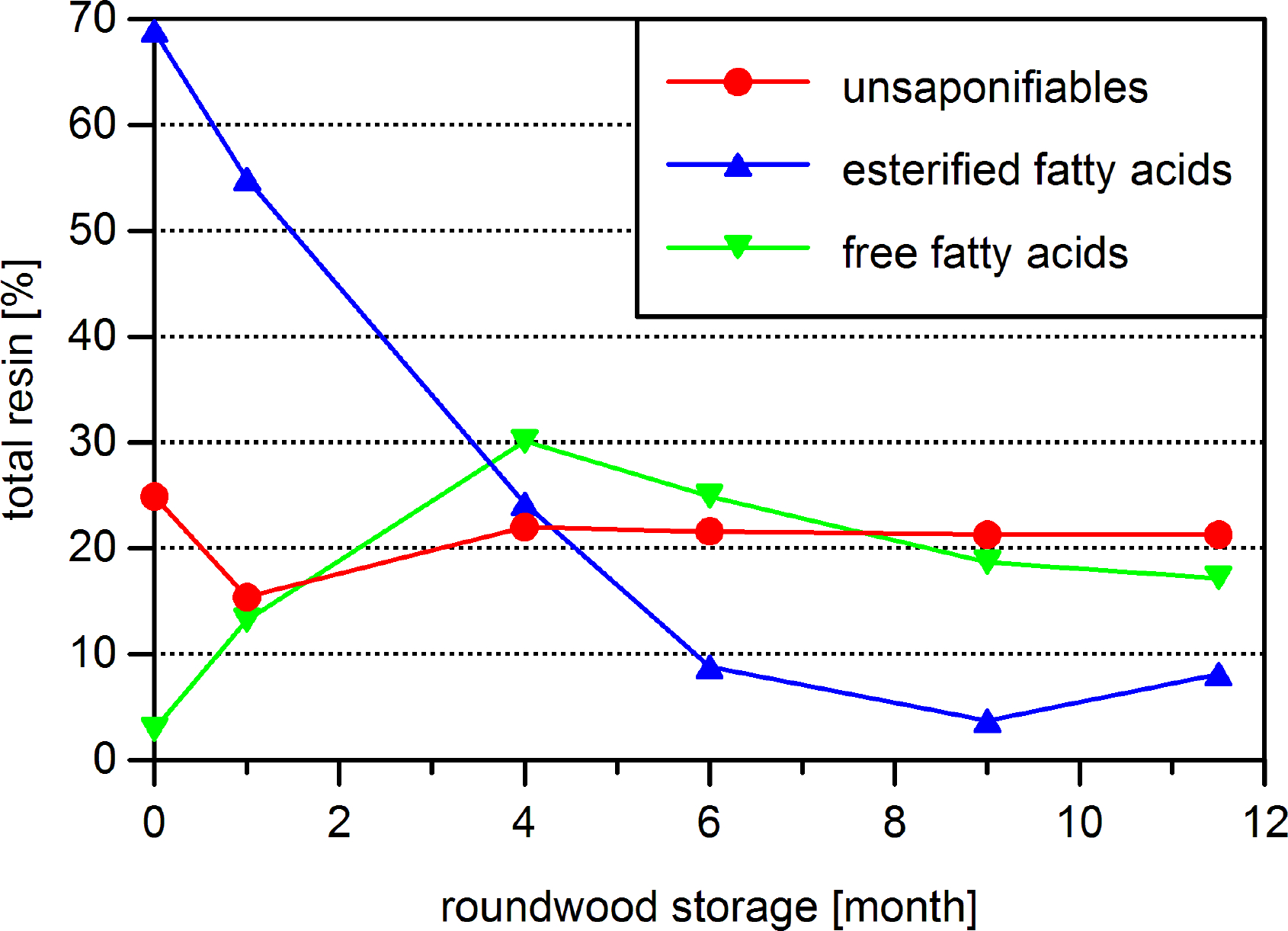
Change in birch wood extractives (Betula pendula) on storage of round wood (Assarsson and Croon 1963)
This decrease of esterified fatty acids is ascribed to the autoxidative degradation (Assarsson and Croon 1963). Degradation of unsaturated fatty acids can be catalysed by heat and light and inhibited by radical scavengers (Chan 1987). According to Back (2000a) different aldehydes can be formed by oxidative degradation and scission of unsaturated fatty acids. Not only volatile but also non-volatile compounds can be formed by autoxidation of fats (Gardner 1987).
Back and Allen (2000a) differentiate between primary volatiles and secondary volatiles; primary volatiles are chemical volatile compounds, which are already present in wood, whereas secondary volatiles are formed by oxidative degradation of wood extractives and scission of formed unsaturated fatty acids. Insofar, monoterpenes are primary volatile compounds, whereas aliphatic saturated aldehydes as hexanal and heptanal are secondary volatile compounds.
The formation of secondary volatile compounds depends upon several boundary conditions like temperature, presence of oxidising agents etc. During outdoor storage the extractive content of wood and the chemical composition of the extractives change significantly. Oxidation products of fatty acids like hexanal, pentanal, etc. start to build up after oxidation sets in at a rate depending, among others, on the available oxygen (Fig. 2).
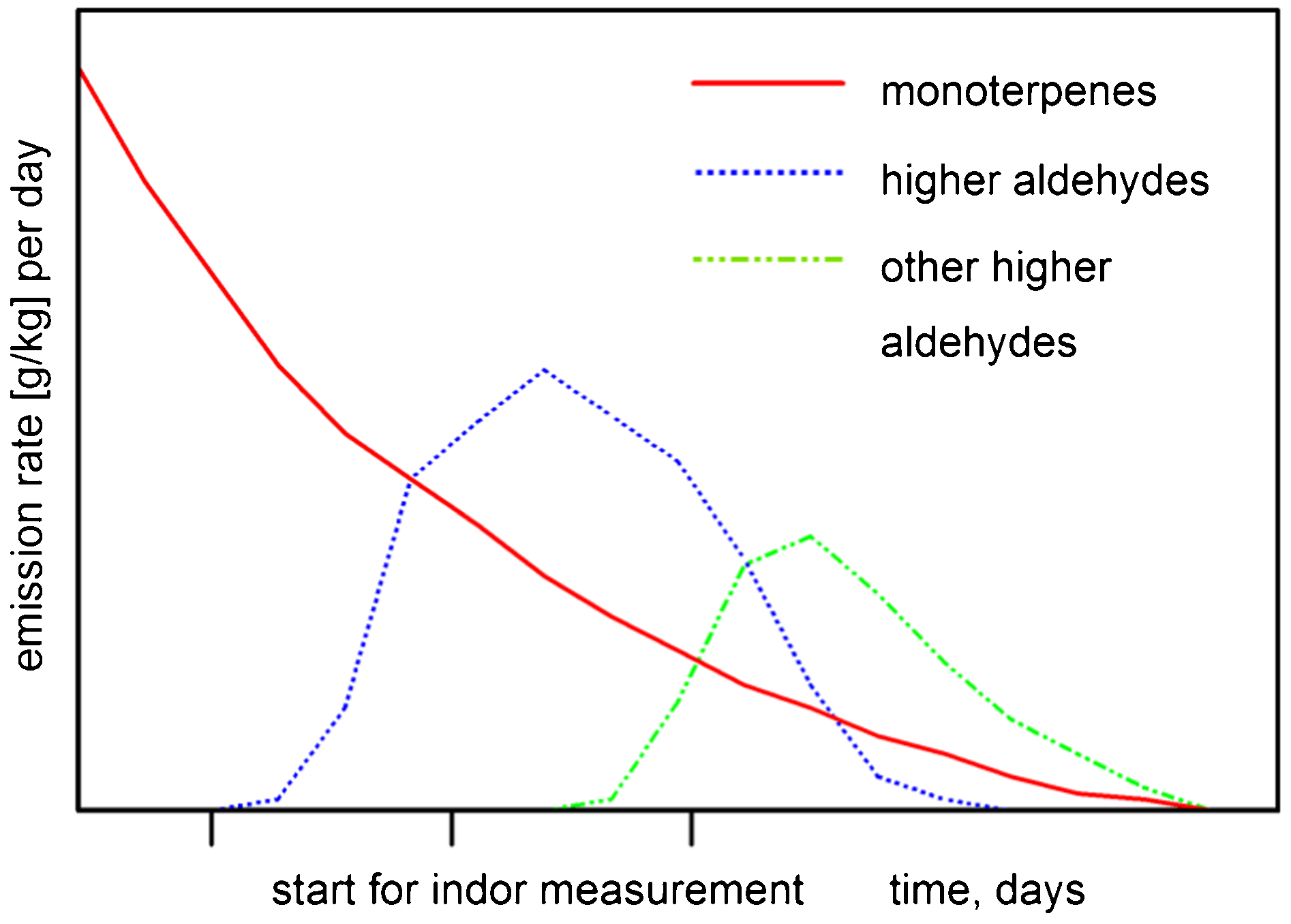
Change in chemical composition of volatile organic compounds (VOC) due to storage of soft wood and formation of different higher aldehydes by oxidative degradation and scission of unsaturated fatty acids (Back 2000a)
The chemical composition of the higher aldehydes liberated from wood changes during the course of storage due to further oxidation as portrayed in Fig. 2. Also the susceptibility of different fatty acids to oxidation may contribute to such a change in the chemical composition of aldehydes (Back 2000a). Wet wood is, in general, less susceptible to oxidation compared to dry wood (Roffael and Kraft 2010).
Fats occur mainly in the parenchyma cells in sapwood and in the transition zone between sap- and heartwood itself. Back (2000b) wrote an exhaustive review on the location and morphology of resin components in wood.
Autoxidation of fats can take place at ambient temperature or even subambient temperature, the velocity of the reaction is enhanced by heat, UV-light and metal ions (Chan 1987). Autoxidation can be inhibited by so called radical scavengers (antioxidants). Autoxidation of fats at room temperature explains why wood chips emit aldehydes, though in small amounts, at ambient temperature (Emhofer 2009). Kuang et al. (2008) studied the influence of temperature during storage on the emission of carbon monoxide from wood pellets; they established that the temperature is an important factor. After 10 days storage at 20°C the carbon monoxide concentration was less than 100 ppm, whereas after 5 days at 55°C the concentration reached 3000 ppm. The storage experiments were carried out in 45 l containers. According to Kuang et al. (2008) increasing temperature enhances also the emission of carbon dioxide; the carbon dioxide concentration increased from 10 000 ppm to nearly 60 000 ppm by increasing the temperature from 20 to 55°C.
Objectives of work
The main objective of the research work was to study the change in the emission of primary volatiles, especially monoterpene compounds, and the formation of secondary volatiles as saturated aldehydes during storage of pine and spruce wood in a temperature range common in storage of wood chips used for making pellets. Therefore, in this study storage was carried out at 40 and 80°C for different time periods (4 weeks at 40°C, 4 weeks at 40°C and 1 day at 80°C, 1 day at 80°C and 2 days at 80°C). Moreover, it was also aim of the work to study the change in wood emission due to removal of wood extractives by different common chemical treatments. The extractives were removed from pine chips using a mixture of ethanol and cyclohexan (1∶2) according to the method published by Fengel and Przyklenk (1983); the extractive content decreased from 4·2 to 0·1% by the treatment. Moreover, in another experiment the chips were treated with 1% sodium hydroxide solution at room temperature for 1h and thereafter the chips were washed alkali free with distilled water and dried at room temperature. Using this technique the extractive content of the chips was reduced from 4·2 to 0·2%.
Material and method
Storage of wood samples
Spruce and pine chips from the pellet industry were used for the study. To study the influence of storage of wood, samples of freshly prepared pine (wood density 0·49–0·52 g cm−3 at 15% moisture content) and spruce (wood density 0·45 g cm−3 at 15% moisture content) wood chips (50 g) were stored in a closed glass flask in an oven at 40°C for a time interval of 4 weeks (trt no. 1). The moisture content of the chips was 45–55%. Another sample was stored in another closed glass flask for 4 weeks at 40°C and thereafter 1 day at 80°C (trt no. 2). In two other separate experiments pine wood chips were stored once for only one day at 80°C (trt no. 3) and once for two days at 80°C (trt no. 4) in a closed glass flask. As a control a fresh sample was taken. All glass flasks used for storage of wood chips had a volume of 1000 cm3.
GC/MS Methods
Chemicals
A mixture of methanol (Merck 99·8%)/methylene chloride (Merck 99%) solution (1∶2) was used to dilute the following substances as retention time standards:
3-carene (Roth 90%), decanal (Acros 95%), heptanal (Acros 95%), hexanal (Aldrich 98%), nonanal (Merck 98%), octanal (Acros 99%), 2-pentylfuran (Aldrich 98%), (1S)-(-)-β-pinene (Aldrich 97%) and a racemic mixture of α-pinene enantiomers (Aldrich 98%).
Experimental design
For the thermal oxidation experiments a modified gas chromatograph oven (Fracovap Series 4160, Carlo Erba Strumentazione, Radono, Italy) was modified as a heating chamber. A glass flask (250 mL Duran, Schott, Mainz, Germany), as sampling chamber, was put into the modified gas chromatograph oven and connected to a pressure cylinder with synthetic air (20%O2 in N2, AirLiquid, Düsseldorf, Germany) with a constant flowrate of 1·2 L min−1 for the whole experimental time. VOC samples from untreated (fresh) and treated wood chips (each 15 g) were taken under the same conditions, conditioned at 25°C and then heated in the oven to 105°C. The first VOC measurements were sampled at 25°C using a charcoal volatile trap (1·8 mg Charcoal, CLAS Filter, Daumazan sur Arize, France) at a flowrate of 1·2 L min−1, sampling period was 10 min. The same sampling procedure was applied after reaching a temperature of 105°C kept at 105°C for 0·5, 2, 6 and 24 h. The volatile compounds were desorbed from the charcoal volatile trap chemically by using 50 μL of a mixture of two parts of methylene chloride and one part of methanol (Boland et al. 1984). A scheme showing the experimental design is given in Fig. 3.
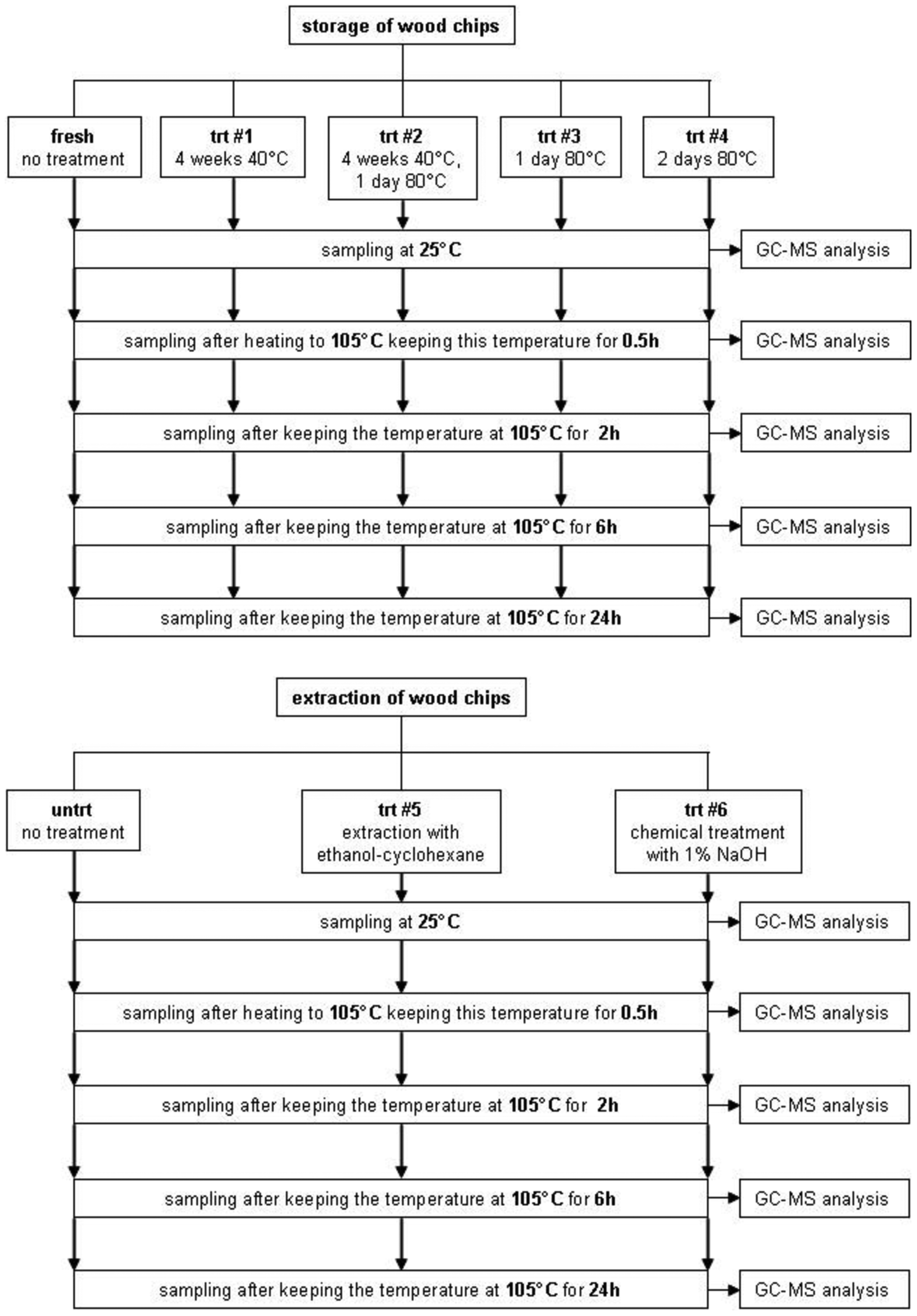
Scheme of experimental design showing on upper part storage experiments and on lower part extraction experiments
GC-MS analysis
For GC-MS analysis the volatiles were analysed using a 6890N GC (Agilent Technologies, Santa Clara, USA) fitted with a polar HP-INNOWax 30 m×0·25 mm id, ×0·25 μm (Agilent Technologies, Santa Clara, USA) capillary column and coupled to a quadrupol mass selective detector 5973 (Agilent Technologies, Santa Clara, USA). A volume of 1 μL of the sample solution was injected into the GC-MS for analysis. Helium (Helium 5·0, AirLiquid, Germany) was used as a carrier gas with a flow rate of 1 mL min−1. The oven temperature was kept at 50°C for 1·5 min, followed by an increase of 6·0°C min−1 up to 200°C with a hold for 5 min.
Identification of VOC
VOCs were first identified by comparison of their mass fragmentation pattern using MSD ChemStation D02·00·275 (Agilent Technologies, Santa Clara, USA) and MS Search v.2·0f (National Institute of Standards and Technology, USA). In a second step the GC retention times of the VOC were compared with the retention times of standards (see the section on ‘Chemicals’).
Calculation of emission rate (concentration rate)
The standards were diluted with a mixture of methylene chloride (Merck 99%) and methanol (Merck 99·8%) in a ratio 2∶1 in the range between 1ng/g and 10 μg g−1 in decimal steps. By using these 5 point calibration the amount of substance of each sampled VOC was calculated. The emission rate was calculated by dividing the amount of substance by the sample duration (10 min) and the amount of wood chips (15 g).
Results
The experiments were designed to enlighten the influence of storage under different conditions on the emission of primary volatile compounds (monoterpenes) and of aldehydes as secondary volatile compounds. Further experiments address the influence of extracting wood chips by common techniques as well as of chemical treatment of wood on the emission of monoterpenes and aldehydes.
Influence of storage on emission of volatile organic compounds (VOC) from pine chips
The results in Fig. 4 indicate that the total amount of emitted monoterpenes from pine wood, as determined by GC-MS, decreases enormously by storage of pine chips. Moreover, the results reveal that the temperature of storage plays an important role as well. Storage of chips at 80°C for one day (trt no. 3) under the mentioned boundary conditions seems to be more effective than 4 weeks at 40°C (trt no. 1). Moreover, the decrease in emission by increasing the storage time at 80°C has only a marginal influence on the total amount of monoterpenes released at 80°C as the results of trt no. 3 and trt no. 4 clearly reveal (Fig. 4).
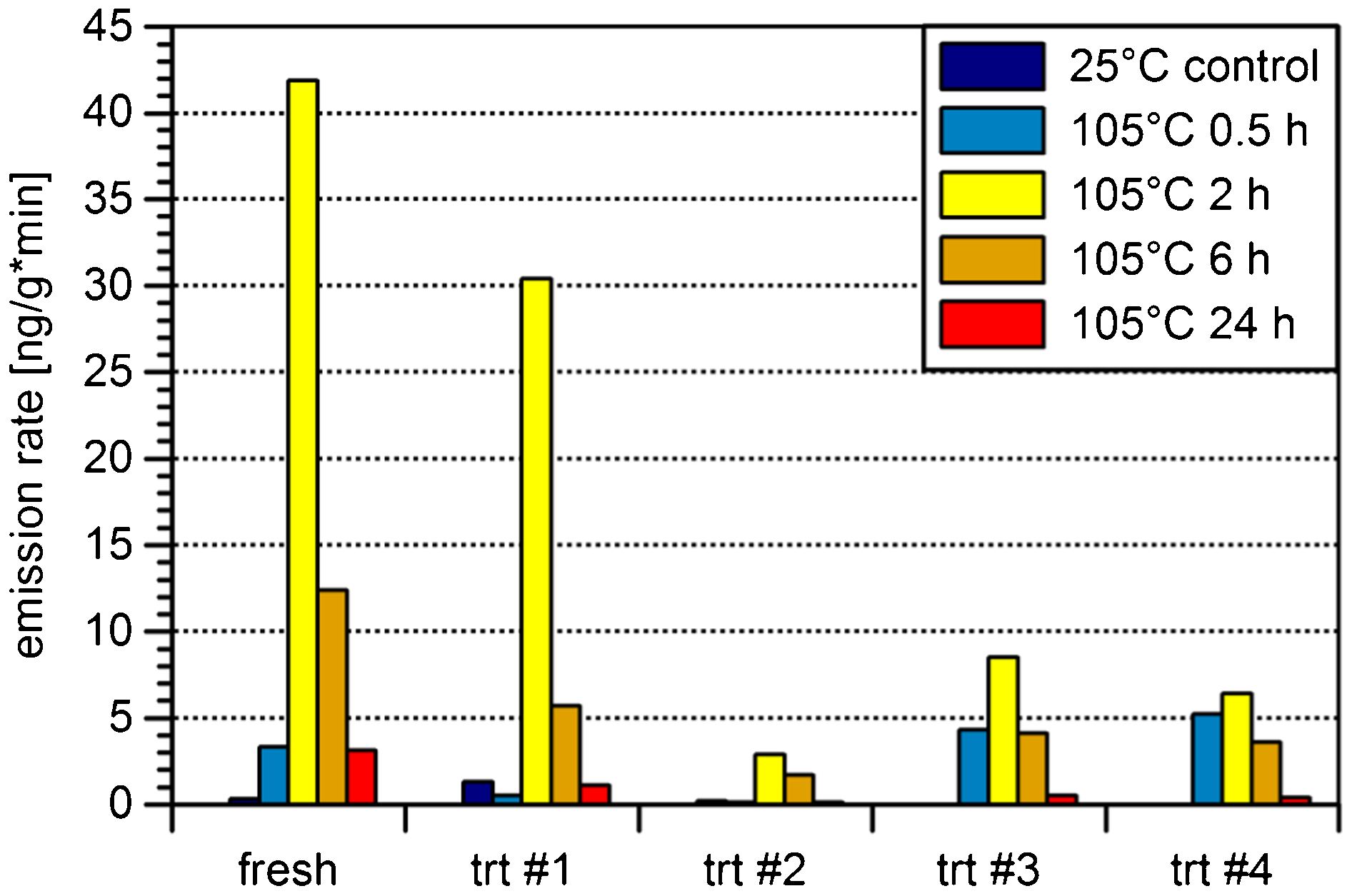
Sum of monoterpene emission from fresh pine (Pinus sylvestris) wood chips and after storage for different periods at different temperatures (trt no. 1: storage for 4 weeks at 40°C, trt no. 2: storage for 4 weeks at 40°C and 1 day at 80°C, trt no. 3: storage for 1 day at 80°C, trt no. 4: storage for 2 days at 80°C)
Figure 5 shows the decrease in the emission of α-pinene, β-pinene and 3-carene due to storage after 4 weeks at 40°C and one day at 80°C (trt no. 2). As the results indicate, α-pinene is emitted from fresh wood chips in much higher amounts than 3-carene and β-pinene. The decrease in the amount of α-pinene after storage for 4 weeks at 40°C and 1 day at 80°C (trt no. 2) is more than 80% compared to the emission from fresh wood. Moreover, it becomes obvious from the results that 3-carene decreases at a much lower pace compared to α-pinene under the same boundary conditions.
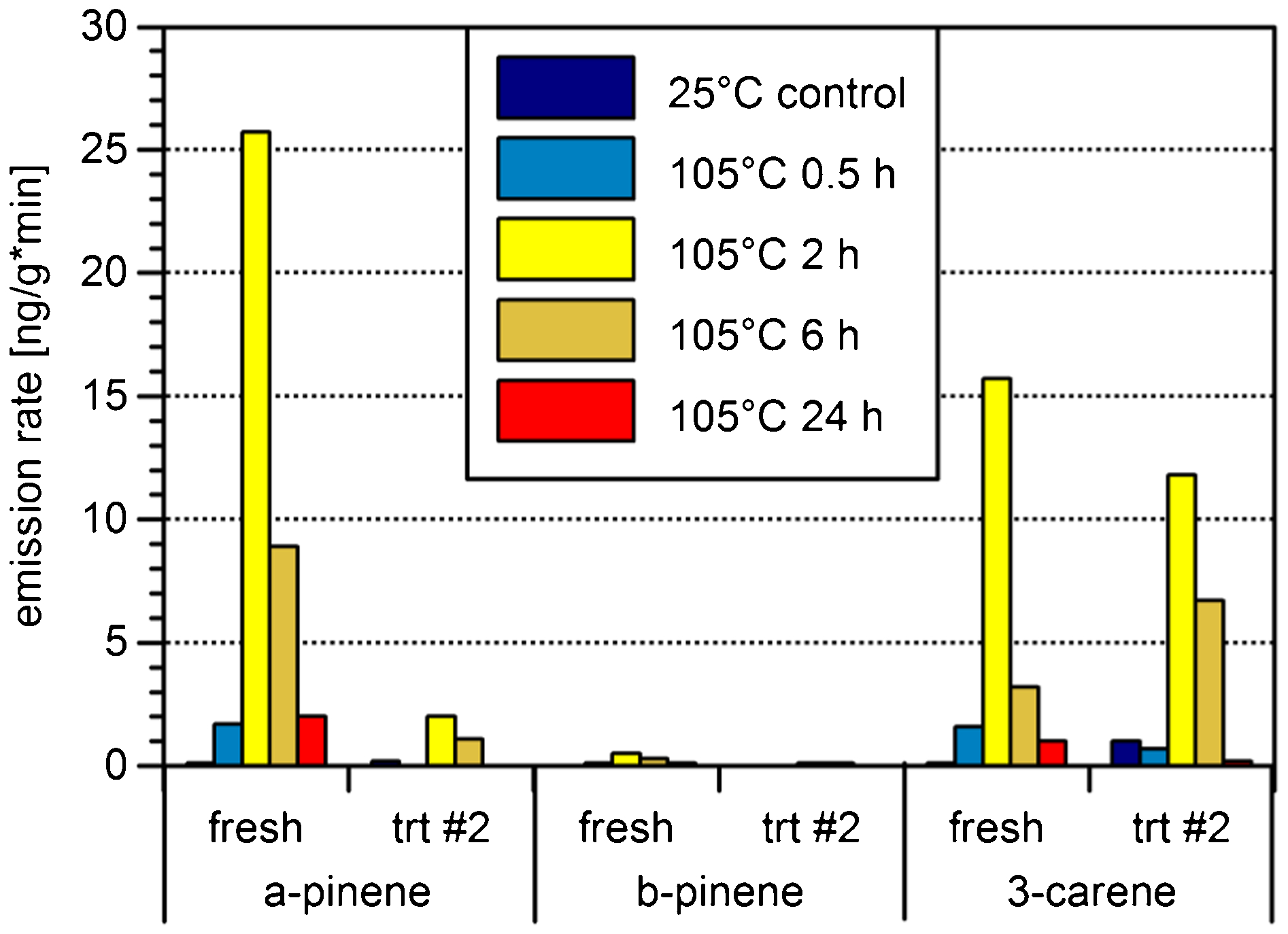
Emission of different monoterpene compounds from fresh pine (Pinus sylvestris) wood chips and after storage for 4 weeks at 40°C and 1 day at 80°C (trt no. 2)
Figure 4 in conjugation with Fig. 5 shows that α-pinene is the predominant monoterpene compound in pine wood and its release decreased enormously by storage, particularly at high temperature. After storage at high temperature (80°C, trt no. 2, trt no. 3, trt no. 4) no terpene compounds could be detected at 25°C. It is noteworthy that 3-carene is much more resistant to storage than α-pinene and β-pinene (Fig. 5).
During storage the oxidation products of lipids in pine wood decrease also immensely. However, as shown in Fig. 6, the total amount of such products is much lower than the amount of released monoterpene compounds. Moreover, the emission of aldehyde compounds declines at a much slower pace compared to that of the monoterpene compounds.
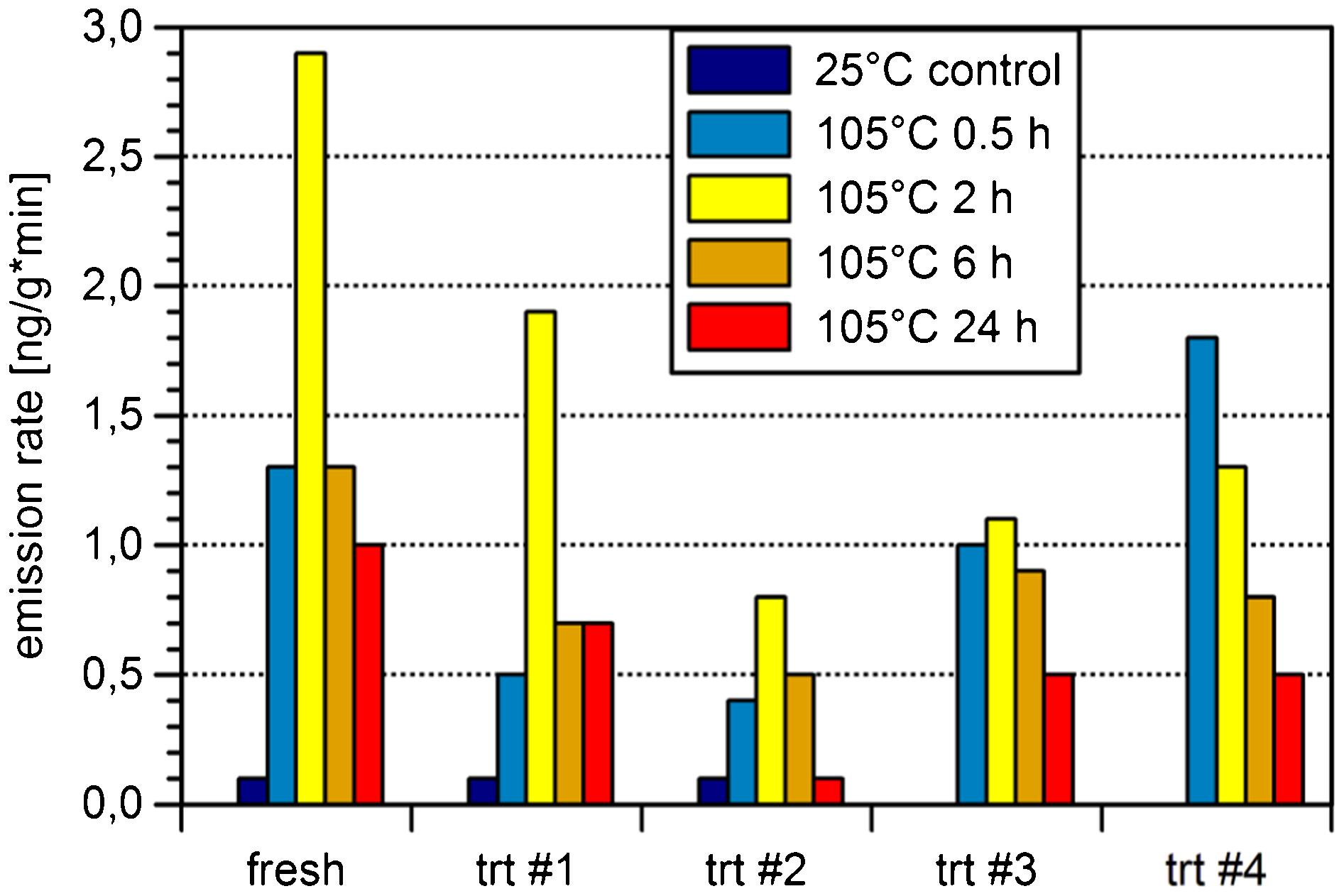
Sum of emission of oxidative lipid products (aldehydes) from fresh pine (Pinus sylvestris) wood chips and after storage for different periods at different temperatures (trt no. 1: storage for 4 weeks at 40°C, trt no. 2: storage for 4 weeks at 40°C and 1 day at 80°C, trt no. 3: storage for 1 day at 80°C, trt no. 4: storage for 2 days at 80°C)
The curves in Fig. 7 show that the emission of aldehyde compounds formed by autoxidative degradation of lipids after all storage times is activated by increasing temperature and peaks at nearly 2 h heating at 105°C. Moreover, hexanal seems to be the dominating aldehyde emitted from pine. The emission of hexanal is shifted to lower concentration values by storage of the wood chips under the already mentioned boundary conditions. As the temperature during pressing of chips to pellets reaches 90–120°C, the emission of lipid oxidation products could increase after pressing depending on the extractive content and composition of the wood chips used for making pellets and the content of fats within the extractives. It has also to be taken into consideration that after pressing the hot pellets retain their temperature of about 70–80°C for a relatively long time. After storage of pine wood, however, the increase in the emission of lipids degradation products is drastically attenuated.
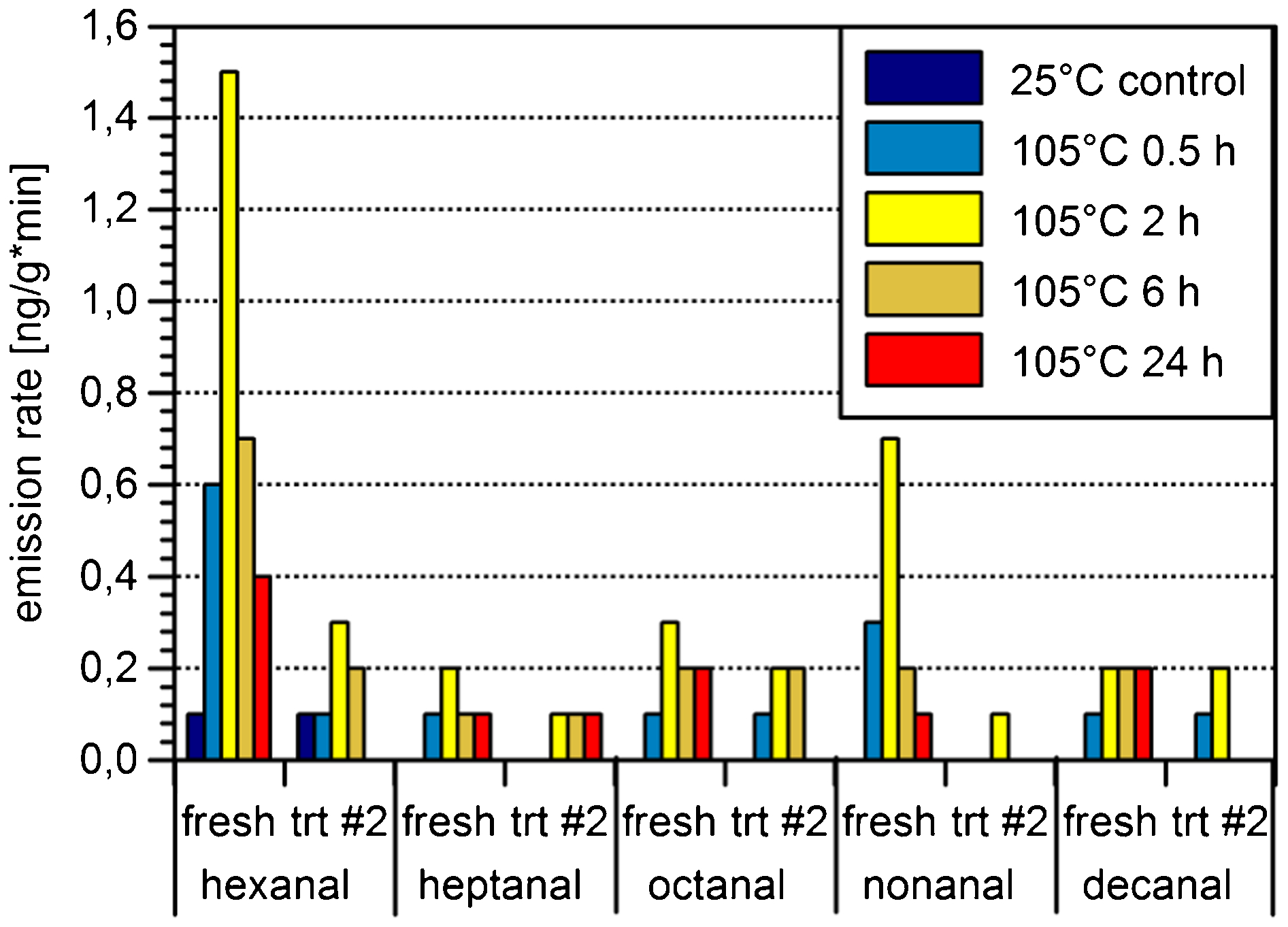
Emission of different oxidative lipid products (aldehydes) from fresh pine (Pinus sylvestris) wood chips and after storage for 4 weeks at 40°C and 1 day at 80°C (trt no. 2)
Figure 7 shows that not only hexanal but also other aldehydes like heptanal, octanal and nonanal follow more or less the same trend. From the results in Fig. 4 in conjugation with the Figs. 5– Figure 6 7, it can be concluded that storage of wood chips decreases both the emission of monoterpene compounds as well as the emission of lipid degradation products. Nevertheless, increasing the temperature of wood during the pellet making process and pellet storage increases at first the emission to levels depending on the amount of extractives remaining in wood and on the boundary conditions prevailing during storage.
Influence of storage on emission of volatile organic compounds (VOC) from spruce chips
Figure 8 shows the cumulative monoterpene compounds emitted from fresh chips of spruce and those emitted from chips stored for 4 weeks at 40°C (trt no. 1) and for 4 weeks at 40°C and 1 day at 80°C (trt no. 2). In general, the emission of VOC from spruce chips was much lower than from pine chips. This is due to the fact that the extractive content of spruce (app. 2·1%) is much lower than that of pine (app. 4·2%). Moreover, the composition of extractives in pine is different from that of spruce, and pine extractives contain much higher amounts of terpene compounds (Back 2000a).
Sum of monoterpene emission from fresh spruce (Picea abies) wood chips and after storage for different periods at different temperatures (trt no. 1: storage for 4 weeks at 40°C, trt no. 2: storage for 4 weeks at 40°C and 1 day at 80°C), at 25°C no emission was detected
At 25°C no emission of monoterpenes was detected in fresh spruce chips under the used boundary conditions. Heating the samples at 105°C activates the emission of monoterpene compounds from fresh spruce wood, which remains high after 2h and then decreases by the ensuing heat treatment. Storage of spruce at 40°C for 4 weeks (trt #1) seems to have almost no effect on the emission of monoterpene compounds in this case. The differences between the emission from fresh wood chips and those stored at 40°C are too small to be interpreted. Storage for 4 weeks at 40°C and 1 day at 80°C (trt #2) leads to a decrease in the overall monoterpene emission from spruce wood chips.
In Fig. 9 the emissions of α-pinene, β-pinene and 3-caren from fresh spruce chips and chips stored for 4 weeks at 40°C and 1 day at 80°C (trt #2) are presented. The overall results reveal that the emission of various monoterpene compounds, as in case of pine wood, decreases at different rates due to storage. α-pinene is emitted to a much higher extent from fresh wood than β-pinene, the emission of α-pinene declines due to storage at a higher pace than that of β-pinene. The emission of 3-carene is relatively low compared to that of α-pinene or β-pinene. It is noteworthy that the concentration of 3-carene in spruce wood is much lower than in pine wood.
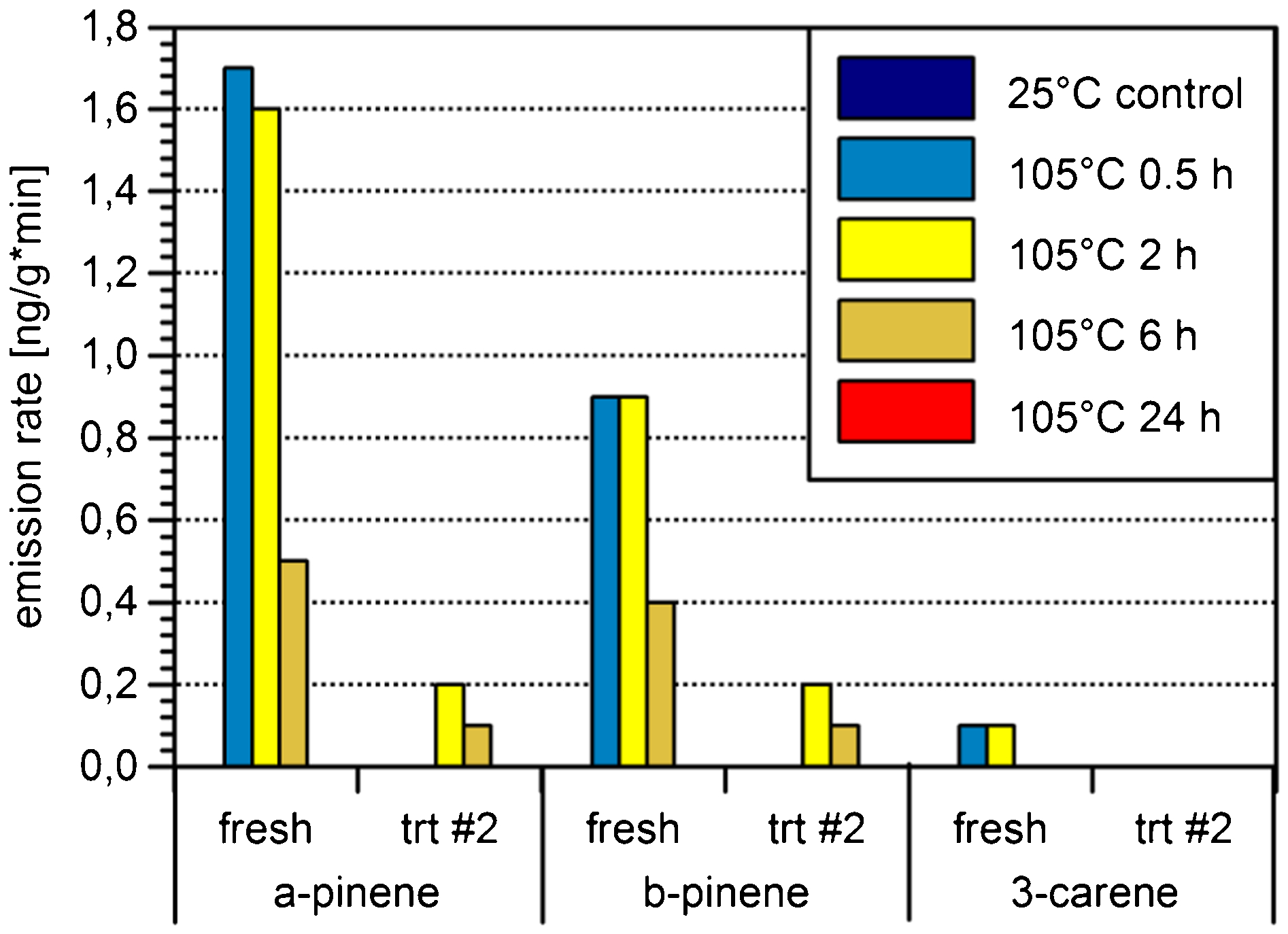
Emission of different monoterpene compounds from fresh spruce (Picea abies) wood chips and after storage for 4 weeks at 40°C and 1 day at 80°C (trt #2), at 25°C no emission was detected
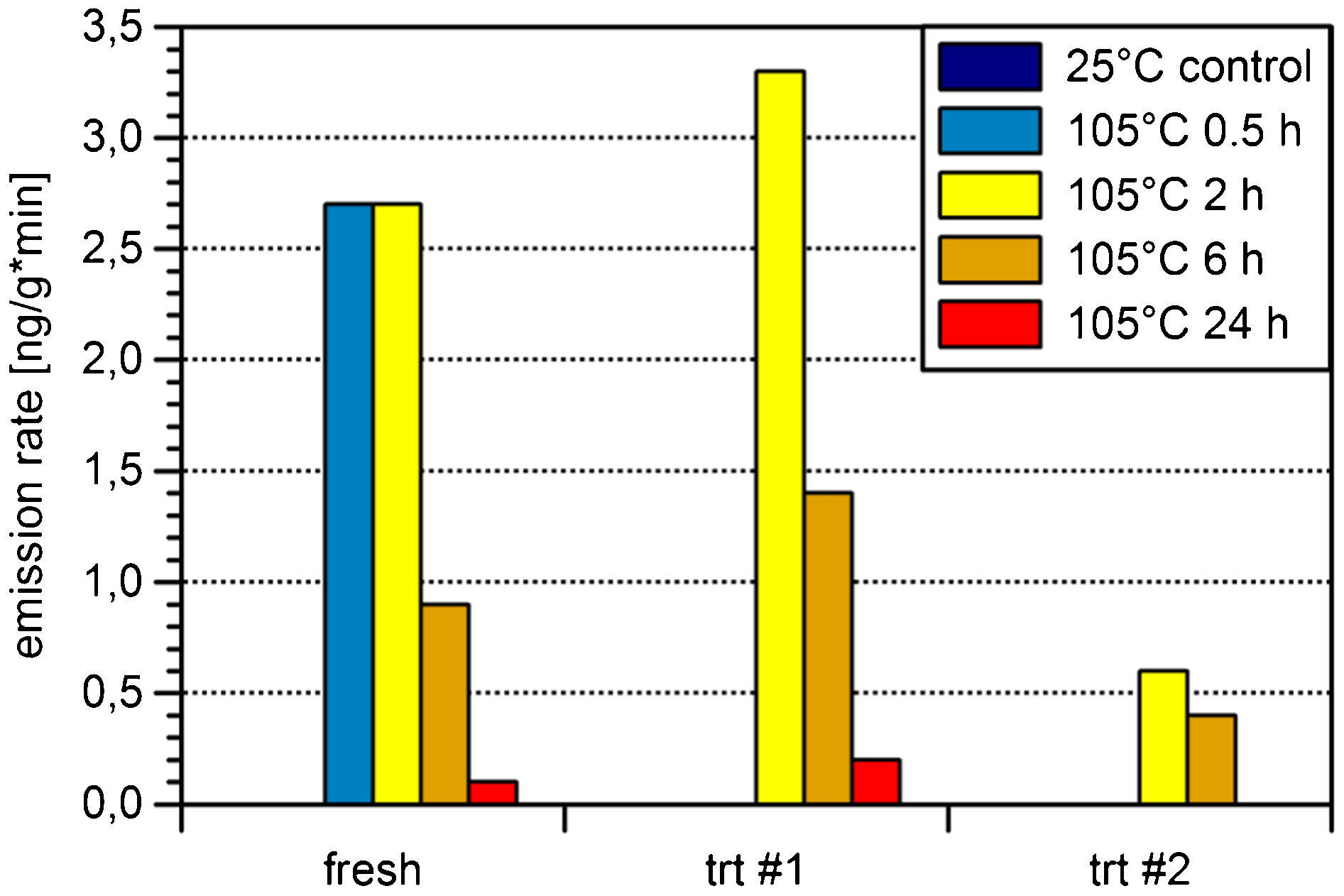
In Fig. 10 the cumulative amount of emitted degradation products of lipids from spruce chips as a function of storage is presented. Similarly, there is a sharp decrease in the emission of volatile aldehydes due to storage. Moreover, it becomes clear that even after storage for 4 weeks, the emission increases on heating wood chips.
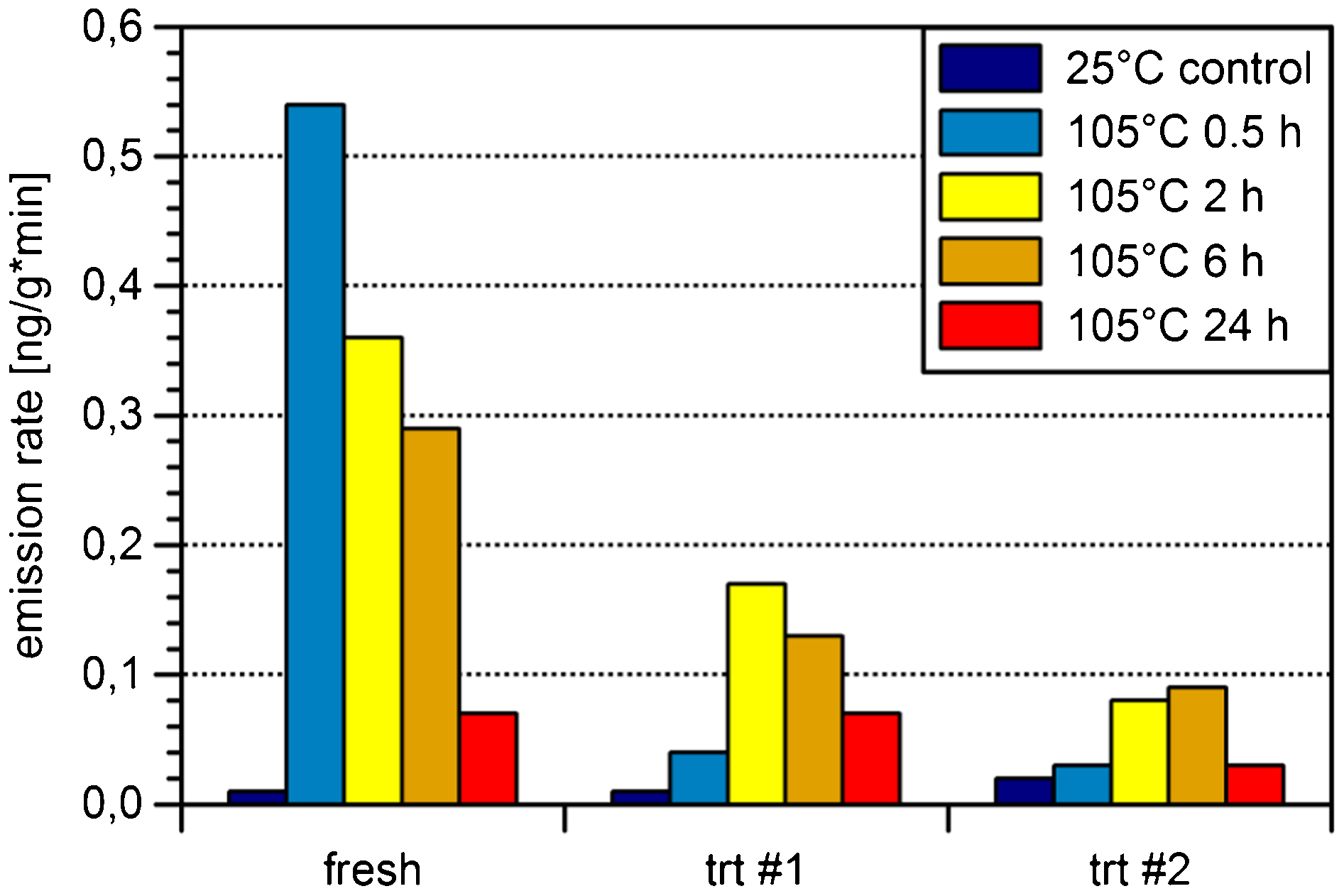
Sum of the emittable oxidative lipid products (aldehydes) from fresh spruce (Picea abies) wood chips and after storage at different periods at different temperatures (trt #1: storage for 4 weeks at 40°C, trt #2: storage for 4 weeks at 40°C and 1 day at 80°C)
In general, the concentration of aldehydes in fresh spruce wood and in stored spruce wood is much less than in fresh or stored pine wood. As indicated in Fig. 11, hexanal is emitted in much higher amounts than heptanal, octanal and nonanal. Insofar, the whole results confirm previous reports in the literature (Back 2000a).
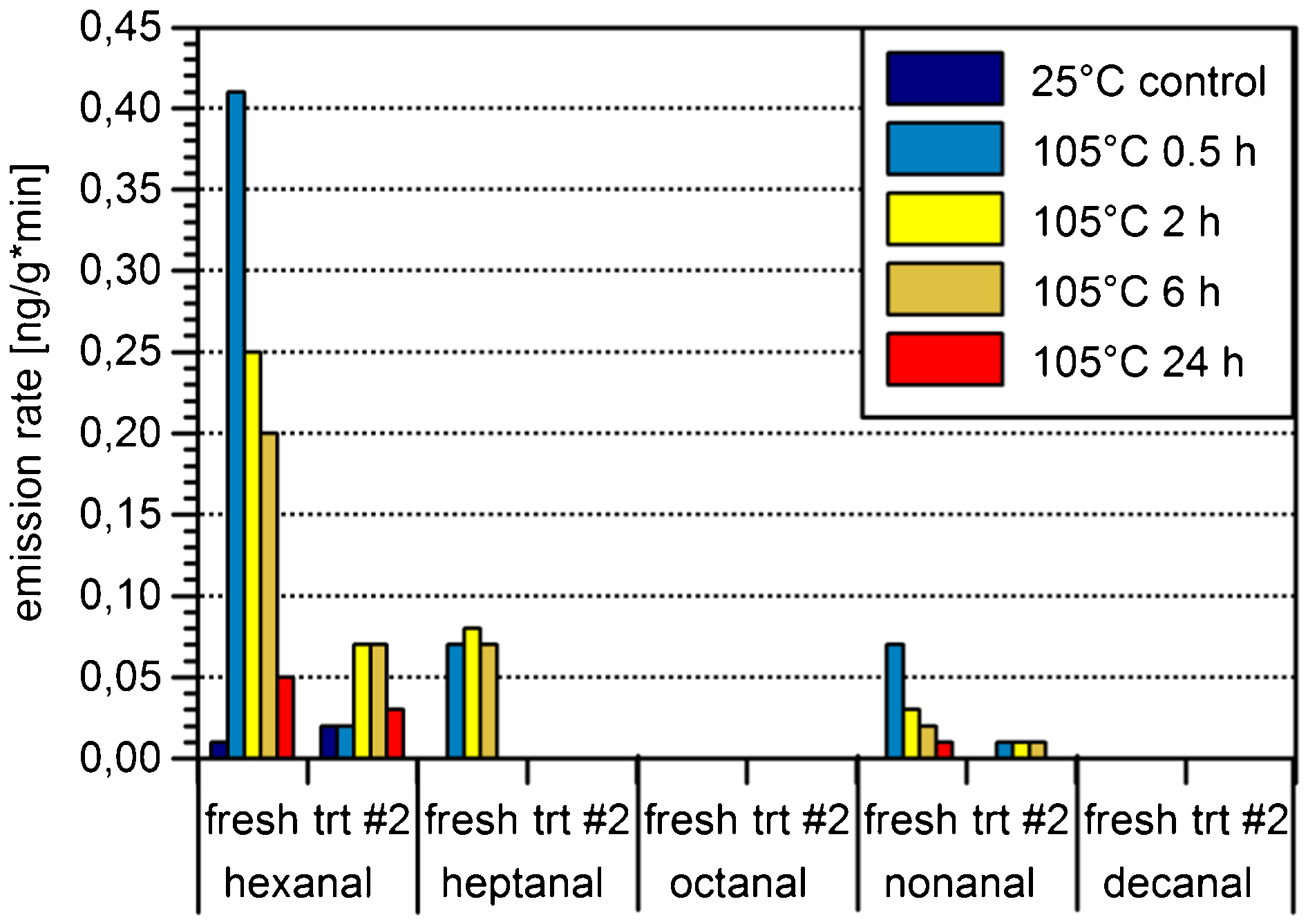
Emission of different oxidative lipid products (aldehydes) from fresh spruce (Picea abies) wood chips and after storage for 4 weeks at 40°C and 1 day at 80°C (trt no. 2)
In general, the volatile degradation products of fats from spruce wood are much lower than from pine wood indicating that there is distinct relationship between the amount of extractive content and the emission of volatile organic compounds from the wood chips.
Influence of different treatments on emission of volatile organic compounds (VOC) from pine wood
As pine wood has a higher extractive content compared to spruce (Strömvall and Petersson 2000), it was chosen for further investigations pertaining to the influence of extraction on emission (see the section on ‘Experimental design’). Extraction of wood using a mixture of ethanol-cyclohexane (1∶2) is a well known method to determine quantitatively the extractive content in wood (Fengel and Przyklenk 1983). Therefore, it was of interest to evaluate to what extent the removal of extractives using this method affects the emission of monoterpene compounds as well as the emission of products derived from lipid compounds by oxidation. The results of this investigation are compiled in Table 1. After extraction of pine wood chips with ethanol-cyclohexane (1∶2) (trt no. 5) only insignificant amounts of monoterpene compounds were detected by GC-MS method. Nevertheless, degradation products derived from lipid compounds were still detectable at same emission rates indicating that some fatty compounds in the wood are resistant to extraction (Table 1).
Emission rate of terpenes and aldehydes of untreated pine wood chips (untrt) and after extraction with ethanol-cyclohexane (trt no. 5) or chemical treatment with 1%NaOH (trt no. 6); n.d.: not detectable
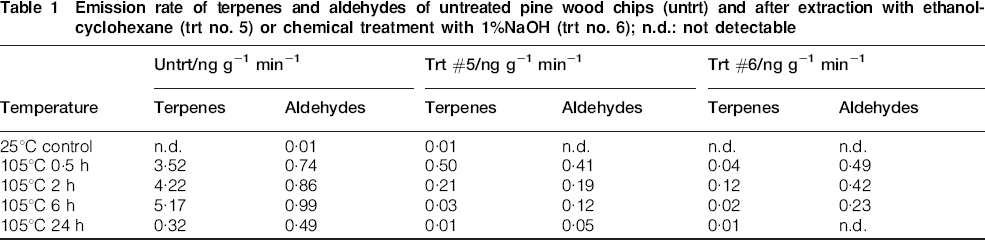
Treatment of pine wood chips with 1% sodium hydroxide solution (trt no. 6) and washing the chips after the treatment ushers in more or less the same conclusion. After such a treatment only tiny amounts of monoterpene compounds were detected (Table 1). Moreover, degradation products of fats were still detectable in marginal amounts after extraction with ethanol-cyclohexane (1∶2) (trt no. 5) as well as after treatment with 1% sodium hydroxide solution (trt no. 6) (Table 1). This means that some fatty acid compounds are of high resistance to extraction and to alkali treatment and emanate in still detectable amounts of VOC through oxidation. This result converges well with previous findings by Jayme and Harders-Steinhäuser (1966), establishing that some resin compounds survive even the sulfate pulping process, in which pulping takes place at very high alkalinity.
Discussion
Recently the emission of volatile organic compounds (VOC) from wood and wood based products became an issue of increasing relevance. Against this backdrop the study deals with the influence of storage on the emission of VOCs from wood chips used for pellet making. The results should offer the industry enlightenment on methods to reduce the emission of organic compunds.
The main objective of the work was to study the influence of storage under different conditions on the emission of volatile organic compounds (VOCs) from pine and spruce, the main wood species used for pellet making in Europe. The results indicate that storage at a temperature of 40°C for 4 weeks decreases the emission of monoterpenes (α-pinene, β-pinene, 3-carene) noticabley, and increasing the storage temperature to 80°C speeds up the rate of decrease in the emission dramatically. As the monoterpenes in wood have, depending on their chemical structure, a boiling point between 156°C (α-pinene) and 170°C (3-carene) the influence of temperature becomes understandeable. This also explains why 3-carene is less responsive to increase in the temperature than α-pinene as far as reduction in the emission due to storage is concerned.
Storage decreases, in general, also the emission of aliphatic aldehydes like hexanal, heptanal, etc., though it should be noted that the storage temperature seems to be more important than the storage time. Aliphatic aldehydes are mainly formed by oxidation of fatty acids generated by the hydrolysis of fats in wood. High temperature accelerates the crack down of the fatty acids, which have been built up during the hydrolysis step. Owing to the well known high fat content in pine wood in comparison to spruce wood, the emission of aldehydes from pine wood was found to be much higher than from spruce wood.
The decrease in emission of the monoterpene components in wood is much different due to their different chemical structures and chemical reactivity. This applies for pine and spruce wood as well. Monoterpenes can have one, two or three doublebonds (Strömvall and Petersson 2000).
The decrease in the emission of terpenes and aldehydes due to extraction with ethanol-cyclohexane is explainable. Wood extractives are soluble in organic solvents; the degree of soubility depends on the solvent and on the conditions under which the extraction takes place (Ekman 2000). The results obtained indicate, however, that with ethanol-cyclohexane, a relatively polar solvent, no complete removal of extractives was reached to eliminate completely the emission of monoterpenes and aldehydes.
Also treatment of wood with alkaline sodium hydroxid solution did not lead to complete removal of the extractives responsible for the emission of monoterpenes and aldehydes. This result converges with the current state of knowledge indicating that some extractives in softwoods survive the high alkalinity in sulphate pulping.
Conclusion
The results reveal that storage of wood at 40°C for 4 weeks decreases immensely the emission of primary (monoterpenes) and secondary (aldehydes) volatile organic compounds (VOCs) from pine and spruce wood. With increasing storage temperature to 80°C the emission potential of wood declines considerably indicating that the temperature of storage is a highly relevant factor to the process of the emission of VOCs. In general, the emission of VOCs was significantly higher in pine wood compared to spruce wood. This is attributed to the higher extractive content and the chemical composition of the extractives in pine wood.
Removal of extractives from wood by extraction with ethanol-cyclohexane or by treatment with dilute solution of sodium hydroxide (1%) ushers in a tremendous decrease in the emission of VOCs. However, it seems that some chemical constituents in wood extractives are still resistant to extraction by the used organic solvents or dissolution in dilute sodium hydroxide solution. Therefore, even after such treatments marginal amounts of monoterpenes and of aliphatic aldehydes (hexanal, heptanal, etc.) are still emittable from pine wood.
Acknowledgements
The research work was funded by the German Federal Ministry of Food and Agriculture (BMEL) and managed by the Agency for Renewable Resources (FNR).