






Abstract
The transition between disaster response operations and sustainable recovery represents a critical stage in rebuilding communities following disaster. We document this transition process following the 12 January 2010 earthquake in Haiti through direct field observation, review of documents and official situation reports, as well as interviews with key managers from organizations engaged in disaster operations in Haiti. Without an effective transition to recovery, disaster-stricken communities risk escalating failures in performance of key technical functions that underlie the provision of basic services in health, housing, education, commercial activity, and environmental restoration essential to building a resilient society. The interactions among social, environmental and technical systems are rarely tracked systematically, but are central to the longer-term economic, social, and technical development of a disaster-resilient community. We propose developing a “knowledge commons” infrastructure—multilingual, interdisciplinary, and interjurisdictional—to sustain a system-wide learning process as a primary goal for the reconstruction of Haiti.
Introduction 1
Two teams of interdisciplinary researchers travelled to Port-au-Prince Haiti to conduct reconnaissance studies of the transition from response to recovery in post-earthquake Haiti. From 7–14 March 2010, three researchers from the Center for Disaster Management and School of Education at the University of Pittsburgh visited Haiti as primary response operations were ending and the transition to recovery was beginning. From 2–9 May 2010, a team of eight researchers from the University of Pittsburgh and Vassar College visited Haiti to observe the status of recovery. The team included geology, security, education, organization, public health, law, and policy experts.
The catastrophic damage resulting from the magnitude 7.0 earthquake on 12 January 2010 in Haiti created an extraordinary set of conditions that require a fundamentally different approach to disaster assistance to enable this small nation to move toward sustainability. The usual means of disaster assistance, and the international mechanisms to provide support to nations that have endured disaster, are not proving effective in Haiti. The reasons are many, but the complex process of transition from the severe damage to the capital city, Port-au-Prince, and the secondary cities of Léogâne and Jacmel, can only be understood by first assessing the conditions in Haiti that existed prior to the earthquake. Second, the impact of the earthquake on these existing conditions magnified the task of transition, given the wide scope of physical, economic, and social needs against the backdrop of limited capacity in the country. Nonetheless, a central element of the transition process is the vision of a strong, sustainable Haiti that drives the dynamics of interactions among both Haitian and international organizations in the reconstruction process. Although this vision is not universally shared, it clearly represents an important component of the transition process.
The 2010 Haiti earthquake represents an extraordinary case for studying the transition from response operations to a recovery that will leave the country less vulnerable to future disasters by identifying key factors that influence the recovery process, positively or negatively. It requires a systematic effort to document the complex process of decisions and actions taken by individuals and the hundreds of international and Haitian organizations as the response shifts from search and rescue to reconstruction and sustainable recovery.
We seek to identify the critical stages of decision that mark the transition from response to recovery, and incorporate them into a practical model that may be used to assist the ongoing Haitian response and inform decision processes in other communities exposed to recurring risk. Such a model will assist communities at risk in managing this transition more quickly and effectively when hazards occur, thereby reducing losses in lives and property. Without an organized, progressive transition to recovery, a disaster-stricken community risks interdependent, escalating failures in performance of key functions, such as provision of health services, housing, education, economic, and environmental policies essential to sustainable renewal. In order to develop such a model, it is essential to characterize the initial conditions in Haiti before the earthquake as a baseline, document key steps undertaken for transition to functional operations, and offer a set of policy recommendations as next steps toward the goal of disaster resilience.
Initial Conditions in Haiti Prior to 1/12/2010
On 11 January 2010, Haiti was already an extremely vulnerable nation. The population of Haiti is estimated at 9.7 million (World Bank Development Indicators 2009). It ranked 149/182 on the UNDP Human Development Index (2007). In 2009, 65% of the population lived in households that were below the extreme poverty line of US$1 per person per day. Literacy is estimated at 35% of the population. The Haitian government, still in a period of transition to democracy following years of dictatorship, large foreign debt, and overall poor governance, was unable to support basic services and infrastructure. This vulnerable situation led to Haiti being supported by a conglomeration of organizations, and to being perceived as a “Republic of NGOs.” Each organization had its own priorities, ranging from healthcare (i.e., Partners in Health) to deforestation (USAID) and human waste management (SOIL). None of these organizations prioritized the high seismic risk facing the nation.
The last major earthquake in this region occurred over 250 years ago. In 2010, everyone involved, from the Haitian Government to its citizens, as well as the NGOs, were focused on more immediate priorities. Rural land degradation, availability of safe drinking water, effective waste management, infrastructure development and maintenance, as well as stressed public health and social, economic, legal, and educational institutions demanded their attention and energy. Limited resources and poor management of these resources and institutions made them weaker, hence more vulnerable, to sudden, unanticipated events, such as earthquakes. We briefly review the basic conditions before the earthquake to present a baseline against which actions taken after the earthquake can be assessed in terms of enabling Haiti to reach its goal of sustainability. These conditions include: geophysics/environment; water, sanitation, engineered infrastructure; shelter/housing/settlement; health; government in practice, rule of law, economy, and education.
Geophysical/Environmental Conditions
Previous earthquakes in this region had occurred in 1860, 1770, and in 1751 when a two-earthquake sequence struck within 33 days (18 October and 21 November), long before cultural memory. Since the 1770 event, the metropolitan Port-au-Prince region has grown to 2.3 million people with a density of 15,106 people/km2 due in large part to severe environmental degradation and associated poverty in the surrounding countryside (Institut Haïtien de Statistique et d'Informatique 2009). Recently, government resources have been prioritized to deal with the condition of the rural and urban poor at the expense of monitoring the various hazards facing the country, including drought, tropical cyclones, and earthquakes (NATHAT 2010). Given scarce resources, there was no seismic network in Haiti prior to the 2010 earthquake. The earthquake hazard was assessed regionally, rather than by more detailed local studies to determine which faults are seismically active and have the potential to generate earthquakes (DeMets et. al. 2000, Manaker et. al. 2008). Scientists knew that a magnitude 7 earthquake was possible, but the country lacked capacity to prepare for it. This lack of shared knowledge among scientists and policy makers affected the allocation of scarce resources.
Water
The majority of Port-au-Prince's water comes from an aquifer in the commune of Tabarre, and quality varies with distributors. Increased surface runoff resulting from widespread deforestation has not only limited aquifer recharge, but decreased the viability of rivers and streams as a reliable drinking water source (Bied-Charreton, 2008). Intermittent flow and widespread pollution further preclude surface water as a source for drinking water. The growing urban population, augmented by people fleeing harsh conditions in the countryside, created increased demand on the aquifer. The water distribution system in and around Port-au-Prince was, and still is, managed by a combination of public agencies - Central Metropolitan Drinking Water Authority (CAMEP) in Port-au-Prince, and the National Directorate for Water Supply and Sanitation (DINEPA) in the regions outside - and private businesses in Port-au-Prince. About 70% of urban residents and 51% of rural residents reported access to improved water services, while only 19% have access to improved sanitation facilities (WHO/UNICEF 2008 Joint Monitoring Program). In recent years, provision of water services had increased, but the issues surrounding the laying of water and sewage pipes had not been resolved.
Sanitation
Government agencies struggled to keep up with the vast amount of solid waste and excrement produced by the large, high-density population of Port-au-Prince. Most people rely on latrines and pits for toilets. The Metropolitan Garbage Collection Service (SMCRS) is nominally charged with waste removal in the city, and disposal at the non-engineered landfill at Tutier, just north of Cité Soleil. As capacity to accommodate the volume of garbage prior to the earthquake was limited, many people in the highlands simply dump solid waste in the riverbeds to be washed downstream when the rains come (Figure 1). To complicate the waste management situation, neither CAMEP, DINEPA, nor SMCRS have a mandate to deal with excrement, so there is no sewer system or wastewater treatment plant in the country. Both surface and groundwater resources continue to diminish.
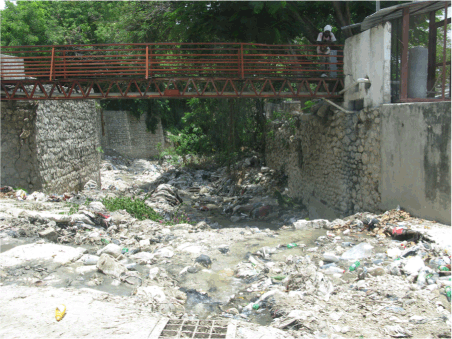
“River of Trash,” Pétion-Ville, Haiti, May 2010. Photo by Brian McAdoo.
Engineered Infrastructure
The quality of life among Haitians was seriously diminished due to broken infrastructure—unpaved roads, limited and unstable electricity, limited access to running water, and even more limited sewage lines. According to World Bank Development Indicators (2010), Haiti has 1011 km of paved roads (24.3%) and 3149 km of unpaved roads. Much of the road network development occurred during the US occupation (1915-1934) and has lacked systematic maintenance. Bridge supports were often impacted by excessive debris in the waterways and drains. Before 12 January 2010, Haiti's electrical power generation, transmission and distribution system was largely inefficient, unstable and inadequate. About 37.3% of its electric power was lost in transmission and distribution. Only 12.5% of Haitians had reliable, legal access to electricity (which is intermittent, at best), though another 12.5% have unregistered access and many households utilize generators. Although Haitians had developed alternative sources of power through household generators and water through the use of private water companies, these sources are dependent upon imported diesel fuel and gasoline. On a daily basis, access to electricity proved uncertain due to the potential cascade of erratic failure across vulnerable infrastructure
Shelter, Housing and Settlement
The housing situation in Port-au-Prince has been driven by rapid outmigration from poverty-stricken rural areas over the last two decades. Sixty percent of the houses in the capital were of masonry or concrete construction, often with heavy weight, but poor infill or structural reinforcement. Haiti did not have an official building code before the quake, although rough building guidelines existed. Poorly coordinated physical planning, aggravated by upward-spiraling population densities, inadequate government control, endemic poverty, and lack of foresight resulted in the construction of countless subpar housing structures. The Ministry of Public Works has responsibility for monitoring building construction, but lacked the personnel, resources, and legal authority to enforce safe building practices.
Health
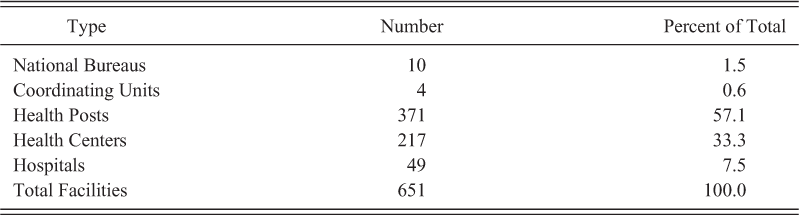
The health system in Haiti is composed of multiple actors, including the Ministries of Public Health and Population (MSPP) and Social Affairs; the private for-profit sector; the mixed nonprofit sector (MSPP personnel working in private institutions, NGOs, or religious organizations); the private nonprofit sector (NGOs, foundations, associations); and the traditional health system that includes herbal medicines and traditional healers. An estimated 40% of the population did not have access to high-quality, comprehensive medical care in 2009 (PAHO, 2010), although this percentage may be higher in rural areas and lower in urban settings. The existing health infrastructure was inadequate to meet the needs of the population, see Table 1. Less than 250 partnering organizations were involved in the delivery of health services in the country. Crane et. al. (2010, p. 122) note that “…the MSPP does not have systems in place to track health status and monitor quality of care….[has] little human capital or administrative capacity to carry out its functions…[and] lacks adequate technical and administrative staff for policy, planning, and regulatory functions.”
Ministry of Public Health Facilities in Haiti (
The baseline health status of Haitians was poor. Yearly maternal mortality rates in Haiti between 2005 and 2009 were estimated by UNICEF to be 630 per 100,000 live births. By comparison, the rates in the Dominican Republic, Cuba, and US were 160, 53, and 13. Recent estimates assert that 1 out of 10 children die before the age of 5 (PAHO, 2010). Life expectancy is at best 62 years for women and 59 for men, and up to one third of the population is considered “acutely food insecure” (especially children who suffer very high rates of stunting and wasting due to nutritional deficiencies). The most commonly reported cause of death is HIV/AIDS (PAHO 2010).
The state of pre-earthquake public health is hard to determine due to lack of surveillance. Public health data were collected by two independent systems. The MSPP Haitian Health Information System (HHIS) captured information about health services and administrative indicators from up to 749 health facilities serving the general population. The HIV Monitoring, Evaluation, and Surveillance Interface (MESI) gathered data limited to health events of persons infected with HIV. The HHIS provided only limited information, and only one in 20 deaths results in a death certificate that documented the cause of death (Crane et. al. 2010, p. 122). This lack of reliable and population-wide data severely impaired the MSPP's ability to understand the predominant risk conditions and diseases, connect them to determinants of health, and devise practical interventions.
Government in Practice
The Government of Haiti was slowly regaining some measure of legitimacy following a series of UN interventions after 2004. After a series of dictatorships, coups, and political upheavals, the active presence of the United Nations Stabilization Mission in Haiti (MINUSTAH) and the United Nations Police working in collaboration with the Haitian National Police (PNH) had begun to restore sufficient order and stability to support commercial and social activities. The Haitian National Police (PNH), understaffed and widely distrusted, had a long history and acknowledged reputation for corruption. Since 2004, positive changes in leadership, training programs, and morale among personnel in the PNH were evident, although overcoming the long-standing distrust of the population remains a major task. There is little evidence of a functioning legal system. Haitian courts exercise limited authority. There was little enforcement of basic standards of health, safety, and construction practice. There existed a wide gulf between the small minority of Haitians who exercised economic and political power and the vast number of Haitians who survived day-to-day in poverty, without jobs, education, or basic necessities like clean water, sanitation, and health care. Few businesses pay the legally assessed taxes, as they distrust the system, which appears unfairly applied, and are skeptical of the uses to which their tax money would be put. This common practice diminishes already scarce funds for public services.
Rule of Law 2
Between 2 May and 9 May, 2010, in-country interviews were conducted by the law and policy member of the University of Pittsburgh Haiti Reconnaissance team. Interviewees included Haitian citizens, a member of the health ministry, a former member of the executive branch of government, current WHO-PAHO and NGO leaders/members/workers in the food, water, shelter, economic recovery, law, and health sectors.
Rule of law in Haiti is complicated by a long history characterized by social and political strife, the consequence of centuries of foreign dominance of resources and land, successive oppressive regimes, military coups d’état, and lengthy periods of large-scale violence. In 1986, following 26 years of the Duvalier regime, the U.S. Agency for International Development (USAID) formally reviewed the state of the justice system in Haiti. That review, and the successive reports which followed, revealed decay, disorder, and corruption within Haiti's justice system, evidenced by excessive procedural delays and pre-trial detentions, widespread uncertainty about what law exists, excessive use of force by police, overcrowded and unsanitary prisons, outdated criminal codes, disregard for rules and laws among those entrusted to ensure justice, and the use of the justice system for purely personal gain (Albrecht et. al. 2009; Parsons et. al. 2008). Successive UN, USAID, and U.S. Institute of Peace (USIP) briefings all recommended that urgent steps be taken to improve the rule of law in Haiti. Representing a set of principles rooted in human rights, the rule of law emphasizes equity, accountability, avoidance of arbitrariness, supremacy of law, and the value of transparency in the promulgation and application of law.
Before 12 January 2010, there were reports that legal reform was underway. In 2009, The United States Institute for Peace (USIP) was engaged in a program titled “Building the rule of law in Haiti: New laws for a new era” (Albrecht et. al. 2009). In partnership with the Préval government, civil society and the United Nations MINUSTAH and Police missions, USIP had initiated a comprehensive reform process developing model codes for criminal justice in post-conflict states.3 The objective was to have needed laws adopted by 2011. Institutional reform was to take place during the following two years leading to full enactment of the laws in 2013. This nascent reform effort was disrupted by the earthquake, the ensuing dislocation of records, and damage to governmental capacity for action. Revitalizing this effort will be central to reconstructing Haiti.
The objectives outlined in 2009, but yet to be implemented, include: 1) Restore and enhance operational capabilities of justice stakeholders and public safety; 2) Ensure access to justice and safety of affected communities and displaced populations; 3) Create conditions conducive to sound administration of justice and public safety; 4) Strengthen the rule of law by increasing the quality and size of the national police force and continued reform of the justice and prison administrations; 5) Set up an effective National School of Magistracy, (established by an Act of 2007 but not functional in 2010), and complete construction of the Police Academy; 6) Rebuild, by 2015, prisons in Port-au-Prince and Jacmel to reduce density of the prison population and permit separate detention of men and women, adults and children, and accused and convicted (Albrecht et. al. 2009, Plan D'action 2010, OCHA 2010).
Economy
Haiti's economy had made limited progress since the 1990s, when it operated essentially as a barter economy. Banks were operating at the beginning of 2010, but widespread unemployment and underemployment persisted, as an estimated two-thirds of the labor force lacked a formal job (“Haiti,” CIA World Factbook 2010). The total GDP for Haiti in 2009 was $6,478,628,513 (World Bank Development Indicators, 2010). The majority of Haiti's economic activity occurs in and around Port-au-Prince. For decades, this activity consisted mainly of street vendors. In recent years, the Haitian government had begun to move these vendors into permanent market buildings.4 This movement stands as a separate effort from the export processing zones (EPZs). Implemented under internationally directed development strategies starting in 2004, the EPZ's sought to drive development using export industries to generate both jobs and foreign capital. By 2009, they supplied the entire Haitian industrial base (Shamsie 2009). The movement of street venders into fixed structures, along with the indoor businesses in downtown Port-au-Prince, and Haiti's EPZs, represented the bulk of the Haitian formal economy. This small for-profit sector supplied the modest Haitian tax base, with the exception of the EPZ's that benefitted from on-going tax holidays (Shamsie 2009), and participated in Haiti's limited international trade. Although there were halting steps toward increasing economic activity, business development was hindered by inadequate infrastructure.
Personal communication, Haitian business owner, 3 May 2010.
Education
The education system in Haiti was troubled prior to 2010—a fragile state of operations with weak legal and regulatory frameworks. Limited government support for education was clearly apparent, based on minimal financial commitment and evidence of poor performance. In 2006, the total budget for education in the country was $41 per student per year (Wolff 2008). Lack of public support for education in Haiti has led to the lowest enrollment, completion, and literacy rates of any country in the western hemisphere (World Bank Indicators 2009, Wolff 2008).
Two major factors deterred children from enrolling in schools: the lack of services in rural areas and the cost to attend the numerous private institutions (Lunde 2008). In Haiti, roughly 80% of the classrooms containing 90% of the students are run by private entities with little to no government oversight (Adams and Winthrop 2010). Over 70% of the students demonstrated learning levels that are 2 years below grade level (Adams and Winthrop 2010). Classrooms are overcrowded, libraries and laboratories are virtually non-existent, and an estimated 79% of the teachers have no formal training (Wolff 2008). Education in general is below standard, focused on memorization and repetition.
In the tertiary education system, public or government run universities make up less than 10% of the 159 institutions of higher learning.5 The National Strategy for Action on Education for All (SNAEPT) stated that the private university system “generally operates outside the law” (MENFP 2007, p.48). Roughly 67% of private institutions do not have legal permission to operate and only 10 private institutions provide education that is accredited (INURED 2010). Nearly 80% of the University graduates leave the country, causing some to claim that knowledge is Haiti's most valuable export. Two key problems are the lack of monitoring and evaluation by the government and the ongoing operation of unaccredited schools at all levels. This weak educational infrastructure has not had the capacity to build the knowledge base requisite for sustained development in Haiti.
The State University of Haiti, the largest public institution in the country, has 18 campuses of which 11 are located in Port-au-Prince, and educates 38% of the total students in higher education (INURED 2010). Despite having a limited number of institutions, the public-run universities educate a large number of students.
Cumulative, Interdependent Vulnerability to Hazards
As the preceding assessment documents, the conditions that contributed to massive loss of life and destruction of technical, economic, social, and civil infrastructure in Haiti following the 12 January 2010 earthquake are many and intersecting. Interdependencies among these conditions created a complex set of challenges for rebuilding this fragile nation. These challenges necessitate efficient communications and adaptive learning among agencies, sectors (public, private, and nonprofit), and organizations that are engaged in interdependent tasks to provide water, sanitation, and other services. Standard approaches to providing international disaster assistance that rely on appeals to the international community to provide funding and materials, but domestic management of incoming aid as supplemental to existing programs are clearly inadequate in a society characterized by the initial conditions documented for Haiti. Innovative methods that bridge international support with national needs are essential. The impact of the earthquake altered these limited conditions significantly, underscoring the need for innovative reconstruction methods.
Impact of the Earthquake and Immediate Response
The 12 January 2010 earthquake, with an epicenter just 30 km west of Port-au-Prince, exposed the true depth of Haiti's many vulnerabilities. The shallowness of the earthquake generated strong shaking in the capital, and hastily built, poorly reinforced concrete houses crumbled, claiming over 230,000 lives, leaving countless more injured and up to one million people homeless or displaced (EM-DAT 2010). Over 80% of the buildings in downtown Port au Prince collapsed or were heavily damaged, striking Haiti's formal economy with much greater force than the informal economy, see Figure 2. Consequently, the earthquake did disproportional damage to the modest Haitian tax base and export trade, and further undermined the already weak capacity of Haiti's government and the economy to utilize exports for growth.
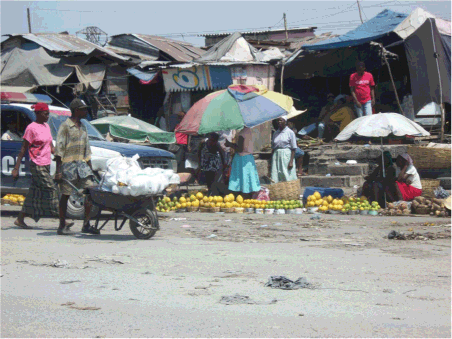
Street market in Port-au-Prince, Haiti, March 2010. Photo by Louise Comfort.
Although estimates of mortality vary widely, far more deaths resulted from the 2010 Haiti earthquake than from previous earthquakes of similar magnitude (Bilham 2010). This high mortality resulted from a poorly understood hazard interacting with a vulnerable physical and social landscape. The earthquake rupture likely occurred on an unmapped fault adjacent to the major plate-boundary fault- the Enriquillo-Plantain Garden (Calais et. al. 2010). Given the history of large earthquakes occurring in pairs in this region (two in 1751), scientists need to determine which fault ruptured in the 2010 earthquake to assess the probability of another event occurring on adjacent fault segments (Calais et. al. 2010; Frankel et. al. 2010).
During the minutes and hours after the earthquake, news reports and photos of the destruction flooded the international telecommunications networks. National governments, non-governmental organizations (NGOs), and regional organizations mobilized response operations to assist the damaged island nation. The United Nations Office for the Coordination of Humanitarian Assistance (OCHA) activated its cluster framework6 for matching incoming supplies, personnel, and assistance with Haitian organizations to facilitate effective distribution and meet the extraordinary degree of need for the devastated nation (United Nations 2005). The U.S. military sent 10,000 troops on a humanitarian mission to assist with logistics and reconstruction of the airport and port to facilitate incoming international aid. Over 1,000 NGOs sent medical personnel, engineers, tents, and supplies. The situation created a massive need for coordination, communication, and control among the many diverse participants operating in an urgent environment.
The UN Cluster format is designed to align the response activities and services that are offered by international organizations to the needs of the disaster-affected population and the capacities of the local host country organizations to receive and implement them. For example, all nonprofit organizations and governmental jurisdictions providing materials, personnel, and skills in constructing shelter meet together and share information and strategies under the aegis of the shelter cluster; all nonprofit organizations and government agencies providing personnel, supplies, and skills in health care coordinate their activities under the health cluster. It is a functional scheme to organize thirteen different types of service, such as food, shelter, health, education, logistics, agriculture, water and sanitation that presumably have both international and national counterparts. The organizational design is intended to provide a collaborative means of matching resources to demands in an efficient, constructive process (United Nations 2005).
Despite the extensive effort in international assistance, difficulties emerged in the mismatch of design and expectations of the international cluster system to the technical and organizational capacity of Haitian entities, as the various groups sought to act collaboratively to meet the needs of the severely damaged infrastructure and population. OCHA is designed to work in partnership with the local government of the disaster-stricken country. Yet, in Haiti, eleven out of twelve national ministries lost their buildings, records, and many of their personnel in the earthquake. These ministries, with little authority or financial capacity to take action, now were faced with massive tasks that simply overwhelmed them. Few Haitian personnel were available to participate in cluster meetings, which were frequently conducted in English, instead of French or Creole, the official and unofficial languages of Haiti.
Although the international community pledged over $5.7 billion in donations for Haitian relief in response to the UN Appeals, the first Appeal was issued in March, a full two months after the event. As of this writing, many pledges have not been delivered, and much of the money that was sent is still unspent. The task confronting both international and Haitian organizations is not just immediate response to the devastation caused by the earthquake, but rather the transition to rebuilding a damaged nation after a long history that contributed to its vulnerable situation.
The biggest challenge in disaster operations was providing shelter and services to the estimated one million internally displaced persons (IDP). Tent cities replaced whole neighborhoods in the city (Figure 3). The physical, sanitary, and economic conditions of IDP camps present continuing health and security risks for these vulnerable populations. Nutrition remains unstable, both in the camps and in the surrounding areas. In contrast to official figures, a serious lack of water and sanitation services characterized many of the disaster-affected areas as documented in field reports and by direct observations. After the earthquake, water trucks funded by an array of NGOs and UN agencies delivered water to IDP camps in and around the capital, but by August 2010, free water programs were waning. In an effort to discourage long-term stays, there were no schools set up in the IDP camps. Yet enterprising private school masters established temporary schools close to the IDP camps in an effort to continue education for the children (Figure 4).
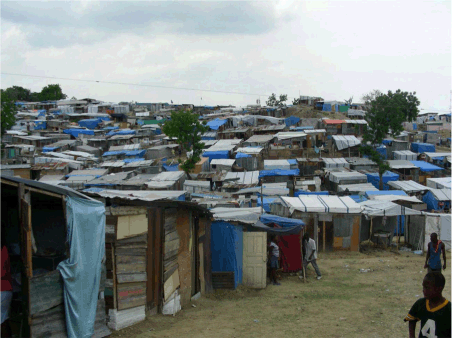
Internally displaced persons camp, Port-au-Prince, Haiti, May 2010. Photo by Michael Siciliano.
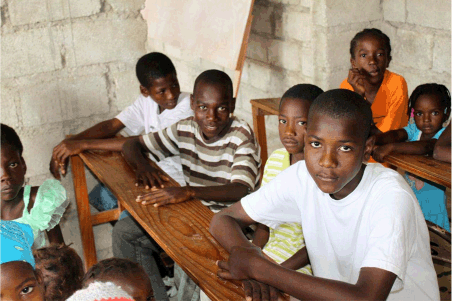
Haitian children attending an improvised school adjacent to an IDP camp. Port-au-Prince, Haiti, May 2010. Photo by Jared Augenstein.
Provision of medical care does not meet the demand, and clinics in the IDP camps were severely limited in their ability to provide services. Medical care was often provided by foreign physicians who did not speak Creole or French and who were not trained in the kinds of health problems most commonly seen in refugee settings. Lack of access to electrical power severely reduced the kinds of diagnostic and therapeutic services that could be provided. Pharmaceutical supplies were often lacking, out of date, improperly stored, or the physician's prescription was changed by the dispensing staff without the doctor's knowledge. A lack of adequately trained pharmacists was cited many times as a major hurdle.
There was little focus on prevention of health risks, especially for vaccine-preventable diseases and reproductive services. Although there were reports of vaccination activities, there was no reliable documentation of successful mass vaccination campaigns in the Port-au-Prince area; children in the IDP camps had no visible access to vaccines. Even with the post-earthquake influx of medical aid workers, surveillance systems remain inadequate for infectious diseases and other threats, such as chronic diseases, gender-based violence, and malnutrition. Reliable data on health issues are either unavailable or not easily accessible.
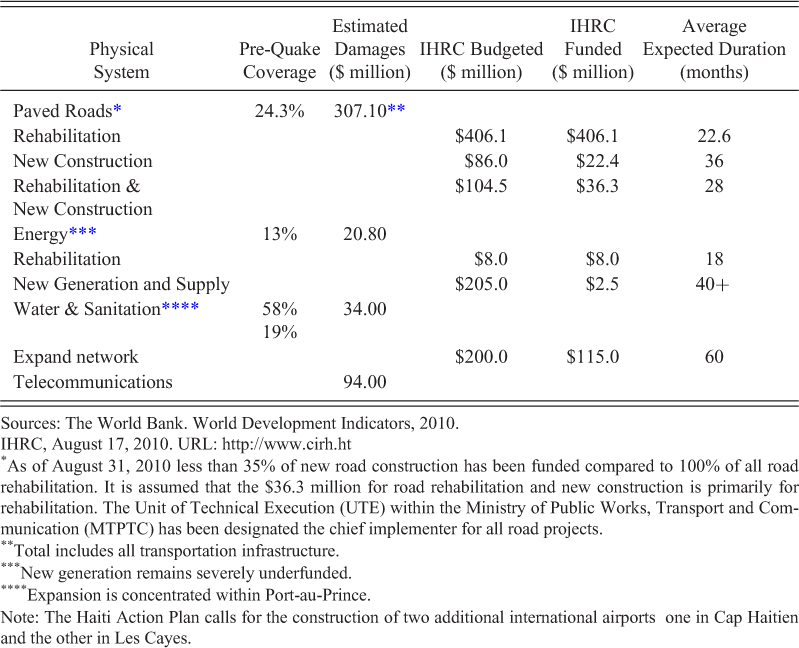
The infrastructure of roads, electrical transmission and communications facilities, and water and sanitation, already weak prior to the earthquake, was further damaged by the earthquake and continuing aftershocks (Table 2). The staggering amount of debris from earthquake-collapsed buildings would have overwhelmed the most capable public service. Months after the earthquake, debris, as well as the detritus from everyday life, still clogged the streets and waterways.
Interim Haiti Recovery Commission (IHRC) Funding Allocation, August 2010
Sources: The World Bank. World Development Indicators, 2010.
IHRC, August 17, 2010. URL: http://www.cirh.ht
As of August 31, 2010 less than 35% of new road construction has been funded compared to 100% of all road rehabilitation. It is assumed that the $36.3 million for road rehabilitation and new construction is primarily for rehabilitation. The Unit of Technical Execution (UTE) within the Ministry of Public Works, Transport and Communication (MTPTC) has been designated the chief implementer for all road projects.
Total includes all transportation infrastructure.
New generation remains severely underfunded.
Expansion is concentrated within Port-au-Prince.
Note: The Haiti Action Plan calls for the construction of two additional international airports one in Cap Haitien and the other in Les Cayes.
Crime remains a serious threat to the life and property of residents, including humanitarian aid workers. Officials in the Ministry of Justice sought to change this situation through collaboration with UN Police, MINUSTAH, and the U.S. military on an assigned humanitarian mission that ended on 15 March 2010. Part of the MINUSTAH mission is to observe and advise the PNH. UN Police personnel join PNH patrols, but the PNH retains sole jurisdiction. On assigned missions, UN, MINUSTAH, and US military forces could legally protect only those they observe in immediate need. These legal restrictions have lessened the perceived effectiveness of international security forces by the local population, even as their efforts improve actual police conduct and performance.
A sobering observation from the field study was the general disregard for law, abject absence of law, ignorance of law or outright defiance of law, and suspicion of the police and the justice system that is intended to ensure the unbiased, uncorrupt application of law. In many areas, laws do not exist. Representatives from the housing and shelter sectors reported that building codes with engineering and materials standards are nonexistent. Sanitary codes and wastewater treatment regulations are not present in Haiti's laws. Laws to support children and to address the needs of children in the justice system are patently absent.
Haiti in Transition
The larger challenge for Haiti is not recovery to the vulnerable state that existed prior to the earthquake. Rather, it is how to develop a responsible program of economic, social, legal, environmental, health, and cultural development that would enable Haitians to advance their society and manage their own risk. Such a program must address the lack of an effective government exacerbated by the interdependencies among physical, engineered, and social sectors that interact to hinder the recovery and keep Haiti mired in stagnation. Addressing these conditions separately will not solve the larger problem, as it is the interaction among them that sets back even minimal progress on any one front. Yet devising a valid program of humanitarian assistance, development, education, and professional support as this struggling nation seeks to overcome a history of poverty and governmental instability represents a major challenge to the international community, even as it offers significant financial support, economic development planning, and technical assistance. The Interim Haiti Recovery Commission (IHRC) was initiated to undertake this process, and some steps are now under way (Table 2). Yet, one year after the earthquake, there is still a very large set of tasks to complete.
To facilitate this process of reconstruction and development in Haiti, we propose the design and development of a “knowledge commons” that would serve as a continuing source of incoming information to develop innovative strategies for action and update inaccurate or outmoded assessments. Extending the work of Ostrom (1990, 2005) and Hess and Ostrom (2007), we define a knowledge commons as a comprehensive, interactive, emergent system to support decision making and organizational learning by communities in complex, changing environments (Miller and Page 2007, Page 2010), Specifically, it operates as a cross-platform complex system that is composed of software, data, and models to enable the collection, development, maintenance, visualization and analysis of data that characterize a community, with its risks and resources. In practice, a knowledge commons creates socially situated knowledge through community participation and timely action. It also provides a means of feedback and feed-forward communications that would enable participants in this complex nation to engage in actively constructing a disaster resilient society (Hess and Ostrom 2007). This knowledge commons supports the construction of a set of policy recommendations based on observations of current conditions and actions being taken in key policy areas. By creating a dynamic learning process, the commons would evolve with the ever-changing situation.
Using a conceptual framework of complex adaptive systems and distributed cognition, we suggest that the vicious cycle among multiple actors in Haiti may be transformed into a virtuous cycle of positive performance by focusing on the design and implementation of a sociotechnical system to support interorganizational learning, action, and redesign. For example, understanding the complex system of environmental health—including deforestation, surface and groundwater quality and quantity, and sanitation—would be facilitated by the rapid exchange of information and feedback among the major participants in this process: the Government of Haiti, local and regional academics, NGOs and international organizations that are seeking sustainable solutions. This will require an innovative approach.
The concept of distributed cognition (Hutchins 1995) acknowledges that no single individual, actor, group, or organization possesses all of the knowledge, resources, or skills to solve a complex problem. Rather, it is the exchange of information, knowledge, resources, and skills that enables a set of organizations and actors to coordinate their actions to achieve a larger goal, in this case, the reconstruction of a viable economy, political system, and sustainable environment for Haiti. This exchange of information, insight, knowledge and skills enables the participating actors to adapt their performance accordingly, and to hold one another accountable in the process. The process depends upon the timely flow of valid information among all participating actors, including the public, and their capacity and willingness to act on this information. Developing a knowledge infrastructure to sustain this system-wide learning process, we suggest, is a primary goal for the reconstruction of Haiti.
A Model for Action
In complex systems, interactions among components evolve in unexpected ways. Yet, some conditions form the basis for action in other arenas. A knowledge commons, which can be accessed by all groups in order to enhance the learning environment, is critical in the complex, interdependent environment of Haiti, where actions proposed by one group are often inhibited by constraints imposed by another group. Knowledge is a resource that, if shared, enhances the capacity of its users to learn and make informed, timely decisions. If framed in terms of the public good, a knowledge commons enables multiple groups and organizations to adapt their actions more efficiently to demands from the environment and to adjust their respective actions reciprocally to one another as they seek a common goal, the sustainability of their community over time. Knowledge commons are systemic in character, and performance depends heavily on the functions and structures of component local sources of knowledge that are integrated into the commons (Dunn et. al. 1990, Dunn and Holzner 1988).
The goal of a knowledge commons is to provide a comprehensive knowledge system that enables timely, appropriate action by the whole community. This goal involves inquiry into both the organizational and technical structures that support information search and exchange and collaborative actions among different components of the community to achieve their shared tasks. It also includes identifying the feed-forward and feedback processes by which different groups in the community learn to act together to mitigate, monitor, and reduce risk. This task is not trivial, as it involves at least five different functions of inquiry, assessment, analysis, modeling, and action which frequently are performed simultaneously by different actors in different locations at multiple time scales in a rapidly evolving disaster context.
The design and implementation of a viable knowledge commons to address decision making in the urgent environment of disaster operations requires a sociotechnical approach that links the technical systems of managing information to the human organizations that mobilize action. The broad outline for a successful knowledge commons is reasonably clear. The commons needs to be interdisciplinary, inter-jurisdictional, and interorganizational, with a carefully designed set of interactive information processes that capture the evolving situation and allow updating and course corrections among the participants. Current information technology readily enables the creation of such a knowledge commons. The organizational task is to engage the hundreds of participants involved in rebuilding efforts in Haiti to understand and use these processes of information sharing, updating, and assessing actions in their daily planning and work.
The knowledge commons would operate according to a simple set of rules (Ostrom 2005). The goal of the commons would be to enable the development of Haiti as a self-sustaining society that can assess and manage its own risks. All participants in the commons, both national and international, would register in a public registry, stating organizational affiliation, resources, knowledge, and skills to contribute to the goal, and proportion of time committed to the project. All Haitian participants in the commons would accept the rule of Haitian law, enhanced by institutional reforms outlined for Haiti in 2009. All international participants would honor Haitian law and accept an updated framework for OCHA's principles of humanitarian assistance.
Actions taken would be publicly transparent, and members of the commons would observe, identify, acknowledge, and revise problems as they occurred. The flow of shared information drives the dynamic of action in the commons, as actors interact with one another and engage in a progression of tasks to achieve the shared goal of a sustainable, resilient Haiti. Violations of these basic rules by any actor would be quickly reported, identified by the group of participants, and violators would be publicly held accountable for revision of their actions and restitution to the common goal. The collective knowledge of the participants would inform the decisions made to achieve the shared goal of a sustainable, disaster-resilient Haiti. The mechanisms needed to achieve a fully functioning knowledge commons would be developed through innovative uses of current information technologies designed to support the feed-forward and feedback processes of cognition, communication and coordination among the participants as they outline the tasks for action.
To illustrate the operation of a knowledge commons in practice, we outline an initial set of action strategies that is intended, cumulatively, to meet immediate, short-term, and long-term needs of the people of Haiti. The goal is to enable Haitians to develop the skills and capacity to manage their own resources and risk, with international assistance and support. Rebuilding roads, communications infrastructure, water and sanitation systems will support the revitalization of commerce and provide critical support to the shelter, health, and governance sectors. Although many sectors warrant serious attention, most immediate are the interlinked sectors of shelter, health (including food, water, and sanitation), and the rule of law, which would enable governance and security. If these conditions are not alleviated, the capacity of the people to address other issues is weakened, and the crisis escalates. Ordering the priorities for action is crucial, as action taken at one level can build the capacity to advance to a more comprehensive set of actions at the second level. The action strategies outlined below are designed to build cumulative capacity for recovery and reconstruction for the nation. Although the specific strategies may be adapted appropriately for different neighborhoods, the intent is to initiate a positive dynamic of action focused on meeting basic needs that creates increased capacity within Haitian communities, even as the programs are guided by international organizations and policies.
Strategies for Immediate Action
Shelter
In the aftermath of a disaster, it is difficult to curtail reconstruction for the purpose of building code. In Haiti, rebuilding is constrained by debris removal and its ecological disposal. If builders and designers receive educational materials and brief training on safe building techniques, these practices become integrated into the day-to-day practices of construction and reconstruction, and establish a mechanism for safe building.
Focus on immediate rapid debris removal and proper disposal. Accelerate the transition to permanent housing to discourage slums and reduce costs of secondary disasters; engage international/Haitian partnerships productively in the process. Introduce training of local personnel at the field level and use this process to inform and legitimize a formal building code through training and reconstruction.
Health
Four primary functions are essential to improve health care for the population at risk in Haiti: Prevention, Surveillance, Nutrition, and Health Care. To support these functions, we offer a set of recommendations for priority action on health:
Implement immediately a comprehensive program of vaccination for children throughout the country, whether they are in IDP camps or not, for example, through a series of “National Immunization Days.” Streamline illness and disease reporting by using SMS with geographical mapping of cases to support short-term responses and longer-term treatment and prevention. Improve communication across all sectors on health issues of critical importance, and ensure that WFP activities work to support local agricultural efforts; plan for, and implement, a transition from external support to internal food production. Develop relationships with international schools of medicine, nursing, pharmacy, and rehabilitation services to provide collaborative training of staff, service and research.
Rule of Law
The Haitian Government's Action Plan for Recovery and National Development frames a series of legal reform strategies to strengthen the rule of law. Implementing the Action Plan that was interrupted by the 12 January 2010 earthquake is fundamental to ensure the basic operation of legitimate government. The Haitian government acknowledged that legal reform and the rule of law are critical components of nation building in Haiti and placed the total budget required to complete the upgrade of justice and public safety within 12 months at $140,000,000 (Plan D'action 2010).
In post-earthquake Haiti, resources are limited, and competing needs are extreme. Prioritizing the response and appropriately channeling available resources are challenging tasks, but creating the rule of law is an overarching priority. Absent a fair, just and predictable governmental system, all efforts to create an infrastructure for economic growth, educational achievement, improved health and personal accountability, will not be sustainable.
Strategies for Short-Term Action
Education
In the complex system of evolving Haiti, education can be a primary vehicle for social, economic, and technical change. Overall, the key term for improving education in post-earthquake Haiti is capacity—in terms of improving the government's ability to manage the education sector, build accredited schools with trained instructors that provide access to all children, and improve technical-vocational skills for reconstruction. There is a clear link between the needs of primary and secondary education institutions, needs of government and communities, and the role that universities can play. To increase educational capacity, we offer a set of recommendations:
Implement effective teacher training programs, design curriculum with emphasis on math and science, and maintain better tracking of student and school performance. Generate a tertiary education system capable of producing graduates with advanced degrees needed to strengthen local capacity and increase the number of professors. Establish a visiting scholars’ exchange program where international and national organizations such as the NSF, USAID, and the World Bank provide funding to support teaching and research at Haitian universities. Create opportunities for Haitian scholars educated and working in other countries to accept positions within universities, research centers, and government agencies in Haiti.
Strategies for Long-Term Development
Environmental and Geohazards
Haiti faces a multitude of natural hazards that can trigger large-scale disasters, from hurricanes and drought to earthquakes and landslides.7 Shelters must be built with these hazards in mind, and as this event clearly demonstrates, public health can be easily compromised by environmental hazards. By addressing the base environmental vulnerabilities, the country can begin a path toward a more sustainable recovery.
The Government of Haiti commissioned a report by the World Bank to determine the best ways to address these multiple hazards in the context of Haiti's environmental vulnerabilities (NATHAT 2010).
Create environmental and geohazards curricula in secondary schools and universities that will train a cohort of Haitian scientists to monitor hazards and create solutions. Establish a seismic monitoring network to better define the active faults, the state of stress on these faults, and their potential to generate future earthquakes, and link the seismic network to an early warning system that can also be used for severe weather. Conduct a study on the capacity of the aquifer that provides Port-au-Prince's water supply, as well as an analysis of land use in the aquifer's recharge area. Collect geotechnical data on soils properties for large population centers to guide redevelopment planning, and coordinate with other DRR studies in the Caribbean.
Conclusions
Designing appropriate, constructive, and sustainable assistance to Haiti requires an integrated global effort. The cross-cutting issues of rebuilding infrastructure, developing a stable economy, and creating a reliable rule of law in Haiti will involve international as well as national actors. Exploring and implementing practical methods for building capacity for development in Haiti require building a sociotechnical “knowledge commons” to support individual, organizational, and interorganizational learning. This learning process necessarily involves the international community as well as Haitian governmental, nonprofit and private organizations, and the Haitian people. In this evolving partnership, the participants learn from each other in reference to the uncertain and still unknown risks created by seismic hazards. The science, engineering, policy, economic, educational, and legal aspects of this task are fundamental to improving the capacity of urban regions to live with seismic risk.
Creating this sociotechnical infrastructure to support interdisciplinary learning and change will benefit not only Haiti but other urban communities exposed to seismic risk. The learning processes involved in recovery and reconstruction need to incorporate both feed-forward and feedback processes among international and national actors in order to facilitate the continuing adaptation and change that is essential in this complex system. Incorporating these processes into an operational knowledge commons will support the dynamics of inquiry and innovation essential to a resilient society.
Footnotes
Acknowledgments
We gratefully acknowledge the Widgeon Foundation and the National Science Foundation (RAPID #1138680) for support of this interdisciplinary reconnaissance field study. Additional support was provided by the NSF Partnership for International Research and Education (OISE-0530151), and the Vassar College Environmental Research Institute.