






Abstract
Despite many studies on infrastructure resilience in the existing literature, there is a limited empirical understanding of disaster resilience in the context of intermittent infrastructure systems. To fill this knowledge gap, our study provides an example assessment of the resilience of Kathmandu Valley's electricity and water supply infrastructure systems in the 2015 Gorkha earthquake. The study is based on qualitative data collected over a period of one year following the earthquake, obtained through in-depth interviews (n = 52), a focus group, and a review of secondary sources. A resilience assessment framework that includes eight factors adapted from existing studies—vulnerability, anticipation, redundancy, adaptive capacity, rapidity, resourcefulness, cross-scale interactions, and learning culture—was used for the data analysis. The characteristics of intermittent infrastructure systems pertaining to resilience identified in this study could have important implications for engineers and decision makers in developing communities to better design and maintain infrastructure in the face of disasters.
Introduction
Disaster resilience is the ability of communities to prepare and plan for, absorb, recover from, and more successfully adapt to disasters (National Research Council 2012). Infrastructure systems are critical in building disaster resilience in communities, as they provide essential services that support economic prosperity and quality of life (Rinaldi et al. 2001). Existing studies have proposed different frameworks and methodologies in studying the resilience of infrastructure systems. However, most of the previous infrastructure resilience research is in the context of well-designed and well-maintained infrastructure systems, having adequate serviceability in business-as-usual conditions and in developed countries (e.g., Roege et al. 2014, Vugrin et al. 2011). There is an important knowledge gap in the resilience of intermittent infrastructure systems (i.e., systems that fail to keep operating at continuous levels of availability) in developing communities.
In one stream of the existing literature, the assessment of infrastructure resilience is based on quantitative performance outcomes, such as the functionality of infrastructure systems before and after disasters and the restoration time of physical infrastructure components (e.g., Ouyang et al. 2012, Turnquist and Vugrin 2013). While the outcome-based approach is useful in characterizing and modeling the level of resilience in infrastructure systems in intuitively understandable terms, it has two potential limitations. First, this approach relies on reliable quantitative data regarding infrastructure performance. When this kind of quantitative data is not accessible or accurate (e.g., in developing countries where the infrastructure performance monitoring and reporting technologies and mechanisms are not well developed), the outcome-based assessment is difficult to be implemented. Second, this approach might not be able to explain all the underlying sources of infrastructure resilience. In particular, an outcome-based approach typically does not adequately capture the social and institutional factors that affect the resilience of infrastructure. Those social and institutional factors (e.g., bureaucratic delays; interactions and collaboration across different organizations) often have significant impact on infrastructure systems in developing countries.
In another stream of literature, researchers have proposed different frameworks consisting of indicators/factors to guide the assessment of disaster resilience of communities, including infrastructure systems (Cutter et al. 2010, Cutter 2016, Twigg 2009). This kind of resilience assessment framework does not rely on infrastructure performance outcomes and does address some of the underlying sources of infrastructure resilience. Yet many of these frameworks still require quantitative data (e.g., detailed infrastructure asset conditions; access/evacuation potential) as input variables (Cutter et al. 2010). Some of these data might not be available or difficult to acquire in developing countries, which inherently have less comprehensive infrastructure databases. In addition, there is a lack of consensus on important resilience factors in infrastructure systems and a limited number of case study examples illustrating the implementation of these frameworks within the context of developing countries.
Compared to infrastructure systems in developed countries, infrastructure systems in developing countries have different traits in terms of access, quality, costs, and policy (Briceno-Garmendia et al. 2004). Thus the resilience characteristics of infrastructure systems in developing and developed countries are different and should be assessed differently. To address the knowledge gaps pertaining to infrastructure resilience in developing countries, the purpose of this paper is twofold: (1) to provide guidance on how to conduct systematic analysis of resilience of infrastructure systems by using qualitative data in contexts where quantitative data are limited; and, (2) to understand the important factors that affect the resilience of infrastructure systems in a developing country. The paper is based on a case study of Kathmandu Valley's electricity and water supply infrastructure systems, which was conducted over a period of one year following the 2015 Gorkha earthquake. Data collection methods include in-depth interviews (n = 52), a focus group, and a review of secondary sources. A resilience assessment framework and a hybrid coding structure were used for analyzing the qualitative data in the NVivo software.
The remainder of the paper is organized as follows. First, the infrastructure resilience assessment framework used in this study is presented. Second, the research context and methods are introduced. Third, the assessment results and findings related to the resilience of Nepal's electricity and water supply infrastructures are discussed. Finally, the paper concludes with the contributions, implications, and future directions of this study.
Infrastructure Resilience Assessment Framework
In this study, an infrastructure resilience assessment framework, consisting of eight resilience factors, is proposed for systematic analysis of infrastructure resilience in developing countries (Figure 1). The resilience factors—vulnerability, anticipation, redundancy, adaptive capacity, rapidity, resourcefulness, cross-scale interactions, and learning culture—were identified from existing studies (Berkeley III and Wallace 2010, Bruneau et al. 2003, Cabinet Office 2011, Francis and Bekera 2014, Shirali et al. 2016). Each factor represents one aspect of resilience, and together the factors are intended to capture the most important features of an intermittent infrastructure system pertaining to its resilience to disasters. In defining the framework, we aimed to minimize overlaps among the factors, while at the same time capturing all potentially relevant issues. Nevertheless, the different factors are interrelated. For example, a system's adaptive capacity is enhanced by its ability to anticipate disaster-induced disruptions (Francis and Bekera 2014). Because infrastructure systems are composed of both social and technical elements, their resilience is not only related to physical structures, but also to organizations, people, and processes. The eight resilience factors in the proposed framework cover different dimensions of resilience, including both technical and social aspects. For example, the vulnerability of an infrastructure system is greatly affected by its physical conditions; the learning culture relates to the organizational culture in terms of incorporating lessons learned from past events into future plans for enhancing infrastructure resilience.
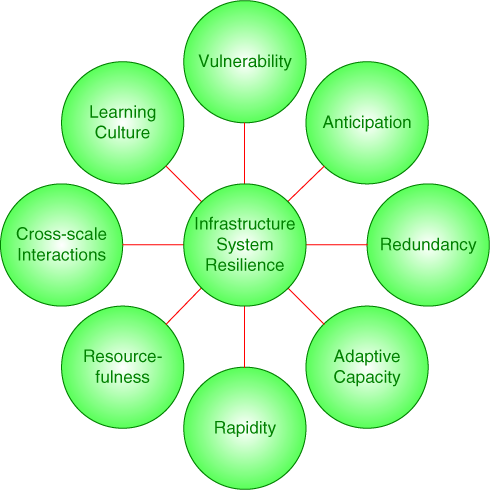
Infrastructure system resilience factors.
The eight factors, as used in this framework, are defined as follows:
Research Context and Method
The proposed infrastructure resilience assessment framework was used to examine the resilience of electricity and water supply infrastructures of Kathmandu Valley in the 2015 Gorkha earthquake, through use of a qualitative research approach. In this section, the research context and method are explained.
2015 Gorkha Earthquake
Nepal is a developing country in South Asia and is one of the most earthquake-prone countries in the world (NPC 2015). On Saturday, 25 April 2015 at 11:56 local time, a 7.8-magnitude earthquake, struck Barpak in the historical district of Gorkha, about 76 km northwest of Kathmandu (NPC 2015). The catastrophic earthquake was followed by a series of aftershocks, mostly to the east of the original epicenter. The most intense aftershock occurred on May 12, with a magnitude of 7.3 and an epicenter in the Dolakha district. As of June 2015, the earthquake had caused an estimated 8,790 deaths and 22,300 injuries (NPC 2015). Almost one-third of the population (8 million) in Nepal and 31 of the country's 75 districts were severely affected by the earthquake (NPC 2015).
The 2015 Gorkha earthquake greatly damaged the country's infrastructure sectors. The total value of damages and losses of the infrastructure sectors caused by the earthquake was estimated to be Nepalese rupee (NPR) 66,783 million, which is equivalent to U.S. $607 million. Among different infrastructure sectors, electricity, transport, and water and sanitation were the three most affected sectors (NPC 2015).
This study focused on investigating the resilience of two of the most affected infrastructure sectors (i.e., electricity and water supply) in Kathmandu Valley. Kathmandu Valley is the most urbanized and populated place in Nepal. Kathmandu Valley includes three districts: Kathmandu, Bhaktapur, and Lalitpur. During the earthquake, these three districts were among the fourteen worst affected districts in Nepal (OSOCC 2015).
Research Method
A qualitative research approach was adopted for assessment of infrastructure resilience in Kathmandu Valley. This particular approach was adopted for two reasons. First, qualitative data from different sources could provide a comprehensive understanding of different resilience factors and facilitate diagnostic assessment of the infrastructure systems of Kathmandu Valley. Second, there were not many sources for us to obtain sufficient quantitative data for resilience assessment in the post-disaster settings of Nepal, such as infrastructure service disruption and restoration time. Figure 2 shows different steps in the qualitative research method used in this study, each of which is described in the following subsections.
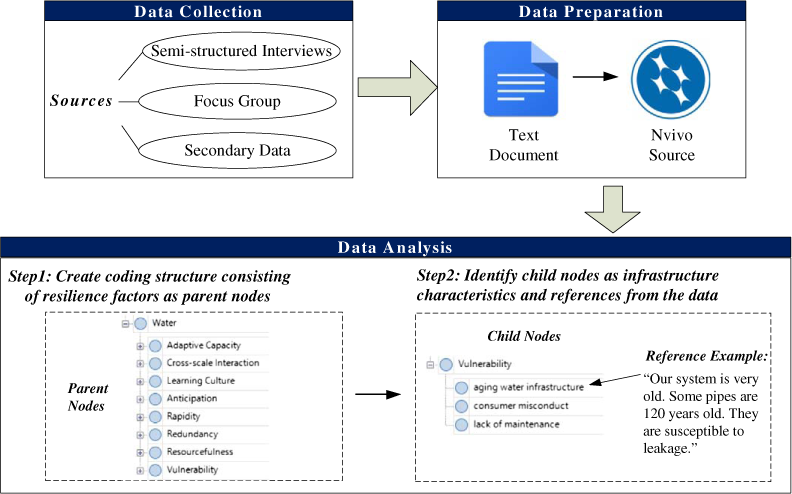
Steps in the qualitative research method.
Data Collection and Preparation
The major source of qualitative data was the semi-structured interviews that were conducted during three visits to Nepal in September 2015, December 2015, and May 2016. An initial set of interviewees was identified through a review of secondary sources (e.g., websites of international agencies and the Nepalese government, as well as various newspapers). These interviewees were knowledgeable about the infrastructure damage and responses in Nepal, such as those who were closely involved in the operation, management, restoration, response, and recovery of the electricity and water supply infrastructure systems of Kathmandu Valley. They included Nepalese government officials at local and national levels, as well as representatives from international organizations (e.g., World Bank; United Nations International Organization for Migration), government utility corporations [(e.g., Kathmandu Upatyaka Khanepani Limited (KUKL)], and private vendors (e.g., water truck operators).
The initial sample was then expanded through a snowball sampling method—that is, asking the interviewees to refer additional interviewees. Snowball sampling is a widely used and effective sampling method for identifying individuals possessing characteristics that are of research interest (Biernacki and Waldorf 1981). A total of 45 in-depth interviews were conducted with 52 interviewees. Six of the interviewees were interviewed multiple times during different visits. All the interviews were conducted face-to-face and most were recorded. Only five interviewees requested not to be recorded. The interviews were concluded upon theoretical saturation—that is, when additional interviews did not lead to identifying any new information.
The interviews followed a semi-structured format. The interview instrument included open-ended questions related to infrastructure conditions before and after the earthquake, impacts of the earthquake on infrastructure systems, response and recovery activities, challenges in coping with disasters, and lessons learned from the earthquake. The open-ended questions were modified based on the background of the interviewees, as well as the time of the interviews. During interviews with subjects whose background was in the electricity sector, questions were more related to the electricity infrastructure. During interviews with subjects whose background was in the water sector, questions were more related to the water infrastructure. In interviews with subjects involved in disaster response and recovery in general (e.g., Nepal government officials or international organization representatives), questions were related to both electricity and water supply infrastructure systems. The interviews conducted in September 2015 were more focused on the direct impacts of the earthquake and immediate response, while the interviews conducted in December 2015 and May 2016 had more questions related to recovery and reconstruction. The flexibility in these semi-structured interviews facilitated efficient data collection.
In addition to the interviews, data collected from a focus group conducted in Bhaktapur was also used as a primary data source. The focus group, consisting of eight local leaders of Bhaktapur municipality, was conducted in December 2015. The purpose of the focus group session was to understand the perspectives of disaster victims on pre- and post-earthquake access to water in Bhaktapur municipality and to learn about the water infrastructure challenges that the community leaders faced immediately after the earthquake.
The interviews and the focus group were supplemented with secondary data, including reports published by the Nepalese government (e.g., NPC 2015), international organizations (e.g., the Global Water Sanitation and Hygiene Cluster, Logistics Cluster), and research institutes (e.g., the Earthquake Engineering Research Institute).
In preparation for data analysis, the recorded interviews and focus group were transcribed verbatim. For the five interviews in which recording was not permitted by the interviewees, the interviewers’ notes were collected. Data collected from both primary and secondary sources were compiled and imported into NVivo 11, a qualitative analysis tool.
Data Analysis
In this study, a hybrid approach for inductive and deductive coding and theme development (Fereday and Muir-Cochrane 2006) was used to analyze the qualitative data in NVivo. First, the infrastructure assessment framework consisting of eight resilience factors was adopted as a deductive coding framework. The deductive coding framework was used to define the parent nodes for coding information related to electricity and water supply infrastructure systems respectively (Figure 2). Then under each parent node, child nodes (subnodes of a parent node) representing specific characteristics of infrastructure systems were identified directly from the qualitative data. For example, as shown in Figure 2, vulnerability was defined as one of the parent nodes for analyzing data related to the water supply infrastructure. Under this parent node, aging infrastructure, lack of maintenance, and consumer misconduct were identified as important characteristics (i.e., child nodes) that are part of vulnerability of the water supply infrastructure system of Kathmandu Valley. These child nodes were identified by reviewing the qualitative data. For instance, one reference to the child node aging infrastructure in the qualitative data is the statement of one interviewee that, “Our system is very old. Some pipes are 120 years old. They are susceptible to leakage.”
The hybrid data analysis approach utilized in this study allows for integration of concepts in the extant literature and information emerged from the ground up (Bradley et al. 2007). In this case, this data analysis approach was shown to be effective in identifying and understanding the characteristics of Nepal's infrastructure systems in different dimensions of resilience from qualitative data. The coding structure was tested by having two researchers apply the structure to five uncoded data sources independently. The comparison between the coding conducted by the two researchers showed a reasonable level of reliability (greater than 80% agreement in coding), as suggested by Miles and Huberman (1994).
Findings
In this section, the findings from the data analysis of electricity and water supply infrastructures of Kathmandu Valley in the 2015 Gorkha earthquake are presented. For each sector, a brief introduction of the infrastructure system and its performance before and after the earthquake is provided. Then the characteristics of the infrastructure system pertaining to each of the eight resilience factors are presented.
Electricity Infrastructure System
In Nepal, the state-owned Nepal Electricity Authority (NEA) is responsible for the electricity supply through the national grid. NEA generates power from NEA hydro and NEA thermal, and it also purchases power from the Independent Power Producers (IPP). Before the earthquake, there was already a power crisis in Nepal. In the fiscal year of 2013–2014, only two-thirds of the 1,200 megawatt (MW) estimated annual demand for electricity was being met, mostly through hydropower (NEA 2014). The remaining 400 MW of demand was handled by load shedding (i.e., planned rolling blackouts) up to 12 hours per day in some places (Davidson and Poland 2016).
Nepal's inability to meet the regular electricity demand prior to the earthquake was mainly due to inadequate generation. To meet the shortfall, several large hydropower projects are currently underway in Nepal that together should generate more than double the capacity in the next several years, taking advantage of some of the country's huge untapped potential for hydropower (Davidson and Poland 2016). At the same time, thousands of small installations (diesel generators, solar home systems, small-scale mini grids, etc.) are used in Nepal to help meet customer needs beyond what the national grid supplies.
The 2015 Gorkha earthquake caused different levels of impacts on power generation, transmission, and distribution systems in the electricity infrastructure sector in the country. Because of the earthquake, the generation system experienced damage to penstocks and walls, some canal, spillway, and dam crest cracking, and access road blockage (Davidson and Poland 2016). The production of about 115 MW of operating hydropower facilities was estimated to have sustained damage (NPC 2015). In addition, several hydropower projects under construction were partially damaged (NPC 2015). The transmission system performed well in general (Davidson and Poland 2016). Damage to a couple of substations and transmission towers led to power outages in some areas. There was also severe damage to the distribution systems. About 800 km of distribution lines at different voltage levels and 365 transformers at different capacity levels were out of service (NPC 2015). In Kathmandu Valley, the majority of the impacts were in substations and distribution systems (Figure 3).
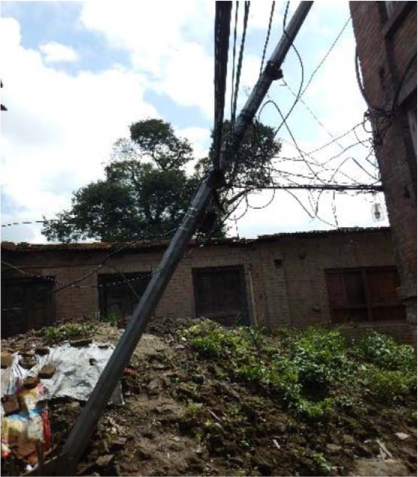
Damage to electricity pole.
Power was restored in Kathmandu within 24 hours, and in other municipality areas within one to seven days (Davidson and Poland 2016). In some areas that were severely affected or hard to access, the time for restoration was longer. Despite the impacts, the power interruption did not affect the customers in Kathmandu Valley as much as it could have, since many customers already had backup power sources (e.g., batteries, generators) to address the normal load shedding. However, the repair and reconstruction of the damaged electricity infrastructure could take a very long time.
Vulnerability. Two characteristics contributing to the vulnerability of electricity infrastructure system of Kathmandu Valley were identified. The first characteristic is interdependency between houses and distribution lines. In Nepal, many of the distribution lines are attached to the walls of houses (Figure 4), which caused cascading failures when houses collapsed due to the earthquake. According to one interviewee, “The streets are very narrow. There is no space to put up poles. Many distribution lines are attached to house walls. When the houses collapsed, everything is buried and you don't have the distribution system.” The second vulnerability characteristic identified is unreliable power plants of the private sector. Until 1990, hydropower development was under NEA only. With the enactment of a new Hydropower Development Policy in 1992, the development was opened to the private sector also (IPPAN 2016). Many of the private hydropower stations experienced minor or significant damage in the earthquake (IPPAN 2015). During the interviews, some interviewees expressed concern regarding the reliability of private hydro plants. One of the interviewees mentioned that, “Projects of the private sector are usually small projects designed by local companies. They were not built with the same safety margins as the large public projects.” Another interviewee pointed out that due to safety and risk management issues in private power plants, around 80 MW to 90 MW out of the 200 MW total capacity of private hydro-power was out of operation five months after the earthquake.
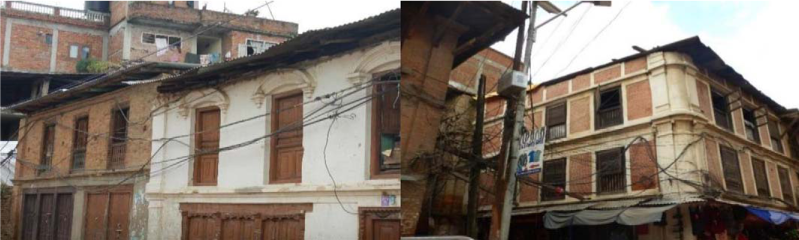
Electricity distribution lines attached to house walls.
Anticipation. Two characteristics related to anticipation in the electricity infrastructure system were identified: lack of vulnerability identification and lack of systematic restoration plans. The earthquake was not really a surprise in Nepal. Many interviewees said that both the government and residents knew that a large earthquake could happen at any time. Still, not much preparation had been done in the electricity infrastructure sector. Before the disaster, no systematic vulnerability identification in the electricity network had been done. There was also a lack of systematic restoration plans to cope with complex situations. One interviewee mentioned that they had defined certain processes of restoration, including collecting damage information, prioritizing repair needs, conducting repair work, and restoring systems. However, the restoration plans were usually made for one part of the electricity infrastructure system (i.e., generation, transmission, or distribution). The actual restoration work after the earthquake was more complex, partly due to the close coordination required between the generation, transmission, and distribution system elements. For example, in order to restore the power system, it was important to make sure the related distribution lines were in good conditions. Otherwise, cascading failures such as fire, explosion, and electricity shock accident could happen. According to the interviewees, there were no such systematic restoration plans considering the coordination requirements between different system elements in the electricity infrastructure sector.
Redundancy. Redundancy in the electricity sector of Kathmandu Valley was mainly customer-developed redundancy under chronic stress. To cope with the shedding, public hospitals, schools, as well as residents, usually have their own generators. For example, one interviewee working at a hospital in Bhaktapur said that the electricity was cut off for two or three days after the earthquake, but their operations were not halted as they used their own generators. There was, however, a higher demand for fuel to operate the generators and higher costs associated with the use of generators.
Adaptive Capacity. Characteristics related to the adaptive capacity of the electricity infrastructure system of Kathmandu Valley include carefully arranging work sequences to avoid secondary disasters and prioritizing power restoration based on urgency. Restoring the power supply after the earthquake without careful inspections could trigger cascading disasters such as fire or even explosion. In order to restore the power supply as soon as possible without any accident, the first step NEA took was to isolate the distribution lines that were severely damaged. Then they restored power to critical facilities such as hospitals, water infrastructure, and telecommunication infrastructure after the earthquake.
Rapidity. The electricity infrastructure sector of Kathmandu Valley showed characteristics of rapid response and short-term recovery and slow long-term recovery due to bureaucratic delays. After the earthquake, at the request of the Nepal government, a comprehensive post-disaster needs assessment exercise was launched simultaneously with response and relief efforts. In the electricity sector, information about the damage, loss, and needs was collected in a short time frame. Repair work such as changing broken insulators and fixing transformers was also done relatively quickly. However, long-term recovery and reconstruction have experienced delays. As one interviewee said, “We have enough budget to reconstruct. But the capacity to move quickly is an issue.” The Nepalese government formed a National Reconstruction Authority to set recovery policies and provide oversight to the recovery effort two months after the earthquake. However, parliament failed to ratify the ordinance to set up the authority at the time. Several interviewees mentioned that the lack of an established reconstruction authority and detailed plans significantly delayed the reconstruction progress and they urged the government to move faster. As one interviewee said in an interview conducted in September 2015, “It has been five months since the earthquake and we still do not have substantial strategies to rebuild and reconstruct.” The Reconstruction Authority Bill was not approved at the Nepal parliament until 16 December 2015, almost eight months after the earthquake (Ghimire 2015).
Resourcefulness. The electricity infrastructure sector showed the capability of mobilizing materials and equipment to cope with the impacts of the disaster. According to the interviewees, the electricity infrastructure sector was able to mobilize resources such as insulators and poles from storage and other ongoing projects for disaster response and recovery. However, the lack of trained human resources was identified as a challenge to build resilience. This challenge was not just unique to the electricity infrastructure sector, but a countrywide challenge. According to one interviewee, “Many young males have been out of the country for foreign employment as our country doesn't have enough jobs for young males. Now, lack of manpower for reconstruction and renovation of infrastructures is a problem.”
Cross-scale Interactions. Cross-scale interactions played important roles in the response and recovery of the electricity infrastructure sector in Nepal. The characteristics related to cross-scale interactions in the electricity infrastructure system of Kathmandu Valley include effective intra-agency communication (i.e., inside NEA) and lack of inter-agency coordination. NEA used their own communication system to coordinate the situations of different power stations and arrange the repair and restoration activities of generation, transmission, and distribution subsystems. However, the cross-scale interactions were more challenging when different organizations participated. After the earthquake, international organizations such as the World Bank and the Japan International Cooperation Agency, as well as foreign governments, actively participated in the recovery and reconstruction of electricity infrastructure. According to one interviewee, “It is a challenge when so many different people want to contribute to recovery and reconstruction.” The interviewee further emphasized that, since the recovery and reconstruction of electricity infrastructure is a technical task, “A uniform technical language should be used by different entities in technical support and communication to avoid confusions.”
Learning Culture. Several lessons have been learned from the earthquake and will be considered in the long-term recovery and future development plan of the electricity infrastructure sector of Kathmandu Valley. The first lesson is to better prepare for disaster by setting up a disaster preparation department in NEA. The interviewees mentioned that they realized that they were not prepared for this kind of disaster. They started thinking about having a separate department in NEA to conduct risk and vulnerability assessments and to plan for response and recovery after disasters. The second lesson is that there is an urgent need for improving design and operation. The interviewees mentioned two future strategies to build a stronger system: (1) investing in underground facilities, as “structures that are exposed on the surface are more prone to damage due to earthquake than the underground structures”; (2) considering developing distributed power systems. According to the interviewees, NEA was “moving towards an integrated system to improve service efficiency.” However, the disaster made them reconsider this strategy because “distributed systems are easier to isolate and serve better during disasters.”
Water Supply Infrastructure System
KUKL operates and maintains the water supply and sewerage systems in most areas of Kathmandu Valley. The water supply system is comprised of eight subsystems, each with a different source and treatment plant (Davidson and Poland 2016). There are about 45 water reservoirs supplying water to the valley (Mostafavi et al. 2017). In addition to the surface water sources, the water supply system includes 70 tube wells in the north part of the valley, which provide about 30% of water in the region (Davidson and Poland 2016). There are 300 km of transmission mains and 1,300 km of distribution mains, mostly made of cast iron, ductile iron, and galvanized iron, with some newer lines of polyvinyl chloride (PVC) and high density polyethylene (HDPE; Davidson and Poland 2016). Not every household has a private water connection. Many households use communal wells or taps, especially in more rural areas (Davidson and Poland 2016). A large gap exists between water supply and demand. The existing water supply system is capable of providing only 69 million liters per day (MLD) in the dry season and 115 MLD in the wet season, while the actual demand is greater than 370 MLD in the valley (Udmale et al. 2016). As a result, service is intermittent, with some customers located near sources receiving water continuously, but others getting it as little as one hour a week (Davidson and Poland 2016). KUKL has two major development projects underway to address the shortfall. The Melamchi Water Supply Project began in 2000 to add 510 MLD by bringing water from outside the city, and the Kathmandu Valley Water Supply Improvement Project is improving the distribution system (Davidson and Poland 2016). At the same time, the deficit is met through private ground-water pumping, traditional water spouts, wells, supplies from private vendors, and bottled water industries (Udmale et al. 2016).
The earthquake damage was widespread in the water supply infrastructure system, including many pipe breaks (especially at house connections, see Figure 5), leaking mechanical couplings, some silting of wells, and extensive damage to KUKL office buildings (Davidson and Poland 2016). One of the eight subsystems experienced damage when a 35-cm trunk line was damaged by a landslide (Davidson and Poland 2016). Another subsystem in the north part of the valley was disrupted due to power outage, causing interruption to the pumps extracting water from ground aquifers (Mostafavi et al. 2017). A recent study reported that the valley's water supply infrastructure suffered a reduction in the capacity of water distribution pipe networks of 28%, 30%, and 18% in the Lalitpur, Kathmandu, and Bhaktapur districts, respectively (Thapa et al. 2016). An approximate 40% reduction of supplied water by KUKL was also reported, affecting 0.15 and 0.24 million people during the dry and wet seasons, respectively (Thapa et al. 2016). The water infrastructure service was restored within one to ten days after the earthquake in the valley, with the outage being unnoticeable to many customers who were already accustomed to intermittent service (Davidson and Poland 2016). In some areas, the level of service actually improved in the aftermath of the earthquake due to reduced demand caused by damage to other parts of the system and to temporary population migration (Mostafavi et al. 2017).
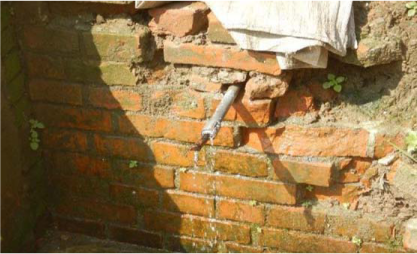
Water leakage in pipelines due to the earthquake.
Vulnerability. The vulnerability of the water infrastructure system of Kathmandu Valley is mainly due to three characteristics: aging infrastructure, lack of maintenance, and customer misconduct. The Kathmandu Valley water supply system is approximately 120 years old. Because the water supply system was designed and constructed a long time ago, the system was not designed to meet the present needs of the growing population in Kathmandu Valley. Also, there is a lack of maintenance of the aging infrastructure, which made the pipelines in Kathmandu Valley more susceptible to damage. According to the interviewees, many pipelines were loosely connected before the earthquake. Due to the seismic shaking, the leakage problem was exacerbated. Another vulnerability characteristic is the misconduct of customers before the earthquake. The interviewees reported that some customers were cutting and joining water pipelines illegally. As one interviewee said, “They think the pipelines are in their own houses and they can use [the pipelines] in their own way.” This type of misconduct had worsened the condition of the pipelines in Kathmandu Valley.
Anticipation. Limited capability to prepare for disasters was identified as the major anticipation-related characteristic of Kathmandu Valley's water supply infrastructure system. As with the electricity infrastructure sector, KUKL anticipated the occurrence of the earthquake and realized the need for disaster preparedness, but still had not undertaken sufficient disaster preparedness actions. One important reason for this is that KUKL was “busy dealing with everyday emergency,” according to one interviewee. To some extent, meeting the day-to-day water needs of the customers, along with limitations in the agency's resources, had limited the agency's capability to establish disaster management processes (Mostafavi et al. 2017). Before the earthquake, the Ministry of Urban Development had started to develop disaster management processes for the water utility agencies to use in collaboration with international agencies. However, these processes were not in place at the time of the earthquake.
Redundancy. The redundancy of the water supply infrastructure system of Kathmandu Valley was developed both by the agency and the general public, in order to cope with the regular supply-demand disparity. The redundancy-related characteristics identified are water supply through tankers and household water storage. As for the agency, KUKL has six stations for filling water tankers and a fleet of water trucks, which enabled delivery of water when the disaster damaged the pipelines (Mostafavi et al. 2017). Before the earthquake, customers had also developed their own alternative ways of getting water. Almost every household in Kathmandu Valley has an underground or rooftop storage tank to store water during the scheduled supply time, which then can be used during load shedding periods (Figure 6a). In addition, although the practice is illegal, many households had dug their own shallow wells as a backup water source (Mostafavi et al. 2017). Some people also have used bottled water for access to clean water.
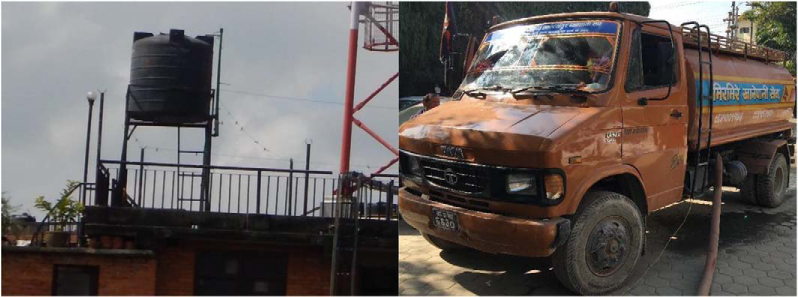
(a) Rooftop tanks for water storage and (b) trucks for water supply.
Adaptive Capacity. The characteristics related to adaptive capacity of the water supply infrastructure system are identified as supplying water through public and private tankers and utilizing mobile water treatment systems to produce water. Right after the earthquake, KUKL chose not to supply water through pipelines to the affected areas due to anticipated leakage problems. Instead, KUKL used water tanks as the major mechanism to supply water. Fortunately, the six tanker stations in Kathmandu Valley were not damaged during the earthquake and had the full storage capacity when the earthquake happened. Therefore, KUKL was able to mobilize water tank trucks to supply water to different locations. In addition to KUKL, private tankers in Kathmandu Valley helped the system to adapt to the disaster. Under the lead of the Valley Tanker Entrepreneur Association, private tankers managed to supply water to the most needed places, such as hospitals and shelter camps (Figure 6b). Another adaptive action was the use of mobile water treatment plants. According to the interviewees, after the earthquake, international organizations with water treatment capacity set up mobile water treatment systems to produce particle-free drinking water from natural sources of raw water (AIDF 2015). The water was then delivered directly on site or to the population via tankers.
Rapidity. The characteristics of Kathmandu Valley's water supply infrastructure system related to rapidity include relatively quick preliminary disaster assessment and response, slow detailed assessment and maintenance, and delays in long-term reconstruction. After the earthquake, KUKL moved fast to assess the disaster damage and needs. According to one interviewee, “We met directly after the earthquake to assess the situation within 72 hours.” However, the assessment conducted at that time was quite preliminary. More detailed assessment, maintenance, and repair activities proceeded slowly due to several reasons. First, many water pipelines were buried under collapsed houses or close to houses which were still at the risk of collapse after the earthquake. As one interviewee mentioned in December 2015, “We only fixed the damage that can be seen on the surface. Underground damage still needs to be found and fixed.” Second, there was a lack of human resources. KUKL relied on customers to collect the damage information and report service disruptions or water leakage in streets. Other reasons delaying the response process included road blockage and permission acquisition. In terms of reconstruction, the speed in the water sector was slow due to the same legal and bureaucratic obstacles delaying the electricity sector.
Resourcefulness. The lack of trained human resources and lack of sufficient disaster response funding were identified as two significant characteristics of Kathmandu Valley's water supply infrastructure system. After the earthquake, the water supply sector faced challenges in terms of resource mobilization. First, there was a lack of human resources, especially those trained in response and recovery activities. Second, there was insufficient funding. The budget at KUKL could barely meet the regular operation requirement and there was no separate funding for disaster response. According to the interviewees, KUKL asked the government for the required funding. However, shelter and food supply were prioritized after the earthquake and thus KUKL's request was not granted.
Cross-Scale Interactions. Established partnership before the disaster was identified as a significant characteristic in the water supply infrastructure system of Kathmandu Valley. Many agencies and organizations were involved in the water supply and infrastructure maintenance and recovery activities after the earthquake. Besides KUKL, Nepalese government agencies (e.g., Ministry of Urban Development, Ministry of Home Affairs) and nongovernment organizations and institutions, such as the United Nations Children's Fund (UNICEF), Oxford Committee for Famine Relief (Oxfam), Valley Tanker Entrepreneur Association, Red Cross, and World Bank provided support in terms of money, technology, and human resources. As many people from different organizations and backgrounds worked together, the coordination was challenging. Partnerships established before the earthquake helped the cross-scale interactions in the face of disaster. One interviewee mentioned that Oxfam had a partnership with the Valley Tanker Entrepreneur Association. After the earthquake, the representative from Oxfam coordinated with KUKL and the private tankers to reach an agreement so that private tankers could help deliver water.
Learning Culture. Decision makers within the water sector of Kathmandu Valley learned several lessons from the disaster. The first is the need to establish funding for disaster preparation and response so that the “emergency preparation will not only be on paper but in practice” and the disaster recovery process can move faster. The second lesson is to rebuild the system back better. Specifically, the interviewees mentioned plans to build a disaster-resistant water infrastructure system in Nepal after the earthquake by improving household-level water accessibility, enhancing water treatment and production capability, replacing aging pipelines and service connections, and developing a more connected water distribution system. One interviewee emphasized the importance of rebuilding the system's social and institutional aspects in addition to the physical aspect: “Social and economic reconstruction is more important and needs more innovation and dynamism. It needs involvement of many stakeholders like the government, philanthropists, international organizations, and the private sector.”
Conclusion
In this study, a systematic qualitative assessment of the electricity and water supply infrastructure systems of Kathmandu Valley in the 2015 Gorkha earthquake was conducted. A resilience assessment framework composed of eight factors (i.e., vulnerability, anticipation, redundancy, adaptive capacity, rapidity, resourcefulness, cross-scale interactions, and learning culture) was used in this study to guide the qualitative data analysis. The study revealed that there were several important factors that had a negative impact on the resilience of infrastructure systems in Nepal: (1) inherent vulnerability in infrastructure systems (e.g., safety and risk issues in privately operated power plants; interdependency between electricity distribution lines and houses; aging infrastructure and lack of maintenance in the water infrastructure); (2) lack of preparedness (e.g., lack of funding for post-disaster restoration and recovery of infrastructure; lack of predisaster plans; lack of preparedness of departments in agencies); (3) shortage of skilled labor, which remains a countrywide problem; and (4) bureaucratic delays. However, redundancy and adaptive capacity both at the governmental (e.g., capability to mobilize materials and equipment; adjusting of work sequences; prioritizing of restoration tasks) and nongovernmental levels (e.g., alternative electricity and water supply sources at the household and private sector levels due to supply-demand disparities as chronic stressors) had a positive impact on the resilience of infrastructure systems in Nepal. The partnerships established in the water supply infrastructure system before the earthquake also helped cross-scale interactions in disaster response after the earthquake.
The theoretical contribution of this study lies in providing an example of qualitative analysis of infrastructure resilience in a developing country following a disaster. Such analysis has been underutilized in infrastructure resilience studies. This research method provides opportunities to examine the resilience of infrastructure in developing countries when quantitative data is limited. Also, it could provide a better understanding of the underlying sources of infrastructure resilience. Researchers can utilize this qualitative research approach for examining the resilience of infrastructure systems in other contexts (e.g., communities or regions at different locations; different types of disasters) in the future. In addition, the findings in this study suggest specific information that should be collected in future studies regarding infrastructure resilience in developing communities. For example, system redundancy developed under chronic stress (e.g., backup power sources; household water storage) was identified as an important characteristic enabling the communities to cope with service disruptions after the earthquake in Kathmandu Valley. Information related to the existence and impacts of such redundancy on infrastructure systems in other developing communities should be collected and examined in the future in the hope of creating new knowledge.
From a practical perspective, the results of the assessment conducted in this empirical study informed us about specific characteristics of infrastructure systems in the context of developing communities. Compared with infrastructure systems in developed countries, the infrastructure systems in Kathmandu Valley had specific characteristics such as aging infrastructure, severe resource constraints, supply-demand disparity, and redundancy developed under chronic stress. Based on the findings in this study, policy and decision makers can develop plans to enhance resilience of infrastructure systems in Kathmandu Valley and other developing communities with similar traits. Some of the actions that policy and decision makers could take include: (1) prepare plans prior to disasters in order to identify and mitigate infrastructure vulnerability, avoid secondary disasters in the aftermath of disasters, and determine short- and long-term post-disaster restoration priorities; (2) set aside funds prior to disasters in order to speed up post-disaster infrastructure restoration and recovery; (3) set up departments within governmental agencies in charge of disaster preparedness; (4) offer disaster response training and build cross-sectoral partnerships prior to disaster events; (5) enable a learning culture in infrastructure agencies (e.g., by holding post-disaster debriefings). Furthermore, policy and decision makers could build on existing adaptive capacities of the general public and the private sector (e.g., privately owned water tanker companies) prior to and in the aftermath of disaster events (e.g., by holding participatory events). As one of the interviewees said, “This is an opportunity to build the resilience capacity and now it is the right time to prepare the public and government for the future.”
Footnotes
Acknowledgments
This material is based in part upon work supported by the National Science Foundation under Grant Number CMMI-1546738. Any opinions, findings, and conclusions or recommendations expressed in this material are those of the authors and do not necessarily reflect the views of the National Science Foundation.