






Abstract

Ronald Ross KCB FRS (1857–1932) was an outstanding medical investigator, his major discovery being the elucidation of the avian malaria life cycle in Calcutta (Kolkata) in 1898. In the previous year at Secunderabad he had demonstrated that the mosquito was involved in the transmission of human malaria. Despite his undoubted claims to scientific greatness, he was however a somewhat difficult individual. 1, 2
One example lies in his paranoid tendency and his longstanding suspicion that Battista Grassi (1854–1925) (Figure 1) had plagiarized his Nobel Prize-winning work in the establishment of human malaria transmission. Further evidence of this can be discerned in the accompanying letter to the Honorary Secretaries of the Royal Society of Tropical Medicine and Hygiene in 1921 (Figure 2). 3
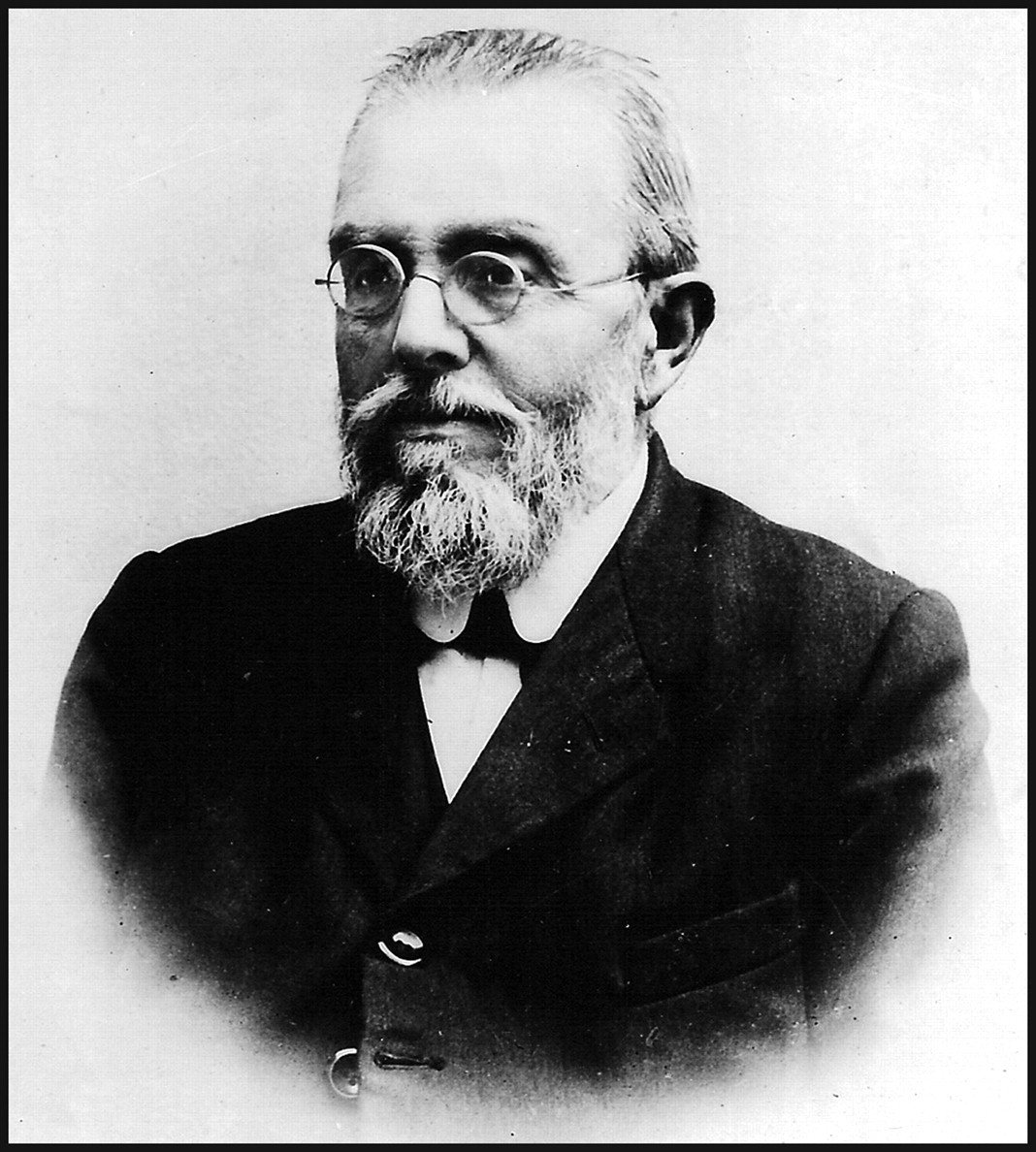
Giovanni Battista Grassi (1854–1925). (Reproduced courtesy of the Wellcome Library, London)
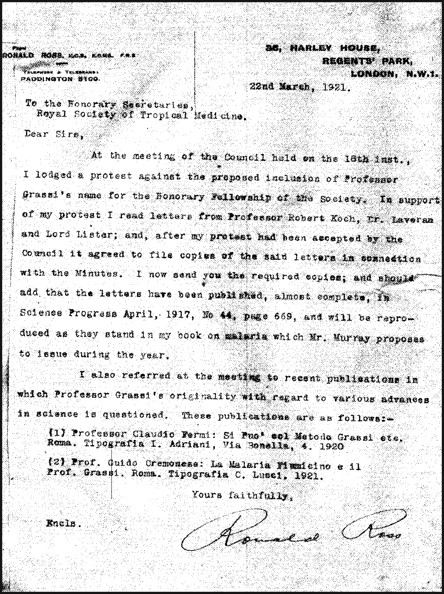
Letter from Sir Ronald Ross FRS to the Honorary Secretaries, Royal Society of Tropical Medicine and Hygiene (RSTMH). (Reproduced courtesy of the RSTMH)
The Council of that Society had intended electing Grassi to an Honorary Fellowship but as a result of Ross's intervention this never materialised.