







Abstract
Commercial sunflower oil was epoxidized at the laboratory-scale. The epoxidized sunflower oil (ESFO) was modified following the acrylation reaction. Modification was carried out simultaneously using acrylic acid (AA) and triethylamine (TEA). To optimize the reaction conditions, the effects of four temperatures (40, 60, 80, and 100 °C), the ESFO:AA (100:100) ratio, and 0.2% TEA were investigated. The rate of conversion was analyzed with both FT-IR and titration of the oxirane ring. After that, the temperature with the highest conversion was selected and used throughout for all modification reactions. Then, four ratios (100:100, 100:90, 100:80, and 100:75) of ESFO:AA were analyzed at four different concentrations of TEA (0.2, 0.3, 0.4, and 0.5%) to determine the best estimate for both the ESFO:AA ratio and the catalyst concentration. Conversion rate was analyzed using FT-IR spectroscopy by measuring the concentrations of ester, carbonyl, and alcohol groups. Moreover, oxirane***ring concentration was estimated using the titration method (with gentian violet as indicator) and FT-IR spectroscopy (epoxy ring absorptions at 1270 cm−1 and 877 cm−1). Based on conversion yield, the optimum ESFO:AA ratio corresponds to 100:80; the best temperature reaction was at 60 °C, and the best TEA concentration was 0.2%. The critical amounts of reactants needed to reach maximum conversion were established. The final acid value of the acrylated ESFO after washing (pH = 7) was 2.1 mg potassium hydroxide (KOH) g−1. All results show that FT-IR spectroscopy is a simple, low-cost, rapid method for investigating the kinetics of a reaction.
Keywords
INTRODUCTION
Plastics are widely used because they possess the qualities required for many applications. Although the extended life of plastic is due to its nonbiodegradability, that also makes it a source of pollution. Most polymers, such as polyethylene, polypropylene, polystyrene, polyethylene terephthalate, and polyvinyl chloride, however are derived from petrochemicals. Such resources will, arguably, be depleted within the next 100 years. Although the use of oil and related reserves for transportation and heating are serious concerns, the chemical industry will also be faced with real issues associated with the use of an essentially nonrenewable feedstock for most of its products.
The use of annually renewable feedstocks for the production of new plastics can have both economic and environmental benefits. Fundamental research in the production, modification, enhancement, and application of these materials is important. 1
Vegetable oils are renewable raw materials. Their conversion to useful intermediates for polymeric materials is significant because of their low cost, ready availability, and possible biodegradability. Vegetable oils, such as soybean oil, palm oil, and rapeseed oil, are primarily extracted from the seeds of oilseed plants and have many applications, such as for foods, fuels (biofuels), lubricants, paints, cosmetics, pharmaceuticals, plasticizers, and construction materials. They are also attractive monomers for polymer chemistry because of their natural abundance and reactive functionality. 1
Vegetable oils based on triglycerides, which are biodegradable natural products, have the ability to be polymerized through various polymerization techniques, such as free-radical polymerization, cationic polymerization, thermal polymerization, or ring-opening polymerization in the presence of cross-linking agents. Various biodegradable resins based on epoxidized soybean, linseed, and castor oils have been made.2,–5
Biodegradable polymers are those that degrade because of the action of microorganisms, enzymes, or both. Natural polymers are, by definition, those that are biosynthesized by various routes. Proteins, polysaccharides, nucleic acids, lipids, natural rubber, and lignin, among others, are all biodegradable polymers, but the rate of that biodegradation can vary from hours to years depending on the polymer's functional groups and degree of complexity. 6
Sunflower oil is a renewable resource that can be epoxidized.7,–9 Epoxidized sunflower oil (ESFO) has potential as an environmentally friendly, reactive material for polymer industries.
In this study, sunflower was first epoxidized and then modified by acrylation, based on results from Fourier transform infrared (FT-IR) spectroscopy. Once modified by acrylic acid (to which ESFO is very reactive), the ESFO has more functional groups as a result of the grafting of acrylate groups onto the triglycerides (alcohols, esters, and C=C double bonds) as shown in Scheme 1. The acrylation reaction was investigated to get optimum reaction conditions. The acrylated epoxidized oils will be used to develop new synthetic routes to biodegradable polymeric materials using renewable resources. 10 - 12
Furthermore, acrylated triglycerides can be widely used in industry by blending with reactive diluent like styrene, to improve its processability and control the polymer properties. It is also possible to obtain polymers with different moduli and glass transition temperature (Tg). Consequently, a range of properties and, therefore applications can be found.
EXPERIMENTAL APPROACH
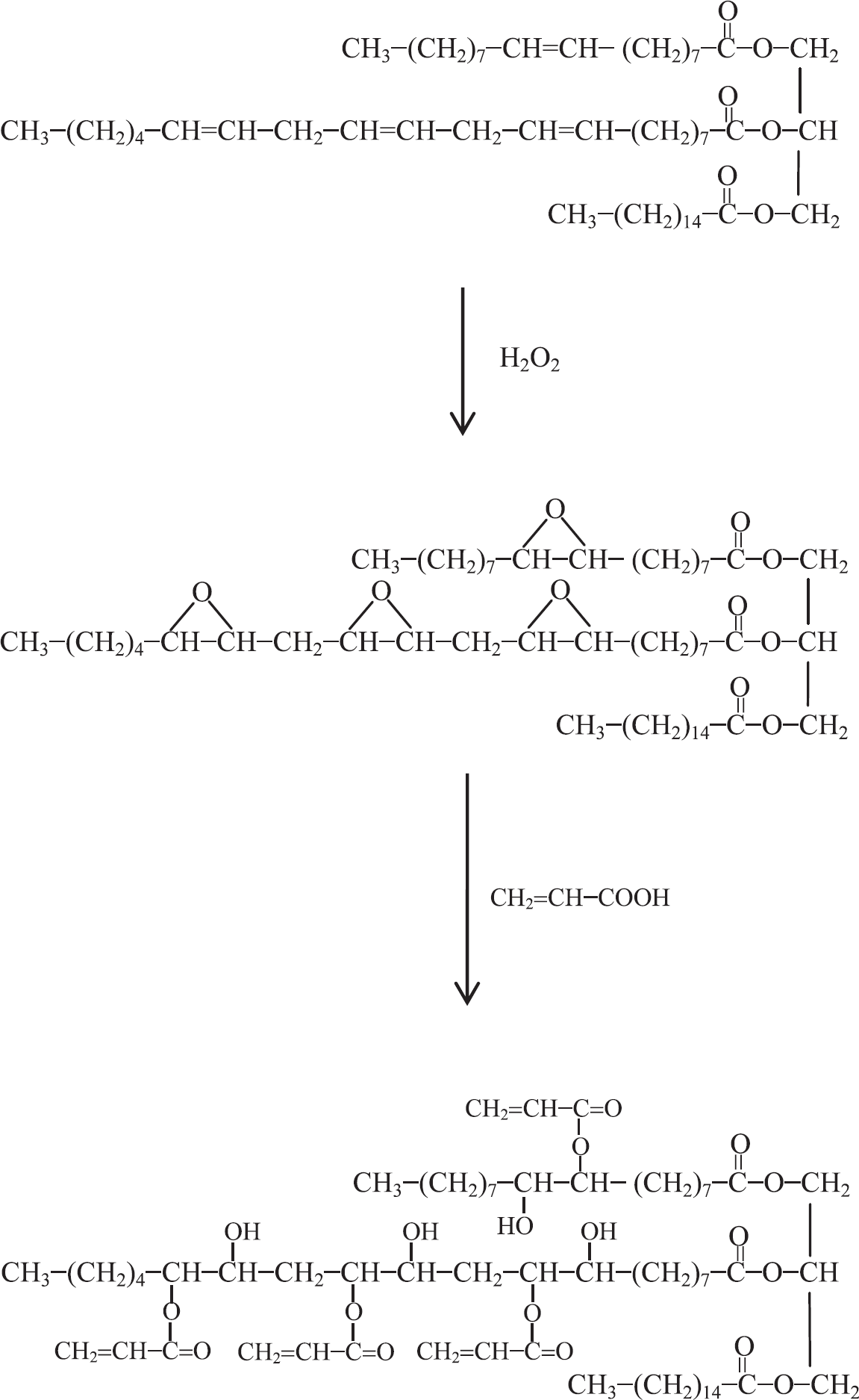
Schematic representation of both epoxidation and the acrylation reaction products from sunflower oil.
ESO:AA RATIO AND CATALYST
The temperature producing the highest conversion was 60 °C. Four ratios by percentage weight of ESFO:AA were examined: 100:100, 100:90, 100:80, and 100:75. The TEA concentration was increased at 0.2% to 0.5% at intervals of 0.1 for each ESFO:AA ratio to provide the best estimate of both the ESFO:AA ratio and the catalyst concentration.
RESULTS AND DISCUSSION
The FT-IR spectroscopy was used for monitoring the reaction by qualitatively identifying the main signals corresponding to the epoxy group, the carbonyl of aliphatic esters, the secondary alcohols, and the acrylate double bonds, and were primarily quantitative by measuring the absorption-peak areas under identical conditions using a unified baseline (Fig. 1). 16
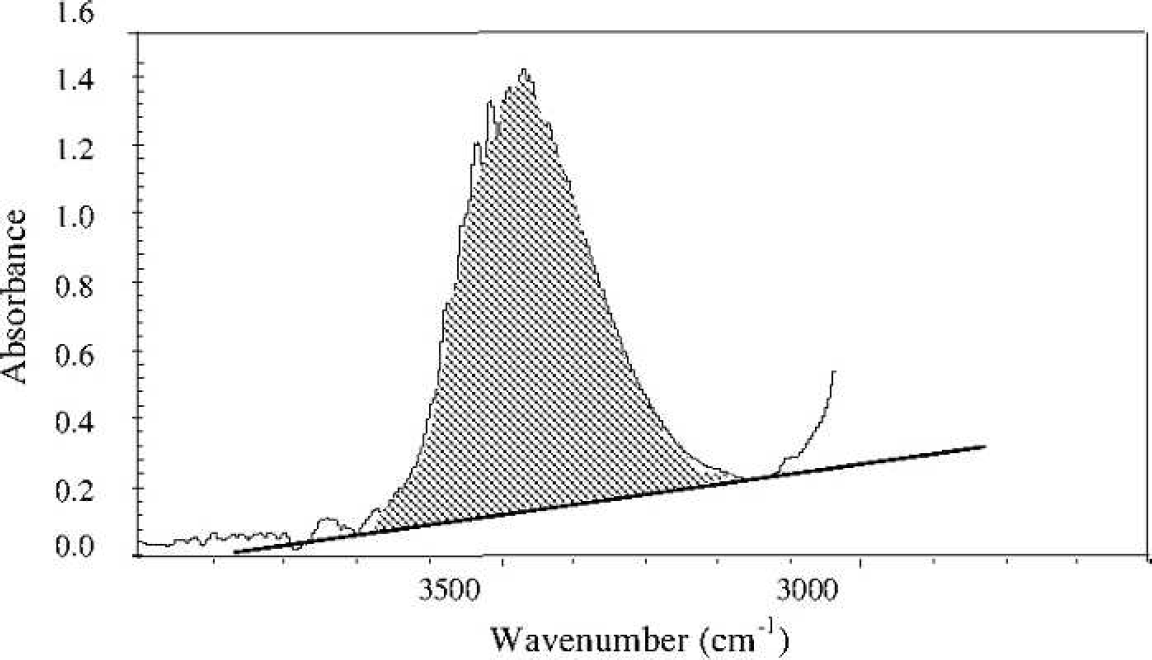
Schematic representation of the area of absorption band.
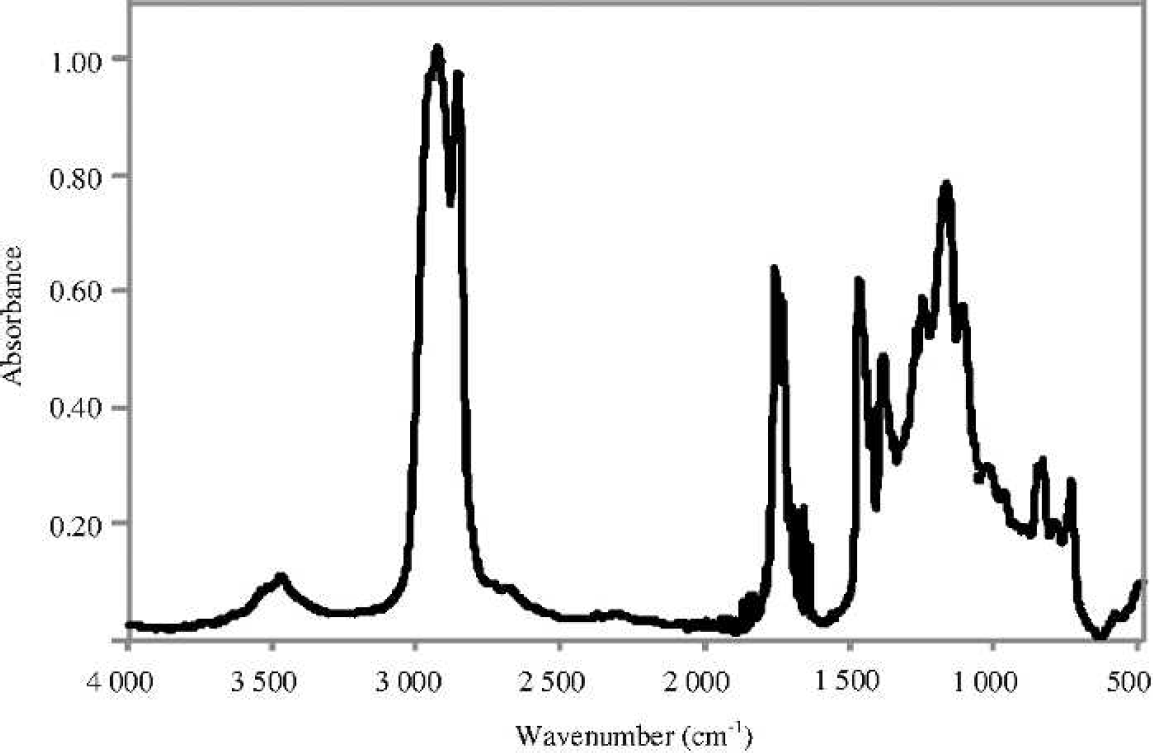
The FT-IR spectrum of epoxidized sunflower oil (ESFO).
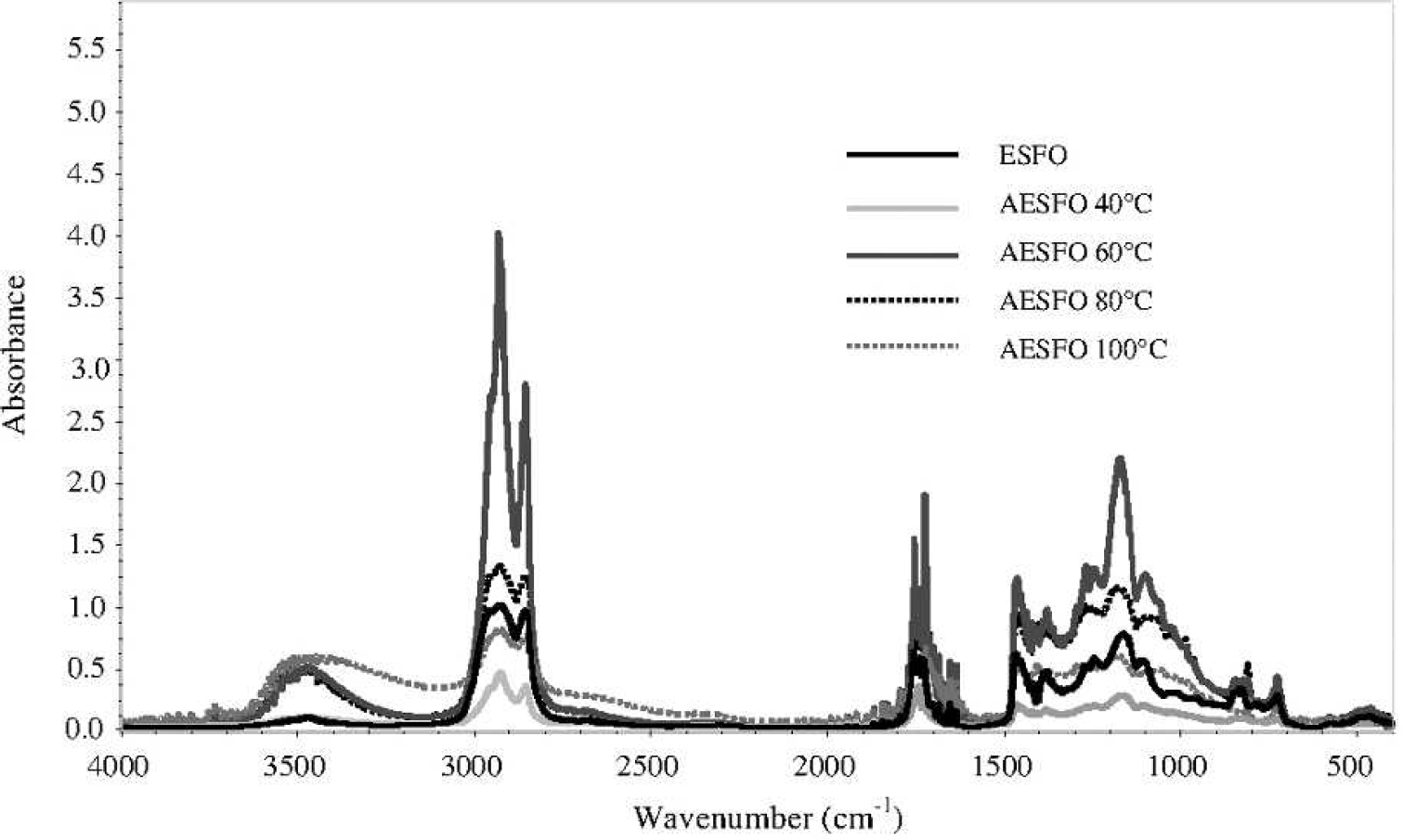
The FT-IR spectra of acrylated epoxidized oils (AESFOs) at different acrylation temperatures compared with that of epoxidized sunflower oil (ESFO). Table I. The primary peaks from AESFO at different temperatures.a
Peaks at 3095-3075 cm−1 correspond to the stretching vibration of the double bonds: -CH=CH2 (because of the presence of acrylates); signals at 3635-3620 correspond to the -OH stretching (the free form of -OH), and the absorption at 1620-1650 corresponds to the C=O stretching of ester carbonyl. Finally, the C–O stretching of the aliphatic ester is at 1440-1395 cm−1.17,18 The identification of these signals is the complementary evidence that modification has occurred. Functional-group concentrations were calculated and are summarized in Table I. The best evolution of bands is at 60 °C.
The primary peaks from AESFO at different temperatures. a

The ESFO:AA ratio is 100:100 by weight, with 0.2% TEA.
Oxirane index of different modified oils from ESFO. a

Temperature 60 °C, oxirane index 6.1.

The FT-IR spectra of acrylated epoxidized oils (AESFOs) (
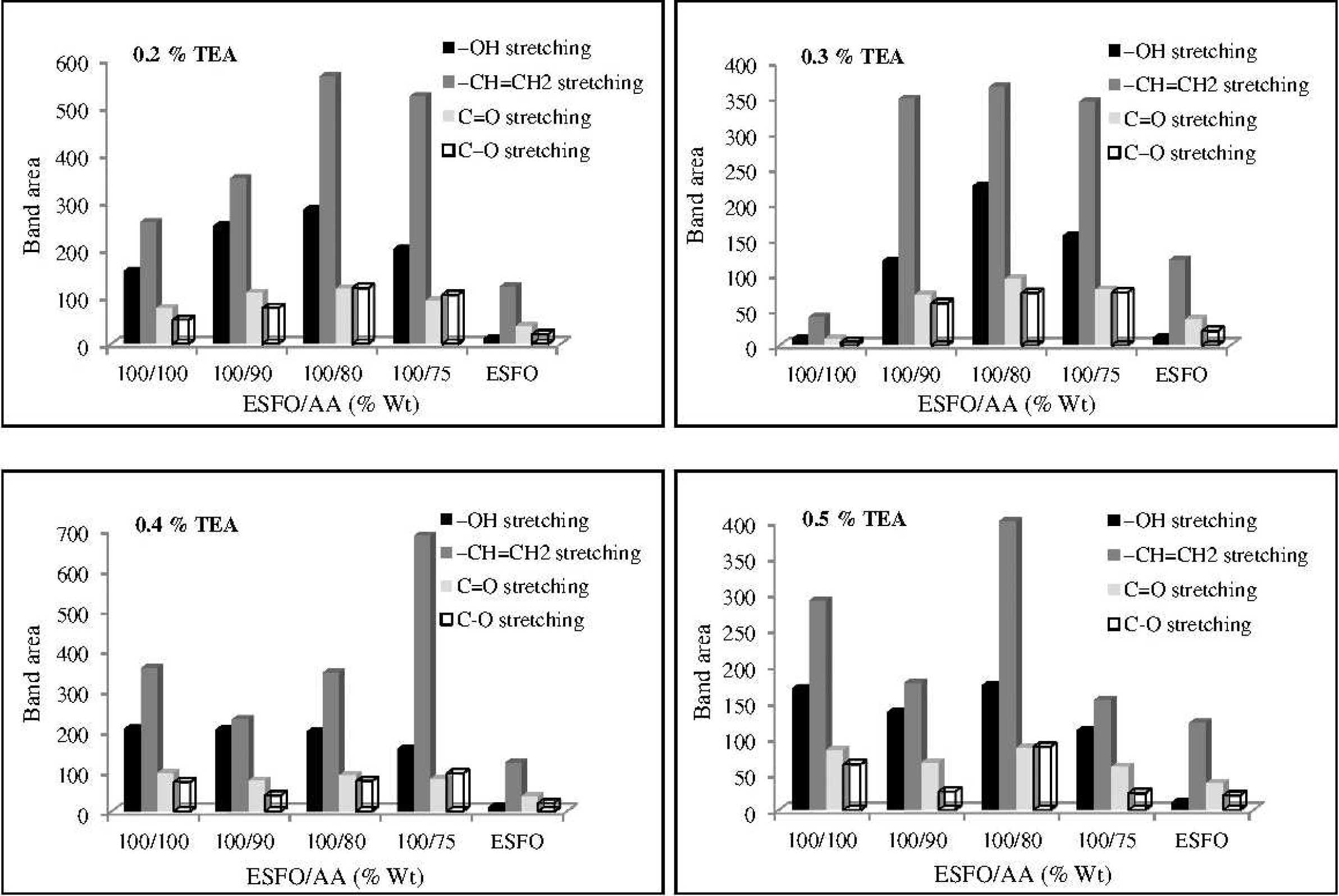
Absorption-band active sites as a function of the ESFO:AA ratio at 0.2, 0.3, 0.4 and 0.5% TEA, compared with those of ESFO.
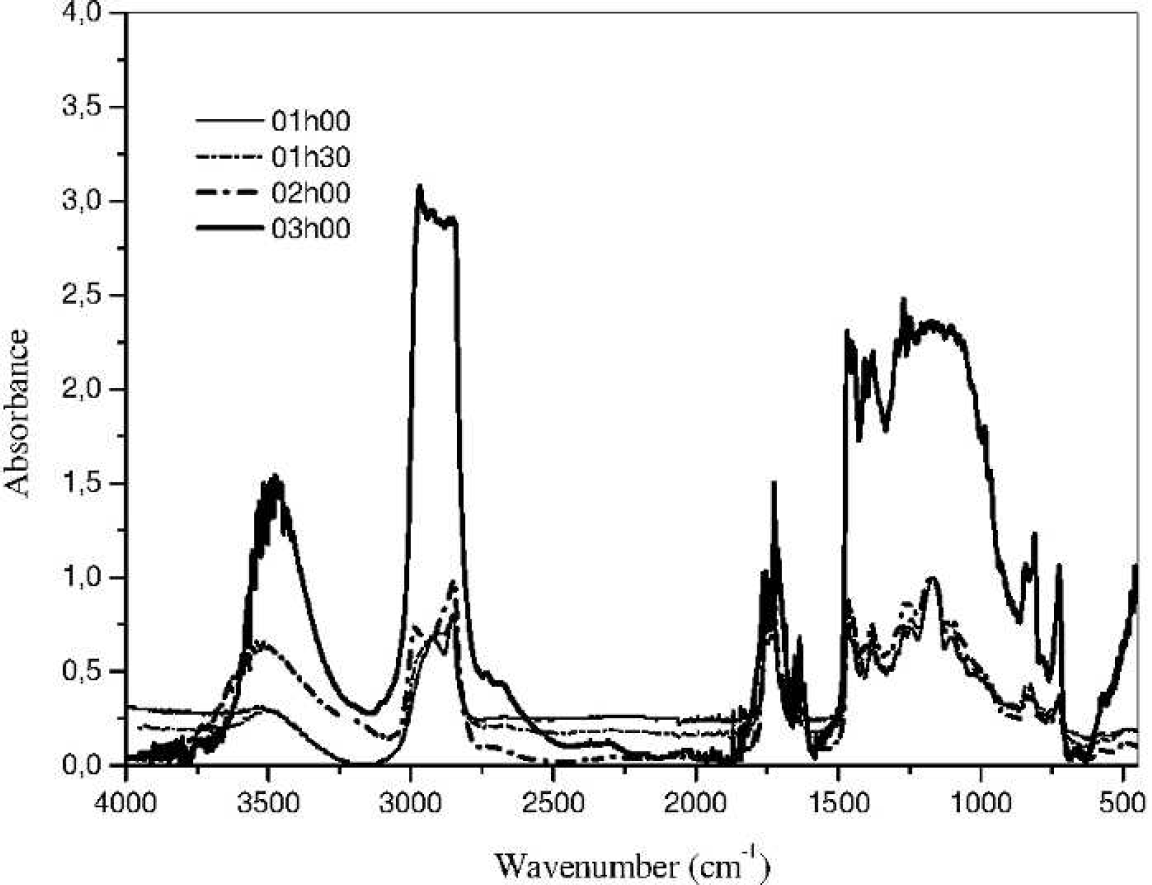
The FT-IR spectra for time monitoring of the acrylation reaction of ESFO:AA 100:80 by weight (0.2% TEA).
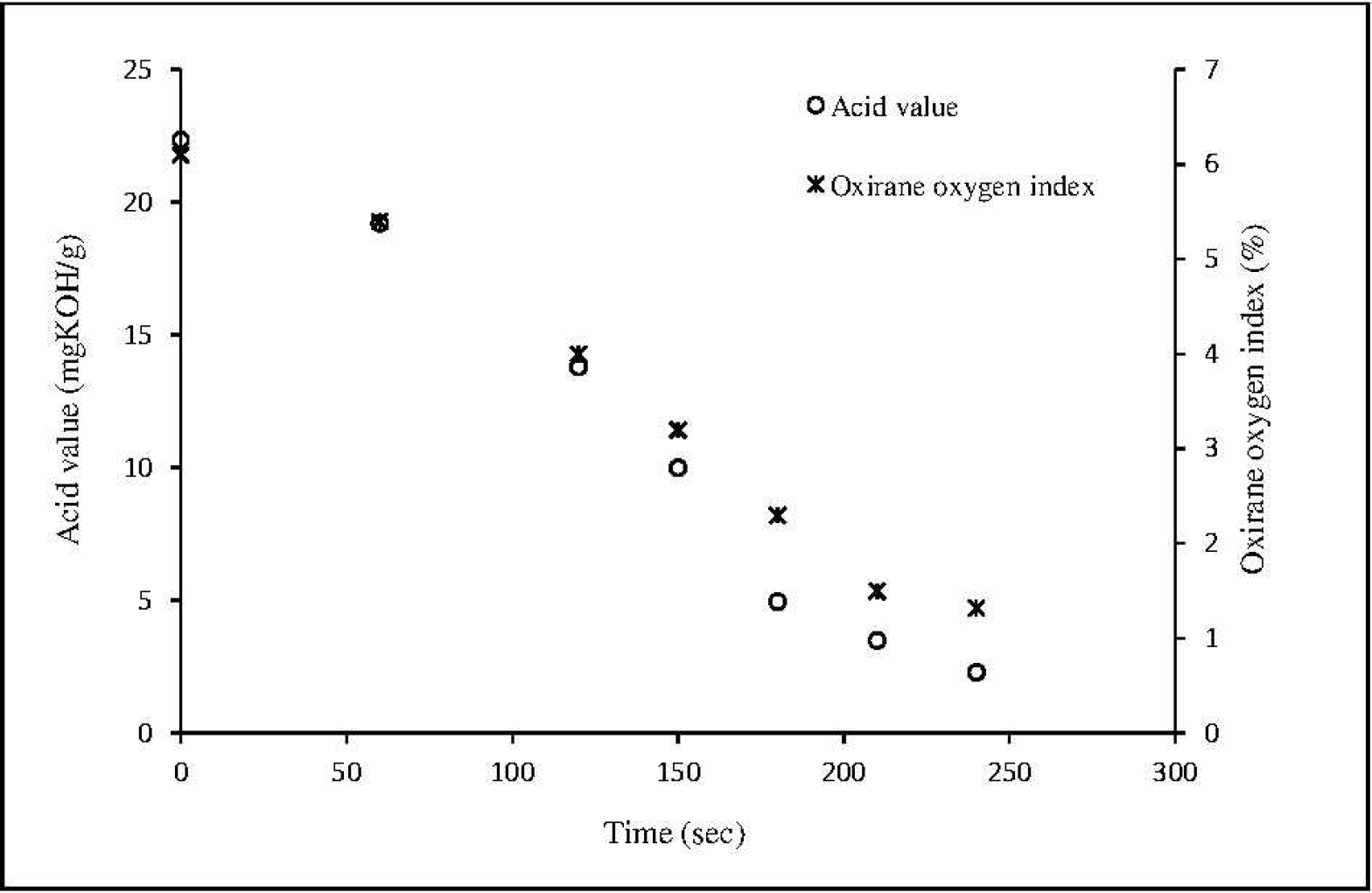
Variation of both acid value and oxirane oxygen index as function of time the formulation ESFO:AA 10:80 by weight (0.2% TEA).
CONCLUSIONS
The results of this study show that ESFO modification occurred. The issues to be noted are the following:
Qualitative FT-IR analysis showed the presence of the main reactive sites: C–O and -C=O stretching of aliphatic esters, - OH of secondary alcohols (free form of -OH), and stretching the vibration of the double bonds -CH=CH2 of the acrylates, confirms that modification of ESFO occurred.
A remarkable increase in the reactivity of the modified oils (when grafted with AA) was determined by quantitative evaluation of FT-IR peak areas.
A wide range of conversion percentages was obtained.
Some of the remaining epoxies (which may be traces) have been confirmed and determined by the titration method using hydrobromic acid.
Use of FT-IR spectroscopy is simple, low cost, rapid and can be used to investigate the modification reaction of ESFO by acrylation.