







Abstract
Research on landrace in situ conservation has examined the socio-economic characteristics of landrace custodians and the social organizations where landrace diversity occurs. However, researchers have paid less attention to the distinctive features that result in landraces of some crops being preserved while others are abandoned. In this work, we analyze reasons behind landraces’ in situ conservation or abandonment. We worked in temperate home gardens in Vall de Gósol, Catalan Pyrenees. Data collection included participant and non-participant observation, freelistings, garden inventories, structured interviews, and a workshop. We found ten strains that conform to the definition of landrace, a high number for the relatively small geographical area studied. Crop and landrace features are of key importance in explaining whether a landrace is maintained or abandoned. Features that promote in situ conservation include 1) crop and/or landraces intrinsic characteristics (e.g., propagule viability, productivity), 2) landraces socio-economic characteristics (e.g., commercial interest, uniqueness vs. substitutability), and 3) landraces cultural significance (e.g., tradition, local organoleptic perceptions). Viable landrace conservation plans should identify the specific features that affect in situ conservation at the landrace level.
Introduction
Landraces are essential to preserve the agricultural genetic pool (see Altieri et al. 1987 and Altieri and Merrick 1987 for general discussion; see Maxted et al. 2002 and Negri 2003 for empirical research). The argument is not new, and over time it has influenced several policies aiming at landrace conservation. Strategies for enhancing landrace conservation as a way to preserve agricultural genetic diversity were first discussed at the 1890 Vienna Agriculture Congress (Zeven 1998). However, proposals to enhance the preservation of agricultural genetic diversity were discontinued after the Second World War, and especially during the agricultural research, development, and technology transfer initiatives known as the Green Revolution (Negri 2003). The Green Revolution generalized the transfer of high-yielding varieties and hybridized seeds to farmers, resulting in a general abandonment of landraces (Brush 1980). The substitution of commercial strains for landraces has been especially widespread in developed countries (Brush 1980) where genetic erosion continues (Negri 2003) and where landraces remain only in relatively marginal rural areas (Aceituno-Mata 2010; Acosta-Naranjo and Díaz-Diego 2008; Calvet-Mir et al. 2011; Guzmán-Casado et al. 2000; Rigat et al. 2009; Vogl and Vogl-Lukasser 2003).
It was not until 1992, at the Convention on Biological Diversity, that concerns over genetic erosion and the importance of landraces as a reservoir of agricultural genetic diversity reentered the political arena (Maxted et al. 2002). Since then, the information regarding the importance of in situ conservation of crop genetic resources, including landraces, has steadily increased. Researchers now stress the crucial role of landraces that are allowed to adapt continuously to the changing conditions and requirements of the local environments (Altieri et al. 1987; Maxted et al. 2002; Negri and Tiranti 2010).
The transfer of high-yielding varieties and hybridized seeds to farmers has been accompanied by a large body of research on the factors associated with the adoption of new varieties. For example, from that research, we know that the adoption of new varieties is influenced by socio-demographic, economic, and attitudinal factors such as farmer's age and education, family size, and attitudes towards the technology (Abebaw and Belay 2001; Byerlee and Polanco 1986; Feder et al. 1985; Neupane et al. 2002; Rogers 2003).
Some researchers have also analyzed the socio-economic characteristics of landrace custodians and the social organizations that shape landrace diversity (Brush et al. 1992). Thus, previous studies have related the maintenance of agrobiodiversity to the sex of gardeners (Reyes-García et al. 2010; Vogl and Vogl-Lukasser 2003), the age of the household head (Acosta-Naranjo and Díaz-Diego 2008; Eyzaguirre and Linares 2004), the main occupation of the landrace custodian (Acosta-Naranjo and Díaz-Diego 2008), or the gardener's social network (Calvet-Mir et al. 2012; Labeyrie et al. 2014; Pautasso et al. 2013). For instance, Calvet-Mir et al. (2011) found that women, people over 65 years of age, experienced gardeners, and people who grew their home garden organically were more likely to conserve landraces than people without those characteristics. Labeyrie et al. (2014) highlighted that rural communities’ social organizations, such as neighborhood groups, significantly influenced the diversity of sorghum (Sorghum bicolor (L.) Moench) landraces. However, researchers have paid less attention to the distinctive features of landraces that result in their preservation while others are abandoned.
In this paper, we explore the reasons behind in situ conservation or abandonment of landraces with a focus on temperate home gardens. In the context of this article, we often use the term “home garden” to refer both to small, fenced plots close to the farmers’ homesteads (Vogl and Vogl-Lukasser 2003) as well as to larger plots (i.e., fields) typically further from the farmers’ homesteads. Those two systems had distinct functions in the past—home gardens were devoted to the growth of a diversity of annual and biennial species whereas field crops, were oriented to the growth of staples (potatoes, legumes, or wheat). However, we refer to both as “home gardens” because gardeners today do not seem to make this distinction, and they often grow crops that in the past were their staples (i.e., potatoes, wheat, and peas) near their other crops. Where this usage of the term “home gardens” might be misleading, we instead use the phrase “home gardens and fields.” We focus on such agroecosystems because, overall, they are considered hotspots of agricultural and cultural diversity (Posey 1999; Vogl et al. 2004) and are key elements in the preservation of plant genetic resources (Agelet et al. 2000; Perrault-Archambault and Coomes 2008; Sunwar et al. 2006), especially in terms of landraces (Aceituno-Mata et al. 2010; Calvet-Mir et al. 2011; Galluzzi et al. 2010).
Building on previous research in a relatively nearby geographical area (Calvet-Mir et al. 2011), we use the term “landrace” to refer to crop varieties that local farmers have continuously reproduced from seeds for more than one generation (30 years or more) or for more than 60 years for crops with vegetative reproduction. We assume that all of these varieties have been selected (from domesticated or wild species) by farmers who have adapted them to the local environmental conditions and to the uses and management of the local agrarian culture. We focus on annual and biennial species and exclude trees because farmers in the study area have mostly abandoned tree management.
Our study has three specific goals: 1) to catalogue the landraces present in home gardens in the Vall de Gósol, Catalan Pyrenees; 2) to explore the range of reasons behind landraces’ conservation or abandonment; and 3) to determine the feasibility of a landrace conservation plan in the study area. We first present an overview of Vall de Gósol and its recent agricultural history. This overview is followed by an explanation of the methods used for data collection and data analysis and the main results of our study—that crop and landrace features are of key importance for explaining whether a landrace is maintained or abandoned. We finish with a discussion of our findings and provide ideas for landrace conservation plan.
Study Site
Vall de Gósol is situated at the foot of Pedraforca's massif, in the central Catalan Pyrenees, among the Cadí, Verd, and Ensija mountains. The elevation in the valley varies from 1,180 masl to 2,500 masl. According to the meteorological data from the nearest station (Gisclareny), the annual average precipitation in the valley is 1,002 mm, including both rain and snow. The average temperature in the area is 9.6 °C, which is characteristic of a subalpine climate. The valley is approximately 20 km2 in area and includes four villages. The valley is named Gósol, which it takes from the largest of these villages. Approximately 220 inhabitants live in these four villages with most of them (198 inhabitants) living in Gósol (Figure 1).
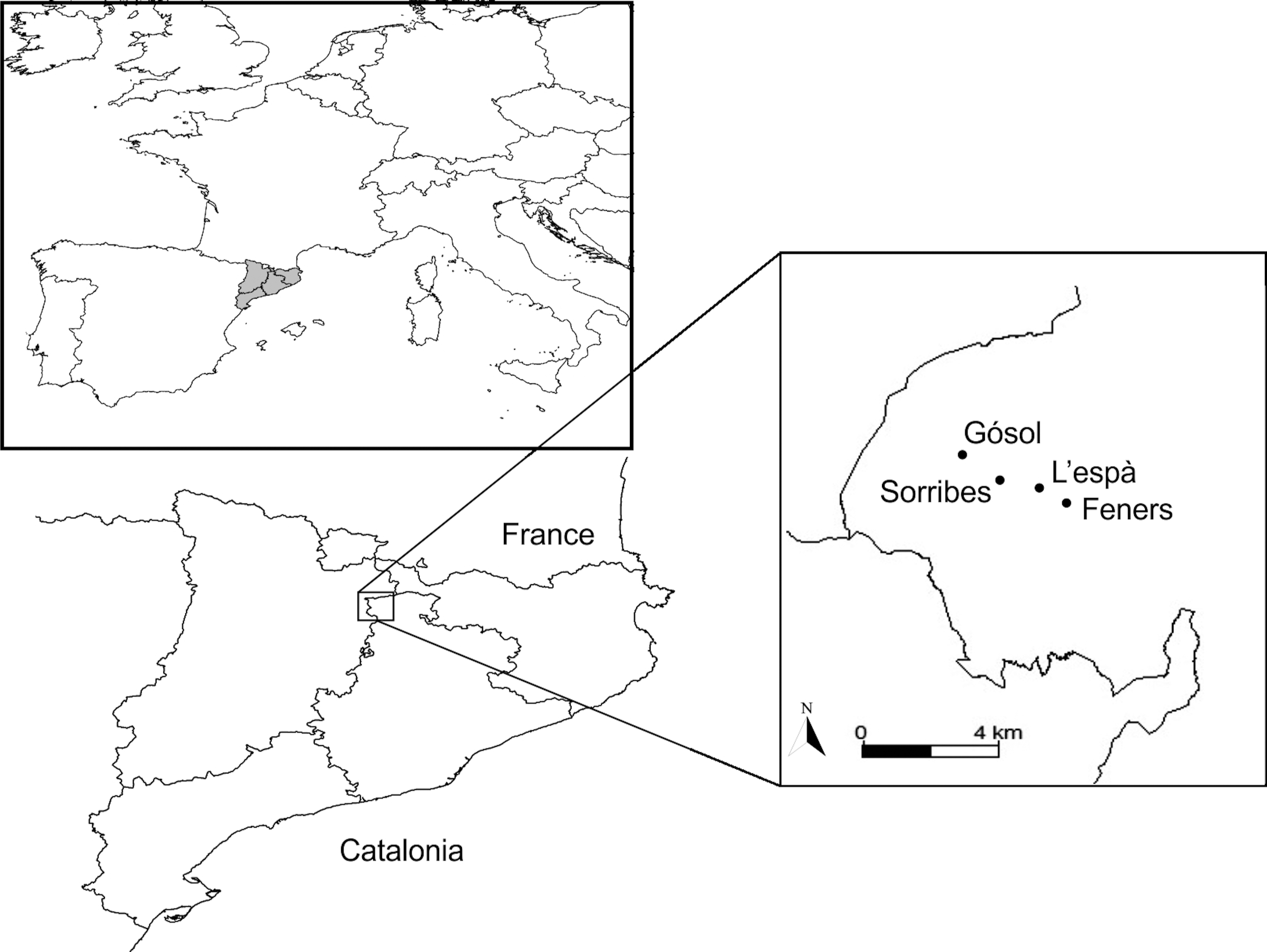
Map of study area.
Our ethnographic information suggests that up until the mid-twentieth century, men in the area mainly worked as shepherds or cattle dealers, often spending several months away from the valley working as agricultural wage labourers. Women were in charge of household chores including home garden tasks. As a consequence of the geographic isolation of the area and the extreme weather conditions during winters, home gardens and fields played a key role in the production of food for household subsistence. However, because of the severity of the climate, few species could be cultivated in the area.
The introduction of milk cattle in the 1960s brought important changes to traditional subsistence activities. This was followed by a more significant change to the region at the end of the 1970s with the opening of a road that connected previously isolated villages with the local town of Berga (16,845 inhabitants) some 42 km away. The construction of the road opened new market opportunities for local farmers. Thus, after the road was opened, many farmers adopted commercial potato strains and potato commercialization became an important complementary source of cash income for Vall de Gósol inhabitants. The end of geographic isolation and the integration into a market economy resulted in the conversion of agricultural fields to pastures and the abandonment of many landraces previously cultivated as field crops. For example, wheat fields mostly disappeared, as farmers could easily buy flour and bread. Some field crop species, however, were transferred to home gardens, where they are still grown today for household consumption.
Nowadays, most home gardens in the valley are maintained by elders who mainly grow crops for their own consumption, although some of them also commercialize home garden products. In recent times, some farmers started to combine agricultural activities with tourist services, providing both food and accommodations in their houses. Farmers have come to realize that local dishes, prepared with local products (including landraces) are a tourist draw. This has generated some renewed interest in landraces.
Methods
We collected data between March and July, 2011. Data collection included participant and non-participant observation, freelistings, structured interviews, and a workshop.
To fully understand gardening, Carles Riu-Bosoms, the first author, who is native to the valley, tended a home garden under the instruction of Maria Tort-Guitart, an elder who taught him garden- and crop-specific management techniques. For example, while working in the garden, Maria Tort-Guitart explained methods she used to increase soil fertility, showed which soil characteristics were more appropriate for each crop, and indicated the most favourable weather conditions for planting or harvesting different crops. In addition, Carles occasionally helped farmers work in their own gardens. Interactions on these informal occasions helped him to gain a deeper understanding of individual gardeners’ knowledge and skills used to manage a garden in general and landraces in particular.
Our sampling strategy differed for the collection of contextual and systematic information. To gather contextual information, we conducted free listings with seven gardeners who had lived in and managed a home garden and/or a field in the valley for most of their lives. Free listing is an informant-friendly data collection tool that identifies elements in a given cultural domain (Bernard 2005).
Informants were selected based on previous research results from a culturally and geographically similar area (Calvet-Mir et al. 2011). In particular, these results suggested that informants who had managed a home garden for more than 25 years were the most knowledgeable. We assumed that those informants would remember the agricultural practices that were common before the opening of the road. Informants for free listing were between 71 and 88 years old and included four women and three men. Those seven informants represent all the people in the valley who have managed a home garden and/or field crop for more than 25 years and have the mental and physical capacities to maintain a conversation. We conducted free listings at informants’ homes and in their native language (Catalan). During free listing, we asked respondents to list all the crop varieties that, according to their knowledge, had been cultivated in home gardens in the valley for more than 30 years (sexually reproducing crops) or 60 years (vegetatively reproducing crops). After free listing, we asked respondents whether the seeds or propagules of each crop variety listed were stored for future planting, and whether seeds were occasionally bought for planting. This additional information helped us to eliminate varieties that did not conform to our definition of landraces. Finally, we asked each of the seven informants whether they still kept these varieties and whether they knew other gardeners in the valley who grew them. We compiled all the free listing information to generate a list of landraces.
For systematic data collection, we aimed at interviewing all the gardeners in the valley. After excluding people who grew edible plants exclusively for commercial purposes or who cultivated only one crop (not a landrace), the total population for systematic data collection included 24 gardeners: seven women and 17 men. Although the number of people interviewed is small, it is all the gardeners in the valley. In most cases, only one person in the household identified himself or herself as gardener, with the exception of two households where two household members managed different home gardens and each person provided information on his or her own garden.
The goals of the interview were both to assess which landraces were present in home gardens and to document a given farmer's reasons for maintaining or abandoning the cultivation of landraces. We first collected information on socio-demographic attributes of the gardener (i.e., age, years living in the valley, years tending a garden), overall home garden management rules (e.g., rotations, fertilization), and the final use of the garden's produce (consumption or sale). Then, we asked specific information for each of the landraces identified through free listing. For each landrace, we first asked whether the person had the landrace in the garden. If the response was positive, we asked about the origin of the seed, the number of years the gardener had continuously been keeping the seed, and the reasons for growing the landrace. If the response was negative, we asked about the reasons for not growing it. Irrespective of whether a gardener kept a landrace, we asked the gardener's opinion about the value of preserving each specific landrace. Since we asked 24 gardeners about seven landraces, we obtained a total of 168 responses.
We conducted interviews at the informants’ home gardens so we could verify the presence of landraces (home garden inventory). At the end of the interview, we encouraged gardeners to examine the garden to identify other varieties that would match our definition of landraces. If other landraces were identified, we then asked the questions described above.
Botanical Identification
Species were determined from their vernacular names, but we took vouchers of all landraces to compare the information with botanists from the Universitat de Barcelona. These vouchers are archived in the herbarium of the Centre de Documentació de Biodiversitat Vegetal, Universitat de Barcelona (BCN).
Workshop
At the end of the project, we organized a workshop with the support of the Gósol municipal government. The workshop was open to all valley inhabitants, but gardeners’ participation was especially encouraged by personally informing them of the event. The workshop had several goals. First, we tried to identify synonyms among landrace vernacular names by asking participants to provide all the different names for each of the landraces. Second, we sought input to clarify confusing or contradictory information resulting from surveys about landrace management. Third, we also looked for complementary information on the management of landraces. The event concluded with a general discussion of the reasons behind landrace maintenance or abandonment and of the potential actions to preserve them in active home gardens.
Data Analysis
We used free listing responses to compile a list of landraces still cultivated in the valley. Then we tried to verify the presence of landraces, first through the interviews and then by visiting the home gardens.
We used the interview responses to assess the reasons determining conservation or abandonment of each landrace. We coded textual answers to questions about reasons to preserve landraces into seven categories: 1) taste and smell; 2) convenience; 3) adaptation to the territory; 4) cultural reasons; 5) marketability; 6) ideological reasons; and 7) bee attraction to enhance honey production. We coded textual answers from gardeners who had never cultivated landraces or had abandoned their cultivation into eight categories: 1) extrawork required; 2) low productivity; 3) discontinued consumption; 4) rare consumption; 5) difficult to mechanize production; 6) unavailability of propagule; 7) insufficient land to plant; and 8) other reasons, such as changes in fallow length, or the mechanization of associated crops, which make the growing of a landrace unfeasible.
Results
Gardeners ranged from 21 to 85 years of age (n = 24; Xx¯ = 61.4 +/− 17.4 years), with most (79.2%) being over 50. About 33% of the gardeners sold home garden products in the local market or otherwise commercialized them through their own restaurants. The majority of gardeners in the area continued to implement traditional management practices such as crop rotation (70.8%), manual weeding (91.7%), organic fertilization (58.3%), pesticide-free disease management (61.2%), and planting and harvesting following the moon cycle (58.3%).
Landrace Conservation in Home Gardens
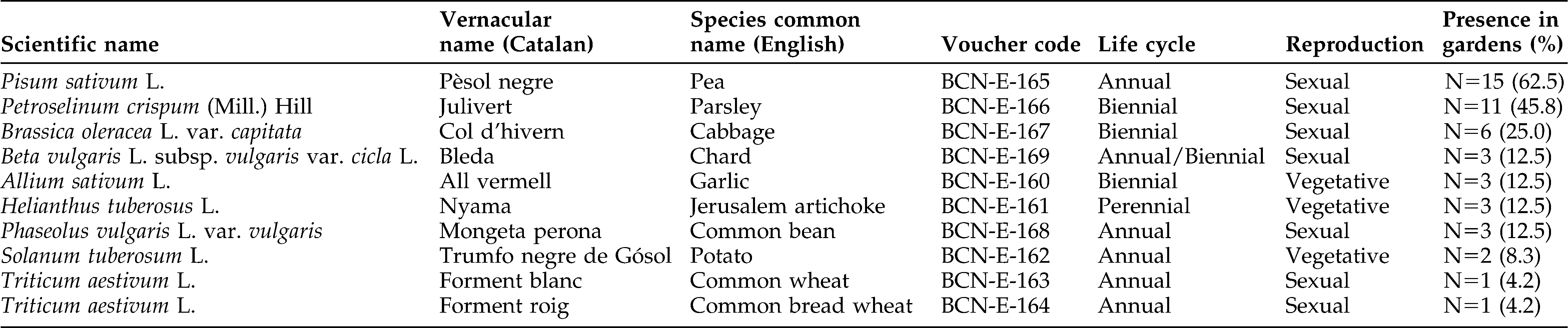
We found ten strains that conform to our definition of landrace. Seven of them were identified during free listings and three during garden inventories (Table 1). Landraces differed in their popularity. Two wheat landraces (Triticum aestivum L.) were cultivated by one gardener, whereas a pea landrace (Pisum sativum L.) was cultivated by 15 (62.5%) gardeners. Gardeners cultivated two landraces on average (X = 2 +/− 1.7). The average number of landraces with vegetative reproduction cultivated by each gardener was much lower than the average number of landraces with sexual reproduction (X = 0.33 +/− 0.63 vs. 1.66 +/− 1.46). Six gardeners (25%) did not cultivate any landraces.
Landraces identified in home gardens of Gósol Valley, ordered from most to least common.
Reasons to Conserve or Abandon Landraces
The gardeners provided several reasons for landrace conservation in their gardens (Table 2). Responses refer to seven out of the ten landraces presented in Table 1, as the other three landraces (Phaseolus vulgaris L. var. vulgaris, and the two Triticum aestivum) were not identified during free listing and could not be included in the interviews.
Reasons given for conservation of the seven landraces identified during free listings, from most often to least often conserved.
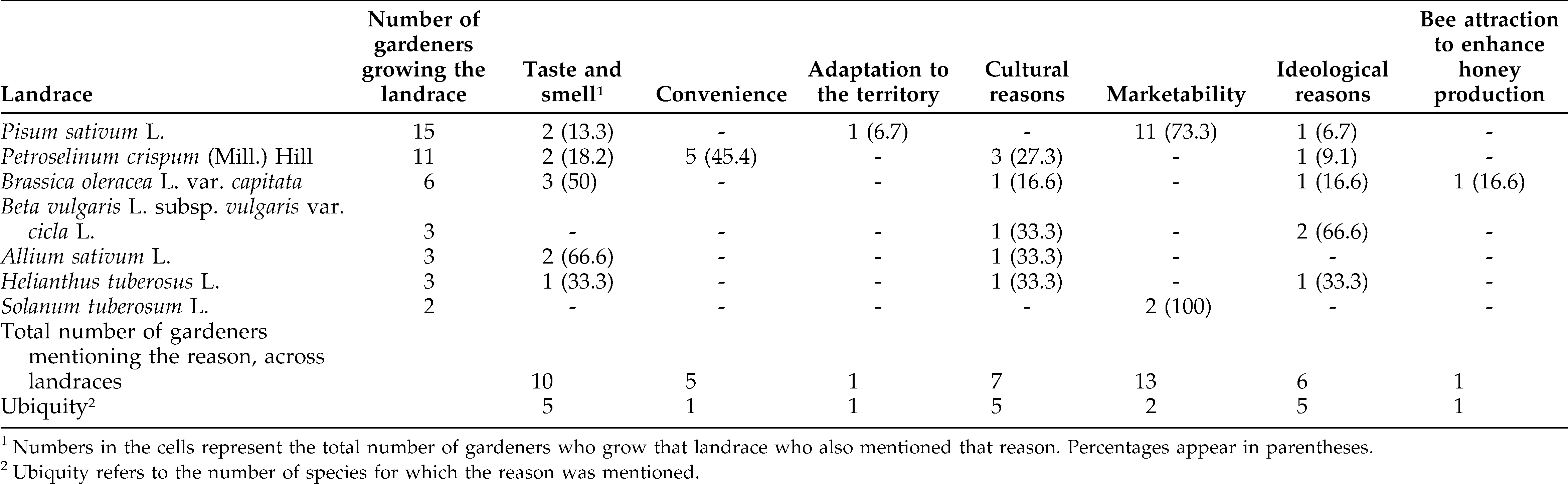
Of the reasons given for preservation, ideological, taste and smell, and cultural reasons were the most frequently mentioned by informants and were mentioned for five out of the seven landraces. Gardeners referred to ideological reasons such as their conviction to maintain agroecological practices, despite the introduction of external inputs. For instance, one gardener stated, “To keep the seeds is a form of self-management that frees me from market dependency.” Landraces’ taste and smell relate to the perceived better organoleptic qualities of landraces compared with commercial strains. As one gardener said, “They put some kind of product in the commercial garlic's propagule that makes it tasteless. It is better to grow your own garlic, which is more tasty and fragrant.” Cultural reasons are well exemplified in the words of another gardener who said, “We have always cultivated and eaten our own chard.”
Marketability was also mentioned as a reason to conserve Pisum sativum (of the 15 gardeners who grow it, 11 or 73.3% listed that reason) and Solanum tuberosum L. (listed by the two gardeners who grow it). Gardeners argued that products derived from these landraces can be sold as local traditional products through local restaurants, which brings them economic benefits.
Convenience was only mentioned as a reason to conserve Petroselinum crispum (Mill.) Hill. In the interviews, five gardeners mentioned the convenience of having easy access to parsley in their home gardens. For example one gardener said, “When making soup, I just have to go to my garden to find parsley. There is always parsley available in my home garden.” Finally, adaptation was referred to only when discussing the landrace of Pisum sativum. According to the informants, this landrace has adapted to the local weather conditions and performs better than other P. sativum strains.
Gardeners who were not growing the landraces at the time of the interview provided seven main reasons to abandon landrace cultivation (Table 3). Responses in Table 3 include information from both gardeners who had stopped growing landraces and gardeners who had never grown them. In only 3% of the cases (six responses), gardeners could not give a reason for not growing one of the landraces included in this study.
Reasons given for abandonment of the seven landraces identified during free listings, from most often to least often abandoned.
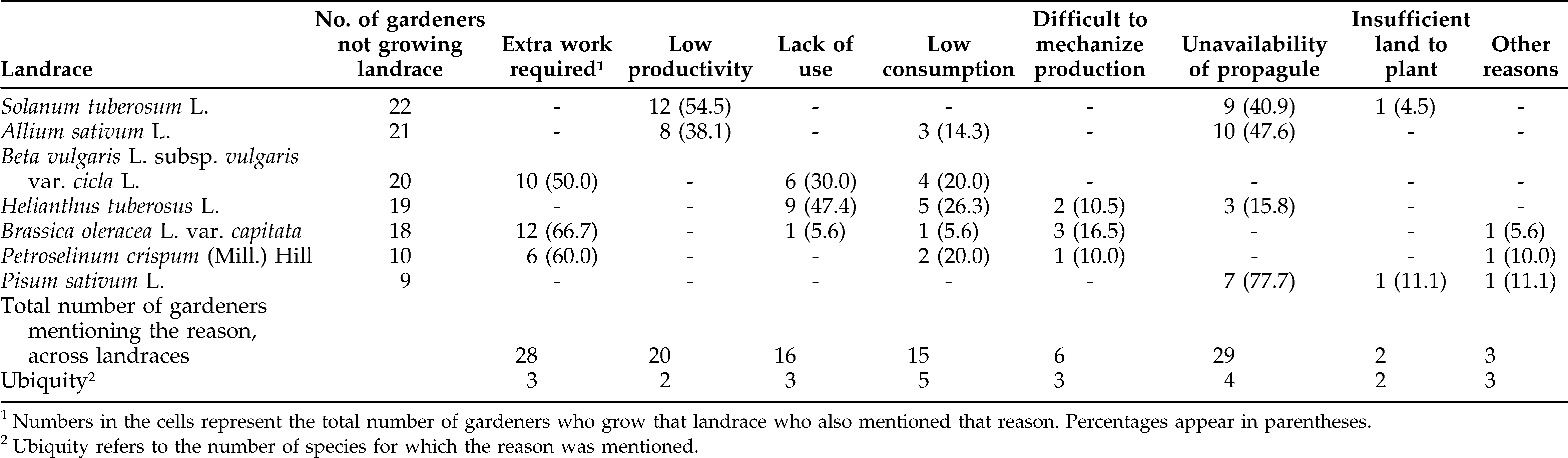
The extra work required to store and to grow their own seeds and the unavailability of propagules were the two reasons most often listed by gardeners when asked about the abandonment of specific landraces. Specifically, the extra work required to store and grow seeds (as opposed to planting seedlings bought in the market) were referred to as the major problems in the preservation of three of the seven landraces in our list: 1) Petroselinum crispum; 2) Brassica oleracea L. var. capitata; and 3) Beta vulgaris L. subsp. vulgaris var. cicla L. As stated by one gardener, “Now you can easily buy the seedlings, and that saves you work.” Propagule unavailability was the main shortcoming mentioned of cultivating Allium sativum L. and Pisum sativum. One of the gardeners we interviewed put it this way, “You cannot find the local varieties in the market. I have a neighbor who grows them, but I still prefer to buy the commercial strain. Otherwise, you end up having to return favors to everybody.” Gardeners argued that they have abandoned the local variety of Solanum tuberosum mainly because of its low productivity: “For each plant of black potato [landrace] you plant you get three potatoes, while for each Kennebec [commercial strain] you get ten or 12.” Finally, the discontinued consumption of the crop was the main reason for the abandonment of Helianthus tuberosus L. One gardener stated, “First, I let the artichokes grow in a corner of the garden, but then I end up cutting them down, as I realized that I do not harvest them anymore.”
Landraces versus Commercial Strains
There are both opportunities and challenges involved in the cultivation of landraces versus the cultivation of commercial strains of the same crops (Table 4). At the workshop, productivity was highlighted as one of the main criterion for deciding between landraces and commercial strains. Thus, informants argued that the two wheat landraces were used because they are very productive. By contrast, the commercial strains of Allium sativum and Solanum tuberosum were preferred because of the low productivity of garlic and potato landraces.
Advantages and disadvantages of the management and consumption of landraces versus commercial strains, ordered from most to least common. Does not include Helianthus tuberosus L. because commercial strains of this species are not locally available.
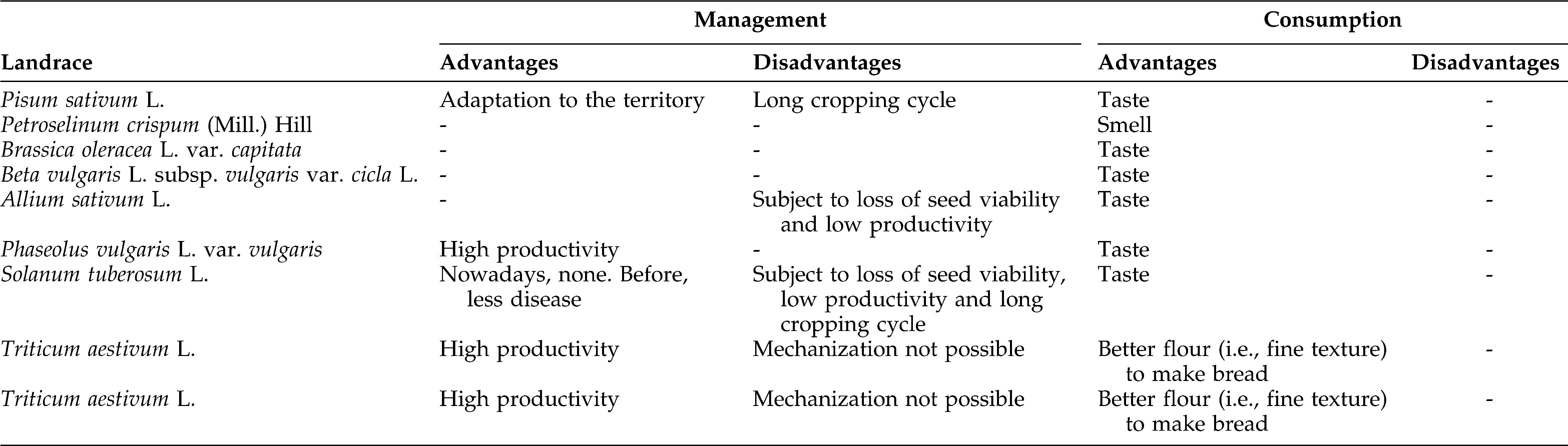
Local adaptability was mentioned as important for the Pisum sativum landrace, one of the most popular landraces, occurring in 62.5% of the gardens. This landrace is preferred because it is adapted to the local cold temperatures; the commercial strain of P. sativum cannot withstand the region's cold climate. As one gardener said, “One year I planted peas from the market because somebody told me that they had a better texture, but they did not work, they produced pods, but all empty.”
The difficulty of mechanizing the harvest was mentioned as a relevant reason for the abandonment of Triticum aestivum. Although T. aestivum landraces were preferred for their high yields, they could not be grown in large extensions, as they had to be harvested by hand. This caveat is exemplified by one gardener's words, “This wheat is too high for the current combine harvesters.”
Gardeners also found that landraces had longer growing periods than commercial strains, making them available for consumption later than commercial strains: “It takes half a year to harvest black peas [landrace], while for green ones [commercial strain] with four months it is enough.” Furthermore, landraces with vegetative reproduction are arguably subject to seed degeneration. This was found to be the case for Solanum tuberosum as mentioned by one gardener, “Black potatoes [landrace] have degenerated, now they are bumpy but before they were smooth.”
Interestingly, and despite the disadvantages mentioned in landrace production, no disadvantage was found regarding their consumption. In fact, landraces were perceived as more flavorful or better-smelling than commercial strains.
Discussion
Limitations
This study has three main limitations. First, the study area and the sample are small. The small area of study might result in us underestimating the actual number of landraces in the larger landscape beyond the study area. That is, it is possible that some landraces identified in free listing but not present in home gardens in the valley are, in fact, present in adjacent valleys. Furthermore, it is possible that with a larger sample, some of the reasons that were not often mentioned in our study would appear as more relevant. While this does not invalidate the main findings of our work, it calls for further research on the specific features that facilitate or hamper landraces in in situ conservation.
Second, the diversity of landrace names does not always reflect real genetic diversity (Berg 2009). That is, two genetically equal landraces can be designated using different names, and two genetically different landraces can be designated using the same name. Since we have not done a genetic analysis of our samples, the results presented here can over- or underestimate the number of actual landraces.
A third potential problem of our study is that it conflates characteristics at the level of the species with characteristics of the particular landrace. In all but one case (the two wheat cultivars), all of the crops are represented by a single landrace, as there were no other landraces of the same species in the valley. Some of the characteristics that are discussed as either facilitating maintenance of the landraces or reasons for abandonment are not characteristics of the particular landrace, but of the crop itself. For instance, vegetative propagation of potatoes or garlic is the norm regardless of the particular landrace. However, since no other landraces of the same crops have been locally conserved, we refer to the characteristics as particular to the landrace.
Despite the aforementioned caveats, the study is valuable for two significant reasons: 1) it highlights the importance of in situ conservation of crop genetic resources in a country where commercial varieties dominate the seed system; and 2) it demonstrates the importance of assessing the specific features of landraces in order to improve their preservation and enhance the feasibility of conservation plans which include these landraces.
Factors Related to Landrace in situ Conservation
In Vall de Gósol, we found ten strains that conform to our definition of landrace. It is difficult to assess the relative importance of this number, as the number of landraces in different studies cannot be compared with direct measures (for example landraces/hectare) since several studies have used different geographical units or even agroecosystems for their respective analyses. However, as a point of reference, it is worth mentioning that in a study in three provinces of Andalusia (Spain), Guzmán-Casado et al. (2000) found 52 landraces and in a study in Tentudia, Extremadura (Spain), Acosta-Naranjo and Díaz-Diego (2008) identified 23 landraces. Both studies sampled very large geographic areas—provinces and municipalities, respectively. Calvet-Mir et al. (2011) found 39 landraces in home gardens in a nearby Pyrenean valley, albeit that valley is ten times larger than Vall de Gósol. Given the numbers associated with these previous studies in relatively larger areas, the result of ten landraces in Vall de Gósol is not negligible.
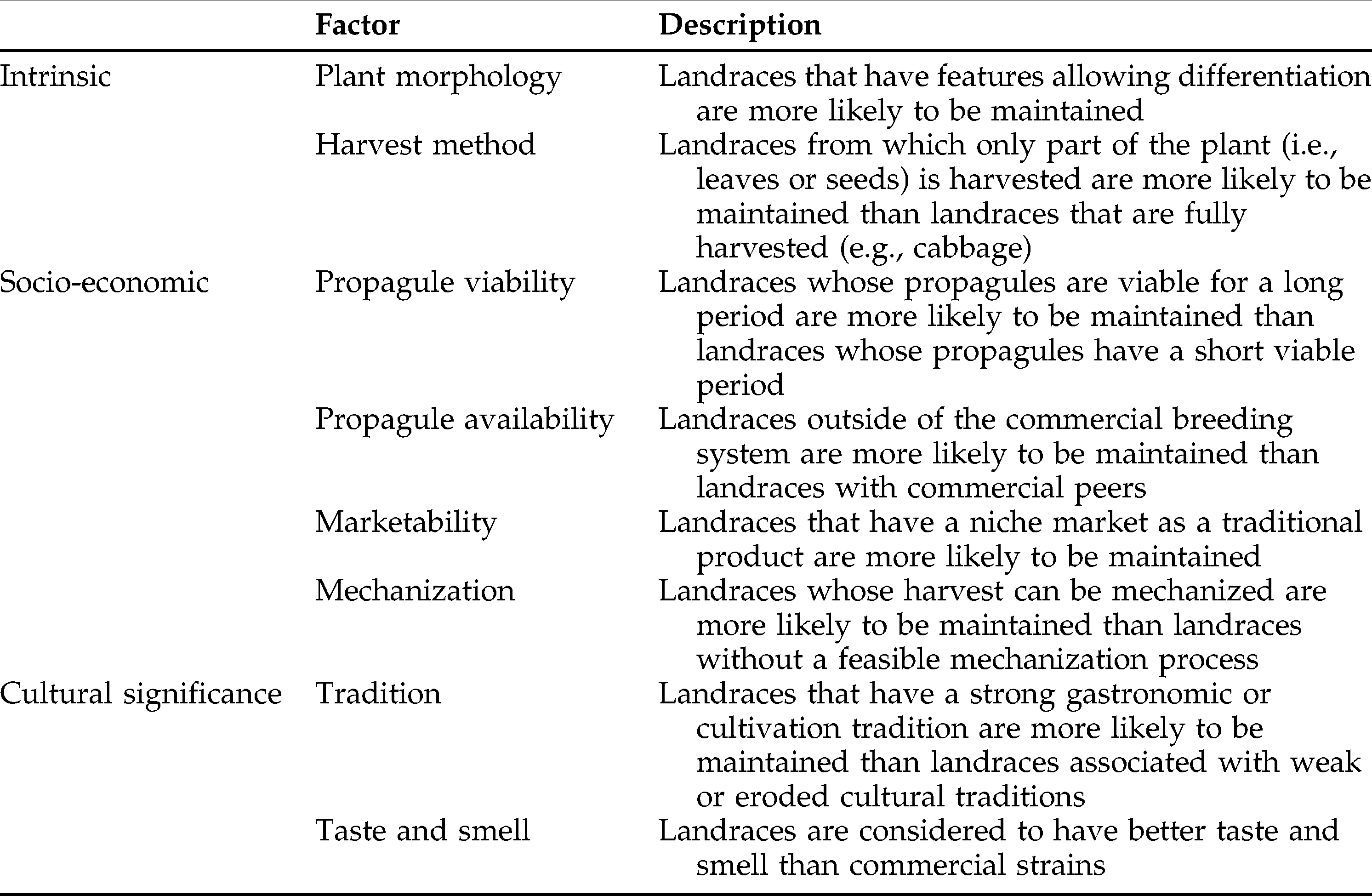
Our work suggests that landrace- or crop-specific features are of key importance to explain in situ conservation of landraces. Based on participant observation, interviews, and our workshop, we identified eight factors that could enhance or hamper landrace in situ conservation (Table 5). We group these into three main categories: 1) intrinsic characteristics (e.g., propagule viability, productivity); 2) socio-economic characteristics (e.g., commercial interest, uniqueness vs. substitutability); and 3) cultural significance (e.g., tradition, local organoleptic perceptions).
Factors contributing to landrace in situ conservation.
Intrinsic Characteristics
According to gardeners whom we interviewed and who attended our workshop, one of the main disadvantages of landraces versus commercial strains is the degeneration of the propagule. Landraces from crops with a long period of propagule viability (e.g., Pisum sativum, Phaseolus vulgaris) are more likely to be maintained than landraces from crops with a short period of propagule viability (e.g., Helianthus tuberosus, Solanum tuberosum). The short period of propagule viability has also been reported by Calvet-Mir et al. (2011), especially in relation to annual and biennial landraces with vegetative reproduction (i.e., Solanum tuberosum and Allium sativum). Thus, only two of the gardeners in our study preserved landraces of S. tuberosum. Other gardeners argued that, in contrast to bean or pea seeds, they could not keep potato propagules for more than one year. So, to preserve a potato landrace, a gardener would have to reproduce it every year, which decreases the chances of the landrace being maintained. As mentioned before, productivity is a second intrinsic characteristic that influences the preservation or abandonment of landraces. For example, Phaseolus vulgaris was introduced from a commercial strain in the valley during the last 50 years due to its high productivity. Gardeners quickly adapted P. vulgaris to local culture and management and now it is thought of as a landrace.
Another intrinsic characteristic relates to the easy reproduction of the edible part of a landrace or crop. For example, landraces from which only part of the plant is harvested (e.g., harvesting Beta vulgaris leaves) are more likely to be maintained than landraces that are fully harvested (e.g., Brassica oleracea). A gardener exemplified this factor by saying, “When you need chard you remove an old leaf letting it grow up, so you always have more. When seeds grow, you just have to leave it, and then next year you have chard again!”
Socio-Economic Characteristics
The market can both help and hamper landrace conservation. On the one hand, gardeners who do not cultivate landraces argue that they prefer to grow the less labor-intensive commercial strains, as those crops do not require annual seed selection, storage, and reproduction. This argument is mainly given for landraces for which a commercial strain with perceived high-levels of substitutability is available, such as Solanum tuberosum and Brassica oleracea. A similar justification, however, is not used for other landraces such as Pisum sativum, for which there is a perceived low level of substitutability, given that the commercial strain of P. sativum is not adapted to local weather. Nowadays, the commercial market also seems to be a more reliable source of seeds than existing informal networks. Thus, one of the main reasons given for not sowing landraces was that landrace seeds were not available. In particular, gardeners who had never cultivated P. sativum, Allium sativum, or S. tuberosum argued that seeds of those landraces were not available to them.
On the other hand, marketability was the main criteria mentioned to preserve Pisum sativum and Solanum tuberosum landraces. Interestingly, those two landraces have marked physical features (i.e., black peas and purple potatoes) that make them easily recognizable and attractive for the specialized market. Gardeners argued that commercialization of products and dishes using these landraces provide important source of household income. The growing local demand of products produced from landraces becomes a potential economic resource to take into account in local development.
Cultural Significance
Gardeners mentioned cultural reasons such as the preservation of local traditions and cultural identity as among the most important for maintaining five of the seven landraces considered. Organoleptic perceptions (e.g., taste, smell, color, or texture), probably mediated by culture, were also mentioned as major reasons for preserving four of the seven landraces. These results are in concordance with the study of Calvet-Mir et al. (2011), who reported that 37.5% of the gardeners stated that conservation of landraces was important due to their taste and perceived nutritional value, while 25.0% argued that keeping with local tradition was the main reason for landrace conservation.
A Landrace in situ Conservation Plan in Vall de Gósol
A main argument in this work is that each landrace comes with its own genetically and culturally imprinted opportunities and challenges for in situ conservation. Thus, the work presented here potentially informs the development of landrace conservation plans by highlighting the idea that different landraces might have to be treated differently even if the goal to conserve them is the same. An ideal landrace conservation plan should identify the specific risks that affect each landrace and contemplate the alternatives for conservation at the landrace level. There are different factors, intrinsic to the landrace or to the crop, which seem to influence whether gardeners preserve a given landrace. The identification of these factors is an important tool for determining the likelihood of a landrace being maintained or abandoned and can therefore help to determine which landraces have a higher risk of being abandoned. For example, the landrace of Pisum sativum seems to have a low risk of being abandoned for six reasons: 1) it can be easily differentiated—morphologically and physically—from other strains of P. sativum; 2) gardeners gather the dry seeds to eat; 3) it has a long period of seed viability; 4) no seeds of competing commercial cultivars are available in the formal breeding system; 5) it is strongly linked to local traditions (Figure 2); and 6) it has commercial interest. The combination of these factors explains the popularity of the landrace (62.5% of gardeners are still cultivating it).

Horse threshing pèsol negre, a landrace of pea (Pisum sativum L.) in Vall de Gósol. Photo by: Carles Riu-Bosoms.
Taking into consideration the factors described in Table 5, we propose that a future landrace conservation plan for Vall de Gósol should develop along two different paths. One path should target landraces with commercial value, whereas the second should target landraces without commercial value. Targeting the latter is crucial to avoiding the loss of landraces and maintaining agrobiodiversity in a context where commercial varieties dominate the seed system. This distinction between commercial and non-commercial values is based on ideas offered by workshop participants and by the fact that commercial interest is one of the most salient reasons for landraces preservation.
To prevent the abandonment of the two landraces with market economic potential (Pisum sativum and Solanum tuberosum), Vall de Gósol gardeners proposed to adhere to European Union legal frameworks aiming to protect specific agricultural products (i.e., Protected Designation of Origin). Local products can enjoy a market premium because some consumers recognize their link to local culture and tradition and are willing to pay higher prices for them (Negri and Tiranti 2010). Thus, landrace preservation could also be enhanced by promoting local foods made with a given landrace. In addition, products produced from landraces could be promoted in the list of products supported by the Slow Food movement (Negri and Tiranti 2010).
The other eight landraces identified in our study do not seem to have commercial potential, so efforts to conserve them should follow different paths. Workshop participants listed several possible avenues for facilitating the preservation of these landraces. These include reinforcing the local seed exchange network (Calvet-Mir et al. 2012), enhancing the collaboration between the formal and the informal seed systems (Galluzzi et al. 2010), and organizing or reinforcing initiatives that strengthen the value of landraces for the gardeners, while addressing some of the main problems linked to their preservation.
For example, our results suggest that one of the main problems for preserving landraces is the extra work required to store propagules and reproduce the crops; this shortcoming mostly applies to species with sexual reproduction and full plant harvesting or annual life cycles (i.e., Brassica oleracea, Phaseolus vulgaris and Beta vulgaris). Perhaps conservation plans should include the development of a community breeding system that would share this extra work among all gardeners. Making a community breeding system would provide all gardeners the same opportunity for accessing landrace propagules. In such a breeding program, gardeners could have access to landraces of Petroselinum crispum and Helianthus tuberosus, species that could be easily maintained in home gardens but that are locally unavailable. With the creation of a common breeding system, gardeners could also avoid problems of propagule degeneration, as in the case of Allium sativum.
Such local initiatives could also strengthen the collaboration between the formal and the informal seed systems. Although this collaboration does not seem very plausible under the current European seed law (see Louwaars 2013 for insights of the implications of such laws for small farmers), examples exist of such collaborations. For instance, in other countries, such as Italy, regional governments have set up subsidies to support the cultivation of landraces among networks of “custodians” (Galluzzi et al. 2010).
Conclusion
The main finding of our work is that landrace-specific characteristics are relevant in analyzing landrace in situ conservation. Landrace characteristics should be considered along with farmers’ socio-economic status to improve landrace in situ conservation initiatives. Given that time and resources are often limited, the joint consideration of a landrace's and a farmer's characteristics would improve the sampling strategy for landrace collections; for example, allowing workers to prioritize endangered landraces and to focus on people who are more likely to conserve landraces. Similarly, results of such research might allow targeting of more commercially-oriented gardeners for the conservation of landraces with a potential niche market, whereas gardeners with an extensive network can be encouraged to grow and disseminate landraces less likely to be preserved. As the conservation of crop genetic diversity has been deemed a major issue in developed and developing countries, the implications of our findings are not limited to Vall de Gósol home gardens.
Footnotes
Acknowledgments
We thank all the gardeners who collaborated in the project, with special thanks extended to our instructor Maria Tort-Guitart. We also thank Joan Vallès for help with species identification and the revision of the text, especially the botanical data. This research was conducted under the framework of a project funded by the Programa de Ciencias Sociales y Humanidades del Ministerio de Ciencia e Innovación (CSO2011_27565). Finally we thank the constructive comments and rigorous revisions made by the editors of this journal and three anonymous reviewers. Those comments have greatly helped us to improve the manuscript.