







Abstract
We conducted structured surveys using photographs of 88 fish species grouped by commercial and non-commercial relevance to analyze the characteristics of the folk taxonomy of artisanal fisheries in the lower La Plata river basin (Argentina). The photographs were shown to 60 artisanal fishers from the Paraná and Uruguay Rivers. Out of a set of 332 folk names recorded, monotypic names (79%) prevailed and over-differentiation (68%) was the most frequent correspondence among generic folk names. Morphology (68%) and ecology (29%) were the most common categories related to specific folk nomenclature. The number of folk names per species was lower amongst the most relevant commercial species; the percentage of species recognized decreases inversely with species relevance but increases with species body size. A comparison of species similarity based on presence/absence data in five fishing sites showed a more accurate picture of species distribution according to fishers’ knowledge than that based on the scientific literature. Our observed results suggest that ethnoichthyological information can be successfully applied to improve fish conservation and fisheries management; it also provides new insights on species abundance and distribution. We conclude that the folk taxonomy method is a valuable tool for long-term monitoring research programs oriented to species conservation and resource management.
Introduction
Researchers have demonstrated that qualitative data from fishers complement scientific information gathered by conventional biological and ichthyological studies (Johannes et al. 2000), improve decision-making (Bergmann et al. 2004; Berkes et al. 2001), and enhance the development of better conservation and management strategies for small-scale fisheries. It is therefore not surprising that gathering ethnoichthyological data is increasingly important not only for marine environments (Bergmann et al. 2004; Leite and Gasalla 2013; Silvano and Begossi 2010; Silvano et al. 2006) but also in the freshwater realm (Allison and Badjeck 2004). Ethnoichthyology enables researchers to tackle issues, such as the historical context of resource use (Preste-Carneiro and Béarez 2017) and folk taxonomy (Drew 2005), which are usually ignored in conventional fisheries assessments. Gathering local and traditional ecological knowledge based on fishers’ deep knowledge of aquatic environments and localized fisheries has increased the potential for providing accurate baselines for ecological restoration and creating viable fishery policies. Applying a multidisciplinary perspective on how fishers respond to changes in environmental and social conditions can also provide innovative insights about fishery sustainability and lessons for management (Quintana-Morales et al. 2017).
The scope and application of smallscale fishers’ knowledge may differ between marine and large freshwater fisheries, however, because the state and functioning of the latter are more strongly influenced and dependent on hydrological cycles and basin connectivity processes than the former. For example, flood pulses represent the most critical driver for sustained fisheries production in large rivers (Junk and Wantzen 2004; Junk et al. 1989) and fishing performance is usually well-adapted to cope with high riverscape variability (Welcomme and Halls 2004). Thus, riverine fishers exhibit comparatively specific knowledge and traditional fishing practices that are important for improving fish population resources and related management strategies.
In Latin America, the focus of most ethnoichthyological research has been on characteristics of fish ecology (Begossi et al. 2011; Mourão and Nordi 2003; Ramires et al. 2007), with only a few studies addressing the full complexity of freshwater systems (Santos and Nóbrega Alves 2016; Batista et al. 2016; Mourão and Nordi 2002). Furthermore, fishers’ knowledge has not yet been formally incorporated into management policies in the region, partly because agencies and academics lack appreciation of the importance of such ethnoichthyological data. In addition, the conventional management approach tends to undervalue fishers’ knowledge in various ways. Research has been limited by a shortage of experts in the field, cultural barriers, and changing political and institutional scenarios (Baigún 2015; Castillo et al. 2016). Even where detailed scientific information is not available for large rivers, managers remain reluctant to take advantage of the information that could be provided by fishers to detect trends in the relative abundance and richness of species (Azevedo-Santos et al. 2010; Costa-Neto et al. 2009). The unique knowledge of experienced fishers would be particularly relevant for managing the many large river fisheries composed of transboundary migratory species in South America, which are currently managed based on limited scientific information about species life cycles (Barletta et al. 2010, 2016). In such dynamic systems, fishers can detect perturbations and changes in fish behavior, abundance, and distribution. Such information could complement or even fill in the gaps in scientific knowledge for specific rivers and thereby contribute to the conservation of social and ecological resources (Johannes 2002; Ruddle and Hickey 2008).
Central to ethnoichthyological research, folk taxonomies are a main source of traditional knowledge (Turner et al. 2000). Folk taxonomies reflect people's expertise, goals, and values and are therefore useful for gaining insight into the distinct knowledge and importance of different species to stakeholders (Beadreau et al. 2011). Fish nomenclature reveals how people in different cultures classify the organisms found in their local environments (Eastman 1994). It also provides a basis for understanding the way the conceptualization of living organisms may be affected by different cultural backgrounds and individual expertise (Medin et al. 2006). Thus, integrating folk taxonomies with conventional scientific data would give scientists and fishers the opportunity to develop a common language, although it is not always clear how to integrate these perspectives.
Several studies have addressed folk taxonomy and species nomenclature in South America, but most of them have focused on marine environments (Caló et al. 2009; Martínez-Mauri 2007; Ramires et al. 2012; Seixas and Begossi 2001). Conversely, studies of folk taxonomies around large rivers are scarce, although the few that have been completed illustrate that fishers living in such complex riverine environments are able to represent fish diversity through folk nomenclature (Begossi et al. 2008; Santos and Nóbrega Alves 2016). No researchers to date have investigated the folk taxonomy characteristics of the La Plata River basin or recognized the value of this method for species conservation and fisheries management in the area. This study therefore constitutes the first analysis of the ethno-taxonomic features of the lower La Plata River basin (Argentina). We undertook this research to establish whether fishers recognized and named species according to different characteristics associated with ecological or biological traits and resource use. In addition, we compared species distribution patterns, as perceived by fishers, with information gathered from the scientific literature to assess to what extent fishers have the capacity to provide reliable information, and if they should be integrated into further research and management programs.
Methods
Study Area
The study area included the middle and lower sections of the Paraná (lower, middle, and upper delta) and Uruguay rivers (Figure 1). The Paraná River delta is a macro-system spanning 17,500 km2 that includes a mosaic of main and secondary channels and a very wide floodplain (Neiff and Malvárez 2004). Fishing in the area is a traditional activity that generates a significant portion of the commercial catch of migratory species (Baigún et al. 2008). By contrast, the Uruguay River lacks a wide floodplain and secondary channels, and its artisanal fishery is mostly concentrated on the sábalo (Prochilodus lineatus) (Sverlij et al. 1993). In both rivers, this species has been subjected to heavy fishing pressure directed toward exportation since 2001 (Baigún et al. 2013).
Data Collection
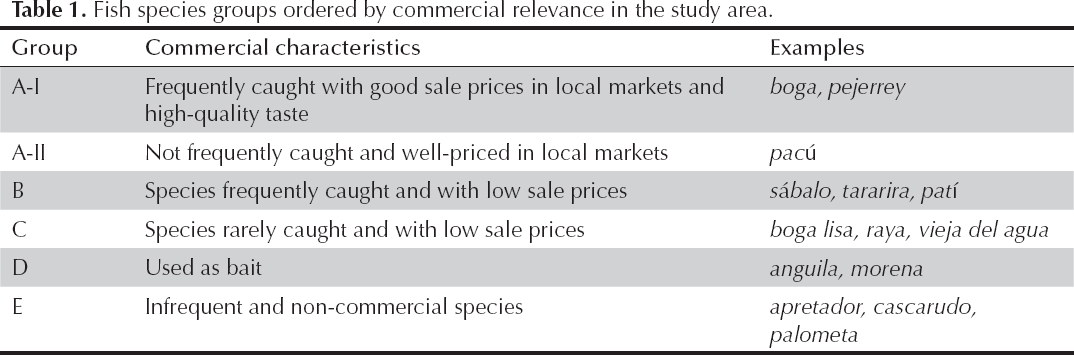
The research was conducted in two phases. First, 88 fish species were selected for study: a) the main target species mentioned by fishers in exploratory interviews carried out during 2014 and 2015 in the Paraná River artisanal fisheries; b) target species reported in the literature (Baigún et al. 2013; Sverlij et al. 1998, 2013); and c) species cited in zoogeographic and biodiversity studies for the lower La Plata River basin (Almirón et al. 2015; Liotta 2017; Sverlij et al. 1998, 2013; Teixeira et al. 2011). Fish species were classified into five groups based on the information from the exploratory interviews, when fishers were asked about the usage and commercial relevance of known species (Table 1).
Second, 60 artisanal fishers (52 males and 8 females) distributed in several fishing areas of the lower La Plata River basin were contacted between April and December of 2016 to assess their capacity to identify the species. Some fishers, such as those living in Rosario, were recruited by the snowball method (Harrel and Bradley 2009; Huck 2008; Johnson 1990), but most were contacted at fishers’ meetings, workshops, and trainings. We selected those who had at least ten years of experience in local fishing (52 fishers). We considered fishers who had less direct experience only if they belonged to fisher families that had conducted fishing activities for two or more generations (8 more fishers). The 60 interviewed fishers ranged in age from 14 to 72 years and averaged 24 years of fishing experience.
Principles from the ISE Code of Ethics were followed in conducting the surveys, in particular the principles of Educated Prior Informed Consent, Respect, and Confidentiality (International Society of Ethnobiology 2006). Since four of the selected fishers were minors, we gained their parents’ permission to conduct interviews with them and did so in the presence of responsible adults. Surveys were filled out by the fishers except when they were not literate, as was the case for fishers from the cities of Paraná and Rosario. Face-toface interviews were conducted with these fishers, during which the surveys were filled out by the researchers. The same questionnaire was used to conduct both written and face-to-face interviews.
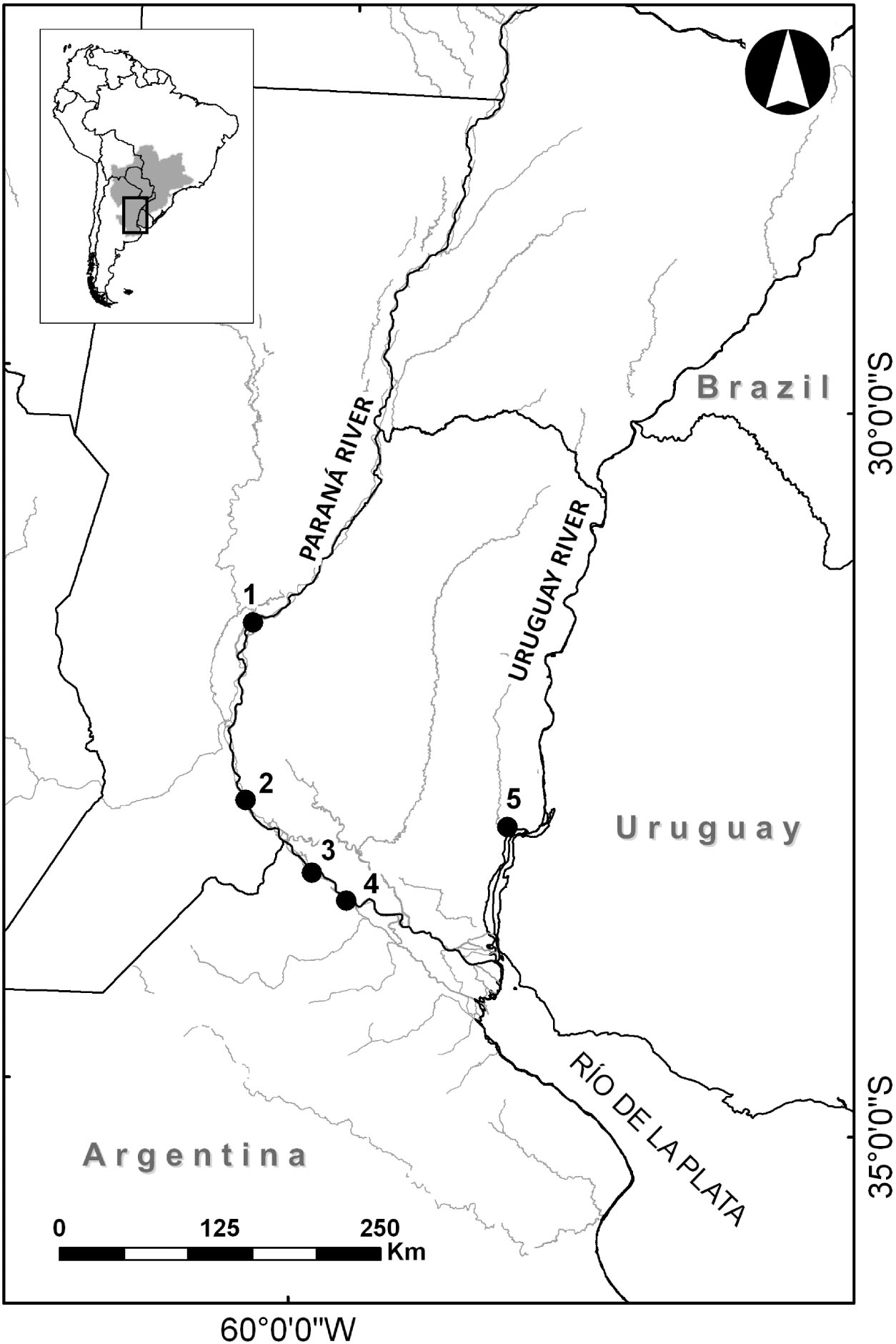
Location of the study sites 1: Paraná; 2: Rosario; 3: Ramallo; 4: San Pedro; 5: Gualeguaychú.
Photographs of fish from the 88 species, corresponding to eight orders and 27 families (Mirande and Koerber 2015) that had been detected in the study areas, were presented to the fishers; they were then asked to fill in names for the species. For each photograph, fishers were also asked to evaluate whether the species was “present” in their fishing area, based on the following options: a) the species was very abundant; b) the species was abundant; c) the species could be considered rare; d) the species was new in the area; e) the species was currently absent; or f) the species had never been seen. A species was coded as “present” whenever options “a” through “d” were chosen, but “absent” when options “e” or “f” were chosen.
Fish species groups ordered by commercial relevance in the study area.
Data Analysis
The set of registered folk names was analyzed according to different taxonomic criteria to identify the main characteristics of the folk nomenclature of the lower La Plata basin. We computed the number of folk names (generic and specific) and the number of mentions of each name, as well as the monotypic-polytypic proportions of the generic folk names. Then we examined the semantic structure of each recorded folk name and organized the fish names by primary and secondary lexemes, following Berlin's criteria (Berlin 1992). We also analyzed the number of recorded binomials for each species and looked for possible relationships with the richness of their respective orders. In folk taxonomic systems, the living organisms that are easy to perceive in their natural environments are frequently named using primary lexemes (monomials or generic names) and then classified at a high hierarchical position. Primary lexemes can have a simple structure (e.g., the fish name sábalo) or complex structure (e.g., the fish name vieja del agua) depending on the number of components involved in the generic name. Living organisms named by secondary lexemes (binomials or specific names) in folk taxonomies usually include a generic name modified by an adjective reflecting a salient characteristic of the organism (e.g., the fish names boga lisa and vieja del agua espinosa).
The structure of correspondences among folk and scientific nomenclatures was determined following Berlin's typology (Berlin 1973). Briefly, a one-to-one correspondence indicates that a unique generic folk name is used to refer to only one scientific species. Over-differentiation applies when two or more generic folk names refer to one scientific species; this generally occurs with organisms that are culturally significant for utilitarian or cognitive reasons (Hunn 1999; Pinto et al. 2013). Under-differentiation type I is observed when a unique generic folk name is used to name two or more scientific species from the same scientific genus, while type II is applicable when a unique generic folk name refers to two or more scientific species from two or more scientific genera.
In our study, specific folk names were classified according to the categories and attributes of species recorded by Berlin (1992), as well as in other ethnoichthyological studies (Aigo and Ladio 2016; Batista et al. 2016; Caló et al. 2009; Clauzet et al. 2007; Martínez-Mauri 2007; Paz and Begossi 1996; Pinto et al. 2013). Five categories of fish names were identified: 1) Morphology, with five attributes, including color, analogy, shape, texture, and size; 2) Ecology, with four attributes, including habitat, abundance, behavior, and distribution; 3) Organoleptic, which refers to physical aspects of fish as perceived by different human senses (especially the sense of taste), includes two more attributes: meat quality and meat taste; 4) Biology, with sex as the only defined attribute; and 5) Phenomenology, where the fish represents a negative omen as the sole attribute. In addition, we explored how such attributes were associated with the main fish orders, such as Synbranchiformes (eels), Siluriformes (catfish), Rajiformes (rays), Pleuronectiformes (sole, flatfish), Perciformes (cichlids, perch), Gymnotiformes (knifefish), Clupeiformes (anchovies, sardines), Characiformes (characins such as piranhas and tetras), and Atheriniformes (silversides). This analysis allowed us to explore the main characteristics of ethnotaxonomy in the study area and establish a baseline for comparison with other ethnotaxonomic systems of South American fisheries, as well as with future studies in the lower La Plata River basin.
The non-parametric Kruskal-Wallis test (Kraska-Miller 2014) was applied to determine if there were differences among the fish groups (A-E in Table 1) based on the number of synonyms mentioned per species and the percentage of species recognized. A Mann-Whitney post-hoc test with Bonferroni correction was applied to determine specific differences between paired groups.
A similar analysis was conducted to detect differences in the percentage of recognition of species related to the size of adult fish, with size determined by biological data recorded in the literature (Almirón et al. 2015; Mirande et al. 2015; Sverlij et al. 1998, 2013; Texeira et al. 2011). To perform this analysis, fish species were categorized according to four length groups: 1) small size, less than 15 cm (e.g., quita sueño, dientudo, mojarra); 2) medium size, 15–40 cm (e.g., moncholo, bombilla); 3) large size, 40–70 cm (e.g., salmón, sábalo, bagre de mar); and 4) very large size, greater than 70 cm (e.g., surubí, patí, raya).
Finally, to assess the similarities among fishing sites based on species presence/absence between fishers’ records and scientific data (compiled by Liotta et al. 2017), a hierarchical cluster analysis was performed using the Jaccard coefficient. Such an analysis allowed us to evaluate similarities in terms of species identification at different fishing sites, considering both folk taxonomical determinations and data from the scientific literature.
Results
The interviewed fishers identified all 88 species, corresponding to 87% of the orders, 69% of the families, and 47% of the species reported by Almirón et al. (2015) for the Paraná Delta. A set of 332 folk names was recorded, of which 159 corresponded to the generic and 173 to the specific levels (binomials) (Supplementary Table 1).
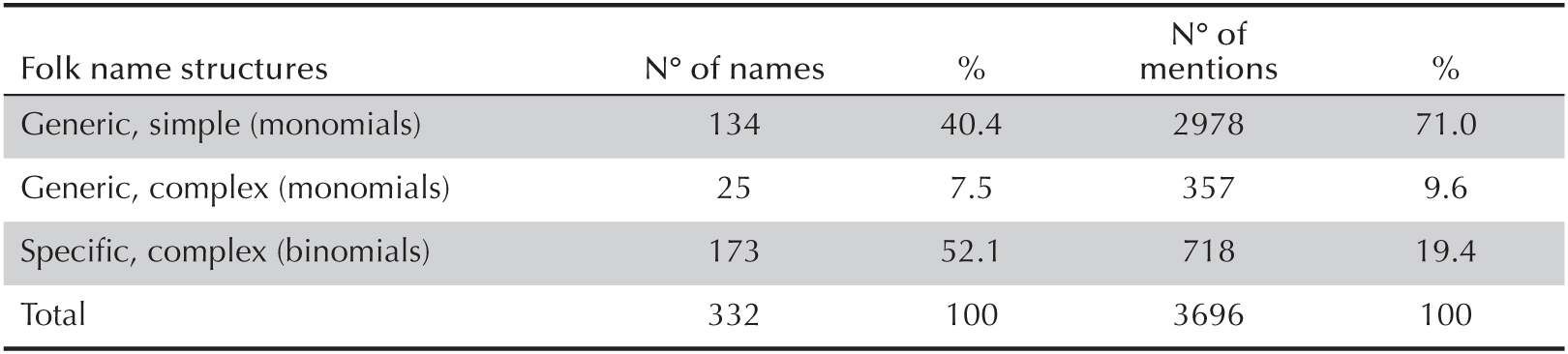
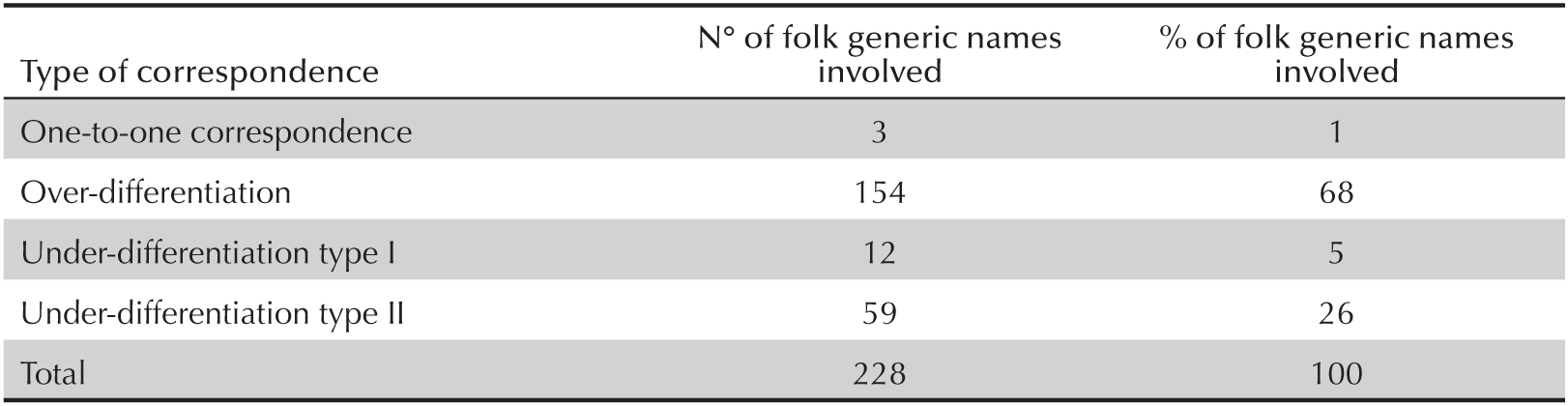
Although the numbers of recorded generic and specific folk names were similar, generic names were more frequently mentioned by fishers than specific ones. Furthermore, among the generic folk names, monotypic species were more frequent than polytypic ones. The most frequent generic folk names exhibited a simple structure (e.g., boga, dorado, pejerrey); only a few were complex (e.g., vieja del agua, cabeza amarga, quita-sueño) (Table 2).
Our results indicate that all main target species were named using monomial names such as pejerrey, manguruyú, patí, moncholo, etc. Small-sized species with low commercial value were less familiar to the fishers and were labeled with a higher proportion of binomial names or secondary lexemes, including dientudo comadreja, manduví cabezón, and patí malanuncio. This pattern has been noted by Tournon (1991) and Zamudio and Hilgert (2015) for other species that are not particularly useful to humans. In general, however, the number of binomial names appears to be strongly related to species richness within fish orders (Figure 2).
Semantic structure of folk names.
The correspondence between folk and scientific names exhibited a high prevalence of over-differentiation; for example, the three folk names cornalito, cigarillo, and juncalero, for the species Odontesthes perugiae, and tarucha, tararira, and tarango, for Hoplias malabaricus. Over-differentiation generally occurs with organisms that are significant to humans for utilitarian or cognitive reasons (Hunn 1999; Pinto et al. 2013), as is the case for most fish targeted for capture from fisheries in the La Plata River basin.
One-to-one correspondence was only present in three cases: sábalo corresponded to Prochilodus lineatus, amarillo to Pimelodus maculatus, and carpa to Cyprinus carpio. Under-differentiated correspondences were also found, with type II prevailing over type I (Table 3; see Discussion for more detail). We recorded some under-differentiation examples among low commercial value species (Group E, Table 1) (e.g., type I: cabeza amarga for Crenicichla vittata and C. lepidota; type II: apretador for Trachelyopterus cf galeatus and Auchenipterus osteomystax) as well as among species of higher commercial significance (Groups A, B, and C, Table 1) (e.g., type I: surubí for Pseudoplatystoma corruscans and P. reticulatum; type II: armado for Pterodoras granulosus, Oxydoras kneri, and Rhinodoras dorbignyi; see Supplementary Table 1).
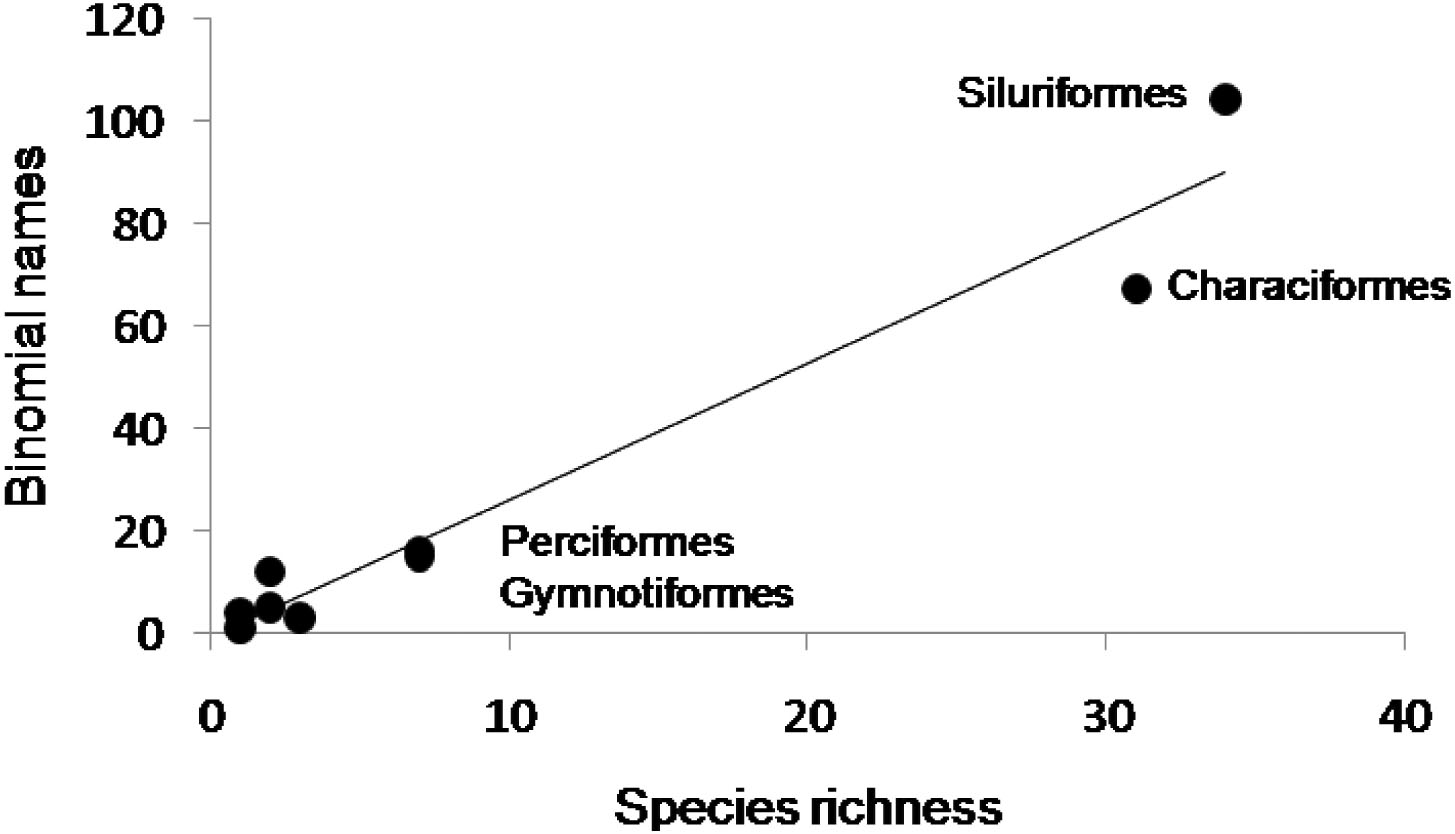
Relationship between species richness by order and number of binomial names within each order. The five unlabeled dots at lower left correspond to Clupeiformes, Atheriniformes, Rajiformes, Pleuronectiformes, and Synbranchiformes orders.
Correspondences among folk and scientific nomenclatures in the Paraná and Uruguay fisheries.
Morphology was the most frequent category drawn upon to identify fish at the specific level in the folk nomenclature; specific-level names were dominated by morphological attributes such as color (e.g., pejerrey blanco, salmón rosado, palometa amarilla), analogies to things and animals (e.g., morena bombilla, dientudo comadreja), and, to a lesser extent, shape (e.g., mojarra larga, dientudo jorobado, piraña picuda). Names in the ecological category mostly referred to fish habitats (e.g., pejerrey de laguna, lisa de mar, bagre de fondo, morena de río); these were also important for identifying specific fish (Figure 3).
Ecological attributes were encoded in the specific folk names of Pleuronectiformes (e.g., lenguado de río), Atheriniformes (e.g., pejerrey de mar), Clupeiformes (e.g., sardina común), and Perciformes (e.g., corvina de río), whereas morphological features were seen more often in specific folk names of Gymnotiformes (e.g., Morena picuda), Characiformes (e.g., boga lisa), and Siluriformes (e.g., mandubé violeta) (Figure 4).
The other nomenclature categories were not well represented in any of the fish groups. Organoleptic attributes, referring to the high meat quality and taste, were encoded only in Rajiformes (e.g., raya fina; fina/o), Siluriformes (e.g., mandubé fino), and Characiformes (e.g., dientudo amargo). The sole order that exhibited names in all analyzed categories was Siluriformes, probably due to the great diversity of families in this order. By contrast, the only nomenclature category identified for Pleuronectiformes was Ecology, specifically the attribute of habitat. Fishers associated some morphological attributes with species belonging to Siluriformes and Characiformes, but they related ecological attributes to orders composed of mostly territorial species (e.g., Perciformes) or species that migrate to the La Plata River estuary (e.g., Clupeiformes).
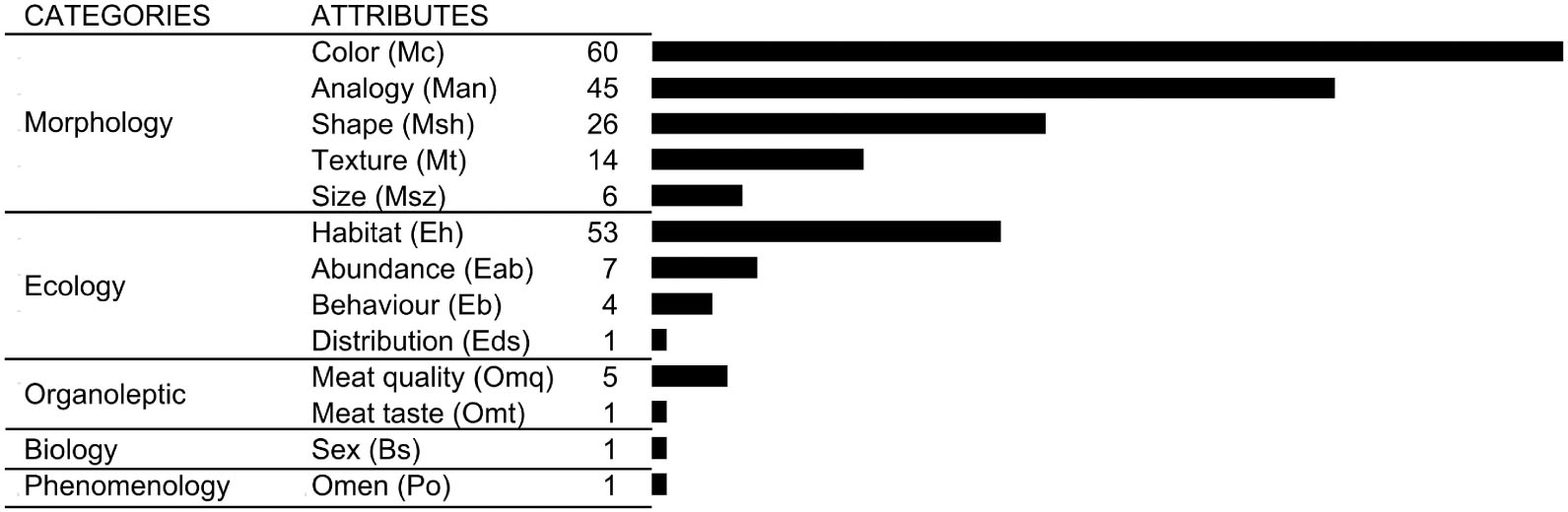
Frequency of categories and attributes associated with specific level folk names for fish.
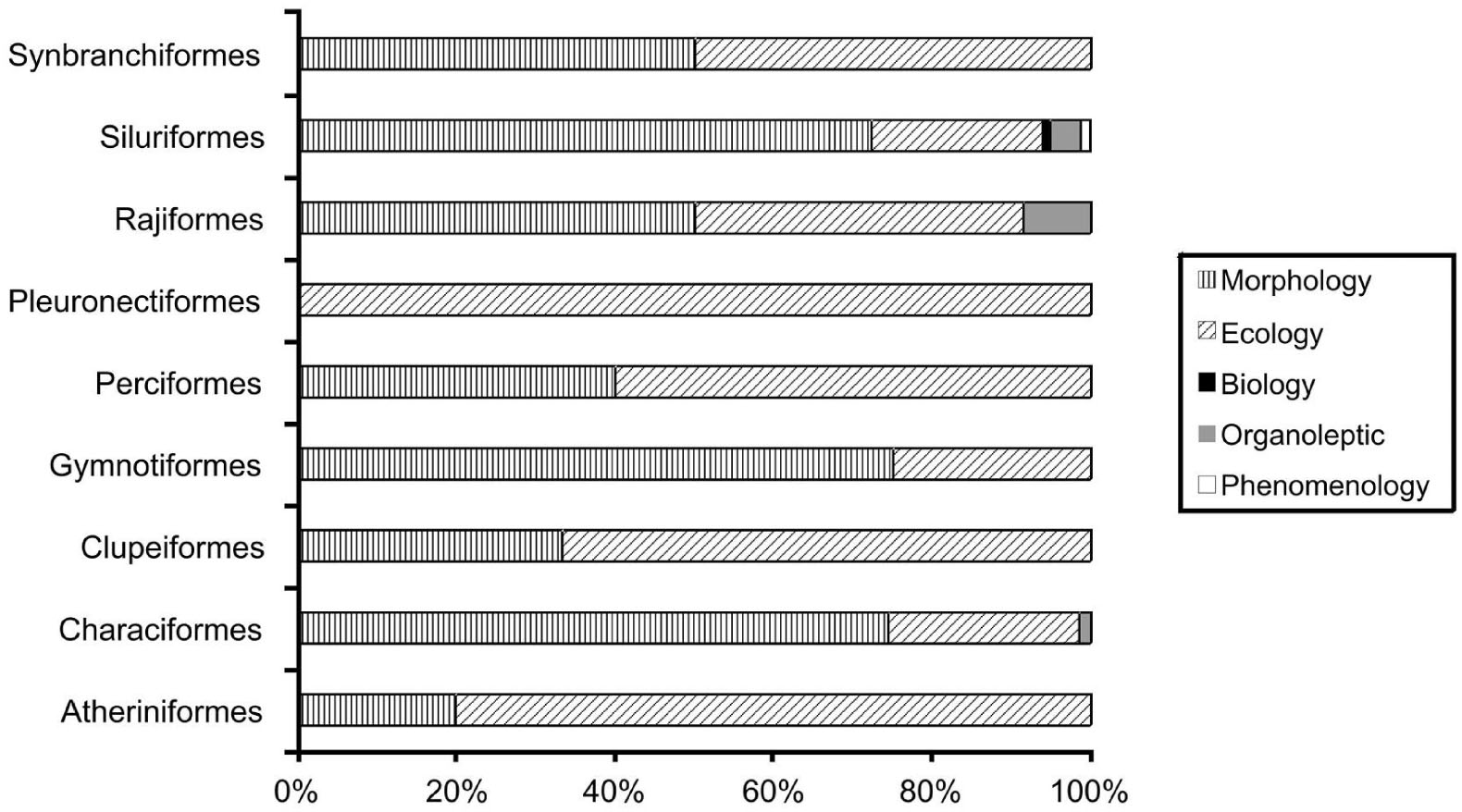
Percentage of categories associated with different orders corresponding to the assessed species.
Kruskal-Wallis analysis showed that the number of folk names differed among the species groups according to commercial relevance (H = 21.74; p < 0.01) (Figure 5A). A similar result was found in percentage of species recognition (H = 31.24; p < 0.01) (Figure 5B). The percentage of species recognition also differed according to species size (H = 24.25; p < 0.01) (Figure 5C). Such results imply that the number of names for each species increases when a species has less commercial value. In turn, species recognition capacity decreases as commercial value of the species moves from high to low but is positively associated with species size.
The comparison of species recognition by fishers from different areas showed that the species detected at the fisheries in the lower Paraná Delta (Ramallo and San Pedro), in the middle Paraná Delta (Rosario), and in the upper Paraná Delta (Paraná) were more similar than at the site in the Uruguay River (Gualeguaychú) (Figure 6A). This result contrasts significantly with analyses of species distribution records taken from the scientific literature based on traditional taxonomic identification (Liotta 2017) and shows an inconsistent pattern of fish species throughout the Paraná River basin; Rosario, in particular, emerges as a site with a very different fish assemblage from the other sites in the basin (Figure 6B).
It should be noted that the fishers we interviewed were able to detect some species showing very restricted distribution patterns or that are rarely mentioned in the scientific literature. For example, the bagre de mar (Genidens barbus), an anadromous species that enters through the La Plata River into the lower Paraná River (Baigún and Minotti 2012), was highly recognized by fishers in Rosario (85%), Ramallo (69%), and San Pedro (89%), but reported as “absent” in Paraná and Gualeguaychú. In addition, the manguruyú (Zungaro jahu) was highly recognized in Paraná (87%) and Rosario (85%) but reported as absent from the other sites. Paraná was the only site with a high recognition rate (75%) for the tres puntos (Hemisoroubim platycrhynchus), another rare species; recognition rates at the other sites did not exceed 15% and this species was reported as absent in Gualeguaychú.
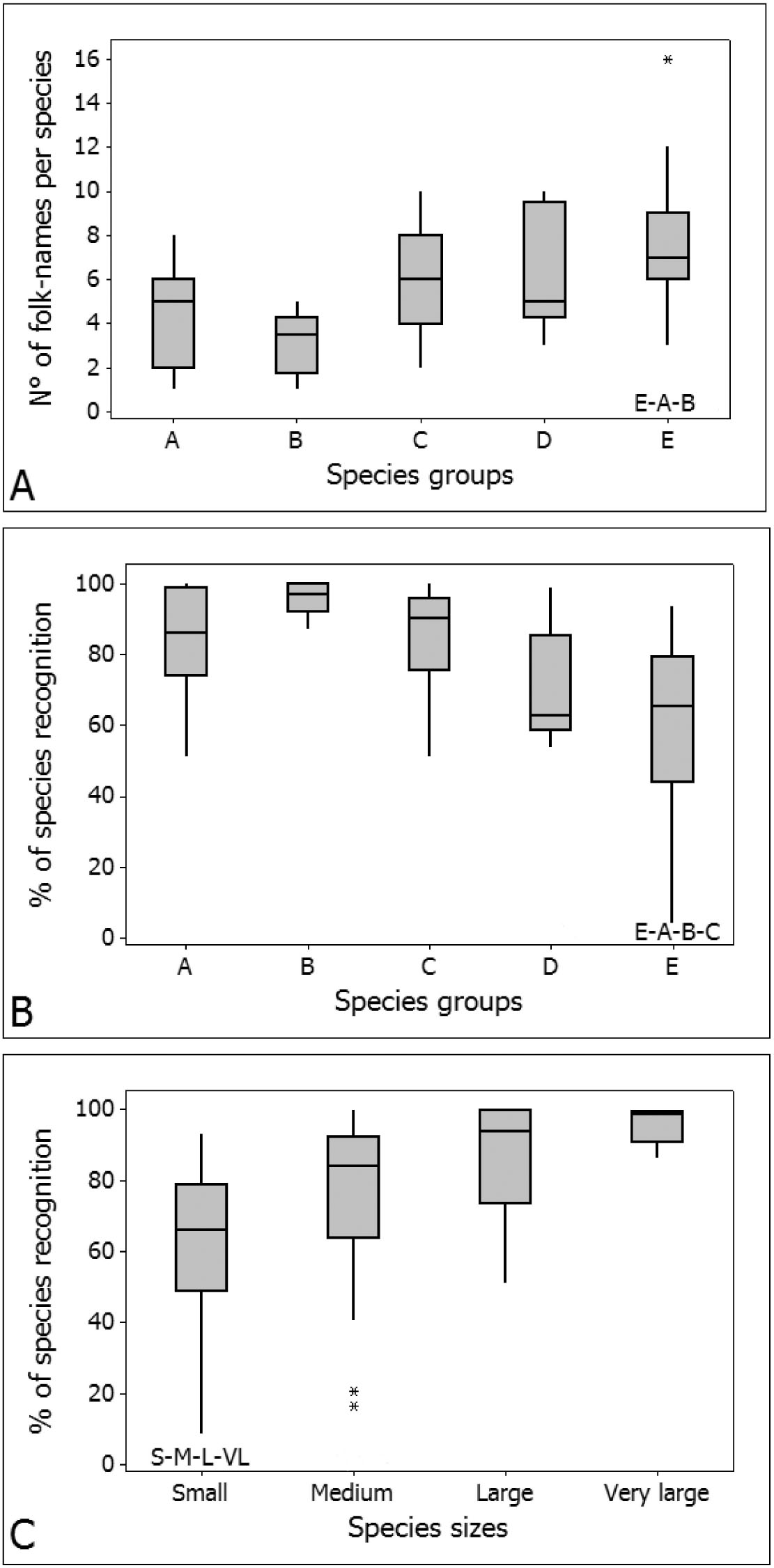
Box plots portraying the number of folk names (graph A) and percentage of species recognition (graph B) according to species groups defined in Table 1 and the percentage of species recognition according to species sizes (graph C). Letters inside the graphs indicate significant differences (p < 0.05) among the species groups and species sizes based on the Mann Whitney test applying the Bonferroni correction.
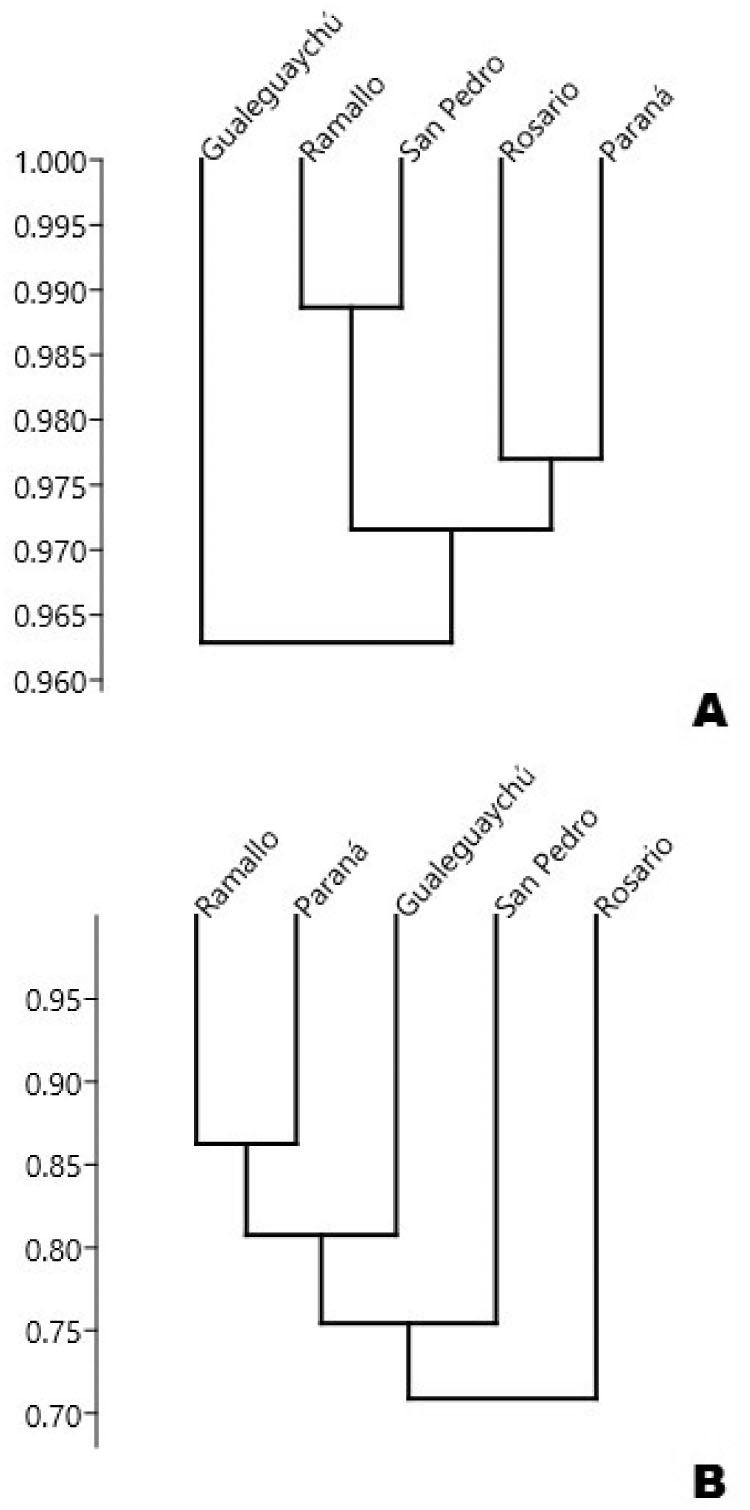
Cluster analysis of species presence/absence data at five sites using the Jaccard similarity coefficient according to (A) fishers’ detection in this study; and (B) scientific literature records (Liotta 2017).
Discussion
This study represents a first effort to assess the ethnoichthyological knowledge embedded in the folk taxonomy of the lower La Plata River basin. Most fish names used by fishers in this region were binomials, a pattern that appears to be common throughout the Amazon basin. In comparing fishers in the Amazon basin with those on the Atlantic forest coast, Begossi et al. (2008) argued that riverine fishers were in closer contact with nature than marine ones, which allowed the riverine fishers to identify and use a greater number of features or attributes to name and classify fish than did marine fishers. We can also hypothesize that large rivers offer richer environmental diversity than marine locations, which promotes more opportunity to recognize more species and use more specific names associated with hydrological and geomorphic river characteristics.
Our research demonstrated that a large number of binomial names were associated with mostly morphological and ecological attributes. This is comparable to other ethnotaxonomic studies in small-scale fisheries in South America (Aigo and Ladio 2016; Batista et al. 2016; Begossi et al. 2008; Clauzet et al. 2007). The most salient phenotypic and behavioral characteristics of species are usually reflected in taxonomies. Our results also show that taxonomic orders containing more species richness exhibited more binomial names, indicating that the greater the fish biodiversity, the more specialized the folk taxonomy tends to become. However, there is decreasing consensus in folk names for non-commercial species. That is, fishers in our different study areas tend to apply different names to species they do not target for capture. This is seen in the differentiation of names for fish in the orders with the most numerous species (e.g., Siluriformes and Characiformes), since a large proportion of fish in these orders are non-commercial.
The fact that we recorded a large number of folk names could be related to the geographic scale of the study, which increased the chances of finding more binomial names for rare or non-target species that would be named differently across sites. On the other hand, monotypic nomenclature prevailed over polytypic nomenclature among the generic fisher folk names recorded at the study sites. This finding agrees with Berlin (1992) and several studies from other small-scale South American fisheries (Batista et al. 2016; Mourão and Nordi 2002; Ramires et al. 2012). In addition, the high number of binomial names reflecting morphological attributes could be explained by the species salience principle (Hunn 1982, 1999). The property of being noticeable or important (e.g., salient) was associated in this study with biological distinctiveness, as presented in different phenotypic characteristics, as well as the size or economic value. Salience was demonstrated in those species that had higher recognition rates and fewer folk names (e.g., sábalo, surubí). This is consistent with what is observed for other groups of organisms in different communities or ethnic groups that unambiguously recognize such species because of their great cultural importance (Atran 1998; Chapman 2012; Medin et al. 2006).
Certainly, large river fisheries and fish ecological traits are different from marine ones in important ways. This necessitates exploring the characteristics of folk knowledge of fluvial fisheries, particularly their ethnoichthyological features. A major difference between our taxonomic study and those that have been undertaken in marine environments is the low level of correspondence between folk and scientific taxonomies according to Berlin's criteria. Except for Clauzet et al. (2007), one-to-one correspondence between folk and scientific nomenclature has been found in most South American marine fisheries (e.g., Caló et al. 2009; Pinto et al. 2013; Ramires et al. 2012); this falls in line with Berlin's argument that over-differentiated correspondence would be rare in folk taxonomies. In contrast, our findings showed that over-differentiation prevailed at the generic level and only three cases of one-to-one correspondence were recorded. The prevalence of over-differentiation appears to be common among organisms that are significant for utilitarian reasons, in agreement with Pinto et al. (2013). The cases of under-differentiation, on the one hand, were recorded among species of commercial importance (A-C groups, Table 1), similar to the findings of Seixas and Begossi (2001), who observed that some useful fish from the Brazilian Atlantic coast exhibited under-differentiation (type II). On the other hand, according to Martin (1995), we also registered under-differentiation among species of low commercial value (Group E, Table 1). These findings suggest that further analysis is needed to understand what factors can generate under-differentiation of fish in the folk taxonomy in the lower La Plata River basin.
However, our study mirrored other ethnoichthyological studies (Batista et. al 2016; Martinez-Mauri 2007) in that the attributes encoded in specific folk names mostly came under the classic categories of morphology and ecology. The dominance of morphological attributes in the binomial identification of organisms is very common in folk nomenclature (Berlin 1992) and has also been recognized for fish classification systems (Begossi and Figueiredo 1995; Begossi and Garavello 1990; Clauzet et al. 2007).
The cluster analysis we performed using expert fishers’ knowledge suggests that site variation among folk taxonomies could be more closely related to the relative abundance of species at each study site (which influences their probability of being detected) than to the accuracy of fishers’ knowledge. Based on fishers’ identifications, we suggest that species similarity across the study sites could represent an accurate picture of species distribution, particularly when the recognition by fishers of species as present or absent is taken into account. Moreover, we demonstrated that fishers can provide additional information about rare species, such as bagre de mar, manguruyú, and tres puntos. We conclude that fishers’ knowledge provided a more accurate view of spatial species segregation across five sites from the lower La Plata River basin than was provided in the available scientific literature. Observed discrepancies between scientific data and taxonomic information from fishers can be attributed to data gathering methods. The scientific information on the La Plata basin comes from studies that acquired fish samples using different kinds of fishing gear, followed variable temporal sampling goals, or had different objectives. On the other hand, small-scale fisheries use fewer kinds of gear and fish capture is limited to only a few sites.
Based on our results, ethnoichthyological research in the lower La Plata River basin suggests that managers could advantageously incorporate local folk names into their biological surveys, long-term monitoring research, and plans for management and conservation of species. This strategy would facilitate communications and interactions between fisheries managers and local people, particularly in areas where scientific knowledge remains scarce (Baird 2003). Fishers can provide detailed information about fishery systems at the local scale that scientific surveys are unable to acquire (Baigún 2015). Conducting species recognition surveys appropriately and combining this information with fishers’ abundance assessments could enable managers to detect long-term abundance trends in target species and direct future research towards developing conservation strategies. In South America, the conservation of fish populations and degraded habitats has been identified as the main issues of concern (Barletta et al. 2016); this highlights the need for integrating fishers’ knowledge with scientific data.
In the case of the La Plata basin, fishers exhibited the capacity to recognize a high level of fish biodiversity based on different attributes, as reflected in their identifying species by more than 300 names. A robust folk nomenclature—that is, when various species can be identified to the finest taxonomic level possible—allows for more effective conservation strategies by reducing uncertainty around applying specific protective measurements. This further highlights the importance of considering ethnoichthyological information when aiming to increase fish biodiversity (Mourão and Montenegro 2006) and improving communications between fishery managers and local people (Baird 2003).
The present study reinforces the argument that folk taxonomy represents a valuable and necessary information source, particularly in a large river domain where fish biodiversity is a relevant issue and governmental agencies often lack the reliable human resources needed to tackle multispecies fisheries management (García-Quijano and Pitchon 2010). Finally, this work illustrates the importance of gathering a basin-wide perspective on the ethnotaxonomies around large rivers, since some species may be unevenly distributed or undertake lengthy migrations. Researchers should consider the limitations of gathering spatial information on species richness in such highly dynamic systems and be willing to acquire and combine the additional information that can be provided by fishers. Local taxonomies may also reflect the ways different ethnic groups in different geographical regions perceive their natural environments and living organisms, and how they interact with each other (Ruddle 1994). Understanding these differences is, therefore, also necessary if researchers are going to work effectively with fishers in conserving local resources.
Future efforts in La Plata and other large South American river basins should be directed toward acquiring a better understanding and assessment of the potential information that could be derived from ethnoichthyological studies, as well as trying to determine its underlying advantages and limitations. Different forms of knowledge and the participation of fishers in research presents as yet unexplored opportunities for improving resource management and species conservation. Ultimately, we predict that adopting such a perspective will provide valuable inputs and criteria for improving fisheries management in large floodplain rivers and support more effective strategies for preserving fish biodiversity.
Footnotes
Acknowledgments
We thank all the Paraná Delta and Uruguay fisherfolks who participated in this research and the Estación Experimental Agropecuaria Delta del Paraná (EEA Delta-INTA) for providing logistic support. This research was supported by a doctoral fellowship from CONICET granted to the first author.