







Abstract
Traditional communities, such as quilombos, often make use of a variety of plant resources. This study aims to describe and classify the state of conservation of woody species of surviving forest remnants used by the quilombo community of Ipiranga, on the Southern coast of Paraíba state in northeastern Brazil. Data on plant use were obtained through semi-structured interviews using the snowball sampling method. Plant availability in nature was determined through a phytosociological survey. Species were grouped into categories by use and their use value (UV), conservation priority index (CPI), and phytosociological parameters were calculated. A total of 64 species (27 families, 44 genera) were cited as useful. The informants attributed 48 types of uses to the plants, with the technology category being the richest. Many of the uses involve extracting the trunk, used mainly to make support stakes for yam plantations and handicrafts. Based on their CPI scores, 16 species fell into category 1 (high priority for conservation), 41 fell into category 2 (intermediary priority for conservation), and seven fell into category 3 (species suitable for extraction with few restrictions). Plants with the highest CPI scores are those with the greatest use value and lowest density in the forest inventory. Most of the plants used need a plan of management considering means of extraction and the frequency with which they are collected. Initial conservation efforts should focus on Handroanthus impetiginosus (pau d'arco) and Bowdichia virgilioides (sucupira), as these have the highest CPI ranking, low density, and uses primarily related to the extraction of bast fibers and wood.
Introduction
Humans have always sought and extracted natural resources to improve their living conditions and meet their basic needs, both material and spiritual (Alves and Albuquerque 2012; Giraldi and Hanazaki 2010). The intensive use of natural resources has exerted pressure on ecosystems, resulting in the destruction and/or defacement of the landscape in vast areas of native environments (Reis et al. 2010). These circumstances have led scientists from various fields to concentrate their efforts on the identification of areas and species that should receive priority for conservation (Lucena et al. 2013; Myers et al. 2000). Ethno-ecological studies have contributed by describing the way in which societies relate to nature and by highlighting the value of natural resources for human communities (Araújo and Ferraz 2014), as well as by providing contextualized and sustainable alternatives for resource use and biodiversity management (Alves and Albuquerque 2012).
Traditional peoples' ways of relating to the environment can provide information on different forms of management that take full advantage of the plant community (Pasa et al. 2005) because the activities of traditional populations are governed by the seasonality of natural cycles, based not only on empirical observations but also on values, symbols, beliefs, and myths (Monteles and Pinheiro 2007). These practices can be seen in everyday activities, such as in the preference of members of a quilombo community in the state of Bahia, Brazil, for collecting dead branches to use as firewood (Almeida and Bandeira 2010). Even so, the rate, location, and method of extracting plants or plant parts can harm or even kill the plant (Dzerefos and Witkowski 2001). For example, when some local healers on the Abe Bailey Nature Reserve in South Africa extract the rhizomes from a plant for medicinal purposes, they leave the hole open because they believe that filling in the hole would diminish the medicine's efficacy (Dzerefos and Witkowski 2001). This allows animals to damage the plant and impedes its growth, leading to the plant's death.
In the Atlantic Forest biome, most native plant species are harvested through extraction, particularly those found only in mature forests, which cannot be cultivated feasibly by conventional means (Crepaldi and Peixoto 2010; Reis 1996). The controlled extraction of transitory structures, such as the leaves, fruits, and seeds, which does not result in the removal of individual plants from the forest has great potential for sustainable resource use (Pavan-Fruehauf 2000). Regarding timber, prior planning is necessary because the removal of the individual trees can have negative consequences for the species and the entire plant community. Selective extraction of trees commonly found in secondary forests, for instance, can hinder the establishment of some species, directly affecting forest succession (Crepaldi and Peixoto 2010). Many problems related to the conservation of plants used by humans would benefit from study and debate (Oliveira et al. 2007). Despite numerous studies on biological and cultural dimensions of Brazilian ecosystems (Miller 2016; Welch 2015; Welch et al. 2013), approaches that measure the pressure of use are not yet sufficiently developed, and, thus, there is limited progress in the search for alternative uses, management approaches, and conservation of biological resources (Albuquerque et al. 2011).
Studies of forest resource use by traditional communities are important for the implementation of socio-biodiversity conservation strategies, as the local disappearance of a species can cause ecological impacts, as well as the loss of local cultural traditions (Albuquerque et al. 2011; Crepaldi and Peixoto 2010). Quilombo communities are descendants of enslaved Africans who have maintained cultural, subsistence, and religious traditions (FCP 2016; Nascimento and Conceição 2011) and currently represent a form of Afro-Brazilian political and cultural resistance who hold land in common (Carvalho et al. 2014). On community lands, the seasonality of the traditional activities is undertaken through a system of kinship and neighborhood bonds sustained by relations of solidarity and reciprocity (ABA 1994).
The relationship between quilombola communities, plant resource use, and conservation strategies has been recorded in some regions of Brazil. These studies demonstrate that medicinal plants are widely used as traditional treatments for several diseases (Beltreschi et al. in press; Crepaldi and Peixoto 2010; Oliveira and Cavalcante 2017; Silva et al. 2015). A forest resources management system was also observed, related to the conservation and use of the timber and medicinal species (Vieira et al. 2008). Despite the intense relation observed between quilombo communities and the nearby forest remnants, impact of plant extraction has been the subject of research in only a few of these communities. In one quilombo community, located in Espírito Santo State, in southeastern Brazil, it was found that 17 of the 49 analyzed species were at risk of local extinction (Crepaldi and Peixoto 2010). Another study in two quilombo communities of the Minas Gerais State, also in the southeastern Brazil, showed that more than 50% of the timber species could be locally threatened and should be prioritized for conservation (Conde et al. 2017). The present study aims to assess the level of extraction of woody plant species used by the quilombo community of Ipiranga, located in Conde, Paraíba state, northeastern Brazil. We demonstrate that there are woody species at the research site that deserve high conservation priority.
Methods
Study Site
The study was conducted in the Ipiranga quilombo community located in the municipality of Conde (Figure 1) in the Mata Paraibana meso-region, approximately 16 km from the state capital of João Pessoa, with an area of approximately 173 km2 and a population of 21,400 inhabitants (IBGE 2016). The site has a tropical humid climate with dry summers and predominantly forested vegetation (Brasil 2005).
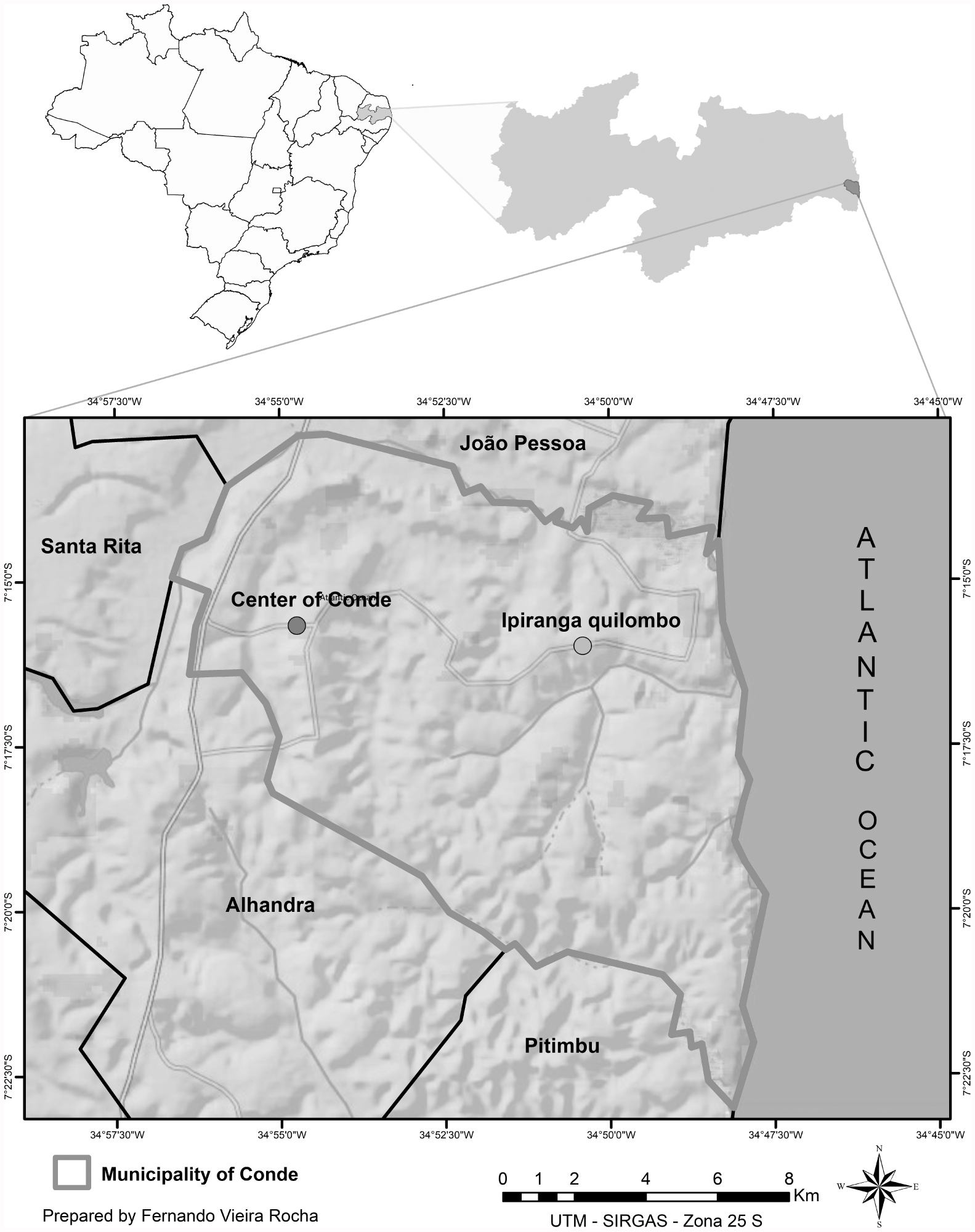
Ipiranga community, Conde city, Southern coast of Paraíba, Northeast of Brazil.
The Ipiranga quilombo community has approximately 120 families whose primary activity is farming for subsistence and for sale in the markets of urban centers (Carvalho et al. 2014). It is located on state highway PB-018, approximately 6 km from the center of Conde (Carvalho et al. 2014). Most houses in the quilombo are built of masonry, although a few are wattle-and-daub houses. All homes have electricity, running water, and basic sanitation. Access to the site is by dirt roads (Beltreschi et al. in press).
The residents of Ipiranga received a certificate of self-recognition as descendants of quilombolas issued by the Palmares Cultural Foundation on September 8, 2006 (FCP 2016). The community is currently in the process of drafting the Technical Report of Identification and Demarcation (Carvalho et al. 2014).
Beside the community, located within the bounds of the quilombo, lies a forest remnant of approximately 11 ha, which is divided into areas designated for monoculture cultivation (inhame [yams], Dioscorea sp.; macaxeira [cassava], Manihot sp.; milho [corn], Zea sp.) and areas of native vegetation, from which many types of plants are extracted. Approximately 2 ha of this area is reserved for planting crops, such as corn, beans, yams, and cassava, which are sold in urban centers. Most of the area, approximately 9 ha, is characterized as part of the Atlantic Forest biome, with dense forest, predominantly consisting of large trees, known as the Tabuleiro Forest. The area also has Tabuleiro savannas, with sandy soil and vegetation consisting of trees with twisted trunks and thick leaves typical of these formations.
Ethnobotanical Data Collected
Data were collected in two phases. First, information about species use was obtained from the quilombo community. These data supported the second phase of the study, which consisted of a phytosociological survey of the forest remnant. Ethnobotanical data were obtained through semi-structured interviews designed to elicit information about useful woody species. The interviews contained questions about which species are used, the form of use, the place of origin, the part of the plant extracted, and the method of extraction.
The informants were identified using the snowball method (Bernard 2006), in which the community leader was interviewed first, with the interviewer being referred to other people known to be local experts on plant use, and so on. The study was conducted with the aid of eight informants, including five men and three women, ranging in age from 50 to 78. Prior to the interviews, the project was presented to each participant to make them aware of its purpose and obtain their consent to participate, as well as to invite them to sign the informed consent form, as required by National Health Council Resolution 466/2012 (Brasil 2012). The study was approved by the Committee on Ethics in Research with Human Subjects of the Center for Health Sciences, Federal University of Paraíba, registered with protocol n. 0428/16.
Phytosociology
After useful plants were identified, their availability was investigated through analysis of the population structure in the forest remnant. The phytosociological survey was conducted using a plot method, which consists of demarcating 100 plots, 10 × 10 m each, located 20 m apart. The sample area totaled 1 ha, in which measurements were taken for all the woody specimens (except lianas and Cactaceae) with a circumference at breast height (CBH) of at least 5 cm and height of at least 1 m, following the standardization for Atlantic Forest ecosystems (Araújo and Ferraz 2014). Circumference was measured with a tape measure, and height was estimated with the aid of a graduated pole. The reproductive parts of the plants were collected for subsequent identification through comparison with the collections of the Lauro Pires Xavier (JPB) Herbarium with the aid of experts.
Data Analysis
The plants were grouped into categories by their uses: food, construction, fuel, medicine, ornament, technology (Crepaldi and Peixoto 2010), poison-abortive, and veterinary. The study did not find uses in the magic-religion or fodder categories, so these were not included in the study. The use value (UV) for each species was calculated using the formula adapted by Rossato et al. (1999): UV = ΣU/n, in which UV is the use value of the species, U is the number of total mentions per species, and n is the number of informants. This calculation indicates the relative local importance of a species.
The relative density (ReD) of the inventoried plants was calculated with the aid of the FITOPAC 2.1 program (Shepherd 1995). The species were also classified as to their origins (Institute of Research of Rio de Janeiro Botanical Garden 2017) and grouped according to their level of ecological succession (Lorenzi 1998, 2002). When no exact match was possible, the classification considered species of the same genus with similar size and growth characteristics.
The ethnobotanical data were related to the plant community structure using the methodology adapted by Albuquerque et al. (2011) from the method originally proposed by Dzerefos and Witkowski (2001). The focus is to identify the conservation priority for each species used based on data about the forest remnant where it was collected, its harvesting risk, its importance to the local community, and the diversity of its uses (Table 1). The final conservation priority score is obtained using the formula: conservation priority = 0.5 (biological score) + 0.5 (risk of use score). This resulted in classifying the species into three categories:
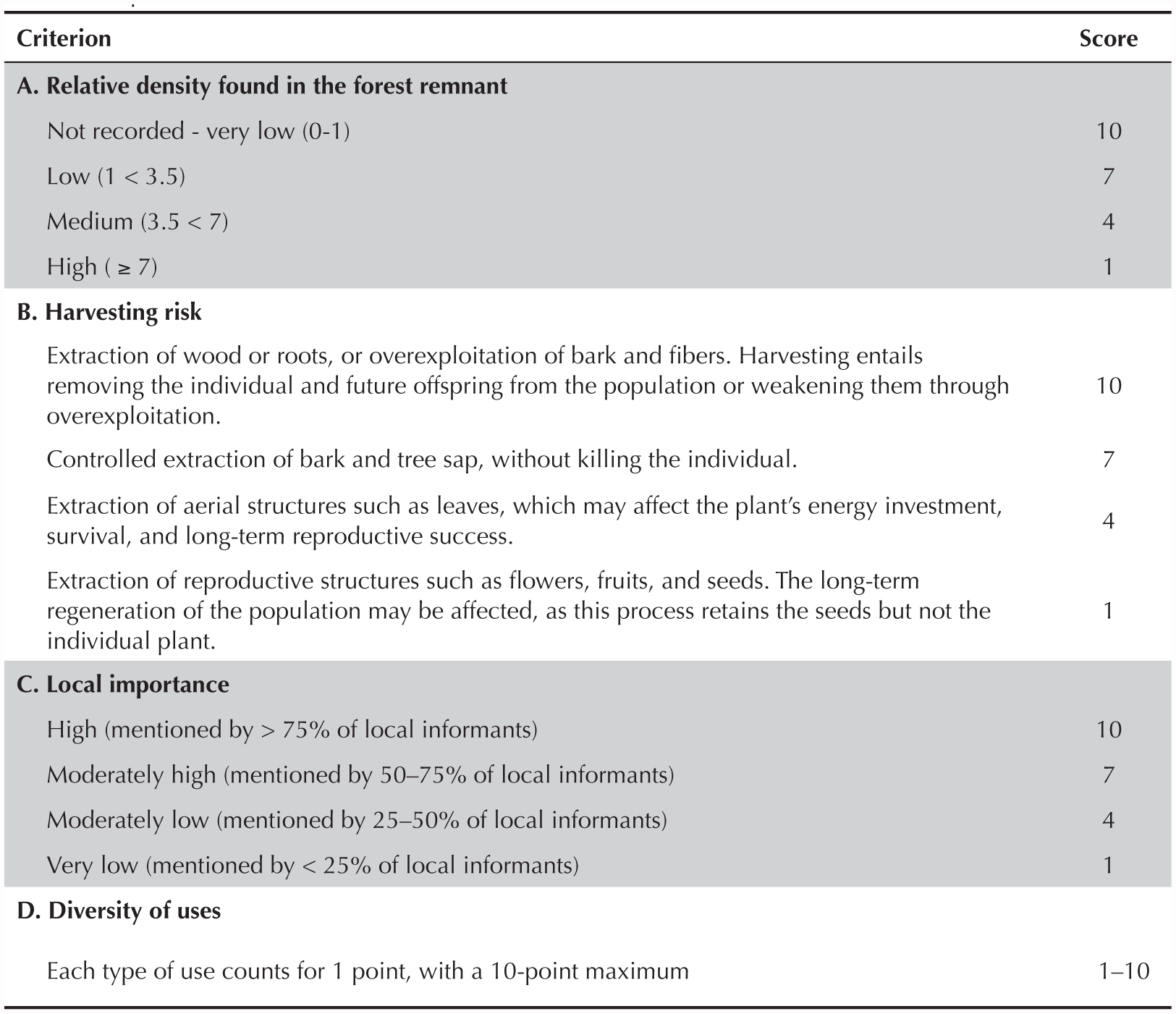
Three additional calculations are needed to obtain the conservation priority score:
The CPI calculation method (Albuquerque et al. 2011) was developed for medicinal plants. In this study, however, all plant uses were considered, medicinal or not, without the need for more significant changes to the method. The calculation was made possible by the fact that the original method contains a table with scores for the extraction of all plant organs, including lumber extraction, which is applicable to the first component of Harvesting Risk. Thus, the 10 additional points for lumber use recommended by those authors were not added to the formula.
The Spearman correlation test was used to determine if a relation exists between the CPI scores and the UV or relative density data. The Kruskal-Wallis test was performed to determine differences in the UV or CPI based on the species' level of succession. The analyses were conducted using BioEstat 5.0 (Ayres et al. 2007).
Results
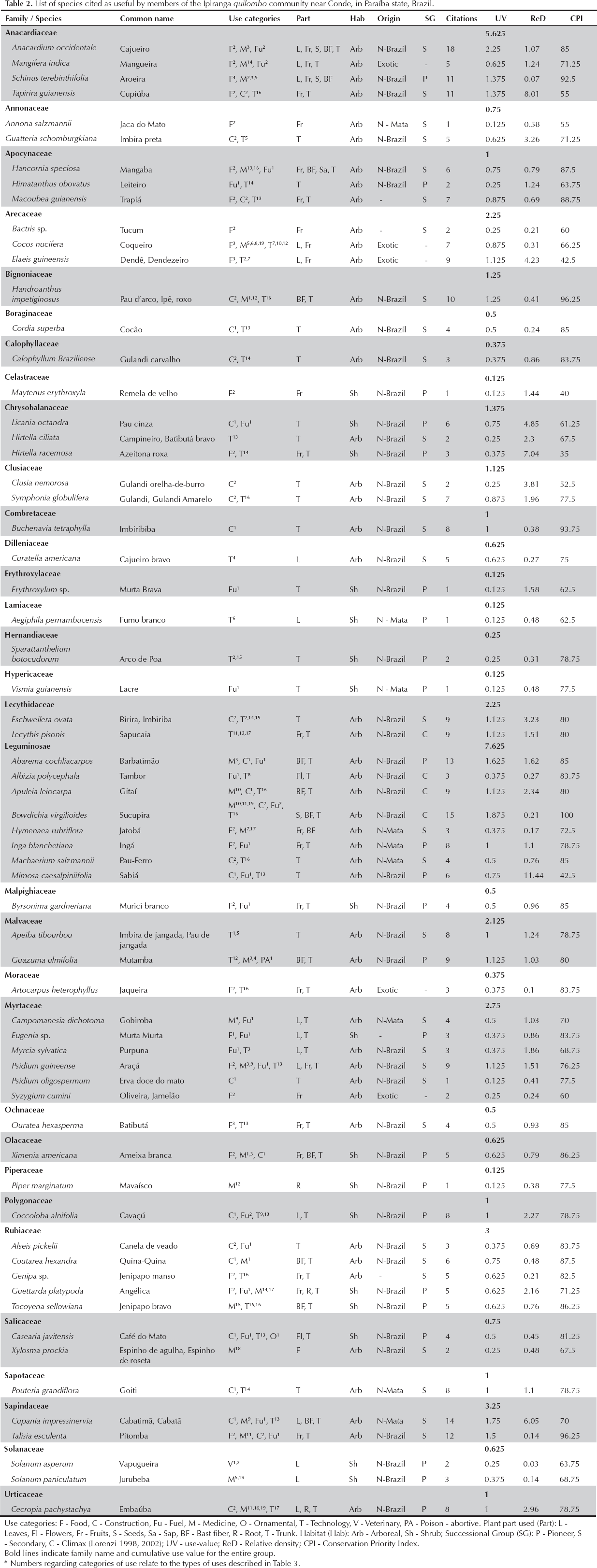
A total of 64 woody plant species belonging to 32 families and 61 genera were described as useful (Table 2). All species mentioned were found in the phytosociological survey. The family with the greatest species richness was Leguminosae, with eight species, followed by the families Myrtaceae and Anacardiaceae, with six and four species, respectively. The families Apocynaceae, Arecaceae, Clusiaceae, Malvaceae, and Rubiaceae had three species each. The remaining families had less richness, with one or two species each.
Trees were the dominant habitat, accounting for 73% of the species inventoried. Most species are native to Brazil (93%), with predominantly secondary succession plants (53%). Plants from the climax stage made up the smallest proportion of the group, representing only 7% of the species analyzed.
List of species cited as useful by members of the Ipiranga quilombo community near Conde, in Paraíba state, Brazil.
Use Categories/Parts Used
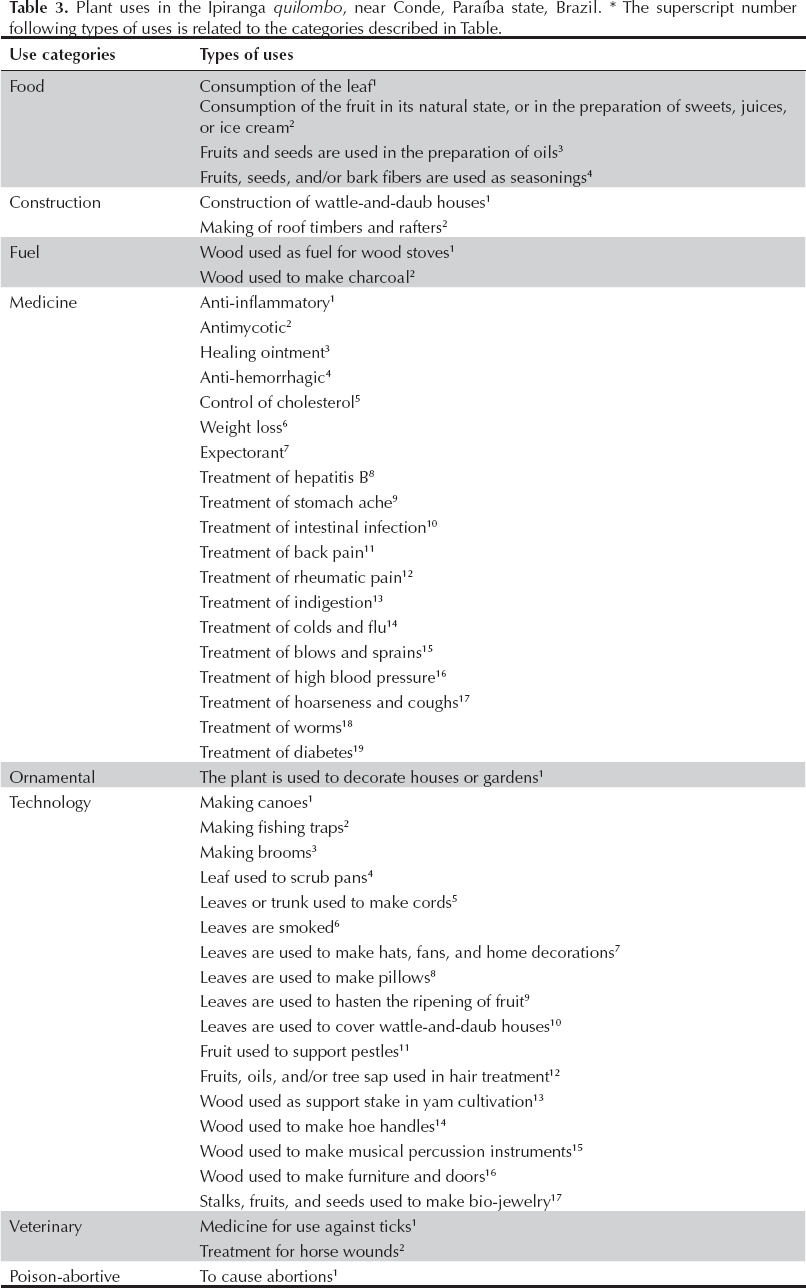
The informants described 48 types of plant uses, which were distributed into eight separate categories (Table 3). The use category technology had the greatest richness (35 species), followed by the categories fuel (26 species), food (24 species), construction (24 species), medicinal (22 species), ornamental (one species), veterinary (one species), and poisonous-abortive (one species).
Plant uses in the Ipiranga quilombo, near Conde, Paraíba state, Brazil. * The superscript number following types of uses is related to the categories described in Table.
Many of these uses entail the extraction of the plant's trunk (49 species), as observed in the categories construction, fuel, and technology (Figure 2). Most of the mentions refer to the use of wood, mainly for making support stakes for yam cultivation, supplies for handicrafts, and materials for tools, such as hoe handles and cords.
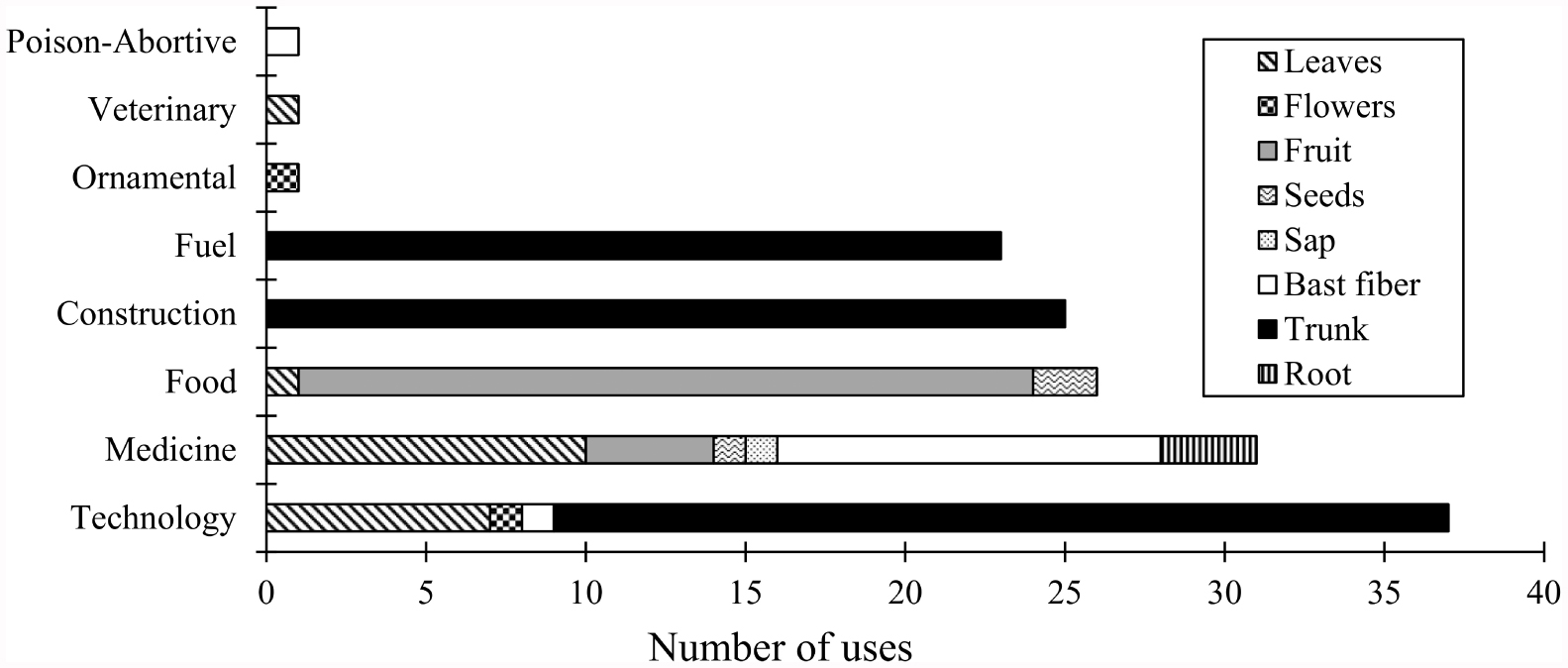
Part of the plant used in each use category by Ipiranga quilombo community, Paraíba State, Brazil.
Fruits are used predominantly for food (Figure 2). Leaves, bast fiber, roots, and sap are used mainly in traditional medicine in the form of syrups, drinks, and infusions used to treat diseases related to the respiratory and digestive tracts, such as flu, colds, and indigestion.
Extraction of the trunk predominates in secondary vegetation in the ecological groups, representing half of the structures extracted (Figure 3). The most versatile group was the “pioneer plants,” because almost all parts of these plants (seven of the eight parts analyzed) are used to medicinal propose.
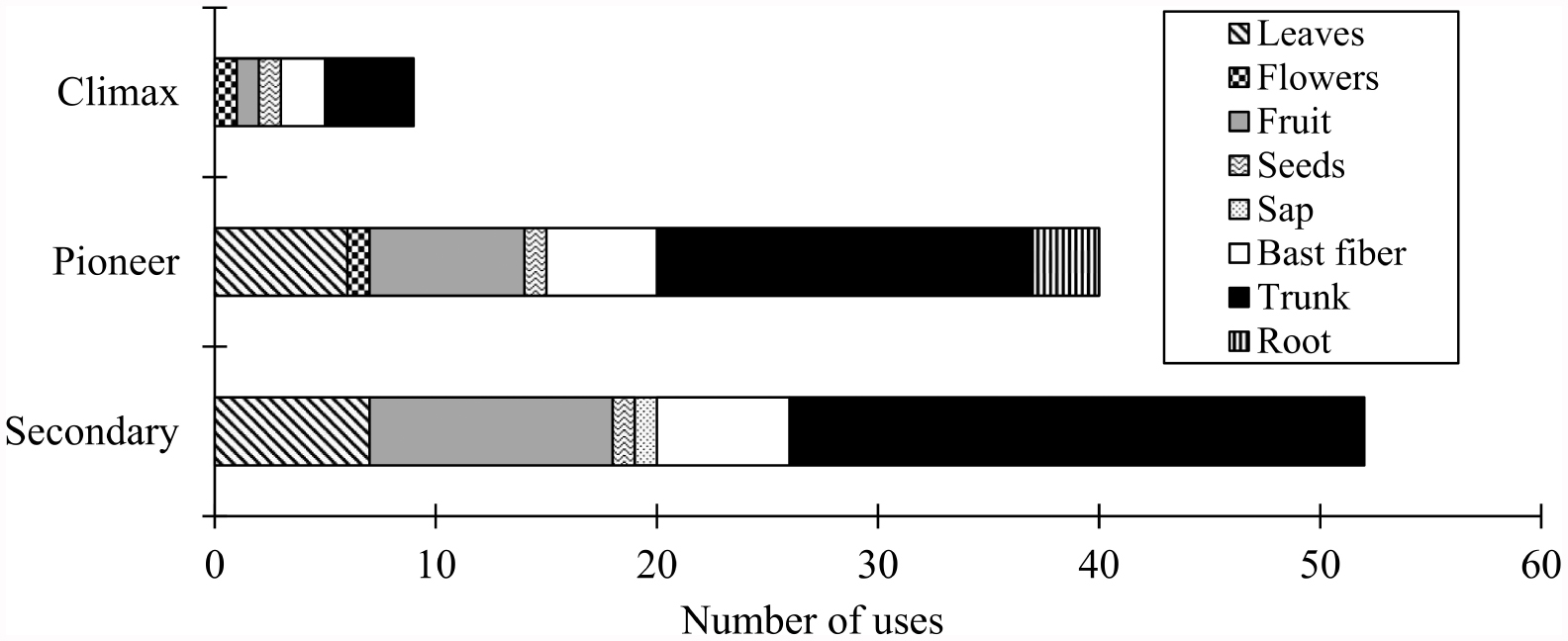
Distribution of the number of plant uses by ecological groups in the Ipiranga quilombo community, Paraíba State, Brazil.
Use Value
Use values by family ranged from 0.5 to 7.625 (Table 2). The leading family was Leguminosae, followed by Anacardiaceae (UV = 5.62), Myrtaceae (UV = 2.75), Arecaceae (UV = 2.25), and Lecythidaceae (UV = 2.25).
For species, the UV observed ranged from 0.1 to 2.25 (Table 2). The species with the highest UV was Anacardium occidentale (cajueiro), the cashew, a plant cited by six of the eight informants. The root is the only part of this plant not utilized, as the other parts of the plant are widely used for food, medicine, and fuel. In addition to its local importance, the cashew is also of conservation interest because it is a Northeast Brazilian native species (Clement et al. 2010).
Other species, both exotic and native to the area, also showed high relative importance locally (UV > 1.0; Table 2), including Mangifera indica (mangueira; mango), Schinus terebinthifolia (aroeira; Brazilian peppertree), Elaeis guineensis (dendê; palm oil), Handroanthus impetiginosus (pau d'árco), Eschweilera ovata (biriba; wild sugar-apple), Lecythis pisonis (sapucaia; cream nut), Apuleia leiocarpa (gitaí; garapa wood), Bowdichia virgilioides (sucupira), Abarema cochliacarpos (barbatimão), Guazuma ulmifolia (mutamba; West Indian elm), Psidium guineense (araçá; strawberry guava), Cupania impressinervia (cabatimã), and Talisia esculenta (pitomba). Although each of these species is used in different ways for food, medicine, and technology, they have in common that they are sources of wood. The lowest UV (0.1) was recorded for Erythroxylum sp. (murta brava) used for firewood; Psidium oligospermum (erva doce do mato) used in the construction of wattle-and-daub houses; Piper marginatum (mavaísco) a medicinal plant whose root is used to treat rheumatic pain; and Maytenus erythroxyla (remela de velho) and Annona salzmannii (jaca do mato; beach sugar apple), which are considered “forest fruits” and consumed only occasionally during walks in the woods.
Conservation Priority
Of the 64 woody species available in the forest remnant, 16 species fell into category 1, 41 into category 2, and seven into category 3. Category 1 includes individuals that require special attention in their management and conservation. In this category, the species Handroanthus impetiginosus, Talisia esculenta, Buchenavia tetraphylla (imbiribiba), and Bowdichia virgilioides (sucupira) scored higher than 93 on the CPI, with the last species achieving the highest possible score on this index (Table 2). Except for B. tetraphylla, the remaining species are widely used, and are described by most informants. Another characteristic noted in these category 1 species is the prevalence of trunk and/or bast fiber extraction, a practice observed for various individual specimens during the field survey. Long term use of these species may contribute to the low density recorded in the phytosociological survey, which can reflect the ongoing process of extraction over years.
Category 2 represents an intermediate class of conservation priority, in which alternative means of extraction are recommended to avoid future harm. This category included the greatest number of species in the study, notably including Casearia javitensis (café do mato), Eschweilera ovata, Lecythis pisonis, Albizia polycephala (tambor), Eugenia sp. (murta murta; Brazilian cherry), Alseis pickelii (canela de veado), Calophyllum braziliense (gulandi carvalho), and Genipa sp. (jenipapo manso). Knowledge about the use of E. ovata is widespread, being described by half of the informants; the other species are less well known, but their low densities in the phytosociological survey may account for their designation in category 2.
Category 3 includes individuals whose extraction poses no risk to the species. This category contained the smallest number of species, including some whose uses are not widely known, such as A. salzmannii and M. erythroxyla, and others that are well known, such as Mimosa caesalpiniifolia (Sabiá), Tapirira guianensis (cupiúba), and Hirtella racemosa (azeitona roxa), which are common in the area despite the extraction of their wood, showing the highest densities recorded in this study.
Analysis showed a significant correlation of the CPI results with UV (rs = 0.4413; p = 0.0003) and with relative density (rs = –0.3777; p = 0.0021). In general, the plants with the highest CPI values are those with the greatest use value and lowest density in the forest inventory.
Kruskal-Wallis tests showed no difference among the categories of succession with respect to the UV (H = 4.3552; p = 0.1133) nor with respect to the CPI (H = 3.6342; p = 0.1625). This was probably due to small number of climax species impacting the analysis.
Discussion
Most of the woody species used by the Ipiranga community are considered moderately threatened because of their use and availability in nature. However, 25% of these species deserve substantial attention due to the manner and frequency of their use, as they fall into the category of high risk. All woody species inventoried were cited by respondents and thus are known by members of the community. This pattern was also observed by Cunha and Albuquerque (2006), indicating that, even under pressure from urban culture, knowledge about native plants survives.
Regarding the ecological groups, few species of woody plants typical of climax forests were observed in the area; the largest group of useful plants were those found in secondary forests. This pattern differs from the pattern suggested by Reis (1996), who found that most useful native plants belonged to climax species. In the present study, secondary plant species were the most prevalent and the most frequently cited for uses related to the extraction of trunk tissues. Thus, selective extraction of these trees can hinder the establishment of some species, directly affecting forest regeneration (Crepaldi and Peixoto 2010).
The use category technology had the greatest species richness in the Ipiranga community. This is an important category in other studies conducted in rainforests. In a community descended from Africans in Colombia, technology uses were the leading category (48%) (Galeano 2000). This category also stood out for its importance to a rural community in the Atlantic Forest region of the state of Minas Gerais, in southeastern Brazil (Soldati et al. 2017), and in a community of the Atlantic Forest region of Pernambuco state, where technological uses were surpassed in importance only by construction (Cunha and Albuquerque 2006).
The use categories reflect, to a certain extent, the importance that each community attaches to the forest (Galeano 2000), as well as the demands for forest resource use in different places (Soldati et al. 2017). In this study, the frequency of technological uses can be explained because the community maintains the customs of their forebears through the fabrication of handicrafts, musical instruments, and tools for daily use. Because of this, the community also attracts tourists, welcoming visitors every day and during a cultural heritage dance celebration held at the end of each month. On these occasions, artisans' handicrafts are on display and available for purchase. Another feature that contributes to the frequency of technological uses for woody plants is that 20% of the quilombo's residents still make their living from farming (Beltreschi et al. in press), so wood continues to be used to make support stakes for the crops as well as handles for hoes and other agricultural implements.
Another pattern that the Ipiranga quilombo community has in common with other rainforest communities is the scarcity of species with medicinal use (Crepaldi and Peixoto 2010; Cunha and Albuquerque 2006; Galeano 2000; Soldati et al. 2017). The infrequency of medical use may be because only woody species were included in the sample (Cunha and Albuquerque 2006), while most of the plants used for medicinal purposes in the Atlantic Forest are herbs (Beltreschi et al. in press; Voeks 1996). Woody plants with medicinal applications are more commonly found in dry forests (Soldati et al. 2017).
Although woody plants have many other uses in the Ipiranga quilombo, in general, their most important uses involve destructive harvesting of the plant for the extraction of its trunk, as was also noted for other rainforest communities (Crepaldi and Peixoto 2010; Cunha and Albuquerque 2006; Galeano 2000; Soldati et al. 2017). While this extraction process can represent a threat to the survival of the plant community, expeditions into the forest in search of wood are infrequent, limited to specific occasions or when the need arises to gather raw material for making utensils and/or firewood for cooking.
The family Leguminosae showed the highest use value (UV = 7.625). Leguminosae stands out in other rainforest communities in the categories of technology, construction, and fuel (Cunha and Albuquerque 2006; Galeano 2000; Soldati et al. 2017). The family Leguminosae was also found to be important in the Miombo forest in Mozambique, with greater prevalence in the handicrafts category (Bruschi et al. 2014). There, tree species belonging to this group are dominant in the Miombo forests and produce high-quality wood that is useful for building houses and for domestic uses (Bruschi et al. 2014). The emphasis on this family in the Ipiranga community may be because it included the highest number of inventoried species and its uses are widely distributed among various categories that are frequently cited as important to the community's subsistence, such as technology, construction, and fuel (Galeano 2000).
Among the species sampled, the cashew (A. occidentale) registered the highest use value (UV = 2.25). This is because the plant is widely known by informants and has multiple uses that take advantage of practically all its parts. This relation between use value and types of uses can also be observed in other studies, such as Cunha and Albuquerque (2006), in which the species with the highest use values also had many different types of use, with an average of 18.3 uses per species.
Notably, the most important families and species in this study (UV ≥ 1.0) presented uses related to wood and a use value significantly greater than would be predicted by their densities in the forest inventory, as can be observed for individuals belonging to the families Anacardiaceae and Leguminosae. These results suggest that the most important species at the study site may have been selectively harvested over the years, resulting in a reduction in their populations. This was also observed by Galeano (2000), who found that the selective extraction of the most important plant family in his study (Lauraceae) may have caused a decline in its availability. However, these data should be interpreted with caution, as there are families and species that may be useful but naturally rare (Galeano 2000).
Another important outcome of this study is that the use value methodology employed does not distinguish between current and potential use (when the community possesses the knowledge but does not necessarily use the plant at that moment) (Lucena et al. 2012). This distinction is important because some forest resources may be recalled by interviewees as potentially useful but not be currently utilized; in this case, the species would have a Potential Use Value (UVp), in contrast to the plants that are recognized and used continuously, which have a Current Use Value (UVc) (Lucena et al. 2012). The use of UVc could have altered the list of the most important species locally by determining more precisely which plants in the area are being used currently.
Conservation Priority
None of the species classified in category 1 are on the threatened list in the Red Book of Brazilian Flora (Martinelli and Moraes 2013). However, B. virgilioides and H. impetiginosus are considered non-threatened species of interest for research and conservation, with a market value and an observed or predicted decline in population (Martinelli and Moraes 2013). This pattern was also found in the present study, as these species had a high UV (> 1.0) and a low density in the phytosociological survey, with six and 12 individuals/ha, respectively. The bast fiber and trunk of these species are used for medicinal purposes. Bowdichia virgilioides was cited by all informants and its location was known to all. These features characterize H. impetiginosus and B. virgilioides as among the species with the highest CPI in the study. Notably, when poorly managed, species used for their bast fiber can experience grave risks to their conservation. Considering the scarcity of these species and the damaging way the fiber is extracted from the few existing individual specimens, continuous harvesting will cause them serious harm. Other studies that have applied the CPI to the Caatinga (semi-arid) biome in Brazil have found similar patterns, with the principal threat to woody species with medicinal uses generally posed by extraction of perennial structures, such as their bark, bast fiber, and roots (Albuquerque et al. 2011; Lucena et al. 2013; Oliveira et al. 2007; Ribeiro et al. 2013).
In an area of the Atlantic Forest managed by a quilombo community in Espírito Santo state, the species with the highest CPI values were those extracted by logging for construction lumber or firewood (Crepaldi and Peixoto 2010). These uses were also described for B. virgilioides and H. impetiginosus, which supported their inclusion in the highest threat category.
Species that were rarely cited by informants and had low density in the forest inventory are found in the highest threat category, such as Cordia superba (cocão) (UV = 0.5; ReD = 0.24), Maytenus erythroxyla (remela de velho) (UV = 0.6; ReD = 0.79), Tocoyena sellowiana (UV = 0.6; ReD = 0.76), and Coutarea hexandra (quina-quina) (UV = 0.7; ReD = 0.48). However, Albuquerque et al. (2011) emphasize that, although this classification system is a practical tool for decision-making, one should be cautious about interpreting the results, in that the CPI calculations tend to assign a greater risk to species that are scarce locally. The availability of a plant in nature is often related to the species' intrinsic characteristics, bearing no direct relation to its overexploitation, as observed in these cases. On the other hand, the fact that a species may have many potential uses does not mean they are all active and shared by all users, making it necessary to carefully study the dynamic of the species' use locally (Albuquerque 2001; Lucena et al. 2012). In these cases, this classification may be explained because the CPI tends to overestimate the rarest species in the adult vegetation, which does not necessarily mean these plants are at high risk of local extinction. Such exceptions were also observed in a study by Bruschi et al. (2014), in which some species scored high in the CPI but had low Use Value and low density in the forest survey. Thus, the data presented here serve as an alert that some species used by the Ipiranga community should be extracted in a way that takes their biological and phytosociological aspects into consideration.
Similarly, the type of use can also affect this classification, with woody plants having high UV but scoring lower on the CPI (Bruschi et al. 2014). This can be explained by most of these plants being used in relatively sustainable ways, involving only the consumption of their fruit (Bruschi et al. 2014) or use of their leaves. An example is Psidium guineense, which was observed to have a high use value (UV = 1.125) and preference for the use of leaves and fruits, even though the trunk also has a potential, though untapped, utility. On the other hand, the present study found species with high UV such as Mimosa caesalpiniifolia, Tapirira guianensis, and Hirtella racemosa, which, despite the trunk being extracted in ways that are harmful to the species, were present in large numbers, having the highest densities in the phytosociological survey and the lowest CPI scores. This indicates that, despite intensive use, these species are fast growing and resilient, even under pressure from extraction.
The extraction of exotic plants by the Ipiranga community does not need to be controlled, as observed in the case of sabiá (M. caesalpiniifolia). Despite this pioneer species having important timber use to the community, sabiá shows high density population and quick growing capacity (Carvalho 2007). As an exotic species in the Atlantic forest (Carvalho 2007), it is widely distributed in the fragment. The traditional use can be an efficient way to control this species's population, helping the maintenance of native species and also by reducing the extractivism of the local native flora.
Thus, although the results of this study indicate a significant correlation of the CPI with the UV and with relative density, the degree of threat to the species indicated by the CPI should be interpreted on a case-by-case basis to avoid overgeneralization of the results. The reproductive capacity of the species should also be considered, including the production and dispersion of seeds, as these are very important to population dynamics and should be considered to maintain sustainable harvesting of plants (Bruschi et al. 2014).
Regarding the species B. virgilioides and H. impetiginosus in the higher risk category, although it was not possible to determine whether all the uses attributed to these plants were current (differences between Potential Use Value and Current Use Value [Uvc] were not observed, as proposed by Lucena et al. [2012]), these plants are well known, have a low density, and appear to have been overexploited in field observations. These factors justify their inclusion in the locally threatened species category because they require concerted effort for their management and conservation.
Conclusion
Based on the CPI calculations, this study showed that 25% of the plants utilized by the Ipiranga quilombo community need high priority for conservation, which will require changes in their extraction methods and frequency of harvesting. The results also indicate that initial conservation efforts should focus on H. impetiginosus and B. virgilioides, as these species have the highest CPI scores, occur in low density, and are used in ways that involve the extraction of bast fiber and wood.
Most of the plants (64.06%) have intermediate conservation priority (category 2), and deserve to have attention paid to the extraction process to avoid future harm to its populations. Some of these species are in this category because of their low density. Few species (10.93%) are suitable for extraction with limited to no restrictions. Some exotic species classified in this category are widely distributed and their use can reduce the harvest pressure on native species.
Additional studies are needed to describe the reproductive biology of the inventoried species, because seed production is directly related to the capacity of community resource use. There also needs to be analysis of the harvest frequency and extraction quantities for sensitive species. This will help define the most appropriate means for managing and conserving local forest resources.
The Ipiranga community has to be directly involved in decisions about forest management. The use of forest species is part of the cultural history of the community and it is very important that sustainable practices be implemented. This is important because the community lives within an Atlantic rainforest fragment, which is an endangered biome that is under protection by Brazilian environmental law (Brasil 2006). The environmental management agencies (mainly the Brazilian Institute of Environment and Renewable Natural Resources [IBAMA] and the State Secretary of Environment) should invest in collaborating with traditional communities but should also work to respect their knowledge of natural resources.
Footnotes
Acknowledgments
We thank the Ipiranga community. The data presented here were part of the Master's Dissertation of Fernando Vieira Rocha in the Programa de Pós Graduação em Desenvolvimento e Meio Ambiente/ UFPB/ Brazil. Fernando Vieira Rocha received a scholarship provided by the Coordenação de Aperfeiçoamento de Pessoal de Nível Superior (CAPES).