







Abstract
We documented harvesting, food preparation, and toxic risks of the poisonous chamal cycad, Dioon edule, in San Luis Potosi state, Mexico—one of a handful of places in Latin America where cycad eating persists. In Xi'iuy ethnic communities of the Pamería region, cycad consumption has long been intimately associated with cultural identity. The chamal food preparation process is protracted and difficult. Cooks seek to fully eliminate deadly toxins while achieving a pleasing taste and satisfying appearance in their cycad food products. Correct preparation is tested by a variety of methods difficult for amateur cooks to master. The complexity of the chamal culinary process, along with the ease of procuring foods more agreeable to the palate and less dangerous, out-migration of younger people, and preference for processed foods are some of the key factors that contribute to erosion of knowledge and use of this ancient wild food resource.
Introduction
Erosion of knowledge about wild food plants in Indigenous societies is a major concern in diverse geographical regions, and nowhere more so than in Mexico (Beltrán-Rodríguez et al. 2014; Benz et al. 2000; Sujarwo et al. 2014; Turner and Turner 2008). Multiple challenges to the preservation of traditional foodways incorporating diverse wild ingredients exist, and foremost among these is economic development leading to improved access to a vast array of processed foods combined with the heightened status that such foods confer. Conversely, in long-marginalized cultural groups, whose traditional practices are stigmatized, the consumption of wild foods, regardless of their numerous health benefits, can be a marker of “backwardness” and other undesirable cultural traits. Modern people eat modern food, as the thinking goes. The situation of abandonment of wild foods is particularly acute with plants that are naturally harder to find in the wild, that grow in remote settings, or, even if they are not uncommon, are difficult or even dangerously toxic to process.
A combination of these factors afflicts cycads, among the world's most toxic and most threatened plants. Mesoamerican cycads are still eaten with gusto in a few places—and local communities celebrate the tradition—despite numerous forces that have lined up to eliminate the practice (Bonta et al. 2006, 2019). This is even more impressive when one considers that faulty cycad preparation can result in the consumer's sickness or even death. As a dangerous plant, then, the cycad provides a window to understanding both the reasons for abandonment of wild foods and the factors that invite retention of traditional foodways.
Our study provides the first detailed ethnographic account of the complete process of chamal harvesting and cooking among the Xi'iuy Indigenous communities of San Luis Potosi, Mexico (Figure 1) as a way of better contextualizing the erosion and loss of knowledge of this important traditional food. Our study reveals a deep and sophisticated knowledge of chamal and an acute awareness of the forces gradually coalescing to consign cycad eating to oblivion.
Cycads
Cycads (order Cycadales) are woody, dioecious gymnosperms that originated in the Permian and reached their height in the Mesozoic. Cycad trunks are covered by cataphylls (leaf bases and scales) and leaves are typically pinnate, spiraling around the trunk and forming a crown where they alternate with cataphylls. Mature male cycads produce microstrobili (male cones) formed by sporophylls (pollen-bearing scales), while female cycads produce megastrobili (female cones) with ovules. The gametophyte (starchy interior) of the cycad seed is covered by a paper-thin layer, the endotesta, encased in a woody sclerotesta. The sugary, fleshy, and brightly colored sarcotesta (outer seed covering) is eaten by mammals and birds (Norstog and Nicholls 1997; Whitelock 2002; Yáñez 2006).
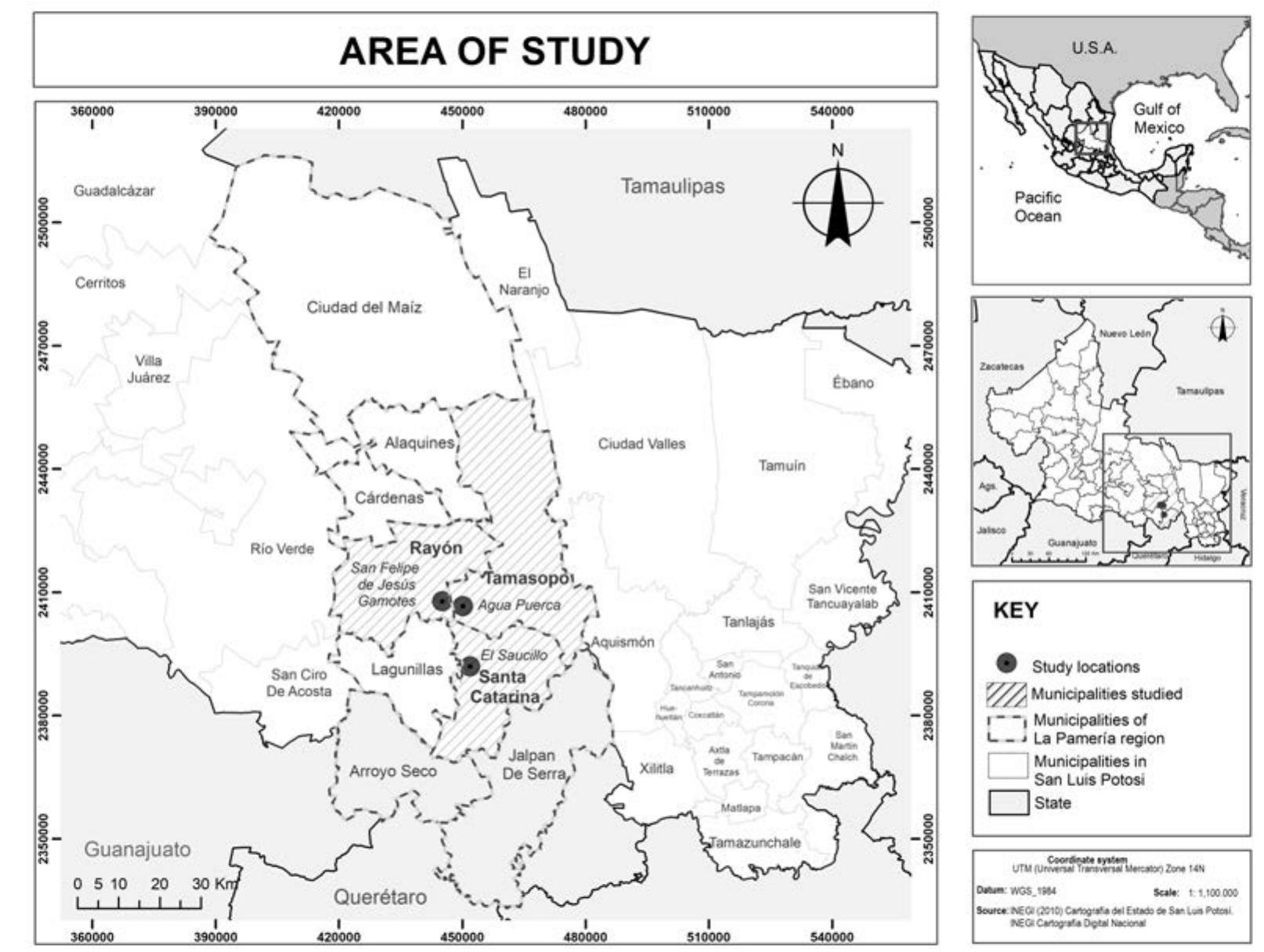
Study area.
Uses of cycads for food have been documented in numerous places around the world. In Guam, India, Malaysia, the Philippines, and Indonesia, the seeds of Cycas circinalis and related Cycas species have been widely consumed in the past and, in some places, to the present (Saneesh and Varghese 2007; Smith 1951; Thieret 1958; Yang et al. 1966). In India, cycad seeds are detoxified through a process involving smoking, drying, and repeated rinsing; a powder is produced that is baked into a type of bread (Saneesh and Varghese 2007). In Guam, cycad seeds were traditionally soaked in water for an extended time, dried in the sun, ground, and stored (Yang et al. 1966). According to Thieret (1958), seeds in New Caledonia were boiled, while, in the Comoros Islands, they were fermented.
Numerous cycad food processes and products have been recorded among Aboriginal peoples in Australia. Thieret (1958) notes that Cycas media seeds, after drying in the sun for three or four hours, are placed in small, woven bags that are suspended in streams or pools for four to five days; once removed from the water, the seeds are left to sit for another three or four days, and then ground into a fine powder, from which various baked foods are derived. Asmussen (2011) reviewed Aboriginal uses of all cycads in Australia, as recorded in historical literature, and distinguished three main types of seed detoxification, as previously defined by Beck (1992): brief leaching in water, prolonged leaching in water, and aging. Beck (1992) asserted that detoxification methods differed in terms of time and energy inputs and in terms of types of food products that could be produced. According to Asmussen (2011), the diversity of methods could be explained by differing taste preferences, storage capacity, and availability of water.
The order Cycadales contains 356 tropical and subtropical species, and Mexico has 61 of these (Calonje et al. 2019). Dioon edule, one of several Mexican cycads locally known as chamal (unless otherwise noted, we use “chamal” to refer to this species henceforth), ranges from San Luis Potosi (SLP) (see Figure 1) southward to central Veracruz. Chamal is arborescent, though sometimes in dwarf form, and has between eight and 50 leaves. Individual plants are estimated to live more than 2000 years (Vovides 1990). Male plants develop conical, cylindrical, or semi-cylindrical microstrobili (Vovides 1999; Yáñez 2006). Its natural habitats include evergreen or deciduous tropical forest, as well as Quercus oak forest and scrub between 500 and 1500 meters above sea level, thriving in well-drained limestone soils with low nutrient content (Soto and Sánchez 2002). Chamal grows commonly as an understory plant in steep gullies and on rocky slopes and cliffs (Vovides 1999; Wilson 1911), tolerates diurnal temperature fluctuations from 16.6 to 29.4 °C, and can weather long periods of drought (López Ovando 2002).
Cycad Consumption in Mexico and the Pamería
For thousands of years, people have utilized cycads in Mexico for purposes ranging from ritual use of the leaves to consumption of carbohydrate-rich staple foods, such as tortillas (griddle-cakes) and tamales (steamed breads), derived from megastrobilus, gametophytes, sarcotestas, and stem starch (Bonta et al. 2019). The first published reference to cycad consumption in Mexico is from a sixteenth century botanical treatise and natural history describing teocintli or tepecintli (Ceratozamia fuscoviridis of Huayacocotla, Veracruz, a species still known to Nahua peoples by this name) (Bonta et al. 2019). Mexican Dioon cycads are mentioned as sources of starch by the mid-1800s (Lemaire 1855). For example, seeds were used to prepare tamales in Xalapa, Veracruz, either via boiling or toasting (Standley 1920; Wilson 1911). Chamal (Dioon angustifolium, closely related to D. edule) is a food plant in Nuevo León (Salinas Rodríguez 2012; Sifuentes Ortiz 1983). There, sarcotesta flour is utilized pure or mixed with cornmeal or wheat flour for tortillas. Formerly, it was consumed with frequency, especially during droughts and other periods of food scarcity. In the Sierra Gorda of Queretaro state, chamal seeds are cooked with lime for tamales (Escobar Ledesma 2000; Zapata Avendaño 2018). The Southern Pame (Xi'iuy or Re Nuye Eyyä) (Villanueva and Butragueño 2014) in Queretaro consume chamal in times of scarcity; the epithet enchamalados (those poisoned by chamal) is used locally to denigrate them (Flores González 2014).
The Xi'iuy ethnic group (Northern Pame; also Xi'úi, Xiui, Xi'oi, Xiyui) (Villanueva and Butragueño 2014), with whom we collaborated, has inhabited the so-called Pamería region (Figure 1) of southeast SLP—the western foothills of the Sierra Madre Oriental—since Pre-Columbian times. Today, mixed settlements of Xi'iuy and mestizos are located in the municipalities of Santa Catarina, Rayón, Tamasopo, Alaquines, and Ciudad del Maiz. The Xi'iuy ranch cattle and practice subsistence farming, gathering wild plants to supplement their diets when crops are insufficient. One of their chief items of wild sustenance has long been the chamal cycad (dameu' in the Xi'iuy language). Its highly toxic seeds (gametophytes) substitute for maize and are processed in a similar way to this cereal grain (Chemin Bassler 1984). In La Palma and Santa María Acapulco, dameu' often substituted for maize in critical times of crop loss, when famine loomed, and was popularly believed to bear abundant female cones when maize and bean crops failed (Chemin Bassler 1984, 2000). As recently as 1994, dameu' still performed this emergency function—local people relied on it in the aftermath of Hurricane Gert, when critical food scarcity occurred (Prieto 2000).
To obtain chamal, Xi'iuy customarily traveled to remote locations, collected seeds, and brought them home for processing and storage. Cooked chamal was ground on grindstones, and the resulting cycad meal molded into tamales. These they wrapped in maize leaves and cooked in clay pots (Gibson et al. 1963).
Methods
Over four days in May 2008, we initiated field research with visits to various localities in Rayón, Santa Catarina, and Tamasopo municipalities. These visits included reconnaissance of wild D. edule populations and 17 exploratory interviews on consumption, preparation, and harvesting in six small communities. Once familiarized with the cultural context of chamal consumption, we contacted local authorities and discussed our interests and possibilities for in-depth research.
Following selection criteria corresponding to ethnic make-up, location, safety conditions, and persistence of the utilization of chamal, we focused our study on three Pamería communities: Agua Puerca in Tamasopo municipality (343 Xi'iuy language speakers out of 375 inhabitants), San Felipe de Jesús Gamotes (Gamotes), Rayón municipality (213 inhabitants with eight Xi'iuy language speakers), and El Saucillo, Santa Catarina municipality (61 inhabitants, no Xi'iuy speakers) (Figure 1). These are located on limestone slopes with clayey soils from 700 to 1090 meters above sea level. Oak forest, submontane scrub, and lowland tropical dry forest are interspersed with cattle pasture and agricultural clearings for maize, beans, and other crops. The densest chamal populations are found within Quercus oak forests, but cycads also grow sparsely in submontane scrub, tropical dry forest, maize fields, and pastures.
We garnered free, prior, informed consent for all interviews. Prior to initiating interviews, we contacted local authorities to request permission to perform research. With each potential interviewee, we requested participation, described the project, and explained that there would be no harm to the participant or to the community.
In our study locations, between May and November 2009, we performed semi-structured interviews with people familiar with chamal harvesting (Supplementary Table 1). In all three communities, we were able to interview most individuals who took part in this activity. We accompanied male cycad collectors to wild populations to document exactly how megastrobili are selected and harvested. To understand the food preparation process, we accompanied four expert female chamal cooks through the complicated process of gametophyte extraction, gametophyte detoxification and cooking, and preparation and consumption of cycad tamales. Parallel to this, we gathered socioeconomic data on the three communities we focused on, and interviewed collaborators in depth about their perceptions of knowledge erosion vis-a-vis chamal, as well as ways that ranchers deal with enchamalado, cycad intoxication, in their livestock. In addition to written records, we took photographs and videos.
Results
Chamal Collecting
Collecting chamal is sometimes prefaced by two sayings that suggest how important chamal and the activity of harvesting it is for the Xi'iuy: “Que nos hace el temporal, ya tenemos maíz gordo [It doesn't matter if it doesn't rain, because we have fat maize (chamal)]” and “Vamos al maíz, al maíz de monte [Let's go pick some grain, but not maize, let's get chamal instead, the maize that grows in the wild].” As discussed in Bonta et al. (2019), close cultural relationships between maize and cycads are widespread in Indigenous cultures of eastern and southern Mexico. Cycads are typically believed to be ancient and sacred forms of maize and, sometimes, particularly in Nahua and Teenek Maya communities of SLP and Hidalgo, they are understood to be the ancestors of maize, and are protected in and around maize fields to provide strength and protection to maize plants.
We identified 43 collecting sites in three localities. The community that utilized the most collecting sites was El Saucillo (18), followed by Agua Puerca (15), and Gamotes (10). Collecting in remote sites is done chiefly by men, and only occasionally by women. Women prefer to collect in sites close to their communities or in pastures or cultivated areas. Collecting techniques, described below, varied little between sites. Collectors select their harvesting sites based on seed availability, access, and ease of transport. They typically utilize more than two collecting sites each and strict controls over access to the resource were not reported to exist. Overall, people prefer oak forests compared to submontane scrub or lowland dry forest. It is said that in oak forests, cones mature slower and the understory is shadier and more open—therefore, chamales are easier to access and the microclimate is preferable.
Collectors often evinced the beliefs that 1) if, in a given year, cones are abundant, then the following year they will be scarce; 2) an inverse relationship exists between the magnitude of the maize harvest and the abundance of chamal; 3) if, during the year, a large-grained hailstorm occurs, the next year there will be chamal, but if a small-grained hailstorm occurs, there will be maize but not chamal. We did not attempt to align these assertions with Western concepts of cycad ecology.
The collecting season runs from March to September, during which period chamal is most likely “ripe” (macizo, sazón, de punto) and megastrobili (bolas pachonas, bolitas, or conos) are abundant. Because cone dehiscence and subsequent natural gametophyte dispersal happens quickly, cone collectors must observe indicators of maturation closely to make sure they harvest the resource before this happens. Once at the site, collectors look for megastrobili with easily removable gametophytes. Some do daily inspections of changes in the appearance of sporophylls and scales, while others just guess which cones are ready based on prior experience. They remove cones by grabbing them with both hands and twisting them off the base (Figure 2). To open a cone, they place it on a bag flat on the ground and remove the stem by inserting a knife at the base. If the stem does not come off, the knife is inserted in the side. Then, the collector rocks the cone back and forth until it cracks open, after which they cut it apart. Then, they separate it into smaller pieces to ease the task of removing the individual seeds. So that the goma (cone mucilage) does not stick to their fingers, they bang the cone pieces together to make the seeds fall out. They remove the remaining seeds with their fingers, always avoiding touching the goma. If the collecting site is near a cattle pasture, they bury the cone remains to prevent their stock from contracting enchamalado—intoxication resulting from the consumption of raw cycad parts.
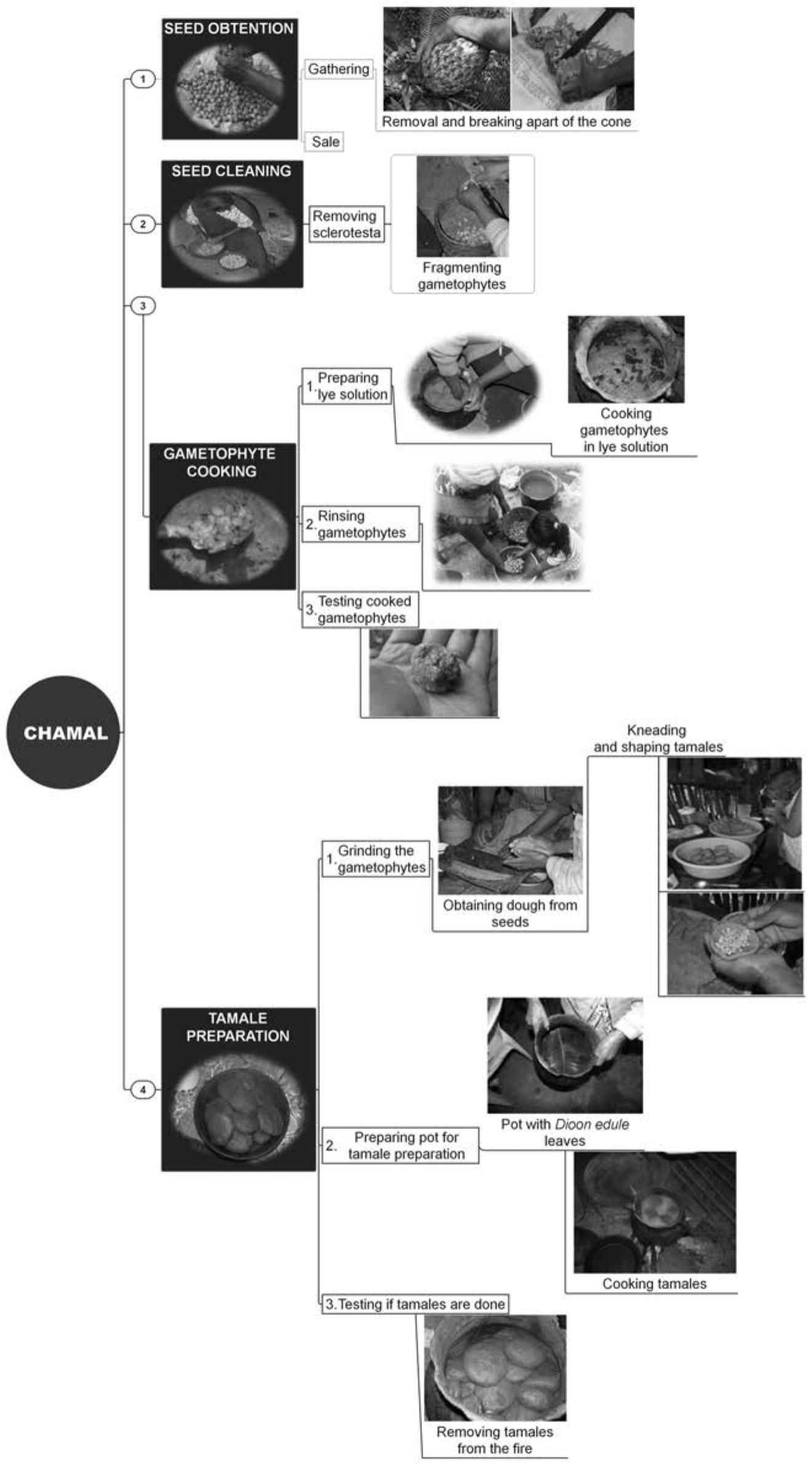
Steps in chamal harvesting and food processing.
Preparing Foods from Chamal
Historically, more parts of the chamal plant were used for food than at present. In Los Pocitos, one interviewee related that, long ago, it was customary to dice the central stem of the megastrobilus, mix the pieces with cane sugar, boil them in water, then eat them like camote (sweet potato, Ipomoea batatas). Nowadays, only sarcotestas and gametophytes are used. Tamales, atole, tortillas, and gorditas are made from both or from a mixture of the two. The sarcotesta, which lacks toxins, can also be eaten raw as a snack, with no evident ill effects (we have sampled it on various occasions). It can also be dried and then ground for tortillas, gorditas, or as an additive in cornmeal or chamal seed meal. The ground sarcotesta is mixed with piloncillo or salt to make a powder to which water is added. This is kneaded, and tortillas or gorditas are then prepared on the griddle.
For tamales de chamal—overwhelmingly the most important local cycad food (Figure 2)—gametophytes are classified according to their level of maturity as either tiernas (young) or maduras (mature). Those that are tiernas, recognized by the coloring of the sarcotesta, are obtained between March and May and should be eaten right away because they harden and dry out and cannot be stored. Mature seeds are obtained from May to September and can be stored for up to two years without loss of quality. Prior to storage, they are air-dried for two to three days, then placed in sacks in the shade or any dry place.
Even though the principal use of chamal tamales is local household consumption, on occasion, collectors sell them. During 2008 and 2009, they were usually sold in packets of five tamales at a price of 12 Mexican pesos when they contained revoltillo (egg with green chili) and 10 pesos without. During various times of the year, tamales are sent as presents to family members in the USA.
Tamale Preparation
Gametophyte Preparation
First, the sclerotesta is removed. People crack open fresh seeds with their molars and use small hammers and stones on dried seeds. When using their molars, they crack the sclerotestas in the middle, and when using tools, they crack them at the top. The extracted gametophytes are broken into two, three, or four pieces. The division depends on the preference of the cook, whose goal is the best possible absorption of the lejia (leaching solution), to most efficiently eliminate seed toxicity. Some cooks choose to discard the embryo to help avoid ending up with fibrous tamales.
Gametophyte Cooking
The gametophyte fragments are boiled in lejía (a leaching solution). In Saucillo, this process is known as pizcando el chamal. The lejía is a mixture of water with ash, water with lime, or water with ash and lime together. The type of ash used varies according to the natural resources available in the local area and the preference of the cook. The ash and lime should be fuertes (“strong,” i.e., causing the tongue to burn or sting), but not used to excess because the tamales can acquire a picoso (pungent) flavor with aftertastes of lime or ash. Interviewees mentioned the following species thought to be useful for obtaining ash: huizache (Acacia farnesiana), trompillo (Cordia boissieri), palo de arco (Lysiloma divaricatum), and ojanche (Flourensia laurifolia). However, the preferred ashes are from the oaks Quercus polymorpha and Q. laeta because they yield a greater amount of ash and impart adequate color, texture, and taste to the tamales. Chemin Bassler (2000) also refers to ash obtained from maguey fronds (Agave sp.). In El Puente and El Saucillo, it is thought that if the gametophytes are cooked in lime and water, the tamales will have a harder texture and a whitish coloration. In Agua Puerca and Gamotes, it is said that this leaching solution can impart an intense flavor of lime and may be harmful. Thus, the use of lime, ash, or both depends on a complex series of considerations taken by the cook: appearance, taste, facility of cooking, and availability of materials.
The lejía ingredients are mixed in a pot, which, preferably, should be clay because this material helps prevent overcooking and yields a stickier cycad meal. The pot containing lejía is placed on the fire until it boils, then the gametophytes are put in. After five to ten minutes, the pot is taken off the fire and let to sit to allow the gametophytes to cool and absorb the lejía. The length of this step ranges from 40 minutes to 4.5 hours and, during this time, the gametophyte interiors begin to turn a darker color, while their external coloration intensifies. Cooks in El Saucillo caution that water should not be added to cool the gametophytes. “Just let them cool naturally,” they say, because, if water is added, “el chamal se resfría,” rendering the gametophytes unusable.
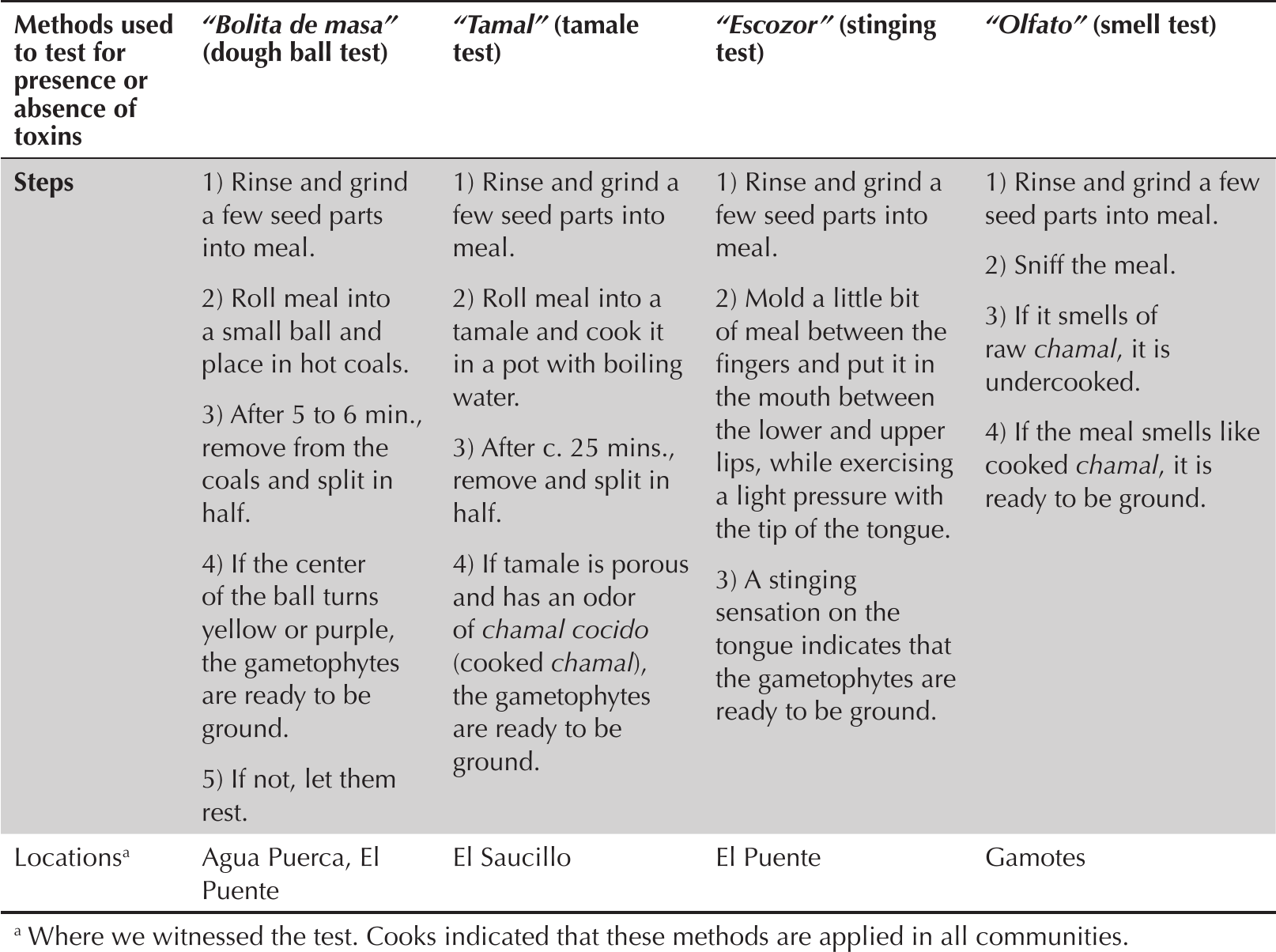
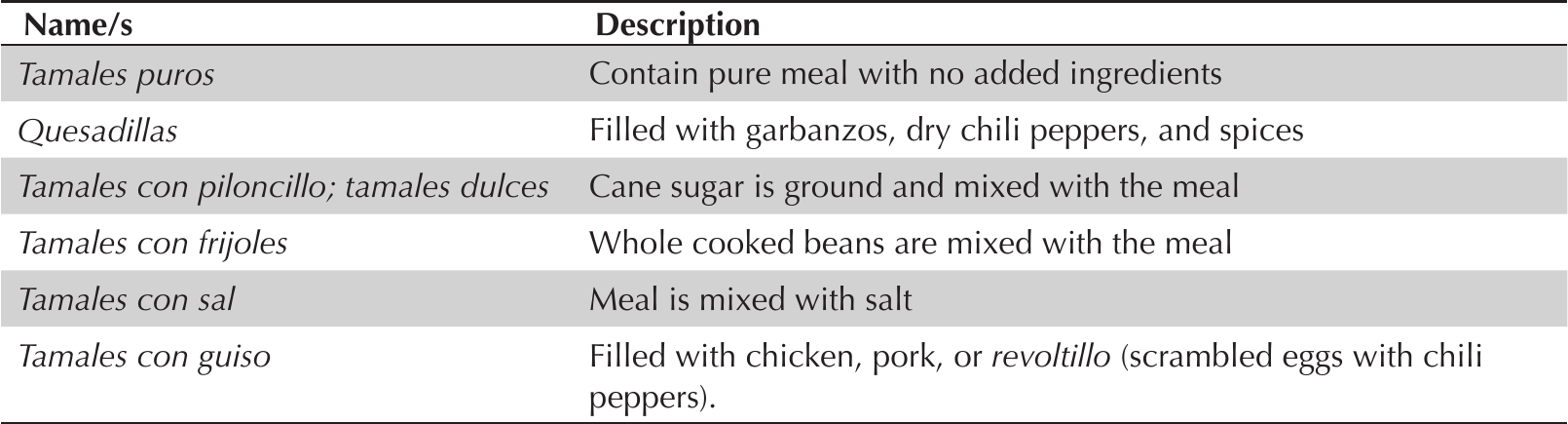
Once this step is completed, the cook tests the adequacy of the cooking and toxin removal is tested (que el chamal esté pizcado) using one or more methods (Table 1). This step is extremely critical in cycad food preparation, though rarely documented in the literature (e.g., Thieret 1958; Whiting 1963). When the cook is certain the gametophytes are fully cooked and detoxified, the excess lejía is removed and they move on to grinding to obtain the meal. The gametophytes are rinsed several times to wash off the lejía. Once this is completely removed, the gametophytes are ground either in a hand grinder, on a grinding stone, or both (first in the grinder and then on the stone). The latter technique improves the quality of the meal. The resultant meal is molded by hand to form tamales, portions of meal of ovoid or spherical shape from 4–8 cm long and 2.5–4 cm wide; filling is sometimes included (Table 2).
Tamale Cooking
Uncooked cycad tamales are placed in a clay or aluminum pot with boiling water. To keep them from sticking or acquiring a disagreeable flavor, olotes (corn cobs), leaflets of chamal, palm (Brahea sp.), or oak (encino) leaves are arranged on the base and edges of the container, while tamales are sandwiched between encino or carrizo (Arundo donax) leaves. If distinct types of tamales are prepared (for example, sweet as well as salty) they are cooked in different containers. By our measurements, the cooking times vary—we presume due to differences in tamale size and added pot ingredients—from 23 minutes to one hour and 24 minutes.
Cooks may use one or more of three ways to determine whether the tamales are fully cooked and ready to eat. If a tamale struck at its widest part with fingers or a spoon emits a hollow sound, similar to that of an inflamed intestine, then the cooking has been a success. If a tamale is hard, it is undercooked, but if soft, then it is ready to eat. When tamales rise to the top of the pot of boiling water, they are fully cooked.
Eating Tamales
After the tamales have been cooked successfully, the pot is taken off the fire and the tamales removed and placed in a separate container. They can either be consumed on the spot or left to cool. People prefer to eat them whole, straight out of the pot, but they can also be sliced and served on a plate with side dishes such as cheese and beans. Sweet tamales are consumed whole or in slices to accompany coffee. If tamales are not eaten right away, they can be preserved at room temperature for two to five days, and up to 15 days if refrigerated. They can be reheated in a microwave oven, in a pot with boiling water, or on a griddle, in slices.
Traditional methods used to determine whether cycad seeds have been adequately detoxified in the cooking process.
Types of chamal tamales.
Chamal Intoxication
Enchamalado—intoxication due to chamal consumption—afflicts humans as well as large domestic animals (Chemin Bassler 1984; Whiting 1963). In the case of cattle, toxic compounds, such as cycasin and BMAA, present in the leaves and young shoots of D. edule accumulate in the body, causing neurotoxicity, hepatotoxicity, and enterotoxicity. Symptoms include hind limb paralysis, respiratory failure, and death. Apparently, periods of limb ataxia alternate with periods of normalcy (Avendaño Reyes and Flores Gudiño 1999). According to our interviewees, enchamalado is most prevalent when cattle ingest the remains of chamal left after collecting or when new leaves, jilotes (microstrobili), and conos (megastrobili) are emergent. The new leaves emerge in May and June, the microstrobilus during July and August, and the megastrobilus from August to October (it is ripe for harvest the following year). To prevent enchamalado, cattle are penned up during periods of highest risk. Starting in April, ranchers begin moving their cattle from summer pastures to corrals, where they are penned at least from May to June, and sometimes all the way until October.
An animal that is enchamalado can recover if it is found in an early stage of affliction—that is to say, if it has not yet lost stability in its hind limbs. If in the early stages, mud plasters are applied to the tail bone or it is given capulín ash in water (species not identified). According to two informants, the meat of an animal that is enchamalado is flaccid because the goma (mucilage) of the chamal has accumulated in the hips and in the joints of the head and the neck, but, even so, it is edible and does not harm those who eat it.
In humans, intoxication can result from inadequate preparation of the leaching solution or insufficient cooking of the gametophytes. Symptoms of an intoxicated person may include headache, dizziness, diarrhea, vomiting, joint pain, weakness, nausea, stomach pain, and difficulty walking. To halt the effects of cycad intoxication, interviewees recommended several remedies to be consumed internally (Table 3).
Internal remedies for enchamalado in people.
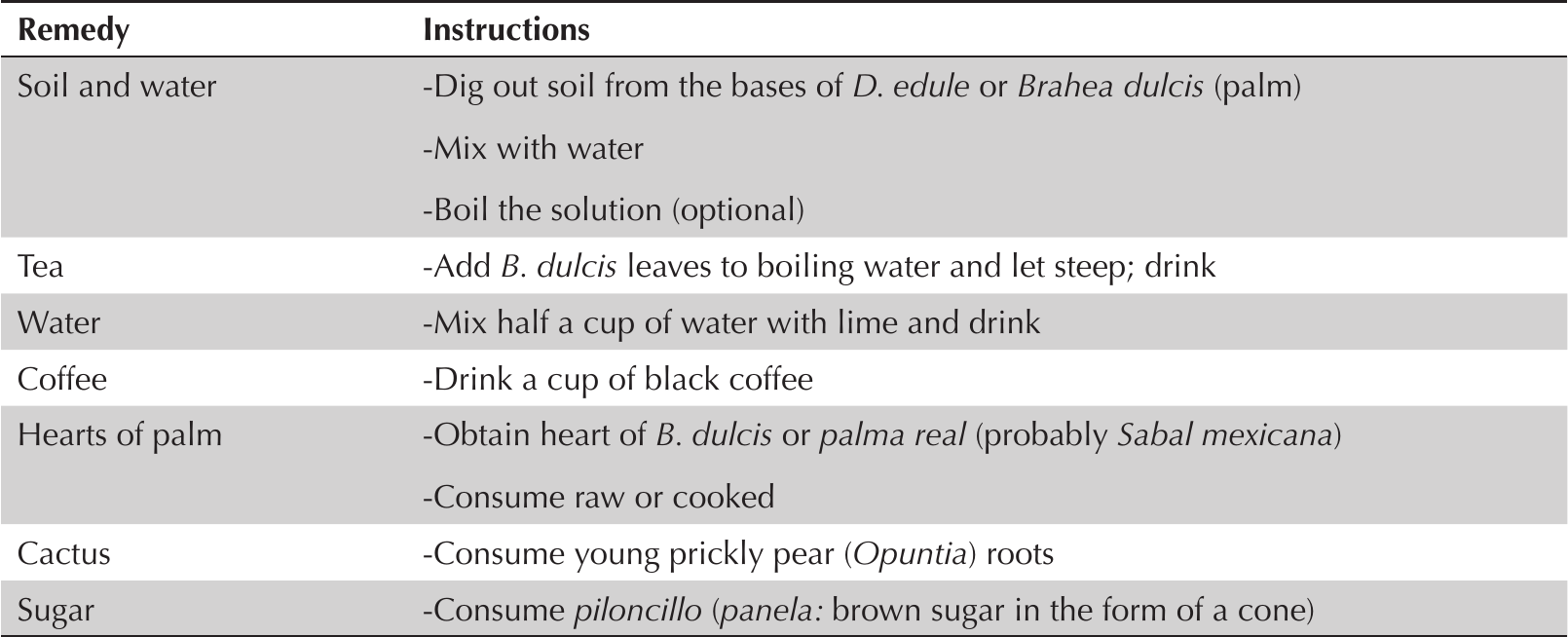
Enchamalado in humans can be prevented if cooking tests are applied in gametophytes and foods, lejía is used correctly and sufficiently, and raw gametophytes or raw wet meal are not consumed. Though traditional knowledge exists about the causes of enchamalado, as well as the most efficacious remedies for it, some women avoid cooking it at all out of fear of failure.
Chamal as a Famine Food
Extreme food scarcity no longer occurs in the Pamería. Of 49 people interviewed, the majority (82%) indicated that they eat chamal primarily because they like the taste, while only 18% indicated that they eat it out of necessity. According to our interviews, however, chamal collecting once allowed people to subsist in times of scarcity of maize and other plants when drought or excessive rainfall occasioned crop loss. Before the period of 1960–1980, according to 90% of the respondents, chamal was eaten primarily out of necessity, when other foods were scarce; only 10% of those interviewed felt that their ancestors ate chamal for its taste.
One consequence of chamal's former role as a famine food is that desperately hungry people would turn to dangerous consumption habits. In Gamotes, for example, three interviewees reminisced that, during a time of great hardship, some people consumed the raw mezote (stem), with fatal results.
Decline in Chamal Consumption
Among 49 people whom we asked about this, 43 (88%) stated that chamal consumption was more frequent in the old days (five interviewees said that consumption levels had not changed, and one said that it had increased.). The majority of informants (24/56%) reasoned that chamal consumption had declined because of an increase in the standard of living. Other reasons included a decline in people's taste for chamal (12%), difficulty obtaining cycad seeds (14%), and lack of knowledge about how to cook them (7%). When we asked if cooks had transmitted their knowledge to younger people, only 36% had done so in Agua Puerca, 25% in Saucillo, and none in Gamotes. The cooks gave five explanations for this rupture in knowledge transmission, with emigration of youth and disinterest predominant (Table 4).
Discussion
Similar to the plight of many wild plant foods worldwide (e.g., Łuczaj et al. 2012), our research documents the decline of cycad processing and consumption by the people of Mexico. In part, this is due to the Mexican federal government's classifying chamal as Endangered (SEMARNAT 2010). We note that this classification restricts, reduces, and even potentially punishes local consumption of the plant, even though it is often common, and harvesting methods appear to be sustainable (Chávez 2010).
Percentage of cycad cooks who affirmed given causes as reasons that they had not passed on their knowledge to younger people.
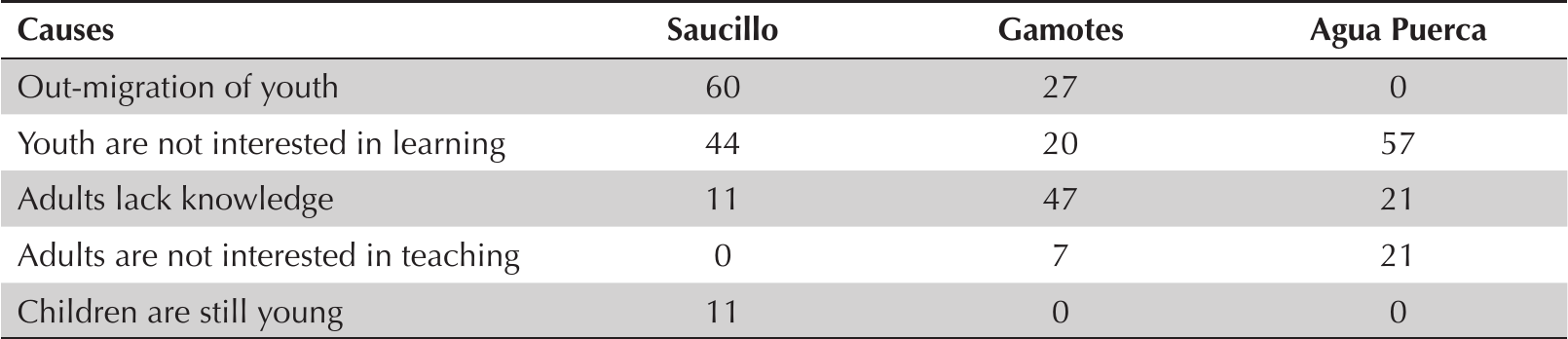
Based on our observations, a significant threat to chamal populations is the intentional destruction of individual plants on ranches where cattle have been afflicted by enchamalado. Though removal by cattle ranchers has been the driver of large-scale elimination of D. edule and D. angustifolium across much of their ranges in NE Mexico (Bonta et al. 2019), populations in the Pamería persist in substantial numbers. We suspect this is the result of the traditional practice of keeping cattle separated from cycads in pens—a practice undocumented elsewhere.
A complex combination of social factors also contributes to the diminishing of chamal's importance as a food source. The Pamería is one of the most marginalized and impoverished regions of Mexico; for this reason, the consumption of chamal has been, for better or for worse, intimately connected to the lifeways of its residents. The formerly exalted cultural value of chamal has faded as governmental anti-poverty policies have weaned people from dependency on local food resources. As in Brazil (do Nascimento et al. 2012), while such policies have certainly helped reduce absolute poverty, at the same time, they have led to the loss of ethnobotanical knowledge about food resources.
As part of this shift, traditional foods are being increasingly replaced by processed and non-local foods. Thanks to new vehicular access routes to rural Mexican communities, it is now common for processed foods once found only in urban areas to be consumed in remote localities (Bertran Vilá 2005). These foods typically replace traditional foods, such as cycads, that are difficult to prepare and associated with poverty and hardship. What is more, community stores have been implemented as a development mechanism for rural and marginalized Indigenous communities—part of the anti-poverty measures cited above. While they have the admirable function of guaranteeing low-cost products and permanent locations for food storage, community stores often relegate plant foods procured from traditional agriculture and wild gathering to secondary and insignificant status. In our study (Supplementary Table 2), “We can get other foods more easily” and “We receive government assistance,” accounting for almost a third of primordial reasons given for decline in chamal use, are closely related to this phenomenon.
Among Mexican Indigenous groups, the acquisition, consumption, and preference for outside, processed foods over traditional and particularly wild-harvested local foods is also a major way to demonstrate improved social position (Bertran Vilá 2005). In the context of the Pamería, Carbajal-Esquivel et al. (2012) found in Las Guapas, a Xi'iuy community in Rayón, that social values placed on the use of wild plant species (cycads and many others) as food were quite low. In the communities we studied, this was borne out in relationship to cycads in the responses to questions we asked about people's perceptions of diminished cycad use and reasons for lack of knowledge transmission. People overwhelmingly said they saw chamal as an optional food now as compared to the past, mostly harvested and eaten purely for its taste. Socioeconomic conditions had improved in the lifetimes of the respondents; there were more roads, more food options, and indications that, while plenty of cultural pride in chamal remains, it is mixed with memories of hardship from the “bad old days” (Supplementary Table 2). This is a common phenomenon in cycad eating in Mexico; Bonta et al. (2019) found that groups such as the Teenek Maya in eastern SLP state and Zapotec communities in Oaxaca have completely abandoned cycad eating and think of it is as an embarrassing and painful memory of a harsh past. People terminated interviews in Teenek communities rather than having to recall such penury.
Chamal's association with scarcity and poverty in the past, even to the level of famine food status, is a salient feature that appeared frequently in our interviews, coinciding with the findings of other authors (Bonta et al. 2019; Chávez 2010
The persistence of the consumption of famine foods is dependent on the continuing knowledge of their use, and vice versa. As Łuczaj et al. (2012) point out for Europe, disappearing memories of famine have signified disappearing knowledge of the plants utilized, and a similar phenomenon is evidenced in the communities we studied. Our data suggest that the knowledge chain of expert cycad cooks that has survived over centuries is at risk of disappearing. Knowledge of how and where to collect cycad seeds is an easier and less risky endeavor that can be more easily recovered or recreated if lost. However, in the case of chamal food preparation, knowledge loss is almost certainly irreversible due to the many steps involved and particularly the grave consequences for doing it incorrectly (Bonta et al. 2019). In our two decades of studying cycad consumption in Honduras and Mexico, among many hundreds of interviewees, we have only found one person who reported figuring out how to detoxify cycads on their own. In all other cases, the only means of doing so was learning directly from someone in their kitchen, who themselves had learned from an older relative.
Ways to overcome these problems of loss of traditional knowledge about cycad processing and consumption entail a combination of collaboration between local cooks and outside experts to clarify nutritional value and other tangible benefits, and an internal re-valuation in local communities of the central importance of chamal to Xi'iuy culture and history. Nutritionally, as Carranza-Álvarez and Carrillo-Inungaray (2017) describe, chamal does not differ substantially from maize and beans. That is, chamal has fewer lipids and carbohydrates but higher protein content than maize and is sufficient to meet daily requirements of iron and manganese. These authors even suggest that the process of chamal elaboration, a type of nixtamalization, may indeed be enriching its nutritional value. Much more collaborative work is required on the tangible contribution of cycads to the local diet.
In addition, understanding more fully that properly processed chamal is not a health risk would help promote its consumption. Bonta et al. (2019) never found a reported case of neurological damage in the numerous communities they studied, nor did we find any hint of this in our study. Bonta et al. (2019) suggest that the widespread idea in the Western scientific community that cycad eating is dangerous is due to several inconclusive and potentially flawed studies conducted in Guam of supposed permanent neurological damage (ALS-PDC or “Litigo-Bodig” disease) thought to have been caused by cycad eating; they indicate that nowhere in the world do local people associate eating properly detoxified cycads with long-term neurological effects.
We stress the necessity of working at the local scale in the Pamería to resolve the challenges incurred by the somewhat contradictory objectives of conserving Dioon edule populations (and the ecosystems they inhabit), preserving local traditions and knowledge of food preparation, and reducing effects on cattle. Notwithstanding factors that contribute to its diminished social status, chamal is still an emblematic species in the Pamería. In particular, the fact that some residents, particularly mestizos, send boxes of tamales de chamal to family members located in the USA suggests a persistent, marked contribution of this food to local identity. While substantial erosion of knowledge and practice concerning cycads is certainly occurring, it is nowhere as advanced in the Pamería as in many parts of Mexico, including the states of Nayarit, Jalisco, Tamaulipas, and parts of Oaxaca. In those places, combinations of the above-mentioned factors have driven cycad consumption to extinction over the last century (Bonta et al. 2019). A clear opportunity exists for the preservation of this millennia-old foodway. In a broader sense, the fact that cycad eating, a practice that has been extinguished in most of Mesoamerica, still prevails in the Pamería is a testament to the value of pride in local heritage that still manages to supersede the jettisoning of ancient foodways brought about by all the benefits and ills of modernization.
Footnotes
Acknowledgments
We would like to express our deepest gratitude to the selfless women and men who shared their experiences with us in the communities of the Pamería. We thank each cook and their family who patiently showed us the complete, step-by-step process of transformation of chamal into food. Equally, we would like to thank the collectors who took us along narrow, difficult paths to show us the collecting sites and the techniques used to obtain chamal. We also wish to thank the Instituto de Investigación de Zonas Desérticas de la Universidad Autónoma de San Luis Potosí for providing us space to work and transport to the study sites.