






Abstract
BACKGROUND:
Implant-based breast augmentation is one of the most frequently performed operations in plastic surgery worldwide, for aesthetic and reconstructive reasons. Capsular fibrosis is the most common long-term foreign body response after breast implant augmentation.
OBJECTIVE:
To compare the occurrence of capsular contracture in aesthetic and reconstructive-cancer patients, including those patients who received radiotherapy prior to breast reconstruction with implants.
METHODS:
We conducted a retrospective evaluation of 319 patients who underwent breast implant revision between Jan 2000 and Oct 2016. The patient group was comprised of 175 reconstructive-cancer patients and 144 patients who underwent operation for aesthetic reasons. The occurrence of capsular fibrosis, other complications and the time-period between implantation of breast implants and revision surgery (TP) was analyzed.
RESULTS:
For all 319 patients the mean TP was 7.9 years (7.86±0.45). The most common complication in all revisions was capsular fibrosis (65.1% of all revisions). In aesthetic patients with capsular fibrosis the mean TP was 11.9 years (11.89±0.95, p < 0.001). This mean TP was significantly higher than the mean TP of 6.1 years (6.13±0.56, p < 0.001) in breast cancer patients with capsular fibrosis. Preoperatively irradiated cancer patients had a mean TP of 6.2 years (6.17±0.95), compared to a mean TP of 5.1 years (5.07±0.19, p = 0.051) in non-irradiated cancer patients, which was not significantly different.
CONCLUSIONS:
We found that aesthetic patients exhibit a significantly higher mean TP compared to breast cancer patients, suggesting that reconstructive-cancer patients in general develop capsular fibrosis earlier. Despite the literature, we did not find a significant influence of preoperative radiotherapy on the occurrence of capsular fibrosis in reconstructive-cancer patients. Further clinical studies need to be conducted to identify methods to decrease the risk of developing capsular fibrosis.
Introduction
Silicone implants have been used for breast augmentation since 1964. Today, implant-based breast augmentation for aesthetic reasons is widely practiced and is the most frequently performed operation in plastic surgery worldwide.
According to the International Society of Aesthetic Plastic Surgery (ISAPS), there were 46,627 implant-based breast augmentations performed in Germany in 2015 [1]. However, the application of breast implants is not just limited to aesthetic surgery.
Breast implants also benefit breast cancer patients. Breast cancer is the most common malignant cancer in women worldwide [2, 3]. With an increasing incidence rate and decreasing average age of onset in women, the number of mastectomies followed by breast reconstruction after breast cancer has grown tremendously [4]. In 2015, more than 230,000 women in the USA were diagnosed with mammary carcinoma. A large part of these patients undergo mastectomy. Nowadays, primary breast reconstruction with breast implants immediately after mastectomy is performed frequently. Compared to delayed or secondary breast reconstruction, this one-staged procedure features several advantages. Patients report better quality of life and fewer psychological problems that are caused by the loss of their breasts [5–7]. In addition, the ‘direct-to-implant approach’ is more cost-efficient and presents a good alternative to the two-staged strategy, conferring advantages in terms of both follow-up care and long-term-survival [8].
In addition to the excision of carcinogenic tissue, radiotherapy constitutes an important part of breast cancer therapy. It helps to improve locoregional control and overall survival. In patients with advanced breast cancer (T3 or T4 with positive axillary lymph nodes), radiation is an integral part of the treatment regimen [9, 10]. Despite its benefits, radiation poses some risks and causes several serious side effects. Several studies suggest that radiation increases complication rates both in autologous and implant-based breast reconstruction [11, 12]. Late-onset complications include permanent skin changes and vascular compromise [13]. Additionally, radiotherapy triggers soft tissue fibrosis, which can result in capsular fibrosis if breast implants are used for reconstruction [14].
Patients who are affected by capsular fibrosis often complain about foreign body sensations and painful hardening in the breast tissue [15]. Capsular fibrosis is a late-onset complication and normally occurs years after implantation [16–18]. Potential risk factors of capsular fibrosis include surgical access route, position of the implant, patient age, BMI and bacterial contamination. It is widely accepted that the pathogenesis of capsular fibrosis is multifactorial and represents a foreign body reaction, similar to other fibroproliferative diseases [19, 20]. A chronic-proliferating inflammatory reaction takes place during the formation of capsular fibrosis, resulting in a collagenous capsule surrounding the implant [21, 22]. Thickening, shrinking or hardening of the capsule leads to capsular fibrosis. The severity of capsular fibrosis can be evaluated clinically using the Baker score that is based on subjective evaluation. Recently published data suggests the usage of shear-wave elastography (SWE) as a more objective, non-invasive imaging techniques to measure thickness of breast capsules [23]. Depending on the Baker degree of severity, surgical removal is the only option [24, 25]. While data on incidences range considerably between 4–59% [21, 26–28], capsular fibrosis represents the most common long-term complication associated with the use of breast implants [29].
As irradiated cancer patients seem especially at risk for developing capsular contracture, they must be treated with particular caution to achieve satisfying results despite having been exposed to radiotherapy [13].
The aim of this study is to compare the occurrence of capsular contracture in aesthetic and reconstructive-cancer patients, including those patients who received radiotherapy prior to the breast reconstruction with implants.
Methods
Data collection
In January 2013 our clinic started a pilot project with a self-developed digital breast implant template. This template is based on the Australian Breast Device Registry (ABDR), which was published by ICOBRA. Data was collected by means of this template, where information was entered by choosing from multiple given options. Thus, results could be quantified precisely and statistically analyzed for correlations. Some personal pre-existing details were included automatically by the computer system. Patient data was collected from 01/Jan/2013 to 31/Oct/2016. Forms were completed by each responsible surgeon. Additional data was collected from patients who underwent breast surgery in our clinic between 01/Jan/2000 and 01/Jan/2013. These patients were identified retrospectively using DRG (Diagnosis Related Groups) coding and their data was included in the digital breast implant template. All required information was collected subsequently through individual patient history forms and surgery logs. This study was performed according to the ethical guidelines for publication in Clinical Hemorheology and Microcirculation: Anonymous [30].
Statistical analysis
Statistical analysis was done using SPSS Statistics (PASW, Predictive Analysis Software). The Mann-Whitney-U-Test was performed to compare non-normally distributed variables. The Pearson’s Chi-Square-Test was used to evaluate categorical data. Correlation coefficient φ was calculated for 2×2 tables. All calculations were set with a 95% confidence interval. We evaluated 564 operations, which were performed on 477 different patients from 01/Jan/2000 to 31/Oct/2016. In 347 cases the reason for surgery was revision. Of these 347 revisions, breast implants had previously been implanted because of cancer-associated reconstruction reasons in 193 cases, in 154 cases the breast implants were inserted because of aesthetic reasons. The period of time between implantation and revision surgery could be calculated in 319 cases as in 28 cases the date of first implantation was unknown. Of these patients, 39 received pre-mastectomy radiotherapy. Radiotherapy was performed four weeks or more prior to definite reconstruction with breast implants.
Results
Age
The mean age for first breast surgery was 42 years (41.88±0.68) for both aesthetic and carcinoma patients (n = 319).
Time-period between implantation and revision surgery
The time-period between implantation and revision (TP) was defined as the period between first breast surgery (implantation) and revision surgery (explantation, implant exchange or implant repositioning). It could be calculated in 319 cases for aesthetic and reconstructive-cancer patients. For all patients the average TP was 7.9 years (7.86±0.45). For aesthetic patients (n = 144), the average TP was 10.8 years (10.81±0.78). This was significantly lower than the mean TP in reconstructive-cancer patients (n = 175), which was 5.4 years (5.43±0.44, p < 0.001). This difference implies that complications that require revision in cancer patients occurred earlier than in aesthetic patients. Of the reconstructive-cancer patients, 39 had to undergo radiotherapy prior to mastectomy, 53 did not, and in 83 cases it was unknown if irradiation was conducted. In the group of preoperatively irradiated cancer patients (n = 39), the mean TP was 5.5 years (5.52±0.82) compared to 4.2 years (4.22±0.83) in the preoperatively non-irradiated group (n = 53). This difference was not significant (p = 0.748).
Complications
Complications that led to revision surgery in general are shown in Fig. 1. We also divided complications by the indication for reconstructive-cancer surgery (see Fig. 2). The most common complication was capsular fibrosis, which was found in 227 of all cases (65.4% of all revisions, p < 0.001). Other frequent complications included implant rupture (14.4%), incorrect position of the implant (12.1%) and loss of volume (11.8%). The mean TP in years for each patient group, divided by whether capsular fibrosis was developed or not, is shown in Fig. 3.
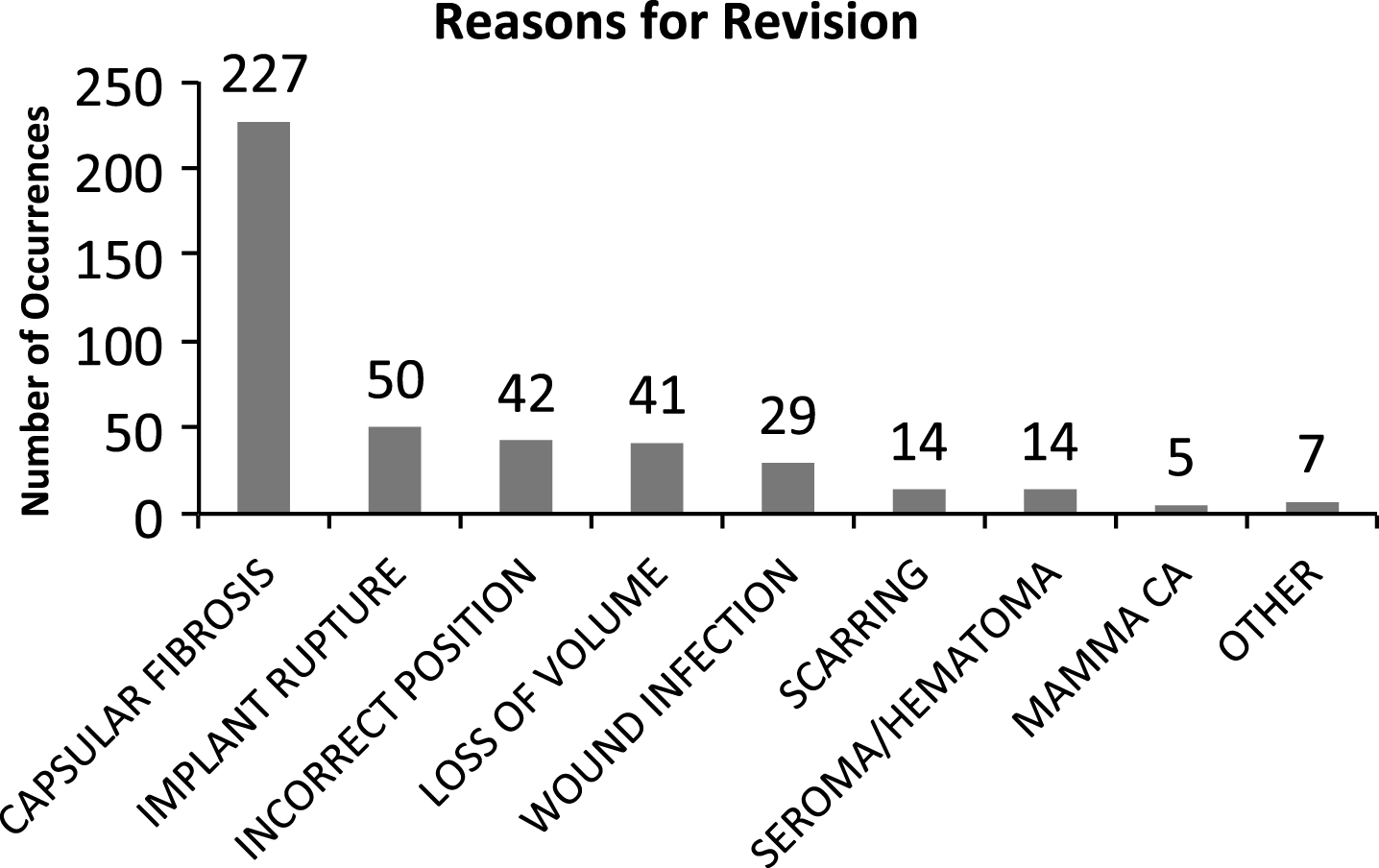
Complications (reason for revision) in order of frequency for aesthetic and reconstructive-cancer patients.
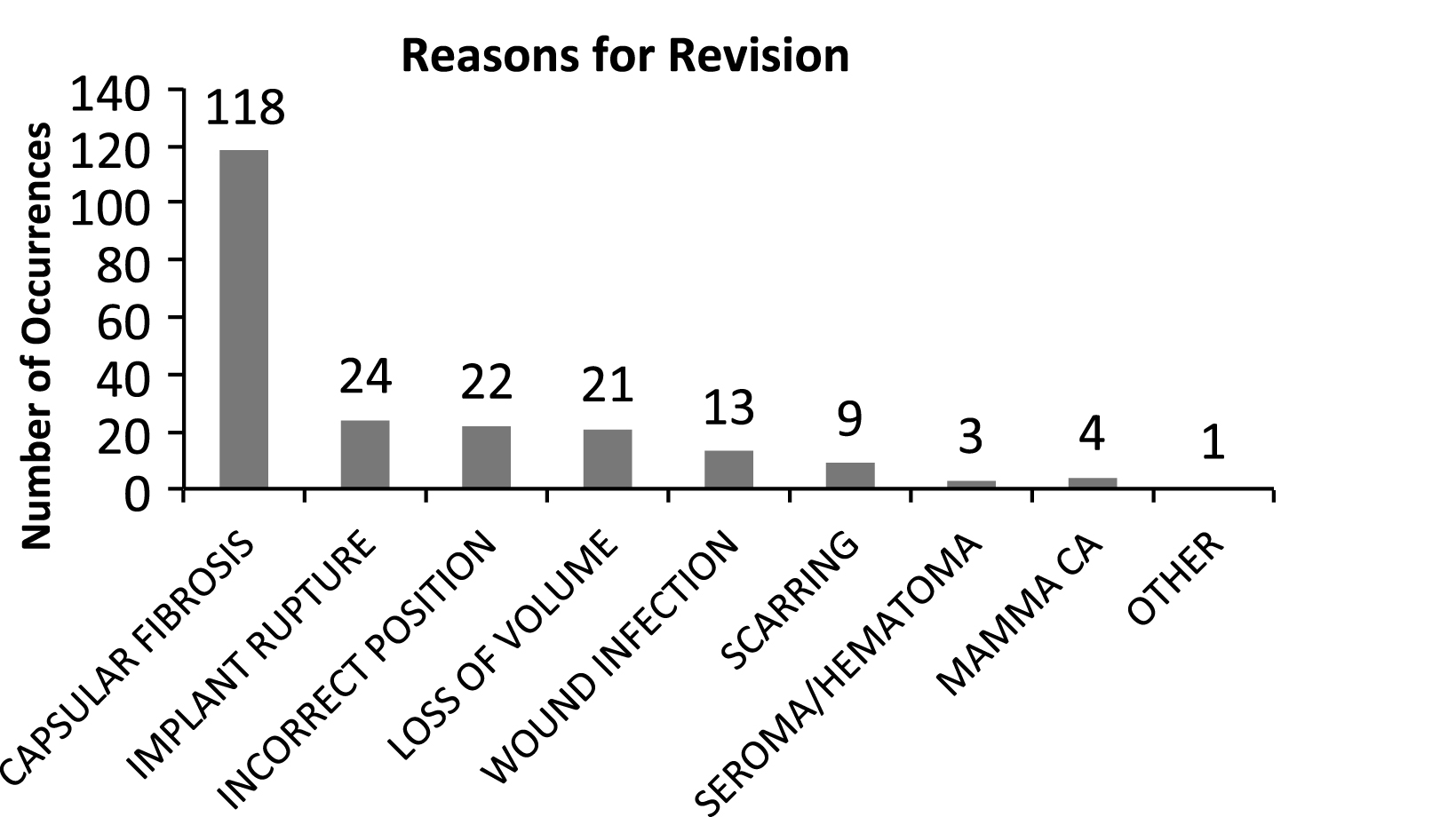
Complications (reason for revision) in order of frequency for reconstructive-cancer patients.
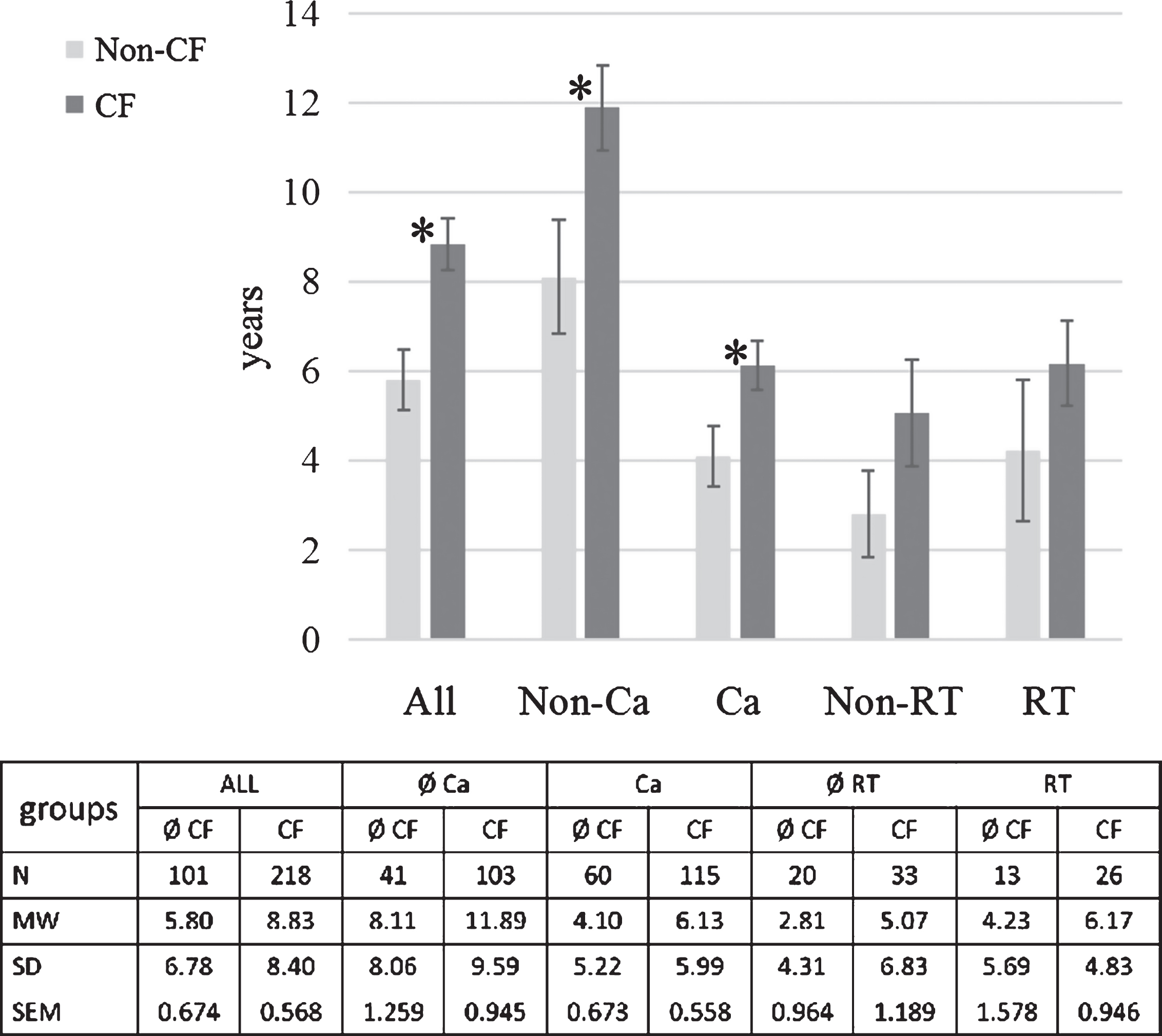
Mean TP in years by patient group (groups: ØCF = revision patients without capsular fibrosis, CF = revision patients with capsular fibrosis, ØCa = aesthetic patients, Ca = reconstructive-cancer patients, ØRT = reconstructive-cancer patients without preoperative radiotherapy, RT = reconstructive-cancer patients with preoperative radiotherapy).
The indication to perform initial breast operation was in 193 cases (55.6%) breast reconstruction following the resection of a malignant tumor. In 154 cases (44.4%), breast implants were used for cosmetic reasons. Of these 154 aesthetic indications, the development of capsular fibrosis occurred in 109 cases (70.8%), while there was a different indication for revision in the other 45 cases (29.2%). As aforementioned, the TP could just be evaluated for 175 (reconstructive-cancer) and for 144 (aesthetic) patients. The occurrence of capsular fibrosis as a complication after breast implant-based augmentation indicating revision surgery was significantly higher than the development of other complications in both groups (p < 0.001). Of the 193 reconstructive-cancer patients, 61.1% (n = 118) developed capsular fibrosis leading to revision surgery, while 38.9% of cases (n = 75) had another complication that led to revision surgery (p = 0.002). However, there was no significant difference between the aesthetic and reconstructive-cancer groups in the frequency of capsular fibrosis occurrence (p = 0.081).
Influence of preoperative radiotherapy on capsular fibrosis
Of the 193 carcinoma cases, preoperative irradiation was performed in 44 patients, no radiotherapy was given prior to breast implant augmentation in 53 patients, and in 97 patients the status of radiotherapy was unknown. 61.4% (n = 27) of the irradiated cases developed capsular fibrosis. In the preoperatively non-irradiated cases, 62.3% developed capsular fibrosis. There was no significant difference between these groups (p = 0.928), Table 1.
Occurrence of capsular fibrosis by group (ØCa = aesthetic patients, Ca = all reconstructive-cancer patients, ØRT = reconstructive-cancer patients without preoperative radiotherapy, RT = reconstructive- cancer patients with preoperative radiotherapy)
Occurrence of capsular fibrosis by group (ØCa = aesthetic patients, Ca = all reconstructive-cancer patients, ØRT = reconstructive-cancer patients without preoperative radiotherapy, RT = reconstructive- cancer patients with preoperative radiotherapy)
Among all patients who developed capsular fibrosis after breast reconstruction using implants (n = 217), the mean TP was 8.8 years (8.85±0.57), compared to a mean of 5.8 years (5.73±0.67) in cases with other reasons for revision (n = 101), Fig. 4. The mean TP was significantly lower in the group without capsular fibrosis (p < 0.001).
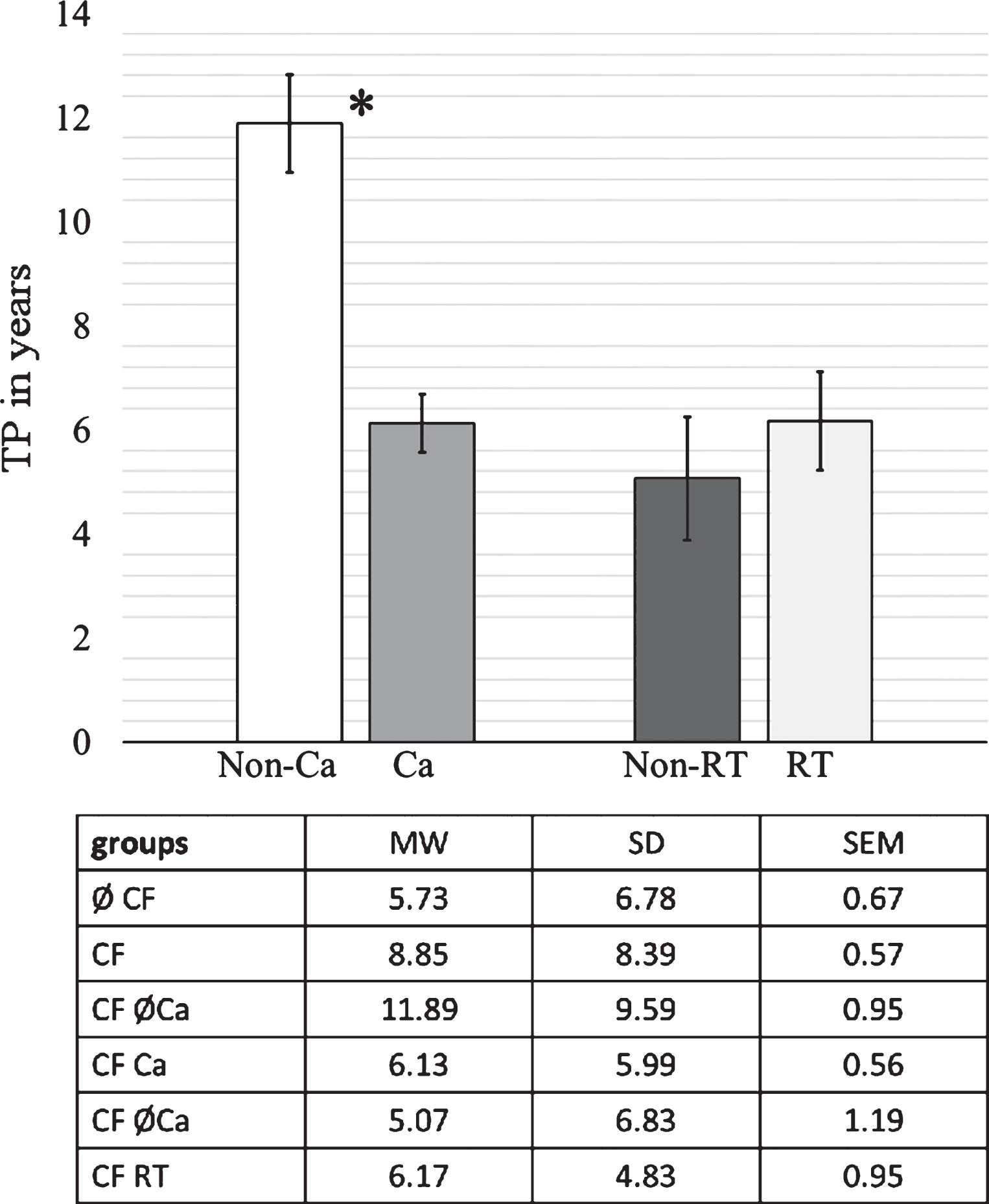
Mean TP by group (CF ØCa = aesthetic patients with capsular fibrosis, CF Ca = all reconstructive-cancer patients with capsular fibrosis, CF ØRT = reconstructive-cancer patients with capsular fibrosis without preoperative radiotherapy, CF RT = reconstructive-cancer patients with capsular fibrosis with preoperative radiotherapy.
In the aesthetic group (n = 144), 103 patients developed capsular fibrosis indicating revision surgery. The mean TP in this group was 11.9 years (11.89±0.95). The mean TP for patients who had complications other than capsular fibrosis leading to surgical revision (n = 41) was 8.1 years (8.11±1.26), which was significantly shorter compared to patients who underwent revision surgery because of capsular fibrosis (p = 0.014).
Reconstructive-cancer group
In the reconstructive-cancer group (n = 175), patients with capsular fibrosis (n = 115) required revision after a mean of 6.1 years (6.13±0.56). In comparison, reconstructive-cancer patients who had complications other than capsular fibrosis indicating revision surgery (n = 60) had a significantly lower mean TP of 4.1 years (4.10±0.67, p = 0.005).
Preoperative radiotherapy
In the preoperatively irradiated group, capsular fibrosis did not occur significantly later than other complications leading to revision surgery. In cases of capsular fibrosis (n = 26), the mean TP was 6.2 years (6.17±0.95), while in cases of other complications (n = 13) the mean TP was 4.2 years (4.23±1.58, p = 0.107).
Non-preoperative radiotherapy
Patients with no irradiation prior to implantation exhibited no significant difference in TP between the capsular fibrosis group (n = 33, 5.07±1.19 years) and the group with other complications (n = 20, 2.81±4.31 years, p = 0.110).
Capsular fibrosis in reconstructive-cancer versus aesthetic patients
All cases of capsular fibrosis were divided into two groups: Patients who received breast implant reconstruction after mastectomy because of breast cancer (Ca-group) and patients who underwent breast implantation for aesthetic, non-cancer related reasons (Non-Ca-group). The time between first breast implantation and first revision due to complications was evaluated respectively. The mean TP was 6.1 years (6.13±0.56) in the Ca-group (n = 115) and 11.9 years (11.89±0.95) in the Non-Ca-group (n = 103). This difference was highly significant (p < 0.001), Fig. 4.
Additionally, we divided the Ca-group into two groups: preoperatively irradiated (RT) and preoperatively non-irradiated (non-RT) patients. 26 patients received radiotherapy prior to final augmentation with breast implants. The mean time between first augmentation and revision surgery in RT patients (n = 26) was 6.2 years (6.17±0.95), compared to a mean of 5.1 years (5.07±1.19) in non-RT patients (n = 133). No significant difference was detected (p = 0.051), Fig. 5.
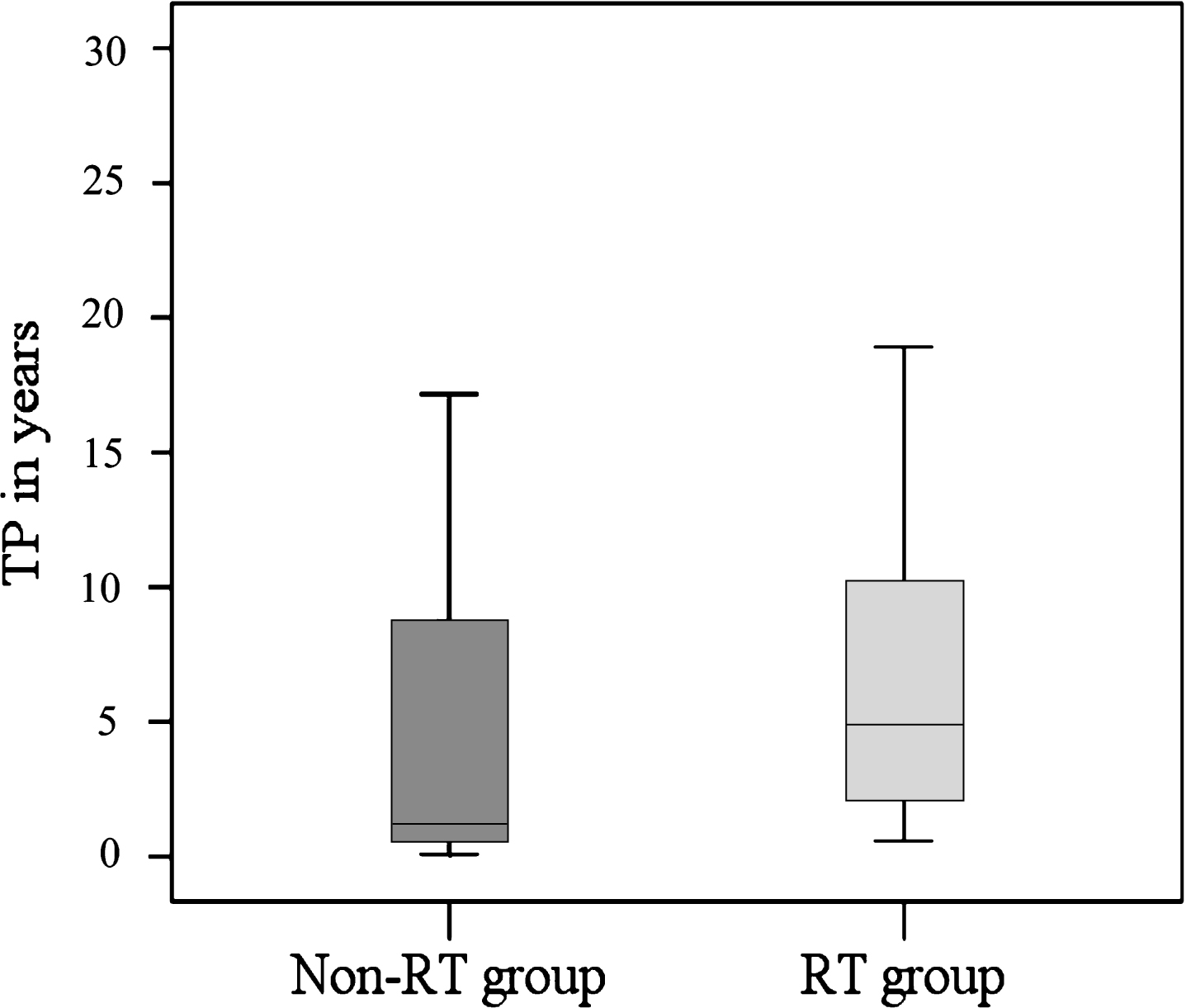
Mean TP for all reconstructive-cancer patients with capsular fibrosis.
Due to rapid progress in the field of cancer therapy, the 5-year-survival rate of breast cancer has reached 90% [10, 31]. Therefore, it is of major interest to minimize long-term complications of breast implants such as capsular fibrosis, as it is the most common complication.
In our study, capsular fibrosis was the most common reason for revision surgery. Among all patients (aesthetic and reconstructive) who developed capsular fibrosis after breast implant reconstruction (n = 217), the mean TP was 8.8 years (8.83±0.57), compared to a mean of 5.8 years (5.80±0.67) in cases with other reasons for revision (n = 101). The TP was significantly lower in the group without capsular fibrosis (p < 0.001). Additionally, we found that the indication for first breast surgery had a significant influence on the development of capsular fibrosis patients. In reconstructive-cancer patients, revision surgery for capsular fibrosis became necessary after a mean TP of 6.1 years (6.13±0.56), compared to 11.9 years (11.89±0.95, p < 0.001) in aesthetic patients.
Since a large number of cancer patients require irradiation therapy, it is also important to know its impact on the final result of breast reconstruction. Study results regarding the influence of radiotherapy on the development of capsular fibrosis vary considerably [16]. McCarthy et al. analyzed different risk factors for occurrence of complications following postmastectomy implant or expander reconstruction. Radiotherapy that was performed prior to reconstruction did not have any significant negative impact on final results, other than nicotine abuse and obesity (BMI >30). Complication rates were 27% (smokers) versus 13% (non-smokers) and 25% (obese) versus 14% (not obese), respectively [17].
In comparison, several other groups have shown a negative influence of radiotherapy on reconstruction outcomes [8, 32–34]. Ascherman et al. showed in a study with 104 patients that the complication rate was 40.7% in irradiated patients versus 16.7% in non-irradiated patients (p < 0.01), where revision surgery was necessary in 18.5% and 4.2% of cases, respectively (p = 0.025) [35]. Jagsi et al. compared adjuvant-irradiated patients with implants to those with autologous reconstruction. Both groups exhibited modestly increased postoperative infection and revision rates. Complications were more severe and led to revision surgery more often in the implant group [13].
Although there are numerous studies examining the effects of patient irradiation on breast reconstruction and the occurrence of capsular fibrosis [9, 36–43], only a few of them report data on the time period between implantation and the occurrence of complications requiring revision surgery. Whitfield et al. compared 42 irradiated to 78 non-irradiated breast cancer patients who underwent implant-based reconstruction. In the non-RT-group, no case of severe capsular contracture occurred, whereas it was the reason for revision surgery in eight of the irradiated patients [33]. Eriksson et al. performed a large study in which they compared severe complication rates and TP of non-irradiated, prior to reconstruction irradiated and postoperatively irradiated patients. In the non-RT-group, 44% of the patients had to undergo unplanned reoperation, compared to 66% of preoperative-RT patients and 59% of postop-RT patients (p < 0.001). There was no statistical difference between groups in the development of complications (p = 0.212) [14].
Although the amount of time between first breast implantation and revision was higher in our study compared to Eriksson et al., our findings are similar.
Our data shows that capsular fibrosis did not occur earlier or more frequently in patients who underwent radiotherapy prior to augmentation with breast implants.
Overall, our template helped to collect data in a quick and simple way and provide an important and broad amount of information that is crucial for clinical research in general. In our study, it was very helpful to evaluate the influence of radiotherapy on the time-period between implantation and the development of capsular fibrosis.
Despite the lower number of pre-irradiated cancer patients in our study, it can be assumed that implant-based breast reconstruction presents an acceptable treatment option, including for patients who undergo preoperative radiotherapy, if additional care and attention is considered. Especially for women who do not fulfill conditions for flap reconstruction, implant-based breast reconstruction can be considered as a recommendable alternative with which good results can be achieved.
Funding
No funding received. None of the authors have a financial or political interest in any of the products, devices or drugs mentioned in this manuscript.