





Abstract
Signal Transducer and Activator of Transcription (STAT) pathway is functionally located downstream of Janus kinases proteins and can integrate signals from diverse pathways, thus regulating several aspects of immune responses. Although contribution of STAT proteins in the pathogenesis of several inflammatory conditions has been confirmed, their role in the development of periodontitis has been less appraised. Thus, we assessed levels of STAT transcripts in the periodontal tissues and circulation of affected individuals compared with the corresponding controls. Expression of STAT1 was remarkably lower in tissues samples of patients compared with control tissues (Ratio of mean expression (RME)
Keywords
Sequences of primers/probes
Sequences of primers/probes
Signal Transducer and Activator of Transcription (STAT) pathway is functionally located downstream of Janus kinases (JAK) proteins and can integrate signals from diverse pathways. Each of STAT proteins have distinctive roles in cell signaling and exert essential functions in reconciling cell response to various types of cytokines [1]. These proteins have distinct roles in the pathogenesis of cancers and inflammatory processes [1]. STAT1 is mainly involved in the signaling pathways downstream of IFN-
Relative expression amounts of STAT1,
STAT2, STAT3, STAT4, STAT5 and STAT6 genes in affected tissues compared with control tissues.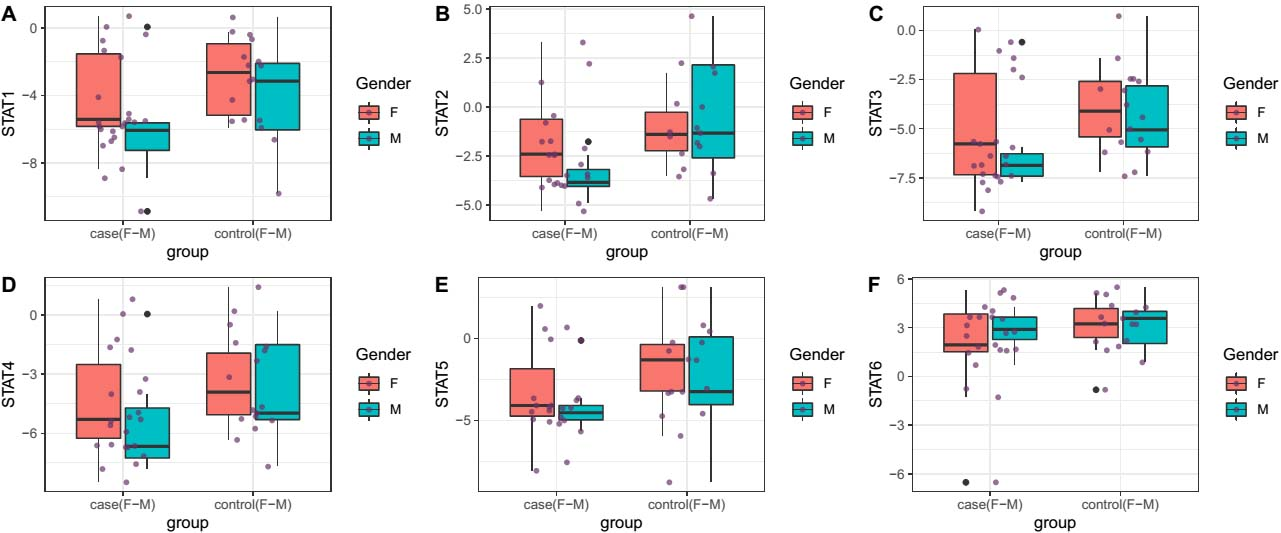
Relative expression amounts of STAT1,
STAT2, STAT3, STAT4, STAT5 and STAT6 genes in blood samples of patients with periodontitis compared with controls. 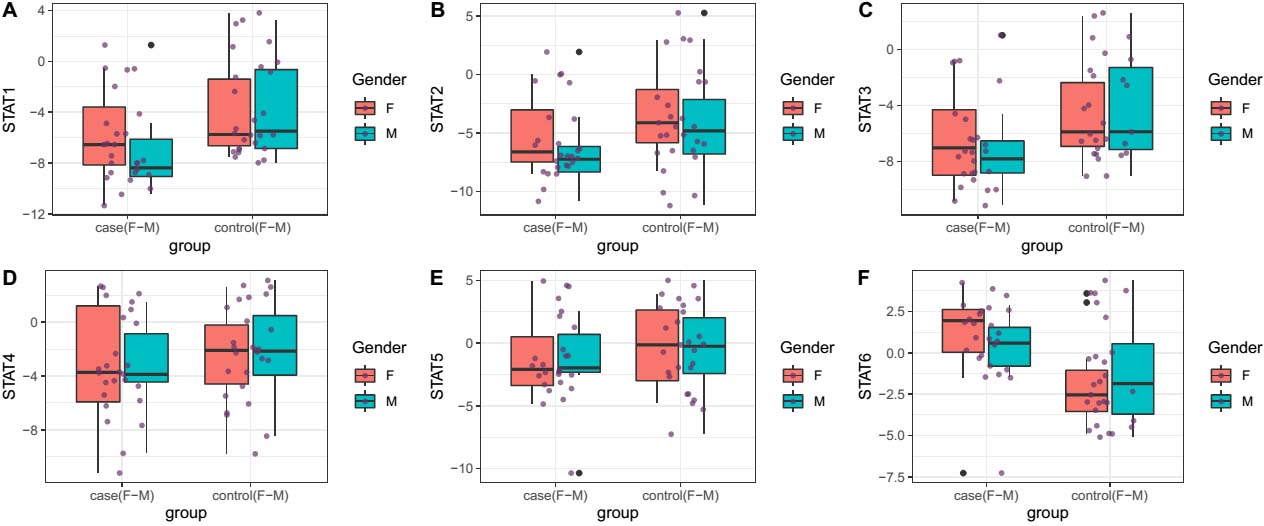
Samples
Totally, 26 cases and 28 controls were enrolled in the current study. Patients were assessed in the Department of Periodontology, Hamadan University of Medical Sciences, Hamadan, Iran. Cases were recruited based on the criteria presented in our recent work [10, 11, 12, 13]. Control samples were acquired from individuals underwent crown lengthening. A periodontist ruled out the presence of periodontitis in control subjects. Excluding criteria were smoking, systemic disorders, history of taking antibiotics or anti-inflammatory medicines in three-month period prior to excision of samples, pregnancy and breastfeeding.
Expression assay
GeneAll kit (Seoul, Korea) was used for extraction of RNA from blood and periodontal tissues. RNA was then converted to cDNA by using the Thermo Fisher Scientific kit (Brussels, Belgium). Expression levels of STAT genes were enumerated in case and control samples using Ampliqon kit (Odense, Denmark). Reactions were performed in the Step One Plus™Real-Time PCR equipment (Applied Biosystems, Foster city, CA, USA). Sequences of the primers used for expression assays are presented in Table 1.
Statistical analyses
Expression data was evaluated in the R software. Transcript quantities of STAT genes in relation to the housekeeping gene were measured from Ct and efficiency values. After being log2 transformed, the mean values of expression amounts of genes were compared between groups using the
Results
The current gene expression assay was executed using tissue samples obtained from 26 patients with periodontitis (female/male: 16/10, mean age (standard deviation): 37.6
Expression assays
Relative expressions of STAT1, STAT2, STAT3, STAT4, STAT5 and STAT6 genes in tissue and blood samples of patients and controls are displayed in Figs 1 and 2, respectively.
Expression of STAT1 was remarkably lower in tissues samples of patients compared with control tissues (Ratio of mean expression (RME)
Statistical parameters of assessment of expression of STAT1,
STAT2, STAT3, STAT4, STAT5 and STAT6 genes in tissues and blood specimens acquired from patients compared with controls
Statistical parameters of assessment of expression of STAT1, STAT2, STAT3, STAT4, STAT5 and STAT6 genes in tissues and blood specimens acquired from patients compared with controls
Correlations between tissue/ blood levels of STAT1,
STAT2, STAT3, STAT4, STAT5 and STAT6 genes in tissue and blood samples. The distributions of parameters are denoted on the diagonals. The bivariate scatter plots with a fitted line are displayed on the lower partitions. Correlation coefficients and 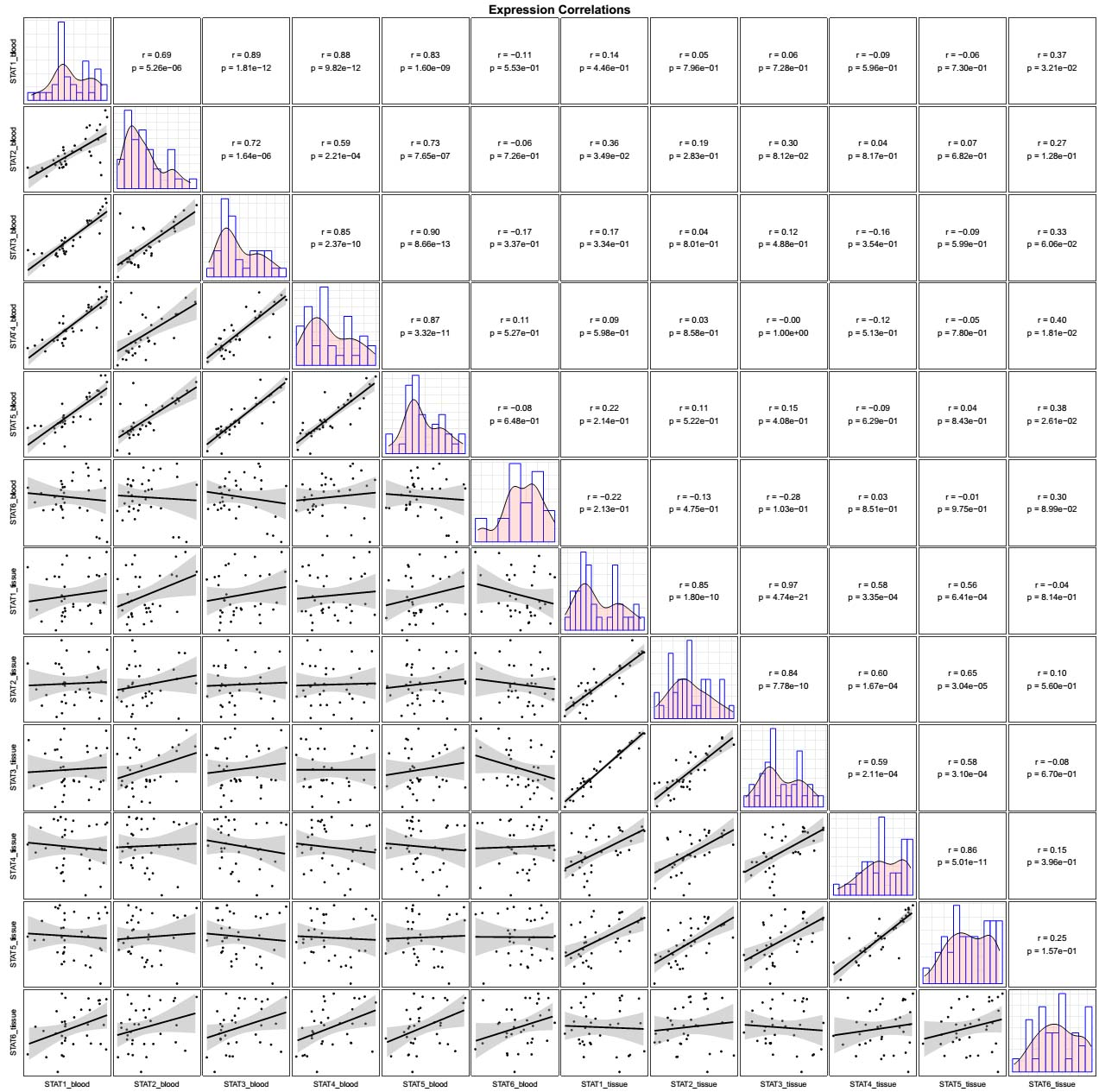
STAT6 was higher in total periodontitis tissues com- pared with total control tissues (RME
ROC curves depicted using the Bayesian Generalized Linear Model.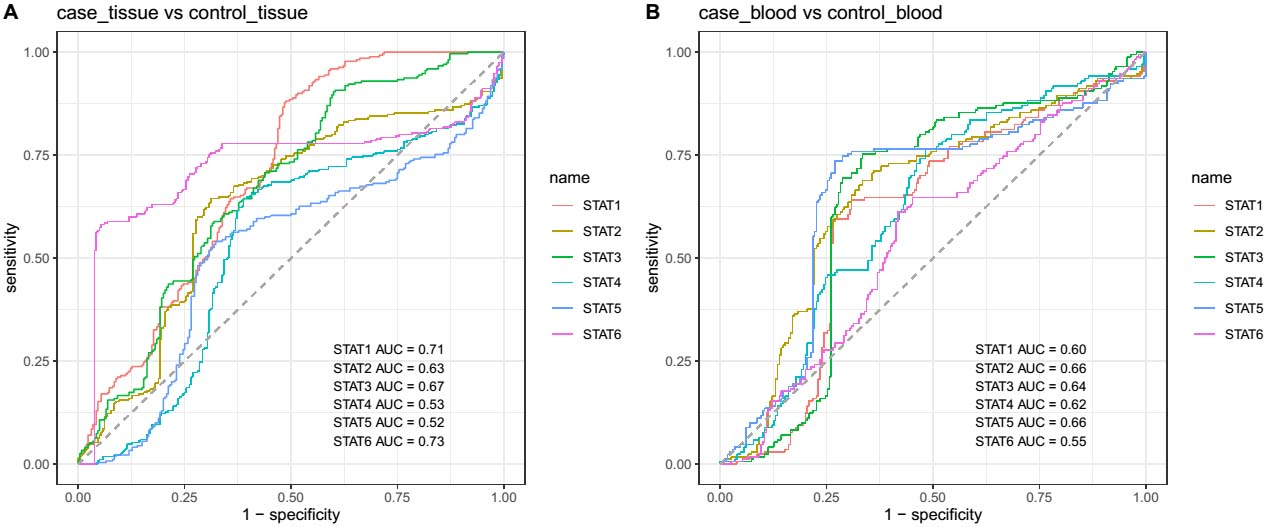
Correlation analysis demonstrated significant correlations between tissues levels of individual STAT genes as well as between their blood levels. However, tissue and blood levels of each STAT gene were not correlated (Fig. 3).
We also measured the diagnostic power of STAT1, STAT2, STAT3, STAT4, STAT5 and STAT6 genes in different sets of blood and tissue samples using the Bayesian Generalized Linear Model (Fig. 4).
STAT6 and STAT3 have been the most specific (specificity
As a disorder with mixed inflammatory and infectious aetiology, periodontitis is associated with over-production of cytokines, proteases and a number of pro-inflammatory mediators [14]. JAK/STAT pathway is among the most important mediators of pathogenic events in the periodontitis [14]. Experiments in the endothelial nitric oxide synthase gene knockout animal model have shown significant infiltration of macrophages and production of pro-inflammatory cytokines in the periodontal tissues. These effects have been related on induction of STAT1 pathway by angiotensin II [15]. Another animal study has revealed over-expression of STAT1 and STAT3 in the periodontal tissues in primary phase of disease development [16]. Yet, the role of STAT pathway in the development of periodontitis in human subject has been less understood. In the present work, we detected down-regulation of STAT1 in tissues samples of patients compared with control tissues. Such expression pattern was also detected among males. Moreover, expression of STAT3 was lower in total periodontitis tissues compared with total control tissues, but not among distinct subgroups of male and female patients compared with sex-matched controls. Therefore, the observed expression pattern of STAT1 and STAT3 genes in our study is in contrast with the reported results in two distinct animal models. As a central mediator of immune responses, IFN-
On the other hand, expression of STAT6 was higher in total periodontitis tissues compared with total control tissues and among female subgroups. STAT6 down-
Statistical parameters of ROC curves in tissue and blood samples
regulation has been shown to attenuate inflammatory responses protecting against primary phases of colitis-related colon cancer [21]. On the other hand, induction of the STAT6 axis has central roles in alternative (M1 and M2) activation of macrophages, which influences inflammatory responses [22].
Expressions of other STAT genes were statistically similar in tissues obtained from cases and controls. Moreover, blood levels of all STAT genes were statistically similar between patients and controls. These data indicate independence of tissue STAT genes levels from their levels in the circulation and different sources of their expressions in these two sets of samples. Consistent with this observation, correlation analysis demonstrated significant correlations between tissues levels of individual STAT genes as well as between their blood levels. However, tissue and blood levels of each STAT gene were not correlated.
STAT6 and STAT3 have been the most specific and sensitive markers in the recognition of disease status in tissue samples, respectively. The best AUC value belonged to STAT6 in differentiation of affected tissues from normal tissues. However, none of genes could differentiate blood samples of affected individuals from controls. Combination of all STAT genes slightly improved the diagnostic power in tissue samples, yet the integrated panel was not appropriate for diagnostic purposes in blood samples.
The current investigation potentiates the role of certain STAT genes in the development of this immune-related condition and warrants functional assays to clarify the mechanism.