







Abstract
Taking into account the multiple demand differences and the existence of distribution network faults, the study conducts a multiple demand-side resource regulation capability assessment for distribution network safety and security as a way to achieve distribution network resource regulation optimization. The study considers multiple demands and adopts the correlation depth wandering algorithm to assess node faults in the distribution network, and proposes a quantitative assessment strategy for multiple demand-side resource regulation capability, and constructs an index system for assessing the resource regulation capability of the distribution network, and carries out the assessment of the resource regulation capability of the multiple demand-side resources. The results show that the regulation efficiency of wind power, thermal power, solar power and hydro power is above 20%, i.e., the combined regulation efficiency of the four energy sources is able to reach above 80%. The results show that the multi-demand-side resource regulation capability for distribution network security can be significantly improved, and the findings of the study have an important practical value for the electric power industry in terms of resource regulation and security, as well as providing a strong support for the sustainable development of the industry.
Introduction
With the continuous development of the global economy and the acceleration of industrialization, energy demand has shown a trend of dramatic growth. Especially in the power industry, the industry is facing unprecedented challenges and opportunities due to the wide application of renewable energy and the rise of distributed energy systems [1]. Electricity supply not only needs to cater for increasing scale, but also needs to adapt to diversified and individualised demand-side changes. In this context, the problem of energy distribution and regulation on the diversified demand side, such as households, factories, and electric vehicle charging stations, gradually highlights its importance [2, 3]. In this context, electric utilities are in urgent need of a more refined, flexible and sustainable energy allocation and regulation mechanism. Despite the increasing number of studies on multifaceted demand-side resource regulation in recent years, most of them focus on a single or limited application scenario and lack a comprehensive study and assessment of factors such as the wider demand side and the safety and security of the distribution network [4]. In addition, with the increasing complexity of power systems and the diversity of threat factors (e.g., severe weather, terrorist attacks, etc.), the issue of safety and security of distribution networks has become more prominent. It has been pointed out that safety and security is an indispensable factor affecting the resource regulation capability of distribution grids; however, how to effectively integrate distribution grid security factors into diversified demand-side resource regulation strategies is still an important question to be solved. These challenges and problems not only limit the resource regulation efficiency and security of the existing power system on the multiple demand side, but also may hinder the sustainable development and socio-economic value creation of the power industry in the future. Therefore, targeted research on the interactions between multiple demand-side resource regulation and distribution network security and safety, as well as exploring industry-applicable solutions, has become an important direction for current and future research.
This research includes four parts. First, research explores current situation of distribution network faults and their resource regulation; the second part analyzes the distribution network fault assessment strategy, and also proposes a multi-demand-side resource regulation capability assessment method considering distribution network faults; the third part verifies the multi-snowball-side resource regulation capability for distribution network safety and security; the last part summarizes the full text content and proposes future research directions.
Literature review
Power system operating safely and stably is basic guarantee for society and people’s life, and many scholars have conducted research around power grid security. Lv et al. proposed a load prediction model of power system based on the static security of power grid, which combined with power data to predict the change trend of short-term power grid consumption, so as to provide data support for power grid planning and supply and demand regulation [5]. Huang et al. proposed a multi-objective distribution grid scheduling optimization model considering electric vehicles based on the electric vehicle charging load factor, and used an improved genetic algorithm to achieve distribution grid scheduling optimization based on the electric vehicle charging and discharging load modeling [6]. Liang et al. proposed a distribution grid fault diagnosis by convolutional neural network to guarantee distribution grid A model safety by convolutional neural network is proposed to improve model diagnostic capability for distribution grid grounding faults by improving the pooling operation for fast identification of distribution grid faults [7]. Sun and Qiu proposed a deep reinforcement learning based voltage reactive power control model to solve the voltage violation problem of distribution grid for the voltage control problem caused by intermittent renewable energy integration in active distribution grid [8]. He et al. proposed a deep reinforcement learning based voltage reactive power control model to solve the grid instability problem caused by PV energy, a low-voltage ride-through control strategy for PV grid-connected inverters is proposed, which optimizes the grid active current injection strategy and optimally adjusts the PV energy harvesting method to ensure safe system operation [9].
Resource scheduling and allocation is a common production and operation problem faced by multiple fields, so there are numerous technical studies on resource allocation. Ma et al. proposed a distributed learning-based optimal scheduling and allocation scheme for computing resources in in-vehicle networks, considering the problem of limited computing resources in in-vehicle networks, and used Markov algorithms to achieve optimal allocation of network communication resources under the condition of learning time constraints [10]. Li proposed a resource graph-based resource scheduling optimization model for distributed cloud services in the context of smart city, and combined with particle swarm algorithm to achieve resource scheduling and allocation optimization to improve the resource utilization efficiency of cloud services [11]. Gupta et al. proposed a reactive power allocation model for sagging microgrid with the reactive power allocation problem from the distributed power supply perspective to explore the optimal strategy of reactive power proportional allocation for micro grid [12]. Shi et al. designed a power allocation method for radar communication system with the goal of power minimization for the shortage of spectrum resources of radar communication system, and achieved the minimization of total radiated power of radar communication system from the level of subcarrier selection and power allocation [13]. Huang et al. proposed a carbon quota allocation model targeting low carbon economy for integrated energy system, combined with Stackelberg game optimization model to realize the economic allocation and dispatch of regional carbon quota from the perspective of energy sharing [14]. Although the previous studies have made in-depth discussions on the safe and stable operation of the power system and resource scheduling and allocation respectively, the intrinsic connection and mutual influence between the two have not yet been fully studied and explained. In fact, a secure and stable power system is the basis for effective resource scheduling, and conversely, optimised resource scheduling and allocation can improve the overall security of the power system. Therefore, the study aims to explore the interactions and correlations between these two aspects, especially how to optimise the resource regulation capability of the diverse demand side by improving the security of the distribution network, so as to provide strong theoretical support for the construction and development of the distribution network. In summary, numerous scholars have now explored demand-side resource regulation and scheduling in distribution networks, and there are also studies analysing fault types in distribution networks. However, few studies have analysed the correlation between the two, so the study further assesses the impact of distribution network safety and security on the ability of multivariate demand-side resource regulation, with a view to enhancing the construction and development of distribution networks. Compared with existing studies, the methodology used by the study to assess the capacity of multiple demand-side resource regulation has significant advantages and innovations. For example, Lv and other scholars used a power system load forecasting model based on the decomposition of electric fractional modes to focus mainly on the static security of the grid; however, the method lacks comprehensive consideration of the dynamic changes and complexity of the grid. Huang Z’s study made a breakthrough in electric vehicle charging loads, but it was mainly used in a single application scenario and may not be applicable to a wider range of demand-side applications. Liang and his group, on the other hand, focused mainly on fault diagnosis models for distribution networks. Although their model performs well in fault diagnosis, it lacks a study of the correlation between multiple demand sides and distribution network safety and security.
Distribution network security assessment and multi-demand-side resource regulation assessment design
For the resource regulation of distribution network, this chapter firstly analyzes the safety and security of distribution network in the process of construction and operation, and evaluates its transient stability, and secondly proposes a multi-demand-side regulation capacity evaluation strategy oriented to the safety and security of distribution network on the basis of distribution network safety assessment.
Distribution network security transient stability assessment considering multiple demands
As power grid expands and multiple demands become more and more obvious, the dynamic characteristics of power grid become more complex and variable, and the occurrence of large outage accidents caused by transient instability becomes more frequent, so it is important to strengthen the research on transient stability analysis of power system. The network embedding algorithm can extract the electrical quantity characteristics of nodes and the location characteristics of grid nodes, so as to evaluate the transient stability consequences after the failure of grid nodes. Among them, the Text Associated Deep Walk (TADW) algorithm, as a typical network embedding algorithm, has been gradually applied to the security detection of distribution networks its algorithmic flow is shown in Fig. 1 [15].
Flowchart of TADW algorithm.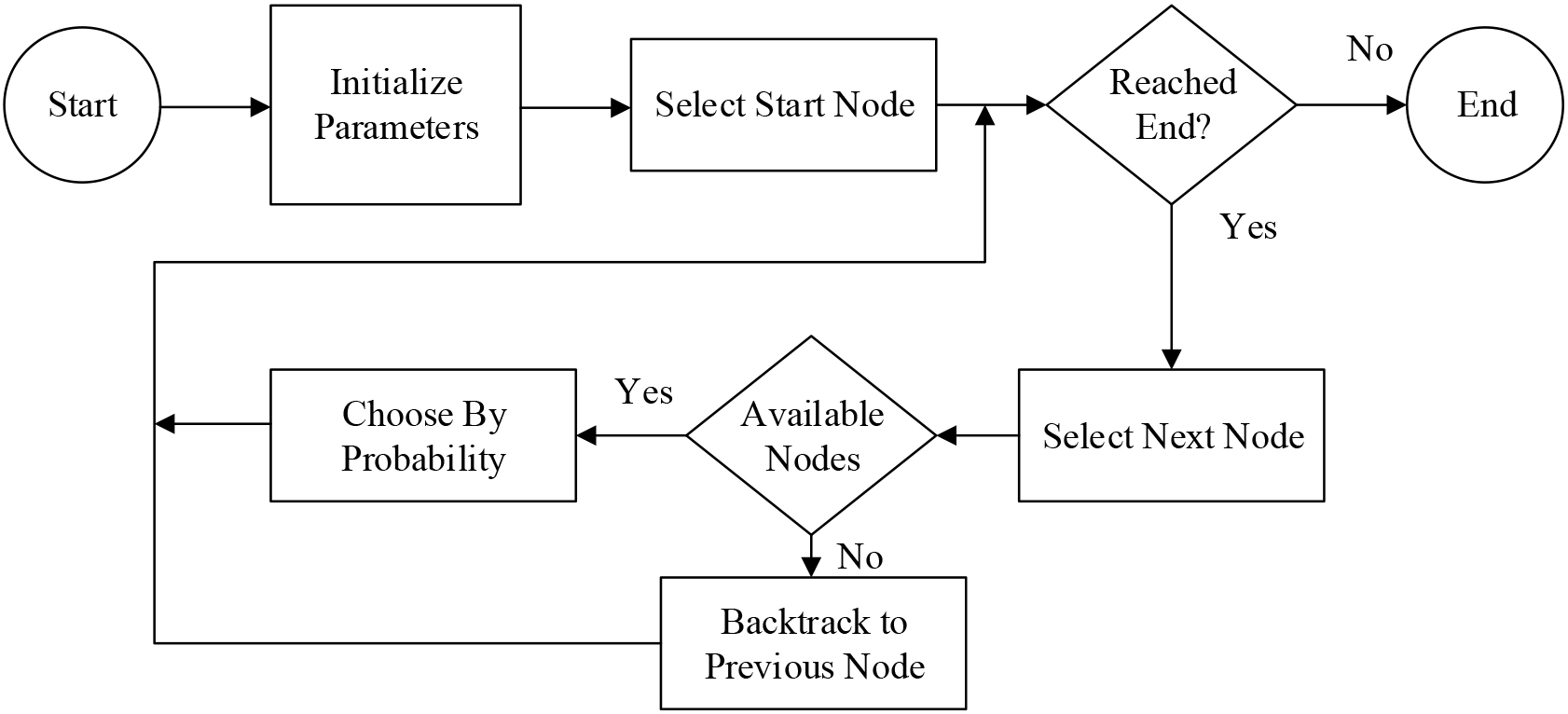
By fusing the state transfer matrix of network
In Eq. (1),
The random wandering matrix
In Eq. (2),
In power networks,
In Eq. (3),
After conversion, the feature information is then extracted from the matrix using a low-rank matrix decomposition technique, i.e., finding an optimal product expression
In Eq. (4),
In
TADW is the core algorithm of the study, which is mainly used to extract the features of the grid nodes. The TADW algorithm is used to obtain a comprehensive network state matrix, which can be used for power system security detection. SVR (support vector regression) is used to build a learning model to fine-tune the analysis of the features of the electrical quantities extracted by the TADW algorithm. SVR model is the core of the mapping through the high-dimensional space to construct a soft interval linear function
SVR model.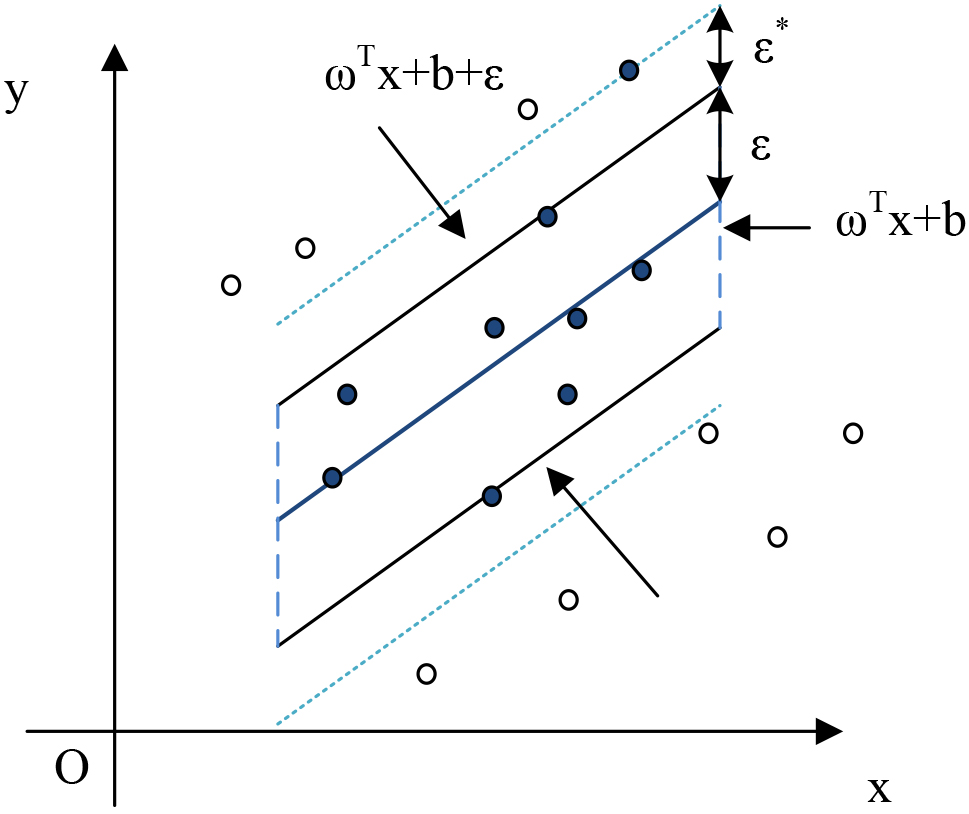
The SVR model is capable of overcoming the problems of local minima and poor fitting, which can improve the assessment and accuracy. accuracy. Before applying the SVR model, the features extracted by the TADW algorithm are filtered using the GBDT algorithm to eliminate redundant information and retain features that are more relevant to the final mapping target [17]. In the support vector regression model, a machine learning model is used to quantitatively grade the importance of each feature and retain the features with high importance. Suppose that
For the
In order to weigh the parameter
In Eq. (7),
SVR is tested and trained by sample library data to determine parameters such as
On-line evaluation of transient stability after failure.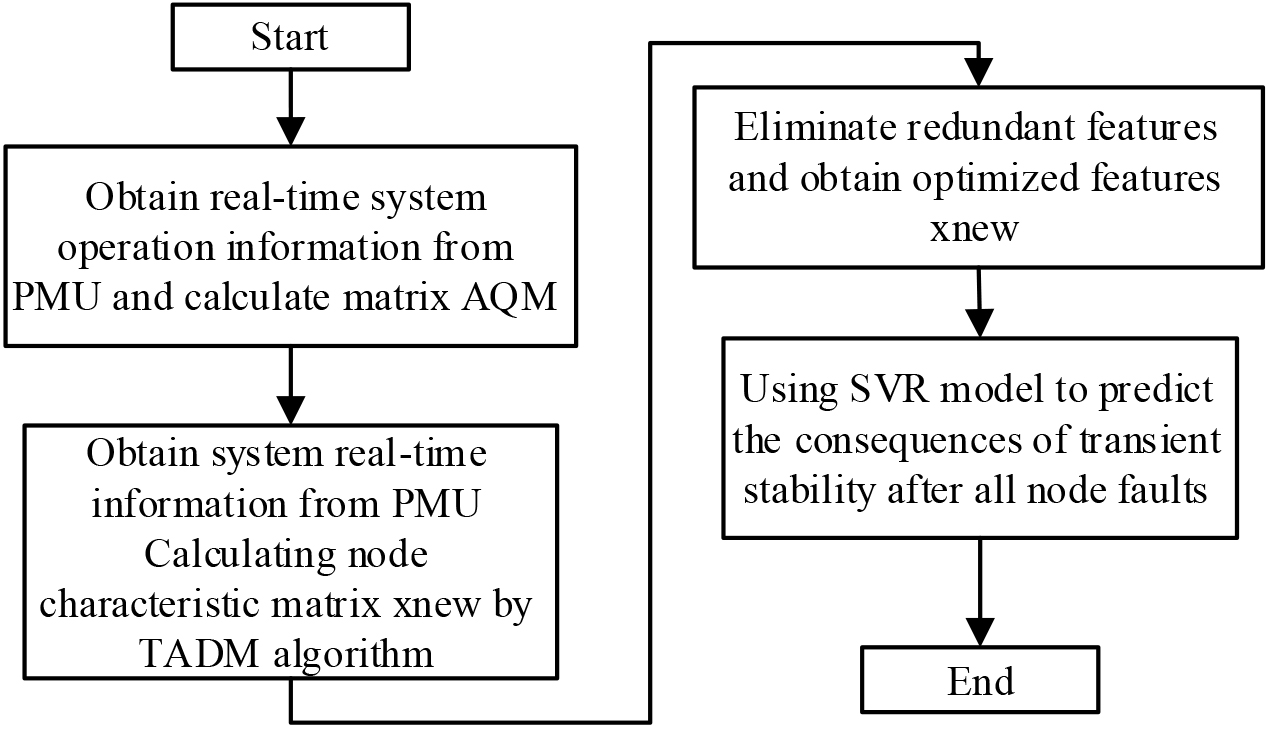
Figure 3 shows the online evaluation of the temporary stability consequences after node failure. For a certain real-time operation state of the grid to be evaluated, the information in the PMU system is retrieved to form the
Evaluation index system of resource regulation capacity of multiple demand side.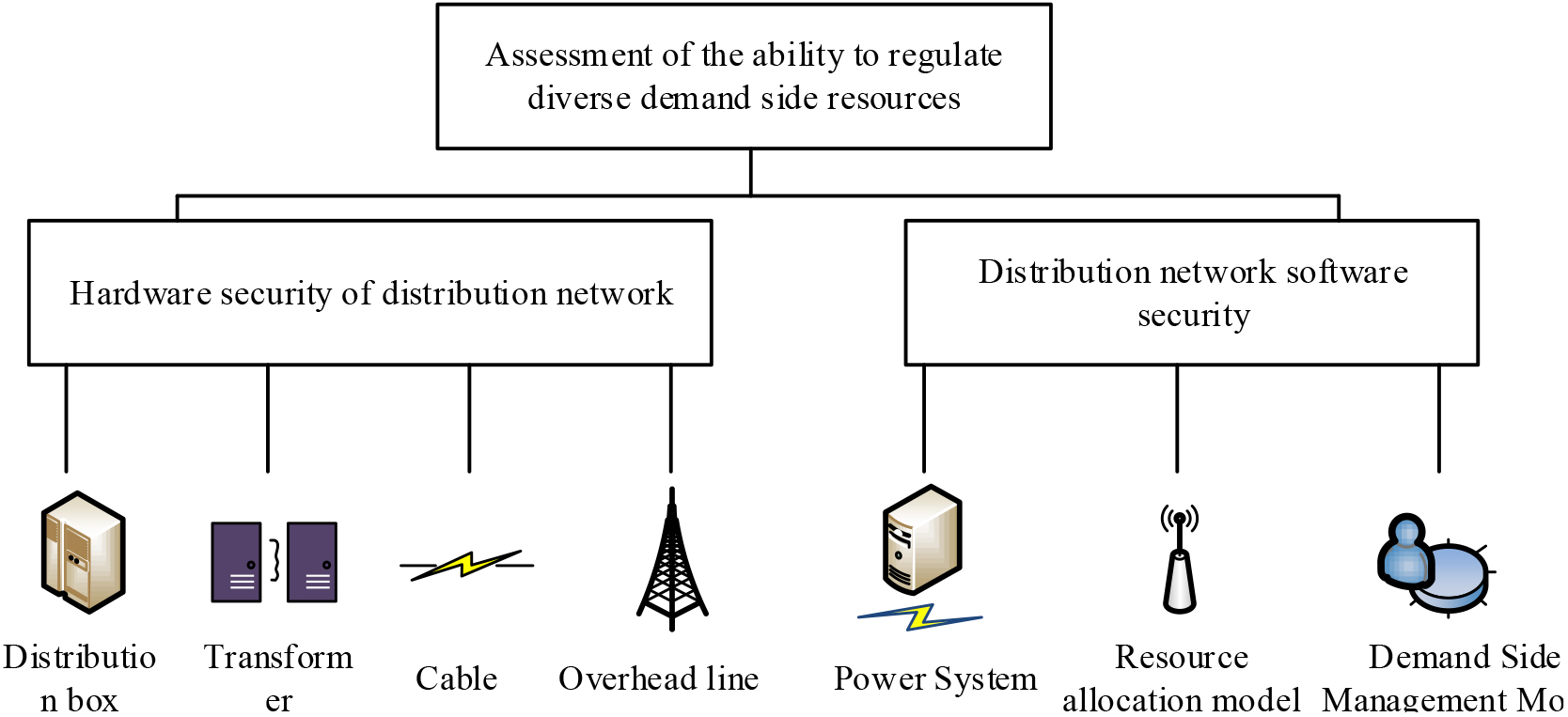
Multi-demand-side resource regulation refers to the regulation of electricity consumption on different demand sides in the process of distribution network engineering and operation. The regulation of multiple demand-side resources needs to consider the energy demand and the integrated share of the customer demand side, and the security of the distribution network. In general, the security of the distribution network is the basis for the allocation of power resources, and for this reason, the study first assessed the stability of the grid under multiple demand sides [18]. Based on this, the study proposed a quantitative assessment strategy of the multi-demand-side resource regulation capability, aiming at achieving multi-demand-side resource regulation while guaranteeing the distribution grid security. When considering distribution grid security, different risks for distribution grid security, including hardware security and software security, need to be evaluated in the assessment of multiple demand-side resource regulation capability. The study first constructs the resource regulation capacity assessment index system by analysing similar studies, and determines and weights the influencing factors of the multivariate demand-side resource regulation capacity index system in order to establish a linear function relationship between the influencing factors. Then, by combining the entropy weight method with the sequential relationship analysis method, the subjective weights were calculated using the sequential relationship analysis, and the objective weights were calculated through the entropy weight method, so as to obtain the comprehensive weights for the indicator system. Based on the existing research results, the resource regulation capability assessment index system is constructed as shown in Fig. 4.
From Fig. 4, it can be seen that the hardware security indexes of the multiple demand side resource regulation capacity index system considering distribution network security include distribution boxes, transformers, cables, and the hardware safety indexes include distribution boxes, transformers, cables, overhead lines, etc., and the software indexes include power system, resource allocation model and multiple demand side management model.
In the quantification of multi-demand-side resource regulation capacity, the influence factors among them must be determined and weighted to establish a linear function relationship among the influence factors. The commonly used methods for calculating subjective and objective weights include hierarchical analysis, eigenvalue method, entropy weight method, and factor analysis. The study combines the entropy weight method with the ordinal relationship analysis method, and the subjective weights are calculated by the ordinal relationship analysis, and the objective weights are calculated by the entropy weight method, so as to obtain the comprehensive weights to the index system. The method of calculating subjective weights by sequential relational analysis is a functional relationship of factors influencing resource regulation capacity after experts re-rank the importance of indicators and determine the importance relationship between different indicators [19, 20, 21]. First of all, the formula for calculating the subjective weight coefficients of sequential relationship analysis is shown in Eq. (8).
In Eq. (8),
In Eq. (9),
In Eq. (10),
In Eq. (11),
Finally, after the subjective weights are derived from the sequential relationship analysis and the objective weights are derived from the entropy weighting method, the composite weights of the indicators are calculated. The composite weight contains the advantages of subjective and objective weights, which not only reduces the influence of subjective factors, but also compensates for the multiplicative effect of multiplicative synthesis. The formula for calculating the composite weight is expressed as Eq. (13).
In Eq. (13),
In order to further improve the multi-demand-side resource regulation capability, the study firstly proposes a security assessment strategy for the distribution network, and secondly proposes a quantitative assessment strategy for the multi-demand-side resource regulation capability geared to the safety and security of the distribution network. Based on this, the study firstly designs a security assessment experiment for the distribution network, and secondly designs a validation experiment for the assessment model of multiple demand-side resource regulation capability. This is used to determine the multi-demand-side resource regulation capability and its impact on the distribution network security.
Distribution network security assessment experiments
The study proposes a transient stability assessment scheme for the security assessment of distribution networks by combining TADW as well as SVR models. Firstly, in order to verify the feasibility and validity of the model, the study introduces four distribution network datasets, including NationalGrid NodeFeatures, NationalGrid NetworkTopology, NationalGrid TextualData, NationalGrid SafetyLabels, all of the above datasets are derived from the National Grid public data as a way to ensure the feasibility of the model in practical application, and the results are shown in Fig. 5.
Model safety assessment.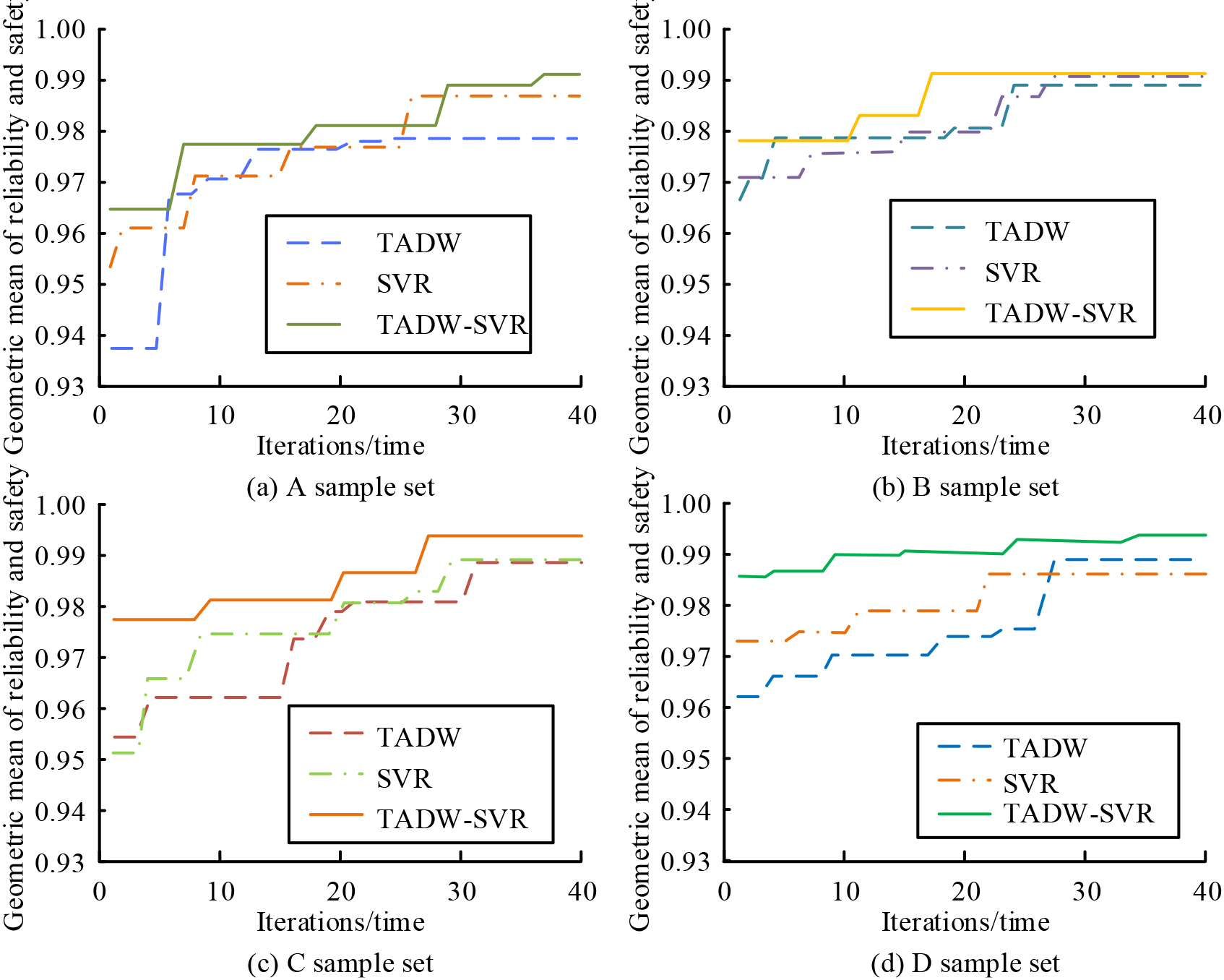
As can be seen from Fig. 5, the combination of TADW or SVM significantly improves the accuracy of the transient stability assessment compared to the use of TADW or SVM alone, and its reliability and security reach a high level of 0.99 or more, and the SVM algorithm provides an effective way to classify or predict the resource demand of the multivariate demand side, thus achieving more refined resource allocation. And when TADW and SVM are used jointly, the reliability and security of the model are significantly improved. The reliability and security of the model in practical applications are confirmed. With the increasing number of iterations, the reliability and security evaluations of all the models show an increasing trend. Therefore, from the above results, it can be seen that the transient stability assessment strategy for distribution networks adopted in the study has high reliability and security. Secondly, the study designed different security guarantees to further explore the effectiveness of security assessment of distribution networks, and the results are shown in Fig. 6.
Model fitness.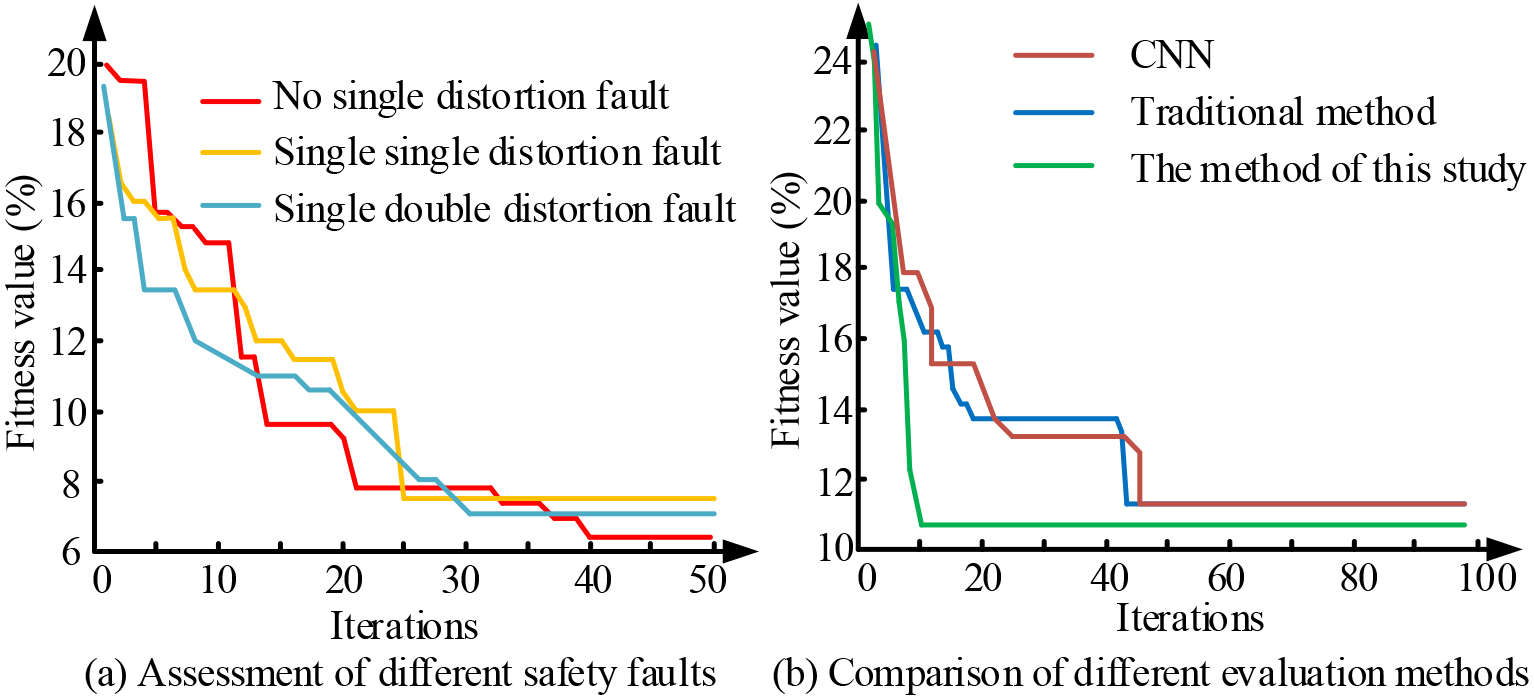
As can be seen in Fig. 6, the study analyzes the evaluation results under different faults in the distribution network and the comparison between the proposed evaluation method of the study and the traditional evaluation method, respectively. The results show that in Fig. 6a, for different distribution network security, the adaptation degree of the proposed evaluation method of the study decreases with increasing number of iterations, and the minimum adaptation degree values are all reduced to within 8%. In Fig. 6b, the study compares the differences between this proposed assessment method, the traditional method, and the latest machine learning algorithms applied in applying to the security assessment of distribution networks, and the results show that the fitness value of the proposed assessment method of the study decreases rapidly and its fitness value is also significantly lower than that of the traditional method. The above results show that the security assessment method proposed by the study for distribution network safety and security is feasible and the results have been improved better than the traditional method.
The study further proposed a multi-demand-side resource regulation capability assessment model based on the distribution network security assessment, and concluded that both hardware and software failures in the distribution network security are key indicators affecting its regulation capability. For this reason, in order to understand the specific degree of influence of each indicator, the study first conducted a weighting analysis of each indicator, and the results are shown in Table 1.
Indicator weight calculation
Indicator weight calculation
From Table 1, both hardware and software failures in distribution network safety and security are key indicators affecting its regulation capability, and the first level indicators are software and hardware failures with weights of 0.477 and 0.523, respectively. The second level indicators corresponding to software failures are the power system, resource allocation model, and multivariate demand-side management model, and the second level indicators corresponding to hardware failures are the switchgear box, transformers, cables, and overhead lines. It can be seen that the weights of the two main factors affecting the resource regulation capability do not vary much, with the weight of hardware failure reaching 0.523. However, the weight analysis of the secondary indicators shows that the resource allocation model and the multivariate demand-side management model in the distribution network software have larger weight values. In addition, in order to further determine whether the hardware and software security of the distribution network proposed by the study can have an impact on the multivariate demand-side resource regulation capability, the two indicators were identified as evaluation indicators and reliability analysis was used to determine whether they have certain evaluation capability, and the results are shown in Table 2.
Results of the validity and reliability analysis
As can be seen in Table 2, the KMO indices of both software security and hardware security are above 0.8, which indicates that the validity of the two evaluation indicators is high, i.e., the correlation of each indicator is strong. In the Bartlett’s spherical test, the approximate chi-square significance of these two first-level indicators is 0.000 (
Results of regression analysis
Note: “##” indicates
From Table 3, it can be seen that the effects of software faults and hardware faults on the multi-demand-side resource regulation capability are extremely significant, with
The study evaluates the feasibility of the distribution network security assessment strategy, and also analyzes the impact of distribution network security on the multi-demand side resource regulation capability assessment, so as to determine the validity of the multi-demand side resource regulation capability assessment for distribution network security proposed by the study. Thereafter, to further understand the supposed value of the resource regulation capacity assessment model, a simulation test of the model validity was designed considering the multi-demand. The study sets the demand side as 3, and the required resource ratio is 0.3, 0.3, and 0.4, respectively, and first assesses the demand and utilization degree of resources on each demand side, and the results are shown in Fig. 7.
From Fig. 7, it can be seen that the demand and utilization of resources on each demand side are high, and within 24 h, the demand for resources on different demand sides is above 400 kW for a long time, and the highest can reach 580 kW. From the above results, it can be seen that the demand for resources on different demand sides introduced by the study is at a high level, so it is important to realize the multi-demand side resource regulation in an effective and reasonable way. It is important to achieve effective and reasonable multi-demand-side resource regulation. On this basis, it is of great practical value to evaluate the resource regulation capability for distribution network safety and security by the three selected demand sides. The evaluation of the resource regulation capability for distribution network safety and security, the regulation response and completion time are shown in Table 4.
The resource adjustment time analysis
The resource adjustment time analysis
Multiple demand-side demand and utilization degree.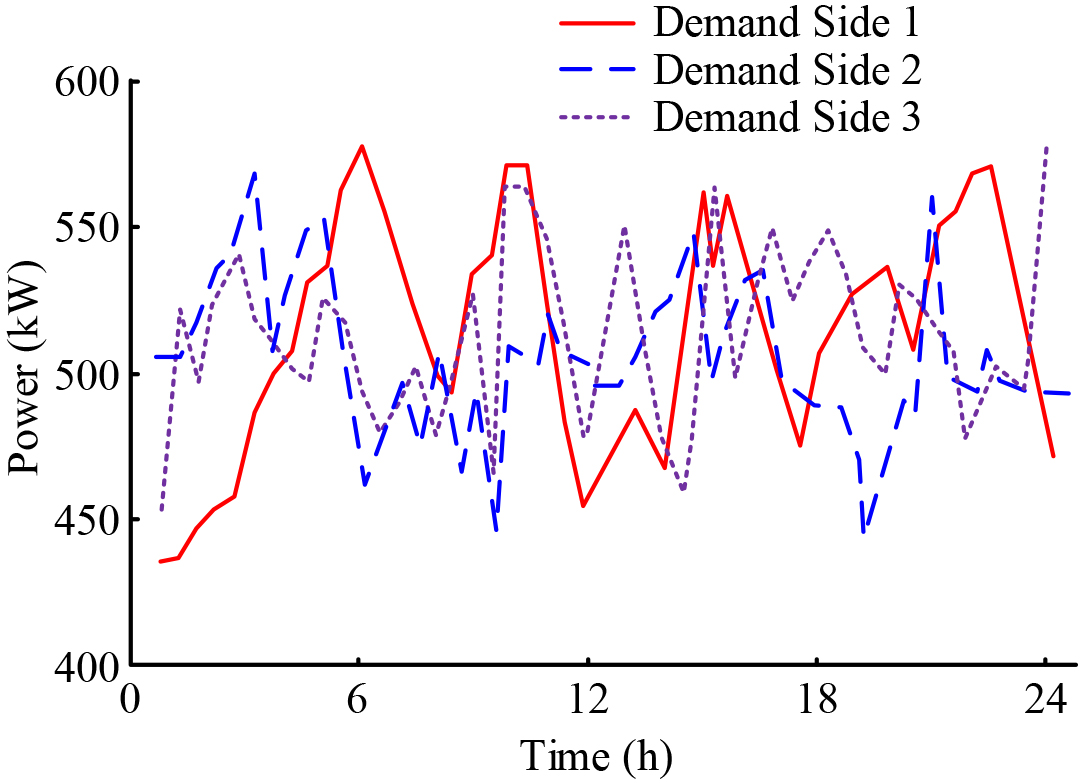
As shown in Table 4, the study evaluates in detail the resource regulation of each demand side of the distribution network security in both presence and absence scenarios, for different fault types and for morning and evening peak time partitions. The data shows that in the absence of faults, the resource regulation response time and regulation time for each demand side for different time partitions and fault types are very short, while the power factor is relatively high. Whereas, in the presence of faults, the response time and regulation time increase, but are still within acceptable limits, while the power factor decreases only slightly. When the distribution network security does not exist, the response time of resource regulation for each demand side is shorter, and all of them are within 0.1 s, which indicates that the regulation ability at this time is stronger and faster, and at the same time, its regulation time is also the highest of 1.99, i.e., when the security of the distribution network does not exist, the multifaceted demand-side resource regulation is strong, and it can deal with the problem of resource allocation quickly. It can be seen that when the security of the distribution network does not exist, the response time of resource regulation for each demand side is short and within 0.1 s, which indicates that the regulation capability is strong and fast at this time, and the highest regulation time is 1.99, i.e., when the security of the distribution network does not exist, the multi-demand side resource regulation capability is strong and can quickly deal with the resource allocation problem. When the fault exists, the maximum response time of multiple demand-side resource regulation is 0.2 s, which is significantly higher than the regulation time when the fault does not exist, but it is still small and acceptable. The maximum demand-side resource regulation time at this time is only 1.71 s, which is within 2 s and is not much different from the regulation time in the absence of faults. Therefore, it can be learned that the multi-demand-side resource regulation capability for distribution network security is strong, and although the response time increases significantly, the regulation time does not change much. Finally, the study evaluates the comprehensive energy regulation capability of multiple demand-side resources for distribution network safety and security, including the regulation of four resources such as wind power, thermal power, solar power and hydro power, and the results are shown in Fig. 8.
Comprehensive energy regulation capacity assessment.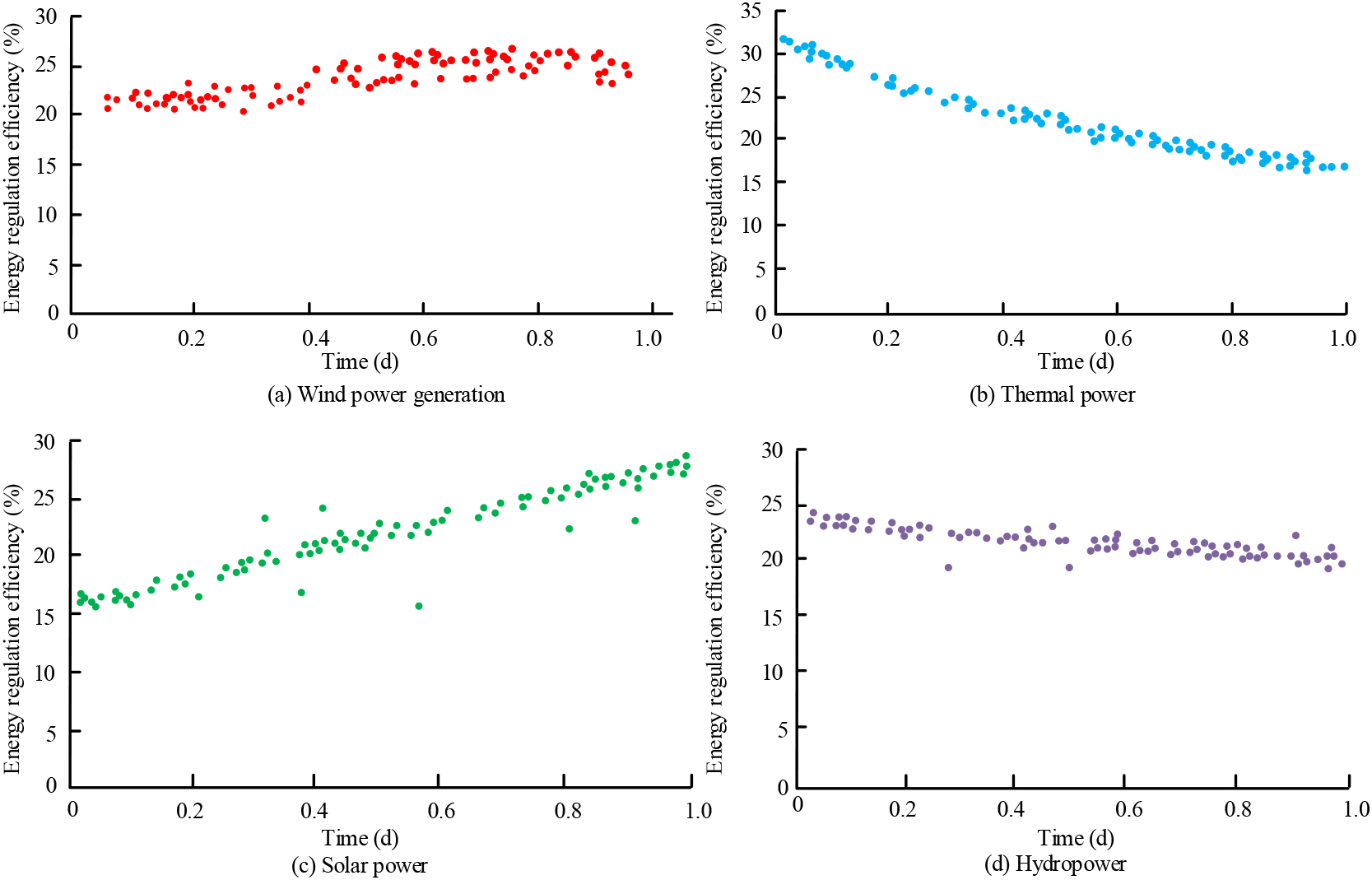
As shown in Fig. 8 is the assessment of the regulation capacity of the four resources such as wind power, thermal power, solar power, and hydro power, and Fig. 8a–d are the assessment of the energy regulation efficiency for wind power, thermal power, solar power, and hydro power, respectively. Comparative analysis shows that with the increase of time, the energy regulation efficiency of wind and solar power generation increases, the energy regulation efficiency of thermal and hydro power generation decreases slightly, and the four power generation modes have a high degree of aggregation of the change in energy regulation efficiency with time, which is approximately linear. The overall analysis shows that the regulation efficiency of wind power, thermal power, solar power and hydropower are all above 20%, i.e., the combined regulation efficiency of the four energy sources can reach more than 80%. The above results show that the multivariate demand-side resource regulation for distribution network security is strong, can meet the energy demand of each demand side, and can effectively regulate different energy sources, which is of great value to the development of distribution networks.
Energy regulation of distribution networks has always been the focus of the electric power industry, and it is of great significance how to satisfy multiple demands and realise resource regulation in a reasonable and effective way. In this regard, the study proposes a multidemand-side resource regulation capability assessment strategy for distribution network security, and analyses the impact of distribution network security on resource regulation. The performance test results show that the proposed distribution network security assessment strategy is feasible and its security evaluations are all above 0.99. In addition, the feasibility of the multi-demand-side resource regulation capability assessment for distribution network fault diagnosis is analyzed, and the results show that the reliability and validity are high, and the influence of distribution network security on resource regulation capability is significant (
Footnotes
Acknowledgments
Supported by the 2023 Open Fund Project of the National Key Laboratory of Power Grid Safety (Research on evaluation method of multi-demand side resource regulation ability for distribution network security guarantee, DZB51202301405).