






Abstract
The reasons for credit spreads can be divided into enterprise-specific non-systematic risks and widespread macroeconomic systemic risks. The previous traditional research mainly focused on the perspective of unsystematic risk. However, at present, more and more scholars are beginning to focus on systemic risks. Based on the neural network algorithm, this paper constructs an improved neural network-based corporate bond spread model to explore the impact of macro systemic risks on credit spreads. Based on the multi-factor no-arbitrage model, the linear relationship between the credit spread and the risk premium of each factor is obtained. At the same time, based on previous research results and observations of the current market reality, this paper identifies five important macroeconomic factors: actual economic output factors, inflation factors, stock market volatility factors, stock market return factors and inter-bank funding factors. The research results show that the model constructed in this paper has excellent performance.
Introduction
In recent years, my country’s credit bond market has developed rapidly. In 2008, when the subprime mortgage crisis broke out in the United States, in contrast to the tragic depression of the international bond market, my country’s inter-bank bond market launched the medium-term notes for the first time, and the annual issuance reached 173.7 billion yuan. Although the issuance amount has fluctuated slightly in the past three to four years, it has shown a relatively rapid growth trend overall. For enterprises, bond financing has become another important financing method besides stock financing and credit financing.
During the period of rapid development of my country’s credit bonds, regulatory measures such as the entry threshold for bond issuance are tending to relax. In the past, only large state-owned enterprises in my country could issue bonds with bank guarantees. However, at present, there are no such strict requirements on the credit qualifications and guarantee conditions of bond issuers, which has led to a decline in the issuers’ overall credit qualifications and gradually increased the importance of investors on bond risk control. As an investor, the key to investing in bonds is the control of credit risk and the pricing of credit products [1].
The credit spread is the spread that is higher than the risk-free benchmark interest rate used to compensate investors for the credit risk of bonds and is the most important indicator for judging the relative value of credit products and measuring the degree of risk-return matching. The research on bond credit spreads will directly benefit credit risk management and pricing. At present, in China, research on credit spreads has become the main method for many market institutional investors to control credit debt risks and provide credit debt valuation. Most researches on credit spreads in the market are based on individual bonds. Moreover, researchers use important corporate performance indicators such as issuer profitability, leverage, equity stability, and solvency to explain the credit spreads of individual bonds, reflecting the unique non-systematic risks of individual bonds, thereby identifying the investment value of bonds. Moreover, there are a few studies on the systemic risks of credit spreads at the domestic academic level. Based on the indexation data of all credit bonds in the entire market, researchers examine the systemic risks of some macro factors for the entire bond market. However, the domestic research results are far less mature than those in foreign countries, and there is still great potential for in-depth research on the systemic risks of credit spreads in the Chinese market [2].
In the past ten years, due to the rapid growth of the global corporate bond market and the continuous launch of financial credit derivatives, models related to credit risk have developed rapidly. In mature markets such as Europe and the United States, these models have been used in the actual risk management and pricing process. but. In my country, due to the lack of credit system, the lack of financial data related to credit risk, and the underdeveloped bond market, there are still few researches on credit risk, especially empirical research. China’s bond market has developed significantly in recent years. Treasury bonds, corporate bonds, convertible corporate bonds, short-term financing bonds, detachable convertible bonds, and unsecured corporate bonds have been gradually introduced. On the other hand, bonds have become the main investment target of institutional investors such as funds, securities, banks, insurance, and social security funds [3].
Related work
The literature [4] proposed a structured model of credit risk. In the structured model, creditor’s rights are regarded as contingent claim securities of corporate assets, and the occurrence of default is fundamentally due to fluctuations in corporate value. The credit spread is a function of quasi-debt ratio, corporate value volatility, and remaining time. Literature [5] proposes a simplified model of credit risk. The theoretical basis of this model is the risk-free arbitrage model, and it treats the probability of default as an exogenous variable. The calibration of the probability of default depends on either credit rating agencies or time series data in financial markets. The core of the simplification model is to determine the default strength and recovery rate, and its pricing formula can be continuously calibrated through market data. The hybrid model of credit risk is proposed by the literature [6]. It does not make assumptions about the change process of corporate value and the intensity of default but attempts to clearly define the default process and estimate the probability of default based on this. It is also called an incomplete information model, and it is a synthesis of a structured model and a simplified model, so it has the advantages of both. The literature [7] found that the theoretical determinants of corporate bond credit spreads (default risk and recovery rate after default) have very limited explanatory power through the regression empirical test based on the structured model. Moreover, through the principal component analysis of the regression residuals, it found that there is a single common driving factor behind it. Through the regression empirical test of time series data and cross-sectional data, literature [8] shows that the expected default rate has very little explanatory power for credit spreads, while taxation can explain a large part of the spreads, and the remaining part can be explained by the widely accepted systemic risk factors that cause common stock risk premiums. The literature [9] used a structured model to decompose the components of corporate bond credit spreads. It found that the collection risks, taxation, and jump-proliferation processes cannot explain credit spreads well. However, liquidity, stock market volatility, and stock market returns have a greater impact on credit spreads. The literature [10] empirically tested five structured corporate bond pricing models. The empirical findings show that the credit spreads of corporate bonds predicted by the model do not match the real spreads in the bond market. The model tends to overestimate those corporate bonds with high leverage and volatility, but it will underestimate the spreads on relatively safe bonds. The literature [11] used a number of different structured models to verify that for bonds of various maturities, credit risk can only explain a small part of the credit spread, and the credit risk premiums predicted by different models are very similar. The literature [12] used a simplified model to examine a series of credit risk models, which are all composed of two systemic risk factors and another enterprise-level special risk factor. Among them, corporate-level risk factors take into account leverage, book-to-market value ratio, profitability, equity volatility, and default distance. Finally, it is found that interest rate risk is the most important factor explaining bond credit risk and credit spread.
The literature [13] used structured models and financial ratio models to study the credit spreads of corporate bonds in my country. The results show that insufficient liquidity is the main reason for the large difference between the corporate bond credit spread estimated by the model and the actual credit spread. The literature [14] used the Merton model and Leland model to conduct individual bond research on the bond markets of China and the United States and found that the explanatory capabilities of the structured models in the Chinese and American markets are very similar. With reference to the Duffle-Singleton model, the literature [15] used the generalized moment estimation method to estimate the parameters of the risk-free interest rate. The result shows that the obtained pricing result is very similar to the actual price, which verifies the effectiveness of the simplified model in the Chinese market.
The literature [16] used a vector autoregressive model to describe the dynamic influence mechanism of bond yields and macroeconomic variables. The term structure model used contains not only unobservable latent variables, but also inflation and economic growth factors, revealing the dynamic impact of macro variables on bond prices and yield curves. The literature [17] studied the nominal and actual risk premiums of the term structure of interest rates and found that risks related to inflation factors can explain a considerable part of the risk premiums. The literature [18] established a model for studying the bond yield curve. The model includes both abstract potential factors (such as horizontal factors, tilt factors, and curvature factors) and observable macroeconomic variables (such as real economic activities, inflation, monetary policy tools, etc.). Through this model, it found that there is a very significant dynamic interaction between the macro economy and the yield curve. The literature [19] focused on the dynamic relationship between inflation and bond yields based on the no-arbitrage model. The results show that short-term interest rates have a significant correlation with the expected inflation rate, and the risk premium of bonds is not very sensitive to inflation. The literature [20] found a macroeconomic explanation for the underlying factors behind the bond yield curve by establishing a model framework for macro-financial factors without arbitrage. For example, the horizontal factor can be understood as the central bank’s mid-term inflation target, and the tilt factor can be explained as the cyclical changes in inflation and output gaps. The literature [21] identified three major macroeconomic fundamental risk factors: inflation, real output growth and financial market fluctuations. Through the no-arbitrage model, these three risk factors are linked to the credit spread between US T-Bills and corporate bonds, and the impact of these three risk factors in economic fundamentals on interest rates and credit spreads is studied.
Vasicek model
The implicit assumption of the Vasicek model is that the market is efficient, there is no transaction cost, and the information is complete. All investors receive all the information at the same time and react to this information rationally. Under this assumption, investors have the same expectation, which is also market expectation, so there is no risk-free arbitrage opportunity.
The Vasicek model directly assumes that there is only one state variable that affects the interest rate, and the state variable is a random process. Moreover, it assumes that the state variable is a continuous function of time without jumping changes and assumes that the state variable obeys the Markov process. Under these assumptions, future changes in spot interest rates have nothing to do with past changes and are independent of each other. The Markov property implies that the spot interest rate process is affected by a state variable. The following proof shows that the state variable is the short-term interest rate. Since there is only one influencing factor, the return rates of bonds of various maturities are highly correlated. In other words. Short-term interest rates or interest rates of other maturities can affect the entire yield curve. However, the empirical findings show that the yield correlation of bonds of various maturities is not very significant. Investors who want to avoid risks and create wealth still need bonds of various maturities to achieve their investment goals. The above illustrates the shortcomings of the single factor model in describing interest rate behavior [22].
In the framework of discrete time, our state variable Z obeys the process of AR (1):
Among them, {ɛt+1} is an independent normal distribution N (0, 1) with a mean of zero and a variance of 1, and θ is the mean of z
t
. Parameter φ controls the speed of variable recovery. If there is φ = 1, z obeys a random walk. If there is 0 < φ < 1, z is a mean regression process. The nature of mean reversion is an important feature of economic variables, which will be specifically covered in the following chapters. The mathematical expectation and variance of the state variable z are:
At time t, the conditional expectation and conditional variance of the state variable z are:
Changes in economic conditions will affect the level of interest rates and also affect the size of the discount factor. The Vasicek model assumes that the relationship between the discount factor m and state variables is:
Among them, λ is the market price of unit risk, which determines the risk characteristics of bond prices. How to determine λ has become the key to various interest rate models. For example, Merton (1973) assumes λ = 0. In the Vasicek model, λ is a constant. For technical convenience, we assume δ = λ2/ 2.
If the variable x follows a lognormal distribution N (μ, σ2), the mean is μ, and the variance is σ2, there is log E (x) = μ + σ2/ 2. According to the above formula, the conditional expectation of log mt+1 is - (δ + z
t
) and the conditional variance is λ2. Combining formula (2), formula (3) and boundary conditions, we can know
By definition, the short-term interest rate is equal to:
State variables are equivalent to short-term interest rates. It is for this reason that we choose δ to be equal to λ2/ 2. Even if δ is not equal to λ2/ 2, the state variable and the short-term interest rate have the same variance. Since the mathematical expectation differs by a constant term, the value of the constant term δ does not affect our future model parameter determination.
The above analysis and derivation confirm the one-to-one correspondence between state variables and short-term interest rates. Below, we continue to introduce the Vasicek model. The short-term interest rate r obeys the following mean recovery process:
This is the short-term interest rate model given by the Vasicek model (1977). According to the above formula, the short-term interest rate at time t + n (n ⩾ 1) and time t has the following relationship:
Among them, μ is the expectation of interest rate rt+n. The conditional expectation of interest rate rt+n is:
In this model, the spot interest rate and the forward interest rate are represented by short-term interest rates, and they are:
With the spot interest rate of each period, the price and yield of the bond can be calculated. It can be seen from the above formula that forward interest rates are affected by short-term interest rates. Because φ n keeps decreasing with the increase of n, as the maturity date n increases, the short-term interest rate has less influence on the forward interest rate.
The price of long-term bonds can be obtained by recursive method. We assume that the price of n-term bonds meets a linear relationship with state variables:
A
n
and B
n
are parameters to be determined. When the bond price boundary condition
The conditional expectation and conditional variance respectively are,
Combining the above content, we obtain:
The above two formulas are the recursive formulas of Vasicek model parameters. From the derivation and analysis of the entire model, it can be found that in the Vasicek model, the expression of the risk fund is completely determined by the model, which is a constant that does not change with time.
The Vasicek model has four undetermined parameters (θ, φ, σ, λ). Once (θ, φ, σ, λ) is determined, the reasonable price of bonds of various maturities can be obtained through the recursive formula, and spot interest rates of various maturities can also be obtained. The question now is: How to estimate these parameters from the observed bond market prices? Is the fit of this model accurate?
First of all, we have to solve the first problem. Under the Vasicek model, the rate of return for n years at time t is:
The basic characteristics (that is, mathematical expectation and variance) of the estimated 1-10 year interest rate (unit: annual interest rate) are:
We use the generalized distance estimation method (GMM) (Hansen, 1982).
We set b = (θ, φ, σ, λ) ′:
Among them,
The analysis object of this paper is the influencing factors of corporate bond credit spreads and the effectiveness of fundraising projects. This paper selects corporate bonds issued between January 2017 and December 2019, with the exception of 3 bonds whose maturity does not match the yield of Treasury bonds, and 13 bonds with missing investment project indicators. Finally, this paper selects 226 corporate bonds as the samples for empirical analysis in this paper. This paper selects eight types of corporate bonds influencing factors including core elements of fundraising projects, bond elements, implicit government guarantees, corporate solvency indicators, corporate profitability, corporate growth capabilities, corporate financial leverage and market liquidity. In each type of factor, this paper selects several indicators as explanatory variables representing the potential influencing factors of this type. The list of explanatory variables and variable representation methods are shown in Table 1.
List of explanatory variables and variable representation method
List of explanatory variables and variable representation method
This paper makes descriptive statistics on variables other than dummy variables in non-financial factors, and the statistical results are shown in Table 2. The statistical diagram of the number of samples, minimum and maximum values is shown in Fig. 1.
Descriptive statistical results of financial variables
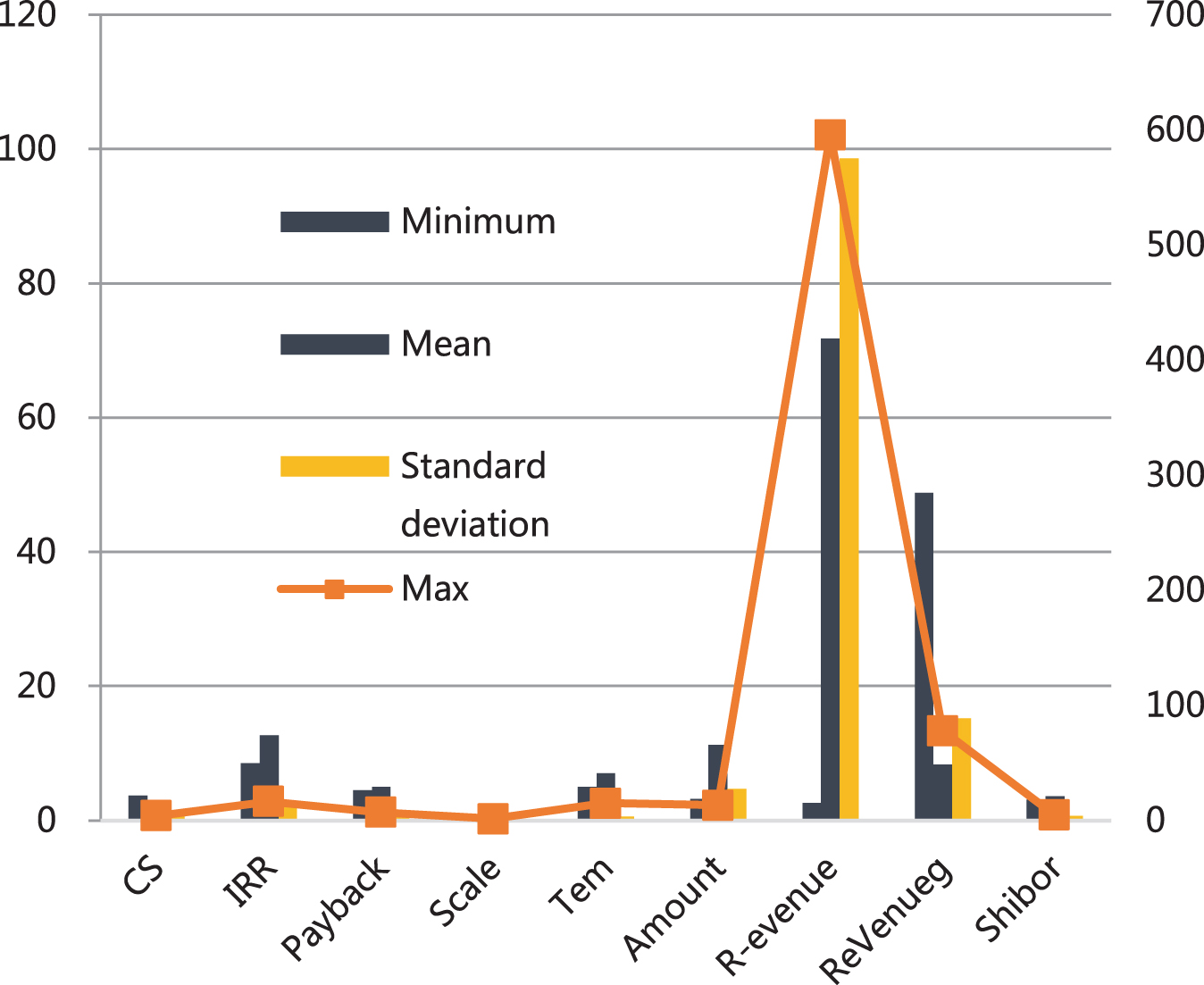
Statistical diagram of sample number, minimum and maximum.
This paper tests the collinearity of the non-financial factor model. In terms of testing methods, this paper uses variance inflation factor (VIF) for testing. Generally speaking, when VIF < 10, there is no serious collinearity in the model. The VIF positive inspection results are shown in the following table and Fig. 2.
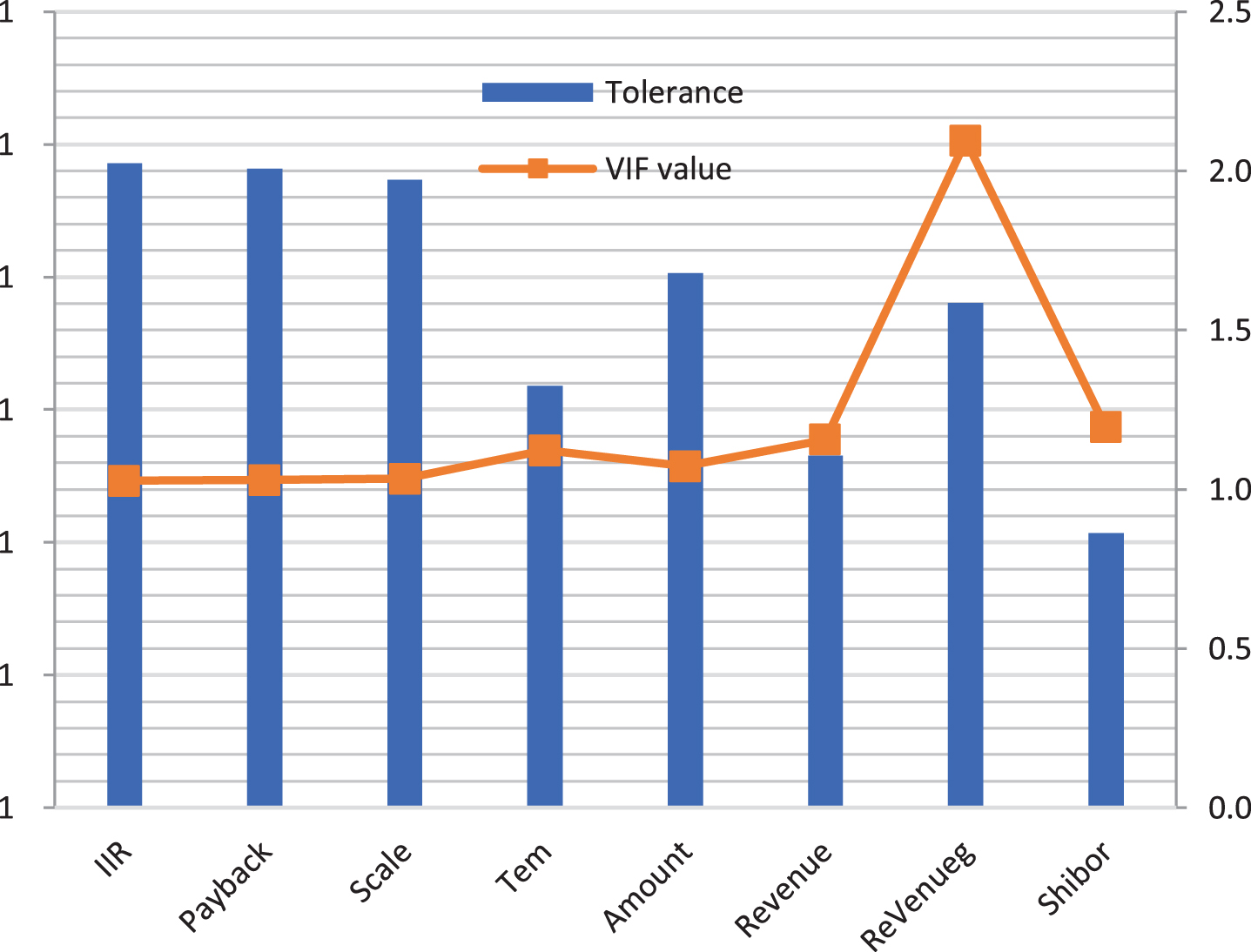
Statistical diagram of the results of the multicollinearity test of the financial model.
Through Pearson correlation analysis and multicollinearity test, it can be known that the model does not have high correlation or multicollinearity, and linear regression can be performed. Multicollinearity test results of the financial model as show in Table 3.
Multicollinearity test results of the financial model
This paper conducts a linear regression on the non-financial factors and the credit spread of corporate bond issuance, and the results are shown in Table 4 and Fig. 3.
Linear regression results of the financial model
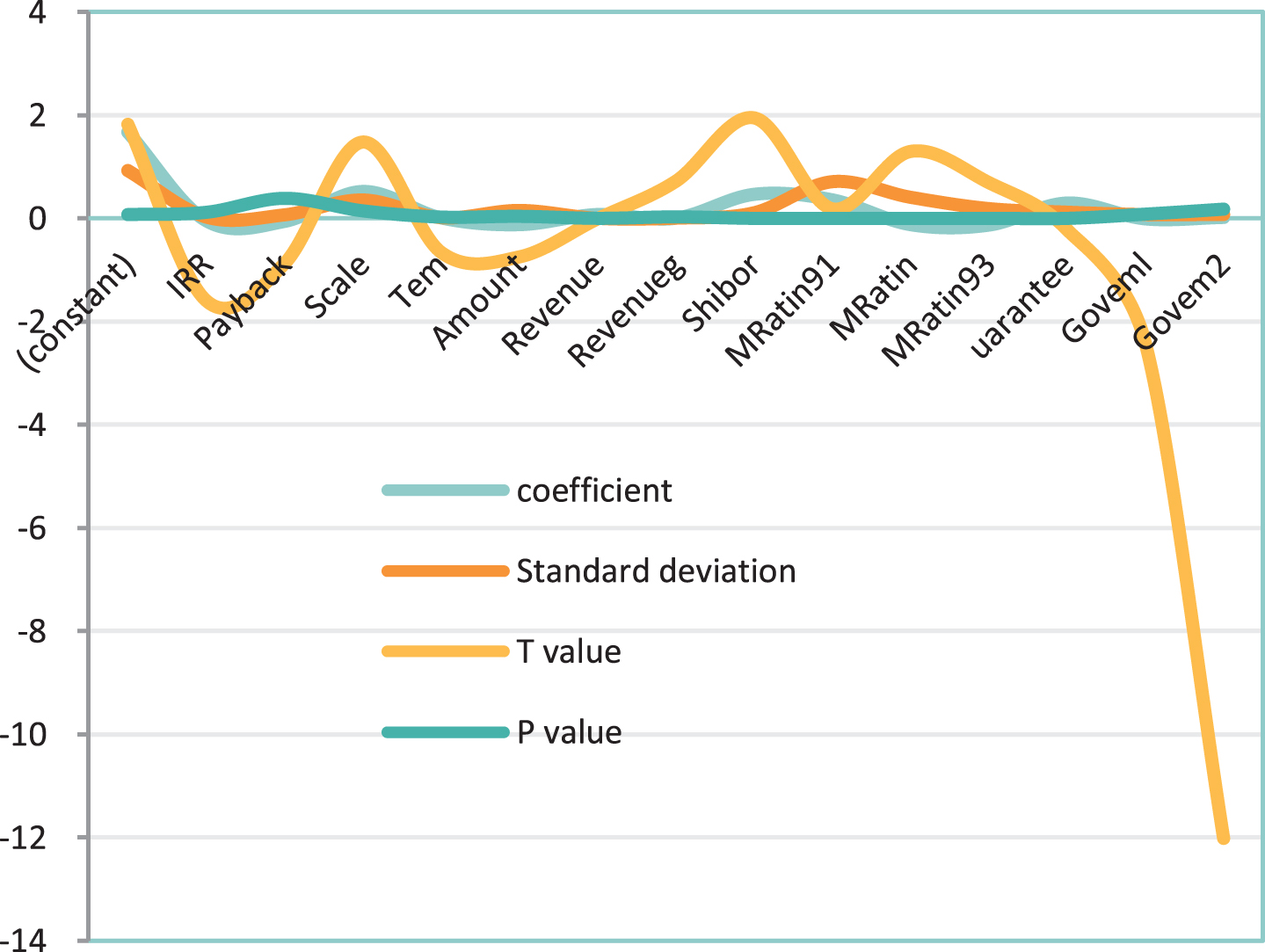
Statistical diagram of the linear regression results of the financial model.
According to the linear regression results, the three indicators selected in the core elements of the fund-raising project are not significant. It shows that the credit spread of corporate bonds is not affected by the after-tax internal rate of return, dynamic investment payback period and the scale of the bond issuance coverage of bond issuance scale. In other words, the setting of fundraising projects does not affect investors’ decision-making. The insignificant regression results may be caused by the unreliable economic benefits of the fundraising project, the issuer’s inability to achieve the expected income through the operation of the fundraising project, the conflict of interest between the trustee management affairs and the trustee, and the lack of systems and supervision. If the arrangement of fundraising projects and project income covering the total investment, and the priority of project income for repaying the bond principal and interest is effective, the credit spread of corporate bonds will be affected by the fundraising project setting and project economic benefits. This paper selects the after-tax internal rate of return, dynamic investment payback period and the scale of fundraising projects as the core indicators of fundraising projects. After substituting the above indicators into the linear regression model of corporate bond credit spreads, it is found that the relationship between the relevant indicators and the credit spreads of corporate bonds is not significant. That is, investors are not affected by the design of fundraising projects and the economic benefits of fundraising projects in the process of making investment decisions. Descriptive statistical table of financial variables as show in Table 5. Multicollinearity test results of the financial model as show in Table 6.
Descriptive statistical table of financial variables
Multicollinearity test results of the financial model
This paper makes descriptive statistics on various variables in financial factors, and the statistical results are as follows.
According to the descriptive statistical results of financial variables, corporate bond issuers’ quick ratios, gross profit margins, operating income growth rates, and asset-liability ratio indicators have relatively large standard deviations, indicating that different issuers have large differences. The average value of EBITDA interest-bearing debt is 0.2025, and the standard deviation is small, indicating that the coverage ratio of corporate bond issuers’ EBITDA to their interest-bearing debt is generally low. The average value of non-operating income/net profit is 0.7031, with a small standard deviation, indicating that corporate bond issuers have generally poor earnings stability and profitability. Since the non-operating income sources of urban investment companies are mainly government subsidies, the issuer’s profit level is generally highly dependent on government subsidies, and the company lacks market-oriented operations. Descriptive statistical diagram of financial variables as show in Fig. 4.
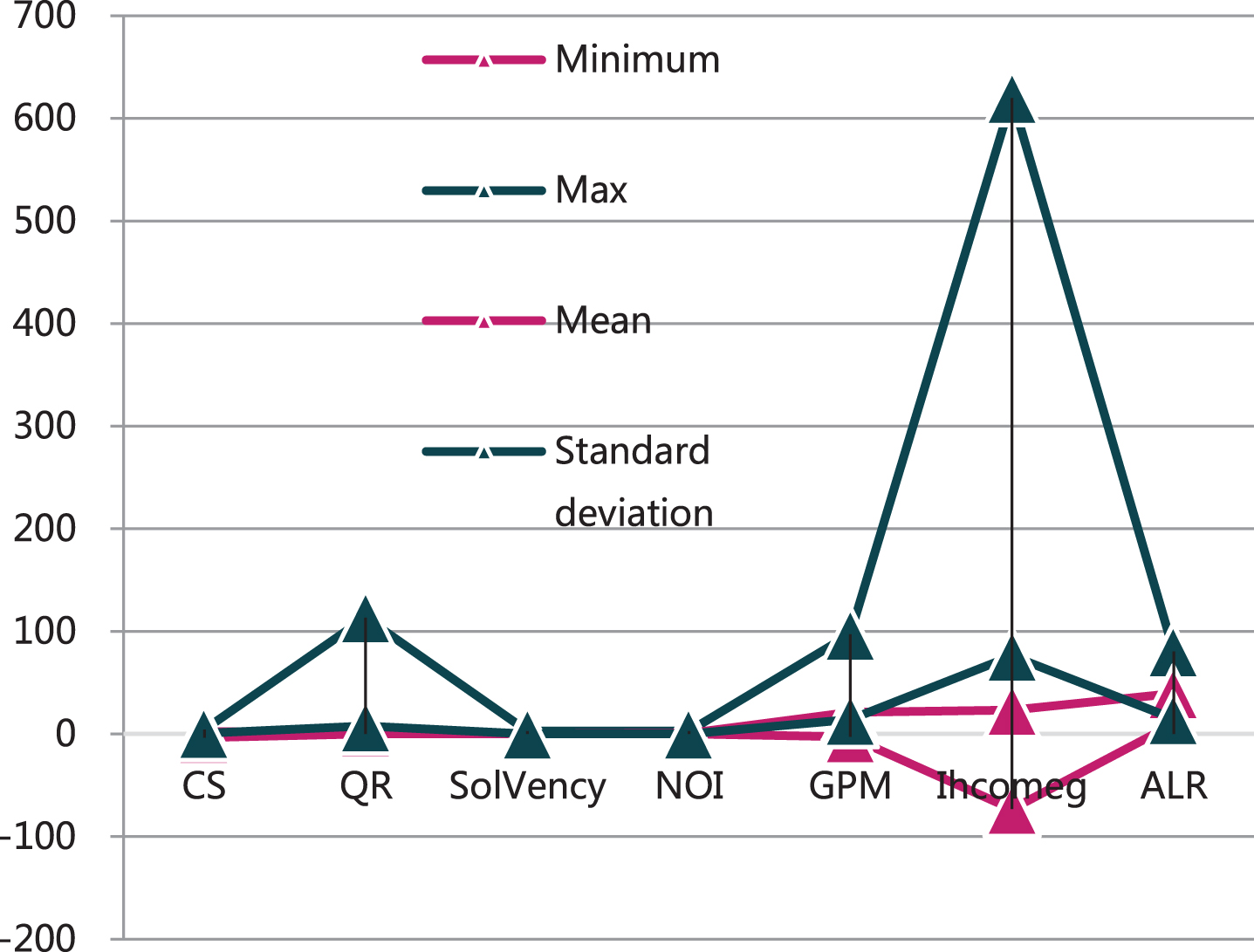
Descriptive statistical diagram of financial variables.
This paper tests the collinearity of the financial factor model. In terms of testing methods, this paper uses variance inflation factor (VIF) for testing. Generally speaking, when VIF < 10, there is no serious collinearity in the model. The VIF inspection results are shown in the table.
The statistical diagram corresponding to the VIF test result is shown in Fig. 5.
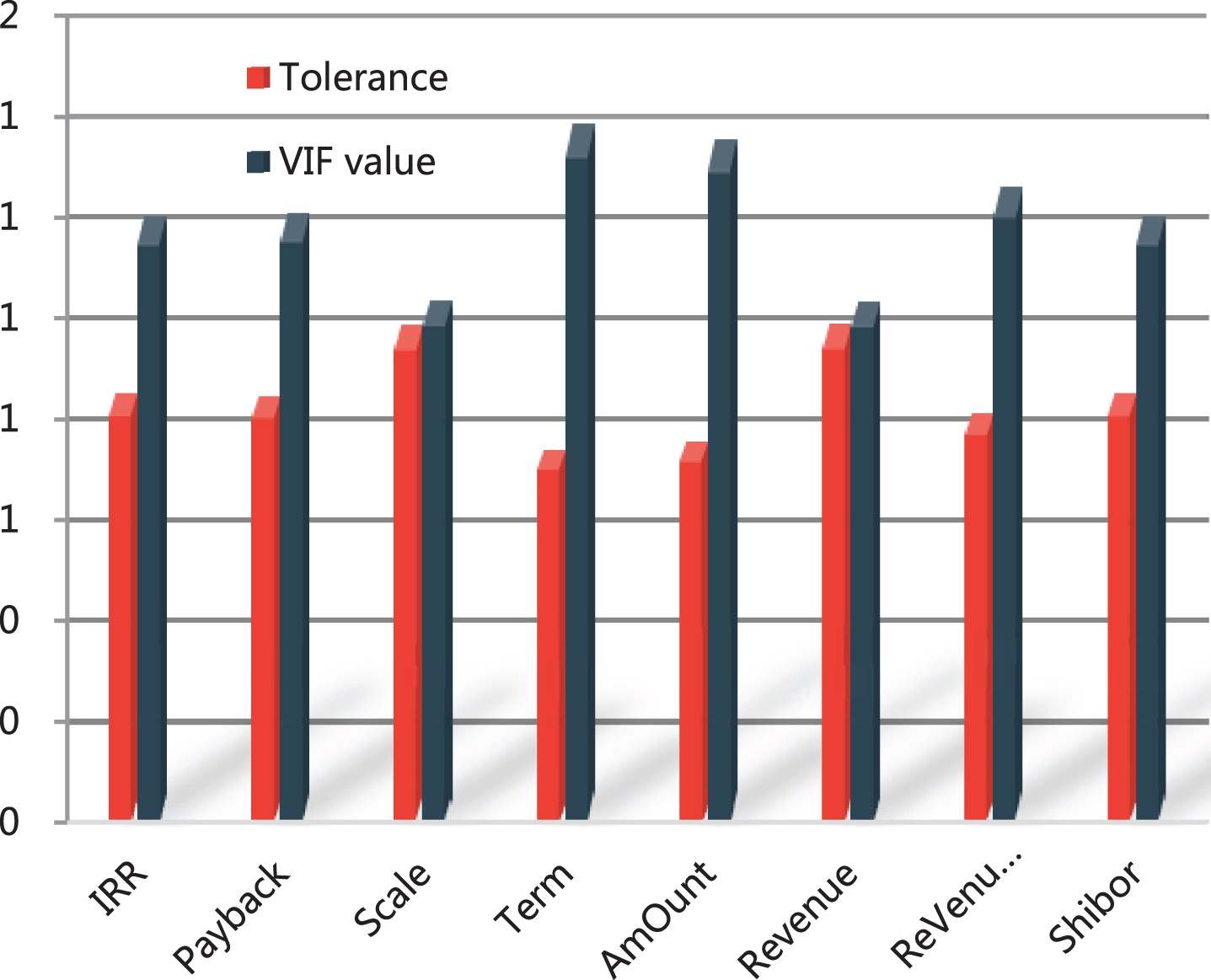
Statistical diagram of the results of the multicollinearity test of the financial model.
Through Pearson correlation analysis and multicollinearity test, it can be known that the model does not have high correlation or multicollinearity, and linear regression can be performed.
This paper makes a linear regression of non-financial factors and credit spreads of corporate bond issuance. The results are shown in Table 7 and Fig. 6.
Linear regression results of the financial model
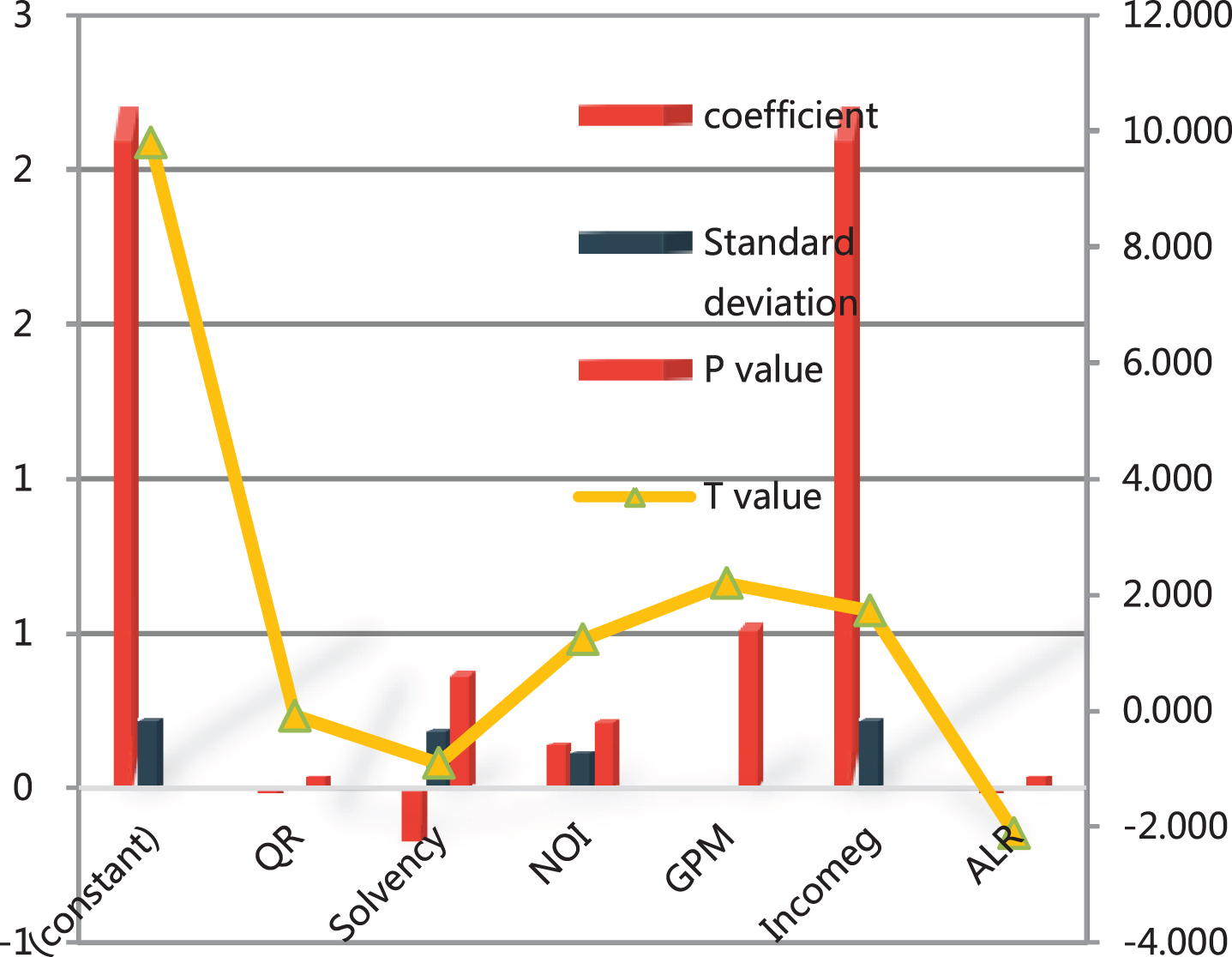
Statistical diagram of linear regression results of financial model.
According to the linear regression results, the quick ratio coefficient is negative and significant at the level of 5%, which is the same as the original hypothesis, indicating that issuers with better short-term debt repayment ability have relatively small credit spreads. The P value of EBITDA interest-bearing debt and non-operating income/net profit is not significant. It shows that investors are less affected by the above indicators when making investment decisions. The main reason may be that the issuers of corporate bonds are mostly urban investment companies. Therefore, the degree of coverage of its own earnings on interest-bearing debt and its own profitability are not of concern to investors. Similarly, the P value of gross profit margin is not significant. The main business of corporate bond issuers is mostly urban infrastructure construction and shantytown reconstruction. The revenue recognition of the above business is mainly based on the entrusted construction agreement signed by the issuer and the government, and the income obtained by the issuer after the completion of the entrusted construction work is determined according to the agreement in the entrusted construction agreement. Therefore, the main business operations of corporate bond issuers are not market-oriented behaviors, and the level of gross profit margin has limited ability to reflect their actual debt solvency. Therefore, investors will not pay too much attention to this. The correlation coefficient of the growth rate of operating income is negative, significant at the level of 1%, indicating that the higher the growth rate of the issuer’s operating income, the smaller the credit spread, which is consistent with the original hypothesis. The main source of income for corporate bond issuers’ main business is government construction projects. The increase in the growth rate of operating income often means that the issuer’s acceptance of government projects has increased. The reason for the increase in government projects undertaken by issuers may be that the issuers have received more attention from local governments and their infrastructure construction functions have increased, or local governments’ disposable financial resources have increased, and the number of new projects started. The correlation coefficient of the asset-liability ratio is negative, which is significant at the level of 5%, which shows that the larger the issuer’s asset-liability ratio, the smaller the credit spread, which is contrary to the original hypothesis. Generally speaking, the higher the issuer’s asset-liability ratio, the greater the financial risk, which in theory will increase the credit spread. For this special situation of corporate bonds, it can be understood that the issuer’s debt burden is heavier, indicating that it has undertaken more important local financing or construction and operation functions. Moreover, the implicit guarantees provided by local governments will be stronger, thus narrowing the credit spread at the time of bond issuance. Urban investment companies and general production and operation companies need to provide guarantees for issuing corporate bonds with asset-liability ratio requirements of 65% and 75% respectively; Therefore, the higher the issuer’s debt-to-asset ratio, the better the rating status of its subject. The adjusted R2 of the financial factor model is 0.19l, which is not strong in explaining credit spreads, indicating that the marketization of corporate bond issuers is relatively low, and financial factors have little influence on corporate bond issuance credit spreads.
In the process of establishing the full-variable regression model, this paper adopts a stepwise regression method to screen variables to eliminate the effect of multicollinearity. In the process of stepwise regression analysis, by stepwise regression of all variables, variables with multicollinearity are eliminated. A total of 4 models are obtained by stepwise regression, and the model with the highest degree of fit is selected as the full-variable model. The results are shown in Table 8 and Fig. 7.
Linear regression results of the financial model
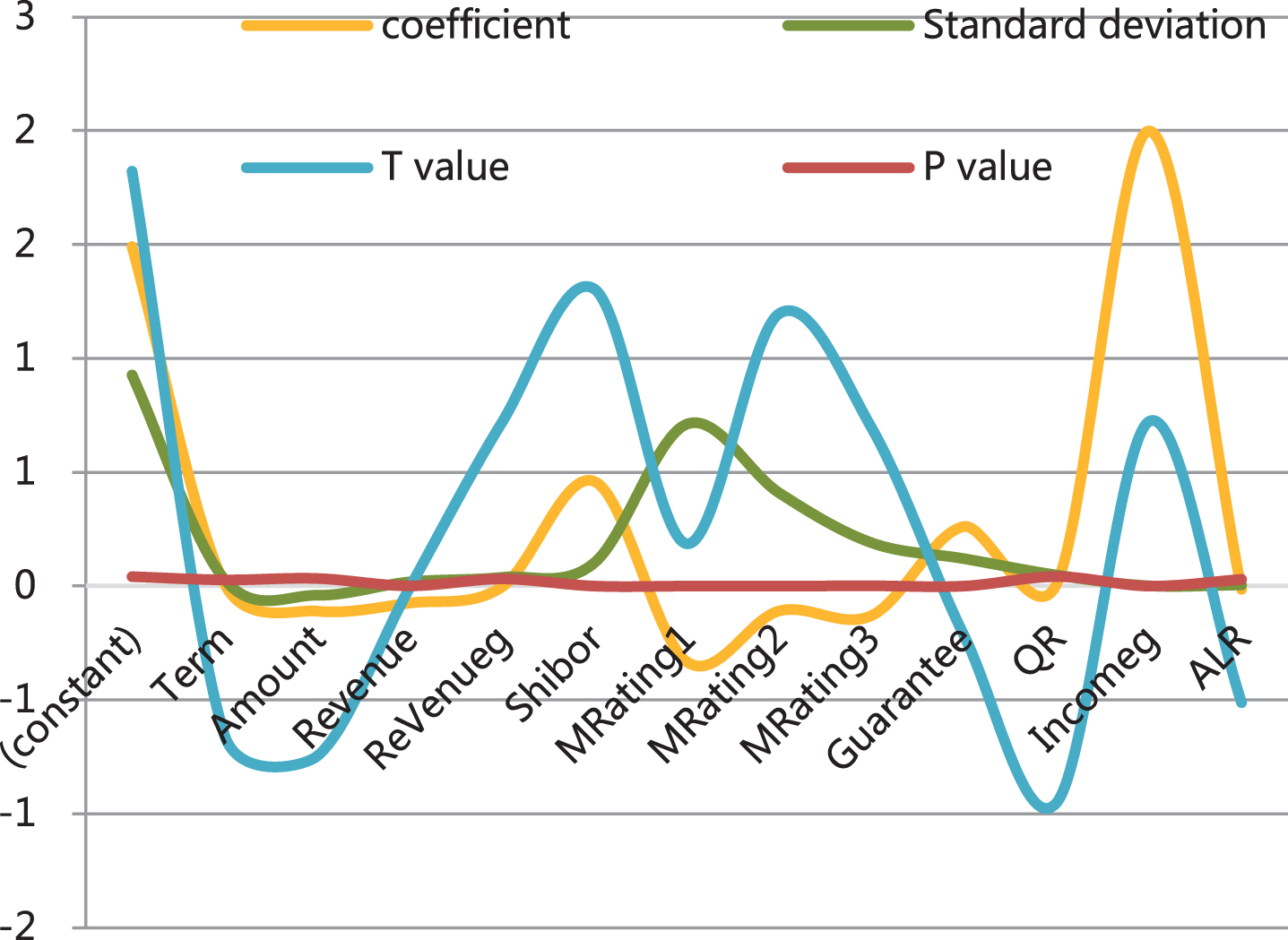
Statistical diagram of linear regression results of financial model.
The fit of the full-variable model is 0.592, which is 0.07 higher than the non-financial model. This result shows that financial factors are weak in explaining corporate bond credit spreads. At the same time, the coefficient symbols of each variable in the full-variable model are the same as the regression results of the financial model and the non-financial model, indicating that the regression results of the financial model and the non-financial model are credible.
The research object of this paper is the credit spread of corporate bonds between banks. Moreover, this paper attempts to study the explanatory power of systemic risks caused by macroeconomic factors for credit spreads at the index level of the entire market bond portfolio that disperses non-systematic risks.
Based on the multi-factor no-arbitrage model, the linear relationship between the credit spread and the risk premium of each factor is obtained. At the same time, combined with previous research results and observations of current market reality, paper identifies five important macroeconomic factors: actual economic output factors, inflation factors, stock market volatility factors, stock market return factors and inter-bank funding factors. The above is the empirical theoretical model basis of this paper.
Regarding the explanatory power of the model, the similarity between the two regressions is that the longer the period and the lower the rating, the stronger the explanatory power of the model. The highest adjusted R2 is between 50% and 60%. As for some factors that are not explained in the model, in addition to random disturbance factors caused by data indicator deviations and abnormal conditions, they also include factors that are not shown in the model’s independent variables such as taxes and market emergencies. It can be guessed that the credit spreads of bonds with shorter maturities and higher ratings are more affected by these factors.
Footnotes
Acknowledgments
National Natural Science Foundation of China: Study on ecological risk and regulation of unused land transformation in Tarim River Basin, 71663051.