






Abstract
BACKGROUND:
Safety culture in Emergency Departments (EDs) requires special attention due to unique operational feature of the ED environment. Which may influence a culture of patients’ safety in the ED.
OBJECTIVE:
To identify the factors that influence patient safety culture in EDs.
METHODS:
A qualitative study using semi-structured interviews with 12 ED staff was carried out in two Australian EDs. The data was thematically analysed to identify and describe the factors perceived by staff as influencing patient safety culture.
RESULTS:
The findings revealed four super-ordinate themes and 19 categories. The themes were the following: (1) Environmental and Organisational; (2) Healthcare Professional (3) Managerial factors; and (4) Patients factors.
CONCLUSIONS:
Safety culture in the ED is influenced by complex set of factors. The results of this study may help ED workers with improving patient safety culture and healthcare quality in the ED.
Introduction
Globally, patient safety remains a crucial issue of concern for various healthcare stakeholders and institutions [1,2]. The “To Err is Human” report published by the Institute of Medicine (IOM) two decades ago documented that medical errors were the leading cause of 44,000–98,000 cases of mortality in United States (US) hospitals annually [3]. The report highlighted those medical errors exceeded combined deaths from motor vehicle accidents, breast cancer and Acquired Immune Deficiency Syndrome (AIDS). In this context, medical errors are referred to as deviations in the process of care, which may or may not lead to patient harm [3,4].
Importantly, the IOM revealed that healthcare institutions must have a strong patient safety culture (PSC) in order to reduce medical errors [5]. Patient safety culture represents a key element of quality of care offered by healthcare providers [6]. A safety culture has been conceptualised as the engine that starts the institution moving toward achieving ultimate levels of operational safety [7]. In fact, addressing and understanding how to build and maintain PSC in healthcare institutions is the first step toward improving patient safety [8]. The World Health Assembly encouraged member states to inaugurate and reinforce evidence-based procedures needed for improving PSC in order to improve patient safety [9].
There are many definitions of patient safety culture in the healthcare context [10]. For the sake of this study, patient safety culture is defined as “the integration of safety thinking and practices into clinical activities” [11]. Since culture is characterised by profundity and obscurity [12], it is imperative to reveal its appearances and implications in particular settings [13].
The Emergency Department (ED) is probably the most complex [15,16] and challenging clinical context in the hospital regarding patient safety [15]. The ED is regarded as a high-risk environment due to the number of adverse events that occur [17]. This high-risk environment is characterized by interruptions, time restrictions, high patient volumes and high risk diagnostic and therapeutic procedures [18]. Patients who receive care in the ED experience adverse events between 6% and 8.5% of the time [19,20]. Of these, 36% to 71% are deemed avoidable [21]. Analysis of a sample of 30,195 randomly selected hospital records in the Harvard Medical Practice Study recognised that 1.5% to 3% of adverse events took place in the ED [22]. The seminal Quality in Australian Health Care Study reviewed about 14,000 patient records and revealed an adverse event rate of 16.6%. Of those adverse events, 1.5% happened in the ED [23]. Therefore, the ED requires higher patient safety enhancement efforts than other units in the hospital [24].
A review of the literature revealed that most studies on PSC were performed at the hospital level and used cross-sectional quantitative survey design [25,26]. Furthermore, several researchers have concentrated on the evaluation of PSC in different healthcare contexts, such as intensive care units, operating rooms and primary healthcare centres [27–29]. However, the literature revealed lack of studies that address factors influencing PSC in ED. Therefore, the aim of this study was to identify the factors that influence PSC in the ED setting in the Australian healthcare context. In particular, we deployed qualitative research design to gain an in-depth understanding of ED staff perceptions about factors impacting on PSC in ED setting. PSC assessment permits healthcare establishments, clinicians, and healthcare stakeholders to recognize strengths and weaknesses with respect to safety by providing a clear picture of patient safety and healthcare quality elements [30].
Methods
Study design and setting
This is a qualitative descriptive study which used semi structured interviews with key informants and thematic analysis to identify the factors perceived as influencing patient safety in the ED [31]. The study was conducted across two Australian Emergency Departments based in Queensland between February and December 2018.
Sampling
Participants were identified via purposive and snowball sampling (also termed chain sampling) [32]. Inclusion criteria were: being employed in the involved ED; working at frontline or management positions. Participants were initially identified using the professional connections of the research team and then approached to volunteer for this study because of their work position, expertise, and employee status in the participating EDs. Additional participants were then identified by those who had initially agreed to participate (snowballing). A diversity of experiences was sought to provide a more holistic understanding of the perceptions of key healthcare providers about PSC in EDs.
In qualitative research, saturation has become the gold standard to determine sample size [33]. In this study, data saturation occurred after twelve interviews. Participant recruitment stopped when the participants repeated the same stories, themes, issues and topics about factors that they thought influenced safety culture in EDs.
Data collection
Twelve semi-structured, one-to-one interviews were conducted using a pre-prepared interview guide. The interview guide was developed based on issues identified in the literature and asked the participants views on the factors that influence the PSCe in ED, the way in which those factors influence PSC, who are responsible for those factors, and the way these factors are incorporated within the ED activities.
All interviewees were individually interviewed in a private room in their respective workplace in the two EDs. Each interview lasted about 45 minutes. Eleven of the interviews were conducted face-to-face, and one was a phone interview.
A pilot study was conducted to test the interview script and practice interview techniques. A total of six interviews were performed in the EDs of both hospitals to ensure that the interview methods and schedule were valid and acceptable to participants. However, those participants were not included in the final sample. The pilot study showed that the interview schedule was appropriate and the questions understandable: participants found no ambiguities or difficulties with answering the questions, they thought that the questions were clear, and they could answer the interviewers’ questions well. Therefore, revision was not required.
Data analysis
Interviews were audio-recorded and transcribed verbatim by a professional transcription service. Thematic analysis was performed manually [34]. In this process, each participant’s findings are reviewed against the coded data in the entire data set [35]. The principal researcher coded the transcripts by categorising “chunks” of text into codes that were shorter, but still preserved the words and meaning of participants’ narratives. New ideas and assumptions were developed throughout the coding process. Next the data were categorised and developed into common themes [36]. Furthermore, coding of interviews transcripts was discussed in regular meetings and was cross checked by the researchers to ensure the credibility of the analysis by comparing the coded text between different researchers. Researchers also cross checked both the codes’ connectivity to the themes and the themes interconnectivity. To ensure the confirmability of this research, the methodological approaches during all of the study phases have been audited by the leading author. The study was conducted and reported in accordance with the Consolidated Criteria for Reporting Qualitative Research (COREQ) [37].
Ethical considerations
Ethical approval was obtained from hospital and university Human Research Ethics Committees under approval numbers HREC/17/QPCH/415, 1800000025, respectively. Written informed consent was obtained from the participants prior to the interview. All participants took part in the interviews voluntarily. Assertions were provided by the researcher that the knowledge gathered during the interviews would be handled in a confidential manner. The anonymity of the participants would also be preserved.
Results
Characteristics of the interview participants
As shown in Table 1, twelve participants were interviewed for this study. The participants included six ED physicians (consultants, directors, and team leaders), three nurse leaders, a team leader in an ED pharmacy, a patient safety officer, and a senior administration officer.
Job title of the interview participants (n = 12)
Job title of the interview participants (n = 12)
As illustrated in Table 2, the factors that appear to influence safety culture in the ED were categorised into four main groups, (a) organisational and environmental factors, (b) healthcare professional factors, (c) managerial factors, and (d) patient factors. Each theme was further categorised into subthemes. In this context, it is important to note that excerpts included were discussed by the research team and selected based on the authenticity principle of quotes selection [38]. The authenticity principle refers to selection of the quotes that are most concise, illustrative, and representative in the interview transcripts [38].
Thematic analysis results
Thematic analysis results
Thematic analysis results
PSC in the ED was seen by participants to be influenced by a range of relatively unique organisational and environmental factors including the operational environment, continuous learning, fairness and trust and patient load and overcrowding.
The practice environment of the emergency department
The ED is a unique environment in hospitals, characterised by high uncertainty and patient acuity. ED staff identified several local work factors that could lead to increased patient safety risks. These included a rapidly changing ED environment caused by a sudden upsurge of activity due to high acuity or a large number of ED presentations. Interviewees highlighted the unique context of EDs, in which clinical decision making for life-changing medical interventions is often based on inadequate historical and diagnostic information. One interviewee reported:
“So there are certain things that in my opinion make ED more high risk in general, which are things like high patient turnover, high acuity, limited information available in terms of medical notes, multiple specialties; all ages, newborn to geriatric. Things like that probably apply to all emergency departments.” (Participant 10)
Additionally, interviewees indicated that meso (i.e. hospital) and mega (i.e. governmental) organisational factors beyond the ED also affect PSC. As reported by one participant:
“The hospital culture is really important because if the hospital culture is that ED’s only there to give me work, then the relationship is poor, and it doesn’t perform as a team. So they see the ED as just giving them work, then they don’t treat ED as a priority.” (Participant 11)
Environment of continuous learning
Participants identified that a culture of continuous learning can be supportive of a positive culture. A culture of continuous learning exists when the departmental seeks to learn from errors and integrates performance improvement processes into the care delivery system. The interviewees indicated that learning cultures use root-cause analyses to investigate medical errors and near misses. The participants also stressed the role of the errors reporting system in establishing a culture of learning in the ED, which can lead to safety culture improvements.
The ED staff described the value of regular mortality & morbidity meetings on creating safety awareness among ED staff and promoting an environment of learning in the ED.
“Forum of errors reporting and feedback where we are able to give feedback to ourselves, learn from errors, but also learn from techniques and tactics that people use to provide good quality care and share that. So that’s a culture that we’re trying to build”. (Participant 9)
Other participants spoke of the reliance on research and feedback as a key driver for any development. The interviewees highlighted the role of the PDSA cycle (Plan, Do, Study, and Act) in the ED. Research and PDSA were seen as helpful in identifying non-useful practices in the ED and for promoting other evidence-based interventions that improve PSC. An example cited was the Older Persons Assessment and Liaison service (OPAL) which was created to safeguard elderly patients’ safety in the ED.
“… we’ve created our OPAL section – older persons assessment and liaison service. …. The result is that we see those people earlier; we’re actually getting more of those people home, because we’re identifying services that are available, that they can have, which then stops hospital admissions”. (Participant 5)
Environment of fairness and trust
An environment of trust and fairness is known a “just culture” and is a prerequisite to promote a culture of safety. Participants voiced that ED workers must perceive that they will receive fair and just treatment when incidents or errors happen. They stressed the significance of fostering a trust culture in creating a better PSC. The culture also promotes new ideas and personal initiatives because workers are not at risk of being blamed, which in turn improves PSC in the ED. One interviewee reported:
“We think is very important to instil a culture of no blame when it’s in relation to something that is patient safety. So we encourage everyone to speak up about issues of safety and assure people that individual blame is not going to be allocated when a patient safety issue has occurred”. (Participant 1)
Patient flow and overcrowding
One of the most common barriers to safety cited by participants concerned ED overcrowding. Overcrowding occurs when demands are greater than the capacity of the ED to ensure timeliness of care. Hence, investigating the causes, effects, and prevention strategies for overcrowding is vital. They saw overcrowding as the responsibility of the healthcare system. They understood the consequences of increased demand for acute healthcare, but also recognised that the real cause of ED congestion is related to the capacity and resource constraints of the current system. Overcrowding reduces the capability of EDs to manage and provide immediate access for and stabilisation of patients with an emergency medical condition. It poses high risk to PSC.
As a significant contributor to ED congestion, participants also saw access block as a high-risk to patient harm. Access block is defined as a total ED length of stay for admitted patients of greater than 8 hours [39]. Participants stated that access block mitigation requires sustainable solutions that need governmental and political buy-in and support, with funding models aligned with the desired outcomes. Real increases in physical inpatient bed capacity of both hospitals overall and EDs are urgently needed. This would help meet increasing demands on EDs and reduce access block and overcrowding when combined increased efforts by staff to manage and reduce the overcrowding in the EDs. One interviewee reported:
“… but at the end of the day, you always end up with stumbling blocks, in that the number of beds in the hospital are not under my control. So I can’t put people in beds. So that – just that impacts on the number of people in my department and that becomes overcrowded and then the safety issues associated with overcrowding and access block”. (Participant 7)
Healthcare professional factors
The second domain related to the impact of healthcare professional issues on safety culture. Healthcare professionals’ theme covered factors related to competency issues, personal attributes and professionals’ development, the influence of the personal life of healthcare workers, and the level of teamwork and communication among healthcare professionals.
Competency of healthcare workers in ED
A number of responses identified the impact of ED staff’s competency on PSC. Interviewees indicated that decision making is a key skill for professionals working in the ED. Decisions in EDs are often made under conditions of high uncertainty, time pressures, and risks. This has potential to lead to poor diagnoses and treatment decisions, which decrease patient safety and increase medical errors. One interviewee reported:
“We ask a clinician in any eight-hour period to make, I don’t know, I’m guessing the numbers but let’s say 1200 decisions, and probably at least 80 of those are of a critical nature, either time critical or impact critical or both. So I think there’s a lot going on at the individual clinician level”. (Participant 12)
On the other hand, many interviewees identified the value of training as useful to improved patient safety in the ED. The interviewees described various training programmes to improve staff skills and performance they felt reduced the likelihood of novice employees feeling incompetent and improved their confidence and wellbeing. It also helped both them and the team to be calmer and more efficient due to improvements in their skill through practice. The participants highlighted the usefulness of simulation training for all team members, regardless of experience, education level, or professional background. They noted how simulation training improved teamwork.
Interviewees also highlighted the value of staff education in safety as a contributor to heightened awareness of safety culture. They found a positive association between failures in situational awareness and increased medical errors in ED settings. Therefore, they argued that ED workers should be trained and educated about potential patient safety challenges as they occur. This develops a good “mental model” representing current tasks and risks within their work environment. One interviewee reported:
“… keeping staff awareness, motivation, education at the highest possible level through peer review, clinical incident discussion, educational awareness”. (Participant 8)
Personal attributes
Participants mentioned the significance of approachability of those in senior decision-making roles. Reduced approachability may affect the quality of decision making (diagnosis and treatment) and reduce patient safety. Nevertheless, they also stressed the potential negative impact of being approachable through increased interruptions and workload which can also affect decision making and increase cognitive load. One interviewee reported:
“So I try to make it a big point to be an approachable person so that they feel that they can ask me any question no matter how minimal the question may be. However, that affects my capacity to focus and stop and think deeply about certain problems because if I’m extremely approachable and I try to do that as much as I can, then often there are interruptions that affect my capacity to give a comprehensive answer for a complex problem. So it’s a double-edged sword; I’m quite available, but at the same time, I need to aware in myself that I need to stop interruptions at times to focus. Which then means that maybe somebody who had an urgent problem couldn’t access me and if they couldn’t access me, can they access somebody else?” (Participant 9)
Influence of personal life of healthcare workers on safety culture
Interviewees identified that the personal life of professionals is a factor that influences safety culture in EDs. Interviewees talked about the impact of personal factors such as a marriage breakup and fatigue due to sleep deprivation from young children on their performance and hence patient safety. However, the interviewees indicated that individual staff members are responsible for monitoring their personal factors and mitigating any effects to maintain the quality and safety of patient care in the ED. One participant reported:
“They’ve been up all night with kids, perhaps they shouldn’t be at work, but they’ve had to take a lot of sick leave because of the kids, all of those things affect individual performance … The individual clinician .. has a responsibility to .. manage their own personal factors like their fatigue, etcetera, what they bring to work or don’t bring to work…” (Participant 12)
Teamwork
In the ED, teamwork is considered an essential component of safe care. When the team works well, they make fewer errors than a poorly functioning team. Hence, they stressed the need for stronger efforts to improve teamwork among EDclinicians to achieve a system-wide culture of patient safety. The interviewees highlighted the value of a culture of professional respect within ED teams, in which good relationships among team members are valued. They identified that mutual respect requires an understanding of the responsibilities of other team members to allow identification of lapses in healthcare provision or task overload. For example, interviewees described how mutual respect and good relationships improved patient safety by helping mange overcrowding and enabling redistribution of workload (supported by the team leader). One participant stated:
“So teamwork is essential because if you’re working like a team rather than an individual you’ll be interested in the bigger picture. So you look after things on behalf of your colleagues because the outcome you want is that you’ve all achieved something together, not that you’ve achieved your single piece. So teamwork and perspective are important for positively influencing safety culture in the same way”. (Participant 11)
Communication
Clear and concise communication between healthcare providers is essential to improve both safety culture and patient care quality in the ED. The interviewees identified that failures in effective communication among ED workers can be a major risk to patient safety. They recognised they needed to increase the volume of effective communication, while nonessential and disruptive communication required curtailing to improve patient safety and care. One participant reported:
“I think one of the huge flaws in understanding this word communication is that people think more communication is good. This is a flaw; there is a lot of garbage communication that needs to stop. In fact, sometimes less communication is good. Effective, minimal communication is what is required”. (Participant 9)
Iinterviewees also highlighted is the role of effective communication between healthcare providers and patients for patient safety and optimum post-ED management. They indicated that patients discharged from the ED should understand the ongoing management of their illness. They indicated that ED employees should ensure patients understand their diagnosis, their current treatment, and their treatment follow-up plan.
Managerial factors
This theme highlighted the role of management support and healthcare leaders. This theme highlighted the role of hierarchy between and within professional groups that arise through differences in qualifications, experience and responsibilities which can hinder effective decision making in EDs. Interviewees asserted the need for effective leadership that provides true support and role models for best practice. One participant reported:
“…people naturally are hierarchical, and they need leadership. So I think the role of formal and informal leaders can’t be underestimated in creating culture because people will – people need role models and leadership to foster and support things”. (Participant 11)
On the other hand, emergency teams may have naturally emerging informal leaders in addition to the formal managers. Informal leaders can contribute significantly to the development of safety culture and patient safety, regardless of their job status. Leaders should be actively supported and provided with robust feedback on safety issues.
Non-clinical leaders have a role in establishing a safe environment through ensuring sufficient resources for the ED and its employees. Creating a working environment that is psychologically, financially, physically, and socially safe positively affects safety culture and the provision of optimal care in the ED. Non-clinical ED managers can reinforce fairness and equity among employees. Their job status enables them to take a holistic approach to manage resources in the department.
“…it’s the responsibility of non-clinical staff in leaders’ positions like myself I think we have to give the staff the opportunity to work in a safe environment and offer resources that allow that to happen”. (Participant 2)
Clinical staff and managers need to work closely together to achieve the common goal of a good PSC. Effective engagement in solutions is facilitated when clinical staff feel both heard and respected. Clinicians argued that they need to discuss what “care delivery” means with non-clinical managers, because engaging physicians in examining how the care is being delivered, run and planned can significantly improve healthcare services and is essential to inform any such efforts. However, this requires collaboration between clinical and non-clinical managers and leaders. Such collaboration can increase ED performance, patient flow, patient safety and quality of care.
However, participants also emphasised the importance of the leadership of clinical consultants (ED specialists). They stated that ED employees do everything within their limits to ensure a safe culture and patient safety in Eds, however, they need the physical space and funding to support reflective practice. Consultants can provide essential leadership and advocacy to ensure the ED needs are addressed. That is, the ED leadership managed upwards and requested the resolution for funding shortages.
“I know that the consultant group has recently written a letter to management, and that letter has been signed by most of the – if not all of the – consultant team, requesting that management look at these sorts of issues that we’re talking about”. (Participant 5)
Consultant representation at the hospital executive level can improve PSC in the ED. Integration and collaboration among managers at both hospital and ED levels and their interfaces improved safety culture in the ED.
“We’ve now developed a leadership group in our emergency department who in collaboration with our administration has given consultants like myself an opportunity to look outside of the immediate clinical space. In other words, we’re not just treating patients one at a time, we have – our organisation has given us time to examine the work that we do – paid time to do this, to examine the work that we do, examine other people’s work, collect data and report back”. (Participant 9)
However, other interviewees stressed the role of a top-down leadership approach too for improving safety culture in the ED. They wanted leaders to clearly communicate to all staff the importance of having a culture of patient safety and what they personally need to do to achieve it.
“I think all individuals are responsible for a culture of patient safety, but I think it needs our – to a certain extent, it needs top-down approach. So it needs the leaders of the department to make all the staff aware of the importance of having a culture of patient safety”. (Participant 1)
The interviewees also mentioned the impact of recognition of effort in dealing with the challenges in the ED. They emphasised how listening to staff and acknowledging their efforts and achievements make for happier staff. Happier staff tend to be more aware of their surroundings and take more pride in their work. Therefore, they are less likely to make mistakes. Happier, more engaged staff can change the culture, making the ED a safer environment for all and increases employee’s retention and team stability.
“And I guess if staff know that there’s recognition of all these hard things that they have to come up against, I feel like even just that recognition is enough for them to sort of yeah, refocuses the patient being the number one priority……. So I guess my opinion in general is happy staff means more effective staff. I think happy staff are probably better staff and if they feel listened to and like they’re doing a good job, then I think that changes the whole culture, not just for patient safety but in general”. (Participant 10)
Patient factors
Patient factors contribute to the complexity of the ED environment. Interviewees highlighted that patients present to the ED at unpredictable times and in unpredictable numbers with complex, high-risk, and life-threatening conditions that increase the risk of adverse events and medical errors. For many ED patients, diagnosis and treatment can be complex. Often, patients are presenting to the ED for the first time, with incomplete medical records. They may not know their medical conditions or medications or be in a position to communicate this information. Any of these situations alone can lead to compromised patient safety.
Interviewees highlighted some of the patient factors that affected their ability to provide safe healthcare in the ED. They described patients at most risk for adverse events including those with cultural and language barriers; patients with mental health issues or neurological diseases, and those with substance and/or alcohol abuse, especially those taking methylamphetamine (ice).
“It also depends on the type of patient. Like there will be days where you’ve got a lot more say psych patients who may be a bit more agitated or aggressive. So that in effect can affect the safety of other patients and your own safety and staff safety. Also, they can be distracting in that they occupy a lot more of your time and then you’ve got less time with other patients to sort of make decisions and work out what’s going on”. (Participant 7)
“Alcohol and drugs, ice is the worst drug that I’ve ever seen, street drug, and people will tell us absolute shit. Like they won’t tell us their name, they won’t tell us where they’re from, they won’t tell us what’s wrong with them, they’ll just think it’s the government’s chasing them or they’re acutely paranoid”. (Participant 12)
Interviewees also highlighted the importance of post-discharge communication with carers and the patient’s general practitioner for patient safety, including helping patients to become more responsible for their own medical conditions.
“So, also, I suppose when you speak to a patient say at discharge, and you’re giving them advice, they are actually responsible for their own health as well, and we can give them advice, but we don’t ultimately determine their entire outcome. Their disease may naturally progress, and they have a responsibility themselves to recognise that at discharge things haven’t gone the way that they thought they would go, and that they, patients, actually have a responsibility for their own healthcare as well.” (Participant 3)
Discussion
Patient safety culture (PSC) is critical for quality healthcare delivery in general and EDs in particular [40]. This research explored PSC in Australian EDs and the factors influencing that culture. The findings of this research have largely confirmed the elements of the conceptual framework previously reported by Alshyyab, FitzGerald [41]. However, this study identified new factors relating to the specific context of the ED that make a significant contribution to the PSC. These include the effect of the nature of patients attending EDs in Australia and the uncertainty associated with patients with life-threatening illnesses which can heighten emotions and require a calm environment, effective communication, and teamwork to enable sound decisions.
The factors identified in this research may be consolidated in those that relate to the external environment (Outer context) and those relating to the internal environment of the ED (Inner context). These factors together influence the key elements of PSC in the ED context, including effective communication, a commitment to organisational learning, transparent reporting, teamwork and management support. The relationships are captured in the attached diagram (Fig. 1).
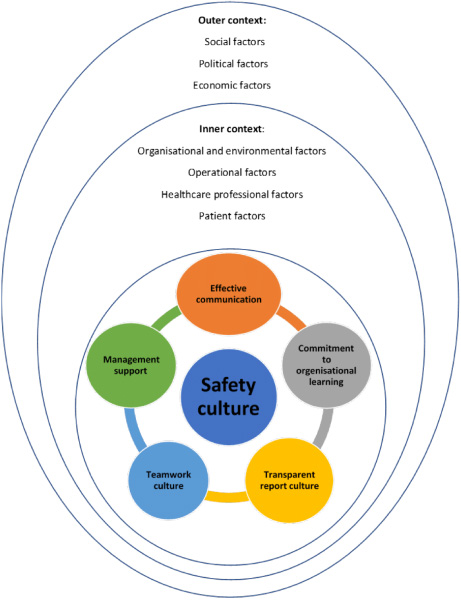
Modified conceptual framework for PSC in EDs.
The outer contextual factors lie beyond the healthcare organisation’s sphere of influence and include social systems, the economy, policies, laws and legislation [42]. In this study participants blamed socio-political influences for shortages in both the healthcare workforce and hospital beds. Such shortages affect the healthcare practice environment and consequently safety culture and patient safety. Therefore, effective and lasting solutions for building closer working relationships between politicians and healthcare leaders are desperately needed. The ED leaders in this study recognised that they need to be politically astute and lobby politicians and system managers for the resources they require. They recognised political and social advocacy as a necessary skill for ED leaders. Therefore, redesigning the healthcare system to mitigate the negative effects of socio- political influences is warranted [43]. Furthermore, funding should also address the reporting systems and infrastructure required to enable efficient practice [44].
However, the authority to deal with factors such as staffing levels, access block and associated overcrowding is limited by the broader socio-economic and political environment. Awareness, recognition and understanding of their implications may assist in the creation of an atmosphere of trust and thus contribute to the safety culture environment.
The inner contextual factors are those most in the immediate view of those working in the ED. Those relating to the nature of patients in the ED may be difficult to address although awareness and understanding of these challenges and support for staff in dealing with them may help with the promotion of a safety culture. Patients may be presenting with life-threatening illnesses with associated uncertainties, which requires a calm environment in which to make sound decisions. Participants argued that running a shift in an ED at an executive level requires the leader to instil a “sense of calmness and equanimity in the midst of chaos”. The leaders set the tone for how people interact in order to remain “focused and calm”.
ED managers described the working environment of ED staff as a complex and high-pressured environment. Staff must optimise clinical decision making under stressful conditions [45]. Making sound clinical decisions in such a complex social environment, under time pressure with multiple interruptions and with incomplete information about patients’ medical and medication histories, is difficult. Participants nominated this as one of the risk factors for making medical errors. They also explained how their high workload and highly stressful environment reduced efficiency. They saw workforce shortages, access block, overcrowding, and frequent interruptions at critical times as affecting their ability to make sound clinical decisions and ensure patients’ safety [46]. Zavala et al. [45] also identified that organisational systems, workload, time constraints, teamwork, human factors and case complexity affect clinical decision making in dynamic contexts.
ED overcrowding is a worldwide issue [47,48]. In Australia, eight million people presented to EDs between July 2017 and June 2018 [49]. This study’s findings on overcrowding are almost identical to those of Morley et al. [50]. In their systematic review, those authors identified many causes of ED crowding: increased presentations of patients with urgent and complex needs; low-acuity presentations; elderly presentations with complex needs; ED nursing staff shortages; inexperience of junior ED doctors; delays in receiving laboratory test results; and delays in patient turnover rates. In addition, the current study identified access block (i.e. the failure to transfer a patient out of the ED to an inpatient bed once their ED treatment is completed) as a major contributor to overcrowding. This finding revealed that is a complex issue that is influenced by limited access block, and increased complexity and acuity of patients [48,50]. We suggest utilisation of interventions involving primary healthcare professionals to manage ED overcrowding [51]. For instance, streaming ED patients at triage to an area within ED staffed by primary health care professionals, for treatment of low acuity patients [52].
The findings from this research emphasised that learning culture embodies not only learning from the reported healthcare errors, but also learning from the daily practice and processes of healthcare professionals at the local level, which is similar to the finding of Sujan [53].
The findings of this research highlighted obstacles and blockages to effective teamwork, one of which was the hierarchical nature of ED teams. Specifically, healthcare providers such as physicians, nurses, pharmacists, technicians, and others working in the ED often perceive they work within their own group, because the culture of hierarchy forces them to remain within their professional silos or boundaries. Interviewees described the impact of the hierarchy on teamwork. Similarly, a study by Rabøl et al. [54] found that power imbalance between medical and nursing staff led to less effective teamwork, communication and patient care.
The professional issues are subject to improvement. Leadership can set the tone and model the professional standards and conduct expected and reinforce those standards through feedback. They can encourage teamwork and effective communication and help minimise the intrusion of personal issues in the workplace by providing a supportive and nurturing environment.
Similarly, organisational, and managerial issues are subject to effective management styles and practices. Management can endorse the value of trust and fairness and the creation of an environment of continuous learning. The creation of a PSC in the ED should tackle the factors that can be influenced. Obviously, ED management or staff cannot easily influence the outer context or the societal environment. Additionally, much of the inner context is difficult to control. The ED is the place where people present with acute medical conditions and injuries to seek medical care. Hence, patient factors may be difficult to change, although participants expressed understanding and commitment for provision of patient centred care. Although organisational structures such as overcrowding, whole-of-health-system issues and broader economic issues significantly affected the quality of healthcare provided, these factors are often beyond the direct control ED staff.
Nevertheless, the impact of these factors can be mitigated. Greater understanding and support for the challenges they pose to staff and an understanding of the psychological impact of the work on ED staff may lead to improved approaches to staff welfare, which in turn will improve patient safety. In addition, such changes could improve efficiency and effectiveness by reducing staff turnover and its consequences (e.g. a large novice workforce) identified in this study.
This study presents a detailed picture of ED stakeholders and managers perspectives and offers information that may be relevant to improving PSC and patient safety in the study context. One of the strengths of the current study is that a diverse range of ED staff were recruited to obtain various array of viewpoints. Moreover, our study is, to our knowledge, the first to specifically attempt to investigate these perspectives.
However, as with any qualitative inquiry, this study may not be truly representative. ED staff- reported perceptions of PSC may be influenced by social desirability response bias i.e. the inclination of the participants to report socially acceptable responses [55]. Nevertheless, introducing the nature of the study to the participants was used by the researcher as a technique to limit the risk of these bias. The subjective nature of qualitative research analysis is also a limitation of this design [56].
The participants in the present study were recruited at EDs in two tertiary care hospitals in Queensland, Australia. This was done for convenience relating to access. However, the findings are not intended as a commentary on the functioning of those hospitals but rather as a means to identify general principles that may apply to all hospitals. Nevertheless, there may be cultural and other issues relating to those hospitals which may reflect in the findings. Due to variations in the ED environment, viewpoints of ED staff from other hospitals may be different. Further validation in other institution and other jurisdictions may be necessary to further validate the findings. The potential to apply qualitative research findings to other research settings depends on the ability of the reader to determine for which other circumstances the findings might provide valid knowledge.
Conclusion
This study offered rich and comprehensive information about the main factors that affect patient safety culture in ED setting.The data derived from interviews with ED employees were categorised under four super-ordinate themes: Environmental and Organisational; Healthcare Professional; Managerial; and Patients. Under these themes, the findings highlighted the most concerning issues for ED employees that affect their daily work, and which they perceived may impose risk of medical errors and adverse events. Therefore, jeopardises patient safety and quality healthcare in ED context.
Footnotes
Acknowledgements
Our heartfelt thanks go to health facilities managers in facilitating the smooth conduct of the study. We thank the study participants who shared their time during the entire period of the study.
Conflict of Interest
The authors declare that they have no conflict of interest.