







Abstract
The final properties of advanced composite parts manufactured from prepregs are strongly dependent on the combination of raw materials' properties and manufacturing parameters. Therefore, monitoring techniques that can characterize the prepreg cure advancement and the effects of this advancement on the curing process are of great interest to composite industries. In the present work, dielectric analyses were performed using a previously developed simple and low-cost device, as a successful alternative to track prepreg out-time and the specificities of aged prepregs curing process. The findings point out that, despite the temperature and humidity influence in the measurements, models for estimating prepreg out-times can be developed based on dielectric analyses results. Also, the dielectric properties can signalize the necessity of cure parameters adjustments, which might lead to the extension of prepreg out-time limits without significant detriment to the performance of the final part.
Introduction
The manufacturing of advanced composite materials commonly involves the use of pre-impregnated raw materials (prepregs).1,2 Even though many advantages are associated with the use of this type of material, like integrity during handling and a uniform fiber/matrix ratio on the final part, one main disadvantage is the cure advancement (prepreg aging) during manufacturing. This phenomenon consists on the progression of the matrix cure reaction due to the exposition of the prepreg to the environmental conditions during its transportation, cutting, and lay-up. Such conditions can favor the cure reaction and, for this reason, manufacturers recommend the storage of prepregs in sealed packages at −18℃ 3 until its use, with aims to drastically reduce the cure rate and prevent moisture absorption. Even though the cure advancement associated with the exposition to conditions differing from the recommended storage occurs at low rates when compared to high temperatures, 2 the sum of the exposure time (out-time) of a prepreg roll to these conditions can result in irreversible changes that may impair the processability of the prepreg, turning it into waste.
Many techniques have already been presented as means of characterizing the processability of aged prepreg materials regarding some of its properties like viscosity, 3 tack, 4 heat of reaction, 2 and pre-cure degree. 5 Findings are of great interest in understanding the prepreg aging phenomenon and its impact on the final part but, still no definitive solution was proposed in order to assure the traceability of the out-time. This feature becomes specially interesting for composites industry purposes if based on a low-cost and low-complexity equipment that can allow the estimation of the out-time of prepreg specimens extracted from rolls that might have been exposed to uncertain time and humidity conditions during import, transportation or even in the event of a blackout.
Dielectric analysis (DEA) is one type of analysis that has been mostly explored as a highly sensitive technique for monitoring composites' industrial curing cycles.6–11 As presented by other authors, 12 the DEA of cure involves the monitoring of electrical polarization and conduction properties of polymeric systems subjected to a time-varying electric field. So, as the curing reaction progresses, these properties are strongly affected by the crosslinked network formation that causes the reduction of ion mobility throughout the system. Therefore, the measurement of dielectric properties, such as impedance, provides means of characterizing the state of cure of thermosets. Even though the DEA of cure principles might intuitively lead to the expansion of its applicability into monitoring prepreg cure advancement related to out-time, still, to the best of our knowledge, only few works are found in literature correlating DEA and prepreg out-time. In chronological order, the state of the art for this matter is composed by the work developed by Day and Shepard, 13 in which dielectric sensors are used to study out-time effects on epoxy prepregs with glass and graphite reinforcements. The prepreg aging was thermally accelerated and dielectric properties' variations were measured up to 25 days of out-time. The other two papers that compose the state of the art belong to the same authors, Kim et al.,14,15 and explore the application of DEA as an out-of-autoclave prepreg out-time monitoring technique with focus on the prepreg aging effect on the curing kinetics, viscosity, gel time, and vitrification properties.
Also, as this type of analysis can be based on a simple assembly involving small sensors and a low-cost impedance analyzer equipment, 6 DEA can become very attractive to industries by its noninvasive and high-sensitive nature. 14 Therefore, in this scenario, the present work aims to continue to explore the field of DEA as a technique for tracking the prepreg out-time and its effects on an autoclave cure analogue thermal cycle. The measurements are performed using a portable, low-cost, and low-complexity operation equipment that can be very attractive to industries by allowing the vis-à-vis measurement of the out-time of prepreg specimens and the characterization of curing specificities of aged prepregs.
Experimental procedures
Prepreg material
The prepreg material used on the present work is based on tetraglycidyl-4,4′-diaminodiphenylmethane (TGDDM)/4,4′-diaminodiphenyl sulfone (DDS) resin/hardener epoxy system. As stated by the manufacturer, the prepreg material is formed by 30% in volume of resin, 60% of reinforcement fibers and 5% of polyamide thermoplastic particles. The presence of such toughening particles is also confirmed by DMA analyses performed in another previous study. 16 The manufacturer also suggests that the prepreg autoclave thermal curing cycle be consisted of two main steps, being the first step a heating ramp from room temperature to 177℃ with a 1.5℃/min heating rate. The second step consists on a temperature hold (177℃) during 120 min. Further information on the material are protected by determination of a nondisclosure agreement between the involved institutions. This determination, though, does not affect the quality of the present work as results will be presented in a comparative way.
Specimens preparation and conditioning
The first step of specimens' preparation was the removal of the prepreg roll of the freezer, where it had been stored at -18℃. The entire roll was left to equilibrate with the clean-room environment (24℃ and 50% of relative humidity) for approximately 12 h before the opening of the package to prevent moisture absorption. Then, after the 12 h of homogenization, six specimens of 100 mm × 50 mm were manually extracted from the prepreg roll and left to be aged in the controlled clean-room environment. Each time a specimen reached its pre-established out-time (0, 5, 15, 30, or 60 days), it was subjected to the programmed analyses, as described in the following topics.
DEA of prepreg aging and curing process
All DEA were performed using parallel plate sensors manufactured from electronic phenolic boards with 100 mm × 50 mm dimensions. The sensors were attached to an impedance converter using a twisted cable that supports elevated temperatures, while the converter was connected to a computer using an USB entry. A more detailed description of the simple and low-cost DEA assembly used herein is presented in a previous work. 6 The frequency to perform all the analysis was selected as 1.5 kHz. Regarding the impedance values accuracy, it is important to state that 20 measurements for averaging are automatically performed by the equipment for generating the output of each impedance data.
Six specimens formed by a single 100 mm × 50 mm prepreg layer were subjected to DEA to both understand the effects of prepreg aging on its dielectric properties at different relative humidity and temperature values along with their behavior during cure. To do so, the specimens were inserted between the sensor parallel plate electrodes and, due to the conductive nature of the carbon fibers, a peel ply was inserted between the prepreg and the electrodes. For five of the above-mentioned specimens, every time its pre-established out-time was reached, it was removed from the clean room and the DEA measurement was performed. All DEA were performed in an air oven where continuous measurements were taken during the two-step autoclave analogue thermal curing cycle suggested by the prepreg manufacturer (20–177℃ followed by a 120 min temperature hold). An extra data acquisition period of 80 min at 177℃ was added during the measurements in order to verify any possible delays and variations on the curing process related to the aging of the prepreg material.
The one specimen left aside was used to verify the effects of the relative humidity in DEA measurements. Therefore, this specimen was removed from the clean-room environment at each pre-established out-time and DEA measurements were performed at an environment with controlled temperature (20℃) and uncontrolled relative humidity. After each measurement, the specimen was returned to the clean room until it reached its final out-time of 60 days.
The dielectric property chosen to be explored regarding the prepreg curing in the present work is the logarithm of the resistivity (
Results and discussion
DEA of prepreg aging
Figure 1 presents the ion viscosity measured by DEA as a function of the out-time of the material. These measurements were taken at 30℃. As it can be seen, a significant decrease in the IV values occurs during the first five days of exposition. This initial drop might be associated with the moisture absorption by the prepreg during the first five days of exposition to the humidity of the clean-room environment. As stated by other authors,12,18 the moisture uptake and, consequently, the diffusion of water into polymeric structure of the matrix becomes another source of mobile dipoles that contribute to the overall conductivity of the polymer matrix, decreasing the prepreg resistivity (ion viscosity) values.
Prepreg ion viscosity values as a function of out-time for the DEA measurements performed at 30℃.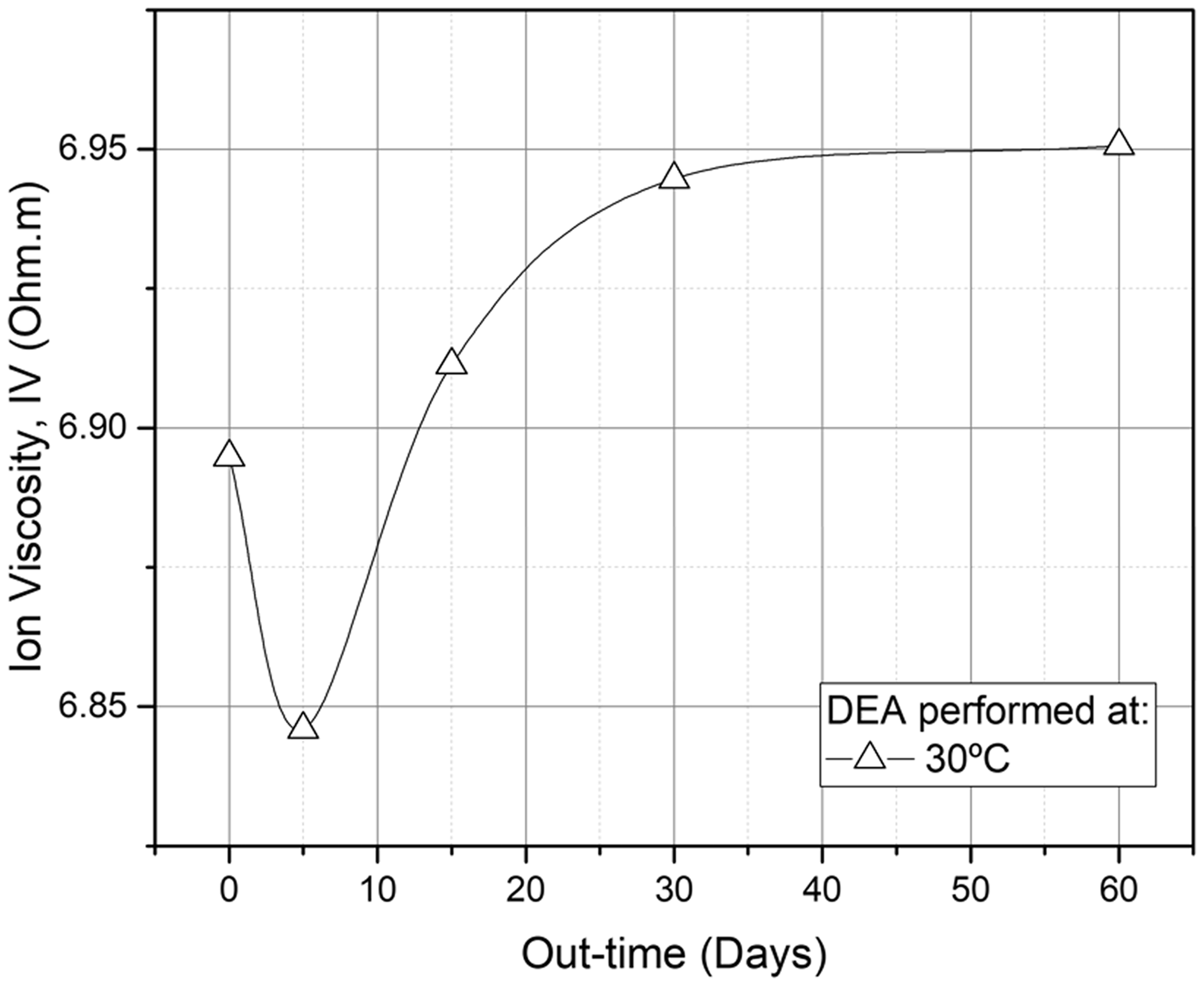
After five days of exposition to the clean-room environment, the moisture absorption is likely to be reduced in reason of the equilibration between the material and the environment,12,19 then, the
Also, from five days on, the resistivity behavior of the prepreg in Figure 1 can be represented by equation (1), where

The results obtained for the prepreg material studied in the present work differ from the ones obtained by Kim et al., 14 whose study presents a linear equation for predicting the out-time with basis on the conductivity values measured by DEA. It is important to state, though, that the referred study is based on an out-of-autoclave prepreg with different formulations. Here, the nonlinear cure advancement indicated by DEA might be associated with both the autocatalytic character of the curing reactions, as previously reported for a prepreg material with similar formulation, 22 and to the above mentioned catalyzing effects of the water absorbed in the first five days of out-time. Also, no stabilization of the cure advancement is presented in the referred authors' study as the conductivity values continue to decrease linearly until 49 days of out-time, 14 which might be due to the lower out-time range chosen to be monitored and/or to the lower final curing temperature resin formulation used. When comparing the obtained results to the study developed by Day and Shepard, 13 on the other hand, a nonlinear ion viscosity (resistivity) behavior is also observed by the authors, even though no equation for estimating the out-time by DEA or moisture effects on DEA measurements and cure advancement are reported.
Effects of relative humidity on DEA of prepreg aging
As observed in Figure 1, the moisture absorption by the prepreg appears to exert a great influence on the impedance measurements performed by DEA. Therefore, Figure 2 presents the IV values ( Prepreg ion viscosity values as a function of out-time obtained by DEA measurements performed at 20℃ in a noncontrolled humidity environment.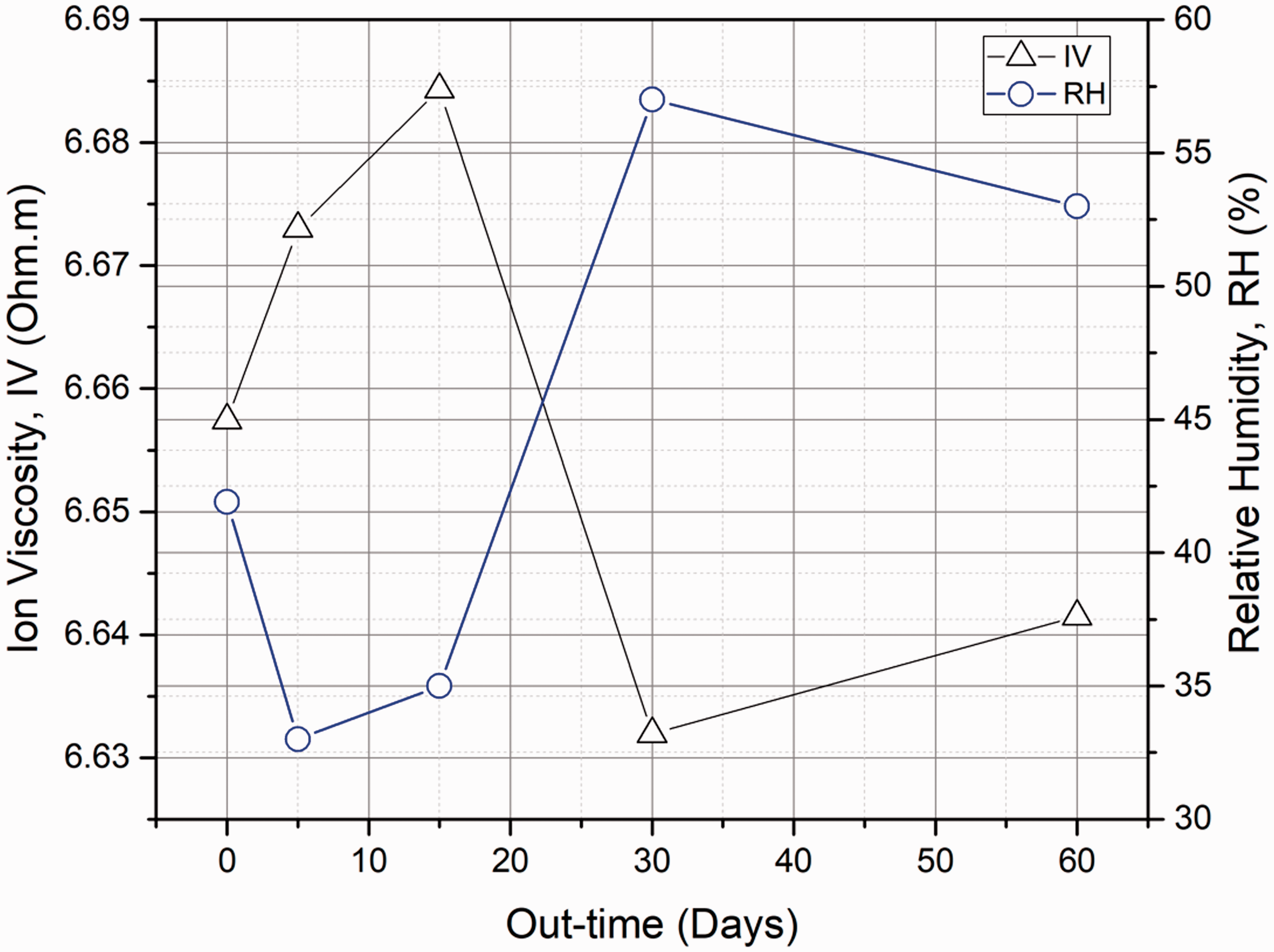
Effects of temperature on DEA of prepreg aging
The temperature influence on the DEA measurements was studied in an analog way to the relative humidity. Even though the relative humidity inside the air oven was not measured, its door is equipped with a sealing system and kept constantly closed prior and after the specimens' placement, which makes the relative humidity inside the air oven approximately the same among the measurements performed for different out-time specimens. Therefore, Figure 3 presents the IV values as a function of the out-time for measurements performed in an air oven at three different temperatures (30℃, 40℃, and 50℃). As expected, the temperature and Prepreg ion viscosity values as a function of out-time and DEA measurements temperature.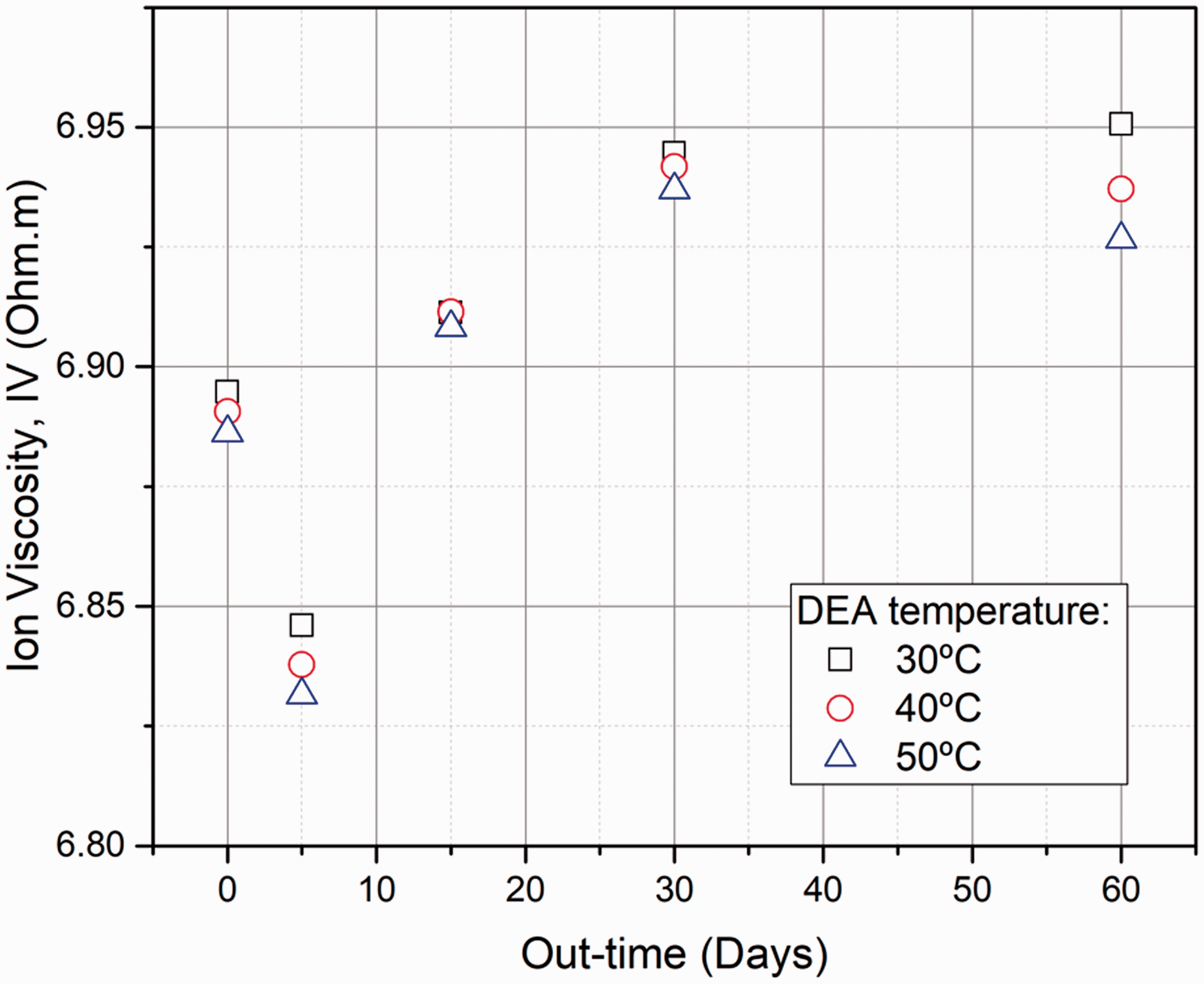
DEA of the aged prepreg cure
Figure 4 presents the DEA of the autoclave analogue curing thermal cycle of the prepreg specimens with different out-times. The IV values are presented as a function of the curing time and temperature. As it can be seen, all prepreg specimens present an initial drop on the IV during the heating ramp step of the curing thermal cycle. This drop is associated with the temperature increase that results in a viscosity reduction and enhances the charges and dipole mobility.
6
Also, in Figure 4, it is possible to observe that the five days out-time prepreg specimen presents the lowest IV values until approximately 50 min. These values might, once again, be related with the previously mentioned presence of moisture in the referred specimen.
DEA ion viscosity values versus curing time and temperature as a function of out-time.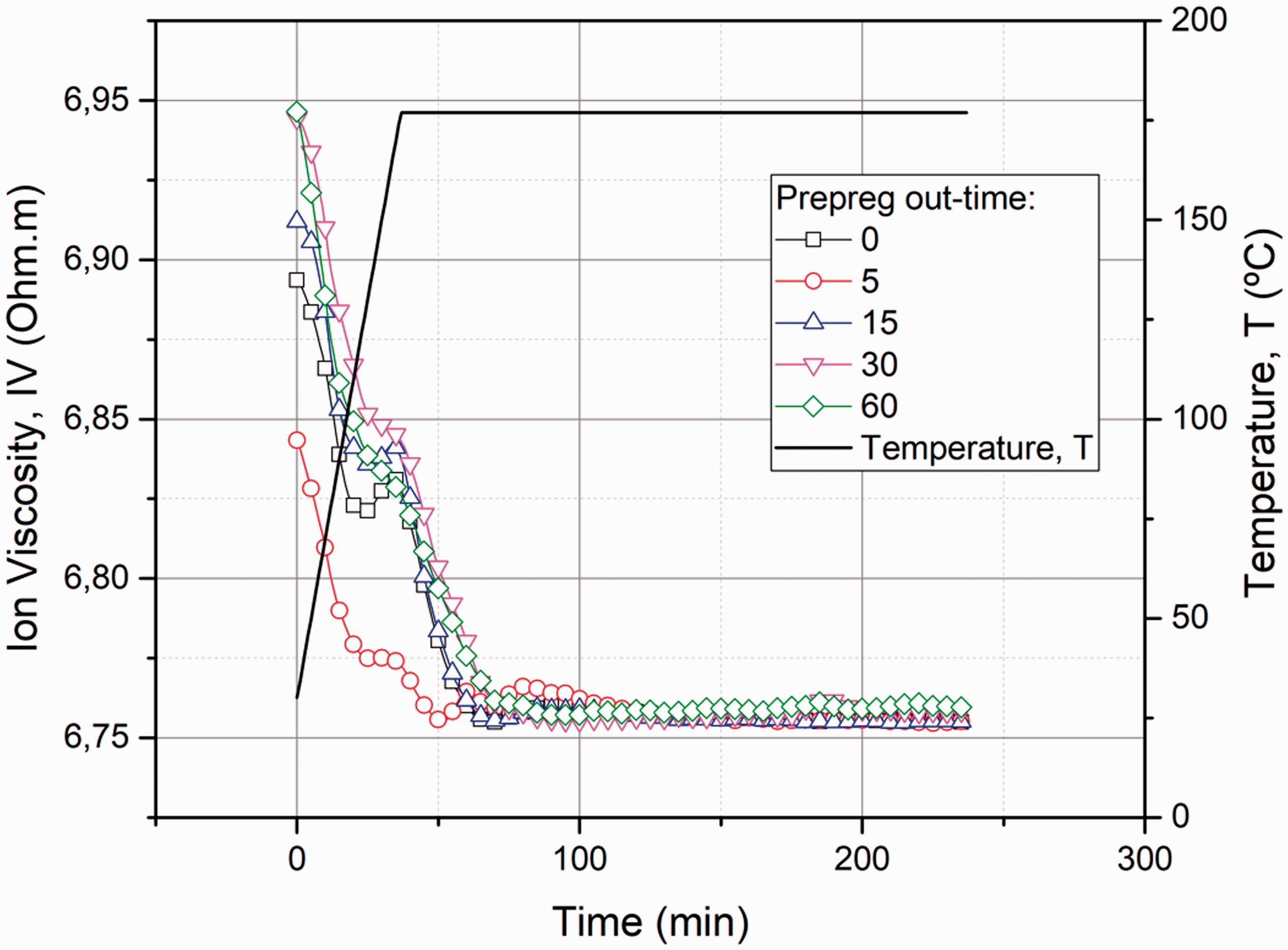
In order to enhance the visibility and the result analysis of the curing phenomenon for each sample, the beginning of isothermal step from Figure 4 is presented separately in Figure 5. The presence of two IV peaks is observed for specimens from 0 to 15 days of out-time between the end of the heating ramp and the beginning of the isothermal step, and in an analog way to what is observed by Li et al.
12
in terms of permittivity and loss factor, the first peak of ion viscosity is associated with a significant viscosity increase of the resin due to gelification, while the second one is associated with the vitrification process. It is important to note that the first peak is more evident in less aged prepreg specimens, since these specimens present lower initial viscosity values and crosslinking densities.
DEA ion viscosity graph zoomed at the region between the heating ramp and the beginning of the isothermal step.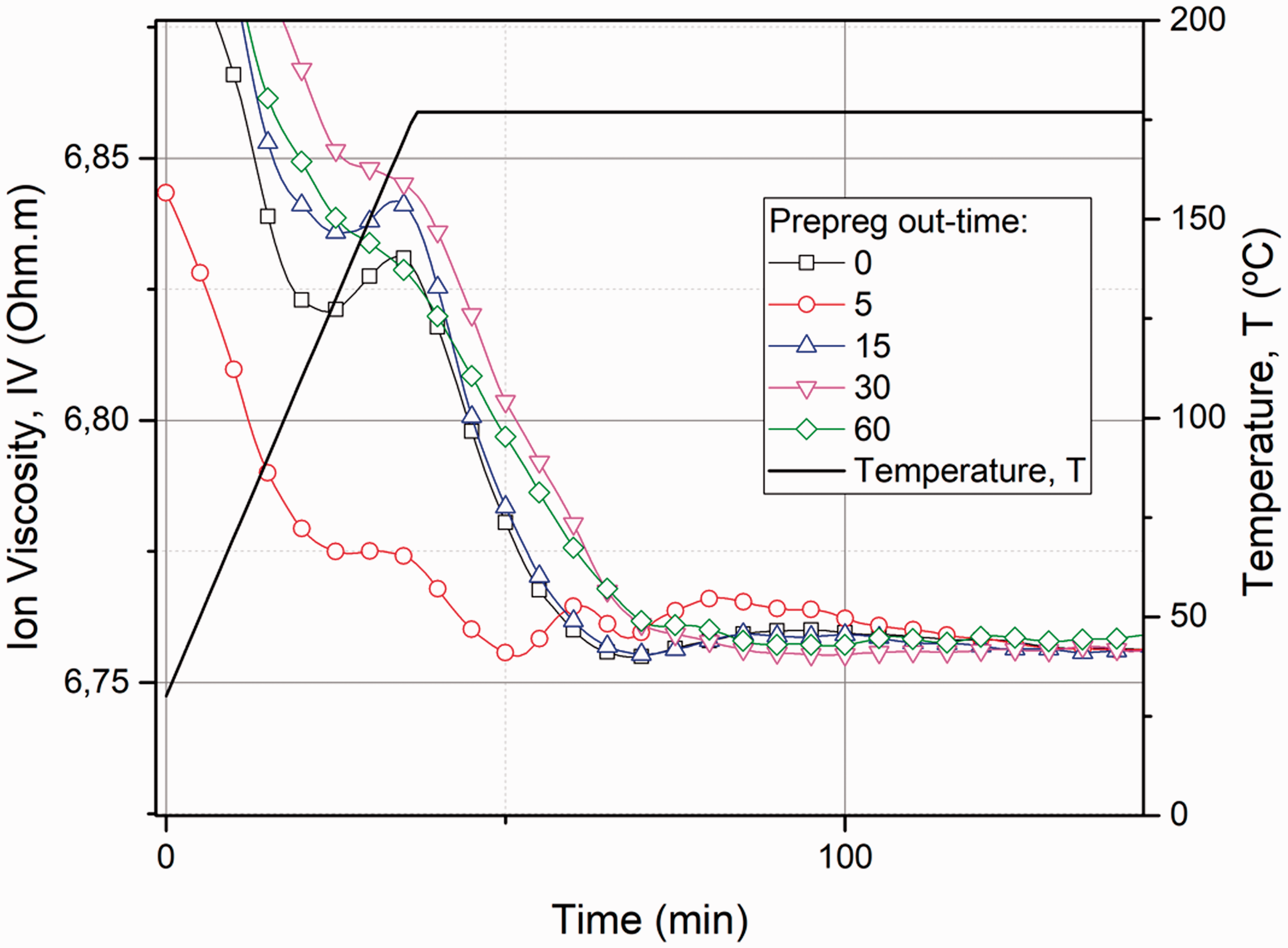
No vitrification peak (second peak) is observed in Figure 5 for the 30 and 60 out-time specimens in this region, which indicates a possible delay in the vitrification process as a result of the lowered mobility of the reaction system of such specimens by the crosslinking degree resultant from cure advancement. This delay is confirmed when the final stages of the isothermal step are zoomed (Figure 6), allowing the observation of clear IV peaks at approximately 190 min for both 30 and 60 out-time specimens. The same vitrification delay is observed by other authors when studying the partially cured prepregs using dynamic mechanical analyses.
24
This observation is of great interest to industrial cure monitoring, since it represents a monitorable specificity of the curing reaction of aged prepregs that can allow the adjustment of the curing cycle for such materials and allow the extension of their out-time limits.
DEA ion viscosity graph zoomed at the final region (>100 min) of the isothermal step.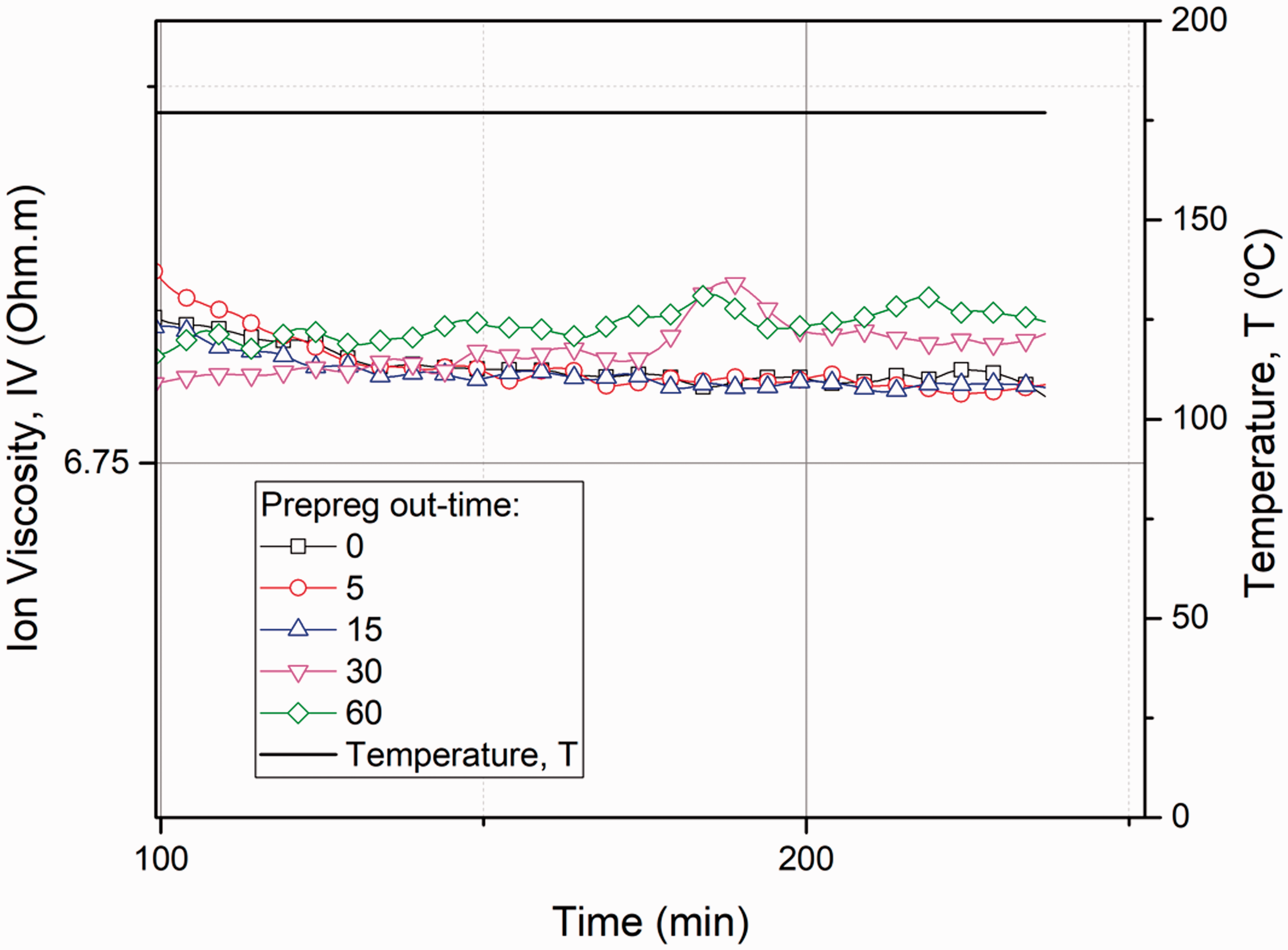
Also, at the final stages of cure, all out-time specimens present very close final IV values, as observed in the zoomed graph region at Figure 6. Similar results are presented in terms of conductivity by other authors 14 and, since the ion viscosity is associated with the charges and dipoles mobility, it is reasonable to assume that a the final crosslinking density of the material is not significantly affected by the prepreg out-time. This assumption is of great relevance when the reuse of aged prepregs is aimed since the crosslinking density is directly related to the mechanical performance of the final composite. 11 However, it is important to point out that this reuse possibility might be restricted to the manufacturing of noncomplex geometry parts since, as extensively reported in literature,2–4,25 the consequences of cure advancement on the processing properties of the prepreg material, such as flexibility and tack, might hinder its conformation process and reduce the cure quality.
Conclusions
The simple and low-cost dielectric device used in this work presents itself as a good alternative for tracking prepreg out-time and the specificities of aged prepregs curing behavior. The main findings also point to the fact that the relative humidity and moisture absorption represent a great influence on DEA measurements and, therefore, care must be taken when performing this type of dielectric analysis in non-controlled or humid environments. Regarding the temperature, considerable variations (between 30℃ and 50℃) are found to not significantly influence the cure advancement monitored by DEA. Finally, DEA measurements also point to the delay of vitrification during cure for aged prepregs, and no significant variations on the final curing degree. Therefore, by the possibility of tracking the out-time and monitoring the curing process of aged prepregs, the DEA analyses presented in this work might be of great interest to composite industries as an alternative that can extend prepreg out-time limits by means of quality control. Further developed studies may also focus on improving the DEA assembly to allow the monitoring of the prepreg shelf-life during its freezer storage.
Footnotes
Acknowledgments
The authors would like to acknowledge the Brazilian financing institutions CAPES (Coordenação de Aperfeiçoamento de Pessoal de Nível Superior) and FIPT (Fundação de Apoio ao Instituto de Pesquisas Tecnológicas) for their support.
Declaration of Conflicting Interests
The authors declared no potential conflicts of interest with respect to the research, authorship, and/or publication of this article.
Funding
The author(s) disclosed receipt of the following financial support for the research, authorship, and/or publication of this article: This work was supported by CAPES (Coordenação de Aperfeiçoamento de Pessoal de Nível Superior), grant number:1701878, and FIPT (Fundação de Apoio ao Instituto de Pesquisas Tecnológicas).