






Abstract
The rapid integration of artificial intelligence (AI) tools in higher education has transformed academic writing practices among English as a Foreign Language (EFL) learners. While AI-powered writing tools, such as ChatGPT, offer potential benefits, concerns persist regarding over-reliance, plagiarism, and a decline in critical thinking. This study aims to examine Cambodian EFL undergraduate students’ perceptions, usage habits, and challenges related to AI tools in academic writing. Using a quantitative survey design, data were collected from 326 students across six Cambodian universities. Descriptive statistics were analyzed using SPSS version 27. Findings indicate that students generally perceive AI tools positively, particularly in writing autonomy (M = 3.56), confidence (M = 3.43), motivation (M = 3.66), critical thinking (M = 3.65), and enhancing creativity (M = 3.78). Students also reported that AI tools help them overcome creative blocks, refine arguments, and structure their writing independently. However, substantial concerns were identified, including fears of over-reliance (M = 3.94), plagiarism and ethical risks (M = 3.82), and generic or context-insensitive feedback. Students strongly agreed that AI should supplement rather than replace teacher feedback. The study highlights a dual perception of AI as both a supportive scaffold and a potential threat to independent skill development. Findings support a human–AI collaborative model that promotes guided autonomy, AI literacy, and ethical awareness. The study contributes student-centered insights from a developing country context and underscores the need for institutional policies and pedagogical strategies to ensure responsible AI integration in academic writing.
Keywords
Introduction
The rapid growth of artificial intelligence (AI) has significantly transformed education. Research has found that the integration of AI tools, particularly large language models (LLMs) such as ChatGPT, Gemini, and Microsoft Copilot, into academic contexts enhances students’ writing fluency, supports independent revision, and reduces writing anxiety, particularly among English as a Foreign Language (EFL) learners (Kartika, 2024; Zare et al., 2025; Zhao, 2025). However, concerns about plagiarism, over-reliance, and the decrease in students’ critical thinking and creativity were identified when integrating such tools (Hulmi & Apriadi, 2025; Pum, 2025; Sok et al., 2025; Szmyd & Mitera, 2024). In Cambodia, research has found the same problems because of the absence of clear ethical guidelines for AI use in education and limited AI literacy (Pum & Sok, 2024; Sok & Heng, 2024a).
Recent research in Cambodia by Sok and Heng (2023) found that while ChatGPT supported assessment design, tutoring, and writing assistance, it also posed risks related to academic integrity and information accuracy. In addition, the study by Pum and Sok (2024) has revealed several benefits of using AI tools, such as instructional support, enhanced personalized learning, and administrative efficiency. However, ethical issues, over-reliance, and a decrease in critical thinking were also found as key concerns (Pum & Sok, 2024; Tian & Zhang, 2025). At the students’ level, Cambodian EFL university students report growing familiarity with AI tools, using them primarily to assist with assignments and language tasks. However, most students lack formal training, leaving many students uncertain about the ethical boundaries of AI use and its pedagogical role (Sol et al., 2024). A related study by Sok et al. (2025) and Pum (2025) also found that high school and university students share these concerns, especially around data privacy, originality, and skill development, though they still view AI as helpful for summarizing, translating, and generating ideas.
As advanced technology keeps evolving, using such tools in education provides many benefits and challenges for learners and educators. Addressing the ethical implications of AI use in higher education is significant. Sok and Heng (2024b) suggested establishing academic integrity policies, while Nyaaba and Zhai (2025) and Hutson (2025) called for culturally responsive approaches for AI integration in the pedagogy. While the educational technology landscape in Cambodia keeps evolving, understanding how students perceive, use, and experience challenges with AI tools in academic writing is critical. While most existing studies focus on performance outcomes or institutional responses, few offer student-centered insights into how AI affects writing autonomy, confidence, motivation, creativity, and critical thinking. This study aims to fill this gap by examining the perceptions, usage habits, and challenges of Cambodian English as a Foreign Language (EFL) undergraduate students regarding AI writing tools in higher education. This study is informed by social cognitive theory and the self-efficacy framework; this theory underpins the writing confidence construct (Bandura, 2001). Self-determination theory, on the other hand, according to Ryan and Deci (2020), frames the analysis of the motivation construct. The Technology Acceptance Model further provides a lens for understanding students; perceived usefulness and ease of use of AI writing tools (TAM; Davis, 1989). These frameworks collectively situate the study within established theoretical traditions in educational technology and learner autonomy research. Specifically, the study addresses the following research questions:
How do students perceive the benefits of AI tools in their writing confidence, motivation, critical thinking, and creativity? What are students’ common habits in using AI tools across various stages and types of writing assignments? What are the perceived challenges and limitations of AI tools in student writing, including concerns about over-reliance and ethical issues?
Literature Review
The integration of artificial intelligence (AI) tools in higher education has transformed how students approach their writing tasks, particularly in the English as a Foreign Language (EFL) context. Research worldwide has identified some AI tools that are commonly used tools, such as Grammarly, QuillBot, and ChatGPT, which offer grammar correction, paraphrasing, content generation, and stylistic enhancement, supporting students throughout the writing process (Akanda & Talukder, 2026; Godwin-Jones, 2022; Raheem et al., 2023; Younis et al., 2023). These tools provide immediate feedback and promote self-revision, enabling users to work independently and more efficiently. According to recent studies in Cambodia, Sok and Heng (2024a), Pum (2025), and Pum (2026), for example, have identified various educational benefits of ChatGPT, including support in academic writing, research design, and language instruction. Similarly, Pum and Sok (2024) emphasize that AI tools in the Cambodian context offer personalized learning opportunities and administrative productivity while enhancing students’ ability to complete assignments and brainstorm ideas.
Autonomy and Independent Writing
Autonomy in academic writing refers to a student's ability to make independent decisions regarding content, structure, and revision without relying heavily on instructors. AI tools play a significant role in fostering this autonomy by offering instant feedback and opportunities for iterative improvement (Pum & Sok, 2024; Seo et al., 2021; Vieriu & Petrea, 2025). While AI tools such as ChatGPT and QuillBot are capable of helping students to revise their texts independently, students will reduce their dependency on their teacher's support. This may appear to be surface autonomy if students passively accept AI-generated suggestions without engaging in critical evaluation (Fitria, 2021; Salido et al., 2025; Zhai et al., 2024). Recent research in the context of Cambodia by Sol et al. (2024) found that although students frequently use AI tools to support their English writing tasks, inadequate training often leaves them uncertain about how to critically engage with AI-generated feedback. Without sufficient AI literacy, the capacity for meaningful autonomous learning is diminished.
Confidence and Motivation
Writing confidence—often conceptualized as writing self-efficacy—is shaped by students’ beliefs in their ability to produce quality texts (Pajares, 2003). AI tools have been found to foster confidence by providing nonjudgmental, instant feedback that empowers students to self-correct and makes them feel more capable of completing their tasks (Pum, 2026; Song & Song, 2023). In addition, motivation, whether intrinsic (interest-based) or extrinsic (goal-oriented), can be enhanced through AI's features, such as productivity support, gamification, and task simplification (Pum, 2026; Zare et al., 2025). According to a study conducted by Sok and Heng (2023) in Cambodia, ChatGPT's ability to generate writing prompts and outline academic texts helps students initiate tasks and reduce anxiety, in turn enhancing students’ motivation. However, the study further emphasized that generic or mechanical outputs from AI-generated tools may demotivate students because the content lacks personalization. Furthermore, Pum and Sok (2024) and Sok et al. (2025) have noted that many Cambodian learners use AI primarily as a shortcut to complete tasks, which may inadvertently reduce intrinsic motivation and engagement with the writing process.
Creativity and Critical Thinking
Several previous studies have claimed that AI tools were capable of enhancing creativity and critical thinking—two core competencies in academic writing—by offering idea prompts, paraphrasing alternatives, and structural suggestions (Alzubi et al., 2025; Darwin et al., 2024; de Vicente-Yagüe-Jara et al., 2023; Pum, 2026). Mohammadkarimi and Qadir (2025) have found that students using generative AI demonstrated greater flexibility in exploring diverse perspectives in their writing. However, these benefits may be constrained by the algorithmic and pattern-based nature of AI. Sok and Heng (2024a) and Pum and Sok (2024), for instance, emphasized that while AI tools can assist in brainstorming and idea organization, their outputs are often generic or repetitive; these kinds of things may limit students’ original thought. Similarly, Sol et al. (2025) argue that AI use can result in superficial content processing because students may rely on ready-made responses instead of engaging in deeper analytical thinking. Furthermore, ethical concerns further complicate the issue of critical thinking (Pum & Sok, 2024). These concerns align with global warnings that students may “outsource” cognitive labor to AI, leading to diminished intellectual engagement (Rizkiani et al., 2024; Tian & Zhang, 2025). In order to prevent such issues, Sok and Heng (2024b) advocated for the urgent revision of academic integrity policies in Cambodian higher education to address risks such as uncritical copying or undetected plagiarism.
Ethical Concerns and Over-Reliance
Although many studies have revealed the productivity benefits of AI tools, they have also emphasized significant pedagogical and ethical risks. These include the decline of independent thinking, increased reliance on AI-generated content, and the risk of academic misconduct (Pum, 2025; Zhai et al., 2024). In addition, research in the Cambodian context by Pum and Sok (2024) has identified several factors, such as data privacy, biased information, and issues with assessment validity, as major challenges. Furthermore, according to research by Sok et al. (2025), findings indicated that students were concerned about over-dependence and reduced originality. However, even if facing those challenges, Cambodian students still reported a positive attitude toward AI use in writing and learning (Pum & Sok, 2024; Sok et al., 2025; Pum, 2025; Pum, 2026).
Methodology
Research Design
This study employed a quantitative survey design to investigate Cambodian undergraduate students’ perceptions, usage habits, and challenges related to AI tools in academic writing. A structured questionnaire was used to collect data on students’ views regarding the influence of AI tools on their writing confidence, autonomy, motivation, creativity, and critical thinking, as well as the ethical and technical challenges they encounter.
Research Setting and Participants
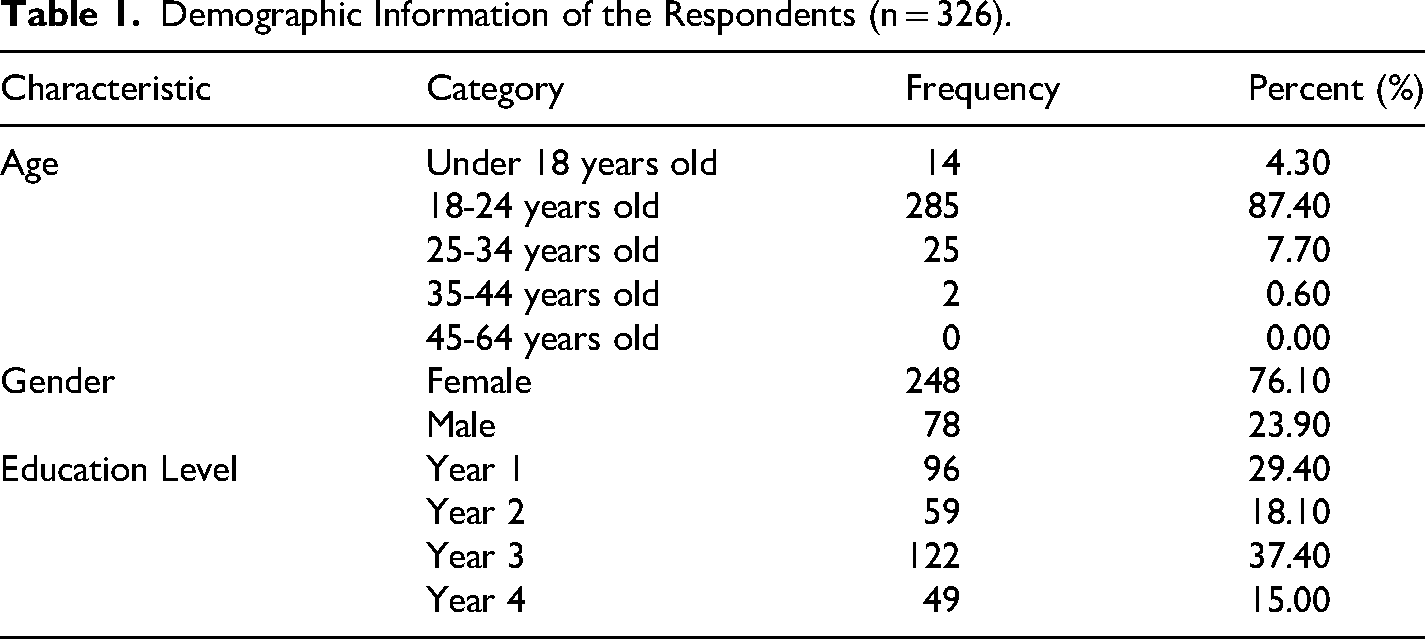
The study was conducted at six universities in Cambodia—two public and four private institutions. These institutions, all of which offer a four-year English as a Foreign Language (EFL) undergraduate program, were selected based on accessibility and alignment with the study's objectives. Using a combination of purposive sampling for choosing universities and simple random sampling for selecting participants, a total of 326 undergraduate students (n = 326) were recruited. All participants were enrolled in EFL programs and represented various academic levels, from first to fourth year. Demographic information is summarized in Table 1. The majority of participants were young adults, with 87.4% aged between 18–24 years. Most participants were female (76.1%). In terms of education level, third-year students represented the largest group (37.4%), followed by first-year (29.4%), second-year (18.1%), and fourth-year students (15.0%).
Demographic Information of the Respondents (n = 326).
Research Instrument
Data was collected using a structured online questionnaire distributed via Google Forms. The instrument was developed for this current study by the authors based on the literature and consisted of 46 Likert-scale items (1 = Strongly Disagree, 5 = Strongly Agree). The questionnaire was grouped into thematic sections. AI benefit in writing consists of 5 subconstructs: Perceived autonomy in writing with AI tools (7 items, Cronbach's alpha = 0.82), writing confidence (5 items, Cronbach's alpha = 0.82), writing motivation (5 items, Cronbach's alpha = 0.80), AI integration and critical thinking in writing (5 items, Cronbach's alpha = 0.75), AI integration and creativity in writing (5 items, Cronbach's alpha = 0.82). The challenges and limitations of AI tools in writing (7 items, Cronbach's alpha = 0.77), general perceptions of AI in writing (6 items, Cronbach's alpha = 0.67), and AI usage habits (6 items, Cronbach's alpha = 0.76). The questionnaires were pilot-tested with 45 students to ensure clarity, relevance, and internal consistency. Based on feedback, necessary revisions were made before full-scale distribution. Item development was grounded in the existing literature on AI use in education, learner autonomy, writing motivation, and academic integrity (e.g., Karimi & Qadir, 2025; Pum, 2026; Seo et al., 2021; Zhai et al., 2024). Construct validity was supported through expert review by two specialists in educational technology and EFL pedagogy, who provided feedback on item relevance and alignment with theoretical constructs. The Cronbach alpha values reported for each subscale (ranging from 0.67 to 0.82) confirm acceptable to good internal consistency, though it is acknowledged that a formal confirmatory factor analysis would further strengthen construct validation.
Data Collection Procedure
After obtaining ethical clearance from the host institution, participants were invited to complete the online survey voluntarily. Before participation, students were informed about the study's purpose, the confidentiality of their responses, and their right to withdraw at any time without penalty. Informed consent was obtained verbally and digitally within the questionnaire, as on the cover page of the questionnaire, participants were informed that by submitting their responses, their data would be used for research and publication purposes. The survey was conducted for a period of three weeks. The final dataset included responses from 326 students who completed all required sections of the questionnaire.
Data Analysis
Quantitative data were exported to Microsoft Excel for initial coding and cleaning and then analyzed using SPSS version 27. Descriptive statistics—including means, standard deviations, and frequency distributions—were computed to examine students’ perceptions and usage patterns. Each thematic construct was analyzed independently, providing a comprehensive overview of how students engage with AI tools in writing and the challenges they encounter. No inferential statistics were used in this initial analysis, as the study aimed to provide a descriptive overview rather than test predictive relationships or causal effects. It is important to acknowledge that the study relies entirely on self-reported data, which may be subject to social desirability bias and recall limitations. Students’ perceptions of how AI tools influence their autonomy, creativity, and critical thinking do not necessarily correspond to observable behavioral or cognitive outcomes. These constraints underscore the descriptive nature of the findings and caution against overgeneralizing results.
Results
Perceived Autonomous Writing Ability with AI Tools
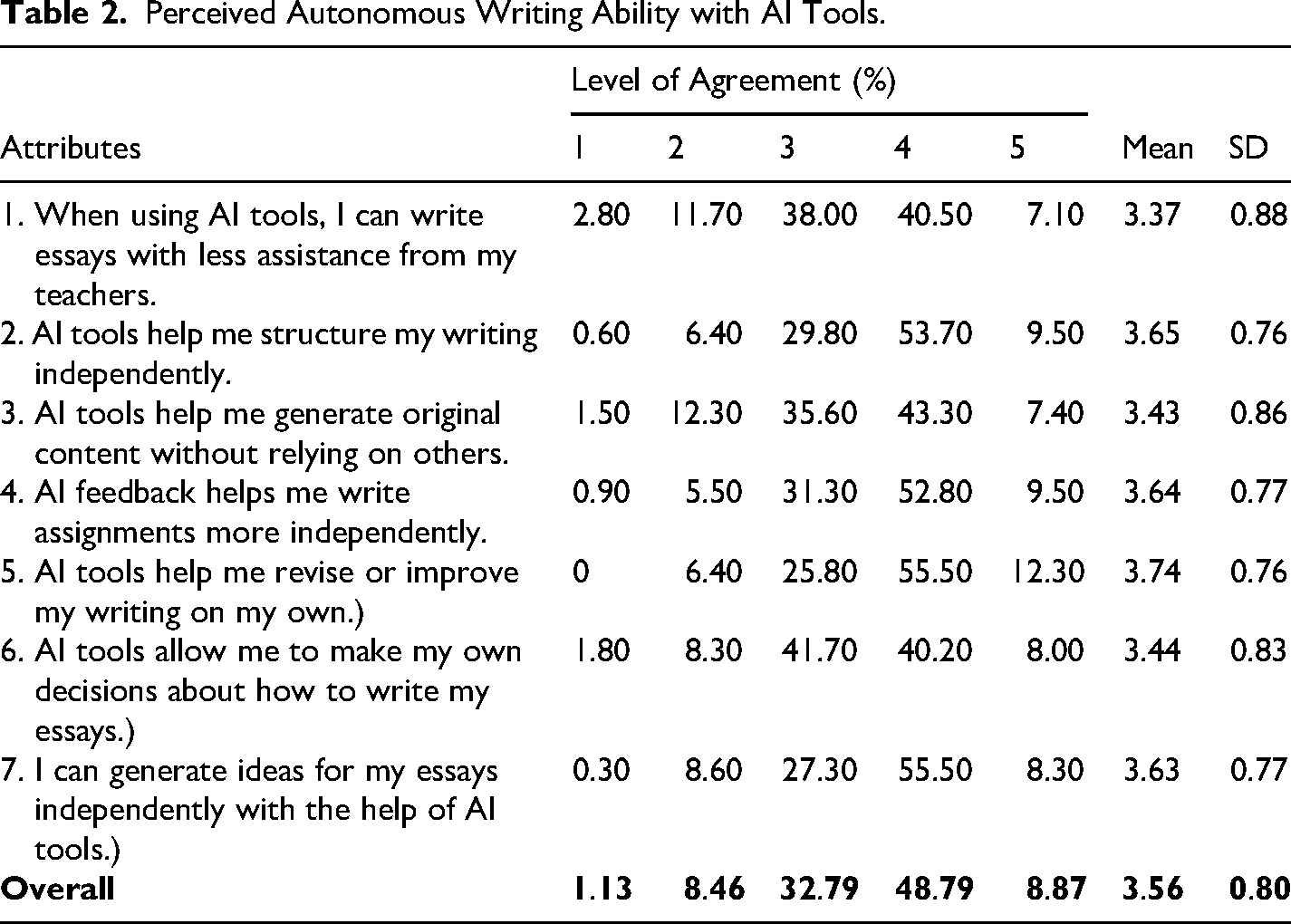
According to results from Table 2, participants indicated a moderate level of agreement (M = 3.56, SD = 0.80) that AI tools support their autonomous writing, and 57.66% of respondents agreed or strongly agreed with the related statements collectively. The highest agreement was recorded for the statement, “AI tools help me revise or improve my writing on my own” (M = 3.74, SD = 0.76). Similarly, high levels of agreement were found for statements regarding AI tools helping to “structure writing independently” (M = 3.65, SD = 0.76) and “generate ideas for essays independently” (M = 3.63, SD = 0.77). Furthermore, participants also largely agreed that “AI feedback helps them write assignments more independently” (M = 3.64, SD = 0.77). However, lower mean scores were observed for items like “When using AI tools, I can write essays with less assistance from my teachers” (M = 3.37, SD = 0.88), “generating original content without relying on others” (M = 3.43, SD = 0.86), and “making own decisions about how to write essays” (M = 3.44, SD = 0.83). These responses suggest more mixed perceptions regarding deeper forms of writing autonomy.
Perceived Autonomous Writing Ability with AI Tools.
Student Confidence with AI Tools
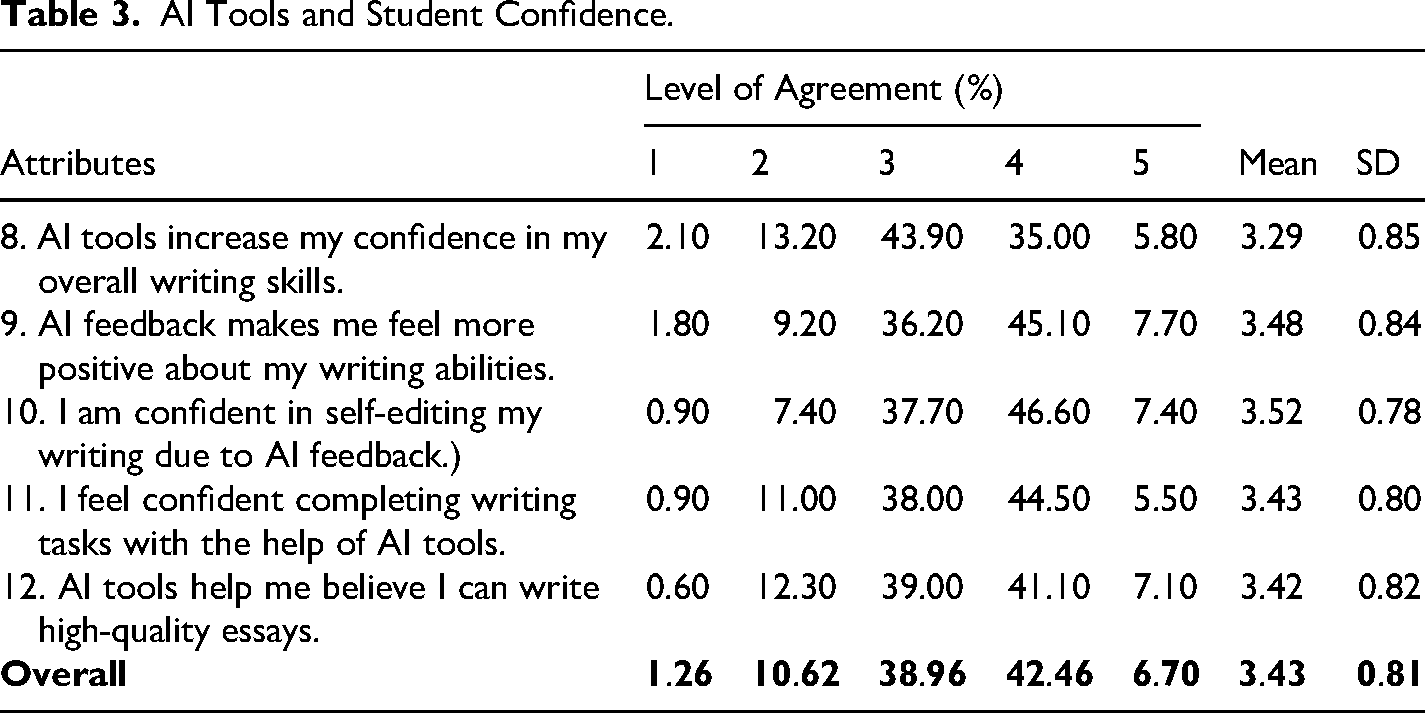
Table 3 provides the descriptive statistics for “Student confidence with AI tools”. Overall, students demonstrated a moderate level of agreement (M = 3.43, SD = 0.81) that AI tools contribute to their writing confidence, with 49.16% of participants agreeing or strongly agreeing with all statements. Specifically, participants expressed the highest confidence in self-editing their writing due to AI feedback (M = 3.52, SD = 0.78), followed by positive perceptions of their writing abilities based on AI feedback (M = 3.48, SD = 0.84), and confidence in completing writing tasks with the help of AI tools (M = 3.43, SD = 0.80). Lower mean scores were observed for items such as “AI tools increase my confidence in my overall writing skills” (M = 3.29, SD = 0.85) and “AI tools help me believe I can write high-quality essays” (M = 3.42, SD = 0.82), suggesting that students’ confidence in broader writing proficiency remains tentative.
AI Tools and Student Confidence.
Student Writing Motivation with AI Tools
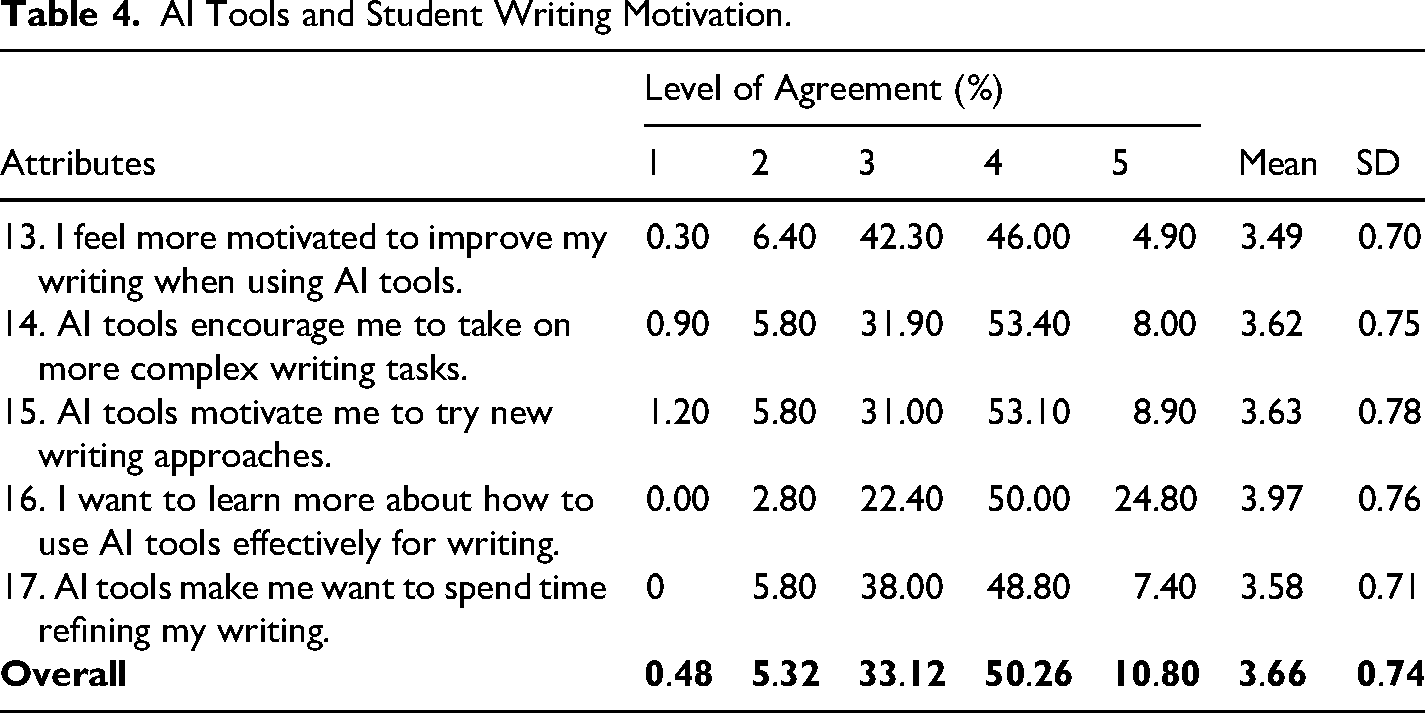
As shown in Table 4, a significant majority of respondents (61.06%) expressed agreement or strong agreement across the motivation statements. The highest mean score was observed for the item “I want to learn more about how to use AI tools effectively for writing” (M = 3.97, SD = 0.76). Furthermore, AI tools were largely perceived as encouraging students to “take on more complex writing tasks” (M = 3.62, SD = 0.75) and “motivate them to try new writing approaches” (M = 3.63, SD = 0.78). Over half of the respondents also agreed that “AI tools make them want to spend time refining their writing” (M = 3.58, SD = 0.71) and that they “feel more motivated to improve their writing when using AI tools” (M = 3.49, SD = 0.70). Although students generally felt motivated, a considerable proportion (42.3%) of participants remained neutral about the statement “I feel more motivated to improve my writing when using AI tools” (M = 3.49, SD = 0.70), indicating that while many feel a boost in motivation, it's not a universal experience for overall writing improvement. These results suggest that AI tools serve as a considerable motivator, particularly in fostering a desire for deeper engagement with the tools themselves and encouraging exploration of more challenging or novel writing methods.
AI Tools and Student Writing Motivation.
AI Integration and Critical Thinking in Writing
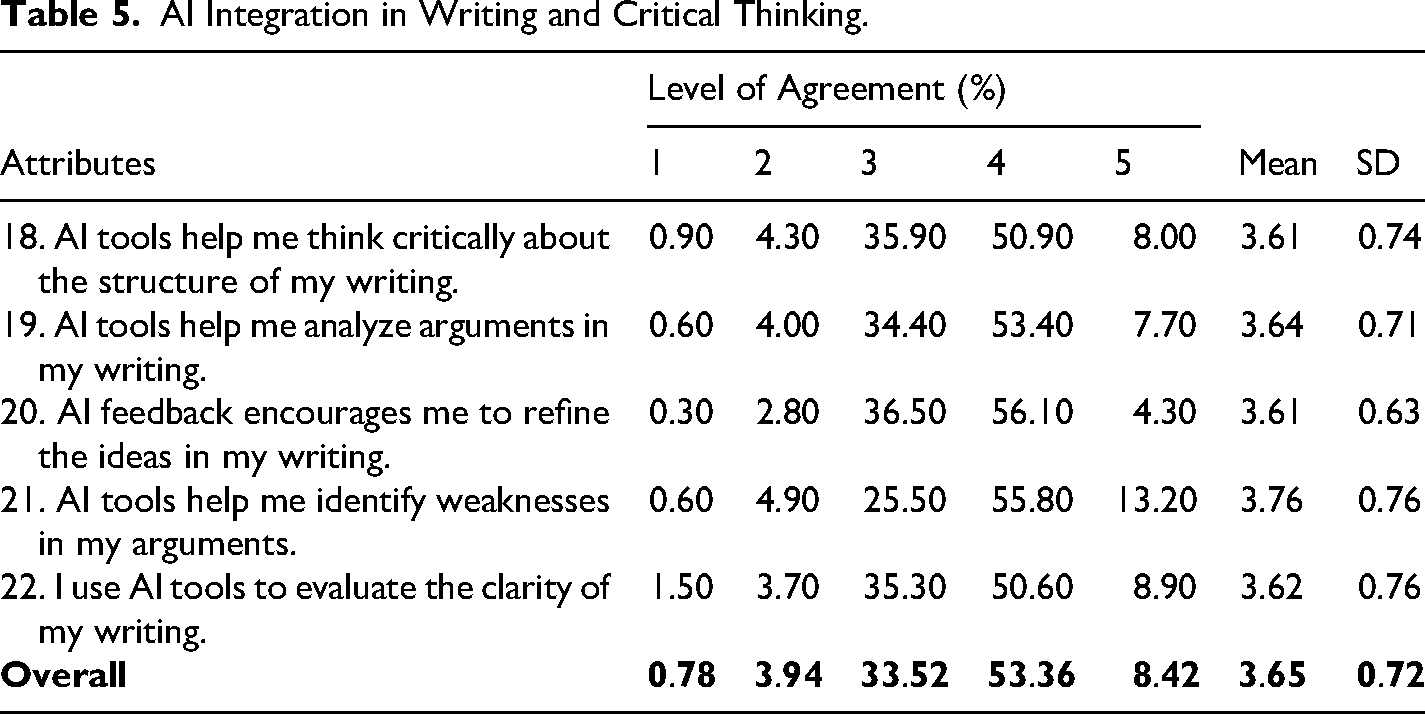
Results in Table 5 indicate a generally positive perception of the role of AI tools in supporting critical thinking processes in writing (M = 3.65, SD = 0.72). The highest-rated item was “AI tools to help identify weaknesses in arguments” (M = 3.76, SD = 0.76). Participants also agreed that AI tools help them “analyze arguments in their writing” (M = 3.64, SD = 0.71), “evaluate the clarity of their writing” (M = 3.62, SD = 0.76), “think critically about the structure of their writing” (M = 3.61, SD = 0.74), and that “AI feedback encourages them to refine the ideas in their writing” (M = 3.61, SD = 0.63). These results suggest that students generally perceive AI tools as a useful tool for various aspects of critical thinking during the writing process, particularly for improving the logical and structural quality of their writing.
AI Integration in Writing and Critical Thinking.
AI Integration and Creativity in Writing
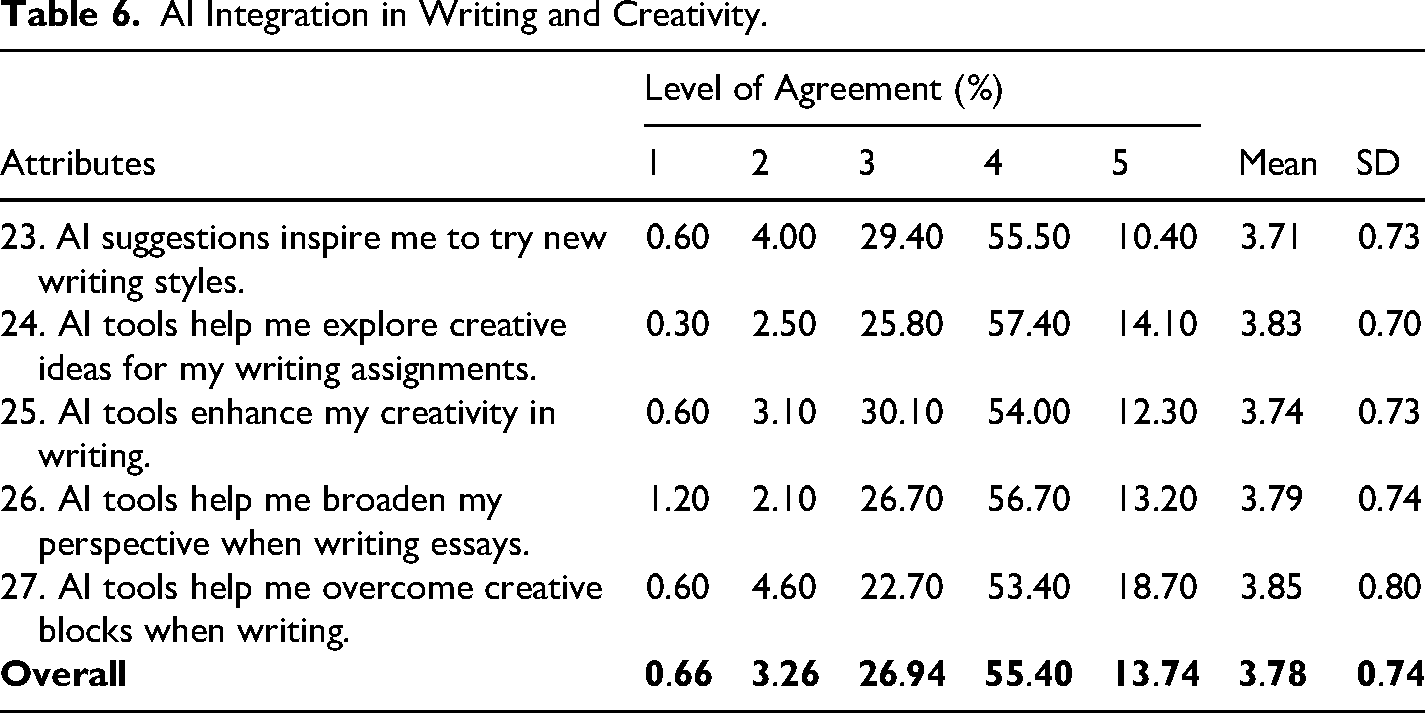
As presented in Table 6, a substantial majority of respondents (69.14%) agreed or strongly agreed that AI supports their creativity in writing. The highest-rated item was “AI tools help me overcome creative blocks when writing” (M = 3.85, SD = 0.80), followed closely by “AI tools help me explore creative ideas for my writing assignments” (M = 3.83, SD = 0.70). Furthermore, students also agreed that AI tools help “broaden their perspective when writing essays” (M = 3.79, SD = 0.74), “enhance their creativity in writing” (M = 3.74, SD = 0.73), and “inspire them to try new writing styles” (M = 3.71, SD = 0.73). These findings strongly suggest that students widely perceive AI tools as valuable facilitators of creativity, particularly in the ideation phase and in overcoming common writing challenges like creative blocks.
AI Integration in Writing and Creativity.
Challenges and Limitations of AI Tools in Writing
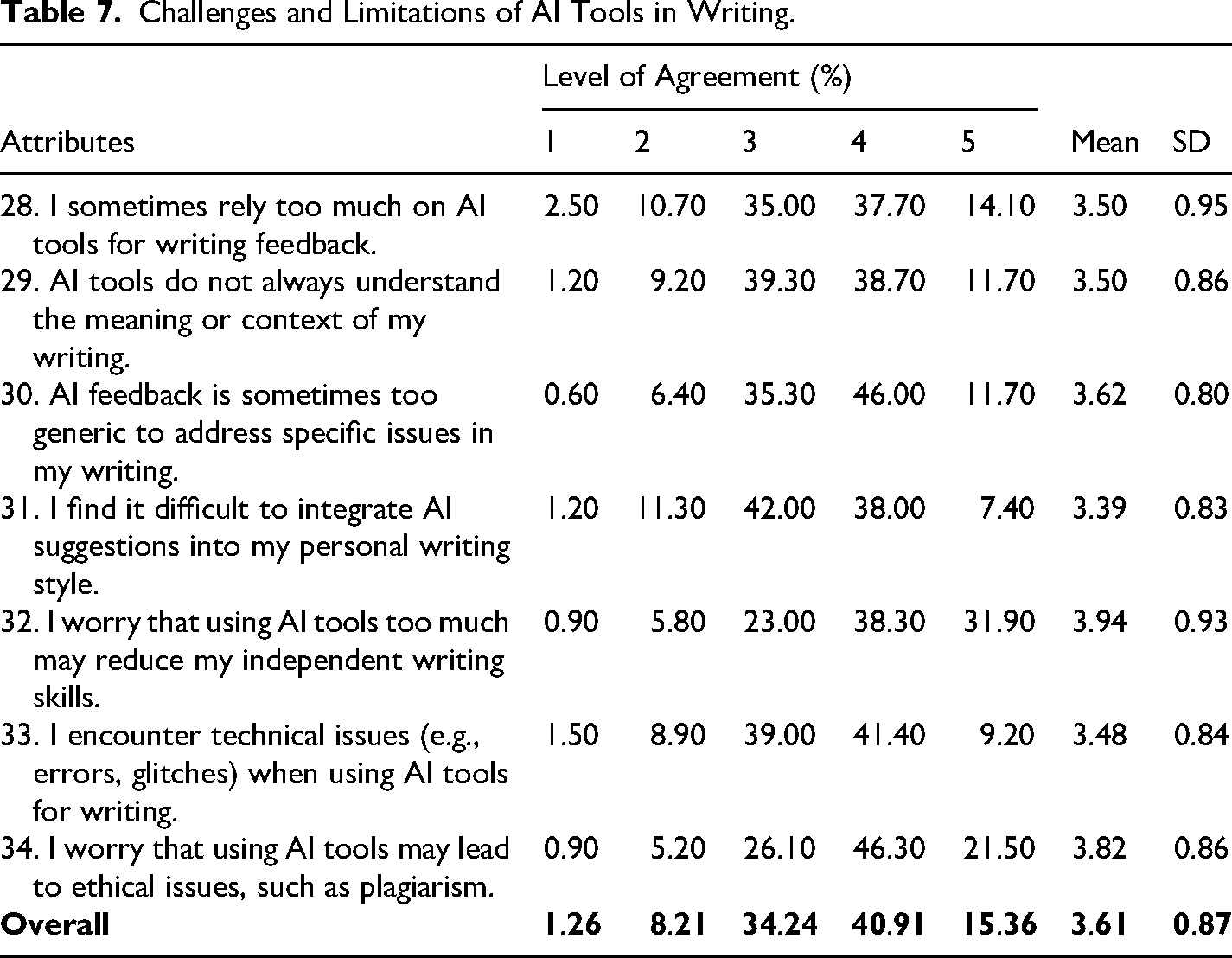
Table 7 presents the students’ perception of “Challenges and limitations of AI tools in writing,” with over half of the participants (56.27%) agreeing or strongly agreeing with the statements regarding challenges, indicating greater variability in the experience of these challenges. Participants agreed or strongly agreed that they “worry that using AI tools too much may reduce their independent writing skills” (M = 3.94, SD = 0.93) and “ethical issues such as plagiarism” (M = 3.82, SD = 0.86). These findings highlight deep-seated anxieties about the long-term effects on personal skill development and academic integrity. Other notable concerns included the perception that “AI feedback is sometimes too generic to address specific issues” (M = 3.62, SD = 0.80), “sometimes rely too much on AI tools for writing feedback” (M = 3.50, SD = 0.95), and the belief that “AI tools do not always understand the meaning or context of their writing” (M = 3.50, SD = 0.86). Participants also reported experiencing technical issues (e.g., errors, glitches) when using AI tools (M = 3.48, SD = 0.84) and difficulty in integrating AI suggestions into personal writing style (M = 3.39, SD = 0.83). These findings indicate that while AI tools offer benefits, users are acutely aware of their limitations and potential risks, particularly concerning autonomy and ethical considerations.
Challenges and Limitations of AI Tools in Writing.
General Perceptions of AI in Writing
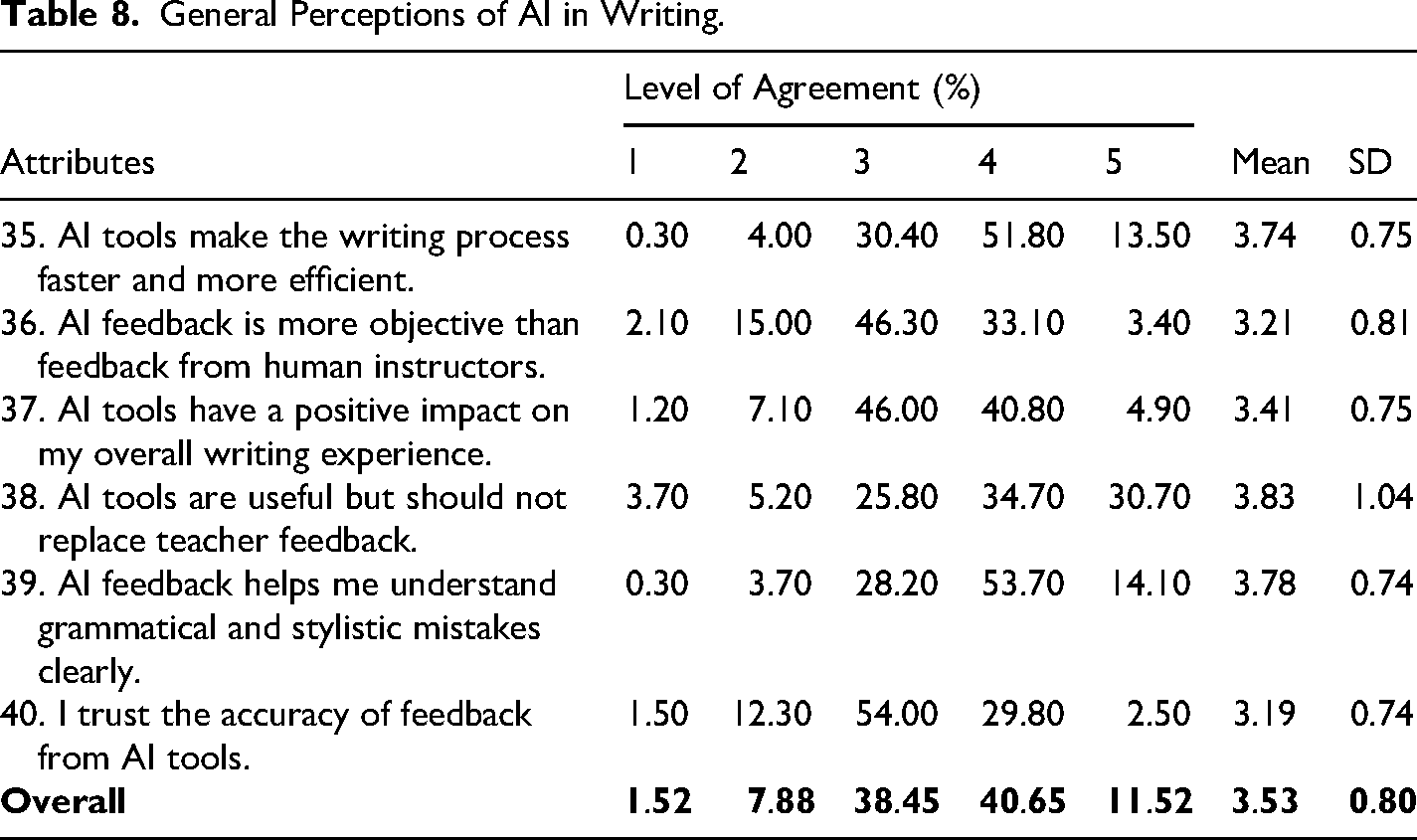
Table 8 presents the “General perceptions of AI in writing”. Overall, participants held moderately positive views(M = 3.53, SD = 0.80). The most widely accepted perception was that “AI tools are useful but should not replace teacher feedback” (M = 3.83, SD = 1.04), followed by “AI tools make the writing process faster and more efficient” (M = 3.74, SD = 0.75), and that “AI feedback helps me understand grammatical and stylistic mistakes clearly” (M = 3.78, SD = 0.74). These findings highlight AI's practical value in streamlining writing and improving basic mechanics. However, perceptions were more mixed or less confident regarding the statements such as “AI feedback is more objective than feedback from human instructors” (M = 3.21, SD = 0.81), “AI tools have a positive impact on their overall writing experience” (M = 3.41, SD = 0.75), and “I trust the accuracy of feedback from AI tools” yielded the lowest mean score in this section (M = 3.19, SD = 0.74), suggesting a significant degree of caution or uncertainty regarding the reliability of AI-generated content. These results indicate that while students value AI for its efficiency and mechanical feedback, they hold nuanced views on its qualitative aspects and firmly believe in the irreplaceable role of human instructors.
General Perceptions of AI in Writing.
AI Usage Habits in Writing
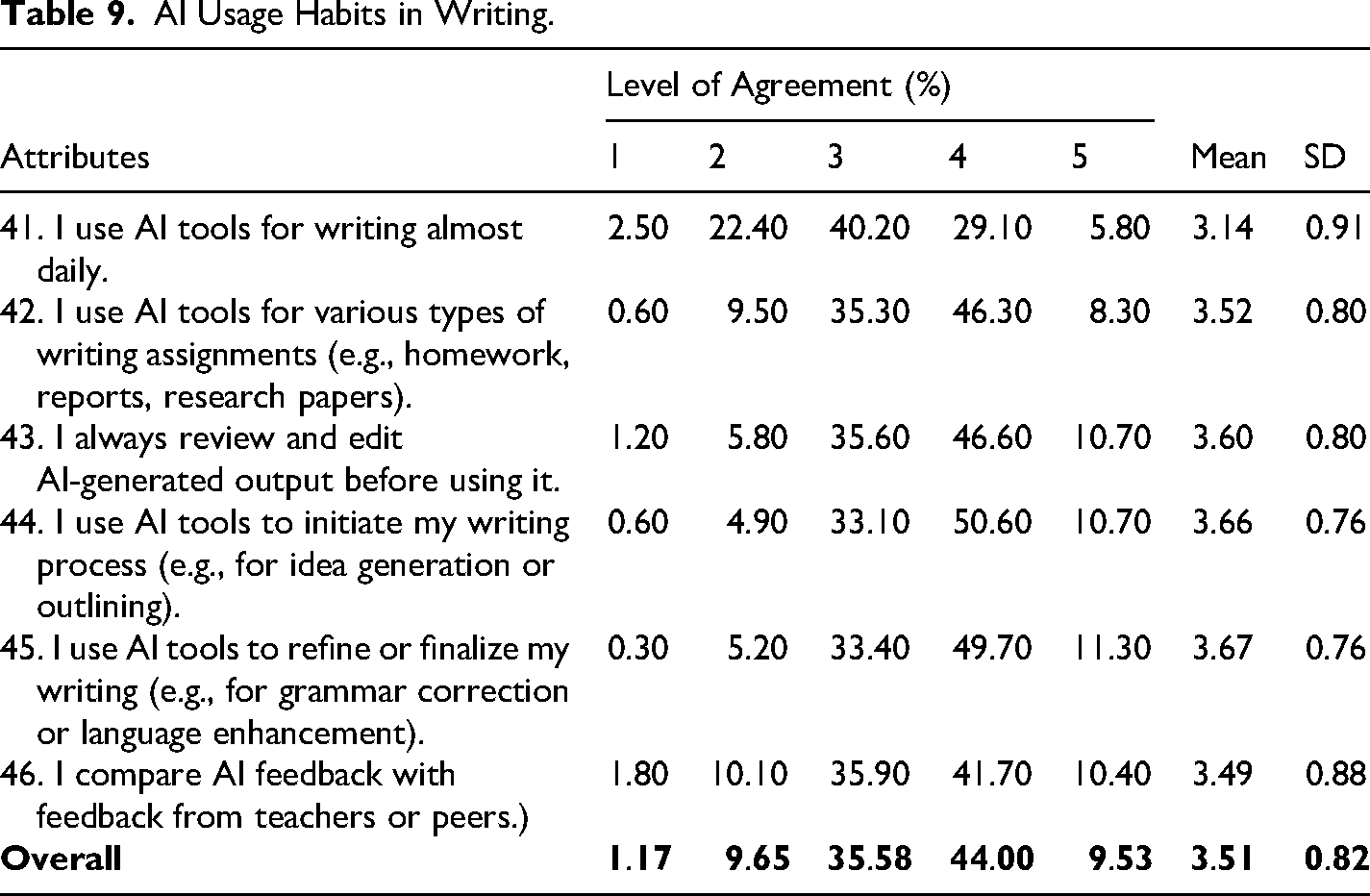
According to results in Table 9, respondents indicated a general integration of AI tools into various aspects of their writing process (M = 3.51, SD = 0.82). Participants most frequently reported using AI tools to refine or finalize their writing (e.g., for grammar correction or language enhancement; M = 3.67, SD = 0.76) and to initiate their writing process (e.g., for idea generation or outlining; M = 3.66, SD = 0.76). These findings suggest that AI tools are commonly employed at both the nascent and concluding stages of writing. A strong majority also indicated that they always review and edit AI-generated output before using it (M = 3.60, SD = 0.80), underscoring a habit of critical engagement. Furthermore, over half of the respondents reported using “AI tools for various types of writing assignments” (M = 3.52, SD = 0.80) and that they “compare AI feedback with feedback from teachers or peers” (M = 3.49, SD = 0.88). Conversely, the habit of using “AI tools for writing almost daily” was less prevalent (M = 3.14, SD = 0.91), suggesting that daily usage is not a universal practice among the sample. These results illustrate that students selectively integrate AI tools into specific, strategic points of their writing workflow, often employing them as aids for both initial conception and final polish, while maintaining a degree of human oversight and comparative evaluation.
AI Usage Habits in Writing.
Discussion
This study examined Cambodian EFL undergraduates’ perceptions, usage habits, and challenges in using AI tools for academic writing. The findings offer important insights into how students navigate the dual promise and danger of AI in a resource-constrained educational context. The results reveal a coherent pattern: students perceive AI as a practical scaffold for lower-order writing tasks while remaining cautious about its long-term effects on higher-order skills and academic integrity. The results indicated that students perceived AI tools as contributing to their writing confidence, particularly through instant, nonjudgmental feedback—a benefit widely recognized in global literature (Pum, 2026; Shao, 2025). Students also reported improved confidence, which may be associated with AI enabling them to revise their work without teacher assistance; though causal attribution cannot be established from descriptive data alone. These perceptions are consistent with the previous findings of Sok and Heng (2023), who have found that ChatGPT helps Cambodian students initiate academic writing with reduced anxiety. The present study also found that students feel more motivated to complete their writing tasks when they use AI writing support tools, especially in students’ interest in learning how to use AI tools more effectively. This pattern is directly supported by the questionnaire data: the item “I want to learn more about how to use AI tools effectively for writing” recorded the highest mean score in the motivation subscale (M = 3.97, SD = 0.76; Table 4), suggesting that AI tools stimulate self-directed learning goals rather than mere task completion. This finding is consistent with previous research by Zare et al. (2025), which emphasized that AI promotes writing engagement by providing personalized feedback and plays a significant role as a writing partner, which increases students’ motivation, reduces anxiety, enhances interest, and perceived competence. The work of Shen et al. (2025) revealed similar findings that integrating AI in teaching potentially improves students’ behavioral, emotional, and cognitive engagement.
The current findings were also consistent with findings from Pum and Sok (2024), which highlighted AI's role in supporting task completion and reducing writer's block. However, students are concerned about the generic output of AI, making them feel uninspired because it cannot address specific problems within a specific context. This finding is consistent with the previous research by Sok and Heng (2023), which found that depersonalized AI responses may undermine intrinsic motivation. Furthermore, results revealed that AI tools were also perceived to foster writing autonomy by helping students revise, structure, and generate ideas independently and helping them become more self-directed in their writing. These findings are consistent with those of Seo et al. (2021) and Vieriu and Petrea (2025), who suggested that AI can reduce dependency on teachers. However, this perceived autonomy may be just a surface-level phenomenon, as nearly one-third of respondents remained neutral about whether AI helped them make their own decisions or generate original content. This finding is consistent with the work of Sol et al. (2024), who have noted that while Cambodian students frequently use AI, they often lack the training to critically engage with AI-generated feedback. The gap between operational independence (using AI without teacher input) and cognitive autonomy (making thoughtful, self-directed decisions) is crucial. Based on the results from this finding, it is argued that without proper instruction, students may become passive recipients of AI suggestions, hindering deeper learning. Thus, fostering true autonomy requires not just tool access but pedagogical guidance that promotes metacognitive reflection and strategic use.
Participants generally perceived AI as a useful scaffold for critical thinking—particularly in identifying weaknesses in arguments and improving structure and clarity. These findings are consistent with the work of Minh (2024), Darwin et al. (2024), and Rizkiani et al. (2024), who have found that AI can enhance analytical reasoning in student writing. However, these benefits depend on how students engage with AI tools, whether they use those powerful tools to support them in learning and growing or just use them as a shortcut because of laziness or a lack of understanding about the dangers of such tools. Sol et al. (2025) have warned that students may rely on AI to shortcut complex thinking rather than engage in deep analysis.
Moreover, in the aspect of creativity, students widely perceived that AI tools help them in generating ideas and experimenting with a variety of writing styles. These tools are credited with helping overcome creative blocks and expand perspectives. These findings are consistent with those of Alzubi et al. (2025) and Mohammadkarimi and Qadir (2025). However, Sok and Heng (2024a) warned that AI outputs potentially constrain originality. While students in this study reported positive perceptions of AI's creative support, genuine innovation in writing still depends on users’ ability to personalize, interpret, and critically filter AI-generated suggestions. If so, training on the effective use of these AI tools in education needs to be urgently established.
Despite the perceived benefits, participants expressed strong concerns about over-reliance, plagiarism–ethical and pedagogical risks, and they also expressed concerns about the diminished skill development. These findings are consistent with previous studies in Cambodia; for instance, Pum and Sok (2024) have highlighted issues related to academic integrity, data privacy, and inappropriate use of AI as a shortcut, while Sok and Heng (2024b) emphasized the need for revised institutional policy frameworks to regulate AI use in higher education. In this study, results also revealed that more than 70% of students expressed worry that excessive use of AI could weaken their independent writing skills, and many students raised concerns about plagiarism. These findings reflected global warnings (Jose et al., 2025; Tian & Zhang, 2025) about students “outsourcing” cognitive labor to generative tools. The duality of AI use underscores the need for explicit instruction on ethical boundaries, transparency in authorship, and the long-term consequences of dependency.
The clearest key takeaway in this study is students’ preference for a blended writing model—one in which AI serves as a supplementary tool rather than a replacement for human instruction. This preference is directly grounded in the questionnaire results: 65.4% of respondents agreed or strongly agreed that “AI tools are useful but should not replace teacher feedback,” which also yielded the highest mean score in the general perceptions subscale (M = 3.83, SD = 1.04; Table 8). The strong agreement that teacher feedback remains essential supports Hutson's (2025) model of “human-AI collaboration,” which emphasizes the strategic combination of human insight and AI capabilities, while Sok et al. (2025) advocate for pedagogical strategies that develop both digital fluency and intellectual independence. The AI output must be critically evaluated, and academic policy must be revised.
Conclusion and Recommendations
The results from this study found that using AI tools in academic writing can foster student writing confidence, enhance motivation, encourage writing autonomy, boost students’ creativity and critical thinking, while over-reliance, plagiarism, objectivity, contextual accuracy, and generic AI-generated feedback were identified as key challenges when using AI tools in academic writing. While AI tools are widely accepted and appreciated, their long-term educational value depends on how responsibly and thoughtfully they are implemented. Rather than just positioning AI as a substitute for instruction and aid for students’ academic writing, this study supports a model of human–AI collaboration model that empowers students to write better—and think better—through guided autonomy, ethical awareness, and strategic tool use.
The following recommendations are proposed for students, educators, institutions, and AI developers to support the responsible and meaningful integration of AI in academic writing. For students, developing AI literacy skills to understand the functions of AI tools, recognizing their algorithmic limitations, and critically evaluating the output generated by AI were also significant skills to develop. Students should use AI tools to support their growth, not just as a shortcut, while understanding the value of academic integrity by being transparent about their use of AI and recognizing the boundaries of acceptable assistance. Furthermore, educators should design learning activities that guide students in using AI effectively, encourage them to critically compare between AI-generated and human feedback, while fostering reflective discussions about the quality and appropriateness of AI suggestions is also an important consideration. Educators should focus instructional efforts on higher-order writing dimensions that AI tools are not capable of understanding, such as argument development, rhetorical tone, and context understanding. These efforts will reinforce human reasoning and creativity. Moreover, teachers should establish clear definitions of acceptable use, which will also encourage open discussions on authorship and academic integrity by modeling ethical engagement with AI.
At the institutional and policy levels, it is significant to establish clear and context-based guidelines regarding AI use in academic work. Those should include explicit definitions of responsible usage, expectations for attribution, and consequences for unethical practices. More importantly, institutions must also invest in faculty development programs that equip instructors and faculty members with the skills to evaluate, teach, and integrate AI tools effectively. In addition, the government should support local research on AI's educational impact. This support will further strengthen evidence-based decision-making and promote context-based approaches to AI adoption in not only Cambodia's higher education but also the education system as a whole. Finally, AI developers are encouraged to improve the contextual sensitivity and responsiveness–the ability of AI systems to interpret nuanced input- which will increase their value as educational aids. AI developers should also consider including some ethical safeguards in user interfaces, such as usage transparency indicators, academic integrity prompts, and citation features to promote responsible use. In addition, dashboards or usage tracking tools–educator-oriented features could be developed to help instructors scaffold student learning and provide timely feedback on AI engagement patterns.
All the above recommendations point toward a model of AI integration that encourages collaborative support across all educational stakeholders through effective instructional and ethically grounded practices. These approaches should better ensure maximizing AI integration in academic writing without compromising intellectual development, originality, or academic standards.
Footnotes

Consent to Participate
All participants were verbally informed of consent, and no personal information was collected or used in this article.
CRediT Authorship Contribution Statement
Funding
The authors received no financial support for the research, authorship, and/or publication of this article.
Declaration of Conflicting Interests
The authors declared no potential conflicts of interest with respect to the research, authorship, and/or publication of this article.
Data Availability
The data supporting the findings of this study are available from the corresponding author upon reasonable request.